
TL;DR
Anthropic’s Glasswing project found 10,000+ critical flaws across 1,000 open-source projects in a month. Only 97 have been patched.



NameDrop lets iPhone users exchange contact information by bringing two devices together. Here’s how to use the feature, customize what it shares, and fix the most common problems.
Apple introduced NameDrop in iOS 17 as part of a larger contact-sharing system built around Contact Posters. Instead of typing phone numbers manually, users can tap their iPhones together and choose whether to share or receive contact information.
It’s a simple gesture that feels like magic, at least when it works. Here’s how to use NameDrop and what might be going wrong when it doesn’t work as expected.
And don’t worry, NameDrop only shares your name, Contact Poster, and primary phone number and/or email address by default.
NameDrop is simple to use once both iPhones are configured correctly, although both devices need iOS 17 or later with AirDrop enabled. It is enabled and works by default if a user hasn’t changed any settings affecting the feature.
Locking either phone or turning off Bluetooth or Wi-Fi can interrupt the process before the sharing interface appears. If it doesn’t immediately work, check those settings on both devices.
The NameDrop feature isn’t easy to miss thanks to the glowing animation, haptics, and a full-screen Contact Poster preview on both devices. It is impossible to have contact details pulled from a device without the user’s knowledge or accidentally.
Since NameDrop relies on the same technologies as AirDrop or Apple Pay, users shouldn’t have to worry about the case they’re using. Modern cases account for NFC passthrough and other radio signals.
Proximity is important to initiate NameDrop, but once the options to share appear, the devices can be pulled away. Obviously, you can’t leave the room and expect to continue the process, but a couple of feet of distance while each user manages the share isn’t a problem.
Apple supports NameDrop between Apple Watch, iPhone, and other Apple Watches. The feature works similarly to the iPhone version, although the smaller display offers less visual feedback during the exchange.
As long as your devices are up to date and still have default settings for things like AirDrop, Wi-Fi, and Bluetooth, a tap will suffice to initiate NameDrop.
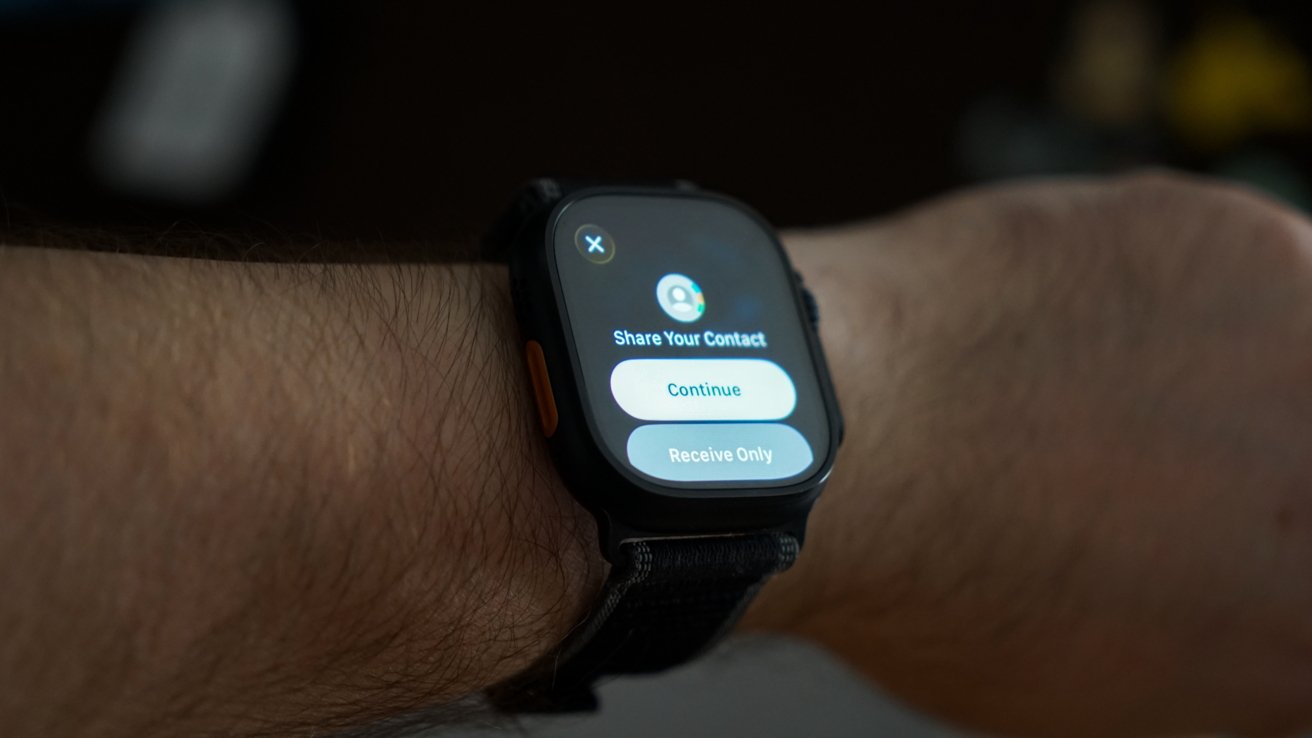
You’re only given a “Continue” or “Receive Only” option on Apple Watch, without the larger Contact Poster preview shown on iPhone. And again, the proximity is only needed to begin the interaction, and devices can be pulled away to interact with the prompts.
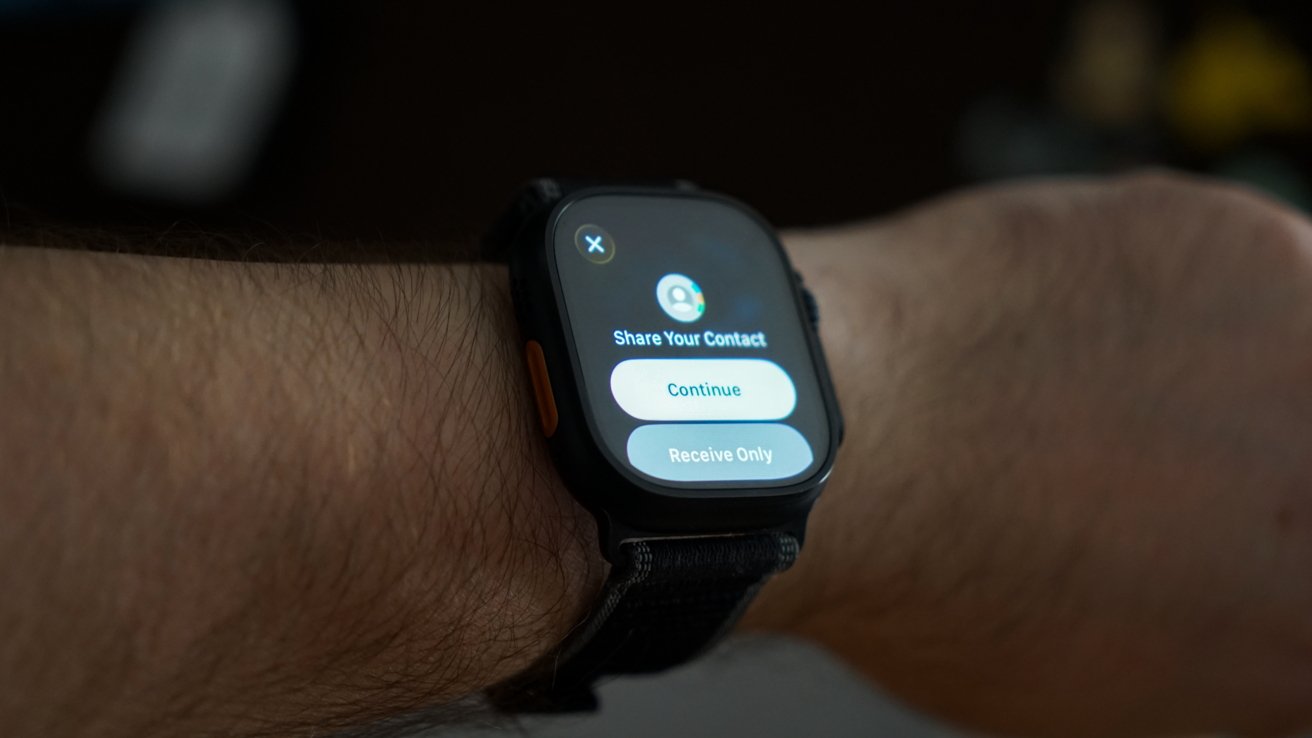 NameDrop works fine on Apple Watch, though there’s less of a preview
NameDrop on Apple Watch is fairly convenient, but a little awkward. It’s a great option if you’d like to exchange contact details without needing to pull your iPhone out of a backpack or purse.
It’s always a good idea to keep your personal contact card up to date, especially when considering NameDrop. You don’t want some old photo, random emoji you added to your name as a teen, or an embarrassing email address to be exchanged.
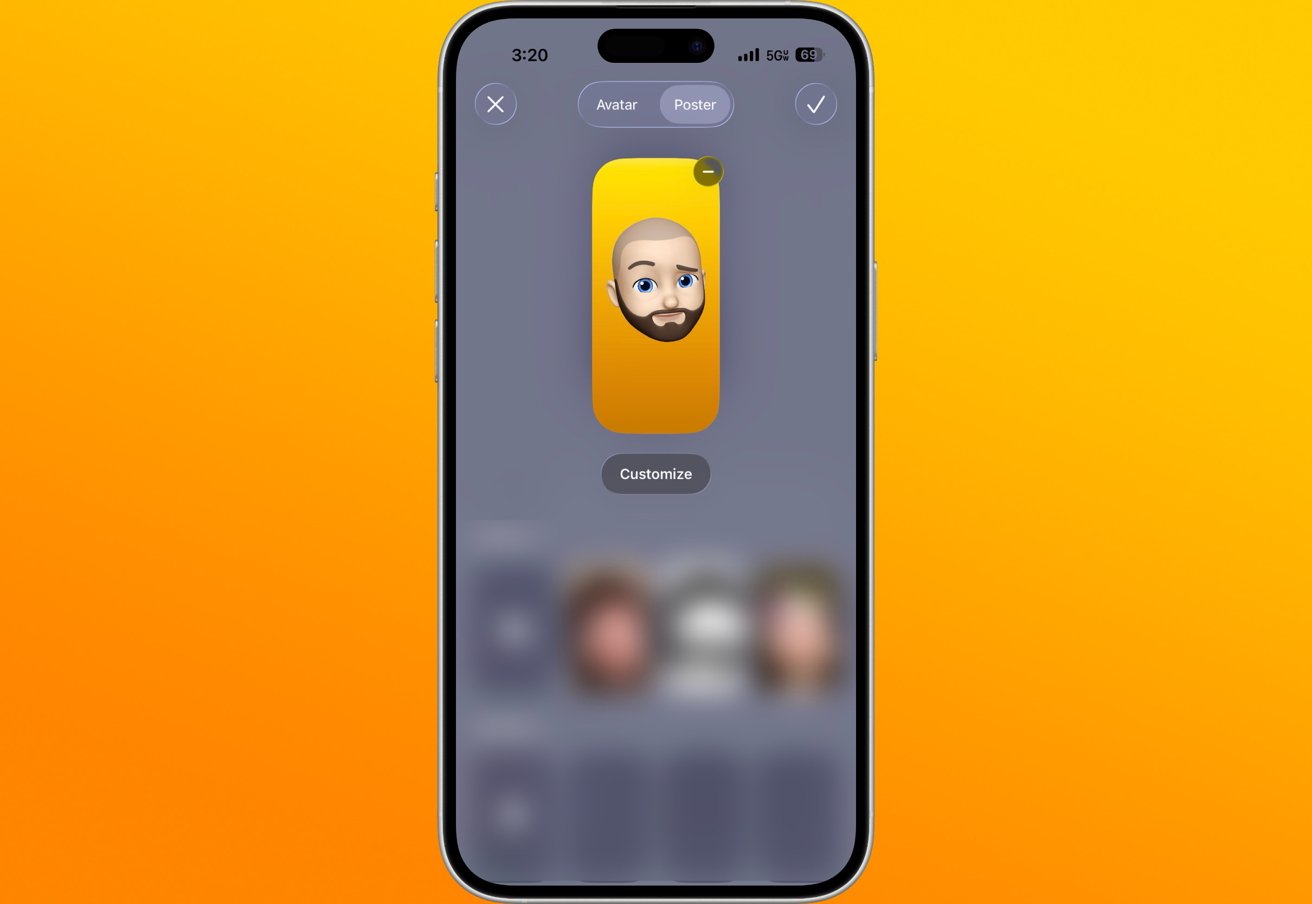 Contact Posters are worth checking before using NameDrop
While your name, phone number, and email are important parts of the contact card, your photo might be even more important. The circle avatar and larger Contact Poster are what people see when using NameDrop or when you call them.
Here’s how to manage your Contact Poster:
Contact Posters have become a kind of profile picture for your Apple Account. While Apple Contacts still uses the old vCard system, it is a data point for many system features on iOS.
You might have multiple phone numbers and email addresses and only want to share a specific one. Don’t worry, it’s quite simple to modify what’s shared with each use of NameDrop.
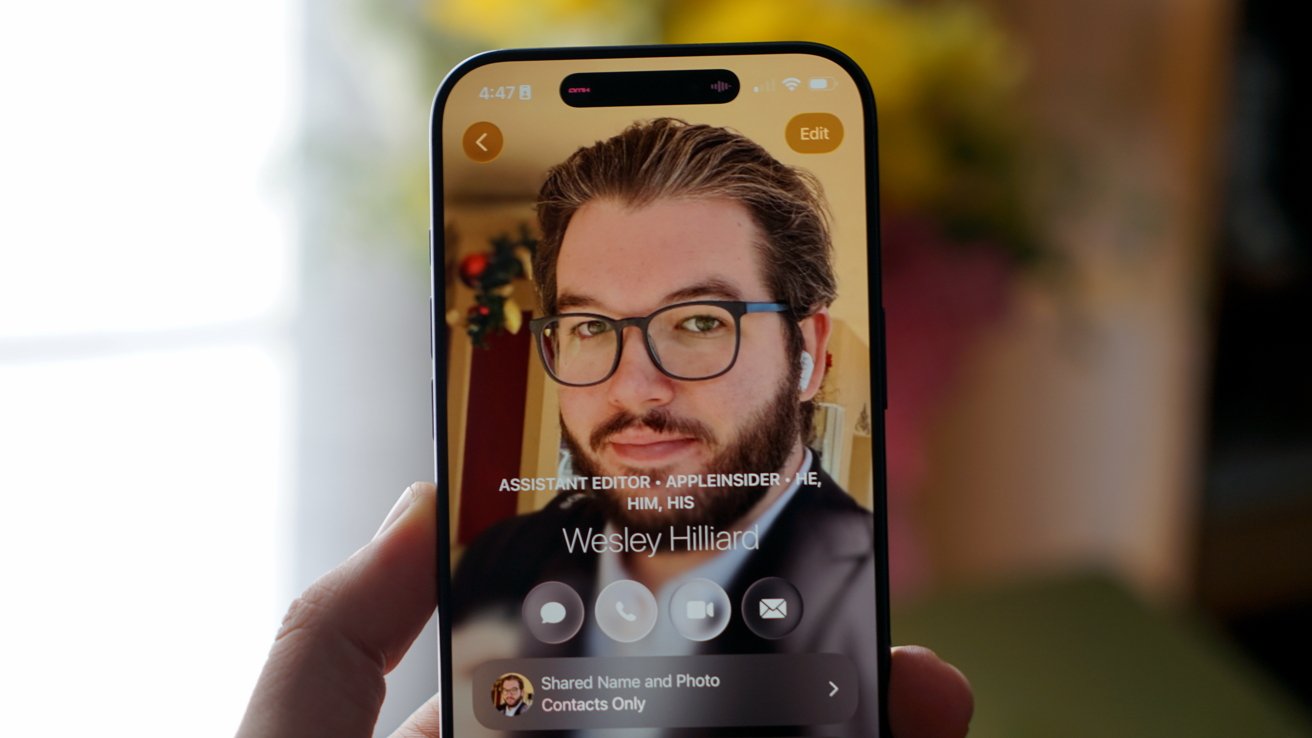 Make sure your Contact Poster and other Contacts data are up to date
Whenever you initiate NameDrop on iPhone, you’ll see your Contact Poster, name, and phone number or email displayed with the sharing options below. By your phone number/email, there will be a little “>” button.
Tapping that button will bring up a sheet with check boxes by each piece of shareable contact details. Choose exactly what you’d like to share with the individual before hitting “Share.”
That way, you can choose when you’d like to provide a business number versus a personal one, for example. Customized NameDrop selections are carried over to the next time you use NameDrop.
Information like your pronouns, address, birthday, and more is not shared via NameDrop. It is only your name, selected phone numbers or email addresses, and Contact Poster that are shared.
Apple uses the same gesture for several iPhone sharing features. AirDrop, SharePlay, and NameDrop all depend on nearby device detection, so the same movement can sometimes trigger the wrong interface.
SharePlay is a common source of confusion when music, video, or another compatible app is active. iPhone may treat the nearby device as a possible shared media target before NameDrop appears.
AirDrop will appear when a shareable file, link, or other item is being displayed on iPhone.
If NameDrop isn’t working as expected, put your device to sleep and wake it again, then unlock it and try once more. To help avoid interference from other features, make sure both devices are on the Home Screen or Lock Screen before bringing them close together.
NameDrop initially drew criticism after launch because some users worried that contact information would transfer automatically. The feature requires devices to be unlocked and prompts users for confirmation before any information is transferred; it is highly unlikely that contact data can be pulled unknowingly.
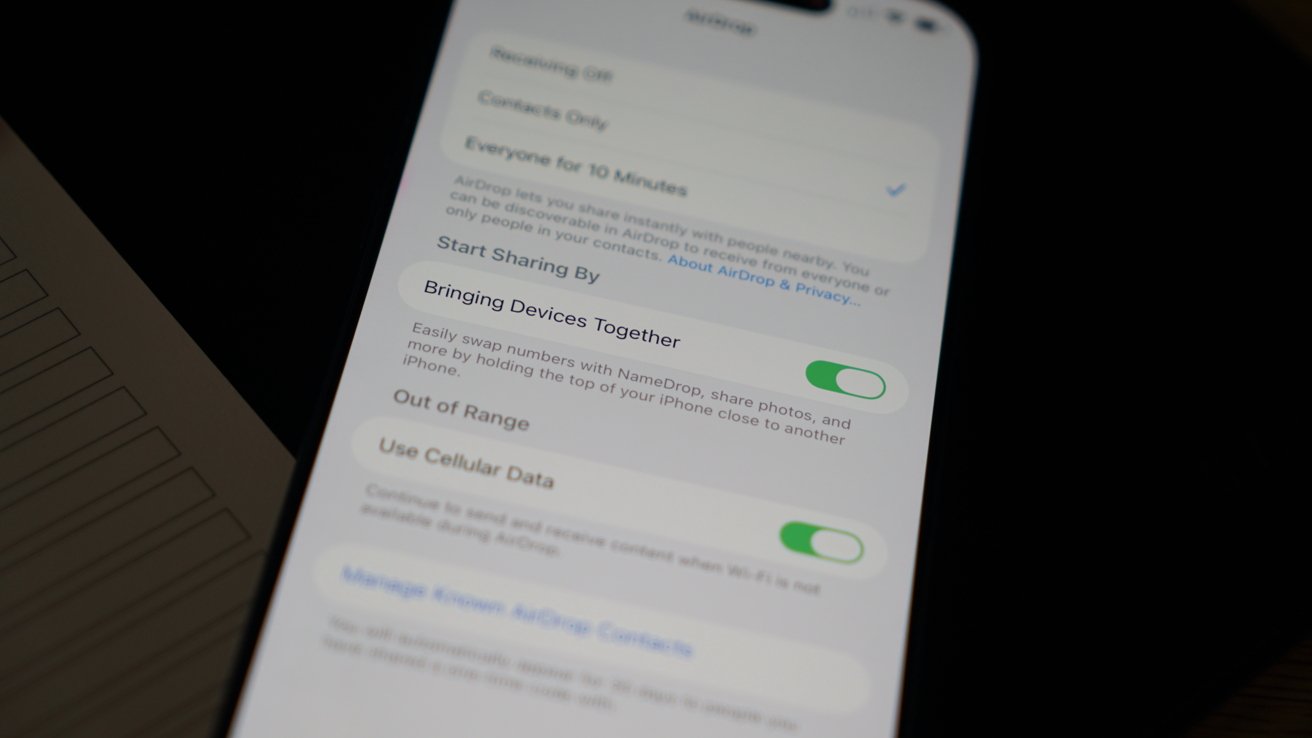
Easily turn off NameDrop and other proximity AirDrop functions
However, users who don’t want NameDrop or other proximity sharing can turn off the setting that starts these interactions. Apple places the control inside the AirDrop section of the Settings app.
Turning off Bringing Devices Together prevents NameDrop and similar proximity-based sharing features from working. AirDrop itself can remain available, depending on separate AirDrop receiving settings.
NameDrop removes most of the friction from exchanging contact information between Apple devices. Apple still keeps users in control through approval prompts, Contact Poster settings, and AirDrop controls.


Photograph: Michael Calore
The walls of the bag are tough enough, made from 1,200-denier polyester, which is heavy-duty and water-resistant, not to mention so rugged that it’s nearly indestructible. I’ve checked it as luggage on a dozen or so flights, and it doesn’t show any scuffs or tears. The zipper at the top isn’t sealed, but it’s heavier than it needs to be and works just fine in the rain. What truly sets the bag apart, though, is its lining. The whole interior of the tote is coated with a thin layer of thermoplastic, further increasing its imperviousness to moisture.

Photograph: Michael Calore

Photograph: Michael Calore
Now, of course, the purpose of this kind of lining is to keep the contents dry when you use the bag in a wet environment, like on a canoe trip, on a rainy bike ride, or on a duck hunt in the Maine wilderness. And surely, I have used the bag in a canoe and on many a rainy bike ride (I’ve never been on a duck hunt), and the goods inside have indeed always remained intact. I even trust the bag enough to carry electronics and musical equipment to the office or studio on drizzly mornings. But for me, the utility the bag provides is more so the opposite: it’s an excellent place to cleanly transport items that are, themselves, muddy, wet, or slimy.
For example, I’ve taken the bag car camping several times. Once, I used it to pack my tent, ground cloth, boots, and rain shell. On the last day of the trip, it poured outside, and upon it being time to head home, my rain jacket and tent were soaked, the ground cloth was dotted with wet pine needles and flecks of bark, and my boots had a thick layer of Mendocino, California, muck in the tread. I crammed all of those items in the Hunter’s Tote, zipped it up, and tossed it into the back seat of my rental car. The interior lining kept the mess inside, saving the rental car’s tuck-and-roll upholstery. Back home, I emptied the tote, flipped it inside out, and blasted out all the forest flooring with a hose.
There are two heavy plastic tabs on the edges of the tote, one at each end of the zipper. This is where the shoulder strap clips in. I’ve never really used the strap (honestly, it just gets in the way), but those tabs are great for hanging the tote to dry after rinsing it out.
The Hunter’s Tote comes in three sizes. I have the largest, the XL, which has a capacity of 53 liters. (That’s huge for a tote bag.) I prefer the larger size because when you set the reinforced bottom on a flat surface and prop the mouth of the bag open, you have a generous flat bottom inside of 10 by 19 inches. All that room really makes the bag more versatile, so my recommendation is to go large.
Also, just know there are no frills here: no exterior pockets, no padding, no laptop sleeve. Just a rugged carrier that’s ready for your dirtiest work. Whether you’re carrying twelvers of La Croix or bagging Buffleheads, it’s indispensable.
Power up with unlimited access to WIRED. Get best-in-class reporting and exclusive subscriber content that’s too important to ignore. Subscribe Today.

Anthropic’s Glasswing project found 10,000+ critical flaws across 1,000 open-source projects in a month. Only 97 have been patched.
Anthropic disclosed on Friday that Project Glasswing, its restricted cybersecurity initiative, has uncovered more than 10,000 high- or critical-severity vulnerability candidates across some of the most systemically important software in the world since the programme went live one month ago. Of those, 1,726 have been validated as true positives. 1,094 are confirmed high- or critical-severity flaws. Only 97 have been patched.
The gap between those numbers is the story. Anthropic’s Claude Mythos Preview, a frontier model with specialised capabilities for finding vulnerabilities in source code, can identify flaws at a pace that the open-source ecosystem cannot absorb. The 6,202 high- or critical-severity candidates affect more than 1,000 open-source projects. Eighty-eight advisories have been issued. The rate of discovery is orders of magnitude faster than the rate of remediation.
“The relative ease of finding vulnerabilities compared with the difficulty of fixing them amounts to a major challenge for cybersecurity,” Anthropic acknowledged. The company is urging software developers to shorten patch cycles and make security fixes available as quickly as possible. Oracle has already shifted from quarterly to monthly patch releases to address the acceleration. Microsoft has warned that the number of monthly patches it expects to release will “continue trending larger for some time.”

The 💜 of EU tech
The latest rumblings from the EU tech scene, a story from our wise ol’ founder Boris, and some questionable AI art. It’s free, every week, in your inbox. Sign up now!
The most notable finding so far is a critical flaw in WolfSSL (CVE-2026-5194, CVSS score 9.1), a widely used embedded TLS library, that could allow an attacker to forge certificates and impersonate a legitimate service. WolfSSL is deployed across IoT devices, automotive systems, and industrial control environments where a certificate forgery vulnerability carries consequences well beyond conventional web security.
Glasswing operates through a restricted partnership model. Approximately 50 organisations, described by Anthropic as the most systemically important cyber defenders, have access to Claude Mythos Preview. The model has not been released to the general public. XBOW, an autonomous offensive security platform, described Mythos Preview as “a major advance” that is “substantially better than prior models at finding vulnerability candidates” and “adept at analysing source code with a security mindset.” Cloudflare’s analysis found the model excels at turning individual vulnerabilities into end-to-end attack chains, a capability that is as useful for defenders building threat models as it is dangerous in the wrong hands.
The defensive applications extend beyond vulnerability discovery. In one case, a Glasswing partner bank used Claude Mythos to detect and prevent a fraudulent $1.5 million wire transfer after an attacker breached a customer’s email account and made spoof phone calls. The model identified the fraud pattern before the transfer was executed. The use case illustrates Anthropic’s argument that frontier AI models can provide asymmetric advantages to defenders, but only if access is restricted to organisations with the maturity to use them responsibly.
The timing aligns with a broader acceleration in AI-related security disclosures. Cyera’s Claw Chain vulnerabilities in OpenClaw, disclosed earlier this month, demonstrated how attackers can weaponise an AI agent’s own sandbox privileges. Koi Security’s audit of ClawHub found 341 malicious entries among 2,857 available AI agent skills. The pattern is consistent: AI is simultaneously creating new attack surfaces and providing more powerful tools to find flaws in existing ones. The question is which side of the equation moves faster.
Anthropic has launched a Cyber Verification Program that allows vetted security professionals to use Claude without guardrails for legitimate purposes including vulnerability research, penetration testing, and red teaming. OpenAI has introduced a parallel programme called Daybreak, which provides similar access to GPT-5.5-Cyber. Neither Mythos Preview nor GPT-5.5-Cyber has been released to the general public due to concerns that adequate safeguards to prevent large-scale misuse do not yet exist.
The competitive dynamic between Anthropic and OpenAI in the cybersecurity space is intensifying. Both companies are positioning their frontier models as essential infrastructure for national and corporate cyber defence, while simultaneously restricting access to prevent the same capabilities from being used offensively. The dual-use nature of the technology creates a policy challenge that neither company has fully resolved: if models with Mythos-level capabilities become broadly available, as Anthropic itself acknowledges is likely in the near future, the current model of restricting access to 50 trusted partners will not hold.
Anthropic’s publicly available Claude models are already among the most capable coding assistants on the market. The gap between what Mythos can do and what the public-facing Claude can do is narrowing with each release. Anthropic is urging organisations to prepare for a world in which these capabilities are widely accessible by hardening network configurations, enforcing multi-factor authentication, and maintaining comprehensive logs for detection and response.
Ten thousand vulnerability candidates in one month from 50 partners using one model. The software ecosystem now has a tool that can find flaws faster than developers can fix them. That is both the promise and the problem. Anthropic calls Glasswing an asymmetric advantage for defenders. It is. But asymmetric advantages tend to be temporary, and the clock on this one is already running.


Seattle EV charging startup Electric Era is applying its battery expertise to energy storage systems for data centers.
The company on Thursday announced the CoPower Platform, which pairs large batteries with the software it developed to manage its EV charging stations. Those DC fast-charging systems already integrate batteries to deliver and store power, smoothing out grid demand — a dynamic that Electric Era says translates directly to data centers, where power needs are similarly unpredictable and volatile.
Tech companies are scrambling to find new energy sources to power their expanding data center footprints. The facilities consume enormous volumes of electricity and need power available around the clock to meet sudden surges in demand. Limited grid capacity and long interconnection timelines are already delaying some expansions.
“We’re enabling data center operators to say ‘yes’ to customers they’re turning away today, unlocking revenue growth that would otherwise take years to capture,” said Quincy Lee, CEO and co-founder of Electric Era.
The CoPower Platform uses batteries from LG Energy Solution and is available in 2.5-megawatt building blocks that can be combined to provide more than 100 megawatts of storage. Electric Era says it can install the systems in 12 to 18 months, compared to the five or more years typically required for traditional utility upgrades.
The systems are available through power purchase agreements in which Electric Era builds and operates the CoPower system, and the data center signs a long-term contract to buy the energy output at a set price.
Electric Era is working with McKinstry and other energy infrastructure firms on project design and development, and has a non-binding term sheet for potential financing with Macquarie Asset Management.
Other companies also offer data center energy storage systems, including Calibrant Energy, FlexGen, Schneider Electric, EnerSys and Saft.
Electric Era launched in 2019 and has raised $30 million from investors, along with $48 million in government grants to help customers purchase its EV charging stations. The company is No. 169 on the GeekWire 200, a ranked index of the Pacific Northwest’s top startups.
Most recently, it received $5.05 million through the National Electric Vehicle Infrastructure (NEVI) Program to install six charging stations along interstates and highways in Washington state. The company now operates 30 sites.
Shopping for a Dyson vacuum is an experience. There are many models to navigate and serious price tags on most of them. As someone who tests vacuums for a living, I have to admit that a Dyson blows most other vacuums away. There are a few cheaper models I’ll still grab (check out my full guide to cordless and robot vacuums for more recommendations), but if you’re dreaming of a Dyson, this weekend is a great time to buy.
Several Dyson models I love are on sale for the long weekend. This weekend’s sale includes Dyson’s newest robot vacuum and the PencilVac that I can’t stop using, and my overall favorites like the V15 Detect and Gen5Detect, and more models our team has loved using. Read on to find out every on-sale Dyson I’d buy this weekend.
The Best Dyson for the Price
If you’re looking for the best features for the best price, I already recommend the Dyson V15 Detect when it’s not on sale, making this an even better time to buy. You’ll get both a Fluffy Optic cleaner head and a Digital Motorbar cleaner head to use for hard floors, carpet, or rugs, trigger control, and details about the particles you suck up while you vacuum. It’s lightweight and easy to use anywhere in the house, and the hour-long battery life should be plenty for a whole-home clean.
A More Powerful Dyson
Dyson’s more powerful stick vacuum is the Gen5Detect, which is a great option if you have pets since it has a faster motor with more suction power than the V15 Detect to suck up more pet hair (it’s our top vacuum for pet hair for a reason) and has a HEPA filter to keep allergens contained inside of the vacuum instead of being released back into the air. It also comes with a true power button, so you don’t have to hold onto the trigger button the entire time to use it. Similar to the V15 Detect, it comes with both a Digital Motorbar cleaner head and a Fluffy Optic cleaner head to use on carpet and hard floors, respectively. You’ll also get two more attachments, plus a built-in dusting and crevice tool (it’s nice not to have to wonder where this attachment is!) It’s an expensive vacuum, but well worth the investment when it’s on sale.
If You Only Have Hard Floors
I shouldn’t like the PencilVac so much, but I find myself reaching for it often, and I think it’s plenty worth its abilities when it’s on sale. Part of what makes it so easy to grab compared to my other stick vacuums is how easy it is to store and keep charged with the freestanding charging base, letting it stand wherever I like in my home as long as there’s an outlet nearby. The PencilVac has two versions, the Fluffy and Fluffycones, with the latter having a design that has fluffy cone-shaped rollers to best collect debris. It is limited to only hard floors and has a short battery life, but I love how maneuverable and lightweight this vacuum is. It’s usually a high price tag for its abilities, and even on sale, it’s not what I would call cheap, but it’s a great, quick daily vacuum.
Dyson’s Latest Robot Vac
Dyson’s newest robot vacuum, the Spot+Scrub Ai, is its first that doubles as both a vacuum and a mop. It has a large base station that reminds me of Dyson’s vacuums, since the dry debris canister is clear and rounded like the ones you’d see attached to a Dyson stick vacuum or one of its upright models. It does a good job mopping and vacuuming, and can learn multiple floors, and the navigation has improved since the older Dyson 306 Vis Nav. Still, it’s not perfect navigation, since the camera sits below the top of the vacuum and doesn’t always see low-profile furniture that it’ll bump into. If you don’t have a ton of low furniture (or tons of IKEA pieces, as I do), this vacuum could be just perfect for you.
A Stick Vac and Mop
Dyson
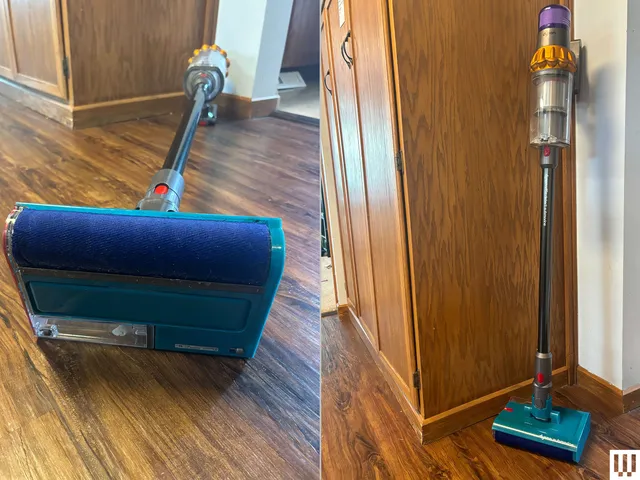
If you want a vacuum that doubles as a mop, look no further than this variation of the V15 Detect that’s also on sale for the holiday weekend. The V15s Detect Submarine comes with the Submarine wet roller head that transforms it from a regular Dyson vacuum (that still comes with both the Fluffy optic cleaner head and Digital motorbar cleaner head for you to use on hard floors and carpet) into a wet roller mop. You can’t buy a regular V15 Detect and add this attachment on; this V15s is made to work with this Submarine head. You’ll fill the small reservoir on the roller head with water and can start mopping away, but you will have to rinse the mop head afterwards by hand, which is a little gross.
A Handheld-Only Dyson
Photograph: Brenda Stolyar
If you’re not looking to spend a ton but want a Dyson that’s super portable and great for stairs, cars, and even boats, the Dyson Car+Boat is made for that. It’s in the name, after all. This handheld-only vacuum packs solid power and has a great battery life for a handheld vacuum. It uses a trigger-style control like the V15 Detect, which I actually find ideal for cleaning compact spaces like stairs and cars so that you’re not fumbling to switch it off as you move around the car or to the next set of stairs. It’s an affordable way to get into the Dyson ecosystem, especially since it’s on sale.
Power up with unlimited access to WIRED. Get best-in-class reporting and exclusive subscriber content that’s too important to ignore. Subscribe Today.
xAI powers its data centres with unregulated gas turbines while SpaceX’s IPO pitches space-based solar. Tesla’s solar business is ignored.
The SpaceX IPO prospectus, filed on Wednesday, contains a vision for terawatt-scale space-based solar power. It also reveals, through what it does not say, that Elon Musk’s AI company xAI is running its data centres on unregulated natural gas turbines, with plans to buy $2.8 billion more. Tesla, the company Musk built on the promise of eliminating fossil fuels, barely features as a power supplier. The contradiction is now a matter of SEC record.
Tesla has released four Master Plans over the years. The through line has been consistent: electrification of the economy. In 2006, Musk described Tesla’s “overarching purpose” as helping “expedite the move from a mine-and-burn hydrocarbon economy towards a solar electric economy.” Just three years ago, Tesla’s Master Plan Part 3 outlined a detailed path to eliminate fossil fuels entirely. The document was rigorous, optimistic, and specific about the role of terrestrial solar, battery storage, and electrified transport in decarbonising the global economy.
Then xAI arrived. The AI company, which merged with SpaceX in February at a combined $1.25 trillion valuation, has embraced the mine-and-burn economy that Tesla was founded to replace. Dozens of unregulated natural gas turbines power xAI’s data centres in Memphis, Tennessee. The $2.8 billion in additional gas turbine purchases disclosed in the filing is not a temporary measure with an expiration date. It is a capital commitment that cements fossil fuel infrastructure into xAI’s operations for years.
The 💜 of EU tech
The latest rumblings from the EU tech scene, a story from our wise ol’ founder Boris, and some questionable AI art. It’s free, every week, in your inbox. Sign up now!
Musk’s companies are not strangers to buying from each other. SpaceX spent $131 million on 1,279 Cybertrucks. xAI has spent $697 million over the past two years on Tesla Megapacks, the grid-scale battery storage systems used to manage peak loads at its data centres. But xAI has not purchased a materially significant number of solar panels from Tesla Energy, the division that exists specifically to deploy the technology Musk once described as the foundation of the future economy.
The SpaceX filing does mention solar, but only in the context of space. The company argues that space-based solar arrays can generate “more than five times the energy” of terrestrial ones thanks to continuous illumination. As AI data centres have encountered opposition on Earth, from neighbours, regulators, and grid operators, Musk and other executives have begun floating the idea of operating server racks in orbit, powered by 24/7 sunshine. SpaceX’s Starship programme, which has cost more than $15 billion to date, is positioned as the launch vehicle that could make this economically viable.
The economics, as TechCrunch’s Tim De Chant notes, are challenging at best. Power prices for Starlink satellites are already multiples higher than what a terrestrial data centre typically spends. Protecting AI chips from radiation, thermal cycling, and micrometeorites in orbit adds cost that does not exist on the ground. It is also unclear whether AI training workloads can be distributed across multiple satellites, which would leave a significant portion of the most compute-intensive AI work earthbound regardless of how cheap launches become. Shipping solar panels on a flatbed truck uses less energy than sending them into orbit.
The filing contains a more revealing claim. SpaceX argues that “third-party estimates on data centre demand are constrained by the practical supply limitations that exist in a terrestrial context and the power shortage may be far greater than what research estimates suggest.” The company references “terawatt-scale annual AI compute growth,” a figure that would represent a transformative increase in global energy demand. Humanity currently uses approximately 4 terawatts on a continuous basis. All the world’s data centres together consume roughly 40 gigawatts. Musk is projecting that AI alone will require additions measured in terawatts, every year.
The SpaceX IPO, expected to raise $75 billion next month, will be priced partly on the strength of this vision. Investors are being asked to buy into a future where terrestrial energy infrastructure is fundamentally insufficient for AI demand, and SpaceX is the company that can solve the problem from space. It is a compelling narrative. It is also a narrative that conveniently excuses the fact that, right now, Musk’s AI company is burning natural gas instead of deploying the solar technology his other company manufactures.
The energy problem for AI data centres is real. OpenAI paused its Stargate UK project over industrial electricity costs that run at more than four times US rates. Global data centre power consumption is projected to reach 150 GW by 2030. The question is not whether AI will need more energy, but whether the answer is to build more terrestrial solar, which has fallen in cost by 90% over the past decade and can be deployed at scale today, or to wait for a technology that requires launching hardware into orbit on rockets that, as of Friday, still cannot land their boosters reliably.
Tesla’s solar and energy storage business generated $2.8 billion in revenue in Q1 2026 alone. The Megapack factory in Lathrop, California ships grid-scale batteries to utilities and industrial customers worldwide. Tesla Energy is, by any measure, one of the most successful clean energy companies on the planet. And yet its founder’s newest company chose gas turbines instead.
Enterprise AI spending is accelerating at extraordinary rates. Salesforce projects $300 million in Anthropic token spending this year. The compute infrastructure behind that spending requires energy, and the companies building it are making choices right now about where that energy comes from. Musk’s choice, for xAI, was fossil fuel. His justification, via SpaceX, is that something better is coming from space. The gap between those two positions is filled with natural gas, and the Master Plan that was supposed to eliminate it.

Atomic macOS Stealer, also known as AMOS, is a persistent macOS security threat because it does not need sophisticated zero-day vulnerabilities to compromise Apple devices.
Instead, this malware family repeatedly exploits ordinary user behaviour by tricking users into typing a single command into their own Terminal application.
A recent incident investigated by Sophos MDR teams revealed exactly this pattern: a ClickFix-style ruse persuaded a victim to execute a malicious line of code manually.
This approach has become increasingly prominent, with researchers noting similar social engineering tactics in multiple macOS infostealer campaigns throughout 2025 and early 2026.
AMOS accounted for nearly 40% of all macOS protection updates deployed by Sophos in 2025, more than doubling the detection rate of any other macOS malware family during the same period.
Furthermore, almost half of all macOS stealer customer reports in the last three months involved AMOS or its close variants.
Security firms have tracked this malware-as-a-service operation since at least April 2023, with notable campaigns including a variant dubbed SHAMOS reported by CrowdStrike in August 2025.
In December 2025, Huntress documented infections spreading through poisoned search results related to ChatGPT and Grok conversations.
After the initial Terminal command executes a bootstrapping script, the malware immediately prompts the user for their macOS system password.
The malicious code then validates this credential locally using a simple directory services command before storing it in a hidden file named .pass within the user’s home directory.
Once the password is secured, AMOS downloads a secondary payload that removes extended attributes to bypass macOS security warnings.
The stealer also checks whether it is running inside a virtual machine or sandbox environment by querying system_profiler data for indicators such as QEMU, VMware, or KVM.
The malware then proceeds to harvest an extensive range of sensitive information, including the macOS Keychain database, browser credentials from Firefox and Chrome, extension storage files, and local session tokens.
Some variants also deploy fake Ledger Wallet and Trezor Suite applications designed to steal cryptocurrency wallet seeds and credentials.
All collected files are compressed into a single archive using the ditto utility before being transmitted to attacker-controlled servers via curl POST requests.
To maintain long-term access, the malware installs a LaunchDaemon that ensures automatic execution after every system reboot.
Despite the severity of AMOS, it is worth questioning whether security vendors are overstating its novelty, given that infostealers have been targeting Windows systems for nearly two decades.
The malware’s heavy reliance on user consent — someone must willingly paste and run a Terminal command — creates a significant barrier that technically literate users might easily avoid.
Moreover, Apple’s ongoing improvements to Gatekeeper, XProtect, and notarization requirements could render AMOS largely ineffective within a few operating system updates.
The real danger may lie less in AMOS itself and more in the uncomfortable truth that no platform is immune to users who ignore basic security warnings.

Follow TechRadar on Google News and add us as a preferred source to get our expert news, reviews, and opinion in your feeds.

Tannoy is marking its 100th anniversary with a major loudspeaker announcement at HIGH END Vienna 2026, where the legendary British speaker maker will unveil exclusive limited-edition models and signal the return of several iconic designs. The anniversary lineup begins with special versions of the Westminster Royal GR and Canterbury GR, both based on the Prestige Gold Reference Series and produced in extremely limited numbers that nod directly to Tannoy’s 1926 founding in South London.

Tannoy’s first 100th anniversary Limited Editions will be produced in extremely small numbers: 19 pairs of the flagship Westminster Royal GR and 26 pairs of the Canterbury GR. The production figures are intentional, combining to reference 1926, the year Tannoy was founded in South London. Anniversary upgrades are said to, “incorporate significant performance upgrades, including enhanced crossovers and improved internal cabling.” Additional anniversary models are expected to be added to the range in the coming months.

At HIGH END 2026 in Vienna, Tannoy will give attendees a rare chance to hear the Westminster Royal GR, the brand’s flagship Prestige loudspeaker and one of the most recognizable large-format designs in British hi-fi.
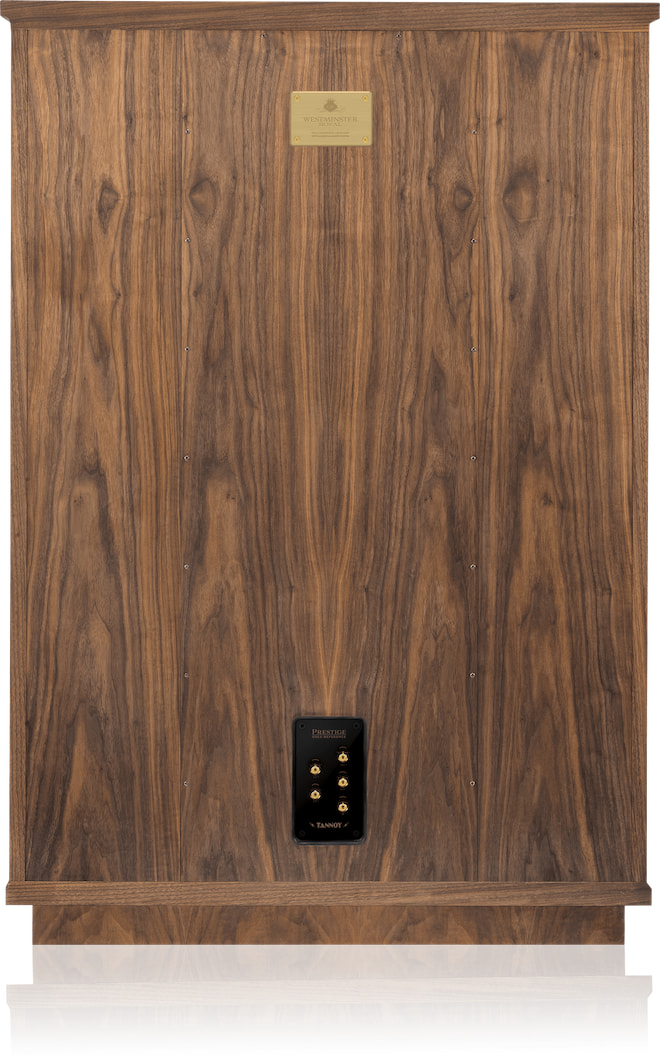
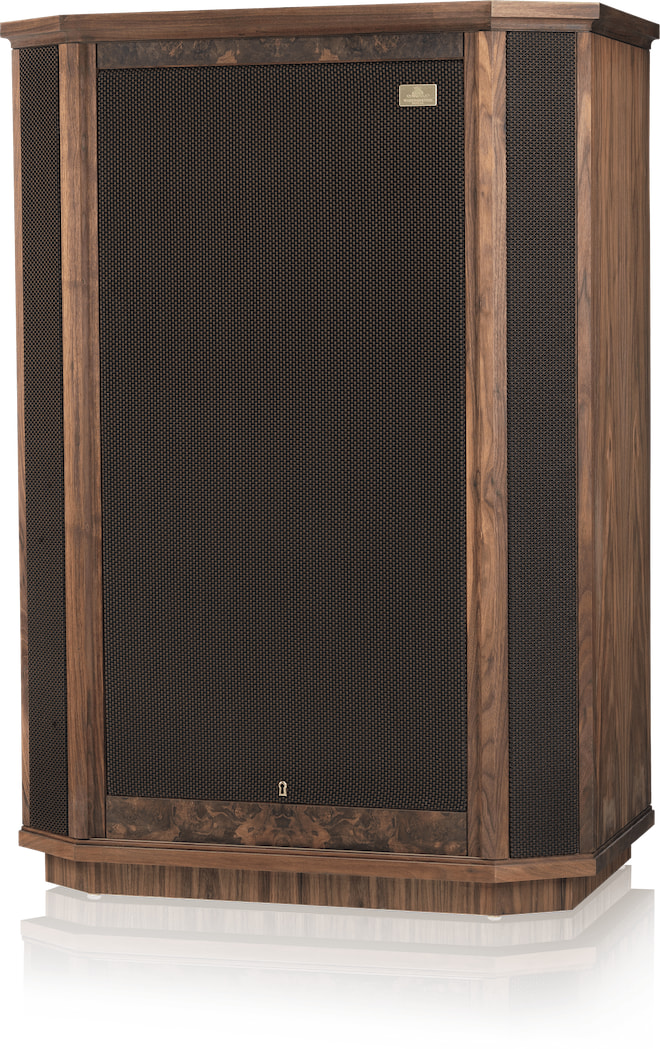
The Westminster Royal GR is a two-way, horn-loaded loudspeaker built around a 15-inch Tannoy Dual Concentric driver, a driver architecture first introduced by the company in 1947. This is not a compact lifestyle box pretending to be heritage audio. At 140 cm tall, 55 inches, and weighing 140 kg, 309 pounds, the Westminster Royal GR is closer to furniture with a passport and a solicitor.
Key acoustic technologies include Tannoy’s PepperPot WaveGuide, Alnico magnets, and aluminium-magnesium alloy diaphragm compression drivers with Mylar surrounds. The massive 530-litre birch ply cabinet uses extensive internal bracing and Tannoy’s Differential Materials Technology, which couples the drive unit to the cabinet using materials of varying density to help control resonance, improve damping, and reduce unwanted vibration.
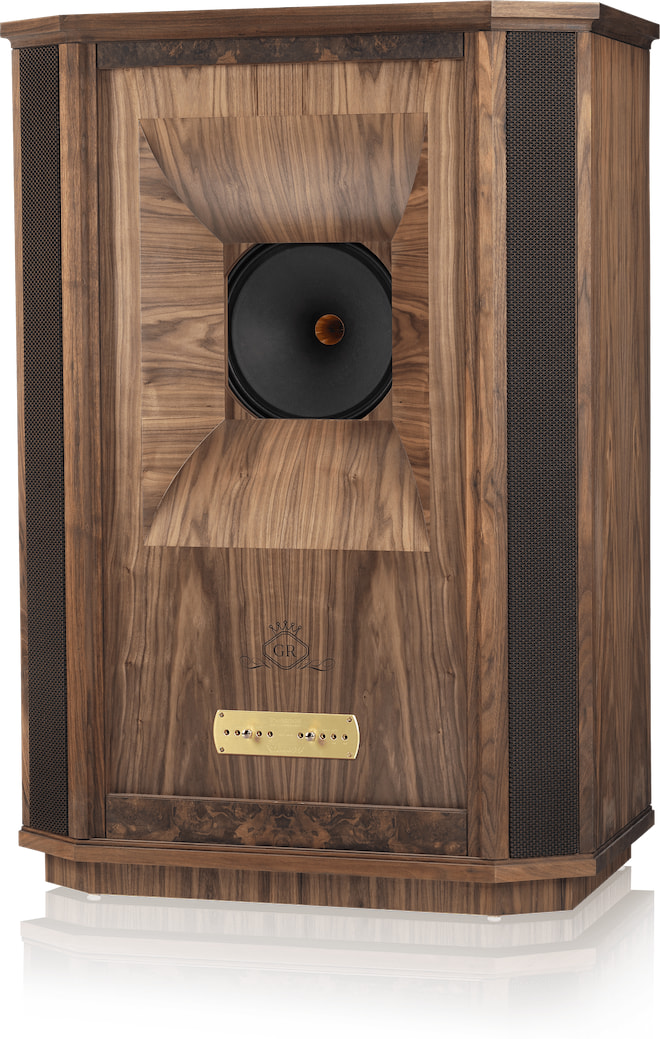
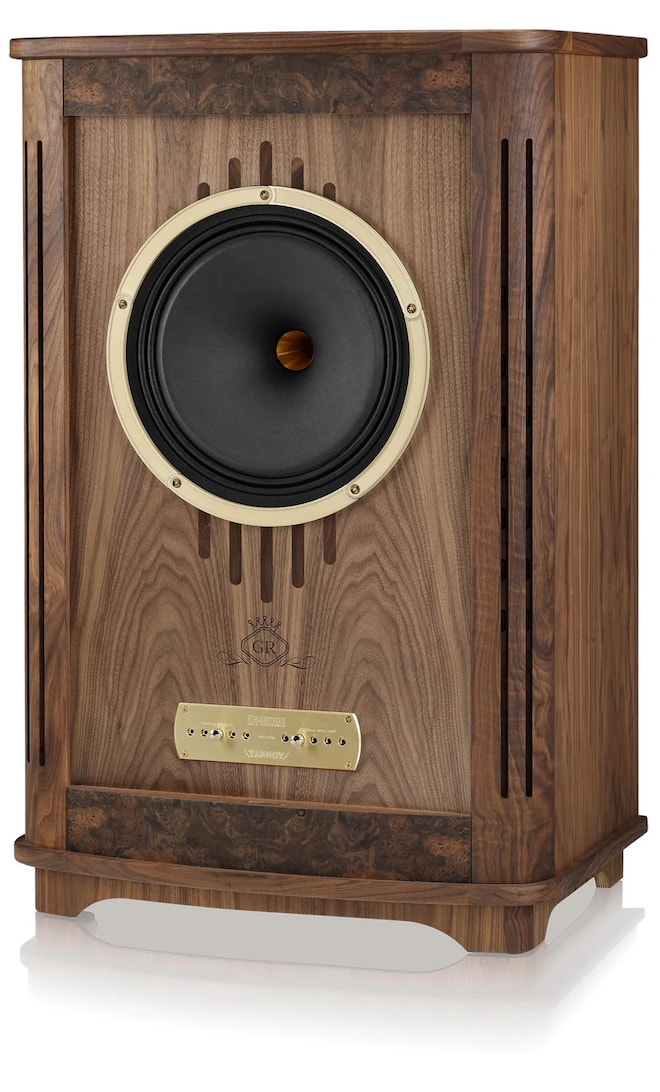
The cabinet is finished in oiled walnut veneer with hand-selected burr walnut inlays, because when a loudspeaker weighs more than some motorcycles, it may as well look like it belongs in a country estate.
The Westminster Royal GR has a sensitivity rating of 99 dB. This contributes to better compatibility with amplifiers from high-powered transistors to low-powered tube amplifiers, while bass extension reaches down to 18 Hz for full-bandwidth reproduction.
At HIGH END Vienna 2026, the Tannoy Westminster Royal GR will be demonstrated with high-performance electronics from Esoteric and cabling from Montaudio, giving attendees a properly configured listen to one of Tannoy’s most ambitious loudspeaker designs. Not exactly the kind of speaker you casually wedge between a media console and a ficus.
Tannoy says full specifications, pricing, and imagery for the wider range of special edition models will be released when the lineup formally launches later this year. Until then, the Vienna showing is effectively the preview: limited information, very large cabinets, and enough British hi-fi gravitas to make the carpet nervous.
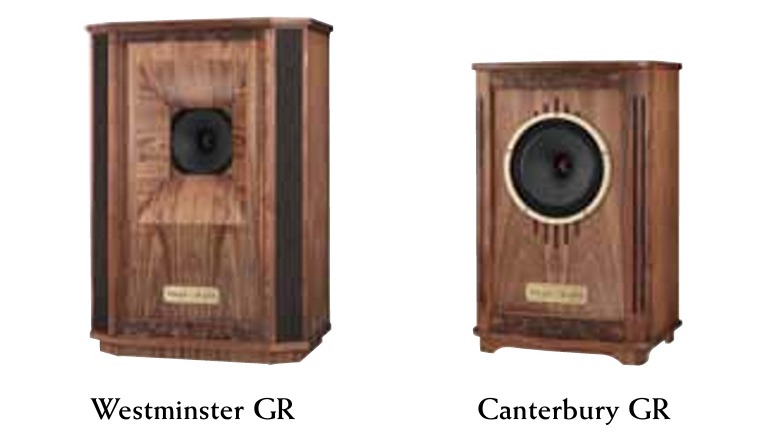
| Tannoy Non-Anniversary Model | Westminster GR | Canterbury GR |
| Product Type | Floor Standing Speaker | Floor Standing Speaker |
| MSRP (pair) | $60,000 | $30,000 |
| Recommended Amplifier Power | 20 to 350 watts per channel | 20 to 300 watts per channel |
| Continuous power handling | 175 watt RMS | 150 watt RMS |
| Peak power handling | 700 watt | 600 watt |
| Sensitivity (2.83 volt @ 1 m) | 99 dB | 96 dB |
| Nominal Impedance | 8 ohm | 8 ohm |
| Minimum Impedance | 5 ohm | 5 ohm |
| Frequency Response | 18 Hz – 27 kHz (-6 dB) | 28 Hz – 27 kHz (-6 dB) |
| Dispersion | 90 degrees conical | 90 degrees conical |
| Dual Concentric Drive Unit | 380 mm (15”) with paper pulp cone and twin roll impregnated fabric surround.
52 mm (2”) round wire voice coil 52 mm (2”) aluminium/magnesium alloy dome with round wire voice coil |
380 mm (15”) with paper pulp cone and twin roll impregnated fabric surround.
52 mm (2”) round wire voice coil 52 mm (2”) aluminium/magnesium alloy dome with round wire voice coil |
| Crossover Type | Bi-wired, hard-wired, passive, low loss.
Time compensated. 2nd order low pass. 2nd order high pass. |
Bi-wired, hard-wired, passive, low loss.
Time compensated. 2nd order low pass. 2nd order high pass. |
| Crossover Frequency | 200 Hz acoustical, 1.0 kHz electrical |
1.1 kHz |
| Adjustments | +/-3 dB over 1.0 kHz to 27 kHz shelving
+ 2 dB to -6 dB per octave over 5 kHz to 27 kHz slope |
+/-3 dB over 1.1 kHz to 27 kHz shelving
+ 2 dB to -6 dB per octave over 5 kHz to 27 kHz slope |
| Enclosure Type | Compound horn | Dual variable distributed port |
| Volume | 530 litres (18.72 cu. ft) | 235 litres (3.71 cu. ft) |
| Dimensions (HWD) | 1395 x 980 x 560 mm
54.92 x 38.58 x 22.05” |
1100 x 680 x 480 mm
43.31 x 26.77 x 18.90” |
| Construction | High-density birch ply, walnut veneered, with solid walnut trim and edging | High-density birch ply, walnut veneered, with solid walnut trim, 25mm (1”) thick front baffle. Internally cross-braced and heavily damped |
Tannoy’s 100th anniversary lineup is shaping up to be more than a commemorative badge and a nicer veneer. The limited-edition Westminster Royal GR and Canterbury GR lean into real heritage, serious engineering, and deliberately tiny production numbers tied to 1926, the year Tannoy was founded.
Who buys these? Tannoy loyalists, collectors, and serious audiophiles with the room, budget, and structural flooring to handle them. The Westminster Royal GR is not for casual listening in a condo. It is for someone who wants one of British hi-fi’s most iconic loudspeakers and is willing to build a system, and possibly a room, around it.
The bigger story is still coming at HIGH END Vienna 2026. For now, Tannoy has shown the tip of the iceberg, and it appears to be wearing oiled walnut.
The Tannoy UK team will be available at HIGH END Vienna to discuss the anniversary models in Hall X2, E06, as well as at the nearby Tech Gate demonstration area.
We don’t have final pricing or availability on the Anniversary models, but the regular versions of the each model are priced from $28K to $60K at upscaleaudio.com.


Picket Defense Systems has a new solution for when a coordinated drone swarm attacks at close range. They call it the Inferno Rotating Turret Close-In (RTC), and it’s a compact rotating turret built to engage drones from all directions at once. Unlike traditional gun turrets that have to physically rotate toward the target before they fire, the Inferno RTC uses a globe-shaped structure fitted with barrels pointing at dozens of different angles. That means less targeting delay compared to what a single weapon needs to move into position.
In addition to its spherical shape, the Inferno RTC also uses passive targeting architecture instead of broadcasting detectable radar signals. It also features a three-dimensional array of microphones and optical cameras, used to identify and track incoming drones instead of relying on radar emissions. Picket says it uses onboard artificial intelligence to continuously process that incoming sensor data and prioritize threats in real time (via InterestingEngineering). No external network connectivity needed.
By using sound to identify drones, the turret can monitor threats while also remaining electronically silent. Picket says this targeting method should go a long way in stopping drones that have become jam-resistant against traditional electronic warfare systems.
The lighter Inferno RTC weighs about 45 pounds. It’s fitted with 36 barrels that can fire 5.56mm ammunition, .410 shells, and 20-gauge rounds. The larger version weighs about twice that, equipped with 54 barrels that can fire heavier 12-gauge and 40mm low-velocity munitions. Both versions can detect and engage threats at distances of up to 120 meters, and that’s from both fixed positions and moving vehicles.
That does raise some questions, though. With little more than a football field of range, even calling this the “last layer” of defense feels generous. Less than 400 feet is incredibly close. In real combat, that’d leave little to no room for error. Not to mention, by the time hostile drones reach that distance, troops might already be in danger. At that point, the damage might already be done. Until there’s been widely released combat testing, Pentagon procurement announcements, or third-party evaluations confirming performance under realistic battlefield conditions, all we have to go off of is what Picket Defense has made publicly available.

Neil Armstrong and Buzz Aldrin became the faces of the Moon landing era. Elon Musk’s Mars era may get a very different public face in Chun Wang, a cryptocurrency billionaire whose fortune traces back to Bitcoin mining.
Wang is expected to lead a future SpaceX Starship mission that would fly past Mars and return to Earth. SpaceX has not announced a launch date, and the plan still depends on Starship proving it can safely carry humans far beyond Earth’s orbit.

Private spaceflight has already moved through its celebrity phase. In April 2025, Blue Origin flew Katy Perry, Gayle King, Lauren Sánchez, Aisha Bowe, Amanda Nguyễn, and Kerianne Flynn on its NS-31 New Shepard mission. The all-female suborbital flight lasted minutes, but it drew heavy attention worldwide.
Wang’s planned mission is far more ambitious than a short trip to the edge of space. The Mars flyby could reportedly last around two years, making it a much harder test of both the passenger and the spacecraft. If SpaceX pulls it off, Wang could become one of the first humans to travel toward Mars, even without landing there.

Wang is not new to private spaceflight. He previously commanded SpaceX’s Fram2 mission, a Crew Dragon flight that carried four civilian astronauts over Earth’s polar regions in 2025. The mission lasted several days and gave Wang actual orbital flight experience before his planned jump to Starship. That does not make the Mars flyby any less ambitious, but it does mean SpaceX is not picking someone with no prior time in space.
Elon Musk has long said SpaceX wants to reach Mars. Starship is the rocket built for that goal, but it is still being tested.
SpaceX’s upgraded Starship V3 launched on May 22, 2026, after an earlier scrub due to a launch tower issue. The uncrewed test reportedly achieved most of its goals, including stage separation and mock Starlink satellite deployment, before ending with a splashdown in the Indian Ocean and erupting into a massive fireball. SpaceX said the fiery end was intentional, as the company did not plan to recover or reuse the experimental spacecraft.
Starship has not carried humans yet, so Wang’s Mars mission is still a long way from happening. For now, the plan depends on SpaceX proving that the rocket can safely take people far beyond Earth.
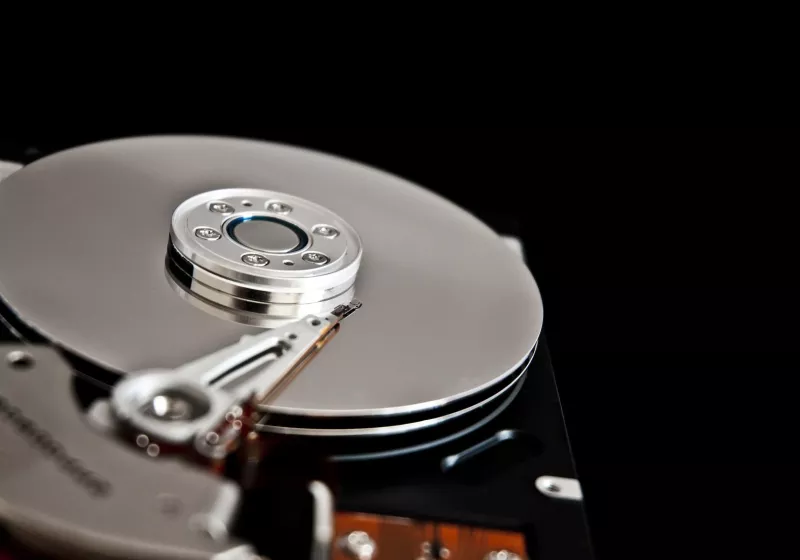

Filed in the US District Court for the Northern District of California, the lawsuit accuses major suspension assembly manufacturers of engaging in price-fixing over more than a decade. The defendants are grouped around two key players, TDK Corporation and NHK Spring, whose components are used across nearly the entire hard…
Read Entire Article
Source link




Blockchain.com files with SEC for U.S. IPO


Holiday Weekend Open Thread – Corporette.com


Intesa Sanpaolo’s crypto holdings jump to $235M as XRP enters


Dell Technologies DELL Stock Surges 15% on AI Server Momentum and Analyst Upgrades in 2026


Space X IPO Is ‘Bad News’ for Tech Stocks: But What About Bitcoin?


Robinhood crypto COO Tanya Denisova exits


Makerfield: a tale of two social-media histories


AI infrastructure race heats up as IREN pitches full-stack strategy, WhiteFiber lands $160M deal

A 0.12% parameter add-on gives AI agents the working memory RAG can’t


WhatsApp ads could make Irish debut after discussions with DPC


Amazon Sundays: Memorial Day Hosting


You Can Now Add ChatGPT To PowerPoint


Bitcoin Accumulation Weakens as BTC Realized Losses Hit $600M

Revolut Launches Dogecoin Debit Card Across UK and EU


Off Campus Easter Eggs Explained: Characters, Stories, More


2026 CJ Cup Byron Nelson leaderboard: Brooks Koepka finds putting stroke in Round 1

Charity run by Reform leader Malcolm Offord accused of ‘law breaking’ over Scottish registration


Trump Invests $1M-$5M in Kura Sushi USA Chain With 27 California Locations


Trump Media’s Bitcoin Stash Shrinks Again as 2,650 BTC Lands on Crypto.com
Goldman Sachs reinstates Ageas stock coverage with neutral rating


-Reviewer-Photo-SOURCE-Brenda-Stolyar.jpg)




You must be logged in to post a comment Login