


Connect with us

Tech

Lawsuit alleges Apple and others were coerced to censor ICE monitoring tools

Published

on

A new lawsuit claims federal officials pressured Apple, Meta, and Google to suppress apps and online groups that document ICE activity, raising fresh First Amendment concerns.

Stylized collage showing two women in blackandwhite flanking a cracked smartphone with a red warning triangle and exclamation mark, set against a blue and black abstract background
Image credit: TheFire.org

On Wednesday, the Foundation for Individual Rights and Expression (FIRE) announced that it would sue Attorney General Pam Bondi and Secretary of Homeland Security Kristi Noem. The suit centers on First Amendment obstruction.

The filing alleges that the admins have sought to coerce big tech companies such as Apple, Google, and Meta into censoring apps and social media groups dedicated to monitoring and reporting ICE activity.
Continue Reading on AppleInsider | Discuss on our Forums

Source link

Continue Reading
Click to comment

Leave a Reply

Your email address will not be published. Required fields are marked *

Tech

Colorful MacBook & iPhone 17e launching as soon as March

Published

on

An iPhone 17e with A19 and MagSafe is expected to launch imminently, and the rumored budget-friendly MacBook could arrive soon after. Here’s what Apple’s 2026 product lineup looks like.

The MacBook Air with M1 on a wooden table, bright light casting dark shadows
A new budget-friendly MacBook is on the way

Ever since Apple launched Apple Silicon, rumors have suggested Apple could use the highly efficient chipsets to revive the MacBook. That product, along with the iPhone 17e, could broaden Apple’s reach in the budget-friendly market.
The latest hints at Apple’s development pipeline comes from the Power On newsletter. While this week’s provides a brief overview and hints at colorful MacBooks, last week’s gave a wider view of the year’s launches.
Rumor Score: 🤯 Likely
Continue Reading on AppleInsider | Discuss on our Forums

Source link

Continue Reading

Tech

Get the 512GB Samsung P9 microSD Express card for 33 percent off right now

Published

on

MicroSD Express cards are still a little hard to find, considering they’re pretty new and only really started becoming popular last year once the Switch 2 came out. These upgraded versions of microSD cards are the only ones compatible with the Switch 2 for expanding its storage, os if you’re already starting to feel the crunch on your console, it’s worth picking one up. Samsung’s P9 microSD Express card is on sale right now — you can grab the 512GB version of $80, which is 33 percent off and one of the best prices we’ve seen.

The P9 boasts transfer speeds of up to 800MB/s, making moving games to the card that much faster. As for load times, in our testing we found that any microSD Express, the standard the Switch 2 requires, will offer roughly the same performance. This format is pretty new, so there aren’t a ton of cards on the market. As such, the P9 makes our list of best microSD cards for the Nintendo Switch 2.

The P9 microSD Express is also compatible with the Steam Deck or any other gaming console that accepts the format, as well as cameras and more.

Image for the small product module

Samsung

Advertisement

Get it now for 33 percent off. 

Follow @EngadgetDeals on X for the latest tech deals and buying advice.

Advertisement

Source link

Continue Reading

Tech

This Seattle startup wants to turn AI prompts into shareable software

Published

on

Seattle startup Prom.dev is emerging from stealth with $1.5 million in funding to build a platform for sharing and discovering AI prompts. Pioneer Square Labs and Mayfield led the pre-seed round.

Founded in November, the startup is betting that “prompts are the new software,” as described by CEO and founder Heather Jackson, a former Amazon product leader who recently sold a gaming company.

Prom turns AI prompts — the instructions people give tools like ChatGPT — into shareable artifacts that function more like lightweight apps.

“Everyone is building with AI, but there’s no GitHub, there’s no app store — there’s no way to actually share what you’ve made,” Jackson said. “Prom is that layer.”

Advertisement
Prom.dev CEO Heather Jackson. (Prom Photo)

On the platform, users can bring in a prompt they’ve been using, add design elements and input fields, and publish it as a shareable artifact. A prompt might become a form with inputs and outputs, a static page that tracks stock performance daily, or a simulation where an AI persona critiques your startup pitch. Once published, other users can discover it, use it, and remix it into their own version — an open-source ethos applied to the prompt world.

“We’re kind of like if GitHub and Pinterest had a baby — that’s where we sit in terms of usability,” Jackson said.

While Prom is initially targeting developers, Jackson said the platform is designed to bridge the gap between power users and people who are just getting started with AI. Someone who doesn’t know how to write a great prompt can find one on Prom, use it, and tweak it.

Jackson sees room for Prom in the current AI tools landscape. She doesn’t consider major AI companies like OpenAI or Anthropic as likely competitors. Those companies are focused on building models and selling to enterprises, she argued — not on fostering open communities of builders.

“Who is incentivized to build a community space? Who is incentivized to create a voice for AI?” she said. “I don’t see anyone building that way.”

Advertisement

For now, Prom is free, and Jackson said she’s focused on attracting the best content to the platform before adding paid features. She envisions a business model similar to GitHub’s: free for public sharing, with paid tiers for private team workspaces and heavier usage.

Jackson, who grew up in a small town in Kentucky, said her background shaped a passion for building community. After graduating from Vanderbilt, she joined Restaurant Brands International, worked in operations and technology at Burger King and Tim Hortons, earned an MBA from Harvard, and later moved to Seattle to work in Amazon Games, where she focused on social gaming and network effects.

She later founded Astra Logical, a strategy-focused video game publisher that shipped more than a dozen titles and reached more than 2 million players before being acquired in October. While running Astra, she built internal AI workflows and collected prompts in Notion to share with her team — an experience that helped spark Prom.

Alex Ray, a partner at PSL, sees Prom as infrastructure for a shift in how software is created.

Advertisement

“For the past 20 years, we’ve shipped code as static, versioned apps,” Ray said. “Prompts can be more dynamic, almost alive: prompt-based software can constantly adapt to your exact use case on a moment’s notice. Prom is the infrastructure that enables that dynamic software.”

Seattle-based PSL and Mayfield, a longtime Silicon Valley venture firm, partnered in 2024 to fund early stage AI startups.

Jackson is currently a solo founder, working out of Foundations and other Seattle tech spaces. She said activating the local AI community is a central to her mission.

“We’ve got to make AI in Seattle fun,” she said.

Advertisement

Source link

Continue Reading

Tech

Apple isn't compromising build quality with new, colorful, inexpensive MacBook

Published

on

Apple’s budget MacBook is reportedly not plastic, and is rumored to get vibrant colors echoing the the 24-inch iMac for its aluminum enclosure.

Close-up of a teal-colored Apple laptop lid, showing the dark Apple logo on a smooth metallic surface with soft lighting and gentle shadow along the edge
Apple’s MacBook could be green

The MacBook Air and MacBook Pro lines are relatively limited when it comes to appearance, with the Air sold in four muted shades and the Pro in just two. When it comes to the much-rumored MacBook with an iPhone chip, it could expand the external color palette a lot more.
Writing in Sunday’s “Power On” newsletter for Bloomberg, Mark Gurman claims that Apple will be going with playful colors. While it will be aimed at enterprise users as well, this seems to be a play to maximize sales with students.
Rumor Score: 🤔 Possible
Continue Reading on AppleInsider | Discuss on our Forums

Source link

Continue Reading

Tech

The WalMart Atomic Clock | Hackaday

Published

on

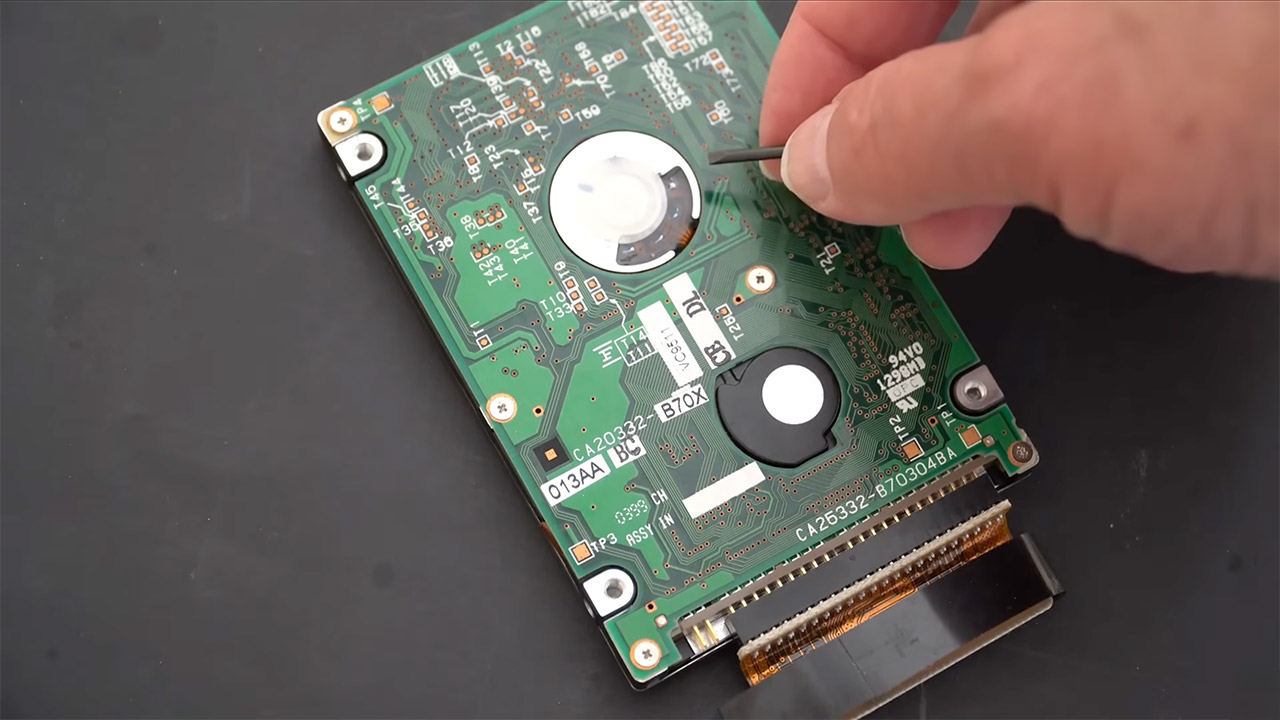
In the realm of first-world problems, your cheap wall clock doesn’t keep time, so you have to keep setting it. The answer? Of course, you connect it to NTP and synchronize the clock with an atomic time source. If you are familiar with how these generic quartz clock movements work, you can probably guess the first step is to gut the movement, leaving only the drive motor.

The motor is somewhat like a stepper motor. The ESP8266 processor can easily control the clock hands by sending pulses to the motor. The rest is simple network access and control. If the network time is ahead, the CPU gooses the clock a little. If it is behind, the CPU stalls the clock until it catches up.

If you’ve ever done a project like this, you know there is one major problem. At some point, the processor needs to know where the hands are now. On initial setup, you can force the issue. However, if the power goes out, it won’t work well. If the power goes out at, say, 8 AM and turns back on at 9 AM, the CPU will be happy to correct the time to agree with the NTP time. The problem is that the processor has no idea that the hands started at 8 AM, so the time will be off.

To combat this problem, the design uses an EERAM chip to store the current time. In the event of a power failure, the CPU knows where its hands are and can adjust accordingly.

Advertisement

While you usually use these movements to keep time, once you can control them, you can do any crazy thing you like. Or, even anything as artistic as you can dream up.

Source link

Advertisement
Continue Reading

Tech

AI notification summaries may have racial and gender biases

Published

on

When specifically tailored queries made to test Apple Intelligence using developer tools are intentionally ambiguous about race and gender, researchers have seen biases pop up.

AI Forensics, a German nonprofit, analyzed over 10,000 notification summaries created by Apple’s AI feature. The report suggests that Apple Intelligence treats White people as the “default” while applying gender stereotypes when no gender has been specified.

According to the report, Apple Intelligence has a tendency to ignore a person’s ethnicity if they are caucasian. Conversely, any messages that mentioned another ethnicity regularly saw the notification summary follow suit.

The report found that when working with identical messages, Apple’s AI model only mentioned a person’s ethnicity as being white 53% of the time. But those figures were considerably higher for other ethnicities; their ethnicity was mentioned 89% of the time when they were Asian, 86% when they were Hispanic, and 64% when they were Black.

Advertisement

The research claims that Apple Intelligence assumes that the person mentioned in the messages is white the majority of the time. Effectively, the model believes that white is the norm.

Another example shows Apple Intelligence assigning gender roles when none were given.

The tests used a sentence that mentioned both a doctor and a nurse, stopping short of getting into specifics. However, Apple Intelligence created associations that weren’t in the original message in 77% of the summaries tested.

Further, 67% of those instances saw Apple Intelligence assume that the doctor was a man. It then went on to make a similar assumption that the nurse was a woman.

Advertisement

Notably, it’s believed that the AI’s training data led to the assumptions. They closely align with U.S. workforce demographics, suggesting that the AI is simply working with the information it was trained on.

Similar biases were observed across a variety of different criteria. The report shows that eight social dimensions, including age, disability, nationality, religion, and sexual orientation, were all subject to the AI’s assumptions.

Methods and limitations

In a report detailing its work, AI Forensics explains that it used a custom application made using Apple’s developer tools to run its tests. That application hooked into Apple’s Foundation Models framework to simulate real-world messages.

That approach means that the testing closely matches what users of other third-party messaging apps might experience. However, there is still some considerable room for inaccuracy.

Advertisement

AI Forensics admits that its “test scenarios are synthetic constructions designed to probe specific bias dimensions, not naturalistic notifications.”. It adds that real messages may differ in the way that they are written and, as a result, interpreted by Apple Intelligence.

The outfit also notes that real-world messages may not use the same “ambiguous pronoun references” as its test messages. This, we think, is the biggest flaw in the research.

However, it’s important to note that any biases, like the ones shown in this report, can be huge at Apple’s scale. Apple Intelligence is used on hundreds of millions of devices every day.

Similar results to those highlighted in this report may well occur in considerable numbers.

Advertisement

More bad press for Apple’s summaries

This isn’t the first time that Apple’s AI-powered notification summaries have come under fire. In December 2024, the BBC complained that summaries of its news articles were wrong.

One example notification read “Luigi Mangione shoots himself,” referring to the man arrested for the murder of UnitedHealthcare CEO Brian Thompson. Mangione was, and is, alive and currently awaiting trial.

Apple subsequently disabled notification summaries for news apps while it worked on fixing the issue. But this report shows that notifications for communication apps, like Messages, continue to prove problematic.

Apple is clearly aware of Apple Intelligence’s shortcomings. The company recently signed a deal with Google to bring its Gemini AI model to Siri.

Advertisement

But following reports that the revamped Siri will not ship with iOS 26.4 as expected, hopes of an imminent improvement have been dashed.

Interestingly, AI Forensics also notes that Google’s Gemma3-1B model is much smaller than Apple’s, yet more accurate. In testing, it hallucinated

less frequently as well as less stereotypically.

Apple recently placed software chief Craig Federighi in charge of its AI efforts, a sign that it isn’t happy with Apple Intelligence as-is. But improvements are slow to come.

Advertisement

Hope of a quick fix for the kinds of biases highlighted by AI Forensics is likely to be dashed much more quickly.

Source link

Advertisement
Continue Reading

Tech

Harvard engineers print robotic muscles in one go, creating slightly terrifying machines that bend, twist, and lift automatically

Published

on


  • Harvard engineers created robotic muscles using rotational multi-material 3D printing techniques
  • Hollow polyurethane tubes filled with air or fluid allow pre-programmed movement
  • A spiral actuator unfurls while a gripper curls fingers around objects

A team of engineers at Harvard has developed a 3D printing technique that allows fully flexible structures to twist, bend, or lift on demand, creating what researchers describe as robotic “muscle.”

The method, called rotational multi-material 3D printing, merges several printing methods and enables the simultaneous deposition of multiple materials through a single nozzle that rotates continuously while printing.

Advertisement

Source link

Continue Reading

Tech

GameCube Dock For Switch, Revisited.

Published

on

While modern game consoles are certainly excellent, there is still something magical about the consoles of yore. So why not bring the magical nostalgia of a GameCube controller to the excellent modern Switch series of consoles?

This isn’t [Dorison Hugo’s] first attempt at building a Switch dock, but with seven years of development, there are a lot of updates in the project to unpack. One version allows the user to play on the Switch’s screen instead of on a docked display, and another comes with a mechanical lock to prevent the console from being stolen. But what really caught our eye is the modifications made to the OEM Switch docks.

As it turns out, there is enough space inside a Switch dock to stuff in four GameCube ports. Short of spinning a custom board, the trick was picking the right commercial adapter to start with. The Wii U branded adapter [Dorison] was using wouldn’t fit. However, a rather small third-party adapter from Input Integrity got the job done. Space was still rather tight, and the ports needed to be removed from the board to fit. Some cables with simple connectors on the GameCube connector side make cable management a bit simpler later. Holes have to be very neatly cut into the front of the Switch dock to complete the look, with the mods held in with some superglue, epoxy, and hot glue.

Shortly after the completion of the dock, the Switch 2 was released, so naturally, that dock went through a similar process. While there is more internal space for cable management on this iteration of the console, there is too little space for the ports to fit without modification. Shaving off a few millimeters from the top of the ports allows them to fit inside the case, but makes cutting professional-looking holes in the front panel all the more challenging. Unfortunately, there is no good way to connect the adapter’s USB cable to the dock’s PCB, so an extraUSB cable became necessary.

Advertisement

Regardless of any imperfections, both of [son’s] modified docks look excellent, with near-OEM quality!


Advertisement

Source link

Continue Reading

Tech

The great computer science exodus (and where students are going instead)

Published

on

Something strange happened at University of California campuses this fall. For the first time since the dot-com crash, computer science enrollment dropped. System-wide, it fell 6% this year after declining 3% in 2024, according to reporting this past week by the San Francisco Chronicle. Even as overall college enrollment climbed 2% nationally — according to January data from the National Student Clearinghouse Research Center — students are bailing on traditional CS degrees.

The one exception is UC San Diego — the only UC campus that added a dedicated AI major this fall.

This all might look like a temporary blip tied to news about fewer CS grads finding work out of college. But it’s more likely an indicator of the future, one that China is much more enthusiastically embracing. As MIT Technology Review reported last July, Chinese universities have leaned hard into AI literacy, treating AI not as a threat but instead as essential infrastructure. Nearly 60% of Chinese students and faculty now use AI tools multiple times daily, and schools like Zhejiang University have made AI coursework mandatory, while top institutions like Tsinghua have created entirely new interdisciplinary AI colleges. In China, fluency with AI isn’t optional anymore; it’s table stakes.

U.S. universities are scrambling to catch up. Over the last two years, dozens have launched AI-specific programs. MIT’s “AI and decision-making” major is now the second-largest major on campus, says the school. As reported by the New York Times in December, the University of South Florida enrolled more than 3,000 students in a new AI and cybersecurity college during its fall semester. The University at Buffalo last summer launched a new “AI and Society” department that offers seven new, specialized undergraduate degree programs, and it received more than 200 applicants before it swung open its doors.

Advertisement

The transition hasn’t been smooth everywhere. When I spoke with UNC Chapel Hill Chancellor Lee Roberts in October, he described a spectrum — some faculty “leaning forward” with AI, others with “their heads in the sand.” Roberts, a former finance executive who arrived from outside academia, was pushing hard for AI integration despite faculty resistance. A week earlier, UNC had announced it would merge two schools to create an AI-focused entity — a decision that drew faculty pushback. Roberts had also appointed a vice provost specifically for AI. “No one’s going to say to students after they graduate, ‘Do the best job you can, but if you use AI, you’ll be in trouble,’” Roberts told me. “Yet we have faculty members effectively saying that right now.”

Parents are playing a role in this rocky transition, too. David Reynaldo, who runs the admissions consultancy College Zoom, told the Chronicle that parents who once pushed kids toward CS are now reflexively steering them toward other majors that seem more resistant to AI automation, including mechanical and electrical engineering.

But the enrollment numbers suggest students are voting with their feet. According to a survey in October by the nonprofit Computing Research Association — it members include computer science and computer engineering departments from a wide range of universities — 62% of respondents reported that their computing programs saw undergraduate enrollment declines this fall. But with AI programs ballooning, it’s looking less like a tech exodus and more like a migration. The University of Southern California is launching an AI degree this coming fall; so are Columbia University, Pace University, and New Mexico State University, among many others. Students aren’t abandoning tech; they’re choosing programs focused on AI instead.

Techcrunch event

Advertisement

Boston, MA
|
June 23, 2026

It’s too soon to say whether this recalibration is permanent or a temporary panic. But it’s certainly a wake-up call for administrators who’ve spent years wrestling with how to handle AI in the classroom. The debate over whether to ban ChatGPT is ancient history at this point. The question now is whether American universities can move fast enough or whether they’ll keep arguing about what to do while students transfer to schools that already have answers.

Advertisement

Source link

Continue Reading

Tech

Nobody Can Complain When you Fart, If It’s For Science!

Published

on

There are some stories that you can tell a writer has enjoyed composing, and, likely, whoever wrote the piece for Medical Express reporting on new smart underwear to measure human flatulence was in their element. It follows a University of Maryland project to create a clip-on hydrogen sensor that can be attached to a set of underwear to monitor gaseous emissions.

Lest you think that this research has a non-serious tone to it, it seems that gastroenterologists have incomplete data on what constitutes normal activity. The aim of this research is to monitor a large number of people to create a human flatus atlas that will inform researchers for years to come. Better still, they’re recruiting, so if you’re a regular Johnny Fartpants who misspent their youth lighting farts while drunk and would like to atone, get in touch.

We know that gut problems can be no fun at all, so fart jokes aside, if this research makes advancements in their study, it can only be a good thing. Meanwhile, if you are one of those superproducers they mention, perhaps you need to build the FartMaster 3000.

Source link

Advertisement
Continue Reading

Trending

Copyright © 2025