You might think, “Oh, libusb handles that.” But, of course, it doesn’t do the actual work. In fact, there are two possible backends: netlink or udev. However, the libusb developers strongly recommend udev. Turns out, udev also depends on netlink underneath, so if you use udev, you are sort of using netlink anyway.
If netlink sounds familiar, it is a generic BSD-socket-like API the kernel can use to send notifications to userspace. The post shows example code for listening to kernel event messages via netlink, just like udev does.
When udev sees a device add message from netlink, it resends a related udev message using… netlink! Turns out, netlink can send messages between two userspace programs, not just between the kernel and userspace. That means that the code to read udev events isn’t much different from the netlink example.
Advertisement
The next hoop is the udev event format. It uses a version number, but it seems stable at version 0xfeedcafe. Part of the structure contains a hash code that allows a bloom filter to quickly weed out uninteresting events, at least most of the time.
The post documents much of the obscure inner workings of USB hotplug events. However, there are some security nuances that aren’t clear. If you can explain them, we bet [Arcanenibble] would like to hear from you.
If you like digging into the Linux kernel and its friends, you might want to try creating kernel modules. If you get overwhelmed trying to read the kernel source, maybe go back a few versions.
Spring is usually when plans start filling up again, from quick city breaks to longer outdoor trips, and it often highlights how quickly devices run out of power when you are away from a charger.
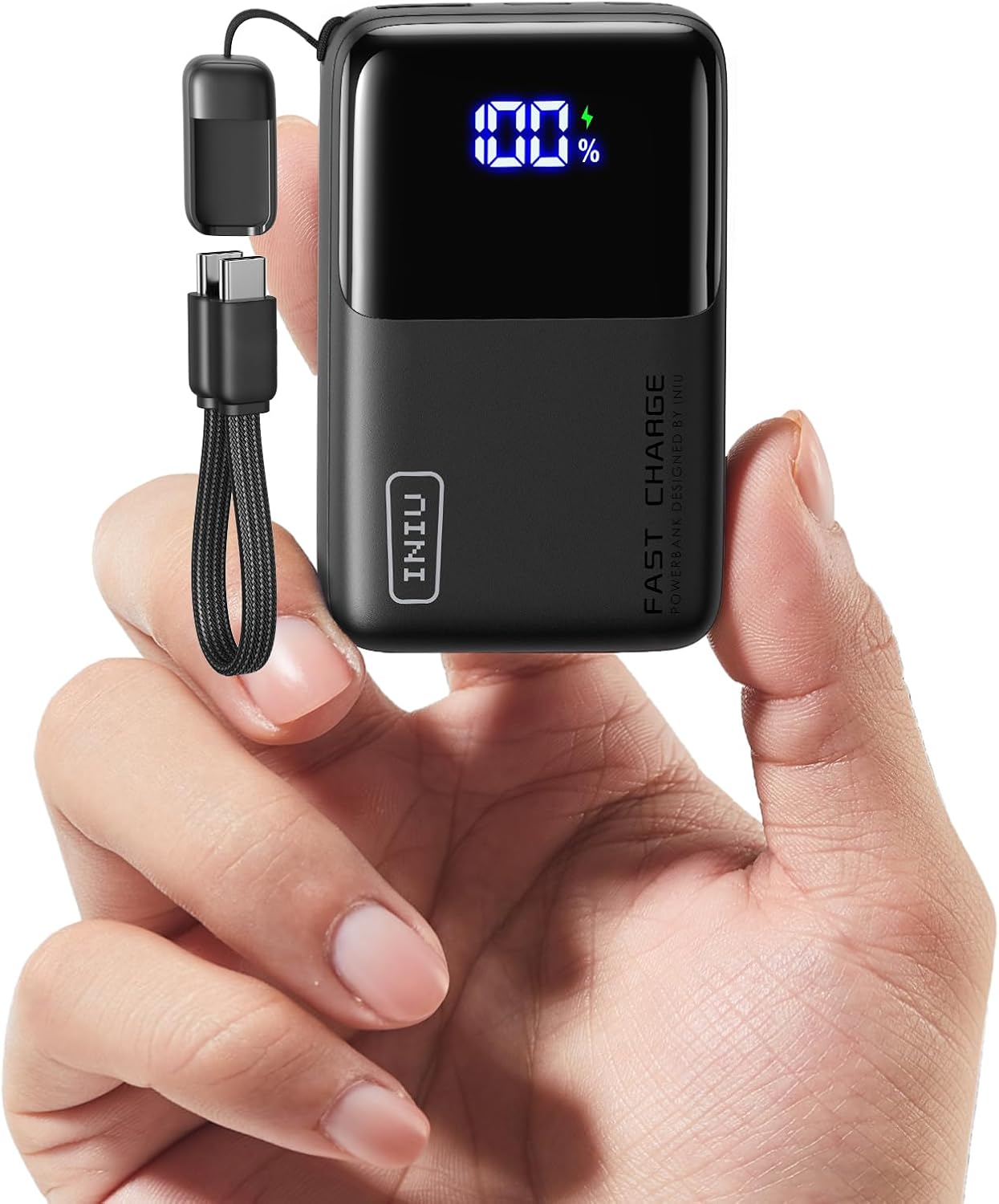
That is where INIU’s Spring Sale campaign becomes more compelling, with discounts applied across its portable charging range and the INIU Pocket Rocket P50 leading the offer, now reduced to £28.05 from £32.99 as its smallest and fastest everyday power solution.
A power bank built for moving around, not staying plugged in
The INIU Pocket Rocket P50 is designed around portability first, packing a 10,000mAh capacity into a compact form that is 45% more compact than standard models, making it small enough to slip into a pocket or lightweight travel bag.
Weighing around 160 grams, it is 63% lighter than the average power bank, which often feels bulky when you are already packing for a trip or commute, making it particularly useful for short trips, festivals, or long days out where extra weight quickly becomes noticeable alongside other essentials.
Advertisement
Charging performance is another key part of the appeal, with 45W fast charging allowing compatible devices to reach a significant percentage of battery in under half an hour.
In practical terms, the INIU Pocket Rocket P50 can fully charge your phone an average of two times. This gives you more time actually using them without worrying about conserving battery life, whether you are navigating, taking photos, or staying connected while travelling.
The INIU Spring Sale campaign runs across both the official store and Amazon, covering a wide range of portable charging products rather than focusing on just one device.
Advertisement
Across the lineup, you can get up to 30% off, with additional tiered discounts applied automatically at checkout, including $5 off orders over $50, $10 off over $80, and $20 off over $100.
That structure makes it easier to pick up multiple essentials at once, whether you are adding extra cables, upgrading to higher-capacity power banks, or simply building a more reliable everyday carry setup.
The campaign also lines up closely with how people actually use these products, leaning into travel, outdoor plans, and day-to-day movement rather than desk-bound charging or fixed setups.
Timing plays a role here too, with the INIU Official Store promotion running from March 20 to April 20, 2026, while the Amazon deals are available for a shorter window from March 25 to March 31, 2026, giving you a clear window to take advantage of the savings.
OpenAI’s decision last week to shut down Sora, its AI video-generation tool, just six months after releasing it to the public raised immediate suspicions. The app had invited users to upload their own faces — so was this some kind of elaborate data grab? According to a new WSJ investigation, the real explanation is considerably more boring: Sora was a money pit that nobody was using, and keeping it alive was costing OpenAI the AI race.
So what happened? After a splashy launch, Sora’s worldwide user count peaked at around a million and then collapsed to fewer than 500,000. Meanwhile, the app was burning through roughly a million dollars a day — not because people loved it, but because video generation is extraordinarily expensive to run. Every user who dropped themselves into a fantastical chase scene was drawing down a finite supply of AI chips.
While a whole team inside OpenAI was focused on making Sora work, Anthropic was quietly winning over the software engineers and enterprises that drive revenue. Claude Code, in particular, was eating OpenAI’s lunch.
So CEO Sam Altman made the call: kill Sora, free up compute, and refocus. If you want to understand just how sudden this was, consider what happened to Disney, per the WSJ: the entertainment giant had committed $1 billion to the partnership, yet found out Sora was being shut down less than an hour before the public. The deal died with it.
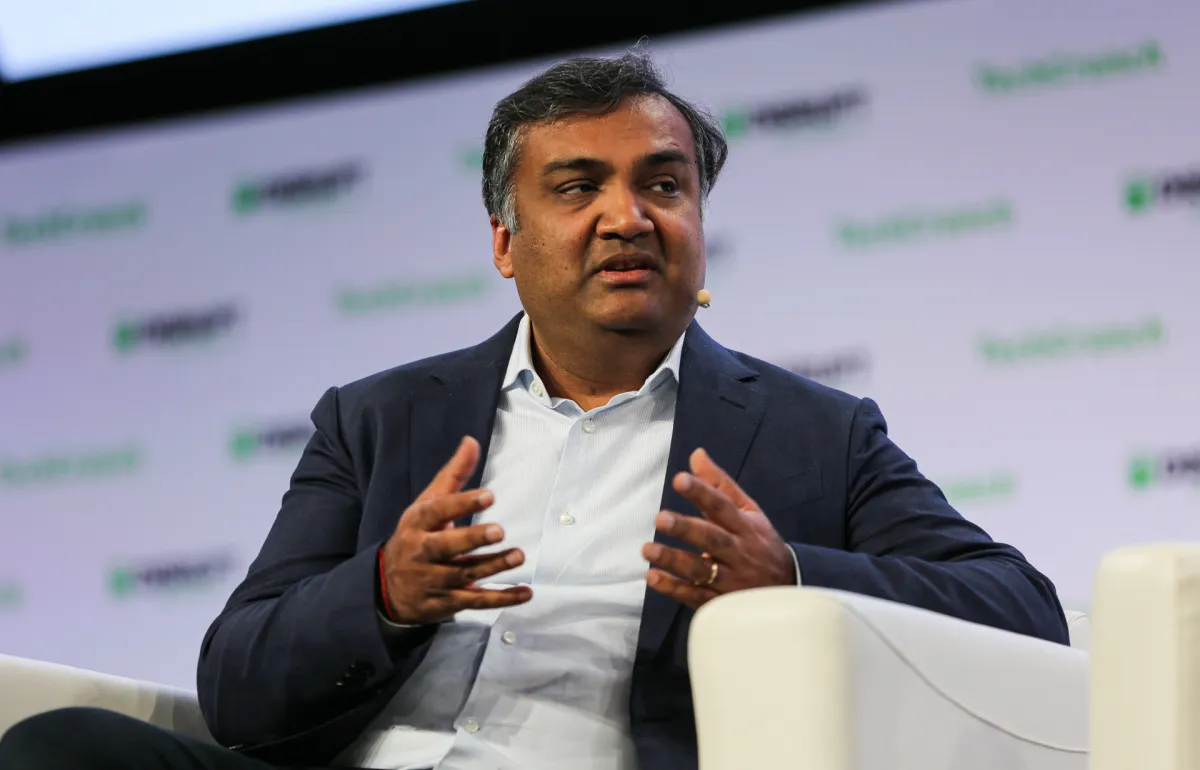
YouTube CEO Neal Mohan recently insisted that he isn’t worried about Netflix and other streaming services luring away the service’s most popular creators.
Mohan’s comments came during a long interview with The New York Times series The Interview — which, as Mohan noted, streams on YouTube. Indeed, he seemed to play the magnanimous winner for much of the conversation; when asked about Oscar host Conan O’Brien’s poking fun at YouTube, Mohan simply replied that O’Brien is “very funny” and that his “Team Coco channel does really well on YouTube.”
As for popular podcasts like “The Breakfast Club” and “My Favorite Murder” moving to Netflix, Mohan said it’s “flattering” that competitors “see us as the center of culture.” But he said that when he speaks to popular YouTubers, they tell him that “no matter what they look to do, they understand that YouTube is their home.”
“I have not come across YouTubers that have completely yanked their content off YouTube,” Mohan said. He added that when YouTubers negotiate with other platforms, those streamers will always “acquiesce to what our YouTubers ultimately know is the right decision for them in the long term, which is to never leave their home.”
NASA is engaged in the final preparations for the much-anticipated Artemis II mission that will send astronauts toward the moon for the first time in more than five decades.
The space agency is targeting 6:24 p.m. ET on Wednesday, April 1, for the launch from the Kennedy Space Center in Florida.
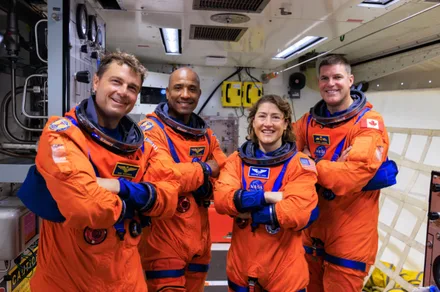
The four crew members — NASA astronauts Reid Wiseman, Victor Glover, and Christina Koch, together with CSA (Canadian Space Agency) astronaut Jeremy Hansen — will travel aboard an Orion spacecraft launched by NASA’s formidable SLS (Space Launch System) rocket.
After a couple of days in low-Earth orbit checking the spacecraft’s systems, the crew will send the Orion on course for a rendezvous with our nearest neighbor. The 10-day voyage won’t touch down on the moon but instead fly around it before returning home.
Advertisement
The mission is of course super special for every single one of those crew members, but for Hansen it comes with added personal impact as the flight will mark his very first time in space.
While Wiseman, Glover, and Koch each flew to the International Space Station (ISS) on their first orbital experience, Hansen will be traveling several hundred thousand miles further from Earth for his debut space ride.
Hansen will also become the first non-American, and first Canadian, to travel to the moon, a historic achievement that will cement his place in history and make him a national hero.
“I just want Canadians to feel that pride,” Hansen told CBC when he was announced as one of the Artemis II crew members in 2023. “I just want Canadians to realize, hey, we are up to big things here in Canada and can accomplish the seemingly impossible if we believe in ourselves.”
Advertisement
Artemis II is also a groundbreaking mission for Glover and Koch, who are about to become the first Black person and the first woman to travel to the moon — major milestones in their own right.
With only days to go before the targeted launch date, the four crew members are now in quarantine, poring over the flight plan and making sure they’re all set for the mission of a lifetime.
Want to know more about the mission? Then watch NASA’s video showing exactly how it expects the flight to unfold.
It sounds absurd: an airline trying to channel Apple. Can an airline fly as high and smoothly as the tech icon?
After a few days with United Airlines — testing Starlink in the sky and previewing its next-gen ‘Elevate’ cabins — the comparison stopped feeling like an impossible stretch and more like a strategy.
United Airlines will turn 100 next month on April 6, 2026, and while it has plenty of competition domestically in the United States and on the global stage, it’s seen something of a renaissance in recent years.
Advertisement
Article continues below
It’s been swapping smaller jets for larger ones, upping the in-seat experience with redesigned interiors, going all-in on a next-gen Wi-Fi product, and doubling down on infrastructure in ways that passengers actually see — and that employees feel behind the scenes.
Now, much of my focus is on technology and consumer electronics, but after attending United Elevated, the idea that United wants to be the Apple of airlines, not just a better airline, started to make sense.
Advertisement
It all really began to sink in when I sat inside one of its hangars at Los Angeles International Airport this week, where United debuted its latest aircraft with the elevated interior – a massive Boeing 787-9 – and several other eye-opening announcements, including more aircraft.
Reaching Apple-like heights might sound a little lofty, but the more time I spent with what United is building, the more it clicked.
Sign up for breaking news, reviews, opinion, top tech deals, and more.
To be fair, Scott Kirby — CEO of United Airlines — essentially said it first: “We’re trying to copy Apple’s approach to their supply chain” for what the airline does with engines, adding, “we’ll do it for other stuff as well.”
Advertisement
Yes, the comment came in response to a question about supply chain strategy and tariffs, but it’s a telling one. Even in that narrower context, it offers a window into how United is thinking more broadly.
And honestly, you can see it.
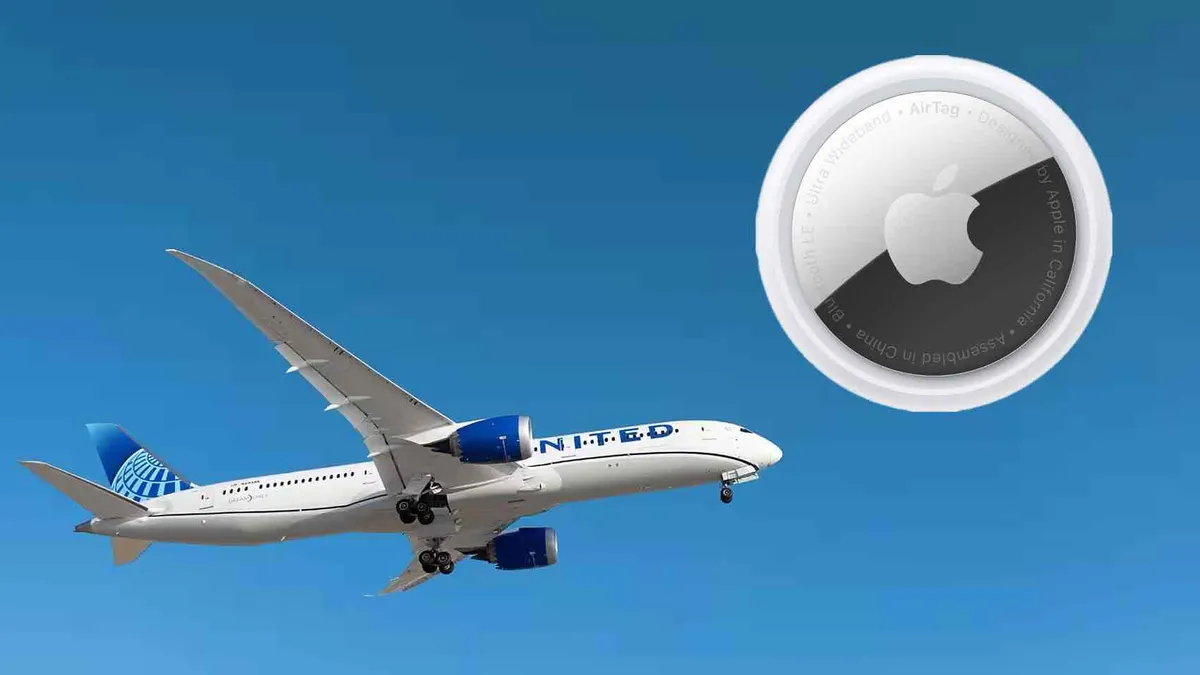
United has long been a partner with Apple and is quick to adopt its ecosystem. It rolled out Bluetooth connectivity for seatback screens and spotlighted it with AirPods, integrated with the Find My network so you can share an AirTag if your bag goes missing, and its app has been early to support things like Live Activities and the Dynamic Island.
Advertisement
None of that is revolutionary on its own. But together, it starts to feel familiar — like an airline trying to build a more connected, cohesive experience instead of just layering on features.
That shows up most clearly in the app.
The app is becoming central to the experience
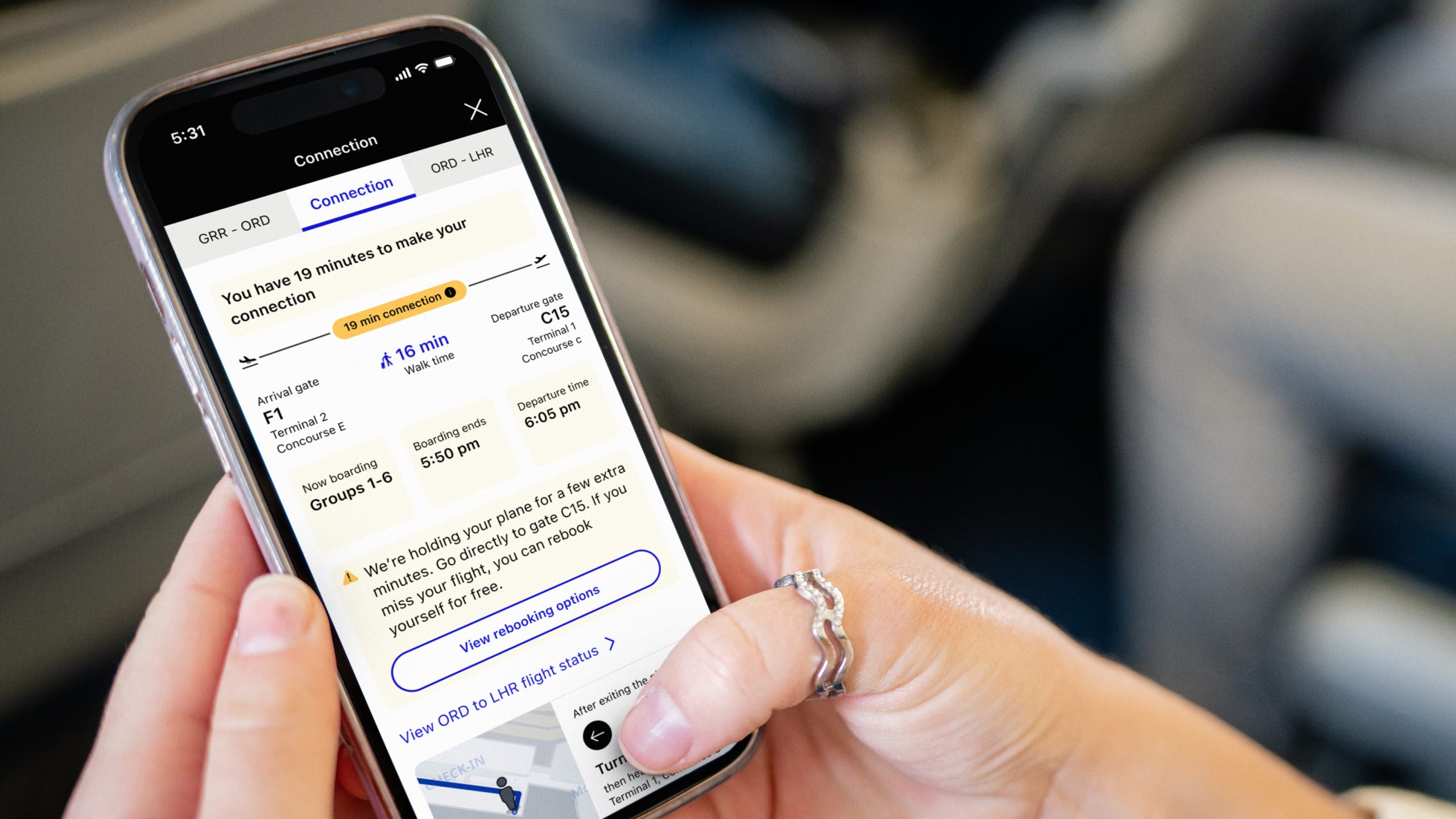
(Image credit: United Airlines)
Over time, United has turned it into something closer to a travel control center than a simple boarding pass. Boarding groups are easier to see, ConnectionSaver proactively helps with tight transfers (so long as it doesn’t delay an on-time departure), airport maps make navigating less of a guessing game with turn-by-turn directions, and bag tracking removes some of the usual anxiety. More recently, the “Trips” experience has been redesigned to put everything front and center in the days leading up to as well as on departure day.
Advertisement
Again, none of these are huge swings individually. But that’s kind of the point, and United was the first for many of these, and with a keen ability to squash bugs. Other airlines, including Delta, JetBlue, and American, have added these similar features, but none were first.
It’s the same playbook Apple has used for years — iterate, refine, and stack improvements until the whole thing just feels better to use. The innovation isn’t always obvious, but you notice it when everything works the way you expect it to. Similar to the Cupertino-based tech giant, it’s clear that United isn’t necessarily rushing to swing for the fences with major updates or even smaller ones.
Of course, not every bet has landed.
(Image credit: United Airlines)
For a while, United moved away from seatback screens on some aircraft, leaning into personal device streaming instead. It was a tech-forward idea, but it didn’t quite line up with the goal of delivering a consistent, premium experience across the board. Now, the airline is course-correcting, bringing screens back as part of its next-generation cabins. That’s a process, though, and some aircraft still fly without seatback screens.
Advertisement
That push for consistency extends beyond software.
United has generally taken a more unified approach to its premium cabins —especially Polaris — compared to competitors like Delta Air Lines, which has introduced multiple versions of its Delta One seat across different aircraft. With its “United Elevated” strategy, that consistency is becoming more deliberate, stretching from widebody jets to narrowbody planes and even regional aircraft. It’s also ensuring large OLED screens at every seat — these looked especially punchy and vibrant — plus power and USB-C ports, even in economy.
And then there’s Wi-Fi.
Advertisement
Cabins, seatback screens, and Starlink Wi-Fi show the push for consistency
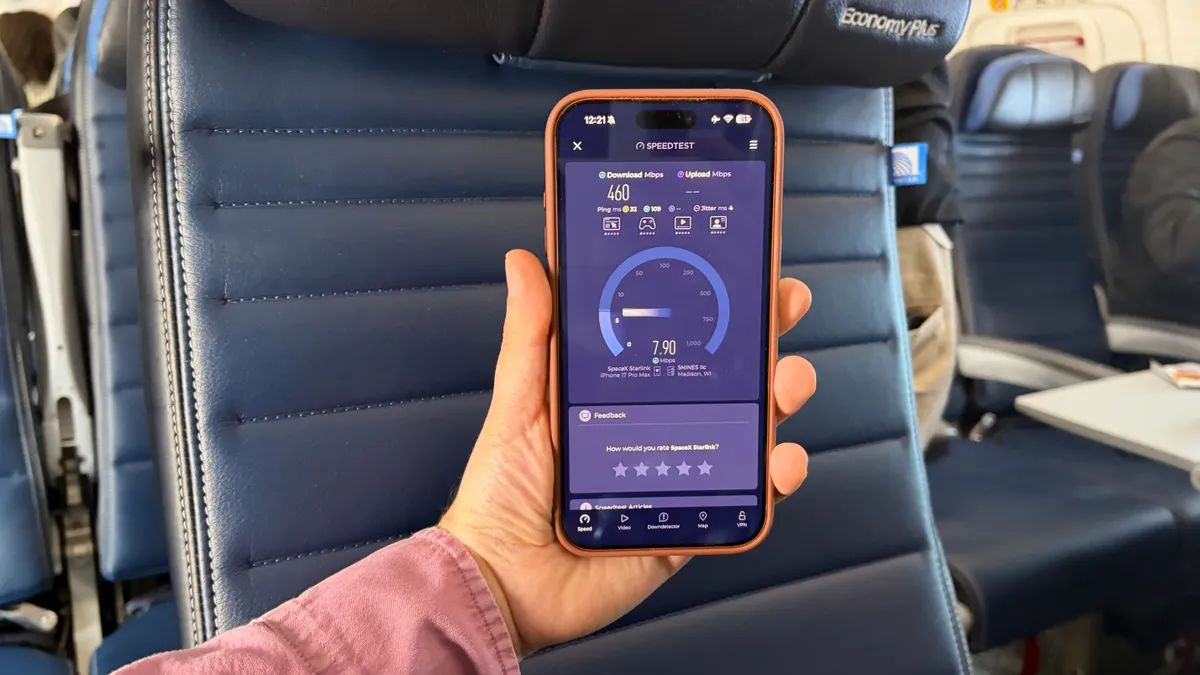
(Image credit: Future/Jacob Krol)
By rolling out fast, free Starlink connectivity — and tying it to loyalty — United is making internet access a core part of the experience, not just an add-on. It’s not just about having Wi-Fi; it’s about having Wi-Fi that works well enough, consistently enough, that you start to expect it every time you fly. It’s a process, though, and while 344 aircraft currently boast the improved connectivity, it’ll take until the end of 2027 for Starlink to be on every aircraft in United’s fleet. Other airlines have offered free Wi-Fi, such as Delta and JetBlue, but United Airlines is the first to work toward equipping the entire fleet with a much faster standard. It’s likely that other airlines will end up going this route, with American Airlines rumored to be in talks with Starlink, and JetBlue opting for Amazon’s Leo, formerly Project Kuiper.
Even so, that’s a very Apple-like move: set the baseline high, and don’t go backwards. Doubly so with United doing it first or setting the pace, and then having other airlines seemingly copy it.
But here’s the reality check — airlines aren’t iPhones, iPads, MacBooks, or even any type of consumer electronics analogy.
(Image credit: United Airlines/Apple)
Apple controls the hardware, the software, and the services. It can be designed for consistency because it owns the entire stack, and we’ve seen that flourish across the line, especially with the advent of Apple Silicon. Airlines don’t get that same level of control.
Advertisement
Weather, air traffic control, airport congestion, maintenance — so much of the flying experience sits outside of any airline’s hands. Even within their control, fleets are mixed, configurations vary, and not every plane can be brought up to the same standard overnight.
So the thing United is chasing — consistency — is also the hardest thing to actually deliver. And that’s what makes this strategy interesting, and one to keep watching.
The goal might not be to eliminate every variable. Maybe it’s just to smooth out the parts passengers actually feel. If the app is clear, the Wi-Fi works, the seat feels familiar, and when something goes wrong, it’s handled quickly, the overall experience can still feel… reliable — even if the system behind it isn’t perfect.
If Apple’s whole thing is “it just works,” then United Airlines is trying to bring that idea to 35,000 feet — turbulence and all. And it might have started to show its cards with the day-long event where it showed off its new Elevated Boeing 787-9, a reimagined CRJ450, countless demos, fireside chats, and speeches from leaders. It all felt very Apple event-esque — albeit at a location that might even rival Apple Park for views. I mean, you can’t beat a sound system for music and speakers that can be heard over an active taxiway and runway, right?
Advertisement
I connected with Zach Griff, a travel expert and author of From the Tray Table, on this idea, and he shared: “Just look at how United took inspiration from Apple at Tuesday’s event. It referenced the company numerous times — both overtly in how it wants to mimic Apple’s supply chain strategy and the more subtle, in how it came prepared with a ‘one more thing’ style reveal. United wants to be to airlines what Apple is to tech.”
That one more thing was an upgrade to Economy, dubbed the Relax Row — essentially the ability to book out three Economy Plus seats with leg rests that raise to create a bed that takes up a whole row, paired with bedding, pillows, and stuffed plushies. It’ll likely be a hit for long-haul routes, as it’s set to debut on the 777 and 787 in 2027, and be far cheaper than Polaris.
In short, United has a bold goal ahead. Maybe even an impossible one. But for an airline about to turn 100, it’s a pretty compelling direction to take.
Follow TechRadar on Google News and add us as a preferred source to get our expert news, reviews, and opinion in your feeds. Make sure to click the Follow button!
Advertisement
And of course, you can also follow TechRadar on YouTube and TikTok for news, reviews, unboxings in video form, and get regular updates from us on WhatsApp too.
For years now, smartphone makers have made the camera bump on devices bigger in order to chase camera improvements. Even if that kind of design makes cameras better, at times it creates usability issues. With the Pixel 10a, Google took a new approach of entirely removing the camera bump and making a flat phone that lies completely on surfaces.
While this is a delightful change in the world of big camera bumps, Google hasn’t otherwise made major design changes with its newest budget smartphone. The Pixel 9a looked mostly the same, with a very small camera bump.
I have the plain old black unit, but Google offers the phone in Lavender (a mix of bright blue and purple), Berry (coral), and Fog (a gray-green tone) colors.
Look! No camera bump Image Credits: Ivan Mehta
The screen size of 6.3 inches is the same as last year’s device, but the display is now brighter at 3,000 nits. Google is using the Actua display series of screens that it used with the other Pixel 10 devices to make it more usable in bright conditions. The display is capable of reaching a 120Hz refresh rate, but the unit ships with it set to 60Hz, so you will need to manually change that through the phone’s settings.
Build and specification-wise, the Pixel 10a goes toe-to-toe with the Pixel 10, with a few differences. For instance, the Pixel 10 has Corning Gorilla Glass Victus 2 on the front and the back, while the cheaper 10a has a plastic back and Corning Gorilla Glass 7i protection on the front. The budget device also has a bigger battery of 5,100 mAh, as compared to 4,970 mAh on the base Pixel 10. The Pixel 10 Pro XL has a battery of 5,200 mAh.
Advertisement
There are only small differences between the Pixel 9a, the Pixel 10a, and the Pixel 10, most of them having to do with performance and compute power. The obvious hardware difference is that the budget phones use the Google Tensor G4 chip, as compared to the Tensor G5 in the Pixel 10. The Pixel 10 charges at 30W through USB-C, up from the 23W charging capacity of the Pixel 9a. Wireless charging is supported at 7.5W for the Pixel 9a, 10W for the Pixel 10a, and 15W (magnetic) for the Pixel 10.
Image Credits: Ivan Mehta
The battery capacity and faster charging speed are helpful as the battery lasts easily throughout the day, including for regular apps, a few hours of video watching, and light gaming. Plus, the brighter display makes the device better for all-around experience in different lighting conditions. Yes, the 10a has chunkier bezels than its more costly cousins, but they don’t make too much of a difference in daily use. After all, you’re getting the device for a much lower price than a flagship.
Techcrunch event
San Francisco, CA | October 13-15, 2026
Advertisement
The Pixel 10a uses the Tensor G4 chip, which was also used in the Pixel 9a. That means there are no performance gains this year, which you might notice if you switch between a lot of apps. Because of the older chip and its 8GB RAM combo, the Pixel 10a can’t run the updated Gemini Nano AI model, which means it has fewer on-device AI features than the Pixel 10a series.
The display is bright, but there are thick bezels around it Image Credits: Ivan Mehta
The feature list not available on the Pixel 10a includes notification summaries, the Pixel screenshot app, Magic Cue (a feature that offers contextual suggestions across apps like Gmail, Messages, and Maps), call notes, and on-device call translation.
The phone features a 48-megapixel main camera and a 13-megapixel wide-angle camera, which is the same as last year’s device. The main camera performs fine for most conditions, even in low light. But given the older and smaller sensor on the the wide-angle lens, it tends to lose some details, and it doesn’t have autofocus.
The Pixel 10a has a camera coach AI feature that can guide you in taking a shot of an object by helping frame it better in the viewfinder. There is also Auto Best Take, which merges photos to create the best composite from a bunch of shots — useful when photographing a group. The phone also has support for up to 8x super-res zoom, but the processing and quality aren’t as good as the Pixel 10, which offers up to 100x zoom through this feature.
Notably, some AI features might make it to the Pixel 10a through a Pixel Drop, Google’s periodic software updates that** often bring new capabilities to older models.
Advertisement
Google offers seven years of software updates with this device, which is crucial for receiving both operating system updates, along with feature drops and security updates. While this is not Pixel 10a exclusive, the phone has a quick share feature that now works with Apple’s AirDrop. This means I could simply transfer photos, just like I did for this story, to my MacBook within a few taps. Previously, I had to connect the Pixel 10a to my MacBook with a USB-C cable.
At $499, good battery life, a bright display, and faster charging are the main things going in favor of the Pixel 10a. For this price, the phone offers good value for money in a light and flat design. However, if you already have last year’s Pixel 9a, there is no reason to change. Also worth considering: the Nothing phone 4a Pro, also at $499, poses tough with better specifications, such as a bigger and brighter screen, a more capable Qualcomm processor, a dedicated telephoto lens, and faster charging speeds of 50W.
If these decisions survive appeal — which isn’t certain — the direct outcome would be multimillion-dollar penalties. Depending on the outcome of several more “bellwether” cases in Los Angeles, a much larger group settlement could be reached down the road… For many activists, the overall goal is to make clear that lawsuits will keep piling up if companies don’t change their business practices…
The best-case outcome of all this has been laid out by people like Julie Angwin, who wrote in The New York Times that companies should be pushed to change “toxic” features like infinite scrolling, beauty filters that encourage body dysmorphia, and algorithms that prioritize “shocking and crude” content. The worst-case scenario falls along the lines of a piece from Mike Masnick at Techdirt, who argued the rulings spell disaster for smaller social networks that could be sued for letting users post and see First Amendment-protected speech under a vague standard of harm. He noted that the New Mexico case hinged partly on arguing that Meta had harmed kids by providing end-to-end encryption in private messaging, creating an incentive to discontinue a feature that protects users’ privacy — and indeed, Meta discontinued end-to-end encryption on Instagram earlier this month.
Advertisement
Blake Reid, a professor at Colorado Law, is more circumspect. “It’s hard right now to forecast what’s going to happen,” Reid told The Verge in an interview. On Bluesky, he noted that companies will likely look for “cold, calculated” ways to avoid legal liability with the minimum possible disruption, not fundamentally rethink their business models. “There are obviously harms here and it’s pretty important that the tort system clocked those harms” in the recent cases, he told The Verge. “It’s just that what comes in the wake of them is less clear to me”. The article also includes this prediction from legal blogger/Section 230 export Eric Goldman. “There will be even stronger pushes to restrict or ban children from social media.” Goldman argues “This hurts many subpopulations of minors, ranging from LGBTQ teens who will be isolated from communities that can help them navigate their identities to minors on the autism spectrum who can express themselves better online than they can in face-to-face conversations.”
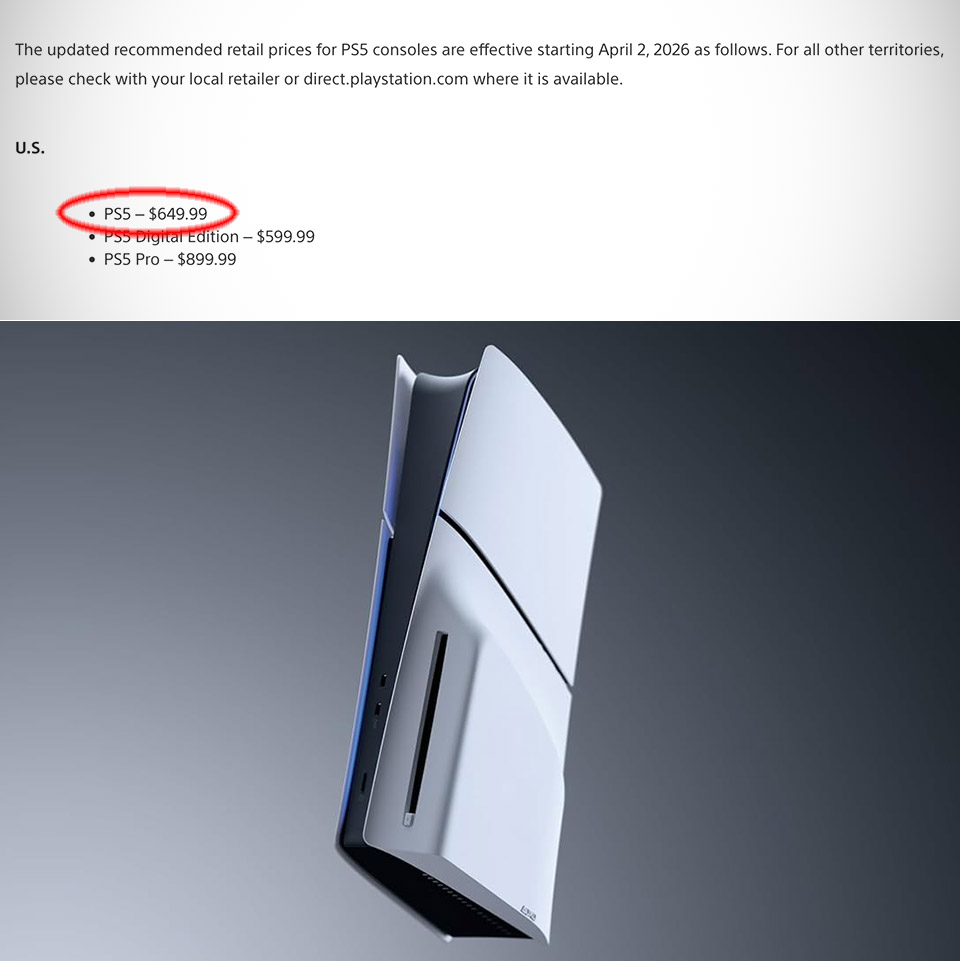
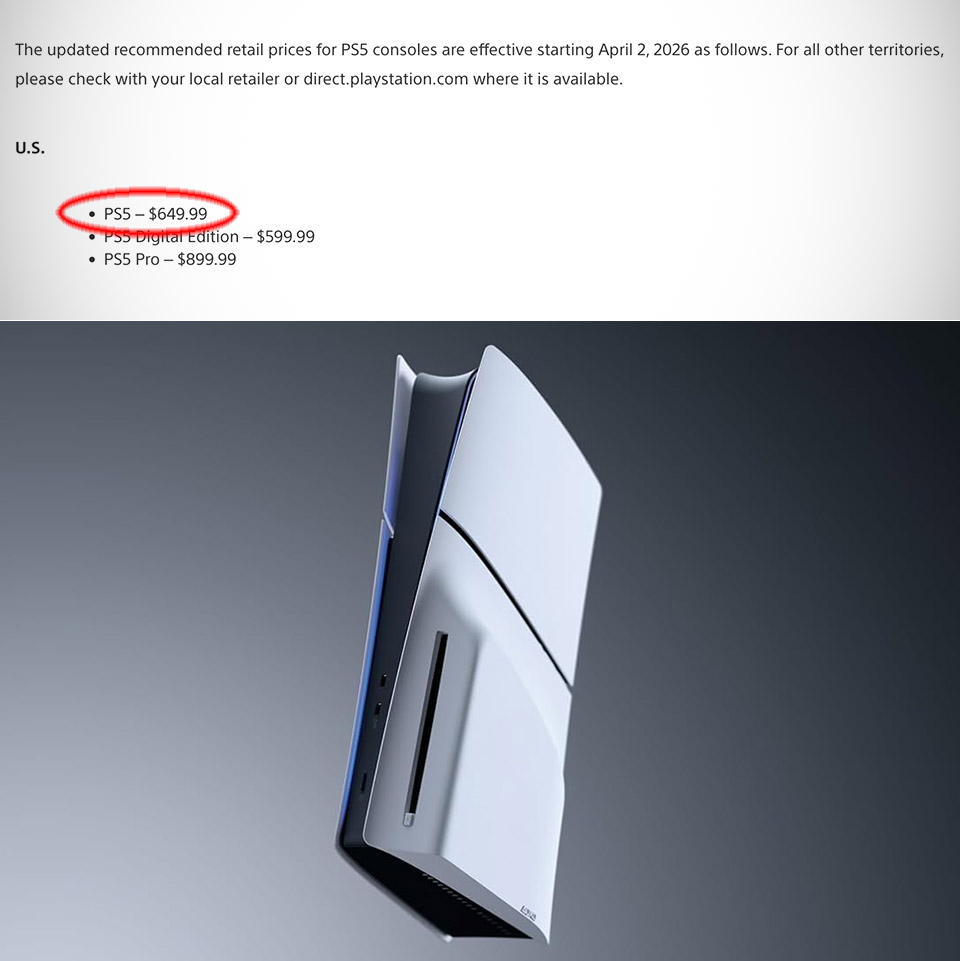
Sony announced earlier this week that the PS5 is getting a price increase, with the new $649.99 price taking effect on April 2nd. Anyone willing to act in the next few days can still pick up the current 1TB disc edition at the existing $549.99 price from major retailers, which amounts to a $100 saving well worth acting on if a PS5 has been on your list.
Once you have one in hand, the performance speaks for itself. Demanding games load in seconds rather than minutes, large open worlds snap into place almost instantly, and moving between areas happens fast enough that waiting around simply stops being part of the experience. The DualSense controller adds a layer of physical feedback that changes how games feel. Adaptive triggers shift their resistance depending on what you are doing, whether that is the tension of drawing a bowstring or the grip of a steering wheel under load, and the haptic feedback translates things like surface textures and environmental details into subtle sensations in your hands.
PlayStation 5 Console – 1TB, includes wireless controller, 1TBSSD, Disc Drive, 2 Horizontal Stand Feet, HDMI cable, AC power cord, USB cable, printed…
1TB of Storage, keep your favorite games ready and waiting for you to jump in and play
Ultra-High Speed SSD, maximize you play sessions with near instant load times for installed PS5 games
The first party library is where the PS5 really makes its case. Studios like Santa Monica and Insomniac have built games specifically around the hardware, and it shows in the detail of the worlds, the depth of the characters, and the overall sense that you are somewhere that actually exists. Multiplayer holds up just as well, with co-op and competitive options that have a way of turning a quick session into several hours without you noticing. Plus you get compatibility with loads of PlayStation 4 games, which is just a lucky break. You get instant access to a whole bunch of content you can dive into right away, without having to start from scratch all over again, and the older games all run a lot faster and sharper on this newer hardware. It’s a ready made library that instantly turns this console into the total entertainment package.
Advertisement
Sony’s release schedule for the months ahead is looking strong, with familiar franchises alongside new titles that should keep the library fresh well into the future. Regular system updates continue to improve performance and add features over time, which means the console you buy today will quietly keep getting better without any additional cost.
The first crewed mission of NASA’s Artemis moon program may take off in a matter of days, with a launch window that opens on April 1, and as preparations are underway for that, the space agency is refocusing its plan to establish a human presence on the moon. NASA announced major changes to its approach for moon landings that are expected to play out over the coming years, including axing its plan to build an orbiting station called Gateway. Read on to learn more about the agency’s new vision for the moon, along with other interesting science stories from this week.
Gateway out, moon base in
Just a few weeks after overhauling its Artemis program, NASA this week announced even more changes to its plans for putting astronauts back on the moon. Most notably, the space agency is abandoning the lunar Gateway project, which was intended to be the first ever space station orbiting the moon. Gateway, an international collaboration, wasn’t just going to support exploration of the lunar surface, but deep space missions too. But the writing has been on the wall for some time; in the Trump administration’s proposed budget cuts last May, Gateway was among the programs selected for the chopping block. Now, NASA is officially putting it on “pause” and plans to build a $20 billion moon base instead.
“NASA is committed to achieving the near‑impossible once again, to return to the moon before the end of President Trump’s term, build a moon base, establish an enduring presence, and do the other things needed to ensure American leadership in space,” NASA Administrator Jared Isaacman said at the agency’s Ignition event on Tuesday.
There are three phases to the moon base plan, according to NASA: first using contractors to send rovers and instruments to the moon through the Commercial Lunar Payload Services (CLPS) program; next establishing “semi-habitable infrastructure,” with astronauts on the ground and collaboration with other space agencies; and finally adding “heavier infrastructure” to support long-term stays on the lunar surface, including the Italian Space Agency’s Multi-purpose Habitats and the Canadian Space Agency’s Lunar Utility Vehicle. NASA says it’s aiming to start this plan off with crewed moon landings every six months following the Artemis V mission, which is currently planned for 2028.
Advertisement
Comet 41P pulls a reverse card
A study published this week in The Astronomical Journal describes what’s said to be the first observation of a comet reversing its spin. Observations taken several months apart in 2017 show the comet 41P/Tuttle-Giacobini-Kresák starting to spin more slowly after making a close flyby of the sun, before picking up speed again by December of that year. Its spin period, measured using NASA’s Neil Gehrels Swift Observatory, was about 46-60 hours in May 2017, but later observations by the Hubble Space Telescope showed it was just 14 hours, according to NASA. The researchers say what likely happened is that the heat from the sun caused the comet’s ice to sublimate, sending gases spewing off its sides.
“Jets of gas streaming off the surface can act like small thrusters,” author David Jewitt of the University of California at Los Angeles, said in a statement. “If those jets are unevenly distributed, they can dramatically change how a comet, especially a small one, rotates.” Jewitt compares it to pushing a merry-go-round. “If it’s turning in one direction, and then you push against that, you can slow it and reverse it.”
Comet 41P is thought to have come from the Kuiper Belt and passes through the inner solar system every 5.4 years. It’s small, with a nucleus of just around .6 miles, and the researchers found it’s become less active over recent years, indicating that there are changes taking place on the surface. While it’s thought to have been in this orbit for about 1,500 years, it now appears to be rapidly evolving, and the rotational changes — which could cause structural instability if it continues — could mark the beginning of the end for it. “I expect this nucleus will very quickly self-destruct,” said Jewitt.
Saturn in a new light
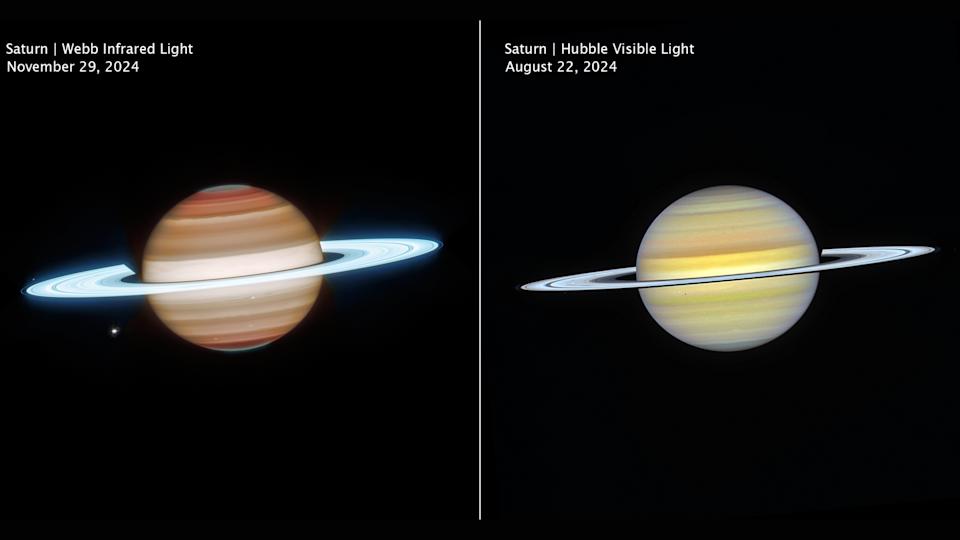
A side-by-side-comparison of photos captured of Saturn from the Webb telescope and the Hubble telescope. (NASA/ESA/CSA)
Stunning images of Saturn released this week by NASA, ESA and CSA provide a more detailed look at the many layers of the ringed planet’s “busy” atmosphere. The images, which show storms, clouds at different depths, Saturn’s “ribbon wave” jet stream and so much more were taken by the Hubble Space Telescope and the James Webb Space Telescope in 2024. Read more about it here.
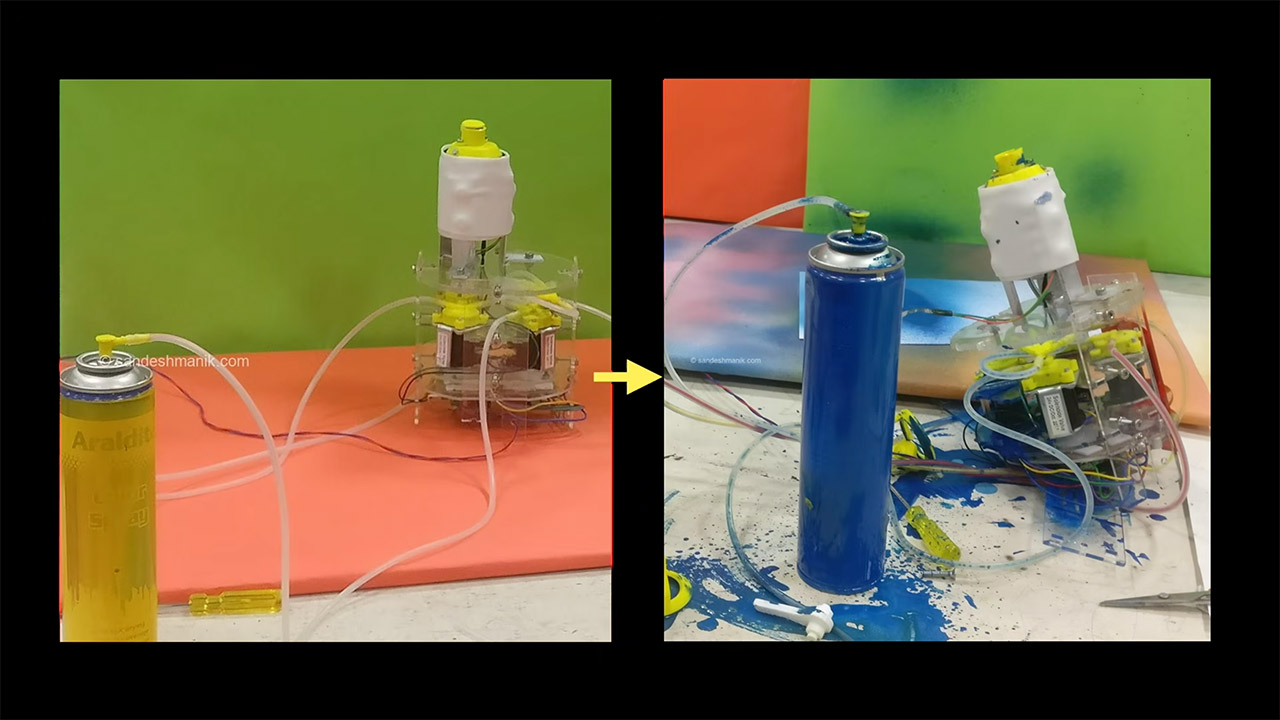
Spray paint artists have long dealt with a frustrating problem. Getting the range of colors a single mural might need means carrying a heavy collection of cans and inevitably running out of one shade mid-project with a pile of barely used others left over. Sandesh Manik spent years as a mechatronics student building a solution he calls Spectrum, a compact machine that draws from four standard spray cans and blends them into hundreds of custom shades on demand.
Spectrum gives artists the freedom to call up any color on the fly and spray it through a single nozzle without stopping to swap cans or pre-mix batches. Manik’s goal from the start was to build something that worked with standard off the shelf spray cans, avoiding the need for custom components or expensive pumping systems. Early testing quickly revealed just how difficult that constraint would make things.
[FOR CREATIVE PROJECTS] Create, draw, doodle, and build in 3D with this versatile, high-quality 3D pen. The SCRIB3D P1 enhances spatial thinking…
[READY-TO-USE KIT] Includes 3 colors (30 feet) of PLA plastic to keep you Doodling for ages, as well as a power adapter, step-by-step manual, and a…
[BEGINNER FRIENDLY] Plug the adapter into the back of the pen and choose your filament. The red light will turn on indicating warm up, this will take…
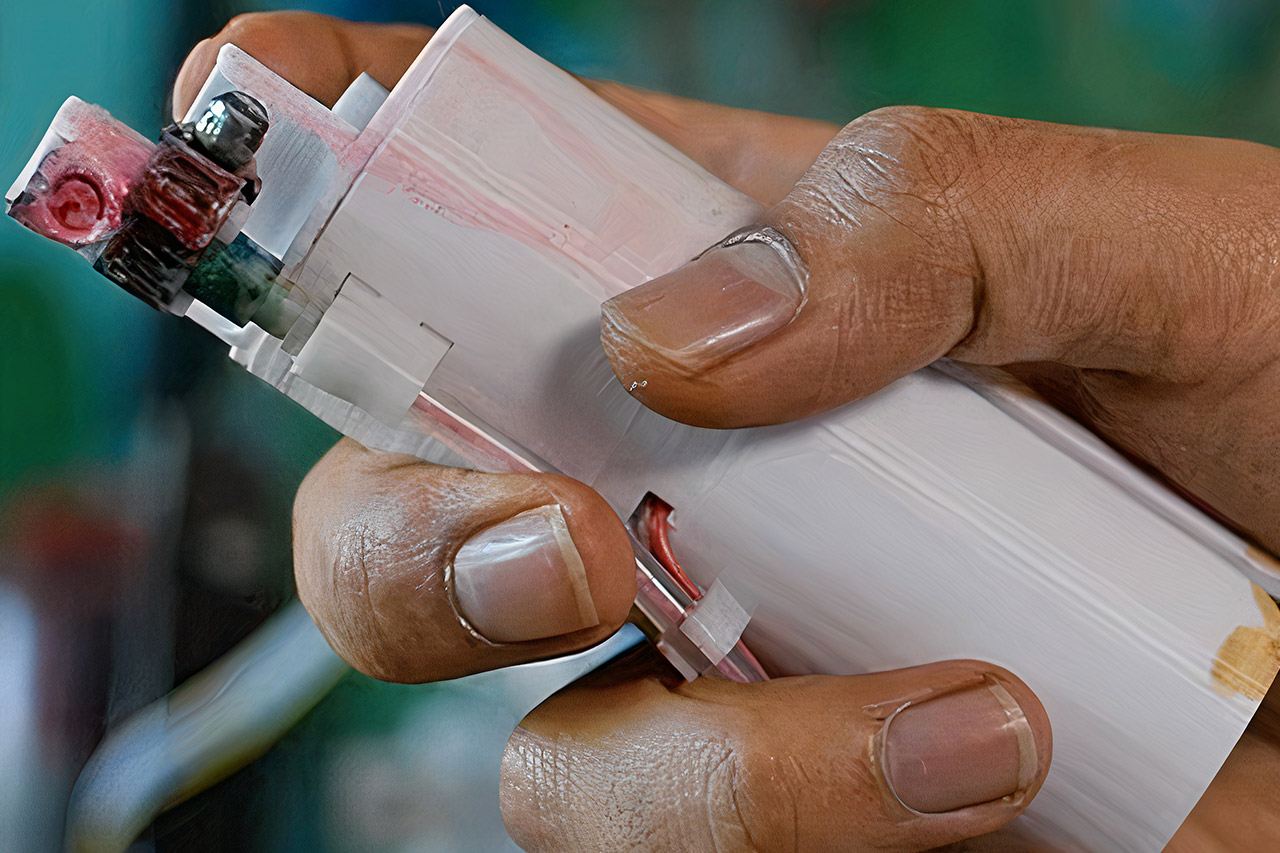
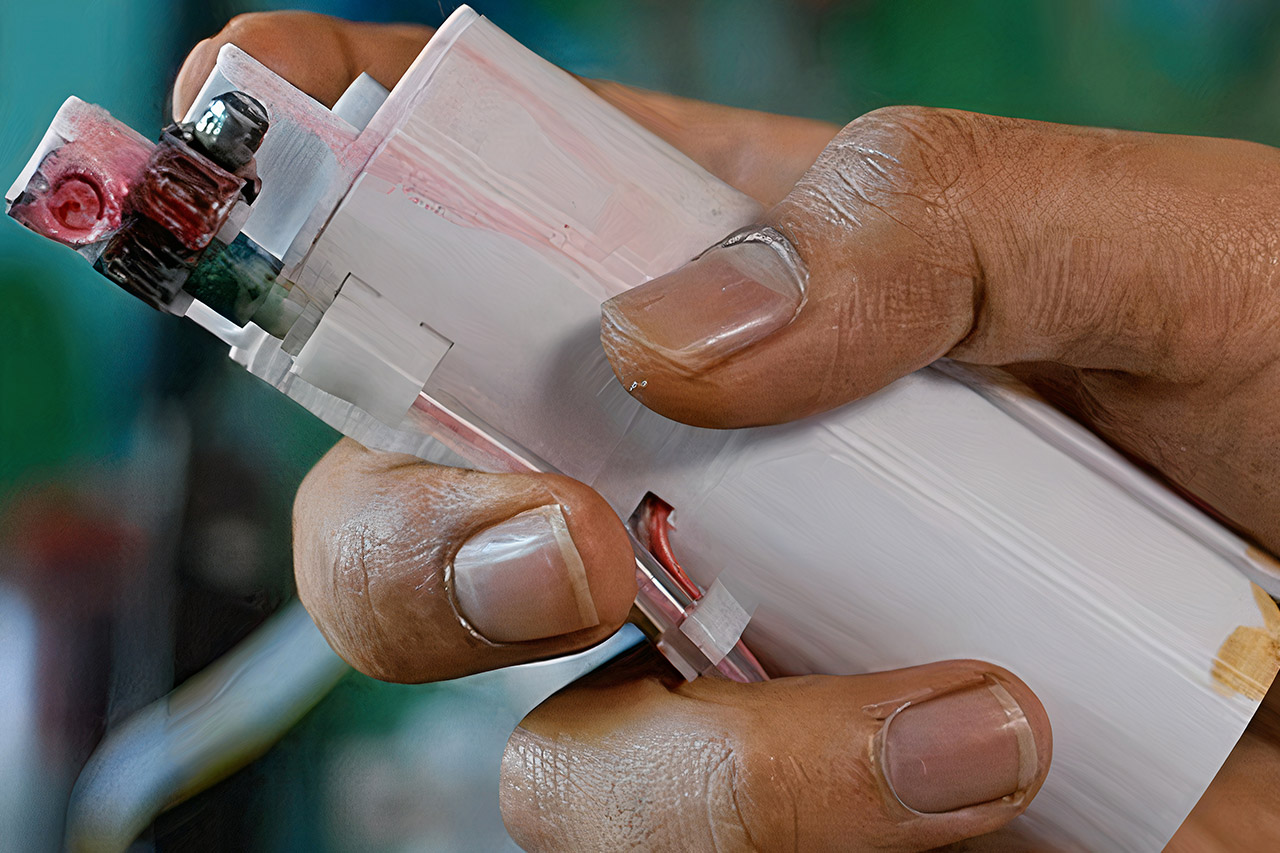
The core problem turned out to be trickier than expected. Different cans operate at slightly different pressures, and trying to push multiple colors through the same tube simultaneously was a reliable recipe for leaks and backpressure. Manik worked around issue by using a pulsing mechanism that opens valves one at a time, unleashing short bursts of each hue in quick succession. A ratio of one part red to eight parts white, for example, indicates that the white valve remains open for longer than the red valve throughout each cycle. These pulses pass down a small one-millimeter tube, where turbulence thoroughly blends them before they reach the nozzle. Color changes take only a second or two, and the tube diameter is important to its effectiveness, large enough to sustain spray pressure but tiny enough to keep color transitions sharp.
Advertisement
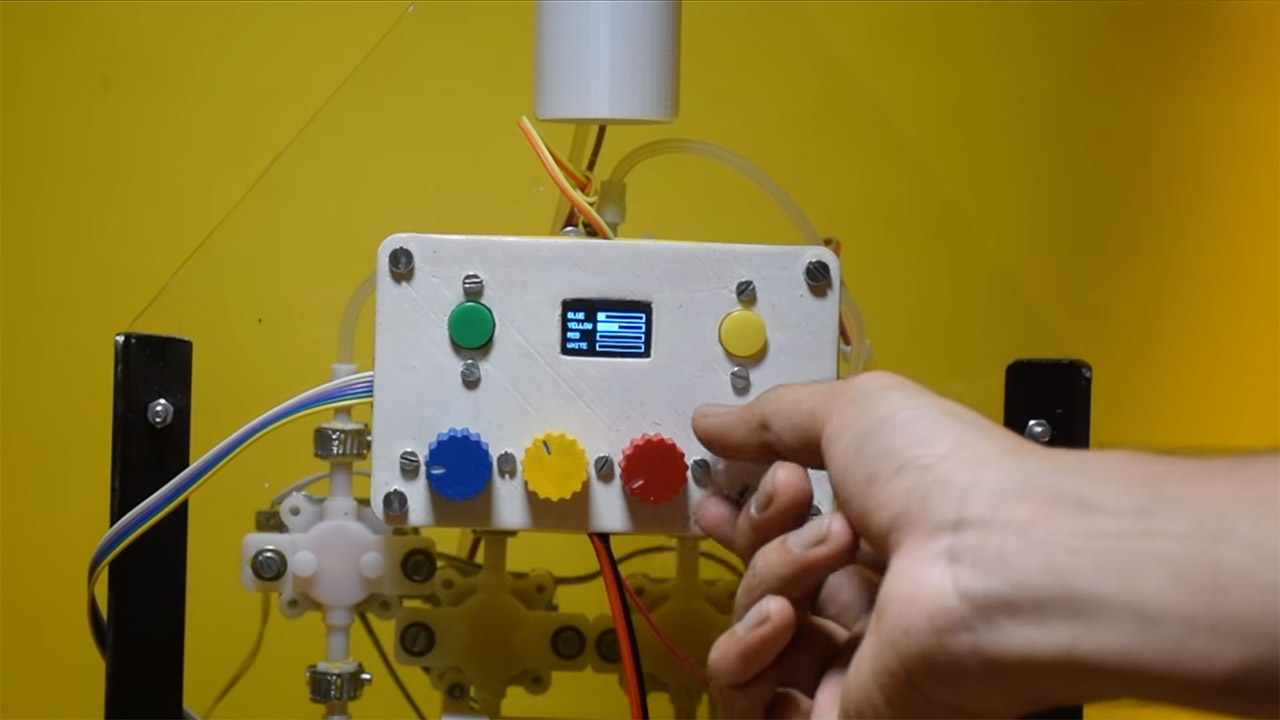
Getting the pulse system to work consistently was the most difficult aspect of the build. Standard solenoid valves clog easily because dried paint collects inside the moving parts, so Manik designed his own rotational pinch valves instead. A small stepper motor turns a lever that squeezes or releases a flexible silicone tube, which is frequently pinched tight to prevent leaks or backflow. The paint never comes into touch with the mechanism, therefore the entire system stays clean and uniform. An Arduino Nano sits at the heart of it all, reading four knobs on the handle, calculating the exact pulse lengths for each hue, and firing the valves at precisely the right time, all while a display on the side indicates the current settings.
Pulling the trigger gets the paint moving, and a force sensor built into the trigger adds an extra layer of control. Squeeze harder and the color mix shifts smoothly toward a different tone, creating natural looking gradients through pressure alone without touching a single dial. The whole build is designed for a home workshop, using silicone tubing to carry the paint, 3D printed fittings to keep connections tight, and simple toggle levers to hold the can nozzles open when needed. Total materials cost came in at under $150. [Source]





















































You must be logged in to post a comment Login