Connect with us

Tech

Microsoft Teams Is Adding A New Way To Get To Know Your Coworkers

Published

on


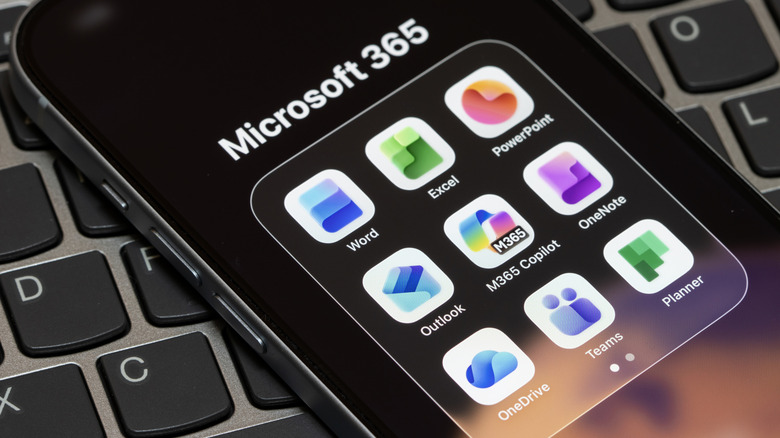
There’s an inherent convenience to working from home that suits many, but it can also have significant downsides. The social element, for instance, is lost. Still, remote work and the well-known jingle of Microsoft Teams have become part of the daily routine for many. To help them get to know those people they work with, Microsoft has added a new feature to Teams. Or, rather, a familiar feature from Microsoft’s 365 system is coming to Teams for the first time: People Skills.

First introduced in April 2025, the People Skills feature was built on the foundation provided by Viva’s Skills. Microsoft described the former at the time as a powerful new tool for the broader Microsoft 365 landscape that “infers individuals’ skillsets derived from user profile and activity mapped to a customizable built-in skill taxonomy.” This powerful tool, available in a user’s profile card, can be accessed from multiple locations, including Outlook desktop, People Companion, and 365 Copilot. However, it was not available on the profile card within Teams. This functionality was added to Microsoft’s 365 Roadmap at the end of January 2026 and is scheduled to roll out to eligible users in March 2026. 

Through it, employees and employers alike will have easier access to functionality than ever and can use it to increase productivity and better understand each other’s strengths and skills. Let’s take a look at how People Skills works and why its implementation in Teams may be such a big deal. A lot of much-needed features are coming to Teams in 2026, and this will be substantial too.

Advertisement

How People Skills works and its value for Teams in particular

Microsoft acquired LinkedIn in December 2016 in a deal that Forbes reports was valued at approximately $26 billion. The deal provided Microsoft with access to extensive information on employees’ skills and how those skills fit into different roles and broader industries. People Skills can be seen as a large-scale, AI-driven extension of this concept. Through it, Microsoft Graph can use work data to identify a worker’s skills and how they fit within their roles. This is how a People Skills profile is constructed for an individual; they can then choose which skills to add to their personal profile after reviewing the provided suggestions.

Microsoft notes that the functionality was employed from the beginning with “robust privacy and visibility controls for both admins and end users.” It is not mandatory but is selected at the admin level in the Copilot Control System, with options to opt out or adjust its use. Adding the system to Teams profile cards within Microsoft 360 enhances usability by making it more accessible without requiring additional navigation. As a result, workers will be better able to identify the specific skills their colleagues consider when defining their roles and abilities. 

Advertisement

In collaborative projects and critical delegation, people can tackle the duties that suit them best. Efficiency and job satisfaction will likely improve across industries as this more convenient access to the system rolls out. Microsoft Teams drew controversy with an update that shared users’ location with their boss, but the new People Skills functionality has real potential to transform the workplace.


Advertisement

Source link

Continue Reading
Click to comment

Leave a Reply

Your email address will not be published. Required fields are marked *

Tech

I urge all Radiohead fans to play this weird yet mesmerising PS5 game

Published

on

There are now so many good new games to play, as well as plenty of titles sitting in my backlog, that I didn’t expect to find myself thinking about 2021’s Kid A Mnesia Exhibition on the PS5.

But I recently sat down with a strong drink or two to play it through, while stellar titles like Hollow Knight Silksong sit half-ignored on my Steam Deck.

And it’s a game, or really a virtual experience, that I recommend you also take for a spin. Of course, that’s with the caveat that you’ll probably need to be a Radiohead fan first to get the most out of it.

Screenshots from Kid A Mnesia Exhibition on PS5

(Image credit: Future)

Let’s dig into some context before I go any further. Back in the late 1990s and early 2000s, Radiohead were one of the biggest bands, offering somewhat angst-ridden lyrics wrapped up in punchy guitar-forward music that contrasted against the swaggering rock-and-roll of the likes of Oasis. But after their first three albums, Radiohead moved away from the alt-rock sound perhaps best captured in the seminal OK Computer, to a more electronic, textured sound with a bigger focus on abstract lyrics.

Source link

Advertisement
Continue Reading

Tech

Xiaomi 17 vs Pixel 10a: Comparing the affordable Androids

Published

on

Xiaomi announced its flagship smartphone series at MWC, made up of the premium Xiaomi 17 Ultra and the more affordable Xiaomi 17.

With that in mind, how does the Xiaomi 17 compare to Google’s current affordable option, the Pixel 10a? If you’re an Android user on a tighter budget, which handset offers more bang for your buck?

To help you decide, we’ve compared the specs of the Xiaomi 17 to the Pixel 10a and noted the key differences below. Otherwise, if you’re considering splurging on the top-end model, make sure you visit Xiaomi 17 vs 17 Ultra instead.

If you want more of a selection to choose from, we’ve also rounded up the best smartphones and best mid-range phones of the year so far.

Advertisement

Specs comparison table

Xiaomi 17 Pixel 10a
Battery 6300mAh 5100mAh
Chipset Snapdragon 8 Elite Gen 5 Google Tensor G4
Front Camera 50MP 13MP
Operating System Android 16 Android 16
Rear Camera 50MP + 50MP + 50MP 48MP + 13MP
Screen Size 6.3-inches 6.3-inches
Wired Charging 100W 45W
Wireless Charging 50W 10W
Manufacturer Xiaomi Google

Advertisement

Price and Availability

The Pixel 10a is currently available for pre-order ahead of its official launch on March 5th. With a starting price of £499/$599, it’s the cheapest of the Pixel 10 series and comes in a choice between four colours including Lavender, Berry, Fog and Obsidian.

SQUIRREL_PLAYLIST_10208265

Snapdragon 8 Elite Gen 5 vs Google Tensor G4

The Pixel 10a’s announcement was met with controversy, as Google has decided to kit the affordable smartphone with the 2025 Tensor G4 chip, rather than the newer Tensor G5 model. While this may not sound that surprising, as many manufacturers tend to use older chips on their cheaper smartphones, Google usually equipped its entire flagship series with the same chip. 

Advertisement

Despite this disappointing choice, we should state that we found Tensor G4 to be a solid chip that offers speedy everyday performance. Although it didn’t receive very high benchmarking scores, this shouldn’t be surprising as the focus of all Google’s Tensor chips is AI performance over sheer power.

In comparison, the Xiaomi 17 runs on Qualcomm’s premium Snapdragon 8 Elite Gen 5 chip. Powering many of the best Android phones, in our experience with Snapdragon 8 Elite Gen 5 we’ve found the chip runs through everything from everyday scrolling to console gaming and even video editing with barely any stutter. Plus, and unsurprisingly, it achieves seriously high benchmark scores – especially when compared to Tensor G4. 

Advertisement

Having said that, for everyday uses you really are unlikely to notice that much of a difference between the Xiaomi 17 and Pixel 10a. We’ll be sure to update this versus once we review both phones.

Advertisement

Xiaomi 17 has a telephoto lens

With a main, ultrawide and 5x optical-zoom telephoto lenses – all 50MP – the Xiaomi 17’s Leica camera set-up promises to capture “true-to-life images even under the most challenging lighting conditions.” The specs undoubtedly sound promising, however if photography is important to you, then perhaps the Xiaomi 17 Ultra might be a better fit. 

Xiaomi 17 Ultra in handXiaomi 17 Ultra in hand
Xiaomi 17 Ultra. Image Credit (Xiaomi)

Otherwise, the Pixel 10a sports a dual-camera set-up which is equipped with a 48MP main and a 13MP ultrawide. Although we’re yet to review the Pixel 10a, it’s the same hardware found in the Pixel 9a which we concluded was able to take detailed and vibrant images across most lighting conditions. In fact, we’ve often hailed the Pixel range as being some of the best camera phones as they deliver accurate results, thanks to Google’s excellent image processing.

While we would have preferred the Pixel 10a to see some hardware tweaks, it does benefit from a few new AI-powered photography tools including Camera Coach which offers guidance on how to take the perfect shot, based on your current shooting environment. 

Xiaomi 17 supports 100W charging

Although the Pixel 10a supports 45W charging, which Google promises should take the handset from 0-50% in about 30 minutes, the Xiaomi 17 is a clear winner thanks to its 100W support. 

Advertisement

Advertisement

That’s not all, as although both support wireless charging, the Xiaomi 17 boasts 50W support. However, you will need to invest in a compatible wireless charger to actually see those speeds. In comparison, the Pixel 10a supports Qi charging up to just 10W.

Pixel 10aPixel 10a
Pixel 10a. Image Credit (Google)

Pixel 10a has more of Google’s AI features

One of the key selling points of the entire Pixel range is its plethora of AI features, many of which can be found on the Pixel 10a. These features include Gemini, Circle to Search and Live Translation, plus photo and video editing tools within the Photos app. 

However, that’s not to say the Xiaomi 17 is lacking in AI capabilities. In fact, you could argue that the Xiaomi 17 has found the sweet spot of AI features, with enough to be genuinely useful in everyday life, but not enough that it’s the only reason to opt for the handset. For example, like the Pixel 10a, the Xiaomi 17 has Circle to Search and access to Gemini too. 

Xiaomi 17 has a 1-120Hz refresh rate

The Xiaomi 17’s 6.3-inch OLED display boasts many premium screen technologies, including a 1-120Hz LTPO refresh rate, a peak brightness of 3500 nits and Xiaomi Shield Glass for scratch resistance. While the Pixel 10a also sports a 6.3-inch display, it’s instead fitted with a 60-120Hz refresh rate. This means it isn’t quite as energy efficient as the Xiaomi 17, which can drop down to just 1Hz when needed.

Advertisement

Advertisement

Otherwise, the Pixel 10a promises a peak brightness of 3000 nits and is fitted with Corning’s 2024 Gorilla Glass 7i for screen protection.

Early Verdict

We’ll be sure to update this versus with more of a conclusive verdict once we review both handsets. However, at this early stage, if you want plenty of power, faster charging and a more varied camera set-up, then the Xiaomi 17 is certainly an appealing choice. 

On the other hand, if you’d prefer a stock-Android experience and want to play around with Google’s AI features, then the Pixel 10a remains a solid choice. Having said that, considering there aren’t many differences between the Pixel 10a and Pixel 9a, we’d argue that you could opt for the latter to save a bit of money.

Advertisement

Source link

Continue Reading

Tech

4 Garage Tools That Pay For Themselves In One Use

Published

on


We may receive a commission on purchases made from links.

Generally, garage tools fall into one of two categories. The first covers tools used by most DIY mechanics — this includes tools like socket sets, adjustable wrenches, floor jacks, and power drills. These are essentials that prove their value over years of use, although you still need to know where to splurge and where to skimp on a mechanic’s tool kit.

The other category is tools that effectively pay for themselves the first time you use them. To understand how such tools perform such a feat is simply a case of breaking down the math. The critical part of the equation we need to look at is the cost of taking your car to the workshop. In 2026, average labor rates for mechanics are generally between $120 and $159 per hour, although in some parts of the country, it can cost less than $100, while it can fetch over $200 in others. 

Advertisement

In many cases, the service that you pay for covers something relatively simple, like reading a fault code, retracting a brake caliper piston, or checking the cooling system. The point is that, in some of these instances, the cost of the correct tool is less than a single garage visit, and if you’re willing and able to put in a bit of elbow grease, it’s at this stage that the economics become hard to ignore. In the right situations, each of the following garage tools can pay for themselves in a single use.

Advertisement

An OBD-II scanner

Few dashboard warnings cause car owners’ anxiety levels to rise and their wallets to flutter more nervously quite like the check engine light. In many cases, the first step a repair shop takes is to hook the vehicle up to a diagnostic tool and retrieve a code that points them towards the fault. While garages charge a wide range of fees for this service, and some even offer it for free, you can generally expect to pay from about $65 to potentially hundreds. 

This is where a consumer-grade OBD-II scanner like the ANCEL BD310 can come into play. You can expect to pay about $80 for one of these, although at the time of writing, it was on offer for $59.99 on Amazon. Even arming the equation with the higher of these two figures, there are multiple scenarios where owning a scanner can pay for itself in a single use. 

For example, it could identify a cheap and easily identifiable problem, like a loose fuel cap or a failing battery. In cases like this, most home mechanics with moderate skills will be able to perform the work themselves and save on costly garage bills. Another way that such tools could pay for themselves is by identifying serious problems early enough to avert costly repair bills. Finally, you can also use this tool to check the status of used cars before purchasing them, and this could potentially save you from buying a dud. 

Advertisement

Brake caliper wind-back tool

Depending on driving style and vehicle type, your brake pads will need replacing every 30,000 to 70,000 miles. Learning how to replace brake pads can reduce garage bills, but there’s a potential stumbling block with rear brake pads. 

Front brakes are relatively straightforward; compress the caliper piston, install new pads, and reassemble. Rear brakes introduce a complication that can catch the unwary DIYer off guard. On vehicles with an integrated mechanical parking brake, the rear caliper piston doesn’t simply push back into place. Instead, it must be rotated and compressed simultaneously. This is due to a threaded adjustment mechanism, and trying to force this back with a clamp can damage the caliper. 

This complexity can be enough to send owners heading towards garage professionals to get the job done. This, depending on location and vehicle type, can be a costly operation, potentially running to several hundred dollars. For mechanically confident DIYers who fancy tackling brake pad change, a wind-back tool can save the cost of a visit to a professional repair shop.

Advertisement

It’s designed specifically for the task, by applying a steady pressure to the piston while turning it at the same time. The price of these tools varies, but a decent set that doesn’t “break” the bank and certainly won’t cost the equivalent of a mechanic’s time is the Orion Motor Tech 24-piece brake caliper tool. This normally sells on Amazon for $35.39, but you can find it at lower prices as well. 

Advertisement

Coolant pressure tester

Diagnosing a coolant system leak can be difficult. However, it’s important that even small leaks are identified and remedied, or major engine damage can potentially happen. Aging hoses, plastic fittings, and water pump gaskets can all develop small leaks over time. Many such leaks only appear under pressure, i.e., when the engine is running. Turn it off, pop the hood, and everything may look fine. 

This is why repair shops will often use a coolant pressure tester to diagnose the problem. The cost of this will vary, and some garages won’t charge if subsequent repair work is sanctioned. Depending on the shop and region, charges for coolant system repairs can run from under $100 for a simple hose replacement, to thousands for a head gasket repair. 

While replacing a head gasket is a step too far for most DIYers, with minor leaks or issues, a coolant pressure testing kit is another tool that’s kind to your wallet. The tool connects to the radiator or expansion tanks and uses a hand pump to pressurize the system and highlight leaks. For owners comfortable replacing hoses or components, this tool can turn a potentially expensive repair shop visit into a few-dollar driveway task. 

The price of such tools can vary from about $30 up to hundreds of dollars. For most home users, however, a system like the Orion Motor Tech coolant pressure test kit, which costs $59.99 on Amazon, is more than adequate and works with a wide range of models. 

Advertisement

A compression tester

The car engine is a complex machine that can become temperamental. Finding the root cause of its temperamentality can be tricky; persistent misfires, unexplained power loss, or excessive oil consumption can lead us down a diagnostic trail that is often just an exercise in expensive and frustrating guesswork. Spark plugs, ignition coils, fuel injectors, and sensors all list among the usual suspects that are often replaced one after another to try to solve the problem. 

Advertisement

However, before doing a guesswork-led parts shuffle, one critical question should be addressed: Is the engine mechanically healthy? This is the question that a compressor tester can answer. 

What a compression tester does is to test each cylinder’s performance in terms of the combustion process and how much energy is produced in the combustion cycle. The pressure tester is used on a cylinder-by-cylinder basis, with each cylinder’s compression measured. If carried out by a repair shop, the cost of such a test can run into hundreds of dollars, and often that’s just for the test. 

A model like the JIFETOR compression tester kit costs $18.99 and is suitable for most gas-powered engines. Of course, to make it onto this list, the tool has to be more than just cheap; it also has to pay for itself in a single use. It does this because it can prevent the cost of unnecessary part replacements. Additionally, if a problem is found that a DIY mechanic can repair, it has already saved the cost of a repair shop compression test.

Advertisement

Methodology

To determine whether each tool could reasonably “pay for itself” in a single use, we compared typical costs using national repair estimators and other listings. Because rates vary by vehicle and region, the figures referenced are commonly reported ranges rather than fixed national averages. We also assumed an average DIY-level mechanic would be manning the tool. 

Specific products were chosen based on a combination of professional automotive reviews and customer feedback. Each tool chosen had to have an Amazon rating of between four and five stars, with a decent amount of reviews. Finally, while we’ve tried to pick tools that are broadly compatible across most common vehicle types, and this should always be checked before making any purchase. 

Advertisement


Source link

Advertisement
Continue Reading

Tech

Today’s NYT Connections: Sports Edition Hints, Answers for March 1 #524

Published

on

Looking for the most recent regular Connections answers? Click here for today’s Connections hints, as well as our daily answers and hints for The New York Times Mini Crossword, Wordle and Strands puzzles.


Today’s Connections: Sports Edition features a diverse range of categories. If you’re struggling with today’s puzzle but still want to solve it, read on for hints and the answers.

Connections: Sports Edition is published by The Athletic, the subscription-based sports journalism site owned by The Times. It doesn’t appear in the NYT Games app, but it does in The Athletic’s own app. Or you can play it free online.

Advertisement

Read more: NYT Connections: Sports Edition Puzzle Comes Out of Beta

Hints for today’s Connections: Sports Edition groups

Here are four hints for the groupings in today’s Connections: Sports Edition puzzle, ranked from the easiest yellow group to the tough (and sometimes bizarre) purple group.

Yellow group hint: Put money on one option.

Advertisement

Green group hint: Happenings on an NFL field.

Blue group hint: Think Billie Jean King.

Purple group hint: Not a meadow, but …

Answers for today’s Connections: Sports Edition groups

Yellow group: Bet.

Advertisement

Green group: Pre-snap football motions.

Blue group: Tennis racket brands.

Purple group: ____ field.

Read more: Wordle Cheat Sheet: Here Are the Most Popular Letters Used in English Words

Advertisement

What are today’s Connections: Sports Edition answers?

completed NYT Connections: Sports Edition for March 1, 2026

The completed NYT Connections: Sports Edition for March 1, 2026.

NYT/Screenshot by CNET

The yellow words in today’s Connections

The theme is bet. The four answers are gamble, risk, stake and wager.

The green words in today’s Connections

The theme is pre-snap football motions. The four answers are audible, hard count, motion and shift.

Advertisement

The blue words in today’s Connections

The theme is tennis racket brands. The four answers are Babolat, Head, Prince and Wilson.

The purple words in today’s Connections

The theme is ____ field. The four answers are Progressive, right, Soldier and Wrigley.

Source link

Advertisement
Continue Reading

Tech

Chip crunch to hit smartphone, PC shipments in 2026 by more than 10pc

Published

on

Both IDC and Gartner are warning of declines of more than 10pc in smartphone and budget PC shipments in 2026 due to memory chip shortages.

Global smartphone shipments could decline by nearly 13pc year-on-year in 2026 to 1.1bn units, IDC warns in its quarterly mobile phone tracker, representing the biggest decline in more than 10 years.

Meanwhile, Gartner is warning that “soaring memory costs” could see a decline of 10.4pc in PC shipments worldwide, and it estimates smartphone shipments could fall by 8.4pc year-on-year.

Gartner is forecasting a 130pc surge in combined DRAM and solid-state drive (SSD) prices by the end of 2026, which it says could raise PC prices by 17pc and smartphone prices by 13pc compared to 2025.

Advertisement

“This is the steepest contraction in device shipments witnessed in over a decade,” said Ranjit Atwal, senior director analyst at Gartner. “Higher prices will narrow the range of devices available, prompting buyers to hold on to devices for longer, fundamentally altering upgrade cycles.”

Indeed, Gartner expects PC lifetime to increase by 15pc for business buyers and 20pc for consumers by the end of 2026, and warns that the challenge of managing older devices could increase security vulnerabilities. It also warns that any projected surge in AI PCs will now be delayed.

IDC points out that its current forecast sees a sharp decline from its November forecast amid the “intensifying memory shortage crisis”.

“What we are witnessing is not a temporary squeeze, but a tsunami-like shock originating in the memory supply chain, with ripple effects spreading across the entire consumer electronics industry,” Francisco Jeronimo, VP for worldwide client devices at IDC, warned. “The global smartphone market, particularly Android manufacturers, faces a significant threat.”

Advertisement

Jeronimo goes on to say that it is the vendors at the lower end of the market that will suffer most, particularly in the Android space, while higher end makers like Apple and Samsung are better positioned to navigate the crisis. In fact, it could even allow them to expand their market share while others struggle, he said.

“We expect consolidation as smaller players exit, and low-end vendors face sharp shipment declines amid supply constraints and lower demand at higher price points,” said Nabila Popal, senior research director with IDC’s Worldwide Quarterly Mobile Phone Tracker.

“Ultimately, we expect the sub-$500 entry-level PC segment will disappear by 2028,” said Gartner’s Atwal. “In addition, rising AI PC prices will delay the projected 50pc market penetration of AI PCs until 2028.”

Don’t miss out on the knowledge you need to succeed. Sign up for the Daily Brief, Silicon Republic’s digest of need-to-know sci-tech news.

Advertisement

Source link

Continue Reading

Tech

The new Leica Leitzphone by Xiaomi, Honor’s ultra-thin MagicPad 4 and more

Published

on

MWC 2026 officially gets underway on March 2 and will continue through March 5, but the announcements are already coming ahead of its start. We can always count on the annual tech event to bring tons of new phones, laptops and tablets, and we’re expecting to see some robots and other gadgets too — plus plenty of AI news, of course. In addition to the announcements, MWC is our chance to get hands-on time with some of the most interesting new devices, like the Xiaomi 17 Ultra.

Engadget’s Mat Smith is on the ground in Barcelona, and we’ll be updating this story as the week goes on to keep you in the loop on everything that caught our attention. Keep checking back here for the latest MWC news.

Xiaomi x Leica

Mat Smith for Engadget

Xiaomi kicked off MWC this year by announcing the global launch of its 17 Ultra smartphone, which debuted first in China back in December. It’s unclear if the phone will ever come to the US, but it’s now rolling out in Europe. Xiaomi teamed up again with Leica to make a photography-focused smartphone, and the 17 Ultra sports a 1-inch 50-megapixel camera sensor with a f/1.67 lens, a telephoto setup with a 200MP 1/1.4-inch sensor, and a 50MP ultrawide camera. There’s also a manual zoom ring around the camera.

Check out our hands on for our first impressions of what it’s like shooting with the Xiaomi 17 Ultra. And there’s more to it than just the camera. The 17 Ultra has a 6.9-inch OLED 120 Hz display that peaks at 3,500 nits of brightness, and a 6000mAh silicon-carbon battery. The Xiaomi 17 Ultra starts at £1,299 (roughly $1,750).

Advertisement

Leica also announced a new phone made in partnership with Xiaomi at MWC. It looks a whole lot like Xiaomi’s 17 Ultra, but isn’t the 17 Ultra, exactly.

Leica Leitzphone by Xiaomi hands-on at MWC 2026§

Leica Leitzphone by Xiaomi hands-on at MWC 2026 (Image by Mat Smith for Engadget)

Like the 17 Ultra, Leica’s Leitzphone by Xiaomi has a 1-inch camera sensor and physical controls for zoom and other settings, using a mechanical ring around the camera unit. It features a Leica-designed intuitive camera interface with the option to show just the essentials when you’re shooting, hiding all the modes and labels. There’s a monochrome shooting mode and Leica filters.

The Leica branding is splashed all over it in design and wallpapers, but it’s otherwise pretty similar to the 17 Ultra, with the same specs. Like the 17 Ultra, it has a Snapdragon 8 Elite Gen 5 chip and a 6.9-inch 120Hz display. This one’s priced at €1,999 (roughly $2,362).

The Xiaomi Pad 8 Pro

The Xiaomi Pad 8 Pro (Xiaomi)

In addition to the 17 Ultra, Xiaomi announced two new tablets at MWC this year: the Xiaomi Pad 8 and Xiaomi Pad 8 Pro. There’s nothing revolutionary here, but they’re lightweight and thin, with both being 5.75mm thick and weighing 485g, and have a 9200mAh battery. The Pro model is powered by a Snapdragon 8 Elite chip, while the regular Pad 8 uses the Snapdragon 8s Gen 4 chipset.

Advertisement

Xiaomi also unveiled a new 5000mAh powerbank, the UltraThin Magnetic Power Bank 5000 15W. The 6mm thick power bank comes in three colors with an aluminum alloy shell: orange, silver and charcoal gray. Along with that, the company introduced the Xiaomi Tag, its own take on the Bluetooth item tracker. The Xiaomi Tag has a built-in hanging loop so it can be attached directly to a keyring, and the company says it will work with both Apple Find My and Google’s Find Hub for Android.

Honor MagicPad 4

Honor

Ahead of MWC, Honor announced what it claims is the thinnest Android tablet in the world: the 4.8mm thick MagicPad 4. We’re expecting to hear more about this at Honor’s press conference on Sunday, but so far we know it features a 12.3-inch 165Hz OLED display and weighs just 450g. It comes with up to 16GB of RAM and 512GB of storage, and is powered by Qualcomm’s Snapdragon 8 Gen 5 chipset. The thinness doesn’t count the camera bump, Honor notes. The MagicPad 4 has 13MP rear and 9MP front cameras. It also boasts spatial audio, with eight speakers.

Just as the display is slightly smaller than the previous MagicPad, the MagicPad 4 has a smaller battery at 10100 mAh. It comes with a 66W fast charger. The MagicPad 4 will run Honor’s MagicOS 10. We don’t yet know how much it will cost, but we’ll update this after Honor’s press conference (where we’re also expecting to see the company’s robot) with any new details.

Tecno

Tecno

We can always expect to see some wild phone concepts at MWC, and this year we’re starting with one from Tecno. The company unveiled a modular concept smartphone design that can be as thin as 4.9mm in its base configuration. There’d be 10 modules to choose from based on the announcement, including various camera lenses, a gaming attachment and a power bank, relying on magnets to keep it all together — or Modular Magnetic Interconnection Technology, as Tecno is calling it.

Advertisement

Source link

Continue Reading

Tech

Xiaomi’s Pad 8 Pro is as close to an Android iPad Pro as we’ve seen

Published

on

Xiaomi has unveiled the Pad 8 Pro, and on paper at least, it looks like one of the strongest Android answers to Apple’s iPad Pro yet.

With a high-end Snapdragon chip, a 3.2K 144Hz display and a redesigned productivity-focused OS, this is clearly more than just a media tablet.

The headline upgrade is performance. The Pad 8 Pro runs on Qualcomm’s Snapdragon 8 Elite Mobile Platform, built on a 3nm process with clock speeds reaching 4.32GHz. Xiaomi claims major gains across the board, including an 81% CPU boost and 103% GPU uplift compared to the previous generation.

In practical terms, that should translate to smoother multitasking and more stable frame rates in demanding games.

Advertisement

Advertisement

It’s also impressively slim. At just 5.75mm thick and weighing 485g, the all-metal tablet remains portable despite housing a sizeable 9,200mAh battery. Fast charging comes via 67W HyperCharge, while Wi-Fi 7 and fingerprint unlocking round out the flagship credentials.

The 11.2-inch 3:2 display is another standout. It offers a sharp 3,200 x 2,136 resolution, up to 144Hz refresh rate, 800-nit peak brightness and Dolby Vision support. TÜV Rheinland certifications for low blue light and flicker-free viewing suggest Xiaomi is also targeting longer work and reading sessions.

Software is where Xiaomi is pushing hardest. The tablet runs Xiaomi HyperOS 3, which introduces PC-style multitasking features including a 5:5 vertical split-screen view and a new 1:9 layout option. There is also an upgraded Workstation Mode and a desktop-style browser complete with tabbed browsing and right-click support.

Advertisement

There’s also a new Xiaomi Focus Pen Pro, featuring a button-free design, hover preview and gesture controls. It is designed for note-taking and creative work. Optional keyboard accessories further underline its productivity ambitions.

Audio comes via quad speakers with Dolby Atmos and Hi-Res support. Meanwhile, cameras include a 50MP rear sensor and 32MP front-facing camera for video calls.

With this level of performance, display quality and software refinement, the Pad 8 Pro positions itself firmly at the premium end of the Android tablet market. It sits closer than ever to Apple’s top-tier iPads.

Advertisement

Advertisement

Source link

Continue Reading

Tech

Why did Netflix back down from its deal to acquire Warner Bros.?

Published

on

Netflix stunned the entertainment world this week when it declined to raise its bid for Warner Bros. Discovery, setting the stage for Paramount Skydance to win ownership of the Hollywood studio.

At the time, Netflix co-CEOs Ted Sarandos and Greg Peters said they were being financially disciplined. Now reporting in Bloomberg offers more details about why Netflix executives backed down from a bidding war that it seemed to win back in December

For one thing, the streaming giant’s shareholders appeared deeply skeptical that the acquisition was a good deal — Netflix’s share price declined 30% since announcing the deal, while the subsequent news that it was backing down sent Netflix stock up nearly 14%.

For another, Netflix’s commitment to the deal reportedly wavered after Paramount came in with an increased offer and seemed willing to go several more rounds in a bidding war.

Advertisement

By the time Sarandos met with Trump administration officials on Thursday, he may already have decided to concede. In fact, since President Donald Trump had previously warned him not to overpay, Sarandos reportedly told him, “I took your advice.”

Meanwhile, employees at Warner Bros. now worry about major studio layoffs and conservative political pressure on CNN.

Source link

Advertisement
Continue Reading

Tech

Xiaomi 17 Ultra Review – Trusted Reviews

Published

on

Verdict

The Xiaomi 17 Ultra is an excellent all-rounder with incredible cameras, speedy performance, an excellent screen and speakers, solid battery life, and speedy charging. There’s something for everyone here, but photographers are sure to love it the most.


  • Brilliant cameras

  • Lightning quick

  • Great display and speakers

  • Not so good for macro photography

  • On the pricey side

Key Features


  • Top-of-the-line cameras


    With three 50MP cameras, including a 1-inch main camera and an innovative new spin on the 200MP telephoto, the Xiaomi 17 Ultra’s camera system is second to none.


  • A real optical zoom

    Advertisement


    Rather than relying on two separate telephoto cameras, the Xiaomi 17 Ultra sports a real optical zoom that can mechanically shift from 3.2x to 4.3x.


  • Super speedy


    With the latest flagship Qualcomm silicon at its core, the Xiaomi 17 Ultra is one of the fastest phones around. Whether you’re interested in gaming or productivity, this handset has the muscle for it.

Introduction

Xiaomi’s top-of-the-line camera-focused flagship for 2026 has finally arrived. It’s time to get acquainted with Xiaomi 17 Ultra.

Advertisement

To save any confusion, you haven’t missed anything. Xiaomi decided to skip 16 and jump straight to 17 for this series. It seems the brand finally got tired of Apple having the larger model number.

Other than the naming oddity, the Xiaomi 17 Ultra brings with it plenty of goodies. There’s a brand new optical zoom and selfie camera, an improved screen, the latest Snapdragon chip, and a bigger battery.

Advertisement

It’s aiming to best the likes of the Samsung Galaxy S26 Ultra, Honor Magic 8 Pro, and Oppo Find X9 Pro as the ultimate camera phone, and on paper, it just might. I’ve spent the last few weeks with it to see how it stacks up.

Advertisement

Design 

  • 162.9 x 77.6 x 8.5mm, 230g
  • Aluminium frame, glass-fibre back
  • IP68/IP69 rated

The Xiaomi 17 Ultra doesn’t look too dissimilar to its predecessor. The overall shape is similar, and you still get the same large centrally-placed camera hob on the rear panel. 

Xiaomi 17 Ultra - rearXiaomi 17 Ultra - rear
Image Credit (Trusted Reviews)

What’s changed this time, though, is that it’s much less curvy. The micro curves on the edge of the display and rear panel are both gone, replaced with completely flat panels. This is great when it comes to screen-protector compatibility, and I think I prefer it generally speaking, but some are sure to miss those curves.

Advertisement

It’s a sizable and fairly weighty device, but this is an “Ultra” after all, and that tends to come with the territory. It’s less than 2 grams heavier than its predecessor, and while that was no featherweight, I appreciate that it hasn’t bulked up further.

Xiaomi 17 Ultra - in handXiaomi 17 Ultra - in hand
Image Credit (Trusted Reviews)

This time around, the IP rating has been bumped up to dual IP68/IP69K, rather than just IP68. Supposedly, it can now withstand immersion at up to 6m for 30 mins, rather than just 1.5m. It’s also immune to blasts from jets of hot water, which could prove useful for hot tub-related mishaps.

The Xiaomi 17 Ultra comes with a basic clear case in the box, but it’s not the usual flexible TPU number. This one’s much more rigid and shouldn’t turn yellow quite as readily. I suspect scuffs might be an issue in the long term, though.

Xiaomi 17 Ultra - phone and caseXiaomi 17 Ultra - phone and case
Image Credit (Trusted Reviews)

Unlike some rivals, there are no extra buttons on the Xiaomi 17 Ultra, just the usual power button and volume combo. However, that changes if you spring for the Leica LeitzPhone edition, which adds a rotary control around the camera island that can be used to control your zoom.

Advertisement

Advertisement

I have the standard model in for testing, so I can’t speak to how well this control wheel works. In theory, it seems like a great idea, but in practice, I can imagine it being quite easy to knock it accidentally.

The Xiaomi 17 Ultra is available in three colours for the global market: black, white, or green. I have the white model in for testing, and it’s rather understated, with a uniform matt finish on the rear and matt aluminium side rails. The black model takes a similar approach, only with dark colour-matched side rails and a subtle red ring around the camera housing.

Xiaomi 17 Ultra - volume and power button close-upXiaomi 17 Ultra - volume and power button close-up
Image Credit (Trusted Reviews)

If you want to make a statement, though, you’ll certainly want to check out the green model. It has a flecked finish on the rear panel that makes it stand out from the pack, and matching siderails to finish it off.

If you opt for the Leica edition, you’ll be able to choose between black and white versions, both featuring a vegan leather rear panel, two-tone detailing, and the iconic circular red Leica badge. There’s also an optional photography grip kit, which looks to be quite similar to the previous generation.

Screen 

  • 6.9-inch 120Hz 1200×2608 OLED
  • Flat screen, 2160Hz PWM
  • 3500 nits peak brightness

Advertisement

The Xiaomi 17 Ultra boasts a spacious 6.9-inch OLED display with a 120Hz refresh rate and a peak brightness of 3500nits, up from 3200 on the previous model.

Advertisement

The other big change is that the panel now supports 2160Hz PWM dimming, up from 1920Hz. I’m not someone who is sensitive to flicker, so I can’t say I noticed the difference, but for some, that could be a big deal.

Xiaomi 17 Ultra - lock screenXiaomi 17 Ultra - lock screen
Image Credit (Trusted Reviews)

What made more of an impact, for me, is the change from curved edges to a fully flat display. It seems to be the general trend at the moment, and I think I’m on board. I do like the way gesture controls feel on curved displays, but the durability, lack of glare, and screen protector compatibility might make flat displays the outright winner in my eyes.

Otherwise, the screen is as fantastic as you’d expect with specs like these. The colours are vivid and accurate, it’s plenty bright enough to see outdoors, and HDR content really pops. There are plenty of options if you prefer to tweak the colour balance, too, but I was fine with the default settings.

Xiaomi 17 Ultra - video playing full-screenXiaomi 17 Ultra - video playing full-screen
Image Credit (Trusted Reviews)

Advertisement

Cameras 

  • 50MP main camera (1-inch sensor)
  • 50MP ultrawide (1/2.76-inch)
  • 200MP 3.2x – 4.3x telephoto (1/1.4-inch sensor)
  • 50MP selfie camera (AF)

Xiaomi has shaken things up in the camera department. Instead of four separate sensors on the rear, you now get three. Rather than two separate periscope telephotos, you now get a single 200MP unit that can optically zoom between 3.2x and 4.3x.

Xiaomi 17 Ultra - rear camera close-upXiaomi 17 Ultra - rear camera close-up
Image Credit (Trusted Reviews)

We’ve seen similar tech from Sony and its Xperia flagships, but the difference here is with the sensor size and resolution. This zoom camera has a massive 1/1.4-inch sensor and a 200MP resolution, matching the likes of the Vivo X300 Pro and Honor Magic 8 Pro.

It’s super impressive technology, but I was a little disappointed when I realised how small the zoom range is. In full-frame terms, you can zoom from 75mm to 100mm, and honestly, that’s not a dramatic difference in framing.

Advertisement

Advertisement

Beyond that, you’ll be digitally cropping, but a combination of the extremely high-res sensor and very clever image processing means that you get shockingly good results when doing so.

What I found really disappointing, though, were the telemacro capabilities. This optical zoom configuration means that the Xiaomi 17 Ultra telephoto can’t focus as close as the Xiaomi 15 Ultra could – and it lags behind the rivals like the Magic 8 Pro and X300 Pro, too. You can still get decent macro shots, but you’ll need to digitally crop more to achieve the results, whereas with the previous model, you could just get closer.

Aside from the new telephoto setup, the main camera and ultrawide have similar specifications to their predecessors. That’s no bad thing, as they both produce fantastic results. Especially the main camera, which excels in low-light conditions and produces lovely bokeh with its 1-inch type sensor.

Around the front, the selfie camera has been upgraded, too. It’s now 50MP, up from 32MP, and it has a larger sensor, which makes it more usable in dim conditions. Selfies on this phone are sharp, detailed, and have excellent dynamic range.

Advertisement

Advertisement

Overall, I have been really pleased with the images I was able to take with the Xiaomi 17 Ultra. It feels like Xiaomi has refined its image processing with this generation, and I’m no longer seeing the slight overexposure or heavy-handed sharpening that I normally associate with the brand. Images from this phone look wonderfully natural, more like what I would expect from a professional mirrorless camera.

Video performance is also excellent. You can shoot at up to 4K 120fps on both the main and telephoto cameras, while the selfie camera and ultrawide shoot at up to 4K 60fps. There’s a very decent Log profile, and the ability to record in Dolby Vision HDR, too.

I have no doubts that this is one of the best smartphone camera systems on the market right now. Whether it’s portraits, sports, landscapes, or long-range zooms, you name it, the 17 Ultra can hang with the best. It’s really only the lack of telemacro capabilities that holds this phone back – and how much that matters will depend on what you like to shoot.

Advertisement

Accessories

  • Slimmed-down Photography Kit
  • Full-featured Photography Kit Pro
  • Tactile buttons, Wirst Strap, and 67mm filters compatibility

Xiaomi’s Ultra phones have come with optional photography grips for the last few years, so it’s not too surprising that Xiaomi has released anequivalent accessory for the 17 Ultra. What surprised me, though, is that there are now two different kits to choose from.

Advertisement

The design that we’re most familiar with, featuring a removable battery grip and separate phone case is now called the Photography Kit Pro, while the standard Photography Kit is a much slimmer all-in-one package.

Xiaomi 17 Ultra - standard photography kitXiaomi 17 Ultra - standard photography kit
Image Credit (Trusted Reviews)

Starting with the new addition, it’s basically a phone case with a sculpted grip towards the base. It has a two-stage shutter button and a video record button, and it connects to the phone via Bluetooth. There’s a built-in battery, but that’s only to power the Bluetooth buttons; it doesn’t charge the phone itself.

The video record button can be programmed to activate almost anything within the camera app, but the shutter button is limited to single photo or burst mode. It’s a two-stage button, though, so you can half-press to focus before taking your shot.

Xiaomi 17 Ultra - standard photography kit buttonsXiaomi 17 Ultra - standard photography kit buttons
Image Credit (Trusted Reviews)

The styling is similar to the Leica edition phones, with a two-tone textured vegan leather lower and smooth upper. It looks great, in my opinion, but it’s not as functional as the Pro grip. For instance, you can’t attach filters over the lenses, and there’s no way to access the control ring on Leica edition handsets.

Advertisement

Advertisement

Other than some aesthetic tweaks, the Pro grip functions almost identically to the last few generations, incorporating a 2000mAh battery that charges the phone in use, as well as a tactile shutter button, video button, zoom rocker, and control dial. 

Xiaomi 17 Ultra - photography kit proXiaomi 17 Ultra - photography kit pro
Image Credit (Trusted Reviews)

What’s new this time, though, is that the case has MagSafe-compatible magnets built in (and it works with Qi chargers). There’s also a clever new 67mm filter mounting ring that rotates, so you can add something like an ND filter or a mist filter, and still be able to use the zoom ring on Leica edition phones.

Xiaomi 17 Ultra - changing lenses with photography kit proXiaomi 17 Ultra - changing lenses with photography kit pro
Image Credit (Trusted Reviews)

The Pro kit is definitely superior in terms of functionality, but if you never use filters, and you want something cheaper and more compact, it’s really nice that Xiaomi is providing an additional option.

Performance 

  • Qualcomm Snapdragon 8 Elite Gen 5
  • 12GB/16GB RAM, 512GB/1TB storage
  • Dual stereo speakers

Advertisement

The Xiaomi 17 Ultra has Qualcomm’s latest and greatest flagship SoC at its core, the Snapdragon 8 Elite Gen 5, along with either 12GB or 16GB of RAM and 512GB or 1TB of storage. I’m testing the 16GB+512GB version.

As you might expect, with specs like these, the Xiaomi 17 Ultra is a bit of a rocket. Whether you want to edit complex videos, run AI models, or play the most graphically demanding games, this phone will take it in its stride.

Xiaomi 17 Ultra - gamingXiaomi 17 Ultra - gaming
Image Credit (Trusted Reviews)

I played a couple of hours of Genshin Impact with the settings maxed out, and of course, the Xiaomi 17 Ultra took it in its stride. After a good 45 minutes of playing, the phone barely heated up, and there wasn’t a frame drop in sight. This phone clearly has a very impressive cooling system on the inside.

There’s a fairly full-featured game overlay built in, too. You can use it to boost performance, block notifications, lock your screen brightness, and even open messaging apps as a floating window.

Advertisement

The speakers on this phone are also very impressive. The bass is much stronger than that of most Android flagships, and it’s more controlled and less boomy than the Honor Magic 8 Pro. There’s plenty of detail and a decent stereo effect, too.

Advertisement

Software & AI 

  • HyperOS 3, based on Android 16
  • 4 OS upgrades, 6 years of security patches
  • Loads of AI features

The 17 Ultra runs HyperOS 3, Xiaomi’s latest custom software built on top of Android 16. Functionally, it’s very similar to HyperOS 2, but this version comes with some significant aesthetic changes, and the iOS influence is more apparent than ever.

Xiaomi 17 Ultra - home screenXiaomi 17 Ultra - home screen
Image Credit (Trusted Reviews)

There are some very iOS-looking lock screen options, including the ability to have a massive clock, depth effects, so that the clock interacts with your wallpaper, and even the ability to animate your wallpaper with generative AI.

Xiaomi 17 Ultra - Hyper IslandXiaomi 17 Ultra - Hyper Island
Image Credit (Trusted Reviews)

There’s also a fresh new Dynamic Island clone, which Xiaomi calls Hyper Island. It’s nothing particularly creative or new, but it’s super handy. Personally, I love having a way to quickly access the music that’s playing, my timers, or navigation.

Advertisement

Of course, there are plenty of AI features littered throughout the system, including the usual translation tools and writing assistance.  One that I found particularly handy is the ability to add AI-generated subtitles to anything you’re watching, regardless of the app it’s playing in.

Advertisement
Xiaomi 17 Ultra - quick controlsXiaomi 17 Ultra - quick controls
Image Credit (Trusted Reviews)

There are plenty of AI features for photo editing, too, and they all work quite well. There’s outpainting, which I always find useful, as well as object removal and the ability to add background blur to a photo without having to have shot it in Portrait mode. 

Xiaomi is promising 4 major OS upgrades and 6 years of security patches for this model. It fails to match the likes of Google and Samsung, but it’s not a bad commitment.

Battery life 

  • 6000mAh battery
  • 90W wired charging
  • 50W wireless charging

The battery situation with the Xiaomi 17 Ultra is a bit of a strange one. The global model gets a 6000mAh cell, which is a healthy increase over last year’s 5410mAh battery, but pales in comparison to the Chinese version of this phone, which gets a 6800mAh battery.

Advertisement

Xiaomi 17 Ultra - USB-C portXiaomi 17 Ultra - USB-C port
Image Credit (Trusted Reviews)

There’s nothing too strange about that; shipping regulations in Europe often mean the global versions of Chinese phones have their batteries nerfed. What makes this so peculiar, though, is that the global version of the smaller and cheaper Xiaomi 17 sports a larger 6300 mAh battery.

Regardless, for my needs, the battery life of the Xiaomi 17 Ultra has been more than sufficient. It’ll get me through the day with ease. I’ll usually end the day with around 30% or more remaining, but it’s not a two-dayer like the Oppo Find X9 Pro is.

Xiaomi 17 Ultra - charging the phoneXiaomi 17 Ultra - charging the phone
Image Credit (Trusted Reviews)

When it comes to charging, the Xiaomi 17 Ultra is lightning quick. It supports up to 90W speeds with a wire and 50W wirelessly. There’s no charger in the box, though, so you’ll need to budget for an appropriately quick wall adapter.

I found that just 30 minutes on the charger would take me well over 60% charged, while a full charge took just over an hour. I should note, though, that I was using a third-party charger; it may be even quicker using an official Xiaomi adapter.

Advertisement

Advertisement

Should you buy it?

You want one of the best camera phones around

The Xiaomi 17 Ultra is pretty great at everything, but the cameras steal the show. If you’re looking for a device that blurs the lines between smartphone and professional camera, look no further.

Advertisement

You love macro photography

Advertisement

The only letdown with this camera system is that the telephoto isn’t as good for close-up shots. It’s still decent, but the competition fares better in this area.

Final Thoughts

The Xiaomi 17 Ultra is a well-rounded flagship that has something to offer in every area. Whether you’re looking for high-end gaming performance, a superb screen and speakers, solid battery life and speedy charging, or an incredible camera system, the 17 Ultra has you covered.

Advertisement

It’s really those who are into photography and videomaking that will enjoy this phone the most, though. The camera system is truly excellent, and at times, this feels more like a camera than a phone.

Of course, no product is perfect, and there are a few areas where Xiaomi is bested by the competition. For instance, both the Oppo Find X9 Pro and Honor Magic 8 Pro have better battery life (in my experience), and they’re better for macro photography, too.

But does that mean they’re better choices? Not necessarily. Xiaomi’s image processing and filter selection mean I often prefer the shots from the 17 Ultra, and it has plenty to offer elsewhere, too. One thing’s for certain, this is among the best camera phones available right now.

How We Test

We test every mobile phone we review thoroughly. We use industry-standard tests to compare features properly and we use the phone as our main device over the review period. We’ll always tell you what we find and we never, ever, accept money to review a product.

Advertisement
  • Used as a main phone for over a week
  • Thorough camera testing in a variety of conditions
  • Tested and benchmarked using respected industry tests and real-world data

FAQs

Does the Xiaomi 17 Ultra support eSIM?

Yes, the global version of the Xiaomi 17 Ultra has full eSIM support.

Does the global version of the Xiaomi 17 Ultra have a smaller battery?

Yes, the global version has a 6000mAh battery, rather than a 6800mAh battery.

Advertisement

Test Data

  Xiaomi 17 Ultra
Geekbench 6 single core 3617
Geekbench 6 multi core 10936
Geekbench 6 GPU 24342
AI performance 20317
AI efficiency 46.6
1 hour video playback (Netflix, HDR) 6 %
30 minute gaming (light) 8 %
Time from 0-100% charge 64 min
Time from 0-50% charge 23 Min
30-min recharge (no charger included) 64 %
15-min recharge (no charger included) 33 %

Advertisement

Full Specs

  Xiaomi 17 Ultra Review
Manufacturer Xiaomi
Storage Capacity 512GB, 1TB
Rear Camera 50MP + 200MP + 50MP
Front Camera 50MP
Video Recording Yes
IP rating IP69K
Battery 6000 mAh
Wireless charging Yes
Fast Charging Yes
Size (Dimensions) 77.6 x 8.3 x 162.9 MM
Weight 218 G
Operating System HyperOS 3 (Android 16)
Release Date 2026
First Reviewed Date 28/02/2026
Resolution 1200 x 2608
HDR Yes
Refresh Rate 120 Hz
Ports USB-C
Chipset Snapdragon 8 Elite Gen 5
RAM 12GB, 16GB
Colours Black, White, Starlit Green
Stated Power 90 W

Source link

Advertisement
Continue Reading

Tech

An Android rival to the iPad Pro is here, and it looks just like the iPad Pro

Published

on

Xiaomi has officially unveiled the Xiaomi Pad 8 Pro, and it’s immediately clear that this is the company’s boldest attempt yet to compete with the iPad Pro. With a design unmistakably inspired by Apple’s premium tablet and a strong focus on keyboard-centric productivity, Xiaomi is signalling that the Android tablet segment is ready to take pro-level computing more seriously.

At the core of the Xiaomi Pad 8 Pro is the Snapdragon 8 Elite platform

A chipset that brings the kind of performance usually reserved for high-end smartphones and some laptops. This makes the tablet capable of handling demanding apps, complex multitasking, heavy design workloads, and high-frame-rate gaming without hesitation. HyperOS provides the accompanying software layer, giving the interface a level of speed and fluidity that matches the hardware’s ambitions.

The display is an immediate standout. The 3.2K resolution combined with a 144Hz refresh rate creates a fluid and visually rich experience that supports everything from entertainment and reading to design work and motion graphics. The screen’s brightness and color accuracy further elevate its appeal for artists, students, and professionals who depend on visual clarity. Powering this is a 9,200mAh battery that provides enough endurance for long working hours, extended travel use, and continuous content consumption without frequent recharging.

A keyboard and stylus that reshape how the tablet is used

What makes the Xiaomi Pad 8 Pro a genuine iPad Pro challenger is not just its hardware but the ecosystem around it. Xiaomi’s new magnetic keyboard case turns the tablet into a laptop-style machine, complete with a comfortable key layout and a responsive touchpad. This accessory transforms the character of the tablet, allowing it to handle more serious tasks such as long writing sessions, office work, productivity apps, and messaging with far greater ease.

Advertisement

Alongside the keyboard is the Xiaomi Focus Pen Pro, which introduces low-latency writing, improved pressure sensitivity, and more natural tilt recognition. Together, these enhancements make the stylus feel accurate and responsive, enabling everything from precise sketching and illustration to handwriting and markup work. This combination of tools positions the Pad 8 Pro as a versatile device that can shift between creative expression and productivity without effort.

A meaningful shift in the premium tablet landscape

The Pad 8 Pro arrives at a time when Android tablets are rapidly evolving. For years, the premium space has been dominated by Apple, but Xiaomi’s approach shows that an Android tablet can offer a polished, pro-grade experience if the company commits to performance, display quality, and accessory support. Users who prefer Android now have an option that does not force compromise and integrates smoothly with their existing ecosystem of phones, wearables, and laptops.

The tablet’s appeal extends further to students, hybrid workers, and creators. Anyone who wants a powerful but portable device will find the Pad 8 Pro compelling because it merges laptop-like typing, stylus precision, fast processing, and an immersive display in one device. It also serves as an option for users who want more openness and flexibility than what Apple’s closed ecosystem offers.

Cross-device integration is the future

Xiaomi’s direction with the Pad 8 Pro suggests a future where its tablets will receive deeper cross-device integration and more productivity-oriented features within HyperOS. As the company continues refining its ecosystem, the Pad 8 Pro stands as one of the clearest signals that Android tablets are entering a new era—one where performance, accessories, and software all work together to create a true alternative to the iPad Pro.

Advertisement

Source link

Continue Reading

Trending

Copyright © 2025