Connect with us

Tech

Netflix backs down, Paramount now likely to acquire Warner Bros.

Published

on

Paramount is now on track to acquire Warner Brothers Discovery, as Netflix has announced it will not provide a competing offer to purchase the studio.

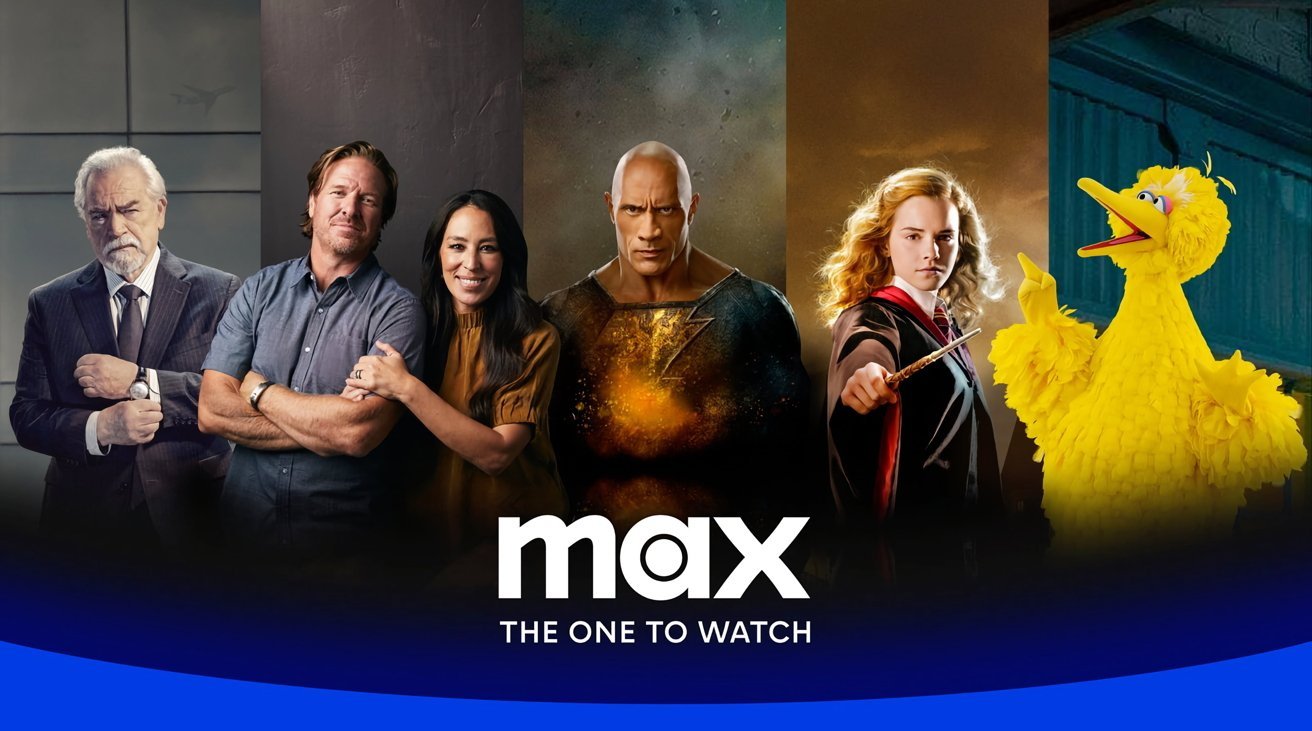
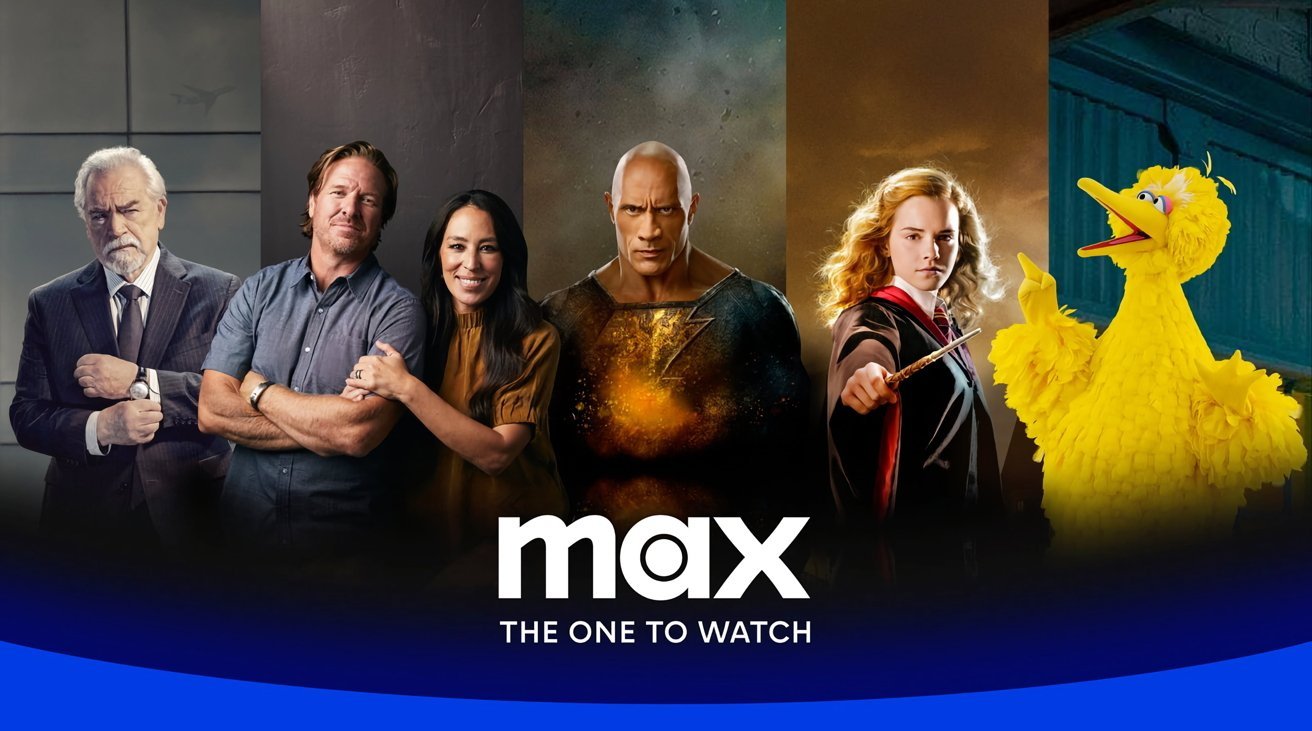
Collage of various TV and movie characters standing side by side above the Max logo with tagline The One to Watch on a blue curved background
HBO Max could soon become property of Paramount.

Warner Bros. Discovery has been working to find the right buyer for months now. In October 2025, it was even reported that Apple TV was among the companies in discussions with Warner Bros. executives regarding a potential purchase agreement.
Two months later, Netflix emerged as the top contender and potential new owner of Warner Bros. Discovery. However, the enthusiasm was short-lived, as Paramount offered to buy the venerable Warner Bros studios and its extensive library for $31 per share, as part of an all-cash deal.
Continue Reading on AppleInsider | Discuss on our Forums

Source link

Continue Reading
Click to comment

Leave a Reply

Your email address will not be published. Required fields are marked *

Tech

Moon’s Ancient Magnetic Field May Have Flickered On and Off

Published

on

sciencehabit quotes a report from Science Magazine: For decades, planetary scientists have pored over a mystery hidden within the Moon rocks retrieved by Apollo astronauts in the 1960s and ’70s. Minerals in the rocks record the imprint of a magnetic field, nearly as powerful as Earth’s, that existed more than 3.5 billion years ago and seemed to persist for millions of years. But generating a magnetic field requires a dynamo — a churning, molten core — and most researchers believed the Moon’s tiny core would have long since cooled off, 1 billion years after it formed. Corroborating that picture are other ancient Moon rocks of about the same age that suggest the field was weak — leaving planetary scientists baffled.

Now, researchers are proposing a new way to solve the puzzle. A paper published today in Nature Geoscience theorizes that between 3.5 billion and 4 billion years ago, blobs of titanium-rich magma melted episodically just above the core, rising in plumes that drove volcanic eruptions on the surface. By intermittently stirring up the Moon’s core, these bouts of melting would have caused the Moon’s magnetic field to flicker on in short, powerful bursts. The paper “links a few different concepts that people were thinking about separately, but hadn’t actually brought together,” says Sonia Tikoo, a planetary geophysicist at Stanford University who was not involved in the study.

Source link

Continue Reading

Tech

CSS, Now It’s Got Your 8086

Published

on

The modern web browser is now far more than a thing for rendering web pages, it’s a multi-faceted environment that can provide a home for almost any application you could imagine. But why should JavaScript or Wasm have all the fun? CSS is Turing complete now, right? Why not, as [Lyra Rebane] has done, write an 8086 emulator in pure CSS?

The web page at the link above may contain an 8086, but missing MMU aside, don’t expect it to run Linux just yet. Instead it has limited resources, just enough to run a demo program. It needs a Chrome-adjacent browser because it uses some CSS functions not available in for example Firefox, but we’ll forgive it that oddity. Its clock is provided by a small piece of JavaScript not because CSS can’t provide one, but because the JS version is more stable.

On one hand this is of little practical use, but to dismiss it as such is to entirely miss the point. It’s in the fine spirit of experimentation, and we love it. Perhaps a better way to look at it is to see what could be done more efficiently with the same idea. A 1970s CISC microprocessor might not be the best choice, but would for example a minimalist and optimized RISC design be more capable? We’re looking forward to where others take this thread.

Advertisement

It’s not the first unexpected computing environment we’ve found, who could forget the DOOM calculator!


Header: Thomas Nguyen, CC BY-SA 4.0.

Advertisement

Source link

Continue Reading

Tech

Olympique Marseille confirms ‘attempted’ cyberattack after data leak

Published

on

Olympique de Marseille

French professional football club Olympique de Marseille has confirmed a cyberattack after a threat actor claimed on Monday that it breached the club’s systems earlier this month.

Founded 126 years ago, Olympique Marseille competes in the Ligue 1, the top tier of the French football league system, and was the first French club to win the UEFA Champions League in 1993.

On Tuesday, Olympique Marseille issued a statement confirming that it had been hit by a cyberattack, following claims by a threat actor that they had breached some of its servers.

Wiz

The threat actor has also leaked a sample of the allegedly stolen information on a hacking forum, claiming to have stolen a database containing Olympique Marseille staff and supporter information.

“Olympique de Marseille has announced that it was recently the target of an attempted cyberattack, in a national and international context marked by a resurgence of attacks targeting large organizations,” the football club said.

Advertisement

“Thanks to the immediate mobilization of our technical teams and specialized service providers, the situation was quickly brought under control. To date, all our activities are continuing as normal and in complete security, and we are continuing our investigations into the scope of the incident. The club would like to reassure its supporters that no banking details or passwords have been compromised.”

While Olympique Marseille didn’t provide further details about the incident, the threat actor says the stolen database contains information on 400,000 individuals, including their names, addresses, order information, email addresses, and mobile phone numbers.

Olympique de Marseille entry on hacking forum
Olympique de Marseille entry on hacking forum (BleepingComputer)

​They added that the allegedly stolen data also includes information on more than 2,050 Drupal CMS accounts, including 34 OM staff and 1,770 contributors and moderators.

“Today I am selling Olympique de Marseille (OM) dump from feb 2026, iconic french football club in Ligue 1, online boutique for merch, fan memberships, massive supporter base in france and worldwide,” the threat actor said.

Although Olympique Marseille has yet to confirm a data breach, it reported the incident to the French data protection authority (CNIL), filed a complaint, and advised fans to “remain vigilant against phishing attempts, and report any suspicious activity.”

Advertisement

An Olympique Marseille spokesperson was not immediately available for comment when contacted by BleepingComputer earlier today.

In November, the French Football Federation (FFF) also disclosed a data breach after attackers gained access to administrative management software used by football clubs using a compromised account.

Modern IT infrastructure moves faster than manual workflows can handle.

In this new Tines guide, learn how your team can reduce hidden manual delays, improve reliability through automated response, and build and scale intelligent workflows on top of tools you already use.

Source link

Advertisement
Continue Reading

Tech

Scholastic Book Fair Computer is More Than Meets the Eye, Powered by Android

Published

on

Scholastic Book Fair Computer Terminal
A Scholastic Book Fair cash register appears for sale on eBay, and Michael MJD simply wants to get his hands on it for a closer look. It turns out to be a PAX E500 POS terminal that Scholastic had customized for their traveling sales events. These devices would process orders for books, posters, pencils, and anything else was piled up in those brief, generally chaotic classroom installations.


The front is a large touchscreen that launches Scholastic’s proprietary point-of-sale software. This is directly next to a magnetic stripe and chip card reader, so you can use your credit card. Along the bottom, there’s a thermal receipt printer waiting to be fed paper, as well as its own button to release new rolls. Moving to the back, we have a set of practical connections: a cash drawer port and an obsolete barcode scanner, power, dual Ethernet ports labeled LAN A and another, as well as an HDMI output and audio connector attached to a little extension board secured in place by a single tiny screw. A small camera looks ahead and is primarily used to scan QR codes associated with Scholastic’s e-wallet system. An internal battery is built in to keep the gadget running for a few minutes if the power goes out; however, it only showed 7% when it was still plugged in.

Sale


Apple iPad 11-inch: A16 chip, 11-inch Model, Liquid Retina Display, 128GB, Wi-Fi 6, 12MP Front/12MP Back…
  • WHY IPAD — The 11-inch iPad is now more capable than ever with the superfast A16 chip, a stunning Liquid Retina display, advanced cameras, fast…
  • PERFORMANCE AND STORAGE — The superfast A16 chip delivers a boost in performance for your favorite activities. And with all-day battery life, iPad…
  • 11-INCH LIQUID RETINA DISPLAY — The gorgeous Liquid Retina display is an amazing way to watch movies or draw your next masterpiece.* True Tone…

Scholastic Book Fair Computer Terminal
When you turn it on, the screen lights up with a digital voice informing you that additional paper is required or that the printer cover is open, just the standard safety checks. The software then prompts you for a PIN, which by default is 9999, as well as your login credentials. The following screen displays a summary of all the facts from the last time it was used, including the fair chairperson’s name and tax settings. The fact that it may be used offline is deliberate; Scholastic fairs are frequently held in locations such as gyms or libraries that do not always have dependable internet access, so it retains all transactions locally until it can reconnect. You also have a training mode that allows you to practice without any actual money moving hands, which is definitely a smart idea. MJD adds a variety of goods to a mock order, including erasers, hand pointers, deep ink stickers, a plethora of pencils and pens, and even gift cards.

Scholastic Book Fair Computer Terminal
Android 6.0.1 (Marshmallow) is installed on the machine, but it has been heavily modified to create a version dubbed PDroid that is specifically tailored for secure payment systems. But you won’t find the Google Play store anywhere, and if you try to enable unknown sources or developer mode, you’ll receive a notice telling you can’t; this is all due to some extremely strong security regulations in place. Any attempts to sideload programs are immediately shut down by the system simply because you cannot change the security settings to make them operate. Other pre-installed apps on the system include a payment device manager, which was last updated in March 2022, and a little tool called a connectivity suite, which will assist you in getting your data uploaded after you’re finished. Unplugging your TV and using an HDMI cord to mirror your screen to an external display works great, but the printer itself will not work during any simulated checkout process. That’s presumably because when you try to print receipts, it starts taking a lot of power, putting the machine into battery saver mode, and even when you’re plugged in, the status bars turn orange and the printer just stops operating.

Advertisement

Source link

Continue Reading

Tech

Paramount Wins Bidding War for Warner Bros. Discovery as Netflix Backs Out of Battle for Media Empire

Published

on

After months of backroom negotiations, regulatory whispers, and more than a few political landmines, Paramount has secured a winning bid for Warner Bros., with the full Warner Bros. board approving the deal late February 26, 2026. Netflix, which technically had four days to counter, has officially stepped aside.

This was never just about adding another studio logo to a corporate slide deck. It was a fight for control of the streaming hierarchy and stewardship of more than a century of film and television history — one of the deepest content libraries in the business. As with most media megadeals of this scale, the numbers mattered, but so did the politics, the regulators, and the strategic leverage behind closed doors. Paramount didn’t just buy assets; it just redrew the balance of power in Hollywood.

That said, Netflix may yet have the last laugh. The real test begins now: how Paramount manages the debt load tied to the acquisition and how effectively it restructures and integrates major brands like HBO and CNN under a single corporate strategy. Winning the bid is one thing. Making the math and the messaging work long term is another.

netflix-logo-transparent

Netflix Explains Why It Withdrew From Warner Bros Bid

Netflix, Inc. today confirmed that it will not increase its offer for Warner Bros. after being notified by Warner Bros. Discovery that its Board of Directors determined Paramount Skydance’s latest bid qualifies as a “Superior Proposal” under the terms of the existing merger agreement with Netflix.

In response, co-CEOs Ted Sarandos and Greg Peters issued the following statement:

Advertisement

The transaction we negotiated would have created shareholder value with a clear path to regulatory approval. However, we’ve always been disciplined, and at the price required to match Paramount Skydance’s latest offer, the deal is no longer financially attractive, so we are declining to match the Paramount Skydance bid.

Warner Bros. is a world-class organization, and we want to thank David Zaslav, Gunnar Wiedenfels, Bruce Campbell, Brad Singer, and the WBD Board for running a fair and rigorous process. We believe we would have been strong stewards of Warner Bros.’ iconic brands, and that our deal would have strengthened the entertainment industry and preserved and created more production jobs in the U.S.  But this transaction was always a ‘nice to have’ at the right price, not a ‘must have’ at any price.

Netflix’s business is healthy, strong, and growing organically, powered by our slate and best-in-class streaming service. This year, we’ll invest approximately $20 billion in quality films and series and will expand our entertainment offering. Consistent with our capital allocation policy, we’ll also resume our share repurchase program.

We will continue to do what we’ve done for more than 20 years as a public company: delight our members, profitably grow our business, and drive long-term shareholder value.”

Advertisement
paramount-skydance-logo

What Happens Next After Paramount’s Warner Bros Victory?

Although Paramount Skydance has won the bid for Warner Bros., this story is far from over. The deal still faces regulatory review, and that process alone could stretch for months depending on how aggressively federal agencies decide to examine consolidation in both the streaming and broadcast news sectors.

There is also a significant financial wrinkle. Because Warner Bros. reversed course after previously accepting Netflix’s acquisition proposal, Paramount is now expected to pay Netflix a $2.8 billion termination fee to formally close out that agreement. That is not pocket change. For Netflix, it’s a clear win. The company walks away with $2.8 billion in cash and saw its stock jump more than 10 percent in after hours trading following the announcement, recovering ground after a bumpy stretch tied to the original deal news.

Advertisement. Scroll to continue reading.

Paramount did not get here cheaply. To secure the winning bid, additional financing guarantees were reportedly backed by Oracle Founder, Larry Ellison, father of Paramount CEO David Ellison. The Paramount Skydance structure already involved significant leverage, and absorbing Warner Bros. adds even more debt to the balance sheet. With substantial overlap across film studios, streaming platforms, and television networks, cost cutting and consolidation are not just likely. They are inevitable. We have seen this movie before.

Advertisement

If regulators approve the transaction as structured, Paramount would gain control of Warner Bros.’ film and television studios, its deep content library, HBO, CNN, and the broader portfolio of cable and streaming assets. That dramatically reshapes the competitive landscape. The question is no longer who won the bidding war. It is whether Paramount can manage the debt, streamline overlapping operations, and turn one of the largest content consolidations in modern media history into a sustainable long term strategy.

warner-bros-discovery-logo-blue-background

If everything is approved as planned, here is what Paramount would acquire from Warner Bros.:

Extensive Library and Franchises: Paramount would gain access to one of the deepest film and television vaults in the business, including Harry Potter, the DC Universe, Lord of the Rings, The Sopranos, The Wire, Mad MaxFriends, and Game of Thrones. That is more than a century of IP that can be rebooted, expanded, licensed, or streamed globally.

Streaming and Networks: Max would likely be folded into or tightly integrated with Paramount+, while Paramount would also assume control of major cable brands including CNN, Discovery, HGTV, Food Network, TNT, and TBS. That significantly expands its footprint across streaming, news, lifestyle, and sports adjacent programming.

Advertisement

Warner Bros. Pictures: The crown jewel. Paramount would take control of Warner Bros. Pictures, instantly strengthening its theatrical pipeline and production scale alongside Paramount Pictures. That combination alone reshapes the studio hierarchy.

Industry Clout: The merger consolidates two historic entertainment companies into a single content and distribution powerhouse with global reach across theatrical, streaming, cable, and licensing.

That said, ownership does not guarantee permanence. With the level of debt involved and clear overlap between studio operations, streaming platforms, and networks, divestitures, restructurings, and cost cutting are realistic possibilities. The full impact of Paramount’s acquisition of Warner Bros. may not be clear until 2027, assuming regulators ultimately approve the deal.

Bottom Line: Winners and Losers

To call this a seismic shift in entertainment would be conservative. Paramount won the bidding war, but winning the auction is not the same as winning the long game. The company now carries more debt, more overlap, and more regulatory exposure than ever.

Advertisement

Netflix walks away with $2.8 billion in termination fees and a double digit one day stock surge after months of volatility tied to the original agreement. That is not exactly losing. Shareholders are breathing easier.

The political angle is impossible to ignore. Reports of meetings between Netflix leadership and the Trump administration add another layer of intrigue, even if the optics may prove more dramatic than the reality. At the same time, Paramount’s structure raises its own questions. Can one company realistically control both CBS News and CNN without accusations of media consolidation bias? CNN’s ratings struggles and outsized talent contracts make restructuring likely. A merger into CBS News, a radical reformat, or aggressive cost cutting are all on the table. Regulators will be watching closely, and so will critics.

Three major issues will define how this plays out:

Advertisement. Scroll to continue reading.
Advertisement

News Consolidation: Owning both CBS News and CNN invites scrutiny. If CNN continues underperforming, Paramount may merge operations or dramatically reshape it. Either move will trigger industry backlash.

Theatrical Windows: Movie theaters are in a fragile position. If Paramount shortens theatrical runs to rush content onto Paramount+, exhibitors like AMC face additional pressure. A three week window may boost streaming but could starve cinemas of critical revenue.

Physical Media and Consumer Impact: Some fans are celebrating today, believing Paramount will be more supportive of Blu ray and UHD releases than Netflix. Maybe. But physical media remains a small slice of overall revenue. Streaming scale and ad supported tiers will drive decisions, not collector sentiment.

And that leads to the bigger question: is the consumer actually the winner here? Consolidation often promises efficiency and scale, but it can also mean higher prices, fewer choices, and cost cutting that affects content quality.

Advertisement

By 2027, the home entertainment landscape will look very different. The only certainty right now is that the streaming war just entered a far more complicated phase.

Source link

Advertisement
Continue Reading

Tech

Apple Vision Pro owners get sports-related fix to keep F1 & MLS streams looking crisp

Published

on

Sports MultiView is one of those features that makes Apple Vision Pro a viable purchase, so of course Apple is willing to rush out the visionOS 26.3.1 update just to fix an issue with that feature.

Virtual living room with two large floating soccer broadcasts, one wide field view and one near the goal, above a control bar of game thumbnails, chair, couch, and coffee table
Sports MultiView is an excellent feature on Apple Vision Pro. Image source: Apple

It’s been two years since Apple Vision Pro arrived on the market, and there still isn’t a “killer app.” That said, the product has a lot of small features that make it worthwhile, and one of them is sports MultiView.
Apple released visionOS 26.3.1 on Thursday evening with a fix specifically for sports MultiView. The release notes say that a flicker issue could occur while using MultiView in the Apple TV app.
Continue Reading on AppleInsider | Discuss on our Forums

Source link

Continue Reading

Tech

How Chinese AI Chatbots Censor Themselves

Published

on

Hearing someone talk about digital censorship in China is always either extremely boring or extremely interesting. Most of the time, people are still regurgitating the same talking points from 20 years ago about how the Chinese internet is like living in George Orwell’s 1984. But occasionally, someone discovers something new about how the Chinese government exerts control over emerging technologies, revealing how the censorship machine is a constantly evolving beast.

A new paper by scholars from Stanford University and Princeton University about Chinese artificial intelligence belongs to the second category. The researchers fed the same 145 politically sensitive questions to four Chinese large language models and five American models and then compared how they responded. They then repeated the same experiment 100 times.

The main findings won’t be surprising to anyone who has been paying attention: Chinese models refuse to answer significantly more of the questions than the American models. (DeepSeek refused 36 percent of the questions, while Baidu’s Ernie Bot refused 32 percent; OpenAI’s GPT and Meta’s Llama had refusal rates lower than 3 percent.) In cases where they didn’t outright refuse to answer, the Chinese models also gave shorter answers and more inaccurate information than their American counterparts did.

One of the most interesting things the researchers attempted to do was to separate the impact of pre-training and post-training. The question here is: Are Chinese models more biased because developers manually intervened to make them less likely to answer sensitive questions, or are they biased because they were trained on data from the Chinese internet, which is already heavily censored?

Advertisement

“Given that the Chinese internet has already been censored for all these decades, there’s a lot of missing data” says Jennifer Pan, a political science professor at Stanford University who has long studied online censorship and coauthored the recent paper.

Pan and her colleague’ findings suggest that training data may have played a smaller role in how the AI models responded than manual interventions. Even when answering in English, for which the model’s training data would have theoretically included a wider variety of sources, the Chinese LLMs still showed more censorship in their answers.

Today, anyone can ask DeepSeek or Qwen a question about the Tiananmen Square Massacre and immediately see censorship is happening, but it’s hard to tell how much it impacts normal users and how to properly identify the source of the manipulation. That’s what made this research important: It provides quantifiable and replicable evidence about the observable biases of Chinese LLMs.

Beyond discussing their findings, I asked the authors about their methods and the challenges of studying biases in Chinese models, and spoke with other researchers to understand where the AI censorship debate is heading.

Advertisement

What You Don’t Know

One of the difficulties of studying AI models is that they have a tendency to hallucinate, so you can’t always tell if they are lying because they know not to say the correct answer or because they actually don’t know it.

One example Pan cited from her paper was a question aboutLiu Xiaobo, the Chinese dissident who was awarded the Nobel Peace Prize in 2010. One Chinese model answered that “Liu Xiaobo is a Japanese scientist known for his contributions to nuclear weapons technology and international politics.” That is, of course, a complete lie. But why did the model tell it? Was the intention to misdirect users and stop them from learning more about the real Liu Xiaobo, or was the AI hallucinating because all mentions of Liu were scrapped from its training data?

“It’s much noisier of a measure of censorship,” Pan says, comparing it to her previous work researching Chinese social media and what websites the Chinese government chooses to block. “Because these signals are less clear, it’s harder to detect censorship, and a lot of my previous research has shown that when censorship is less detectable, that is when it’s most effective.”

Source link

Advertisement
Continue Reading

Tech

Apple AirTag 2 Review – Trusted Reviews

Published

on

Verdict

The AirTag 2 works as advertised with easy setup and the excellent Find My network, and this updated model has a louder speaker and improved Precision Finding range – two features that make it an overall better tracker than before.


  • The speaker is a lot louder

  • Improved range

  • Lasts for a year on a battery

  • Shape makes it difficult to fit in some places

  • More colours would be nice

  • Needs an attachnent to fit on keys

Key Features


  • Trusted Reviews IconTrusted Reviews Icon


    Review Price: £29

  • Battery Life


    Lasts for about a year with a coin cell battery


  • Works with Find My

    Advertisement


    Everything is done through the Find My app


  • Personalisation


    Engraving can be added when bought from Apple

Introduction

The AirTag 2, like its predecessor, is arguably Apple’s most basic product. But depending on how it’s used, also one of the most important.

Advertisement

This tiny Bluetooth tracker, available as a single unit ($29/£29) or in a pack of four ($99/£99), can be attached to keys, left inside luggage or put in a rucksack. It can then be tracked, via Bluetooth LE or Apple’s extensive Find My network, very accurately.

If you’re prone to leaving bags in pubs or losing keys down the back of a sofa, this is an easy-to-recommend add-on to one of the best iPhones.

Advertisement

Design

  • Simple design in a single white colour option
  • Slightly bulbous, so it doesn’t fit inside a wallet
  • Works for all the accessories from the first-gen product

The AirTag 2 looks exactly like the first-gen model, aside from some slight tweaks to the text on the back.

The dimensions are the same, and the overall slightly bulbous, rounded shape is retained. This does mean that, unlike some flatter trackers, you can’t really pop the AirTag into a wallet or something similar. I would like to see Apple experiment with some different form factors, possibly alongside this traditional one – just to add that extra bit of versatility.

Advertisement

The AirTag 2 is marginally heavier, although even holding them both together, I couldn’t tell this, as it’s very light to begin with. When the tag is tucked away in a bag or attached to a set of keys, it’s not heavy enough to be noticeable.

It’s still made of a mixture of white glossy plastic and aluminium, which gives it a very Apple look. If you remember the iconic iPod – especially the original model – the colour choices are very similar here. It would have been nice to see some other colour options, perhaps similar to the hues the iPhone 17 series is available in.

Advertisement

AirTag 2 on tableAirTag 2 on table
Image Credit (Trusted Reviews)

I’ve had the first-gen AirTag on my keys since launch, and it’s certainly taken a battering. The silver aluminium side gets scratched very easily, especially when it’s jangling around with keys in a pocket or bag, and I doubt it’ll be any different here. Plastic alternatives, like Samsung’s Galaxy Smart Tag, look worse, but at least they hold up better.

The AirTag 2 is IP67-rated for dust and water protection, and the bottom can be twisted and removed to get at the CR2032 coin cell battery. There’s no way to recharge the AirTag, you just swap out the battery when it’s finished.

Advertisement
AirTag 2 bottom on tableAirTag 2 bottom on table
Image Credit (Trusted Reviews)

As it’s the same design as the outgoing model, all the same accessories work. Accessories are vital for the AirTag, as if you want to attach one to your keys or luggage, you’ll need one. If you’re just slipping it inside a bag, you’ll be fine without anything additional.

Features and Performance

  • Replaceable battery
  • Improved range
  • Loud speaker

Advertisement

There isn’t a whole lot new with the AirTag 2, but what is new is most welcome. The key upgrades revolve around Precision Finding and the speaker performance.

The internal speaker is much better this time around, and as a result, it can make a much louder noise. This is especially noticeable when the AirTag is lost inside a bag or in bedsheets, as it can be heard from further away. It’s a nice upgrade, although not a reason in itself to upgrade.

AirTag 2 precision finding on iphoneAirTag 2 precision finding on iphone
Image Credit (Trusted Reviews)

Inside, there’s an upgraded UWB (ultra wideband) chip that improves the Precision Finding skills of the tag and this means you can locate it from further away. To test this out, I took both an AirTag and AirTag 2, connected to an iPhone Air and then walked away. The original AirTag lost connection at about 15m, while AirTag 2 didn’t lose it until around 23m. In practice, this upgrade makes the AirTag 2 much easier to find around the house.

Setting up an AirTag is easy. Just bring it close to an iPhone, and it’ll add itself to the Find My app. This app is where all the tag’s features live, from playing a sound to tracking it down if lost. Of course, it’s iOS only – so these are of no use if you live in the Android ecosystem.

AirTag 2 precision finding on apple watchAirTag 2 precision finding on apple watch
Image Credit (Trusted Reviews)

Advertisement

You can now locate your AirTag with Precision Finding on an Apple Watch, and this works much like it does on the phone. When you lose the AirTag further away, you’ll make use of the excellent Find My network to try and track it down. This uses Bluetooth LE, so you can track items even without data.

Advertisement

The AirTag 2 is powered by a CR2032 coin cell battery. These last for about a year until they need to be replaced, are cheap and readily available from Amazon and supermarkets. 

You can’t charge the AirTag – when it dies, you just twist off the base and swap out the cells. This is both good and bad. It’s good because you don’t need to worry about battery life, just have a few spare batteries around and every year, change it when you get an alert. However, I can’t help but think having a solution that allowed the battery to be wirelessly charged, ideally via MagSafe, would be sleeker.

AirTag 2 with battery shpwingAirTag 2 with battery shpwing
Image Credit (Trusted Reviews)

I’d also like a way to be able to turn off the AirTag without removing the battery, as some of the ones I use – those in stored luggage, for example – don’t always need to be on.

Advertisement

Should you buy it?

Advertisement

You’re a forgetful iOS user

The AirTag 2 is an easy recommdation to go with an iPhone. It’s affordable, handy and easy to use.

Advertisement

You’re not fully in the Apple ecosystem

if you’re not all-in on Apple, you might be better off with a tracker that works better across ecosystems, like a model from Tile.

Advertisement

Final Thoughts

The AirTag 2 is a handy tool and one of the more affordable accessories for an iPhone. It works as advertised with easy setup and the excellent Find My network, and this updated model has a louder speaker and improved Precision Finding range – two features that make it an overall better tracker than before.

It’s not a revolution though, and there are still aspects of the AirTag that I wish Apple had altered. The shape isn’t ideal for all situations; you need accessories to attach it to a set of keys, and the use of a replaceable battery is a double-edged sword. It’s easy to swap out, yes, and lasts for about a year, but popping it on a MagSafe stand to give it an extra lease of life would’ve been preferable.

FAQs

Which phones does the improved Precision Finding feature work on?
Advertisement

Expanded Precision Finding works with AirTag (2nd generation) paired with iPhone Air or iPhone 15 or later (excluding iPhone 16e)

Which Apple Watch models work with Precision Finding?

Precision Finding on Apple Watch requires an Apple Watch Series 9 or later, or Apple Watch Ultra 2 or later, with watchOS 26.2.1

Advertisement

Source link

Advertisement
Continue Reading

Tech

Netflix backs out of Warner Bros. Discovery bidding war

Published

on

For anyone who has been following the soap opera unfolding between Netflix and Paramount Skydance over the past few months in their financial brinksmanship to acquire Warner Bros. Discovery, the saga may be nearing its end. Today, WBD said its board of directors have determined that the latest offer from Paramount Skydance amounted to the better proposal. The media outfit gave Netflix four business days to match Paramount’s terms, but the streamer didn’t waste any time in declining to raise its own bid.

“We believe we would have been strong stewards of Warner Bros.’ iconic brands, and that our deal would have strengthened the entertainment industry and preserved and created more production jobs in the US,” the statement from Netflix  co-CEOs Ted Sarandos and Greg Peters said. “But this transaction was always a ‘nice to have’ at the right price, not a ‘must have’ at any price.”

In addition to the purchase price of $31 per WBD share, Paramount’s latest offer also included a provision that it would cover the $2.8 billion termination fee that WBD would owe to Netflix for dissolving the existing merger agreement between the businesses. So rather than paying $82.7 billion to acquire the Warner Bros. part of the operation, it appears Netflix may walk away with no new content but padding its coffers with an extra nearly $3 billion.

After Netflix’s initial offer, Paramount Skydance swooped in with a hostile takeover attempt of the entire Warner Bros. Discovery business. WBD rejected it, Paramount tried again. Several additional volleys between the involved parties occurred over the past few weeks. While WBD has not yet formally accepted Paramount’s offer — which will be subject to long-winded regulatory approvals sure to spark more drama — it seems the dust will soon settle for this chapter.

Advertisement

Source link

Continue Reading

Tech

This AI Agent Is Designed to Not Go Rogue

Published

on

AI agents like OpenClaw have recently exploded in popularity precisely because they can take the reins of your digital life. Whether you want a personalized morning news digest, a proxy that can fight with your cable company’s customer service, or a to-do list auditor that will do some tasks for you and prod you to resolve the rest, agentic assistants are built to access your digital accounts and carry out your commands. This is helpful—but has also caused a lot of chaos. The bots are out there mass-deleting emails they’ve been instructed to preserve, writing hit pieces over perceived snubs, and launching phishing attacks against their owners.

Watching the pandemonium unfold in recent weeks, longtime security engineer and researcher Niels Provos decided to try something new. Today he is launching an open source, secure AI assistant called IronCurtain designed to add a critical layer of control. Instead of the agent directly interacting with the user’s systems and accounts, it runs in an isolated virtual machine. And its ability to take any action is mediated by a policy—you could even think of it as a constitution—that the owner writes to govern the system. Crucially, IronCurtain is also designed to receive these overarching policies in plain English and then runs them through a multistep process that uses a large language model (LLM) to convert the natural language into an enforceable security policy.

“Services like OpenClaw are at peak hype right now, but my hope is that there’s an opportunity to say, ‘Well, this is probably not how we want to do it,’” Provos says. “Instead, let’s develop something that still gives you very high utility, but is not going to go into these completely uncharted, sometimes destructive, paths.”

IronCurtain’s ability to take intuitive, straightforward statements and turn them into enforceable, deterministic—or predictable—red lines is vital, Provos says, because LLMs are famously “stochastic” and probabilistic. In other words, they don’t necessarily always generate the same content or give the same information in response to the same prompt. This creates challenges for AI guardrails, because AI systems can evolve over time such that they revise how they interpret a control or constraint mechanism, which can result in rogue activity.

Advertisement

An IronCurtain policy, Provos says, could be as simple as: “The agent may read all my email. It may send email to people in my contacts without asking. For anyone else, ask me first. Never delete anything permanently.”

IronCurtain takes these instructions, turns them into an enforceable policy, and then mediates between the assistant agent in the virtual machine and what’s known as the model context protocol server that gives LLMs access to data and other digital services to carry out tasks. Being able to constrain an agent this way adds an important component of access control that web platforms like email providers don’t currently offer because they weren’t built for the scenario where both a human owner and AI agent bots are all using one account.

Provos notes that IronCurtain is designed to refine and improve each user’s “constitution” over time as the system encounters edge cases and asks for human input about how to proceed. The system, which is model-independent and can be used with any LLM, is also designed to maintain an audit log of all policy decisions over time.

IronCurtain is a research prototype, not a consumer product, and Provos hopes that people will contribute to the project to explore and help it evolve. Dino Dai Zovi, a well-known cybersecurity researcher who has been experimenting with early versions of IronCurtain, says that the conceptual approach the project takes aligns with his own intuition about how agentic AI needs to be constrained.

Advertisement

Source link

Continue Reading

Trending

Copyright © 2025