Based on the advertised deep contouring and pressure-relieving AirCradle foam, I expected the pressure relief to be a standout feature, but it wasn’t. This is not to say that pressure relief was absent in testing, but it was minimal compared to that of firmer hybrid mattresses I’ve tested such as the DreamCloud Hybrid or the Wolf Memory Foam Hybrid Premium Firm. Which brings me to firmness: By my measure, this was not a “medium” mattress. Saatva rates this mattress between 5 and 7 on the firmness scale, so it falls in the medium-firm range. Unless you’re more than 200 pounds or have a taller build, your body mass would lead to more sinkage. This felt like a true firm mattress, which I’d rate at 7.5 to 8 out of 10. For context, the firmer hybrid mattresses we’ve tested, like the Plank Firm Luxe and Bear Elite Hybrid, reside in the 8 to 10 range of the firmness scale.
To be clear, a firm mattress is not at all a bad thing. The light cushioning for my pressure points, especially my hips, was right on target for back and stomach sleepers. Paired with how much spinal alignment support you get from this mattress, this is an excellent choice for these two sleeping positions. Side sleepers, I’m much more hesitant. In my two-week testing period, I also tried this mattress with Saatva’s Graphite Memory Foam Topper, which was included in the Winter Bundle. That helped significantly to create more cushion to sink into. The downside is that it’s not included with the mattress and costs extra. Athletes will have this available to them in Colorado Springs, but I can’t help but wonder whether, for LA28, it might have been more strategic to go with the Saatva Classic mattress, with its three customizable firmness levels and two heights. However, I can’t even begin to contemplate the logistical headache that would be; I am just a humble mattress tester.
The Saatva Memory Foam Hybrid did well at maintaining a bouncy feel that supported me as I moved between sleeping positions. It also maintained good motion isolation, keeping the bed stable so my husband wasn’t disturbed on his side as I tossed and turned. I wouldn’t label this a cooling mattress, even with the graphite-infused topper. It stayed more temperature-neutral, not amassing excessive body heat, but it didn’t offer a cool-to-the-touch feel either.
Personal Record
Photograph: Julia Forbes
Overall, this is a high-quality offering from Saatva, and based on my testing history with the brand, I expected nothing less. It also comes with Saatva’s free white-glove delivery service, which includes delivery, mattress setup, and haul-away of your old mattress. As someone who hauls around beds every single week, this being part of your purchase is a very big deal. Throw in a 365-night sleep trial with no minimal “break-in” period, plus a lifetime warranty that Saatva offers, and you’ll probably start to understand why I’ve always regarded this brand as one of the best in the game—they know what they are doing.
Spring has a way of revealing everything your garage doesn’t have. All the clutter you accumulated last winter suddenly needs a place to go so you can get the lawn mower out. The half-finished projects from last year are calling your name again, but the tools you swore you had somehow aren’t where you left them. And all that dust and leaves piled up in the corners can only be ignored for so long.
It’s why, for many homeowners, spring is about more than just cleaning. It’s a time for upgrading, as well. Lucky for you, Costco’s got plenty of the good stuff to get your garage ready for the season. We’ve put together a mix of must-haves ranging from storage systems to power tools to lawn equipment and beyond. No matter what projects await you in the coming months, these five Costco finds should be good enough to get you through.
Advertisement
Trinity Modular Slatwall
No functional garage is complete without proper organization and storage. That’s easier said than done, though, especially if your car or cars take up all the extra room in there. That’s what’s nice about the Trinity Modular Slatwall: it lets you store tons of stuff right there on the wall, no floor space required. The kit comes with four 48-inch by 12-inch PVC panels, covering a total of 16 square feet. Plus, you get 13 hooks in multiple sizes. It’s modular, too, so you can adapt it to whatever kind of wall space you have. The panels can go either vertically in a 4-foot by 4-foot square or horizontally in an 8-foot by 2-foot layout.
The panels can support up to 75 pounds per square foot, which comes out to 1,200 pounds total. It mounts flush with the wall, too, so no worries about it protruding into the workspace. Costco members say it’s sturdy and easy to install, and that it works even better when you order more hooks than the 13 it comes with. It’s an online exclusive priced at $129.99, and you can get it in gray or white.
Advertisement
Ingersoll Rand Combination Wrench Set
If mechanical work is on your spring to-do list, a reliable wrench set is a must-have. To get you taken care of, Costco sells this Ingersoll Rand 16-piece combination wrench set as an online exclusive. It covers sizes from 6mm to 22mm, which should be suitable for everything from basic household fixes to more demanding automotive jobs. Each wrench is engineered to exceed ANSI standards for torque, length, and hardness. They also have a non-slip grip design to help minimize the chances of you stripping your fasteners.
Advertisement
Another big plus: the long handles. They increase your leverage, which means more torque with less effort. Costco members say they’re well-made and feel comfortable enough for all your wrenching needs. It’s going for $99.99 on Costco’s site, which means you’ll be paying about $6.25 a wrench. Sure, there are cheaper mechanics’ tool sets out there, but this one comes with Costco’s excellent customer service to protect your purchase.
Advertisement
DeWalt Wet Dry Vacuum
Everybody likes getting a project done, but very few like the cleanup that comes after. This DeWalt wet-dry vacuum does make it a little easier to manage, though. It’s powered by a 4 peak horsepower motor, so you get strong suction and high airflow for everything from fine dust to heavier debris like nails and wood fragments. And even with all that horsepower, it’s still built with Stealthsonic technology that keeps noise levels below 65 decibels. That makes it about 50% quieter than standard wet/dry vacuums.
The vacuum’s stainless steel tank is pretty resilient against wear and tear, and the crush-resistant hose is built to last just the same. It comes with a 15-foot power cord to get you into every corner of the garage, plus a wrap handle for convenient storage. Costco members call it nice and quiet and perfectly adequate for inside and outside cleanup. Yeah, there are more powerful shop vacs out there, but this should be more than enough for the average Joe. It’s $99.99 in stores and online.
Advertisement
Fanttik Mini Chainsaw
Not every yard work task requires a full-size chainsaw. Sometimes, you just need to do a little cutting and trimming. That’s where the Fanttik Mini Chainsaw comes in handy. It’s a much more compact alternative to the full-size thing that you can even use with one hand. Even with its smaller size, the chainsaw can still handle over 135 cuts on a single charge of its 2500mAh battery. When it comes time to recharge, its fast USB-C charging means very little downtime. You also have a built-in LED display to give you real-time information on battery life and speed settings during operation.
The tool gives you three adjustable speed levels and an integrated LED light for visibility in low-light conditions. Don’t take that as your sign to go chainsawing in the dark, though. Be careful. While it’s not intended for heavy-duty logging, the mini chainsaw is plenty for quick, efficient yard work. Costco members agree, saying it works like a charm and can get the job done with power to spare. It’s $79.99 and is available in-store and online. And if you want to take your garage upgrade a step further, there are several other Costco Finds that can help you do that.
Advertisement
Greenworks Drill & Impact Driver Kit
If your power tools need an upgrade for spring, Costco has a Greenworks 24V drill and impact driver kit that comes with both tools, three batteries, a fast charger, and a range of other bits and accessories. It’s $299.99, and it’s an online exclusive. The drill has a 1/2-inch keyless chuck, a two-speed gearbox reaching up to 2,000 RPM, and an 18-position clutch. The impact driver has a 1/4-inch quick-release hex collet and up to 1,950 inch-pounds of torque. Together, you’ll have just what you need to start knocking out all those projects haunting your to-do list.
The 24V lithium-ion batteries have enough power and runtime to help you get through bigger projects. They also use USB-C fast charging, and they double as an input and output. That means, in a pinch, the batteries can serve as portable power banks for your phone or laptop. Costco members like the sturdy build, the robust torque, and the overall value of the kit itself. It’s definitely one of the most underrated tool brands at Costco.
Advertisement
Methodology
Each item included here was available to purchase from Costco warehouses or Costco.com as of the time of this writing. Items were chosen based on the highest-rated items from member reviews, sorted by newest arrivals on Costco’s website. Particular attention was also given to tools that solve common seasonal challenges during springtime (such as organization, cleanup, and DIY projects around the house or the yard). Each tool represents a different category of need (storage, fastening, cleaning, cutting, and drilling) to provide a well-rounded list of upgrades for your garage this spring.
New renders of the Pixel 11 Pro XL have surfaced, giving us one of the clearest looks yet at Google’s next flagship.
Fresh CAD-based images suggest Google is reworking its signature camera bar, swapping the familiar two-tone look for a more unified, monochromatic design that stretches cleanly across the rear. This is a subtle shift on paper. However, it could give the Pixel 11 lineup a noticeably sharper, more modern feel.
The renders, first shared by Android Headlines, follow earlier leaks of the standard Pixel 11 and Pixel 11 Pro. They complete the picture of Google’s 2026 non-foldable range. While CAD renders aren’t official, they’re typically based on manufacturing dimensions. This makes them a fairly reliable preview of overall shape and layout.
Credit: Android Headlines/OnLeaks
Alongside the new camera bar, there are hints that Google could be dropping the infrared thermometer seen on previous Pro models. That’s one detail worth treating with caution, as smaller features don’t always show up accurately in CAD leaks.
Advertisement
Advertisement
In terms of size, the Pixel 11 Pro XL is expected to come in at 162.7 x 76.5 x 8.5mm, making it marginally smaller than its predecessor. However, the display is tipped to remain unchanged. Google is likely sticking to a 6.8-inch AMOLED panel.
Under the hood, there aren’t many surprises yet. A next-gen Tensor G6 chip is widely expected, but beyond that, details around RAM and storage are still unclear. There’s also no strong indication of a major hardware shake-up this time around.
If Google follows its usual schedule, the Pixel 11 series is still a few months away from launch. An August reveal looks likely.
Senior defense officials told The Wall Street Journal that the autonomous attack drones have been used in strikes against Iranian military and IRGC targets, including weapons facilities, manufacturing sites, and air-defense nodes. They said this contributed to an 83% decline in Iranian drone attacks during the early days of the conflict. Read Entire Article Source link
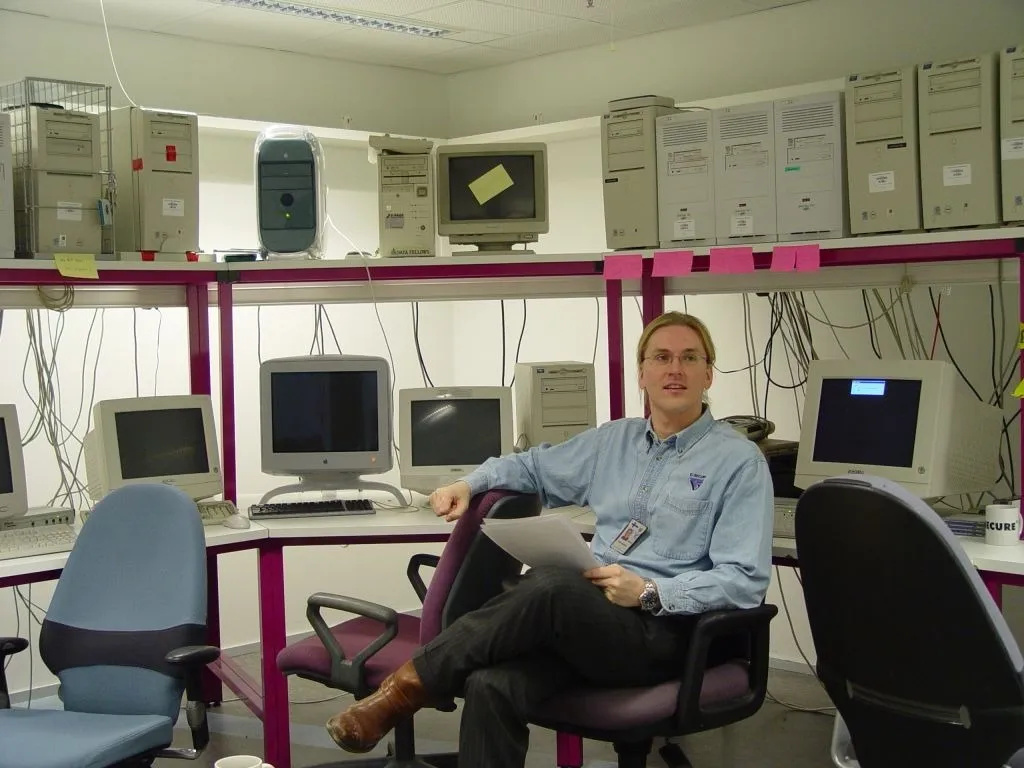
Mikko Hyppönen is pacing back and forth on the stage, with his trademark dark blonde ponytail resting on an impeccable teal suit. A seasoned speaker, he is trying to make an important point to a room full of fellow hackers and security researchers at one of the industry’s global annual meet-ups.
“I often call this ‘cybersecurity Tetris’,” he tells the audience with a serious face, reeling off the rules of the classic video game. When you complete a whole line of bricks, the row vanishes, leaving the rest of the bricks to fall into a new line.
“So your successes disappear, while your failures pile up,” he tells the audience during his keynote at Black Hat in Las Vegas in 2025. “The challenge we face as cybersecurity people is that our work is invisible… when you do your job perfectly, the end result is that nothing happens.”
Hyppönen’s work, however, has certainly not been invisible. As one of the industry’s longest serving cybersecurity figures, he has spent more than 35 years fighting malware. When he started in the late 1980s, the term “malware” was still far from everyday parlance; the terms instead were computer “virus” or “trojans.” The internet was still something few people had access to, and some viruses relied on infecting computers with floppy disks.
Advertisement
Since then, Hyppönen estimated he has analyzed thousands of different kinds of malware. And thanks to his frequent talks at conferences all over the world, he has become one of the most recognizable faces and respected voices of the cybersecurity community.
While Hyppönen has spent much of his life trying to keep malware from getting into places it is not supposed to, now he is still doing much of the same, albeit a slightly different tack: His new challenge is to protect people against drones.
Hyppönen, who is Finnish, told me during a recent interview that he lives about two hours away from Finland’s border with Russia. An increasingly hostile Russia and its 2022 full-scale invasion of Ukraine, where the majority of deaths have reportedly come from unmanned aerial attacks, have made Hyppönen believe he can have renewed impact by fighting drones.
For Hyppönen, it is also a matter of recognizing that while there are still long-standing problems to solve in the world of cybersecurity — malware is not going anywhere and there are plenty of new problems on the horizon — the industry has made huge strides over the last two decades. An iPhone, Hyppönen brought up as an example, is an extremely secure device. The cybersecurity aspects of drone warfare, on the other hand, remain almost uncharted territory.
Advertisement
Image Credits:courtesy of Mikko Hypponen
From viruses and worms to malware and spyware…
Hyppönen started early in cybersecurity by hacking video games during the 1980s. His love for cybersecurity came from reverse engineering software to figure out a way to remove anti-piracy protections from a Commodore 64 games console. He learned to code by developing adventure games, and sharpened his reverse engineering skills by analyzing malware at his first job at Finnish company Data Fellows, which later became the well-known antivirus maker F-Secure.
Since then, Hyppönen has been on the front lines of the fight against malware, witnessing how it evolved.
In the early years, virus writers developed their malicious code often exclusively out of passion and curiosity to see what was possible with code alone. While some cyberespionage existed, hackers had yet to discover ways to monetize hacking by today’s standards, like ransomware attacks. There was no cryptocurrency to facilitate extortion, nor a criminal marketplace for stolen data.
Form.A, for example, was one of the most common viruses in the early 1990s, which infected computers with a floppy disk. A version of that virus did not destroy anything — sometimes just displaying a message on the person’s screen, and that was it. But the virus travelled around the world, including landing on the research stations at the South Pole, Hyppönen told me.
Hyppönen recounted the infamous ILOVEYOU virus, which he and his colleagues were the first to discover in 2000. ILOVEYOU was wormable, meaning it spread automatically from computer to computer. It arrived via email as a text file, purportedly a love letter. If the target opened it, it would overwrite and corrupt some files on the person’s computer, and then send itself to all their contacts.
Advertisement
The virus infected over 10 million Windows computers worldwide.
Malware has changed dramatically since then. Virtually no one develops malware as a hobby, and creating malicious software that self-replicates is practically a guarantee that it will get caught by cybersecurity defenders capable of neutralizing it quickly, and potentially catching its author.
No one does it for the love of the game anymore, according to Hyppönen. “The age of viruses is firmly behind us,” he said.
Seldom do we now see self-spreading worms — with rare exceptions, such as the destructive WannaCry ransomware attack by North Korea in 2017; and the NotPetya mass-hacking campaign launched by Russia later that year, which crippled much of the Ukrainian internet and power grid. Now, malware is almost exclusively used by cybercriminals, spies, and mercenary spyware makers who develop exploits for government-backed hacking and espionage. Those groups typically stay in the shadows, and want to keep their tools hidden to continue their activities and to avoid cybersecurity defenders or law enforcement.
Advertisement
The other differences today are that the cybersecurity industry is now estimated to be worth $250 billion. The industry has professionalized, in part as a necessity, to fight the increase in malware attacks. Defenders went from giving away their software for free, to turning it into a paid service or product, said Hyppönen.
Computers and newer inventions like smartphones, which began to take off during the early 2000s, have become much harder to hack. If the tools to hack an iPhone or the Chrome browser cost six-figures or even a few million dollars, Hyppönen argued, this effectively makes an exploit so expensive that only the highly resourced, like governments, can use them, rather than financially motivated cybercriminals. That’s a huge win for consumers, and for the cybersecurity industry that’s a job well done.
Image Credits:courtesy of Mikko Hypponen
From fighting spies and criminals… to countering drones
In mid-2025, Hyppönen pivoted from cybersecurity to a different kind of defensive work. He became the chief research officer at Sensofusion, a Helsinki-based company that develops an anti-drone system for law enforcement agencies and the military.
Hyppönen told me that was motivated to get into a developing new industry because of what he saw happening in Ukraine, a war defined by drones. As a Finnish citizen, who serves in the military reserves (“I can’t tell you what I do, but I can tell you that they don’t give me a rifle because I’m much more destructive with a keyboard,” he tells me), and with two grandfathers who fought the Russians, Hyppönen is acutely aware of the presence of an enemy just over his country’s border.
“The situation is very, very important to me,” he tells me. “It’s more meaningful to work fighting against drones, not just the drones that we see today, but also the drones of tomorrow,” he said. “We’re on the side of humans against machines, which sounds a little bit like science fiction, but that’s very concretely what we do.”
Advertisement
The cybersecurity and drone industries may seem leagues apart from one another, but there are clear parallels between fighting malware and fighting drones, according to Hyppönen. To fight malware, cybersecurity companies have come up with mechanisms, known as signatures, to identify what is malware and what is not and then detect and block it. In the case of drones, Hyppönen explained, defenses involve building systems that can locate and jam radio drones, and by recognizing frequencies that are being used to control the autonomous vehicles.
Hyppönen explained that it’s possible to identify and detect drones by recording their radio frequencies, known as their IQ samples.
“We detect the protocol from there and build up signatures for detecting unknown drones,” he said.
He also explained that if you detect the protocol and frequencies used to control the drone, you can also try to conduct cyberattacks against it. You can cause the drone’s system to malfunction, and crash the drone into the ground. “So in many ways, these protocol level attacks are much, much easier in the drone world because the first step is the last step,” Hyppönen said. “If you find a vulnerability, you’re done.”
Advertisement
The strategy in fighting malware and fighting drones is not the only thing that hasn’t changed in his life. The cat-and-mouse game of learning how to stop a threat, and then the enemy learning from that and devising new ways to get around defenses, and on and on, is the same in the world of drones. And then, there’s the identity of the enemy.
“I spent a big part of my career fighting against Russian malware attacks,” he said. “Now I’m fighting Russian drone attacks.”
Starting this week, Microsoft has begun force-upgrading unmanaged devices running Windows 11 24H2 Home and Pro editions to Windows 11 25H2.
According to the company’s Lifecycle Policy site, Windows 11 24H2 will reach end of support in roughly six months, on October 13, 2026.
Also known as the Windows 11 2025 Update, Windows 11 25H2 began rolling out in September to eligible Windows 10 or Windows 11 devices as a minor update installed through enablement packages less than 200 KB in size.
“The machine learning-based intelligent rollout has expanded to all devices running Home and Pro editions of Windows 11, version 24H2 that are not managed by IT departments,” Microsoft said in a Monday update to the Windows release health dashboard.
Advertisement
“Devices running these editions will no longer receive fixes for known issues, time zone updates, technical support, or monthly security and preview updates containing protections from the latest security threats,” it added.
“These devices will automatically receive the update to Windows 11, version 25H2 when they’re ready. No action is required, and you can choose when to restart your device or postpone the update.”
Those who don’t want to wait for the automatic upgrade can manually check whether the update is available in Settings > Windows Update and click the link to download and install Windows 11 25H2.
Advertisement
If you’re not ready to upgrade, you can also pause updates from Settings > Windows Update by selecting the amount of time you’d like to pause them. However, you must install the latest updates after the time limit has passed.
Microsoft also provides a support document and a step-by-step guide to help users resolve problems encountered during the Windows 11 25H2 upgrade process.
Since the March 2026 Patch Tuesday updates were released, Microsoft has issued several emergency updates, including one that addresses a known issue breaking sign-ins with Microsoft accounts across multiple Microsoft apps, such as Teams and OneDrive.
Automated pentesting proves the path exists. BAS proves whether your controls stop it. Most teams run one without the other.
This whitepaper maps six validation surfaces, shows where coverage ends, and provides practitioners with three diagnostic questions for any tool evaluation.
[Washington, DC – April 2, 2026] – IREX, a global pioneer in ethical AI and intelligent video analytics deployed across 10+ countries and over 300,000 cameras, announced a major update to its FireTrack smoke and fire detection module. The update doesn’t require any additional hardware and broadens FireTrack’s applicability to critical infrastructure such as energy facilities and transportation hubs, public institutions including schools and hospitals, residential and commercial buildings, and parks, national parks, and forests.
Built on IREX’s ethical AI platform, the new module processes visual data in just 75–105 milliseconds –or about 0.1 second-, identifying danger almost instantly. This advancement – combined with improved model accuracy and resilience in poor lighting or weather – empowers early intervention by first responders, reducing the risk of catastrophic loss.
The updated model analyzes how fire and smoke evolve over time, distinguishing genuine hazards from harmless visuals like fog, headlights, or glare. This dramatically cuts down false alarms, allowing safety teams to focus on incidents that truly require attention.
To boost accuracy, IREX changed how the system “sees” fire and smoke. Instead of traditional bounding boxes around objects, the updated module uses segmentation, applying a color mask over the exact areas where fire or smoke appears: green for fire and red for smoke, thus better reflecting their irregular shapes. This approach improves the system’s ability to localize hazards precisely within the scene.
Advertisement
Credit: Irex
The updated FireTrack delivers early warning that is significantly faster than traditional optical or heat-based detectors by analyzing live video feeds for the visual signatures of smoke and fire in real time.
“Because the IREX AI platform seamlessly operates on existing camera networks, cities and organizations can strengthen fire safety without installing specialized sensor hardware – simply by connecting their CCTV systems to IREX,” said Serge Smirnoff, Head of PR at IREX. “Each detection event comes with a video snapshot for instant visual verification, enabling operators and first responders to quickly assess the situation and respond effectively.”
By leveraging the surveillance infrastructure already in place, the new FireTrack model offers a cost-effective path to comprehensive fire safety across both built environments and natural landscapes.
“The pride I feel for the IREX team today is immense. This FireTrack launch is a monumental achievement that reflects our core mission, to deploy ethical, intelligent AI to solve the world’s most critical problems,” said Calvin Yadav, CEO of IREX. “We are strengthening the resilience of entire communities globally, proving that every hour of hard work put into responsibly designed artificial intelligence is actively saving lives long before a single alarm sounds.”
The SDIC 8-bit MCU. (Credit: electronupdate, YouTube)
In this wonderful world of MEMS technology, sensor technology has been downsized and reduced in cost to the point where you can buy a car tire pressure sensor for less than $3 USD on a site like AliExpress. Recently [electronupdate] got his mittens on one of these items to take a look inside, and compare it against his trusty old mechanical tire pressure gauge.
Perhaps unsurprisingly, there isn’t a whole lot inside these devices once you pop them open to reveal the PCB. The MEMS device is a tiny device at the top, which has the pressurized air from the tire guided to it. The small hole inside the metal can leads to the internals that consist of a thin diaphragm with four piezoresistors that enable measurements on said diaphragm from which pressure can be determined.
Handling these measurements and displaying results on the small zebra connector-connected LCD is an 8-bit MCU manufactured by Chinese company SDIC. Although the part number on the die doesn’t lead to any specific part on the SDIC site, similar SDIC parts have about 256 bytes of SRAM and a few kB of one-time programmable ROM.
This MCU also integrates the clock oscillator, thus requiring virtually no external parts to work. Finally, its sigma-delta ADC interacts with the MEMS device, rounding out a very simple device that’s nevertheless more than accurate enough for a spot check as well as quite portable.
For decades, modern navigation has relied heavily on GPS, but another, less visible system plays an equally critical role in helping aircraft, ships, smartphones, and military platforms determine their position.
Earth’s magnetic field, constantly shifting and evolving, underpins the World Magnetic Model (WMM), a global reference that supports navigation systems used by billions of people every day.
Maintaining the accuracy of that model depends on reliable measurements of the magnetic field, yet much of the satellite infrastructure used to gather this data is aging, while the field itself is changing at an accelerating rate.
Advertisement
Article continues below
Quantum diamond magnetometers
These pressures have driven a search for new technologies capable of monitoring the magnetic field with greater precision and frequency.
Advertisement
In response, the US National Geospatial-Intelligence Agency (NGA) launched the MagQuest Challenge in 2019, a seven-year, multi-million-dollar competition designed to identify next-generation sensing technologies.
The goal is to develop compact, highly accurate systems that can provide continuous magnetic data, reducing reliance on periodic measurements and helping ensure the long-term reliability of global navigation systems.
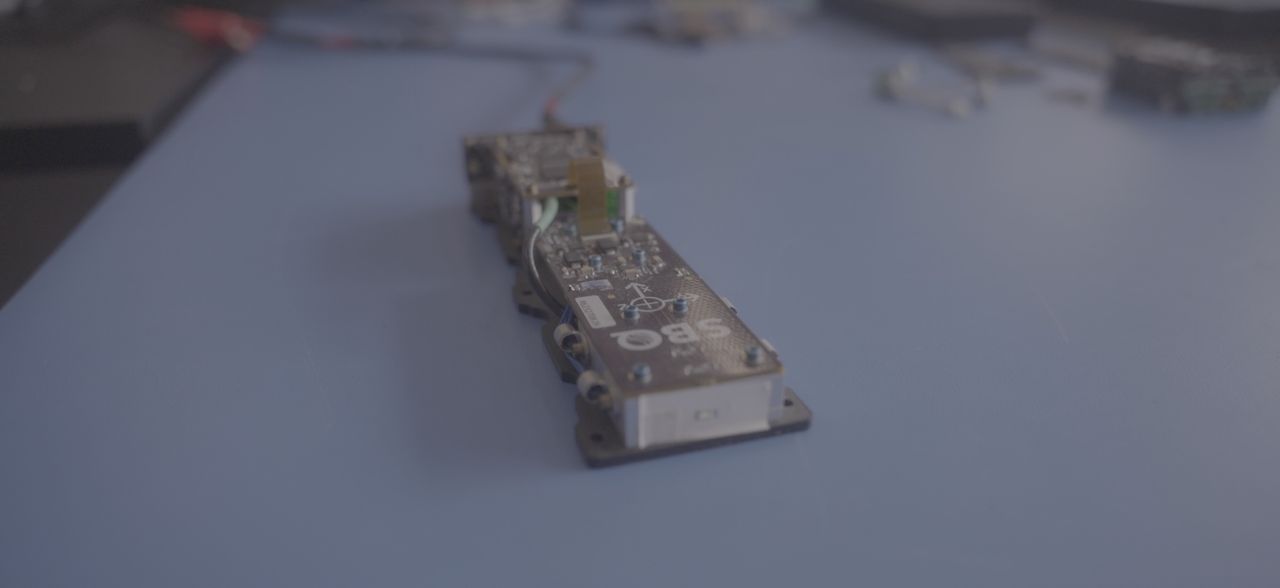
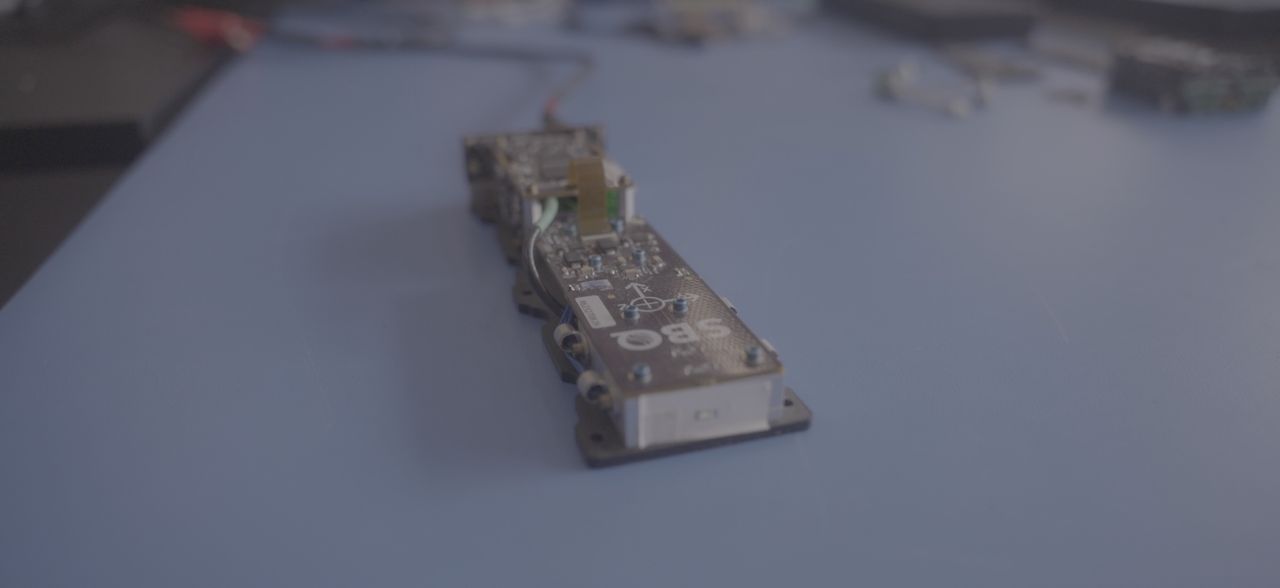
One of the companies emerging from this effort is SBQuantum, a Canadian firm specializing in quantum sensing technology. Its approach centers on quantum diamond magnetometers, compact devices that use the principles of quantum physics to measure magnetic fields with exceptional sensitivity.
Sign up to the TechRadar Pro newsletter to get all the top news, opinion, features and guidance your business needs to succeed!
Advertisement
Recently, the company reached a major milestone when its sensor was launched into orbit as part of the final phase of the MagQuest program. The deployment represents a step toward continuous, space-based monitoring of Earth’s magnetic field and highlights the growing role of quantum technologies in navigation, defense, and public safety.
To better understand the development of this technology, the challenges involved in bringing it to space, and the potential applications beyond navigation, I spoke with David Roy-Guay, Founder of SBQuantum.
Before we start, can you give us a brief overview of what the WMM is and why it is so important for us.
The World Magnetic Model (WMM) is what powers every electronic compass, including the one in your watch and cellphone. It is essential to keep up to date as the Magnetic North Pole is moving. It was in the Canadian north and is now shifting toward Siberia. This has a real impact on the precision of every analog and digital compass.
Everyday, we use the WMM, just think of the blue arrow in your favorite navigation application telling you to head left or right as you exit a subway station or a hotel. This directional information is complementary to GPS, which provides location information, but doesn’t tell you which way you are facing.
Advertisement
You mentioned that the satellites feeding it with data are reaching their end of life. What happens next?
Typically the WMM is updated every 5 years when a new official version is released. However recently a new update was released after only 4 years because the movement of the field had accelerated.
Once the mission of the current ESA SWARM constellation of satellites comes to an end, the existing magnetic field maps will be of little value 2-3 years after that. This means the navigation systems on board aircraft and drones will be off significantly, especially in the northernmost areas, possibly up to dozens of degrees. I can think of one example in Alaska when recently a landing strip had to have its numbers changed since it was no longer facing the same direction according to the WMM.
In comparison, our platform ‘Diamond Polaris – 1’ will allow the continuous production of magnetic data for the WMM. This approach is far more cost-effective, gathers and assembles faster, and offers data well suited for accurate positioning.
How does the data from the WMM project convert into something that can be an alternative to the ubiquitous GPS?
Data collected over a year of orbit is processed and curated by the US NOAA and the US NGA, to inform future versions of the WMM. Although the data is coarse it is applicable to compass applications. Higher resolution versions can be produced by deploying multiple satellites and drones to gather data at different altitudes.
These high-resolution maps will act as a calibration reference to navigation systems (INS systems) and could provide positioning data without GPS to up to 100m precision.
Our spring 2026 space-launch came after years of testing and retesting with NASA and other organizations. SBQuantum’s sensor was deemed to be fit for use in space. This first space deployment is the next step on the road to making magnetic navigation widely available as an alternative to GPS which cannot be jammed or distorted.
Advertisement
Your company built something called a diamond quantum magnetometer. Why diamond and why quantum?
Being solid state, diamonds are exceptionally stable and provide the right environment to preserve quantum coherence for an extended period, even at room temperature. This enables highly sensitive and very accurate magnetic field measurements for extended satellite missions at a global scale.
Furthermore, the atomic structure of diamonds is well suited to provide measurement of magnetic fields along three axes. For the purposes of navigation it is essential to gather all of that in order to provide directional information.
You mentioned the size of the device (roughly a quart of milk — about 1L in metric or a cube with 10cm size). Does your roadmap contain products that are smaller? What would something “better” differ in terms of features?
We are still in the early stages of this diamond technology. One of its advantages is that it can eventually be shrunk further, to about the size of a matchbox, without degrading its performance.
This is not the case for classical directional magnetometer technologies. We expect to reach that point in about 3 years, once we scale the production to industry standard wafers, which are of course widely used in the semiconductor industry.
How does the data captured by a quantum sensor allow for “advanced interpretation algorithms” that conventional sensors simply cannot support? What other applications could these sensors have?
By building an array of directional diamond magnetometers, we can enable real-time magnetic signals interpretation in a way which was otherwise not possible. For instance, we can locate metallic objects underwater, in real-time.
This is also true for metallic objects on the other side of a wall or underground. We are therefore also looking to employ the technology to support security and defense applications.
For instance this could be used for tracking submarines from a drone, or enhancing security at sporting events, or even security at schools and corporate events.
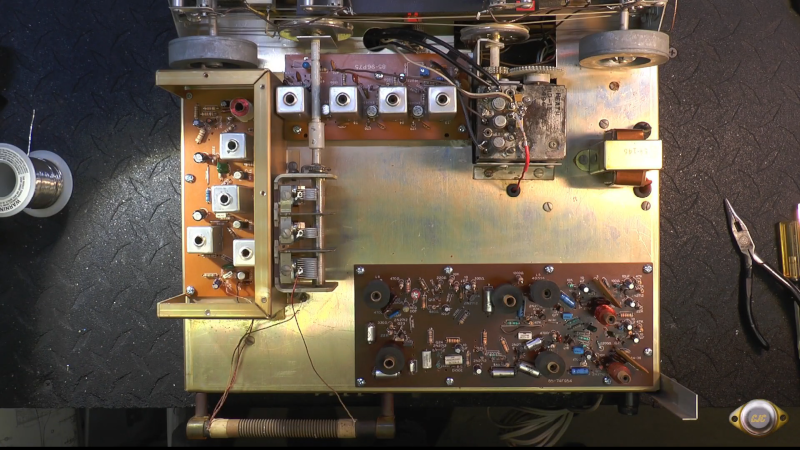
We miss the old Heathkit. You could build equipment that rivaled or even surpassed commercial devices. The cost was usually reasonable and, even if you could get by with less, the satisfaction of using gear you built yourself was worth a lot. Not to mention the knowledge you’d gain and your confidence in troubleshooting should the need arise. So we were jealous of [RCD66] when he found a Heathkit AJ-43C stereo tuner in the recycle bin.
As you can see in the video below, it needed a lot of love to get back to its former self. The device dates from around 1965, when the kit cost $130. In 1965, that was a lot of money. Back then, that would have bought you about four ounces of gold and would have been a great down payment on a $1,500 VW bug.
Things were a bit of a mess, so he removed all the parts and replaced most of them. Unsurprisingly, the electrolytic capacitors all tested bad. The transistors were all germanium, but if they tested good, his plan was to reuse them. There were several PCBs inside, and he made some changes, such as replacing the zener diode power supply with something more modern.
Advertisement
How did it sound? Watch the video and see for yourself. We usually like troubleshooting specific problems on gear like this, but in this case, it was probably smart to just do a total rework.
Season 1 hasn’t even aired yet, and Star Wars: Maul – Shadow Lord is already coming back for more. Chief Creative Officer Dave Filoni has announced that Season 2 is officially in the works at Lucasfilm Animation.
Star Wars: Maul – Shadow Lord Season 1 kicks off on Disney+ with a two-episode premiere on April 6, dropping two episodes weekly after that. No release date for Season 2 has been shared yet, but the early renewal signals serious confidence in the show.
This 10-episode animated series picks up after The Clone Wars, with Maul trying to rebuild his criminal syndicate on a planet the Empire hasn’t touched. Along the way, he encounters a disillusioned young Jedi Padawan, who might become the apprentice he needs.
With Season 2 locked in before Season 1 even premieres, Maul’s story is clearly just getting started.
Advertisement
The stellar cast includes Golden Globe winner and Oscar nominee Wagner Moura as Brander Lawson, Richard Ayoade as Two-Boots, Dennis Haysbert as Master Eeko-Dio Daki, Gideon Adlon as Devon Izara, and several others.
When are the new episodes of Star Wars: Maul – Shadow Lord season 1 coming?
Star Wars
Star Wars: Maul – Shadow Lord follows a two-episode-per-week format, rolling out every Sunday this month. Here’s the full breakdown:
April 6 – Episodes 1 and 2: “The Dark Revenge” and “Sinister Schemes”
April 13 – Episodes 3 and 4: “Whispers in the Unknown” and “Pride and Vengeance”
April 20 – Episodes 5 and 6: “Inquisition” and “Night of the Hunted”
April 27 – Episodes 7 and 8: “Call to the Oblivion” and “The Creeping Fear”
May 4 – Episodes 9 and 10: “Strange Allies” and the as-yet-untitled Season 1 finale

























































You must be logged in to post a comment Login