
TL;DR
Moment raised $78M led by Index Ventures to build AI agent infrastructure for wealth management. Edward Jones and LPL are clients.



Doom-scrolling is the worst. The mind-numbing spiral starts with “just five minutes” and ends an hour or three later with you feeling somehow worse about your life than before. I had to delete Instagram from my iPhone just to stop myself from wasting hours every night.
If you have also felt that feeling of despair after a scrolling session, it turns out that feeling is backed by science. The World Happiness Report, published by the Wellbeing Research Centre at the University of Oxford, has found a clear link between excessive social media use and declining wellbeing. And it’s hitting younger people, especially girls, in the Western world, the hardest.
According to the BBC, researcher Michael Plant says a little social media is fine. “If you use social media for an hour a day, that’s great, you’re being connected,” he says. But the more time you spend on it, the worse it gets for your well-being.
The report found that well-being among under-25s in countries including the United States, Canada, Australia, and the UK has dropped significantly over the past decade, mirroring the rise of social media.
Plant admits he was skeptical at first, but says the evidence is now hard to ignore. Young people today are not smoking or drinking alcohol (alcohol sales are at a historic low point, in fact) like previous generations, but they do have social media, and the platforms are built to keep them hooked.

Several studies have proven that social media addiction and doom-scrolling lead to worse mental health issues and increase stress and negativity among youth.
Sydney Grows, a fitness content creator on TikTok since 2021, knows both sides of it. She loves what she does, but admits that even with four years of practice, one negative comment still stings more than a hundred positive ones.
The hard truth is that social media is not going anywhere. Plant says the government is not going to step in for adults, and the platforms certainly won’t stop you. The responsibility falls on you. If scrolling through reels is making you feel worse about your own life, it might be time to step away and actually talk to someone instead.
I also recommend using the built-in tools in Android and iOS to set a time limit on social media apps. It’s also better if your friend has the password to bypass the time limit; otherwise, you will ignore it. You can also try switching to one of the new wave of minimalist phones that don’t offer any such app.

The first thing is to become cognizant of the fact that you are addicted and then take the necessary steps to curb your addiction.

[Editor’s Note: Agents of Transformation is an independent GeekWire series, underwritten by Accenture, exploring the adoption and impact of AI and agents. See coverage of our related event.]
If someone showed up at your door with a saw and said “let’s walk through your house and figure out how to make it better,” you’d think you hired the wrong contractor. But that’s how most companies are approaching AI — focusing on the capabilities of the tool rather than their vision for the work.
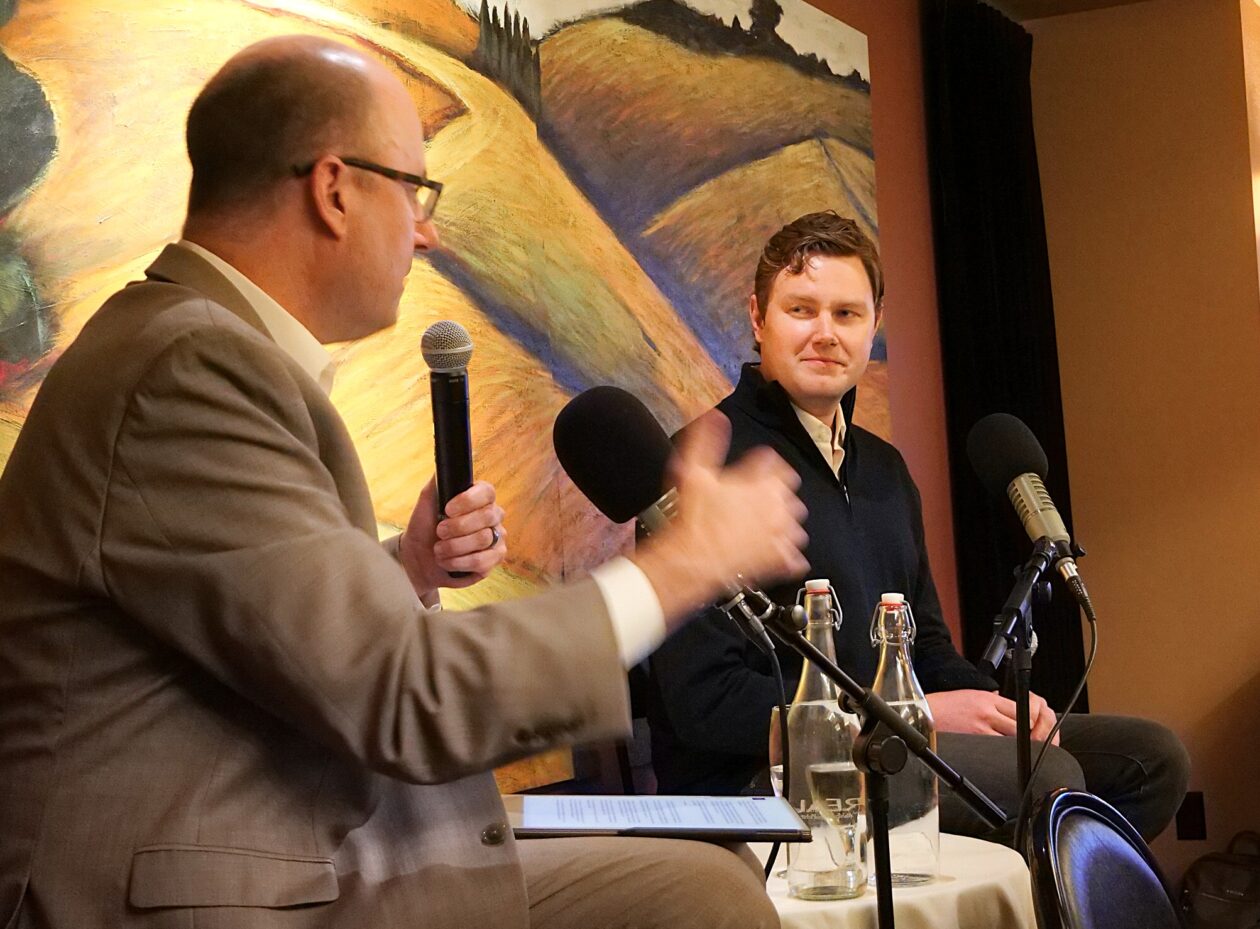
That’s the case Brian Evergreen has been making for years, first as an AI leader at Microsoft, now as an author, strategist and advisor to Fortune 500 companies. In a recent live recording of the GeekWire Podcast, Evergreen laid out where companies should focus instead.
His core message is what he calls future solving: You need a vision for the future that you’re trying to create first, and then AI becomes a tool for getting there. Most companies have it backward. They start with the technology, and then they ask what to do with it.
“Use cases are the friend of engineering, but the enemy of strategy,” Evergreen said. “Instead of being AI first, you need to be value first.”
Evergreen’s career has included roles at Accenture, AWS, and Microsoft, where he worked in AI from 2016 to 2023. As the company’s U.S. AI strategy lead, he helped executives develop their technology plans, and saw firsthand that the standard playbook wasn’t working. They would start with a problem, pick a use case, go after low-hanging fruit, and ultimately fall short.
That experience led to his book, Autonomous Transformation, and to the advisory work he does now through his firm, The Future Solving Company. His core argument: companies don’t need a better AI strategy. They need a vision for where they’re going, and AI is one way to get there.
Here are more takeaways from the conversation:
Humans as the interface: Instead of putting AI in front of the customer, Evergreen argues companies should put humans there, with AI as middleware behind the scenes. He points to Klarna, which laid off 700 customer support workers and replaced them with AI, then scrambled to rebuild its human team.
Decouple tasks from jobs: A job is an accountability for an outcome, Evergreen said, and AI can’t hold that accountability. The better approach: separate tasks from jobs, hand the repetitive ones to AI, and let humans focus on judgment and relationships.

High agency matters at every level: Evergreen’s own career illustrates the point. He started at Accenture as a data entry contractor, taught himself SharePoint, automated much of his team’s workflow, and worked his way into a full-time consulting role. The lesson: don’t wait for permission.
Create new value, not cheaper operations: Most companies look at AI and ask how to do what they’re already doing faster, better, or cheaper. Evergreen says that misses the point. The bigger opportunity is creating new value that didn’t exist before, the way Netflix went from shipping DVDs to streaming.
The larger importance of a clear vision: “Vision is the only force with enough momentum to overcome organizational inertia,” Evergreen said. Without it, companies can’t have a real strategy. And without a strategy, they can’t make strategic decisions.
Listen above, and subscribe in Apple Podcasts, Spotify, or wherever you listen.
Sony’s 1000X The Collexion are the fashionable model in its WH-1000X series. While noise cancelling and battery life take a hit compared to the WH-1000XM6, these headphones are focused on delivering a better sound experience and comfort – and on that front they’ve succeeded.
The most comfortable entry in the WH-1000X series
Mature, balanced audio performance
Stacked with features and customisation over price rivals
Better noise cancelling than price rivals
Excellent call quality
Px8 S2 beats it for overall sound
Reduction in battery life
Less powerful ANC than WH-1000XM6
No USB-C audio
360 Upmix
Upconvert stereo audio with Cinema, Music and Game modes
Battery life
Up to 24 hours of charge
Sound Connect app
Customise an array of features with Sony’s headphones app
Sony’s 1000X The Collexion are a different kettle of fish from its mainstream WH-1000X series, but it wants to have an impact that’s just as big with its intended audience.
These aren’t your everyday, work-horse type of headphones. The 1000X The Collexion (or WH-1000XX) have a narrower focus, one that emphasises style, craft, comfort and sound quality.
The WH-1000XM6 are among the best wireless headphones, and you might think that the 1000X The Collexion are basically the XM7s in disguise, but they’re not. What they are is similar to, but also different from, the WH-1000X models that came before them.
Over the last ten years, Sony crafted a distinctive look for its WH-1000X series, and the WH-1000XX doesn’t deviate much from it. They’re still recognisably distinctive; sleek and premium-looking as expected from a pair of headphones pushing past £500 / $600. If you felt the WH-1000XM6 lacked a wow factor, this pair stands out more from the crowd.
They don’t collapse inwards as the WH-1000XM6 do, but that’s not how Sony wants you to make use of these headphones.

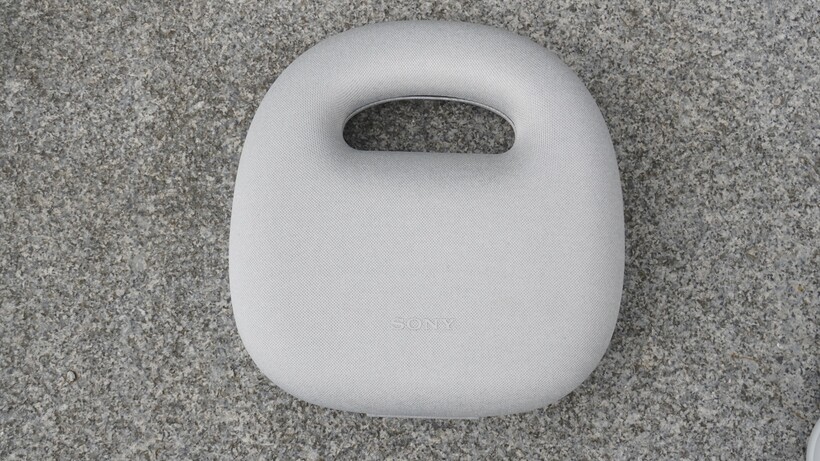
These aren’t headphones that you stuff in your bag between commutes. They’re headphones to take care of, so the carry case is shaped and acts as a bag. There’s a handle to carry them in a way that’s more practical than the AirPods Max 2 cradle, with a magnetic latch to keep the case secure. It’s such a simple change that it’s almost genius. Why haven’t more headphone brands implemented this?
It’s clear Sony’s mood board when designing these headphones had people wearing trenchcoats, Barrel trousers and Ferragamo shoes. Touch, feel, and a more experiential experience are what Sony’s designers have put their effort into.

These headphones are both minimalist and eye-catching – designed to blend in with what you’re wearing rather than stand out. The choice of platinum silver (no, not white) and black serves to emphasise that monochromatic approach to styling – though Sony missed a trick by not including a brown/tanned version that would have fit into the upmarket fashion look.
Unlike the Bowers & Wilkins Px8 S2 or Focal Bathys, the WH-1000XX haven’t opted for real leather (vegans celebrate!). Instead, the headphones make use of two materials across the design: aluminium and faux leather.
Matte sandblasted faux leather covers everything that you touch or your head comes into contact with. Some might not like the feel or texture, but I quite like the tactile feel it gives to the touch controls compared to the frictionless swipes of the WH-1000XM6. These headphones still incorporate taps and swipes, and in most cases, if the first tap or swipe didn’t succeed, the second attempt hit the mark.

I haven’t marked the surface of the headphones yet, but the earpads do have a few smudges I haven’t yet been able to remove. If you want to change out the earpads, they’re easily detachable.
Aluminium makes up the lovely-looking linkages that connect the headband to the earcups. The stepless slider is silent, but it’s the quality of the metal – according to Sony, each one is individually finished by a human – that’ll leave you purring about these headphones’ elegance.
The clamping force doesn’t feel too tight. Initially, while I felt pressure around my ears and cheeks, it slowly receded after a few minutes. The headphones can slip and slide, but I haven’t found the fit to be loose.
The earpads make for a cushy point of contact with the head, and these are easily the most comfortable wireless over-ears Sony has made; more so than the WH-1000XM6, which can bunch around my ears and make their presence quite literally felt.

That’s not the case with the WH-1000XX, which go on like a cosy pair of slippers, despite weighing 70g more. The profile of the headphones’ earcups is slimmer, so they jut out less, which has some effects I’ll get to later.
The noise isolation is perhaps not as strong as the WH-1000XM6, but The Collexion handles wind noise well enough. Wind whips cleanly past and doesn’t affect the mics, though walking into a headwind, the air gets into the aluminium linkages and produces a whistling sound.
There’s an extra physical button high up on the left earcup that covers Sony’s 360 Upmix modes, and they’re easy enough to locate thanks to the difference between the faux leather and metal feel of the controls.
The Collexion has a 3.5mm jack with a wired cable included in the carry bag. There’s no USB-C cable for charging, but more disappointing is that the WH-1000XX doesn’t support wired USB-C audio. Given all its main rivals do, I find this something of a letdown.

Writing the features for a pair of Sony headphones is, for me, intimidating because Sony packs in so much. Most of what was in the WH-1000XM6 carries over into the 1000X The Collexion, but the main takeaway here is that I can’t recall another headphone at this price point with this list of features. Sony’s in a field of its own when it comes to customising performance the way you want it.
Bluetooth is v6.0, Bluetooth multipoint ensures connection to two devices simultaneously, and you can stream in SBC, AAC, and LDAC, which offers higher quality audio.
The headphones also carry Bluetooth LE Audio (LC3), which uses less energy when enabled. Plus there’s Google Fast Pair for quick connection to Android devices while Microsoft’s Swift Pair does the same for Windows. Auto Switch support works with the LinkBuds and the 1000XM5 headphones and upwards. Auracast is supposedly supported, though the list of specs I was sent didn’t mention it.

The wireless performance has been strong – stronger than I feel it was with the WH-1000XM6 in its LDAC mode. There are still stutters and places where interference can interrupt. So while it hasn’t been completely faultless like efforts from Sennheiser and Focal, it’s come through major areas like Victoria and Oxford Circus mostly unscathed.
The smart features are all back. Speak-to-Chat pauses music when you’re speaking, and it latches onto actual speech rather than coughing, sneezing or my attempts to grumble beneath my breath. There’s Quick Attention mode, where you put your hand over the earcup to hear what’s around, plus Adaptive Sound Control, which I don’t make much use of but allows for automation of ANC in turning it on or off through geolocation.
If you prefer not talking to actual people and want to talk to digital assistants instead, the 1000X The Collexion supports Google’s Gemini. It also works with Apple’s Siri, and if there’s any other voice assistant you’d prefer, you can change the settings and have the headphones access your smartphone’s native assistant.
There’s also Sony’s own voice control, where you can raise the volume or turn the noise cancellation, etc., when enabled. If you don’t want to talk at all, the WH-1000XX supports gesture controls – you can avoid a call by shaking your head.

Sony is still chasing immersive audio, and the WH-1000XX gets features that weren’t available on prior WH-1000X headphones. There are three ‘upmix’ modes of Sony’s immersive 360 Reality Audio sound in 360 Cinema Upmix (already present on the WH-1000XM6), which is joined by the 360 Music Upmix and 360 Game Upmix.
These three ‘Upmix’ modes are supplemented by Standard (the default mode) and Background Music, where you can push music away and make it sound as if it’s happening in the distance. Sound quality is degraded, but if you’re the type of person who likes to listen to music while working but also finds it distracting when you need to concentrate, this mode can help (it’s certainly helped me).
These headphones will accept a Dolby Atmos signal (like any other pair), and there’s head-tracking support on Android.
These are the first pair of Sony headphones to implement its DSEE Ultimate, using Edge-AI to upscale compressed streams in real-time, and in doing so it claims to restore detail and dynamic range. To be frank though, if you’ve bought these headphones, you should be listening in higher quality than a piddling 320kbps stream.

Equaliser settings offer an array of presets to choose from, along with Find Your Equaliser, which plays audio to find the balance you’re after. For more in-depth control, there’s a 10-band EQ.
More smarts are available in Quick Access settings which includes Spotify Tap, Amazon Music Play Now, YouTube Music Quick Access and Endel Quick Access.
I can’t say I’m a huge fan of the revamped Sound Connect app. While all the categories are listed in a way that makes it simple and easy to find what you’re after, there are so many features, so many nested tabs and menus – the way it’s presented is not the most visually appealing.
At least with the main page you can add shortcuts, and I suspect most people won’t deviate from the first screen once everything is set up to their tastes.
There is a change in battery life, down from 30 hours to 24. A quick comparison to similarly priced rivals puts the WH-1000XX ahead of the AirPods Max 2, around the same as the Dali IO-8 and less than the Bowers & Wilkins Px8 S2.
Sony’s reasoning for the reduced battery is that as the earcups are slimmer in profile, there’s less room for the same capacity. The batteries are replaceable, though Sony recommends that you send them in for service rather than take a screwdriver to the headphones.

Actual battery life? I’ve found the headphones can last plenty long despite the reduced specs. A two-hour drain with a Spotify stream in lossless (in LDAC with ANC on) and the headphones only went down by 3%. Arguably the longer they go on for, the bigger the drops, but they’re easily last across long flights.
Battery care can extend the headphones’ lifespan by stopping them from reaching full charge, just like with the ULT speakers and other Sony headphones.
There is fast-charging but perhaps because of the smaller batteries, it’s not as emphatic as the WH-1000XM6’s three minutes equals three more hours. The WH-1000XX offers 90 minutes from a five-minute charge. Not quite Speedy Gonzalez.
So, how about the noise cancellation? Is it better than the WH-1000XM6, or worse?
It’s not as good. But still pretty good.
Measured against the WH-1000XM6 and it’s a noticeable drop, with noise isolation and overall suppression not as strong. The 1000X The Collexion is closer to the Bose QuietComfort Ultra Headphones Gen 2 (though not quite as silent).
Compared against contemporaries, they’re better than the Focal Bathys, Bathys MG, and Bowers & Wilkins Px8 S2. It deals with low frequencies more confidently during a pink noise test, and it clears away sounds from in front and to the sides more consistently. Perhaps the closest is the Dali IO-8, but the Sony is again more consistent.
While The Collexion aren’t super silent, on a plane, they make engine and cabin noise more manageable. On a busy train, it provides a semblance of calm, and on a bus, it makes the trip more bearable.

The WH-1000XX’s Ambient Sound mode is good – there’s maybe a little bit noise to deal with, but it sounds clear enough that I can hear someone rustling a crisp packet across the train carriage. Unlike some efforts, it doesn’t amplify sound to grab attention; it just filters through the outside world in a calm manner.
Call quality is arguably top tier. The mics latched onto my voice and relayed it to the other person clearly, who didn’t pick up any background or wind noise. You can be confident taking calls outside.
In the Sound Connect app you can also turn the microphone on or off during calls and meetings. It’s interesting they have the type of ‘work’ functionality I’d have expected from the Jabra Evolve3 85. It suggests Sony sees business people taking a shine to these headphones too.
Here we get to the crux of the 1000X The Collexion’s performance – the sound.
Is it better than the WH-1000XM6? Yes. Is it a huge upgrade over the WH-1000XM6? Not really. Is it a different approach from those headphones? Yes, and that’s the key takeaway. They’re similar but different.
There’s a new 30mm driver that features a soft edge and a new high-rigidity dome that Sony says delivers clearer separation between instruments and voice, more high-frequency detail and a wider soundstage. The 1000X The Collexion delivers on that front.
Compared to the WH-1000XM6, the bass has been tempered down, which itself had been toned down from the WH-1000XM5. There’s less energy funnelled to the lows, certainly not as much richness either listening to tracks on the two, with a bass performance that’s a little smaller and tasteful on the WH-1000XX.

It’s a similar tuning to the WH-1000XM6, with similarities that at times make the gap between the headphones feel almost nonexistent. But listen for longer, the WH-1000XX begins to stretch ahead like a long-distance runner in the final lap.
The 1000X The Collexion sounds wider, and there’s more detail retrieved across the width of the soundstage (instruments at the edges sound more defined) and across the frequency range. It’s not a huge difference, but it’s enough, and where Sony’s tech has a big advantage over other brands is the reduction of hiss and background noises in tracks.
Vocals are clearer and better separated from the instruments. Compared to the Dali IO-8, the Sony better protects the pocket for vocals – it feels like they’re slightly lost with the Dali on busy tracks, whereas the WH-1000XX preserves them better.
There’s a little more insight into vocals, a clearer and crisper tone that helps them stand out more. Compared to previous Sony over-ears, there’s a little nuance and refinement on display. When tracks get busy and there’s banging percussion beats and clashing cymbals, the Sony sifts through it with more acuity than the Dali does.

The highs are shaped a little better than before; clearer, more detailed, if around the same level of brightness. The highs aren’t fatiguing, and the high-frequency peaks strike a better tone on the WH-1000XX. The headphones form a clearer picture of a track in my head, but that’s not to say that the WH-1000XM6 are a slouch either.
They’re not the most energetic but that seems by design. The headphones go for a calmer and less excitable energy than the Bowers & Wilkins Px8 S2. The Bowers offers a bolder sound and retrieves more detail from music – plus it punches like a hammer with low frequencies.
The 360 Upmix modes are a mixed bag. If the intent of the 360 Music Upmix is to make it sound as if music isn’t coming from inside your head, then I don’t think it succeeds. If it’s meant to sound like a live music performance, it doesn’t carry the energy or feel of that either.
The 360 Cinema Upmix is better. With an iPad Pro, it brings dialogue and backgrounds upfront, whereas without it, in the headphones Standard mode, it focuses on dialogue above all else. If it’s meant to push sounds further from your head, it’s not doing that, but I do prefer Cinema Upmix to Music Upmix.

Fashionable, well-crafted, comfortable to wear with the most mature and balanced sound yet of the WH-1000X series.
Get the WH-1000XM6. The WH-1000XX are premium headphones for a particular market, with the Mk6 delivering better noise cancellation and longer battery.
Are Sony’s 1000X The Collexion better than the WH-1000XM6? Not in every way, but they’re not trying to be, and comparing them in such a way defeats the point. The WH-1000XX are intended for a different audience with different expectations.
If you have the WH-1000XM6, there’s no need to get an ‘upgrade’ with these headphones. They’re not the WH-1000XM7 in disguise but a different proposition altogether. If the WH-1000XM6 is more mainstream, the WH-1000XX are more bourgeois.
The noise-cancelling takes a hit, as does the battery life, but they sound better and they’re more comfortable to wear. If you’re after a pair of Sony wireless headphones that offer a higher level of comfort and sound, the Collexion is the model that suits you best.
The clincher, really, is how they compare to similarly priced efforts, and when it comes to noise cancellation and overall features, the Sony WH-1000XX has them beat. The level of customisation and smarts is where this pair of headphones reaches class-leading status.
The end result is a pair of Sony headphones that are similar to what came before, but different. Well-crafted, improved sound and a wealth of features – Sony’s entered the truly premium wireless headphone market with aplomb.
The WH-1000XX were tested over the course of three weeks, compared to similarly priced models in terms of sound and noise cancellation.
Battery drain was carried out, calls were made, and a pink noise test used to evaluate the noise cancellation.
There’s no USB-C audio support, with the headphones supporting analogue audio with its included 3.5mm cable.
| Sony 1000X The Collexion Review | |
|---|---|
| UK RRP | £549 |
| USA RRP | $649 |
| EU RRP | €630 |
| Manufacturer | Sony |
| IP rating | No |
| Battery Hours | 24 |
| Fast Charging | Yes |
| Weight | 320 G |
| ASIN | B0GY4RH3MX |
| Release Date | 2026 |
| Model Number | WH-1000XX |
| Audio Resolution | SBC, AAC, LDAC, LC3 |
| Driver (s) | 30mm |
| Noise Cancellation? | Yes |
| Connectivity | Bluetooth 6, Auracast, Google Fast Pair, Microsoft Swift Pair |
| Colours | Platinum Silver, Black |
| Frequency Range | 4 40000 – Hz |
| Headphone Type | Over-ear |
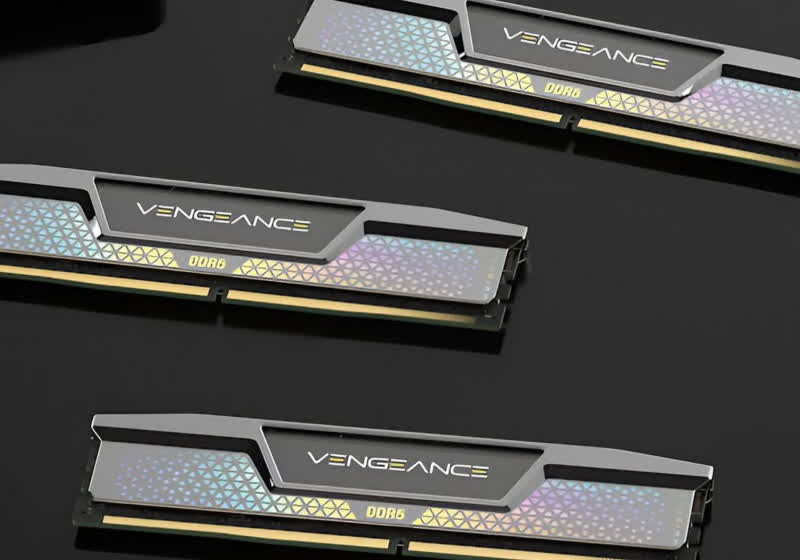

According to screenshots posted on X by tipster @wxnod, Corsair has integrated memory chips manufactured by Chinese DRAM maker ChangXin Memory Technologies (CXMT) into its next-generation memory modules. While Corsair typically sources memory chips from Micron Technology, elevated market prices have reportedly pushed the company to explore more cost-effective alternatives.
Read Entire Article
Source link


Seattle’s business and tech community just delivered a World Cup-sized assist for a great cause.
A premium 2026 World Cup suite experience, donated by Microsoft, raised $100,000 for Seattle Children’s Hospital after an auction organized by GeekWire.
UiPath, the business orchestration and AI automation giant which is expanding its Bellevue, Wash. operations, submitted the winning bid last week.
The auction kicked off at the GeekWire Awards earlier this month. Sounders FC captain and U.S. Men’s National Team midfielder Cristian Roldan and Microsoft deputy general counsel Brian DeFoe promoted the effort on stage.

“We’re proud to join together to support the incredible, life-changing work Seattle Children’s does every day for kids and families in our own backyard,” said Michael Atalla, chief marketing officer at UiPath. “When the opportunity came up to use the magic and reach of the 2026 World Cup to support our community, it was an easy decision — and a powerful reminder of what’s possible when we can rally together around something bigger than any one of us.”
UiPath employs 195 people in the Seattle area, recently expanding its product and engineering hub at Bellevue’s Lincoln Square. The New York-based company employs 4,800 worldwide.
Microsoft — a Seattle FIFA World Cup 2026 Host City Supporter — donated the suite as part of an effort to connect the global event with local community impact, turning one of the hottest tickets into a fundraiser just weeks before the tournament begins.
“Moments like this are exactly what we hoped to inspire as a host city sponsor,” said Jane Broom, senior director of community leadership at Microsoft. “It’s a great reminder that our business community shows up not just for big events, but for the people who live here long after the final whistle. Thanks to GeekWire for bringing Microsoft, UiPath, and Seattle Children’s together so we can do more.”
As Seattle prepares for one of the biggest global events in the city’s history, the auction offered a glimpse of how the World Cup is bringing together the region’s tech, business and philanthropic communities.
The World Cup starts in North America on June 11, with the first match in Seattle taking place on June 15 when Egypt faces Belgium.
UiPath’s winning auction bid was for the last match in Seattle, a round of 16 knockout stage fixture on July 6. The teams for that match have not yet been determined, though it could be the U.S. Men’s National Team if they advance far enough in the tournament.


Moment raised $78M led by Index Ventures to build AI agent infrastructure for wealth management. Edward Jones and LPL are clients.
Moment, the fintech company founded by a cohort of former Citadel Securities quantitative traders and researchers, has raised $78 million. The round was led by Index Ventures with participation from existing investors Andreessen Horowitz and Avra. The company last raised $36 million in July 2025.
Moment builds infrastructure that allows wealth management firms to deploy AI agents for fixed-income and equities trading. In the past year, it signed Edward Jones, LPL Financial, and Hightower Advisors as partners. These are not small accounts: Edward Jones manages $2.1 trillion in client assets, LPL oversees approximately $1.7 trillion, and Hightower manages more than $175 billion.
“The largest financial institutions know they need to deploy agents, but the infrastructure to deploy them safely and effectively hasn’t existed,” CEO and co-founder Dylan Parker said. “We built that operating system from the ground up, with a unified data model and regulatory-grade controls so AI can finally do real work in investment management.”
The pitch is infrastructure, not intelligence. Moment is not building its own large language model. It is building the compliance, data, and execution layer that sits between frontier AI models and the regulated environment in which wealth managers operate. The distinction matters because financial services firms cannot simply plug ChatGPT or Claude into their trading systems without audit trails, regulatory controls, and integration with existing market data infrastructure.
Anthropic has been pitching financial services firms directly, unveiling specialised AI agents designed for tasks like trade compliance, portfolio analysis, and client reporting. The competitive dynamic is layered: Anthropic provides the reasoning model, but firms like Moment provide the regulated infrastructure that makes those models deployable in production.
Russ Tipper, principal and head of products and solutions at Edward Jones, framed the opportunity clearly. “AI is going to be a defining capability for the next era of wealth management,” he said. “The firms that get it right will be the ones that pair it with the right infrastructure.”
OpenAI launched its own personal finance tools this month, connecting ChatGPT to bank accounts via Plaid for consumer-facing financial advice. Moment operates at the institutional end of the same spectrum. The consumer and institutional approaches will likely converge, but for now they represent different bets on where AI-powered finance creates the most value.
The former Citadel pedigree is a deliberate signal. Citadel Securities is one of the most technically sophisticated trading operations in the world. Building a startup with alumni from that environment tells prospective clients that the team understands both the technology and the regulatory constraints that make financial services AI harder than general-purpose AI.
Anthropic recently finalised a $1.5 billion joint venture with Blackstone, Hellman & Friedman, and Goldman Sachs to embed Claude inside portfolio companies of the world’s largest private equity firms. That deal and Moment’s raise point in the same direction: the financial services industry is moving from evaluating AI to deploying it, and the companies that control the infrastructure layer between the model and the trade will capture a disproportionate share of the value.


Update (May 23): SpaceX has now successfully launched and recovered the redesigned Starship V3 after scrubbing the previous attempt due to a launch tower issue. During the test flight, the massive rocket reached sub-orbital space, deployed multiple dummy satellites, and completed a controlled descent over the Indian Ocean despite losing…
Read Entire Article
Source link


Legal
Cox Media Group allegedly sold a bogus AI-powered snoopfest service
It’s not every day a titan of industry pays six figures to settle claims it lied about spying on users via their smart home devices, but the FTC said that it would conclude the case against TV, radio, and advertising giant Cox Media Group (CMG) if it does.
It would also need to make certain commitments around making misrepresentations. CMG, together with two smaller marketing companies, New Hampshire-based MindSift LLC and 1010 Digital Works LLC in Wisconsin, is alleged to have misled customers in advertising a supposed AI-powered service.
This marketing product, called “Active Listening,” was pitched as a novel algorithm that could take snippets from user conversations, supposedly overheard by their smart home devices, and use them to generate targeted ads to other users in specific geographic regions.
The FTC alleged that these companies were, in essence, claiming to be selling data they said they’d gathered by spying on users, who were said to have given their consent to all of this.
In reality, claimed the watchdog, the trio was instead selling lists of email addresses bought from data brokers “at a significant markup,” the FTC said.
There had been no listening in on smart devices or conversations of any kind, there was no voice data being used at all, and consumers had not given their consent to the advertised service, the regulator went on to allege.
“Not only did the product these companies marketed not do what they claimed it did, but they also misled potential customers by claiming consumers had opted into this service when it’s clear they did not,” said Christopher Mufarrige, director at the FTC’s Bureau of Consumer Protection.
“It is a basic rule of business that you need to be honest with your customers, and these companies failed to do that.”
According to the complaints leveled at the three companies, in saying that users had consented to be enrolled in its Active Listening service, what they actually meant was that users had agreed to the terms of service when downloading or using certain applications.
The FTC said that this is not the same as providing consent for their day-to-day conversations being snooped on by an algorithm running in their smart home devices.
Further, even if Active Listening did work as the trio described, it would have violated Section 5 of the FTC Act because of the companies’ flawed consent model.
CMG will pay the vast majority of the settlement sum, $880,000, while the two smaller companies will each pay $25,000. The funds will be used to compensate customers who bought into Active Listening’s marketing, the FTC said.
All three companies are also barred from misrepresenting the features of their marketing services, collecting voice data, and geographic targeting capabilities.
The Register contacted CMG for a response. ®
Soundcore, which you may have heard does both audio and video now, has launched another pair of headphones in the Liberty 5 Pro and Liberty 5 Pro Max.
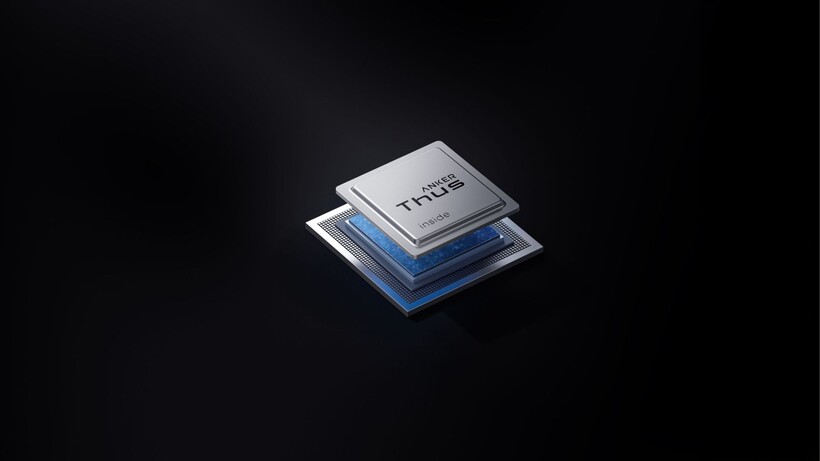
Another pair of true wireless earbuds, you might think what’s interesting about that? Well, in a first for Soundcore, this true wireless pair are the first two products to features Anker’s co-developed Thus AI chip, which it claims can offer “Whisper Clear” calls.
How so? By utilising a 10-sensor matrix that can separated the speaker’s voice from background noise, combined with eight microphones to capture ambient noise and two bone conduction sensors that can detect skull vibrations, the Thus AI chip is said to ensure “clear voice pickup even in noisy environments.” Interesting.
Of course there have been improvements in other areas for both the Liberty 5 Pro and Max efforts, with ANC improved up to two times over previous generations, while the Liberty 5 Pro Max also features AI Note-Taker for recording meetings without having to reach for your phone.

As you can see, Anker/Soundcore is delving deeply into AI for its latest products, with it involved in seemingly every aspect of the two earbuds that have just been announced.
Another area where AI is used is with voice interaction, with 20 built-in commands that allow users to adjust volume, answer or hang up phone calls, skip tracks and change ANC modes.

Speaking of ANC, there’s a transparency mode for paying attention to your surroundings, and what Soundcore is dubbing its Easy Chat feature, where audio is paused when the headphones sense you’re speaking.
Both earbuds offer up to 6.5 hours of playback with noise cancelling on, and 28 hours in total with the charging case. Bluetooth 6.1 is supported, as is Google Fast Pair, Apple’s Find My (in case you lose the earbuds somewhere), and Bluetooth multipoint for connecting to not just two devices but three. What’s the main difference between the two? The Liberty 5 Pro Max’s charging case has a touch screen.
The Liberty 5 Pro is available now, priced at $169.99 / £149.99 / €179.99, putting within the midrange area of the market. Colours include blue, white, black and pink.
The flagship Liberty 5 Pro Max is the more expensive at $229.99 / £199.99 / €249.99. Colours are a choice of Titanium-Gold and black.
Look out for our review of both headphones in the coming weeks.
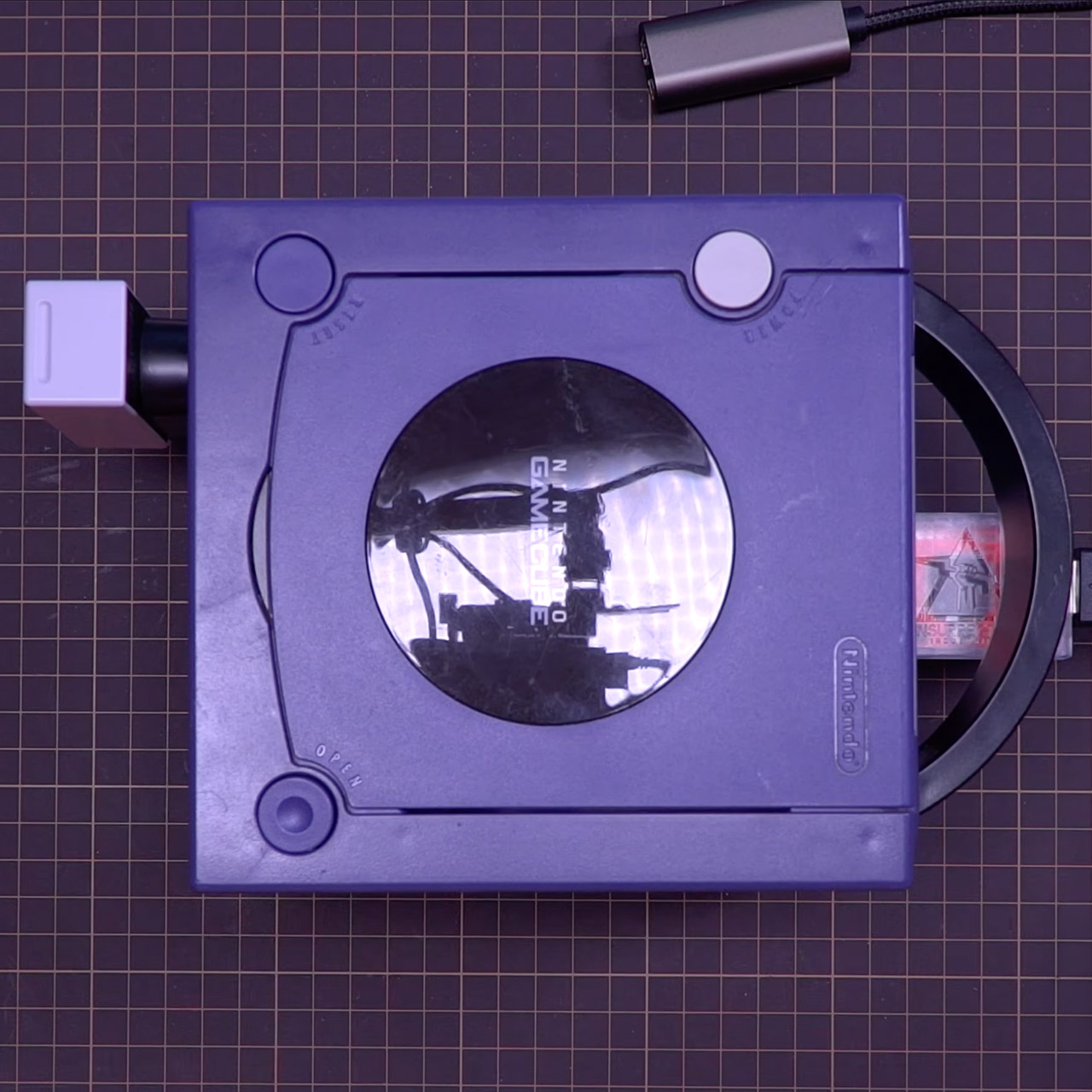
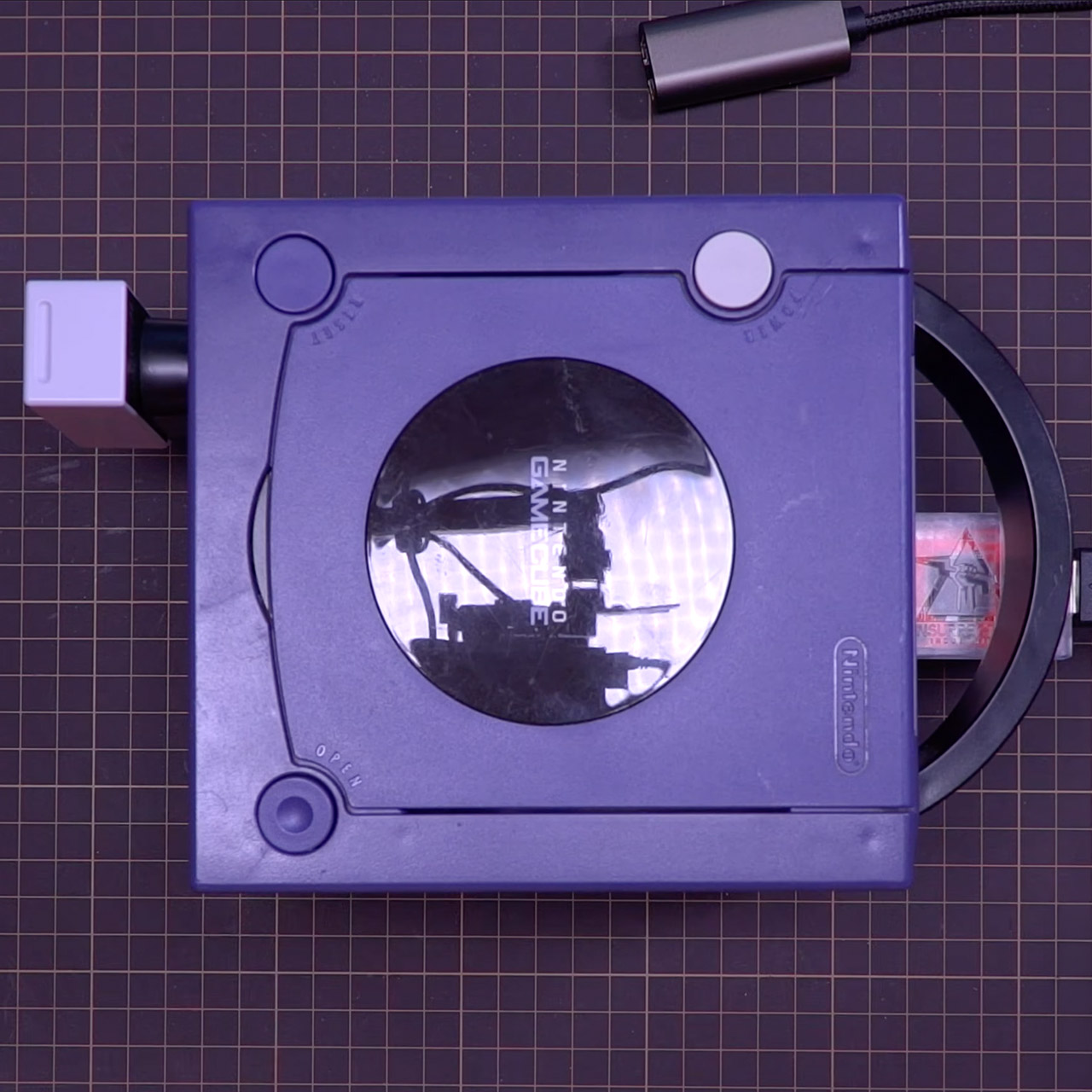
Tito of Macho Nacho Productions recently shared details on a pair of adapters that push the Nintendo GameCube into new territory for game storage. Creators Makeo and Silver Steele built the USB Dolphin in two distinct forms to let owners load games straight from modern USB devices. One version plugs into the SP1 port on the underside of the console for a tidy appearance. The second version fits directly into the memory card slots labeled A or B. Each adapter connects the GameCube to USB storage such as SSDs or ordinary thumb drives through Swiss homebrew software.
Tests demonstrate that games launch immediately after the disk is attached, as owners just copy their collection onto a suitable USB drive and insert it into the system. The system then reads the files as if they came directly from the original disk, eliminating the need to look for the correct disc. Capacity support climbs all the way to a theoretical limit of 128 petabytes, which means even the largest personal libraries fit on a single drive with room to spare. Still, the setup is simple enough for everyday use. Players simply connect a normal SSD loaded with games and boot straight into their favorites. There’s no need to swap disks or wait for them to load because everything is digital and ready to use at any time.
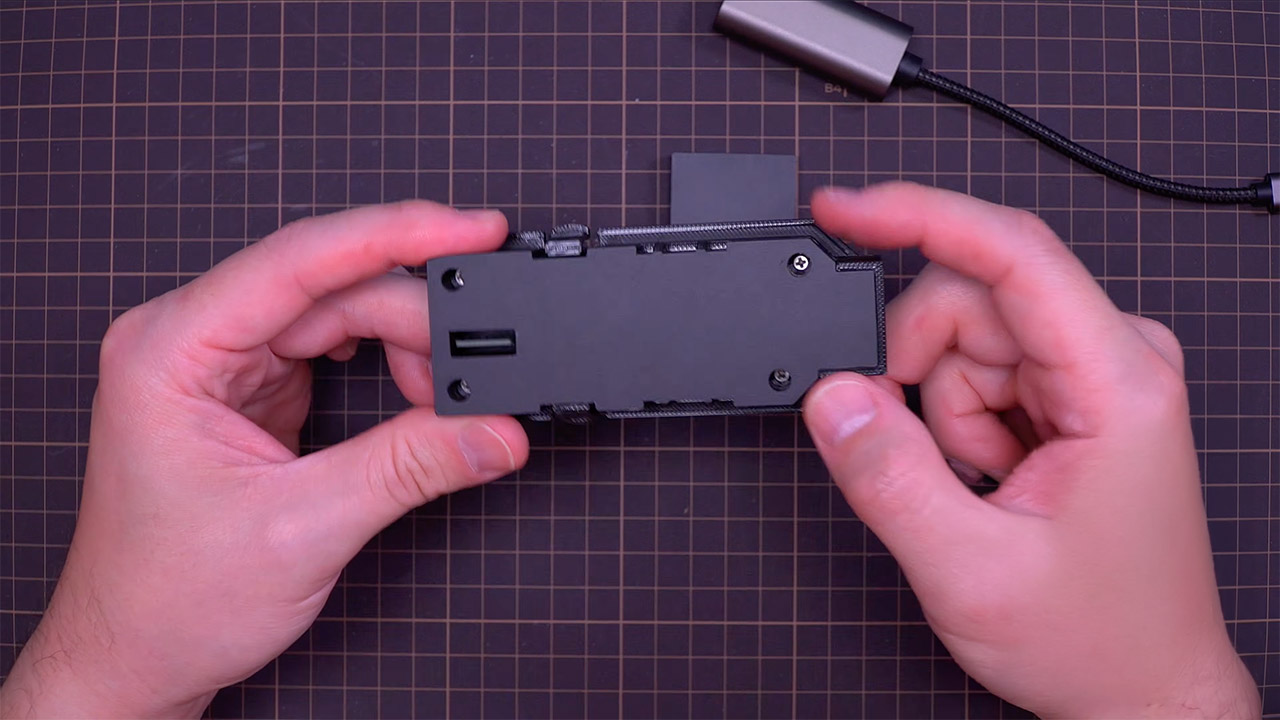
The SP1 model goes above and beyond simply storing your games. You can connect it to a USB Ethernet adapter and use RetroNAS to download games directly from your home network. This is a game changer for people with massive collections scattered over numerous consoles or just large. The transmission from server to console occurs in a single step, eliminating the need to first copy data to physical storage.

Live demos demonstrated that both adapters handled actual hardware with no trouble. The games loaded cleanly in all configurations. Tito compared the two immediately, and the differences in positioning and convenience were evident. The bottom-port version leaves the front panel free for memory cards and other accessories. In contrast, the slot-based version takes up one of the original save spaces while providing full USB speed.

Looking for the most recent Strands answer? Click here for our daily Strands hints, as well as our daily answers and hints for The New York Times Mini Crossword, Wordle, Connections and Connections: Sports Edition puzzles.
Today’s NYT Strands puzzle was a pretty tough topic, and a few of the words were unusual. Some of the answers are difficult to unscramble, so if you need hints and answers, read on.
I go into depth about the rules for Strands in this story.
If you’re looking for today’s Wordle, Connections and Mini Crossword answers, you can visit CNET’s NYT puzzle hints page.
Read more: NYT Connections Turns 1: These Are the 5 Toughest Puzzles So Far
Today’s Strands theme is: Turn, turn, turn.
If that doesn’t help you, here’s a clue: Time to spin.
Your goal is to find hidden words that fit the puzzle’s theme. If you’re stuck, find any words you can. Every time you find three words of four letters or more, Strands will reveal one of the theme words. These are the words I used to get those hints but any words of four or more letters that you find will work:
These are the answers that tie into the theme. The goal of the puzzle is to find them all, including the spangram, a theme word that reaches from one side of the puzzle to the other. When you have all of them (I originally thought there were always eight but learned that the number can vary), every letter on the board will be used. Here are the nonspangram answers:
The completed NYT Strands puzzle for May 24, 2026.
Today’s Strands spangram is TRYTOUNWIND. To start, look for the T that’s six letters down on the far-left row, and wind over and zigzag down.




Blockchain.com files with SEC for U.S. IPO


Holiday Weekend Open Thread – Corporette.com


Dell Technologies DELL Stock Surges 15% on AI Server Momentum and Analyst Upgrades in 2026


Space X IPO Is ‘Bad News’ for Tech Stocks: But What About Bitcoin?


Robinhood crypto COO Tanya Denisova exits


Makerfield: a tale of two social-media histories

Bitcoin Accumulation Weakens as BTC Realized Losses Hit $600M


AI infrastructure race heats up as IREN pitches full-stack strategy, WhiteFiber lands $160M deal


WhatsApp ads could make Irish debut after discussions with DPC

A 0.12% parameter add-on gives AI agents the working memory RAG can’t

Revolut Launches Dogecoin Debit Card Across UK and EU


You Can Now Add ChatGPT To PowerPoint


2026 CJ Cup Byron Nelson leaderboard: Brooks Koepka finds putting stroke in Round 1

Charity run by Reform leader Malcolm Offord accused of ‘law breaking’ over Scottish registration


Trump Media’s Bitcoin Stash Shrinks Again as 2,650 BTC Lands on Crypto.com
Goldman Sachs reinstates Ageas stock coverage with neutral rating


Trump Invests $1M-$5M in Kura Sushi USA Chain With 27 California Locations


SEC to propose tokenized stock framework as Wall Street efforts deepen: Bloomberg


SECOND secret Israeli base discovered in Iraqi desert


Exa Labs raises $250 million in funding led by a16z




You must be logged in to post a comment Login