Human drivers in the United States, according to NHTSA data, average a police-reported crash roughly once every 500,000 miles. Even after adjusting for underreporting to a more realistic estimate of once per 200,000 miles, people still outperform Tesla’s autonomous system by a wide margin, according to data originally surfaced by Electrek. Read Entire Article Source link
We may receive a commission on purchases made from links.
Sometimes it feels like everything is bigger in America — we are, after all, the fourth-largest country in the world in terms of area and go big or go home may as well be our unofficial motto. Our food portions, our cars, and even our homes are often much bigger than what is found elsewhere in the world, especially Europe. Yet not every American lives in a sprawling home with an eat-in kitchen. Millions across the country occupy smaller spaces like apartments, cottages, studio spaces, and lofts, and there are more people renting now than at any point since 1965. Many Americans don’t have space for a built-in dishwasher or simply aren’t allowed to install one because they don’t own their home.
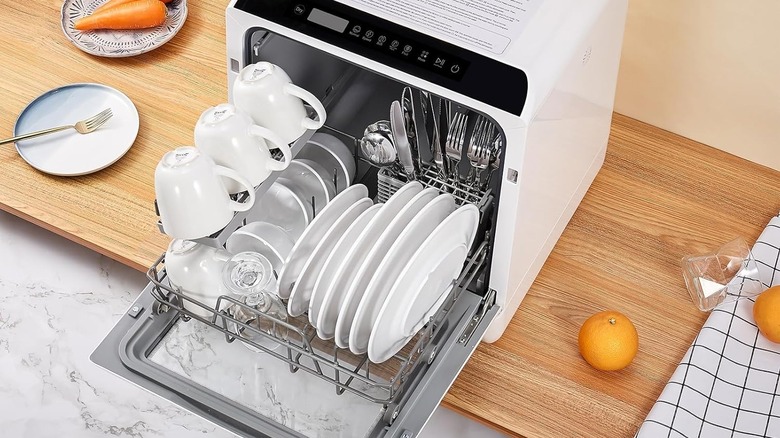
If you’re living in a dishwasher-less home and are tired of dishpan hands, you may want to consider investing in a countertop dishwasher. These portable appliances join the ranks of gadgets made for small spaces and are intended to sit on your kitchen counter. Most models attach to your kitchen faucet via a hose, and though they hold less than your standard dishwasher, it’s a great way to give your scrub brush a break. Prices vary, starting at around the $200 mark through $500 or $600, depending on the size and features. Here are three highly recommended models that deserve a spot on your shortlist.
Advertisement
Danby countertop dishwasher
If you’re not lacking in countertop space, this countertop dishwasher by Danby is included on several lists detailing your best choices, including Good Housekeeping. It’s taller than some options (so be sure pull out your trusty tape measure before you invest) but it has room for six place settings and includes a basket for your silverware. The interior is stainless steel, and it has more wash cycles than some standard dishwashers, with eight in total including an Eco option and a Baby Bottle cycle. The normal cycle uses just over three gallons of water, and users attach the dishwasher to the kitchen faucet with a hose and the included faucet adapter.
Advertisement
Good Housekeeping likes that this washer has physical buttons with indicator lights that offer immediate feedback when you’re scheduling a wash. It has a delay start option in two-, four-, six-, or eight-hour increments and a countdown display while it’s running. Reviews found that it washed well and is very quiet compared to other models, but it’s heavy at 44 pounds, so it may not be a good option if you’ll need to move it frequently. This Danby model currently retails for about $400 on Amazon.
Advertisement
Comfee countertop dishwasher
If space is at a premium and the budget is tight, this little dishwasher by Comfee is also consistently named as a top choice. It’s small, so you may want to keep looking if there are more than one or two people in your family and you don’t want to run it constantly, but it holds up to four large dinner plates on an adjustable rack. Its size makes it the perfect option for small apartments or add it to your list of RV must-haves. Perhaps the most useful feature on this little dishwasher is its 1.5-gallon water tank — simply plug it in and don’t worry about connecting it to your sink. If you’d rather not mess with a tank every time you run it, it comes with a quick connect water hose.
The Comfee washer has five wash settings, including a rapid wash and a fruit wash for cleaning your snack. The door automatically pops open when the wash is complete to help your dishes dry more quickly. Serious Eats found that this dishwasher leaves “dishes sparklingly clean and bone-dry.” Decor and home website The Spruce noted that though a bit heavy and bulky, the Comfee washed well and is easy to drain and clean. This dishwasher is currently available for about $325 on Amazon.
Advertisement
Hava compact countertop dishwasher
Maria Lifestyle/Getty Images
Good Housekeeping named the Hava R01 dishwasher (on sale at Amazon for about $289) as its top choice for sanitizing. That makes this appliance is a great option if you have a new addition to your family and you’re trying to keep the baby-specific tech to a minimum. This small machine can be connected to your faucet, but it also has a water tank, so you can put it just about anywhere. It holds four place settings and has a tray for your cutlery. The wash settings include a Heavy/Baby Care setting, along with a fruit mode and an included fruit basket to clean your produce.
The Baby Care mode washes at a high temperature to sanitize your dishes or baby bottles. This dishwasher also has a drying mode and provides 72 hours of automatic ventilation to help prevent odor build-up. The Spruce named the Hava dishwasher as its best overall pick, citing its wash performance and clear instructions. Reviewers found that this option is a bit noisier than competitors and some experienced difficulty attaching the hose to the sink faucet.
Spotify is testing a new tool that lets artists approve songs before release, as AI-generated spam and fraud expose how easily fake tracks can hijack profiles and distort payouts.
Panelists Hang Huang (InsForge), Brooke Borseth (FUSE), and Nate Bek (Ascend) with moderator Ke Du, offer the perspective from investors at the Seattle AI Startup Showcase. (Photo courtesy B.E.L.L.E)
Imagine you’re a property manager, and a washing machine breaks in one of your units. You text a vendor, who shows up without context and replaces it for $1,200. Turns out it was still under warranty. Had you known that, the repair would have cost $150.
Multiply that across 200 units and dozens of appliances, said Nicole Rémy, and you start to see how mid-size property managers lose tens of thousands of dollars a year — not from negligence, but from the absence of shared visibility.
Nicole Rémy pitches Pelly at the Seattle AI Startup Showcase in Bellevue. (Photo via B.E.L.L.E)
“I’m not guessing at customer problems,” said Rémy, founder of Pelly and a property manager herself. “I am a customer.”
Pelly is a coordination platform that puts property managers, vendors, residents, and owners on the same page: tracking assets, warranties, and service history in one place. Rémy runs a 215-unit property management company and built Pelly in part to solve her own problem.
Rémy was one of the founders who pitched Friday, March 20, in Bellevue at the Seattle AI Startup Showcase, hosted by B.E.L.L.E (Boundless, Entrepreneurship, Liberty, Liaison, Empowerment), a nonprofit focused on connecting early-stage founders with investors.
Ten startup leaders pitched their companies, which covered everything from mental health and fintech to R&D infrastructure and online fraud prevention.
Advertisement
Anna Hong, who co-founded B.E.L.L.E with Lenka Huang, said she started the organization to empower female founders, though the community is inclusive and welcomes founders of all backgrounds, as reflected in the diversity of the founders who pitched at the showcase.
Hong is a three-time startup founder and venture partner at Aves Ventures; Huang is a lead AI strategist at Qurrent and former product manager at Meta and Zynga.
The showcase was designed to give founders a stage and direct feedback from investors.
A panel of venture capitalists — Brooke Borseth from FUSE, Nate Bek from Ascend, and Hang Huang from InsForge — offered feedback on the pitches. Ke Du, a senior product manager at Apple and VP of programs at B.E.L.L.E, led the Q&A session.
Advertisement
“We’re looking for big ideas, and fundamentally we’re just looking to back exceptional people who are building big things,” Borseth said.
Anna Hong, co-founder and CEO of B.E.L.L.E, addresses the crowd at the Seattle AI Startup Showcase in Bellevue. (Photo via B.E.L.L.E)
The panelists gave advice on what they look for in a pitch, red flags they see, and what information founders need to bring to an investor meeting. One of the biggest takeaways: the best pitches show “inevitable” growth — projections that sell a vision of a huge opportunity, educating investors on why the space is ready for a massive shift.
The founders weren’t pitching AI as a novelty. They were pitching it as a way to fix slow, regulated, and deeply inefficient systems where automation alone isn’t enough.
Examples include Precognition Labs, which is building tools to help marketplaces catch fraud in real time; Kednus, an AI compliance platform for model governance and digital asset monitoring; and Forge, which helps R&D projects manage budgets and stay compliant with government funding requirements.
In many cases, the pitches weren’t about replacing existing systems, but combining intelligence to make decisions faster and more reliable.
Advertisement
The pitches included companies at various stages of development. Some founders had customers, revenue, and pilots, while others were in early stages with prototypes and market projections but no signed customers.
The panelists emphasized that for a founder to be ready to pitch, they must be able to articulate how big their product can be and demonstrate that it warrants venture capital.
Apple devices are always in high demand during holiday sales, and one of today’s best deals is the AirPods 4 for $99.
The AirPods 4 feature a new design for all-day comfort and feature Apple’s H2 chip, which supports personalized spatial audio and voice isolation. You also get a redesigned case with 30 hours of battery life and USB-C wireless charging support.
50% off Amazon’s best-selling Fire TV Stick 4K Plus
(Image credit: Future)
The Fire TV Stick 4K Plus is Amazon’s best-selling device, and the retailer just slashed 50% off the price, bringing it down to just $24.99 — a deal so good, I’ve already purchased it.
Amazon’s new Fire TV Stick 4K Plus streams shows and movies on your TV in ultra-high definition 4K resolution. This updated version now supports Dolby Vision, Wi-Fi 6, and includes 2GB of RAM — all for just $25.
Welcome to today’s live coverage of Amazon’s 2026 Big Spring Sale. The sale officially kicks off today and runs through March 31, with new deals released every day.
I’m highlighting today’s top offers, which include my favorite deals on kitchen appliances, tech gadgets, vacuums, smart home devices, and more. I’m analyzing prices for some of this year’s best-selling products and comparing discounts to those on Amazon Prime Day.
Just remember, these are limited-time offers, and some of the hottest deals might sell out before the sale ends.
Advertisement
Please follow our community guidelines.” data-join-the-conversation-text=”Join the Conversation”>
You must confirm your public display name before commenting
Please logout and then login again, you will then be prompted to enter your display name.
An Asus exec has warned of big price hikes for PCs
Prices could rise by 25% to 30% in the second quarter in Taiwan, we’re told
This is likely to be reflected globally, and with other increasingly gloomy predictions hanging over the PC industry, it would seem the time to buy is now
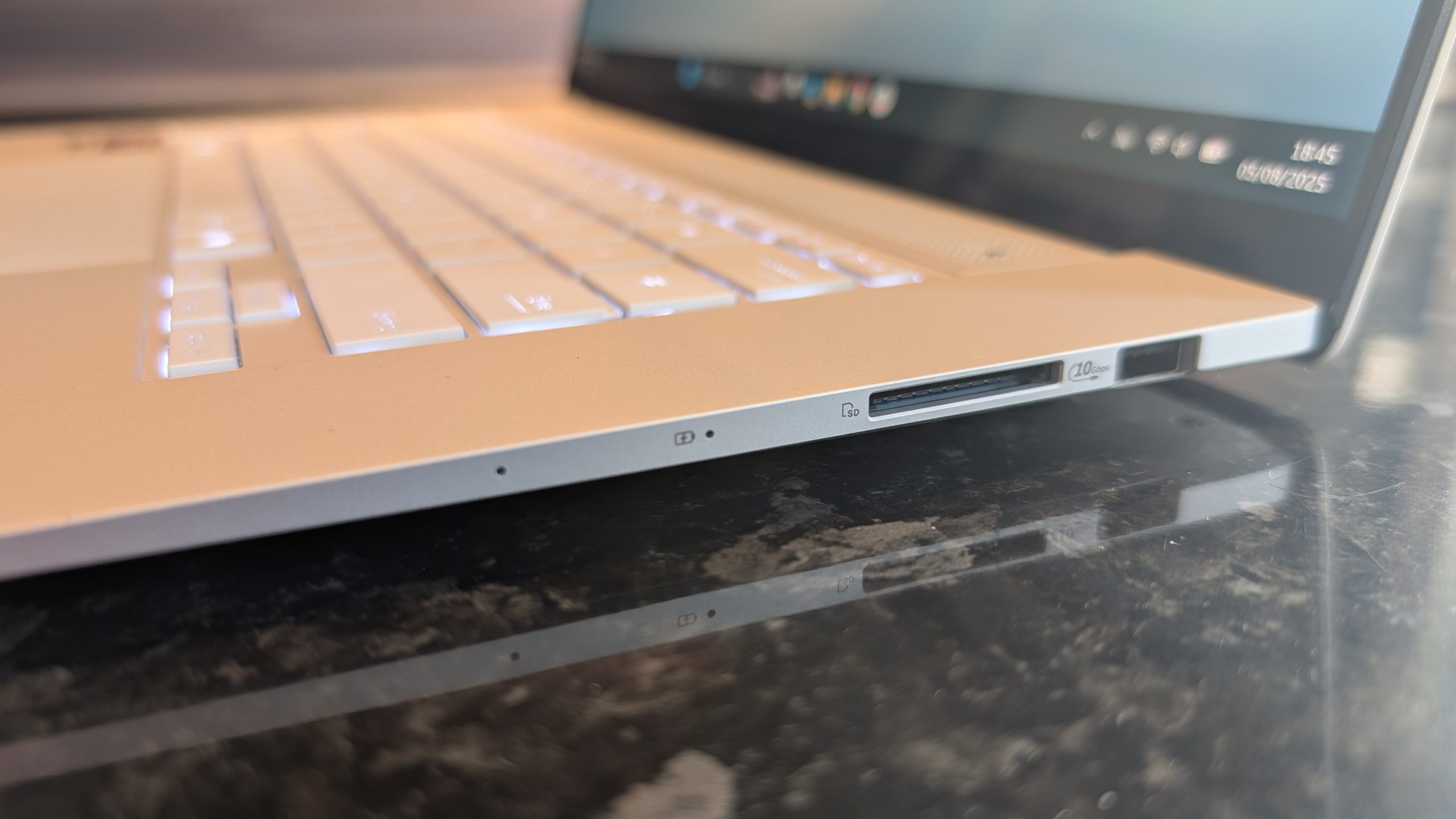
Asus has warned that its laptops are going to get a lot more expensive in Taiwan, and while this doesn’t necessarily apply globally, you can bet it’s reflective of the situation worldwide — and the scale of the increase is seriously worrying.
As reported by UDN in Taiwan (flagged by VideoCardz), Asus said that PC prices in the country are going to rise by 25% to 30% in the second quarter of this year on average (with varying increases depending on the exact model, of course).
This prediction came direct from Liao Yi-hsiang, who is General Manager of Asus United Technology Systems Business, during an interview conducted after a press conference for a new Zenbook laptop.
Article continues below
Advertisement
The Asus exec made it clear that double-digit price increases would apply to all PC makers, as they’re obviously all suffering from the same RAM and storage pricing headwinds (and the rising costs of other components besides, such as GPUs).
The report further notes that price increases of components “may continue in the second half of the year”, and therefore Liao “suggests that consumers who need to upgrade their PCs should buy them as soon as possible”. (Note that this is a translation of the article from Chinese, but the gist is pretty clear).
Advertisement
Analysis: don’t hang around at this point
(Image credit: Future)
Granted, the report specifically notes that Asus didn’t say whether this price increase would apply globally, but it also didn’t say it wouldn’t — and I think you can safely draw your own conclusions there. Yes, there will likely be some regional variability, but Taiwan isn’t in a bubble, and warnings of price hikes of nearly a third over the course of the next quarter is a hugely worrying signal of what’s to come with the whole of the PC market.
Meanwhile, we’re hearing gloomier forecasts around PC pricing and the latest twists on the RAM crisis on a weekly — if not daily — basis. Here’s another doom nugget from this week, for example, with memory chip maker Micron letting us know how bad things have got with supply in no uncertain terms. It’s getting dire out there, to the point where hardware is being cancelled — witness Kotaku’s report about the Ayaneo Next 2 getting canned because the price of the handheld would be around four grand at this point.
Sign up for breaking news, reviews, opinion, top tech deals, and more.
I’d fully agree with the Asus exec that if you think you’ll need a new desktop PC or laptop in the near future, it makes sense to buy now. These devices will surely only get pricier as 2026 rumbles onwards, with supply difficulties around memory not expected to get any better for a long time. (Indeed, some believe the RAM market won’t be back to normal until 2030, and they include another major memory chip maker).
Advertisement
I think you’ll regret waiting, frankly, especially if you can get a good deal on a laptop now, and there are some tempting bargains floating around still. These offers may not be nearly as compelling a few months down the line, because if Asus is right, serious price jumps could be here before we know it.
And of course, you can also follow TechRadar on YouTube and TikTok for news, reviews, unboxings in video form, and get regular updates from us on WhatsApp too.
US Air Force (USAF) B-2 Spirit stealth bombers recently trained alongside US Navy jet fighters in a maritime strike exercise conducted off the coast of California. The drill brought together aircraft from Carrier Air Wing 11 — the aviation element assigned to the USS Theodore Roosevelt (one of the oldest aircraft carriers still in service) — and at least one B-2 bomber from the USAF’s 509th Bomb Wing based at Whiteman Air Force Base in Missouri. While the USAF publicly announced the exercise, officials didn’t specify exactly when the exercise took place.
The drill was focused on integrated maritime strike operations — a mission that involves coordinating multiple aircraft types to engage seaborne targets. It was a mission that also introduced the $2 billion Spirit bomber to the Navy’s new AIM-174B “Gunslinger” missile — an air-launched weapon based on the service’s SM-6 interceptor. The Gunslingers were loaded on two of the participating Navy F/A-18E/F Super Hornets.
Advertisement
The exercise in itself is not unusual; the Navy and USAF regularly conduct such exercises. However, this one drew attention because it highlighted both the introduction of the AIM-174B and the evolving role of strategic bombers like the B-2 in maritime strike scenarios.
Essentially, this sort of exercise is designed to give military planners an opportunity to test how long-range weapons, stealth aircraft, and naval aviation resources can operate together in complex missions designed to better defend US assets.
Advertisement
Meet the Gunslinger
The AIM-174B “Gunslinger” was not developed from scratch. Rather, it traces its roots back to the Navy’s Standard Missile-6 (SM-6). Developed by Raytheon, the SM-6 is something of a multitool in the missile world. Originally designed for launch from Aegis-equipped warships, it can be used for anti-air warfare, ballistic missile defense, and against sea and ground targets at long ranges (thought to be about 230 miles).
Essentially, the Gunslinger is the same missile as the SM-6 but adapted for air launch. Officially, it’s known as the SM-6 AIM-174B Air Launch Capability; the system is designed to pair with the F-18 Super Hornet, which remains one of the fastest US fighter jets in service today. This combination gives the Navy’s carrier-based fighters access to a much longer-range missile than traditional air-to-air missiles.
Physically, the weapon is larger than many air-to-air missiles, stretching to more than 15 feet in length and weighing close to a ton. This is what allows it to carry both a larger propulsion system and a larger warhead. The result is a new weapon in the Navy’s armory that allows its jet fighters to engage threats at far greater distances.
Advertisement
Why the B-2 is showing up in naval warfare exercises
At first glance, the partnership between Naval assets and the B-2 Spirit might seem like a strange one. After all, the B-2 is more widely known as a platform for delivering precision weapons against land targets, sometimes flying on missions that can last for over 30 hours. However, what this exercise shows is how the US military is increasingly exploring a changing role for the aircraft and how it can be used to target ships.
Advertisement
One area of development is the USAF’s QUICKSINK program (the clue is in the name). This program converts existing weapons platforms into guided anti-ship weapons capable of striking moving targets. Instead of using more expensive purpose-built anti-ship missiles, the concept allows aircraft to use modified munitions equipped with guidance systems to target and sink enemy ships. This approach allows a lower-cost way to expand the military’s anti-ship arsenal, without building advanced missile systems.
This isn’t the first involvement the B-2 has had with the program. In September 2025, a B-2 bomber from Whiteman Air Force Base joined Norwegian F-35 fighters during an exercise in the North Atlantic. The exercise included a maritime strike using a QUIKSINK weapon.
It’s a vacuum-based automatic vinyl record cleaner
Designed to use few moving parts
My record collection isn’t mine, but an inheritance I try to take good care of. Or I thought I took great care of, but Pro-Ject’s new release has me thinking I could be doing a better at keeping them pristine.
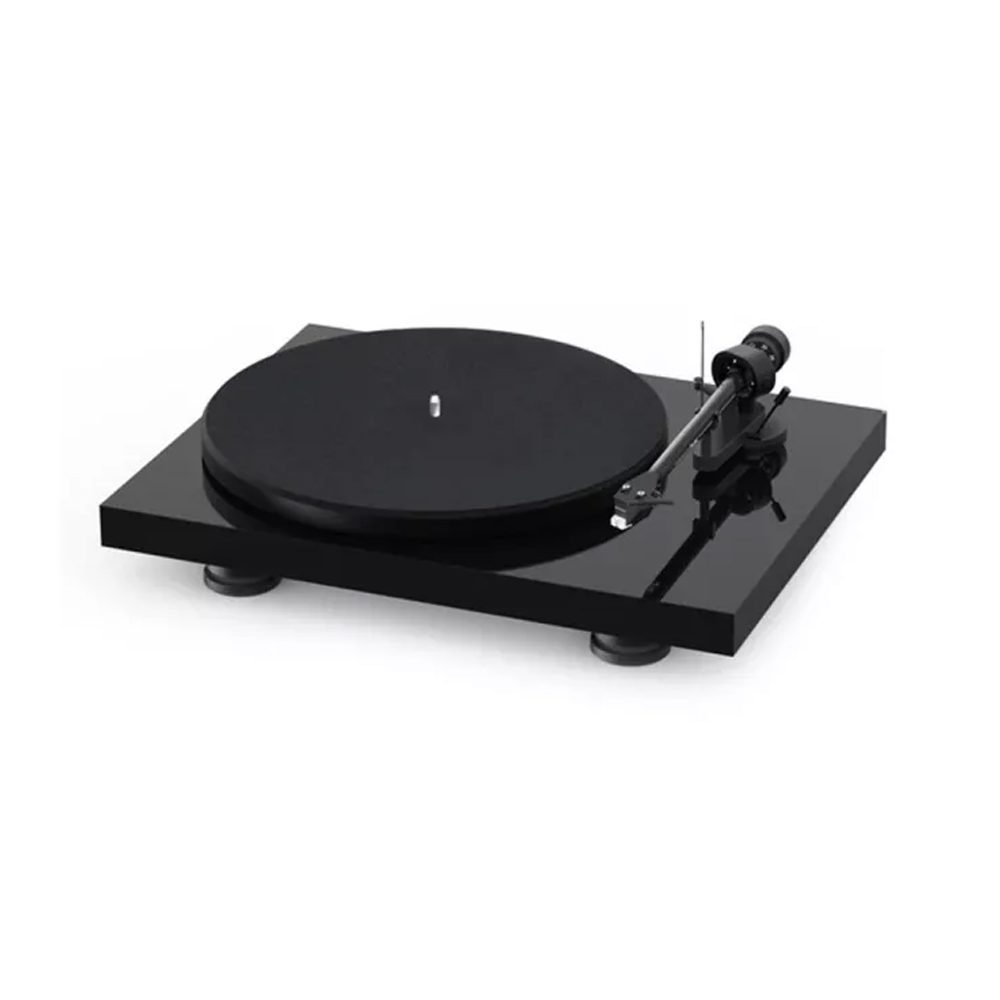
This is the Pro-Ject VC-E Mini, which is going on sale in April. It’s set to cost £249 (about $350, AU$500), so it’s not cheap — but it’s more affordable than the existing VC-E2 and VC-E3.
Article continues below
Advertisement
Since dirt on a vinyl can really hurt its sound quality, machines like this make sense, but to me the VC-E Mini solves a few problems that make this kind of machine out-of-reach for most people.
A smaller cleaning machine
The Pro-Ject VC-E Mini is, as the name suggests, a more compact record cleaner, and it’s designed to minimize moving parts (and cupboard space too).
Advertisement
It saves space by not having a suction arm to clean the vinyl. Instead it uses a brushless vacuum motor to help cleaning fluid trickle across the vinyl and off the machine.
The box also includes a cleaning brush, magnetic clamp, adhesive arm strip and said cleaning fluid, so the cleaning process sounds pretty hands-on.
Sign up for breaking news, reviews, opinion, top tech deals, and more.
This fluid is Pro-Ject’s Wash it 2, which is already readily available to buy since other VC-E models use it. It doesn’t use alcohol, and instead is made from “demineralised water and cleaning concentrate”.
Advertisement
As someone who’s always just cleaned their records with a microfiber cloth, I’ve always been put off by the size and price of bespoke upkeep machines like this.
While the VC-E doesn’t fully solve the latter problem, I’ll concede that it’s small enough to be tempting as someone who really does want to preserve these items. Maybe I need it more than I thought…
And of course, you can also follow TechRadar on YouTube and TikTok for news, reviews, unboxings in video form, and get regular updates from us on WhatsApp too.
Sony Honda Mobility, the automotive venture from two of Japan’s most storied companies, has swung the axe on its EV project. In a statement, it said it would “discontinue the development and launch” of the Afeela 1 and 2, its long-in-development electric cars. The company added it would review its “business direction,” and announce its future plans “at the earliest possible opportunity.” Which, if we’re honest, probably means the whole thing is going to be shut down, or scaled back so much it’s no longer worth talking about.
2026 has not been a great year for Honda. On March 12, it posted an up-to $15.7 billion loss as it wrote off a big chunk of its investment in EVs. The US’ pivot toward fossil fuels, removal of federal EV tax credits and the imposition of tariffs has hit its business pretty hard. Not to mention the high-profile embarrassment of its current F1 engine project with Aston Martin, which promised so much and has delivered less than nothing.
Sony’s journey into the automotive world began six years ago with the announcement of the Vision-S, the car which would eventually be re-christened Afeela. But while the product looked good on trade show stands, it stood still while the rest of the car world sprinted ahead. In January, Tim Stevens said Afeela 1 looked a little dated, and a little lacking in emotion, and a lot more expensive than comparable models from rivals. Not to mention that Afeela 1 is a sedan, being sold to a world that’s increasingly fallen out of love with the type in favor of higher-riding SUVs. In Sony’s statement, however, the SUV-aping Afeela 2 didn’t even get a mention by name, which hints that it was as much an afterthought for the company as we might have guessed when it was announced.
OpenAI is finally addressing one of the most frustrating things about working with files in ChatGPT. The company is rolling out two new features to help users quickly access previously uploaded files, including a Recent files menu and a dedicated Library tab.
How do ChatGPT’s new file management features work?
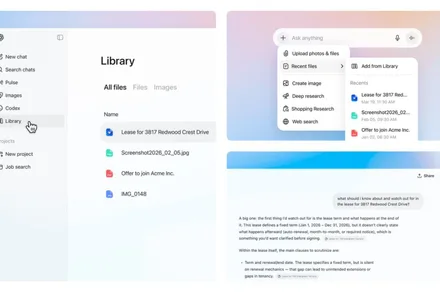
Until now, files in ChatGPT were largely tied to individual conversations, which meant finding them often involved going back to the original chat and scrolling through long threads. The new Recent files option in the attachment menu now lists some of the files you’ve used most recently, making it easier to jump back into ongoing work without digging through older chats.
It’s now easier to find, reuse, and build on the files you upload and create in ChatGPT.
You can quickly reference files in a chat using recent files in the toolbar, ask ChatGPT about something you’ve uploaded, or browse your files in the new Library tab in the web sidebar.… pic.twitter.com/fIazWRF9h3
On the web, there’s also a new Library tab in the sidebar. This acts as a central hub for all your uploaded and generated files, giving you a more organized view instead of tying everything to separate conversations. You can browse, search, and quickly attach files to new chats from this tab.
OpenAI also says ChatGPT can answer questions about files you’ve already uploaded, so you don’t need to reupload them every time you want more insights. Together, these changes make file reuse faster and far less tedious, especially if you regularly juggle files across multiple sessions.
Who’s getting access, and when?
The update is rolling out globally to ChatGPT Plus, Pro, and Business subscribers. Those in the EU, Switzerland, and the UK will have to wait a bit longer, with availability in these regions expected soon. There’s no word yet on whether these features will make their way to the free tier.
With these changes, OpenAI is continuing to position ChatGPT as more than just a chatbot, gradually turning it into a tool for managing ongoing work across conversations.
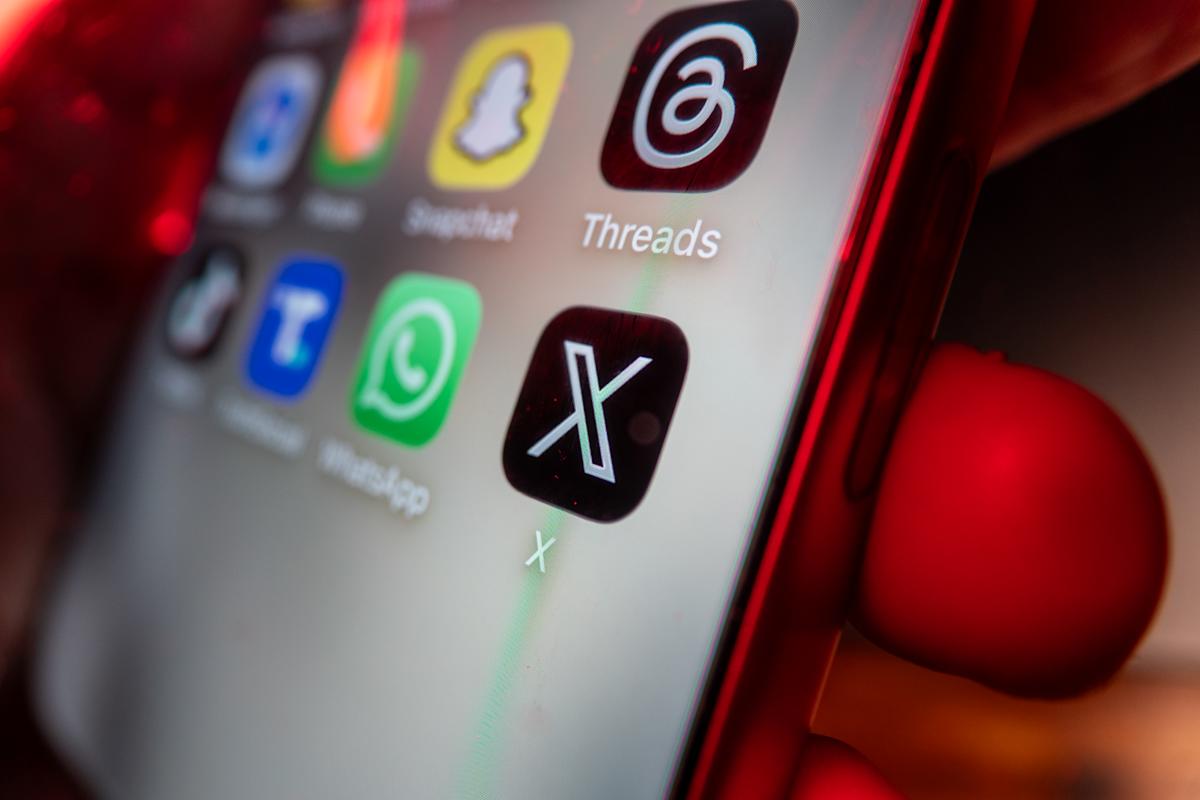
X is updating its revenue-sharing incentives to give more weight to engagement from a user’s home region, Nikita Bier, the company’s Head of Product has announced. Bier said the change in policy was to “encourage content that resonates with people in [the user’s] country, in neighboring countries and people who speak [their] language.”
Bier continued that while X appreciates everyone’s opinion on US politics, the company is hoping the new policy can “disincentivize gaming the attention of US or Japanese accounts.” The US and Japan have the largest number of users on X. Bier didn’t mention it outright, but dozens of popular accounts tweeting pro-Trump sentiments and commentaries focusing on US politics in general were revealed to be based outside the US late last year, when X rolled out a transparency feature that exposed users’ locations. Those accounts, which pretended to be from the US and garnered millions of likes, views and reposts, turned out to be based in countries like India, Kenya and Nigeria.
“X will be a much richer community when there’s relevant posts for people in all parts of the world,” Bier said. When one user responded to his post that some countries barely have any users, making it hard to earn money from the website, Bier just suggested that they should write about their day-to-day experiences. “Of course, you’re welcome to continue chiming in on America politics. We just won’t send money overseas for that content,” he said. X’s new policy will start taking effect on Thursday, March 26.




























































You must be logged in to post a comment Login