A massive compilation of historic OSes and the emulators to run them
The Virtual OS Museum is an epic collection of historically
significant operating systems, representing more than 600 OSes across upwards of 250
platforms. It’s all local, so you’ll need a good few gigs of space.
The Virtual OS Museum is a
giant mixtape for enthusiasts of the history of OS evolution. As an
indication of its breadth of coverage, it reaches all the way back to
the Manchester
Baby – from 1948. Multics, the Xerox Alto, NeXTstep, PowerPC Mac OS
X, early versions of Windows NT and Android, and more.
Advertisement
It is one hefty layer-cake of code. The project offers two versions to
download. The Full edition is a whopping 121 GB download,
which unpacks to 174 GB, but includes everything ready for offline use.
If that’s a little indigestible, there’s also a “Lite” edition which
includes the various emulators, but not the all the disk and tape images
of actual vintage OSes: those are downloaded and run on first use. This
is a mere 14 GB download, which expands to 21 GB of space.
Advertisement
The download contains an x86 Linux VM, and inside that are the
various emulators, which are listed on the Credits page. The VM
should run on most things: the README has instructions
for launching it on Linux, and on both macOS and Windows on both x86-64
and Arm64. On Linux and Windows it runs inside VirtualBox, and on macOS
inside QEMU. Either way, the package will install and configure the
hypervisor for you if needed – including adding itself to an existing
copy, if you already have it installed.
This means that its licensing is a little complicated. The
launcher and its configuration is distributed under the MAME
license, which keeps source code available but prohibits commercial
use. The metadata of the various OSes is distributed under the CC-BY-NC-SA license.
As for the many OSes themselves, the license page merely says:
Everything else retains its original license. Any commercial software
in this collection is included for purposes of historical research and
preservation only
Advertisement
Everything else retains its original license. Any commercial software in this collection is included for purposes of historical research and preservation only
This is followed by a note that nothing in the compilation is still
available for retail sale anywhere, and a request for copyright holders to contact
the author if they want anything removed.
It’s an impressive assembly. Although this vulture suspects that he’s
already tried quite a few of the contents, this is a vastly larger
collection than we’ve ever assembled. Part of the value here is that it
contains snapshots of various important steps in the evolution of modern
computers – including things outside of the main sequence. So many such
emulators exist because somebody somewhere got curious and went looking
for some relics of code gone by and built tools to run it – but to do
that, you need to know that it existed.
Advertisement
If you don’t already know, then this browsable catalog of OSes running via emulation is your illustrated and interactive
guide. It’s way more interesting to play with these old systems than
just watch videos, and at least for us, it’s more interesting to run it
on your own computer than inside an web page.
We’ve also personally
failed fairly hard at getting some ancient mainframe OSes running,
because the meager available documentation assumes that if you’re
interested enough to want to try something, that means that you already
know about it. When it comes to very early mainframes, for example, the Reg FOSS desk definitely doesn’t – even though our knowledge
reaches back to the early 1980s. On that note, we also like Warkentin’s mention
that if you break the emulated system, then there is a button to restore
to a working snapshot.
In his introductory video, he says that it’s a
work-in-progress and he has enough additional candidates yet to add to
push the collection to over 2,000 different entries. An updater is
included, so you won’t have to re-download the whole thing. He also,
slightly disarmingly, does admit that not every single one has been
tested yet, and that he’s publishing it partly in the hopes of finding
employment.
For a brief moment, the internet genuinely believed Google had finally decided to kill off the original Chromecast, after multiple Gen 1 users reported casting failures and apps refusing to connect over the past few days. Honestly, considering the tiny streaming dongle is now more than a decade old, nobody would have been completely shocked, but thankfully, Google now says the issue has been resolved, and the aging Chromecast survives another day.
Google says your old Chromecast is still safe for now
According to updates shared on Reddit, the company says the issue impacting casting functionality has now been resolved, though some users are still reporting lingering problems after factory resets.
The situation immediately reminded longtime Chromecast users of last year’s infamous “Untrusted Device” outage, where Chromecast 2nd Gen and Chromecast Audio devices suddenly stopped functioning because of expired security certificates. Back then, Google had to rush out a server-side fix while also begging users not to factory reset their devices during troubleshooting.
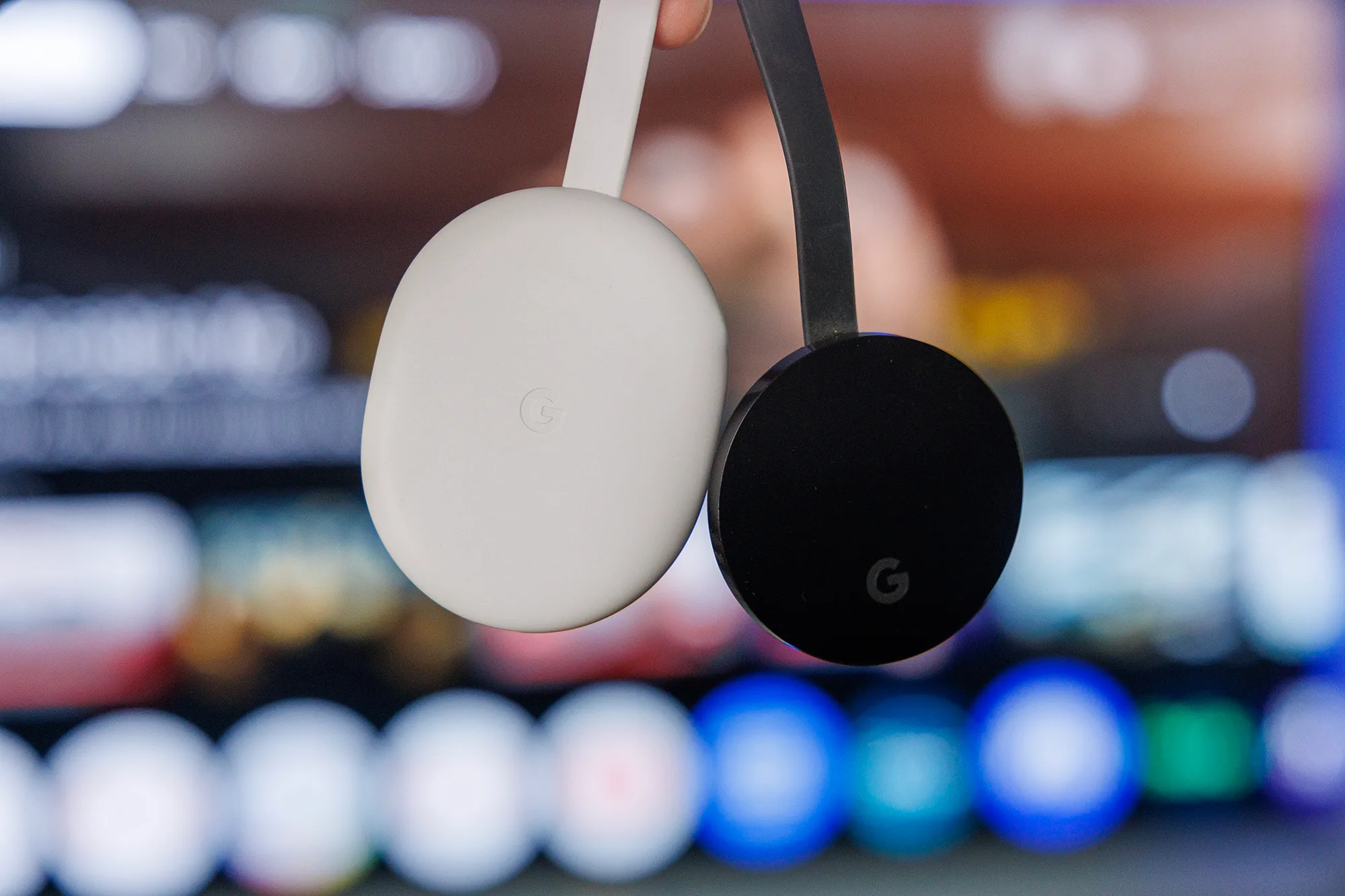
Chromecast with Google TV from 2020 (left), and 2016’s Chromecast Ultra.Phil Nickinson / Digital Trends
And honestly, the panic this week makes sense. Google officially ended software and security updates for the first-generation Chromecast back in 2023, while the entire Chromecast lineup itself was discontinued in 2024 in favor of the newer Google TV Streamer hardware.
The original Chromecast surviving this long is already kind of ridiculous
Let’s be real, the original Chromecast was never supposed to last this long in the first place. Google launched the tiny $35 streamer back in 2013, and somehow people are still using it daily in 2026 despite the thing having less processing power than a modern smartwatch.
Advertisement
That said, the original Chromecast did quietly changed the streaming industry forever. Before it arrived, turning a regular TV into a smart streaming screen was either expensive or painfully clunky, and Google’s tiny $35 dongle helped normalize cheap streaming devices long before Fire TV sticks and smart TV platforms took over. Honestly, the fact that people still panicked this hard over a decade-old Chromecast outage says everything about how successful that little gadget ended up being.
For the past few decades, researchers have understood that quantum computers should eventually be able to crack the widely used codes that secure much of the digital world. To protect against this fate, they’ve spent years developing new codes that appear to be safe from future safecrackers armed with quantum computers.
At the same time, they’ve also devised ingenious ways to use the rules of quantum mechanics to keep communications secure. But quantum mechanics, just like the “classical” mechanics that preceded it, is just a theory of nature. What if it eventually gets superseded by a fuller theory, just as quantum mechanics supplanted Newtonian physics a century ago? Will these quantum communication techniques still be secure in a world where there’s an even more fundamental set of rules?
“In terms of these cryptographic protocols, it’s good to be paranoid,” said Ravishankar Ramanathan, a quantum information theorist at the University of Hong Kong who works on quantum cryptography. “Let’s try to minimize the assumptions behind the protocol. Let’s suppose that at some future date people realize that quantum mechanics is not the ultimate theory of nature.”
Advertisement
It’s a possibility worth considering. The difficulty of outstanding problems—like reconciling quantum mechanics and gravity—suggests that a post-quantum theory of nature might involve something quite unexpected.
To guard against the possibility that their protocols are based on faulty assumptions, some quantum cryptographers search for even more basic principles to build upon. Instead of starting from quantum mechanics, they dig deeper, down to the very concept of causality.
A Subtle Sabotage
One way to understand developments in this area is to consider quantum key distribution, which involves taking advantage of the rules of quantum mechanics to pass along a key—something that can be used to decode a secret message—in a way that cannot be covertly tampered with. Quantum key distribution makes use of quantum entanglement, which locks two particles together through one of their properties, like spin. Quantum entanglement contains something of a trip wire. If anyone tries to mess with the entanglement—as they would if they tried to steal the key—the intrusion will destroy the entanglement, revealing the sabotage. This is because of a fundamental quantum mechanical principle called the “monogamy of entanglement.”
But what if this principle no longer held? In such a case, if the people passing the message did not have complete control of their devices, an outsider could potentially subtly change the particles’ entanglement, disrupting the communication without leaving a trace.
Advertisement
This process is called quantum jamming, and efforts to understand it have surged in recent years.
For many scientists, jamming is appealing because it can help them better understand both quantum mechanics and the nature of cause and effect. They wonder: Are there deep principles that forbid jamming, that make it impossible? Or, if no principle forbids it, could jamming occur in the real world?
Jim the Jammer
Michał Eckstein, a theoretical physicist at the Jagiellonian University in Krakow, Poland, likes to illustrate jamming with a story. Its protagonists are the classic characters from explanations of quantum mechanics, Alice and Bob.
“Suppose you have Alice and Bob, and they meet a magician, Jim the Jammer,” Eckstein said. “The magician says, ‘I have two balls; one is white, and one is black.’”
Advertisement
The balls stand in for a pair of entangled particles. If two particles are entangled, they have a property that is linked in some way—if you measure the first particle and find that its spin is up, for example, the other particle’s spin will inevitably be down, and vice versa. This holds true even if the other particle is halfway across the universe. Here the balls are linked such that if one is white, the other will always be black.
Buying a new pair of glasses can be expensive, but if you have frames you love and they’re still in good condition, you might be able to save money by simply replacing the lenses. This is something you can easily do online. I would know, as I’ve replaced lenses in 15 pairs of glasses myself and can confirm that the online lens replacement process is more affordable, easier and faster than you’d think.
Advertisement
Although it offers full-frame/lens packages, Lensabl puts its lens replacement service front and center and ranks highly in search results for “lens replacement.” Its motto is “Your frames, our lenses,” with prices starting at $97 for a basic pair of single-vision lenses. The budget new lens options are decent enough, but it does make a difference (in terms of sharpness and clarity) to step up to lenses more in the $150-plus range.
Jump to details
Pros
Decent pricing
User-friendly site
Online vision test
Cons
No fast turnaround option
As its name implies, Overnight Glasses can make you a new set of prescription glasses quickly — and really quickly if you’re willing to pay extra for a new pair of glasses. For lens replacements, you get free USPS round-trip shipping. For orders over $150, you get free two-day air shipping. (It takes slightly longer for progressive lens and bifocal lens types.) The quality of the lenses I got was as good as that from other replacement lens sites, so there’s no sacrifice of prescription eyewear quality for speed.
Jump to details
Advertisement
Pros
Fast turnaround times
User-friendly site
Good selection of lens types
Eyeglasses.com has a huge selection of both frames and lenses and is also one of a small number of sites that offer a lens replacement service for existing frames, with prices starting at $48. As with all the other sites here, you simply choose the lens you want (that can be a little daunting because there are so many options) and you’ll get sent a prelabeled box with which to return your frames, with free shipping both ways. If you don’t know your prescription — and don’t want to change your current prescription — you can opt to have Eyeglasses.com’s technicians “read your lenses and duplicate them.”
Jump to details
Pros
Huge selection
Helpful filters
Cons
Selection can be overwhelming
It’s had shops in the New York area for a while, but ReplaceRxLenses is somewhat new to the online replacement-lens arena. My experience using this retailer was smooth, with a relatively quick turnaround time (about a week, but I was in New York). Its prices are competitive and slightly cheaper for some lens types, starting at $55.
Jump to details
Advertisement
Pros
Will replace lens for a wide variety of frame types
User-friendly
Collects specific info to help expedite order
LensDirect says it can make quality lenses for a wide array of frames — “practically any frame unless it just absolutely doesn’t make any fundamental sense like putting a +7.5 prescription on a semi rimless frame” — and has its own machine in-house that can cut the lenses anytime (other retailers have this as well). “We make lens replacement more affordable than our competitors without sacrificing quality,” a rep told me.
Jump to details
Pros
Good pricing
Good lens quality
User friendly site
Cons
No expedited shipping option
Whether you have a new prescription or want to replace scratched lenses, many online lens replacement services let you mail in your glasses with a prepaid label or a shipping kit. Then, they’ll replace the lenses and send them back.
Advertisement
To help you find the best places to buy replacement prescription lenses, I tested different services by ordering midrange lenses, sometimes multiple times. I then evaluated the companies for lens quality, price, user-friendliness and turnaround time.
What’s the best online retailer for replacement prescription lenses overall?
We have Lensabl at the top of our roundup for the best place to buy replacement glasses lenses, thanks to its user-friendly interface and competitive pricing. Qualifying customers can even renew their eyeglass prescriptions online with them.
If you’re looking for fast service, Overnight Glasses is a great pick. I had good experiences with all the other online lens-replacement shops on this list. Note that all of them also sell frames and full prescription eyeglasses and sunglass packages.
Best places to buy replacement lenses for glasses of 2026
Advertisement
Pros
Decent pricing
User-friendly site
Online vision test
Cons
No fast turnaround option
Although it offers full-frame/lens packages, Lensabl puts its lens replacement service front and center and ranks highly in search results for “lens replacement.” Its motto is “Your frames, our lenses,” with prices starting at $97 for a basic pair of single-vision lenses. The budget new lens options are decent enough, but it does make a difference (in terms of sharpness and clarity) to step up to lenses more in the $150-plus range.
You upload your prescription online and pick the type of lens you want, and then Lensabl sends you a box with a prepaid return shipping label. You simply mail in your old frame in the box (shipping is free). First-time prescription lens customers get 15% off.
Lensabl does make prescription lenses for Bose Frames and other audio sunglasses.
Advertisement
Notable site features: For $25, you can renew your prescription online through the vision prescription platform Visibly. Not everybody qualifies to take the online eye exam — you have to answer some questions to see if you qualify — but if you do, Lensabl says, “All you need is your computer, [your] smartphone and about 15 minutes of time.” Your results will be reviewed by an eye doctor or optometrist licensed in your state who will then issue you a new prescription via email.
As its name implies, Overnight Glasses can make you a new set of prescription glasses quickly — and really quickly if you’re willing to pay extra for a new pair of glasses. For lens replacements, you get free USPS round-trip shipping. For orders over $150, you get free two-day air shipping. (It takes slightly longer for progressive lens and bifocal lens types.) The quality of the lenses I got was as good as that from other replacement lens sites, so there’s no sacrifice of prescription eyewear quality for speed.
As for new lenses for your current frame, you ship your frames to Overnight Glasses, and it’ll replace your lenses with new ones in as few as five days. The service can do polarized, blue light, transitions and many other types, although progressives require additional time.
If you’re looking for a truly overnight option, there is a 24-hour rush service. Bifocal, no-line bifocal and progressive lenses can take an extra day to manufacture.
Advertisement
Overnight makes lenses for Bose Frames and Amazon Echo Frames audio glasses.
Notable site features: The site has a clean, easy-to-navigate design. There are multiple shipping options.
Advertisement
Pros
Huge selection
Helpful filters
Cons
Selection can be overwhelming
Eyeglasses.com has a huge selection of both frames and lenses and is also one of a small number of sites that offer a lens replacement service for existing frames, with prices starting at $48. As with all the other sites here, you simply choose the lens you want (that can be a little daunting because there are so many options) and you’ll get sent a prelabeled box with which to return your frames, with free shipping both ways. If you don’t know your prescription — and don’t want to change your current prescription — you can opt to have Eyeglasses.com’s technicians “read your lenses and duplicate them.”
The service isn’t superspeedy in terms of turnaround time, but the lenses are high quality, and the eyewear site has good online help options, including a Replacement Lenses information page and an online chat feature. Unlike Lensabl, which highlights its lens replacement service, Eyeglasses.com doesn’t market the options front and center.
Advertisement
Eyeglasses.com makes lenses for Bose Frames and Amazon Echo Frames audio glasses.
Notable site features: Eyeglasses.com says it sells only “high-quality, individually made lenses made in the USA,” and the sample glasses I tried had excellent lenses that gave me a very sharp image. There’s a huge selection of lens options, and you get a “Perfect Lenses Guarantee” that allows you to send your glasses back if they don’t work for you — you can get a redo or a full refund, your choice.
Current deals and coupons: Eyeglasses.com has a coupon page with current deals.
Advertisement
Pros
Will replace lens for a wide variety of frame types
User-friendly
Collects specific info to help expedite order
It’s had shops in the New York area for a while, but ReplaceRxLenses is somewhat new to the online replacement-lens arena. My experience using this retailer was smooth, with a relatively quick turnaround time (about a week, but I was in New York). Its prices are competitive and slightly cheaper for some lens types, starting at $55.
The site says what differentiates it from competitors is that it doesn’t have an assembly-line format for fulfilling orders, where one worker is responsible for manufacturing the lenses, another is responsible for tracing the frame and edging the lenses to fit the frame, and another might handle the final eyeglass inspection. “With us, one technician works on a customer’s order from start to finish,” a rep told me. “We believe this format results in a better end product, because there is almost no chance of information being lost or mistakes being made along the way.”
Advertisement
ReplaceRxLenses says it can do a replacement for prescription eyewear or replace nonprescription lenses for Bose, Amazon Echo, Snapchat Spectacles and many other audio/smart frames.
Notable site features: The site says it has experience working with frame types and lenses that some other places can’t handle. “We have plenty of experience working with sports frames, wraparound frames, vintage frames and extended range prescriptions,” a rep told me. “Many other online replacement services can only work with certain frame types and up to certain prescriptions.”
The site tries to get as much information about a customer’s frame beforehand so it can begin working on the order even before receiving the frame, which helps expedite the order. (I submitted a photo of my frame.)
Current deals and coupons: 10% off for new customers in exchange for your email address.
Advertisement
Pros
Advertisement
Good pricing
Good lens quality
User friendly site
Cons
No expedited shipping option
LensDirect says it can make quality lenses for a wide array of frames — “practically any frame unless it just absolutely doesn’t make any fundamental sense like putting a +7.5 prescription on a semi rimless frame” — and has its own machine in-house that can cut the lenses anytime (other retailers have this as well). “We make lens replacement more affordable than our competitors without sacrificing quality,” a rep told me.
LensDirect now makes replacement lenses for Bose and Amazon audio glasses, although it does require you to sign a waiver to work on them.
My lens replacement took about a week, and the lens was of high quality. After using discount codes, the cost for the lenses I got was a bit less than that from some competing sites like Lensabl.
Notable site features: The site has a virtual try-on feature if you’re buying a frame and lens package.
Advertisement
For an older audience (people who wear progressive or bifocal lenses), lens options tend to be more affordable (with discount codes applied), especially for the 1.67 high-index lens, which is 40% thinner and lighter than a standard CR39 lens.
“Even to a younger audience who wants to take a cheap eyeglass frame and get exactly the lens they need, our CR39 and Polycarbonate lenses start off more affordable even for them,” a rep said.
Advertisement
Best replacement prescription lenses compared
Lensabl
Overnight Glasses
Eyeglasses.com
ReplaceRXLenses
LensDirect
Shipping Info
Free, takes 2-5 business days (after processing and receiving the glasses)
Free, takes 2 business days (after processing and receiving the glasses)
Free, 1-6 business days (after processing and receiving the glasses)
Free, takes 2-7 business days (after processing and receiving the glasses)
Free, takes 1-3 business days (after processing and around two weeks to make the lenses)
Return Policy
No returns/refunds. All sales final. If lens were incorrectly made, customers have 30-days to request a remake.
7-day free returns or exchanges
30-day free returns or exchanges
30-day free returns or exchanges
90-day free returns or exchanges on unopened products. DIY lenses have a 30-day return policy.
Insurance Accepted
No (reimbursement available depending on insurance company)
No (reimbursement available depending on insurance company)
No (reimbursement available depending on insurance company)
No (reimbursement available depending on insurance company)
No (reimbursement available depending on insurance company)
Features Offered
Use your own frame, blue light filter, anti-glare (polarized), anti-scratch, UV protection
Most of the prescription eyewear sites highlighted here for eyeglass lens replacement offer a discount for first-time customers. They also sometimes have codes for lens upgrades. Make sure you check for any deals before purchasing.
Know your prescription
In most cases, you’ll need to know your prescription and pupillary distance from your optometrist before you use an online glasses retailer, so make sure you get a hard copy the next time you get your vision checked. Once you have your current prescription, most of these websites will let you upload a picture of the prescription from your phone the first time you buy prescription eyewear. If you don’t know your prescription, certain lens-replacement outfits in this roundup can simply duplicate the lenses you have in your existing frames. (If a lens is cracked or scratched, you may simply want to replace it if your prescription is current.)
Provide as much information about your frames as possible
Some eyeglass lens-replacement sites will ask you to send a description or photo of your frame (and perhaps ask for a model number if you have one), so they can prep your order and process it faster. Most but not all existing frames can accept new prescription lenses.
Advertisement
Return policy
Read the fine print about returns before you purchase replacement lenses. Often, sites will accept returns, but only if they messed up your order in some way or a flaw was created in the lens production process.
We test online replacement lens services by ordering a set of replacement lenses from a site. We tend to order midrange lenses and, in some cases, we’ve ordered multiple times from the same site. We mainly evaluate the lenses for quality (how good they are comparable price points), turnaround times and how user-friendly the site is.
If you currently have a frame with prescription lenses, you should be able to replace those lenses with a fresh pair. Certain types of glasses that have more curved lenses — such as those found in some sports glasses — may be harder to replace. Just make sure you check with the company you’re using before sending in your frame.
You can put old lenses into a new frame as long as the new frame is the same as the old one and the lenses are still in good condition. Some eye care providers may be able to shape old lenses into the new frame, but it’s not always possible.
Advertisement
Depending on the quality and type of lens you get, it can be expensive to put new lenses in old frames. If you are just getting basic lenses, it can be quite affordable, especially when buying from an online retailer.
For pure clarity, a glass or mineral glass lens is the best. Most people prefer polycarbonate lenses, which are lighter and more durable. High-index lenses are good for those who have strong prescriptions that would normally require thicker lenses. These high-tech plastic lenses end up being the same thinness as standard plastic or polycarbonate lenses that have a lighter prescription. You do have to pay more for high-index lenses. Arguably the best lenses are Trivex lenses, which are lightweight and durable and offer slightly better clarity than polycarbonate lenses. They are more expensive than plastic (CR-39) and polycarbonate lenses.
Most eyewear retailers make prescription lenses for audio glasses, like the Amazon Echo Frames and . Only a few have officially partnered with Bose, like Lensabl and the Bose Tempo sports model. Aside from the Tempo, most other audio glasses have pretty standard frames that accept prescription glasses. You can always call and ask whether the company can make lenses for whatever audio glasses you have based on your particular prescription.
Delivery times vary by retailer, but you will typically get your replacement lenses in 5-14 business days. This includes the time it takes to mail your frames to the company, have new lenses made and installed and ship them back to you. Some services have expedited shipping options available too.
PCBs are traditionally designed with traces laid out to support a circuit full of electronic components. However, they’ve become increasingly popular as a way to produce functional visual artworks. This PCB map from [Jonathan] is a great example.
The PCB was designed as a map of the California East Bay area. The roads are laid out as the top-side copper layer, while the land and roads are used for the top solder mask layer, with the flipped land and roads area making up the solder mask on the bottom side. The map data itself was cribbed from Snazzy Maps. Behind the PCB, [Jonathan] mounted a 64 x 32 RGB LED array, which can be seen glowing through from behind the material. The LEDs are controlled by an ESP32, which grabs location data from [Jonathan’s] family member’s mobile devices over MQTT, and uses it to light their positions on the map. Files are on Github for the curious.
If you’ve got a family that is open to location tracking, and the money to pay for a custom PCB, you could probably recreate this project yourself. We’ve seen some other great PCB maps before, too, like this amazing metro tracker. Video after the break.
Limping Llama model needs a crutch made of surveillance tools
Meta CEO Mark Zuckerberg appears so determined to win the AI race that he is willing to sacrifice some employee privacy to make it happen.
In a leaked audio recording published by the worker advocacy group More Perfect Union, Zuckerberg purportedly answered an employee’s question about “device monitoring” with a six-minute monologue in which he said Meta employees are very smart and to win the most competitive technology race in history, he would need to collect their keystrokes, mouse clicks, and screenshots to make its own AI measure up to its rivals.
Advertisement
“We are using this to feed a very large amount of content into the AI model, so that way it can learn how smart people use computers to accomplish tasks. I think that this is going to be a very big advantage if we can do it,” Zuckerberg purportedly said during an April 30 meeting in which an employee asked about the “top of mind” issue.
Meta did not reply to an email from The Register seeking comment and has not confirmed the authenticity of the audio clip, but a company spokesperson confirmed in April that Meta would monitor employees to train AI. Meta’s tracking tool is called Model Capability Initiative, according to reports.
The audio was posted the same day Meta announced 8,000 job cuts. It captured Zuckerberg’s thoughts on the news, first reported by Reuters, that Meta planned to install software on employees’ computers to monitor activity for AI training. More Perfect Union did not reply to an email from The Register seeking comment.
“So if we’re trying to teach the models coding, for example, then having people internally build tools that or solve tasks that help teach the model how to code, we think, is going to dramatically increase our models’ coding ability faster than what others in the industry have the capability to do, who don’t have thousands and thousands of extremely strong engineers at their company,” he purportedly said in the audio.
Advertisement
“So that’s one example. Another thing that our system needs to be very good at is using computers, so the way that you get a system to be good at using computers is by having it watch really smart people use computers. So that’s basically the essence of what we are trying to do here.”
In one part of the audio, Zuckerberg said the software would not be used to surveil employees’ actions on the job, though he stopped short of saying the data would be anonymized. Rather, he said the purpose was narrowly focused on making its AI work better than competitors.
“The content is sort of, you know, stripped out in like as much as is possible,” he purportedly said in the leaked audio. “It’s like none of the data has been used for like looking at what people are doing, or surveillance, or performance tracking, or anything like that.”
That aligns with what a Meta spokesperson told Reuters: that MCI data would not be used for performance assessments. European employees are reportedly exempt from the program because the EU’s General Data Protection Regulation likely prohibits this type of monitoring without explicit consent, according to multiple reports.
Advertisement
Meta is not the only major technology company turning to its own workforce for AI training data. The Information reported this week that Microsoft and xAI are also leveraging internal employees to generate and refine training datasets. In a similar vein to what Zuckerberg purportedly said, Microsoft, which employs thousands of software engineers, reportedly views its workforce as a competitive advantage for improving GitHub Copilot.
In the recording, Zuckerberg purportedly said Meta settled on using its own employees over contractors because they were smarter.
“One basic insight and hypothesis that we have is that a lot of data generation across the field is done by these like contract companies,” Zuckerberg purportedly said. “(B)ut in general, the average intelligence of the people who are at this company is significantly higher than the average set of people that you can get to do tasks if you’re working through these contractors.”
However, the contractor pipeline is also being watched.
Advertisement
In January 2026, Wired reported that OpenAI’s data vendor, Handshake AI, began asking freelance contractors to upload real work products from past and current jobs, including contracts, financial models, presentations, and code repositories. OpenAI provided a tool to help contractors strip confidential information before uploading, but intellectual property lawyers warned the approach carries significant legal risk.
Zuckerberg said this sort of surveillance and the difficult conversations around it are the cost of competing at the frontier of AI.
“How do we navigate running the company through what is just this incredibly dynamic period?” he said. “There’s lots of things that people would like more certainty on than we have.” ®
The AI-generated version of ‘Moonrise, Hernandez, New Mexico’ was on display at AIPAD’s The Photography show.
Michael Ochs Archives/Getty Images
The Ansel Adams Publishing Rights Trust released a statement this weekend condemning the unauthorized use of the photographer’s name and work for the creation of an “AI-generated color version” of Adams’ “Moonrise, Hernandez, New Mexico.” According to the trust, the piece was up for sale last month at the Association of International Photography Art Dealers’ (AIPAD) The Photography Show. The exhibit by Danziger Gallery “exploited Ansel’s name, reputation, and his most iconic image, while failing to identify any human artist responsible for its creation,” the statement says.
Interestingly, the trust didn’t take issue with the involvement of AI, noting that Adams “was remarkably prescient about—and excited by—the potential of computers to transform photography.” The issue is that the exhibitor allegedly just straight up ripped off the artist’s work to make money off of it.
“The Trust was not consulted or notified before the work appeared,” the Ansel Adams Publishing Rights Trust said. “Once alerted, we reached out to James Danziger in real time, notifying him of the Trust’s rights, and asking for the work to be removed. Correspondence shared with the Trust shows that, despite our formal notice, Mr. Danziger subsequently leveraged Ansel’s name, ‘Moonrise,’ and the AIPAD presentation while pursuing a proposed commercial AI colorization venture involving other artists’ estates.” The statement goes on to denounce the nonconsensual use of an artist’s name and work for commercial purposes, calling the incident “a gross failure of ethical and professional judgment.”
Infinity Ward studio heads Mark Grigsby and Jack O’Hara shared brief statements this week about the developer’s next game, indicating that they plan to unveil the next Call of Duty title soon. The highly anticipated first-person shooter might debut during Sony’s hour-long June 2 State of Play presentation or the… Read Entire Article Source link
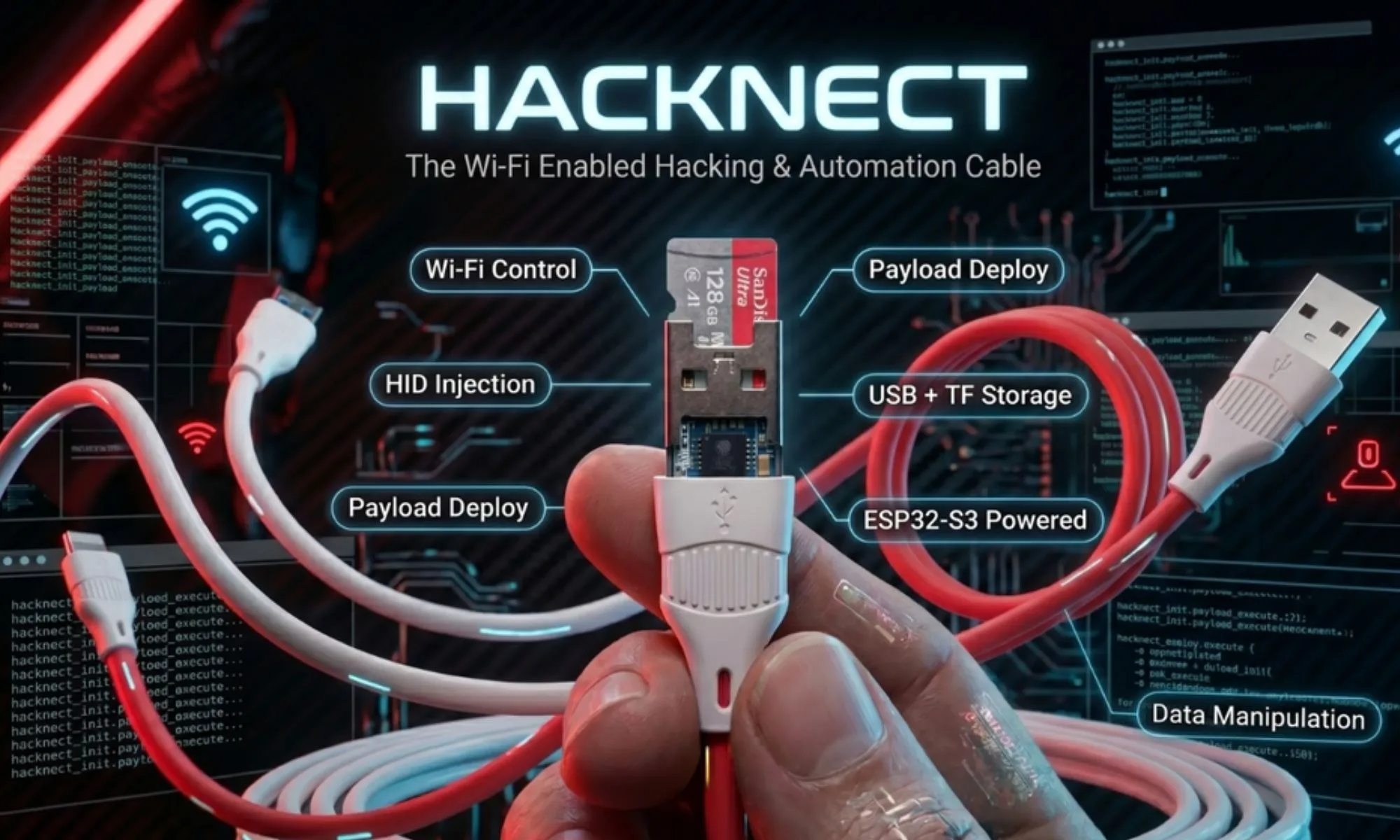
At first glance, it looks like a regular USB cable. But a new Kickstarter project called Hacknect is trying to turn something as ordinary as a charging cable into a surprisingly powerful hacking and automation device. The product is being pitched toward ethical hackers, cybersecurity researchers, developers, and automation enthusiasts. Hidden inside the cable is a tiny Wi-Fi-enabled computer powered by an ESP32-S3 chip, allowing it to do far more than simply charge a phone or transfer files.
According to the Kickstarter campaign, Hacknect can remotely execute scripts, automate tasks, emulate keyboard inputs, and even store hidden files through a built-in microSD card slot. Users can reportedly control the cable wirelessly through a browser dashboard or smartphone.
In simple terms, once plugged into a computer, the cable can pretend to be a keyboard and automatically type commands or launch scripts. That’s why many people are comparing it to tools like the USB Rubber Ducky and O.MG Cable, which are already popular in cybersecurity circles for penetration testing and security training.
Why is a cable like this turning heads
The interesting part is not just what Hacknect can do – it’s how invisible it looks while doing it.
Advertisement
Cybersecurity tools used to look like developer hardware or bulky gadgets. Now, they’re increasingly being disguised as everyday objects. A charging cable that secretly contains a wireless hacking platform feels like something out of a spy movie, which is exactly why projects like this grab attention so quickly online.
HacknectKickstarter
For professionals, there are legitimate uses. Security teams often use devices like these to test whether employees can detect malicious USB devices or to simulate real-world cyberattacks during training exercises. Automation enthusiasts can also use them for repetitive workflows, scripting, or remote device management.
But there’s also an uncomfortable side to this conversation.
Because the cable looks completely normal, critics argue that the same features could potentially be abused if used irresponsibly. A device capable of remotely injecting commands into a computer naturally raises concerns about unauthorized access and physical cybersecurity threats.
What makes devices like Hacknect dangerous is how easily they blend into everyday life. Most people would never suspect that a normal-looking charging cable could secretly execute commands, inject keystrokes, or remotely communicate over Wi-Fi. That creates a major trust problem around physical device security.
Advertisement
In the wrong hands, tools like this could potentially be used to steal data, install malicious software, or gain unauthorized access to systems without immediately raising suspicion. Since the cable appears completely ordinary, victims may plug it into personal laptops, office systems, or shared computers without thinking twice. Cybersecurity experts have long warned that physical hardware attacks are becoming harder to detect – and products like this show why.
The bigger trend behind it
Hacknect also reflects a larger shift happening in cybersecurity right now. As software defenses become stronger, researchers and attackers alike are paying more attention to hardware-based attack methods.
At the same time, Western companies are increasingly paying attention to the hardware innovation happening in smaller developer communities and independent tech projects. Crowdfunding platforms like Kickstarter have become a launchpad for niche cybersecurity gadgets that might once have stayed hidden inside underground forums or specialist circles.
HacknectKickstarter
That said, products like this still sit in a gray area. The creators heavily market Hacknect as an ethical hacking and educational tool, but like most cybersecurity hardware, the intent behind how it’s used matters far more than the gadget itself.
And while it may look like an ordinary cable sitting on a desk, Hacknect is a reminder that modern cybersecurity threats are starting to hide in plain sight.
SolarSquare, an Indian rooftop solar startup that helps households and housing societies adopt solar power, is in advanced talks to raise fresh capital after securing India’s largest solar venture investment in December 2024, TechCrunch has learned.
B Capital and Lightspeed Venture Partners are set to co-lead the Series C round, which could value SolarSquare at between $450 million and $500 million and bring in $55 million to $60 million in new investment, according to multiple people familiar with the matter. That would represent more than a doubling of SolarSquare’s valuation in roughly 18 months — a sign of how rapidly investor conviction is building around India’s residential solar market.
Lightspeed Venture Partners previously led SolarSquare’s $40 million Series B round at around a $200 million post-money valuation in December 2024. This time, according to a source, it’s investing through its growth fund, which has backed names such as Razorpay — India’s leading digital payments platform — and Zepto, the fast-delivery startup.
Existing investor Elevation Capital is also expected to participate in the deal, which is currently in advanced stages and is expected to close next month. The terms could still change as the financing has not yet been finalized. SolarSquare has raised $61.1 million in equity financing to date, per the startup data platform Tracxn.
Advertisement
India has set a target of achieving 500 gigawatts of renewable energy capacity by 2030, with solar expected to contribute more than half of that total. The country became the world’s third-largest solar power producer in 2025, trailing only China and the U.S. Its cumulative installed solar capacity has surged from about 3 GW in 2014 to more than 150 GW in 2026, aided partly by government incentives and subsidy schemes aimed at accelerating rooftop solar adoption.
Mumbai-headquartered SolarSquare, founded in 2015, is positioning itself as a full-stack residential solar platform in a market that remains highly fragmented, dominated by small local installers and dealer networks tied to component manufacturers such as Tata Power, Waaree Energies, Luminous Power Technologies, and Exide Industries. The startup designs, installs, and maintains rooftop solar systems for homes, housing societies (the apartment complexes and gated communities common across urban India), and enterprises, and has installed more than 150 megawatts of solar capacity with a presence across 29 cities in nine states, per its website.
SolarSquare has powered nearly 50,000 homes and around 400 housing societies, according to a source. The startup has also deployed rooftop solar systems for large enterprises including Swiggy, Zepto, and iD Fresh Food.
Residential customers and housing societies now account for a majority of SolarSquare’s business, according to people familiar with the startup’s operations, as the startup has increasingly scaled back lower-margin industrial rooftop solar projects in recent years.
Advertisement
The startup has crossed an annualized revenue run rate of more than ₹10 billion (around $104 million) across homes and housing societies combined, according to a source familiar with the matter. It also aims to reach 200 megawatts in its residential solar portfolio this year, the source added.
SolarSquare declined to comment. B Capital, Lightspeed Venture Partners, and Elevation Capital did not respond to requests for comment.
When you purchase through links in our articles, we may earn a small commission. This doesn’t affect our editorial independence.
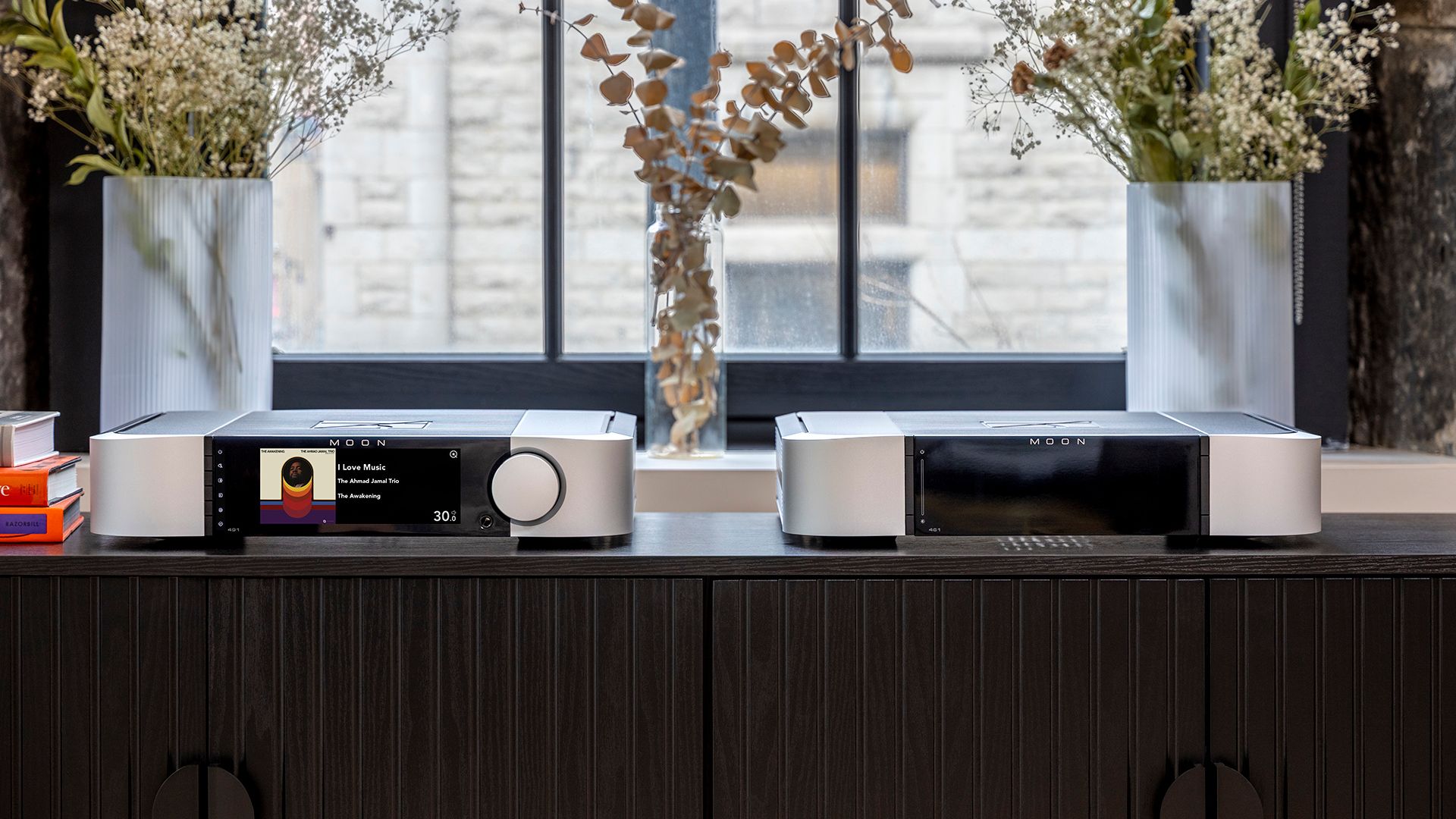
Moon’s Compass Collection has swollen with the addition of two new models in the 491 network player and 461 power amp.
Here’s the lowdown on specs and features for both.
The Moon 491 is a “fully featured network player, preamplifier, DAC, phono stage and headphone amplifier”, so suffice to say it’s a talented bit of kit that’s been built to serve as the hub “of a high-performance audio system”.
Combining digital and analogue connectivity, the 491 has been devised to deliver low-noise performance all the while maintaining the clarity, refinement and musicality that Moon’s products have become know for.
Advertisement
As usual the MiND 2 streaming platform serves at the core of its streaming performance, incorporating support for Roon Ready, UPnP streaming, AirPlay 2 and Bluetooth. Virtually every major streaming service under the sun is supported, a list that includes Qobuz, Tidal, Deezer and Spotify, available through the Moon MiND Controller app (iOS and Android). The ‘Connect’ versions of Qobuz, Tidal and Spotify are also supported for connecting straight to hi-fi kit.
Advertisement
The phono stage supports both MM and MC cartridges, and can be adjusted to allow precise cartridge matching for “optimised vinyl playback”.
The proprietary Moon Hybrid power (MHP) supply is said to improve channel separation, reduce crosstalk and enhance current delivery, in particular with low-impedance loudspeakers.
Advertisement
The Moon 461 power amplifier can act as a partner for the 491 network player, with its “substantual output capability” that amounts to 150W per channel, low distortion and stable performance across a “wide range” of loudspeaker loads, Moon says this is able to preserve signal integrity “with transparency, dynamic expression and composure”.
Serving as the 461’s heart is Moon’s proprietary MDCA (Moon Distortion-Cancelling Amplifier) architecture that was initially developed for its North Collection. It can significantly reduce distortion and imrpove linearity, which Moon says results in “faithful reproduction and exceptional clarirty and precision”.
Available in the UK from July onwards, the Moon 491 is priced at £5950 and the Moon 461 at £4550.
























































You must be logged in to post a comment Login