Last year alone, Scent Journer sold over 8,000 of its hand-blended perfumes
For as long as she can remember, Joyce Lian has been fascinated by scents—not just how they smell, but why they smell the way they do.
That curiosity led her to enrol in Singapore Polytechnic’s perfumery and cosmetic science course in 2013, where she learned about raw materials, chemical structures, and the formulation of personal care products.
Her interest only deepened during a 10.5-month internship at global giant International Flavours & Fragrances, where she was posted to the fragrance department. With permission from the company, Joyce often stayed after work hours to experiment with small quantities of raw materials, creating her own fragrance formulations.
She painstakingly memorised the scent profile of each ingredient, building a personal knowledge base to train her sense of smell. At the time, she had committed 147 raw materials to memory.
Advertisement
Joyce’s passion for perfumery ultimately grew into Scent Journer, her own fragrance label selling thousands of products, including on Sephora’s online platform. We spoke with the 30-year-old who shared what it takes to build a perfume brand from scratch.
Navigating career detours
Joyce on her graduation from polytechnic./ Image Credit: Scent Journer
“To me, how I experience fragrance is very different from most people. I have trained myself to perceive and discern the different layers that lie in a perfume bottle,” Joyce shared while explaining her keen sense of smell that she has honed over the years.
After graduating from Singapore Polytechnic, Joyce went on to complete a Chemistry degree at the National University of Singapore (NUS) in an accelerated timeframe of just 2.5 years that ended in 2018.
The year after, she landed a job as a technical specialist at a cosmetics company, where she stayed for five months. While the role was stable, it was not what she had envisioned—her passion lay in fragrances.
But Singapore’s perfumery industry back then was small (and still is, at least according to Joyce), and opportunities were limited. Unlike her friends, she was also unable to go overseas to pursue fragrance roles due to familial constraints at the time.
Advertisement
Eventually, Joyce was not finding any joy in her cosmetics position. At the advice of one of her friends, she decided to try something entirely different: she joined OCBC in 2020 as a personal financial consultant.
But less than a year later, Joyce realised the role wasn’t her cup of tea either. She missed working in labs, formulating, and experimenting with different scents.
A colleague then suggested she start her own business and explore an entrepreneurship programme run by the National University of Singapore (NUS)—a suggestion that would ultimately change the course of her life.
Building Scent Journer from the ground up
In 2021, Joyce applied for the three-month Venture Building Programme at NUS together with her partner, Alex Lim, and her sister, Jacelyn Lian, where they built the stepping stones for Scent Journer.
Advertisement
Joyce, Alex, and Jacelyn pitching to mentors at the NUS Venture Building Programme./ Image Credit: Scent Journer
The programme taught the trio the foundations of entrepreneurship, from validating ideas to understanding customers. One requirement was to interview at least 100 potential users to assess market demand.
What Joyce and her team uncovered was telling. Many Singaporeans only wore perfume for special occasions as they viewed it as an expensive product, while others avoided it entirely because fragrances triggered headaches or nausea. As such, only a small minority wore perfume daily.
Identifying these pain points, Joyce wanted to create perfumes that could be “worn every day in the city-state and were less likely to cause headaches or nausea, while making the various scent notes more discernible,” Joyce explained.
“I want the name of Scent Journer to speak for itself, bringing our customers on a journey through scent, with the fragrance acting as an everyday companion.”
After pitching her idea, Scent Journer was awarded the Startup SG Founder Grant in two tranches, amounting to S$50,000. NUS contributed another S$10,000, and Joyce, Alex, and Jacelyn pooled an additional S$10,000, bringing the total startup budget to S$70,000. It was a tight budget, but enough to get the business off the ground.
Advertisement
The brand operated online for its first eight months after incorporation in Apr 2021. Then, an unexpected opportunity arose.
In Dec, after seeing Scent Journer’s advertisements online, the now-closed Japanese-inspired French pastry shop Flor Patisserie reached out to the brand and offered it a pop-up space at its outlet for a day, for just S$50 to give the latter a chance to interact physically with potential customers.
The pop-up exceeded expectations, recording an 80% conversion rate. For Joyce and her team, it was a pivotal moment that gave them the much-needed confidence that they were onto something concrete.
Inside the perfuming process
One of Scent Journer’s signature scents is Clouds In Heaven, available in a fragrance bottle or perfume sachet./ Image Credit: Scent Journer
Scent Journer launched with three fragrances and has since expanded to five, while also gradually offering other product formats like perfume sachets that can be hung in wardrobes, apart from hand sanitisers and scented candles.
On special occasions like their anniversary and Christmas, Joyce releases limited-time offerings—for example, the A New Veil fragrance with green tea notes, and the Spiced Winter Tea Candle. To celebrate Singapore’s birthday last year, the brand even came up with a kaya toast–scented candle.
Advertisement
Image Credit: Scent Journer
Each fragrance that is released by Scent Journer undergoes six months to a year of research and development, and every one is hand-blended by Joyce to ensure quality.
She starts with a sugarcane alcohol base, combining it with other ingredients distilled into liquid form—over 85% of which are naturally derived, with no harmful additives.
Most of what she works with are sustainable or upcycled ingredients, such as carrot seed essence, and the sugarcane alcohol she uses is gentler on the senses—though significantly more expensive.
“We use high-quality, perfumery-grade natural ethanol derived from sugarcane alcohol. Conversely, mainstream perfumes use synthetic alcohols, which are more likely to be denatured by the methanol inside them and may have a higher possibility of causing users to experience nausea and headaches, especially people who are more sensitive to alcohol,” Joyce explained.
Once done, each bottle is sealed and ready for sale.
Advertisement
Scaling its offline presence
Over the years, Scent Journer has scaled its offline presence significantly. In 2022, the brand entered consignment spaces with stockists after Tangs reached out, followed by Metro at Design Orchard.
Since Oct 2023, the brand has been available on KrisShop, and a year later, begun retailing on Sephora’s online platform.
One of Scent Journer’s pop-ups./ Image Credit: Scent Journer
The brand has always been a familiar face at various pop-ups, including Boutiques Fair, Singapore’s largest design-led shopping event, having attended six events and counting.
Scent Journer has also expanded beyond Singapore, partnering with a specialty fragrance retailer in Guangzhou, China, in 2023—a milestone for its overseas growth.
“Our move into the Chinese market has been significant; there is a rising demand for niche fragrances, particularly those with unique stories and creative scent compositions,” shared Joyce. “Chinese consumers are becoming more discerning, and our focus on high-quality ingredients and immersive olfactory storytelling resonates strongly with their changing tastes.”
Advertisement
That said, customers from other markets can also purchase products through the brand’s website, which ships internationally. Joyce recalled being surprised when customers from France willingly paid steep shipping fees just to get their hands on the brand’s products.
Collaborations have also played a key role in expanding Scent Journer’s reach. Joyce has crafted bespoke fragrances for brands such as homegrown distillery Compendium Spirits and cafe Nesuto, working closely with each to translate their brand identity into scent.
For Compendium Spirits, the distillery was looking for a fragrance to accompany its Rojak Gin, and so Joyce delivered it as both a room spray and hand wash.
“I understood that gin is nothing without juniper berries, and rojak is not one without the torched ginger lily flower. Hence, I developed a scent that turned Compendium’s Rojak Gin into a fragrance.”
The distillery also asked for an odour-neutralising solution to tackle the inevitable plumbing smells in its old Circular Road shophouse. Joyce’s team created a fragrance solvent that broke down the unpleasant odours while filling the space with Scent Journer’s signature scent.
Advertisement
Similarly, on a larger scale, Nesuto requested an autumn-like scent to be diffused throughout its cafe, so Joyce came up with a concoction of green tea, roasted chestnut and other ingredients that together reproduce a “warm ambience of autumn.”
The realities & rising costs of craftsmanship
Joyce’s products have been a hit—last year alone, she sold more than 8,000 bottles through retail and client projects.
Alex and Joyce at Design Orchard 2022 and Tangs pop-ups./ Image Credit: Scent Journer
Like any startup, Scent Journer has faced its fair share of challenges.
Joyce’s formulations are highly specific, and price fluctuations have a direct impact—after the pandemic, the cost of her sugarcane alcohol ingredient surged by about 70%.
Previously operating out of NUS BLOCK71, a startup incubation space, Joyce moved to her current lab in Tampines in Sep 2023, where operational costs became even more apparent.
Advertisement
Combined with distributor cuts, these factors left her little choice but to raise retail prices—a difficult but necessary decision to keep the business sustainable. Today, a 25ml bottle at Scent Journer costs S$128.
To manage costs, Joyce operates her lab and office on an appointment basis while running retail operations through consignment areas and pop-ups.
Currently, Scent Journer is undergoing a brand overhaul to rejuvenate the brand. Joyce’s advice to aspiring founders is simple but hard-earned: do what you love.
“Find a problem to solve rather than doing things that are trendy,” she said. “It’s hard to stand out and last, especially if you’re entering an already saturated market.”
Advertisement
She reflected on how many new fragrance brands gravitate towards familiar notes like pear and freesia—scents popularised by other popular brands and instantly recognisable. For Joyce, longevity lies not in imitation and chasing fleeting trends, but in carving out something quietly, unmistakably your own.
Apple is now on its second round of developer betas for iOS 26.5, iPadOS 26.5, watchOS 26.5, tvOS 26.5, visionOS 26.5, and macOS Tahoe 26.5.
Apple’s hardware that works with the 26-generation operating systems – Image Credit: Apple
The second developer betas for iOS 26.5, iPadOS 26.5, watchOS 26.5, tvOS 26.5, visionOS 26.5, and macOS Tahoe 26.5 replace the first, which arrived on March 30. However, Apple re-released the developer beta for iOS 26.5 on March 24, with a new build number.
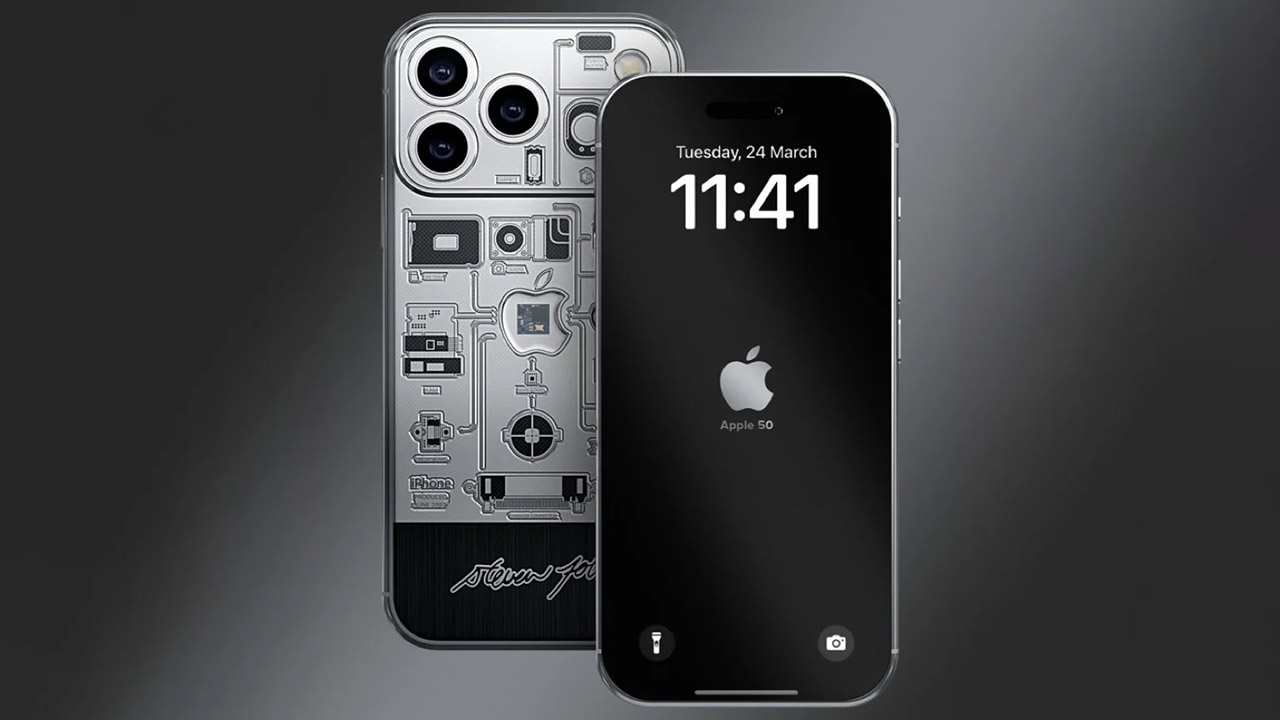
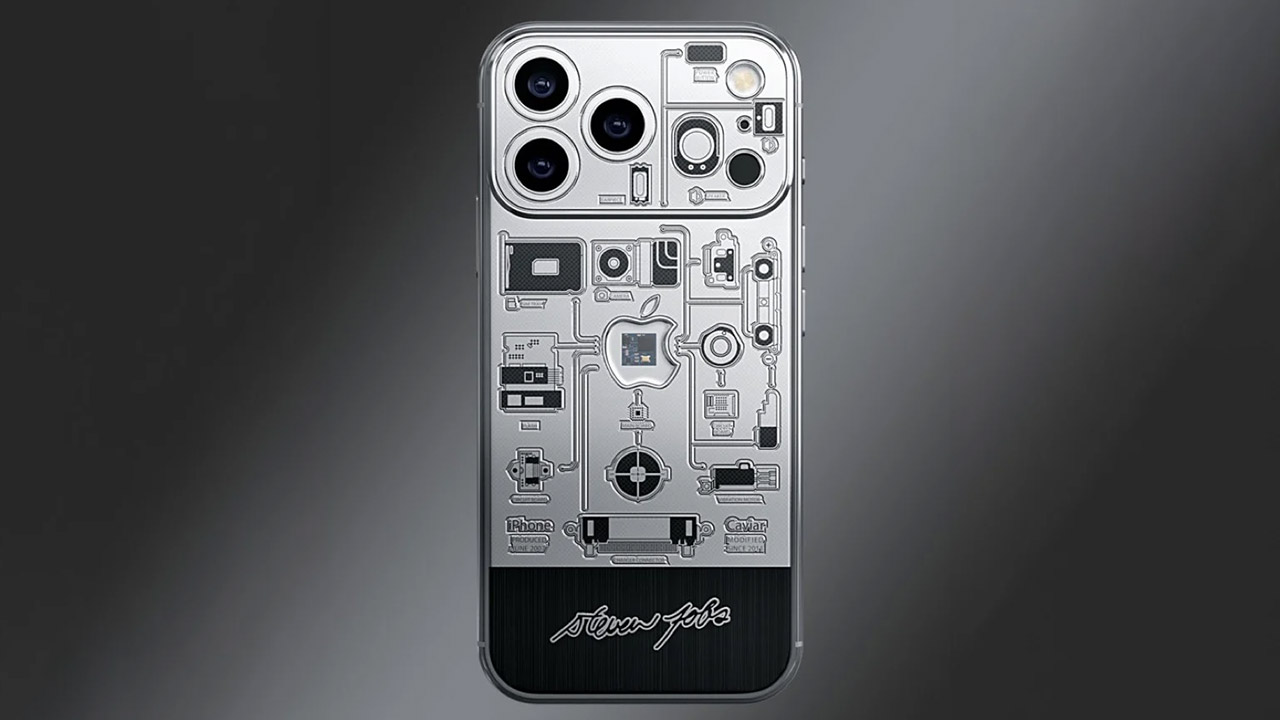
Caviar has packed over two decades’ worth of technology into a single smartphone, the iPhone 2007 Edition, which is an extravagant custom version of the iPhone 17 Pro. This ultra-limited edition of the flagship smartphone incorporates an actual piece of the 2007 iPhone 2G directly into its frame, a part literally pulled from Apple’s first handset.
The chassis is composed of titanium, which is coated in a sleek PVD black that nods subtly to the colors of 2007. The silver bits cover the majority of the surface, while the lower part transitions to black, which provides visual interest. Delicate lines carved on the rear are a careful recreation of the original mainboard’s circuit designs, and they all appear to connect at a single central point.
【Ultra-Thin Yet 10,000 mAh Capacity】Are you still struggling to find a slim power bank that can meet your charging needs? Look no further! TORRAS…
【Portable Charger with Magnetic Function】The slim power bank is a portable charger with powerful magnetic attraction, allowing for easy attachment…
【Super Fast Charging】Tired of waiting for your power bank to charge? This power bank fast charging supports 22.5W wired fast charging and 15W…
A transparent capsule shaped like the Apple logo lies in the center of the rear panel. Inside this sealed capsule is a certified piece of the 2007 iPhone 2G motherboard, securely stored away and entirely undamaged. The fragment is packaged in what appears to be a hermetically sealed little chamber. To top it all off, each device includes Steve Jobs’ signature inscribed around the frame, as well as a unique serial number etched into the titanium up to number 11.
Every last detail ties in neatly to that historic hardware. The etchings that imitate the first smartphone’s technological schematics provide a nice visual connection to the capsule. Buyers of the iPhone 2007 Edition even receive a personalized screensaver. This one is custom-made for this collection and begins loading as soon as the phone is turned on. The phone comes in a luxury branded box with a characteristic Caviar key finished in 24-karat gold plating – the works. It comes with certified certificates that indicate the motherboard is a genuine 2007 iPhone 2G fragment, directly from the source.
Pricing starts at $10,770 for the 256GB iPhone 17 Pro and goes up to $12,700 for the two-terabyte iPhone 17 Pro Max. Production is intentionally limited to just 11 pieces globally, making each one extremely uncommon. Orders are now open, with worldwide shipping handled by trusted couriers. It will take at least a week to arrive after a 1-4 business day wait for final assembly and inspection. [Source]
A dead car battery can take a perfectly good day and wreck it every time. The worst part is that it usually happens when you least expect it, and always when you’re in a hurry to go somewhere. While it’s easy to tell if your car battery is dead, how do you know that it’s good on a normal day, before you start it up? A healthy 12V car battery should read about 12.6 to 12.4 volts when your car is off, or resting.
These numbers mean your battery is fully charged, and you’ll likely get the performance you need. If your battery reads below 12 volts at rest, then you might have a problem, and you’ll eventually need to address it before it dies completely. The reason it’s important to check the battery at rest is that it gives you an accurate snapshot of its condition. Since your car isn’t turned on, no electronic systems are putting a load on the battery, and thus potentially skewing the results of a battery test.
The best way to check this yourself is to use a digital multimeter. This device works at your battery’s terminals, and you can use it when your engine is off to get the resting voltage. If you don’t have a multimeter, you can take your vehicle to a local garage or automotive retailer. For example, AutoZone can perform a more complete battery test, along with a full diagnostic check, typically at no cost to you.
Advertisement
Signs your car battery is losing power
Anastasija Vujic/Getty Images
A modern car battery is 12 volts, and if the resting voltage of yours is below that number, it may still start up. If your battery is putting out less than 12 volts as the vehicle is running, that’s a problem. Even if you can crank your car with less than 12 volts more than once, one of your systems is likely near the point of failure. It’s better to get it checked out by a technician before you end up getting stranded.
A car battery loses its voltage over time due to everyday use. It can also lose voltage due to its age, so even if your car is rarely driven, an older battery’s power can still decrease. Even though a battery doesn’t actually run out of voltage, its internal chemical composition changes every time it’s charged. Over the course of about three to five years, a battery’s total voltage drops, until its performance is eventually affected.
Advertisement
The good news is you usually have some warning signs that your battery’s voltage is dropping. Your headlights may start dimming or flickering. Your power windows might move slower than before. Even your car stereo can sound differently, but the most obvious sign is when your car doesn’t start as it normally would. A brief hesitation here and there usually means the end is near. If you experience any of these issues, get your battery checked out by a professional as soon as possible.
Huawei has officially shown off a wide-format foldable phone, and it is hard not to look at it and think about the iPhone Fold rumors all over again.
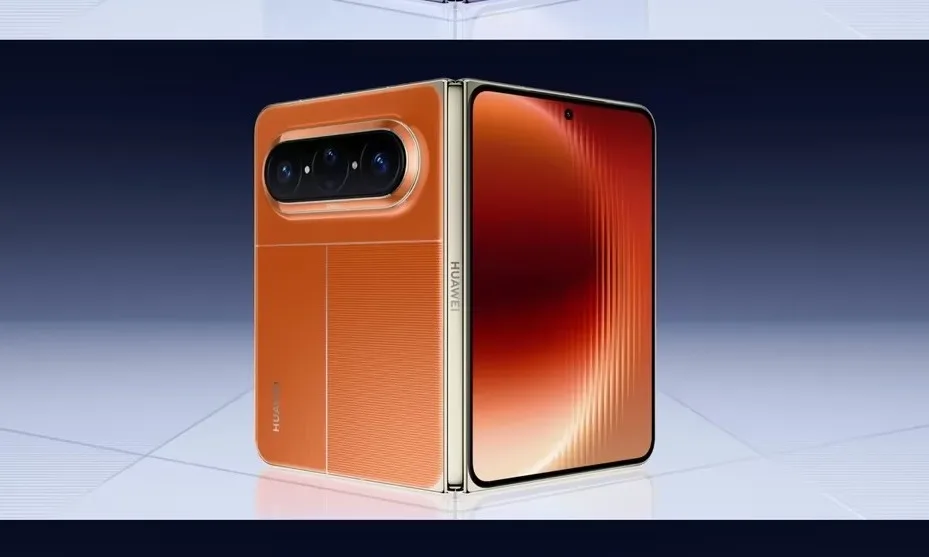
The unreleased foldable iPhone just got an unofficial rival with the Huawei Pura X Max. Huawei has already started teasing it through official materials ahead of its China launch on April 20. Image posters shared by the company show an unusually wide foldable layout that looks closer to a compact tablet when opened than the taller, narrower foldables we have gotten used to.
Huawei
Why the Pura X Max has everyone talking
The official images shared by Huawei show the Pura X Max in blue, white, black, and orange colors with a boxy, passport-like build and a triple rear camera setup. It looks like a super wide foldable, which is a format that has only been seen in rumors of future Apple and Samsung devices so far.
This is also where the iPhone Fold comparison really comes in. Recent CAD renders and rumors of the first-ever foldable iPhone shared a similar wide design language, rather than the conventional style seen in the Galaxy Z Flip or Z Fold models. But it looks like Huawei is taking the first step with a broader canvas, which should make reading, multitasking, video, and gaming feel more natural.
So no more awkward aspect ratios on the main screen. In practice, the wider main screen gives way to a compact tablet-like design when unfolded.
Advertisement
Huawei
Why it is stealing hype from the iPhone Fold
The answer is pretty simple: the Pura X Max is real.
The iPhone Fold is still making the rounds in online speculations and rumors. Many of these are likely made up, render speculation, and supply chain chatter. Meanwhile, Huawei has an actual product with official visuals, a launch date, and a design that appears to answer the same “what should the next big foldable shape be?” question before Apple ever got there.
A wider ranging security incident reported by Google Threat Intelligence Group last week prompted OpenAI to take action around its certification process.
OpenAI said on Friday (10 April) that it would be working on safeguarding and updating the certification process for its apps running on MacOS following reports of a security issue around a third-party development tool.
The company said that it would update the security certification process for its MacOS apps through “an abundance of caution”, having found no evidence that OpenAI user data was accessed, that its systems or intellectual property were compromised, or that its software was altered.
A wider ranging security incident reported by Google Threat Intelligence Group last week centred around exploits of a third-party tool named Axios, which prompted OpenAI to consider and take steps against the possibility “of someone attempting to distribute a fake app that appears to be from OpenAI”, the company said.
Advertisement
According to the company, this “unlikely” scenario necessitated it to revoke and replace existing security certifications for MacOS versions of its chatbot ChatGPT, coding tool Codex and web browser Atlas.
OpenAI said that Mac users of any of these apps are required to update to their newest versions to ensure compliance with the new security protocols, adding that “older versions of our MacOS desktop apps will no longer receive updates or support, and may not be functional”.
User passwords and OpenAI API keys were unaffected by the potential breach, and no evidence of “malware signed as OpenAI” had been detected, the company said.
It added that after 8 May, new downloads and launches of apps signed with old security certificates will be blocked by MacOS security protections.
Advertisement
The potential security threat does not affect iOS, Android, Linux, Windows or web versions of OpenAI apps, the company said, and only users of its MacOS versions need to take action.
The “root cause” of the security incident was a “misconfiguration in the GitHub Actions workflow” that has since been addressed, according to OpenAI.
Last month, reports emerged of the AI giant’s plans for consolidating its chatbot, coding and web browsing tools into a single ‘superapp’ for desktop in the face of fierce competition from Anthropic.
The following week, it decided to shut down its controversial AI video generator Sora and sideline plans for an ‘erotic’ version of ChatGPT to focus instead on its core enterprise business.
Advertisement
Don’t miss out on the knowledge you need to succeed. Sign up for the Daily Brief, Silicon Republic’s digest of need-to-know sci-tech news.
On April 13, Apple stopped providing downloads for the previous versions of Pages, Keynote, and Numbers. Instead, download the Creator Studio versions of the apps that are still free.
iWork icons of both generations
Apple’s introduction of the Creator Studio brought with it new versions of the iWork suite to match. The new apps, designed to work better with the Creator Studio subscription, were provided while still allowing users to acquire the previous version of the apps. However, as of April 13, 2026 and spotted by @Aaronp613 on X, users attempting to acquire Pages, Keynote, or Numbers for macOS or iPadOS will not be able to get the non-Creator Studio versions. Checking the App Store and the Mac App Store, only the updated Creator Studio editions are available, with the old versions not shown in searches. Continue Reading on AppleInsider | Discuss on our Forums
Adobe has released an emergency security update for Acrobat Reader to fix a vulnerability, tracked as CVE-2026-34621, that has been exploited in zero-day attacks since at least December.
The flaw allows malicious PDF files to bypass sandbox restrictions and invoke privileged JavaScript APIs, potentially leading to arbitrary code execution. The exploit observed in attacks enables reading and stealing arbitrary files. No user interaction is required beyond opening the malicious PDF.
Specifically, the exploit abuses APIs like util.readFileIntoStream() to read arbitrary local files and RSS.addFeed() to exfiltrate data and fetch additional attacker-controlled code.
The security issue was discovered by Haifei Li, founder of the EXPMON exploit detection system, after someone submitted for analysis a PDF sample named “yummy_adobe_exploit_uwu.pdf.”
Haifei Li says that someone submitted the sample to EXPMON on March 26, but it had been sent to VirusTotal three days before, where only five out of 64 security vendors flagged it as malicious at the time.
Advertisement
The researcher decided to manually investigate the issue after the exploit detection system activated its “detection in depth” feature, an advanced detection capability Haifei Li specifically developed for Adobe Reader, he says in a blog post last week.
Security researcher Gi7w0rm spotted attacks in the wild that leveraged Russian-language documents with oil and gas industry lures.
Following the receipt of Li’s report, Adobe published a security bulletin over the weekend, assigning the vulnerability the CVE-2026-34621 tracker.
Although the flaw was initially rated critical (9.6) with a network attack vector, Adobe subsequently lowered the severity to 8.6 after changing the vector to local.
Advertisement
The vendor listed the following Windows and macOS products as impacted:
Acrobat DC versions 26.001.21367 and earlier (fixed in version 26.001.21411)
Acrobat Reader DC versions 26.001.21367 and earlier (fixed in version 26.001.21411)
Acrobat 2024 versions 24.001.30356 and earlier (fixed in version 24.001.30362 on Windows, and version 24.001.30360 on Mac)
Adobe recommends that users of the above software update their applications through ‘Help > Check for Updates,’ which triggers an automated update.
Alternatively, users may download an Acrobat Reader installer from Adobe’s official software portal.
No workarounds or mitigations were listed in the bulletin, so applying the security updates is the only recommended action.
However, users should always be wary of PDF files sent from unsolicited sources and open them in sandboxed environments when suspicious.
Advertisement
Automated pentesting proves the path exists. BAS proves whether your controls stop it. Most teams run one without the other.
This whitepaper maps six validation surfaces, shows where coverage ends, and provides practitioners with three diagnostic questions for any tool evaluation.
The noise cancellation here works by combining active technology with passive design elements in the over-ear cups, and the Quiet and Aware modes let you toggle between full isolation and complete environmental transparency without taking the headphones off.
Advertisement
That level of control extends to the sound itself, with adjustable EQ through the Bose Music app giving you direct influence over bass, mid-range, and treble rather than locking you into a house sound you cannot modify.
Battery life runs to 24 hours on a single charge, and a 15-minute USB-C top-up adds another 2.5 hours of playback, which covers the kind of mid-trip low battery situation that tends to occur at the least convenient moment.
Multipoint Bluetooth 5.1 connectivity keeps the headphones paired to two devices simultaneously, so switching between a laptop and a phone does not require disconnecting and reconnecting each time.
Advertisement
The included audio cable with in-line microphone means the QuietComfort headphones remain fully functional even when the battery is flat, which is a practical fallback that wireless-only designs cannot offer.
Plush over-ear cushions and a padded headband keep the 240g build comfortable across extended sessions, and the carrying case adds a degree of protection for travel without adding significant bulk to a bag.
Worth noting is that the source lists these as not water resistant, so they are better suited to commuting and indoor use than outdoor exercise in unpredictable weather.
If you have been watching the QuietComfort headphones and waiting for the right price to act, $199 represents the most accessible this colourway has been in recent weeks, and limited edition finishes rarely stay discounted for long.
While many startups founded prior to the emergence of ChatGPT are struggling to position themselves for the AI era, Vercel, a 10-year-old dev tool and website hosting platform, is benefiting from the explosion of AI-generated apps and agents.
“When I started this company, only tens of millions of people could deploy,” Vercel CEO Guillermo Rauch told the audience at the HumanX conference in San Francisco last week. “Now we’re seeing that everybody in the world can create an app.”
The explosion in app creation by non-developers has been a significant boon to Vercel’s business.
The company’s annual recurring revenue (ARR) has skyrocketed from $100 million at the beginning of 2024, as reported by The Information, to a run rate of $340 million by the end of February 2026, according to Forbes.
Advertisement
Given that growth, Rauch was asked onstage about his IPO plans. He suggested the company is already operating with the discipline of a public entity. “Vercel is very much a working public company,” Rauch said.
As for when the debut will happen, he replied: “There’s no perfect timeline or quarter I can give. The company’s ready and getting more ready for it every day.”
2026 was expected to be a strong year for new listings, but a sharp sell-off in software, fueled by the fear of AI disruption, has effectively frozen the IPO pipeline. Aside from SpaceX, Anthropic, and OpenAI, most talk of public debuts has largely ceased. Once any of those company’s go public, all expected to be blockbuster hits, the window may open again.
Techcrunch event
Advertisement
San Francisco, CA | October 13-15, 2026
Meanwhile most tech CEOs have gone quiet about their IPO plans. But Rauch is telegraphing the company’s public market readiness, suggesting that Vercel is eyeing a listing in the not-too-distant future.
Advertisement
When pressed about what Wall Street should know about Vercel, Rauch responded: “The total addressable market of infrastructure has now grown, and it simply has no ceiling.”
Vercel is betting that as more apps are created by AI agents instead of humans, the company will become the primary platform for hosting everything agents develop.
“Agents are very prolific at deploying,” Rauch said, adding that 30% of the apps running on the company’s platform already came from agents.
According to Rauch, agents will accelerate software production by making it easier to generate custom solutions than to purchase existing software.
Advertisement
“All of that software… it needs to go somewhere, and we think it’s going to be Vercel,” he said.
Vercel was last valued at $9.3 billion when it raised a $300 million Series F led by Accel in September. The company competes with Cloudflare and Amazon Web Services for hosting services, and it also offers v0, a vibe coding tool for creating websites and apps.
As a researcher investigating how electric brain stimulation can improve people’s powers of recollection, I’m often asked how memory works – and what we can do to use it more effectively. Happily, decades of research have given us some clear answers to both questions.
Sensory memory, which can last only milliseconds, registers raw information such as sights, sounds and smells. These are first processed by the brain’s five primary sensory cortices (visual cortex for sights, auditory cortex for sounds and so on).
Working (short-term) memory holds and manipulates a small amount of information over several seconds or more. Think of this as your brain’s mental workspace: the system that lets you do mental arithmetic, follow instructions and comprehend what you’re reading. So it mainly involves the prefrontal cortex – the front part of your brain that supports attention, decision-making and reasoning.
Finally, long-term memory stores information more permanently, from minutes to a lifetime. This includes both ‘explicit’ memories (facts and life events) and ‘implicit’ ones (skills, habits and emotional associations).
For long-term memories, the hippocampus and temporal lobes – located deep within the brain, around the sides of your head near your temples – contribute largely to memories involving facts or life events, while the amygdala (near the hippocampus), cerebellum (at the back of the brain) and basal ganglia (deep in the brain) process emotional or procedural memories.
Advertisement
Working memory often acts as a conscious gateway to long-term memory – but it has its limits. In 1956, the American psychologist George Miller proposed that we can only hold about seven ‘chunks’ of information in our working memory at any time.
While the exact number is debated to this day, the principle holds: working memory is limited. And that limitation can shape how effectively we learn and remember things.
But you can also get your memory working more effectively. Here are five easy steps for improving both your working and long-term memory.
Put your phone away
Smartphones reduce your working memory capacity. Even just having a phone nearby – no matter if it’s face down and on silent – can reduce performance on memory and reasoning tasks.
Advertisement
The reason is that part of your brain is still subtly monitoring it. Even resisting the urge to check notifications consumes mental resources – which is why researchers sometimes call smartphones a “brain drain”. The solution is simple: put your phone in another room when you need to focus. Out of sight really does free up mental capacity.
Stop your mind racing
Stress and anxiety can take up valuable mental space. When you’re worrying about something or are distracted by racing thoughts, part of your working memory is already in use.
Relaxation training and mindfulness practices can improve both working memory and academic performance, probably by reducing stress levels. And if meditation feels intimidating, try breathing techniques such as ‘cyclic sighing’. Inhale deeply through your nose, take a second shorter inhale, then slowly exhale through your mouth. Repeating this for five minutes can calm the nervous system and create better conditions for learning.
Get chunking
Everyone can expand their working memory using the technique of chunking – grouping information into meaningful units. In fact, you probably already do it to remember some phone numbers or lists of words – breaking long sequences into bite-size chunks that your brain can recall as a mini-group.
Advertisement
The same principles apply if you’re delivering a presentation, to help your audience remember your key points more effectively. Chunking would involve grouping 10 case studies, say, into three or four themes, each with a short headline and single key takeaway.
Repeat this structure on each slide: one idea, a few supporting details, then move on. By organising information into meaningful patterns, you reduce cognitive load and make it more memorable.
Become a retriever
In the 19th century, German psychologist Hermann Ebbinghaus demonstrated how quickly we forget information after learning it. Within about 30 minutes, we lose roughly half of what we have learned, with much more fading over the next day. Ebbinghaus called this the forgetting curve. The light blue line on the chart below illustrates this.
The forgetting curve – and how to disrupt it
The forgetting curve. Image: Elva Arulchelvan (CC BY-SA 4.0)
Advertisement
However, there is a way of ensuring that more sinks in when you are trying to learn a lot of information in a short period of time: retrieval practice.
When preparing to give a talk or studying for an exam, rather than simply rereading your notes, keep testing how much you remember. Use flash cards, answer practice questions, or try explaining the material out loud without notes.
Memory works through associations. Each time you successfully retrieve information, you link the material to new prompts, examples and contexts. This builds more cues to accessing the information, and strengthens each memory pathway. Often when we ‘forget’, the memory isn’t gone – we just lack the right retrieval cue.
Give yourself a break
Research shows that memory is more effective when study or practice sessions are spread out, rather than massed together. If you are studying for an exam, build solid blocks of downtime into your revision schedule. The dark blue line on the chart above illustrates how spacing out your practice sessions can help you remember more information over time, by adjusting Ebbinghaus’s forgetting curve.
Advertisement
One study suggests leaving gaps between each revision session that equate to 10-20pc of the time left until your exam or presentation. So, if your deadline is five days away and you do hours of revision a day, you should still take between a half and full day off in between sessions. In other words, don’t overdo it – you probably won’t see the rewards!
If you only remember one thing from this article about improving memory, make it this. Memory isn’t just about intelligence, it’s about strategy. Small changes in how you study or work can make a real difference in how well, and how long, you remember crucial information.
Elva Arulchelvan is completing a PhD in psychology and neuroscience for the Lab for Clinical and Integrative Neuroscience in Trinity College Dublin (TCD), Ireland. She is also a lecturer in psychology for social work students in TCD. Arulchelvan’s PhD research focuses on memory and forgetting processes. In particular, her PhD research involves investigating peripheral nerve stimulation’s effect on memory and forgetting in both clinical and non-clinical groups.
Advertisement
Don’t miss out on the knowledge you need to succeed. Sign up for the Daily Brief, Silicon Republic’s digest of need-to-know sci-tech news.








































































You must be logged in to post a comment Login