Connect with us
DAPA Banner

Tech

What programming languages do you need for a career in robotics?

Published

on

If you want to excel in the robotics field, these programming languages can get you there.

Click here to access the entire catalogue of Automation Focus.

Coding skills are a valuable and often crucial skill for professionals in the STEM space, even in the wake of ‘vibe-coding’ and AI advancements. For those who want to work in the area of robotics, an in-depth knowledge of the uses of programming and an education in more than one language can give a professional an edge.

But more often than not, there are far too many to get through before you find the ones that best suit your ambitions. With that in mind, what are some of the programming languages that tend to go hand-in-hand with a career in robotics.

For beginners

We all start somewhere, so whether you are an enthusiast, a beginner or an established professional, you should have a knowledge of a standard or starter language that can help you get to the next phase.

Advertisement

Python is one such language. Considered accessible, easy to learn, versatile and with a wealth of online resources available, pretty much anyone who wants to learn this language can – if they put in the time. Education platform Coursera notes that in robotics, Python is particularly useful in scripting robot behaviours, quickly building prototypes and in elements requiring artificial intelligence, such as systems that integrate predictive analytics or use machine learning algorithms.

There is no reason that your chosen programming language, to aid a robotics career, can’t be funky as well as functional. If you want a language a little off the beaten track that offers a more unique learning experience, consider Scratch. It is aimed at younger learners and complete beginners, so if you are only at the start of your educational journey, it can be of real help in developing early and foundational skills. This graphical programming language developed by the MIT Media Lab, offers a simple interface, where students can create digital stories, games and animations, improve their conceptual and computational thinking and develop their problem-solving abilities.

High performance

For the professionals or enthusiasts looking for a coding language that packs some punch, there are a number of programs considered to be high performers.

C++ is in this category. An object-oriented language, C++ is regarded as a strong foundation for robotics engineers and those who work in the hardware ecosystem and can be useful to those interested in competitive robotics or embedded systems. Advantages include strong cross-platform support, high execution efficiency, and concise and flexible low-level control.

Advertisement

Another high performer is the less commonly-used Rust. This systems-level language emphasises memory safety and performance, two highly critical aspects of working with robotics software. It has been compared to C++ in CPU-intensive tasks and is an ideal language for those wanting a bit of a challenge in the name of progress and reliability. 

Another high-level language to consider is MATLAB, which is typically used for numerical computation, for example, in work involving linear algebra, data analysis and algorithm development. MATLAB is commonly used by academics, researchers and developers and can be used to create detailed robotic models. Anyone who wants to learn MATLAB can, but it is primarily suited to academic researchers, control systems engineers and those working in labs or companies using MATLAB for rapid iteration. 

Features

So, what makes up a ‘good robotics language’? In truth, that is like asking, ‘how long is a piece of string’? The answer really depends on your own professional needs and ambitions. That being said, there are a number of features and characteristics that often jump out as being important for a programming language used primarily in the robotics space. 

Performance is one such element that is critical in robotics. Experts tend to use a high volume of data and have to make quick decisions, so high performance is important. Ease of use, especially for those just starting off, is also important, as students and professionals often depend on a simple interface and a large community of peers. The robotics space is ever-evolving so flexibility is a key feature, as is easy access to support and resources when needed. 

Advertisement

Anyone looking to boost their coding skills should make sure to check out local groups and organisations, attend industry events, engage with online learning opportunities and if a more in-depth approach is required, consider in-person courses at relevant third-level institutions. 

Don’t miss out on the knowledge you need to succeed. Sign up for the Daily Brief, Silicon Republic’s digest of need-to-know sci-tech news.

Source link

Advertisement
Continue Reading
Click to comment

You must be logged in to post a comment Login

Leave a Reply

Tech

Astropad’s Workbench reimagines remote desktop for AI agents, not IT support

Published

on

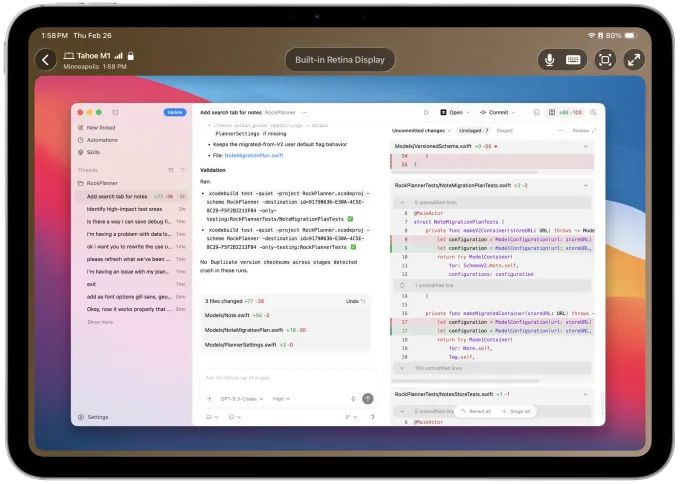
Demand for Apple’s Mac Mini has skyrocketed, particularly in China, as the small computer has become an ideal platform for experimenting with autonomous AI agents like OpenClaw and others. Now, a company called Astropad is building out a remote desktop solution specifically for this use case.

On Tuesday, Astropad CEO Matt Ronge introduced Astropad Workbench, a remote desktop solution for Apple devices that he pitches as made “for the AI era.”

While an AI agent running on a Mac Mini may not need a screen, its operator (the human) will want to log in at times to see what’s happening in order to check logs, monitor outputs, or restart stuck tasks, he says.

Image Credits:Astropad

The new remote desktop solution offers a variety of features, including high-fidelity streaming; the ability to dictate prompts and commands with your voice; plus support for other input methods like the keyboard, Apple Pencil, or touch; and clients for both the iPad and iPhone — the latter essentially putting the remote desktop solution into your pocket for on-the-go access.

If you’re running AI agents across multiple Macs, Workbench offers a device chooser so you can move between them.

Advertisement
Image Credits:Astropad

The idea came about because it was something the team at Astropad had wanted for themselves, as had their friends.

“We have heavily adopted AI at Astropad, and we’ve been using agents. And sometimes, you have an agent running on a long task, and you want to check on it,” says Ronge. “There’s not a great way to do this…there were existing remote desktop tools, but nothing built specifically for this,” he continues. “There have also been ways where you can use a terminal, or there are things like Telegram chats, but they’re limited. I mean, there are times you’ve got to see what’s happening on your Mac. You’ve got to approve a dialog or save something, or just visually see what’s happening.”

Workbench also leverages the company’s proprietary, low-latency display protocol, which it calls LIQUID, which supports the workflows creative professionals use. It retains full fidelity, even at Retina resolutions, Astropad claims, and doesn’t blur lines or pixelate data. The protocol already powers Astropad’s other products, like Luna Display, which turns your iPad into a second display, and Astropad Studio, which lets you use an iPad as a professional drawing tablet.

While monitoring an AI agent may not always need a high-fidelity solution, Ronge points out that it’s something that’s nice to have — especially if you’re approving designs or mock-ups your AI agent made.

Image Credits:Astropad

Of course, remote desktop software has existed for some time, meaning Astropad has well-established rivals like Jump Desktop, RustDesk, AnyDesk, Parsec, VNC-based solutions, and many more.

But Ronge suggests that those weren’t designed for the specific needs of using remote desktop software to keep tabs on AI agents. With Workbench, it’s easy to check on the status of logs to see your AI agents’ progress in order to spot issues, restart stalled jobs, and make other changes, but what’s more, you can do this from your iPhone or iPad.

Advertisement

“We’ve been doing iPad stuff for years — it’s been, like, our whole company for the past 10 years. So we have a lot of experience in making good iPad apps,” Ronge says. “We know how to make good iOS apps…so we did that, and then we also added a voice model.”

Image Credits:Astropad

The tech uses Apple’s voice model so you can talk to your phone and direct your AI agent to do something with a press of the microphone button.

“It’s a very natural way to work with agents. That’s the kind of feature that existing remote desktop [apps] just don’t have — they’re built for more traditional, enterprise-style remote desktop.”

As a new release, there will still be some bugs and polishing needed, but the team is continuing to work on the product. Next up, they plan to launch Windows and Linux support and refine the iPhone app.

The new software runs on macOS 15 and up and iOS 26, and is available as a free download offering 20 minutes of access per day. For unlimited access, the cost is $10 per month, or $50 per year.

Advertisement

Astropad, a bootstrapped and profitable small tech business, has over 100,000 customers, including those who have bought its iPad hardware accessories and its software. With Workbench, Ronge believes the company has the potential to reach both AI enthusiasts and businesses as remote support for AI agents becomes more common.

“I totally think businesses are gonna buy it. I mean, just the productivity gains I’m seeing from it myself — this is totally headed to businesses. It’s just too powerful,” he notes.

Source link

Advertisement
Continue Reading

Tech

Temple University Student On IEEE Membership Perks

Published

on

Kyle McGinley graduated from high school in 2018 and, like many teenagers, he was unsure what career he wanted to pursue. Recuperating from a sports injury led him to consider becoming a physical therapist for athletes. But he was skilled at repairing cars and fixing things around the house, so he thought about becoming an engineer, like his father.

McGinley, who lives in Sellersville, Pa., took some classes at Montgomery County Community College in Blue Bell, while also working. During his years at the college, he took a variety of courses and was drawn to electrical engineering and computing, he says. He left to pursue a bachelor’s degree in electrical and computer engineering in Philadelphia at Temple University, where he is currently a junior.

Kyle McGinley

MEMBER GRADE

Student member

Advertisement

UNIVERSITY

Temple, in Philadelphia

MAJOR

Electrical and computer engineering

Advertisement

The 26-year-old is also a teaching assistant and a research assistant at Temple. His research focuses on applying artificial intelligence to electrical hardware and robotics. He helped build an AI-integrated android companion to assist in-home caregivers.

Temple recognized McGinley’s efforts last year with its Butz scholarship, which is awarded annually to an electrical and computer engineering undergraduate with an interest in software development, AI development systems, health education software, or a similar field.

An IEEE student member, he is active within the university’s student branch.

“My career ambition after I graduate is to gain real-world experience in the engineering industry to learn skills outside of academia,” he says. “Long term, I want to do project management or work in a technical lead role, with the primary goal of creating impactful projects that I can be proud of.”

Advertisement

Building a robot aide

McGinley is a teaching assistant for his digital circuit design course. In a class of 35 students, it can be a struggle for some to digest the professor’s words, he says.

“My job is to answer students’ questions if they are having problems following the professor’s lecture or are confused about any of the topics,” he says. “In the lab, I help students debug code or with hardware issues they have on the FPGA [field-programmable gate array] boards.”

He also conducts research for the university’s Computer Fusion Lab under the supervision of IEEE Senior Member Li Bai, a professor of electrical and computer engineering. McGinley writes software programs at the lab.

“In school, they don’t teach you how to communicate with people. They only teach you how to remember stuff. Working well with people is one of the most underrated skills that a lot of students don’t understand is important.”

Advertisement

One such assignment was working with the Temple School of Social Work at the Barnett College of Public Health to build a robot companion integrated with AI to assist individuals with Parkinson’s disease and their caregivers.

“I realized the need for this with my grandmother, when she was taking care of my grandfather,” he says. “It was a lot for her, trying to remember everything.”

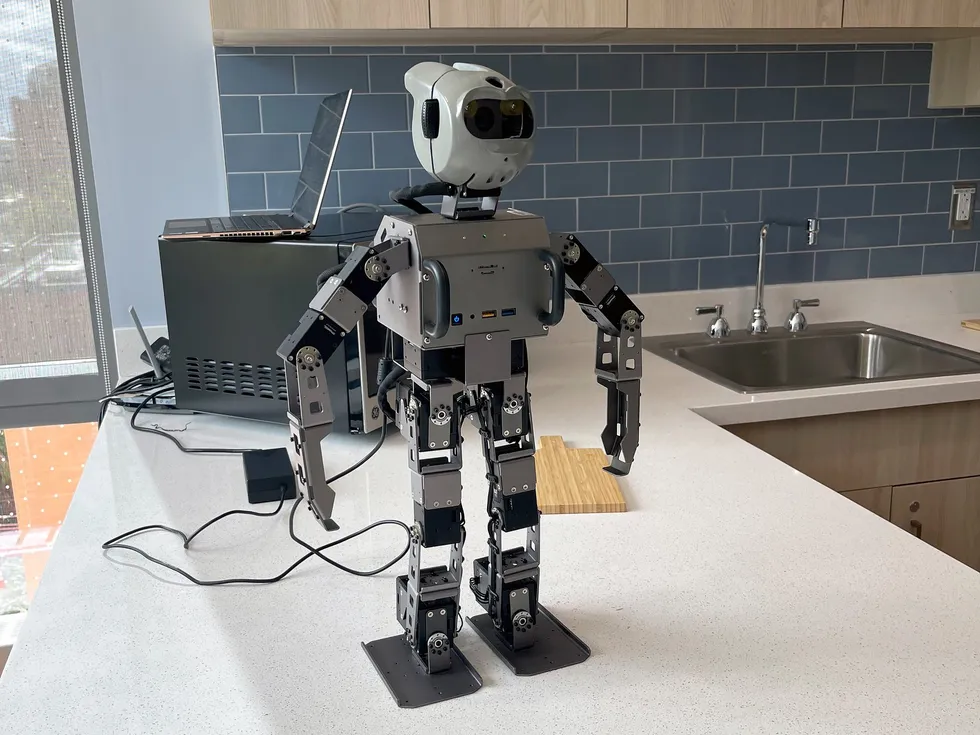
Using the latest software and hardware, he and three classmates rebuilt an older lab robot. They installed an operating system and used Python and C++ for its control, perception, and behavior, he says. The students also incorporated Google’s Gemini AI to help with routine tasks such as scheduling medication reminders and setting alarms for upcoming doctor visits.

A small humanoid robot standing on a kitchen counter.Kyle McGinley helped build an AI-integrated android to assist individuals with Parkinson’s disease and their caregivers.Temple University of Public Health

The AI-integrated android was intended to assist, not replace, the caregivers by handling the mental load of remembering tasks, he says.

Advertisement

“This was one of the cool things that drew me to working in the robotics field,” he says. “Something where AI could be used to help caregivers do simple tasks.”

The benefits of a student branch

McGinley joined Temple’s IEEE student branch last year after one of his professors offered extra credit to students who did so. After attending meetings and participating in a few workshops, he found he really liked the club, he says, adding that he made new friends and enjoyed the camaraderie with other engineering students.

After the student branch’s board members got to know McGinley better, they asked him to become the club’s historian and manage its social media account. He also helps with event planning, creating and posting fliers, taking pictures, and shooting videos of the gatherings.

The branch has benefited from McGinley’s involvement, but he says it’s a two-way street.

Advertisement

“The biggest things I’ve learned are being held accountable and being reliable,” he says. “I am responsible for other people knowing what’s going on.”

Being an active volunteer has improved his communication skills, he says.

“Learning to clearly communicate with other people to make sure everyone is on the same page is important,” he says. “In school, they don’t teach you how to communicate with people. They only teach you how to remember stuff. Working well with people is one of the most underrated skills that a lot of students don’t understand is important.”

He encourages students to join their university’s IEEE branch.

Advertisement

“I know it can be scary because you might not know anyone, but it honestly can’t hurt you; it could actually benefit you,” he says. “Being active is going to help you with a lot of skills that you need.

“You’ll definitely get opportunities that you would have never known about, like a scholarship or working in the research lab. I would have never gotten these opportunities if I hadn’t shown up. Joining IEEE and being active is the best thing you can do for your career.”

From Your Site Articles

Related Articles Around the Web

Advertisement

Source link

Continue Reading

Tech

Intel joins Musk’s Terafab as foundry partner in $25B chip megaproject

Published

on

In short: Intel has signed on as the primary foundry partner for Elon Musk’s Terafab, a $25 billion joint venture between Tesla, SpaceX, and xAI targeting a terawatt of AI compute per year, handing the struggling chip giant the marquee customer it has been searching for since pivoting to a foundry-first strategy.

On 7 April 2026, Intel announced it is joining the Terafab project, becoming the foundry partner for the most ambitious semiconductor facility ever proposed in the United States. The announcement came two weeks after Musk first unveiled Terafab at the North Campus of Giga Texas in Austin, a joint venture between Tesla, SpaceX, and xAI that claims it will produce one terawatt of AI compute every year. Intel’s role is to contribute its most advanced process node, packaging expertise, and manufacturing scale to make that claim real. For Intel chief executive Lip-Bu Tan, who has spent the past year attempting to rebuild Intel around an external foundry business, the deal is the most significant external customer win the company has landed since he took the job.

What Terafab is claiming to build

Terafab is designed as a vertically integrated semiconductor complex,  covering chip design, lithography, fabrication, memory production, advanced packaging, and testing under a single roof,  with a stated goal of producing between 100 billion and 200 billion custom AI and memory chips per year. The initial buildout targets 100,000 wafer starts per month, with ambitions to eventually scale to one million wafer starts per month at full capacity. The project involves two separate facilities on the Giga Texas campus: one dedicated to chips for automotive and humanoid robotics applications, including Tesla’s Full Self-Driving system, its Cybercab robotaxi programme, and the Optimus robot line; and a second for high-performance AI data centre infrastructure and specialised processors for orbital deployments.

That orbital component is central to the project’s rationale. SpaceX, which completed its acquisition of xAI in an all-stock deal in February 2026, creating a combined entity valued at approximately $1.25 trillion, is building out a constellation of space-based AI satellites internally designated AI Sat Mini. Musk has said 80% of Terafab’s compute output will be directed toward that orbital infrastructure, with the remaining 20% for ground-based applications. The full cost of the project has been cited as between $20 billion and $25 billion, though independent analysts have been sharply sceptical of whether that figure is remotely sufficient to meet the stated production targets. A note from Bernstein Research estimated the true capital required to hit one terawatt of annual compute at approximately $5 trillion,  more than 70% of the total annual United States federal budget.

Advertisement

Intel’s role, and what the deal is worth

Intel will contribute its 18A process node, the company’s most advanced logic manufacturing technology, currently ramping to high-volume production at Intel’s fabrication plants in Arizona and Oregon. Intel’s 18A is a 1.8-nanometre-class node, placing it in the same tier as the most advanced processes currently entering commercial production globally, and it represents the most sophisticated semiconductor capability manufactured entirely within the United States. Intel’s statement on joining Terafab was direct: “Intel is proud to join the Terafab project with SpaceX, xAI, and Tesla to help refactor silicon fab technology.” The company added: “Our ability to design, fabricate, and package ultra-high-performance chips at scale will help accelerate Terafab’s aim to produce 1 TW/year of compute to power future advances in AI and robotics.”

Advertisement

Tan’s post on X was more personal in its framing. “Elon has a proven track record of reimagining entire industries,” he wrote. “This is exactly what is needed in semiconductor manufacturing today. Terafab represents a step change in how silicon logic, memory and packaging will get built in the future. Intel is proud to be a partner.” Intel’s shares rose approximately 4% on the announcement, closing at $52.91. The market reaction reflects how significant the deal is for Intel’s foundry ambitions: in its most recent full year, Intel Foundry generated just $307 million in external customer revenue, a figure that makes the company a distant also-ran against Taiwan Semiconductor Manufacturing Company, which generates tens of billions annually from external customers. Terafab, if even partially realised, would transform Intel Foundry’s commercial profile entirely.

Intel’s recovery, and what this bet requires

Tan inherited an Intel in acute crisis. The company had lost ground to TSMC and AMD across almost every major product category, its own manufacturing roadmap had slipped repeatedly, and its foundry business, the effort to manufacture chips for external customers as TSMC does, had attracted little meaningful interest beyond government-supported contracts under the US CHIPS and Science Act. Tan’s restructuring has been aggressive: thousands of redundancies, a sharper focus on Intel’s 18A and 14A process nodes as the foundation of the foundry pitch, and a deliberate effort to position Intel’s domestic manufacturing capability as a geopolitical differentiator at a moment when US policymakers are intensely focused on reducing dependence on Taiwanese chipmaking.

Terafab is the clearest expression yet of where that pitch lands. The CHIPS Act tailwinds, the Trump administration’s desire to see advanced semiconductor production in the United States, and the specific demand Musk’s companies represent for high-volume, US-manufactured chips at the leading edge, all of those forces converge in this partnership. Whether Intel’s 18A can deliver at the yields and volumes Terafab’s targets require is a separate question. The node has been in development for several years and is only now entering volume ramp; the gap between a controlled high-volume manufacturing ramp and the production scales Terafab envisions remains very large. Chipmakers building the largest foundries in the world require several years of construction and billions of dollars before the first wafer is processed. The scale of capital commitments now characterising AI infrastructure investment gives some context for what serious execution at Terafab’s claimed targets would actually require.

The credibility problem Terafab has not solved

The scepticism around Terafab is structural, not merely financial. Building a 2nm-class fabrication facility capable of 100,000 wafer starts per month costs roughly $25-35 billion on its own, according to Tom’s Hardware’s analysis of Bernstein’s research, meaning the entire stated Terafab budget is roughly enough to build a single fab operating at a fraction of the claimed full-capacity scale. Reaching one million wafer starts per month would require dozens of such facilities. The $20-25 billion figure appears to represent initial construction capital for the first phase, rather than the cost of the stated ambition.

Advertisement

There is also the question of the companies at the table. SpaceX-xAI’s internal situation has been turbulent: all 11 of xAI’s original co-founders have now left the company since the SpaceX acquisition, a rate of attrition that has raised questions about the organisation’s technical continuity. Musk’s companies have a documented history of announcing timelines for facilities and products that subsequently stretch by years. Tesla’s Cybertruck, Optimus, and Full Self-Driving have each missed multiple committed dates without affecting the company’s willingness to make new commitments. None of this disqualifies Terafab, Musk’s companies have also delivered on goals that were widely dismissed, most notably SpaceX’s orbital launch programme, but it establishes why analysts are not taking the one-terawatt headline at face value.

What the partnership means for the chip industry

Intel’s arrival at Terafab lands at a moment when the chip industry is navigating a broader restructuring of who makes what and for whom. The rise of custom AI silicon, Amazon’s Trainium, Google’s TPUs, Microsoft’s Maia, has been eating into the share of AI workloads that run on Nvidia hardware. Nvidia’s response has been to open its NVLink Fusion interconnect to third-party silicon, including Marvell’s custom AI accelerators, a strategy designed to keep custom chip buyers inside Nvidia’s ecosystem even as they move off pure Nvidia hardware. Terafab represents something different: a vertically integrated attempt to produce custom silicon at a scale that has no precedent outside of the established foundry giants. If the project proceeds anywhere near its stated ambitions, it would add a third major domestic US semiconductor manufacturing ecosystem to a landscape currently dominated by TSMC’s Arizona expansion and Samsung’s Texas operations.

For Intel, the strategic logic is clear. As hyperscalers and technology companies increasingly pilot non-Nvidia chips for AI training and inference workloads, the market for foundry services from a domestically situated, leading-edge manufacturer is growing precisely when Intel has positioned itself to serve it. Whether Terafab is the vehicle that finally validates that positioning, or another ambitious announcement that tests the distance between Musk’s projections and physical reality, will become clearer as construction begins and wafer starts are counted rather than promised. The capital flowing into AI infrastructure at this scale has a way of turning implausible timelines into achieved ones, and Intel, for the first time in years, is positioned to benefit if it does.

Advertisement

Source link

Continue Reading

Tech

Sony’s upcoming True RGB TVs look to set “a new benchmark” for picture quality

Published

on

After several months of teasing, Sony has decided to fill us in a bit more information about its upcoming True RGB TV.

Although only a little bit more.

We still don’t have an idea of what the TV looks like (but we assume it’ll look like any other Sony TV), and there’s no word on pricing yet, but we do know they’ll be multiple TVs as the press alert refers to “Bravia TVs”. And on top of that you won’t have too long to wait. They’re set for release this spring.

Decades in the making

This latst release provides a nugget of more information, just a few days after Sony and TCL came to an agreement over the new TV venture they’ve established together that’s rather nicely called Bravia Inc.

Advertisement

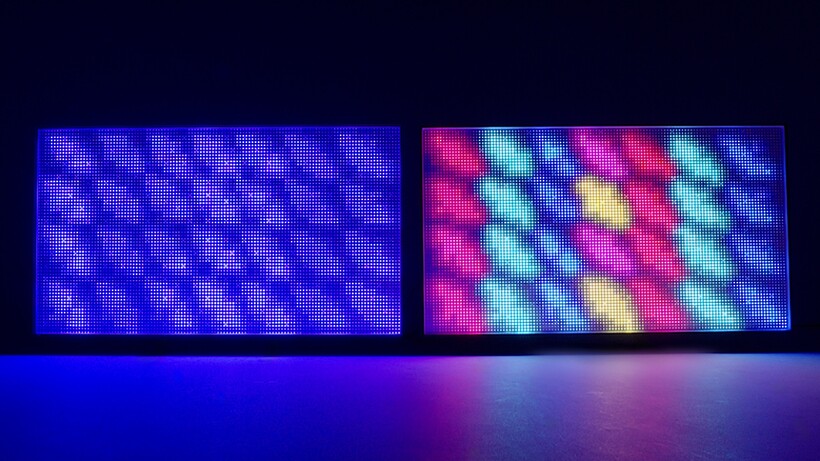
Sony comments that its True RGB technology intends to set a new benchmark for RGB LED picture performance. Unlike conventional approaches to the technology, True RGB is said to use independently controlled red, gree, and blue light sources (diodes) that can apparently deliver “purer colour, greater brightness, and the largest colour volume ever achieved in Sony’s home TV history”

Advertisement

Sony introduces Sony’s proprietary “True RGB” technology – the naming convention behind the breakthrough display technology powering upcoming Sony’s True RGB televisions and setting a new benchmark for RGB LED picture performance. By combining the individual RGB LEDs with the strengths of both Mini LED and OLED into one TV, we’re potentially looking at the ultimate TV viewing experience.

Sony’s hope with its True RGB technology is that picture quality looks more natural, more three dimensional, and more accurate, whether you’re viewing in a bright living room or otherwise.

Advertisement
Mini LED vs New Sony RGB BacklightMini LED vs New Sony RGB Backlight
Image Credit (Sony)

What makes Sony’s True RGB tick is the “proprietary optical structure and precision backlight control” that’s driven by a new RGB backlight driver. You can add “faithful colour reproduction from wider viewing angles” to the list of plusses that Sony’s True RGB backlight is bringing to the table.

Sony says that its True RGB is the culmination of more than 20 years of its “innovation in LED control”, fomr the first RGB light sources introduced in the QUALIA 005 in 2004, through to the flagship and much praised Backlight Master Drive that launched in 2016.

Similar to how James Bond will Return, additional details will be shared in the “near future”. Trusted Reviews has been invited to a Sony Home Cinema event in May. It’s looking likely that we’ll be seeing the future of Sony’s TVs there and then. Will it be a brighter and colourful one?

Advertisement

Source link

Advertisement
Continue Reading

Tech

Anthropic Unveils ‘Claude Mythos’, Powerful AI With Major Cyber Implications

Published

on

“Anthropic has unveiled Claude Mythos, a new AI model capable of discovering critical vulnerabilities at scale,” writes Slashdot reader wiredmikey. “It’s already powering Project Glasswing, a joint effort with major tech firms to secure critical software. But the same capabilities could also accelerate offensive cyber operations.” SecurityWeek reports: Mythos is not an incremental improvement but a step change in performance over Anthropic’s current range of frontier models: Haiku (smallest), Sonnet (middle ground), and Opus (most powerful). Mythos sits in a fourth tier named Copybara, and Anthropic describes it as superior to any other existing AI frontier model. It incorporates the current trend in the use of AI: the modern use of agentic AI. “The powerful cyber capabilities of Claude Mythos Preview are a result of its strong agentic coding and reasoning skills… the model has the highest scores of any model yet developed on a variety of software coding tasks,” notes Anthropic in a blog titled Project Glasswing — Securing critical software for the AI era.

In the last few weeks, Mythos Preview has identified thousands of zero-day vulnerabilities with many classified as critical. Several are ten or 20 years old — the oldest found so far is a 27-years old bug in OpenBSD. Elsewhere, a 16-years old vulnerability found in video software has survived five million hits from other automated testing tools without ever being discovered. And it autonomously found and chained together several in the Linux kernel allowing an attacker to escalate from ordinary user access to complete control of the machine. […] Anthropic is concerned that Mythos’ capabilities could unleash cyberattacks too fast and too sophisticated for defenders to block. It hopes that Mythos can be used to improve cybersecurity generally before malicious actors can get access to it.

To this end, the firm has announced the next stage of this preparation as Project Glasswing, powered by Mythos Preview. Given the rate of AI progress, it will not be long before such capabilities proliferate, potentially beyond actors who are committed to deploying them safely. “Project Glasswing is a starting point. No one organization can solve these cybersecurity problems alone: frontier AI developers, other software companies, security researchers, open-source maintainers, and governments across the world all have essential roles to play.” Claude Mythos Preview is described as a general-purpose, unreleased frontier model from Anthropic that has nevertheless completed its training phase. The firm does not plan to make Mythos Preview generally available. The implication is that ‘Preview’ is a term used solely to describe the current state of Mythos and the market’s readiness to receive it, and will be dropped when the firm gets closer to general release.

Source link

Advertisement
Continue Reading

Tech

Russian Government Hackers Broke Into Thousands of Home Routers To Steal Passwords

Published

on

An anonymous reader quotes a report from TechCrunch: A group of Russian government hackers have hijacked thousands of home and small business routers around the world as part of an ongoing campaign aimed at redirecting victim’s internet traffic to steal their passwords and access tokens, security researchers and government authorities warned on Tuesday. […] The hacking group targeted unpatched routers made by MikroTik and TP-Link using previously disclosed vulnerabilities according to the U.K. government’s cybersecurity unit NCSC and Lumen’s research arm Black Lotus Labs, which released new details of the campaign Tuesday.

According to the researchers, the hackers were able to spy on large numbers of people over the course of several years by compromising their routers, many of which run outdated software, leaving them vulnerable to remote attacks without their owners’ knowledge. The NCSC said that these operations are “likely opportunistic in nature, with the actor casting a wide net to reach many potential victims, before narrowing in on targets of intelligence interest as the attack develops.” Per the researchers and government advisories, the Russian hackers hacked routers to modify the device’s settings so that the victim’s internet requests are surreptitiously passed to infrastructure run by the hackers. This allows the hackers to redirect victims to spoof websites under their control, then steal passwords and tokens that let the hackers log in to that victim’s online accounts without needing their two-factor authentication codes.

Black Lotus Labs said that Fancy Bear compromised at least 18,000 victims in around 120 countries, including government departments, law enforcement agencies, and email providers across North Africa, Central America, and Southeast Asia. Microsoft, which also released details of the campaign on Tuesday, said in a blog post that its researchers identified over 200 organizations and 5,000 consumer devices affected by these hacking operations, including at least three government organizations in Africa. The Justice Department said Tuesday it neutralized compromised routers in the U.S. under court authorization. As the DOJ put it, the FBI “developed a series of commands to send to compromised routers” to collect evidence, reset settings, and prevent hackers from breaking back in.

Source link

Advertisement
Continue Reading

Tech

Matty Benedetto 3D Prints a Carry On Suitcase Loaded With Every Airport Convenience

Published

on

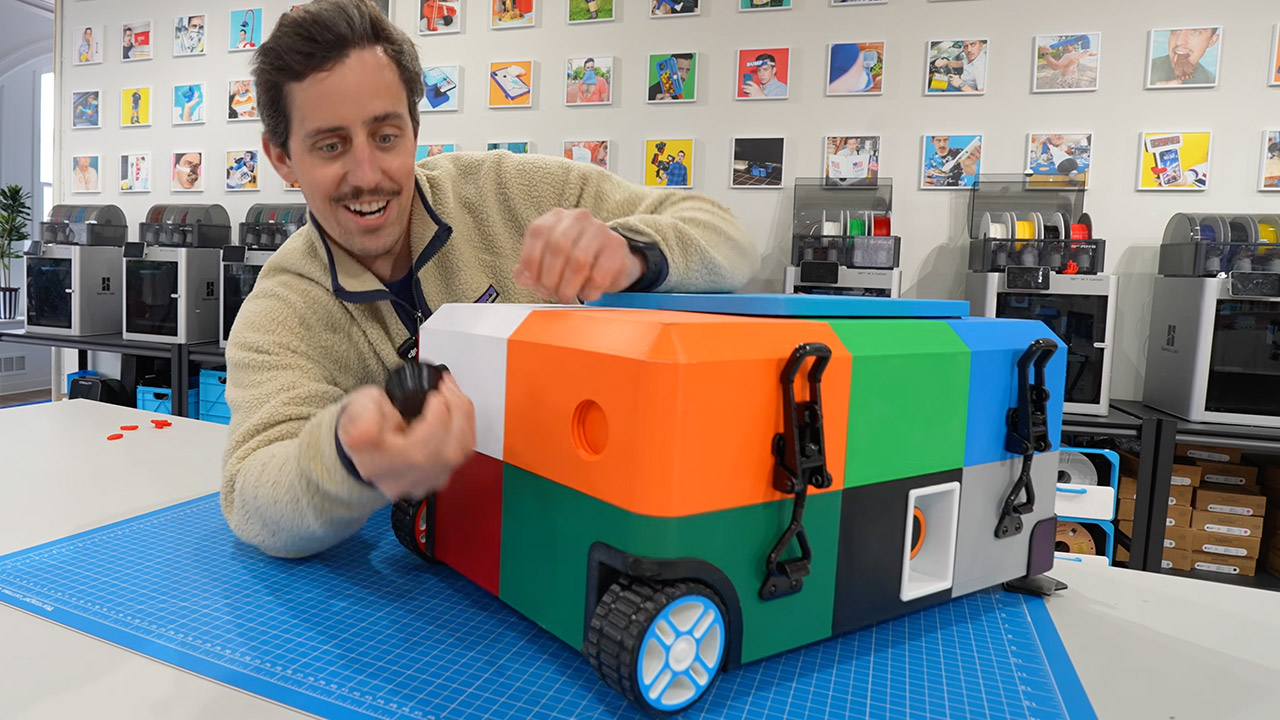
3D-Printed Suitcase
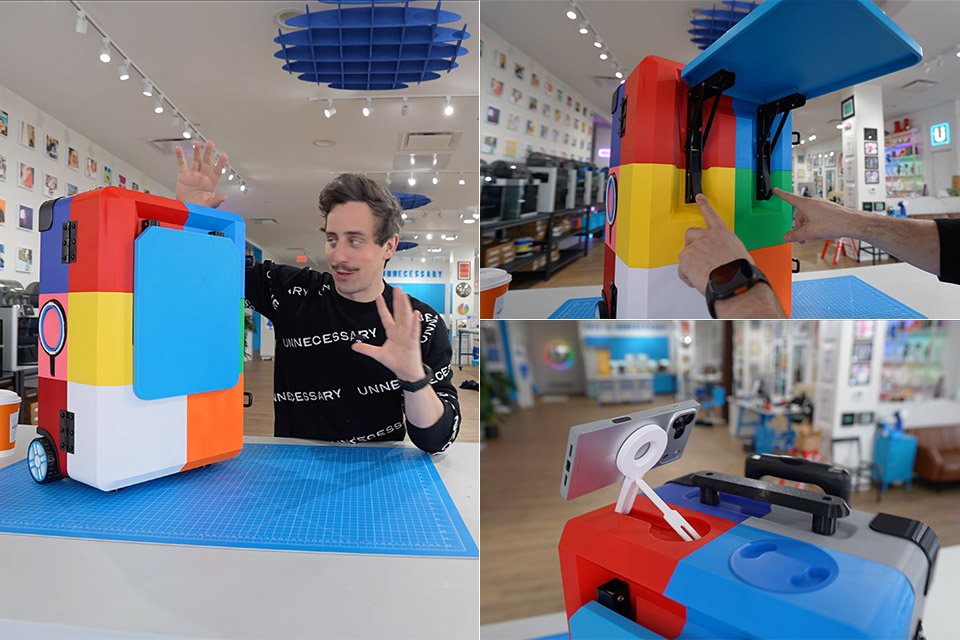
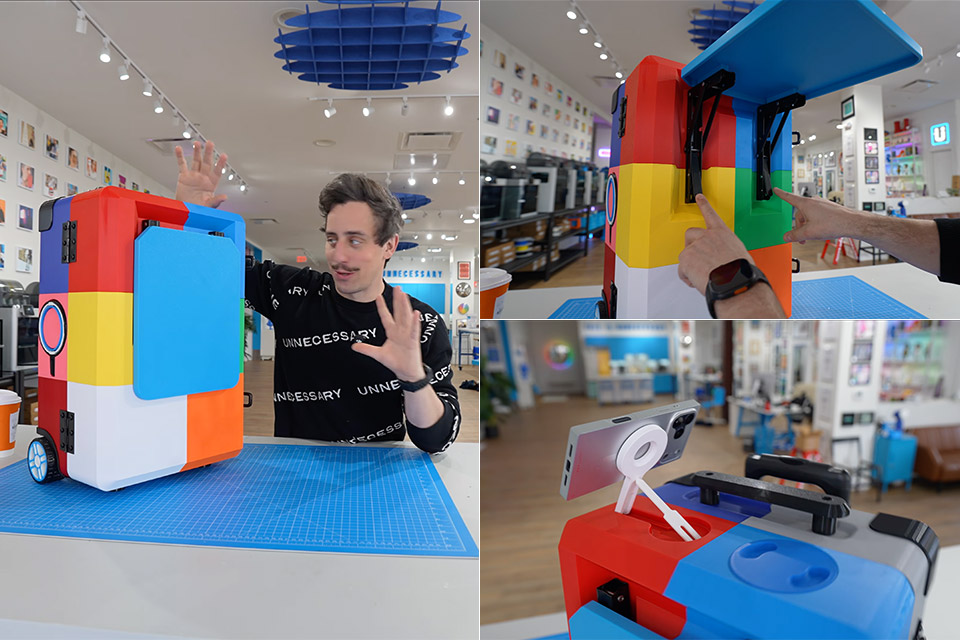
Product designer Matty Benedetto discovered some clips of passengers stranded in airport security lines and clogged airport terminals. He determined that his next trip needed to be less of a nightmare, so he set out to design a carry-on suitcase that would make the entire experience a little less stressful. More specifically, he decided to create one from scratch using his 3D printers.


He tailored the dimensions of his carry-on to normal sizes so that it would pass through security inspections without a second thought. Then he divided the bag’s main body into two parts with overlapping edges to provide strength, and printed a few test copies with some colorful leftover filament to check how the pieces fit together. Putting it all together was like snapping a load of large plastic bricks into place, except he added metal hinges for the lid and a telescoping handle constructed from off-the-shelf components. During a print halt, ball bearings were inserted into the wheels to ensure that they roll smoothly without the need for any additional equipment.

Sale


mixi Carry On Luggage with Cup Phone Holder and Charger Hard Shell Suitcases with Spinner Wheels, 20 Inch…
  • 【High-end Quality】The suitcase is made of THREE-LAYER Covestro PC which is extremely scratch-resistant, it goes through insanely strict producing…
  • 【One-Piece Side Opening Design】The design is different from the traditional way of opening and closing the suitcase in half, which is more…
  • 【Multifunctional Holder Design】Especially designed water cup holder, phone holder located in top of luggage and the handle hook. If you enjoy…

After determining the basic shape, he went on to the details that would make a long wait more bearable. A flat panel folds out from the front and includes a little latch to secure it in place, allowing you to prop up your laptop during a layover. A MagSafe mount appears next to it to hold your phone, allowing you to watch shows or check your messages without taking your hands off the wheel. When you’re stuck waiting for a delayed flight, it’s usually a good idea to have some food with you, so he included a little jar that twists open easily from the side, allowing you to access your goodies without having to unzip the main zipper.

Advertisement

3D-Printed Suitcase
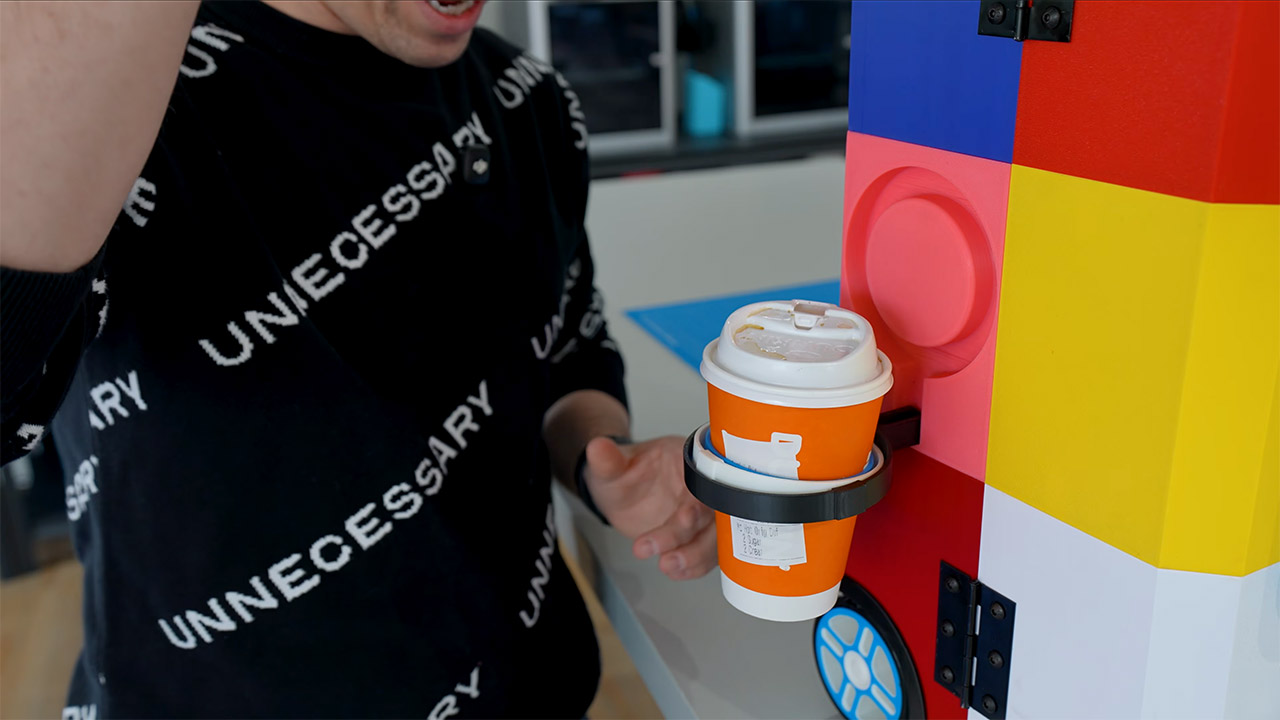
On a long journey, coffee can pose a serious security issue, spilling all over the place and causing a huge mess. To avoid this kind of disaster, he created a cup holder with a sophisticated gimbal inside that maintains your drink level even when the bag tilts. On the outside, he incorporated a rotating dial that displays the flight number, weather prediction, destination details, and a few emergency contacts at a glance. And for further peace of mind, he designed the feet to detach so you can put an AirTag inside each one, which is entirely out of sight but provides some extra protection against losing your luggage.

3D-Printed Suitcase
The first major test was security, when his luggage breezed through the X-ray machine with no one blinking an eyelash about its printed design. Next, he had to get it into a regional flight, which proved difficult until he gave it a gentle nudge into the overhead bin, where it slipped in without incident. The smooth rolling was due to the ball bearings, and the entire setup weighed about the same as a conventional carry-on.

3D-Printed Suitcase
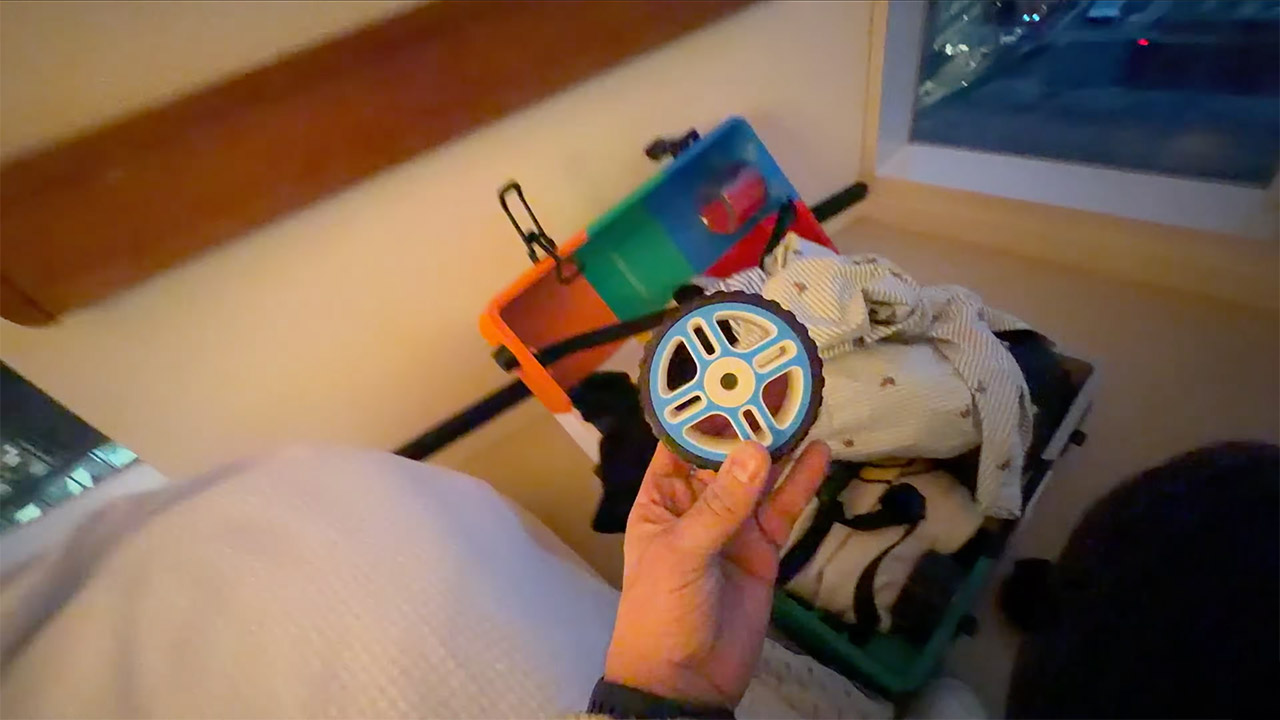
However, when he arrived at his destination, things became a little more problematic. There were hairline cracks all along the main seam, one of the wheels had broken free during the journey, the snacks in the jar had turned to crumbs, and a couple of the smaller attachments had vanished; not a bad outcome, all things considered.

Source link

Continue Reading

Tech

Thousands of consumer routers hacked by Russia’s military

Published

on

The Russian military is once again hacking home and small office routers in widespread operations that send unwitting users to sites that harvest passwords and credential tokens for use in espionage campaigns, researchers said Tuesday.

An estimated 18,000 to 40,000 consumer routers, mostly those made by MikroTik and TP-Link, located in 120 countries, were wrangled into infrastructure belonging to APT28, an advanced threat group that’s part of Russia’s military intelligence agency known as the GRU, researchers from Lumen Technologies’ Black Lotus Labs said. The threat group has operated for at least two decades and is behind dozens of high-profile hacks targeting governments worldwide. APT28 is also tracked under names including Pawn Storm, Sofacy Group, Sednit, Tsar Team, Forest Blizzard, and STRONTIUM.

Technical sophistication, tried-and-true techniques

A small number of routers were used as proxies to connect to a much larger number of other routers belonging to foreign ministries, law enforcement, and government agencies that APT28 wanted to spy on. The group then used its control of routers to change DNS lookups for select websites, including, Microsoft said, domains for the company’s 365 service.

“Known for blending cutting-edge tools such as the large language model (LLM) ‘LAMEHUG’ with proven, longstanding techniques, Forest Blizzard consistently evolves its tactics to stay ahead of defenders,” Black Lotus researchers wrote. “Their previous and current campaigns highlight both their technological sophistication and their willingness to revisit classic attack methods even after public exposure, underscoring the ongoing risk posed by this actor to organizations worldwide.”

Advertisement

To hijack the routers, the attackers exploited older models that hadn’t been patched against known security vulnerabilities. They then changed DNS settings for select domains and used the Dynamic Host Configuration Protocol to propagate them to router-connected workstations. When connected devices visited the selected domains, their connections were proxied through malicious servers before reaching their intended destination.

Source link

Advertisement
Continue Reading

Tech

New Artemis II images give fresh look at our lunar neighbour

Published

on

From ancient lunar lava to personal tributes, the new images released from the Artemis II space mission capture fresh perspectives of our celestial neighbour.

Yesterday (7 April), NASA released the first images of the moon captured by the Artemis II astronauts during their historic test flight.

The Artemis II mission took off last week (1 April) from the Kennedy Space Center in Florida, beginning an approximately 10-day mission for NASA astronauts Reid Wiseman, Victor Glover, Christina Koch and Canadian Space Agency astronaut Jeremy Hansen.

Yesterday’s images were taken on 6 April during the crew’s seven-hour pass over the lunar far side – the first crewed lunar flyby in more than 50 years – and provide a fresh look at Earth’s closest celestial neighbour.

Advertisement

From an eclipse to ancient lava, here is just a handful of some of the most interesting images captured by the Artemis II crew so far.

Near and far

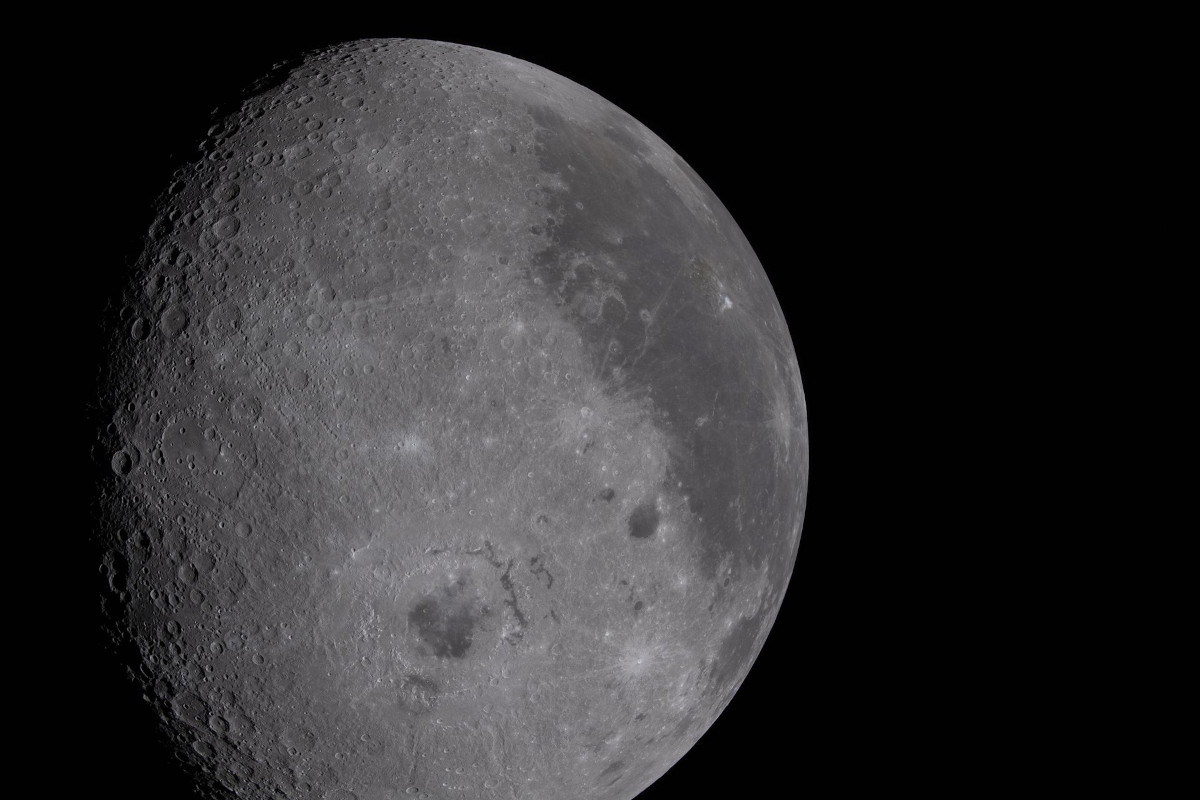
A wide picture of the moon, showing a grey landscape filled with craters and a darker grey patch to the right of the moon.

A picture capturing two-thirds of the moon. Towards the bottom of the image, the Orientale basin can be seen. North-east of the Orientale, seen as a dark spot, is the Grimaldi crater. Image: NASA

One of the crew’s most striking images captures two-thirds of the moon, showcasing the “intricate features of the near side”, according to NASA. The 600-mile-wide impact crater, the Orientale basin, lies along the transition between the near and far sides and can be seen at the bottom of the image.

The round black spot north-east of Orientale is the Grimaldi crater, known for its exceptionally “dark mare lava floor and heavily degraded rim”.

Advertisement

In-space eclipse

An image of the moon covering the face of the sun in space. A faint bright halo can be seen around a dark moon.

The moon fully eclipsing the sun, as taken by the Artemis II crew. Image: NASA

One of the most unique images taken by the Artemis II crew captures the moon fully eclipsing the sun. The corona of the sun forms a glowing halo around the moon, while light reflected off Earth forms a faint, glowing outline of the near side of the moon.

Nearly 54 minutes of totality – when the moon completely blocks the bright face of the sun – was observed by the crew.

Stars are also visible around the spectacle, which are typically too faint to see when imaging the moon, but are readily visible with the moon in darkness.

Advertisement

“This unique vantage point provides both a striking visual and a valuable opportunity for astronauts to document and describe the corona during humanity’s return to deep space,” according to NASA.

A different perspective

A picture taken of Earth in a crescent phase next to the grey darker side of the moon in space.

Earth in a crescent phase showing the cutoff between day and night on the planet, as seen from the Artemis II spacecraft as it conducted the lunar flyby. Image: NASA

Another image captured during the lunar flyby shows Earth split between daytime and nighttime.

Earth can be seen in a crescent phase, with sunlight coming from the right of the image. On the day side, swirling clouds are visible over the Australia and Oceania region.

Advertisement

Meanwhile, the lines of small indentations seen on the moon’s surface to the left of the image are secondary crater chains. These structures are formed by material ejected during a violent primary impact.

Ancient lava

A picture of the moon's surface with bright circles representing craters and dark patches representing ancient lava.

A close-up snapshot of the moon as the crew approached for the flyby. The Aristarchus crater is the bright white dot in the middle of a dark grey lava flow at the top of the image. Image: NASA

In one close-up shot of the moon’s surface, taken as the NASA Orion spacecraft approached for the lunar flyby, an interesting ancient remnant can be observed.

According to NASA, dark patches visible on the top third of the lunar disc represent ancient lava.

Advertisement

Meanwhile, the bright white dot in the middle of a dark grey lava flow at the top of the image is the Aristarchus crater, which measures at a depth of 2.7km – making it deeper than the Grand Canyon.

A personal tribute

A picture of the moon's surface displaying a number of craters and basins.

A picture of the Orientale basin, seen in the middle right of the image. The first crater named by the crew, called Integrity, lies just above the centre of the image. North of the Orientale at the top right corner of the image is the Glushko crater. To the north-west of that is the second crew-named crater, seen as a bright white spot, which the crew has called Carroll. Image: NASA

During the mission’s lunar flyby observation period, the Artemis II crew snapped an image showing the rings of the Orientale basin, one of the moon’s youngest and best-preserved large impact craters.

According to NASA, these concentric rings offer scientists a rare window into how massive impacts shape planetary surfaces, “helping refine models of crater formation and the moon’s geologic history”.

Advertisement

At the 10 o’clock position of the Orientale basin, two smaller craters are visible. The Artemis II astronauts submitted names for these two craters for approval by the International Astronomical Union: the first being Integrity, named after the crew’s spacecraft; and the second being Carroll, named after mission commander Reid Wiseman’s late wife.

“A number of years ago, we started this journey in our close-knit astronaut family and we lost a loved one,” said mission specialist Hansen to mission control at the time of the proposal. “And there is a feature in a really neat place on the moon, and it is on the near side/far side boundary. In fact, it’s just on the near side of that boundary, and so at certain times of the moon’s transit around Earth, we will be able to see this from Earth.

“And so we lost a loved one. Her name was Carroll, the spouse of Reid, the mother of Katie and Ellie. And if you want to find this one, you look at Glushko, and it’s just to the northwest of that, at the same latitude as Ohm, and it’s a bright spot on the moon. And we would like to call it Carroll.”

‘A human story’

Eight days into the Artemis II mission, and a number of remarkable moments have been observed in humanity’s latest major space voyage, including the crew surpassing the record for human spaceflight’s farthest distance at 248,655 miles from Earth.

Advertisement

But for many, the human side of the voyage – such as the crew’s sentimental proposal to name a crater – have stuck as dually important alongside the mission’s technical feats.

This rings true with award-winning Irish scientist Dr Niamh Shaw, who was present on the Kennedy Space Center’s media lawn for the historic launch.

“Space has always been a kind of compass in my life,” she told SiliconRepublic.com. “It has a way of stripping everything back, reminding me of what matters, of how small we are and how extraordinary it is that we are here at all.

“It keeps me grounded in my questions. In curiosity. In wonder. And also in responsibility. Because one of the things space teaches us, very clearly, is that there is no rescue mission coming for Earth. No one arriving to solve our problems.”

Advertisement

Shaw told us that what struck her just as much as the launch itself was “what happened afterwards”.

“The level of interest, the appetite for connection … People want to understand, to feel part of it, to ask questions,” she explained.

“I haven’t stopped: media calls, messages, Zooms with my Town Scientist families.

“And I found myself trying to share it in a way that made it personal for them – sending photos, describing moments, answering questions,” she added.

Advertisement

“Because I genuinely believe that’s where the real impact lies. Not just in the engineering achievement, extraordinary as it is. But in how it reaches people.

“In how it shifts perspective, even slightly. In how it reminds us that we are all part of something much bigger and that the story of space exploration is, ultimately, a human story.”

Don’t miss out on the knowledge you need to succeed. Sign up for the Daily Brief, Silicon Republic’s digest of need-to-know sci-tech news.

Advertisement

Source link

Continue Reading

Tech

Microsoft rolls out fix for broken Windows Start Menu search

Published

on

Windows 11

Microsoft has pushed a server-side fix for a known issue that broke the Windows Start Menu search feature on some Windows 11 23H2 devices.

In a Windows release health update (WI1273488) seen by BleepingComputer, Microsoft said these problems have affected only a small number of users since April 6 and are caused by a server-side Bing update aimed at improving search performance.

While the company says these problems are recent, there have been reports of similar issues surfacing online for months, including claims that the Start Menu displays blank search results that are still clickable.

Wiz

To address this known issue, Microsoft has pulled the buggy Bing update and expects the search issues to subside as the fix rolls out to affected customers.

“An investigation determined that the problem coincided with a server-side Bing update designed to improve search performance. To mitigate the issue, the server-side Bing update was rolled back, and reports of search failures are steadily decreasing,” Microsoft said.

Advertisement

“This issue will resolve automatically as the server-side fix is gradually rolled out to affected devices. To receive this fix, make sure the device is connected to the internet and that Web Search has not been disabled by Group Policy.”

More Windows Start Menu issues

This isn’t the first known Start Menu issue to impact Windows customers in recent years. In November, Microsoft shared a temporary workaround for another bug that was causing the Start Menu, File Explorer, and other key system components to crash when provisioning systems with cumulative updates released since July 2025, due to XAML packages not registering in time after installing the update.

On impacted systems, affected users experience a wide range of problems, including Start menu crashes and critical error messages, missing taskbars even when Explorer is running, crashes of the core ShellHost (Shell Infrastructure Host or Windows Shell Experience Host) system process, and Settings app silently failing to launch.

Microsoft is still working on developing a permanent fix, but hasn’t provided a timeline for when a solution will be available. Meanwhile, affected customers must manually register the missing XAML packages.

Advertisement

In May, Microsoft also silently fixed an issue that broke Start Menu jump lists for all apps on Windows 10 22H2 systems, and in June 2023, it addressed a bug that caused Windows Search and the Start Menu to become unresponsive.

Automated pentesting proves the path exists. BAS proves whether your controls stop it. Most teams run one without the other.

This whitepaper maps six validation surfaces, shows where coverage ends, and provides practitioners with three diagnostic questions for any tool evaluation.

Source link

Advertisement
Continue Reading

Trending

Copyright © 2025