
Politics
Kuenssberg tells Polanski talking about Gaza genocide is ‘divisive’

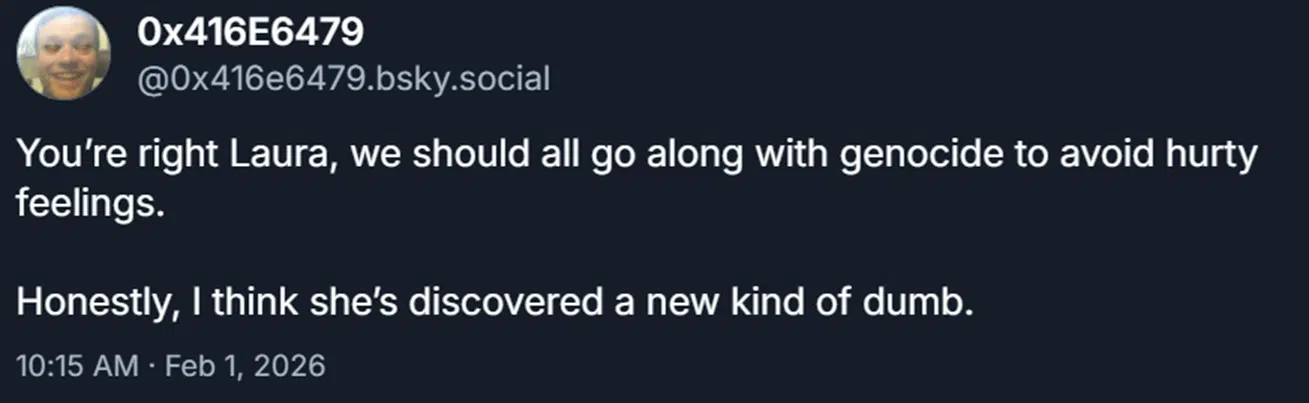
BBC establishment shill Laura Kuenssberg tried a ‘gotcha’ with Green Party leader Zack Polanski on Sunday 1 February – and ended up exposing and embarrassing herself. Kuenssberg claimed that the Greens’ determination to include the UK government’s collaboration in Israel’s Gaza genocide is ‘divisive’, as if genocide and hurt feelings carry equivalent weight. She received a thorough but civil schooling:
Kuenssberg: no shame over Gaza
Kuenssberg also got a roasting from social media for her arguably antisemitic apparent suggestion that describing Israel’s genocide as a genocide is going to offend ‘the Jewish community’, (Hint: there is no one ‘Jewish community’ and Jews from all kinds of Jewish communities also oppose the genocide, except the rabidly pro-Israel ‘community, which makes it a political issue, not an ethnic one.
The examples below typify the many responses:


Another strong performance from Polanski. The Greens are now the bookies’ 11/10 favourites to win the Gorton and Denton by-election.
Featured image via the Canary

On 28 March, Zack Polanski said that the Daily Mail were harassing his family members for a story. According to Polanski himself, it was clear why the gutter press were doing this — because the Greens have leaped up in the polls. Since then, his war with the Mail has taken a turn for the ridiculous, with the journo involved accusing Polanski (a Jewish man) of antisemitism:
Daily Mail and journalist?
Those words don’t belong together with your parasitic behaviour.
You try your daily nonsense – with a paper that literally backed the fascists – and the Green Party continue to rise.
Together – we will win.https://t.co/TrCc77wuJ2 https://t.co/zChISqzRW9
— Zack Polanski (@ZackPolanski) March 28, 2026
This hasn’t gone how Nicole Lampert thought it would; largely because the feud has drawn everyone’s attention to her history of weird and degenerate behaviour.
Zack Polanski vs scum media
Firstly, let’s look at this line from the above:
Daily Mail journalists aren’t going after your family (as you are aware, there is more we could write if we were).
This line implies that they’ve been digging into his family; how else would she know there was “more we could write”?
Given how quickly Lampert crumbled when Polanski pushed back, we imagine she’d be an absolute mess if someone asked her family what they thought of her politics.
Lampert continued:
I’m a freelance journalist who spoke to your family members who are frightened by the Jew hate in your party. They are frightened by what you have given the green light to.
While you once fought Jew hatred, now you indulge it because, as we both see, it is popular.
Other political groups have discovered this in the past.
Shame on you Zack Polanski
Shame on you.
The “Jew hate” in question is opposing the genocidal actions of Israel. We’re not going to spend too long on this, because we’ve heard it all before, and no one buys it anymore:
Honestly, half the country must just laugh at this shit these days. Are we all supposed to abandon progressive economic, environmental and foreign policies because the Daily Mail dug up some randoms who say they’ll leave the country? Again! Gimme a break https://t.co/R09anUoPZn
— Steven Methven (@StevenJMethven) March 28, 2026
The argument intensified as a result of Lampert’s inability to read:
I didn’t call you a parasite.
I called it parasitic behaviour.
You can’t even report the basic facts properly that everyone can see in seconds.
It should be shameful for you and the entire Daily Mail. https://t.co/IgHjenRFa6
— Zack Polanski (@ZackPolanski) March 28, 2026
Polanski later added:
For whoever needs to hear this I’m the only Jewish person to lead a political party – third largest in the country.
The Daily Mail have been & always will be my enemy – they historically supported fascists & continue to do so.
I’ll take no lectures from them on Antisemitism.
— Zack Polanski (@ZackPolanski) March 28, 2026
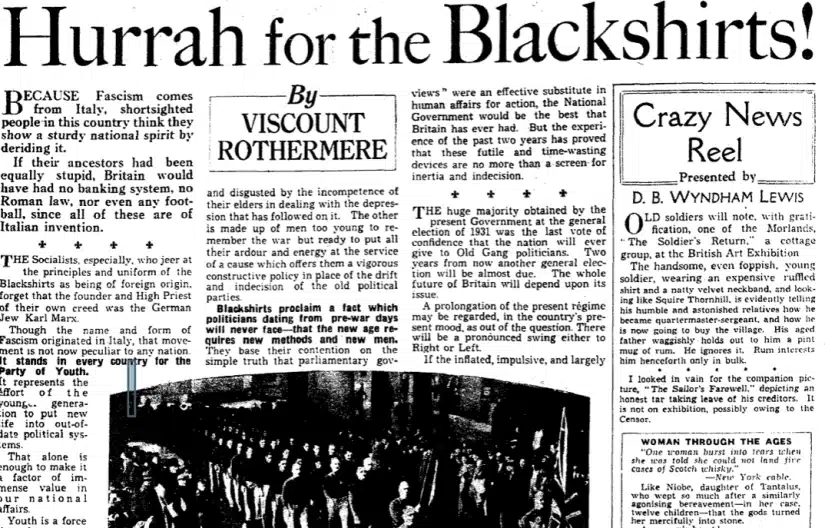
Oh yes, that’s right, isn’t it — the Daily Mail backed Adolf Hitler, didn’t it:

To be fair, they did stop backing Hitler when we went to war with him. Did their politics change accordingly? Not really; they just used different words to pursue the same goals.
Oh, and talking of the Blackshirts, would you believe the shamelessness of this?
This does not work anymore https://t.co/rQVYGD5TnM
— Curtis Daly (@CurtisDaly_) March 28, 2026
As people are saying, this simply doesn’t work anymore:
An ideology that will destroy the Middle East (including Israel, ironically) will happily do the same in Europe. A line has to be drawn in acceding to its nuttiness. Comparing a party led by a Jewish guy to Mosley is probably it.
— Aaron Bastani (@AaronBastani) March 28, 2026
Some defended Lampert, including the loathsome Heidi Bachram:
Heidi Bachram has repeatedly gone after Jewish people who oppose Israel’s genocide.
Including this Holocaust survivor.
Beyond gross. https://t.co/IvWTXhmvWO
— Owen Jones (@owenjonesjourno) March 28, 2026
Nicole Lampert — freelance weirdo
The problem Lampert has is her long and well-documented history of being a degenerate freak online and at work. Novara’s Rivkah Brown highlighted this:
Amazing scoop! How’d you get it? https://t.co/EhlPYqEhMB pic.twitter.com/HjKEV2vR3r
— Rivkah Brown (@rivkahbrown) March 28, 2026
We’d say this sounds like she was running her own Gestapo, but we won’t, obviously, because she’d accuse us of antisemitism.
In the following exchange, Lampert advocated for people being able to use the N-word:
This is the Daily Mail “journalist” who’s going after Zack Polanski’s family, btw. pic.twitter.com/STVX88nhvt
— Mukhtar (@I_amMukhtar) March 28, 2026
We’re not sure how to introduce the following, but Lampert also put this into the world:
Whoooo remembers when Daily Mail bin-rummager Nicole Lampert lauded ex-Sun hack John Kay, who drowned his wife in the bath, as “a very lovely man”? pic.twitter.com/88eY2uwcD8
— Plutôt la Barbie (@plutotlabarbie) March 28, 2026
The above image clips off, but her final response was:
A suicide pact.
Shame
Lampert later said this to Polanski:
The irony is that the ‘antizionists’ in your party are the parasites. They are turning a party that once cared about the environment into a vehicle for Jew hatred. And you are giving them cover.
There’s a problem here, and it’s that many of these Anti-Zionists are Jewish.
According to her, this is antisemitic.
And as a Jewish woman, Lampert should really know better.
Shame on you, Nicole Lampert.
Shame on you.
Featured image via Barold
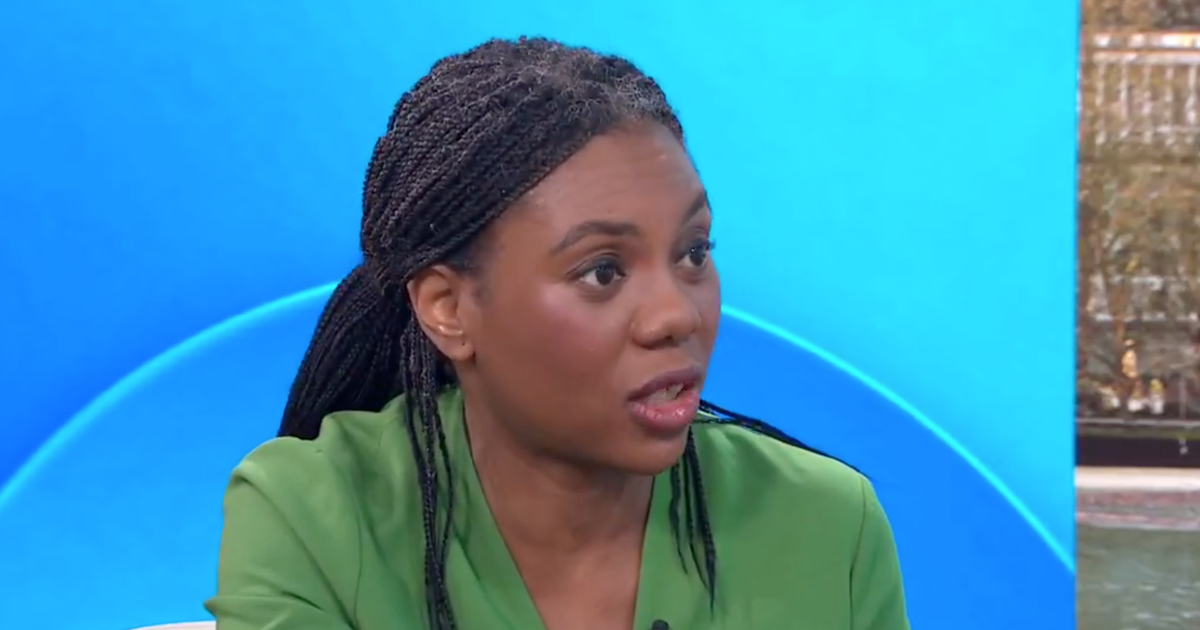
Kemi Badenoch was slammed for her new plan to drop Net Zero altogether during her broadcast rounds this morning.
The Tory leader claimed drilling in the North Sea would help ease the upcoming energy crisis, and dismissed the UK’s legally binding target to bring all greenhouse gas emissions to net zero by 2050 as a “slogan”.
She also claimed the country would go “bankrupt” because of the policy, which was championed by former Tory prime minister Theresa May.
Badenoch has called for the government to approve more oil and gas drilling in the UK in response to the strain the Iran war has put on global energy supplies.
“The first thing [the government] should do is start drilling our own oil and gas in the North Sea,” the Tory leader told Sky News. “It’s important for our energy security, our economic security, our national security, and they’re not doing [it].”
Presenter Trevor Phillips said: “That’s all very helpful, but the point is none of that oil would come on stream for years.”
He added: “I’m asking you what should happen in the next few months when this conflict is on, which is what people are worried about, what will happen between now and the summer, not what will happen next year or the year after.”
Badenoch said: “I’m not even talking about next year. I’m talking about this year.”
“There will be no oil coming out of Rosebank this year, you know that,” he hit back – while the Tory leader insisted gas would be accessible by this winter and that drilling would save British jobs, too.
“Governments are elected to do the right thing right now. That is not to bankrupt the country with a plan that is not working,” she told Sky News. “What we need is cheap, abundant energy – it should be clean, that means doing everything we can, nuclear, renewables, and oil and gas, too.”
Asked about the risks of fuel rationing, Badenoch said: “You’re speaking about a hypothetical. I don’t want to be in a situation where people are panic buying fuel because of speculative discussions.”
And on the BBC, presenter Laura Kuenssberg suggested Badenoch had been “misleading” people with her suggestion that this would make bills cheaper.
But the Tory leader claimed that is not what she was saying.
She said: “No, I’m not saying that once you drill oil and gas in the North Sea, it’s going to go straight on to your bills.
“No one has said that, but it is all related. And pretending that it is not related is very dishonest from a government that has a terrible energy policy.”
Labour’s chair Anna Turley slammed Badenoch’s broadcast performances, saying: “Kemi Badenoch’s energy policy has completely fallen apart. She’s been forced to admit her central energy intervention won’t bring people’s bills down. And she can’t say whether she’d support families who might need help.
“Badenoch wanted to send British troops head first into a war without thinking about the consequences. Now she’s putting forward energy plans that she freely admits won’t help Brits struggling with their bills. She is completely out of her depth and proving once again that she’s unfit for high office.”

Some research suggests that workers with ADHD are 60% more likely to be fired and 30% more likely to report chronic employment issues than those without ADHD.
And according to a new survey conducted by UK ADHD clinic Focused, run in partnership with the ADHD Chatter Podcast, just under half of people asked (47%) said they’ve been fired or lost jobs partly due to their ADHD.
59% of people surveyed with ADHD hadn’t told their employer about it, meanwhile, and 77% said that ADHD had negatively affected their performance at work.
Workers may be in a catch-22
Nurse practitioner and clinical lead at Focused, Danielle Mulligan, explained that though these stats are “sad,” they’re “probably not too surprising for many people with ADHD”.
One in five neurodiverse workers has faced discrimination or harassment related to their disability at work.
“It’s common for symptoms like inattentiveness to make it seem like someone is disengaged in a conversation, which could easily not play well in meetings or in general workplace settings,” Mulligan told us.
Additionally, “Impulsivity and emotional dysregulation could escalate a difference of opinion into a more heated disagreement, which in an extreme case could turn unprofessional. And poor timekeeping might lead to repeated lateness that reaches the point of dismissal.”
When these pile up, they might lead to a negative perception of a worker – particularly, Mulligan said, if their ADHD has not been disclosed and/or reasonable adjustments have not been put into place.
But speaking to HuffPost UK previously, career psychologist Dr George Sik said that many people who delay or avoid telling their employer about their ADHD are doing so to “protect themselves”.
“There’s still a real fear of being judged as less capable or more difficult to manage, even when someone is performing well. For a lot of people, waiting feels safer than risking the label being misunderstood.
“However, when it’s starting to affect your workload or wellbeing, that might be a sign that staying silent is costing more than speaking up”.
For her part, Mulligan said, “While it’s up to the employee to tell their employer about their diagnosis, it’s probable that many employers could do more to make sharing this info easier, and less riddled with feelings of uncertainty.”
12% of those surveyed said ADHD had a positive effect on their work
Just over 11% of people with ADHD surveyed said that ADHD had no effect on their work, while 12% said it had a positive effect.
“The phrase ‘ADHD is my superpower’ is one that we’re starting to hear more of now that awareness of the condition is increasing and people are beginning to understand it better,” Mulligan shared.
“Due to their different way of thinking, many people with ADHD take an alternative approach to solving problems, thinking ‘outside of the box’ to overcome obstacles in a task.”
It’s also common for people with ADHD to excel at creative tasks, she added.
“Hyperactivity symptoms can provide someone with the bursts of energy they need to be more productive, or bring enthusiasm into a meeting or group activity. And hyperfocus – which many people with ADHD experience – can mean that someone is able to complete a complex, intensive or fiddly task in a swift and methodical manner.”

A senior MP has called out Donald Trump after he again accused Nato of not supporting the US in its time of need.
The US president has lambasted the defence alliance repeatedly as its member states have refused to get involved in his offensive action against Iran.
He has repeated his false claim that Nato has never been there for the US and threatened to pull out of the alliance altogether.
Actually, the only time the mutual defence clause of Article 5 has been activated was following the 9/11 attacks in New York.
Multiple countries, including the UK, sent troops to war in Afghanistan on America’s behalf for nearly 20 years.
So Tory MP Alicia Kearns, who sits as the shadow national security minister, nit out at the president on X.
She wrote: “As a British MP I can tell you what ‘showing up’ looks like.
“It looks like 457 British soldiers who died in Afghanistan.
“Nato has only ever gone to war for one country. Yours.
“The question isn’t whether Nato showed up, it’s whether we forgive you for pretending otherwise.”
Her remarks come after Trump provocatively claimed on Friday: “Nato made a terrible mistake when they wouldn’t send a small amount of military armaments, just even acknowledge what we were doing for the world taking on Iran.”
He continued: “I think a tremendous mistake was when Nato just wasn’t there. They just weren’t there.
“They take a lot of money from the United States.
We spend billions of dollars a year on Nato.
“Hundreds protecting them! We would have always been there for them.
“But, now, based on their actions, I guess we don’t have to be, do we?”
He added: “Why would we be there for them if they’re not there for us?”

Chances are you’ve heard of “the bank of mum and dad,” or adults relying on their parents for anything from house down-payments to holidays.
But the “reverse bank of mum and dad,” which sees adult children spending on their ageing parents, is a growing phenomenon, says James Mulvaney, Head of Digital at Clifton Private Finance.
Already, 55% of UK adults with living parents financially help, or expect to help, them in retirement. Only 45% of adults in midlife (45-54 years old) are optimistic about their parents’ finances, a figure that drops to 2% among 18-24-year-olds.
Why has the “bank of mum and dad” reversed?
“Several factors are driving this shift,” Mulvaney said.
“Rising care costs and the wider cost of living crisis have made retirement much more expensive, while many older homeowners are discovering that their pensions may not stretch as far as they once expected.”
Then, investment platform Ageon noted, there’s the fact that people are living longer lives. That means that savings, investments, and pensions may have to go further than expected.
“At the same time, families are recognising that housing decisions can play a major role in supporting older relatives,” Mulvaney added.
While the parents of over-50s may have benefited from lower house prices in their youth, parents of younger adults may have been part of a pricier housing market, which offers less return on investment.
Housing is the biggest source of household wealth in the UK (40%), followed by private pension wealth (35%).
“For many households, helping parents navigate retirement is becoming just as important as helping younger generations onto the property ladder,” said Mulvaney.
“And with housing playing such a central role in family finances, property is likely to remain at the heart of how families support one another for years to come.”
How can I prepare for these costs?
Mulvaney told us communication is key.
“One of the most effective steps you can take to help your older parents is reviewing their retirement finances together,” he shared.
That could involve reviewing their monthly outgoings, planning for care costs, and/or a simple budget.
It might also be worth discussing downsizing, which can “release equity from a larger home while also reducing maintenance costs and household bills”.
Lastly, Mulvaney said, “It’s also worth checking whether parents are claiming all the financial support they are entitled to. Recent DWP figures suggest almost one million pensioner households are missing out on an average of around £2,600 a year in Pension Credit, so checking eligibility can be one of the most valuable steps families take.
“Benefits such as Pension Credit, Housing Benefit, Council Tax Reduction, and Winter Fuel Payments can make a meaningful difference to retirees on lower incomes.”
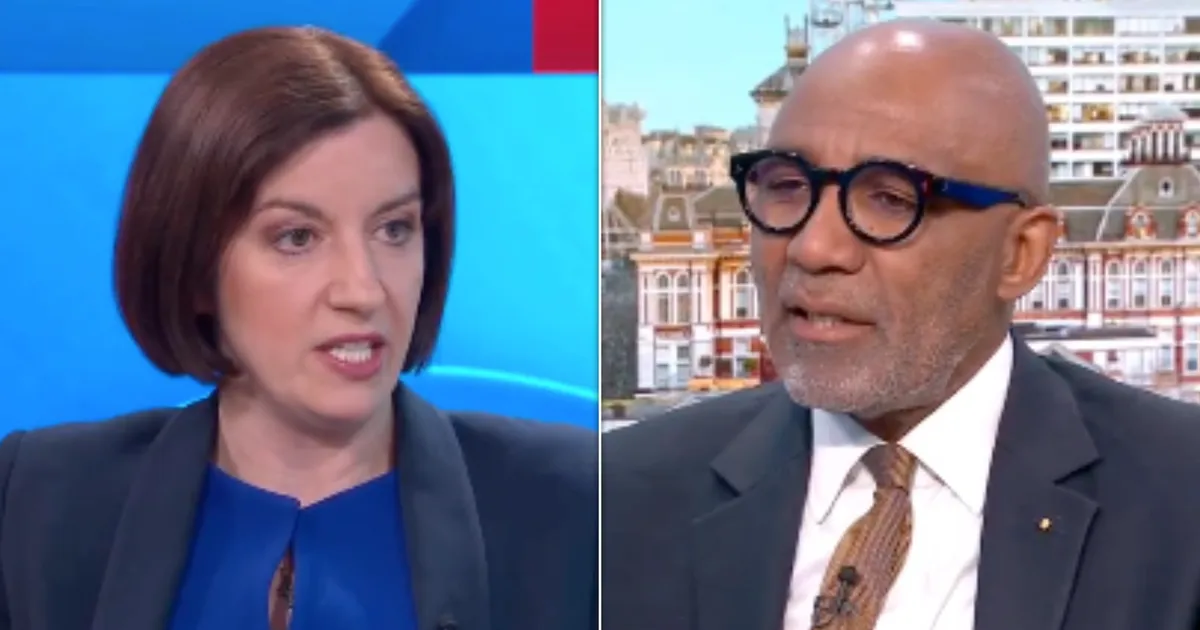
Bridget Phillipson has claimed questions around the theft of Morgan McSweeney’s phone are drifting into “conspiracy theory territory”.
The cabinet minister was defending Keir Starmer’s former chief of staff as the government is facing further pressure to disclose all of its communications around Peter Mandelson’s appointment as ambassador to Washington.
McSweeney phoned the Metropolitan Police on October 20 last year to say his iPhone had been snatched out of his hand in Westminster.
In a transcript released by the police, McSweeney did not tell them who he was or why the phone contained highly-sensitive information.
He also mistakenly gave the call handler the wrong street name for where the theft took place.
The phone’s disappearance meant it was not possible to access any potential communications between the PM’s former top aide and his close friend Mandelson, who is in disgrace over his association with late paedophile Jeffrey Epstein.
The theft has triggered intense scrutiny across Westminster about the timing of events.
On Sky News, presenter Trevor Phillips asked Phillipson: “Why is Morgan McSweeney the only person in the modern world who doesn’t have his messages automatically backed up to the cloud so we could recover them and see what traffic there was between him and our former ambassador to the United States?”
Phillipson said the “question was a bit of a reach”, adding: “It’s hyperbole and you know it.”
Phillips insisted the question was “perfectly straightforward”, before asking if she backed up her own messages.
“I follow all of the guidance on what is required,” the minister said. “What happened here, which we all know, is that Morgan McSweeney was mugged, reported that to the police, followed all of the processes that was asked of him.
“I do think some of this wider coverage is drifting into conspiracy theory territory here.”
The presenter said he was not questioning any of that, but was “just wondering how it is this particular set of exchanges seems to be the only thing in the 21st Century that isn’t backed up somewhere”.
“Again, that’s hyperbole and you know it,” Phillipson said, visibly irritated. “Come on, to say he’s the ‘only person’ – it’s ridiculous and you know that.”
She said McSweeney is providing any material required, while the government “is complying with the humble address, providing information that isn’t needed, has been asked”.
“All ministers will also be complying with what is asked of us,” she added.
Politics
The House | The government is realising the power to change the system lies in its own hands


Cabinet Office Minister Nick Thomas-Symonds (Alamy)
4 min read
Initiatives from the Cabinet Office this week to cut “sludge” in government are not a plan for a rewired state – but they might be the start.
A spring clean is underway in Whitehall. A government press release on Thursday announced a set of measures intended to strip away bureaucracy and speed up decision-making, the start of a wider programme to cut the “sludge” that slows down the state.
We have, for some time now, been receiving different messages about process in government.
The first message is the vision: mission-led government was set to make Whitehall “decisive” and “innovative”, with a “productive and agile state” being the goal of the Prime Minister’s promise to “tear down the walls of Whitehall”.
The second is the frustration that more hasn’t happened on this front, with Keir Starmer last year criticising a “cottage industry of checkers and blockers” and then using his Liaison Committee appearance in December to lament the long delivery chain between lever and action.
In theory, the frustration should be fuel to realise the big vision. But, in practice, the two streams have felt oddly disconnected.
Ministers have continued to promise a more effective state, but rather than setting out a plan to get there, they seem to be more likely to throw their arms up in frustration that it doesn’t work. Then comes more vision, followed by more frustration, and the two feed off each other without making much difference to reality.
This week’s announcement, however, feels different.
We now have a list of things which the government is going to look at: reporting and consultation requirements, equalities impact assessments, environmental impact assessments, and the processes around collective cabinet agreement. Having a list is not radical, and nor are the items on this one. This list is, however, specific. It might not stir your heart, but effective reforms are in the detail, and in the hard work of changing that detail.
We also have the words of Attorney General Richard Hermer, writing in PoliticsHome earlier this week about the changes: “governing through the law does not mean blindly following endless procedures. Governing through the law means assessing these duties, asking whether they still serve us, and, where they don’t, changing them”. This is an explicit argument from Hermer that the government of the day has the power and the agency to change the system that so frustrates them.
What makes this announcement feel different is the specificity of the reforms, as well as the positive agency with which ministers are talking about the change. This is neither lashing out in frustration nor a big, bold vision. It has the texture of something that might just link the two.
This is obviously no finished product. The announcement includes vague plans to “take action” to ensure proportionality of equalities impact assessments, for example. Nor should it be seen as anything close to the scale of reform needed in the civil service and the wider state – it is focused on a very narrow slice of policy making and process.
But it is nevertheless a specific and positive start. The key thing now is to translate this into something that at least a core group of civil servants and ministers can feel is working, and to do so quickly. This means sustained effort to work through the detail of the duties and procedures that the government has identified, making changes where possible, and accepting the risks and downsides of those changes.
Ministers and civil servants will gain three clear wins if they succeed.
Improvements to the state, even if those are relatively minor. A cohort of leaders who really know they can change the system they work in, and the morale boost and sense of agency that comes from that success. And finally, a blueprint for the type of plans, detail and projects that provide the missing link between general frustration and big vision. That momentum and practice must then be taken to the wider work of state reform.
Hermer described himself and Cabinet Office Minister Nick Thomas-Symonds as being tasked with creating a “modern and agile” state, working alongside Cabinet Secretary Antonia Romeo, “whom the Prime Minister has tasked with rewiring the state to turbocharge delivery”. Those are in themselves empty and already tired phrases. The agile state was the Labour promise of 2024.
Romeo’s task is the same as her predecessor Chris Wormald’s, with the addition of “turbocharging delivery”. Both petered out because what they meant was never defined. This announcement is not that definition, and ministers and civil service leaders still urgently need to set out a proper plan for reform. But it is a genuine start, and one which holds the seeds of bigger change.
Hannah Keenan is an associate director at the Institute for Government
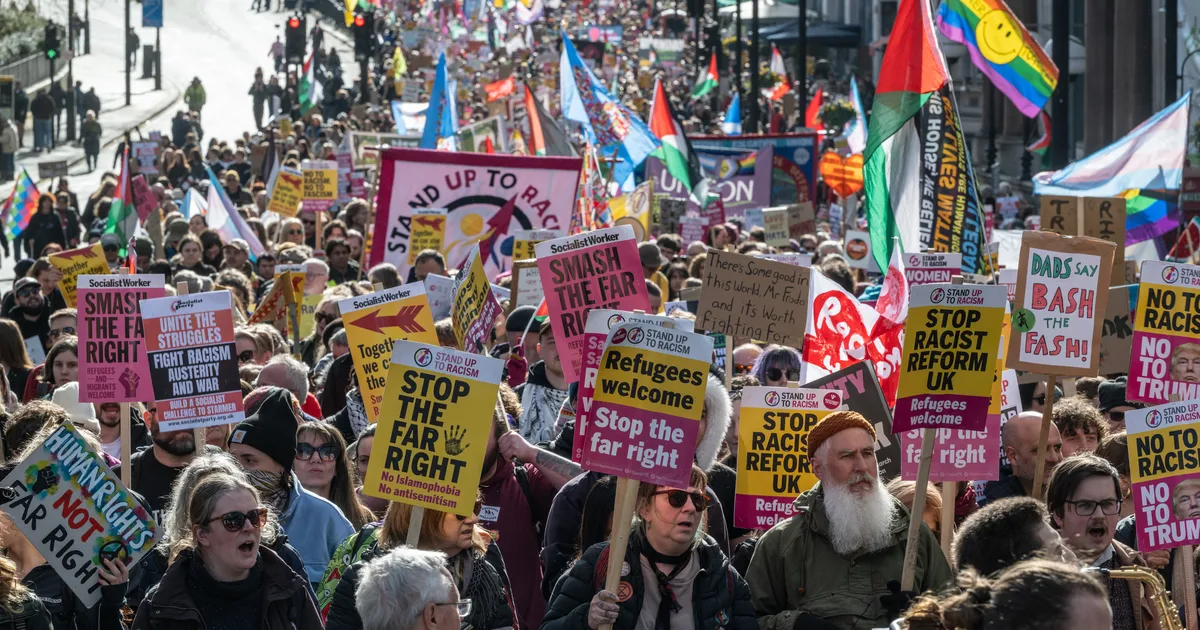
In every generation of British society, we have a responsibility to leave the next generation with a better world.
The 60s and 70s, under Harold Wilson’s government, saw Britain take decisive steps towards becoming a more open and equal society. Central to these changes was the decriminalisation of homosexuality, a landmark reform that helped lay the foundations for the rights many now take for granted.
The 80s through to the early 2000s brought fundamental questions about the role of the state in our communities across the four nations. Devolution sparked debate on whether Westminster should hold majority control over local communities in Wales, Scotland and Northern Ireland, and we saw the creation of the Scottish Parliament and the Senedd in 1999. In London, we saw the Greater London Authority established – comprising the Mayor of London and the London Assembly Members, who play a crucial role to our Capital’s continued prosperity.
From the 2010s, we’ve shifted the conversation towards systemic injustices, fair policing and fairness of our institutions with respect to ethnic minority groups and the LGBT community. Here in the Cities of London and Westminster, a constituency with such historic ties to the LGBT community in Soho; home to London Pride, G-A-Y and the City of Quebec, we know the impact this has had. And we continue to welcome individuals from all over the world representing a wide range of backgrounds and religious beliefs into our community.
What underpins the issues that previous generations have responded to is the preservation of our liberal democracy. How do we define this? At its core, it is simple: the idea that we are all free to express our opinions, without fear of being targeted or harmed for doing so and that we all have the chance to vote for candidates who we believe best represent us, based on information available to us.
It has been covered at length that far-right rhetoric is once again finding its way into communities across the country. Many of these far right views are designed to incite division, spread hatred, and revive ideas that should have been rejected decades ago.
We have all discussed how to confront many of these views, and rightly so, but what tends to slip out of the conversation is the legal framework that governments can implement to actively defend and strengthen our democracy.
“Trust in politics, and crucially politicians, is at an all-time low.”
The Secretary of State for Housing, Communities and Local Government introducing the Representation of the People Bill before the House is not just another piece of legislation, it is a clear statement of intent. With the growing complexity of the current state of our society, there is a growing demand to reflect and reconsider how we reinvigorate democratic values within our grassroots. This Bill shows this government is prepared to act. Trust in politics, and crucially politicians, is at an all-time low. This Bill is an opportunity to begin rebuilding that trust, with measures including transparency over political donations, preventing foreign interference in our elections and stronger sanctions on serious malpractice.
We are extending the right to vote to 16- and 17-year-olds. For many young people, this is long overdue. This will be music to the ears of many sixth form and college students that I have been talking to across the Cities of London and Westminster. Many of whom remind me they can begin their first job, pay taxes into the state, or even enlist themselves into the army, but cannot yet make a decision on their futures.
We must also take on the challenge of donations in the form of crypto assets. There are no mechanisms in place to identify whether the sources of these donations are lawfully approved, due to the anonymity crypto provides.
And crucially, while current laws are designed to ensure transparency during the election, the government must consider the impact of undeclared political donations outside of the regulatory period. Influence is not limited to the campaign period, it is persistent and lacks the transparency necessary to regain public trust in our institutions.
The Representation of the People’s Bill is about more than process, it is about protecting our democracy, rooting out foreign interference and taking action against those who seek to divide us.
Future generations deserve to look back at this point in time as the moment we chose to act to protect and strengthen our democracy, not stand by while it was tested.

‘Anti-Semitic art exhibition this way’, announces a sign, held up by a cutesy self-drawn picture of the artist next to a bike. Follow it, and you’ll find that Matthew Collings’s new show in Margate stays true to its word.
Inside the gallery are hundreds of Collings’s furiously hatched colour-pencil drawings, all of them with some connection to Israel or Gaza. One shows Israeli prime minister Benjamin Netanyahu naked, with blood pouring from his mouth and hands, his cock erect, as he hypnotises the world. UK prime minister Keir Starmer is shown meekly taking orders from the Star of David. A pot-bellied and yellow-faced trio called ‘The Lobby’ – the Israeli or Jewish lobby, he presumably means – is sketched above the words, ‘They are nuts but utterly in control’. A scaly green lizard vomits blood with the slogan, ‘Stop Apartheid Demon’. A blood-stained Donald Trump is marked ‘Death’, ‘Epstein’ and ‘Israel’, and is surrounded by hollow-eyed monsters. The caption explains: ‘Trump thinks: “Hmm… Epstein… better invade Iran and murder Muslims”.’ The moment you walk into the gallery, you feel like you’re in that scene in a slasher film, when the victim stumbles into her kindly helper’s man-cave, only to discover his crazy, violent drawings that tell you he’s the villain.
You might have heard of Collings before. He was a critic before he was an artist (if you can really call him that), editing Artscribe magazine and presenting on BBC’s The Late Show in the 1990s. He wholeheartedly embraced the Young British Artists wave, writing Blimey! – From Bohemia to Britpop: London Art World From Francis Bacon to Damien Hirst. He went on to present This Is Modern Art on Channel 4. Collings, like so many tiresome critics, made a name for himself by praising modern art, claiming it to be too complex for the public to understand, while at the same time attacking the Old Masters who most people tend to like. All of this was done in a mockingly cynical manner. He would express his disapproval with a pretentiously raised eyebrow to the camera. It was all a bit glib.
Now that he’s moved from critic to artist, Collings seems to want his artworks to speak to what he considers profound, leading him to embrace the tragedy and horror of Gaza. Like many ageing Boomers, Collings has rediscovered the youthful radicalism he turned away from in his early career, largely with the help of the Palestinian cause. He has grown angrier and more certain in his beliefs, too. Even the grotesque pogrom of 7 October 2023 gave these artist-cum-activists no pause for thought. They had already decided that the Jews were the baddies and the Palestinians the long-suffering martyrs. So when Hamas’s thugs raped, slaughtered and kidnapped Israelis, all the pro-Gaza crowd saw was an act of righteous rebellion.
Collings’s turn from Britpop-loving centrist dad to an uncloseted Israelophobe took him into Jeremy Corbyn’s Labour Party, and then straight out again. He was adopted as the parliamentary candidate for South West Norfolk in 2019. Within a day of his selection, he was suspended from the party for having dismissed allegations of anti-Semitism in Labour as a ‘witch-hunt’, and for calling the late chief rabbi, Jonathan Sacks, a ‘hate-filled racist’. He also shared conspiratorial diagrams on social media, purporting to reveal the ‘influence’ of Jewish businessmen on British politics. That’s right – Collings took things too far, even for the Corbynistas.
The Margate exhibition is laughably titled Drawings Against Genocide. The artworks look childish and this is deliberate. Collings is trying to strip away all artifice to let the unalloyed feelings shine out. The trouble is that, in letting us see directly into his soul, what we see there is repulsive.
Collings would no doubt argue that his ‘art’ is in the tradition of the anti-Vietnam War art of the 1960s radicals, like Michael Sandle’s Mickey Mouse at the Machine Gun (1972) or Leon Golub’s paintings of torture and killing, even though his Margate show is entirely misanthropic and hate-filled.
Some have called for the exhibition to be banned, but that would be a mistake. On the contrary, Matthew Collings has done us a great service by showing us the disturbed mind of the anti-Israel activist. It is good that we all see the depravity that lies at the heart of this movement.
James Heartfield is the author of Britain’s Empires.
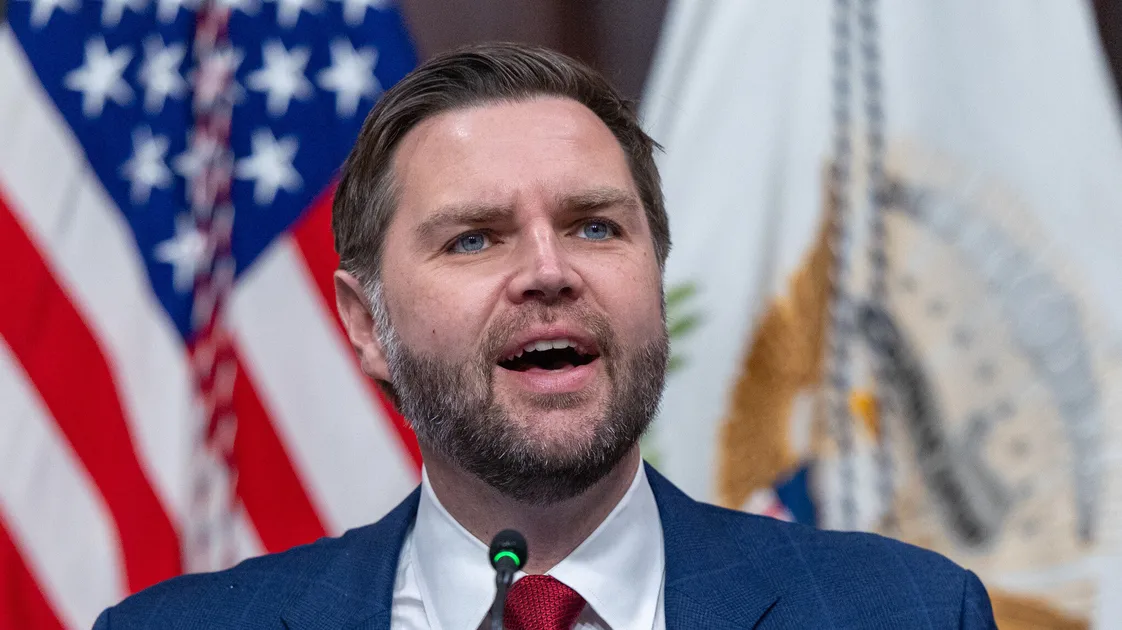
Vice President JD Vance brushed off manosphere podcaster Joe Rogan’s comment about MAGA followers being “dorks.”
“It becomes a movement of a bunch of fucking dorks because a lot of them are dorks,” Rogan told guest Dave Smith on Thursday’s episode of his podcast. “A lot of them, these really weird, fuckin’ uninteresting, unintelligent people that have got something they cling to — and there’s a lot of people that are just real genuine patriots, and they’re all lumped into this one group and you got to accept the dorks, too? Fuck that!”
Vance dismissed Rogan’s comments in an interview with right-wing podcaster Benny Johnson that aired on Saturday.
“I think we have many, many fewer dorks than the far left, but everybody’s got some dorks. We love our dorks. We love our cool kids. We love anybody who wants to save the country,” Vance told the MAGA mouthpiece, who has been criticised online for being “cringe as fuck” and has referred to Trump as “Daddy.”
The vice president also responded to Rogan’s suggestion that Hillary Clinton’s immigration stance made her “more MAGA than MAGA.”
“I did not see Joe say this. I’m going to text Joe, because that is that is definitely wrong,” Vance said.
Rogan’s criticism of MAGA comes amid an onslaught of White House social media posts that promote the administration’s agenda, particularly the war in Iran, through pop culture, sports, or video game references. A senior White House official called the posts “cringe” and embarrassing in an interview with MS Now published on Friday.
Vance himself has also faced cringe allegations, as has Health and Human Services Secretary Robert F. Kennedy Jr., whose workout video with Kid Rock was met with mockery.
Trump jokingly admitted at a Saudi-backed investment conference in Miami Friday that he that he likes to “hang around with losers.”
“It’s a good thing to have a lot of losers. I always like to hang around with losers, actually, ’cause it makes me feel better,” Trump said. “I hate guys that are very, very successful and you have to listen to their success stories. I like people that like to listen to my success.”

Bolton company director banned over ‘illegal worker’ breach

Factbox-Some trades ahead of Trump policy moves raise questions

Magnificent 7 Tech Giants Shed $850B in Market Value During Brutal Week


-
 NewsBeat4 days ago
Manchester United reach agreement with Casemiro over contract clause amid transfer speculation
-

 News Videos3 days ago
Parliament publishes latest register of MPs’ financial interests
-

 Sports6 days ago
Remo Stars and Kano Pillars Strengthen Survival Hopes in NPFL
-

 Sports6 days ago
Gary Kirsten Accuses Pakistan Cricket Board Of ‘Interference’, Mohsin Naqvi Responds
-

 Business7 days ago
No Winner in March 21 Drawing as Prize Rolls to $133 Million for Next
-

 Tech7 days ago
Give Your Phone a Huge (and Free) Upgrade by Switching to Another Keyboard
-

 Tech7 days ago
AI enters the chat: New Seattle dating app relies on tech to facilitate meaningful human connections
-

 Business3 days ago
Instagram, YouTube Found Responsible for Teen’s Mental Health Struggle in Historic Ruling
-

 News Videos6 days ago
Ch 9 Financial Management Part 1 | Detailed One Shot | Class 12 Business Studies Boards 2026
-

 NewsBeat2 days ago
The Story hosts event on Durham’s historic registers
-
 NewsBeat4 days ago
Tesco is selling new Cadbury Dairy Milk bar and people can’t wait to try it
-

 Sports6 days ago
2026 Kentucky Derby horses, odds, futures, preview, date: Expert who hit 12 Derby-Oaks Doubles enters picks
-
 Entertainment13 hours ago
Lana Del Rey Celebrates Her Husband’s 51st Birthday In New Post
-
 NewsBeat7 days ago
Update on Wisbech river crash as search for teenage boy enters fifth day
-

 Tech6 days ago
Samsung will soon let you control smart home devices from your car’s dashboard
-
 Entertainment6 days ago
Cynthia Bailey Dishes on ‘RHOA’ Season 17, Discusses Kandi
-

 Fashion5 days ago
Does It Matter What You Wear When You’re Laid Off and Looking?
-
 NewsBeat6 days ago
Colombian military plane with 110 soldiers onboard crashes following takeoff
-

 Business5 days ago
More women enter wealth management, but few in advisory roles: study
-

 Sports4 days ago
Fantasy Baseball Week 1 Preview: Top sleeper hitters for both five- and 12-day period led by Munetaka Murakami
You must be logged in to post a comment Login