

Politics
Politics Home Article | Turning offshore wind into onshore opportunity

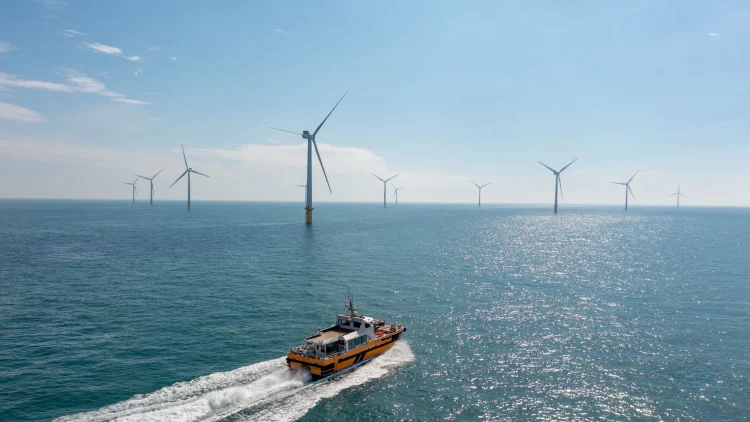
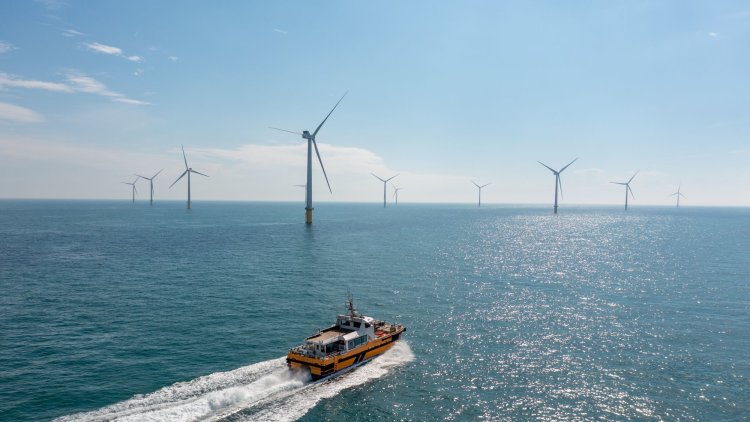
Credit: The Crown Estate/Ben Barden Photography Ltd
The Crown Estate sets out what offshore wind means for coastal communities – from jobs and bills to investment in ports – and invites parliamentary stakeholders to engage with its Marine Delivery Routemap
In just 25 years the United Kingdom has turned offshore wind from an idea into an industry – from a nascent technology into national infrastructure. It is already powering communities, cutting bills and supporting jobs in constituencies across the country. And it has the potential to deliver far more for jobs, growth and energy security.
The case for offshore wind is practical and measurable. Every additional gigawatt delivers an estimated £2-3bn boost to the economy.1 Between 2010 and 2023, UK consumers are estimated to have saved around £104bn2 as wind generation helped shield families from volatile gas prices. Today, the UK operates nearly 3,000 offshore wind turbines3 with a total capacity of 16.1GW – enough clean power for over 16 million homes.
“Offshore wind may be offshore – but its jobs, skills and supply chains are firmly onshore, in your coastal constituencies”
And the momentum continues. The latest Contracts for Difference auction backed a further 8GW of capacity – reinforcing the UK’s clean energy leadership and unlocking billions more in investment and thousands of new jobs across the country.
That scale translates directly to constituencies. Offshore wind already supports close to 40,000 jobs across the UK, and this could rise to 94,000 by 2030.4 Many of those roles – from component manufacturing to engineering to port services, are rooted onshore, well beyond the coast. Even where turbines cannot be seen – the impact is felt locally.
This is also a clear energy security test. The UK still imports around 42 per cent of its energy,5 leaving households and businesses exposed to global gas price shocks driven by geopolitics, supply disruption and extreme weather. Reducing reliance on imported fossil fuels is one of the most effective ways to protect families from future price spikes and strengthen national resilience.
A key reason the UK has made such progress is the strong institutional model underpinning offshore wind. At the centre is the stewardship of the seabed. Created by an Act of Parliament, The Crown Estate has a clear mandate to act independently and commercially to deliver long‑term value for the nation and returns all our profits to HM Treasury for the benefit of public spending.
This enables us to take a strategic approach: working with government and industry, investing in data and evidence to reduce risk, and running transparent leasing rounds that give developers the certainty to invest for decades.
Scaling back ambition now would be a profound mistake. It would jeopardise energy security, slow the clean energy transition, and limit economic opportunities for constituencies nationwide. Sustained growth depends on grid readiness, stable policy signals and long-term investment confidence – all areas where Parliament’s role is decisive.
Meeting the UK’s clean power and energy security ambitions requires a step change in deployment, supported by the right onshore conditions. Cutting-edge offshore wind needs larger ports, heavier-lift quaysides and strong pathways into secure, well-paid technical jobs.
We therefore ask parliamentarians to continue prioritising R&D investment and policy that supports innovation from research to deployment.
Government departments and devolved nations must work together on a co-ordinated strategy that gives communities, industry and investors the certainty required to deliver at pace.
The Crown Estate is committed to ensuring the seabed continues to drive investment for the benefit of people onshore. Through The Crown Estate Act 2025, Parliament granted us the flexibility to invest more widely across priority areas. We are already using these powers to support the next phase of offshore wind.
First, we will provide long-term visibility through a new Marine Delivery Routemap – or a “sat nav for the seabed” – a unique mapping and planning tool that can help identify how marine industries and nature can grow together. Our seabed is becoming increasingly crowded. Offshore wind must co-exist alongside cables and pipelines, shipping lanes, fisheries, defence activity and marine protected areas. As demands on our seabed grow, clear mapping is essential to support decision making, avoid conflict, protect nature and give investors confidence.
Second, we will stimulate growth through a £50m Supply Chain Accelerator to unlock early-stage projects where capacity is needed most.
Third, we will invest directly, committing an additional £350m through our Supply Chain Investment Programme to support offshore wind ports and supply chains, working alongside co-investors including Great British Energy.
Over time the Routemap will become a shared national resource – helping local communities and their representatives to engage with the seabed as a vital strategic asset.
To support that engagement, The Crown Estate will offer parliamentary stakeholders the opportunity to explore a working demonstration of the Marine Delivery Routemap following its operational launch.
Our aim is a common endeavour: long-term, cross-sector planning that strengthens the UK’s energy security and delivers lasting benefits for communities, nature and the nation.
Click here to find out more about The Crown Estate.
References
- https://www.renewableuk.com/media/rqvlqzu0/ offshore-wind-industrial-growth-plan.pdf, p.1
- https://www.ucl.ac.uk/news/2025/oct/ wind-power-delivers-ps104-billion-net-benefit-uk-consumers
- https://www.datocms-assets.com/136653/1747814298- osw-report-2024.pdf, p.8
- https://www.renewableuk.com/news-and-resources/ publications/wind-industry-skills-intelligence-report-2025/
- https://oeuk.org.uk/wp-content/uploads/ woocommerce_uploads/2025/09/Economic- Report-2025-OEUK-becfs5.pdf, p.16


Terrel Mollel is an undergraduate at Queen Mary University of London studying Comparative Literature. He is a Young Conservative who has interned in Parliament, for the former Solicitor General, Robert Courts.
I first came to Parliament at 18-years old, unsure of how to negotiate my ideological position within our broad party.
I expect that some Liberal-Conservatives may share this challenge too. However, now at 22-years old I have made some headway to understanding how I fit in our broad-church Conservative Party. This journey involved considering another ideology, as well as (One-nation) Conservatism: New Liberalism. In summary, I weigh up aspects of One-nation Conservatism against New Liberalism to discern the value of the centre-right ground.
On reflection, identifying as a One-nation Conservative can appear like preferring a liberal persuasion within a traditional Party. So, this can prompt an important question: why choose the Conservative Party over the Liberal Party, if you’re more Liberal than traditional Conservatives? I have an answer, shaped by a comparison of the two liberal branches within these Parties. Yet a comparison of One-nation Conservatism and New Liberalism is due – to arrive at my answer. I begin with the former.
‘Young England’ originally featured in the former Prime Minister Benjamin Disraeli’s novels (such as the Two Nations of 1845). A term referring to the energetic economic activity of England – stimulated by talented individuals. Disraeli was certainly optimistic about an England united under One-nation Conservatism. However, what does One-nation Conservatism amount to now? For example, before the 2024 general election the Times suggested that this branch of Conservatism may pervade the Parliamentary Party. But this powerful One-nation force has not manifested.
For instance, the Conservative leader, Kemi Badenoch MP, is adamant about prioritising the “common ground” over the “centre ground”. Therefore, an appraisal of the Party’s relationship with its One-nation Conservative heritage is important. It can provide insight on how centre-right Conservatives can navigate political thought. Key to doing this is reconciling One-nation Conservatism with its ideological counterpart: New Liberalism.
The ‘Young England’ ideal – a meritocratic society, in which every citizen can harness their talent as an economic agent – is contentious because it does not address inequality. So, this dream of England when applied to reality appears like a collision that incurs extensive collateral damage. For example the 1897 Rowntree and 1902 Booth studies validated the Liberal Party’s concerns about inequality.
So, an alternative vision to ‘Young England’ was shaped. In particular the New Liberals, valuing the primacy of the individual, sought to ‘wage war against poverty’. Their 1909/1910 People’s budget was emblematic of a progressive approach to social security. It created a safety net through its liberal reforms. Meanwhile, the Conservatives – persuaded by the centre ground – were in the process of expanding the franchise substantially that same century.
I digress, following the Rowntree and Booth studies, the New Liberals identified a range of vulnerable people in Britain who could not be economic agents: the young, the elderly, the sick. Indeed, the liberal reforms sought to redress these peoples. But the legacy of One-nation Conservatism is more abstract than British New Liberalism. While thinkers like Benjamin Disraeli and Edmund Burke supported reform, One-nation Conservatism in comparison with Liberalism defines its reform tenet less clearly. This problematises an edifice that attempts to reconcile ‘two nations’ (the upper and lower classes respectively).
However, notably Burke advocated for a state to change and permit preservation of other aspects of its apparatus (in their book Reflections on the Revolution in France). In this way, One-nation Conservatism seems to value the stability of the polity as much as social cohesion. Therefore, ‘Young England’ is emblematic of more than just a free-market creed (‘Young England’).
One-nation Conservatism is a free-market and a dynamic state, whereas New Liberalism reduces everything to the primacy of the individual. Particularly as to Burke the logical progression from ‘Young England’ led to an ambition for a dynamic state. Such a society can accommodate the liberal reforms. Indeed, after the 1922 Conservative meeting that decisively defeated the Liberals, the Conservatives retained the Liberal’s ‘safety net’.
Young Conservatives like me value One-nation Conservatism. Particularly as Benjamin Disraeli’s ‘Young England’ ideal can be traced as the antecedent for much more than just a meritocratic creed. New Liberalism can appear more ambitious than the One-nation Conservatism on economic terms alone, but that does not account for everything. One-nation Conservatism is oriented around a different – greater – aim, rather than one prescriptive policy platform (the safety net).
One-nation Conservatism can appeal to our aspirations toward agency and our concerns about social cohesion. In contrast, New Liberalism just offers a reductive imagination of our capacity. While One-Nation Conservatism derives from an economic creed, ‘Young England’ was just the origin of a dynamic ideally that can be advanced. By reappraising our understanding of the two ideologies discussed, I believe that the value of the centre-right can be advanced. In summary, One-nation Conservatism remains a promising product of political thought. We must engage with it.
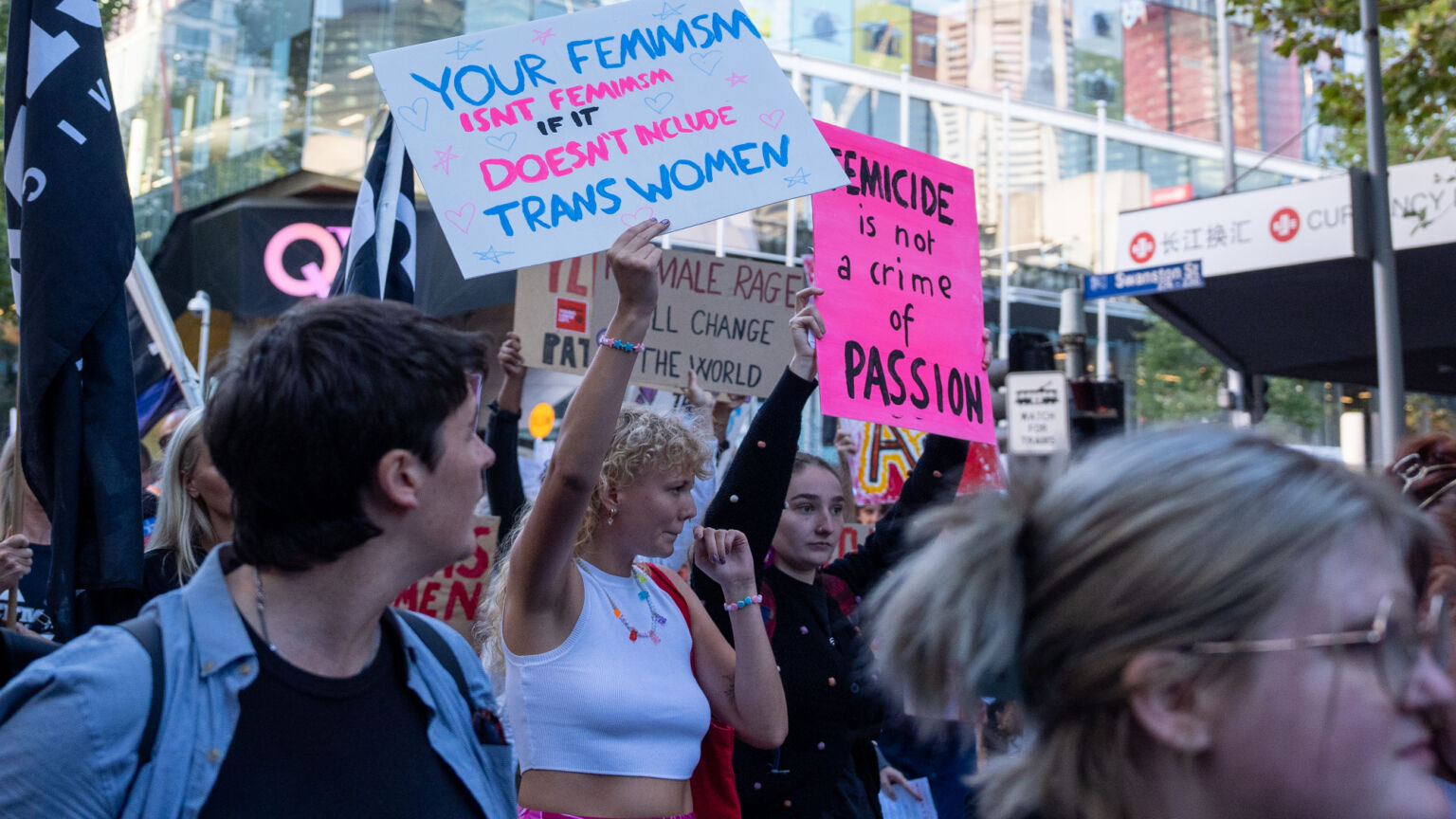
Following Zero Discrimination Day and World Seagrass Day earlier this month, I still think International Women’s Day (IWD) is up there with the most inane of the global ‘awareness days’. First marked well over a century ago by a group of socialist women in Austria, Denmark, Germany and Switzerland, who declared it a ‘day of glory’ for women around the world, it has since devolved into a nauseating 24-hour corporate virtue-signal-athon.
Yesterday, on its 115th birthday, IWD claimed to be as committed as ever to raising awareness about ‘gender discrimination’, forging ‘gender parity’ and celebrating ‘women’s achievements’. Yet I have yet to meet a woman who has ever felt ‘celebrated’, ‘glorified’ or even mildly appreciated by the existence of this annual celebration. In fact, in recent years, International Women’s Day seems no longer to have much to do with women or women’s rights at all.
This point was rammed home when Let Women Speak founder Kellie-Jay Keen was removed from an IWD event at the Albert Hall in Nottingham yesterday. Keen had been interviewing staff members from Nottingham Women’s Centre, asking them if they offered single-sex spaces in accordance with the law. After being informed by police that these conversations had caused ‘alarm and distress’, she was frog-marched from the premises.
Indeed, how can we celebrate an international day for women or defend women’s rights when we cannot agree on what a woman actually is. If anyone who feels compelled to wear a dress can be considered a woman, regardless of biological reality, the event becomes redundant. We might as well hold a day for Anyone Who Feels a Bit Girly Lately – which happens to be the approach many organisations have taken. The Women of the World Foundation hosted a handful of events under the mission statement of seeking an ‘inclusive future for women, girls and nonbinary people’. Meanwhile, the Daily Gazette, a local paper in Essex, marked the occasion with a perfect ‘How can I make this about me?’ meme, publishing a stunning and brave first-person account of a local councillor’s transition from male to ‘female’.
The frustrating reality here is that men didn’t force their way into IWD as much as they were handed the keys. The biggest proponents of trans ideology remain young women. And until gender-critical women are given the right to state their case without retribution or ostracism, that isn’t likely to change. Far more concerning, however, is IWD’s apparent disdain for genuinely vulnerable women.
On Saturday in London, protesters demanding an end to violence against women and girls marched side by side with a ‘Feminists for Palestine’ rally. As they arrived in Trafalgar Square, they came face to face with a group of anti-ayatollah protesters, who were flying Israeli, British and the old Iranian lion-and-sun flags. Apparently, this lot had missed the memo that modern feminists are supposed to support Hamas and the Islamic Republic. It would be terribly un-progressive to speak out against, say, the rape and mutilation of young women at music festivals or theocratic regimes in which women are beaten in the streets for daring to reveal their hair.
All of this speaks to the distinctly Western, upper-middle-class nature of those who claim to be ‘for women’. They see no issue with inviting men into women’s spaces, because they are not the ones in need of private spaces, whether that be changing rooms in a workplace or a rape-crisis centre. They feel no remorse for their selective sisterhood. And they are entirely content to stick their fingers in their ears and sing ‘la-la-la’ while they sacrifice countless women and girls in pursuit of their SJW fantasies.
International Women’s Day may once have been about women’s liberation, but today it has become a celebration of men who think they’re women and men who want to oppress women. The feminists of old must be spinning in their graves.
Georgina Mumford is a content producer at spiked.

This Morning bosses have dismissed reports claiming that they are looking to shake up the presenting line-up on the hit daytime show.
Over the weekend, The Sun published a piece claiming that This Morning producers were eyeing the possibility of recruiting husband-and-wife duo Tess Daly and Vernon Kay as a new presenting team for the show, in an attempt to overturn diminishing viewing figures.
However, a representative has since insisted that this is not the case.
“We are very happy with Cat [Deeley], Ben [Shephard], Alison [Hammond] and Dermot [O’Leary] as This Morning’s lead presenters and there are no plans for that to change,” a spokesperson told The Standard on Monday.
The ITV rep added that “2026 has got off to a great start” for This Morning, pointing out that viewing figures are “up year on year” and that the show has “a weekly reach of 3.7 million viewers”.
Last year, Tess made headlines when she announced she was stepping down as the host of Strictly Come Dancing, having been with the show since it launched in 2004.
Since then, she and her husband Vernon co-presented a special edition of The One Show together last month while regular presenters Alex Jones and Roman Kemp were away, marking their first time presenting on screen together in two decades.
Cat Deeley and Ben Shephard were appointed as This Morning’s regular presenting team in early 2024, following a turbulent period for the ITV daytime show in light of the much-publicised departures of Phillip Schofield and Holly Willoughby.

Ken McKay/ITV/Shutterstock
Alison Hammond and Dermot O’Leary, meanwhile, have been the show’s resident Friday presenters since 2020, taking over the slot previously occupied by Eamonn Holmes and Ruth Langsford.
The show also features regular guest presenting contributions from the likes of Craig Doyle, Josie Gibson, Rochelle Humes and Rylan Clark.
This Morning airs every weekday from 10am on ITV1.

When we landed in Spain, I thought I knew what the hard part would be: the paperwork, the language, finding a decent school for my kids. It turned out to be none of those.
One afternoon, not long after we arrived, I took my son to the beach. He spotted a group of dolphins close to shore and started shouting before I could even take it in. His excitement was pure: loud, physical, alive. I just stood there, half smiling, half stunned by the thought that somewhere along the line I had started believing that moments of pure wonder and awe weren’t really meant for me anymore.
That’s the thing no one says out loud about motherhood. You don’t stop wanting adventure; you just learn it’s no longer encouraged. You’re meant to provide stability now – the constant background hum that keeps everything running smoothly.
Before having children, I lived abroad and travelled widely. I had explored more than 50 countries and always thought of myself as someone who was comfortable with change.
But when I became a mother, something shifted. I started receiving the message, subtle but persistent, that the responsible thing to do now was to stay put. I didn’t stop wanting to explore; I just started to question whether I was allowed to.
For the first few years, we lived a fairly conventional city life in London – one of routines, work schedules, nursery runs and the unspoken expectation that fun and novelty had given way to stability. But my restlessness never fully disappeared.

Photo Courtesy Of Doris Dario
When we made the decision to move to Spain, it was something of an experiment – a chance to see what life might look like somewhere different, while the children were still small enough to adapt easily.
That first move became a pattern. Over the years, we relocated eight times as a family: to Spain, Italy, Switzerland, Northern Ireland. Some moves were prompted by a desire for language learning, others just because we wanted to try out a different rhythm of life.
The children learned how to say quick hellos and long goodbyes. They picked up fragments of different languages, mixed up spellings, and made friends they still message in other time zones.
Underneath it all was a desire to teach our children that the world was larger than just one place, and to have them grow up feeling at home in more than one culture. But I still felt a quiet strain – the guilt that maybe we were uprooting too often, chasing something children were meant to be shielded from.
Relocation looks glamorous from a distance, but in reality, it is a series of small practical puzzles: finding a house with decent heating, translating school emails, explaining to the kids why lunch suddenly starts at 3pm and no one seems bothered by it.
And underneath the logistics lies the emotional work of starting over.

Photo Courtesy Of Doris Dario
When one of my children started acting out after a move, I brushed it off as normal settling-in stress. I kept telling myself it was temporary. But what I now recognise is that it was grief: the low-level kind that hides behind bad moods and exhaustion.
After that, we changed our approach. We’d been good at talking about the excitement of what was next, but not about what we were leaving behind. Before each move, we started talking about what would be lost as well as what might be found. The friends, the familiar streets, our local corner shop. It didn’t make goodbyes easier, but it made them more honest.
Watching my children adapt forced me to reconsider what stability actually means. For our family, that anchor became simple rituals: dinners where everyone could say what they missed and what they were excited about, sometimes in the same breath.
Children, it turns out, are often better at transition than adults. They throw themselves into new places; they make connections quickly. It’s the parents who cling to the structure of what’s familiar, who mistake routine for safety. Watching my kids adjust forced me to reconsider what stability actually means.
Stability isn’t about one postcode forever. Maybe it’s about feeling emotionally anchored, wherever you end up.
“Raising children is not about protecting them from change; my role is to show them how to move through it.”
I also began to see what my children were gaining. They became comfortable entering unfamiliar spaces. They learned early that people live differently in different parts of the world. They ask questions about culture and language, and they developed perspectives they might not have if their world had stayed smaller.
They understand that identity can stretch across places, languages and communities. That belonging does not have to be tied to one passport or geography. Those are not small lessons.
Slowly, I also began to understand what all these moves were teaching me about motherhood: raising children is not about protecting them from change, my role is to show them how to move through it.
For a long time, I thought motherhood narrowed my world. In reality, it rewired it. Adventure does not have to mean throwing yourself off cliffs. For us, it means moving towards a life that feels truer, even when it doesn’t match the script people expect you to follow.
That afternoon on the beach, watching my son shouting with delight at the dolphins, reminded me of what I’d forgotten: that adventure and awe aren’t owned by the young or the brave. They’re available to anyone willing to look up and pay attention.
And maybe that is the lesson I want my children to carry with them most – that their world is allowed to be big, changeable and full of beginnings.
Do you have a compelling personal story you’d like to see published on HuffPost? Find out what we’re looking for here and send us a pitch at pitch@huffpost.com.

The war launched by the United States and Israel against the Islamic Republic of Iran raises serious questions about sovereignty – above all, the tension between respect for state sovereignty and the regrettable fact that states will sometimes decide they have no alternative but to violate it by force. But the more pressing question for us is closer to home – what does this conflict reveal about British sovereignty, and our government’s ability to act in the national interest?
There are those who habitually claim that the UK is simply in thrall to the US. They claim that British governments have been all too willing to follow Washington’s line, an approach that led to Britain’s involvement in the disastrous war in Iraq in the mid-2000s. And there are others who now take the opposite view. They claim that Britain has become increasingly hostile to the US, and especially to Israel. They argue that UK prime minister Keir Starmer’s fear of upsetting the Muslim vote in Labour’s former heartlands is now feeding into an anti-Israel, anti-US foreign policy.
Both arguments contain elements of truth. But the reality is at once more banal and more alarming. Britain has not surrendered its national interest either to Washington or to an Islamist veto. The deeper problem is that Britain no longer has an articulated national interest at all. Our political class has simply allowed sovereignty to drain away amid confusion, evasion and institutional decay. Britain is governed by a domestic elite that is increasingly detached, incapable and, in many cases, quietly hostile to the idea of national interest itself.
The response to the Iran-Hezbollah drone attack on Britain’s Royal Air Force Base in Cyprus earlier this month has been revealing. For the first time since 1980, Britain had no warships in the eastern Mediterranean or the Gulf. Air defences were effectively absent. The UK’s main carrier strike group was still en route to Greenland. Britain ended up having to rely on Greece and France to help secure its own military base. That is not evidence of foreign capture. It is evidence of institutional incompetence.
An even starker example was provided by the Foreign Office in August 2021, as Kabul fell to the Taliban. In a Times comment piece published last week, former civil servant Ameer Kotecha reveals how, amid British forces’ calamitous withdrawal from Afghanistan, Foreign Office staff were invited to mark World Afro Day (‘a global day of celebration and liberation of Afro hair’) with a panel discussion. One of the participants was a director in charge of ‘matters of national security’.
Little seems to have changed over the past few years. Kotecha also revealed how, during the drone strike on Cyprus, the Foreign Office’s internal intranet reportedly led not with the unfolding international crisis, but with prompts encouraging staff to ‘Take charge of your development’.
The details are absurd, but the pattern is familiar. The Foreign Office is of a piece with the rest of the civil service. Still working from home long after the pandemic ended, Foreign Office staff seem preoccupied with endless diversity strategies, corporate initiatives and de facto excuses for drift. Actual expertise in foreign languages and serious knowledge of Britain’s adversaries seems thin on the ground.
This is all indicative of a governing elite no longer capable of thinking in terms of the national interest. The first duty of the state, and of the officials who serve it, ought to be to put the country first. Yet today’s governing class appears to prioritise almost anything and everything else.
In the absence of any sense of the national interest, British foreign policymakers have filled the vacuum with the language of international law and human rights. It is no coincidence that this is the terrain on which Keir Starmer is most comfortable.
But talk of international law and human rights does not address the question of Britain’s national interest. It evades it. It allows our governing elites to avoid having to use their judgement and take responsibility for foreign-policy decisions.
The language of human rights and international law is also hopelessly elastic. It can be invoked to justify the Iraq War or to condemn Israel’s actions in Gaza. It can be used to support arming Ukraine, or to refuse to support the US in the war with Iran. Even Vladimir Putin speaks the dialect of human rights and international law when it suits him.
It is tempting to blame the decay of the national interest on the rise of human-rights lawyers like Starmer himself, or the influence of external actors, from the Chinese Communist Party to Islamic sectarians. But these are consequences, not causes.
The problem is that too few people in British public life are willing, or even able, to speak plainly about the sovereign national interest. That is why even the smallest signs of change matter. Starmer, dragged by the US-Israeli strikes on Iran into a harsher and more fragmented world, has at least begun to use the language of national interest – admittedly, he has so far used it less as a coherent doctrine and more as a cover for Britain’s hesitation over supporting the US. Still, the shift matters. It suggests that the old evasions of responsibility are becoming harder to sustain.
Britain does not yet have a fully worked-out doctrine of national interest for every arena of policy. That work remains to be done. But the fact a prime minister is speaking in those terms at all – asking what strengthens British sovereignty, what protects British citizens, what serves Britain as a nation – is already a necessary corrective. It is certainly a more honest basis for politics in a world increasingly shaped by hard power and competing national interests.
More than that, it answers a demand the British people have been making for years. The 2016 Brexit vote was not merely an instruction to leave the European Union. It was an insistence, however inarticulate, that the country should once again be governed in accordance with its own interests, by people willing to name them.
That remains the task. The job now is not to hide behind law, process or international pieties. It is to recover the habit of sovereignty – to decide, clearly and unapologetically, what serves Britain’s national interest, and then to act accordingly.
This is an edited version of a speech given at the Battle of Ideas North, on Saturday 7 March in Manchester. The session was ‘Iran, Greenland, Brexit Britain… does sovereignty still matter?’
Jacob Reynolds is a writer based in Brussels and London.
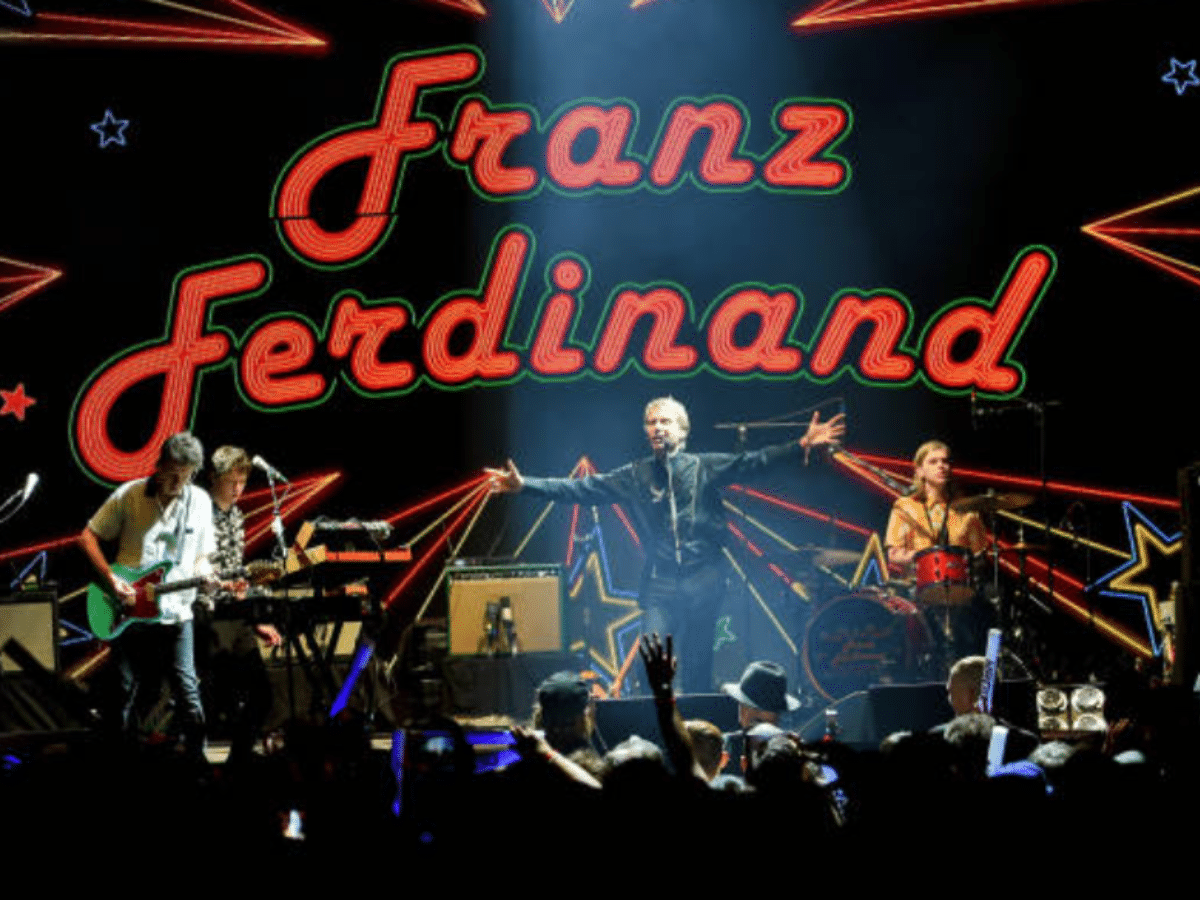
The band Franz Ferdinand has angrily hit back after the Israeli Defence Forces used their song Take Me Out in a propaganda video posted on social media.
Franz Ferdinand calls IDF ‘warmongering murderers’
The video shows fighter jets and explosions as Israeli soldiers celebrate Israel and the US’ recent attacks on Iran. The caption reads ‘Operation Roaring Lion – this is how it’s done.’
To reiterate, this was all happening while fucking Take Me Out played
Franz Ferdinand frontman Alex Kapranos took to his own Instagram stories to condemn the genocidal IDF:
These warmongering murderers are using our music without our consent. This makes us both nauseous and furious.
Kapronos also pointed out just how typical of the IDF this is:
Kind of typical though, isn’t it? To strut up and take what isn’t theirs with a vile arrogance…
With the British Media pumping out warmongering propaganda, it’s important that everyone with a voice does speak out against Israel.
History of speaking out
The band are no strangers to standing up for what’s right. In 2016 they released Demagogue as part of 30 Days, 30 Songs, protesting the election of Donald Trump. This was an independent campaign created by Artists for a Trump-free America.
The song included the lyric:
Those pussy grabbing fingers won’t let go of me now.
We can’t possibly ignore the fact that the band is named after Archduke Franz Ferdinand, whose assassination led to World War 1.
It’s absolutely bizarre that his namesake is fighting against true evil harder than the British government
If I had a nickel for every time Franz Ferdinand was involved in the precursor events of a world war, I’d have two nickels, which isn’t a lot, but it’s weird it happened twice https://t.co/feAbNuGJr8
— Adam Smith (@adamndsmith) March 8, 2026
Featured image via the Canary
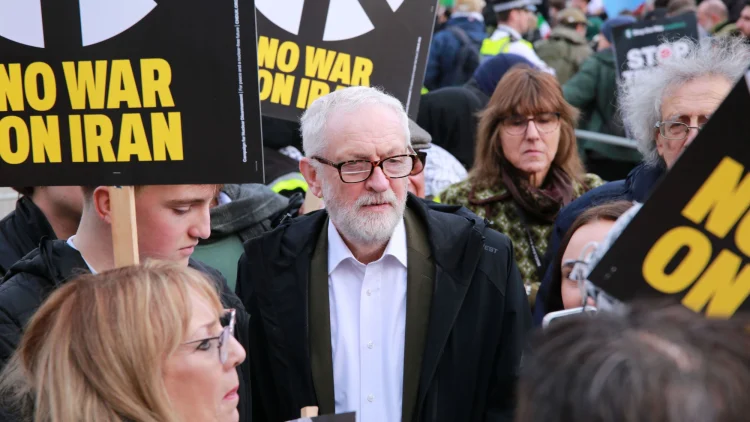
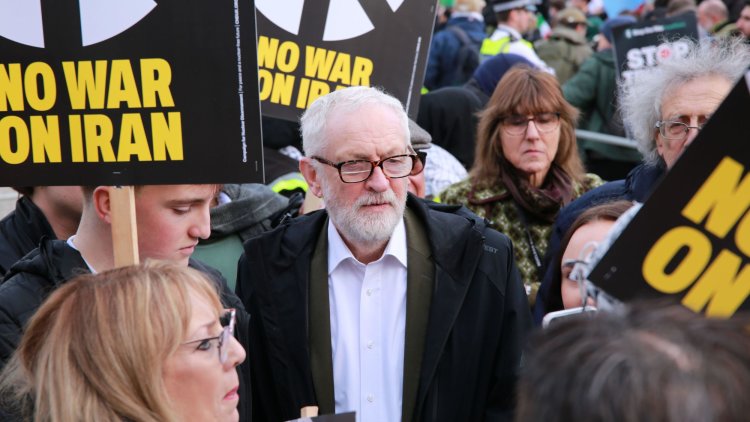
Jeremy Corbyn joins demonstrators at Parliament Square protesting against US and Israeli airstrikes on Iran, February 2026 (Credit: Waldemar Sikora / Alamy Live News)

3 min read
Exclusive: Former Labour leader Jeremy Corbyn has officially become parliamentary leader of ‘Your Party’ after being elected to the role by the new party’s executive committee.
At a meeting of the party’s central executive committee (CEC) on Sunday afternoon, 14 members voted to appoint Corbyn parliamentary leader, with zero against. He will now lead the party’s cohort of four MPs in Westminster.
Your Party insiders hope the development will provide clear leadership after much turmoil, as the new initiative has been beset by persistent infighting since the start.
Two of the Independent Alliance MPs – Adnan Hussain and Iqbal Mohamed – who were co-founding Your Party quit the project over internal tensions, and just two – Shockat Adam and Ayoub Khan – are still involved.
Zarah Sultana, who quit the Labour Party to join Corbyn’s party last year, has now been effectively sidelined after recent internal elections saw her slate of candidates – ‘Grassroots Left’ – win only seven seats on the CEC. ‘The Many’, the Corbyn-linked slate, secured 14 seats, and independents won three.
A source close to Corbyn had warned during the voting period for the CEC that Your Party would not survive unless his supporters won power.
The Coventry South MP is the only Your Party MP so far according to Parliament’s listings, having self-declared as such some months ago, but PoliticsHome understands that Corbyn is set to follow suit.
Corbyn officially becoming a Your Party MP is a formality that needs to go through the necessary CEC and parliamentary procedures, a source close to him explained. It is understood that, as a YP MP, he will continue to work with the Independent Alliance group.
Members of Your Party voted narrowly for a ‘collective leadership’ over a ‘single leader’ model during its founding conference in November. They decided that the party as a whole would instead be led formally by a 16-member committee, including a chair and deputy chair who must be lay members.
Jennifer Forbes, a Corbyn ally, was elected chair of the party on Sunday. Members of Corbyn’s ‘The Many’ won all eight leadership positions up for grabs in the CEC’s first full meeting. Former Labour MP Laura Smith was elected as vice-chair, and Palestine campaigner and National Education Union activist Louise Regan as political officer.
Sources now say the focus of Your Party will turn to the May elections. During the founding conference, members voted to endorse independent council candidates in England who are politically aligned to Your Party, and to prioritise potential gains over number of candidates endorsed.
Insiders are confident they can help to defeat Labour candidates in urban areas previously considered safe for the governing party, such as in east London and Bradford.
Reacting to his new leadership role, Corbyn said: “It’s an honour to be elected the parliamentary leader of Your Party. From now on, everything we do must serve the people we seek to represent.
“That means campaigning fearlessly against poverty, racism and war. That means building power everywhere: in our workplaces, in our communities and in Parliament. That means taking the fight to Starmer and Farage with a message of hope.
“We have a precious opportunity to unite our movement around a bold alternative – and I’m looking forward to campaigning alongside all members to build the mass, community-based, socialist party this country needs.”
Forbes said: “I’m delighted and honoured to have been elected chair of Your Party. The Westminster political class are failing us, delivering nothing but more wars, higher bills and a country falling apart.
“Your Party will build a genuine alternative, organising our mass membership to campaign on the big issues, from the cost-of-living to opposing militarism. With Jeremy leading us in Parliament, Your Party will now be laser-focused on the people’s priorities.”
Politics
James Lawson: As the ‘Wealth of Nations’ turns 250, it’s time for the Tories to reclaim their inheritance

James Lawson, is chairman of the Adam Smith Institute.
Traditionally, the Conservative Party is the party of sound money and free enterprise.
From Pitt the Younger to Thatcher, its best leaders understood that prosperity stems not from state direction but from free individuals operating under the rule of law. When the party strays by embracing the mixed economy, accepting soft socialism, or losing the confidence to champion markets, the country suffers and the party loses.
The 250th anniversary of Adam Smith’s An Inquiry into the Nature and Causes of the Wealth of Nations, published on the 9th of March 1776, is the perfect moment to remember where these principles originated, and to ask if the party is ready to champion them again.
The Wealth of Nations was the first systematic work of economics. Smith showed specialisation is the engine of prosperity: ten workers in a pin factory, dividing tasks, produce forty-eight thousand pins a day; one alone barely manages a single pin. He demonstrated that self-interest serves the public better than government diktats: “It is not from the benevolence of the butcher, the brewer, or the baker, that we expect our dinner, but from their regard to their own interest.” Competition harnesses this motivation to deliver better, cheaper goods. Prices carry information no bureaucrat possesses; markets allocate resources more efficiently than any civil service committee.
The implications remain as relevant today as in 1776. Shun protectionism: a country refusing to buy from efficient foreign producers taxes its citizens for worse goods. Reject industrial planning: the enterprise of millions, not the wisdom of ministers, creates growth. And do not mistake money for wealth: what matters is what a nation produces, not what it hoards.
Conservatives grasped this first. Edmund Burke praised the book as “an excellent digest… with many valuable corrective observations.” In 1792, Pitt the Younger told the Commons that Smith’s research would “furnish the best solution to every question connected with the history of commerce” and proceeded to cut tariffs. Peel repealed the Corn Laws, quoting Smith’s observation that farmers are “of all people the least subject to the wretched spirit of monopoly.” Thatcher rolled back the frontier of the state and joked, when accused of ideological novelty: “You are totally wrong. I learned it from Adam Smith and he was a long time before me!”
But Smith did not just argue for free markets in theory. A recurring theme of The Wealth of Nations is his assault on entrenched interest groups: merchants lobbying for tariffs and guilds restricting entry to inflate prices. His warning is famous: “People of the same trade seldom meet together, even for merriment and diversion, but the conversation ends in a conspiracy against the public, or in some contrivance to raise prices.”
Here, the modern Conservative Party is weakest. Believing in free markets as a slogan is insufficient. You must confront the vested interests that distort them, even when they are your own voters.
Britain’s planning system, the developed world’s most restrictive, is a machine protecting incumbent homeowners’ property values at the direct expense of the young. The pension triple lock acts as a state-mandated wealth transfer from working-age taxpayers enduring stagnant wages to a largely insulated pensioner class. The net zero lobby has rebuilt mercantilism in green clothing. Billions in subsidies flow to politically connected firms, saddling consumers with Europe’s highest electricity prices, while we could instead have abundant nuclear power, revived North Sea oil, and American-style fracking. Smith would recognise every one of these as a conspiracy against the public.
The economic consequences are dire. In the eighteen years since the financial crisis, Britain’s real per capita income grew by roughly 2 per cent in total. In the eighteen years prior, it grew by nearly 50 per cent. Adjusted for purchasing power, average British living standards have slipped behind Mississippi, America’s poorest state. Strip out London’s outsized output, and our comparative decline is even starker.
The electoral consequences are predictably bleak. At the 2024 election, just 8 per cent of 18-to-24-year-olds voted Conservative. The median Tory voter is now 63. How can we expect younger generations to become conservatives without a stake in capitalism? Priced out of homeownership, unable to build, taxed to subsidise wealthier retirees, and squeezed by high energy bills, why would they vote for the party that presided over this settlement?
Yet there are reasons for optimism. As the then Trade Secretary, now Leader of the opposition, Kemi Badenoch spoke against “hosing industries down with subsidies or slapping tariffs on products from abroad.” That is the authentic voice of the Smithian tradition. But the wider party must follow.
The Wealth of Nations turns 250 today. For most of that time, the Conservative Party was its most effective champion. It can be again, but only if it challenges its own coalition’s vested interests with the same vigour Smith challenged the mercantilists. The party can either reclaim its free-market inheritance or continue managing the decline it recently presided over. Smith told us what works. The question is whether the party still has the courage to do it. Anything less is just nostalgia.

If your knees aren’t in Megan Thee Stallion shape, that’s OK; “Spanish squats”, which offload the strain of the movement to a resistance band, can help.
And if you’re struggling with back pain, which affects 80% of UK adults at some point in their lives, “goblet squats” might be helpful to add to your repertoire, too.
What are “goblet squats”?
They involve holding a weight, like a kettlebell or dumbbell, in front of you as you perform a squat.
If you’re using a dumbbell, you hold it at one end with both hands, so it stays vertical, like a “goblet”.
What are the benefits of goblet squats?
They target your glutes, hamstrings, and quads.
Healthline explained that squats are a “foundational exercise” for building strength, as they target so many muscle groups.
But back squats, which involve holding a weighted barbell on your shoulders as you squat, can place added strain on your lower back.
A goblet squat, however, “removes that tension while still targeting the quads and glutes, which are the major movers in the exercise”, Healthline added.
That’s partly because it’s a front-loaded exercise: all the weight is in front of you, which could help to reduce your risk of injury.
In a YouTube short, trainer Mike Foster said the move can be a “game-changer for individuals suffering from lower back pain”, and added they can help to “train your core properly” too.
Celeb trainer Mark Wildman added that “squatting low with load [added weight] tends to make the core fire better”. Not only that but “back pain tends to disappear”.
A stronger core can also help to keep your back pain-free in the long term.
How do I do a goblet squat?
Place your feet, toes straight ahead, a shoulder-width apart. Brace your core.
If you’re holding a kettlebell, grab both sides of its handle. If you’ve got a dumbbell, hold one end with both hands, keeping your palms underneath the top of the weight.
Whatever you’re holding, clasp it close to your chest with your back upright. Squeeze your shoulder blades together.
Lower into a squat with your chest up and back straight, hold it, and then push through your feet to return to a standing position.
Immediately stop any exercise that makes your back pain worse.

Jonathan Portes and John Springford share their new analysis that estimates how the number of foreign-born workers would have evolved had the UK remained in the EU. They argue that while leaving changed the composition of migration flows dramatically, it did not materially alter the underlying balance between labour demand, demographic pressures and political constraints.
When the UK voted to leave the EU, much of the economic debate focused on two channels: trade and migration. While there has been extensive work on Brexit’s effects on trade and GDP, its impact on immigration – particularly on the size and composition of the workforce – has been less systematically examined.
In a new analysis, we estimate how the number of foreign-born workers in the UK would have evolved had the country remained in the EU. The results suggest that ending free movement and introducing a new immigration system in 2021 led to a modest rise in the number of foreign born workers in the UK, but a dramatic shift in their countries of origin.
Before and immediately after the 2016 referendum, most forecasts suggested that Brexit would reduce overall immigration. The end of free movement was expected to cut EU inflows, only partially offset by a more liberal regime for non-EU workers. The Home Office, for example, estimated that the post-Brexit system would reduce work-related migration by around 40,000 per year.
What happened instead was more complex. Following the introduction of the new system in January 2021, net migration rose sharply, reaching record levels in 2023. That surge prompted successive Home Secretaries to tighten visa rules. Combined with a weakening labour market, this has led to a sharp fall in work visas issued, including dependants – from 541,100 in 2023 to 186,000 in 2025, with further declines in recent months.
The political debate has often treated these developments as clear evidence either of regained “control” or of policy failure. Our findings point to a more nuanced picture.
It is not possible simply to attribute post-2016 changes in migration to Brexit. The pandemic, post-pandemic labour shortages, the war in Ukraine and the visa route for Hong Kong British Nationals (Overseas) all influenced flows. To isolate the effect of Brexit, we apply a synthetic difference-in-differences approach. In essence, we construct a “counterfactual UK” using a weighted average of comparable EU-15 and EEA countries that closely matched UK trends in foreign-born employment before the referendum. This method improves on simply assuming existing trends continue, and avoids relying on a single comparator country such as Germany.
We focus on foreign-born employees rather than immigration flows. UK flow data have been repeatedly revised, and the Labour Force Survey has had well-documented sampling issues for migrants. Instead, we use HMRC data on non-national employees for the UK and Eurostat data on foreign-born employees for comparator countries. Concentrating on workers also reduces the influence of country-specific shocks to asylum and refugee numbers, which might distort the results.
We estimate effects separately for EU-origin and non-EU-origin workers. For EU workers, we treat the referendum in June 2016 as the start of the “treatment”, reflecting the immediate political and economic uncertainty, including sterling’s depreciation. For non-EU workers, we treat January 2021 – when the new system came into force – as the relevant break point. However, using either 2016 or 2021 for both does not hugely change results
For EU-origin workers, the divergence between the UK and its counterfactual is substantial. By 2024, the number of EU-origin workers in the UK had returned roughly to its 2016 level. In our counterfactual UK, it had risen by around 30 per cent. That implies that Brexit reduced the number of EU-origin employees by about 785,000 by 2024 – equivalent to roughly 2.6 per cent of the total UK workforce. Most of this effect had materialised by 2023, with both the actual and counterfactual series flattening thereafter.
This confirms that ending free movement had a substantial and lasting effect on EU labour supply to the UK.
The story for non-EU workers runs in the opposite direction. After 2021, non-EU employment rose sharply in the UK – far more than in the counterfactual. By the end of 2024, non-EU employment in the UK had reached about 225 per cent of its 2016 level, compared with about 150 per cent in the synthetic control. We estimate that Brexit increased the number of non-EU employees by around 992,000 in 2024. Unlike the EU effect, this divergence continued to grow through 2024, consistent with a sustained increase in work-related migration under the new system.
However, more recent data, not included in our analysis, suggests that this expansion appears to have peaked. Visa data indicate that work-related non-EU migration slowed sharply in 2025 as the government tightened rules and labour shortages eased. The additional boost to non-EU employment seen in 2024 is therefore unlikely to persist at the same pace.
Combining these two large but offsetting shifts, we estimate that the net effect of Brexit in 2024 was an increase of around 207,000 non-UK-origin employees – approximately 0.6 per cent of the total workforce. In other words, Brexit substantially reduced EU-origin employment and substantially increased non-EU-origin employment. But the overall number of foreign-born workers in the UK was only modestly, although significantly, higher than it would have been had the UK remained in the EU.
The broader political economy challenge remains. Across Europe, ageing populations are increasing demand for migrant labour, even as public and political pressures push governments to reduce immigration. The UK is not unique in facing this tension.
Our analysis suggests that leaving the EU did not resolve that dilemma. It changed the composition of migration flows dramatically, and it restored nominal “control” over the nature of those flows, but it did not materially alter the underlying balance between labour demand, demographic pressures and political constraints.
By Professor Jonathan Portes, Senior Fellow, UK in a Changing Europe and John Springford, Associate Fellow, Centre for European Reform.

Iran war – travel expert Simon Calder predicts when Dubai, Qatar and Abu Dhabi flights will return to ‘normality’

Ticketmaster parent Live Nation agrees to DOJ antitrust settlement

Bithumb Receives Business Suspension Notice for AML Violations


-

 Politics6 days ago
Alan Cumming Brands Baftas Ceremony A ‘Triggering S**tshow’
-
Business3 days ago
Form 8K Entergy Mississippi LLC For: 6 March
-

 Fashion3 days ago
Weekend Open Thread: Ann Taylor
-

 Tech4 days ago
Bitwarden adds support for passkey login on Windows 11
-
 Sports4 days ago
499 runs and 34 sixes later, India beat England to enter T20 World Cup final | Cricket News
-

 News Videos3 hours ago
10th Algebra | Financial Planning | Question Bank Solution | Board Exam 2026
-

 Sports2 days ago
Three share 2-shot lead entering final round in Hong Kong
-

 Sports1 day ago
Braveheart Lakshya downs Lai in epic battle to enter All England Open final | Other Sports News
-

 Tech7 days ago
Cynus Chess Robot: A Chess Board With A Robotic Arm
-

 Business6 days ago
Guthrie Disappearance Enters Fifth Week as Family Visits Memorial
-

 NewsBeat4 days ago
Piccadilly Circus just unveiled ‘London’s newest tourist attraction’ and it only costs 80p to enter
-

 Business22 hours ago
Search for Nancy Guthrie Enters 37th Day as FBI Probes Wi-Fi Jammer Theory
-

 Entertainment3 days ago
Hailey Bieber Poses For Sexy Selfies In New Luscious Lip Thirst Traps
-

 Politics3 days ago
Top Mamdani aide takes progressive project to the UK
-
 NewsBeat7 days ago
Handcuffed presenter Jonathan Ross’ sweet admission about marriage to wife of 38 years
-
 Sports6 days ago
Jack Grealish posts new injury update as Man City star enters crucial period
-

 Crypto World5 days ago
New Crypto Mutuum Finance (MUTM) Reports V1 Protocol Progress as Roadmap Enters Phase 3
-

 Tech4 days ago
ACIP To Discuss COVID ‘Vaccine Injuries’ Next Month, Despite That Not Being In Its Purview
-
Entertainment5 days ago
Harry Styles Has ‘Struggled’ to Discuss Liam Payne’s Death
-
 NewsBeat4 days ago
Good Morning Britain fans delighted as Welsh presenter returns to host ITV show