Politics
Politics Home Article | Turning offshore wind into onshore opportunity


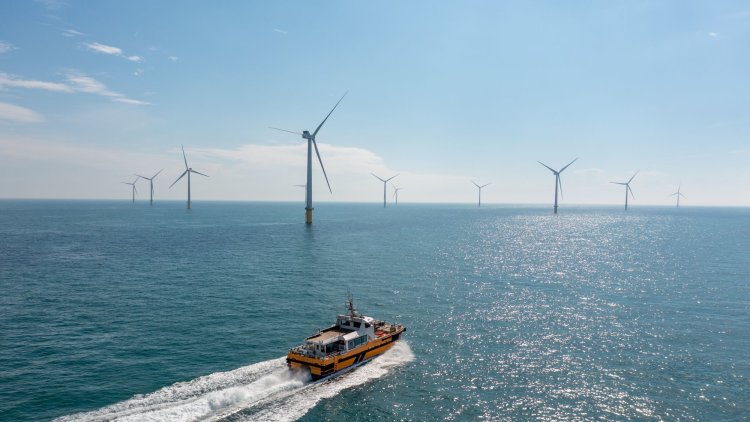
Credit: The Crown Estate/Ben Barden Photography Ltd
The Crown Estate sets out what offshore wind means for coastal communities – from jobs and bills to investment in ports – and invites parliamentary stakeholders to engage with its Marine Delivery Routemap
In just 25 years the United Kingdom has turned offshore wind from an idea into an industry – from a nascent technology into national infrastructure. It is already powering communities, cutting bills and supporting jobs in constituencies across the country. And it has the potential to deliver far more for jobs, growth and energy security.
The case for offshore wind is practical and measurable. Every additional gigawatt delivers an estimated £2-3bn boost to the economy.1 Between 2010 and 2023, UK consumers are estimated to have saved around £104bn2 as wind generation helped shield families from volatile gas prices. Today, the UK operates nearly 3,000 offshore wind turbines3 with a total capacity of 16.1GW – enough clean power for over 16 million homes.
“Offshore wind may be offshore – but its jobs, skills and supply chains are firmly onshore, in your coastal constituencies”
And the momentum continues. The latest Contracts for Difference auction backed a further 8GW of capacity – reinforcing the UK’s clean energy leadership and unlocking billions more in investment and thousands of new jobs across the country.
That scale translates directly to constituencies. Offshore wind already supports close to 40,000 jobs across the UK, and this could rise to 94,000 by 2030.4 Many of those roles – from component manufacturing to engineering to port services, are rooted onshore, well beyond the coast. Even where turbines cannot be seen – the impact is felt locally.
This is also a clear energy security test. The UK still imports around 42 per cent of its energy,5 leaving households and businesses exposed to global gas price shocks driven by geopolitics, supply disruption and extreme weather. Reducing reliance on imported fossil fuels is one of the most effective ways to protect families from future price spikes and strengthen national resilience.
A key reason the UK has made such progress is the strong institutional model underpinning offshore wind. At the centre is the stewardship of the seabed. Created by an Act of Parliament, The Crown Estate has a clear mandate to act independently and commercially to deliver long‑term value for the nation and returns all our profits to HM Treasury for the benefit of public spending.
This enables us to take a strategic approach: working with government and industry, investing in data and evidence to reduce risk, and running transparent leasing rounds that give developers the certainty to invest for decades.
Scaling back ambition now would be a profound mistake. It would jeopardise energy security, slow the clean energy transition, and limit economic opportunities for constituencies nationwide. Sustained growth depends on grid readiness, stable policy signals and long-term investment confidence – all areas where Parliament’s role is decisive.
Meeting the UK’s clean power and energy security ambitions requires a step change in deployment, supported by the right onshore conditions. Cutting-edge offshore wind needs larger ports, heavier-lift quaysides and strong pathways into secure, well-paid technical jobs.
We therefore ask parliamentarians to continue prioritising R&D investment and policy that supports innovation from research to deployment.
Government departments and devolved nations must work together on a co-ordinated strategy that gives communities, industry and investors the certainty required to deliver at pace.
The Crown Estate is committed to ensuring the seabed continues to drive investment for the benefit of people onshore. Through The Crown Estate Act 2025, Parliament granted us the flexibility to invest more widely across priority areas. We are already using these powers to support the next phase of offshore wind.
First, we will provide long-term visibility through a new Marine Delivery Routemap – or a “sat nav for the seabed” – a unique mapping and planning tool that can help identify how marine industries and nature can grow together. Our seabed is becoming increasingly crowded. Offshore wind must co-exist alongside cables and pipelines, shipping lanes, fisheries, defence activity and marine protected areas. As demands on our seabed grow, clear mapping is essential to support decision making, avoid conflict, protect nature and give investors confidence.
Second, we will stimulate growth through a £50m Supply Chain Accelerator to unlock early-stage projects where capacity is needed most.
Third, we will invest directly, committing an additional £350m through our Supply Chain Investment Programme to support offshore wind ports and supply chains, working alongside co-investors including Great British Energy.
Over time the Routemap will become a shared national resource – helping local communities and their representatives to engage with the seabed as a vital strategic asset.
To support that engagement, The Crown Estate will offer parliamentary stakeholders the opportunity to explore a working demonstration of the Marine Delivery Routemap following its operational launch.
Our aim is a common endeavour: long-term, cross-sector planning that strengthens the UK’s energy security and delivers lasting benefits for communities, nature and the nation.
Click here to find out more about The Crown Estate.
References
- https://www.renewableuk.com/media/rqvlqzu0/ offshore-wind-industrial-growth-plan.pdf, p.1
- https://www.ucl.ac.uk/news/2025/oct/ wind-power-delivers-ps104-billion-net-benefit-uk-consumers
- https://www.datocms-assets.com/136653/1747814298- osw-report-2024.pdf, p.8
- https://www.renewableuk.com/news-and-resources/ publications/wind-industry-skills-intelligence-report-2025/
- https://oeuk.org.uk/wp-content/uploads/ woocommerce_uploads/2025/09/Economic- Report-2025-OEUK-becfs5.pdf, p.16
