Connect with us

Politics

Peter Franklin: Our shallow and simplistic debate over energy policy is a threat to national security

Published

on

Peter Franklin: Our shallow and simplistic debate over energy policy is a threat to national security

Peter Franklin is an Associate Editor of UnHerd.

Can we have a grown-up conversation about energy please? Because right now, we’re not getting one. I’ll get on to the pro-green side of the debate in a bit, but let’s start with the anti-greens — seeing as they now control policy in both the Conservative Party and Reform UK.

If you were to ask Kemi Badenoch or Nigel Farage about the root causes of our energy insecurities, you can bet they’d reach for a two-word explanation beginning with “net” and ending with “zero”. Indeed, Net Zero has become to the Right what Brexit is to the Left — a general purpose whipping boy for everything that’s gone wrong with the British economy.

But that doesn’t help us with the latest surge in energy prices. After all, it’s not Greta Thunberg blocking the Straits of Hormuz, but an unpredictable, open-ended conflict with Iran.

Advertisement

Crude oil prices are forecast to hit $100 per barrel this week. And if Donald Trump doesn’t wrap this up pronto, there’ll be much worse to come. Even if Iranian missiles and drones don’t destroy the Gulf’s energy infrastructure, the squeeze on tanker traffic is already wreaking havoc. Oil storage facilities in the region are filling-up fast. That in turn threatens a massive shut-down in production and processing — which won’t be reversed easily or quickly. And remember, it’s not just oil. The Qataris are shutting down their LNG export terminals, which is why natural gas prices are spiking too.

But that’s the cost of relying on imported fossil fuels, especially exports from Russia and the Middle East. As well as enriching some of the world’s worst people, we’ve staked Europe’s security on a series of vulnerable bottlenecks — including Russia’s oil and gas pipelines; both ends of the Red Sea; and the aforementioned Straits of Hormuz. Since 2020, all of those have been choked-off — in some cases for months or even years. The harsh truth is that in weighing up the pros-and-cons of different forms of energy we can no longer assume the unimpeded east-west flow of oil and gas.

So when you hear someone urging the country to get real about the vulnerabilities of renewable energy, but without also acknowledging the fragilities of a hydrocarbon-based economy, the argument is either blinkered or made in bad faith.

Of course, the same applies in reverse. For instance, here’s the Business Secretary, Peter Kyle, using the current crisis to call for a “doubling down on renewables.” Well, I’m all in favour of doubling, tripling and quadrupling the deployment of wind and solar power. Not only is it clean and un-depletable, it’s also domestically produced — with obvious benefits for security of supply and our balance-of-payments. One little thing though: what happens when the wind doesn’t blow and the sun doesn’t shine? Yes, we’ve kept the lights on so far, but the more wind and solar we deploy, the harder it becomes to compensate for its natural variability.

Advertisement

That doesn’t mean that we can’t find solutions. In fact, the technologies we need to store electrical power are making rapid progress. However, to minimise the costs of this transition, the last thing we ought to be doing is holding ourselves to an artificially accelerated timetable. But that’s precisely what’s happening thanks to Labour’s deranged plan to decarbonise the grid by 2030. Note that there’s no international treaty compelling the country to jump through this hoop. It’s an entirely self-inflicted policy, pushed — and obsessively pursued — by Ed Miliband.

But that’s the problem with our polarised energy debate. To see only the problems with your opponents’ policies leads to virtue signalling with regard to your own.

For instance, the 2030 target only makes sense as a demonstration of ideological correctness. The same goes for another Miliband policy: the ban on new oil and gas exploration in the North Sea. Again, there is no international obligation on UK to make this sacrifice. Nor does is it required by Net Zero which is about consumption not production. Even within the constraints of the 2050 target we’ll still be consuming oil and gas for decades to come — albeit oil and gas we’d have to import instead of producing ourselves. There’s also the absurd inconsistency with the government’s belated efforts to boost production from existing capacity in the North Sea.

Perhaps Ed Miliband thinks his virtue signals are setting a good example, but no one in the world is looking at the costs, chaos and contradictions of British energy policy and saying: “I’ll have what they’re having”.

Advertisement

Sometimes, the natural reaction to excessive virtue signalling is to “vice signal” — that is, to deliberately defy the conventions of a prevailing, but failing, moral order.

Thus Kemi Badenoch has made a point of promising to reverse Labour’s ban on new oil exploration in British waters. Assuming that we can squeeze a few extra drops from the North Sea, this would be good for the public purse, our trade deficit and jobs. There’s also a modest environmental benefit in that extracting fossil fuels close to home tends to spew less carbon dioxide than importing the stuff from afar. Nurturing British expertise in marine engineering also produces transferable skills for offshore renewables.

But let’s not get carried away. Opening new fields will, at best, slow down the decline in North Sea production, not reverse it. Any impression to the contrary is a reminder that vice signalling, like virtue signalling, is just a gesture.

I fear that we’re falling into a similar trap in regard to new nuclear. The dangerous glamour of this technology makes tempting fodder for a vice signal, but the reality isn’t quite so titillating. There’s only one nuclear plant currently under construction in the UK and that’s Hinkley Point C in Somerset. Unfortunately there’s been yet another delay to the completion of the project and yet another budget-busting cost increase. In today’s money, the total projected cost now stands at £49 billion and that’s assuming no further bad news. Luckily, it’ll be the project owners picking up the tab for the overrun not the British taxpayer or bill payer (a fact for which we have my old boss, Greg Clark, to thank). But the same is not true of the proposed Sizewell C plant, which was recently given the go-ahead by Labour and for which the British state will underwrite a massive chunk of the construction risk.

Advertisement

In theory a “fleet” of new nuclear power stations could supply an abundance of home-produced, low carbon energy — but at £50 billion a pop, what we need to worry about isn’t the danger of a reactor meltdown, but the financial meltdown if it turns out we’ve paid the French or Chinese for a herd of white elephants. So I’m sorry neutron-fans, the fact is that we need some kind of technological breakthrough before we can sensibly take the nuclear bet. It may be that that Small Modular Reactors are the way forward, but before getting too excited about those wait for a final quote from the builders.

At this point I’d better stop my drive-by shooting of our energy options. There are others, from coal to fracking to energy efficiency, but they all have their problems too.

So if there are no easy answers, how about a hard answer? Well, in extremely condensed form, here are three things we ought to be doing:

Firstly, we need to work toward a full alignment of environmental and energy security objectives. Wherever contradictions crop up in the policy framework, let’s strip them out. That includes anything (or anyone) whose effect is to replace home produced energy with imports.

Advertisement

Secondly, it’s time to stop targeting given quantities of decarbonisation — especially by unnecessary deadlines. Instead, the machinery of the state should be reorientated towards a related, but distinct, objective — which is to relentlessly bear down on the cost of clean and secure energy. Whether this displeases the energy companies or the environmental NGOs is immaterial. The only guarantee of defeating global warming is if clean tech becomes so cheap and reliable that the world can’t afford not to use it.

Thirdly, and most importantly, we have to get serious about industrial strategy. Alongside our allies, we’ve agreed to spend 5 per cent of our GDP on defence and national resilience (the latter of which includes energy security). That is only affordable if we use these vast sums strategically to build-up our economy as a hi-tech manufacturing power house.

The parallel, intertwined effort to secure clean and affordable energy supplies must work with and not against that goal.

Advertisement

Source link

Continue Reading
Click to comment

Leave a Reply

Your email address will not be published. Required fields are marked *

Politics

Jeremy Bowen Debunks Trump Iran War Claims

Published

on

Jeremy Bowen Debunks Trump Iran War Claims

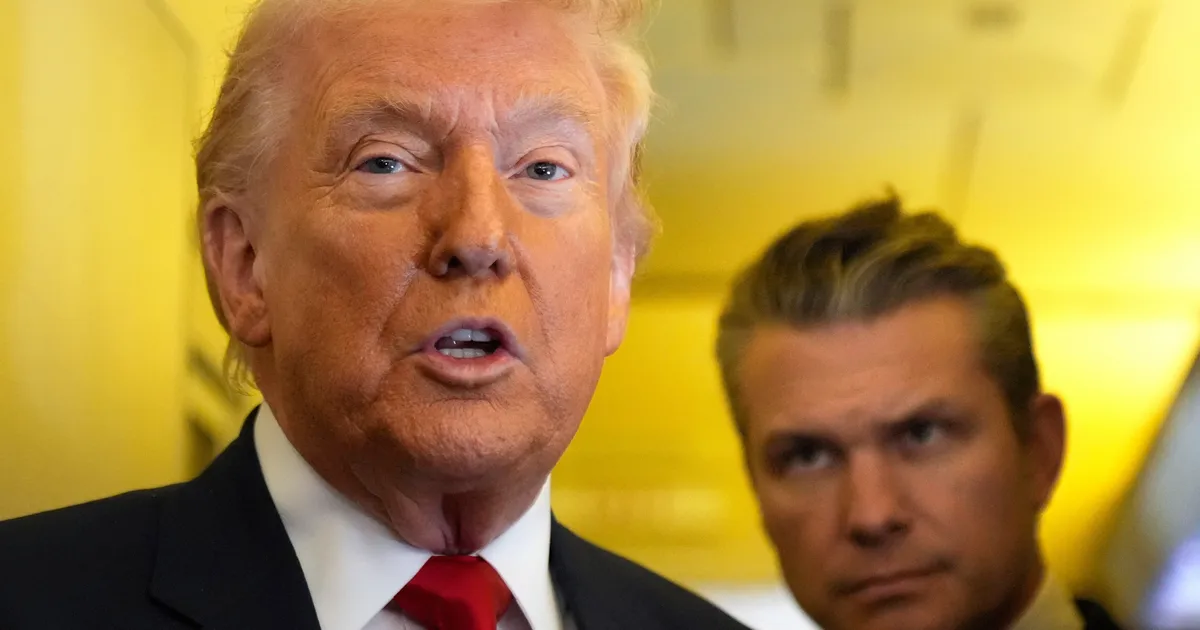
The BBC’s top Middle East expert has demolished Donald Trump’s latest claims about the war in Iran.

Jeremy Bowen, the broadcaster’s international affairs editor, said there was “no evidence” for some of the things the US president is saying.

Bowen said Trump had been “rather spooked by the economic consequences thus far of the war” after a spike in oil prices raised fears of a global crisis.

“He’s trying to calm the markets a little bit, he’s shaping the victory he’s going to claim,” said Bowen.

Advertisement

“He’s still actually claiming erroneously that Iran was a few weeks away from getting a nuclear weapon – there’s no evidence for that.

“He’s also said that Iran has Tomahawk cruise missiles that could have destroyed that girls’ school where so many were killed. There’s no evidence for that either because they’ve only sold them to Britain and Australia.”

Bowen also disputed Trump’s claims that the war is “very complete, pretty much”, and warned that the potential consequences for the whole Middle East are huge.

He said: “In terms of the wider region, if what’s happening subsequently causes chaos and breakdown in Iran, and right now the regime appears to be surviving, that will be immensely dangerous regionally.”

Advertisement

Iran has also disputed Trump’s claims that the war is nearing its end.

A spokesperson from the IRGC – Iranian Revolutionary Guard Corps – said: “It is we who will determine the end of the war.

“The equations and future status of the region are now in the hands of our armed forces; American forces will not end the war.”

Advertisement

Source link

Continue Reading

Politics

The House Opinion Article | The Professor Will See You Now: Waka

Published

on

The Professor Will See You Now: Waka

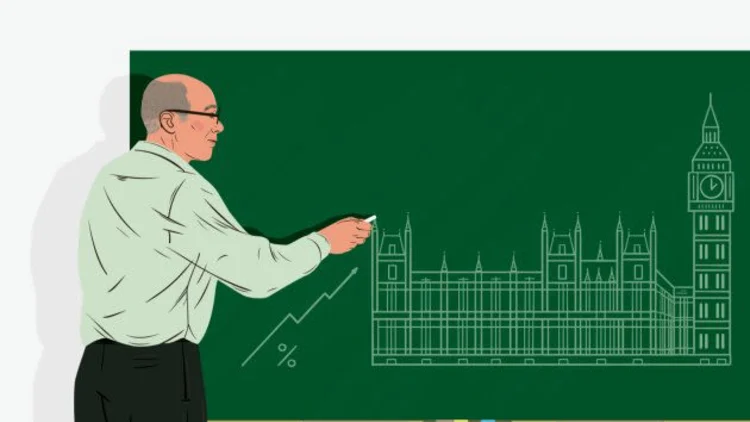
Illustration by Tracy Worrall


4 min read

Lessons in political science. This week: waka

Advertisement

A few years ago, a reviewer of a book I’d edited complained that it was not so much full of conversation starters but conversation stoppers. When this was reported back to the academic contributors, it was not taken as criticism. “We are,” one of the authors said, with a little too much enthusiasm, “the sort of people who like to say: ‘It’s a bit more complicated than that’.”

This exchange came to mind as the petition calling for automatic by-elections whenever an MP changes party sailed past 100,000 signatures; it is now scheduled for debate later this month. On the face of it, it seems fair enough – if an MP is elected under one party but then changes affiliation, why shouldn’t voters get a say? – but it is, yes, a bit more complicated than that, involving some fundamental questions about the role of an MP, and ones that could easily have unintended consequences if we are not careful.

There have been two Private Members’ Bills on this issue in recent decades, in 2011 and 2020. Both attempted to introduce a recall petition if an MP voluntarily changed affiliation. The voluntary bit is important, else we could be giving the party whips the sort of disciplinary tool of which they can currently only dream.

Advertisement

“If you don’t vote with us on the Murder of the First Born (No 2) Bill, then we will remove the whip, and you will have to fight a by-election.”

“Ah, well, yes, I wasn’t in favour initially, but I do now see the wisdom of the government’s position.”

Yet I am not sure this voluntary/involuntary distinction works. It is always worth asking: how might someone – someone who was perhaps a bit sneaky – use this to their advantage? In this case, what is to stop an MP staying within their party but behaving differently? You don’t need to defect from the Conservatives; you just start wearing turquoise, telling people to vote Reform, voting the Reform line and so on.

Advertisement

New Zealand offers an interesting lesson. It passed laws against party-hopping in both 2001 and 2018. They have a great term for it: ‘waka-jumping’, after the Māori word for canoe. The creators of the 2001 law were rightly suspicious that not all MPs would voluntarily announce they were defecting – so they created a system by which the party leadership could also report an MP as having de facto left their party, subject to some procedural hoop-jumping and the support of two-thirds of the parliamentary group.

As Andrew Geddis notes in his account of the legislation, this effectively changes the ownership of the seat from the MP to the party. Even if it is not the intention, it is easy enough to see how such rules lead to a tightening of party discipline. Indeed, one of the many curiosities of this issue is that there are many people who feel negatively about defections but positively about rebellious MPs. Yet many of the arguments used against allowing MPs to defect can easily be deployed against MPs being allowed to vote against their party whip. In India, MPs are barred from both.

Debates on this are not helped by the hypocrisy frequently involved. If you have a spare five minutes, look at the supporters of those two previous Private Members’ Bills. You might note that several were later to switch parties; you might also note that not one of them then resigned their seat. Rules for thee, not for me.

A final note: don’t call it crossing the floor, unless they actually cross the floor. Most changes of party label take place on the same side of the House; they are much less consequential. 

Advertisement

Further reading: A Geddis, Proportional Representation, ‘Party Hopping’ and the Limits of Electoral Regulation: A Cautionary Tale from New Zealand, Common Law World Review (2006) and his Standards of MP Behaviour and Aotearoa New Zealand’s ‘Party Hopping’ Law, Public Law Review (2025)

Source link

Continue Reading

Politics

I Swear Is Now Streami On Netflix UK Weeks After Baftas Wins

Published

on

Robert Aramayo shares the screen with Maxine Peake in the acclaimed British drama I Swear

If you missed your window to see the critically-acclaimed British drama I Swear in cinemas, movie fans can now stream the film from the comfort of their living rooms.

Based on the life experiences of Tourette’s campaigner John Davidson, I Swear was released in the autumn of 2025, and stars newcomer Robert Aramayo in the lead role alongside Maxine Peake and Shirley Henderson.

The film received rave reviews – resulting in a rare 100% critical score on Rotten Tomatoes and an average of 4.3 stars on Letterboxd – and was also a big hit at the Baftas last month, where Robert beat stiff competition from the likes of Timothée Chalamet, Leonardo DiCaprio and Michael B Jordan to pick up the Best Actor prize.

As of Tuesday morning, I Swear is finally available to stream on Netflix UK, meaning users of the service can now check out the film for themselves.

Advertisement
Robert Aramayo shares the screen with Maxine Peake in the acclaimed British drama I Swear

I Swear’s official synopsis says the film is “inspired by the life of John Davidson” and charts “his journey from a misunderstood teenager in 1980s Britain to a present day advocate for the understanding and acceptance of Tourette Syndrome”.

“Diagnosed aged 15, John navigates his way against the odds through troubled teenage years and into adulthood, finding inspiration in the kindness of others to discover his true purpose in life,” the description continues.

Robert also picked up the Rising Star title at the 2026 Baftas off the back of his work in I Swear, which was also awarded the Best Casting prize, having scored five nominations in total in the lead-up to the ceremony.

Of course, the film also became one of the most-talked about following this year’s Baftas after John experienced a number of involuntary tics while attending the awards show with the cast and crew.

Advertisement

Although most of these tics were not included in the BBC’s final broadcast, one – in which he shouted the N-word while Sinners actors Michael B Jordan and Delroy Lindo were presenting on stage – did make its way into the national broadcaster’s coverage, which aired on a two-hour time delay.

John Davidson attending the 2026 Baftas last month

Anthony Harvey/Shutterstock

Following Delroy Lindo’s comments expressing disappointment with how Bafta handled the incident, the organisation issued a statement accepting “full responsibility” for what transpired.

John later said in his own statement: “Whilst I will never [apologise] for having Tourette syndrome, I will apologise for any pain, upset and misunderstanding that it may create.

Advertisement

“This past week has been tough, and has reminded me that what I do, raising awareness for such a misunderstood condition, there is still a long way to go and I will keep on keeping on until this is achieved.”

Source link

Advertisement
Continue Reading

Politics

Iran Slaps Down Trump’s ‘Nonsense’ Claim War Could Soon Be ‘Over’

Published

on

Iran Slaps Down Trump's 'Nonsense' Claim War Could Soon Be 'Over'

Donald Trump’s claim that the war in Iran might soon be “over” has been dismissed by the country’s regime.

Amid rising oil prices and a turbulent energy market, the US president told CBS News his offensive “is very complete, pretty much” ten days after he and Israel initiated strikes on Iran.

“They have no navy, no communications, they’ve got no air force,” he said.

Trump suggested that the conflict would end before the initial four-week time frame he previously laid out.

Advertisement

Bizarrely, he also said: “We’ve already won in many ways, but we haven’t won enough.”

The White House’s initial war aims remain unclear so it’s hard to predict when American forces will decide it’s time to withdraw.

Israeli prime minister Benjamin Netanyahu said on Monday his forces were looking for regime change.

Trump also threatened Tehran on Monday, warning of a major backlash if Iran were to block the Strait of Hormuz, the waterway which transports a fifth of the global oil supply.

Advertisement

But the Iranian military rejected all of Trump’s “nonsense”.

A spokesperson from the IRGC – Iranian Revolutionary Guard Corps – said: “It is we who will determine the end of the war.

“The equations and future status of the region are now in the hands of our armed forces; American forces will not end the war.”

The IRGC also claimed they would not allow any oil to be shipped out of the Middle East if the strikes continue.

Advertisement

That claim evidently did not deter the US president, who doubled down on his warnings in a later Truth Social post.

He said: “If Iran does anything that stops the flow of Oil within the Strait of Hormuz, they will be hit by the United States of America TWENTY TIMES HARDER than they have been hit thus far.”

Iranian foreign minister Abbas Araqchi said his country was unlikely to continue talks with the States after three rounds of failed negotiations over capping Tehran’s nuclear capabilities.

Speaking to PBS, he said: “Still, they decided to attack us. So I don’t think talking to the Americans anymore would be on our agenda any more.”

Advertisement

Source link

Continue Reading

Politics

Trump Downplays Oil Crisis Caused By Iran Conflict

Published

on

Trump Downplays Oil Crisis Caused By Iran Conflict

A BBC expert has called out Donald Trump’s attempts to “play down” the global oil supply crisis triggered by his decision to go to war with Iran.

Around a fifth of the world’s oil supply is shipped through the Strait of Hormuz between Iran and the United Arab Emirates, but that has virtually stopped since the war began.

That has led to a massive spike in oil prices, threatening a global economic crisis.

In a post on Truth Social last night, the US president threatened Iran with “death, fire and fury” unless it is opened up again.

Advertisement

He added: “If Iran does anything that stops the flow of oil within the Strait of Hormuz, they will be hit by the United States of America TWENTY TIMES HARDER than they have been hit thus far.”

But on Radio 4′s Today programme this morning, BBC Africa editor Barbara Plett-Usher said that was an attempt by the president to create “a distraction” from the consequences of his own actions.

She said: “He started by musing that the US was thinking about taking over the Strait of Hormuz – ‘we could do a lot’, he said. Then in his [press conference] he said the US attacks could rise sharply if Iran tried to blow up tanker traffic – ‘we’ll hit them so hard’ etc etc.

“Then Iran’s Revolutionary Guard responded and said we’re not going to let one litre be shipped through if you and the Israelis continue to attack, and we will determine the end of the war.

Advertisement

“Then Trump escalated in his Truth Social post, in caps, saying if they stop the oil we’ll hit them 20 times harder then they’ve hit thus far.

“All of this is a distraction to the fact that the flow of oil has stopped and Trump is trying to play that down.

“He’s said it’s not really affecting Americans, it won’t last that long, but in effect it’s shut, only a trickle of boats getting through. And it’s difficult to see it opening as long as this hot conflict goes on.”

Plett-Usher also cast doubt on Trump’s explanation for why he started the war, and his claim that other Middle East countries are grateful that he did.

Advertisement

She said: “He suggested that the war was a pre-emptive strike because he said Iran was preparing to launch strikes against its neighbours and potentially a nuclear weapon at Israel.

“He said ‘if we didn’t hit them first they were going to hit our allies first’. He said ‘the countries in the Middle East, very rich countries, are very, very lucky that I’m here’.

“I don’t think any of the Arab countries are feeling particularly lucky that President Trump made the decision he did. They lobbied very hard to try to prevent it and they didn’t expect Iran to attack them unless the Americans and Israelis attacked Iran first.”

Advertisement

Source link

Continue Reading

Politics

Nigel Farage Criticised As Councils Break Tax Cut Pledge

Published

on

Nigel Farage Criticised As Councils Break Tax Cut Pledge

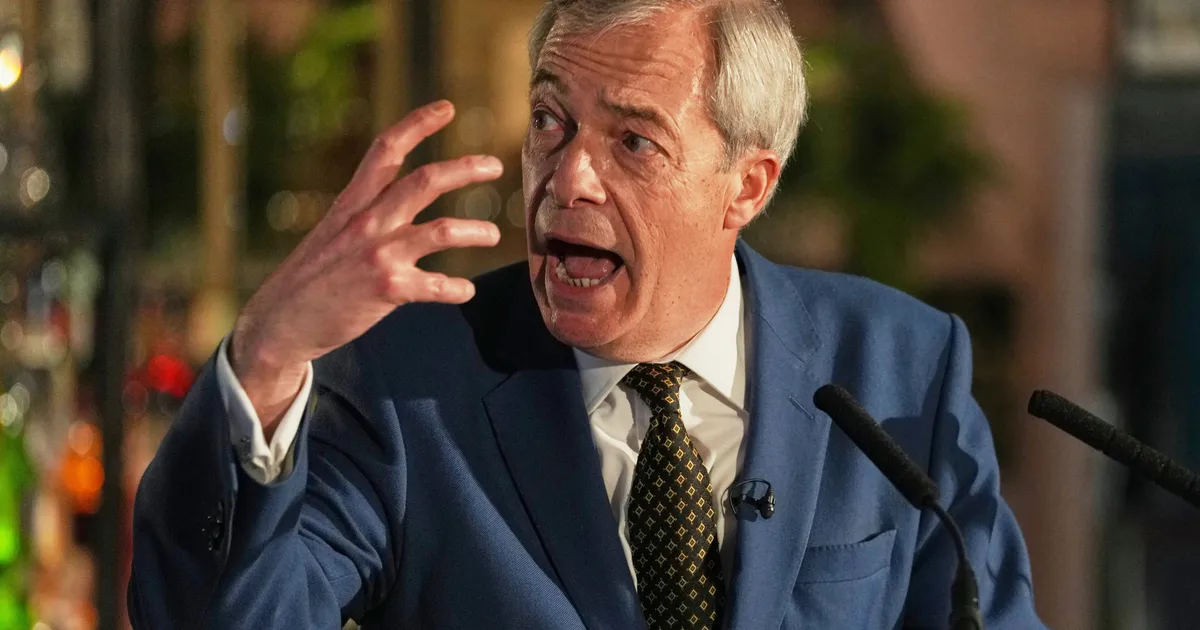
Nigel Farage was left squirming as he was grilled on Reform-run councils breaking their pledge to cut taxes.

The party leader bizarrely tried to claim that some were still sticking to their pledge despite putting council tax up.

Reform election leaflets at last year’s local elections, some of which carried Farage’s picture, promised to “reduce waste and cut your taxes”.

However, some of the local authorities which the party now controls are putting up council tax from next month.

Advertisement

In an interview with ITV News, Farage was told: “Your leaflets at last year’s local elections promised to ‘reduce waste and cut your taxes’.

“Most of the councils that you took control of are putting tax up, including Kent – 3.99%.”

Farage said: “I never said we’d cut. I never said we’d cut.”

But the journalist told him: “Your leaflet said ‘cut your taxes’.”

Advertisement

Farage said that “means don’t charge the maximum of 4.99%”.

The reporter hit back: “Most people would think that would be cutting your taxes.”

Attempting a different approach, Farage then said: “I never once, in the country, ever once did I say we would cut council tax.”

Asked if it was “a mistake to put it on your leaflet”, he replied: “I never put it on my leaflets.”

Advertisement

The journalist said: “You did. It said ‘reduce waste and cut your taxes’. Those were the words.”

Farage replied: “Nothing with my name ever went on that.”

Asked if “no such claims will appear” on Reform leaflets ahead of the next set of English council elections on May 7, Farage said: “We did not say we would cut tax.”

Reminded again that last year’s leaflets promised to “reduce waste and cut your taxes”, Farage said: “Cutting taxes could mean not putting them up as much I suppose, but I never promised cuts in council tax.”

Advertisement

Labour put a clip of the excruciating exchange on X with the message: “He must think you were born yesterday.”

Source link

Advertisement
Continue Reading

Politics

Politics Home Article | The disproportionate benefits of backing the Port of Dover

Published

on

The disproportionate benefits of backing the Port of Dover

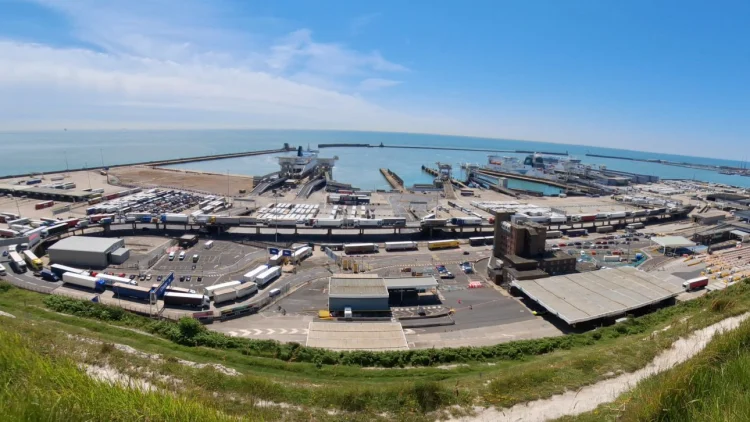
Handling more than £144bn of trade annually, the Port of Dover is “probably the single most economically consequential piece of UK national infrastructure” says CEO Doug Bannister

From enabling the fast transit of food and medicines across the Channel to ensuring that manufacturers receive critical “just in time” car parts, the Port of Dover impacts all our lives on a daily basis.  

Advertisement

“It’s the most efficient and reliable route for conducting that trade,” says Doug Bannister, who has been CEO of the Port of Dover since 2019. “It’s a joy and a privilege but it’s also an incredible responsibility for all of us who work here to make certain that this iconic, world-class gateway operates seamlessly for the benefit of everyone. 

“Because of its scale and the implications of that scale to the economy, society and the prosperity of the nation, it is probably the single most economically consequential piece of UK national infrastructure.”  

Founded by Royal Charter in 1606, the Port of Dover is the UK’s busiest international ferry port, providing a fast, efficient and sustainable connection to mainland Europe. More than 2 million freight vehicles pass through its gates annually – substantially more than any other port in the country. 

Advertisement

The Port operates for 364 days of the year, welcoming around 10 million passengers and handling more than £144bn of trade annually. A third of all trade in goods between the UK and the European Union comes through Dover.  

As the government seeks to reset and deepen its trading partnership with the EU, the Port of Dover has an essential role to play in helping to deliver long-term economic growth and trade resilience for the UK. The Port is a growth-enabling asset, capable of unlocking trade, jobs, tourism, investment and innovation.  

“We reach every corner of the UK so we’re able to open up access to markets that other routes and other supply chains cannot do,” says Bannister. 

The future growth of the Port undoubtedly depends on targeted investment in upgrading and improving onsite and offsite infrastructure. 

Advertisement

The Port is hugely supportive, for instance, of the Lower Thames Crossing, a new 14-mile A road that will link the A2 in Kent and the M25 in Essex through the longest road tunnel in the UK.  

“It is going to provide a step change in how people travel around the nation – and crucially it’s going to provide a much more robust link between the Port of Dover and destinations north of London,” explains Bannister.  

He would like the government to commit to the dualling of the last seven miles of the A2 into the Port to ensure the strategic resilience of the route for international travel – a move that could unleash disproportionate benefits for national trade. Another ask is to assist the private sector in investing in “suitable, secure, safe overnight lorry parking” in Kent to serve freight traffic passing through the Port, thereby providing even greater reliability and robustness to the supply chains using the route. 

“Taking a system-wide view of these key infrastructure interventions could unlock exponential potential,” he says. “It would be a step change in how trade and travel between the UK and the continent works.” 

Advertisement

The need for both frictionless and secure borders is paramount – not only for border compliance but to enhance operational efficiency, customer experience and long-term national competitiveness. The Port has already introduced an innovative digital solution for the EU Entry Exit System (EES), an EU-wide digital border management system for non-EU passengers. A new processing facility has been built at the Port’s Western Docks, currently being used just for coaches and foot passengers, but the Port’s £40m investment is also to be used for tourist cars later this year. 

“The efforts that our government is making in improving the relationship with the EU, looking at reducing the administrative burden around things like the SPS [sanitary and phytosanitary] checks and making travel and trade more conducive for the British economy and society are great aims – aims we’ve got an interest in and want to support,” says Bannister. 

“From a trade perspective, getting closer to Europe, making these positive moves towards closer working relationships and easing the flow of trade will unlock tremendous potential for the economy here.”   

The electrification agenda is another priority. The International Maritime Organisation (IMO), the EU and the UK have all put forward maritime carbon emission tax plans that will significantly affect shipping lines and ultimately consumers through higher prices on the shelves. The EU has already introduced its scheme and the UK will implement theirs from 2028 but the IMO’s global version has been delayed.  

Advertisement

However, because of the higher intensity of the Dover routes (130 ferry crossings a day) and Dover’s role in serving the whole of the UK, Bannister says that electrifying the route would have a disproportionately positive impact and keep prices down. He believes that establishing a “green shipping corridor” at Dover is not only in the interest of the UK economy and key supply chains but is also urgent and necessary. 

The Port has set clearly staged targets to reach net zero and has reduced its carbon footprint by more than 98 per cent since 2007. One ferry operator already operates hybrid ferries on the 22-mile route across the Channel and the Port is in discussions with another operator on the short straits route between Dover and Calais about transitioning to a fully electric service.  

“The key to us is getting an appropriate supply of commercially viable electricity to the ships,” says Bannister. “At the moment we’ve got a supply of eight megawatts of electricity into the Port but to electrify short straits shipping we’d need around 170 megawatts. It’s not clear to us when the grid will be able to supply that degree of electricity to us at a price that would be economical to use.” 

Despite the challenges it is clear that getting the right supportive policy framework in place for the Port is crucial. 

Advertisement

“I have a greater sense that the government is looking more favourably towards Dover being the jewel in the crown around supply chain, trade and travel resilience,” says Bannister.  

“The future for the business conducted through the Port is bright. The moves that our government is making to create a closer relationship with the EU unlock vast possibilities and the investments into key infrastructure will have a profound effect on supply chains and travel.  

“Driving carbon out of travel is hugely exciting for efficiency and productivity – and, of course, the impact on climate. And then finally, we’re walking into a whole new chapter with the use of digital and technology and artificial intelligence. The Port of Dover is just starting to leverage what these profound new tools will be able to offer to us and, by implication the nation as a whole, and that is exciting.” 

Source link

Continue Reading

Politics

I’m A Celebrity: South Africa Confirms Full Line-Up For All-Stars Series

Published

on

Seann Walsh, Craig Charles, Gemma Collins, Ashley Roberts, Scarlett Moffatt, Beverley Callard, Sinitta, Adam Thomas and Harry Redknapp at the press launch of I'm A Celebrity: South Africa on Monday night

The 12 former I’m A Celebrity campmates returning for the show’s second all-star series have finally been unveiled.

On Monday night, the line-up for the next season of I’m A Celebrity: South Africa was confirmed, in which former contestants will be put through their paces in a brand new camp.

Former winners Scarlett Moffatt and Harry Redknapp are both in the cast, as are Gemma Collins and Craig Charles, who competed on the show in 2014 but eventually withdrew under two very different sets of circumstances.

Advertisement

Interestingly the line-up is almost identical to one that was published in the press back in September 2025, with two new additions.

Who is on the full line-up of I’m A Celebrity: South Africa 2026?

The cast of this year’s I’m A Celebrity: South Africa is as follows:

  • Adam Thomas (third place, 2016)
  • Ashley Roberts (second place, 2012)
  • Beverley Callard (ninth place, 2020)
  • Craig Charles (withdrew, 2014)
  • David Haye (third place, 2012)
  • Gemma Collins (withdrew, 2014)
  • Harry Redknapp (winner, 2018)
  • Jimmy Bullard (10th place, 2014)
  • Mo Farah (fifth place, 2020)
  • Scarlett Moffatt (winner, 2016)
  • Seann Walsh (fifth place, 2022)
  • Sinitta (11th place, 2011)

Unlike the regular season of I’m A Celebrity, the all-stars series was pre-recorded last year, with contestants’ stay in camp dependent on whether they pass or fail in various Bushtucker Trials.

However, unlike the first run of I’m A Celebrity: South Africa, the winner will be determined by a public vote this time around, with Ant and Dec fronting a one-off live show at the end of the series.

Advertisement
Seann Walsh, Craig Charles, Gemma Collins, Ashley Roberts, Scarlett Moffatt, Beverley Callard, Sinitta, Adam Thomas and Harry Redknapp at the press launch of I'm A Celebrity: South Africa on Monday night
Seann Walsh, Craig Charles, Gemma Collins, Ashley Roberts, Scarlett Moffatt, Beverley Callard, Sinitta, Adam Thomas and Harry Redknapp at the press launch of I’m A Celebrity: South Africa on Monday night

David Fisher/Shutterstock

A return date for I’m A Celebrity: South Africa is yet to be confirmed, but ITV has revealed that the new series will premiere in April.

The first season aired in 2023, and saw Myleene Klass triumphing over fellow finalists Jordan Banjo and Fatima Whitbread for the title of I’m A Celebrity “Legend”.

Source link

Advertisement
Continue Reading

Politics

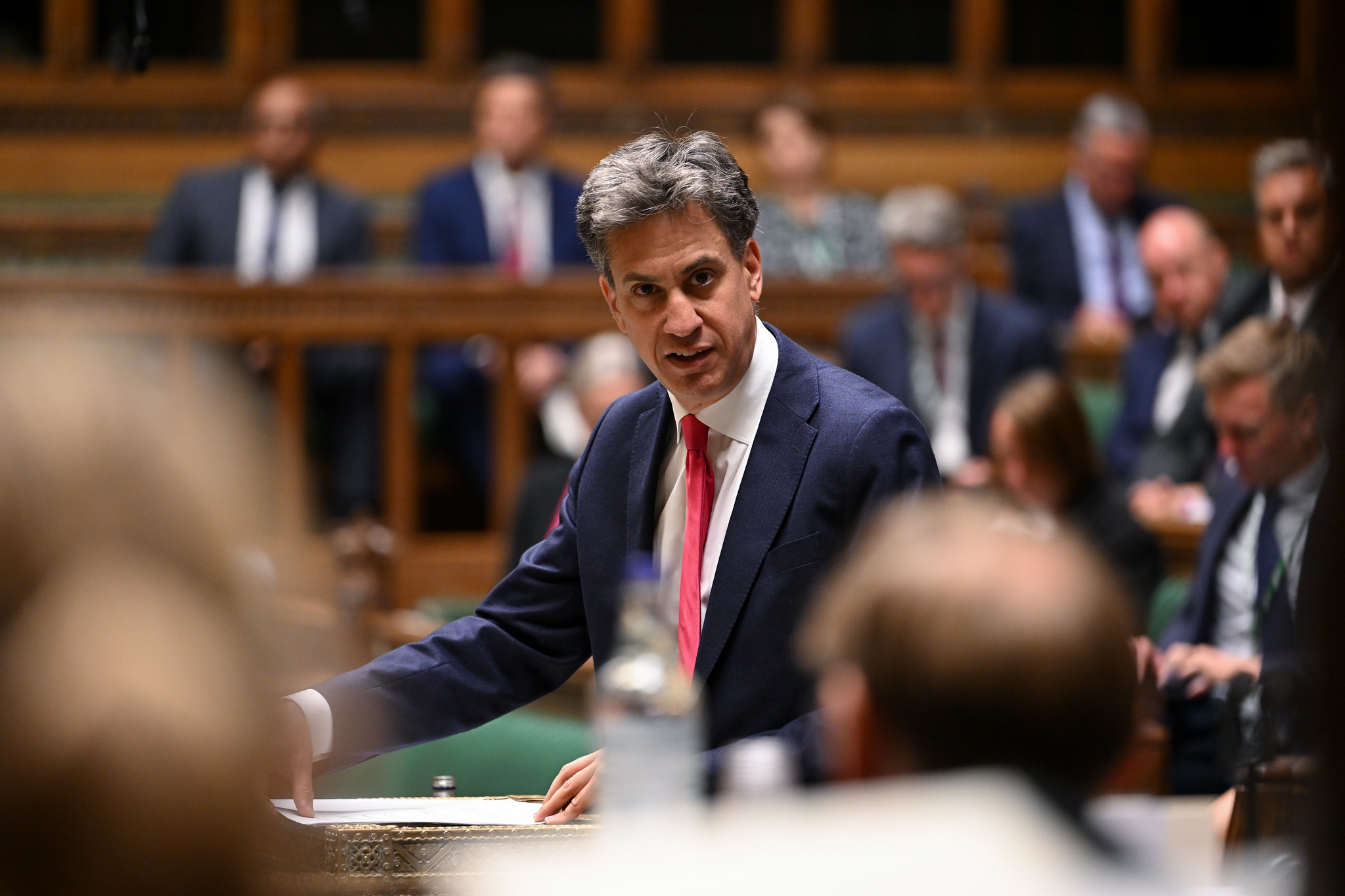
We are already getting a glimpse of what Miliband would be like in No. 11

Published

on

We are already getting a glimpse of what Miliband would be like in No. 11

Westminster is, as ever, a rumour mill. One of the latest doing the rounds concerns Ed Miliband – and whether his eventual destination in a future Labour government might be the Treasury. The failed Labour leader, now Energy Secretary, is increasingly tipped as a possible Chancellor in a post–Keir Starmer world.

But we may not need to speculate about what he would be like in No11. In many ways, the Miliband chancellorship is already on display.

Take energy policy. Miliband continues to press ahead with a ban on new North Sea drilling licences even as Norway – sharing the same basin – celebrates a string of new oil discoveries, including one of the largest in a decade. At the same time he maintains the North Sea windfall tax, widely faulted with hastening the decline of Britain’s oil and gas sector. The push towards ever more stringent net-zero obligations continues apace, even when the immediate effect is to increase costs for British taxpayers and businesses.

What is striking is how little this seems to trouble him – even when allies offer their warnings. Tony Blair has said the UK is heading in the wrong direction, and urged a reversal in the ban on new licences. Greg Jackson, the chief executive of Octopus Energy and hardly a fossil-fuel diehard, has pointed out that if Britain is going to use gas, it might as well use domestic supplies rather than importing liquefied natural gas from overseas. Even the chair of Miliband’s own GB Energy has cautioned that “oil and gas is our foundation”, warning of “haemorrhaging workers too fast and risks losing supply chains”.

Advertisement

None of it appears to matter. Miliband presses on regardless.

It is a revealing trait and this set of policies perhaps one of the clearest examples of just how uncompromising he is – putting dogged pursuit of his own pet projects and ideology at the cost of other people’s finances.

Miliband’s view is that he can centralise everything and see it run through the state. Consider GB Energy itself – the much-trumpeted state-backed energy company which, somewhat awkwardly, will not actually produce any energy. Miliband promised that it would lead to “mind-blowing” reductions in household bills. For now, it looks rather more like a vanity vehicle for his own ideology. Or take his intervention in the wind sector, where unionisation has effectively been mandated by government fiat.

As one Tory puts it bluntly: “He basically hates markets and doesn’t meet with business.”

Advertisement

The signs of what a Miliband Treasury might look like extend well beyond energy. During budget debates he has been among the most vocal advocates of scrapping the two-child benefit cap, accusing Conservatives who support it of seeking “to blame the poor for their poverty”.

Quite aside from that row, he bragged about how he has long championed higher taxes across a familiar list of targets: expensive homes, landlords, and gambling firms among them.

His broader philosophy was neatly summarised:

“Our vision of what makes an economy succeed is different from that of Conservative Members. We believe that public investment crowds in and does not crowd out private investment; that the only route to economic success is a government who support industry and workers with a proper industrial strategy; and that rights at work and strong trade unions are not an impediment to a good economy but an essential ingredient of it.”

Advertisement

Let’s take a look at how that vision is going: Good luck with private investment when this Labour government has seeb business confidence at some of its lowest levels; Industries, like hospitality, have been crying out for help as they collapse under Labour’s tax rises; And it’s all well and good saying you’re trying to create new workers’ rights, but what good does that do them when employers can’t afford to hire in the first place.

The two-child cap debate illustrates another tension. Conservatives have pointed out that retaining the cap would save roughly £3.2 billion – enough, they argue, to fund the recruitment of 20,000 additional soldiers, alongside their accommodation and equipment.

Which raises a further question: where exactly would defence spending rank in a Miliband Treasury? He famously opposed military action against Bashar al-Assad’s regime in Syria in 2013, whipping Labour MPs to block intervention. More recently, he has expressed deep reservations about military action against Iran, and reports suggest he was among those wary of even allowing the United States to use British bases for strikes.

Would a Chancellor Miliband be eager to prioritise defence spending in a more dangerous world?

Advertisement

To look again at his budget remarks, he said: “With the world at its most perilous for generations, their [Conservative] policy is to cross their fingers and hope…” and that is exactly what he is doing. It is a perilous moment for the country’s finances, for energy and fuel prices, yet Miliband presses on with his uncompromising ideology and hoping for the best.

Shadow energy secretary Claire Coutinho put the dividing line starkly in response to him in the Commons: “Labour Members believe the best way out of poverty is welfare; I think the best way is jobs and growth.”

If Miliband ever does make it to No. 11, that argument may well define his chancellorship. The trouble for Britain is that, on current evidence, we are already beginning to see how it might turn out.

Advertisement

Source link

Continue Reading

Politics

Chris Philp: With crime and antisocial behaviour unacceptably high it’s time to ‘Take Back our Streets’

Published

on

Chris Philp: With crime and antisocial behaviour unacceptably high it's time to 'Take Back our Streets'

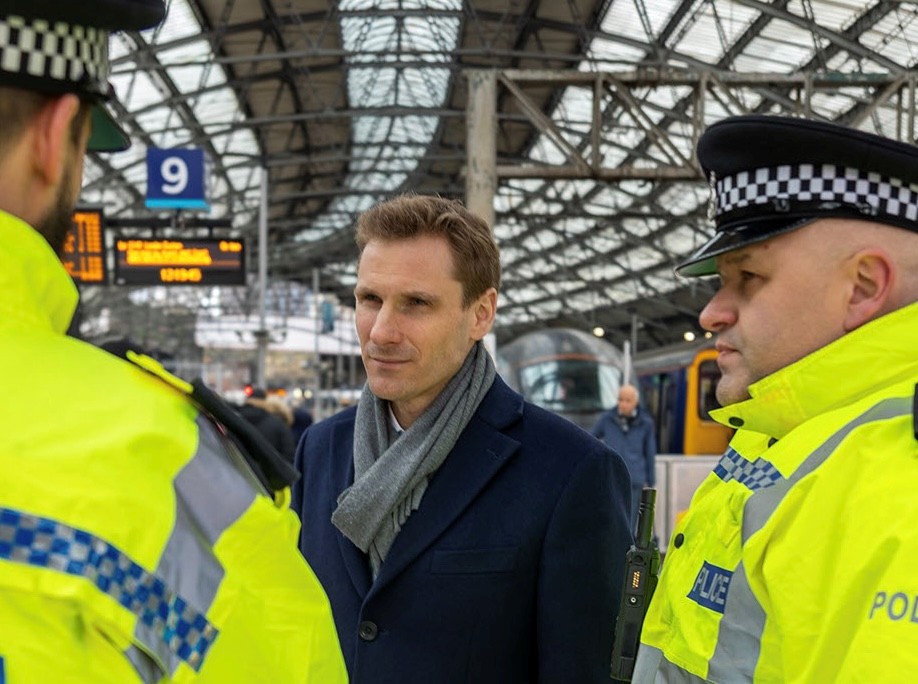
Chris Philp MP is the Shadow Home Secretary.

We can all feel that order is breaking down on our streets and within our communities.

Crime and antisocial behaviour are at unacceptably high levels and the social contract that helped make Britain unique is coming apart at the seams.

We used to be known as one of the most orderly countries in the world. But now, every day, too many people witness things that anger and alarm them: towns blighted by graffiti and litter, cannabis being openly dealt and smoked on the street, shoplifting rampant, phones being snatched or yet another headline of a young life cut short by a knife. Our communities have become less civil and more dangerous. I hear it everywhere I go, with good, ordinary, decent citizens telling me they are fed up. People are often afraid on their own high streets.

Advertisement

It does not have to be like this.

We know that when respect for the rules that bind our communities together breaks down, it doesn’t just make the law-abiding majority feel unsafe, but it also fuels a culture of lawlessness that leads to far worse crimes.

The first duty of government is to protect the public. That means taking action against those who make their neighbours’ lives a misery. It means backing our police officers to enforce the law – every law – no matter the perpetrator.

As Conservatives, we are clear who we stand for: the law-abiding majority who agree the police should be backed to enforce the law on everyone.

Advertisement

That’s we we’ve launched our plan to Take Back Our Streets.

The first priority is restoring a strong police presence where crime is most concentrated. Conservatives will recruit 10,000 extra police officers and deploy hotspot patrolling across the 2,000 highest-crime neighbourhoods. A quarter of all crime occurs in these 5 per cent of neighbourhoods. Concentrating visible policing in these places prevents offences and deters repeat offending. Our plan to hire 10,000 more officers will allow us to concentrate police presence in these areas and prevent around 35,000 crimes, including violence, theft, anti-social behaviour and public drug use.

We will also give officers the tools they need to disrupt crime before it escalates. Conservatives will triple the use of Stop and Search to take knives and drugs off the streets and increase arrests.  Stop and Search is one of the most effective tools for removing weapons and drugs and disrupting violent gangs. But political pressure not to use stop and search is shackling the police.  We will roll out stronger Section 60 coverage in hotspot areas and lower the bar to using stop and search by allowing officers to act on a single suspicion indicator outside those hotspots. This will deliver around one million additional searches a year and, based on detection rates, around 300,000 more arrests.

Technology will also play a role in strengthening enforcement, so we will roll out Live Facial Recognition in crime hotspots to catch wanted criminals.  Trials have already shown strong results, including 1,000 arrests of wanted criminals during a Metropolitan Police trial and a 12 per cent reduction in crime in Croydon town centre. Expanding its use in the 100 highest crime areas is expected to lead to around 22,000 arrests of wanted offenders.

Advertisement

Alongside stronger enforcement, our plan will ensure that low-level offences no longer go unanswered. Conservatives will bring in “Immediate Justice” for low-level offences, so police can issue swift, visible community penalties for offences such as criminal damage, drunk and disorderly behaviour, harassment without violence, minor assault and first-time drug possession. We will require offenders to clean graffiti, tidy parks and repair community spaces – with prosecution if they do not. These community penalties will deliver around 2 million hours of visible clean-up work while reinforcing consequences for offences.

The plan will also end the culture of police walking past obvious law-breaking. Conservatives will crack down on cannabis and end the culture of police walking by.  Two-thirds of police officers believe it cannabis use has effectively been decriminalised – in other words, the law is not being enforced. A walk-on-by culture has developed, not least because of political pressure from local leaders like Sadiq Khan. Even where the police do stop people, it often only leads to an informal on-street warning. Under the Conservative proposal, police would be required to intervene in all cases of cannabis possession, issuing formal cautions or Immediate Justice assignments for first offences, and automatic prosecution in magistrates’ courts for repeat offences.

Public safety will also be put first in the management of serious mental illness. Conservatives will overhaul Labour’s Mental Health Act and stamp out the ideology that has seen an obsession with racial targets put ahead of public safety – with tragic consequences. An excessive focus on reducing the use of sectioning on racial grounds, is allowing seriously mentally ill individuals to remain in communities, when they should be detained for the safety of the public and themselves.

We will also tackle the emerging forms of disorder that are making streets less safe. Conservatives will curb dangerous e-bikes and e-scooters on pavements, mandating police intervention and strengthening penalties.  These vehicles are increasingly used for snatch theft and to evade pursuit, and they pose a direct risk to pedestrians, particularly children and the elderly. Conservatives will update the law and raise penalties, so enforcement has real bite.

Advertisement

Finally, Conservatives will stamp out ghost plates that evade ANPR, enabling organised crime, dangerous driving, and wider lawlessness. Current penalties do not reflect the seriousness of number plate fraud which enables serious and organised crime. Conservatives will introduce tougher criminal consequences for manufacturing, selling, and using ANPR-evading plates, and will target the supply chain that makes this possible.

Britain works best when the rules are clear and enforced. The Conservative plan to Take Back Our Streets will restore visible policing, back officers to act decisively, and ensure that crime and anti-social behaviour face real consequences.

We are on the side of the law-abiding majority.   We will relentlessly pursue those whose criminal activity makes life intolerable for the majority with a zero tolerance approach.

It’s time to Take Back Our Streets.

Advertisement

Source link

Continue Reading

Trending

Copyright © 2025