
Business
Why Leading Omnichannel Brands Move To Unified Suites To Solve Data Gaps


The most reputable omnichannel brands face a growing issue with the data of their customers. Customers interact with sites, social media, email as well as physical stores on a regular basis.
Every channel gives useful feedback on how they feel and what they like about their experience. However, disconnected tools entrap the information in different platforms. Marketing can’t discern what reviews say regarding product problems.
Teams in charge of product development miss the patterns within support chats. Customer support is not able to understand the context of feedback from surveys. These data gaps create inconsistent experiences which frustrate customers.
Consumers expect brands to understand their past experiences across all touch points. Brands that do not pass this test frequently. Brands that are smart recognize that dispersed instruments cost their customers each day.
The Data Gap Problem: 10 Reasons Why Leading Omnichannel Brands Switch to Unified Suites
1. Fragmented Data Creates Blind Spots Across Channels
Unconnected systems make brands wonder about customer sentiment. Review data is located on one system and support tickets sit in another. Responses to surveys never get through to marketing teams creating campaigns. Teams in charge of product development make their choices without examining what their customers actually have to say.
How do these blind spots hurt brand performance? Incomplete data can lead to incorrect decision-making consistently. Teams address issues they spot and miss larger issues. There is no connection between reviews as well as support tickets.
The marketing automation review tool unifies every feedback source into the one source of truth which enables teams to see prior to making crucial business decisions.
2. Unified Data Enables True Omnichannel Personalization
The customers expect brands to be remembered by their brand across all channels. They expect recommendations based on purchase history and feedback. They don’t like repeating the same information that they have previously published elsewhere. Tools that are fragmented make an unidirectional experience impossible to offer.
Why does personalization drive customer loyalty? pertinent experiences help build emotional connections with brands. Brands feel more understood by customers when they keep track of their preferences. A unified customer review data feeds personalization engines equipped with intelligence. Each channel is guaranteed access to an identical user profile. This ensures trust and confidence that rivals cannot replicate easily.
3. Review Intelligence Improves Every Marketing Campaign
The customer reviews are an invaluable resource for marketing professionals who create campaigns. Customer language outperforms professional copy each time. Particular feedback shows exactly which characteristics customers are most excited about. Yet, tools that are not well-integrated hide this information in a place where marketers can’t discover it.
What makes review-powered marketing work more effectively? Authentic content resonates more deeply with prospective buyers. Customers trust their fellow customers more than the brand’s message.
A marketing automation reviews tool incorporates customer feedback to social media, email, as well as ad creatives. The integration increases participation across all channels of marketing.
4. Centralized Feedback Reveals Product Improvement Opportunities
Teams of product developers need input from customers for better products. Reviews show what features please customers and frustrate them. Tickets for support reveal frequent issues which require urgent attention. Yet, systems that are not integrated hide the information from decision makers in the product.
How does feedback on product performance create competitive advantage? creating what consumers actually need beats guessing each time.
The unification of reviews from the customer review data delivers complete feedback to product teams instantly. The review data connects praise for certain features that are worth expanding. Support complaints are linked in quality issues needing fixes. This information helps develop winning products.
5. Customer Service Resolves Issues Faster With Complete Context
Support personnel can resolve issues more efficiently with a full client background. If a customer calls and mentions a defect in the product might have provided photo proof. A third complainant about the shipping process could leave detailed feedback on the review. The tools that are fragmented hide this information for agents.
What is the reason that complete context increases customer satisfaction? Agents with knowledge can resolve problems faster and more effectively. They can refer back to past comments without asking the customer. They acknowledge the issues customers had documented in detail.
A marketing automation review tool delivers the review information within software for support. Agents can access all customer intelligence during every interaction. This information transforms service quality dramatically.
6. Unified Suites Eliminate Manual Data Transfer Work
Transferring data between tools that are not connected can take a lot of time. Exports for marketing review quotes for email campaign design. Support is manually searching for any feedback on customer tickets. Product teams require spreadsheets to review data weekly. Manual work is of no benefit while you consume
What is the significance of automation for team productivity? Every hour of shifting data takes time away from strategic work. Teams can analyze the insights of their teams rather than exporting the results. Teams could develop campaigns, instead of duplicating the same content.
A unified customer review data from customers review data eliminates this waste entirely. Each function can be connected with the other immediately.
7. Real-Time Visibility Enables Rapid Response To Issues
Problems with customers are spreading quicker than ever on social media. One negative incident can ruin brand reputation quickly. The tools that are not well-integrated delay the visibility of issues until it’s far too to be too late. Support is informed about problems weeks after the reviews are published. Teams from the product team discover problems when the returns have already risen.
What is the reason real-time visibility protects brand reputation? The speed of the problem determines whether it will get worse or can be resolved. Intervention at an early stage can prevent negative word-of-mouth from spreading.
The marketing review tool alerts each department at the same time about emerging issues. This ensures that no department operates in isolation when issues develop. Top brands recognize issues as they begin, not after they get out of control.
8. Consistent Syndication Amplifies Review Value Across Channels
Reviewing information on your website is a good idea for all customers who shop. Google shows star ratings for products with reviews that are marked up. Retail partners require social proof to convert shoppers through their online stores. Social commerce relies heavily on trust signals visible within platforms. Tools that are fragmented cannot provide this level of distribution.
How does syndication increase review ROI? Reviews that are single now affect shoppers across many ways. They are a part of Google prior to the time customers visit your website. They increase conversions on pages that partner with you, but which you can’t manage.
The unification of review data from customers review data syndicates feedback to each platform in a way that is automatic. Your best reviews will show up wherever users discover your product. The effect of this amplification is to increase the value of every review that is collected.
9. AI-Powered Analytics Reveal Hidden Patterns At Scale
Basic tools give basic statistics including average ratings as well as reviews per review. These metrics hide much more information about the truth about customer sentiment. The unified suites employ AI to conduct deep analyses throughout the entire spectrum of feedback sources. They can spot emerging trends before competitors notice their own. They bring up issues with their products that impact customer satisfaction and returns.
What are the reasons advanced analytics help make better choices? data determines which brands will be winners and losers. The most successful brands must be able to comprehend their customers more than rivals do. AI analyses patterns across millions of feedback sources instantly.
It provides insight into what features consumers appreciate and the issues that require to be addressed. The marketing automation review tool makes the information available to all teams. Teams of product developers create better products with input from customers. Marketing creates campaigns that are resonant with customers using authentic language.
10. Competitive Pressure Demands Unified Systems Now
Top competitors have already integrated their customer-feedback platforms. They collect more information and respond to insights more quickly. They identify trends before other companies take notice of their existence. The gulf between united and dispersed brands is growing every day. The consumer is increasingly looking for seamless, multichannel experience from all brands.
Google’s own internal research shows that omnichannel strategies lead to an increase of 80% in store visits. They boost the amount spent per visit by 4% when compared with single-channel methods .
How important is timing in competitive positioning? The advantages increase with time. Early adopters build feedback libraries that later movers are unable to compete with. They have analytical capabilities that others do not have. The consequences of waiting is that you will forever lose ground to quicker competitors. Brands that are leading in their market must act now, as delay will cost them market share they cannot recover.
Conclusion
Top omnichannel brands move to unified suites due to ten key reasons. The fragmented data can cause blind spots. Unified data enables personalization. Review intelligence improves campaigns. Centralized feedback helps identify product opportunities.
Service to customers resolve issues quicker through the context. Automated suites reduce manual labor. The ability to monitor real-time data allows for rapid response. Syndication increases review value. AI analytics reveal hidden patterns. Competitive pressure demands action.
The decision is based on one thing. Tools that are fragmented create data gaps. Unified suites provide visibility. That’s why the top companies are investing in marketing automation review tool and implementing unified customer review data. The brands that join now will know their customers better for years to come.

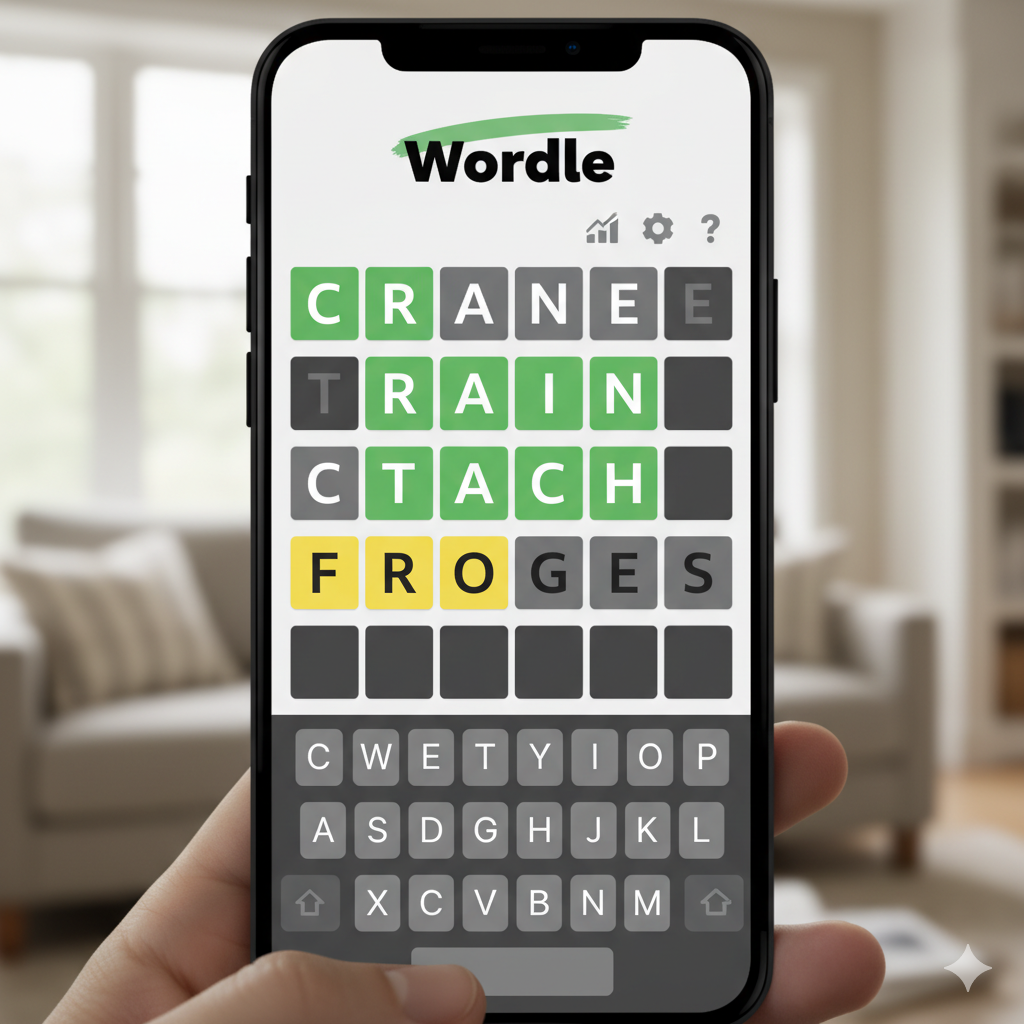
Wordle players logging in Saturday, April 4, 2026, faced puzzle No. 1750, a deceptively straightforward five-letter word that left some solvers scratching their heads despite its common usage in everyday language.
The New York Times-owned daily word game, created by Josh Wardle, continues its streak as one of the internet’s most popular brain teasers more than four years after its viral explosion. For today’s puzzle, the answer is SANDY, an adjective describing something covered with, full of or resembling sand.
According to The New York Times’ official Wordle review, today’s word means “composed of, full of or covered with sand.” Webster’s New World College Dictionary defines it similarly, noting its application to terrain, soil or even a light yellowish-brown color.
Spoiler-Free Hints for Wordle #1750
Players who prefer to solve independently can use these progressively revealing clues compiled from multiple gaming sites:
- The word contains exactly one vowel.
- There are no repeated letters.
- It is an adjective.
- Common synonyms include “dusty,” “gritty” or “tan.”
- It often describes beach or desert terrain with a loose, grainy texture.
- One popular culture association is the name of SpongeBob SquarePants’ best friend.
Additional strategic hints shared by solvers include starting with words that test common vowels and consonants. Many recommended opening guesses such as “SLATE,” “CRANE” or “AUDIO” to quickly eliminate or confirm key letters.
For those needing more targeted help, the fourth letter is “D” and the fifth letter is “Y,” according to detailed hint pages. The word starts with “S” and has a straightforward structure without tricky double letters or uncommon combinations.
The Official Answer and Analysis
Today’s Wordle answer is SANDY.
The solution proved accessible for many, with The New York Times noting that testers averaged around four to five guesses. Its simplicity — common letters in familiar positions — made it easier than some recent puzzles, though the beachy theme caught a few players off guard on a spring weekend.
SANDY fits neatly into Wordle’s mix of everyday vocabulary. It can refer literally to sand-covered shores, metaphorically to unstable ground (“sandy soil”) or even colloquially to hair or complexion colors. In pop culture, it evokes everything from the musical “Grease” character to the cheerful starfish in Nickelodeon’s long-running animated series.
Strategies That Worked for Puzzle #1750
Experienced Wordle enthusiasts shared successful opening sequences on social media and forums. Common paths included:
- Starting with “STARE” or “SLATE” to test S, A, R/E and T — quickly revealing the S and A.
- Following with “CANDY” or “HANDY,” which often locked in the “ANDY” ending pattern.
- Using “SHADY” as a strong third guess for many, confirming the D and narrowing the final letter.
Hard-mode players, who must use confirmed letters in subsequent guesses, reported slightly more challenge but still solved it efficiently. One viral thread described the sequence: “SLATE → SNACK → SHADY → SANDY” in four guesses.
The absence of repeated letters and the single vowel (A) helped solvers eliminate wrong paths quickly. Words with double letters like “SASSY” or “SANDD” were ruled out early.
Wordle’s Enduring Popularity in 2026
More than four years after The New York Times acquired the game in 2022, Wordle maintains a dedicated daily audience. The simple green-yellow-gray tile system, six-guess limit and shareable results grid continue to foster community and friendly competition.
On April 4, 2026, players posted streaks, near-misses and victory dances across X, Reddit and Facebook. Some noted the Easter weekend timing made the beach-themed word feel seasonally appropriate, even if many were focused on family gatherings rather than coastal vacations.
Recent puzzles leading up to No. 1750 included:
- April 3 (#1749): SINGE
- April 2 (#1748): SOBER
- April 1 (#1747): FIZZY
The progression from more abstract or action-oriented words to the concrete “SANDY” offered a gentle reset for some solvers.
Tips for Improving Your Wordle Game
Whether you’re a newcomer or chasing a 200-day streak, experts recommend these strategies:
- Start strong: Choose opening words with multiple vowels and common consonants (A, E, R, S, T, L, N).
- Think in patterns: After the first guess, prioritize words that test new information rather than repeating eliminated letters.
- Consider frequency: Common English letter distributions (E most frequent, then T, A, O, I, N, S) guide efficient elimination.
- Use the grid: Yellow letters must move positions; green letters stay fixed.
- Avoid proper nouns and obscure terms: Wordle draws from a curated list of common five-letter words.
For families playing together this Easter weekend, Wordle serves as an easy group activity. Children and adults alike can participate, with younger players learning vocabulary while elders share solving logic.
Community Reactions and Score Distribution
Early data from The New York Times suggested a higher-than-average success rate for puzzle #1750, with many players posting 3/6 or 4/6 results. Comments on the official review page ranged from “too easy” to “perfect beach word for spring.”
Some solvers admitted overthinking it, guessing “SHADY,” “SANDY” alternatives like “SILTY” or “GRAVEL” before landing on the correct term. Others celebrated quick solves, with one user joking that “SANDY” felt like a reward after tougher recent puzzles.
Looking Ahead to Wordle #1751
With Easter Sunday on April 5, 2026, tomorrow’s puzzle (#1751) is expected to maintain the game’s balance of accessibility and challenge. Players are advised to check official sources or trusted hint sites for fresh clues rather than relying on spoilers.
The New York Times continues to offer the core game free with limited daily plays, while Wordle Unlimited and other fan variants provide endless practice. Official statistics show millions of daily attempts worldwide, cementing Wordle’s status as a cultural touchstone.
For those who missed today’s solution or want to review past puzzles, archives are available through The New York Times and fan sites. Remember: tomorrow brings a fresh grid and new opportunity to test your vocabulary and deduction skills.
Whether you solved SANDY in three guesses or needed all six, the real win remains the daily mental exercise and the shared experience with millions of fellow players. Happy Easter to those celebrating, and good luck with future Wordles.
The New York Times Connections puzzle for Saturday, April 4, 2026 — No. 1,028 — challenged players with 16 words that invited creative associations ranging from idioms to geography and summer activities.
The daily word-grouping game, launched in 2023, requires solvers to sort 16 words into four groups of four based on shared themes. Categories range in difficulty from yellow (easiest) to purple (hardest). Testers rated today’s puzzle a relatively gentle 2 out of 5 in difficulty, according to the official companion article.
The 16 words presented were: Dogs, Let, Lie, Sleeping, Cover, Mask, Screen, Shield, Bluff, Cape, Point, Spit, Band, Base, Boot, Summer.
Here are the complete solutions, with spoiler warnings for those still solving.
Yellow (Easiest): “Let Sleeping Dogs Lie” Dogs, Let, Lie, Sleeping
This category draws directly from the well-known idiom advising people to avoid stirring up old troubles or controversies. The phrase suggests leaving a situation undisturbed, much like not waking a resting dog. Solvers who spotted the partial idiom early often breezed through this group.
Green: Obscure Cover, Mask, Screen, Shield
These words all relate to hiding, protecting or placing something in front of another object or concept. A “cover” story conceals truth, a “mask” hides identity, a “screen” can block view or information, and a “shield” protects from harm or scrutiny. The category rewards recognition of verbs or nouns used metaphorically for concealment.
Blue: Coastal Landforms Bluff, Cape, Point, Spit
Geography enthusiasts likely excelled here. These terms describe specific features along coastlines or bodies of water. A “bluff” is a steep cliff or bank, a “cape” is a headland jutting into the sea, a “point” is a narrow extension of land, and a “spit” is a narrow sandbar formed by water currents. The group highlights precise terminology from physical geography.
Purple (Hardest): _____ Camp Band, Base, Boot, Summer
This trickiest category involves words that commonly precede or pair with “camp” to form compound terms or familiar phrases. “Band camp” refers to music-focused youth programs, “base camp” is a mountaineering or expedition staging area, “boot camp” denotes rigorous military-style training, and “summer camp” evokes classic childhood experiences with cabins and activities. The purple difficulty stems from the need to think beyond literal meanings to common collocations.
Solving Strategies and Tips
Many players approached the grid by first scanning for obvious idioms or strong thematic clusters. Spotting “Sleeping,” “Dogs,” “Let” and “Lie” often unlocked the yellow category quickly, providing momentum.
For the green group, considering synonyms for “hide” or “protect” helped connect the dots. The blue coastal terms stood out to those with travel or nature knowledge, though “spit” as a landform occasionally tripped up solvers unfamiliar with the term.
The purple category proved most elusive for some, requiring a lateral leap to “camp” as a connector. Hints from sites like TheGamer suggested thinking about activities or places associated with tents and structured programs, particularly those popular with youngsters.
Experienced solvers recommend starting with potential idioms or multi-meaning words. Grouping by part of speech or looking for words that fit common prefixes/suffixes can also accelerate progress. On hard mode or when stuck, eliminating one strong category often reveals connections in the remaining words.
Community Reactions and Performance
Early feedback on social platforms and the NYT companion comments described the puzzle as fair and enjoyable, with many achieving perfect or near-perfect solves. The low difficulty rating contributed to higher success rates compared to more punishing recent editions.
Some players noted the satisfying “aha” moment when connecting the coastal landforms or realizing the “camp” pairings. Others admitted overthinking the purple category, initially linking words to music or military themes without landing on the shared “camp” element.
The puzzle’s timing on a spring Saturday — coinciding with Easter weekend observances for many — added a light, seasonal feel, though no direct holiday references appeared in the grid.
Connections’ Growing Popularity
Since its debut, Connections has become a staple alongside Wordle and the Mini Crossword in The New York Times Games portfolio. Millions play daily, sharing color-coded grids on social media and competing for streaks. The game’s appeal lies in its blend of vocabulary, lateral thinking and cultural knowledge without requiring specialized expertise.
For April 4, 2026, the mix of an idiom, verbs of concealment, geographic features and compound phrases offered balanced challenge. Players who missed categories could still complete the puzzle with lives remaining, as the NYT system allows four mistakes before ending the attempt.
Tips for Future Puzzles
- Look for words with multiple common usages.
- Consider idioms, song titles, brand names or pop culture references.
- Group by theme rather than obvious synonyms.
- Use the color progression: solve easier groups first to reduce options.
- If stuck, pause and return with fresh eyes — Connections rewards patience.
The New York Times provides an official companion article with incremental hints, revealing one word per category for those needing a nudge without full spoilers. Community sites and bots offer additional analysis of puzzle difficulty based on aggregate solve data.
Looking ahead, Sunday’s puzzle (No. 1,029) will present a fresh grid for Easter Sunday players seeking a mental break between family activities.
Whether you nailed all four categories in order or needed several attempts, today’s Connections reinforced why the game resonates: it turns ordinary words into surprising connections and delivers that rewarding click when groups align.
For those who enjoy tracking performance, the NYT Games app and website save daily results and statistics. Sharing solves with friends or family can turn the solitary puzzle into a group activity, especially during holiday weekends.
The April 4 edition stands as an accessible entry in the Connections catalog, welcoming both newcomers and veterans with clever but not cruel wordplay.

The age at which people can start receiving the state pension is going up in stages over the next two years.

Drugs Made In America Acquisition II Corp. enters $300,000 convertible note agreement

Form 13D/A Stardust Power Inc. For: 3 April
Business
First Resource Bancorp, Inc. (FRSB) Presents at Banking Virtual Investor Conference – Slideshow

First Resource Bancorp, Inc. (FRSB) Presents at Banking Virtual Investor Conference – Slideshow


Lucid misses first-quarter vehicle delivery estimates on supplier disruptions
Form 13D/A WILLIS LEASE FINANCE CORP For: 3 April

Apple SVP O’Brien sells $7.6m in AAPL stock

Majalya of Trinet group sells $28,690 in stock

AI animation studio Toonstar will turn books into digital shows for HarperCollins
Man City vs Liverpool FC: FA Cup prediction, kick-off time, TV, live stream, team news, h2h results, odds

Today’s Wordle Hints, Answer and Help for April 4 2026 Puzzle #1750 Revealed


-

 NewsBeat1 day ago
Steven Gerrard disagrees with Gary Neville over ‘shock’ Chelsea and Arsenal claim | Football
-

 Business24 hours ago
No Jackpot Winner and $194 Million Prize Rolls Over
-
Entertainment4 days ago
Fans slam 'heartbreaking' Barbie Dream Fest convention debacle with 'cardboard cutout' experience
-

 Crypto World2 days ago
Gold Price Prediction: Worst Month in 17 Years fo Save Haven Rock
-

 Fashion5 hours ago
Weekend Open Thread: Spanx – Corporette.com
-

 Tech5 days ago
The Pixel 10a doesn’t have a camera bump, and it’s great
-
 Entertainment6 days ago
Lana Del Rey Celebrates Her Husband’s 51st Birthday In New Post
-
Crypto World3 days ago
Dems press CFTC, ethics board on prediction-market insider trades
-

 Tech5 days ago
Avatar Legends: The Fighting Game comes out in July and it looks pretty slick
-

 Sports3 days ago
Tallest college basketball player ever, standing at 7-foot-9, entering transfer portal
-

 Tech4 days ago
EE TV is using AI to help you find something to watch
-

 Fashion6 days ago
Amazon Sundays: Soft Spring Layers
-

 Business2 days ago
Login and Checkout Issues Spark Merchant Frustration
-

 Fashion7 days ago
When Evening Dressing Gets Colorful for Spring
-

 Tech5 days ago
Elon Musk’s last co-founder reportedly leaves xAI
-

 Tech4 days ago
How to back up your iPhone & iPad to your Mac before something goes wrong
-

 Tech4 days ago
Apple will hide your email address from apps and websites, but not cops
-

 Politics4 days ago
Should Trump Be Scared Strait?
-

 Crypto World4 days ago
U.S. rule change may open trillions in 401(k) funds to crypto
-

 Tech4 days ago
Flipsnack and the shift toward motion-first business content with living visuals
You must be logged in to post a comment Login