
Tech
Why 2026 will be the year of governed cybersecurity AI

The global average cost of a data breach fell to USD 4.44 million in 2025, a 9 per cent drop and the first decline in five years, according to IBM’s Cost of a Data Breach Report. On the surface, that looks like progress. Security AI and automation are finally paying dividends, compressing detection timelines and trimming investigative overhead.
But the headline number obscures a more uncomfortable reality. Organisations with extensive automation reported breach costs nearly USD 1.9 million lower than those relying on manual processes. The gap between leaders and laggards is not closing – it is widening. And the very AI tools driving those savings are introducing a new category of risk that regulators, insurers and boards can no longer ignore.
The automation paradox
Security operations centres have embraced AI with the urgency of an industry running out of analysts. Burnout-driven churn rates exceed 25 per cent annually in many SOC teams, among the highest in IT. Replacing a trained analyst typically takes six to twelve months. The maths is brutal: organisations cannot hire their way to resilience.
Automation was supposed to solve this. And in narrow, well-defined workflows, alert triage, log correlation, repetitive enrichment tasks – it has. The Nextgen 2025/2026 Cybersecurity Trends Report estimates that industry telemetry in 2025 reached 308 petabytes across more than four million identities, endpoints and cloud assets, producing nearly 30 million investigative leads. Analysts confirmed only around 93,000 genuine threats from that mountain, a hit rate of just 0.3 per cent. Without automation, the volume alone would be unmanageable.

The 💜 of EU tech
The latest rumblings from the EU tech scene, a story from our wise ol’ founder Boris, and some questionable AI art. It’s free, every week, in your inbox. Sign up now!
Yet Gartner’s 2025 Hype Cycle for Security Operations places AI SOC agents at the Peak of Inflated Expectations, warning that claims still outpace sustained, measurable improvement. Initial adoption frequently adds work before it reduces it. False positives and hallucinations remain genuine operational risks. And cost models often limit broad deployment across SOC roles.
The paradox is clear: organisations need AI to cope with the data flood, but ungoverned AI introduces the very blind spots it was meant to eliminate. IBM’s 2025 report found that shadow AI, staff using unsanctioned generative AI tools to process sensitive data, added an average of USD 670,000 to breach costs where present. A staggering 97 per cent of breached organisations that experienced an AI-related security incident lacked proper AI access controls. Meanwhile, 63 per cent of surveyed organisations admitted they have no AI governance policies in place at all.
The implication is stark. Automation without governance does not reduce risk, it redistributes it. And in a regulatory climate that increasingly demands transparency, ungoverned AI in the SOC is not just a technical liability. It is a compliance exposure.
When alert fatigue becomes a breach vector
The human cost is measurable, and it extends well beyond budget lines. Studies cited in the Nextgen report show SOC teams routinely ignore or dismiss up to 30 per cent of incoming alerts – not through negligence, but necessity. When every alert looks the same and context arrives fragmented across disconnected consoles, skilled analysts are forced to triage by instinct rather than evidence.
The consequences vary by sector, but the pattern repeats. In healthcare, still the costliest industry for breaches at USD 7.42 million per incident and 279 days to contain – alert fatigue is not merely an IT problem. ENISA’s dataset of 215 healthcare incidents between 2021 and 2023 found that 54 per cent involved ransomware, with patient data the primary target in 30 per cent of cases. Hospitals have reported diverted ambulances and delayed surgeries directly tied to stretched staff and clogged detection pipelines.
In manufacturing and energy, where NIS2 enforcement began in 2025, a single day of downtime at a high-throughput plant can cost millions of euros. Adversaries increasingly target industrial control systems by pivoting through poorly segmented IT networks, exploiting exactly the kind of ambiguous, context-dependent alerts that overwhelmed analysts tend to dismiss.
The financial data reinforces the point. Breaches contained in under 200 days averaged USD 3.87 million in 2025, while those stretching beyond that threshold averaged USD 5.01 million. Multi-environment incidents, spanning cloud, SaaS and on-premises infrastructure simultaneously, were costlier still, averaging USD 5.05 million with lifecycles approaching 276 days. The operating environment dictates complexity, and complexity dictates cost.
The lesson from 2025 is that sheer data volume will only increase, but the teams that succeed are those treating correlation and enrichment as architectural necessities rather than optional add-ons.
Europe’s regulatory convergence
Three regulatory frameworks are now converging on a single demand: prove resilience continuously, not just report it after the fact.
The Digital Operational Resilience Act (DORA), which came into force across the EU in January 2025, reframes cybersecurity for financial services around operational resilience during severe IT disruptions. Its reporting requirement is the most disruptive element – institutions must submit incident reports within hours, backed by forensic, audit-grade evidence. Logs must be digitally signed and time-stamped to survive regulator scrutiny months later.
The NIS2 Directive, transposed into national law across Europe in 2024–2025, expanded the regulatory perimeter from seven sectors to eighteen essential and important sectors. In Romania, it was transposed as Law 124/2025, explicitly naming manufacturing as a regulated sector for the first time, forcing production facilities to adopt compliance frameworks on par with hospitals and banks. Under NIS2, boards of directors are directly accountable, with penalties including fines and disqualification from holding directorships in the EU.
And then there is the EU AI Act, whose most substantive obligations take effect on 2 August 2026. High-risk AI systems, a category that encompasses many security automation tools, will need to demonstrate compliance with requirements around risk management, data governance, technical documentation, transparency, human oversight, accuracy, robustness and cybersecurity. Providers must implement technical measures against data poisoning, model evasion and adversarial attacks.
For global financial groups, the complexity multiplies. A single breach may require simultaneous reporting under DORA, GDPR and national frameworks, each with different formats and deadlines. For manufacturers newly brought under NIS2’s scope, the challenge is even more fundamental: many lack the tooling infrastructure to produce compliance-grade evidence at all, let alone under time pressure.
Together, these three frameworks create a regulatory environment where cybersecurity AI cannot simply be effective – it must be auditable, explainable and governed. The question organisations face is no longer “how secure are we?” but “can we demonstrate it to regulators within hours?“. For organisations evaluating platforms built for this regulatory environment, a recent comparison of European SIEM vendors provides additional context.
The case for governed autonomy
This regulatory convergence is reshaping what good security architecture looks like. The industry is shifting from rule-based automation – where playbooks execute predetermined steps, toward what might be called governed autonomy: semi-autonomous SOC operations with built-in compliance guardrails.
In a governed autonomy model, AI does not replace human judgement. It narrows the decision space. Correlation happens at ingestion, collapsing dozens of fragmented alerts into a single enriched case with full audit evidence.
UEBA scoring ranks anomalous identities and assets by risk, so analysts focus on what matters rather than wading through noise. And every investigation timeline doubles as a compliance artefact, digitally signed, framework-mapped and ready for regulator export.
The architectural principle is lean: every security case is simultaneously a compliance case. Analysts investigate once, and the system produces both operational outputs and regulator-ready reports. This avoids the duplication that plagues organisations running separate SIEM, SOAR and compliance tools, each adding cost, latency and integration effort.
European platforms are increasingly built around this philosophy. Romania-based Nextgen Software, for example, designed its CYBERQUEST platform to unify detection, investigation and compliance reporting within a single workflow, so that every enriched case automatically generates the audit trail DORA and NIS2 demand. Its agentless OT monitoring module addresses a gap that matters for manufacturers and utilities: visibility into industrial control systems without deploying intrusive endpoint agents. Similar convergence efforts are visible across the European vendor landscape, from Nordic SIEM providers building compliance-ready exports to German-led initiatives embedding ISO 27001 and NIS2 mappings directly into detection logic.
From assistants to agents – carefully
The next frontier is the move from AI assistants to AI agents systems that do not merely suggest next steps but actively execute detection, investigation and response workflows. It is a transition the industry is approaching with a mixture of ambition and caution.
Vlad Gladin, CTO of Nextgen Software, describes this evolution in practical terms: “Our Cyber Minds AI Personas are evolving from advisory assistants into context-aware investigation agents. Rather than simply recommending a response, these agents will be able to correlate telemetry across identity, network and endpoint data in real time, conduct preliminary forensic analysis, and present analysts with an enriched investigation narrative, not a queue of disconnected alerts. The goal is not to remove the analyst from the loop, but to ensure that when they engage, the context is already assembled.”
This mirrors the broader industry trajectory. Gartner recommends treating AI SOC agents as workflow augmentation tools rather than autonomous replacements, with strong emphasis on maintaining human oversight. The concern is legitimate: over-automation introduces risk if agents act on flawed assumptions, and most current use cases remain narrow and task-specific rather than end-to-end.
The governed approach means building trust incrementally. Start with automated enrichment and case assembly. Layer in UEBA-driven prioritisation. Only then extend to semi-autonomous response actions – and always with audit trails that a regulator or insurer can verify after the fact.
There is a reason this incremental model resonates particularly in Europe. The continent’s regulatory landscape rewards demonstrable control over raw capability. An AI agent that can triage a thousand alerts per hour is impressive; an AI agent that can triage a thousand alerts per hour and produce a DORA-compliant incident timeline for each one is bankable. The commercial logic and the regulatory logic are converging on the same architectural requirements.
What 2026 demands
The organisations best positioned for 2026 are not necessarily those with the most advanced AI, but those that can prove their AI is trustworthy. In a landscape where DORA demands forensic evidence within hours, NIS2 holds boards personally liable, and the EU AI Act requires demonstrable governance of high-risk systems, the real differentiator is not speed of detection but speed of demonstrable trust.
This means compliance cannot remain a bolt-on exercise performed quarterly by a separate team. It must be embedded in the detection-to-resolution workflow, generated automatically as a by-product of incident handling. Platforms that deliver audit-ready evidence as a natural output of operations, rather than requiring analysts to reconstruct it after the fact, will set the new standard.
The cybersecurity industry spent the past decade racing to automate. In 2026, the race shifts to governing that automation, proving to regulators, insurers and boards that the machines defending the network are themselves accountable. The winners will not be the organisations with the most AI. They will be the ones whose AI can show its working.


HarperCollins is tapping into AI to bring some of its book franchises to life. Specifically, the publisher is teaming up with Toonstar, an AI animation studio, to turn them into digital shows. The first project will be an adaptation of Lisa Greenwald’s “Friendship List” series, which will also be joined by a graphic novel.
You’d be forgiven for being unaware of Toonstar, a studio that received some buzzy early on for simplifying typically complex animation pipelines with AI, but has mostly remained under the radar. Its biggest claim to fame is producing StEvEn and Parker YouTube series, which has amassed 3.38 million subscribers and sometimes has episodes reaching around a million views. It’s not something I’ve heard animation fans speaking about, though. And honestly, it was tough to sit through a few minutes of its sub-South Park animation.
“By leaning into the [AI] technology, we can make full episodes 80 percent faster and 90 percent cheaper than industry norms,” Toonstar co-founder John Attanasio, told The New York Times last year. In that same interview, the company revealed that it uses AI across its production, including having it dub dialog for international audiences, as well as working on storylines.
Toonstar initially pitched itself as an animation studio leaning into Web3 and NFTs, but those technologies seem virtually absent from the company’s presence today. Space Junk, one of its early series, was “put on hold for a variety of reasons,” a representative told Engadget. “It’s possible we’ll resurrect the concept in the future,” they added. Its original domain now points to a crypto gambling site.
“We’re honored to bring Friendship List to life as an animated series,” Attanasio said in a press release. “Our artist-centered approach ensures these beloved characters and stories stay true to the author’s vision, while our Ink & Pixel production technology enables fast, high-quality production at scale which unlocks the ability to meet audiences where and when they enjoy content today.”
Toonstar has certainly proved it can make “content” for YouTube. Can it actually produce an enjoyable animat edshow? That’s another question entirely.

Iranian strikes have reportedly knocked out key AWS availability zones in Bahrain and Dubai, leaving parts of both regions effectively offline for an extended period and forcing Amazon to urge teams and customers to shift workloads elsewhere. “These two regions continue to be impaired, and services should not expect to be operating with normal levels of redundancy and resiliency,” an internal Amazon communication memo reads. “We are actively working to free and reserve as much capacity as possible in the region for customers, and services should be scaled to the minimal footprint required to support customer migration.” Big Technology reports: With the war now nearing its sixth week, Iran has made Amazon infrastructure in the Gulf an economic target and is now eyeing its peers. Amazon’s Bahrain facilities have been hit multiple times, including a Wednesday strike that caused a fire. And its facilities in the UAE also sustained multiple hits. The IRGC is threatening multiple other U.S. tech giants, including Microsoft, Google, and Apple.
Amazons infrastructure in Bahrain and Dubai each have three ‘availability zones’ or clusters of compute. Both Bahrain and Dubai have a zones that are “hard down” and and “impaired but functioning,” per the internal communication. “We do not have a timeline for when DXB and BAH will return to normal operations,” the internal post said.

Researchers have determined that Microsoft’s LinkedIn is scanning browser plug-ins and other information without permission, building user profiles using data that the company did not get permission to take.

Safari
A European advocacy group claims LinkedIn is probing browser extensions through its website code. Fairlinked e.V. published its “BrowserGate” report alleging LinkedIn detects installed browser extensions by probing for known identifiers through JavaScript. The group says the technique reveals personally identifiable information.
Safari users are less likely to be affected by this specific mechanism, based on how extension detection typically works across browsers. Apple’s browser model limits fingerprinting surfaces, which reduces how much information sites can infer from installed extensions.
Continue Reading on AppleInsider | Discuss on our Forums
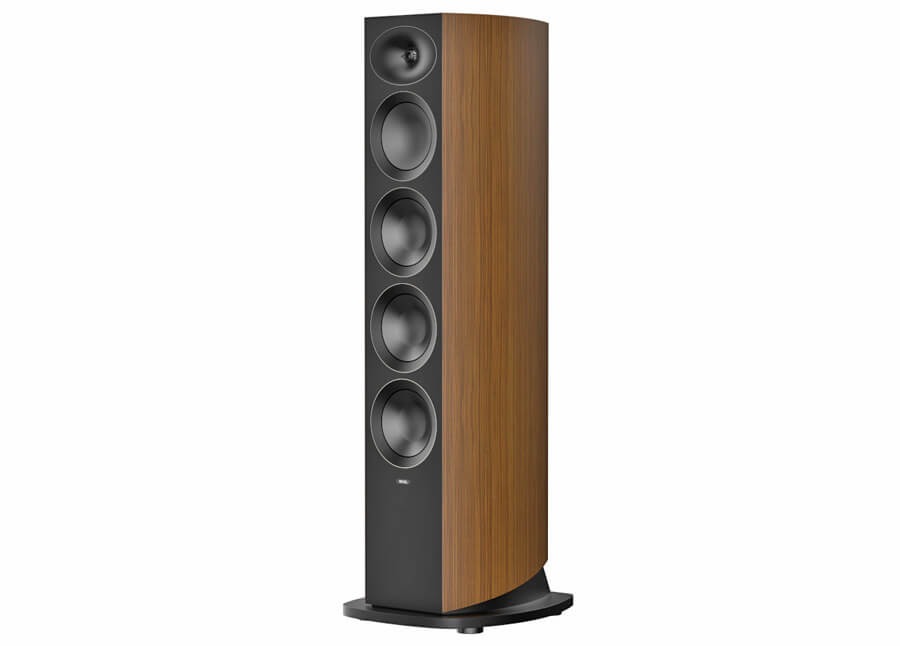
Revel is heading into AXPONA 2026 (April 10-12) with a clear focus: the debut of its new Performa4 speaker series, expected to fall between $2,000 and $7,000 per pair. Under the HARMAN Luxury Audio Group umbrella, which also includes Arcam, JBL Synthesis, Lexicon, and Mark Levinson, Revel isn’t going after statement pricing here. Performa4 is aimed at the part of the market where most serious systems are actually built, and where the competition is crowded, well established, and not particularly forgiving.
Revel Performa4 Speaker Series
Revel’s Performa4 Series is a new loudspeaker line built on the company’s established approach to acoustic design and measurement. It reflects three decades of engineering focused on controlled performance and consistent results in real-world listening environments.
Revel’s Performa4 Series consists of two floorstanding models (F346 and F345), two bookshelf speakers (M146 and M145), a center channel (C245), and a powered subwoofer (B140). With multiple configurations available, the Performa4 lineup can be used in both two-channel music systems and multichannel home theater setups.
“At Revel, science is at the heart of everything we do. The Performa4 series represents the culmination of thousands of hours of research, development, and real-world testing. With our new 7th-generation Acoustic Lens waveguide and advanced DCC and MCC transducers, we’ve raised the bar for what’s possible in this class,” said Jim Garrett, Senior Director of Product Strategy and Planning at HARMAN Luxury Audio.
Acoustic Lens Waveguide, DCC and MCC Transducers Explained
The Performa4 series uses Revel’s Deep Ceramic Composite (DCC) and Micro Ceramic Composite (MCC) drivers, developed to improve stiffness while keeping mass low and reducing unwanted coloration.
Woofer and midrange drivers are built on cast aluminum frames designed with Finite Element Analysis to optimize airflow, control resonance, and maintain structural stability. Each driver also uses an inverted surround and integrated trim ring, which simplifies the front baffle and keeps the layout clean.
Revel’s 7th-generation Acoustic Lens waveguide is paired with a 1-inch DCC dome tweeter to improve integration with the midrange driver. The waveguide is designed to control dispersion more consistently across the listening area, while also supporting higher efficiency and lower distortion, including at off-axis positions.
Revel Performa4 Industrial Design
The Performa4 series adopts a clean, modern design that builds on Revel’s established cabinet approach without adding unnecessary complexity.
All models use magnetically attached grilles for a flush, hardware-free front panel, along with black accent detailing that keeps the visual profile consistent across the range. Cabinets are internally cross-braced to improve rigidity and reduce unwanted vibration.
Curved side panels are finished in real wood veneers, available in Natural Walnut and Black Walnut, offering a straightforward aesthetic that fits into both traditional and contemporary spaces.
Revel Performa4 Models
F346
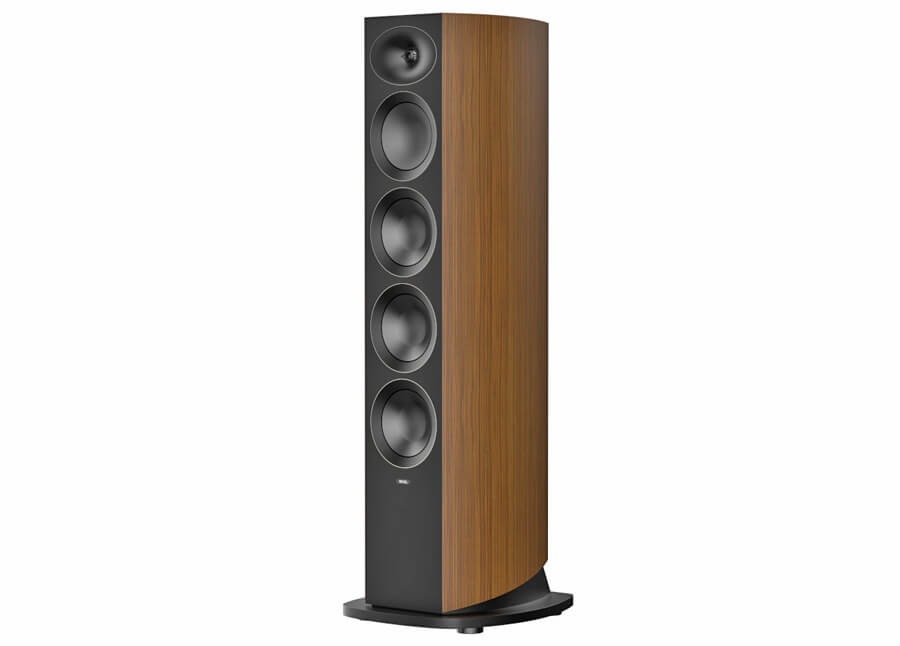
The F346 is a 3-way floorstanding loudspeaker and the top model in the Performa4 series.
It uses three 6.5-inch (165mm) MCC woofers, a 6.5-inch (165mm) DCC midrange driver, and a 1-inch (25mm) DCC dome tweeter paired with Revel’s 7th-generation Acoustic Lens waveguide.
Dual rear-firing ports provide low-frequency extension, while dual 5-way binding posts support bi-amping or bi-wiring. The cabinet is fitted with solid aluminum feet and includes optional floor spikes for added stability.
The F346 is rated for a frequency response of 30Hz to 40kHz (±6dB), with 88dB sensitivity and a nominal impedance of 6 ohms. Recommended amplifier power ranges from 20 to 250 watts.
F345
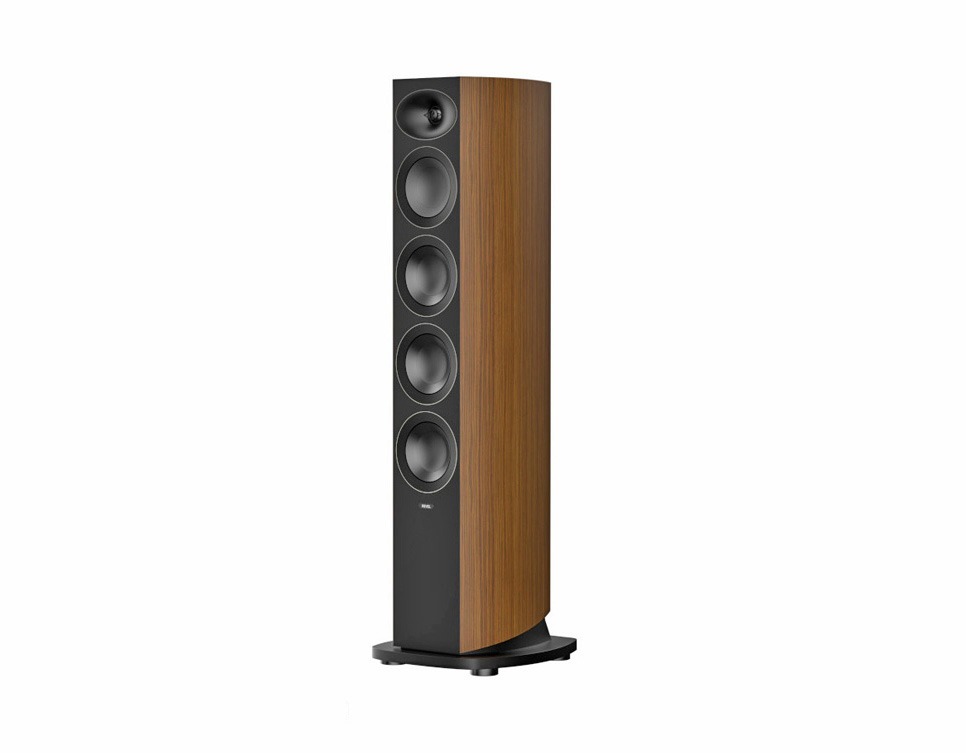
The F345 is a 3-way floorstanding loudspeaker that shares the same core design as the F346, using smaller drivers in a more compact cabinet.
It features three 5.25-inch (130mm) MCC woofers, a 5.25-inch (130mm) DCC midrange driver, and a 1-inch (25mm) DCC dome tweeter paired with Revel’s 7th-generation Acoustic Lens waveguide.
Dual rear-firing ports support low-frequency output, while dual 5-way binding posts allow for bi-amping or bi-wiring. The cabinet includes solid aluminum feet with optional spikes for placement flexibility.
The F345 is rated for a frequency response of 36Hz to 40kHz (±6dB), with 87dB sensitivity and a nominal impedance of 6 ohms. Recommended amplifier power ranges from 30 to 225 watts.
M146
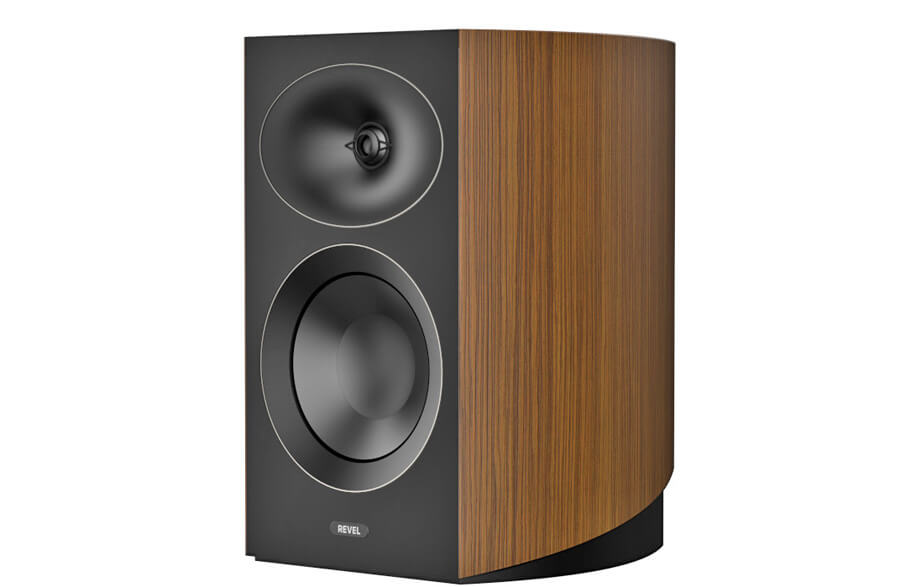
The M146 is a 2-way bookshelf or standmount speaker positioned in the middle of the Performa4 lineup.
It uses a 6.5-inch (165mm) MCC woofer paired with a 1-inch (25mm) DCC dome tweeter and Revel’s 7th-generation Acoustic Lens waveguide.
The crossover network incorporates air-core inductors, and dual 5-way binding posts support bi-amping or bi-wiring. Optional MFS4 floor stands are available for proper placement and listening height.
The M146 is rated for a frequency response of 43Hz to 40kHz (±6dB), with 86dB sensitivity and a nominal impedance of 6 ohms. Recommended amplifier power ranges from 15 to 200 watts.
M145
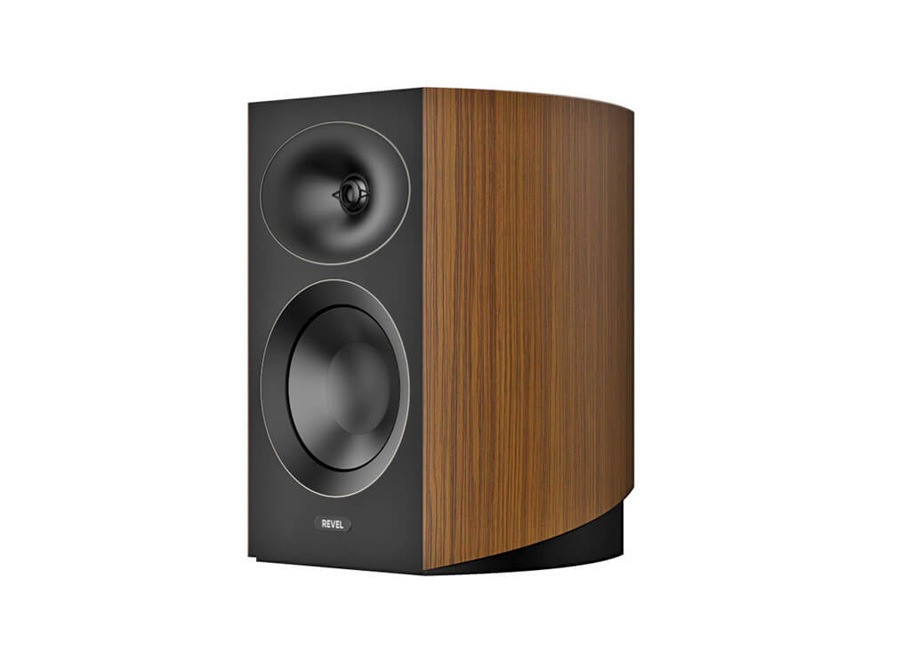
The M145 is a compact 2-way bookshelf speaker and the smaller option in the Performa4 lineup.
It features a 5.25-inch (130mm) MCC woofer paired with a 1-inch (25mm) DCC dome tweeter and Revel’s 7th-generation Acoustic Lens waveguide.
Like the M146, it includes 5-way binding posts for flexible connectivity and is compatible with the optional MFS4 floor stands for proper positioning.
The M145 is rated for a frequency response of 54Hz to 40kHz (±6dB), with 85dB sensitivity and a nominal impedance of 6 ohms. Recommended amplifier power ranges from 15 to 150 watts.
C245
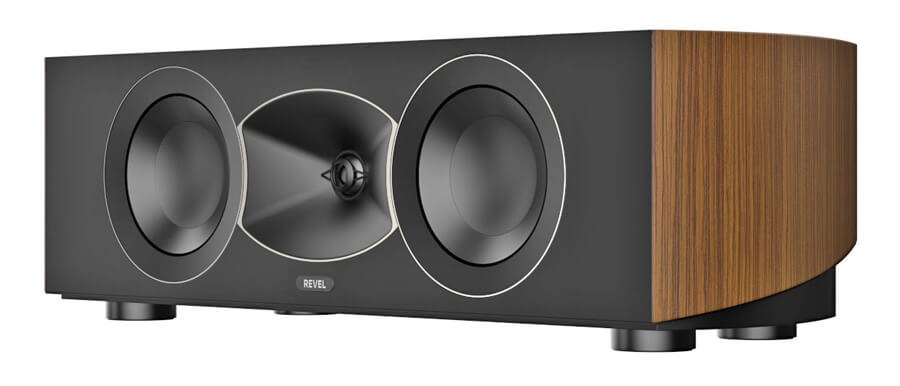
The C245 is a dedicated center channel speaker designed for use in multichannel systems with other Performa4 models.
It features dual 5.25-inch (130mm) MCC woofers flanking a 1-inch (25mm) DCC dome tweeter, paired with Revel’s 7th-generation Acoustic Lens waveguide for consistent dispersion across the front soundstage.
The C245 is rated for a frequency response of 55Hz to 40kHz (±6dB), with 86dB sensitivity and a nominal impedance of 6 ohms. Recommended amplifier power ranges from 15 to 200 watts.
B140
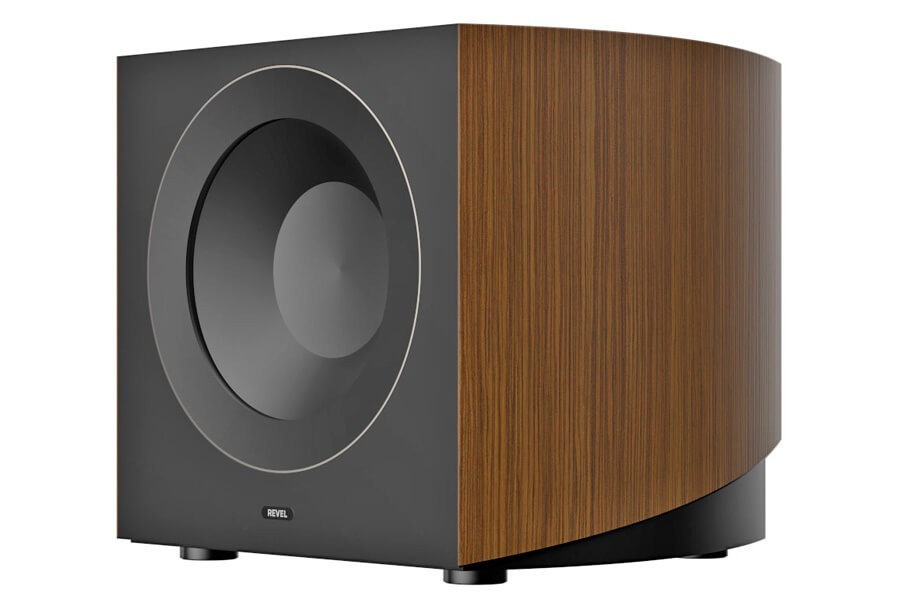
The B140 is a powered subwoofer designed to integrate with the Performa4 series in both two-channel and home theater systems.
It uses a 10-inch (250mm) fiber-composite woofer driven by a 750-watt RMS Class D amplifier, with up to 1,500 watts peak output. The design targets low-frequency extension down to 26Hz.
Rear-panel controls include a variable low-pass filter (50–150Hz), LFE input, phase adjustment, volume control, and auto on/off functionality. A rear-ported enclosure using Revel’s Constant Pressure Gradient design is intended to reduce turbulence and maintain cleaner low-frequency output.
MFS4 Floorstands
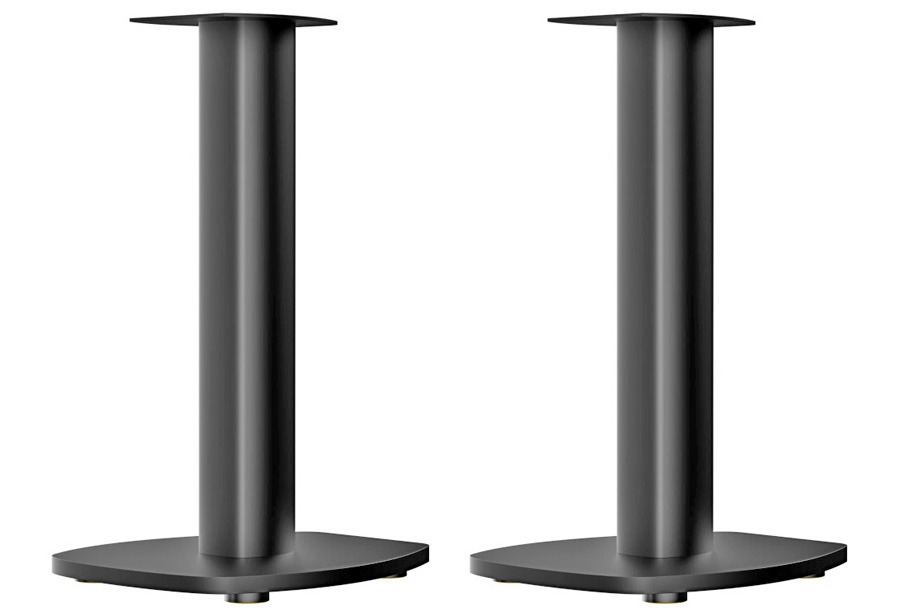
Revel also offers the optional MFS4 floor stands for the M146 and M145 bookshelf speakers.
Constructed from extruded aluminum and steel, the MFS4 stands are designed to position each speaker at an appropriate listening height. They include built-in cable management and optional spikes for use on carpeted surfaces. The stands are sold in pairs.
Revel Performa 4 Comparisons
| Revel Model | F346 | F345 | M146 | M145 | C245 |
| Speaker Type | Floorstanding | Floorstanding | Bookshelf | Bookshelf | Center |
| Price | $6,999/pair | $4,999/pair | $2,999/pair | $1,999/pair | $1,499/each |
| Speaker Configuration | 3-way | 3-way | 2-way | 2-way | 2-way |
| Tweeter | 1-inch (25mm) DCC Dome Tweeter with Acoustic Lens and 7th-Generation Waveguide | 1-inch (25mm) DCC Dome Tweeter with Acoustic Lens and Waveguide | 1-inch (25mm) DCC Dome Tweeter with Acoustic Lens and Waveguide | 1-inch (25mm) DCC Dome Tweeter with Acoustic Lens and Waveguide | 1-inch (25mm) DCC Dome Tweeter with Acoustic Lens and Waveguide |
| Midrange | 1 x 6.5 in (165 mm) Deep Ceramic Composite (DCC) Cone Driver | 1 x 5.25 in (135 mm) Deep Ceramic Composite (DCC) Cone Driver | N/A | N/A | N/A |
| Woofer | 3 x 6.5 in (165 mm) Micro Ceramic Composite (MCC) Cone Woofers | 3 x 5.25 in (135 mm) Micro Ceramic Composite (MCC) Cone Woofers | 1 x 6.5-inch (165 mm) Micro Ceramic Composite (MCC) Cone Woofer | 1 x 5.25 inch (130 mm) Micro Ceramic Composite (MCC) Cone Woofer | 2 x 5.25-inch (135 mm) Micro Ceramic Composite (MCC) Cone Woofers |
| Enclosure Tuning | Bass-Reflex via Dual Rear-Mounted Ports | Bass-Reflex via Dual Rear-Mounted Ports | Bass-Reflex via Rear-Mounted Port | Bass-Reflex via Rear-Mounted Port | Bass-Reflex via Rear-Mounted Port |
| Nominal Impedance | 6 Ohms | 6 Ohms | 6 Ohms | 6 Ohms | 6 Ohms |
| Sensitivity @ 1m, 2.83V | 88 dB | 87 dB | 85.5 dB | 85 dB | 86 dB |
| Recommended Amplifier Power | 20-250W | 30-225W | 15-200W | 15-150W | 15-200W |
| Frequency Response +/-6 dB | 30 Hz – 40 kHz | 36 Hz – 40 kHz | 43 Hz – 40 kHz | 54 Hz – 40 kHz | 55 Hz – 40 kHz |
| Crossover Frequency | 275 Hz / 1.7 kHz | 350 Hz / 2.1 kHz | 1.7 kHz | 1.8 kHz | 1.8 kHz |
| Dimensions | 44.4 x 14.1 x 16.3 inches
1127 x 357.33 x 414.48 mm |
40.9 x 11.9 x 13.9 inches
1038 x 301.86 x 352.46 mm |
14.1 x 9.7 x 12.7 inches
359 x 245.56 x 322.57mm |
11.6 x 7.9 x 9.6 inches
294 x 200 x 245mm |
7.1 x 23.4 x 10.9 inches
181 x 594.5 x 277 mm |
| Product Weight | 87.5 lbs / 39.7 kg | 64 lbs / 29.1 kg | 24.3 lbs / 11 kg | 15 lbs / 6.8 kg | 27.1 lbs / 12.3 kg |
Revel B140 Subwoofer
| Revel Model | B140 |
| Product Type | Powered Subwoofer |
| Price | $2,999/each |
| Driver | 250mm (10-inch) Coated Fibre Composite Cone Driver in a cast-Aluminum frame |
| Amplifier Type | Class D amplifier |
| Power Output | 750W RMS (1500W peak) |
| Enclosure Tuning | Bass-Reflex via Rear-Mounted Port |
| Controls | Auto Power, Crossover, Level, Phase |
| Inputs | RCA LFE/Line Level, 3.5mm, 12V Trigger |
| Frequency Response +/-6 dB | 26Hz – 150Hz |
| Crossover Frequency (Variable) | 50Hz – 150Hz |
| Dimensions | 14.8 x 16.9 x 17.2 inches (376.2 x 429.28 x 436.37 mm) |
| Weight | 61.3 lbs / 27.8 kg |
The Bottom Line
Revel’s Performa4 series is a calculated move into one of the most competitive segments in loudspeakers. The combination of DCC and MCC driver materials, the 7th-generation Acoustic Lens waveguide, and consistent cabinet engineering across the range points to a focus on controlled dispersion, tonal consistency, and predictable in-room performance; areas where Revel has historically been very disciplined.
The lineup is clearly built for flexibility. It can anchor a straightforward two-channel system or scale into a full home theater without mixing and matching across different voicings. That matters for buyers who want system coherence without overthinking every component swap.
What’s less clear is how much separation there is between models beyond size and output, and whether the subwoofer’s pricing will make sense for buyers building out a full system. There’s also no indication of built-in room correction or system-level integration features, which are becoming more common even in passive speaker ecosystems when paired with modern electronics.
This is for listeners who want a complete, measurement-driven speaker system in the $2,000 to $7,000 range without stepping into five-figure territory. Not entry-level, not cost-no-object—right in the middle where most serious systems live.
At AXPONA 2026, the F346 will be demonstrated with an Arcam SA45 integrated streaming amplifier and CD5 CD player, which should give a clear sense of how the top model performs with both streaming and physical sources.
Pricing & Availability
The Revel Performa4 series begins shipping in April through authorized Revel dealers and custom installation installers. All models are available in Natural Walnut and Black Walnut wood veneer finishes.
Suggested retail pricing is as follows:
- F346 Triple 6.5-inch Floorstanding Speaker – $6,999/pair
- F345 Triple 5.25-inch Floorstanding Speaker – $4,999/pair
- M146 6.5-inch Bookshelf Speaker – $2,999/pair
- M145 5.25” Bookshelf Speaker – $1,999/pair
- C245 Dual 5.25” Center Channel Speaker – $1,499/each
- B140 10-inch Powered Subwoofer – $2,999/each
- MFS4 Floor Stands – $699/pair
The Revel Performa4 series will make its official debut at AXPONA 2026, April 10-12, at the Schaumburg Convention Center in Chicago, IL.
For more information, visit www.revelspeakers.com
Related Reading:


The technology is designed to reduce strike zone disputes, long the source of baseball’s most heated arguments. Under the new system, each team receives two challenges per game and only loses a challenge if it is incorrect. In practice, this incentive has quickly reshaped game-day strategy – and last Saturday’s…
Read Entire Article
Source link

French fries are delicious, but notoriously unhealthy. A research team at the University of Illinois, however, has developed a deceptively straightforward method to keep the satisfying taste and crunch without requiring as much oil.
The cooking method combines traditional frying and microwave heating. Adding that microwave step could reduce the amount of oil used in the process, meaning you would absorb less fat with each bite. All the secrets to being able to cook fries in this way have been laid out in two studies published in Current Research in Food Science and The Journal of Food Science.
French Fries and Health
Although popular, fried foods contain high levels of fat, which is linked to several health problems, including obesity and hypertension. “Consumers want healthy foods, but at the time of purchase, cravings often prevail,” says Pawan Singh Takhar, author of one of the two studies. “The high oil content adds flavor, but it also contains a lot of energy and calories.”
It’s precisely with the goal of helping consumers make better food choices without feeling deprived that researchers have been trying to figure out how they can cook healthier french fries, achieving lower fat content without altering their taste and texture.
One of the main difficulties in frying, as the studies explain, is preventing the oil from penetrating the food. In the early stages of the french fry process, in fact, the pores of the potato are filled with water, leaving no room for the oil.
As cooking continues, however, the water evaporates, creating empty spaces that allow the oil to be drawn in by negative pressure. Much of the frying process takes place under that negative pressure, which essentially increases the tendency of the oil to be sucked into the fries
A New Wavelength
In the new study, therefore, the researchers tried to figure out how to extend the time in positive pressure and reduce the period under negative pressure. “When we heat something in a traditional oven, the heat transfers from the outside to the inside, but a microwave oven heats from the inside to the outside because the microwaves penetrate everywhere in the material,” Takhar says.
Specifically, microwaves cause water molecules to oscillate, resulting in increased vapor formation and thus shifting the pressure profile toward positive values that prevent the oil from being easily absorbed.
Microwave frying alone, however, would not produce the desired texture. “If only microwaving is used, the food turns out mushy,” says Takhar. In order to achieve crispness, frying and microwaving should be combined.
To achieve the right balance, the researchers carried out an experiment in which they specially designed a microwave fryer, monitoring temperature, pressure, volume, texture, moisture, and oil content of the chips. “We propose to combine the two methods in the same device. Traditional heating maintains crispness, while microwave heating reduces oil consumption,” the study concludes.


Microsoft is expanding its roster of in-house AI models, releasing a new speech-to-text system and making two existing models broadly available to developers for the first time.
The moves by Microsoft AI (MAI) are part of a broader effort by the company to expand its proprietary AI capabilities beyond its partnership with OpenAI, giving Microsoft more control over its own destiny in the competition against Google, Amazon, and others.
Microsoft announced MAI-Transcribe-1 on Thursday, a speech-to-text model that it says is the most accurate currently available. The company also released its existing voice and image generation models, known as MAI-Voice-1 and MAI-Image-2, for broad commercial use.
It’s Microsoft’s first major model release since a March reorganization, announced by CEO Satya Nadella, in which Microsoft AI CEO Mustafa Suleyman shifted away from day-to-day Copilot oversight to focus on frontier model development and superintelligence.
Suleyman told The Verge that the transcription model runs at “half the GPU cost of the other state-of-the-art models.” He told VentureBeat that the model was built by a team of just 10 people, and that Microsoft plans to eventually build a frontier large language model to be “completely independent” if needed.
Microsoft also recently hired former Allen Institute for CEO Ali Farhadi and other top AI researchers from the Seattle-based institute to further bolster Suleyman’s team, as GeekWire reported last week.
MAI-Transcribe-1 is designed to handle noisy real-world conditions such as call centers and conference rooms, and Microsoft says it is testing integrations with Copilot and Teams. Microsoft says it offers the best price-performance of any large cloud provider, competing directly with OpenAI’s Whisper and Google’s Gemini on the FLEURS benchmark.
In a blog post, Suleyman called the model “not just the most accurate but also lightning fast.”
MAI-Voice-1 generates natural-sounding speech and now lets developers create custom voices from short snippets of sample audio. MAI-Image-2 ranks in the top three on the Arena.ai image generation leaderboard and is rolling out in Bing and PowerPoint.
All three are available on the Microsoft Foundry developer AI platform and MAI Playground.

It’s been more than 50 years since NASA astronaut Harrison Schmitt took the famous Big Blue Marble photograph, showing a breathtaking vision of Earth taken aboard the Apollo 17 spacecraft on its way to the moon. Now, as the four-astronaut crew of the Artemis II mission heads toward the moon, more spectacular images are being released.
This stunning photo is perhaps the most reminiscent of the Big Blue Marble, showing Earth in all its fragile, lovely glory.
“That’s us!” NASA wrote in a post. The post also quoted astronaut Christina Koch as saying of Earth, “You guys look great.”
In a reply to questions on the post, NASA wrote, “Two auroras (top right and bottom left) are visible in this image. Zodiacal light (bottom right), is also visible, as well as airglow from Earth’s atmosphere.”
Another neat photo from the Artemis mission shows the planet neatly bisected, with one side lit up by the sun and the other in darkness.
This image of the Earth was taken by one of the Artemis II crew out the Orion’s window.
“You look amazing, you look beautiful,” Victor Glover, Artemis II pilot, said of the views of Earth in a video call with ABC News.
A view of the Earth from NASA’s Orion spacecraft as it orbits above the planet during the Artemis II test flight.
Another intriguing image shows part of the spacecraft itself. USA Today noted that “the image appears to show the bottom of Orion’s service module where its main engine and auxiliary thrusters are housed.”
We’re tracking the 10-day Artemis II mission with a regularly updated blog.
Keep an eye on NASA’s image repository to see the latest photos.

The total workforce at Tesla’s factory outside Austin, Texas shrunk dramatically last year as the company suffered its second straight year of declining sales, according to a compliance report spotted by Austin American-Statesman.
Tesla went from employing 21,191 people at the factory in 2024 to 16,506 workers in 2025, a drop of 22%. That’s despite the company’s global workforce growing from 125,665 employees in 2024 to 134,785 employees in 2025, according to filings with the U.S. Securities and Exchange Commission.
It’s not clear which teams were most affected by Tesla scaling back its workforce at the plant. But the company has become one of the largest employers in the Austin area since it opened the factory in 2022. CEO Elon Musk also relocated Tesla’s headquarters to the factory in 2021 before it opened. The company has invested more than $6.3 billion in the facility to date, according to the new report.
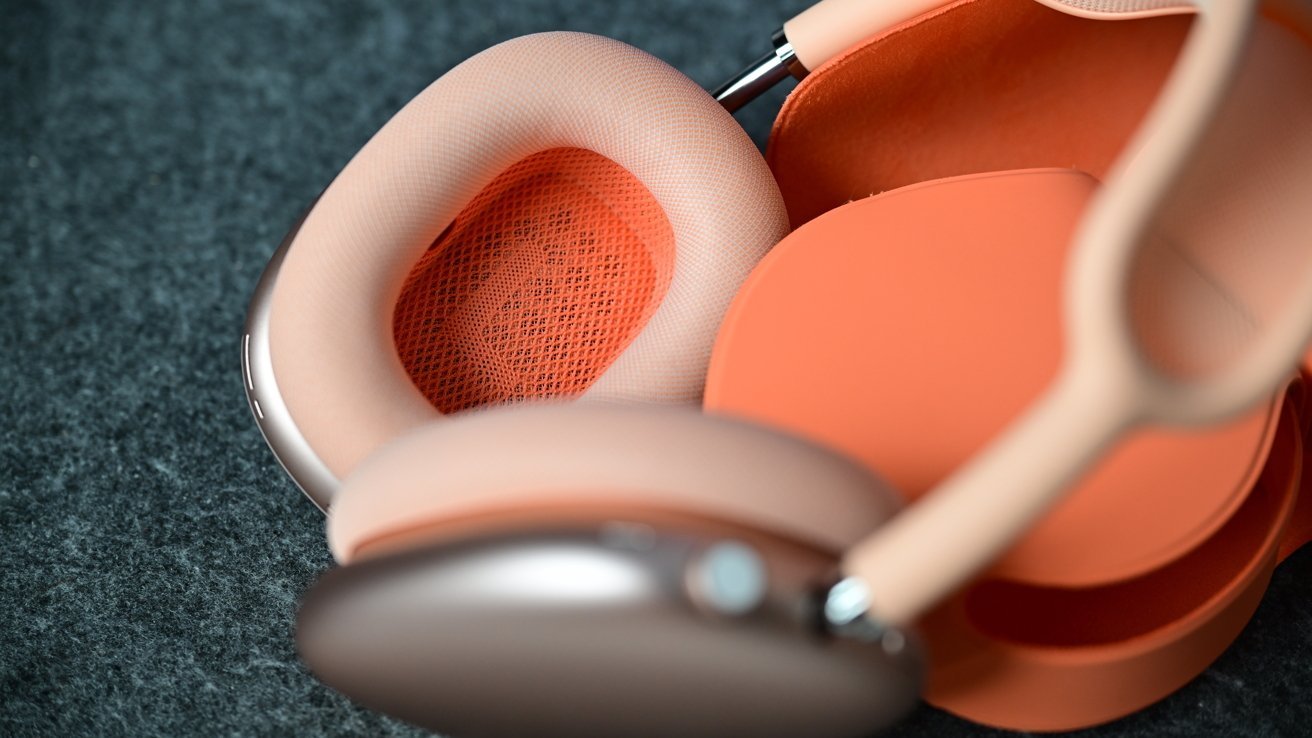
Though the AirPods Max 2 offer new features, a teardown of the headphones shows they’re still plagued by the same flaws of the original 2020 model.
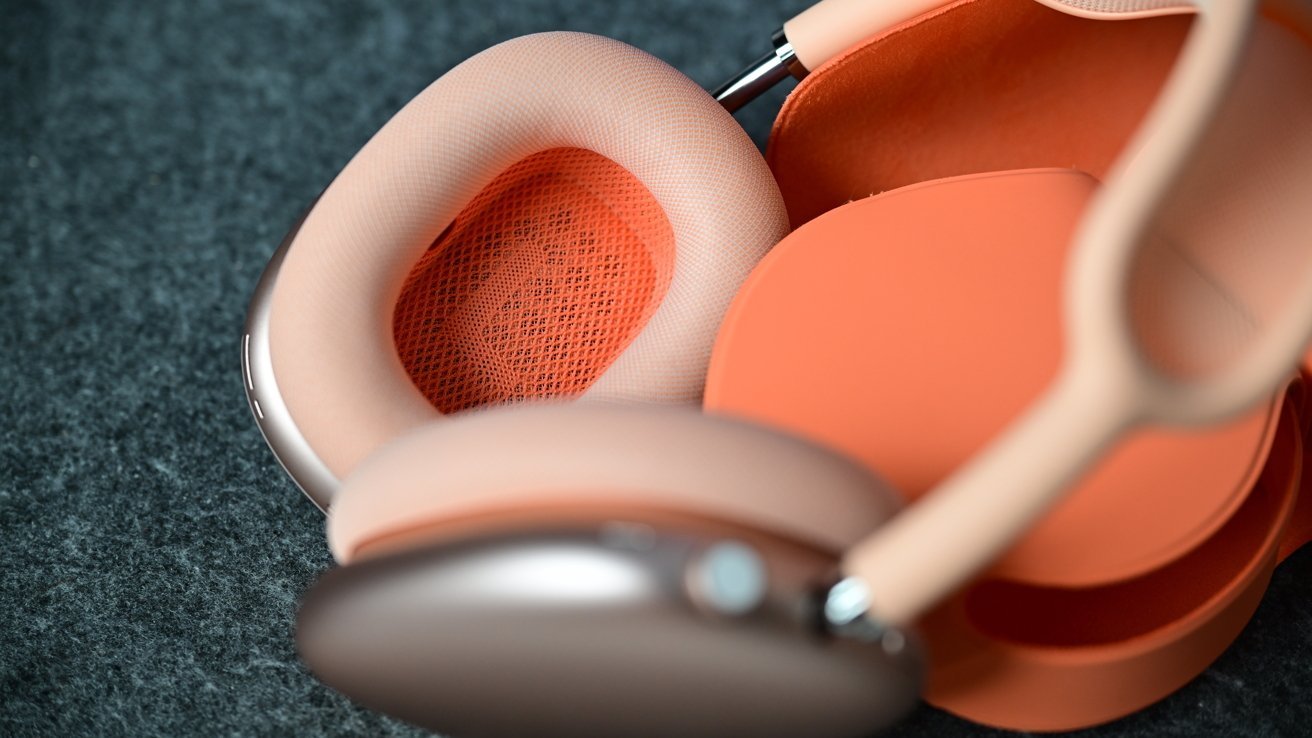
Apple’s AirPods Max 2 gained the H2 chip, but not much else.
Apple’s AirPods Max 2 debuted on March 16, with their core feature being the H2 chip. With it, Apple’s high-end headphones gained capabilities like Adaptive Audio, Conversation Awareness, and gesture controls, among others. Active Noise Cancellation was improved as well.
However, as explained in our review, the AirPods Max 2 are an iterative upgrade, that ultimately leaves something to be desired. New features and ANC enhancements aside, Apple effectively delivered more of the same with its AirPods Max 2.
Continue Reading on AppleInsider | Discuss on our Forums

The world’s supply of helium is being threatened by the Iran war

Faith, Family and Spring Favorites

Top 7 ways to earn ETH and build passive income


-

 NewsBeat1 day ago
Steven Gerrard disagrees with Gary Neville over ‘shock’ Chelsea and Arsenal claim | Football
-

 Business24 hours ago
No Jackpot Winner and $194 Million Prize Rolls Over
-
Entertainment4 days ago
Fans slam 'heartbreaking' Barbie Dream Fest convention debacle with 'cardboard cutout' experience
-

 Crypto World2 days ago
Gold Price Prediction: Worst Month in 17 Years fo Save Haven Rock
-

 Fashion5 hours ago
Weekend Open Thread: Spanx – Corporette.com
-

 Tech5 days ago
The Pixel 10a doesn’t have a camera bump, and it’s great
-
 Entertainment6 days ago
Lana Del Rey Celebrates Her Husband’s 51st Birthday In New Post
-
Crypto World3 days ago
Dems press CFTC, ethics board on prediction-market insider trades
-

 Tech5 days ago
Avatar Legends: The Fighting Game comes out in July and it looks pretty slick
-

 Sports3 days ago
Tallest college basketball player ever, standing at 7-foot-9, entering transfer portal
-

 Tech4 days ago
EE TV is using AI to help you find something to watch
-

 Fashion6 days ago
Amazon Sundays: Soft Spring Layers
-

 Business2 days ago
Login and Checkout Issues Spark Merchant Frustration
-

 Fashion7 days ago
When Evening Dressing Gets Colorful for Spring
-

 Tech5 days ago
Elon Musk’s last co-founder reportedly leaves xAI
-

 Tech4 days ago
How to back up your iPhone & iPad to your Mac before something goes wrong
-

 Tech4 days ago
Apple will hide your email address from apps and websites, but not cops
-

 Politics4 days ago
Should Trump Be Scared Strait?
-

 Crypto World4 days ago
U.S. rule change may open trillions in 401(k) funds to crypto
-

 Tech4 days ago
Flipsnack and the shift toward motion-first business content with living visuals
You must be logged in to post a comment Login