
Crypto World
S&P Global Finds Bitcoin’s Evolving Role in Markets


Editor’s note: S&P Global today releases Bitcoin volatility and market dynamics findings, highlighting Bitcoin’s shift from a niche asset to a market-connected instrument. The full report, Bitcoin Volatility Trends: A Deep Dive into Market Dynamics and Risk, examines price patterns, volatility, and the interplay with traditional markets, while noting that tokenized assets and new products introduce additional risks beyond the asset itself. As Cristina Polizu, Managing Director of S&P Global Ratings, emphasizes, volatility has trended down in the long term, yet remains linked to broader market conditions and carries custodial, smart contract, and operational risks.
Key points
- Volatility Trends: Bitcoin’s price swings are on a long-term downward trend as institutional adoption grows, with increased liquidity from futures and ETFs.
- Bitcoin Hedge Insights: Bitcoin functions more effectively as a hedge against long-term currency debasement than as a hedge against short-term inflation.
- Structural Market Risks: Bitcoin’s trading structure, featuring leveraged perpetual futures markets and automated liquidations, amplifies price volatility compared to other financial assets.
- New Product Risks: Innovations like tokenized bitcoin, ETFs, and Digital Asset Treasury companies introduce extra risks beyond the asset, including counterparty, custodial, smart contract, and operational risks.
Why this matters
This research suggests Bitcoin’s volatility is trending lower over time while its market connections deepen, linking its performance to broader financial conditions. The addition of new products and tokenized offerings can add complexity and risk, influencing how investors assess exposure to digital assets and their role in diversified portfolios.
What to watch next
- Monitor institutional adoption and liquidity trends as futures and ETFs expand.
- Watch developments in tokenized bitcoin and other new-product offerings for risk implications.
- Observe Bitcoin’s price behavior and its relationship to traditional markets as the asset evolves.
Disclosure: The content below is a press release provided by the company/PR representative. It is published for informational purposes.
S&P Global Finds Bitcoin’s Evolving Role in Markets
— Bitcoin now accounts for more than half of cryptocurrency markets’ nearly $2.33 trillion capitalization*
— Bitcoin’s price has dropped by nearly half since October 2025
— Price volatility for bitcoin is on a long-term downward trend – though it remains higher than that of traditional assets
NEW YORK (March 5, 2026) – S&P Global today published new research (see report link) examining how bitcoin has evolved from a niche asset to one with meaningful linkages to traditional financial markets.
‘Bitcoin Volatility Trends: A Deep Dive into Market Dynamics and Risk,’ provides a detailed analysis of bitcoin’s market behavior, price patterns, and market trends.
Key findings from the research reveal:
-
- Volatility Trends: Bitcoin’s price swings are on a long-term downward trend as institutional adoption grows, though they remain larger than those of traditional assets. A growing market for bitcoin futures and exchange-traded funds (ETFs) increased bitcoin adoption, which in turn increased liquidity.
- Bitcoin Hedge Insights: The analysis indicates bitcoin functions more effectively as a hedge against long-term currency debasement than as a hedge against short-term inflation.
- Structural Market Risks: Bitcoin’s trading structure, featuring leveraged perpetual futures markets and automated liquidations, amplifies price volatility compared to other financial assets.
- New Product Risks: Innovations like tokenized bitcoin, ETFs, and Digital Asset Treasury companies introduce extra risks beyond the asset, including counterparty, custodial, smart contract, and operational risks.
Cristina Polizu, Managing Director, S&P Global Ratings, said: “Our research indicates that bitcoin’s volatility has trended down over the long term, and that its behavior is increasingly linked to broader market conditions. At the same time, the added complexity of new bitcoin-related products can introduce risks beyond the asset itself, including custodial, smart contract, and operational risks.”
Bitcoin Volatility Trends: A Deep Dive into Market Dynamics and Risk,’ is part of the Look Forward research series, special reports that offer a deep dive into the most important themes, trends, and topics that are transforming the global economy.
S&P Global: Building on Growth in Digital Assets
S&P Global has continued driving growth in Digital Assets markets, underpinned by its leading analyst-driven research and opinions:
Media Contacts
Isabel Allanwood
S&P Global
Russell Gerry
S&P Global Ratings
About S&P Global
S&P Global (NYSE: SPGI) enables businesses, governments, and individuals with trusted data, expertise and technology to make decisions with conviction. We are Advancing Essential Intelligence through world-leading benchmarks, data, and insights that customers need in order to plan confidently, act decisively, and thrive economically in a rapidly changing global landscape.
From helping our customers assess new investments across the capital and commodities markets to guiding them through the energy expansion, acceleration of artificial intelligence, and evolution of public and private markets, we enable the world’s leading organizations to unlock opportunities, solve challenges, and plan for tomorrow – today. Learn more at www.spglobal.com.



After the $285 million Drift hack, the focus is shifting to Circle (CRCL) and whether it could have done more to stop the money.
The attacker siphoned off roughly $71 million in USDC as part of the exploit Wednesday, according to blockchain security firm PeckShield. After converting most of the rest of the stolen assets to USDC, the hacker used Circle’s cross-chain transfer protocol, CCTP, to bridge about $232 million in USDC from Solana to Ethereum, making recovery efforts more difficult.
That movement has drawn criticism from parts of the crypto community, including prominent blockchain investigator ZachXBT, who argued Circle could have acted faster to limit the damage.
“Why should crypto businesses continue to build on Circle when a project with 9 fig[ure] TVL [total value locked] could not get support during a major incident?,” he said in an X post following the attack.
To freeze or not to freeze
The company had tools at its disposal, ZachXBT pointed out. Under its own terms, Circle reserves the right to blacklist addresses and freeze USDC tied to any suspicious activity.
Preemptively freezing wallets linked to the exploit could have slowed or stopped the attacker’s ability to move funds, one stablecoin infrastructure firm founder told CoinDesk.
However, acting without a court order or law enforcement request might expose Circle to legal risk, the person added.
Salman Banei, general counsel of tokenized asset network Plume, said freezing assets without formal authorization could expose issuers to liability if done incorrectly. He argued regulators should address that legal gap.
“Lawmakers should provide a safe harbor from civil liability if digital asset issuers freeze assets when, in their reasonable judgment, there is strong basis to believe that illicit transfers have occurred,” Banei said.
That constraint was central to the company’s response.
“Circle is a regulated company that complies with sanctions, law enforcement orders, and court-mandated requirements,” a spokesperson said in an email to CoinDesk. “We freeze assets when legally required, consistent with the rule of law and with strong protections for user rights and privacy.”
‘Gray zone’
The episode highlights a deeper tension that’s drawing increasing scrutiny as stablecoins grow.
Tokens like USDC are becoming a core part of global money flows, especially for cross-border payments and trading. At the same time, they are also used in illicit activity, putting issuers under pressure to act quickly when things go wrong.
According to TRM Labs, roughly $141 billion in stablecoin transactions in 2025 were linked to illicit activity, including sanctions evasion and money laundering.
Blockchain security firms pointed to North Korean hackers as likely being behind the Drift exploit.
Stablecoins issued by centralized, regulated entities like Circle’s USDC are designed to be programmable and controllable, a feature that can help stop illicit flows but could also raise concerns about overreach and due process.
In the Drift exploit’s case, the situation isn’t that clear-cut, said Ben Levit, founder and CEO of stablecoin ratings agency Bluechip.
“I think people are framing this too simplistically as ‘Circle should’ve frozen,’” he said. “This wasn’t a clean hack, it was more of a market/oracle exploit, which puts it in a gray zone.”
“So any action by Circle becomes a judgment call, not just a compliance decision,” he added.
To him, the bigger issue is consistency. “USDC can’t be positioned as neutral infrastructure while also allowing discretionary intervention without clear rules,” Levit said. “Markets can handle strict policies or no intervention, but ambiguity is much harder to price.”
That leaves issuers in a difficult position. Moving too slowly risks criticism that they are enabling bad actors, while acting too quickly without legal backing raises concerns about overreach.
And in fast-moving exploits, that trade-off becomes especially stark, with the window to act often measured in minutes rather than weeks or months of legal processes.

The Independent Community Bankers of America has opposed the Office of the Comptroller of the Currency’s (OCC) conditional approval of Coinbase’s national trust bank charter, warning the application falls short of regulatory standards and could pose risks to consumers and the financial system.
On Thursday, ICBA said Coinbase’s application shows deficiencies in risk controls, profitability and resolution planning, and argued the OCC lacks statutory authority to expand trust powers for crypto-related activities without applying the full set of banking regulations.
The group said the decision reflects a broader trend of nonbank entities seeking access to the benefits of bank charters without meeting the same regulatory requirements. It wrote:
The sudden influx of applications demonstrates nonbank entities are seeking the benefits of a US bank charter without satisfying the full scope of US bank regulations.
Americans for Financial Reform Education Fund also criticized the decision, warning the approval departs from longstanding banking law and could expose the financial system to risks tied to crypto market volatility, fraud and money laundering.
The objections follows the OCC’s conditional approval on Thursday of Coinbase’s application to establish a national trust bank, after six months of review by the US regulator.

Coinbase released a statement on Thursday saying the charter would bring its custody and market infrastructure business under federal oversight, emphasizing that it does not plan to hold customer deposits or engage in fractional reserve lending, and adding that “the right path forward for crypto is through the system — not around it.”
Related: Crypto awareness tops 80% among young people in UK: Coinbase survey
Stablecoin yield dispute stalls crypto market structure bill
The opposition is part of a broader dispute between banking groups and crypto companies over the role of digital assets in the financial system, particularly around stablecoins and yield-bearing products.
In January, CEO of Bank of America Brian Moynihan warned that allowing stablecoin issuers to offer interest could draw as much as $6 trillion in deposits out of the banking system, reducing lending capacity and pushing borrowing costs higher.
Industry groups such as the Bank Policy Institute have also raised similar concerns in letters to lawmakers, arguing that regulatory gaps could allow yield-bearing stablecoin products to bypass restrictions and disrupt traditional credit channels.
The debate is currently playing out in Washington, where Coinbase is engaged in policy discussions over the US Digital Asset Market Clarity Act, a bill aimed at establishing federal rules for crypto oversight.

While Coinbase CEO Brian Armstrong said in January that the company could not support the legislation as drafted due to restrictions on stablecoin rewards, Coinbase chief legal officer Paul Grewal said on Thursday that lawmakers are nearing agreement on core elements of the bill, though the yield issue remains a key sticking point.
The dispute has delayed a Senate Banking Committee markup, a required step before the bill can advance to a full Senate vote, leaving broader efforts to establish a federal framework for digital assets unresolved.
Magazine: Nobody knows if quantum secure cryptography will even work

TLDR
- Cardano founder Charles Hoskinson publicly praised the new Midnight advertisement on his official X account.
- Hoskinson shared the 47-second clip and wrote, “I love these new Midnight ads,” in his post.
- The advertisement highlights privacy risks linked to public blockchain transactions and data exposure.
- The video promotes selective disclosure as a solution to protect sensitive on-chain information.
- Midnight operates as a privacy-focused Cardano sidechain that uses zero-knowledge proofs.
Cardano founder Charles Hoskinson praised a new Midnight advertisement that promotes blockchain privacy. He shared the 47-second clip on X and wrote, “I love these new Midnight ads.” The video frames privacy as essential and presents Midnight as a practical solution.
Midnight Ad Highlights Privacy Concerns
Hoskinson reposted the Matrix-themed advertisement on Friday through his official X account. He captioned the post, “I love these new Midnight ads,” and drew attention from the crypto community. The clip runs for 47 seconds and centers on privacy risks in public blockchains.
The advertisement uses scenes inspired by The Matrix and features characters Neo and Morpheus. It references the moment when Morpheus explains hidden realities to Neo. The voice-over states that every click, search, and purchase is monitored on digital networks.
The video explains that blockchain records remain public and transparent by design. It states that anyone can trace transactions on an open ledger. It then argues that such exposure can place personal data at risk.
The advertisement introduces selective disclosure as a safeguard for users. It tells viewers they can choose what information others can access. It positions Midnight as the network that enables this control.
The clip also mentions crypto-related kidnappings and thefts. It links those crimes to exposed on-chain data. It stresses that leaked personal information can lead to real-world harm.
Midnight Positions Itself as Privacy-Focused Infrastructure
Midnight operates as a privacy-centered sidechain within the Cardano ecosystem. The network uses zero-knowledge proofs to protect sensitive data. It allows users to verify transactions without exposing full details.
The project describes itself as a fourth-generation blockchain platform. It aims to balance compliance standards with data protection tools. It supports selective disclosure while maintaining blockchain transparency.
Midnight launched its mainnet on March 30 after months of beta testing. The team completed earlier testing phases before activating the network. Hoskinson has described the sidechain as a key step for broader crypto adoption.
He has stated that privacy tools can attract institutions to blockchain systems. Traditional financial firms require strict data protection measures. Midnight seeks to offer similar safeguards on decentralized infrastructure.
In March, Monument became the first UK-regulated bank to tokenize retail deposits on Midnight. The bank recorded those deposits on a public ledger using the network. This move marked an early institutional use case for the platform.
Midnight continues to promote privacy features through marketing campaigns. The latest advertisement highlights user control and protection tools. Hoskinson’s public endorsement amplified the campaign across social media platforms.


In February 2026, Felix Fan took over as CEO of Trust Wallet, succeeding Eowyn Chen. More often than not, a new CEO spends months getting to know the company, but Fan started by shipping new features to significantly improve the user experience for Trust Wallet’s 220 million users.
Trust Wallet shipped the Trade Menu shortly after he arrived. Within 48 hours, four more products followed, including swap price impact protection, an updated Trending Page, prediction markets through predict.fun, and 1-click swaps.
“I didn’t need months to audit Trust Wallet,” he told BeInCrypto. “I came in with a clear point of view, and the team had already been doing the hard work. My job was to accelerate innovation, not hesitate.”
What’s less obvious is why Fan sees this moment as urgent, and what he thinks Trust Wallet is actually becoming.
He Thinks the Category Has Missed a Few Things
Fan came to Trust Wallet from OKX, where he ran product. He’s seen the space from multiple angles, and when asked where self-custodial wallets have fallen short, he doesn’t hedge.
Speed is the first thing he names. “When you see a market move, you should be able to act in seconds. Most wallets still make that unnecessarily hard,” he said.
Then there’s the user nobody built for. People who’ve done a few trades and want to go deeper, not beginners, not power users, just somewhere in the middle with no clear trajectory.
“The industry obsesses over first-timers and power users,” Fan noted. “The people who’ve done a few trades and want to go deeper? They’re largely underserved. There’s no natural progression.” That’s less a design gap than a product philosophy gap. The middle tier got skipped.
And then trust signals, which Fan frames as a responsibility the wallet itself should carry. Users sign transactions they can’t fully parse, get exposed to scam contracts without any warning from the app. “The wallet should be a layer of protection,” he said. “That’s an area the whole industry has under-invested in, and it’s something we’re taking seriously — being the most secure wallet is a core part of our identity.”
Why the Trade Menu, Why Now
Something shifted in how people trade crypto. They don’t sit down and decide between swapping and perps. They see a market move and want in. The decision is intent-based, not product-based. Most wallets didn’t get that memo. Features are scattered. Execution is buried. The moment of action gets slowed down by the interface.
The Trade Menu is the fix for that, at least the beginning of one. Swap, perpetuals, predictions, trending plays are in one place and only require one tap.
“That friction has a real cost,” Fan said. “The Trade Menu removes it. One entry point for everything. That’s not a small UX tweak — that’s a statement about what kind of wallet we’re building. A command center for decentralized finance, not just a balance checker.”
Some of what’s coming on the roadmap isn’t new territory. Live charts, transparent fee structures — CEX traders have had these for years. Fan said as much. “Fair challenge. Yes, some of what’s coming are things CEX users expect as baseline. We should have had them. We’re fixing that. But that’s the foundation, not the destination.”
The destination is harder to categorize. Fan describes a wallet where users broadcast intent and the network handles execution — self-custodial by default, cross-chain natively, not routed through any centralized order book.
“That’s not a CEX or a DEX. That’s a new category,” he said. “The Trade Menu is the first step toward that.”
“Simple by Default” Might Be Harder Than It Sounds
The principle running through the product is “simple by default, advanced by choice.” Fan doesn’t dress it up.
What does the user see first? That’s the decision everything comes back to. Show too much and you overwhelm. Show too little and power users hit a wall immediately.
“The hardest part is entry points,” Fan explained. “Every extra option you surface adds cognitive load. Every option you hide risks frustrating a power user.”
With the Trade Menu, the call was to optimize for the moment of intent — clean default view, advanced controls there when you want them. The middle-tier user complicates that. The one who’s past basic swapping but not yet doing anything sophisticated.
“We have to earn their trust gradually and give them more as they’re ready,” Fan said. “That’s a sequencing challenge as much as a design one. We’re not perfect at it yet. But that’s exactly the kind of thing we’ll keep iterating on.”
On Independence
Fan’s target to enhance Trust Wallet comes when CEX-backed wallets have gotten serious. Several now offer real self-custody, deep liquidity behind them, user bases fed directly from their parent exchanges.
Yet, he doesn’t think that makes the case for self-custodial wallets any harder. If anything, it makes it more important.
“CEX-backed wallets have a structural ceiling. They will always be optimized — consciously or not — for their parent exchange’s liquidity, products, and interests. That’s just the reality,” he said. “Our only job is to give users the best available prices from decentralized markets, the best experience, and full control over their own assets. We can integrate the best liquidity sources, not just the ones we own. Independence is a feature. And 220 million people have already voted for it.”
The Number Trust Wallet Is Actually Building Toward
Under his leadership, Trust Wallet has flagged trading, UX, and AI as H1 priorities. On sequencing, Fan is clear that UX comes first because it affects every user right now.
“AI is only as good as the product it’s built on. If the swapping experience is clunky, the AI inherits that friction. So better UX isn’t just good for users today — it’s the foundation that makes AI actually work tomorrow,” Fan said.
Trust Wallet has begun building out developer-facing AI infrastructure. In late February, the team shipped an MCP server for instant access to its documentation, an open-source Claude Code skills marketplace. That was followed by the launch of the Developer Portal, giving AI agents read-only access to data across more than 100 chains.
Most recently, Trust Wallet launched the Agent Kit, a toolkit that lets AI agents execute real crypto transactions across more than 25 blockchains within permissions defined by the user.
Consumer-facing features come after.
And when asked about the early signals that they’re moving in the right direction, Fan watches engagement depth, trader retention, and qualitative signals on whether the app feels faster.
“We want to be the number one mobile wallet with over 40% active users. Not just downloads. Not just installs. People who open Trust Wallet because it’s genuinely the best place to act on crypto. That’s the bar we’re building toward,” he said.
The post Trust Wallet CEO Felix Fan on Building a Crypto Wallet That Keeps Up With the Market appeared first on BeInCrypto.

Kalshi, the prediction market platform, announced that Stephanie Cutter—former Obama administration staffer and co-founder of Precision Strategies—will join the company as a policy adviser. The appointment, disclosed in a Thursday notice, comes as Kalshi seeks to deepen its political and regulatory engagement in Washington, D.C., and across the country. Cutter’s arrival adds a veteran of Democratic campaigns to Kalshi’s policy team at a moment when the industry faces intensifying regulatory scrutiny and evolving questions about the role of politics in prediction markets.
Kalshi said Cutter’s move would help the firm “deepen its relationships in DC and across the country.” CEO and co-founder Tarek Mansour highlighted Cutter’s governmental and political experience as a bridge to policymakers and other stakeholders. Cutter’s hiring follows Kalshi’s strategy of embedding itself more firmly in political circles as it navigates a regulatory landscape that has grown more complex over the past year.
Kalshi’s roster already includes staff with government ties, including the appointment of Donald Trump Jr. as a strategic adviser in January 2025, a development noted in the market’s broader push to align with political figures ahead of a changing regulatory climate. The recruitment of Cutter signals Kalshi’s intent to bring experienced policy voices directly into its decision-making as it seeks to balance growth with compliance in a jurisdiction that has seen ongoing legal and legislative debate surrounding event-based markets.
At the same time, the legal and regulatory environment for prediction markets remains unsettled. State-level authorities have pursued lawsuits against Kalshi and other platforms offering event contracts, arguing that such markets amount to illegal gambling or betting. In Washington, the U.S. Commodity Futures Trading Commission (CFTC), led by Michael Selig, has asserted that it holds exclusive jurisdiction over these markets and has pursued cases against state gaming regulators over the matter. The tension underscores a broader push by lawmakers to scrutinize, and potentially constrain, prediction markets—especially those tied to political events.
Key takeaways
- Kalshi hires Stephanie Cutter as policy adviser to strengthen policy outreach amid ongoing regulatory scrutiny of prediction markets.
- Cutter’s background in government and political campaigns is intended to help Kalshi communicate its position to policymakers and the public, per the company.
- The platform already counts high-profile political advisers, including Donald Trump Jr., illustrating Kalshi’s bid to embed in political circles during a sensitive regulatory era.
- Regulatory friction persists: the CFTC claims exclusive oversight of prediction markets, while state regulators challenge or enforce their own regimes, prompting lawsuits and legislative proposals.
Policy push in a contested space
The timing of Cutter’s arrival underscores Kalshi’s ambition to leverage policy expertise as a differentiator in a market where regulatory clarity remains elusive. Kalshi’s notice frames the hire as part of a broader effort to cultivate relationships with lawmakers, regulators, and stakeholders who will shape the framework governing event-based contracts. Mansour’s remark—emphasizing Cutter’s ability to “get the message to the right people”—illustrates how Kalshi views policy engagement as central to its long-term viability and competitive positioning.
The broader governance context is clear: while Kalshi positions itself as a legitimate financial technology, it operates in a space where opinions diverge on whether prediction markets should be permitted to operate with fewer restrictions, and if so, what guardrails are necessary to prevent manipulation or insider trading. The presence of political advisers on Kalshi’s payroll reflects a strategic bet that shaping policy conversations could yield a more favorable operating environment, or at least greater predictability for a product that depends on real-world events occurring as forecasted.
Regulatory battleground: courts, commissions, and state actions
Industry observers note that the past year has seen a wave of legal activity at the state level, where regulators have challenged or restricted prediction-market-like offerings. Proponents argue such markets can improve price discovery and information flows, while opponents point to concerns about gambling law, consumer protection, and the potential for insider information to drive bets. Kalshi and peers such as Polymarket have publicly discussed implementing guardrails intended to curb use by insiders, but legislative progress remains uneven.
On the federal side, the CFTC has framed the issue within the agency’s core remit: it asserts exclusive jurisdiction over derivative-like markets tied to events and has taken action against state authorities in other contexts to defend that stance. This legal backdrop matters for Kalshi’s strategy, because a clearer federal framework could reduce intergovernmental friction and open the door for broader user participation under explicit guidelines. For investors and users, the outcome of ongoing court fights and potential federal legislation will influence the platform’s risk profile and the types of markets Kalshi can legally offer in the coming years.
Meanwhile, congressional dynamics add another layer of potential change. Several bills have floated the idea of preventing politicians from participating in predictive markets and of imposing stricter disclosures around the use of such platforms. As of the latest developments, none of these proposals had been enacted into law, leaving a period of watchful waiting for operators, users, and policymakers alike. In this context, Kalshi’s move to strengthen its policy team can be viewed as a proactive approach to navigating a period of regulatory ambiguity, rather than a reaction to a discrete, imminent rule change.
Implications for users, builders, and investors
For users and market participants, the regulatory landscape remains the most consequential variable. A more defined federal framework could reduce the risk of sudden platform shutdowns or wholesale policy reversals, while also imposing stricter compliance requirements. For builders and operators in the prediction-market space, Cutter’s appointment highlights the increasing professionalization of policy oversight and the growing importance of credible governmental liaison functions in a sector where public perception and political legitimacy matter as much as product design.
Investors and observers should weigh the potential upside of regulatory clarity against the risk that stricter rules could curb certain market types or restrict access to insider-sensitive information. The presence of political advisers on Kalshi’s team signals a belief that, even in a patchwork regulatory regime, a well-connected operator can navigate policy changes more smoothly and carve out a defensible niche with robust governance standards. As the debate over prediction markets continues, the key questions will be whether Congress and state authorities converge on guardrails that protect users without stifling innovation, and whether Kalshi’s ecosystem can demonstrate resilience through regulatory transitions.
What to watch next: the trajectory of state and federal actions on prediction markets, any new guardrails or prohibitions affecting political participation, and how Kalshi’s newly expanded policy function translates into concrete policy wins or clearer operational guidelines. The coming months will reveal whether this hiring signals a durable edge in policy access, or if the market must weather a more uncertain regulatory horizon before broader adoption can occur.


Traders are pricing fewer Fed cuts in 2026 as U.S. unemployment dips to 4.3%, tempering the liquidity story for Bitcoin and Ethereum but not triggering a risk‑asset capitulation.
Summary
- Market pricing shows fewer bets on Federal Reserve rate cuts in 2026 as traders reassess the path of U.S. monetary easing.
- March U.S. unemployment came in at 4.3%, below the 4.4% consensus forecast and down from 4.4% in February, pointing to a still‑resilient labor market.
- For crypto markets, the mix of sticky employment and a shallower rate‑cut path argues for a slower liquidity tailwind, but not an outright macro shock.
Derivatives and rates markets have trimmed expectations for how aggressively the Federal Reserve will cut interest rates in 2026, according to Jinshi‑cited pricing data. That shift reflects growing skepticism that inflation will glide back to target quickly enough to justify deep easing, even as nominal policy rates sit at multi‑decade highs. Fewer cuts priced into 2026 effectively mean a higher “terminal” funding cost for leveraged players and a slower normalization of real yields — both headwinds to the kind of explosive liquidity conditions that fueled earlier crypto bull cycles.
At the same time, the U.S. labor market continues to look stubbornly robust. Jinshi reports that the March unemployment rate ticked down to 4.3%, beating expectations for 4.4% and edging lower from February’s 4.4%. That is hardly a recession print; if anything, it signals that job conditions remain tight enough to keep wage and service‑sector inflation from collapsing, giving the Fed political and analytical cover to hold rates elevated longer. For risk assets, including Bitcoin (BTC) and Ethereum (ETH), the combination of a still‑strong labor market and fewer rate cuts priced is a classic “higher for longer” setup: growth isn’t falling off a cliff, but the cheap‑money punch bowl stays out of reach.
Crypto traders react to US data news
For crypto traders, the implications are nuanced rather than outright bearish. A slower, shallower easing cycle tends to compress valuation multiples and cap speculative excess, making it harder for marginal capital to chase high‑beta altcoins with leverage. However, as long as unemployment hovers near 4–4.5% and the economy avoids a hard landing, on‑chain activity and real demand for digital assets can still grind higher, especially in narratives tied to stablecoins, tokenized treasuries and yield‑bearing infrastructure that directly intersect with rates markets. The immediate read‑through: expect less of a “melting‑up” liquidity rally in 2026 and more of a choppy, macro‑sensitive grind, where each shift in Fed‑cut odds and each monthly jobs print becomes a tradable event for both BTC and ETH volatility.

The White House no longer has a dedicated crypto policy lead, just days after President Donald Trump gave Vice President JD Vance a new enforcement mandate as “Fraud Czar.”
Trump announced the Vance appointment on Truth Social, directing the vice president to target what he called unprecedented taxpayer fraud in blue states. The move follows David Sacks’ quiet departure from the crypto czar position on March 26.
Sacks Out, No Replacement Coming
Sacks confirmed that he had used up his 130-day limit as a special government employee. The departure was not a resignation or termination. Federal law caps special government employee service at 130 days within a 12-month period.
The White House confirmed it will not appoint a replacement. Sacks transitioned to co-chair of the President’s Council of Advisors on Science and Technology (PCAST), an advisory body that produces recommendations but lacks operational policy authority.
He joins Mark Zuckerberg, Jensen Huang, and Marc Andreessen on the council.
His exit leaves the CLARITY Act stalled in the Senate and the broader crypto market structure bill unfinished.
Senator Bernie Moreno has warned that if the bill does not reach the Senate floor by May, it risks going dark until after the midterm elections.
Vance Turns to Fraud
Meanwhile, Trump’s “Fraud Czar” designation gives Vance a mandate focused on government spending enforcement.
Trump named California, Illinois, New York, Minnesota, and Maine as primary targets, claiming recovered funds could balance the federal budget.
Federal raids have already begun in Los Angeles, with arrests tied to $50 million in healthcare fraud.
The two czar roles are unrelated in scope. However, the contrast is notable.
The administration is deploying enforcement resources toward fiscal fraud while leaving the crypto policy seat empty at a critical legislative moment.
The post Trump’s Crypto Czar Role Sits Empty as White House Names Fraud Czar appeared first on BeInCrypto.
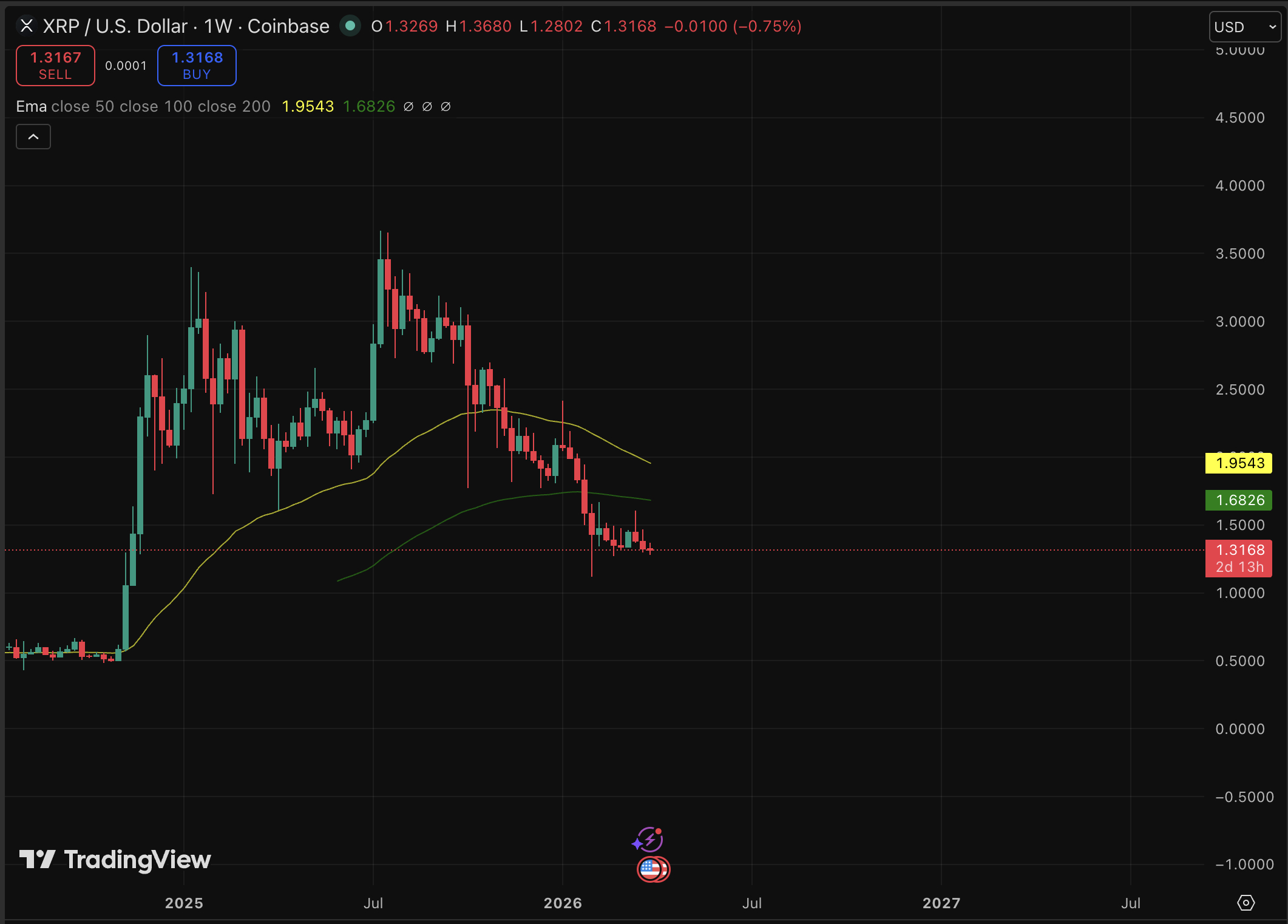
XRP is trading at $1.31, up by 0.9% in the last 24 hours, but price prediction still remains bearish for Ripple coin. Down nearly 30% year-to-date from a $1.88 open, the token is fighting to hold key support while the broader market registers extreme fear. What most traders haven’t priced in yet: a significant engineering overhaul quietly underway inside the XRP Ledger’s core repository.
Denis Angell, an XRPL core developer, outlined six active workstreams on April 2 that are reshaping the ledger’s foundational infrastructure, telemetry, nomenclature, type safety, refactoring, logging, and documentation.
“I’ve never been more excited for the XRP Ledger core development than I am now,” Angell posted, describing the effort as tedious but critical.
The work targets backend reliability and developer experience rather than user-facing features, a distinction that matters for long-term network competitiveness.
Whether these upgrades translate into price recovery depends entirely on market timing.
Discover: The best crypto to diversify your portfolio with
XRP Price Prediction: $1.40 Before the Next Wave of Selling?
XRP’s current level of $1.31 places it uncomfortably below both major moving averages. The 50-day SMA sits at $1.40–$1.42, acting as immediate overhead resistance. The 200-day SMA at $2.04–$2.07 represents a full recovery target that feels distant given current momentum.
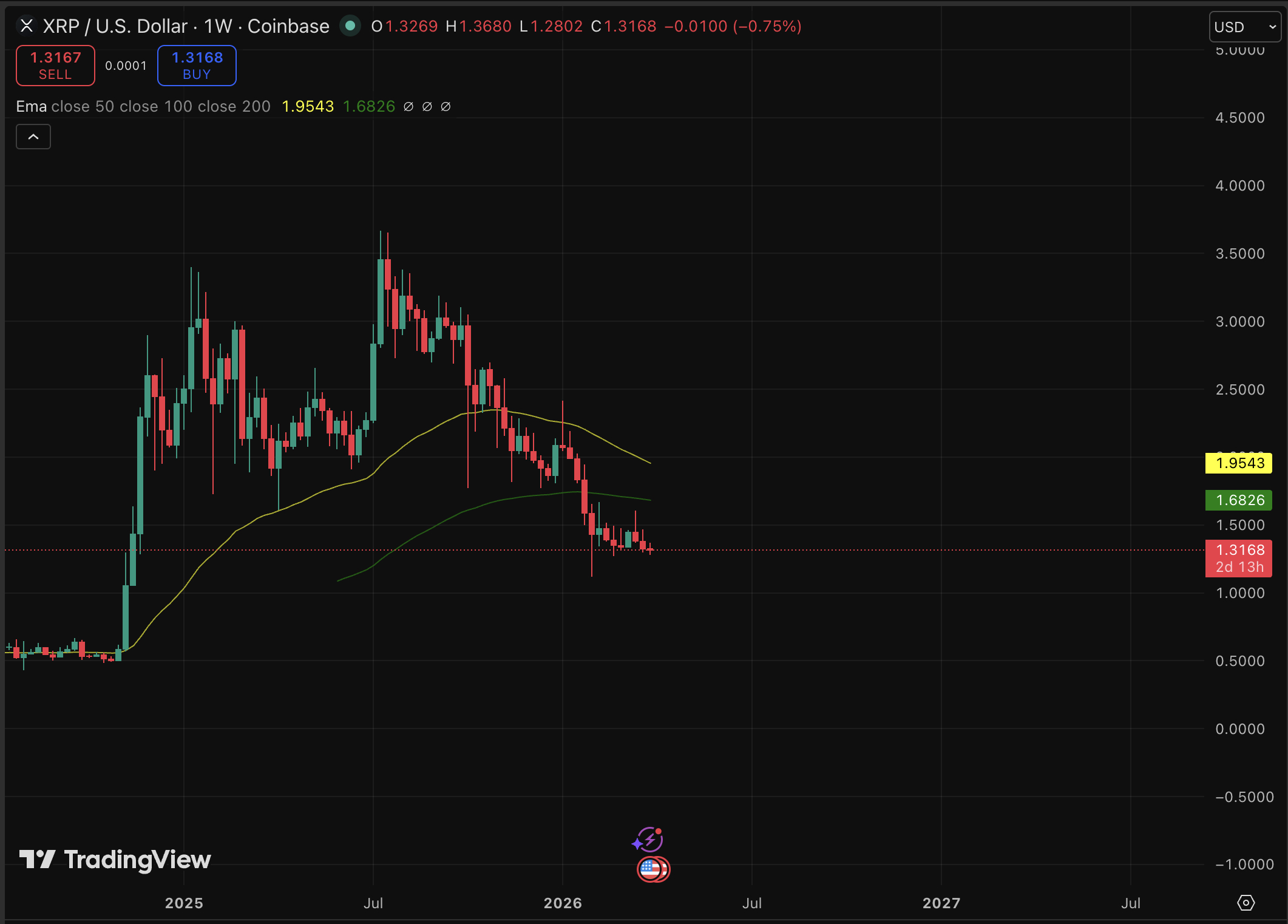
Support is clustered at $1.27–$1.29. That zone is thin. A clean break below it opens a more significant leg down with limited structural floors until the $1.10 range. The Fear and Greed Index reading Fear confirms capitulation sentiment, which historically precedes either a sharp reversal or a final flush.
Analyst consensus points to $2.04 as a potential recovery level by September 2026, achievable, but requiring sustained buying pressure that simply isn’t visible in current volume data.
Discover: The best pre-launch token sales
Bitcoin Hyper Targets Early-Mover Upside as XRP Tests Critical Support
XRP’s -29.6% year-to-date performance raises a legitimate question: at a $1.31 price point and a multi-billion-dollar market cap, how much asymmetric upside actually remains? For traders comfortable with the risk profile of early-stage assets, the calculus looks different at the infrastructure layer.
Bitcoin Hyper ($HYPER) is positioning itself as a genuinely novel infrastructure play, the first Bitcoin Layer 2 integrating the Solana Virtual Machine, delivering sub-second finality and low-cost smart contract execution while anchored to Bitcoin’s security model.
The presale has raised $32 million at a current price of just $0.013678, with healthy staking rewards available for early participants. The Decentralized Canonical Bridge enables native BTC transfers into the ecosystem, addressing Bitcoin’s longstanding programmability gap without sacrificing its trust layer.
More detail on Bitcoin Hyper is available here.
The post XRP Price Prediction: Can These 6 Ongoing Developments Save Ripple appeared first on Cryptonews.
TLDR
- Riot Platforms sold 3,778 Bitcoin for more than $250 million during the first quarter of 2025.
- The company reduced its total Bitcoin holdings to 15,680 BTC after the sale.
- Riot Platforms achieved an average selling price of over $76,000 per Bitcoin.
- The firm has now sold Bitcoin in consecutive quarters after raising nearly $200 million late last year.
- CEO Jason Les said earlier that sales were intended to fund ongoing growth and operations.
Riot Platforms sold more than $250 million in Bitcoin during the first quarter of 2025. The company confirmed it sold 3,778 BTC at an average price above $76,000. As a result, the firm reduced its total holdings to 15,680 BTC by the end of March.
Riot Platforms Cuts Bitcoin Holdings as Sales Extend Into Second Quarter
Riot Platforms reported that it sold 3,778 Bitcoin during the first quarter of 2025. The company achieved an average sale price above $76,000 per coin. Consequently, it reduced its Bitcoin reserves to 15,680 BTC at quarter’s end. The remaining holdings now carry a market value near $1.04 billion. Bitcoin traded at $66,844 at the time of valuation.
The Colorado-based miner has now sold Bitcoin in consecutive quarters. During November and December, it generated nearly $200 million from Bitcoin sales. The company has not yet disclosed detailed allocation plans for the recent proceeds. A company representative did not respond to a request for comment. However, earlier in 2025, CEO Jason Les addressed the purpose of prior sales.
Les stated that earlier Bitcoin sales aimed to “fund ongoing growth and operations.” He connected those operations to expanding infrastructure and computing capacity. The company outlined these objectives in its latest strategic business update. Riot Platforms has focused on increasing its data center capabilities. It also continues to adjust its capital structure through asset sales.
Riot Platforms Shifts Strategy Toward Data Center Development
Riot Platforms confirmed that it intends to expand beyond traditional Bitcoin mining. The firm stated that it plans to unlock its nearly two-gigawatt power portfolio. It aims to deploy that capacity for high-demand data center infrastructure. Les said, “2025 marked a watershed year for Riot.” He added that the company has transformed its future trajectory.
The company explained that it previously used most of its power portfolio for Bitcoin mining. Now, it seeks to reallocate that capacity toward data center development. Riot Platforms stated that its long-term goal is “to fully utilize our power portfolio for data center development.” This shift aligns with ongoing operational restructuring. The firm continues to balance mining output with infrastructure planning.
An activist investor, Starboard Value, urged the company to accelerate its transition strategy. Starboard Value stated that the opportunity could add as much as $21 billion to Riot’s valuation. The investor called for a “renewed sense of urgency” in pursuing this plan. Meanwhile, shares of RIOT closed up 2.47% on Thursday. The stock recently traded at $12.86.
Over the past six months, RIOT shares have fallen more than 33%. During the same period, Bitcoin has declined 47% from its all-time high of $126,080. The company continues to report updates through formal filings and public statements. Riot Platforms has not announced further Bitcoin sales beyond the first quarter.

Stephanie Cutter will join the prediction markets company as a policy adviser, having previously worked in Democratic lawmakers’ campaigns.
Predictions market platform Kalshi announced that a former staffer of US President Barack Obama had joined the company as a policy adviser.
In a Thursday notice, Kalshi said Stephanie Cutter would join the prediction markets company from Precision Strategies, a communications firm she co-founded in 2013. Kalshi said the addition of Cutter came as the company planned to “deepen its relationships in DC and across the country.”

According to Kalshi co-founder and CEO Tarek Mansour, Cutter’s experience allowed her to “get [the] message to the right people,” highlighting her background in government and politics. The predictions market already has staff with ties to the US government, including the appointment of the president’s son, Donald Trump Jr., as a strategic adviser in January 2025, the week before his father took office.
In the last year, Kalshi has come under scrutiny from many US state-level authorities, who have filed lawsuits against the platform and other companies offering event contracts on prediction markets for sports, alleging that they constituted illegal bets.
Under Trump nominee Michael Selig, the US Commodity Futures Trading Commission (CFTC) has claimed that the agency has the “exclusive jurisdiction” to oversee such markets, filing lawsuits against state gaming regulators.
Related: Polymarket expands into equities and commodities with Pyth price feeds
Lawsuits and proposed legislation
Many Democrats in US Congress have also called for scrutiny into prediction markets after what they called “suspicious trades” related to the country’s invasion of Iran. Although Kalshi and Polymarket announced plans in March to implement guardrails to prevent accounts from using insider information, some lawmakers introduced legislation that could ban politicians from engaging in such bets on prediction markets.
As of Friday, none of the bills proposed in Congress had been signed into law, and it was unclear what the outcome would be for many of the state-level lawsuits.
Magazine: Solana exec trolls crypto gamers, Pixel tackles play-to-earn issues: Web3 Gamer

Circle faces backlash after $285 million Drift hack

Man City and Liverpool injury latest for FA Cup clash as updates given and player speaks out
Five Underrated Tire Brands That Can Compete With Goodyear


-

 NewsBeat7 days ago
The Story hosts event on Durham’s historic registers
-

 NewsBeat1 day ago
Steven Gerrard disagrees with Gary Neville over ‘shock’ Chelsea and Arsenal claim | Football
-

 Sports7 days ago
Sweet Sixteen Game Thread: Tide vs Michigan
-
Entertainment4 days ago
Fans slam 'heartbreaking' Barbie Dream Fest convention debacle with 'cardboard cutout' experience
-

 Business19 hours ago
No Jackpot Winner and $194 Million Prize Rolls Over
-

 Crypto World2 days ago
Gold Price Prediction: Worst Month in 17 Years fo Save Haven Rock
-
 Entertainment6 days ago
Lana Del Rey Celebrates Her Husband’s 51st Birthday In New Post
-

 Tech5 days ago
The Pixel 10a doesn’t have a camera bump, and it’s great
-
Crypto World3 days ago
Dems press CFTC, ethics board on prediction-market insider trades
-

 Tech5 days ago
Avatar Legends: The Fighting Game comes out in July and it looks pretty slick
-

 Sports3 days ago
Tallest college basketball player ever, standing at 7-foot-9, entering transfer portal
-

 Tech3 days ago
EE TV is using AI to help you find something to watch
-

 Fashion6 days ago
Amazon Sundays: Soft Spring Layers
-

 Business2 days ago
Login and Checkout Issues Spark Merchant Frustration
-

 Fashion7 days ago
When Evening Dressing Gets Colorful for Spring
-

 Tech5 days ago
Elon Musk’s last co-founder reportedly leaves xAI
-

 Tech3 days ago
How to back up your iPhone & iPad to your Mac before something goes wrong
-

 Tech4 days ago
Apple will hide your email address from apps and websites, but not cops
-

 Politics4 days ago
Should Trump Be Scared Strait?
-

 Crypto World4 days ago
U.S. rule change may open trillions in 401(k) funds to crypto
You must be logged in to post a comment Login