

Politics
Cost Of Oil Goes Up But Trump Insists ‘Prices Are Coming Down’

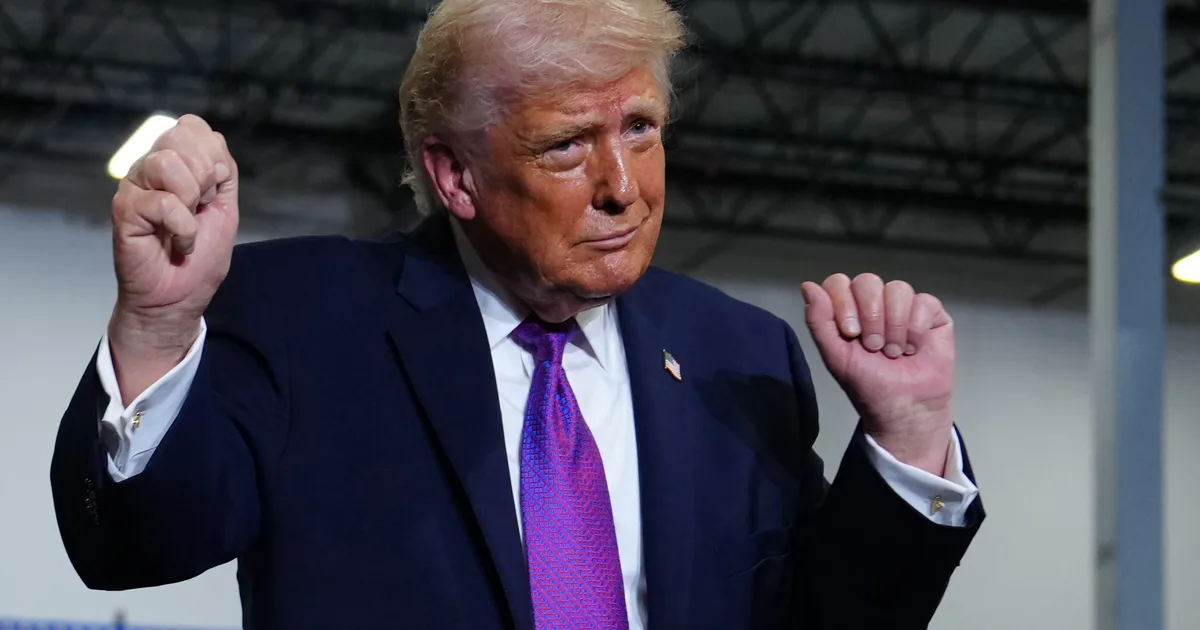
Donald Trump has insisted that “prices are coming down very substantially” even as the cost of oil continues to increase due to his war in Iran.
The price of oil pushed past $100 a barrel on Wednesday and stock markets fell as three more cargo ships were attacked in the Gulf.
Rates are currently at a four-year high comparable to the number seen after Russia’s invasion of Ukraine in 2022.
Though the numbers continue to oscillate, as of Thursday morning, Brent crude oil – the most traded of all oil benchmarks – was trading at $97,90, an increase of more than 9%.
Trump’s decision to bomb Iran with Israel almost two weeks ago has sent shockwaves across the global economy.
Iran has retaliated by targeting US military bases in neighbouring countries and effectively closing the Strait of Hormuz, a waterway which carries a fifth of the world’s oil supply.
Thirty-two countries including the UK agreed to release 400 million barrels of oil reserves on Wednesday in the hope of soothing the markets.
But traders are anticipating a “prolonged” conflict, which is why rates remain high.
Trump initially said oil price spike was a “very small price to pay for safety and peace”.
But the president insisted on Wednesday evening that the mass release oil reserves would “substantially reduce oil prices”.
He said: “Prices are coming down very substantially.”
“Oil will be coming down,” the president insisted. “That’s just a matter of war that happens. You can almost predict it.
“I would say it went up a little bit less than we thought. It’s going to come down more than we, than anybody understands.”
The president said the US would “look very strongly” at the Strait of Hormuz.
Trump told his supporters in Kentucky: “The straits are in great shape. We’ve knocked out all of their boats. They have some missiles, but not very many.”

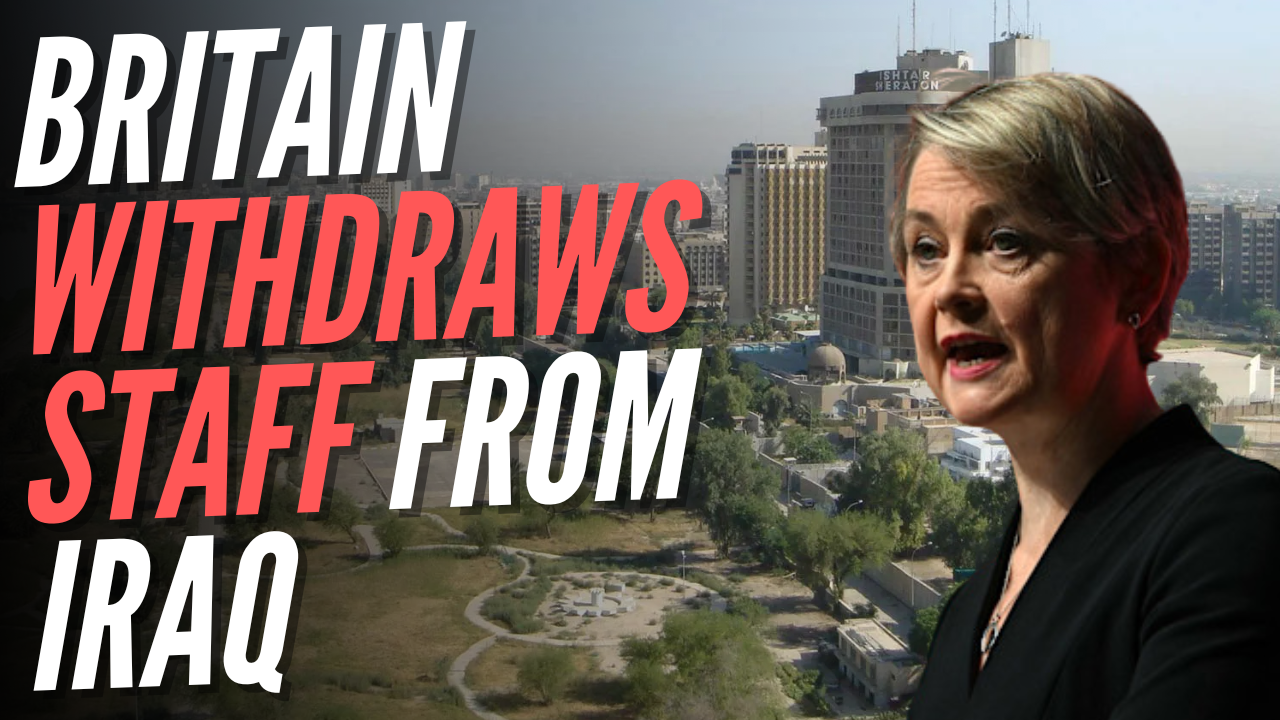
The UK claims “some staff” will be withdrawn from Iraq “as a precautionary measure.” Escalations…
Featuring Hilary Benn staring at the floor wishing the ground would swallow him up…
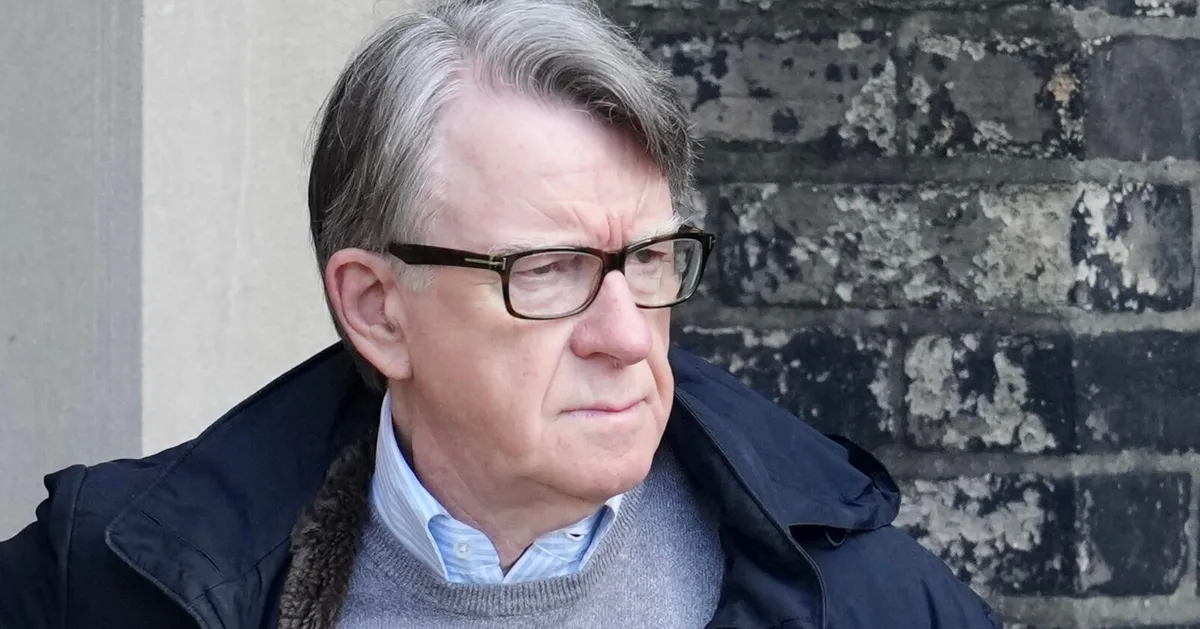
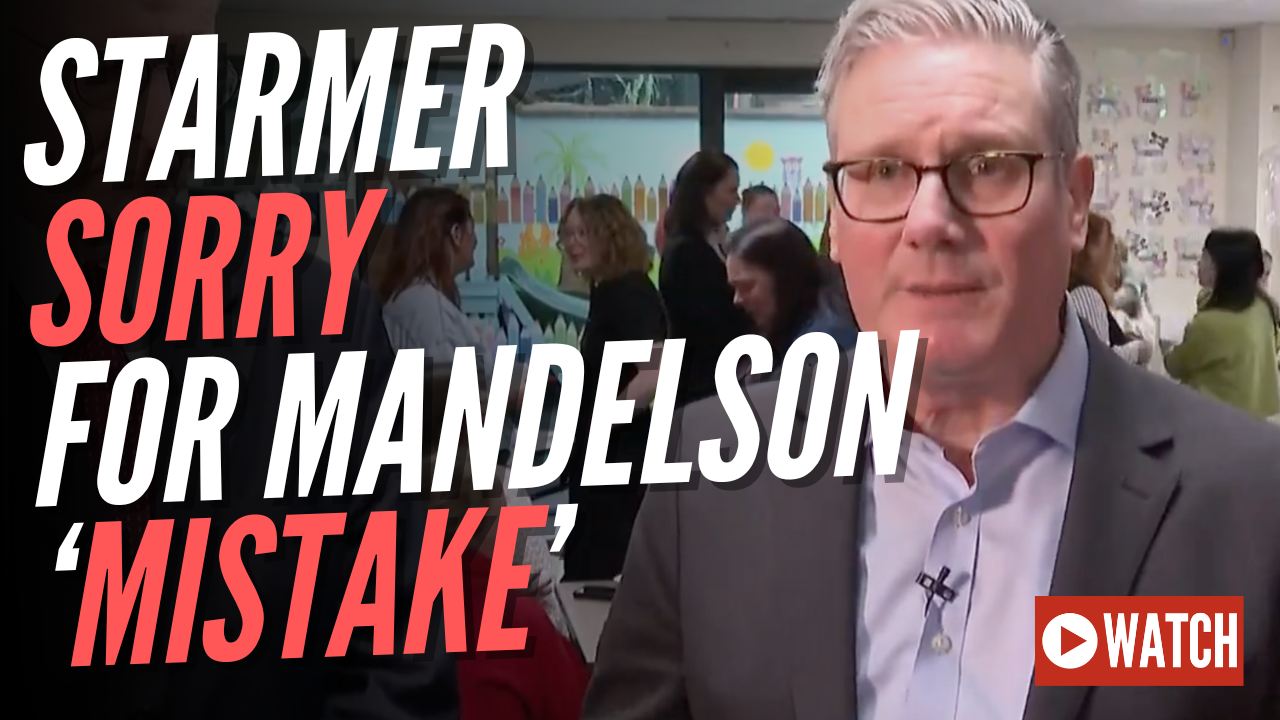
Keir Starmer’s spokesperson has rejected accusations of a “cover-up” over the Peter Mandelson files.
The government released the first tranche of its documents relating to the former Labour peer’s appointment as a US ambassador on Wednesday.
Ministers were forced to publish the files amid wider questions over how much No.10 knew about Mandelson’s friendship with paedophile Jeffrey Epstein when offering him the top job in December 2024.
The official due diligence documents sent to the prime minister did not include any comments from Starmer and the boxes meant for his input were left blank.
That sparked claims prime minister’s remarks had been “redacted”.
While speaking to reporters on Thursday, the spokesperson said: “I refute the suggestion of a cover-up. The government’s complied fully. I just don’t accept that it’s the case at all.
“There are a range of different ways in which the prime minister’s senior team responds to advice.”
The representative added: “The prime minister did read the advice, but clearly there are lessons to be learned on the wider appointment processes, and the processes that led up to them.”
The response comes after Tory leader Kemi Badenoch suggested key details were missing in this set of files.
She told PA: “I’ve been a minister and a secretary of state, the comments which Keir Starmer would have put on the box notes – those are the cover notes where you explain what you want to happen – are missing.
“They have been removed. We need the full details of what the prime minister did. There is still a cover-up going on.”
The documents are being released in batches to avoiding prejudicing the ongoing police probe into allegations of misconduct in public office against Mandelson.
Mandelson has denied any allegations of wrongdoing.
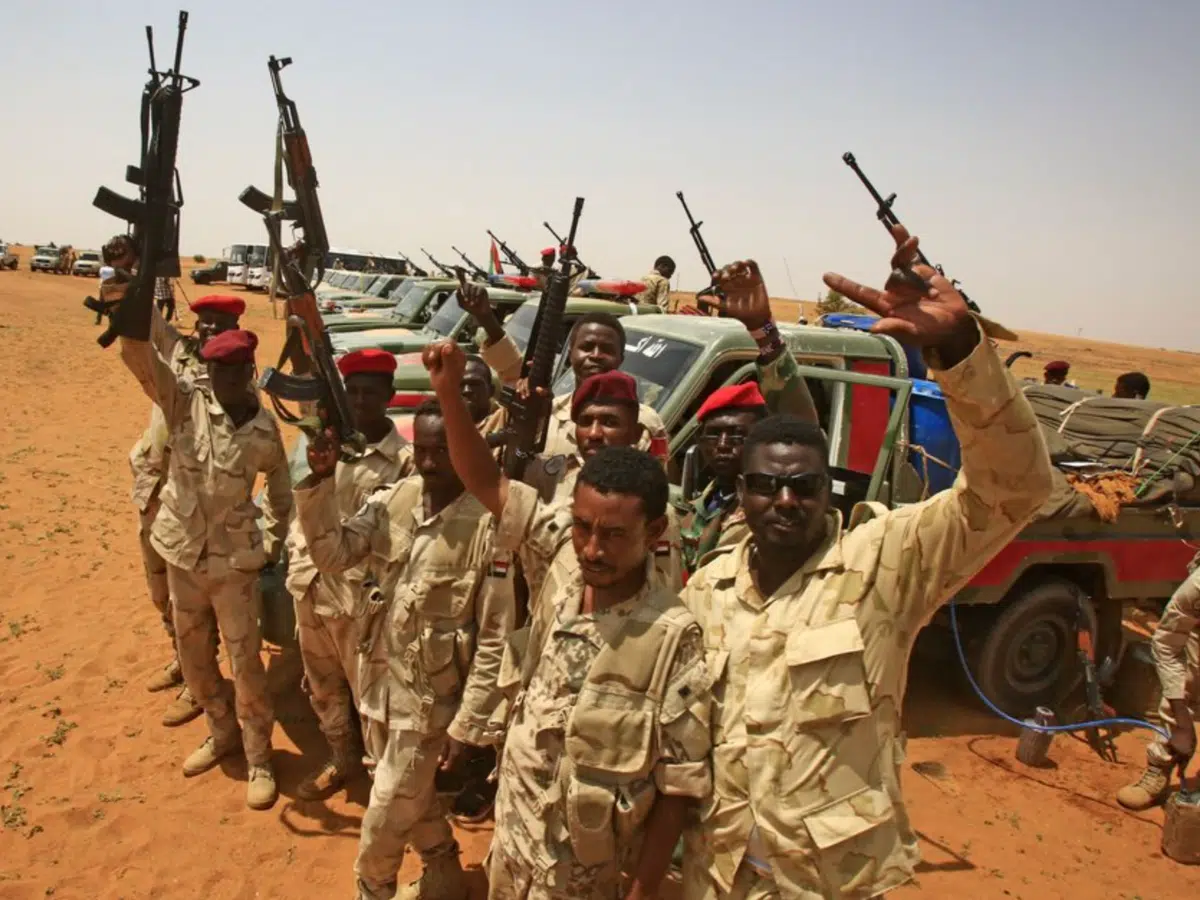
Iran’s retaliatory strikes on Israel and the United Arab Emirates (UAE) are reportedly contributing to a rapid collapse of the genocidal so-called ‘Rapid Support Forces’ (RSF) in Sudan.
UAE-backed RSF militia feel the sting of war
The RSF, funded and armed by the UAE and Israel, had been making gains up to February 2026. It has murdered hundreds of thousands of people in Sudan. Rapes, sexual torture and executions have been common and almost 400,000 people are in starvation.
However, Sudanese government forces have achieved a string of military victories that appear to be turning into a rout.
With UAE shipments rerouted from the Hormuz Straight and the UAE to Saudi Arabia due to Iran’s counterattacks of shipping, the UAE economy, and it’s global financiers, have been dealt a major blow.
Meanwhile, Sudanese forces are targeting RSF arms and supply depots, crippling front-line RSF troops by cutting off ammunition, fuel, and essentials.
Iran dismantling UAEs economy is also starving the RSF and freeing Sudan. https://t.co/TkNVOrnbW0
— Ashok Kumar | 🇵🇸 (@broseph_stalin) March 11, 2026
Featured image via the Canary

Numerous babies were crying during Starmer’s short speech to mothers in Belfast. This is Starmer’s first public appearance since the Mandelson Files dropped. One was so distressed it had to be taken out of the room…
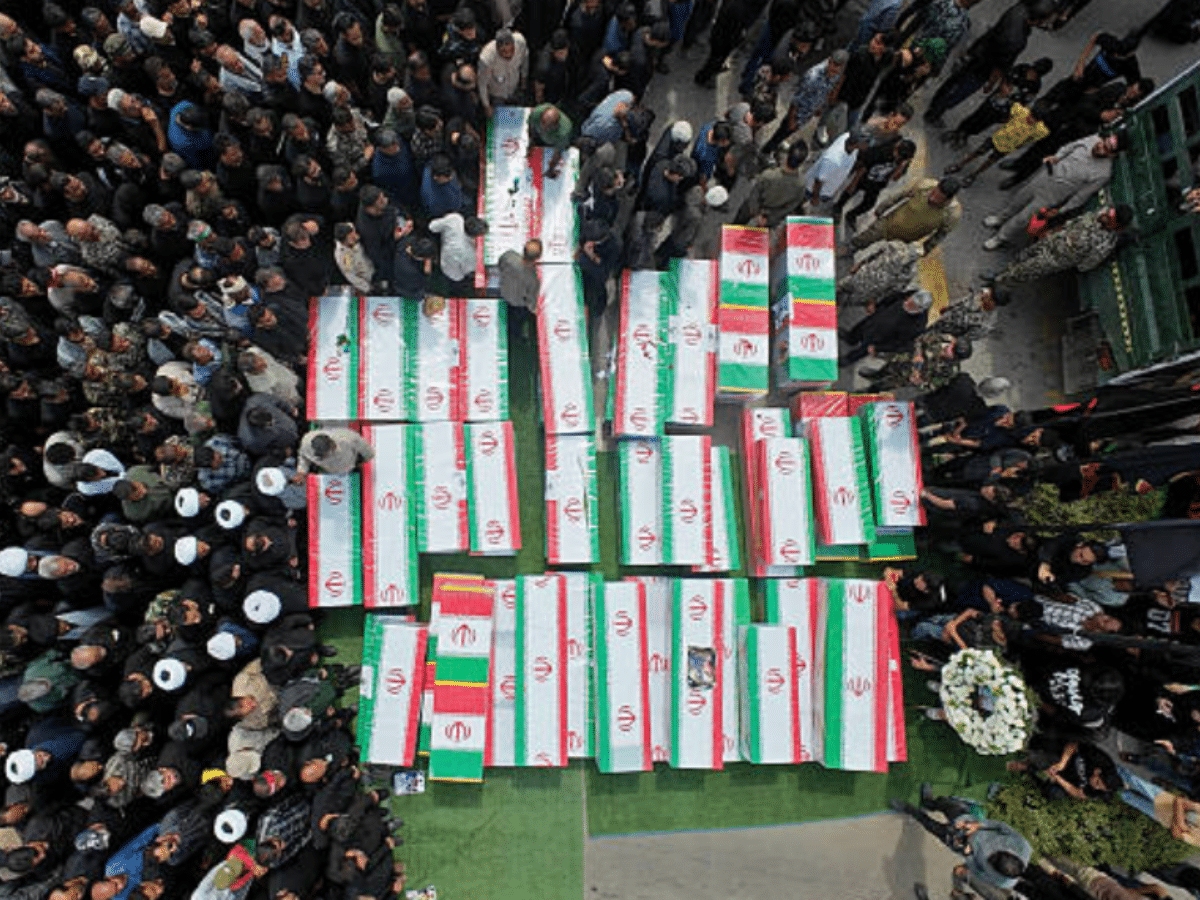
In a video published by Al Jazeera, a reporter confronts President Trump about a New York Times report revealing U.S. responsibility for the missile strike on a girls’ school in Minab, Iran – to which Trump responds:
I don’t know about it.
President Trump denied knowledge of a US military investigation that has reportedly found the US responsible for the deadly strike on the Minab girls’ school in Iran. pic.twitter.com/4a3uT8NKPG
— Al Jazeera English (@AJEnglish) March 12, 2026
The strike killed around 175 primary school children in southern Iran on February 28th.
Trump does know about it
The Guardian reported that, according to the New York Times, the US military investigation has found that the strike on the elementary school building was the result of a targeting mistake by US military planners. The Guardian said:
According to the New York Times, quoting unnamed US officials and others familiar with the initial findings, the investigation has concluded that the strike on 28 February on the Shajarah Tayyebeh elementary school building was the result of a targeting mistake by the US military planners.
According to the report, the inquiry – which has yet to be completed – has found that officers at US Central Command created the target coordinates for the strike using obsolete data provided by the Defense Intelligence Agency.
US Congresswoman Rashida Tlaib responded forcefully to the confirmation of U.S. culpability, calling for Trump’s impeachment.
After lying about it, the Trump Administration confirmed that they bombed a school in Iran—killing 175 people, mostly girls.
Trump should be impeached. Hegseth should be fired. And the Administration must be held accountable in international courts for their heinous war crimes. pic.twitter.com/AqsNhPprEq
— Congresswoman Rashida Tlaib (@RepRashida) March 11, 2026
UK culpability
🚨Breaking: A preliminary inquiry has found the US at fault for the strike on an Iranian school, killing over 150 children.
It was a “deadly Tomahawk missile strike”, the inquiry said.
A factory in Scotland produces key parts for Tomahawk missiles.
👉https://t.co/UYl3D5GgMj pic.twitter.com/K12V3v9Y4a— Declassified UK (@declassifiedUK) March 11, 2026
Campaign Against Arms Trade also tore into the UK’s complicity:
On 28th February, the United States bombed Shajareh Tayyebeh school in southern Iran and killed at least 180 people – mostly children.
It is likely they used Tomahawk missiles to bomb 3 times.
Components of the missiles are made in Raytheon’s factory in Glenrothes, Scotland. pic.twitter.com/NRnC9gBGWr
— Campaign Against Arms Trade (@CAATuk) March 10, 2026
For the children of Minab, for their families, for anyone watching: in the unaccountable US regime, run by the Epstein class, accountability seems far away while the habitual liar Trump will probably move on to his next falsehood.
Featured image via the Canary
Jack Rankin is the Member of Parliament for Windsor.
As I write this, bombs are flying over the Middle East. War is raging in Eastern Europe. An increasingly revanchist China is threatening its neighbours. And across the world, national governments are realigning their geopolitical stances to adapt to this new world we find ourselves in after decades of relative peace.
Britain should be doing the same.
Our departure from the European Union saw an opportunity to rethink Britain’s place in the world – now, the increased unpredictability of our relationship with a United States, presents another challenge. We should use these opportunities to strengthen relationships with countries that share our institutions, our outlook, and out strategic interests. Canada, Australia, and New Zealand are the obvious places to begin – with the goal being a new bloc with the four nations named CANZUK.
As the Member of Parliament for Windsor, the home of our shared monarchy, I am constantly reminded of the close ties Britain holds with Canada, Australia, and New Zealand. His Majesty is one symbol of those ties, with shared institutions and culture being others. Our close relationships were proven last week, when the Conservative Friends of CANZUK (of which I am vice-President) hosted Pierre Poilievre, leader of the Conservative Party of Canada, for a CANZUK drinks reception. The following day at the Centre for Policy Studies’ Annual Thatcher Lecture, Mr Poilievre expanded on his particular CANZUK vision.
But this phenomenon doesn’t just exist on the Centre-Right though. Britain appointed Mark Carney – a Centre-Left figure in Canada – as Governor of the Bank of England. How many countries would accept a foreigner as governor of their national bank? Not many I’d wager – but we don’t really see Canadians are foreigners, do we? It is unlikely that Brits would have approved a non-Brit holding this position unless they came from a country with such deep ties to Britain as someone from a CANZUK nation.
With the Canadian Leader of the Opposition was in London, the very same Mark Carney, now Canadian Prime Minster was signing a new critical minerals agreement with his Australian counterpart. That is not nostalgia – that is very real twenty-first century geopolitics. In New Zealand, the Minister of Foreign Affairs has been calling for CANZUK for almost a decade.
The foundations of CANZUK are historical as well as strategic. Our ties are deeper than being purely diplomatic. In the First World War, British forces fought on the Somme, Canadian identity was being forged at Vimy Ridge, and Australians and New Zealanders at Gallipoli. Our armed forces have fought alongside each other for more than a century. Constitutional traditions across the nations are closely related, with legal systems all rooted in English common law. English is our common language, and we share a Head of State. These factors already mean we have a lot more in common with CANZUK nations than the vast majority of European nations, making a deeper partnership all the more sensible.
Defence is at the core of today’s political debate. The world is becoming a more dangerous place, and the assumptions that Britain previously worked on are becoming increasingly invalid. Britain and Australia already work together through the AUKUS security partnership alongside the United States. Canada plays a key role in defending the Arctic and the North Atlantic. Britain remains a maritime power with global responsibilities. We should commit to recognising and enforcing Canadian sovereignty over their internal waters in the Northwest Passage. A deeper CANZUK partnership would ensure that Britain’s areas of strategic interest are better defended.
And what about the economy? The combined GDP of CANZUK stands at approximately $6.5 trillion, making it the third largest in the world only behind China and the United States. Unburdened by the self-imposed regulatory barriers of the European Union, CANZUK nations have massive growth potential which would only see the bloc strengthened in the future. Australian lithium, British tungsten, and Canadian uranium could supply a wave of reindustrialisation that the West is crying out for. A skilled mobility framework – which works for the benefit of the people of each member state rather than big corporations – would boost labour productivity across the bloc and deepen our cultural ties. The potential economic benefits of CANZUK are plentiful and only require each nation’s leadership to grasp the opportunities at hand.
As Kemi Badenoch is now arguing: “Our four nations have shared strengths in goods, services, and defence. By working more closely together, we can combine these collective strengths to boost our economic growth and our national security.” The British Conservative Party joining our brothers in the Canadian is under-appreciated strategic news, a key campaign win for Conservative Friends of CANZUK.
CANZUK will now be in our manifesto, and it will be at the top of our agenda when we are next in government. This is a monumental moment in post-Brexit foreign policy. Since 2016, EU-nostalgic politicians have been unable to mask their contempt for Brexit, and our foreign policy has been hindered as a result. Under new leadership, the Conservative Party has finally broken itself free from these figures, and if in Government, would take serious steps to ensure CANZUK becomes more than just an idea.
In an increasingly uncertain world, we need to stand with our closest allies. It is time for CANZUK.
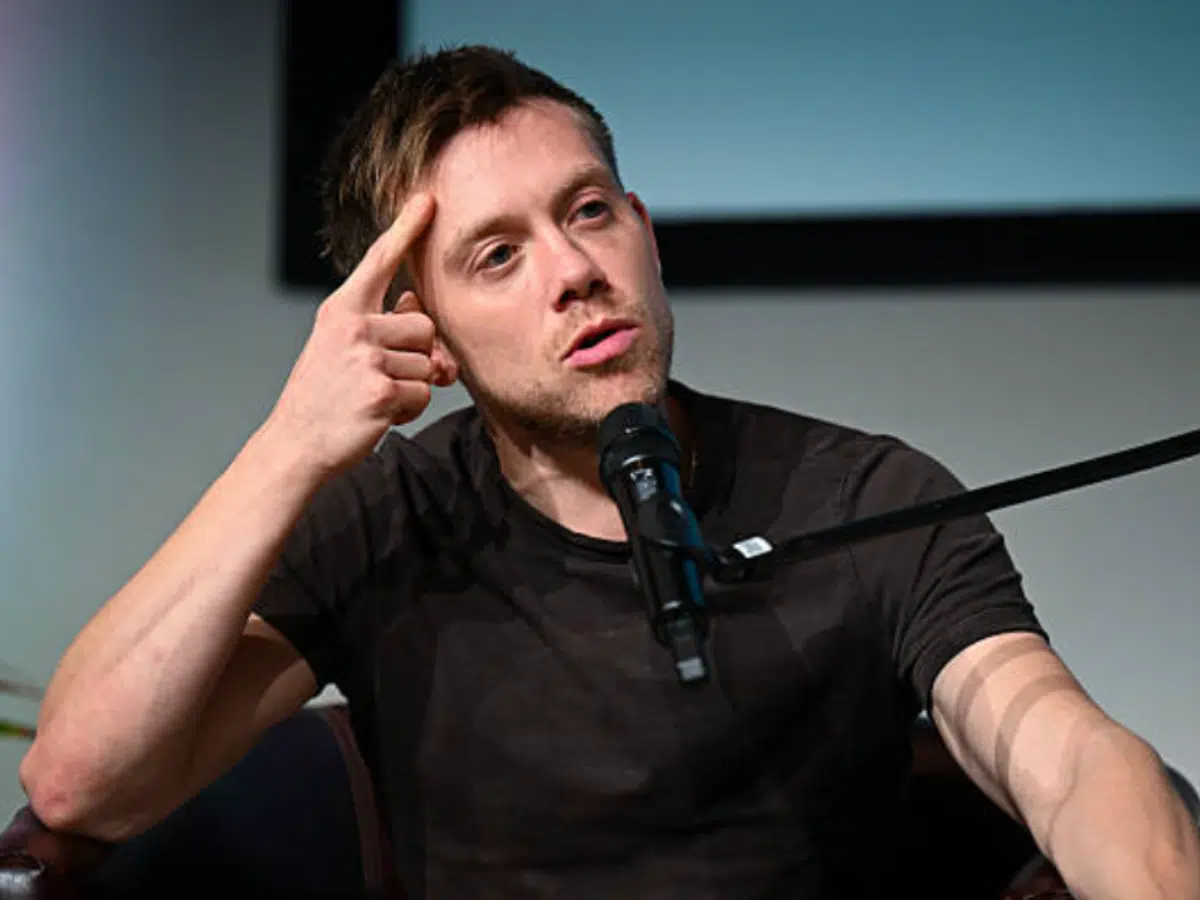
Journalist Owen Jones has scored a major victory in his legal fight against BBC editor and Israel fanatic Raffi Berg. Berg was suing Jones for libel after Jones accused Berg and the BBC of bias against Palestinians in coverage of Israel’s Gaza genocide.
Berg, who has gushed about an award from Israeli PM Benjamin Netanyahu, has been accused of collaborating with the CIA and Israeli intelligence. The BBC has deleted documentary evidence of Israel’s crimes and their impact on Palestinians. The corporation routinely downplays the murder of Palestinians and parrots Israeli propaganda. But Berg took exception and launched legal action for damage to his “professional reputation as a journalist and editor”, to the delight of Israel lobbyists.
But today, 12 March, the High Court has ruled against Berg on key issues in his legal action, judging that Jones was expressing an honest opinion based on stated evidence – one of the key defences against libel action.
Owen Jones said:
I am delighted that the High Court has ruled in my favour on the key issues in the libel case brought by Raffi Berg. The court rejected the claimant’s interpretation of the article and ruled that it expressed an opinion based on stated material.
I stand by my journalism and, if Mr Berg decides to continue the libel claim, I look forward to defending my article in court. I would like to thank my legal team at RPC Legal, my barrister Aidan Eardley KC, and Drop Site News, which published the article and has stood by my journalism throughout.
Berg now has to decide whether to continue the case, but his lawyers may well advise him to drop it as the risk of losing – and of a costs award against him – is now much higher.
Featured image via the Canary

4 min read
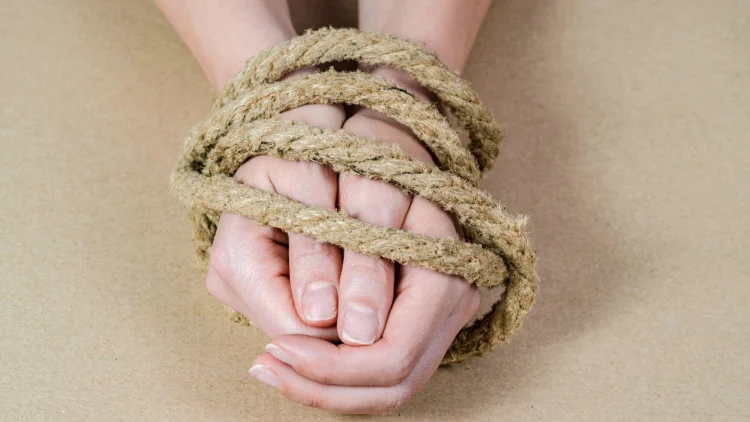
Most of us abhor torture – we know it is one of the most terrible crimes. And at Freedom from Torture, we see the long-lasting damage it causes to the people who arrive at our therapy rooms daily to try and rebuild their lives.
But even though it is absolutely prohibited, torture still happens every day – in conflicts, in prisons, behind closed doors – often with no accountability or justice for survivors.
Yet in the UK, public support for the torture ban is strong and growing – even at a time when world leaders are openly endorsing torture and human rights protections are under sustained attack.
That makes it even more troubling that, this week UK officials are at the table in Strasbourg negotiating with European partners on language that could limit protections against torture, inhuman and degrading treatment under Article 3 of the European Convention of Human Rights (ECHR).
At the same time it was revealed that the UK is using universal jurisdiction powers, which allow for prosecution of international crimes wherever they are perpetrated, to bring charges against a man in the UK accused of committing torture and crimes against humanity in Syria.
Before its collapse in 2024, torture was a hallmark of Bashir Al- Assad’s regime. Freedom from Torture has been supporting Syrian survivors for years. Their experiences of the cruellest physical and psychological punishment meted out by Assad’s enforcers to crush dissent is beyond comprehension.
It’s vital that people understand that torture continues to cast a long and painful shadow, even many years on. And that accountability matters. The UK’s decision to prosecute a man for crimes committed under Assad – following similar prosecutions in Germany – demonstrates that international law has real teeth.
One man might seem like a drop in the ocean, but it sends a powerful message: there is no safe haven for those who commit international crimes. History is littered with torturers who’ve tried to evade accountability by fleeing the scene of their crimes. Universal jurisdiction means they have nowhere to hide.
For survivors of torture, justice and accountability is integral to the healing process. But these protections are increasingly under assault across the globe. Over recent years, human rights have come under attack in the UK – duplicitously reframed by those in pursuit of unchecked power as a threat to security rather than the bedrock of a just and peaceful society.
Article 3 is absolute. It guarantees that no one – no matter who we are or where we come from – can be subjected to torture or other ill treatment. There are no exceptions, no circumstances in which this right can be suspended. At its heart is the recognition of inalienable human dignity, the foundation of human rights law.
That is why it is so alarming that the UK Government appears to be a willing player in efforts at the Council of Europe to place limits on the scope of “inhumane and degrading” for certain groups. It risks undermining this principle and in so doing contributing to the erosion of the absolute ban on torture.
Even seemingly small steps to narrow Article 3 protections could trigger a domino effect – emboldening authoritarian states to follow suit and “legitimise” their own abuses. This would be a betrayal of torture survivors everywhere.
And survivors know better than most that when rights are lost, they are almost impossible to win back. Every safeguard we dismantle today will be a gift to those who seek to abuse power tomorrow.
Britain was a trailblazer in the evolution of the torture ban, stretching back centuries and helped shape the very human rights treaties now under threat. The UK has always been at its strongest when it has displayed moral leadership – showing that even in times of hardship, we do not abandon our principles.
It has never been more important that our political leaders defend and champion the torture ban that the UK played such a proud role in creating. This week the UK sent a signal that torturers may run, but they cannot hide from the law. Now, it must reinforce this by resisting any regressive steps in Strasbourg that could lead to the erosion of vital protections against torture. The world is watching.
Sonia Sceats is Chief Executive of Freedom From Torture
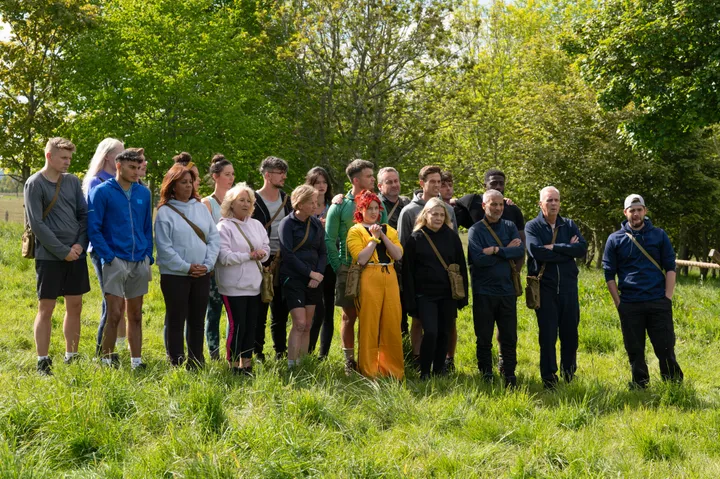
It’s hard to imagine the long, cold winters without The Traitors to keep us all entertained – but luckily, you won’t have to for a long while.
The BBC is remaining faithful to The Traitors and its celebrity spin-off as it renews the show until at least 2030, meaning we’re in for at least four more seasons of backstabbing, shocking murders and unpredictable roundtable action.
Tim Davie, the outgoing BBC director-general, announced the exciting news during a valedictory speech to The Royal Television Society on Thursday morning.
While the main show and its celebrity format had already been renewed for additional seasons, this new deal means The Traitors will run for at least eight seasons in total.
The Celebrity Traitors‘ second season will air later this year, following the runaway success of the first last autumn, with a further three star-studded seasons planned through to late 2029.
Kalpna Patel-Knight, head of entertainment commissioning at the BBC, said in a new statement: “We can’t wait to share many more twists and turns with viewers all across the UK in the coming years.”

BBC/Studio Lambert/Euan Cherry
Meanwhile, the CEO of production company Studio Lambert, Stephen Lambert, enthused: “The Traitors has become a genuine television phenomenon across the world, but especially in the UK, and we’re thrilled to continue the journey with the BBC.
“It’s hugely exciting that audiences will have many more years of strategy, suspense and shocking twists still to come.”
It’s no surprise that the BBC wants to keep the show on air for as long as possible, given The Traitors has become a cultural phenomenon and a mammoth ratings success.
The Celebrity Traitors debuted on BBC One in October to an average audience of 14.9m, with 15.4m tuning in to watch Alan Carr win the series.

BBC/Studio Lambert/Paul Chappells
Meanwhile, the most recent regular run – which aired earlier this year – also hit a series high with a record-breaking 9.4 million average viewers tuning in to watch the finale on BBC One.
This new deal also cements iPlayer’s position as the British home of the international The Traitors franchise, with versions from the US, Ireland, New Zealand and Australia remaining exclusive to the iPlayer.
However, although The Traitors’ future is secure, one element recently added to the show is not.
Speaking at an event at the University of East Anglia in Norfolk, Lambert admitted there are no plans to bring back the divisive “Secret Traitor” twist when the show returns to our screens next year.
“There have been other shows which have done something similar, where the audience didn’t know who ‘the mole’ was, and the trouble is you’re completely a victim of the edit… and that doesn’t feel very satisfying,” he admitted.
Filming for the upcoming fifth season of The Traitors is expected to start this summer, with the season airing early next year.
The Celebrity Traitors’ second season will hit our screens in the autumn, and although a line-up has yet to be revealed, the likes Ruth Jones, Danny Dyer and Alison Hammond are rumoured to be entering the castle.

MASSIVE Bitcoin Buying Opportunity RIGHT NOW! Bitcoin RALLYING As Stocks CRASH!

What went right this week: progress in tumultuous times, plus more

Bitcoin, Ethereum and utility protocols today


-
Business6 days ago
Form 8K Entergy Mississippi LLC For: 6 March
-

 News Videos3 days ago
10th Algebra | Financial Planning | Question Bank Solution | Board Exam 2026
-

 Fashion6 days ago
Weekend Open Thread: Ann Taylor
-

 Crypto World3 days ago
Paradigm, a16z, Winklevoss Capital, Balaji Srinivasan among investors in ZODL
-
 Tech1 day ago
A 1,300-Pound NASA Spacecraft To Re-Enter Earth’s Atmosphere
-
 Sports7 days ago
499 runs and 34 sixes later, India beat England to enter T20 World Cup final | Cricket News
-

 Politics6 days ago
Top Mamdani aide takes progressive project to the UK
-

 Tech2 days ago
ChatGPT will now generate interactive visuals to help you with math and science concepts
-

 Business2 days ago
ExxonMobil seeks to move corporate registration from New Jersey to Texas
-

 Sports5 days ago
Three share 2-shot lead entering final round in Hong Kong
-

 Sports4 days ago
Braveheart Lakshya downs Lai in epic battle to enter All England Open final | Other Sports News
-

 NewsBeat20 hours ago
Residents reaction as Shildon murder probe enters second day
-

 NewsBeat7 days ago
Piccadilly Circus just unveiled ‘London’s newest tourist attraction’ and it only costs 80p to enter
-

 Entertainment6 days ago
Hailey Bieber Poses For Sexy Selfies In New Luscious Lip Thirst Traps
-

 Business4 days ago
Search for Nancy Guthrie Enters 37th Day as FBI Probes Wi-Fi Jammer Theory
-

 Business1 day ago
Search Enters Sixth Week With New Leads in Tucson Abduction Case
-
 NewsBeat3 days ago
Pagazzi Lighting enters administration as 70 jobs lost and 11 stores close across Scotland
-

 Tech3 days ago
Despite challenges, Ireland sixth in EU for board gender diversity
-

 Business3 days ago
Search Enters 39th Day with FBI Tip Line Developments and No Major Breakthroughs
-

 NewsBeat1 day ago
I Entered The Manosphere. Nothing Could Prepare Me For What I Found.