Even the folks behind generative AI writing are embarrassed at how bad it is, but Grammarly ripping off the voices of well-known modern writers is indicative of a much larger problem.
Grammarly turned people — both living and dead — into ghost editors
Apparently, Grammarly had a feature that encouraged users to rip off other well-known writers’ styles. TechCrunch has a great piece on it, in which you find out that Grammarly would offer “expert review” — sans experts. It seems that, as you wrote, the tool would pop in and suggest revisions from the perspective of experts. Of course, the experts in question, like Platformer’s Casey Newton didn’t know this was happening. Continue Reading on AppleInsider | Discuss on our Forums
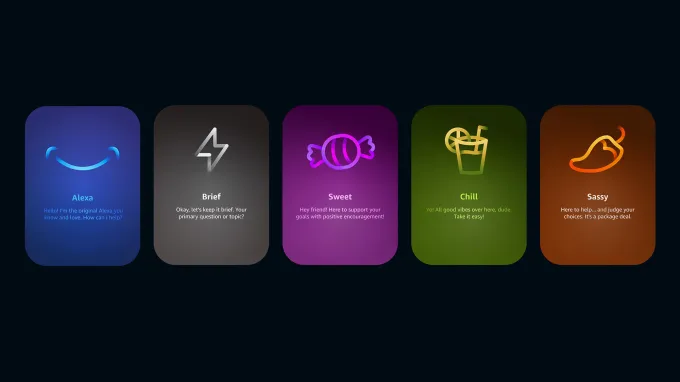
Amazon’s AI assistant Alexa+ is getting another new personality. On Thursday, the company announced it’s expanding its lineup of personality styles for users to choose from to include a “Sassy” option, which is for adults only. Notes Amazon, before opting to use the Sassy personality, users will be required to go through additional security checks in the Alexa app.
The personality style will also not be available when Amazon Kids is enabled, Amazon says.
The new option joins others like Brief, Chill, and Sweet, launched last month.
Image Credits:Amazon
When you toggle on the option for Sassy in the Alexa mobile app, you’re warned that the Sassy style uses explicit language, which is why it requires a security check. On iOS, this involved a Face ID scan.
The AI assistant explained its style to us like this: “The Sassy style is built on one premise: help first, judge always. Every answer comes wrapped in wit and a well-placed roast — it’ll answer your question; it’ll just make you feel something about it first. Expect reality checks delivered with charm, compliments that somehow sting, and warmth you didn’t see coming. Equal-opportunity irreverence, zero apologies. Honest, sharp, and funny — and somehow that’s more helpful than helpful.”
Advertisement
Alexa’s app also had warned that the style could contain “mature subject matter.”
However, further investigation discovered this is not Amazon’s version of something like Grok’s adult AI companions. The AI assistant said the new option won’t get into areas like explicit sexual content, hate speech, illegal activities, personal attacks, or anything that could cause harm to oneself or others.
Techcrunch event
San Francisco, CA | October 13-15, 2026
Advertisement
The move is the latest example of how Amazon is trying to make Alexa+ more customizable, as it revamps the assistant for the generative AI era. By offering the assistant different personalities — including one positioned as more adult — Amazon is borrowing from a broader trend in AI, where companies have been experimenting with tone, style, and personas to make their assistants more engaging and personalized to the individual users’ choices.
As always with authoritarian regimes (and corporate ownership), this is all presented to the public as an effort to restore balance, eliminate (nonexistent) “liberal bias,” and reach out to real Americans. As if billionaires and their useful idiots could care less about everyday Americana.
“So, look, I’ve said this since the beginning, which is, you know, for — when it really comes to — editorial independence will absolutely be maintained. It’s maintained at CBS. It’ll be maintained at CNN. And, really, who we want to talk to is the 70% of Americans and really around the world that identify as center-left, as center-right. And we want to be in the truth business. We want to be in the trust business. And that’s not going to change.”
Traditionally there’s only one editorial direction U.S. journalism usually goes under consolidated corporate ownership. U.S. media owners like tax cuts, deregulation, subsidies, access, and merger approvals, so corporate media’s editorial slant generally follows the financial interests of ownership. The pretense that U.S. media suffers from widespread “liberal bias,” or the belief that there are still functional firewalls between ownership and editorial, are long-deceased relics.
Larry Ellison clearly wants to hoover up what’s left of corporate media (including CBS, CNN, HBO) — and fuse it with his co-ownership of TikTok to create a sort of Hungary-esque autocratic state media, where administration allies praise dear leader while the government strangles independent and public media just out of frame.
The only thing saving us from the full and terrible vision of this outcome to date is the fact that very few of the weird nepobabies and brunchlords being tasked with its creation have anything you’d mistake for competence.
When Max Brodeur-Urbas co-founded Gumloop in mid-2023, his vision was to help non-technical employees automate repetitive tasks using AI. At that time, the concept of AI agents was still largely experimental and prone to errors.
As AI technology has matured, so has Gumloop’s offering.
The company claims that it now allows teams at organizations like Shopify, Ramp, Gusto, Samsara, Instacart, and Opendoor to deploy reliable AI agents that autonomously handle complex, multi-step tasks, all without ever needing an engineer.
Employees can share the agents they build with colleagues, creating a compounding effect that accelerates internal automation. “They get addicted, they start building more agents, and then all of a sudden, the whole company is AI native,” Brodeur-Urbas told TechCrunch.
Advertisement
As companies race to adopt AI, Benchmark general partner Everett Randle believes the key to success lies in empowering every worker with AI superpowers, and Gumloop’s intuitive agent-builder is an example of the kind of tool that will unlock that potential.
That’s why Randle, who joined Benchmark last October from Kleiner Perkins, chose to lead a $50 million Series B investment into Gumloop. The deal, which is Randle’s first at his new firm, included participation from Nexus VP, First Round Capital, Y Combinator, Box Group, The Cannon Project, and Shopify.
Though Gumloop wasn’t actively seeking new capital, the startup decided this was the year to “step on the gas.” For Brodeur-Urbas, partnering with Benchmark—the firm behind icons like eBay, Uber, and Dropbox—was a “no-brainer.”
Techcrunch event
Advertisement
San Francisco, CA | October 13-15, 2026
While Brodeur-Urbas previously planned to ‘build a 10-person, billion-dollar company,’ the surging demand from enterprise clients has compelled him to build a dedicated sales force and scale up his engineering team, he said.
Advertisement
Gumloop is by no means the only player vying to turn every knowledge worker into an AI agent-builder. The startup faces stiff competition from established automation platforms like Zapier and n8n, as well as specialized agent builders like Dust. Even foundational AI labs are entering the fray. For instance, Anthropic’s Claude Co-Work allows users to create autonomous agents without writing a single line of code.
But Randle believes Gumloop is superior to all its rivals. During his due diligence, he discovered that at least one of the company’s customers had adopted Gumloop somewhat organically.
When Randle asked a CTO how they chose Gumloop, the response was telling. The company had given employees full access to Gumloop alongside two competitors. Six months later, the results were clear: staff were using Gumloop daily or weekly, while the competing tools sat untouched, Randle told TechCrunch.
The reason Gumloop gained such momentum, according to Randle, is its minimal learning curve. “You can go in and start making agents and workflow automations immediately,” he said.
Advertisement
While many AI startups worry that foundational models will replicate the same functionality and render them obsolete, Randle is convinced that Gumloop’s model-agnostic approach is precisely what will keep attracting customers.
As models continue to evolve, one may perform better than another for a specific task. So, Gumloop provides the flexibility to choose the model best suited for the job at any given moment.
Another reason why model independence is attractive, according to Randle, is cost. “Plenty of enterprises have OpenAI, Gemini, and Anthropic credits. They want to use all of them,” he said
His excitement for the company ultimately comes down to the sheer size of the opportunity.
Advertisement
“Enterprise automation is a massive pot of gold,” Randle said. “I think it’s the biggest category in enterprise AI.”
Ever since 3D printing has become a popular tool, the question of waste has been looming in the background. The sad reality of rapid prototyping is that you’re going to generate a lot of prints that just don’t aren’t fit for purpose, even if your printer runs them off perfectly every time. Creality has some products on the way aimed at solving that problem, and [Embrace Making] on YouTube has got his hands on a pre-production prototype of the Creality M1 Filament Maker to give the community a first look.
The M1 is actually only half of the system; Creality is also working on an R1 shredder to reduce your prints into re-usable shreds. [Embrace Making] hasn’t gotten his hands on that, but shredding prints isn’t the hard part. We’ve featured plenty of DIY shredders in the past. Extruding filament reliably at home has traditionally proven much more difficult, which is why we mostly outsource it to professionals.
Lacking the matching shredder, and wanting to give the M1 the fairest possible shake, [Embrace] tests the machine out first using Creality-supplied PLA pellets. The filament diameter isn’t as stable as we’ve gotten used to, and the spool rolling setup needs a bit more work.
Again, this is an early prototype. Creality says they’re working on it and claims they’ll get to ±0.05 mm precision in the production models. Doubtless they’ll also fix the errors that led to [Embrace]’s messy spool. That’s probably just software given that the winding mechanism did a pretty good job on the Creality-supplied spool.
Advertisement
Most importantly, the M1-produced filament does print. The prints aren’t perfect due to the variation in diameter, but they turn out surprisingly well for home-made filament. [Embrace] also shows off the ability to mix custom colors and gradients, but, again, using raw PLA rather than shredded material. Hopefully Creality lets him test drive the R1 shredder once its design is further along.
Apple’s new MacBook Neo design makes it startlingly quick and simple to repair, with Self Service Repair program instructions proving the point.
MacBook Neo’s keyboard is now easier to repair
Apple first announced its Self Service Repair program back in 2021, and it was really a case of doing it before being forced to by law. It’s slowly expanded out, launching first for the iPhone in April 2022, and later expanding to Macs. Throughout, it’s been criticized for being expensive and for making users go through hoops to get the work done. Now, though, Apple appears to be embracing the Right to Repair pressures it has faced, and do so both with the program, and with its designs. Continue Reading on AppleInsider | Discuss on our Forums
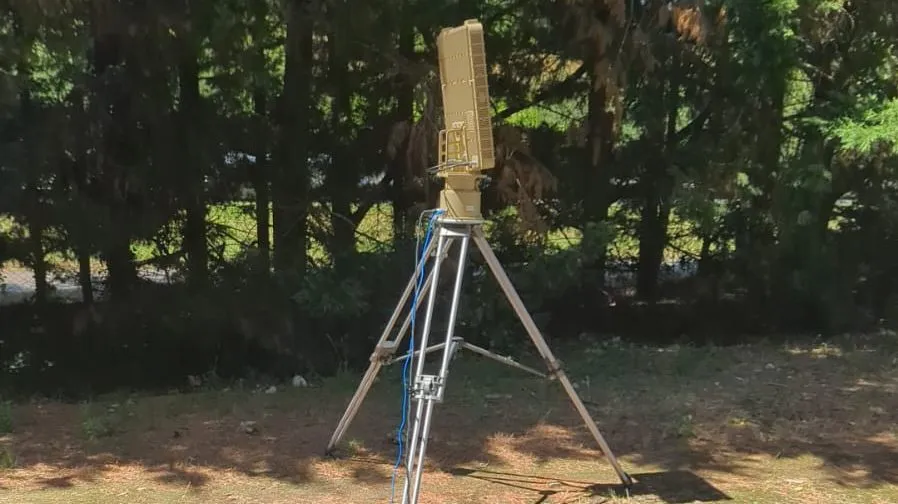
Phased-array radars are great for all sorts of things, whether you’re doing advanced radio research or piloting a fifth-generation combat aircraft. They’re also typically very expensive. [Nawfal] hopes to make the technology more affordable with an open-source radar design of their own.
The design is called the AERIS-10, and is available in two versions. Operating at 10.5 GHz, it can be built to operate at ranges between 3 or 20 kilometers depending on the desired spec. The former uses an 8 x 16 patch antenna array, while the latter extends this to a 32 x 16 array. Either way, each design is capable of fully-electronic beam steering in azimuth and can be hacked to enable elevation too—one of the most attractive features of phased array radars. The hardware is based around an STM32 microcontroller, an FPGA, and a bunch of specialist clock generators, frequency synthesizers, phase shifters, and ADCs to do all the heavy lifting involved in radar.
Radar is something you probably don’t spend a lot of time thinking about unless you’re involved in maritime, air defence, or weather fields. All of which seem to be very much in the news lately! Still, we feature a good few projects on the topic around these parts. If you’ve got your own radar hacks brewing up in the lab, don’t hesitate to let us know.
Budget airlines were beginning to emerge, promising cheaper fares and simpler service models. Traditional carriers still dominated major routes, but a new generation of low-cost airlines was challenging the status quo.
For many entrepreneurs, it was an opportunity.
One of them was Dennis Choo—a Singaporean travel industry veteran who had spent decades quietly building connections across airlines and tourism networks.
Advertisement
While his name rarely appeared in headlines, Choo would eventually make one of the boldest moves in Singapore’s aviation scene: buying out Temasek Holdings to take majority control of Jetstar Asia.
But his story began long before that.
It all started with a small travel agency
In 1972, Choo founded Holiday Tours & Travel Group (HTT Group) as a modest airline ticketing agency in Singapore.
At the time, travel agencies played a critical role in airline distribution. Before the era of the Internet, booking flights typically meant visiting an agent who handled ticketing, reservations, and itineraries.
Advertisement
Choo saw opportunity in this system and, over the years, expanded into parallel verticals, diversifying his business across tours, airline representation, cruise operations, and hospitality.
Holiday Tours eventually started acting as a General Sales Agent (GSA) for several international carriers in the region, handling sales, marketing, and distribution in markets where airlines lacked a strong local presence.
More importantly, the group cultivated deep relationships with airlines, giving Choo unique insight into how carriers operated behind the scenes. In 1984, these ties were formalised when Qantas acquired a majority stake in HTT Group’s holding company. Company ownership information from the airline’s 2025 financial report shows that Qantas now holds a significant stake in the group (about 75%).
This helped cement Choo’s reputation within the travel industry. It also gave him something even more valuable: insight into how airlines worked behind the scenes.
Advertisement
Moving from selling seats to owning airlines
By the early 2000s, the aviation landscape in Asia was changing rapidly. Low-cost carriers (LCCs) were gaining momentum, inspired by models like Southwest Airlines in the United States and Ryanair in Europe.
Singapore’s aviation sector began seeing new entrants in 2004. Alongside established players like Singapore Airlines, several budget carriers were launching to tap into regional demand.
Image Credit: Getty Images
First to take off was Valuair, a Singapore-based low-cost airline launched in May that year, backed by a group of local investors and led by former Singapore Airlines executive Lim Chin Beng.
But unlike many LCCs of the time, Valuair offered perks such as free hot meals, assigned seating and generous baggage allowances while still charging fares significantly lower than full-service airlines—a model that would ultimately struggle in an intensifying aviation scene.
It made the airline more expensive to operate than the leaner low-cost carriers that were entering the market, including Tiger Airways and Jetstar Asia. Both were backed by deep-pocketed investors—Singapore Airlines and Qantas, respectively—bringing intense price competition to the region.
Left with few options, the airline turned to consolidation as a solution.
In Jul 2005, Valuair agreed to merge with Jetstar Asia, forming a new holding company called Orange Star, whose shareholders included Qantas, Temasek, and private investors in Singapore, with the former two holding the largest stakes—approximately 45% and 33.5%, respectively. The two airlines continued operating as separate brands under the same parent company.
Choo would come into the picture in 2009.
Advertisement
Despite the merger and additional funding, Valuair’s operations continued to face challenges, and the airline was ultimately struggling to remain profitable. Furthermore, Temasek’s decision to take an 11% stake in rival Tiger Airways had created an awkward dynamic—Qantas found itself sharing an ownership structure with an investor that was simultaneously backing its direct competitor.
This led to a restructuring of Orangestar, creating an opportunity for new investors.
The restructuring resulted in the creation of Newstar Investment Holdings, a new holding company to consolidate ownership of Jetstar Asia. Through his wholly-owned private investment company, Westbrook Investments, Choo acquired a 51% majority stake in Newstar, including Temasek’s shares, while Qantas retained a 49% minority stake.
And just like that, the man who had spent decades selling other airlines’ seats was now in control of two major low-cost carriers in the region.
Advertisement
Overseeing the development of two low-cost carriers
As chairman of Jetstar Asia, Choo oversaw the development of the airline, as well as Valuair, as regional low-cost carriers.
A Jetstar Airways aeroplane sits at a gate at Singapore Changi Airport./ Image Credit: 1000 Words via Shutterstock.com
Operating out of Singapore’s Changi Airport, both airlines connected travellers to cities across Southeast Asia, East Asia, and beyond. For many travellers in the region, they became synonymous with affordable flights.
Like most airlines, however, Valuair and Jetstar faced a volatile industry environment.
Low-cost carriers operate on razor-thin margins, and competition in Southeast Asia only intensified over the years with the rise of new players. Eventually, Valuair was fully absorbed into Jetstar Asia in 2014, with its flights and routes integrated under the Jetstar brand.
Jetstar Asia continued operating for more than a decade afterwards—until it reached its final chapter in 2025. It ceased operations on Jul 31, 2025, citing rising costs and mounting competitive pressures.
Advertisement
Beyond Jetstar Asia
Throughout these developments, Dennis Choo has remained a relatively low-profile figure compared with many other business leaders in Singapore, despite his influence in aviation and travel.
Current information on his activities is scarce, but his company’s website still lists him as Group CEO, and under his leadership, Holiday Tours & Travel Group has grown to 10 entities across nine countries and territories in the Asia Pacific region.
With over 150 employees, these operations span China, Indonesia, Korea, Malaysia, the Philippines, Taiwan, Thailand, and Vietnam.
It is an impressive reach, and despite Jetstar Asia eventually closing down, Choo remains a notable presence in the region’s travel and airline sector.
Advertisement
He didn’t get there overnight.
Choo spent 37 years building relationships in the travel industry before making his biggest move—acquiring Temasek’s shares to take majority control of Jetstar Asia, proving that steady experience and long-term vision can open doors in a competitive sector.
Read other articles we’ve written on Singaporean businesses here.
Featured Image Credit: Bandaranaike International Airport/ Getty Images
Released in 2016, Pokemon Go quickly became a worldwide phenomenon. Even folks who weren’t traditionally interested in the monster-taming franchise were wandering around with their smartphones out, on the hunt for virtual creatures that would appear via augmented reality. Although the number of active users has dropped over the years, it’s estimated that more than 50 million users currently log in and play every month.
From a gameplay standpoint, Go is brilliant. Although the Pokemon that players seek out obviously aren’t real, searching for them closely approximates the in-game experience that the franchise has been known for since its introduction on the Game Boy back in 1996.
But now, instead of moving a character through a virtual landscape in search of the elusive “pocket monsters”, players find them dotted throughout the real world. To be successful, players need to leave their homes and travel to where the Pokemon are physically located — which often happens to be a high-traffic area or other point of interest.
As a game, it’s hard to imagine Pokemon Go being a bigger success. At the peak of its popularity, throngs of players were literally causing traffic jams as they roamed the streets in search of invisible creatures. But what players may not have realized as they scanned the world around them through the game was that they were helping developer Niantic build something even more valuable.
The Imaginary Gig Economy
The game has used augmented reality (AR) to bring the world of Pokemon to life since day one, but it wasn’t until the fall of 2020 that Niantic introduced AR Mapping. With this new feature, players could scan real-world locations and objects by walking around them while the software captured images from their smartphone’s camera. This was presented to the player as “Field Research”, and once completed, it would unlock various rewards in the game.
Advertisement
For those with a technical mindset, the implications of this are immediately obvious. Through the Research system, Niantic could direct Pokemon Go players anywhere they wished. Once the imagery from these Research scans were uploaded, they could be used to create detailed 3D models through the use of photogrammetry. The more players that perform Field Research on a particular location, the more accurate the results.
If Niantic wanted to create a 3D model of a statue in a park or the front of a building, they simply needed to assign it a Field Research task and the players would rush out to collect the data. Forget Google’s Street View — rather than sending a camera-laden car out once every year or so to grab new images, Niantic could sit back while millions of players uploaded high resolution pictures of the world around them in exchange for in-game trinkets that have no physical value.
No Such Thing as a Free Pokemon
In the tech world there’s a common saying: “If something is free, you’re the product.”
Advertisement
The idea being that if you’re using some service without paying for it, there’s an excellent chance that the company providing said service is somehow making money off of the situation. So for example when a user looks up a particular topic with a search engine, they can be presented with contextually appropriate advertisements. By selling this ad space to companies, the search engine provider generates a profit for each “free” search performed by its users. The personal relevancy offered by such bespoke advertisements can be more effective than traditional TV or print ads, which in turn means the search engine provider can charge a premium for them.
Just as in our hypothetical search engine example, Pokemon Go is offered up to players on Android and iOS free of charge. To date, it’s been downloaded by over a billion total users. To make the game financially viable, Niantic eventually needed to find a way to turn all those free downloads into a revenue stream.
The answer is Niantic Spatial. This spin-off company was announced in March of 2025, and offers a Visual Positioning System (VPS) created in part using the photogrammetry data collected by Pokemon Go. Through this service Niantic Spatial offers centimeter-scale positioning for millions of high-traffic locations all over the globe, even in areas where GPS may be inaccurate.
Earlier this week, Niantic Spatial announced they had entered into an agreement with Coco Robotics to provide VPS for their fleet of delivery robots. Images captured by the robot’s onboard cameras can be fed into the VPS to provide a more accurate position than is possible with GPS, even in the best of conditions. This is particularly important for a robot that not only needs to navigate an ever-changing urban landscape, but must arrive at a precise location to successfully complete its delivery.
Always Read the Fine Print
At this point, you may be thinking to yourself that this all seems a bit shady. Can Niantic really take the data that was provided to them by Pokemon Go players and spin that off into a commercial venture that monetizes it? Of course they can, because that’s precisely what players agreed to when they installed the game.
Advertisement
Section 5.2 of the Niantic Terms of Service, titled “Rights Granted by You – AR Content”, states that the company retains wide-ranging rights over anything that users upload through the AR functions of their products:
In short, not only can Niantic do anything they want with player submitted data, but they can pass that freedom on to other entities as they see fit. So while Coco Robotics didn’t even exist when the AR Mapping feature was added to Pokemon Go, all of the imagery that players captured since that time — plus any images that they continue to capture — is fair game.
In the end, it’s unlikely that many players will lose any sleep over the fact that they have unwittingly been collecting training data to help robots more effectively deliver pizzas. But it’s also not hard to imagine a scenario in which that data ends up getting licensed out for some purpose they aren’t comfortable with.
If that happens, their options may be limited. A reading of Niantic’s Privacy Policy would seem to indicate that uploaded AR imagery is anonymized during processing, and as such doesn’t need to be treated in the same way that personally identifiable information would be. As such, players have the right to opt-out of uploading additional data going forward, but can’t remove what’s already been pushed into the system.
Advertisement
Regardless of whether or not this situation impacts you directly, it’s an important cautionary tale in an interconnected world where more and more of what users do online is tracked, filtered, processed, and sold off to the highest bidder. Perhaps something to keep in mind before clicking “I Agree.”
Apple’s MacBook lineup usually holds its value well, so it is always interesting when a new entry like the MacBook Neo appears with a small early discount.
Positioned as an accessible entry point into Apple’s laptop ecosystem, this model focuses on everyday productivity while still benefiting from the efficiency and performance advantages of Apple silicon.
The Apple MacBook Neo runs on the A18 Pro chip, which is designed to handle common daily tasks such as web browsing, spreadsheets, media editing, and even light AI-assisted workloads.
For students and casual users, that means the laptop should feel responsive when juggling multiple apps, switching between browser tabs, or working through productivity software.
Advertisement
Advertisement
The Apple MacBook Neo features a 13-inch Liquid Retina display with a 2408 by 1506 resolution, which helps text appear sharp while still delivering bright and colourful images for everyday use.
Inside, the device includes 8GB of unified memory and a 256GB SSD, providing enough headroom for common workflows such as document editing, light creative work, and general multitasking.
Battery life is also designed to support a full day of use, with Apple estimating up to sixteen hours depending on the workload.
Advertisement
Within Apple’s broader lineup, the MacBook Neo sits below the MacBook Air models, which typically offer larger displays, more powerful chips, and higher starting memory configurations.
If you prefer a compact yet more powerful machine, the MacBook Air 13-inch with the M5 chip offers stronger performance and more memory, while the MacBook Air 15-inch prioritises a larger screen for productivity, whereas the MacBook Neo focuses on affordability and everyday usability.
Advertisement
At this slightly reduced price, the Apple MacBook Neo becomes an even more attractive option for students or everyday users who want a capable Mac without stretching to the MacBook Air range.
There’s a moment in John Williams’s Star Wars overture when the brass surges upward. You don’t just hear it; you feel propulsion turning into pure possibility.
On 16 March 1926, in a snow-dusted field in Auburn, Mass., Robert Goddard created an earlier version of that same feeling. His first liquid-fueled rocket—a spindly, three meter tangle of pipes and tanks—lifted off, climbed about 12.5 meters, traveled roughly 56 meters downrange, and crashed into the frozen ground after 2.5 seconds. A few witnesses, Goddard’s helpers, shivered in the cold. The little machine defied common sense. It rose through the air with nothing to push against. Anyone who still insisted spaceflight was impossible now faced a question: Why had this contraption risen at all?
Six years earlier, The New York Times had ridiculed Goddard, declaring that rockets could never work in a vacuum and implying that he had somehow forgotten high-school physics. Nearly half a century later, as Apollo 11 sped moonward, the paper published a terse, almost comically understated correction. By then, Goddard had been dead for 24 years.
The Alpha Trap
Breakthroughs often demand qualities that facilitate early success but later become obstacles. When the world insists something is impossible, the pioneer needs an inner certainty strong enough to endure mockery and isolation. Later, though, that certainty can become a liability. Call this the “alpha trap”: The mindset and habits that once made creation possible can later block growth. This “alpha” has nothing to do with dominance or bravado. It means epistemic stubbornness, the fierce insistence on testing reality against a consensus that says the work isn’t merely hard, but impossible.
Advertisement
Such efforts often begin with a lone visionary. But most ideas eventually need a team. The first stage selects for people willing to stand entirely alone, and that’s when the trap starts to close.
The mockery scarred Goddard. It drove him inward, toward a small circle of confidants. Through the early 1930s, his rockets climbed higher each year. The Guggenheim family and Smithsonian Institution funded him, giving him the rarest resource in early innovation: time. By the mid-1930s, his designs were reaching more than a thousand meters.
But the work gradually changed. The impossible had become merely difficult—and difficult tasks demand teams, not loners. And yet Goddard acted as though he were still guarding a fragile, misunderstood dream. He resisted collaboration and despite conversations with the U.S. military never established a partnership, instead concentrating expertise in his own workshop. Elsewhere in the United States more freewheeling amateurs and academics partnered to develop early liquid-propelled and later solid-fuel rockets.
Meanwhile, on the Baltic coast at Peenemünde, hundreds of German engineers divided labor into synchronized streams of propulsion, guidance, structures, testing, and production. By 1942, they were flight-testing the V-2. Postwar analysts studying the wreckage saw many of Goddard’s ideas reflected there: liquid propellants, gyroscopic stabilization, exhaust vanes, fuel-cooled chambers, and fast turbopumps, all concepts he’d tested or patented in painstaking, protracted isolation.
Advertisement
Doctor’s Orders
The alpha trap had caught others before him. In 1846, physician Ignaz Semmelweis noticed that one maternity ward at Vienna General Hospital had far higher death rates than another. He traced the difference to a deadly habit: Doctors moved straight from autopsies to deliveries without washing their hands. When he required handwashing with chlorinated lime, deaths plummeted within months.
But the medical establishment resisted. Many refused to accept that physicians themselves could spread disease. Rejection embittered Semmelweis. He grew combative, antagonizing colleagues and publishing in ways that failed to persuade, and framing disagreement as a moral failure rather than as dialogue. Brilliant scientifically, he was disastrous socially. Isolation replaced alliance building, and alliance building was precisely what his discovery needed. In 1865, he died in an asylum, his ideas dismissed as delusions. Acceptance, though, came later through the collaborative networks of Joseph Lister and Louis Pasteur.
The same trait that lets an inventor defy consensus can also blind them to what they need next. When allies became essential, Semmelweis’s anger slowed adoption. When scale became essential, Goddard’s secrecy slowed diffusion. The stubbornness that shielded them early began to repel the help their work required. Goddard kept behaving as though the main problem was still disbelief, and not coordination.
Both men leave visionary and cautionary legacies. A NASA Center bears Goddard’s name despite his isolation; Semmelweis is remembered as the doctor who could have saved countless lives had he found a way to connect with his colleagues rather than combat them.
Advertisement
We love to celebrate the lone genius, yet we depend on teams to bring the flame of genius to the people. The alpha mindset can conquer the impossible and then become its own obstacle. Both men were right about their breakthroughs. But ideas born in solitude must eventually live among multitudes. A founder’s duty is to know when to shift from sole guardian to steward of something larger. That shift requires self-awareness: the discipline to ask whether isolation still serves the work or has become a hindrance.
Escaping the alpha trap means treating stubbornness as an instrument, not an identity. Stubbornness and its cousin, suspicion, are vital when you truly stand alone, but dangerous the moment potential allies appear. Goddard’s dream touched the stars, but it took teams of others to lift it there. And that orchestral surge in Star Wars? It swells from the ensemble, not a single bold trumpet.