

Business
Chris Jackman, Attorney of Washington State, on Scaling a Mission-Driven Law Firm Without Losing the Personal Touch

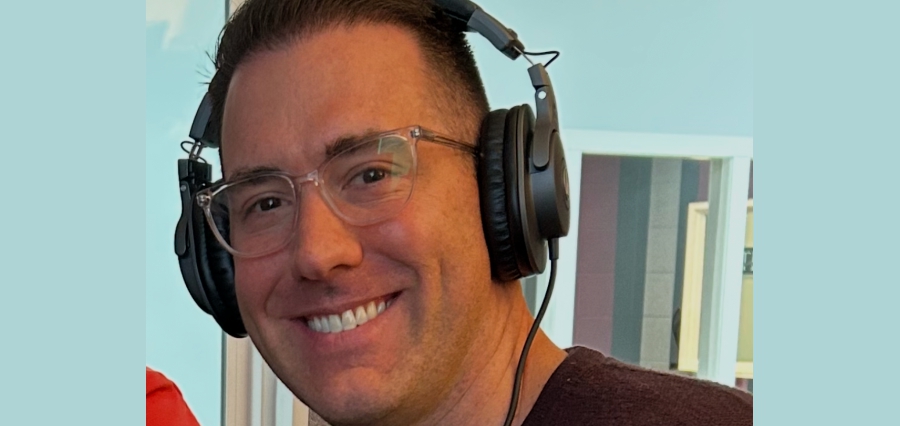
Chris Jackman, Attorney of Washington State, built his firm with a clear mission and a narrow focus. He started with a single office in Seattle and a commitment to represent fathers in family law matters at moments when their families and futures felt uncertain. Twelve years later, that firm has expanded into Washington State, Colorado, and Texas, with six active lawyers and more than twenty staff members serving clients across multiple jurisdictions.
Growth in the legal profession often comes at a cost. As firms expand, founders lose direct contact with clients. Communication slows. Standards blur. Culture becomes a slogan rather than a lived reality. Jackman approached expansion differently. From the beginning, he treated scale not as a race for size but as an operational challenge that required deliberate systems, cultural clarity, and leadership discipline.
The result is a multi-state practice that continues to grow while maintaining a reputation for responsiveness and individualized attention.
Building Infrastructure Before Expansion
Jackman’s firm rests on three core values: staying customer-focused and obsessed, taking complete ownership of one’s work, and creating a culture that respects and rewards excellence. Those values are not decorative language on a website. They are embedded in daily operations.
One of the firm’s most explicit standards is a strict 24-hour communication policy. Clients receive responses within 24 hours of reaching out about the status of their case. In family law, where clients are often emotionally overwhelmed and anxious about outcomes they cannot fully control, responsiveness is not a courtesy. It is part of the service itself.
That communication rule does more than reassure clients. It sets an internal expectation. Every team member knows that silence is unacceptable. Delays require explanation. Ownership is personal, not collective. Jackman frequently reminds his team that when everyone is accountable, no one is. Responsibility must be clear and assigned.
This emphasis on systems over improvisation is central to how he thinks about scaling. He often tells his team that mistakes are human. The more important question is why the mistake occurred. Was there a process? Was there a defined system? If not, the solution is structural, not emotional. Build the system, and the mistake is less likely to recur.
Many founder-led firms plateau because the founder remains the central hub of every decision. Jackman has been explicit about avoiding that trap. Firms that scale successfully, in his view, understand how to delegate, how to hold people accountable, and how to recruit talented professionals who can operate within a defined framework.
Delegation without standards creates chaos. Standards without delegation create bottlenecks. His approach combines both.
A Leadership Philosophy Rooted in Ownership
Chris Jackman, Attorney of Washington State, is known primarily as the owner and managing attorney of The Jackman Law Firm, often described as America’s Premier Father’s Rights Law Firm. He has tried cases before juries and judges, arbitrated more than a hundred matters, and mediated hundreds more. That courtroom experience shapes his leadership style.
He is direct. He tells clients what they need to hear rather than what they want to hear. He expects the same candor inside the firm. Truth-telling, even when uncomfortable, is part of maintaining standards.
This philosophy influences hiring and training. Young professionals entering law, in his view, often struggle with difficult conversations and holding others accountable. He sees the ability to engage in honest, sometimes tough dialogue as a differentiator in high-stakes advisory work.
Inside a growing firm, that skill becomes operationally significant. Lawyers must set expectations with clients. Managers must address performance gaps. Team members must escalate issues before they become crises. A culture that avoids hard conversations cannot scale cleanly.
Jackman reinforces an ownership mindset at every level. Each team member is responsible not only for their technical work but also for how that work fits into the broader client experience. A missed call, an unclear email, or an unaddressed question is not a minor lapse. It is a failure of ownership.
The discipline required to sustain that mindset across multiple states does not happen by accident. It requires repeatable training, internal review, and constant reinforcement from leadership.
Protecting the Client Experience During Growth
Family law clients frequently arrive in an emotional state. They feel overwhelmed, uncertain, and fatigued by conflict. Jackman has developed a consistent framework for helping them slow down. He asks them to project themselves three years into the future and consider how they will view their current crisis.
That perspective shift does two things. It stabilizes the client emotionally, and it clarifies the strategy. Decisions are framed around long-term outcomes rather than short-term reactions.
Scaling a firm that handles such sensitive matters requires more than legal competence. It requires a standardized approach to client psychology. Every lawyer in the firm must understand how to guide clients away from impulsive decisions and toward measured, forward-looking thinking.
Jackman has worked to codify these approaches so they are not dependent on his personal presence in every conversation. Scripts, training discussions, and internal case reviews reinforce how clients should be counseled. This is how a firm maintains a personal touch without requiring the founder to personally handle every intake call.
The firm’s growth into Washington State, Colorado, and Texas did not dilute this philosophy. Expansion required identifying attorneys who could internalize the firm’s standards and apply them consistently across jurisdictions.
Treating a Law Firm as a Business
Early in his career, Jackman did not view the legal field as particularly creative. That perspective changed. He encourages his team to think outside the traditional boundaries of law firm operations and to see the firm as a business rather than simply a practice.
This mindset has influenced branding, communication, and technology adoption. The firm experimented with social media as a branding and communication tool, discovering that it strengthened the authenticity of its public voice and clarified its core values.
Creativity, in this context, is not about novelty for its own sake. It is about identifying better ways to serve clients and operate efficiently. Jackman balances that creativity with practicality. He encourages innovation but insists that ideas remain grounded in operational reality.
His perspective on artificial intelligence reflects that balance. Some legal professionals resist AI entirely. Others overestimate its capabilities. He sees it as a tool, neither blindly trusted nor dismissed, to enhance performance when used responsibly.
This measured approach to technology is part of the infrastructure story. Scaling across states requires document management systems, communication platforms, and standardized workflows that can support a growing team. Technology becomes an enabler of consistency.
Avoiding the Founder Dependency Trap
One of the clearest distinctions between firms that scale and those that stall, according to Jackman, is whether the founder can step back from daily control.
In the early days of a firm, the founder touches everything. Intake, court appearances, billing, hiring. That hands-on involvement can create a strong culture but also a fragile one. If the founder remains the bottleneck, growth becomes unsustainable.
Jackman’s expansion from a single Seattle office to a multi-state firm required intentional separation between vision and execution. Systems define expectations. Managers enforce them. Attorneys operate within them. The founder sets direction and reinforces standards rather than personally handling every operational detail.
This structural clarity allows the firm to pursue its stated goal of continued expansion, including a long-term vision of serving fathers nationwide. Ambition without infrastructure is risky. Infrastructure without ambition is stagnant. His strategy attempts to combine both.
Culture as a Competitive Advantage
Legal services are often perceived as commoditized. Many firms offer similar practice areas, similar fee structures, and similar marketing language. Jackman differentiates through culture and clarity.
He challenges clients to focus on what they can control rather than external biases or perceived unfairness in the system. He challenges team members to confront mistakes with process improvements rather than defensiveness. He challenges young professionals to develop the courage to have difficult conversations.
These patterns reinforce a coherent identity. Clients experience a firm that responds promptly, speaks candidly, and operates within defined standards. Employees experience clear expectations and accountability.
For Chris Jackman, Attorney of Washington State, scale has never meant abstraction. It has meant repetition. Repeat the standards. Repeat the systems. Repeat the ownership mindset. The personal touch is preserved not through constant founder presence but through institutionalized values.
As the firm continues to expand beyond its Seattle origins and deeper into multi-state operations, the central question remains the same: can growth and intimacy coexist? Jackman’s answer has been to treat operational excellence as the bridge between the two. When systems are strong, communication is disciplined, and culture is enforced daily, a mission-driven law firm can grow without losing the very qualities that made it distinctive in the first place.



The functional beverage is offered in six flavors.

Earnings call transcript: Vivendi sees profit swing in Q4 2025

The Treasury Committee will look at whether “the goalposts [have] been moved in a way which is unfair”.

Operator
Good day, and thank you for standing by. Welcome to the Q2 Fiscal ’26 earnings discussion for Oil-Dri Corporation of America. [Operator Instructions]. I would now like to turn the conference over to your speaker for today, President and CEO, Dan Jaffee. Jaffee, please go ahead.
Daniel Jaffee
Chairman, CEO & President
Thank you, and welcome, everybody. And we are in virtual mode. So we’ve got people dialing in from all over, I’m going to introduce them. We very much appreciate you guys getting your questions in early. That gave us a chance to develop our responses and prioritize. So thank you for doing that.
With me today is Susan Kreh, our CFO and CIO; Aaron Christiansen, our VP of Operations; Chris Lamson, Group Vice President of business-to-business and strategic growth initiatives; Wade Robey, VP of Agriculture and President of Amlan International; Laura Scheland, Vice President and General Manager of our Consumer Products division; Bruce Patsey, our Vice President of Fluids Purification; Mervyn de Souza, VP of Research and Development; Tony Parker, our VP, General Counsel and Secretary; and Leslie Garber, our Director of Investor Relations, and I’m going to turn it over to Leslie for our safe harbor provision.
Leslie Garber
Director of Investor Relations
Good morning, everyone. I also just want to note that John Blake, VP, Corporate Controller, is also on the call today.

FOX Business’ Max Gorden joins ‘The Big Money Show’ to detail the controversial tax structure.
Washington state lawmakers on Wednesday passed a so-called “millionaires tax,” a move criticism said could lead to an exodus of high-income earners.
The State Senate passed the measure with a day left in the 2026 legislative session, following a hotly contested 24-hour marathon in the State House.
The bill would impose a 9.9% tax on income over $1 million for individuals or couples in a household.
The funds generated from the tax would address the state budget, which is currently dealing with a multi-billion dollar deficit, Fox Seattle reported.
KEN GRIFFIN’S FLORIDA TAKEOVER: CITADEL FOUNDER SHELLS OUT $180M FOR LATEST PIECE OF MIAMI EMPIRE

An aerial view of Washington State Capitol in Olympia. ( Joe Sohm/Visions of America/Universal Images Group via Getty Images / Getty Images)
Funds would also go toward programs to improve affordability for working families and small business owners. The legislation would go into effect on Jan. 1, 2028, with tax payments starting in 2029.
It is expected to impact 21,000 residents across the state. The bill now heads to the desk of Gov. Bob Ferguson, who has backed the measure.
On Tuesday, he said the bill “represents historic progress in rebalancing our unfair system. It sends significant dollars back to Washington families and small businesses.”

The Seattle skyline. Washington state lawmakers passed a so-called “millionaires tax” this week on high-income earners. (Juan Mabromata/AFP via Getty Images / Getty Images)
“It saves working parents money and ensures our kids are prepared to learn by funding free breakfast and lunch for all Washington K-12 students, which has been a priority of mine since I ran for governor,” he wrote on X. “The Millionaires’ Tax will apply to less than one half of one percent of Washingtonians, but make life more affordable for millions. I look forward to signing it.”
A Tax Foundation analysis found that the proposed tax would yield a top rate of more than 18% on wage income and restricted stock units (RSU) vesting in Seattle, making it the highest rate in the U.S.
Washington state has 695,695 small businesses and nearly 360,000 employees in technology-related jobs, according to the Small Business Administration and Washington State Department of Commerce, respectively.
“A tax this aggressive would do real damage to Washington’s economy, sending jobs and economic opportunity elsewhere,” wrote Jared Walczak, a senior fellow at the Tax Foundation. “In particular, for significant swaths of the state’s tech sector, already the target of anomalously high business taxes, a 9.9 percent income tax could prove the last straw, driving any subsequent expansion to other states, and quite possibly taking existing jobs with them.”
The bill has raised concerns from critics who said it could force Washington’s highest earners to leave for more tax-friendly states.
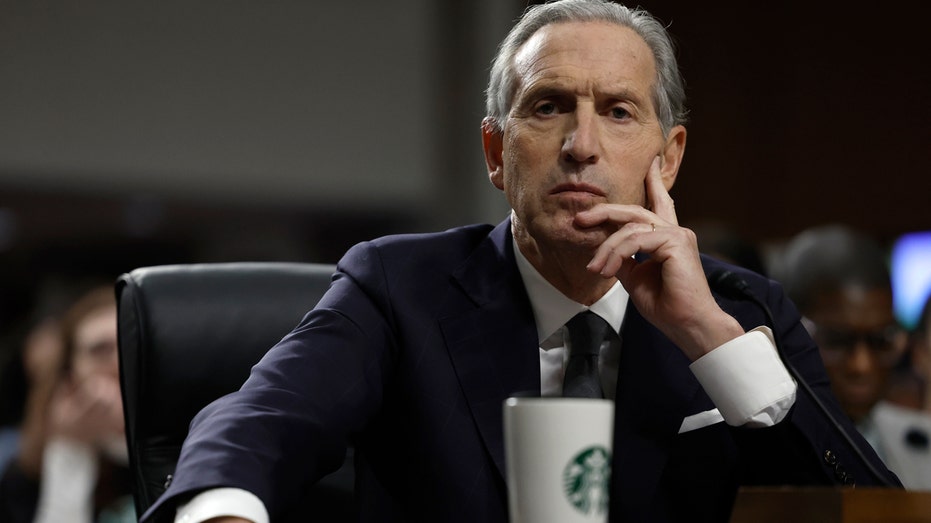
“If a Starbucks or a Boeing or other people start to diminish their presence in Washington State, guess what happens?” said Republican lawmaker Andrew Barkisduring the State House’s debate this week, according to the New York Times. “Those high-paying jobs? They are going to leave. It is happening.”
GET FOX BUSINESS ON THE GO BY CLICKING HERE
Former Starbucks CEO Howard Schultz said in a LinkedIn post this week that he and his wife are moving from Seattle to Florida after more than four decades in the city. He didn’t mention the tax in his post but said he hopes Washington “will remain a place for business and entrepreneurship to thrive.”
Fox Business’ Daniella Genovese contributed to this report.
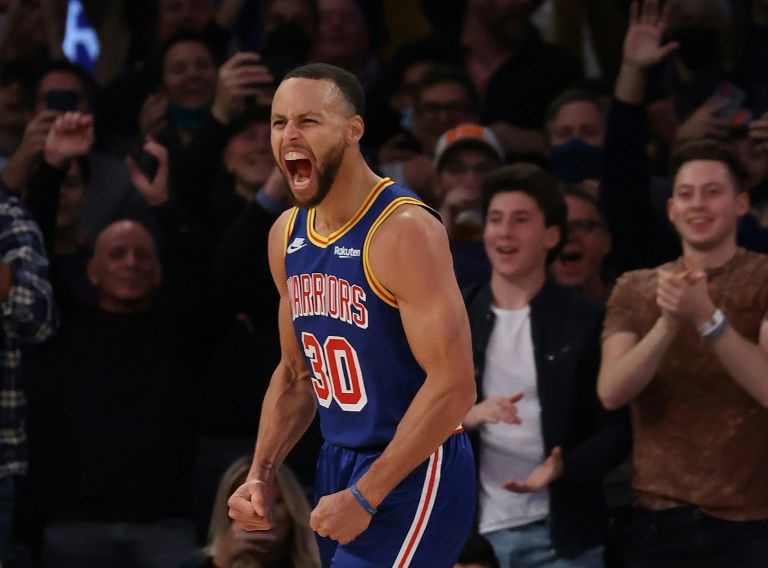
San Francisco — Golden State Warriors superstar Stephen Curry continues to rehab a persistent right knee injury, with the team announcing March 11, 2026, that he will miss at least another 10 days and be re-evaluated around March 21.

Curry, sidelined since Jan. 30 due to patellofemoral pain syndrome and bone bruising—commonly known as “runner’s knee”—has now missed 15 consecutive games. The latest update from the Warriors indicates steady progress, including intensified individual on-court workouts in recent days, but no immediate return to game action.
The 37-year-old point guard, averaging a team-high 27.2 points per game this season, last suited up against the Detroit Pistons in late January. His absence has coincided with a challenging stretch for the Warriors, who have dropped three straight games and 10 of their last 15 without him, slipping in the Western Conference standings amid a push for play-in positioning.
Warriors officials described Curry’s recovery as positive but unpredictable. Team sources told ESPN’s Anthony Slater that the four-time champion remains “extremely motivated” to return for the stretch run, aiming to guide Golden State into the postseason via the play-in tournament. Curry has advanced to on-court work, a key milestone, with workouts expected to ramp up further.
The injury stems from swelling and pain around the kneecap, an issue that flared during an individual workout in Minneapolis before worsening. Curry has characterized the timeline as “weird” and “unpredictable,” noting daily improvements since the All-Star break but acknowledging setbacks along the way.
The March 11 re-evaluation marked the third 10-day checkpoint since early March, extending his projected absence to at least 20 games. While some analysts and fans have called for shutting him down for the season to preserve health ahead of his 38th birthday on March 14, Curry and team insiders emphasize his desire to play through the campaign.
Head coach Steve Kerr has voiced frustration over the lingering issue, describing Curry as “frustrated” but committed to a cautious ramp-up. Kerr confirmed Curry’s mindset aligns with pushing for a comeback, though the team prioritizes long-term readiness over rushing back prematurely.
The Warriors’ record without Curry stands at a stark contrast to their success with him on the floor. Golden State posts a winning mark when he plays but struggles defensively and offensively in his absence, relying on Draymond Green, Jonathan Kuminga, and others to fill the void. Recent losses to bottom-tier teams like the Utah Jazz and Chicago Bulls have amplified concerns about the team’s playoff viability.
Curry’s value extends beyond scoring; his gravity pulls defenses, creating opportunities for teammates, and his leadership anchors the locker room. The injury has tested Golden State’s depth, with bench contributions and defensive schemes adjusted to compensate.
As the regular season winds down, the Warriors face a critical window. Curry’s potential return could spark a surge, but prolonged absence risks derailing postseason hopes. Analysts project a late-March or early-April comeback if progress holds, aligning with intensified court sessions and the next check-in.
The patellofemoral condition often requires rest, strengthening, and gradual loading to avoid chronic issues, particularly for a high-mileage veteran like Curry. Medical experts note that bone bruising can linger, explaining the extended timeline despite visible advancements.
Fan reactions mix optimism with concern, with social media buzzing over highlights of Curry’s workouts and calls for patience. The Warriors maintain optimism, framing the updates as steps forward rather than setbacks.
Golden State’s next games test resilience without their star. Upcoming matchups could provide momentum or further highlight vulnerabilities, setting the stage for Curry’s eventual reintegration.
For now, the focus remains on recovery. Curry’s re-evaluation in roughly 10 days—around March 21—will offer the clearest timeline yet. Until then, the Warriors navigate without their greatest shooter, hoping his return ignites a late-season push.
The injury underscores the physical toll of a long career at elite levels, even for a player renowned for durability. Curry’s track record of resilience fuels hope that he can reclaim form and lead Golden State deep into spring contention.
Business
BofA Securities enters Kaynes Technologies via Rs 42 crore block deal; stock down 48% in six months

BofA Securities bought these shares through its affiliate BofA Securities Europe SA. Sellers Kadensa and Bluepearl offloaded 46,934 and 69,148 shares, respectively.
Kaynes Technologies shares today ended with cuts of 0.70% or Rs 26.25 to settle at Rs 3,698.25 on the BSE.
Kaynes Technology India is a leading end-to-end and IoT solutions-enabled integrated electronics manufacturer in India. It offers capabilities across the entire spectrum of ESDM services. The company provides conceptual design, process engineering, integrated manufacturing and life cycle support for major players in the automotive, industrial, aerospace & defence and railways.
Kaynes Technologies share price performance
Kaynes Technologies has been a market laggard, sliding 14% over a one-year period, underperforming the benchmarks Nifty and the BSE Sensex, whose returns in the same period are approximately 5% and 3%, respectively.

The stock has been at the receiving end of investors’ ire, declining 48% in the last six months. In 2026, so far, it has slipped nearly 6%.
The stock is currently trading below its 50-day and 200-day simple moving averages (SMAs) of Rs 3,751 and Rs 5,473, respectively, according to Trendlyne data.
The company reported a 15% year-on-year consolidated net profit growth at Rs 77 crore in the December-ended quarter which is a 15.3% YoY growth. In the year ago period, its profit after tax (PAT) stood at Rs 67 crore. Meanwhile, the total revenue in the quarter under review stood at Rs 849 crore, up 24% versus Rs 686 crore in Q3FY25.
Also read: SBI block deal: BNP Paribas buys 5.28 lakh shares in a Rs 64 crore transaction
(Disclaimer: The recommendations, suggestions, views, and opinions given by the experts are their own. These do not represent the views of The Economic Times.)

A man suffered life-threatening injuries in a shooting Saturday evening in Norfolk near Old Dominion University, heightening unease among students already on edge from prior incidents in the area.

Norfolk Police responded around 6 p.m. Feb. 14, 2026, to the 800 block of West 41st Street after reports of gunfire. Officers found a male victim with a serious gunshot wound. He was rushed to Sentara Norfolk General Hospital, where he remained in critical condition as of the latest updates. No arrests have been announced, and the investigation continues with no suspect description released publicly.
The location, just blocks from ODU’s campus and student housing, sparked immediate concern among nearby residents and students. Witnesses described hearing multiple shots before chaos ensued. One ODU student, Madeleine Salazer, told WAVY News the violence felt “unfortunately very common” in parts of Norfolk, though she noted her neighborhood had been relatively quiet until recently.
“I’ve been out here since 2023. It’s been an eventful time,” Salazer said. “Things like this are unfortunately very common in the Norfolk area. Not on this neighborhood, I will say, but if you go two blocks down the street on 42nd, there was a shooting there my freshman year.”
Students interviewed by local media expressed frustration and fear, calling for better community-police relations and university measures to address off-campus risks. The incident follows a pattern of gun violence in Norfolk, including a February 2025 double homicide on ODU property that claimed the lives of two non-students and led to charges against a suspect.
In that earlier case, on Feb. 26, 2025, two Norfolk men—18-year-old Delanio Vick Jr. and 20-year-old Timothy Williams Jr.—were fatally shot in parking lot L-3 near Broderick Dining Commons around 9:50 p.m. Norfolk Police and ODU officers responded quickly, but both victims succumbed to their injuries at the hospital. Neither was affiliated with the university.
Dequan J. Tyler, 27, of Norfolk and uncle to Vick, was later charged with possession of a firearm by a felon in connection with the shooting. Tyler, held without bond in Chesapeake, told WTKR News 3 from jail that he fired shots to protect family but was unsure if he struck anyone. The case drew scrutiny over campus safety protocols and the university’s response.
Old Dominion University President Brian Hemphill issued a statement after the 2025 incident expressing sympathy while noting the victims were not affiliated with ODU, a phrasing that drew criticism from students and alumni for appearing to distance the school from the tragedy. Hemphill praised campus police efforts, but some in the community questioned prevention measures amid recurring violence near campus.
The 2026 shooting prompted renewed calls for vigilance. ODU officials have not issued a new campus-wide alert specific to the Feb. 14 event, but university police maintain regular patrols and encourage the use of the Rave Guardian safety app for emergencies. Students reported feeling “on edge,” with some avoiding late-night walks and relying on rideshares or group travel.
Norfolk’s broader gun violence trends contribute to the tension. The city has seen multiple shootings in recent months, including incidents wounding multiple people near campus-adjacent areas. Police urge anyone with information on the latest shooting to contact Crime Line at 1-888-LOCK-U-UP or submit tips anonymously online.
University leaders emphasize that ODU remains committed to student safety through partnerships with Norfolk Police, enhanced lighting, emergency blue phones, and awareness campaigns. However, off-campus incidents highlight challenges in controlling risks in surrounding neighborhoods where many students live.
The Feb. 14 victim’s condition underscores the severity of such events. Hospital officials have not released further details, citing privacy laws. Investigators continue canvassing for witnesses and reviewing surveillance footage from nearby businesses and residences.
As Norfolk grapples with persistent community violence, the shooting near ODU serves as a stark reminder of safety concerns for students far from home. University officials and local authorities stress the importance of reporting suspicious activity and utilizing available resources to foster a secure environment.
For now, the investigation remains active, with hopes that leads will bring resolution and prevent further escalation in an area already shaken by tragedy.

Deere, Caterpillar and 10 Other Stocks for an AI-Infused Blue Collar Renaissance


The product features 15 grams of protein.

At least 80 children have been infected with measles in just one London borough | News UK

Dunkin’ debuts zero-sugar energy beverages

The Pussycat Dolls Comeback After Years Of Reunion Drama


-
Business6 days ago
Form 8K Entergy Mississippi LLC For: 6 March
-

 News Videos3 days ago
10th Algebra | Financial Planning | Question Bank Solution | Board Exam 2026
-

 Fashion6 days ago
Weekend Open Thread: Ann Taylor
-

 Crypto World3 days ago
Paradigm, a16z, Winklevoss Capital, Balaji Srinivasan among investors in ZODL
-
 Tech1 day ago
A 1,300-Pound NASA Spacecraft To Re-Enter Earth’s Atmosphere
-
 Sports7 days ago
499 runs and 34 sixes later, India beat England to enter T20 World Cup final | Cricket News
-

 Tech2 days ago
ChatGPT will now generate interactive visuals to help you with math and science concepts
-

 Politics6 days ago
Top Mamdani aide takes progressive project to the UK
-

 Business2 days ago
ExxonMobil seeks to move corporate registration from New Jersey to Texas
-

 Sports5 days ago
Three share 2-shot lead entering final round in Hong Kong
-

 Sports5 days ago
Braveheart Lakshya downs Lai in epic battle to enter All England Open final | Other Sports News
-

 NewsBeat24 hours ago
Residents reaction as Shildon murder probe enters second day
-

 Entertainment6 days ago
Hailey Bieber Poses For Sexy Selfies In New Luscious Lip Thirst Traps
-

 Business4 days ago
Search for Nancy Guthrie Enters 37th Day as FBI Probes Wi-Fi Jammer Theory
-

 Business1 day ago
Search Enters Sixth Week With New Leads in Tucson Abduction Case
-
 NewsBeat3 days ago
Pagazzi Lighting enters administration as 70 jobs lost and 11 stores close across Scotland
-

 Tech3 days ago
Despite challenges, Ireland sixth in EU for board gender diversity
-

 Business3 days ago
Search Enters 39th Day with FBI Tip Line Developments and No Major Breakthroughs
-

 NewsBeat1 day ago
I Entered The Manosphere. Nothing Could Prepare Me For What I Found.
-

 Business6 days ago
Iran war enters second week as Trump demands ’unconditional surrender’