Connect with us

NewsBeat

Louis Theroux opts for superficial spectacle over serious scrutiny

Published

on

Louis Theroux opts for superficial spectacle over serious scrutiny

The recent Netflix hit series Adolescence crystallised growing public concern about the proliferation of male supremacist beliefs targeted at young men. So Inside the Manosphere, Louis Theroux’s new documentary for the same platform, arrives at a critical moment in the masculinity debate.

Inside the Manosphere sets out to explore a group of prominent “manfluencers” who promise young men status, wealth and sexual success through a worldview shaped by misogynistic and male-supremacist beliefs about gender and power.

By crafting a stylised storyline that focuses on the few people benefiting from this phenomenon, the documentary risks presenting an idealised portrait of the manosphere that downplays the insecurity, hostility and exploitation that sustains it.

Despite moments of scrutiny, this documentary’s glamorisation of its subjects (epitomised by a slow motion shot of one subject stepping out of a sports car) renders the interrogation superficial. In other words, the show presents performative, profit-driven masculinity through the same aspirational lens that fuels these figures online appeal.

Advertisement

In doing so, Inside the Manosphere simplifies the vast range of misogynistic and male-supremacist attitudes, beliefs and identities circulating online and downplays the sheer scale of the harm caused by it.

What the documentary reveals

While this documentary is limited in its portrayal, it does offer viewers a glimpse behind the curtain of a growing “manfluencer” economy.

In following around several notable figures, Theroux places a spotlight on how these influencers carefully curate online identities that project moral authority, financial success and masculine credibility. And all while functioning as lucrative personal brands built on selling solutions to the anxieties of their audience. In this way, Theroux exposes the commercial logic that is driving the rise in extreme misogyny, where provocation, controversy and algorithmic engagement translate directly into profit and visibility.

The film also introduces viewers to the notion of “the red pill”, a metaphor borrowed from The Matrix (1999). This is widely used in manosphere spaces to describe an awakening to what some believe are the hidden truths governing gender relations and social power.

Advertisement

Through his exploration of the red pill idea, Theroux repeatedly stumbles upon an idea at the crux of what makes this worldview so exploitable: that men need to earn their worth in society. The red pill worldview frames modern society as hostile and stacked against men, portraying mainstream institutions and feminism as forces that have obscured the “true” rules governing gender and status.

In response, the red pill philosophy reframes masculinity as a competitive hierarchy that must be continuously navigated and optimised. By casting masculine value as something that must continually be earned, followers are left striving to keep up with ever-shifting standards of status and success. Meanwhile, influencers profit from offering the supposed path to achieving them.

Although the documentary repeatedly brushes against this critical dynamic, it rarely pauses to interrogate its significance, nor the harms these masculine norms produce, including the mental health struggles of those who internalise them. As a result, it falls short of the kind of sustained scrutiny that Theroux himself has argued is what gives spotlighting such figures its social value.

Instead, this documentary portrays the manosphere through a stylised and aspirational aesthetic. Slow-motion shots of his subjects in the gym, driving high-performance sportscars, wearing expensive watches and living in luxury apartments frame these influencers’ lifestyles with a cinematic sheen.

Advertisement

This means the show echoes the same aspirational aesthetics that underpin much of these influencers’ own branding. Elsewhere, clips of manfluencer content appear against stylised backdrops of red and black binary code over-dubbed with synth-wave music. This has the effect of rendering the content closer to internet theatre than a harmful ideological phenomenon.

The result risks trivialising the gravity of the misogynistic and male-supremacist ideas being promoted. Rather than showing how this booming economy has contributed to the normalisation of misogynistic ideas that have inspired mass violent attacks, and violence against women and girls, this documentary risks misleading viewers that the manosphere is no more than an entertainment culture.

The narrative framing of this documentary becomes clear in the way Theroux himself describes the manosphere’s composition, origins and ideological epicentre. Far from being largely made up of “relatively uncontroversial comedians and podcasters”, the manosphere encompasses a far broader network of forums, content and communities united by an anti-feminist and male-supremacist worldview.

Advertisement

While the misogynistic beliefs and male oppression narratives commonly seen online seem new due to their crossover with modern lifestyle, fitness, financial and entertainment cultures, these ideas did not originate with contemporary influencers, as Theroux suggests. Rather, they draw on much older traditions of anti-feminist thought.

These include “men’s self-help” movements centred on reclaiming declining masculine identities and political men’s rights movements that predate the internet. Recognising these historical roots is important because their familiarity makes these ideas more resonant and persistent.

While Theroux’s characterisation appears intended to justify the documentary’s focus on manfluencers, it inadvertently falls into the very trap that allows manosphere content to proliferate online: its ability to hide in plain sight.

The attention economy

How this documentary portrays the manosphere matters, not just for how it informs viewers, but for how it interacts with the forces that feed the phenomenon itself. On the internet, attention functions as the most valuable currency. Content that is provocative and engaging spreads quickly, rewarded by social media algorithms and amplified by cycles of debate and outrage.

Advertisement

In attempting to place a spotlight on the manosphere, this documentary becomes entangled in the spectacle that sustains it. The danger is that viewers may come away with a clear understanding of the style and aspirations of the manosphere. But they are left in the dark as to its harmful effects both to young men and women – and how this harm occurs.

As a result, Inside the Manosphere further fuels the attention economy that allows these figures to thrive. In these spaces, visibility equals power: controversy attracts clicks, clicks drive engagement, and engagement extends the reach and legitimacy of the ideas themselves.

This article features references to books that have been included for editorial reasons, and may contain links to bookshop.org; if you click on one of the links and go on to buy something, The Conversation UK may earn a commission.


Advertisement

Source link

Continue Reading
Click to comment

Leave a Reply

Your email address will not be published. Required fields are marked *

NewsBeat

The best home security cameras to watch over your property

Published

on

The best home security cameras to watch over your property


Which features should you look out for in a home security camera?

First, look for high resolution. “1080p Full HD is the most common camera resolution,” advises Anna Forbes, Smart Home buyer at Currys. “It’s easily high enough for seeing a parcel at the door or watching the pets at home. But if you want to capture more detail of faces or number plates, then 2K, 3K or 4K cameras [offering two, three or four times the resolution of Full HD] are a better bet.”

Second, you’ll want a decent field of view. “If a user has a specific area they want to monitor, they will need a security camera whose field of view matches the area’s size,” advises Stephanie Fort.

Third, consider storage: some cameras have in-built memory but these aren’t always the best choice. “As long as you have a solid internet connection, cloud storage is generally safer than using local storage,” says Anna Forbes. “There’s always a risk of theft or physical events – like fire or flood – wiping out video stored on the latter.”

Advertisement

Finally, think about whether your camera can integrate with other home tech. “If your outdoor camera detects motion, a smart home can then switch lights on to give the appearance you are at home. Some systems can even recognise family members and then switch the entrance light on in response.”

What video resolution do I really need (1080p, 2K, 4K)?

For indoor security, 1080p is usually a sufficient resolution. It will deliver clear images for general monitoring and it is cost-effective with lower storage and bandwidth needs. If you want to make sure you can capture fine details for identification, such as facial features, then a 2K or 4K camera is a better choice.

Do I have to pay a monthly subscription for home security cameras?

It depends on which security camera you buy as to whether you will need to pay a monthly subscription. Most require you to if you want to store your video history, but some options have local storage with a microSD that doesn’t require a subscription.

Is it better to have wired or wireless security cameras?

“If you have a lower budget, or want something a bit more affordable and flexible, then a wireless camera is better,” advises AOs Stephanie Foat. “If you rent your current home, for example and want to take your security system with you when you leave, then wireless cameras are the best way to go.

Advertisement

“If you’re after something with higher quality footage and more permanently installed in your home, or have patchy Wi-Fi, then wired cameras are recommended. Having cameras hardwired into your home also ensures strong video and audio signals that won’t degrade over time.”

What’s the difference between CCTV and wireless home security cameras?

“Wired CCTV cameras work as a direct camera-to-monitor system, but can be trickier to install as they rely on physical extension cables and connectors,” cautions Stephanie Foat.

“Wireless cameras, on the other hand, transmit images to your phone, tablet or computer using digital technology. So long as you have a solid internet connection, they’re generally the better option as it’s far more convenient for households to receive video footage direct to their phones.”

Source link

Advertisement
Continue Reading

NewsBeat

Alexander vows to honour memory of Dunblane victims by upholding gun controls

Published

on

Alexander vows to honour memory of Dunblane victims by upholding gun controls

“I very vividly remember those images of Michael Forsyth, who was then a leading Conservative politician, walking with George Robertson, a leading Labour politician who himself lived in Dunblane, showing the depth of unity across Scotland that not only must this never happen again, but that we needed to support the families in their campaign for action.”

Source link

Continue Reading

NewsBeat

Kaye Adams denies misconduct allegations while at BBC saying she’s ‘heartbroken’

Published

on

Daily Record

“I am heartbroken that 15 years of hard work and dedication to BBC Scotland is being reduced to this.”

Broadcaster Kaye Adams has said she is “heartbroken” to hear the “malicious stories” about her following her departure from the BBC and denied allegations of misconduct.

Advertisement

The Scottish radio host, 63, was taken off air from her BBC Radio Scotland morning programme last year reportedly due to allegations about her behaviour. Adams addressed a number of the accusations in a statement shared on Instagram on Thursday where she denied that she berated an intern or used a misogynistic slur.

She said: “I’m aware of malicious stories circulating about the reasons for my departure from BBC Scotland. I’ve tried to keep a dignified silence but these attacks on my character are now so persistent, they can no longer go unchallenged.

“I categorically deny using a misogynistic slur 14 years ago and I’m horrified at its invention more than a decade later. It is absolutely not a word I would have used.

Advertisement

“As for ‘berating an intern’, this is simply untrue. Regarding the allegation that I threw a pencil while alone in an empty studio, words fail me.

“I am heartbroken that 15 years of hard work and dedication to BBC Scotland is being reduced to this. There’s really nothing more I can say apart from offer my heart-felt thanks to friends and colleagues – junior and senior – across the corporation who have sent their good wishes and support.”

The BBC has not commented on the reason for Adams’ departure but the broadcaster confirmed earlier this month that Adams would not be returning to the role. In October, Adams said her name had been “dragged through the mud” after she was taken off her programme.

Adams joined BBC Scotland in 2010 and is also a regular panellist on ITV’s Loose Women. In 2022, she appeared on BBC One dancing programme Strictly Come Dancing and was a contestant on the third series of Celebrity MasterChef.

The BBC has been contacted for comment.

Advertisement

Get more Daily Record exclusives by signing up for free to Google’s preferred sources. Click HERE.

Source link

Continue Reading

NewsBeat

Service to remember lives lost in Unity Colliery disaster

Published

on

Service to remember lives lost in Unity Colliery disaster

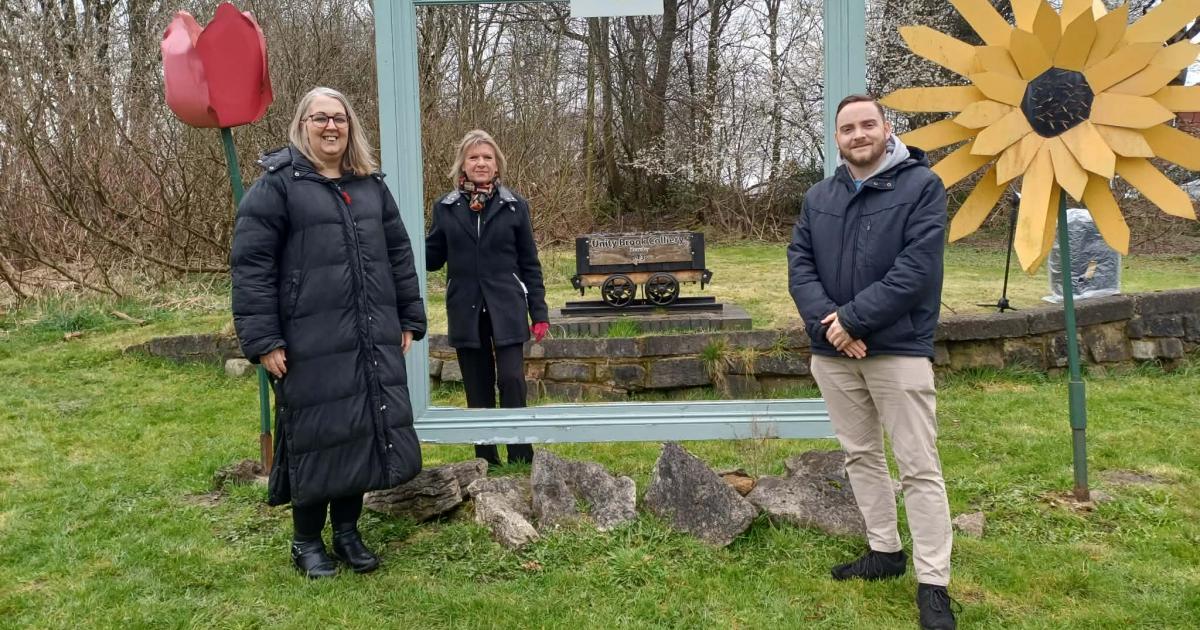
Kearsley residents and councillors gathered at Unity Brook memorial to remember those who lost their lives in the Unity Brook Colliery Disaster.

The disaster took place on March 12 1878, when a pit explosion claimed the lives of 43 men and boys.

The service was well-attended, with residents, councillors, and local schoolchildren coming out to honour those who lost their lives.

Full view of the memorial with children from Spindle’s Point and St Stephen’s school reading out the names of the dead (Image: Stacey Wilkinson)

Kearsley Councillor Tracey Wilkinson said: “This is one of the most poignant events in Kearsley’s calendar.

Advertisement

“Each year, hearing the children from Spindle Point and St Stephen’s read the names of the 43 men and boys who lost their lives reminds us that this was not just a tragedy of the past, but a loss felt by family generations and by our whole community.

“It is a real honour to attend and to ensure that their memory is never forgotten.”

The Unity Brook memorial now stands on the spot where the colliery once stood on Manchester Road, Kearsley.

The disaster took place 148 years ago, caused by an explosion at the colliery.

Advertisement

It occurred in one of the lower ‘cannel’ mines.

Replica minecart with coal at the memorial (Image: Stacey Wilkinson)

Cannel is a type of dark coal used in the 19th Century for gas lamps and fireplaces.

Everyone in the Unity Brook Colliery cannel mine that day died.

According to the Northern Mine Research Society, the explosion may have been caused when the tunnel filled with gas from a hole in ceiling.

Advertisement

This gas could then have been ignited by the naked flames of miners’ lamps and candles.

The explosion took place at 1:07pm – the same time at which the memorial service includes a minute’s silence.

Hearing a noise, workers from nearby mines flocked to Unity Brook Colliery to help survivors.

Residents came to pay their respects (Image: Stacey Wilkinson)

In one of the most striking scenes of the disaster, a nearby pub was used as a makeshift chapel of rest as bodies were pulled out of the rubble.

Advertisement

The memorial itself was constructed in 2018, on the 140th anniversary of the tragedy.

An annual memorial service has been held since then on March 12.

Source link

Advertisement
Continue Reading

NewsBeat

Tommy Banks’ General Tarleton welcomes top guest chefs

Published

on

Tommy Banks' General Tarleton welcomes top guest chefs

A new guest chef series is being launched at The General Tarleton in Ferrensby, near Harrogate and Knaresborough, where leading figures will join head chef Aled Williams for a programme of one-off collaborative dinners.

Aled Williams, Matthew Lockwood, Sam Orbaum and Tommy Banks at The General Tarleton. Photo: Esme Mai

The restored 18th-century coaching inn reopened last year under Jeopardy Hospitality, the pub group founded by the award-winning chef and TV star Tommy Banks, along with his business partner Matthew Lockwood, brother James Banks and businessman, Neil Armstrong.

Lisa Goodwin-Allen, executive chef at the Michelin-starred Northcote, will be the first to kick off the series when it starts on April 28.

Tommy Banks’ General Tarleton welcomes top guest chefs. Photo: Andrew Hayes-Watkins

She will be followed by Nokx Majozi on June 16, former head pie maker at Holborn Dining Room’s Pie Room and currently chef in residence at Fallow in St James’s.

Advertisement

Recommended reads:

Music legends smash box office records at North Yorkshire venue

Traitors star joins cast at York premiere of hit show

As long as I’ve made York proud I’ll take that’ – York’s BGT star

Fans turn out to see celebrities filming in York

Advertisement

Roberta Hall-McCarron, the Edinburgh chef-patron behind The Little Chartroom and sister restaurants Eleanore and Ardfern, will join on November 3. Further guest chefs will be announced throughout the year, bringing a roster of leading culinary talent to the venue.

Reservations for Lisa Goodwin-Allen are now live and bookable via The General Tarleton’s website now.

The General Tarleton, which also offers overnight stays, prides itself on being a ‘proper Yorkshire pub made for exceptional food’, celebrating seasonal, local produce.

The menu features elevated pub classics, familiar favourites and signature dishes alongside a wine list, beers on tap and keg, fit for a relaxed afternoon in muddy boots or a special occasion. It has a score of 4.6 out of five possible stars, as rated by 78 reviewers on Tripadvisor, and has been widely reviewed including by The Press.

Advertisement

Tommy Banks also owns The Black Swan at Oldstead, Roots in Marygate in York, and The Abbey Inn, Byland.

Source link

Advertisement
Continue Reading

NewsBeat

New entrance rule planned at Greater Manchester tips

Published

on

New entrance rule planned at Greater Manchester tips

People will soon be asked to prove they live in the region by showing identification, or with a council tax bill or other document.

The measure, approved by the Greater Manchester Combined Authority waste committee, is aimed at stopping people from outside the region from using household waste and recycling sites. 

Tips have seen increased numbers of visitors who live elsewhere, bosses say. That, in turn, drives up costs for councils to deliver services and adds traffic. 

Advertisement

Leaders believe the closure of sites in other areas has led to an influx of people outside Greater Manchester using the region’s tips.

In 2024, Cheshire East Council temporarily shut three waste sites. They were later permanently closed. Neighbouring Derbyshire and Lancashire are also considering closing facilities. 

GMCA bosses said it was now time to take steps to ‘try to eliminate cross-border use’ of tips. 

Councillor Lee-Ann Igbon, who sits on Manchester Council, said: “Shame on those authorities that have done this because it’s not the responsibility of my residents to pick up the bill for them, and they need to look at that. We pay for our waste through our council tax. I’m not willing to put that up.

Advertisement

“The plans that the officers have put together are really good, but obviously that’s another cost to us, taking the time to check these vehicles because others have decided to [close their sites]. It shouldn’t impact the nine authorities in this room. It’s just outrageous.”

Officers have proposed a two-stage approach. The first phase will be a ‘soft introduction’, with proof of address checks on entry. Driving licences and council tax bills would be acceptable, documents suggest. 

Later, random checks could be introduced at sites. ‘Stage two’ would formalise checks, bosses said. 

Cllr Igbon added: “I’m not for a softly, softly approach. This is a major problem, [and] I want people to know from the onset that if you turn up to the sites that we pay for, you’re not getting in. If your name’s not down, you’re not coming in, basically, and we need to get that message out.”

Advertisement

Cllr Ken Rustidge, from Oldham Council, said: “This is a decision by these adjoining authorities that’s going to hurt our people, and they should be held to account for these decisions, and they really should be shown up.”

Trafford councillor Stephen Adshead said it should be made clear to people in Greater Manchester that the changes were ‘not their fault’, adding: “I think it’s sad we’re doing it, but it’s come to a point where we’ve got to start considering [implementing new rules] and probably soon as well.”

Officers advised elected members that the first phase would not be introduced until after May’s local elections. That would then need a ‘good three months’ to see how they ‘bed in’ and to assess any data and feedback.

The details of the phase of the plan will be decided later.

Advertisement

“The last thing we want to do is to put in place barriers for people using those facilities freely, but we just want the people who are entitled to use those facilities to be able to use them,” officers said. 

Source link

Advertisement
Continue Reading

NewsBeat

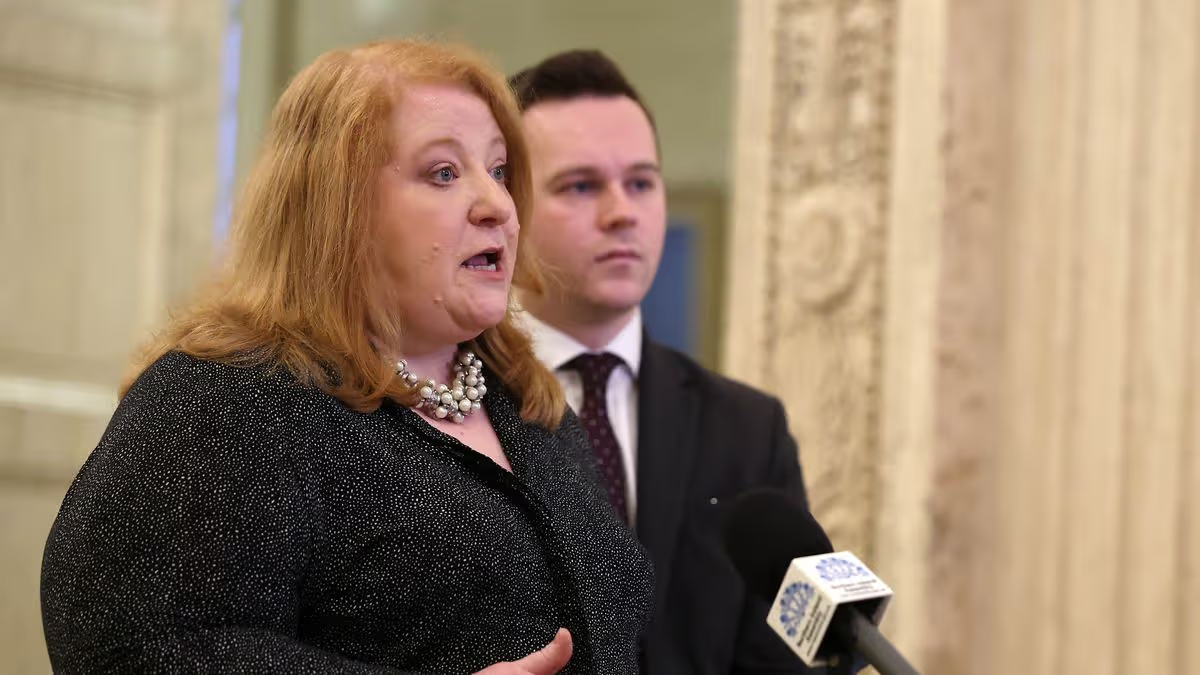
Failure to agree Stormont budget would be catastrophic, Naomi Long warns

Published

on

Belfast Live

Ms Long said agreeing the budget was the “biggest challenge” facing the Executive

The consequences for Stormont departments if the Executive cannot agree a budget will be “catastrophic”, Naomi Long has warned.

Advertisement

The Alliance Party leader and Justice Minister also insisted that she cannot make any further cuts to her department without doing “structural damage” to the justice system in Northern Ireland.

Finance Minister John O’Dowd published draft proposals in January for a multi-year budget, but they have not yet been agreed by the powersharing Executive.

READ MORE: Pay for Stormont MLAs will rise from £53,000 to £67,200, it has been confirmedREAD MORE: Everything you need to know as new legislation brings sentencing changes to Northern Ireland

In February the UK Government announced it would make £400 million available from reserves to the Executive to deal with overspends.

Advertisement

The money has to be repaid over the next three years and the Treasury said it would be conducting an “open book exercise” looking at the Executive budget.

Ms Long said agreeing the budget was the “biggest challenge” facing the Executive.

She said: “It’s the one thing that the Executive must do. We can’t avoid it, we can’t duck it, we have to get a budget in place.

“We have an opportunity to have a three-year budget, and that three-year budget would be beneficial, we would be able to plot out over the next three years what is possible.

Advertisement

“It would also, I think, be really helpful to people in the community and voluntary sector to know what their likely funding will be for the next three years, and to be able to plan on that basis, rather than this annual race for funding.”

She added: “If we can’t agree a budget then the consequences for all departments will be catastrophic.”

The Justice Minister said Stormont departments had to prove that they can be responsible with their funding allocations.

She said: “Unless Treasury can see clearly that we’re spending the money in the right places and on the right things, we’re not going to be able to make a compelling argument for more.

Advertisement

“We do have a strong case to make, but I think we undermine ourselves quite often, because the things that we spend money on are often not the real essentials.”

Ms Long said the amount of funding given to justice had fallen in recent years from 11% of the block grant to 8%.

She added: “We are caught in a very difficult situation, we have already had to trim the fat away from DOJ.

“We have had a significant reduction, for example, in the number of staff in DOJ, the number of staff in our arms length bodies.

Advertisement

“That’s not true in other departments. We’ve had to put downward pressure all the time on what we’re doing and what I’m saying is it’s not fair to come to me after 10 years of doing that, and say, find more, there is no more to give.

“There are other people who have not started that journey yet and they are the departments I think that really now need to focus on how do they right-size, because I would argue now that justice actually is too lean, that we don’t have the resources that are necessary to provide the basic services that we have to provide.

“I can’t find additional savings without doing structural damage to the justice system and to confidence in justice, and that’s a life or death issue.”

She said: “We hear this about health, it’s a life or death issue. So is justice, and so it’s really important that we are properly funded.

Advertisement

“If you take health and education, 71% of the block grant goes on health and education, 8% on justice.

“There has got to be something there that needs to be dealt with in terms of where we prioritise resources so that people can feel safe in their community, because people’s safety, people’s well being, is connected to them feeling safe and secure in their community.”

For all the latest news, visit the Belfast Live homepage here and sign up to our daily newsletter here.

Source link

Advertisement
Continue Reading

NewsBeat

Drinks-related litter problem widespread on UK beaches, charity warns

Published

on

Drinks-related litter problem widespread on UK beaches, charity warns

However, the charity’s latest State Of Our Beaches report, using data collected by almost 15,000 volunteers who surveyed 141,656 metres of coastline, reveals “encouraging progress”, with average litter levels dropping 15% between 2024 and 2025, including an 18% fall in single-use plastics.

Source link

Continue Reading

NewsBeat

BBC Strictly legend calls for show to be taken off air for major revamp

Published

on

Wales Online

Strictly Come Dancing has hit the headlines again with reports that five professional dancers from the BBC show face the axe

One former Strictly Come Dancing professional has suggested that the BBC series should be rested following outrage over the reported shake-up to its professional dancer line-up.

This comes after the announcement of a significant reshuffle, following the departure of hosts Claudia Winkleman and Tess Daly, which has reportedly seen five professional dancers dropped from the programme.

Kristina Rihanoff, who was a part of the Strictly team from 2008 until her departure in 2015, has voiced her opinion that the show needs a hiatus if a revamp is on the cards. The 48-year-old proposed that the programme should “go back to basics”.

Advertisement

She further stated: “If I were a producer, I would give it a rest for a year, regroup and think about what we can do differently.

“There’s something to say about going back to basics and back to its roots – the roots of the show were pure ballroom and Latin dancing without the razzmatazz of 101 props and 3D projections,” reports the Express.

READ MORE: Channel 5 exposes Huw Edwards’ sinister side in bumper trailer for new dramaREAD MORE: Baby Reindeer creator unrecognisable in first-look at ‘intense’ BBC drama

Advertisement

Speaking to The Independent, Kristina said: “When I came onto the show, it was about ballroom and Latin dancing. It was minimum props, all the group dances were live.

“The professionals were choreographing it, and the celebrities had to learn proper ballroom and Latin dancing. It would not do any harm to go back to the good old-fashioned [ways].”

Reflecting on her own journey, the dancer explained she departed Strictly because she “didn’t want to be there anymore,” highlighting that all professional dancers receive only year-long contracts and the uncertainty surrounding their future on the programme can be mentally draining.

This follows reports that Karen Hauer, who became part of Strictly in 2012 and ranks amongst its longest-serving professionals, was notified of the decision not to extend her contract just days earlier.

A source told the MailOnline: “It’s an awful fate for the professional dancers who have dedicated their careers to the show.

“Karen was obviously very upset after being told the news, but she is trying to remain positive about the future. She works as a choreographer and knows she can focus more on that, as well as her work in the fitness industry.”

The insider further suggested: “It’s also looking increasingly likely that Alja Škorjanec will not return, whilst Carlos Gu and Johannes Radebe have been given the green light to stay.”

Advertisement

Strictly Come Dancing is on BBC iPlayer

For the latest showbiz, TV, movie and streaming news, go to the new **Everything Gossip** website.

Source link

Advertisement
Continue Reading

NewsBeat

The Apprentice’s Lord Sugar slams ‘slimy’ decision as star used as ‘scapegoat’

Published

on

Wales Online

An Apprentice star admitted in the boardroom that he would “regret” a key decision “for the rest of my life”.

BBC The Apprentice bid farewell to another contestant this week, but not before Lord Sugar called out someone’s “nasty” behaviour.

During the seventh week of the popular BBC business programme The Apprentice, the remaining hopefuls tackled a virtual reality fitness challenge where they were required to create demonstrations and brands whilst pursuing investment.

Advertisement

Unfortunately, when the boardroom showdown arrived, it was the end of the road for Team Eclipse, led by project manager Lawrence Rosenberg, who secured investment four times smaller than Team Alpha.

The tension truly escalated in the boardroom when Lawrence had to select who would return with him.

His initial choice was Rajan Gill due to his “lack of contributions” before revealing the contentious reasoning behind his second selection of Levi Hague.

READ MORE: BBC Strictly legend calls for show to be taken off air for major revampREAD MORE: BBC reveals first-look at Baby Reindeer creator’s new ‘intense’ Glasgow thriller

Lawrence said: “With respect Lord Sugar, I think you have made it quite clear about your mind on Levi so I will need to bring back Levi as well.”

Before his decision, Lord Sugar had challenged Levi about what he had accomplished during the previous seven weeks of the competition, but despite his own doubts, The Apprentice icon was displeased with this “naughty” strategy.

“This is not how this process is supposed to work, you’re supposed to bring people back in who you think did not contribute to this task.”

Advertisement

For the latest showbiz, TV, movie and streaming news, go to the new **Everything Gossip** website.

Lord Sugar branded it a “nasty move” with Lawrence apologetically responding that “I’ll regret it for the rest of my life”.

The Apprentice veteran stated he would be “fair” to Levi and retain him for another week, nominating him as project manager for the following task, with the candidate responding “happy days”.

Advertisement

Despite this exchange between Lawrence and Levi, it was ultimately Rajan who faced dismissal for his insufficient contributions to the challenge.

This didn’t prevent Lord Sugar from delivering one final reprimand to Lawrence, cautioning: “You were this close to getting out of here.”

The tension continued when the surviving pair returned to the house, with Lawrence confessing to the remaining group that he was “beyond embarassed”, having made a “weak decision”.

Advertisement

Levi wasn’t prepared to let the matter rest, however, as he firmly told the other candidates: “Don’t ever use me as a scapegoat in there, don’t ever do that to me.”

The Apprentice continues every Thursday at 9pm on BBC One and BBC iPlayer.

Source link

Advertisement
Continue Reading

Trending

Copyright © 2025