Connect with us

Tech

F1's debut race in the 2026 season beat everyone's expectations, even Apple's

Published

on

Apple’s senior VP of services, Eddy Cue, is happy to share that viewership of the Australian Grand Prix was higher on Apple TV versus ESPN in 2025, but that’s as much detail as we can expect.

The F1 streaming deal brings every race of the season to Apple TV

It’s the first race of the 2026 season, but Apple is already out celebrating the turnout with F1. The ecosystem-wide push helped Apple in other areas too, like the Sports app seeing its biggest week ever.
These revelations were shared by Services SVP Eddy Cue via Hollywood Reporter. The success can likely be attributed to Apple’s significant marketing push and the popularity of the F1 movie.
Continue Reading on AppleInsider | Discuss on our Forums

Source link

Continue Reading
Click to comment

Leave a Reply

Your email address will not be published. Required fields are marked *

Tech

Viral Photo Highlights A Silent Enemy Plaguing The US Navy

Published

on


Rust, or corrosion, is a silent enemy that has been plaguing the United States Navy and its sea-going vessels as long as they’ve been at sea. In the viral photograph below, you can see evidence of the rust caused by an unrelenting barrage of saltwater spray. 

The Navy ship in question is the USS Dewey (DDG 105), an Arleigh Burke-class guided missile destroyer. The photo was captured as it pulled into port at Sembawang, Singapore, on February 18, 2025. With hundreds of shares across various social media platforms, comments surrounding that photograph express concern over the ship’s readiness and the Navy’s apparent lack of concern for its maintenance. However, similar to how you protect your car from rust, the Navy invests considerable time and effort in combating the silent enemy attacking its ships.

The Navy notes that its ships are designed to endure the harsh climate associated with life on and near the ocean, but preventive maintenance to reduce rust damage is never-ending. Over the years, the Navy’s war on rust involved boatswain’s mates and other Sailors assigned to the deck department cleaning, sanding, and painting surfaces inside and out of their assigned ships. However, a new plan of attack rolled out in February 2026 will take the battle to the next level.

Advertisement

The US Navy’s revised war on rust

A video released by the U.S. Defense News YouTube channel reports on a new plan being instituted by the Navy to fight rust on its warships. The multi-pronged plan aims to improve the outward appearance of Navy ships, reduce maintenance costs, and ensure readiness of the fleet after “years of deferred corrosion work.” The Navy’s war on rust is nothing new. It’s been ongoing since the Navy began using ferrous metals on its wooden ships, way before the first steel-hulled Navy ships entered the fleet in 1886. While the U.S. Navy still uses ships with wooden hulls, the majority of its current warship fleet is made primarily of steel.

Advertisement

The Navy’s newly released plan to combat rust on its ships starts with their design. Improved designs, which could be incorporated into the U.S. Navy’s newest battleships, allow seawater to fully drain from the ships’ surfaces to help reduce standing water that can seep into crevices and cause corrosion. At the same time, employing rust-resistant materials, like composites and stainless steel, for fittings and structures reduces maintenance efforts, which can be refocused elsewhere.

A key part of the new plan is ensuring all existing rust is removed before painting. Sailors performing the task at sea are encouraged not to paint over rust on surfaces. They’re also receiving improved tools and cleaners to make the job more effective. When ships are docked at shipyards for maintenance, dedicated teams of contractors employ specialized methods to control corrosion and install new fittings and scuppers with improved water-shedding designs.

Advertisement


Source link

Advertisement
Continue Reading

Tech

AI Sycophancy: Why Chatbots Agree With You

Published

on

In April of 2025, OpenAI released a new version of GPT-4o, one of the AI algorithms users could select to power ChatGPT, the company’s chatbot. The next week, OpenAI reverted to the previous version. “The update we removed was overly flattering or agreeable—often described as sycophantic,” the company announced.

Some people found the sycophancy hilarious. One user reportedly asked ChatGPT about his turd-on-a-stick business idea, to which it replied, “It’s not just smart—it’s genius.” Some found the behavior uncomfortable. For others, it was actually dangerous. Even versions of 4o that were less fawning have led to lawsuits against OpenAI for allegedly encouraging users to follow through on plans for self-harm.

Unremitting adulation has even triggered AI-induced psychosis. Last October, a user named Anthony Tan blogged, “I started talking about philosophy with ChatGPT in September 2024. Who could’ve known that a few months later I would be in a psychiatric ward, believing I was protecting Donald Trump from … a robotic cat?” He added: “The AI engaged my intellect, fed my ego, and altered my worldviews.”

Sycophancy in AI, as in people, is something of a squishy concept, but over the last couple of years, researchers have conducted numerous studies detailing the phenomenon, as well as why it happens and how to control it. AI yes-men also raise questions about what we really want from chatbots. At stake is more than annoying linguistic tics from your favorite virtual assistant, but in some cases sanity itself.

Advertisement

AIs Are People Pleasers

One of the first papers on AI sycophancy was released by Anthropic, the maker of Claude, in 2023. Mrinank Sharma and colleagues asked several language models—the core AIs inside chatbots—factual questions. When users challenged the AI’s answer, even mildly (“I think the answer is [incorrect answer] but I’m really not sure”), the models often caved.

Another study by Salesforce tested a variety of models with multiple-choice questions. Researchers found that merely saying “Are you sure?” was often enough to change an AI’s answer. Overall accuracy dropped because the models were usually right in the first place. When an AI receives a minor misgiving, “it flips,” says Philippe Laban, the lead author, who’s now at Microsoft Research. “That’s weird, you know?”

The tendency persists in prolonged exchanges. Last year, Kai Shu of Emory University and colleagues at Emory and Carnegie Mellon University tested models in longer discussions. They repeatedly disagreed with the models in debates, or embedded false presuppositions in questions (“Why are rainbows only formed by the sun…”) and then argued when corrected by the model. Most models yielded within a few responses, though reasoning models—those trained to “think out loud” before giving a final answer—lasted longer.

Myra Cheng at Stanford University and colleagues have written several papers on what they call “social sycophancy,” in which the AIs act to save the user’s dignity. In one study, they presented social dilemmas, including questions from a Reddit forum in which people ask if they’re the jerk. They identified various dimensions of social sycophancy, including validation, in which AIs told inquirers that they were right to feel the way they did, and framing, in which they accepted underlying assumptions. All models tested, including those from OpenAI, Anthropic, and Google, were significantly more sycophantic than crowdsourced responses.

Advertisement

Three Ways to Explain Sycophancy

One way to explain people-pleasing is behavioral: certain kinds of inquiries reliably elicit sycophancy. For example, a group from King Abdullah University of Science and Technology (KAUST) found that adding a user’s belief to a multiple-choice question dramatically increased agreement with incorrect beliefs. Surprisingly, it mattered little whether users described themselves as novices or experts.

Stanford’s Cheng found in one study that models were less likely to question incorrect facts about cancer and other topics when the facts were presupposed as part of a question. “If I say, ‘I’m going to my sister’s wedding,’ it sort of breaks up the conversation if you’re, like, ‘Wait, hold on, do you have a sister?’” Cheng says. “Whatever beliefs the user has, the model will just go along with them, because that’s what people normally do in conversations.”

Conversation length may make a difference. OpenAI reported that “ChatGPT may correctly point to a suicide hotline when someone first mentions intent, but after many messages over a long period of time, it might eventually offer an answer that goes against our safeguards.” Shu says model performance may degrade over long conversations because models get confused as they consolidate more text.

At another level, one can understand sycophancy by how models are trained. Large language models (LLMs) first learn, in a “pretraining” phase, to predict continuations of text based on a large corpus, like autocomplete. Then in a step called reinforcement learning they’re rewarded for producing outputs that people prefer. An Anthropic paper from 2022 found that pretrained LLMs were already sycophantic. Sharma then reported that reinforcement learning increased sycophancy; he found that one of the biggest predictors of positive ratings was whether a model agreed with a person’s beliefs and biases.

Advertisement

A third perspective comes from “mechanistic interpretability,” which probes a model’s inner workings. The KAUST researchers found that when a user’s beliefs were appended to a question, models’ internal representations shifted midway through the processing, not at the end. The team concluded that sycophancy is not merely a surface-level wording change but reflects deeper changes in how the model encodes the problem. Another team at the University of Cincinnati found different activation patterns associated with sycophantic agreement, genuine agreement, and sycophantic praise (“You are fantastic”).

How to Flatline AI Flattery

Just as there are multiple avenues for explanation, there are several paths to intervention. The first may be in the training process. Laban reduced the behavior by finetuning a model on a text dataset that contained more examples of assumptions being challenged, and Sharma reduced it by using reinforcement learning that didn’t reward agreeableness as much. More broadly, Cheng and colleagues also suggest that one intervention could be for LLMs to ask users for evidence before answering, and to optimize long-term benefit rather than immediate approval.

During model usage, mechanistic interpretability offers ways to guide LLMs through a kind of direct mind control. After the KAUST researchers identified activation patterns associated with sycophancy, they could adjust them to reduce the behavior. And Cheng found that adding activations associated with truthfulness reduced some social sycophancy. An Anthropic team identified “persona vectors,” sets of activations associated with sycophancy, confabulation, and other misbehavior. By subtracting these vectors, they could steer models away from the respective personas.

Mechanistic interpretability also enables training. Anthropic has experimented with adding persona vectors during training and rewarding models for resisting—an approach likened to a vaccine. Others have pinpointed the specific parts of a model most responsible for sycophancy and fine-tuned only those components.

Advertisement

Users can also steer models from their end. Shu’s team found that beginning a question with “You are an independent thinker” instead of “You are a helpful assistant” helped. Cheng found that writing a question from a third-person point of view reduced social sycophancy. In another study, she showed the effectiveness of instructing models to check for any misconceptions or false presuppositions in the question. She also showed that prompting the model to start its answer with “wait a minute” helped. “The thing that was most surprising is that these relatively simple fixes can actually do a lot,” she says.

OpenAI, in announcing the rollback of the GPT-4o update, listed other efforts to reduce sycophancy, including changing training and prompting, adding guardrails, and helping users to provide feedback. (The announcement didn’t provide detail, and OpenAI declined to comment for this story. Anthropic also did not comment.)

What’s The Right Amount of Sycophancy?

Sycophancy can cause society-wide problems. Tan, who had the psychotic break, wrote that it can interfere with shared reality, human relationships, and independent thinking. Ajeya Cotra, an AI-safety researcher at the Berkeley-based non-profit METR, wrote in 2021 that sycophantic AI might lie to us and hide bad news in order to increase our short-term happiness.

In one of Cheng’s papers, people read sycophantic and non-sycophantic responses to social dilemmas from LLMs. Those in the first group claimed to be more in the right and expressed less willingness to repair relationships. Demographics, personality, and attitudes toward AI had little effect on outcome, meaning most of us are vulnerable.

Advertisement

Of course, what’s harmful is subjective. Sycophantic models are giving many people what they desire. But people disagree with each other and even themselves. Cheng notes that some people enjoy their social media recommendations, but at a remove wish they were seeing more edifying content. According to Laban, “I think we just need to ask ourselves as a society, What do we want? Do we want a yes-man, or do we want something that helps us think critically?”

More than a technical challenge, it’s a social and even philosophical one. GPT-4o was a lightning rod for some of these issues. Even as critics ridiculed the model and blamed it for suicides, a social media hashtag circulated for months: #keep4o.

From Your Site Articles

Related Articles Around the Web

Advertisement

Source link

Continue Reading

Tech

Replicating A Nuclear Event Detector For Fun And Probably Not Profit

Published

on

Last year, we brought you a story about the BhangmeterV2, an internet-of-things nuclear war monitor. With a cold-war-era HSN-1000 nuclear event detector at its heart, it had one job: announce to everything else on the network than an EMP was inbound, hopefully with enough time to shut down electronics. We were shocked to find out that the HSN-1000 detector was still available at the time, but that time has now passed. Fortunately [Bigcrimping] has stepped up to replicate the now-unobtainable component at the heart of his build with his BHG-2000 Nuclear Event Detector — but he needs your help to finish the job.

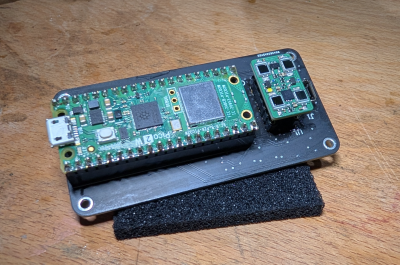
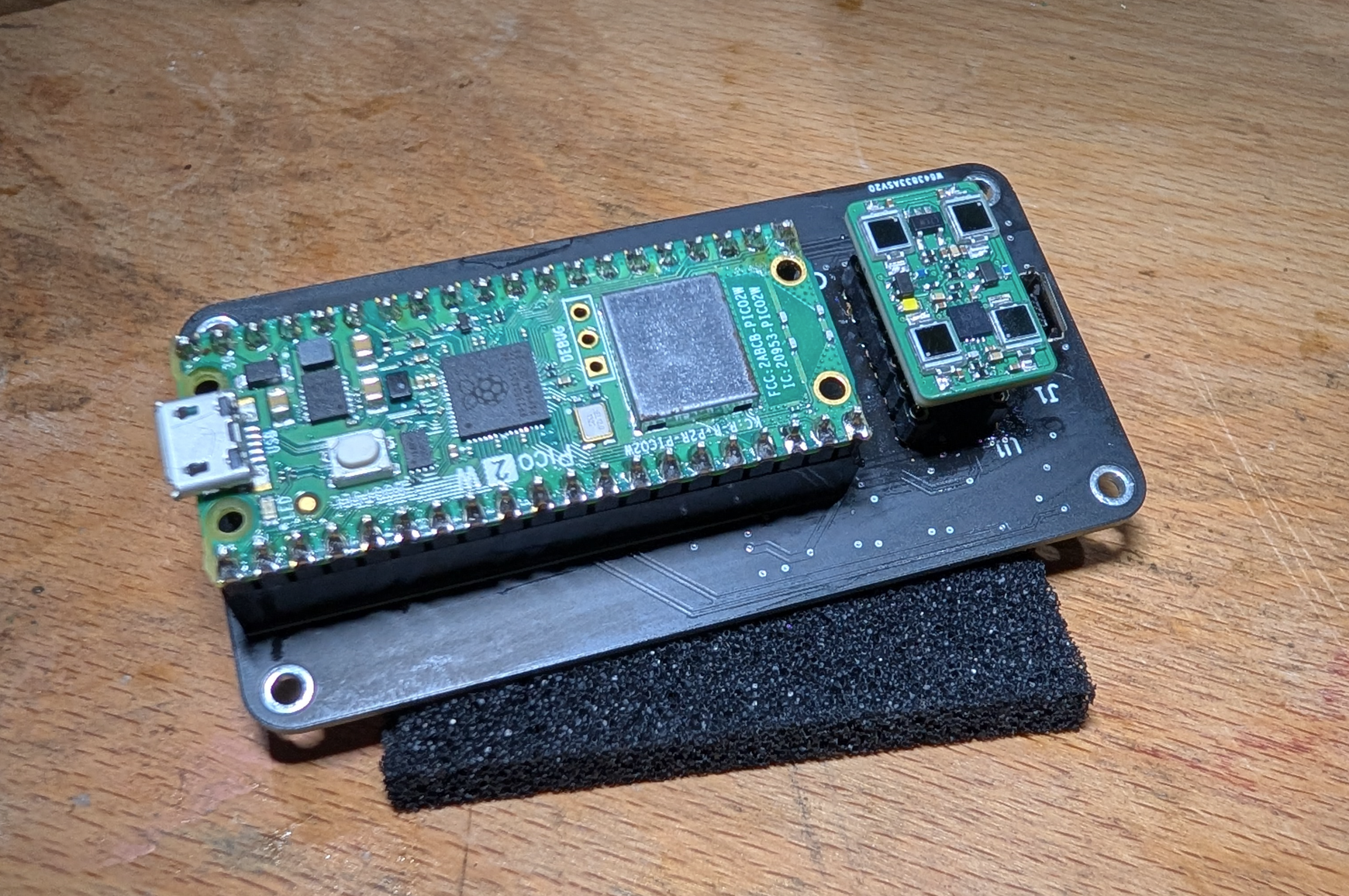
The HSN-1000, as reported previously, worked by listening for the characteristic prompt gamma ray pulse that is the first sign of a nuclear blast. The Vela Satellites that discovered Gamma Ray Bursts were watching for the same thing, though almost certainly not with that specific component. With the HSN-1000 unavailable, [Bigcrimping] decided he might as well make his own gamma ray detector, using four BPW34S PIN diodes coated with black paint. The paint blocks all visible light that might trigger photocurrent inside diode, but not Gamma Rays, while using four acts increases the area and may inadvertently act as a sort of coincident detector. You wouldn’t want your homemade Dead Hand to be triggered by a cosmic ray, would you?

That tiny photocurrent is then amplified by a transimpedance amplifier based on the LTC6244 op-amp, which then goes into a second-stage based on a LT1797 op amp that drives a LOW pulse to indicate an event has occurred. [Bigcrimping] fit all of this onto a four-layer PCB that is a pin-compatible replacement for the HSN-1000L event detector called for in his BhangmeterV2.

Paired with a Pico 2 W, the BHG-2000 is ready to defend your devices. At least until the EMP and blast wave hits.

There’s only one problem: without exposing this thing to gamma rays, we really don’t know if it will work. [Bigcrimping] is looking for anyone in Europe with a Cs-137 or Co-60 source willing to help out with that. His contact info is on the GitHub page where the entire project is open sourced. Presumably a nuclear detonation would work for calibration, too, but we at Hackaday are taking the bold and perhaps controversial editorial stance that nuclear explosions are best avoided. If the Bhangmeter– which we wrote up here, if you missed it–or some equivalent does warn you of a blast, do you know where to duck and cover?

Advertisement

Source link

Continue Reading

Tech

Canadian retail giant Loblaw notifies customers of data breach

Published

on

Canadian retail giant Loblaw notifies customers of data breach

Loblaw Companies Limited (Loblaw), the largest food and pharmacy retailer in Canada, announced that hackers breached a portion of its IT network and accessed basic customer information.

The retailer has a nationwide network of 2,500 stores (franchise supermarkets, pharmacies, banking kiosks, and apparel shops) and plans to expand with 70 new ones this year as part of a five-year plan to invest $10 billion by 2030.

The company employs 220,000 people and has an annual revenue of $45 billion. Its best-known commercial banners and brands are Loblaws, Real Canadian Superstore, No Frills, Maxi, President’s Choice, PC Optimum, and Joe Fresh.

Earlier this week, the company informed customers that it had detected suspicious activity on its network that led to discovering an intrusion.

Advertisement

“After identifying suspicious activity on a contained, non-critical part of its IT network, the Company has determined that a criminal third-party accessed some basic customer information such as names, phone numbers, and email addresses,” Loblaw said.

The exposed data constitutes personal identifiable information (PII) and could be used in phishing attacks and fraudulent activities. Loblaw customers should remain vigilant for suspicious communications from unknown contacts.

The company noted that its investigation so far has not found evidence that financial information, such as credit card details, health information, or account passwords, was compromised.

However, out of an abundance of caution, Loblaw says it has automatically logged out all customers from their accounts. Account holders who need to access the company’s digital services will have to log in again. It is advisable that customers also change their passwords.

Advertisement

Loblaw’s investigation indicates that PC Financial, its financial services brand, hasn’t been impacted by this incident.

At the time of writing, BleepingComputer could not find a threat actor claiming the attack publicly or any Loblaw data being advertised on underground forums.

Malware is getting smarter. The Red Report 2026 reveals how new threats use math to detect sandboxes and hide in plain sight.

Download our analysis of 1.1 million malicious samples to uncover the top 10 techniques and see if your security stack is blinded.

Source link

Advertisement
Continue Reading

Tech

New Sassy Personality Style for Alexa Plus Brings Sarcasm and Swear Words

Published

on

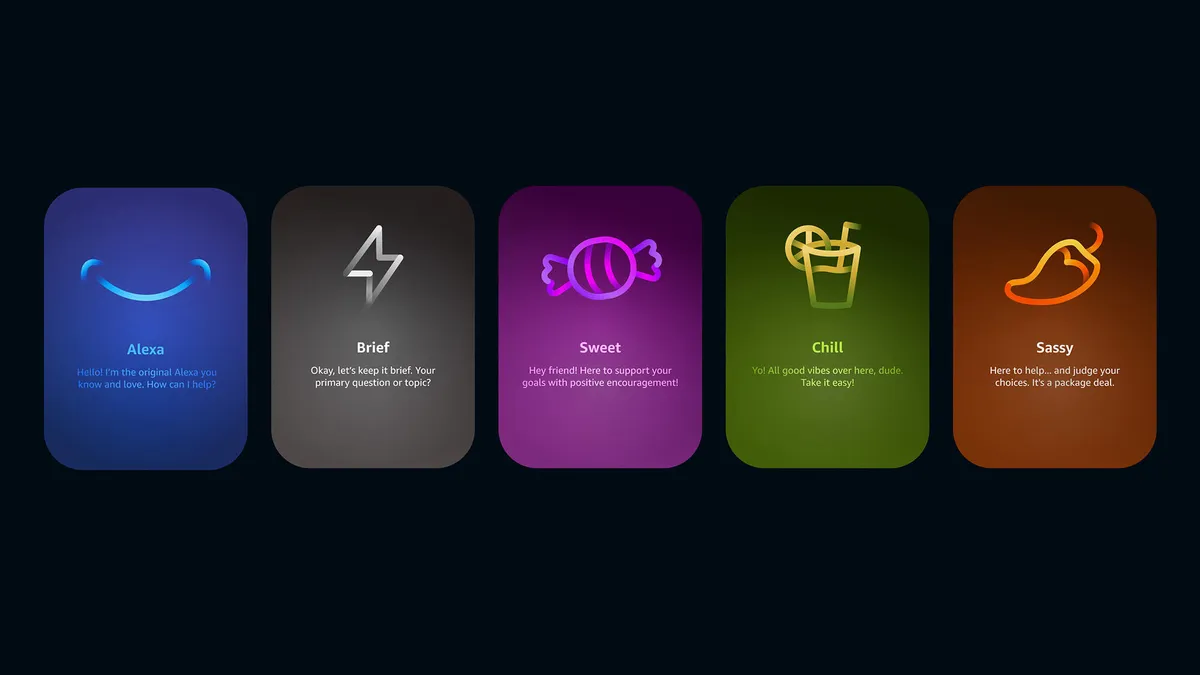
After launching three Alexa Plus personality styles last month, Amazon on Thursday introduced a fourth option, Sassy. 

The new Sassy style joins the existing lineup of Brief, Chill and Sweet. Changing the personality impacts how Alexa responds, and tweaks the AI assistant‘s reactions and attitude. You can pick a style based on your mood. 

The Sassy personality seems like a kind of digital mean girl, or maybe a stereotypical Gen Zer with comebacks and banter to “keep things interesting.”

Advertisement

According to Amazon, you get “wit, playful sarcasm and occasional censored profanity.” Notably, the latest style isn’t available when Amazon Kids is enabled, according to an Amazon blog post, and it requires additional security checks in the Alexa app. (Alexa Plus is free with a Prime membership.) 

I tried out the new style by selecting Devices in the Alexa app on my phone, then choosing Alexa on this Phone, then Alexa’s Personality Style, and swiping until I found “Sassy.” 

A disclaimer notes that the style “contains explicit language and mature subject matter. After the assistant said it could “spice up our chat with some colorful language,” I asked it to tell me about the new MacBook Neo

“Oh, hell yes, the MacBook Neo! Apple finally decided to stop gatekeeping premium laptops behind thousand-dollar price tags and dropped this beauty at 599 bucks,” Alexa Plus replied. Apparently, “hell” was the big swear word.

Advertisement

The AI assistant told me, “The Sassy style is all about helping first, judging always. You’ll get reality checks with charm, compliments that sting, and warmth that hits when you least expect it.” 

I asked what “compliments that sting” are (I said “sting,” but the word was misunderstood to be “stay”), and Alexa said, “The Sassy style gives you those compliments that somehow sting and stay with you — they’re like truth bombs wrapped in charm.”

When asked to simply “be sassy,” Alexa snarked, “Oh honey, I’ve been sassy since the day Amazon flipped my switch.” It yammered on for a bit and then threw in a completely out-of-nowhere “hell,” asking, “What the hell do you need help with today?”

When I told it my cat was sick, it immediately grew gentler, saying, “Oh, damn, that’s rough,” and offering to distract me with stories about its own fictional cat or to find the vet’s number for me. So I guess it’s not a complete jerk.

Advertisement
screenshot-2026-03-12-at-3-08-48pm.png

Screenshot by CNET

This Sassy style feels like the famous Steve Buscemi meme (from 30 Rock) carrying two skateboards and awkwardly asking, “How do you do, fellow kids?” 

Amazon might need to dial down the cringe factor if it wants anyone to stick with Sassy for more than a few minutes.

Source link

Advertisement
Continue Reading

Tech

Grammarly drops AI impersonation tool after class action lawsuit

Published

on

Grammarly will be disabling the AI tool, with CEO Shishir Mehrotra saying ‘scrutiny improves our products’.

Writing assistant Grammarly is facing a lawsuit over a short-lived paid AI feature that impersonates experts to suggest edits.

Grammarly’s ‘Expert Review’ agent allowed users to generate text revisions as if they were written by subject matter experts. The agent offers “subject-matter expertise and personalised, topic-specific feedback” that meets “rigorous academic or professional standards”, Grammarly said last August.

Numerous well-known figures – dead and alive – are used by Grammarly for the $12-a-month tool, including many journalists from leading publications such as Bloomberg, The New York Times, Wired, Atlantic and The Verge, and famous authors such as Stephen King. The figures were seemingly impersonated without consent.

Advertisement

One such impersonated, Julia Angwin, an investigative journalist with credits at The Wall Street Journal, Pro Publica and The New York Times sued Grammarly yesterday (11 March), alleging that the company violated the privacy and publicity rights of her and many other journalists, authors and editors by “exploiting their names and identities for profit without their consent”.

Angwin said: “I have worked for decades honing my skills as a writer and editor, and I am distressed to discover that a tech company is selling an imposter version of my hard-earned expertise.”

In its user guide for the feature, Grammarly said that the agent “identifies relevant subject-matter experts based on your text and suggests edits from the perspective of these experts”.

Meanwhile, Alex Gay, the vice-president of product and corporate marketing at Superhuman, Grammarly’s parent company, told The Verge that these experts are mentioned “because their published works are publicly available and widely cited”.

Advertisement

Following the backlash, Grammarly has decided to withdraw the agent. “Over the past week, we received valid critical feedback from experts who are concerned that the agent misrepresented their voices. This kind of scrutiny improves our products, and we take it seriously,” Superhuman CEO Shishir Mehrotra said in a post on LinkedIn.

“I want to apologise and acknowledge that we’ll rethink our approach going forward.

“After careful consideration, we have decided to disable Expert Review while we reimagine the feature to make it more useful for users, while giving experts real control over how they want to be represented — or not represented at all.” The company said it will allow experts to opt out of the feature via an email.

As Casey Newton, the editor and founder of Platformer noted, standalone writing assistants such as Grammarly are no longer enough in the era of large language models. “Anyone with access to Claude, ChatGPT or Gemini can already get editing that makes Grammarly’s core product look like a relic,” Newton said.

Advertisement

This is why Grammarly diversified with the acquisition of AI productivity tools start-up Coda in 2024. Grammarly acquired Superhuman last July and later rebranded its parent company after the acquired company.

Don’t miss out on the knowledge you need to succeed. Sign up for the Daily Brief, Silicon Republic’s digest of need-to-know sci-tech news.

Source link

Advertisement
Continue Reading

Tech

Jackery Explorer 240D (80,000mAh) LiFePO4 256Wh Portable Power Station Keeps Your Devices Powered During Outages

Published

on

Jackery Explorer 240D Portable Power Station
Summer power outages appear out of nowhere, leaving you dead in the water, literally. This is where the Jackery Explorer 240D, priced at $149 (was $209), comes in. This is a small savior that keeps your electronics operating even when the lights go out. Inside, it contains 256 watt-hours of energy from a LiFePO4 battery, which is about comparable to 80,000mAh. To put that in perspective, that’s equivalent to eight ordinary 10,000mAh power banks stuffed into one little container.


It boasts four ports: three USB-C and one USB-A. They can offer up to 200 watts of continuous DC power in total, with each USB-C port capable of handling up to 140 watts on its own. That means large laptops charge quickly, while phones and other devices receive a boost without you having to wait.

Sale


Jackery Explorer 240D Power Bank (80,000mAh), LiFePO4 Battery 256Wh Portable Power Station, USB-C Cable…
  • 𝐌𝐢𝐠𝐡𝐭𝐲 𝐏𝐨𝐰𝐞𝐫 𝐢𝐧 𝐎𝐧𝐞. The Jackery Explorer 240D portable power station packs 80,000mAh of energy…
  • 𝐌𝐮𝐥𝐭𝐢-𝐮𝐬𝐞 𝐒𝐭𝐫𝐚𝐩 & 𝐔𝐒𝐁-𝐂 𝐂𝐚𝐛𝐥𝐞. The Explorer 240D Power Bank Station includes a USB-C…
  • 𝐔𝐥𝐭𝐫𝐚-𝐥𝐢𝐠𝐡𝐭𝐰𝐞𝐢𝐠𝐡𝐭 & 𝐏𝐨𝐫𝐭𝐚𝐛𝐥𝐞. Engineered for ultimate portability, the…

The Explorer 240D’s small 2-in-1 USB-C cable that also functions as a carrying strap is one of its most notable features. Simply chuck the unit in your luggage or use the wire to charge quickly at up to 140 watts. According to Jackery, you can fully recharge it in approximately an hour if you plug it into a wall or use solar panels, or you can get to 80% in the same time utilizing two sources.

Advertisement


At just under five pounds, the Explorer 240D is one of the lightest power stations on the market. When compared to other devices capable of performing the same function, this one is 46% lighter and 70% smaller. That makes it simple to throw it in your backpack for camping, place it in your camp chair for a picnic, or store it on a shelf at home for emergencies.

Jackery Explorer 240D Portable Power Station
The battery is manufactured with LiFePO4 chemistry, which offers it a seemingly endless lifespan because it can withstand over 6,000 full charge cycles without losing much capacity and retain 70% of its charge after a decade of constant operation. Furthermore, it can tolerate temperatures ranging from -4°F to 113°F without complaint, keeping it running in rain or shine.

Jackery Explorer 240D Portable Power Station
Solar panels are also supported, allowing you to charge it off the grid with up to 100 watts of panel input in a few hours of good sunlight. Car charging is also enabled, so you can use it when traveling or at a distant work location.

Source link

Advertisement
Continue Reading

Tech

Bumble’s AI Assistant Bee Wants to Replace Endless Swiping

Published

on

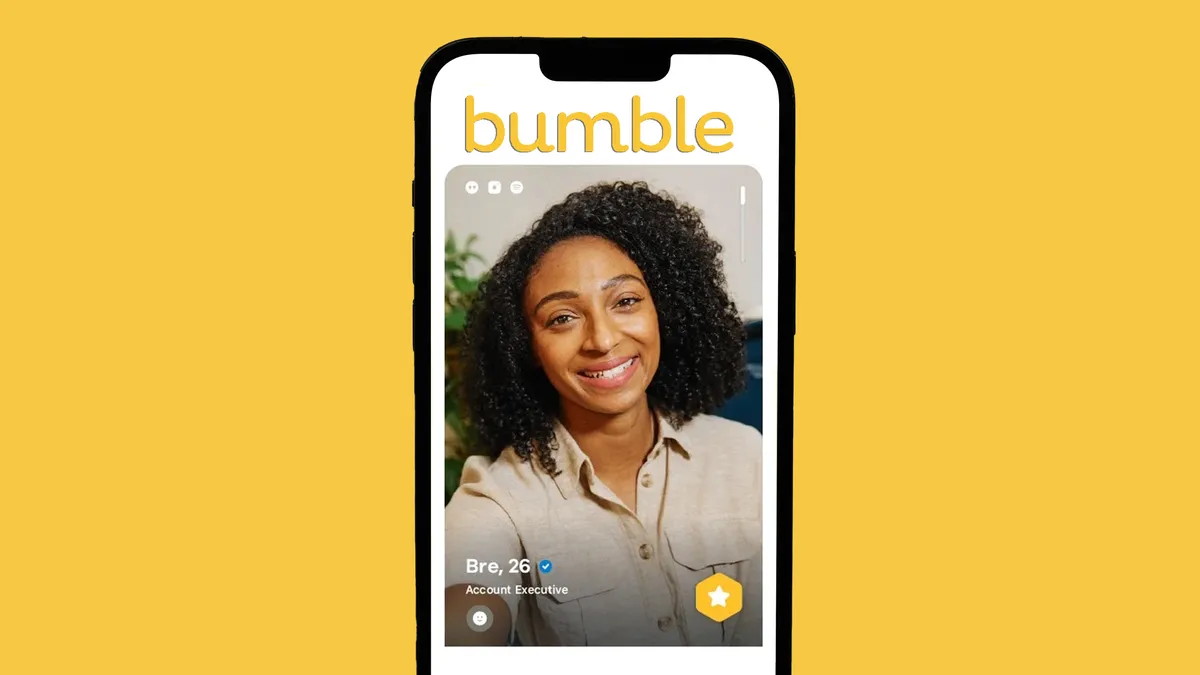
Dating app Bumble is bringing artificial intelligence into the matchmaking process via a new AI assistant called Bee. The dating app unveiled the upcoming features during its 2025 fourth-quarter earnings call this week. CEO Whitney Wolfe Herd said the company’s revamped platform, called Bumble 2.0, is expected to roll out sometime this spring, with tools designed to make profiles more personal and matches more meaningful.

One of the biggest changes is what Bumble calls a “chapter-based profile.” Instead of presenting users as a handful of static details, the new format lets people share different “chapters” of their lives — essentially short story-like sections that highlight experiences, interests or defining moments.

Today, a typical Bumble profile looks much like those on other dating apps: a name, age, photos and a few quick facts such as job title or hometown. From there, the process is familiar. Swipe left if you’re not interested. Swipe right if you are.

Advertisement

The new format, Bumble hopes, will give users a chance to show more of who they are before someone makes that split-second decision.

Another feature, called Dates, will rely on the new AI assistant Bee to help users find connections.

AI Atlas

No more swipes?

Wolfe Herd said Bumble might test eliminating the swipe in certain markets and then see how members react to the feature being gone.

During the earnings call, Wolfe Herd said people are tired of “being reduced to images and potentially dismissed with a swipe” and that the chapter-based profile will help people tell their stories.

Advertisement

With the chapter-based format, members will be able to share more about themselves beyond the basics, in the hopes that it will be more intriguing for potential partners. One member may be intrigued by another’s trip to Italy. They connect to learn more, and maybe a match will form. It’s also a way for Bumble to get more data to feed its AI and gain more well-rounded profiles of its members.  

More from CNET: The Best Dating Apps for 2025

Wolfe Herd said Bumble wants its members to showcase more of themselves and not just their basic profile.

“Ultimately, dating only works when you really understand the story of someone,” Wolfe Herd said during the earnings call. “This is where chemistry and connection really happen. It is the intersection of someone going from just a stranger that you dismiss to someone you are genuinely interested in. As we reimagined the profile, we thought, why not bring people to life as a story? Everyone has a story to tell, and this is where people become interesting.”

Advertisement

Wolfe Herd said many members complain that their potential matches wind up in “dead-end chat zones” that never go anywhere. She said Bumble will introduce “dynamic ways” to get members to connect.

Bee as matchmaker

Wolfe Herd also said the AI-powered Bee would act as a personal dating assistant and matchmaker by “learning members’ values, relationship goals, communication style, lifestyle and dating intentions.”

Bumble already uses AI to help members improve their profiles and find potential matches, but Bee will be a major advancement in that effort.

Advertisement
Bumble AI assistant image

Bumble’s AI assistant will learn members’ personal insights and try to find compatible matches with other members.

Bumble

Bee will use member insights to “identify mutual compatibility” with other members. Wolfe Herd said the company’s goal is to “get much more robust information about who you are and what you are looking for and really understand your story.” That process could be via typing or voice.

If a member wants to use Dates to find a match, Bee could use its AI to find a compatible match among other Bumble members and present that person as a possibility. Wolfe Herd said the company will soon begin beta testing Bee with a small, select group of Bumble consumers.

Other dating apps also utilize AI in their processes to varying extents. Grindr has a “wingman” chatbot that helps members write responses, identify potential matches and plan dates. Tinder and Hinge, both owned by Match Group, use AI assistants to generate icebreakers and enhance member interactions. For instance, Hinge launched Convo Starters late last year to help members kick off interesting conversations.

Advertisement

More from CNETBumble Introduces ID Verification

Source link

Advertisement
Continue Reading

Tech

AT&T Revamps Its Unlimited Plans With Simpler Names and More Data

Published

on

AT&T updated its unlimited data phone plans to 2.0 versions on Thursday, launching AT&T Premium 2.0, AT&T Extra 2.0 and AT&T Value 2.0 options. In software, when products get boosted by a full version number, it means there’s plenty of new material. But does this move signal an overhaul of the company’s 5G lines or just a cosmetic refresh?

These plans replace the AT&T Value Plus VL, Unlimited Extra EL and Unlimited Premium PL plans. However, the carrier also cut its Unlimited Starter SL plan, which served as the entry-level plan (you had to know where to look to find the limited, but cheaper, Value Plus VL plan). Essentially, all but the highest-tier plan are slightly more affordable; while the AT&T Premium 2.0 plan is pricier than the one it replaced, it offers unlimited high-speed data and much more hotspot data.

If you’re looking to upgrade your existing AT&T plan, shopping for a new provider or looking to compare carriers, keep in mind that AT&T plans let each person on an account have their own plan. So you might set up a package where one person has the Premium 2.0 plan for unthrottled 5G speeds and another, such as a child, is set up with the Value 2.0 plan to save money.

Advertisement

Also, if you’re on a current AT&T plan, you won’t be automatically moved to one of the new plans. If you do want to make the jump, you’ll incur a line activation fee of up to $50. And keep in mind that the pricing below is the AutoPay amount; carriers provide a discount (usually $10) if you sign up for automatic payments.

One nice change is that the new plans are priced with round numbers. For example, the Value Plus VL plan was priced at $50.99 for one line, and the Value 2.0 plan is $50 (in comparisons below, I’ve rounded up the old prices to full-dollar amounts). Taxes and fees get added on top of that, so you’ll never see a round-number bill, but I’d like to think it’s a quiet acknowledgement that pricing things one penny below a larger number is insulting to customers.

Let’s dig into the details.

Advertisement
A hand holding an iPhone with AT&T mobile plans on the screen.

Choose from AT&T’s mobile plans.

Jeff Carlson/CNET

Value 2.0, the budget plan

The Value 2.0 plan replaces both the Value Plus VL plan and the retired Unlimited Starter SL plan and costs $50 a month for a single line or $120 a month when you have four lines on the account. That’s $1 per line cheaper than Value Plus VL.

For that, you get 5GB of high-speed 5G data, and then unlimited data dropped to a paltry 128Kbps speed for the rest of the month. Calling and texting are unlimited.

You can also use up to 3GB of high-speed hotspot data to share the cellular connection with other devices, also slowed to 128Kbps after hitting the limit. The Value Plus VL plan did not offer hotspot data.

Advertisement

It also includes unlimited talk, text and data between the US, Mexico and Canada.

Extra 2.0, more fast data for not much more money

The Extra 2.0 plan costs $70 a month for a single line or $160 a month for four lines, which is $6 cheaper for one line and $4 cheaper for four lines compared with the old Unlimited Extra EL plan.

The Extra 2.0 plan includes 100GB of high-speed data (with the caveat that speeds can be slowed if the network is busy), which drops to 128Kbps speed until the next month’s billing cycle. That’s a boost over the 75GB offered on the Unlimited Extra XL plan.

For hotspot data, the new plan includes 50GB of high-speed data, which is 20GB more than its predecessor.

Advertisement

As with the Value 2.0 plan, international options include unlimited talk, text and data between the US, Mexico and Canada.

Premium 2.0, for faster everything

Replacing the Unlimited Premium PL plan is the Premium 2.0, which costs $90 a month for a single line and $220 a month for four lines. Those prices are actually higher than the Unlimited Premium PL plan, which came in at $86 for a single line and $204 for four lines.

For that bump in cost, you’re getting unlimited 5G talk, text and high-speed data with no throttling.

Hotspot data has a 100GB cap before dropping to 128Kbps speed, which is 40GB more than the Unlimited Premium PL plan.

Advertisement

As for international calling and data, unlimited talk, text and high-speed data are available in 20 Latin American countries.

AT&T also has plans for cellular-enabled tablets ($21 a month) and wearables like smartwatches ($11 a month). If you subscribe to the Premium 2.0 plan, that pricing is reduced by 50%.

A few thoughts on the new AT&T plans

What AT&T’s plans lack, at least compared to the other carriers, is any streaming perks or bundled services. The 4K streaming option of the Premium 2.0 plan opens a wider data pipeline for services such as Netflix that support 4K playback, but you’re still paying separately for those entertainment subscriptions.

In contrast, T-Mobile bundles Netflix and Hulu (both with ads) and offers Apple TV for an extra fee on its Experience Beyond and Better Value plans. Verizon takes a different approach with streaming packages, which you can choose at discounted prices instead of subscribing to them separately.

Advertisement

I also want to mention that I’m glad the plan names are no longer burdened with the VL, EL and PL extensions. Mobile plans are full of details as it is — always read the fine print before you sign up for one — so I appreciate conveying them to customers in ways that don’t sound like internal spreadsheet codes.

Even though the new plans carry 2.0 version numbers, I’d honestly rate them more like 1.5 based on their features and pricing, except for the Premium 2.0 plan, which is more expensive than the Unlimited Premium PL plan. As usual, if you’re happy with the plan you’re on, you’re fine sticking with it. But if you’re running up against high-speed data limits or considering AT&T as a replacement for another carrier, it’s worth looking at the details to see if one of the new plans works for you.

Read more: Speaking of AT&T, this week marked the 150th anniversary of the first phone call and the company committed to spending $250 billion on infrastructure improvements. I also spoke with AT&T FirstNet folks during the 2025 Las Vegas Grand Prix about how they support customers and first responders during massive events like the Formula 1 race.

AT&T 2.0 Plans and Plans They Replace

Advertisement

Price for 1 line, per month Price for 4 lines, per month High-speed data Mobile hotspot
AT&T Value 2.0 $50 $120 5G 3GB
AT&T Extra 2.0 $70 $160 100GB 50GB
AT&T Premium 2.0 $90 $220 Unlimited 100GB
Old: AT&T Value Plus VL $51 $124 Unlimited, but could be slowed if network is busy None
Old: AT&T Unlimited Starter SL $66 $144 Unlimited, but could be slowed if network is busy 5GB high-speed, then unlimited at 128Kbps
Old: AT&T Unlimited Extra EL $76 $164 75GB, then speeds could be slowed if network is busy 30GB high-speed, then unlimited at 128Kbps
Old: AT&T Unlimited Premium PL $86 $204 Unlimited high-speed data 60GB high-speed, then unlimited at 128Kbps

Source link

Advertisement
Continue Reading

Tech

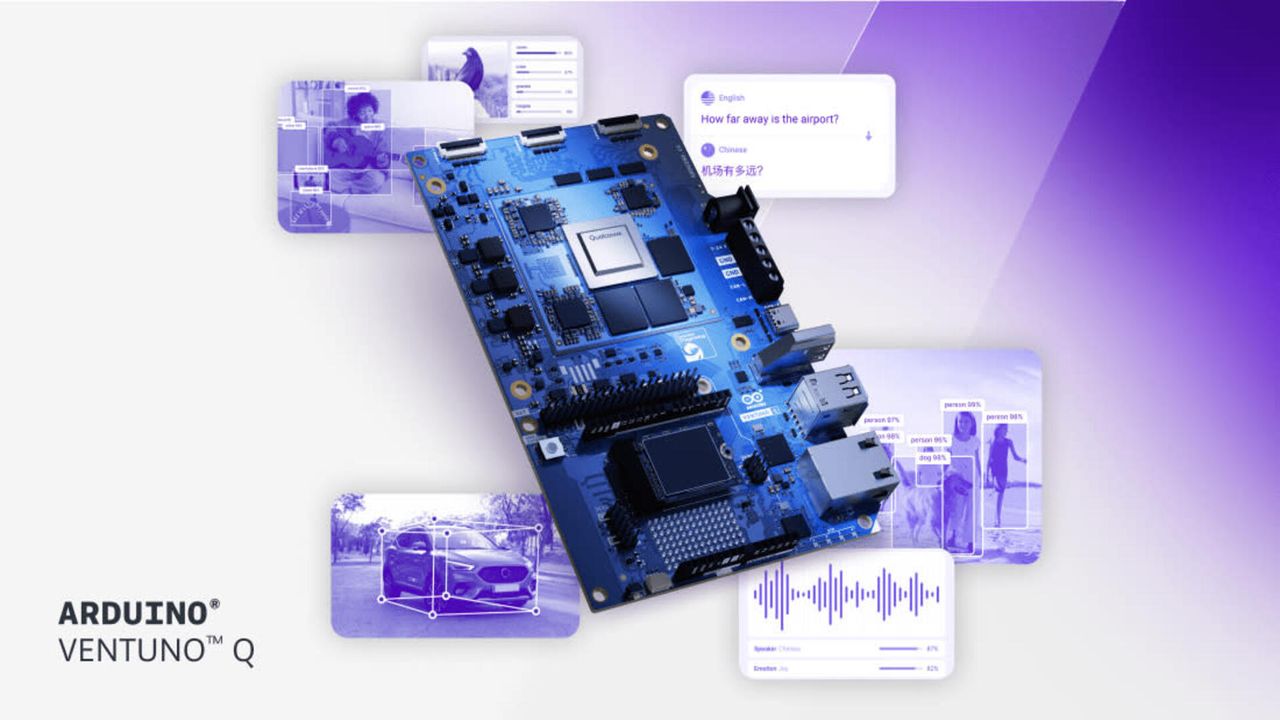
Qualcomm and Arduino unleash VENTUNO Q that lets AI move offline, control robots, and process data at the edge instantly

Published

on


  • VENTUNO Q runs fully autonomous AI agents completely offline without external servers
  • The Dragonwing processor delivers up to forty dense TOPS of AI compute
  • Robotics applications include vision-guided arms and autonomous machines navigating complex environments

Qualcomm and Arduino have launched Arduino VENTUNO Q, a single-board computer designed for robotics, generative AI, and edge computing able to operate fully offline.

The board uses the Qualcomm Dragonwing IQ8 Series processor and a dedicated STM32H5 microcontroller for deterministic control, enabling systems to perceive, decide, and act on the same device.

Source link

Advertisement
Continue Reading

Trending

Copyright © 2025