Connect with us

NewsBeat

‘I woke gasping for air seven times a night – losing 17st gave me my life back’

Published

on

Cambridgeshire Live

At 28st Graham Baalham faced leg amputation and severe breathing problems at night before his incredible 17st weight loss transformation

At 5ft 4in and 17st heavier than he is now, Graham Baalham’s nights were once frightening. The 55 year old window cleaner would wake suddenly up to seven times each night, struggling for air, alarmed as his airway appeared to constrict.

Advertisement

Instead of enjoying proper rest, he would find himself leaning out of the bedroom window or sitting upright in a chair for hours. His wife, Belinda, grew so concerned by his loud snoring and repeated pauses in breathing that she became certain he was suffering from sleep apnoea.

Reflecting back, Graham, from Bury St Edmunds, says: “I can honestly say that if I hadn’t joined Slimming World, I don’t believe I’d have lived to see 60.” Prior to shedding the pounds, Graham describes himself as perpetually worn out, sluggish and scarcely capable of walking a mile.

He told the Mirror: “I avoided the doctor for years because I knew what they’d say: ‘You have to lose weight’. Even though I’ve always worked in physical jobs – I was a groundsman and now I’m a window cleaner – and I always told myself I was fit for a big bloke, the reality was very different. As I got older, it became harder and harder to work the weight off. I was tired all the time.

Advertisement

“The real turning point came when I was in hospital for more than two weeks with a serious leg infection. The doctor drew a pen line around the infection and he told me it couldn’t spread past that mark. He said if the antibiotics didn’t work within 48 hours, they’d have to amputate my leg. That was it – that was the moment, I knew I’d run out of chances.”

Graham’s experience mirrors Slimming World research that demonstrates the strong correlation between sleep and weight. Slimming World’s ‘Snooze More to Lose More’ survey asked its members about their sleep habits over a week.

The study, which involved more than 3,000 members, found that nearly half of those who lost 15% or more of their body weight reported improved sleep. The survey indicated that the more weight members shed, the more likely they were to report enhancements in their sleep.

Before joining his local group, Graham admits that each Saturday watching his beloved Ipswich Town would see him regularly consume 10 pints. He says: “I always worked hard, I was active, but food and drink was my downfall”.

“Every afternoon around 2.30pm I’d have six bags of crisps back-to-back, followed by five or six chocolate bars. Belinda would cook a healthy meal every evening, but once everyone had settled down, they’d hear me back in the kitchen rustling the packets – it was like I couldn’t stop myself.”

Graham recalls: “Walking into a Slimming World group felt terrifying, but Belinda encouraged me to go and as soon as I walked through the doors, Shani, the Consultant, clocked me straight away. She was brilliant and made me feel welcome, which gave me confidence.”

He says the transformation has been life-changing: “Now, Belinda and I plan our meals together using the app. Our favourites include chicken risotto, pasta dishes, curries and the Slimming World Free Food range at Iceland.

“We recently went on an all-inclusive long weekend and I stayed on plan without feeling deprived or like I was missing out. That’s when I knew this is my new normal. The plan has become part of my everyday routine, so I ate well but stayed mindful about what I chose.

“For breakfast, instead of going straight for a full English, I leaned more towards fruit and if I did have bacon, I removed the fat. Lunch was usually chicken or tuna salad with fruit and I chose healthier dinner choices like fish or lean steak. I also kept alcohol low and it all felt natural – and showed me how much my habits have changed.

“Slimming World didn’t just help me lose weight – it taught me how to eat properly. I tried pills, exercise, everything. This is what worked. It’s given me my life back.

Advertisement

“Nowadays I feel like a 20-year-old. I walk up to 10 miles a day with my dog. Before, I was lucky if I managed one mile. I sleep through the night. No more gasping for air. No more sitting upright in the dark, terrified. I wake up feeling rested.”

He shared that some changes were drastic, stating: “I’ve ditched crisps and chocolate completely. Once I put my mind to it, I knew I could do it. I’m so proud knowing that I’ve inspired other people locally to join after seeing my journey on Facebook.

“Belinda and I have been married for 35 years and we have three adult children – Sian, Matthew and Bethany – and three grandsons aged eight, five and just seven months. I realised I didn’t just want to lose weight. I wanted to be here for them.

Advertisement

“At 55, I’ve been given a second chance. I’m not just lighter – I’m alive, awake and present. And I fully intend to be here, watching my grandchildren grow up, for many, many years to come.”

Shani Yates is Graham’s Slimming World Consultant. Shani says: “Supporting Graham has been an absolute joy. His determination has inspired every single member in our group and he’s become a bit of a local legend. Seeing him lose an incredible 17st and finally enjoy a full night’s sleep after struggling for so long makes me so proud.

“Graham brings energy, ideas and kindness to every session and the support he gives others is extraordinary. He’s a much‐loved member of our Slimming World family and a real example of what’s possible when you believe in yourself.”

Graham attends Shani Yates’ Slimming World group in Stanton, Bury St Edmunds. For more information or to find your nearest group, visit slimmingworld.co.uk.

Advertisement

Graham Baalham

  • Start weight: 28st 12lbs
  • Weight at group finals: 11st 13lbs
  • Height: 5 ft 4 in
  • Weight lost 16st 13lbs in 92 weeks

Graham’s day on a plate

Before

Breakfast: Nothing / Coffee with sugar

Lunch: White bread sandwich, packet of crisps, two or three chocolate bars, full sugar cola drink

Dinner: Roast beef with vegetables and new potatoes, full sugar cola, two to three bottles of beer

Snacks: Six packets of crisps, six chocolate bars, cheese biscuits, cream crackers with cheese and lashings of margarine, half a packet of custard creams, salted peanuts with a pint of full fat milk, coffee and tea with sugar

Advertisement

After

Breakfast: Overnight oats, Slimming World cooked breakfast at weekends, coffee without sugar

Lunch: Wholemeal bread sandwich, fruit, salad, water or low-calorie fruit squash

Dinner: Slimming World chicken and mushroom risotto or Slimming World pasta dishes, or a meal from the Slimming World Free Food range at Iceland with salad or vegetables, diet cola or water

Advertisement

Snacks: Fruit, two high fibre snack bars, low fat yoghurts, coffee or tea with no sugar

Source link

Continue Reading
Click to comment

Leave a Reply

Your email address will not be published. Required fields are marked *

NewsBeat

Why Russia is a winner in the Iran war | Money News

Published

on

Russian-flagged crude oil tanker, the Vostochny Prospect ship, is subject to UK sanctions

In a war increasingly determined by the flow and price of oil, one country is already emerging as a winner – and it’s not even a combatant.

As US-Israeli strikes on Iran have sent the oil price soaring and raised questions about the American appetite for a prolonged price shock, Russia is already reaping the benefits of higher oil revenues.

The transformation in Russian fortunes, literal and metaphoric, has been dramatic. Just a fortnight ago, Vladimir Putin was under increasing pressure as sanctions tightened.

Iran war latest – follow live

Advertisement

Today, with plentiful supplies of crude oil unconstrained by the effective closure of the Strait of Hormuz, Russia is cashing in.

Not only has the price of Urals crude soared, but the discount Russia was forced to offer as a consequence of sanctions has been erased, delivering a windfall to the Kremlin and its campaign against Ukraine.

Russian oil revenues fell 18% last year, according to the Centre for Research & Clean Air (CREA), and appeared to be declining further in January, placing genuine pressure on the Russian economy.

At a stroke, the attacks on Iran have eased the pressure, with revenues increasing 17% in the last two weeks and exports from northern Russian ports up 24%.

Advertisement
visualization

The change in fortune can be illustrated by the passage of a single vessel in the Russian shadow fleet.

In February, Sky News intercepted the Kousai, a Sierra Leone-flagged tanker, as it passed through the Strait of Dover.

With a capacity of around 750,000 barrels, its cargo was worth around $40m when it was loaded with crude at Ust-Luga in the Baltic on 2 February.

By the time it passed Dover, eight days later, it was potentially worth $42m, as Urals crude traded at $56 a barrel, $13 below Brent crude.

Nine days into the Iranian war, Urals reached a peak of more than $100 a barrel, so as the Kousai passed Sri Lanka en route to India on 9 March, its cargo was worth $75m. On Thursday morning, as it approached Paradip, it was back to $65m, reflecting a barrel price of $87.

visualization

Events of the last fortnight have alleviated pressure that has been building since the invasion of Ukraine to curb Russian oil revenue.

Sanctions from the UK, EU, Australia, Canada and the US have targeted thousands of Russian individuals and companies, and hundreds of tankers in the so-called “shadow fleet” it relies on to move crude around the world.

Advertisement

A lift from sanctions

With Western nations closed for business, India and China became the biggest customers for Russian crude, but US sanctions against New Delhi introduced in February appeared to have delivered a serious blow.

Last week, however, the US offered India a 30-day waiver to those restrictions, a tacit acknowledgement that, with 20% of global supply choked off by the closure of the Strait of Hormuz, Indian demand could further push up prices.

Russia is also benefiting from the interruption of supply to China, which sources close to half of its oil imports from Gulf states, currently unable to send tankers through the Gulf.

Read more:
UK weighs options to defend shipping in Strait of Hormuz
US Navy to escort oil tankers through Strait of Hormuz

What we know about the deadly Iran school strike

Advertisement
Russian-flagged crude oil tanker, the Vostochny Prospect ship, is subject to UK sanctions
Image:
Russian-flagged crude oil tanker, the Vostochny Prospect ship, is subject to UK sanctions

“The spike in energy prices triggered by the closure of the Strait of Hormuz is boosting the Kremlin’s oil and gas revenues, helping fund its war chest. In effect, geopolitical turmoil and policy loopholes are handing Russia a windfall just as sanctions were beginning to bite,” said Isaac Levy of CREA.

“The US waiver allowing India to keep buying Russian oil from sanctioned companies will blunt the impact of sanctions. Discounts on Russian crude have almost vanished, and tankers that were idling are now preparing to unload at Indian ports again.”

The longer the Iran conflict goes on, the more Russia is likely to profit.

Advertisement

Source link

Continue Reading

NewsBeat

Best lawn mowers including cordless, petrol and electric

Published

on

Best lawn mowers including cordless, petrol and electric

Having spent a lifetime squeezing and holding drive and motion bars while mowing, Bosch’s cordless Rotak was a revelation: it’s operated via push-button controls built into the height-adjustable handle, making it much less tiring to manoeuvre.

Its seven cutting heights are easily interchangeable, but what wins it our top spot is that it stripes your lawn as it goes, courtesy of a plastic roller mounted just behind the cutting deck. It’s effective – even if the straightness of your stripes depends on your powers of concentration.

The brushless motor means you’ll never have to replace carbon brushes and they’re also more efficient so the battery charge lasts longer. If you already have a 36-Volt Bosch appliance like a grass trimmer or leaf blower, you can use the battery from that. Otherwise, the sets range from about £125 to £220, depending on the duration.

Advertisement

The only quirk I encountered was that the collapsible grass boxes couldn’t hold the full 50 litres advertised. When the “grass full” indicator showed red, there was always lots of empty space left, which meant I had to empty it more often that I would have liked.

It’s remarkably quiet and the grass combs in front of the cutter let you mow close to the lawn’s edge with consistent quality. The 44cm cutting deck is a terrific compromise between large-scale lawn-munching ability and nimbleness. My narrow, grassed banks, which were too tricky for the bulkier Stihl to navigate, proved easy meat for the Bosch.

A cheaper version of this mower without a rear roller might have wider appeal, but if striping is a must-have, this model’s combination of performance, lightness and clean cuts makes it one of the best choices out there.

Also in this range:

Advertisement

Bosch’s Rotak rotary mowers come in corded and cordless model. The range-topping model tested is designed for 750 square metre gardens, whereas the entry-level EasyMower 18V-32-150 (£198, Wickes) is designed for 150 sq metre gardens. We tried that last year and gave it a score of 8/10. Only the most recent Bosch models are called Advanced, which refers to the brushless motor and the ProSilence engineering which reduces noise by a third.

Bosch mowers can use batteries from any of their other power tools as long as they’re the same voltage (18V or 36V). It’s a neat trick which has seen Bosch pop up in our guides to the best cordless drills and best pressure washers.

Key specifications

  • Weight: 16.5kg
  • Cutting width: 44cm
  • Cutting height: 25-80mm
  • Grass collector: 50 litres
  • Power source: Cordless electric
  • Warranty: Three years

Source link

Advertisement
Continue Reading

NewsBeat

The best home security cameras to watch over your property

Published

on

The best home security cameras to watch over your property


Which features should you look out for in a home security camera?

First, look for high resolution. “1080p Full HD is the most common camera resolution,” advises Anna Forbes, Smart Home buyer at Currys. “It’s easily high enough for seeing a parcel at the door or watching the pets at home. But if you want to capture more detail of faces or number plates, then 2K, 3K or 4K cameras [offering two, three or four times the resolution of Full HD] are a better bet.”

Second, you’ll want a decent field of view. “If a user has a specific area they want to monitor, they will need a security camera whose field of view matches the area’s size,” advises Stephanie Fort.

Third, consider storage: some cameras have in-built memory but these aren’t always the best choice. “As long as you have a solid internet connection, cloud storage is generally safer than using local storage,” says Anna Forbes. “There’s always a risk of theft or physical events – like fire or flood – wiping out video stored on the latter.”

Advertisement

Finally, think about whether your camera can integrate with other home tech. “If your outdoor camera detects motion, a smart home can then switch lights on to give the appearance you are at home. Some systems can even recognise family members and then switch the entrance light on in response.”

What video resolution do I really need (1080p, 2K, 4K)?

For indoor security, 1080p is usually a sufficient resolution. It will deliver clear images for general monitoring and it is cost-effective with lower storage and bandwidth needs. If you want to make sure you can capture fine details for identification, such as facial features, then a 2K or 4K camera is a better choice.

Do I have to pay a monthly subscription for home security cameras?

It depends on which security camera you buy as to whether you will need to pay a monthly subscription. Most require you to if you want to store your video history, but some options have local storage with a microSD that doesn’t require a subscription.

Is it better to have wired or wireless security cameras?

“If you have a lower budget, or want something a bit more affordable and flexible, then a wireless camera is better,” advises AOs Stephanie Foat. “If you rent your current home, for example and want to take your security system with you when you leave, then wireless cameras are the best way to go.

Advertisement

“If you’re after something with higher quality footage and more permanently installed in your home, or have patchy Wi-Fi, then wired cameras are recommended. Having cameras hardwired into your home also ensures strong video and audio signals that won’t degrade over time.”

What’s the difference between CCTV and wireless home security cameras?

“Wired CCTV cameras work as a direct camera-to-monitor system, but can be trickier to install as they rely on physical extension cables and connectors,” cautions Stephanie Foat.

“Wireless cameras, on the other hand, transmit images to your phone, tablet or computer using digital technology. So long as you have a solid internet connection, they’re generally the better option as it’s far more convenient for households to receive video footage direct to their phones.”

Source link

Advertisement
Continue Reading

NewsBeat

Alexander vows to honour memory of Dunblane victims by upholding gun controls

Published

on

Alexander vows to honour memory of Dunblane victims by upholding gun controls

“I very vividly remember those images of Michael Forsyth, who was then a leading Conservative politician, walking with George Robertson, a leading Labour politician who himself lived in Dunblane, showing the depth of unity across Scotland that not only must this never happen again, but that we needed to support the families in their campaign for action.”

Source link

Continue Reading

NewsBeat

Kaye Adams denies misconduct allegations while at BBC saying she’s ‘heartbroken’

Published

on

Daily Record

“I am heartbroken that 15 years of hard work and dedication to BBC Scotland is being reduced to this.”

Broadcaster Kaye Adams has said she is “heartbroken” to hear the “malicious stories” about her following her departure from the BBC and denied allegations of misconduct.

Advertisement

The Scottish radio host, 63, was taken off air from her BBC Radio Scotland morning programme last year reportedly due to allegations about her behaviour. Adams addressed a number of the accusations in a statement shared on Instagram on Thursday where she denied that she berated an intern or used a misogynistic slur.

She said: “I’m aware of malicious stories circulating about the reasons for my departure from BBC Scotland. I’ve tried to keep a dignified silence but these attacks on my character are now so persistent, they can no longer go unchallenged.

“I categorically deny using a misogynistic slur 14 years ago and I’m horrified at its invention more than a decade later. It is absolutely not a word I would have used.

Advertisement

“As for ‘berating an intern’, this is simply untrue. Regarding the allegation that I threw a pencil while alone in an empty studio, words fail me.

“I am heartbroken that 15 years of hard work and dedication to BBC Scotland is being reduced to this. There’s really nothing more I can say apart from offer my heart-felt thanks to friends and colleagues – junior and senior – across the corporation who have sent their good wishes and support.”

The BBC has not commented on the reason for Adams’ departure but the broadcaster confirmed earlier this month that Adams would not be returning to the role. In October, Adams said her name had been “dragged through the mud” after she was taken off her programme.

Adams joined BBC Scotland in 2010 and is also a regular panellist on ITV’s Loose Women. In 2022, she appeared on BBC One dancing programme Strictly Come Dancing and was a contestant on the third series of Celebrity MasterChef.

The BBC has been contacted for comment.

Advertisement

Get more Daily Record exclusives by signing up for free to Google’s preferred sources. Click HERE.

Source link

Continue Reading

NewsBeat

Service to remember lives lost in Unity Colliery disaster

Published

on

Service to remember lives lost in Unity Colliery disaster

Kearsley residents and councillors gathered at Unity Brook memorial to remember those who lost their lives in the Unity Brook Colliery Disaster.

The disaster took place on March 12 1878, when a pit explosion claimed the lives of 43 men and boys.

The service was well-attended, with residents, councillors, and local schoolchildren coming out to honour those who lost their lives.

Full view of the memorial with children from Spindle’s Point and St Stephen’s school reading out the names of the dead (Image: Stacey Wilkinson)

Kearsley Councillor Tracey Wilkinson said: “This is one of the most poignant events in Kearsley’s calendar.

Advertisement

“Each year, hearing the children from Spindle Point and St Stephen’s read the names of the 43 men and boys who lost their lives reminds us that this was not just a tragedy of the past, but a loss felt by family generations and by our whole community.

“It is a real honour to attend and to ensure that their memory is never forgotten.”

The Unity Brook memorial now stands on the spot where the colliery once stood on Manchester Road, Kearsley.

The disaster took place 148 years ago, caused by an explosion at the colliery.

Advertisement

It occurred in one of the lower ‘cannel’ mines.

Replica minecart with coal at the memorial (Image: Stacey Wilkinson)

Cannel is a type of dark coal used in the 19th Century for gas lamps and fireplaces.

Everyone in the Unity Brook Colliery cannel mine that day died.

According to the Northern Mine Research Society, the explosion may have been caused when the tunnel filled with gas from a hole in ceiling.

Advertisement

This gas could then have been ignited by the naked flames of miners’ lamps and candles.

The explosion took place at 1:07pm – the same time at which the memorial service includes a minute’s silence.

Hearing a noise, workers from nearby mines flocked to Unity Brook Colliery to help survivors.

Residents came to pay their respects (Image: Stacey Wilkinson)

In one of the most striking scenes of the disaster, a nearby pub was used as a makeshift chapel of rest as bodies were pulled out of the rubble.

Advertisement

The memorial itself was constructed in 2018, on the 140th anniversary of the tragedy.

An annual memorial service has been held since then on March 12.

Source link

Advertisement
Continue Reading

NewsBeat

Tommy Banks’ General Tarleton welcomes top guest chefs

Published

on

Tommy Banks' General Tarleton welcomes top guest chefs

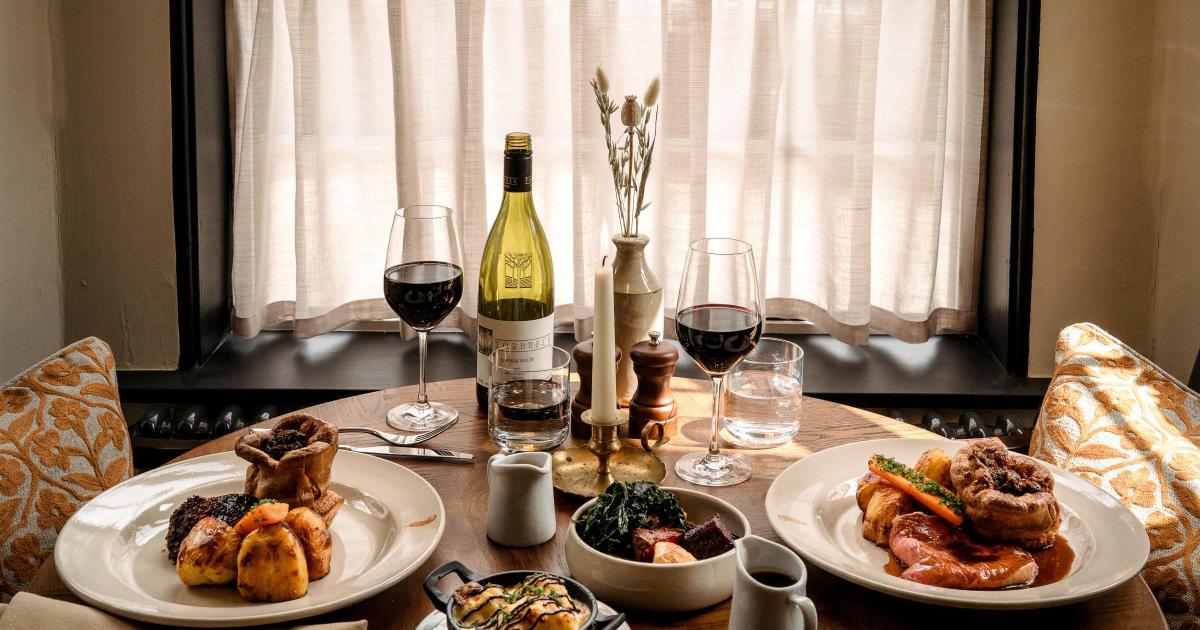
A new guest chef series is being launched at The General Tarleton in Ferrensby, near Harrogate and Knaresborough, where leading figures will join head chef Aled Williams for a programme of one-off collaborative dinners.

Aled Williams, Matthew Lockwood, Sam Orbaum and Tommy Banks at The General Tarleton. Photo: Esme Mai

The restored 18th-century coaching inn reopened last year under Jeopardy Hospitality, the pub group founded by the award-winning chef and TV star Tommy Banks, along with his business partner Matthew Lockwood, brother James Banks and businessman, Neil Armstrong.

Lisa Goodwin-Allen, executive chef at the Michelin-starred Northcote, will be the first to kick off the series when it starts on April 28.

Tommy Banks’ General Tarleton welcomes top guest chefs. Photo: Andrew Hayes-Watkins

She will be followed by Nokx Majozi on June 16, former head pie maker at Holborn Dining Room’s Pie Room and currently chef in residence at Fallow in St James’s.

Advertisement

Recommended reads:

Music legends smash box office records at North Yorkshire venue

Traitors star joins cast at York premiere of hit show

As long as I’ve made York proud I’ll take that’ – York’s BGT star

Fans turn out to see celebrities filming in York

Advertisement

Roberta Hall-McCarron, the Edinburgh chef-patron behind The Little Chartroom and sister restaurants Eleanore and Ardfern, will join on November 3. Further guest chefs will be announced throughout the year, bringing a roster of leading culinary talent to the venue.

Reservations for Lisa Goodwin-Allen are now live and bookable via The General Tarleton’s website now.

The General Tarleton, which also offers overnight stays, prides itself on being a ‘proper Yorkshire pub made for exceptional food’, celebrating seasonal, local produce.

The menu features elevated pub classics, familiar favourites and signature dishes alongside a wine list, beers on tap and keg, fit for a relaxed afternoon in muddy boots or a special occasion. It has a score of 4.6 out of five possible stars, as rated by 78 reviewers on Tripadvisor, and has been widely reviewed including by The Press.

Advertisement

Tommy Banks also owns The Black Swan at Oldstead, Roots in Marygate in York, and The Abbey Inn, Byland.

Source link

Advertisement
Continue Reading

NewsBeat

New entrance rule planned at Greater Manchester tips

Published

on

New entrance rule planned at Greater Manchester tips

People will soon be asked to prove they live in the region by showing identification, or with a council tax bill or other document.

The measure, approved by the Greater Manchester Combined Authority waste committee, is aimed at stopping people from outside the region from using household waste and recycling sites. 

Tips have seen increased numbers of visitors who live elsewhere, bosses say. That, in turn, drives up costs for councils to deliver services and adds traffic. 

Advertisement

Leaders believe the closure of sites in other areas has led to an influx of people outside Greater Manchester using the region’s tips.

In 2024, Cheshire East Council temporarily shut three waste sites. They were later permanently closed. Neighbouring Derbyshire and Lancashire are also considering closing facilities. 

GMCA bosses said it was now time to take steps to ‘try to eliminate cross-border use’ of tips. 

Councillor Lee-Ann Igbon, who sits on Manchester Council, said: “Shame on those authorities that have done this because it’s not the responsibility of my residents to pick up the bill for them, and they need to look at that. We pay for our waste through our council tax. I’m not willing to put that up.

Advertisement

“The plans that the officers have put together are really good, but obviously that’s another cost to us, taking the time to check these vehicles because others have decided to [close their sites]. It shouldn’t impact the nine authorities in this room. It’s just outrageous.”

Officers have proposed a two-stage approach. The first phase will be a ‘soft introduction’, with proof of address checks on entry. Driving licences and council tax bills would be acceptable, documents suggest. 

Later, random checks could be introduced at sites. ‘Stage two’ would formalise checks, bosses said. 

Cllr Igbon added: “I’m not for a softly, softly approach. This is a major problem, [and] I want people to know from the onset that if you turn up to the sites that we pay for, you’re not getting in. If your name’s not down, you’re not coming in, basically, and we need to get that message out.”

Advertisement

Cllr Ken Rustidge, from Oldham Council, said: “This is a decision by these adjoining authorities that’s going to hurt our people, and they should be held to account for these decisions, and they really should be shown up.”

Trafford councillor Stephen Adshead said it should be made clear to people in Greater Manchester that the changes were ‘not their fault’, adding: “I think it’s sad we’re doing it, but it’s come to a point where we’ve got to start considering [implementing new rules] and probably soon as well.”

Officers advised elected members that the first phase would not be introduced until after May’s local elections. That would then need a ‘good three months’ to see how they ‘bed in’ and to assess any data and feedback.

The details of the phase of the plan will be decided later.

Advertisement

“The last thing we want to do is to put in place barriers for people using those facilities freely, but we just want the people who are entitled to use those facilities to be able to use them,” officers said. 

Source link

Advertisement
Continue Reading

NewsBeat

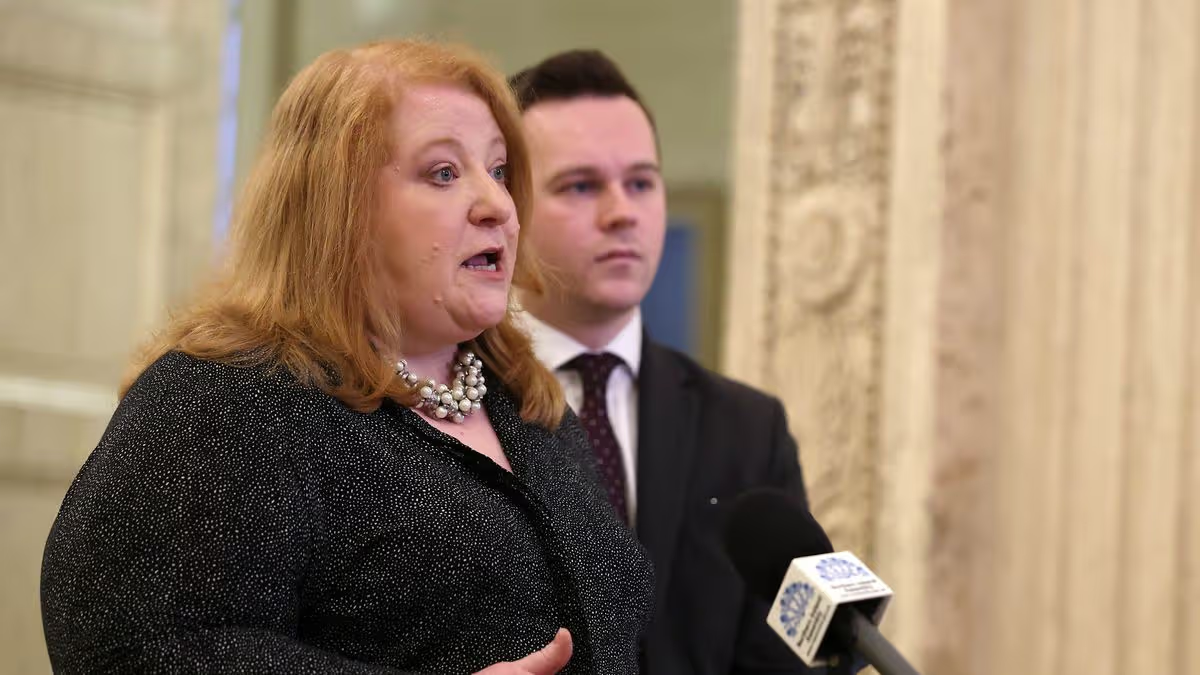
Failure to agree Stormont budget would be catastrophic, Naomi Long warns

Published

on

Belfast Live

Ms Long said agreeing the budget was the “biggest challenge” facing the Executive

The consequences for Stormont departments if the Executive cannot agree a budget will be “catastrophic”, Naomi Long has warned.

Advertisement

The Alliance Party leader and Justice Minister also insisted that she cannot make any further cuts to her department without doing “structural damage” to the justice system in Northern Ireland.

Finance Minister John O’Dowd published draft proposals in January for a multi-year budget, but they have not yet been agreed by the powersharing Executive.

READ MORE: Pay for Stormont MLAs will rise from £53,000 to £67,200, it has been confirmedREAD MORE: Everything you need to know as new legislation brings sentencing changes to Northern Ireland

In February the UK Government announced it would make £400 million available from reserves to the Executive to deal with overspends.

Advertisement

The money has to be repaid over the next three years and the Treasury said it would be conducting an “open book exercise” looking at the Executive budget.

Ms Long said agreeing the budget was the “biggest challenge” facing the Executive.

She said: “It’s the one thing that the Executive must do. We can’t avoid it, we can’t duck it, we have to get a budget in place.

“We have an opportunity to have a three-year budget, and that three-year budget would be beneficial, we would be able to plot out over the next three years what is possible.

Advertisement

“It would also, I think, be really helpful to people in the community and voluntary sector to know what their likely funding will be for the next three years, and to be able to plan on that basis, rather than this annual race for funding.”

She added: “If we can’t agree a budget then the consequences for all departments will be catastrophic.”

The Justice Minister said Stormont departments had to prove that they can be responsible with their funding allocations.

She said: “Unless Treasury can see clearly that we’re spending the money in the right places and on the right things, we’re not going to be able to make a compelling argument for more.

Advertisement

“We do have a strong case to make, but I think we undermine ourselves quite often, because the things that we spend money on are often not the real essentials.”

Ms Long said the amount of funding given to justice had fallen in recent years from 11% of the block grant to 8%.

She added: “We are caught in a very difficult situation, we have already had to trim the fat away from DOJ.

“We have had a significant reduction, for example, in the number of staff in DOJ, the number of staff in our arms length bodies.

Advertisement

“That’s not true in other departments. We’ve had to put downward pressure all the time on what we’re doing and what I’m saying is it’s not fair to come to me after 10 years of doing that, and say, find more, there is no more to give.

“There are other people who have not started that journey yet and they are the departments I think that really now need to focus on how do they right-size, because I would argue now that justice actually is too lean, that we don’t have the resources that are necessary to provide the basic services that we have to provide.

“I can’t find additional savings without doing structural damage to the justice system and to confidence in justice, and that’s a life or death issue.”

She said: “We hear this about health, it’s a life or death issue. So is justice, and so it’s really important that we are properly funded.

Advertisement

“If you take health and education, 71% of the block grant goes on health and education, 8% on justice.

“There has got to be something there that needs to be dealt with in terms of where we prioritise resources so that people can feel safe in their community, because people’s safety, people’s well being, is connected to them feeling safe and secure in their community.”

For all the latest news, visit the Belfast Live homepage here and sign up to our daily newsletter here.

Source link

Advertisement
Continue Reading

NewsBeat

Drinks-related litter problem widespread on UK beaches, charity warns

Published

on

Drinks-related litter problem widespread on UK beaches, charity warns

However, the charity’s latest State Of Our Beaches report, using data collected by almost 15,000 volunteers who surveyed 141,656 metres of coastline, reveals “encouraging progress”, with average litter levels dropping 15% between 2024 and 2025, including an 18% fall in single-use plastics.

Source link

Continue Reading

Trending

Copyright © 2025