

Business
Nifty 50 Rebounds Modestly to 23,250 as Markets Open Higher; Oil Shocks Linger

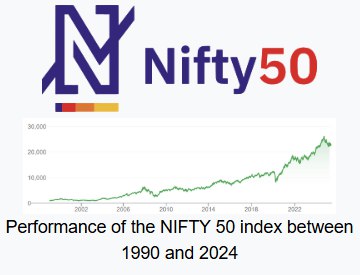
The Indian benchmark **Nifty 50** index experienced sharp volatility on Monday amid ongoing geopolitical tensions and rising global oil prices, as trading resumed in Mumbai following a steep decline at the end of the previous week.
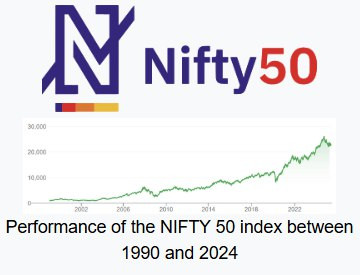
As of mid-morning on March 16, 2026, the Nifty 50 was trading around 23,045 to 23,200 levels, showing mixed movements with an intraday range between approximately 23,042 and 23,284. This follows a closing value of 23,151.10 on Friday, March 13 — a drop of 488.05 points or 2.06% from the prior session’s close of 23,639.15. The index opened lower at 23,116.10 before fluctuating in a broad band.
The previous Friday’s session marked one of the more pronounced single-day losses in recent months, with the Nifty shedding over 2% amid broader market pressures. Trading volume remained elevated, with reports indicating over 1.18 crore shares changing hands in early activity on Monday, reflecting continued investor caution.
Market participants pointed to escalating concerns over the U.S.-Iran conflict as a primary driver behind the recent sell-off. Reports of heightened tensions in the Middle East have pushed Brent crude oil prices above $100 per barrel in recent sessions, raising fears of inflationary pressures and potential disruptions to global energy supplies. Higher oil costs directly impact India’s import bill, given the country’s heavy reliance on foreign crude, and contribute to broader risk aversion in emerging markets.
“The market is grappling with external shocks,” said one Mumbai-based analyst tracking equity indices. “Geopolitical risks combined with elevated commodity prices are weighing on sentiment, particularly in oil-sensitive sectors.”
Broader indices mirrored the Nifty’s choppy performance. The BSE Sensex traded with similar volatility, fluctuating around the 74,500 level after opening mixed. Sectoral trends showed selective buying in pockets such as pharmaceuticals and metals, which provided some support, while oil and gas, realty, and certain financial stocks faced pressure.
On Friday’s close, only a handful of Nifty constituents ended in positive territory, with heavyweights like Reliance Industries, HDFC Bank, and Infosys contributing significantly to the overall decline due to their large weightings in the index. The Nifty’s P/E ratio hovered near 20.3, while the price-to-book stood at about 3.15, levels that some strategists view as offering moderate valuation cushion after the recent correction.
Looking at recent trends, the Nifty has retreated notably from its 52-week high of 26,373.20 (reached earlier in January 2026). The index has lost around 9-10% over the past month in some tracking periods, though it remains up modestly — roughly 3% — on a year-over-year basis from March 2025 levels. The 52-week low stands at 21,743.65.
Investors are closely monitoring upcoming economic data releases, including any updates on inflation, industrial output, and global central bank cues. The Reserve Bank of India’s stance on monetary policy remains in focus, especially if sustained high oil prices feed into domestic CPI readings.
Technical analysts noted that the Nifty has broken below certain key support levels in recent sessions, forming bearish candlestick patterns on daily charts. Some observers have described the move as entering a “deep corrective phase,” with potential further downside toward 22,700-23,000 if selling pressure persists. Conversely, a sustained move above 23,300 could signal short-term stabilization.
Foreign institutional investors (FIIs) have shown net selling in recent weeks, adding to domestic market headwinds, while domestic institutional investors (DIIs) have provided some counterbalancing buying.
Market breadth remained tilted toward declines in early Monday trade, with more stocks falling than advancing in the broader universe. Option chain data for near-term expiries highlighted put interest around the 23,000-23,200 strikes, indicating hedging activity.
Despite the near-term caution, long-term optimism persists among some market watchers


Farmers are facing the prospect of needing another bumper crop to turn a profit should the rising costs of diesel and fertiliser not be brought under control.

The local authority said it was a “difficult decision” but other support would still be available


I’ve been researching companies in-depth for over a decade, from commodities like oil, natural gas, gold and copper to tech like Google or Nokia and many emerging market stocks, which I believe could help me provide useful content for readers. After writing my own blog for about 3 years, I decided to switch to a value investing-focused YouTube channel, where I researched hundreds of different companies so far. I would say my favorite type of company to cover are metals and mining stocks, but I am comfortable with several other industries, such as consumer discretionary/staples, REITs and utilities.
Analyst’s Disclosure: I/we have no stock, option or similar derivative position in any of the companies mentioned, but may initiate a beneficial Long position through a purchase of the stock, or the purchase of call options or similar derivatives in SSRM over the next 72 hours. I wrote this article myself, and it expresses my own opinions. I am not receiving compensation for it (other than from Seeking Alpha). I have no business relationship with any company whose stock is mentioned in this article.
Seeking Alpha’s Disclosure: Past performance is no guarantee of future results. No recommendation or advice is being given as to whether any investment is suitable for a particular investor. Any views or opinions expressed above may not reflect those of Seeking Alpha as a whole. Seeking Alpha is not a licensed securities dealer, broker or US investment adviser or investment bank. Our analysts are third party authors that include both professional investors and individual investors who may not be licensed or certified by any institute or regulatory body.
Despite macroeconomic uncertainty, banking earnings are showing resilience. Aggarwal said in an interview to ET Now, “Banking earnings still look decent. Margins had declined over the past year, but with credit growth gaining traction and asset quality holding up, earnings are recovering. Stock performance will depend on investor sentiment and news flow, but we maintain a positive view on valuations relative to earnings outlook.”
PSUs, after years of losing ground, have started regaining market share. “Over FY25 and FY26, PSUs have marginally gained share. Most PSUs are now comfortable deploying liquidity and tolerating some mismatch between loans and deposits. Large PSU banks like SBI are targeting 13% to 15% loan growth, which supports their market share gains and improved earnings profile,” Aggarwal explained. This improved earnings profile and capitalization position PSUs well for the next two years.
At the same time, private banks continue to offer compelling investment opportunities. “Certain private banks were impacted by the unsecured cycle, but as credit growth picks up across retail, corporate, and SME segments, private banks will gain traction. Axis, ICICI, and HDFC are likely to report stronger growth over FY27 and beyond, supporting the case for private banks,” he said. Larger private banks are likely to see strong growth, supported by easing focus on regulatory ratios and an improving credit cycle.
Aggarwal also highlighted the strong asset quality among PSUs. “Asset quality is under control. Many PSU banks now report benign credit costs, with provisioning coverage higher than private banks. Recoveries continue and incremental slippages are manageable, keeping credit costs within control in FY27,” he noted.

Among private banks, larger institutions like ICICI and HDFC remain the preferred picks, with AU Bank favored among mid-sized banks. “Our preference is for larger private banks like ICICI and HDFC. ICICI could see 15-16% growth in FY27, while HDFC Bank expects growth ahead of the industry. Among mid-sized banks, AU Bank remains attractive,” Aggarwal added.
Non-banking financial companies (NBFCs) are being approached selectively. “We will play NBFCs for growth. Margin expansion may be limited, but vehicle financers like Shriram Finance remain attractive. Bajaj Finance has corrected, and given improving credit outlook, we may turn more positive in FY27,” he said. Competition across lending markets remains intense, keeping yields range-bound. “The lending market is very competitive. Yields will remain range-bound as banks cannot easily cut deposit rates. Margins may expand modestly, but FY27 should be better than FY26,” Aggarwal explained.
Smaller banks focused on microfinance (MFI) and MSME lending are also showing signs of normalization. “We recently upgraded Bandhan Bank after five years, expecting MFI delinquencies and credit costs to normalize. RBL Bank also has potential for industry-leading growth, though execution remains key,” he noted.
Overall, the banking sector appears poised for selective growth. PSUs are regaining market share, large private banks look set for strong credit growth, and NBFCs remain selective plays. With asset quality and margins stable, well-capitalized institutions present attractive opportunities for investors as FY27 unfolds.


UniCredit launches offer to own more than 30% of Commerzbank without taking control

A dispute between Maali Group co-owners Halo Civil and KRGM has escalated to the state’s highest court but the latter’s owner Mitch Matera claims the matter has been resolved.

AstraZeneca wins EU approval for Imfinzi in early gastric cancer

Emerald Holding: Selling The Buyout Rumor Paid Off (Rating Upgrade)
Oracle: Pros And Cons Of Buying Now After The Q3 Double Beat

CUPERTINO, Calif. (AP) — Apple Inc. is poised to unveil the Apple Watch Series 12 in September 2026, continuing its annual refresh cycle for the world’s leading smartwatch as rumors swirl around potential additions like Touch ID fingerprint authentication, refined health sensors and a new processor to bolster performance and battery life.

The Cupertino-based tech giant has followed a consistent pattern since launching the original Apple Watch in 2015, typically announcing new Series models alongside flagship iPhone releases during a fall event. Industry analysts and leakers widely expect the Series 12 to debut at Apple’s September 2026 keynote, likely on a Tuesday in the first or second week of the month—possibly Sept. 8 or Sept. 15—following the company’s tradition of holding events shortly after Labor Day.
Pre-orders would open immediately following the announcement, with devices shipping to customers about a week later, mirroring past launches. This timeline positions the Series 12 as a key part of Apple’s 2026 hardware slate, potentially sharing the stage with iPhone 18 models and other wearables.
Current models remain the Apple Watch Series 11, introduced in September 2025 alongside the Apple Watch Ultra 3 and updated SE variant. The Series 11 brought refinements including enhanced health insights like hypertension notifications, improved sleep tracking, longer battery life up to 24 hours and a more durable display. Starting at around $399 for the base 42mm Wi-Fi model, it has maintained strong sales momentum into 2026.
For the Series 12, expectations center on evolutionary rather than revolutionary changes. Multiple reports indicate no major redesign is imminent, with the familiar rectangular case, rounded edges and digital crown expected to return. Leakers have suggested the 2026 model could serve as a transitional update before a potential overhaul in 2027 or later.
A standout rumor involves the return of Touch ID, the fingerprint sensor last seen on iPhones before Face ID took over. Integrating Touch ID into the digital crown or side button could simplify unlocking the device, authenticating payments via Apple Pay and granting secure access to apps without relying solely on passcodes or wrist detection. Sources point to this as a “long-desired” feature that could enhance usability, particularly for users who find frequent passcode entry cumbersome during workouts or quick glances.
Health monitoring remains a focal point. Speculation includes possible additions like noninvasive blood pressure tracking, building on existing capabilities such as heart rate monitoring, ECG, blood oxygen sensing and temperature detection. While accurate, cuffless blood pressure measurement has proven challenging for wearables due to sensor precision and regulatory hurdles, analysts see 2026 as a plausible window for initial implementation—perhaps limited or in beta form.
Other anticipated upgrades include a new S12 chip (or S11, depending on naming conventions), promising better efficiency, faster processing for on-device AI features and extended battery life. watchOS refinements could emphasize Apple Intelligence integration, deeper sleep analysis and advanced fitness metrics. Display improvements, such as higher brightness or microLED technology in future iterations, have surfaced in discussions, though major shifts appear reserved for later models.
Pricing is expected to hold steady around the Series 11’s $399 entry point for the standard aluminum model, with premium titanium or cellular variants commanding higher prices. A modest $20-50 increase could materialize if significant new sensors arrive, but Apple has historically aimed to keep the flagship accessible compared to competitors.
The Apple Watch lineup’s evolution reflects broader trends in wearables. Since overtaking traditional watchmakers in revenue, the device has shifted from fitness tracker to comprehensive health companion. Features like fall detection, crash detection, irregular heart rhythm notifications and emergency SOS have saved lives and solidified its medical utility. The Series 12 would likely expand this with software-driven enhancements via watchOS updates, even if hardware changes prove incremental.
Market context includes competition from Samsung, Google and Garmin, which have pushed boundaries in battery life, rugged designs and specialized sports tracking. Apple’s ecosystem advantage—seamless integration with iPhones, AirPods and Mac—continues to drive loyalty, with over 267 million units sold cumulatively by recent estimates.
Rumors also touch on the broader 2026 wearable family. The Apple Watch Ultra 4 could see updates, though some reports suggest Apple might skip a full refresh if focusing resources elsewhere. A new SE model remains uncertain, with the third-generation SE (launched 2025) still current.
As anticipation builds, Apple has remained silent on specifics, per its standard practice. Leaks from supply chain sources, code references in beta software and analyst predictions form the basis of current expectations. Noninvasive blood glucose monitoring, long teased as a game-changer for diabetes management, continues to face delays and is not expected in the Series 12.
The Series 12’s launch would cap a period of steady iteration following the more notable design tweaks in earlier models like the Series 10 (thinner profile) and Series 7 (larger display). With the wearable market maturing, incremental gains in accuracy, comfort and AI smarts could prove sufficient to sustain growth.
Consumers eyeing an upgrade from older models—such as Series 9 or earlier—may find the Series 12 compelling if it delivers meaningful health or security improvements. For those with recent purchases like the Series 11, the decision could hinge on specific leaked features materializing at the event.
As September 2026 approaches, all eyes will turn to Apple’s fall keynote for confirmation. The event typically draws massive online viewership, with live streams revealing not just hardware but Apple’s vision for connected health and daily utility.
Until then, the Series 12 remains one of the most anticipated wearables on the horizon, poised to reinforce Apple’s dominance in a category it helped define.

Stryker’s Cork site hit by global cyberattack

York Chocolate Festival returning to the city centre

Farmers could need ‘bumper year’ to offset fuel, fertiliser costs


-
 Tech5 days ago
A 1,300-Pound NASA Spacecraft To Re-Enter Earth’s Atmosphere
-
 Crypto World2 days ago
HYPE Token Enters Net Deflation as HyperCore Buybacks Outpace Staking Rewards
-

 News Videos7 days ago
10th Algebra | Financial Planning | Question Bank Solution | Board Exam 2026
-

 Business6 days ago
ExxonMobil seeks to move corporate registration from New Jersey to Texas
-

 Crypto World7 days ago
Paradigm, a16z, Winklevoss Capital, Balaji Srinivasan among investors in ZODL
-

 Fashion3 days ago
Weekend Open Thread: Addict Lip Glow
-

 Tech6 days ago
ChatGPT will now generate interactive visuals to help you with math and science concepts
-
Sports2 days ago
Why Duke and Michigan Are Dead Even Entering Selection Sunday
-

 NewsBeat5 days ago
Residents reaction as Shildon murder probe enters second day
-

 Business5 days ago
Search Enters Sixth Week With New Leads in Tucson Abduction Case
-
 NewsBeat6 days ago
Pagazzi Lighting enters administration as 70 jobs lost and 11 stores close across Scotland
-

 Business13 hours ago
Search for Savannah Guthrie’s Mother Enters Seventh Week with No Arrests
-

 Tech7 days ago
Despite challenges, Ireland sixth in EU for board gender diversity
-

 Business2 days ago
US Airports Launch Donation Drives for Unpaid TSA Workers as Partial Government Shutdown Enters Fifth Week
-
Crypto World2 days ago
Coinbase and Bybit in Investment Talks: Could Bybit Finally Enter the US Crypto Market?
-

 NewsBeat5 days ago
I Entered The Manosphere. Nothing Could Prepare Me For What I Found.
-

 Business7 days ago
Search Enters 39th Day with FBI Tip Line Developments and No Major Breakthroughs
-

 Sports7 days ago
Skateboarding World Championships: Britain’s Sky Brown wins park gold
-

 Business2 days ago
Country star Brantley Gilbert enters growing non-alcoholic beer market
-
 Crypto World6 days ago
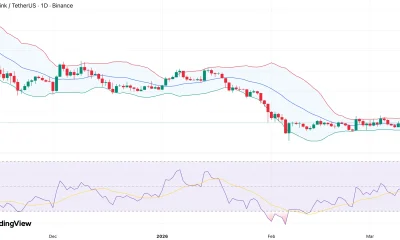
Will Chainlink price reclaim $10 amid volatility squeeze?

