Business
Nifty 50 Rebounds Modestly to 23,250 as Markets Open Higher; Oil Shocks Linger

The Indian benchmark **Nifty 50** index experienced sharp volatility on Monday amid ongoing geopolitical tensions and rising global oil prices, as trading resumed in Mumbai following a steep decline at the end of the previous week.

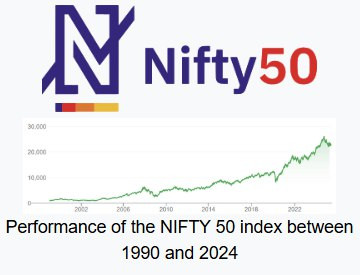
As of mid-morning on March 16, 2026, the Nifty 50 was trading around 23,045 to 23,200 levels, showing mixed movements with an intraday range between approximately 23,042 and 23,284. This follows a closing value of 23,151.10 on Friday, March 13 — a drop of 488.05 points or 2.06% from the prior session’s close of 23,639.15. The index opened lower at 23,116.10 before fluctuating in a broad band.
The previous Friday’s session marked one of the more pronounced single-day losses in recent months, with the Nifty shedding over 2% amid broader market pressures. Trading volume remained elevated, with reports indicating over 1.18 crore shares changing hands in early activity on Monday, reflecting continued investor caution.
Market participants pointed to escalating concerns over the U.S.-Iran conflict as a primary driver behind the recent sell-off. Reports of heightened tensions in the Middle East have pushed Brent crude oil prices above $100 per barrel in recent sessions, raising fears of inflationary pressures and potential disruptions to global energy supplies. Higher oil costs directly impact India’s import bill, given the country’s heavy reliance on foreign crude, and contribute to broader risk aversion in emerging markets.
“The market is grappling with external shocks,” said one Mumbai-based analyst tracking equity indices. “Geopolitical risks combined with elevated commodity prices are weighing on sentiment, particularly in oil-sensitive sectors.”
Broader indices mirrored the Nifty’s choppy performance. The BSE Sensex traded with similar volatility, fluctuating around the 74,500 level after opening mixed. Sectoral trends showed selective buying in pockets such as pharmaceuticals and metals, which provided some support, while oil and gas, realty, and certain financial stocks faced pressure.
On Friday’s close, only a handful of Nifty constituents ended in positive territory, with heavyweights like Reliance Industries, HDFC Bank, and Infosys contributing significantly to the overall decline due to their large weightings in the index. The Nifty’s P/E ratio hovered near 20.3, while the price-to-book stood at about 3.15, levels that some strategists view as offering moderate valuation cushion after the recent correction.
Looking at recent trends, the Nifty has retreated notably from its 52-week high of 26,373.20 (reached earlier in January 2026). The index has lost around 9-10% over the past month in some tracking periods, though it remains up modestly — roughly 3% — on a year-over-year basis from March 2025 levels. The 52-week low stands at 21,743.65.
Investors are closely monitoring upcoming economic data releases, including any updates on inflation, industrial output, and global central bank cues. The Reserve Bank of India’s stance on monetary policy remains in focus, especially if sustained high oil prices feed into domestic CPI readings.
Technical analysts noted that the Nifty has broken below certain key support levels in recent sessions, forming bearish candlestick patterns on daily charts. Some observers have described the move as entering a “deep corrective phase,” with potential further downside toward 22,700-23,000 if selling pressure persists. Conversely, a sustained move above 23,300 could signal short-term stabilization.
Foreign institutional investors (FIIs) have shown net selling in recent weeks, adding to domestic market headwinds, while domestic institutional investors (DIIs) have provided some counterbalancing buying.
Market breadth remained tilted toward declines in early Monday trade, with more stocks falling than advancing in the broader universe. Option chain data for near-term expiries highlighted put interest around the 23,000-23,200 strikes, indicating hedging activity.
Despite the near-term caution, long-term optimism persists among some market watchers