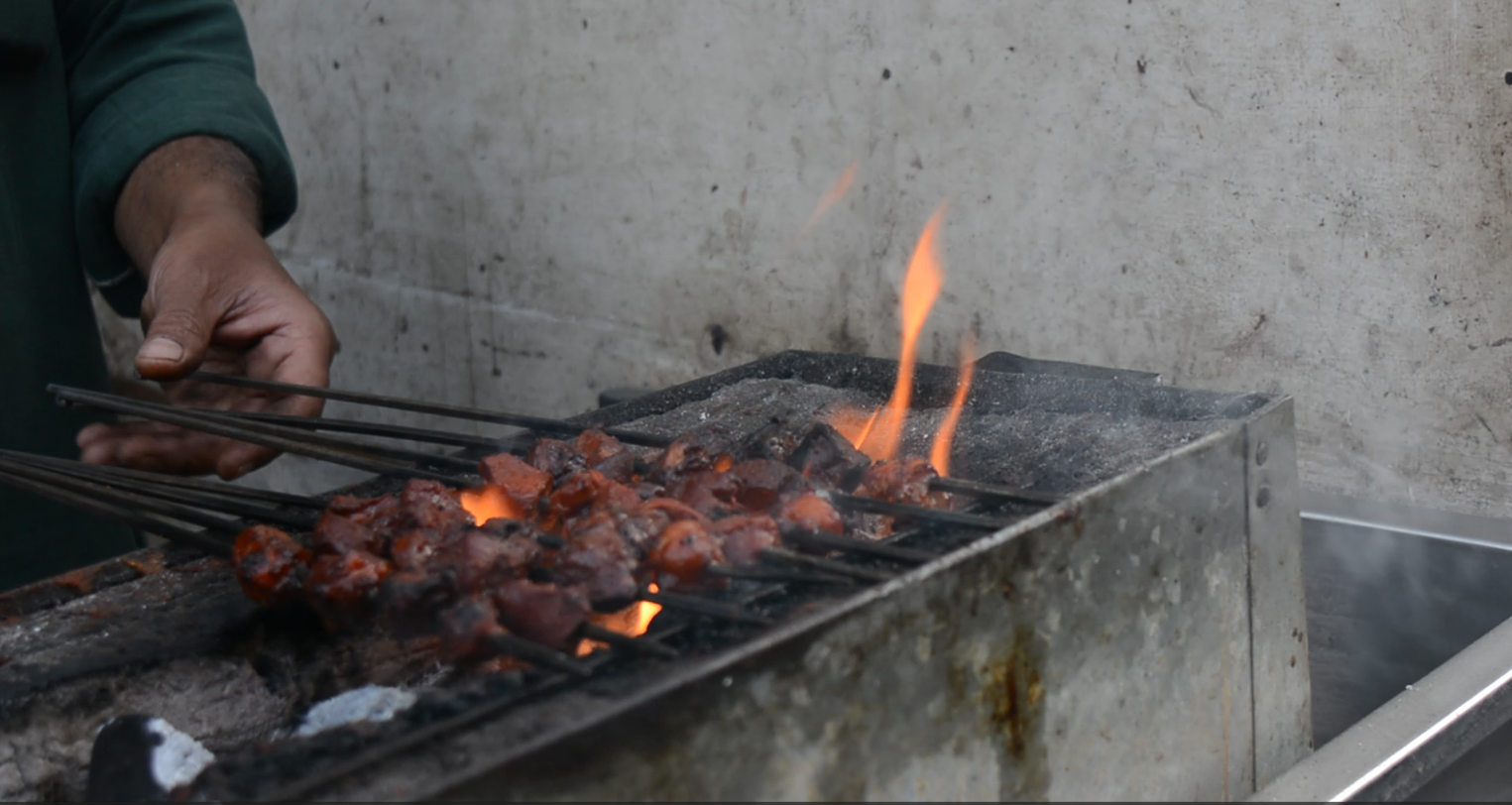
Mohammad Mustaqeen, a 54-year-old food vendor in Delhi, has stopped using cooking gas altogether. “Now that there is no gas, I am cooking with coal,” he says, describing a shift he never expected to make after years of relying on liquefied petroleum gas (LPG) cylinders.
The escalating war in the Middle East is forcing many countries into difficult energy trade-offs as they decide whether to curb consumption or bear rising costs amid tightening supplies.
India is particularly vulnerable as it depends heavily on LPG imports from the Persian Gulf region.
Its supplies have dwindled since Iran shut the Strait of Hormuz, the critical maritime route that carries almost a quarter of the world’s crude oil and a fifth of its gas shipments out of the Middle East.
Advertisement
India uses over 31 million tonnes of LPG every year and imports about 62 per cent of that demand, according to TheHindu.
Authorities are responding to the shortage by assessing available reserves, seeking alternative supply sources, encouraging conservation, and attempting to contain price rises. These measures, however, come with consequences. Attempts to cut energy use are affecting economic activity, while prioritising LPG for household cooking is putting commercial users like eateries and small businesses under operational strain.
For Mustaqeen, forced to shift from LPG to coal overnight, the change is not just about fuel but a sense of reversal.
“Instead of moving forward, we’re moving back in time,” he says. With no regular electricity supply and no access to a fixed shop, alternatives such as induction cooking are not viable.
Advertisement
Mohammad Mutaqeen cooks kebabs on coal in Old Delhi (Namita Singh/The Independent)
Across the Indian capital, particularly in areas without piped natural gas like in the central district of Old Delhi, residents and businesses describe similar disruptions.
The Independent visited multiple LPG distribution outlets across the city where lines lasted hours, shutters came down early, and many were left empty-handed.
Many residents visited an outlet of Indane – one of the largest packed-LPG brands in India – near Delhi Gate repeatedly over several days in the hope of securing a cylinder. Some waited for hours simply to obtain paperwork that might eventually yield a cylinder.
Advertisement
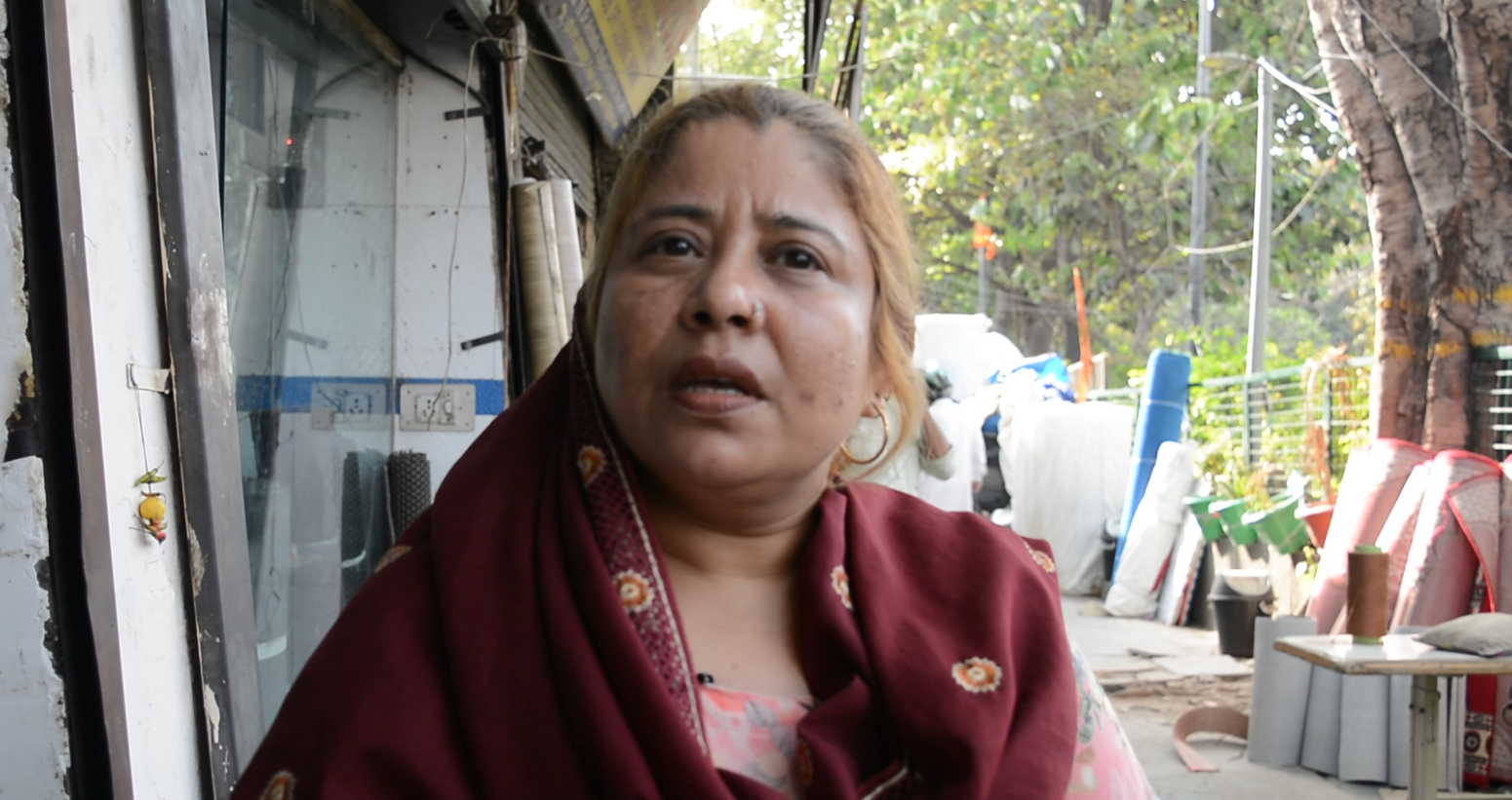
Anjum, a 31-year-old from the Daryaganj area, says she has been trying to secure a cylinder for weeks. “I booked my LPG cylinder back in February,” she says. “But I’ve been unable to get it delivered and my visits to Indane agency sites haven’t yielded any result either.”
Her attempts have involved making repeated trips during the Ramadan fasting hours. “I stand in long queues,” she says. “But by the time my turn comes, the shop shuts down.”
She blames the authorities for her troubles. “It is the government’s negligence,” he says. “Because of the government’s laxity, the common man is suffering.”
Advertisement
Anjum, 31, blames the government for the LPG shortage (Namita Singh/The Independent)
For Mohammad Naseer, 45, the shortage means a loss of his livelihood. He sells fried food but is unable to operate now.
“I have had to shut my business for lack of a cylinder,” he says. “I used to earn about Rs500 (£4) per day. The income has come down to zero.”
After days of waiting at a gas agency outlet, he obtained a paper slip that would allow him to purchase a cylinder elsewhere. “Now I have to go to Yamuna Bazaar where I have to stand in a line and then I will get a gas cylinder,” he says.
Deepak Kumar, a Chandni Chowk resident, says repeated visits to the local gas agency have yielded no success. “For the past 3-4 days, I have been coming daily for the booking,” he says. “I am only told to wait.”
Advertisement
With each passing day, the uncertainty is growing. “I am tense now, what will happen if I don’t get it?”
The impact extends beyond households into the capital’s dense network of small food businesses.
Surjit Singh Arora, 74, who has run Amar Jyoti Restaurant since 1965, says the shortage is affecting cooking methods as well as customer demand.
“It is difficult to find alternatives in the short term,” he says. While his experience has helped him adapt, the transition has not been smooth. “Cooking style is very deeply affected. My fried items have been affected. My tandoori items are compensating but the cooking process has slowed down.”
Advertisement
The slower pace of cooking has translated into financial losses. “A customer won’t wait if cooking is taking so long,” he says. “Sales are affected.” He estimates a drop in his income of about 25 per cent, rising to 30 per cent on weekends.
Some dishes have disappeared from the menu altogether. “Some of my dishes that are pan-fried I’m no longer able to serve,” he says. “South Indian food that needs steam to cook and momos are very popular, and they have gone off the menu.”
To cope, Arora has shifted part of his cooking to his home where piped natural gas is available. “Stuff like kidney beans, chickpeas that I can boil I get from home,” he says. “I now wake up early to prepare for the restaurant.”
Advertisement
Surjit Singh Arora says business is down about 25 per cent due to the LPG shortage (Namita Singh/The Independent)
At LPG distribution centres, meanwhile, employees face mounting pressure from increasingly irate customers.
Meghraj Singh, a 26-year-old LPG agency worker, says tension is palpable. “Customers are worked up and tense. Some of them are even fighting with us.”
He describes long queues throughout the day. “From 9am to 3pm, the queues are really long. Some people are actually crying.”
The shortage has also triggered a political slugfest.
Advertisement
In parliament, opposition leader Mallikarjun Kharge said the shortage was affecting “the poor, middle class, restaurants, hostels and commercial users” and questioned the government’s preparedness.
Government representatives have disputed claims of a widespread shortage. Petroleum minister Hardeep Singh Puri said that there was no supply-side crisis, attributing the ongoing disruptions to panic booking and hoarding. Officials are urging consumers not to panic and claim measures are in place to ensure distribution.
Sujata Sharma, joint secretary in the petroleum ministry, said they were monitoring the situation and acting against irregularities. “In the present situation, when we are facing a somewhat difficult phase regarding LPG supply,” she added, “the role of state governments and local administrations becomes very important, particularly in preventing hoarding and black marketing.”
Inspections and raids have been carried out and consumers have been encouraged to rely on online booking systems.
Advertisement
The federal government has prioritised domestic LPG supply over commercial use and encouraged a shift to piped natural gas where available.
It has also set up a committee to assess commercial demand and allocate supplies accordingly.
Authorities emphasise that broader fuel supplies are stable, with refineries operating at full capacity, and there are no reported shortages of petrol or diesel.
Advertisement
A man fastens a newly purchased LPG cylinder onto his cycle outside a gas agency in Chennai on 11 March 2026 (AFP via Getty)
Energy experts say the disruption underscores how hard it’s for Indian households to shift away from LPG, even where alternatives exist.
Sunil Mani, a policy advisor at the International Institute for Sustainable Development, says the challenge goes beyond simply introducing new technology.
“The shift to cleaner cooking in India is not just about technology, it’s about affordability, reliability, and how people cook,” he tells The Independent.
For many low-income households, he notes, subsidised LPG remains the only practical clean fuel as electric cooking requires upfront investment in appliances and depends on stable electricity supply, which is not universal.
Advertisement
As a result, alternatives, such as induction stoves, tend to supplement rather than replace LPG. This becomes more visible during supply disruptions when households and businesses attempt to switch fuels but face practical constraints.
At the same time, recent shortages affecting commercial users highlight broader pressures in India’s cooking fuel system. Mani says prioritising LPG for domestic consumption may offer short-term relief but it also exposes the risks of heavy reliance on imports and the need to diversify cooking energy sources.
On paper, he notes, electric cooking is already cost-competitive. Before the recent price increases, it was about 15 per cent cheaper than LPG. Now, the gap is nearly 20 per cent for many households. However, these savings aren’t evenly accessible, particularly where electricity supply is unreliable.
Encouraging urban households with dependable power to shift can ease pressure on the demand for LPG, Mani says, helping ensure supply for poorer families supported by subsidy schemes such as the Pradhan Mantri Ujjwala Yojana.
Advertisement
In the longer term, he says, scaling up electric cooking may significantly reduce the dependence on LPG imports.
“Over time, gradually scaling up electric cooking could cut LPG demand by up to 50 per cent by 2050, strengthening India’s clean cooking transition and overall energy security.”
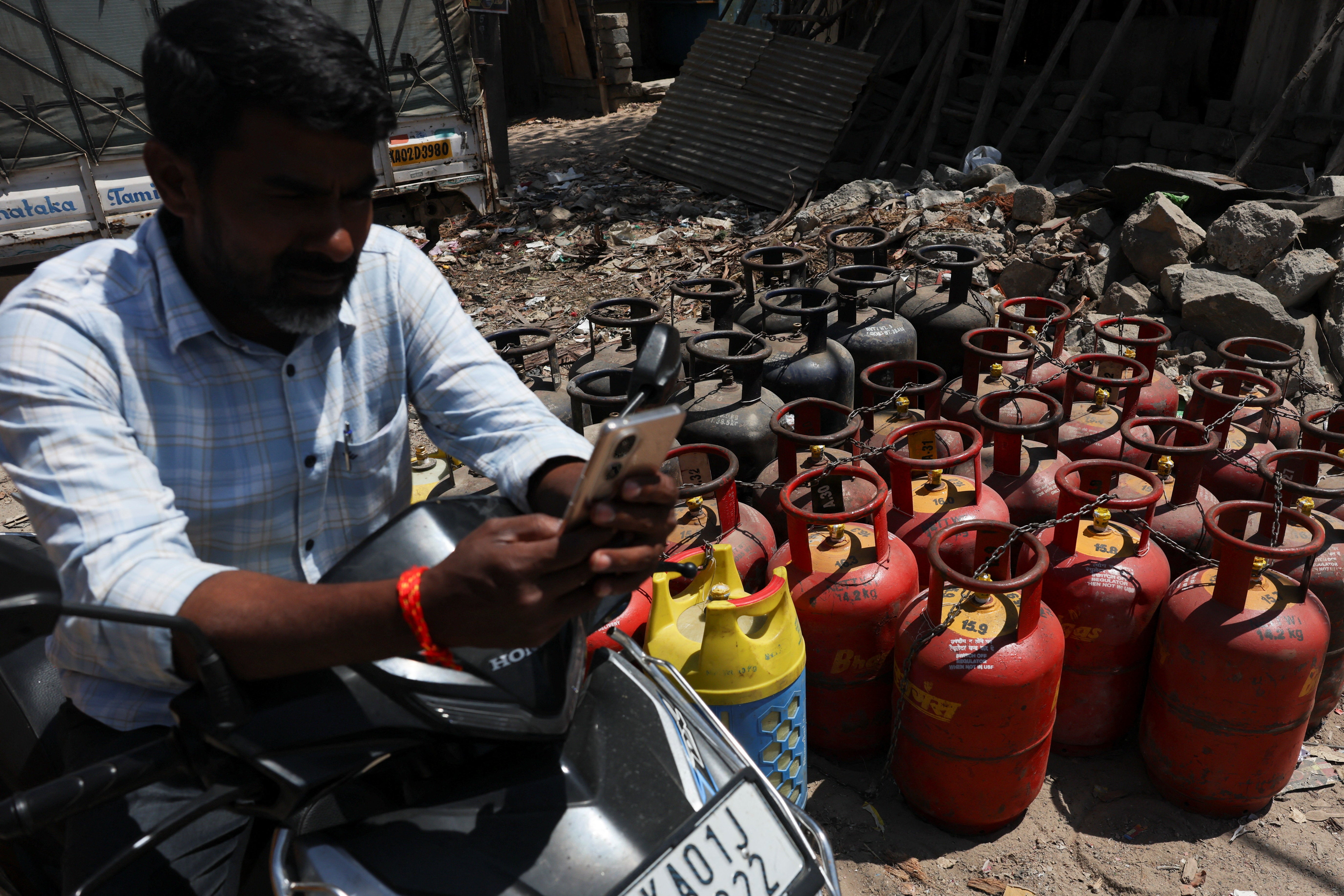
A man sits on a scooter next to LPG cylinders in Bengaluru (Reuters)
Analysts warn the strain on supplies is exposing long-standing structural gaps in how India stores and sources LPG.
Advertisement
Hemant Mallya, a fellow at the Council on Energy, Environment and Water, says the country does maintain some storage, but at a scale that falls far short of demand.
“We do have underground storage but the combined capacity, I think, is 140,000 metric tonnes, which is not sufficient,” he tells The Independent, noting that India consumes close to 33 million tonnes annually.
That mismatch is compounded by the nature of India’s refining system. “India imports a lot of medium grade crude oil and heavy grade crude oil and the amount of LPG inherent in crude is substantially lower,” he says, adding that domestic production remains limited.
The dependence on imports has shaped how infrastructure has evolved. “Because we produce very little LPG at refineries, the storage at refineries isn’t sufficient,” he points out, explaining the system is designed around continuous supply rather than large reserves.
Advertisement
Efforts to build larger stockpiles have been slow, in part due to cost and geography. “Officially, India does not have a strategic petroleum reserve policy,” Mallya says, “they have been increasing the LPG storage but clearly not at a pace that would bring contingency.”
“It’s almost like nobody envisioned that it would be this bad.”
Building reserves requires significant capital with limited immediate returns. “If you have to keep one day’s worth of reserve, that’s literally $250m,” he says.
“Imagine if you want to keep a month’s worth. That’s the amount of capital that will be locked in without any return.”
Advertisement
Geological constraints also play a role. Suitable underground sites must be stable and leak-proof, and unlike some countries, India cannot easily repurpose depleted oil and gas fields at scale.
Then there are technical constraints in buying LPG from alternative suppliers. “LPG is a combination of butane and propane,” Mallya notes. “In India, the proportion is 60 per cent butane and 40 per cent propane. That’s not necessarily the ratio in which the US would sell their LPG.”
Even as policymakers encourage alternatives such as piped natural gas, access remains uneven. “If you go further away from urban areas, the density is so low you’ll have to put much larger pipeline networks and therefore capital for much lower returns,” Mallya says, adding that gaps persist even within cities due to housing and documentation barriers.
Taken together, these constraints mean that while crude oil supplies may remain stable, LPG availability, despite being a by-product of crude oil, can tighten quickly under stress – leaving households and businesses exposed when imports are disrupted.
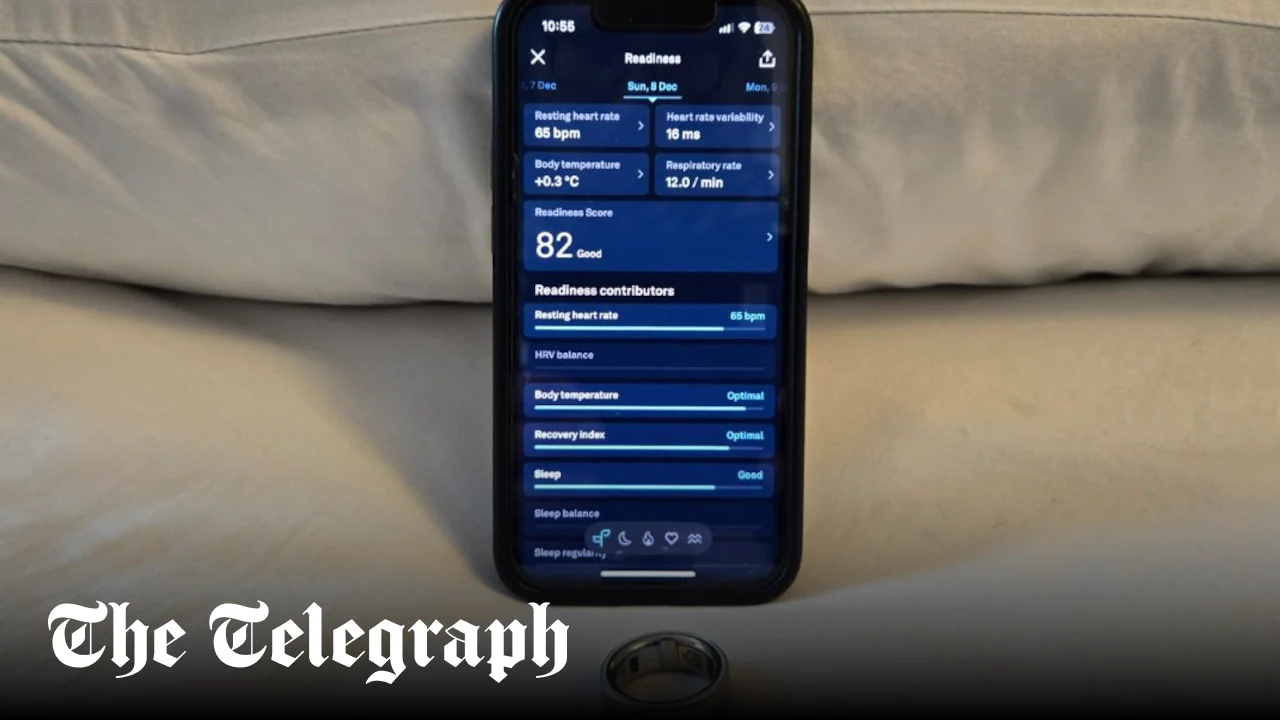
If you’re struggling with your sleep and you can’t work out why, a sleep tracker might help. On its own, it won’t solve your problems, but it can show patterns and provide useful information for doctors as part of a diagnosis.
Basic sleep trackers collect data like sleep duration and time spent in each stage (light, deep and REM). More advanced models may track heart rate, stress levels and body temperature. Often, these stats are combined to calculate a sleep score and accompanying apps may suggest adjustments to your routine.
We’ve reviewed dozens of fitness trackers and accessories for their sleep tracking capabilities, but only eight made the cut here. Prices range from £100 for Amazon own-brands to over £2,500 for an Eight Sleep pod system. Remember to factor in running costs and rolling subscription fees.
Advertisement
The best sleep trackers of 2026: At a glance
How we test sleep trackers
Our experts test the trackers for at least two weeks. Some are purely for sleep, while others incorporate the technology as part of their broader offering. We score each tracker against the following criteria:
Design and build: The tracker should look good and feel well-made. If it is wearable, we consider whether it feels comfortable over several hours of use and whether it’s sufficiently discreet to wear during the day.
User experience: We navigate the app interface to make sure it offers insightful, personalised recommendations in a user-friendly fashion.
Accuracy: Where possible, we try using multiple sleep trackers at the same time (or back to back) to see whether the results are consistent.
Results: We consider whether the results align with how we perceive our own sleep quality. We award bonus points for trackers that help you to get better sleep as well as monitoring your current sleep.
Value for money: We compare the upfront cost to similar models, factoring in any running costs or subscription fees.
How to choose the best sleep tracker
“Trackers generally fall into three categories: rings, smart watches, and bedside or under-mattress sensors,” says Kerry Davies, certified cognitive behavioural therapist for insomnia and founder of The Sleep Fixer. “Rings tend to be less obtrusive, so they’re popular with people who don’t like wearing a watch at night.”
A big consideration is the data that you would like to see. “For some people, a simple overview of sleep duration and consistency is enough,” Davies says, “while others enjoy exploring trends over time. Smart watches like Apple Watch or Fitbit offer broader health tracking but can feel bulky for some sleepers.”
“Price-wise, a sensible range is usually £100 to £300, depending on features,” Davies continues. “Some of the more premium devices also charge a monthly subscription.”
“Ultimately, the best sleep tracker is one that feels comfortable, doesn’t disrupt sleep and is used as a guide rather than a judgement tool. The data should support better sleep habits and not create pressure or perfectionism.”
London’s gig calendar rarely sits still, and this week it veers between the polished and the unpredictable. From the virtuosic funk excursions of Thundercat to the theatrical catharsis of Lily Allen — a gig, but also a bit of a stage show — there’s a sense this week’s picks are stretching their formats as much as their sounds. Dance-punk newcomers RIP Magic are riding a word-of-mouth wave, while club institution Optimo is one for those blowing off steam. To top it all off? The absurdly named Geese who, with their wiry live energy, are finally bringing Gen Z something to rock.
The best London gigs this week
Geese, below, might just be the coolest band in the world right now. Dubbed “Gen Z’s first great rock band” by Dazed, they’ve already earned themselves comparisons with Nirvana, The Strokes and Radiohead. Then there’s the singular vocals of frontman Cameron Winter, who has already become a star in his own right. They’re finally in London for a headline show in Hammersmith, and it is unquestionably the hottest ticket in town. Could this be a ticket stub that is worth thousands in years to come? Sure, a QR code screenshot doesn’t have quite the same cachet, but still.
NBC
O2 Academy Brixton, March 25
Advertisement
There’s not much that singer-songwriter-producer-bassist Thundercat, above, can’t do. He’s been a boxer, featured in Star Wars, and collaborated with everyone you could possibly want to collaborate with (Gorillaz! Kendrick Lamar! Tame Impala!). His particular blend of jazz, funk and soul is so distinctive that you can tell it’s his lightning-fast fingers on the bass within milliseconds. To witness those fingers in action, he’ll be playing in Brixton next Wednesday.
Ormside Projects, March 19
Did you secretly hope that Harry Styles’s new album could have sounded a little more like LCD Soundsystem? Did Aperture get your hopes up? I have just the medicine. It comes in the form of London dance-punk newcomers RIP Magic, whose latest song was produced by none other than James Murphy and released on — you guessed it — his DFA Records. RIP Magic hosted a residency at Mascara Bar in 2024 that generated so much excitement, despite having no music released, that one newspaper dubbed them “the buzziest buzz band” of the moment. Now they’re back and playing in South Bermondsey this evening.
Lily Allen
Henry Redcliffe
Advertisement
London Palladium, March 20-22
Lily Allen was the woman of the moment in late 2025. Her searing divorce album West End Girl captivated audiences. Now she is performing it live, in what some have deemed more of a “cathartic” theatre performance than an out-and-out gig. It opens with a string trio playing her greatest hits for a crowd singalong, before Allen emerges to perform the album in full. Featuring: a dress made of receipts, some camp feather duster action and a TikTok-catnip interactive dance set to her song Nonmonogamummy.
Optimo started as a Glasgow club night way back in 1997, before becoming the accepted moniker for DJ duo JD Twitch and JG Wilkes. They called time on the night in 2010, freeing up the pair to spread their sound as DJs. Twitch sadly passed away last year after a short illness, but Wilkes has continued playing, and his skill is undeniable. He’ll be on the decks at one of London’s best nightclubs, Fold, tomorrow night.
AFP via Getty Images
The time spent waiting between James Blake albums is like a period of intense drought. Luckily, the rain has come again and he’s back with Trying Times. It’s the Grammy-winning singer-songwriter and electronic producer’s first independent album, offering a more unrestricted sound. And what better place to see Blake than Islington’s Grade I-listed Union Chapel? For those in need of some spiritual transcendence, this is the gig for you.
‘I hear the same question from farmers, shopkeepers and families across rural Wales. ‘Why does government never listen when the countryside speaks?’
Victoria Bond is director of Country Land and Business Association Cymru
Advertisement
I hear the same question from farmers, shopkeepers and families across rural Wales. “Why does government never listen when the countryside speaks?”
It’s not shouted or waved on placards. More often, it is asked with a tired patience. The kind that comes after years of raising the same concerns and watching them get ignored.
Across rural Wales, that patience is beginning to wear thin.
There is a growing sense that the great promise of devolution has somehow passed the countryside by. That the project meant to bring power closer has instead left many communities feeling just as distant from it as before.
Advertisement
Power changed its address. The countryside still feels just as far away from it.
More than half of rural Welsh voters believe devolution has made things worse for the countryside. Not better. Worse.
And this is not a complaint confined to one corner of politics. The sentiment cuts across party lines. Even among Labour voters, 44 percent say the same.
That should make politicians stop and listen for a moment. Because the debate in Wales is moving firmly in the other direction. Welsh Labour is pressing for more powers for the Senedd. In England, the same party is championing a wider programme of regional devolution.
Advertisement
Yet in the only nation where Labour has governed under devolution since the beginning, a large part of the countryside is asking a much simpler question.
What, exactly, has it delivered for us?
For too many communities the answer feels uncomfortably thin.
Decisions about farming are made by people who rarely set foot on a working farm. Planning systems move at a pace that suffocates rural enterprise. Policies arrive wrapped in good intentions but often written with an urban imagination of how life works.
Advertisement
Meanwhile, the countryside is treated less like a working economy and more like a backdrop. A landscape to admire. Somewhere picturesque to visit at the weekend. Beautiful, yes. Important, apparently. But rarely understood.
That misunderstanding has real consequences.
Rural Wales produces food, sustains small businesses, attracts visitors from across the world and cares for landscapes that define the nation itself. Around a third of the population live outside the main towns and cities.
Behind that number is a story that people in the countryside know all too well. Businesses that want to grow and cannot. Young people who leave because opportunity lives somewhere else. Communities that feel their ambition is quietly discounted before it is even heard.
Talk to people across rural Wales and you hear something very different from the polite pastoral image often projected onto the countryside.
You hear ambition.
You hear farmers talking about innovation and food security. Business owners talking about building enterprises that keep wealth in their communities. Young families talking about the future they want to build where they already live.
Advertisement
What you rarely hear from government is a vision that matches that ambition.
That is where the real test of devolution now lies. Not in constitutional debates about who holds which powers, but in whether those powers are used to unlock the potential of the whole country.
There is a clear place to start. As Wales heads towards the May Senedd election, we are calling for a rural economic strategy that finally treats the countryside as a serious part of the Welsh economy.
The priorities are straightforward. Let rural businesses build and expand without years trapped in planning. Give farmers long-term certainty so they can invest with confidence. Back tourism as the year-round industry it already is.
Advertisement
The countryside is not asking for sympathy, it’s asking to be heard. Increasingly, we’re asking how much longer we’ll have to wait.
We’ve found where to shop the exact ‘sensational’ Rixo midi dress loved by Holly Willoughby, with all sizes still available
This article contains affiliate links, we will receive a commission on any sales we generate from it. Learn more
Advertisement
Holly Willoughby recently launched an Instagram series titled “Stories from my wardrobe”, where she highlights one of her favourite brands and all the pieces she loves from said brand. Her latest post is focused on Rixo, the female-founded UK label known for vintage-inspired pieces full of colour and print.
And we’ve found where to shop for one of Holly’s favourite midi dresses that is still in stock in all sizes. The exact piece is the Maura printed satin midi dress, priced at £295, and available in sizes 6 to 20 on the Net-a-Porter site.
Cut from jacquard and featuring bold butterfly patterns throughout, this gorgeous halterneck dress is perfect for maximalist fashion lovers and is a real statement wardrobe buy.
The vintage-style dress also features tie detailing at the halterneck, which helps create a gorgeous, flowing movement when worn. Whether you’re heading to a summer wedding, spring garden party or milestone birthday, this silky midi will have you standing out from the crowd, in the best possible way.
To tie in with the vibrant red shade, Holly teamed her dress with a pair of red heels, which appear to be the Prada Suede Triple-Strap Wavy Sandals, available from second-hand sites for £259.
Advertisement
If you’re after similar buys without the hefty price tag, the Red Halter Neck Marceline Midi Dress from Nobody’s Child is currently on sale for £128 down from £160. This softly textured chiffon dress features a similar halterneck design as the Rixo one, but without the butterfly print, making it ideal for those who prefer a subtler look. It also features a flattering fitted waist that creates a figure-hugging silhouette.
Alternatively, the V Neck Slip Midi Dress in Red Polka Dot from Abercrombie & Fitch, priced at £72, is the perfect choice for those looking to hop on the popular polka dot trend. With its adjustable straps and shirred back, it’s as comfortable as it is stylish.
Donald Trump told reporters on board Air Force One on March 15 that his relationship with the Israeli prime minister, Benjamin Netanyahu, is “extraordinary”. Netanyahu has been rather less effusive, saying in recent days that their relationship is one of “dialogue, shared concepts, consultation and joint work”.
These comments come as reports are circulating of rifts between the two leaders over the war in Iran, which Trump has rejected as “fake news”. The reported tensions underline not only Trump and Netanyahu’s very different war aims but also the character differences that have shaped their relationship.
Writing in the Sunday Times on March 15, the UK’s former ambassador to Israel, Matthew Gould, pointed out that both men are similar in “some respects”. Like Trump, Netanyahu is a “populist making his country more divided with crude fearmongering; a huge character who sucks oxygen from the entire political scene.”
However, there are some key differences. While Trump had five deferments to avoid serving in the Vietnam war, for example, Netanyahu distinguished himself in the Israeli armed forces. This included serving five years in the elite Sayeret Matkal unit from 1967 to 1972.
Advertisement
Such different backgrounds count especially as Trump and Netanyahu work together in the military confrontation with Iran. Trump has often been cavalier and brags about US military strength, whereas Netanyahu is far more measured. Trump is also regularly talking to journalists, while Netanyahu has been sparing in his interactions with the media.
At the same time, the war with Iran has a very different meaning for Israel and the US. Netanyahu has made the Iranian threat to Israel the most consistent theme of his political career. Since 2019, when it became clear that Iran was enriching uranium over the 3.5% to 5% level needed for peaceful purposes (it now has over 440 tonnes of uranium enriched to over 60%), Netanyahu has seen the threat to Israel as existential.
Trump’s grounds for launching the war have shifted, from wanting to destroy Iran’s military capabilities to toppling the regime in Tehran. But Netanyahu has consistently remained focused on removing what he sees as the threefold threat from Iran: its nuclear weapons programme, ballistic missile capacity and ability to support regional proxy groups like Hamas, Hezbollah and the Houthis.
Iranian rescue workers work among the rubble of damaged residential buildings in central Tehran, Iran, on March 12. Abedin Taherkenareh / EPA
Trump knows the war is unpopular at home and among his allies and is creating instability in the world economy. Oil prices climbed to over US$100 (£75) a barrel on March 16 after Trump said the US had “totally demolished” most of Kharg Island, Iran’s most vital oil export hub. Facing midterm elections in October, he is likely to want to see the conflict end relatively soon.
Advertisement
Netanyahu, on the other hand, will not want to end the war without imposing a decisive defeat on Iran that ends the country’s nuclear and ballistic missile programmes at the very least. Like Trump, he faces an election in October and will want to present himself not as the leader whose watch saw the October 7 Hamas terrorist attacks in 2023, but as the victor of the war with Iran.
Ending the war
How Trump and Netanyahu manage these differences will determine both the course of the war and its duration. We do know that while the two leaders frequently pay effusive compliments to each other in public, they have a rather more fractious personal relationship.
Six months ago, Trump strong-armed Netanyahu to accept his 20-point plan for a Gaza ceasefire. This involved Netanyahu making a humiliating phone call to the Qataris to apologise for an Israeli attack on Hamas leadership in Doha. The White House even published a picture of the US president and the Israeli prime minister making the call.
And while routinely praising Trump for his support for Israel, Netanyahu appears to be wary of their relationship. In his 2022 autobiography, Bibi: My Story, Netanyahu complained that Trump was slow to act on the Israeli government’s agenda in his first term as US president. He also described his relationship with Trump as “bumpy”.
Advertisement
Trump’s second term has been a rather mixed experience for Netanyahu. On the one hand, he convinced the US to bomb the Iranian nuclear sites in June 2025 and since February 2026 to collaborate in a major war against Iran. But on the other hand, he (like everyone else) is having to deal Trump’s capricious and unpredictable behaviour.
The war in Iran is now in a difficult phase. Israel and the US have an overwhelming firepower advantage over Iran and have eliminated numerous high-ranking Iranian leadership figures, most recently killing security chief and de facto leader of the country Ali Larijani. Despite these serious blows, the regime is still functioning and maintains significant military capacity.
For Israel, a new development in the war is coordinated Iranian-Hezbollah missile attacks. This demonstrates the very different pressures that the US and Israeli leaderships are under. Israelis are now in their third year of war. The US will be feeling the effects of the war in terms of higher gas prices and a spike in inflation, but the lives of Americans are not punctuated by air raid sirens and military service.
These differences will play out as Trump and Netanyahu envisage the war’s end. There are reports that the US administration is talking to Iran already about ending the conflict as the war enters its third week. Netanyahu will worry where these diplomatic moves might lead.
Advertisement
Trump and Netanyahu may have started a war together, but they are going to have difficulty ending it together.
Ann Rodger struck a resident on the body at Argyll House Nursing Home, Kilmarnock, on October 2, 2024 and was later convicted for assault at Kilmarnock Sheriff Court.
A care worker has been struck off for assaulting a nursing home resident with a slipper.
Advertisement
Ann Rodger struck a resident on the body at Argyll House Nursing Home, Kilmarnock, on October 2, 2024.
The victim was living with dementia at the time of the incident.
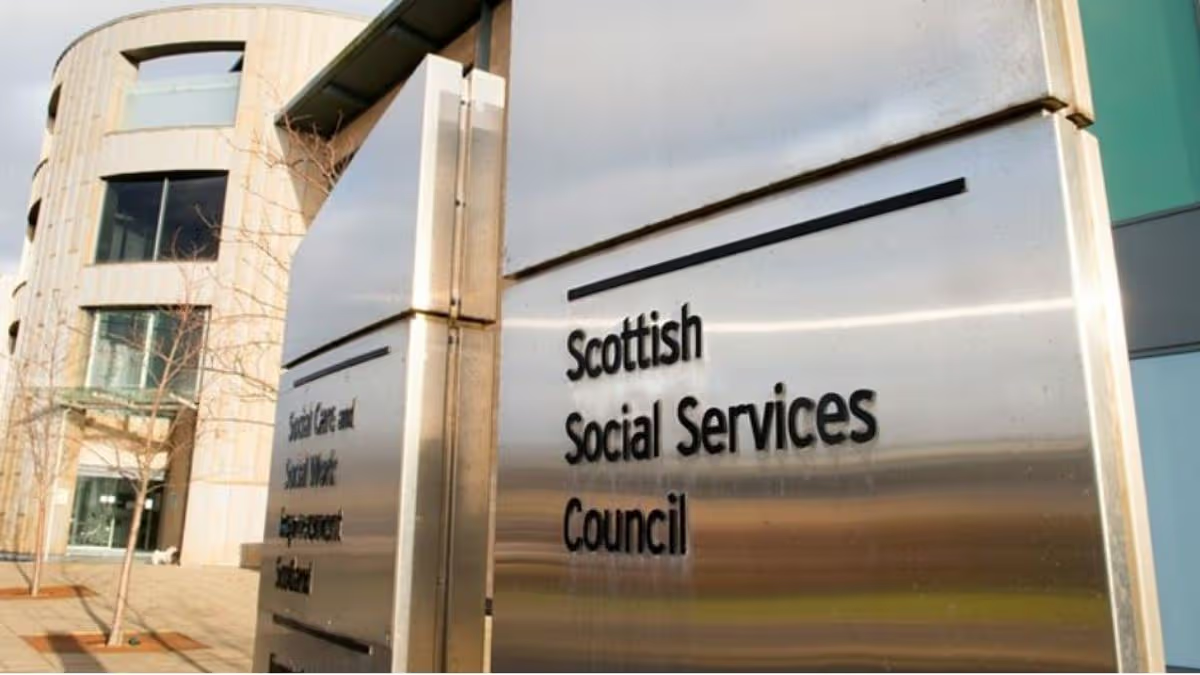
Now Rodger has been struck off the register after the Scottish Social Services Council (SSSC) looked into the case and deemed her fitness to practise “impaired.”
Advertisement
In their notice of decision the SSSC told Rodger: “Social care workers are expected not to abuse, neglect or harm people who use services. They are expected not to place themselves or others at unnecessary risk. Social care workers are also expected not to behave in a way, inside or outside of work, which would call into question their suitability to work in the social care profession.
“You (Rodger) have been convicted of an assault of an elderly resident in your care by striking her on the body with a slipper. This behaviour amounts to physical abuse and risk of harm to a vulnerable resident.
“Your conviction calls into question your suitability to work in the social care profession.”
Although “no injury” to the victim was libelled in the conviction, the SSSC took the view that Rodger’s behaviour would cause a “clear risk of harm” to a vulnerable person living in a care home with dementia.
Advertisement
“She relied on you for kind and compassionate care,” the report says. “You behaved in a violent manner towards her. We have serious concerns that you do not hold the right values to be a social care worker.”
Rodger, it was revealed, did have a “good previous history” and she “engaged” with the SSSC investigation.
But she did not show “any insight or remorse” for her actions.
“We cannot be reassured that similar behaviour would not happen again in the future. There is a clear need to protect the public given the seriousness of the conviction. There is a need to maintain public confidence to find your fitness to practise impaired,” the SSSC said.
Advertisement
The regulator added: “The SSSC considers a removal order is the most appropriate sanction as it is both necessary and justified in the public interest and to maintain the continuing trust and confidence in the social service profession and the SSSC as the regulator of the profession.”
The phrase “eye stroke” has recently appeared in news reports about a very rare side-effect of weight-loss injections. It’s not a formal medical diagnosis, but a shorthand used to describe a condition in which reduced blood flow damages the optic nerve and causes sudden vision loss.
The phrase might be misleading. Unlike a conventional stroke – which can cause someone to lose the ability to move their limbs or speak – an eye stroke can be harder to recognise at first. Vision can be lost entirely or partially, in one or both eyes, with no numbness or paralysis.
The word “stroke” is used because, as with the more familiar condition, the underlying cause is a loss of blood supply that leads to cell death and tissue damage. The correct medical term for an eye stroke is non-arteritic anterior ischaemic optic neuropathy (Naion).
The recent connection between Naion and weight-loss treatments has made headlinesfollowing a large study examining semaglutide, the active ingredient in several popular weight-loss drugs.
Advertisement
Researchers analyse more than 30 million side-effects reported to the US Food and Drug Administration and found that 31,774 involved semaglutide. One drug in particular stood out: Wegovy was found to have a far stronger association with Naion than other semaglutide-based treatments.
The study suggested the risk of eye stroke from Wegovy was almost five times greater than from Ozempic, despite Wegovy being linked to fewer overall reported side-effects.
Understanding why semaglutide might reduce blood flow to the eye requires a little background. Semaglutide is a synthetic version of a naturally occurring hormone called GLP-1, which helps regulate blood sugar. It does this by stimulating insulin production, reducing the release of a sugar-raising hormone called glucagon, and slowing digestion.
Semaglutide has been used to treat type 2 diabetes, heart disease and obesity. Wegovy is administered by injection at a higher maximum dose than Ozempic, another injectable medication. Injected drugs enter the bloodstream faster and in greater concentrations than tablets – and notably, no link was found between Naion and Rybelsus, the tablet form of semaglutide.
Advertisement
The speed at which Wegovy causes weight loss – faster than other treatments – may itself be part of the explanation. The human body is a finely balanced system in which no single organ or process works in isolation. The autonomic nervous system, which controls involuntary functions like heart rate and digestion, relies on a careful balance of hormones to keep things in check. When an external drug significantly alters how those hormones behave, it can affect the rest of the body in unexpected ways.
The relatively high doses used with Wegovy may cause blood pressure to fluctuate beyond normal ranges. A notable drop in blood pressure reduces the rate at which blood flows through the body, and the eye is particularly vulnerable to this. The retina is served by some of the tiniest blood vessels anywhere in the body, and it depends on those small vessels for its oxygen supply. Any significant change in blood pressure can seriously disrupt this delicate circulation.
Men face a much higher risk than women
This does not, however, fully explain why a drug that is broadly beneficial for heart health and blood sugar control might have such a specific harmful effect on eyesight. Nor does it explain another surprising finding from the study: men taking these weight-loss treatments appeared to face three times the risk of vision loss compared to women.
The condition is much more common in men. Inside Creative House/Shutterstock.com
The study did not provide enough detail about the differences between male and female participants. For instance, whether more severely obese men than women were included. In addition, large-scale data of this kind does not always capture the finer details needed to fully understand cause and effect.
Advertisement
It is important to keep all this in perspective: while a link between semaglutide and vision loss has been identified, this side-effect remains rare.
More research is needed to establish safe dosage levels and to understand whether certain factors – such as sex, age, weight, or existing health conditions – make some people more vulnerable than others. Semaglutide is being prescribed for a growing range of conditions and increasingly to younger patients. To ensure that these treatments do not lead to life-changing sight loss, properly designed clinical trials that assess the level of risk are essential.
A spokesperson for Novo Nordisk told the Guardian: “Patient safety is our top priority, and we take any reports about adverse events from the use of our medicines very seriously. We work closely with authorities and regulatory bodies from around the world to continuously monitor the safety profile of our products.”
The EU patient leaflets for Wegovy, Ozempic and Rybelsus had been updated to include Naion, they added, but “based on the totality of evidence, we concluded that the data did not suggest a reasonable possibility of a causal relationship between semaglutide and Naion and Novo Nordisk believes that the benefit-risk profile of semaglutide remains favourable”.
DUBAI, United Arab Emirates (AP) — Iran and Russia both allege a projectile struck the grounds of the Bushehr nuclear power plant in the Islamic Republic, raising the specter of a radiological incident as Tehran’s war with Israel and the United States rages.
Neither Iran nor Russia say there was any release of nuclear material in the incident on Tuesday evening, but it again underlines a longtime worry of Iran’s neighbors — that the power plant on the shores of the Persian Gulf could be hit by either an attack or an earthquake.
Here’s what to know about the incident, the plant itself and Iran’s wider nuclear program, which remains a reason U.S. President Donald Trump points to for starting the war alongside Israel against Iran on Feb. 28.
Reports of a projectile striking there
Russia’s state-run Tass news agency quoted Rosatom CEO Alexey Likhachev late Tuesday as claiming “a strike hit the area adjacent to the metrology service building located at the Bushehr Nuclear Power Plant site, in close proximity to the operating power unit.” Russian technicians from Rosatom operate the plant, using Russian-made, low-enriched uranium.
Advertisement
“There were no casualties among Rosatom State Corporation personnel,” Likhachev said. “The radiation situation at the site is normal.”
About 480 Russian nationals remain at the plant, Likhachev said, and authorities are preparing for another round of evacuations from there.
The Atomic Energy Organization of Iran later issued a statement saying “no financial, technical, or human damage occurred and no part of the plant was harmed.” Iran blamed the incident on the United States and Israel, Tass later reported.
“The IAEA has been informed by Iran that a projectile hit the premises of the Bushehr NPP on Tuesday evening,” the United Nations agency said, using an acronym for nuclear power plant. “No damage to the plant or injuries to staff reported.”
No other independent expert has seen the damage. Neither Iran nor Russia published images of the damage. Moscow has made claims about nuclear sites during its war on Ukraine that turned out not to be true, while Iran has been trying to use both force and coercive diplomacy to pressure its neighbors to in turn push the U.S. to halt the war.
It remains unclear what the “projectile” that hit the complex was. The U.S. military’s Central Command, which is in charge of forces launching airstrikes across southern Iran, did not immediately respond to a request for comment.
Shrapnel from missile interceptions and other air defense fire also have caused damage in the region since the war started. Bushehr, some 750 kilometers (465 miles) south of Iran’s capital, Tehran, is home to an Iranian navy base and a dual-use, civilian-military airport with air defense systems protecting the area.
Advertisement
Bushehr a long sought project by Iran
Iran’s Shah Mohammad Reza Pahlavi announced plans in the 1970s to build 23 nuclear reactors while also having full control of the nuclear fuel cycle — opening the door to being able to build atomic weapons. That rattled U.S. officials, who imposed limits on American companies from selling to Iran. German firm Kraftwerk Union began construction of the Bushehr plant in 1975 as part of $4.8 billion deal for four reactors.
But the 1979 Islamic Revolution halted the project. Iraq repeatedly bombed the site during its eight-year war with Iran in the 1980s, seeking to stop Tehran’s program.
Russia ultimately signed onto the project, which saw the power plant connected to the Iranian grid in 2011, running a pressurized-water reactor that generates up to 1,000 megawatts of electricity, which can power hundreds of thousands of homes and other businesses and industries. But it contributes only 1% to 2% of Iran’s power.
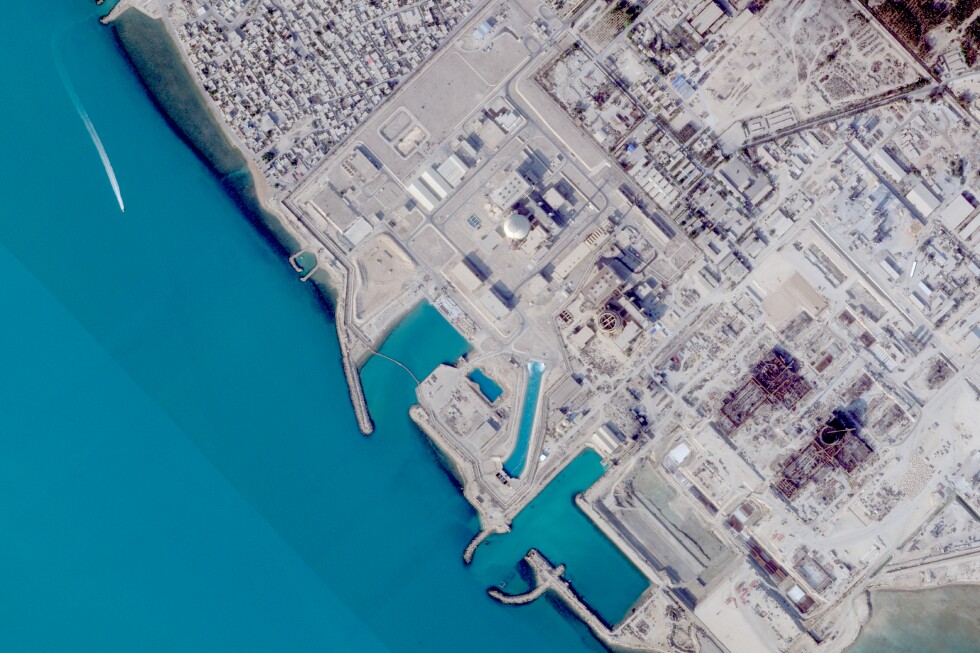
Iran has been trying to expand Bushehr to multiple reactors. In 2019, it began a project that ultimately plans to add two additional reactors to the site, each adding another 1,000 megawatts apiece. A satellite image from December from Planet Labs PBC showed the construction still ongoing at the site, with cranes over both sites.
Advertisement
The reactor currently running at Bushehr uses uranium from Russia enriched to 4.5%, a low level needed for power generation in such plants.
Bushehr was untouched in 12-day war in June
Bushehr, as a running, civilian nuclear power plant, was left untouched during the 12-day war in June between Israel and Iran. During that war, the U.S. bombed three Iranian nuclear enrichment sites, destroying centrifuges and likely trapping Tehran’s stockpile of highly enriched, 60% uranium underground. In the time since, Iran has blocked IAEA inspectors from visit those sites.
Such a leak into the Persian Gulf would be an existential crisis for the Gulf Arab states, which rely on desalination plants on the gulf for their water supplies.
WASHINGTON (AP) — Top Trump administration national security officials facing back-to-back congressional hearings starting Wednesday are expected to be pressed on the war in Iran, including a deadly strike on a school, as well as the FBI’s capacity to prevent terror attacks inside the United States.
Watch live the U.S. Senate Intelligence Committee hearing on worldwide threats.
Advertisement
The annual worldwide threats hearings involving the government’s senior-most intelligence officials are taking place at a time of scrutiny over the U.S. military campaign in the Middle East and heightened concerns about terrorism in the homeland following recent attacks at a Michigan synagogue and Virginia university.
Advertisement
The testimony before the House and Senate intelligence committees is expected to center on the war and in particular the revelation that outdated intelligence likely led to the U.S. firing a missile that hit an elementary school in Iran and killed over 165 people. The outdated targeting data was reported to have come from the Defense Intelligence Agency, whose director, Lt. Gen. James H. Adams, is among those set to testify. The White House says the strike is still under investigation.
The hearings, which begin Wednesday in the Senate and continue Thursday in the House, are also likely to delve into internal administration debate over the war given the resignation this week of Joe Kent as director of the National Counterterrorism Center. Kent said Tuesday that he could not “in good conscience” back the Trump administration’s war and that he did not agree that Iran posed an imminent threat to the U.S.
Hours later, Director of National Intelligence Tulsi Gabbard, whose office oversaw Kent’s work and who is expected at the hearings this week, wrote in a carefully worded social media post that it was up to Trump to decide whether Iran posed a threat. She did not mention her own views of the strikes.
Gabbard and CIA Director John Ratcliffe may also be questioned over recent intelligence assessments about Iran, including one that showed U.S. strikes are unlikely to result in a regime change in Tehran, and another that cast doubt on claims Iran was preparing to strike first.
Advertisement
The hearings are also likely to focus on Kash Patel’s leadership of the FBI. It will be his first public appearance on Capitol Hill since video surfaced last month showing him partying with members of the U.S. men’s hockey team following their gold medal win at the Winter Olympics.
He has fired dozens of agents in his first year on the job, raising concerns about an exodus of national security experience at a time when the U.S. is confronting an elevated terrorism threat.
Celtic goalkeeper Kasper Schmeichel may have played his “last football game” with surgery required on his shoulder but he is eager to “fight” to regain fitness.
The Denmark international, 39, last played on 22 February and will have the first of two operations later this month. He will miss his country’s World Cup play-off semi-final against North Macedonia on 26 March.
The former Leicester City keeper is out of contract at the end of the season and faces up to a year of recovery.
“I could’ve potentially played my last football game,” Schmeichel told CBS Sports Golazo.
Advertisement
“I’ve been a footballer since the day I was born. It’s devastating. It’s very, very hard to wrap my head around at the moment.
“I got the message [on Tuesday] that it could potentially be the end of my career. By the time I could get back fit I could be plus 40.
“I’m going to give it everything I can to see if I can get back. It would be probably one of the greatest feats of my career if I could ever get back from an injury like this. I’m going to fight, I’m going to try everything I can. I’m going to do the rehab.”




-cylinder-onto-his-cycle-outside-a-gas.jpeg)















































You must be logged in to post a comment Login