NewsBeat
Indians forced ‘back in time’ to cooking with coal as Iran war gas shortages lead to long fuel queues

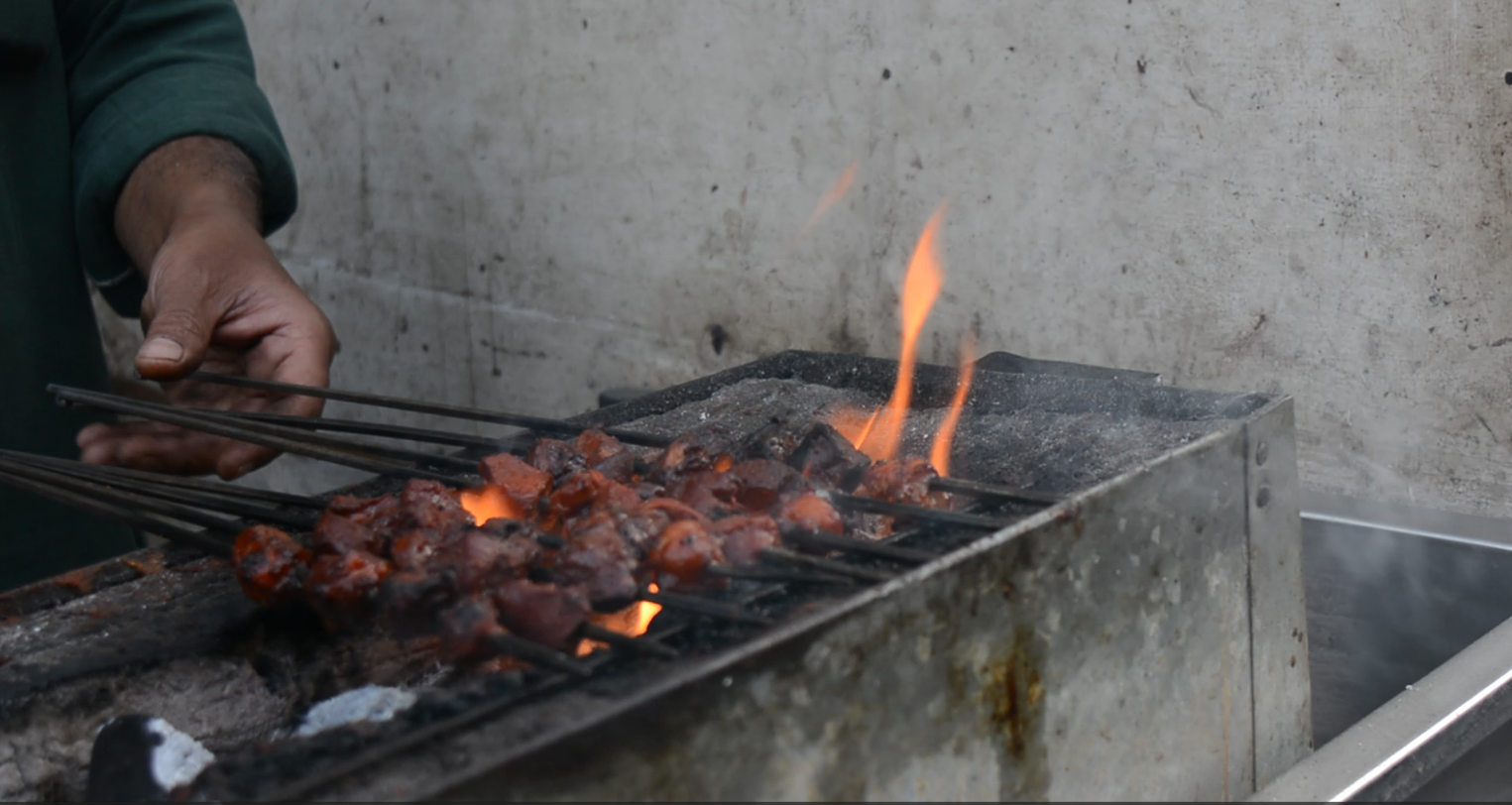
Mohammad Mustaqeen, a 54-year-old food vendor in Delhi, has stopped using cooking gas altogether. “Now that there is no gas, I am cooking with coal,” he says, describing a shift he never expected to make after years of relying on liquefied petroleum gas (LPG) cylinders.
The escalating war in the Middle East is forcing many countries into difficult energy trade-offs as they decide whether to curb consumption or bear rising costs amid tightening supplies.
India is particularly vulnerable as it depends heavily on LPG imports from the Persian Gulf region.
Its supplies have dwindled since Iran shut the Strait of Hormuz, the critical maritime route that carries almost a quarter of the world’s crude oil and a fifth of its gas shipments out of the Middle East.
India uses over 31 million tonnes of LPG every year and imports about 62 per cent of that demand, according to The Hindu.
Authorities are responding to the shortage by assessing available reserves, seeking alternative supply sources, encouraging conservation, and attempting to contain price rises. These measures, however, come with consequences. Attempts to cut energy use are affecting economic activity, while prioritising LPG for household cooking is putting commercial users like eateries and small businesses under operational strain.
For Mustaqeen, forced to shift from LPG to coal overnight, the change is not just about fuel but a sense of reversal.
“Instead of moving forward, we’re moving back in time,” he says. With no regular electricity supply and no access to a fixed shop, alternatives such as induction cooking are not viable.

Across the Indian capital, particularly in areas without piped natural gas like in the central district of Old Delhi, residents and businesses describe similar disruptions.
The Independent visited multiple LPG distribution outlets across the city where lines lasted hours, shutters came down early, and many were left empty-handed.
Many residents visited an outlet of Indane – one of the largest packed-LPG brands in India – near Delhi Gate repeatedly over several days in the hope of securing a cylinder. Some waited for hours simply to obtain paperwork that might eventually yield a cylinder.
Anjum, a 31-year-old from the Daryaganj area, says she has been trying to secure a cylinder for weeks. “I booked my LPG cylinder back in February,” she says. “But I’ve been unable to get it delivered and my visits to Indane agency sites haven’t yielded any result either.”
Her attempts have involved making repeated trips during the Ramadan fasting hours. “I stand in long queues,” she says. “But by the time my turn comes, the shop shuts down.”
She blames the authorities for her troubles. “It is the government’s negligence,” he says. “Because of the government’s laxity, the common man is suffering.”

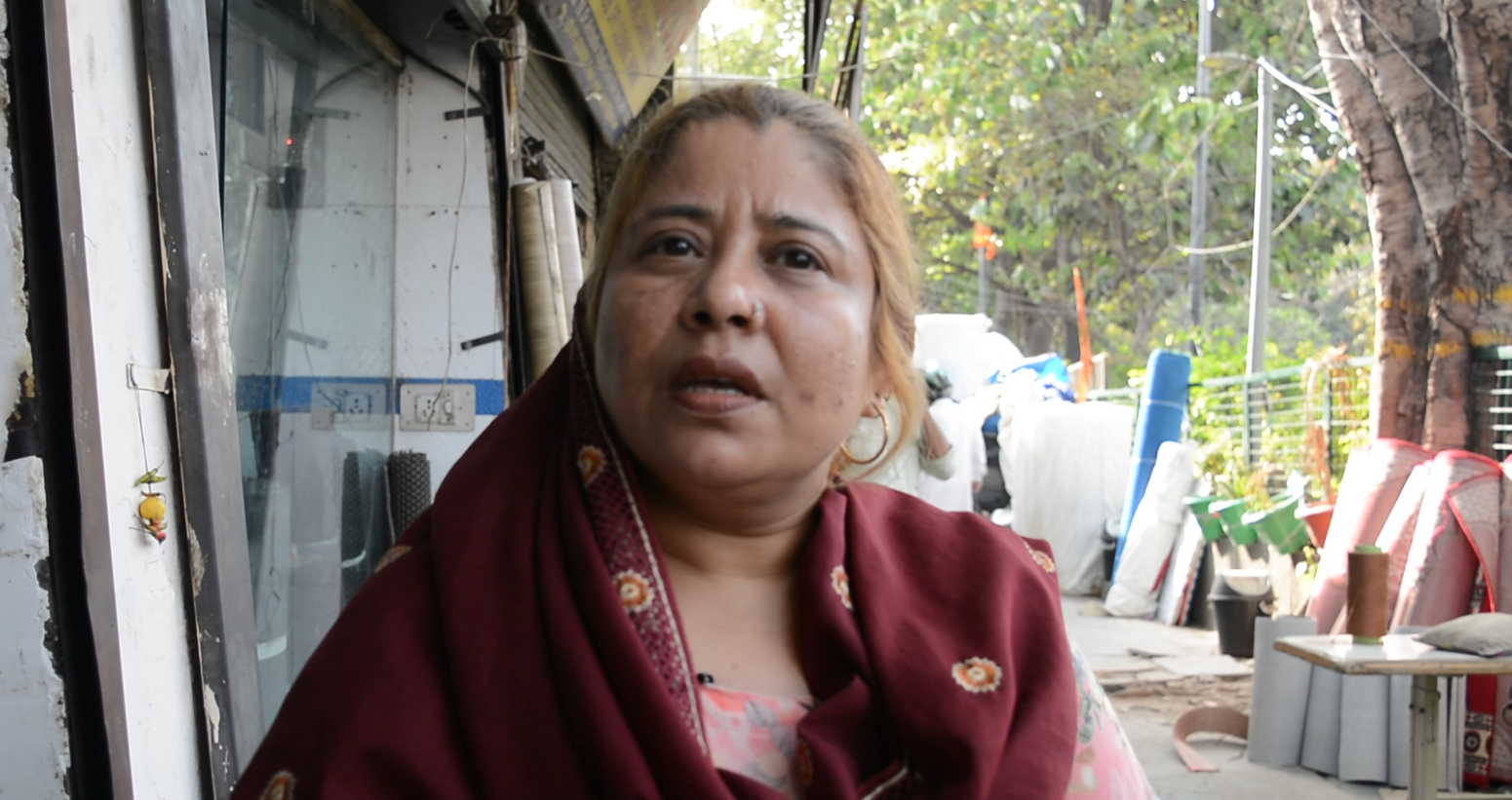
For Mohammad Naseer, 45, the shortage means a loss of his livelihood. He sells fried food but is unable to operate now.
“I have had to shut my business for lack of a cylinder,” he says. “I used to earn about Rs500 (£4) per day. The income has come down to zero.”
After days of waiting at a gas agency outlet, he obtained a paper slip that would allow him to purchase a cylinder elsewhere. “Now I have to go to Yamuna Bazaar where I have to stand in a line and then I will get a gas cylinder,” he says.
Deepak Kumar, a Chandni Chowk resident, says repeated visits to the local gas agency have yielded no success. “For the past 3-4 days, I have been coming daily for the booking,” he says. “I am only told to wait.”
With each passing day, the uncertainty is growing. “I am tense now, what will happen if I don’t get it?”
The impact extends beyond households into the capital’s dense network of small food businesses.
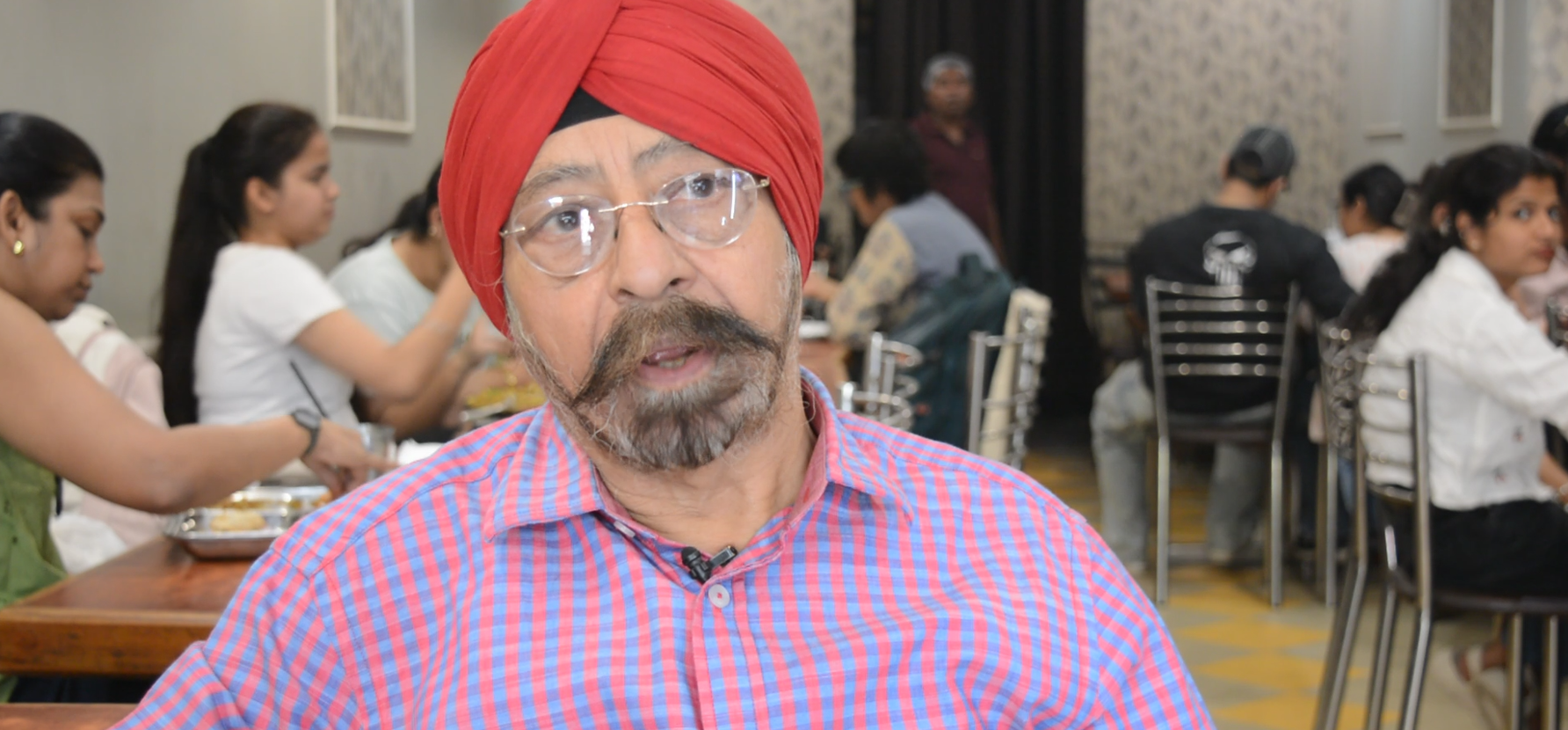
Surjit Singh Arora, 74, who has run Amar Jyoti Restaurant since 1965, says the shortage is affecting cooking methods as well as customer demand.
“It is difficult to find alternatives in the short term,” he says. While his experience has helped him adapt, the transition has not been smooth. “Cooking style is very deeply affected. My fried items have been affected. My tandoori items are compensating but the cooking process has slowed down.”
The slower pace of cooking has translated into financial losses. “A customer won’t wait if cooking is taking so long,” he says. “Sales are affected.” He estimates a drop in his income of about 25 per cent, rising to 30 per cent on weekends.
Some dishes have disappeared from the menu altogether. “Some of my dishes that are pan-fried I’m no longer able to serve,” he says. “South Indian food that needs steam to cook and momos are very popular, and they have gone off the menu.”
To cope, Arora has shifted part of his cooking to his home where piped natural gas is available. “Stuff like kidney beans, chickpeas that I can boil I get from home,” he says. “I now wake up early to prepare for the restaurant.”

At LPG distribution centres, meanwhile, employees face mounting pressure from increasingly irate customers.
Meghraj Singh, a 26-year-old LPG agency worker, says tension is palpable. “Customers are worked up and tense. Some of them are even fighting with us.”
He describes long queues throughout the day. “From 9am to 3pm, the queues are really long. Some people are actually crying.”
The shortage has also triggered a political slugfest.
In parliament, opposition leader Mallikarjun Kharge said the shortage was affecting “the poor, middle class, restaurants, hostels and commercial users” and questioned the government’s preparedness.
Government representatives have disputed claims of a widespread shortage. Petroleum minister Hardeep Singh Puri said that there was no supply-side crisis, attributing the ongoing disruptions to panic booking and hoarding. Officials are urging consumers not to panic and claim measures are in place to ensure distribution.
Sujata Sharma, joint secretary in the petroleum ministry, said they were monitoring the situation and acting against irregularities. “In the present situation, when we are facing a somewhat difficult phase regarding LPG supply,” she added, “the role of state governments and local administrations becomes very important, particularly in preventing hoarding and black marketing.”
Inspections and raids have been carried out and consumers have been encouraged to rely on online booking systems.
The federal government has prioritised domestic LPG supply over commercial use and encouraged a shift to piped natural gas where available.
It has also set up a committee to assess commercial demand and allocate supplies accordingly.
Authorities emphasise that broader fuel supplies are stable, with refineries operating at full capacity, and there are no reported shortages of petrol or diesel.

-cylinder-onto-his-cycle-outside-a-gas.jpeg)
Energy experts say the disruption underscores how hard it’s for Indian households to shift away from LPG, even where alternatives exist.
Sunil Mani, a policy advisor at the International Institute for Sustainable Development, says the challenge goes beyond simply introducing new technology.
“The shift to cleaner cooking in India is not just about technology, it’s about affordability, reliability, and how people cook,” he tells The Independent.
For many low-income households, he notes, subsidised LPG remains the only practical clean fuel as electric cooking requires upfront investment in appliances and depends on stable electricity supply, which is not universal.
As a result, alternatives, such as induction stoves, tend to supplement rather than replace LPG. This becomes more visible during supply disruptions when households and businesses attempt to switch fuels but face practical constraints.
At the same time, recent shortages affecting commercial users highlight broader pressures in India’s cooking fuel system. Mani says prioritising LPG for domestic consumption may offer short-term relief but it also exposes the risks of heavy reliance on imports and the need to diversify cooking energy sources.
On paper, he notes, electric cooking is already cost-competitive. Before the recent price increases, it was about 15 per cent cheaper than LPG. Now, the gap is nearly 20 per cent for many households. However, these savings aren’t evenly accessible, particularly where electricity supply is unreliable.
Encouraging urban households with dependable power to shift can ease pressure on the demand for LPG, Mani says, helping ensure supply for poorer families supported by subsidy schemes such as the Pradhan Mantri Ujjwala Yojana.
In the longer term, he says, scaling up electric cooking may significantly reduce the dependence on LPG imports.
“Over time, gradually scaling up electric cooking could cut LPG demand by up to 50 per cent by 2050, strengthening India’s clean cooking transition and overall energy security.”

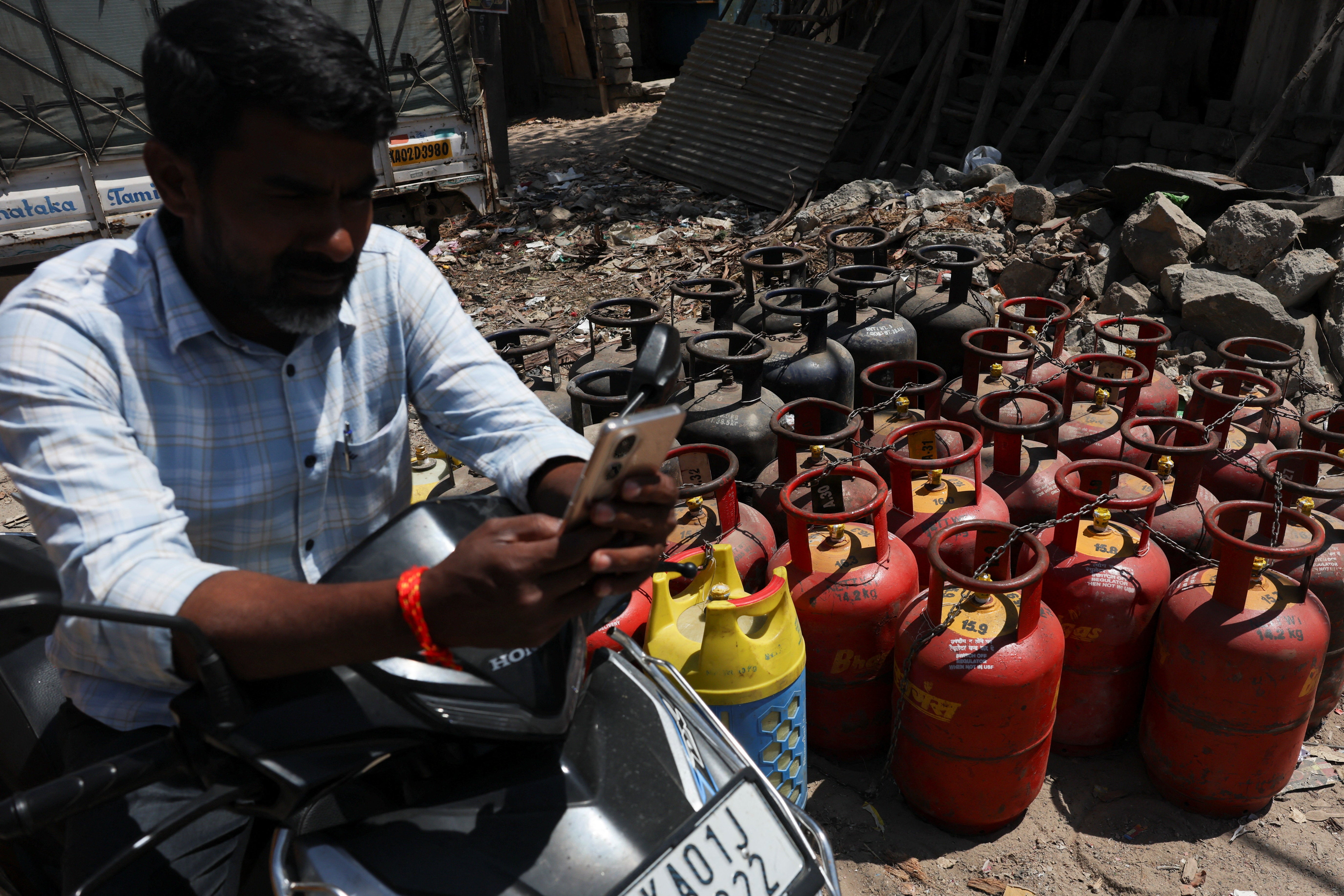
Analysts warn the strain on supplies is exposing long-standing structural gaps in how India stores and sources LPG.
Hemant Mallya, a fellow at the Council on Energy, Environment and Water, says the country does maintain some storage, but at a scale that falls far short of demand.
“We do have underground storage but the combined capacity, I think, is 140,000 metric tonnes, which is not sufficient,” he tells The Independent, noting that India consumes close to 33 million tonnes annually.
That mismatch is compounded by the nature of India’s refining system. “India imports a lot of medium grade crude oil and heavy grade crude oil and the amount of LPG inherent in crude is substantially lower,” he says, adding that domestic production remains limited.
The dependence on imports has shaped how infrastructure has evolved. “Because we produce very little LPG at refineries, the storage at refineries isn’t sufficient,” he points out, explaining the system is designed around continuous supply rather than large reserves.
Efforts to build larger stockpiles have been slow, in part due to cost and geography. “Officially, India does not have a strategic petroleum reserve policy,” Mallya says, “they have been increasing the LPG storage but clearly not at a pace that would bring contingency.”
“It’s almost like nobody envisioned that it would be this bad.”
Building reserves requires significant capital with limited immediate returns. “If you have to keep one day’s worth of reserve, that’s literally $250m,” he says.
“Imagine if you want to keep a month’s worth. That’s the amount of capital that will be locked in without any return.”
Geological constraints also play a role. Suitable underground sites must be stable and leak-proof, and unlike some countries, India cannot easily repurpose depleted oil and gas fields at scale.
Then there are technical constraints in buying LPG from alternative suppliers. “LPG is a combination of butane and propane,” Mallya notes. “In India, the proportion is 60 per cent butane and 40 per cent propane. That’s not necessarily the ratio in which the US would sell their LPG.”
Even as policymakers encourage alternatives such as piped natural gas, access remains uneven. “If you go further away from urban areas, the density is so low you’ll have to put much larger pipeline networks and therefore capital for much lower returns,” Mallya says, adding that gaps persist even within cities due to housing and documentation barriers.
Taken together, these constraints mean that while crude oil supplies may remain stable, LPG availability, despite being a by-product of crude oil, can tighten quickly under stress – leaving households and businesses exposed when imports are disrupted.
You must be logged in to post a comment Login