Until now, if you were seated at your Sega Genesis and wanted to check your stock portfolio, you were out of luck. You had to get a smartphone, or a computer, or maybe even a television to look up stock prices and understand your financial position. Thankfully, though, Sega’s neglect of its hero platform has finally been corrected. [Mike Wolak] has given the 16-bit console the real-time stock ticker it so desperately needed.
The build runs on a MegaWiFi cartridge, which uses an ESP8266 or ESP32 microcontroller to add WiFi communication to the Sega Genesis (or Mega Drive). [Mike] wrote a custom program for the platform that would query the Finnhub HTTPS API and display live stock prices via the Genesis’s Video Display Processor. It does so via a clean console-like interface that would be familiar to users of other 16-bit machines from this era, though seeing so much textual output would have been uncommon.
By default, the stock ticker is set to show prices for major tech stocks, but you can set it up to display any major symbol available in the Finnhub data stream. You can configure up to eight custom stocks and input your holdings, and the software will calculate and display your net worth in real time.
All the files are available for those eager to monitor their portfolios on a Sega, as the financial gods intended. [Mike] notes it took a little work to get this project over the line, particularly as the ESP32-C3 doesn’t support HTTPs with stock firmware. A few other hacks were needed to keep the Genesis updating the screen during HTTP queries, too.
Advertisement
If you have a concentrated portfolio and a spare Sega Genesis, this could be a fun retro way to keep an eye on your holdings. Alternatively, you might prefer to go the classic paper tape route.
When we’re looking to get a new vehicle, there are many factors we need to keep in mind. Any new ride should fit our budget, feel good to drive, be as fuel efficient as possible, and be reliable enough to where we’re not having to spend a bunch of money on maintenance and repairs. Another crucial element is safety: Anytime you get behind the wheel of a vehicle, there’s the possibility of danger, and finding a car that can minimize that possibility is of the utmost importance. An excellent source for determining vehicle safety has always been Consumer Reports, especially with its 2026 list of the safest small SUVs currently on the market.
The compact SUV is an incredibly popular vehicle type, and CR has helpfully looked at countless models to determine which are the safest in that particular class. It comes to this conclusion based on a number of factors. These include high scores from crash test data from the Insurance Institute for Highway Safety (IIHS), good marks from Consumer Reports’ own testing of things like braking distance and emergency handling, and whether or not the vehicle comes standard with technological safety features like blind spot detection and rear cross traffic warnings. If a compact SUV can check off all of these boxes, CR rated it highly for safety. Although there are numerous compact SUVs that ended up on the list, we’re looking at five different models from both consumer-friendly and luxury automotive brands that have Consumer Reports gave its highest marks to for safety.
Advertisement
Hyundai Tucson
The Hyundai Tucson has become one of the most popular vehicles in the United States, being the thirteenth-best seller of any model in 2025. There’s little reason to see why it would not remain as popular this year as well; it’s getting stellar feedback, with the Hyundai Tucson Hybrid being probably the best-reviewed crossover hybrid SUV on the market for that year. On top of that, both the 2026 gas-powered and hybrid models rank in the top nine of Consumer Reports’ overall ranking of compact SUVs.
Advertisement
An important contributing factor to its great reviews has to do with safety. Both versions of the Tucson check all of the boxes CR requires to get a perfect safety rating. Every trim comes standard with automatic emergency braking for pedestrians and potential forward collisions while going at least 55 mph, as well as both blind spot and rear cross traffic warnings. Along with these features, they have met federal safety requirements as well as Consumer Reports’ own standards for safety. Their reliability scores may not measure up to the competition, particularly the hybrid model, but that does not mean they are not safe vehicles.
Notably absent though is the 2026 Hyundai Tucson Plug-In Hybrid. While still receiving a decent safety score from Consumer Reports, it is a step down from the other two iterations. That’s because there’s no data for the plug-in model going through front or side crash tests from the IIHS. While it performs well everywhere else, these are crucial tests to get the fullest picture of its safety; without that data, it’s simply impossible to make a full determination.
Advertisement
Mazda CX-50
While this next compact SUV is not as popular as the Hyundai Tucson, that does not mean it is any less safe. In fact, the 2026 Mazda CX-50 passed all of the same safety tests, and it was able to do it with both the standard gas-powered model and the hybrid one. This Mazda SUV has all of those technological safety features standard across every trim and meets every federal and Consumer Reports safety requirement. However, unlike the Hyundai, there is no plug-in hybrid option for the Mazda CX-50, meaning every variation of this SUV gets that top safety rating. These high safety ratings helped contribute to Mazda being considered the safest overall car brand by CR.
Drivers are generally pretty happy with the Mazda CX-50, but even though it managed these high safety scores, Consumer Reports has found that the overall owner satisfaction for these models do not necessarily stack up in overall owner satisfaction when compared to other top compact SUVs on the market. The non-hybrid version of the CX-50 particularly struggles to win much praise from owners. Both models have below average reliability ratings, which certainly contribute to these lower scores. In fact, only five compact SUVs tested by CR scored lower on reliability than these two Mazda models. That being said, if safety is your biggest concern when it comes to a vehicle and the $29,900 (plus a $1,495 destination fee) starting price is attractive, the 2026 Mazda CX-50 should be able to deliver what you want.
Advertisement
Subaru Forester Hybrid
The next compact SUV that Consumer Reports considers to be incredibly safe comes from an automaker that is generally regarded as one of the most reliable brands in the world: Subaru. Consumer Reports’ evaluation of the brand overall may not be as safe as something like Mazda, but it still ranks quite highly. The compact SUV we’re looking at is the 2026 Subaru Forester Hybrid. Not only does this vehicle meet every single requirement CR looks for when determining its safety rating for the vehicle, but the Forester Hybrid also has the highest overall score of any compact SUV from Consumer Reports across reliability, road testing, and owner satisfaction as well.
While the non-hybrid version of the Subaru Forester ties for second place on that overall list, it does not measure up to the hybrid model when it comes to safety; only the 2026 Forester Hybrid managed to score those top marks. The reason for this is that blind spot and rear cross traffic warnings do not come standard on the regular Forester but as options that one would need to pay extra for unless you opt for a higher-tiered trim. Meanwhile, the base Forester Hybrid has these features as standard. You most certainly can pay for these technological upgrades on a 2026 gas-powered Forester to have a vehicle that measures up in every way, but that might not be possible for everyone. As Consumer Reports judged the vehicle in its totality, that’s why there’s no safety downside for the hybrid model.
Advertisement
Acura ADX
Just because a car brand aims for luxury does not mean that it needs to sacrifice safety in the pursuit of style. That is the very case with the 2026 Acura ADX, the compact SUV from the luxury arm of Japanese automaker Honda. This may be a moderately reliable SUV with one of the cheaper price tags for a luxury model, starting at $35,000 plus a $1,450 destination and handling fee, but the ADX hits every singe one of Consumer Reports’ benchmarks to get those top safety ratings. It comes standard with all of the technological safety features you could want, including blind spot, pedestrian, and rear cross traffic warnings. It also passes every safety test that both CR and the IIHS could throw at it. The 2026 Acura ADX only comes as a traditional, gas-powered vehicle, so there’s no need to wonder whether these safety ratings stretch across a hybrid powertrain.
Advertisement
Unfortunately, Acura’s other compact SUV, the more expensive RDX, did not earn the same safety ratings. Much like the 2026 Hyundai Tucson Plug-In Hybrid, there is no inclination that the RDX passed IIHS front crash testing. That is the only knock against that particular SUV. Meanwhile, the 2026 Acura ADX did pass that test, along with every other. If you’re eyeing an Acura ADX as your next purchase, you’d be getting safety and luxury for a relatively bargain price, which certainly makes this vehicle a crowd pleaser.
Advertisement
Lexus NX
For the final model on this list, we get what Consumer Reports considers to be the best overall luxury compact SUV: the 2026 Lexus NX. More specifically, it puts the NX Hybrid at the top, but the regular gas-powered version is right behind it at number two. Regardless of which powertrain you get, CR gives the vehicle its safety stamp of approval. All of the technological features you would need come standard, and the vehicle passed all the road and crash tests it was put through. The NX line were also among the most reliable models of their kind on the market as well, giving you plenty of confidence in how they will perform.
The 2026 Lexus NX does also come as a plug-in hybrid, but just as with the Hyundai Tucson, the plug-in hybrid model doesn’t get the highest possible safety rating score from Consumer Reports. It was not put through moderate overlap front crash tests by the IIHS, though it meets every other criteria otherwise; CR still has lists the plug-in hybrid model in the overall top five of luxury compact SUVs it tested. It becomes your own judgment whether you think it would pass those tests had it been put through them, as other 2026 Lexus NX models were able to do just that. For the ultimate certainty from Consumer Reports though, stick with the standard and hybrid NX models.
Electric vehicles have been on a bit of a roller coaster ride in America over the last decade. The EV market began its growth in the 2010s, first with low-range compliance cars, before the doors were broken down by Tesla and other brands with longer-range, more powerful, and more feature-laden EVs that won over buyers. By the early 2020s, automakers across the board had jumped on the EV train, with aggressive plans to convert their lineups to battery power. But lately, automakers have backed off those ambitious plans as they face billions of dollars in EV losses, lower consumer demand, and a less EV-friendly regulatory environment.
Where exactly the electric vehicle industry goes from here remains to be seen, but one thing that’s certain is that hundreds of thousands of used EVs are about to hit the secondhand market, with some analysts forecasting a new era for used car bargains – at least for those who are open to a used electric vehicle.
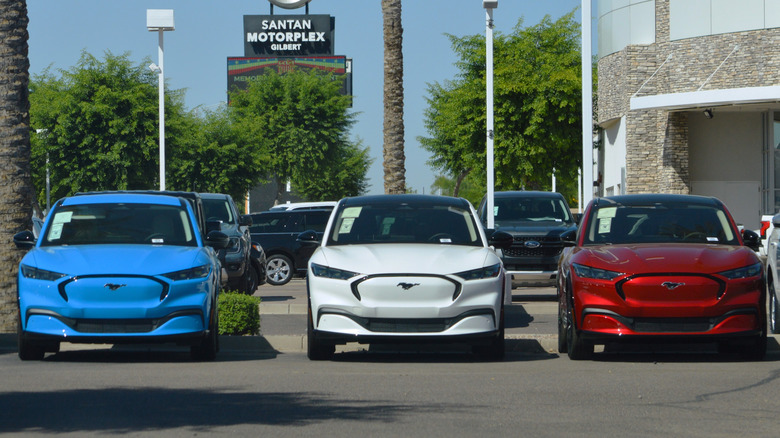
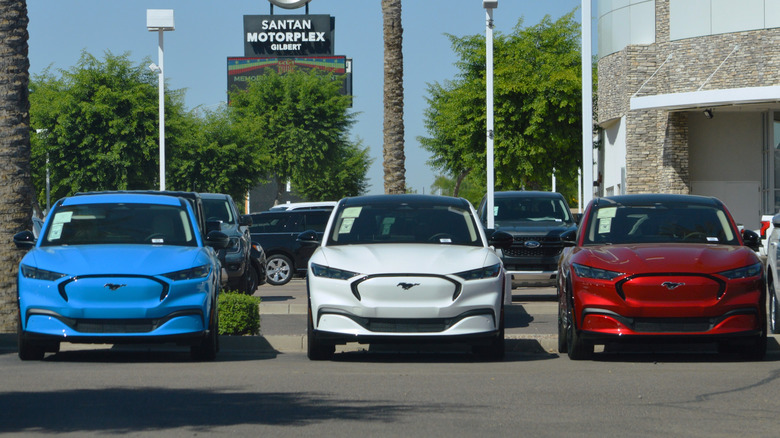
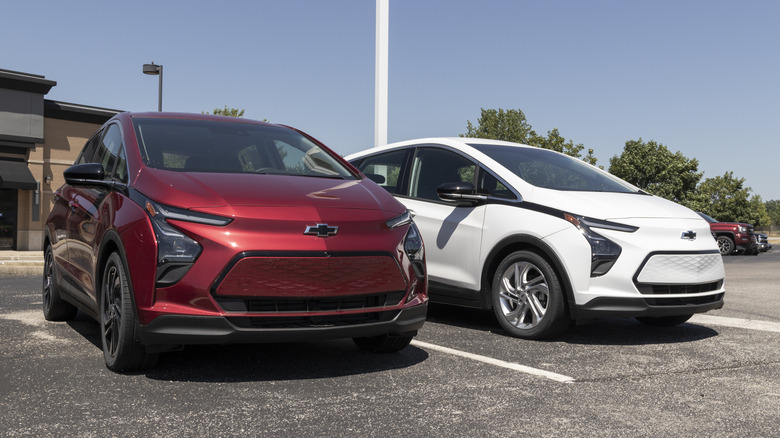
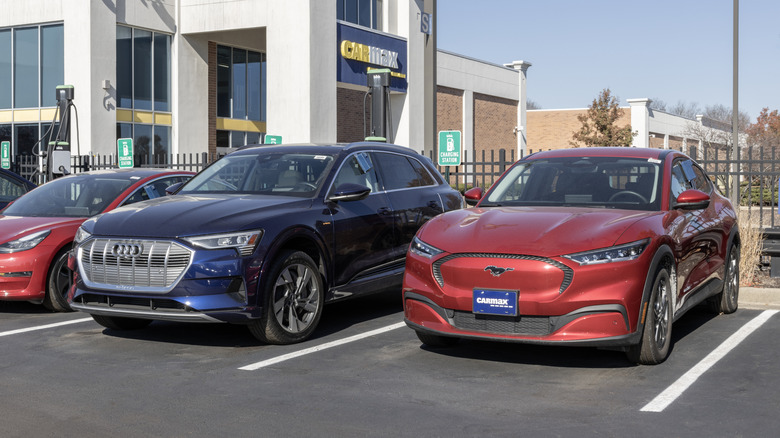
An explosion in used EV inventory presents an interesting scenario for car buyers, because many of the barriers that might keep someone from dropping big money on a new EV are more acceptable when talking about used EVs. Likewise, given their historically higher depreciation rates, these lightly used EVs are likely to be substantially less expensive than comparable gasoline-powered vehicles.
Advertisement
Supply goes up, prices go down
Jetcityimage/Getty Images
Leasing has long been a popular option for EVs, namely because it allowed buyers to take advantage of now-expired tax credits and rebates, while also protecting buyers from the high rates of depreciation that come with electric vehicles, which is driven by their rapidly advancing technology and perceived obsolescence compared to newer models.
With EV leases taking off in the first few years of the decade, we are now seeing a big jump in off-lease, low-mileage cars coming onto the market as buyers return them. In 2026 alone, more than 300,000 off-lease EVs will be returned, with even more to come in the following years. While data suggests a good portion of these original EV lessees may not be returning to electric vehicles, their old cars will be quickly turned around and readied for new owners on the used market, most of them at affordable prices.
Advertisement
Given the original terms at which they were leased, most of these EVs should still be in nearly-new condition and have low mileage on them. The hope is that this large bump in used EV inventory will help stem some of the affordability crisis that’s been plaguing car buyers for several years on both the new and used markets. This is, of course, provided that car buyers are open to secondhand EVs over their internal combustion counterparts — and for EV-skeptical buyers, these lower-than-normal prices could help get them off the fence.
Advertisement
Is now the perfect time for a used EV?
Jetcityimage/Getty Images
There are lots of reasons why electric vehicles haven’t taken off the way some automakers were hoping they would a few years ago. Two of the biggest barriers have been high purchase prices and a lack of driving range. However, as a used vehicle priced at a mere fraction of its original MSRP, an EV can suddenly become a lot more sensible, especially if it’s not the only vehicle in a given household.
An older EV with a real-world driving range of 150 or 200 miles may not be ideal for long road trips or irregular driving scenarios, but as a dedicated suburban commuter vehicle or something only used for local driving, a cheap EV could be perfect. As far as things like performance and amenities go, these EVs could also provide great value compared to popular used gasoline vehicles with their stubbornly high prices. Throw in the current high prices of gasoline, and we might have the perfect timing for a used EV boom.
The faster-than-normal depreciation rate of electric vehicles is something that’s well known at this point, and while this has long been a disadvantage for new-EV buyers, the flip side is that used buyers can benefit from this in a big way. With an increased supply of used EVs coming to the market in the coming months and years, it seems that savings potential may only increase.
Photo credit: Wuhan University Wuhan University scientists created an atomic clock that can fit into a fingernail-sized area. Measuring only 2.3 cubic centimeters, it weighs next to nothing but keeps time with enough precision to drift by only one second over 30,000 years.
The smallest atomic clocks today measure roughly 17 cubic centimeters, which is more than seven times larger. The key to slimming it down was to replace the hefty microwave cavities present in prior designs with a quantum approach known as coherent population trapping. Inside a tiny glass cell containing rubidium atoms, a miniature semiconductor laser emits two carefully calibrated light frequencies. When those frequencies coincide exactly with the atoms’ inherent energy state, they lock into a stable state, producing a timing reference far more stable than any quartz crystal could.
Due to platform compatibility issue, the DJI Fly app has been removed from Google Play. DJI Neo must be activated in the DJI Fly App, to ensure a…
Lightweight and Regulation Friendly – At just 135g, this drone with camera for adults 4K may be even lighter than your phone and does not require FAA…
Palm Takeoff & Landing, Go Controller-Free [1] – Neo takes off from your hand with just a push of a button. The safe and easy operation of this drone…
Everything is stacked onto a single chip, reducing both size and power consumption to levels that previous designs could never achieve. Conventional atomic clocks, even in their most compact version, required several hundred cubic centimeters and many watts to function. This one completely bypasses such limits, making it possible to include atomic timing into devices that were previously impossible to equip with it. A university spin-off company currently oversees production, with backing from a state-owned investment group. Last year, hundreds of devices were sent, and the team is still refining its manufacturing process to keep costs on track.
According to Professor Jiehua Chen, who heads the research, the clocks are already in use in real-world applications such as micro positioning systems, underwater navigation, low orbit satellites, and drone swarms. When dozens of drones need to fire, communicate, or move at the same time, even a few nanoseconds of timing drift might disrupt a coordinated operation or break an encrypted communication. [Source]
We’ve all had the unsettling experience of seeing an ad online that reveals just how much advertisers know about our lives. You’re right to be disturbed. Those very same online ad systems have been used by the government to warrantlessly track peoples’ locations, new reporting has confirmed.
For years, the internet advertising industry has been sucking up our data, including our location data, to serve us “more relevant ads.” At the same time, we know that federal law enforcement agencies have been buying up our location data from shady data brokers that most people have never heard of.
Now, a new report gives us direct evidence that Customs and Border Protection (CBP) has used location data taken from the internet advertising ecosystem to track phones. In a document uncovered by 404 Media, CBP admits what we’ve been saying for years: The technical systems powering creepy targeted ads also allow federal agencies to track your location.
The document acknowledges that a program by the agency to use “commercially available marketing location data” for surveillance drew from the process used to select the targeted ads shown to you on nearly every website and app you visit. In this blog post, we’ll tell you what this process is, how it can and is being used for state surveillance, and what can be done about it—by individuals, by lawmakers, and by the tech companies that enable these abuses.
Advertisement
Advertising Surveillance Enables Government Surveillance
The online advertising industry has built a massive surveillance machine, and the government can co-opt it to spy on us.
In the absence of strong privacy laws, surveillance-based advertising has become the norm online. Companies track our online and offline activity, then share it with ad tech companies and data brokers to help target ads. Law enforcement agencies take advantage of this advertising system to buy information about us that they would normally need a warrant for, like location data. They rely on the multi-billion-dollar data broker industry to buy location data harvested from people’s smartphones.
We’ve known for years that location data brokers are one part of federal law enforcement’s massive surveillance arsenal, including immigration enforcement agencies like CBP and Immigration and Customs Enforcement (ICE). ICE, CBP and the FBI have purchased location data from the data broker Venntell and used it to identify immigrants who were later arrested. Last year, ICE purchased a spy tool called Webloc that gathers the locations of millions of phones and makes it easy to search for phones within specific geographic areas over a period of time. Webloc also allows them to filter location data by the unique advertising IDs that Apple and Google assign to our phones.
But a document recently obtained by 404 Media is the first time CBP has acknowledged the location data it buys is partially sourced from the system powering nearly every ad you see online: real-time bidding (RTB). As CBP puts it, “RTB-sourced location data is recorded when an advertisement is served.”
Advertisement
Even though this document is about a 2019-2021 pilot use of this data, CBP and other federal agencies have continued to purchase and use commercially obtained location data. ICE has purchased location tracking tools since then and recently requested information on “Ad Tech” tools it could use for investigations.
The CBP document acknowledges two sources of location data that it relies on: software development kits (SDKs) and RTB, both methods of location-tracking that EFF has written about before. Apps for weather, navigation, dating, fitness, and “family safety” often request location permissions to enable key features. But once an app has access to your location, it could share it with data brokers directly through SDKs or indirectly (and often without the app developers’ knowledge) through RTB. Data brokers can collect location data from SDKs that they pay developers to put in their apps. When relying on RTB, data brokers don’t need any direct relationship with the apps and websites they’re collecting location data from. RTB is facilitated by ad companies that are already plugged into most websites and apps.
How Real-Time Bidding Works
RTB is the process by which most websites and apps auction off their ad space. Unfortunately, the milliseconds-long auctions that determine which ads you see also expose your information, including location data, to thousands of companies a day. At a high-level, here’s how RTB works:
The moment you visit a website or app with ad space, it asks an ad tech company to determine which ads to display for you.
This ad tech company packages all the information they can gather about you into a “bid request” and broadcasts it to thousands of potential advertisers.
The bid request may contain information like your unique advertising ID, your GPS coordinates, IP address, device details, inferred interests, demographic information, and the app or website you’re visiting. The information in bid requests is called “bidstream data” and typically includes identifiers that can be linked to real people.
Advertisers use the personal information in each bid request, along with data profiles they’ve built about you over time, to decide whether to bid on the ad space.
The highest bidder gets to display an ad for you, but advertisers (or the adtech companies that represent them) can collect your bidstream data regardless of whether or not they bid on the ad space.
A key vulnerability of real-time bidding is that while only one advertiser wins the auction, all participants receive data about the person who would see their ad. As a result, anyone posing as an ad buyer can access a stream of sensitive data about billions of individuals a day. Data brokers have taken advantage of this vulnerability to harvest data at a staggering scale. For example, the FTC found that location data broker Mobilewalla collected data on over a billion people, with an estimated 60% sourced from RTB auctions. Leaked data from another location data broker, Gravy Analytics, referenced thousands of apps, including Microsoft apps, Candy Crush, Tinder, Grindr, MyFitnessPal, pregnancy trackers and religious-focused apps. When confronted, several of these apps’ developers said they had never heard of Gravy Analytics.
As Venntel, one of the location data brokers that has sold to ICE, puts it, “Commercially available bidstream data from the advertising ecosystem has long been one of the most comprehensive sources of real-time location and device data available.” But the privacy harms of RTB are not just a matter of misuse by individual data brokers. RTB auctions broadcast the average person’s data to thousands of companies, hundreds of times per day, with no oversight of how this information is ultimately exploited. Once your information is broadcast through RTB, it’s almost impossible to know who receives it or control how it’s used.
Advertisement
What You Can Do To Protect Yourself
Revelations about the government’s exploitation of this location data shows how dangerous online tracking has become, but we’re not powerless. Here are two basic steps you can take to better protect your location data:
Disable your mobile advertising ID (see instructions for iPhone/Android). Apple and Google assign unique advertising IDs to each of their phones. Location data brokers use these advertising IDs to stitch together the information they collect about you from different apps.
Review apps you’ve granted location permissions to. Apps that have access to your location could share it with other companies, so make sure you’re only granting location permission to apps that really need it in order to function. If you can’t disable location access completely for an app, limit it to only when you have the app open or only approximate location instead of precise location.
For more tips, check out EFF’s guide to protecting yourself from mobile-device based location tracking. Keep in mind that the security plan that’s best for you will vary in different situations. For example, you may want to take stronger steps to protect your location data when traveling to a sensitive location, like a protest.
What Tech Companies and Lawmakers Must Do
Legislators and tech companies must act so that individuals don’t bear the burden of defending their data every time they use the internet.
Ad tech companies must reckon with their role in warrantless government surveillance, among other privacy harms. The systems they built for targeted advertising are actively used to track people’s location. The best way to prevent online ads from fueling surveillance is to stop targeting ads based on detailed behavioral profiles. Ads can still be targeted contextually—based on the content people are viewing—without collecting or exposing their sensitive personal information. Short of moving to contextual advertising, tech companies can limit the use of their systems for government location tracking by:
Stopping the use of precise location data for targeted advertising. Ad tech companies facilitating ad auctions can and should remove precise location data from bid requests. Ads can be targeted based on people’s coarse location, like the city they’re in, without giving data brokers people’s exact GPS coordinates. Precise location data can reveal where we work, where we live, who we meet, where we protest, where we worship, and more. Broadcasting it to thousands of companies a day through RTB is dangerous.
Removing advertising IDs from devices, or at minimum, disabling them by default. Advertising IDs have become a linchpin of the data broker economy and are actively used by law enforcement to track people’s location. Advertising IDs were added to phones in 2012 to let companies track you, and removing them is not a far-fetched idea. When Apple forced apps to request access to people’s advertising IDs starting in 2021 (if you have an iPhone you’ve probably seen the “Ask App Not to Track” pop-ups), 96% of U.S. users opted out, essentially disabling advertising IDs on most iOS devices. One study found that iPhone users were less likely to be victims of financial fraud after Apple implemented this change. Google should follow Apple’s lead and disable advertising IDs by default.
Lawmakers also need to step up to protect their constituents’ privacy. We need strong, federal privacy laws to stop companies from spying on us and selling our personal information. EFF advocates for data privacy legislation with teeth and a ban on ad targeting based on online behavioral profiles, as it creates a financial incentive for companies to track our every move.
Legislators can and must also close the “data broker loophole” on the Fourth Amendment. Instead of obtaining a warrant signed by a judge, law enforcement agencies can just buy location data from private brokers to find out where you’ve been. Last year, Montana became the first state in the U.S. to pass a law blocking the government from buying sensitive data it would otherwise need a warrant to obtain. And in 2024, Senator Ron Wyden’s EFF-endorsed Fourth Amendment is Not for Sale Act passed the House before dying in the Senate. Others should follow suit to stop this end-run around constitutional protections.
Advertisement
Online behavioral advertising isn’t just creepy–it’s dangerous. It’s wrong that our personal information is being silently harvested, bought by shadow-y data brokers, and sold to anyone who wants to invade our privacy. This latest revelation of warrantless government surveillance should serve as a frightening wakeup call of how dangerous online behavioral advertising has become.
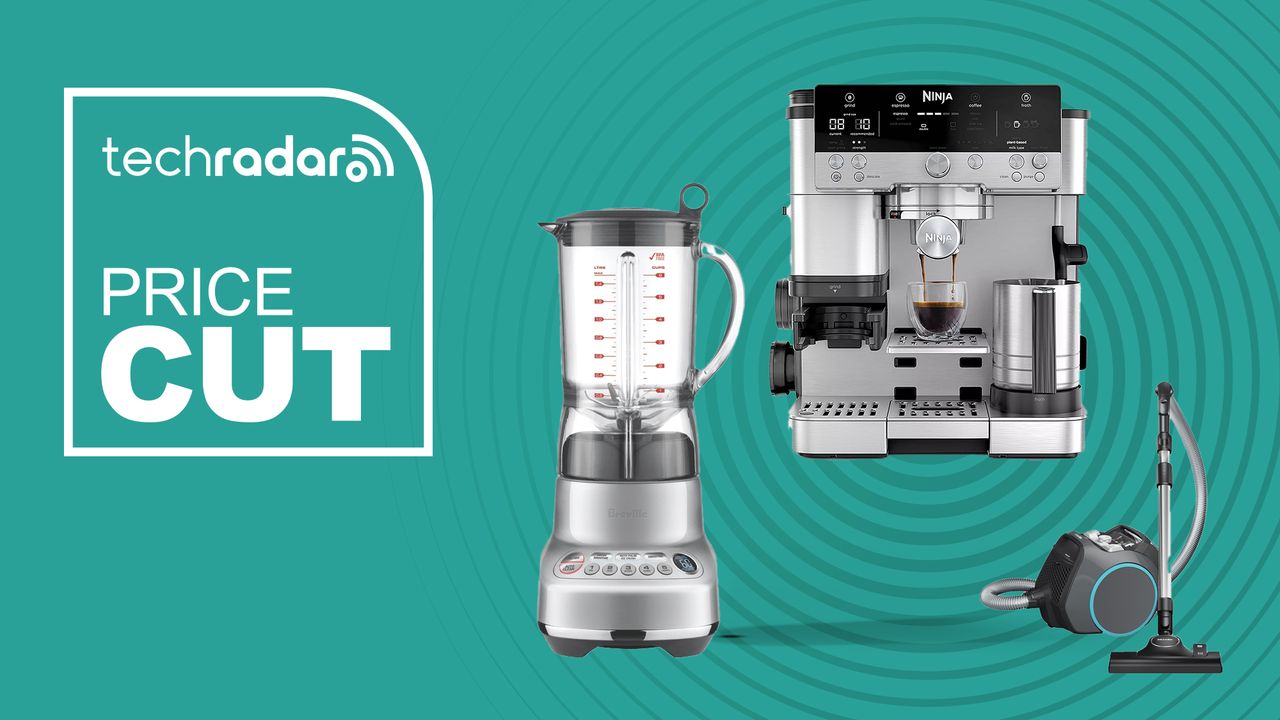
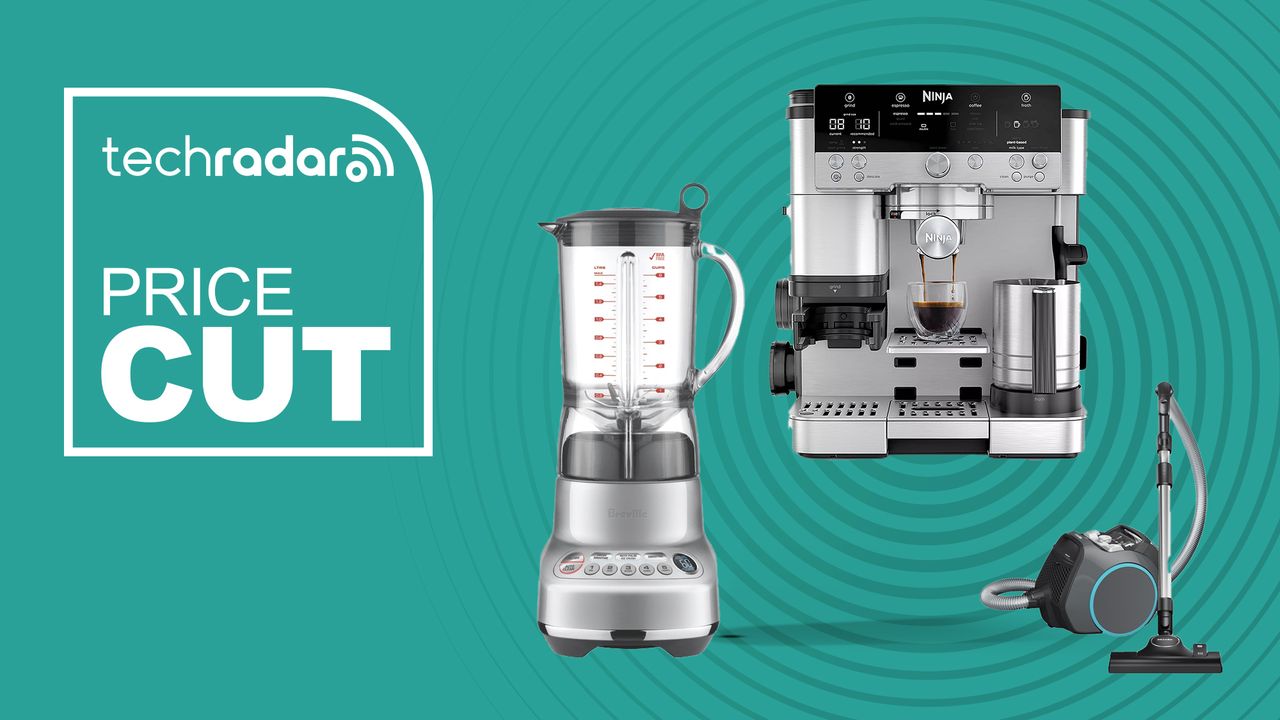
This week started off with Amazon’s Big Smile Sale, with a swathe of discounts across its massive inventory — you can follow our live coverage here where we have 100+ offers already listed. Now a few more retailers have joined in the fun for Afterpay Day, which officially kicked off yesterday morning.
That means we have a wealth of deals to explore this early in the year and you don’t have to wait until the EOFY sales or even Black Friday later this November for some tech upgrades that you’ve been eyeing.
After a busy morning scouring for deals, I stumbled upon some of our best blenders, best stick vacuums, best coffee machines, best air fryers and even one from our best video doorbells. These recommendations come from our resident experts who have thoroughly tested and reviewed these appliances, so know that you’ll be getting your hands on some quality tech for less.
So, without much ado, let’s jump into the bargain hunting, shall we?
Cloudflare’s CEO predicts AI-driven bot traffic will surpass human internet traffic by 2027, as AI agents generate vastly more web requests than people. “If a human were doing a task — let’s say you were shopping for a digital camera — and you might go to five websites. Your agent or the bot that’s doing that will often go to 1,000 times the number of sites that an actual human would visit,” Cloudflare CEO Matthew Prince said in an interview at SXSW this week. “So it might go to 5,000 sites. And that’s real traffic, and that’s real load, which everyone is having to deal with and take into account.” TechCrunch reports: Before the generative AI era, the internet was only about 20% bot traffic, with Google’s web crawler being the largest, according to Prince, whose infrastructure and security company is used by one-fifth of all websites. But beyond some other reputable crawlers, the only other bots were those used by scammers and bad actors. “With the rise of generative AI, and its just insatiable need for data, we’re seeing a rise where we suspect that, in 2027, the amount of bot traffic online will exceed the amount of human traffic that’s online,” Prince said.
The executive also noted that this change to the web would require the development of new technologies, like sandboxes for AI agents that can be spun up on the fly and then torn down when their task has finished. These could come into play when consumers ask AI agents to perform certain tasks on their behalf, like planning a vacation. “What we’re trying to think about is, how do we actually build that underlying infrastructure where you can — as easily as you open a new tab in your browser — you can actually spin up new code, which can then run and service the agents that are out there,” Prince said. He imagines there will soon be a time when millions of these “sandboxes” for agents would be created every second. “I think the thing that people don’t appreciate about AI is it’s a platform shift,” Prince said. “AI is another platform shift … the way that you’re going to consume information is completely different.”
When we think about the existential threats of new technology, we’re usually thinking about something like the recent negotiations between Anthropic and the Pentagon over how AI can be used in the military. It’s terrifying to think about — how long will it be before a nuclear weapon can be detonated without any human intervention?
We’ve been spending so much time thinking about these potential catastrophes that we haven’t braced ourselves for the more immediate danger in our midst: dancing robots.
A dancing robot at the hot pot restaurant Haidilao in Cupertino, California, boogied a little too hard, got too close to a table, and started smashing plates and sending dishware and chopsticks everywhere, prompting the restaurant’s staff to intervene, according to a video posted on the Chinese social network Xiaohongshu by user Meooow.
A dancing humanoid robot got a little too funky during a performance in Cupertino, California and had to be restrained by staff after knocking items off a table. pic.twitter.com/nZQsGoFHn6
From what we can see from the video, at least three employees struggled to restrain the robot as it flung its arms around. One Haidilao employee seems to be looking at her phone, perhaps in an attempt to toggle something on an app controlling the robot. It’s possible the robot — which appears to be an AgiBot X2 robot, which was featured at the CES conference in January — has a kill switch, but the staff might not have known how to operate it.
If you’re not familiar with hot pot, you should know that, as its name suggests, it involves very hot pots of soup. No one likes spilled food, but if the robot were to knock piping bowls of bone broth over, it wouldn’t just be a culinary disaster, it might seriously burn someone. Not to mention any potential blunt-force damage from the now-moshing automaton.
When The Killers sang “Are we human or are we dancer,” we did not realize they were asking us to take a stand in the future robot wars.
Haidilao confirmed the mechanical contretemps in a statement to NBC News, but denied the robot was “malfunctioning or out of control.”
Advertisement
Techcrunch event
San Francisco, CA | October 13-15, 2026
Advertisement
“In this case, the robot was brought closer to a dining table at a guest’s request, which is not its typical operating setting,” the Chinese chain of hot pot restaurants told NBC News in a statement. “The limited space affected its movement during the performance.”
AgiBot did not immediately respond to TechCrunch’s request for comment.
Haidilao has experimented with a “smart restaurant” in Beijing, which used robotic servers and broth mixing machines. It seems that this Haidilao restaurant was just using this robot for entertainment purposes, but things got out of hand when it danced a little too close to customers.
Many startups are working on bringing robots to the food service industry, like Shin Starr, which is working on making fully autonomous kitchens. Pudu Robotics’ BellaBot, a cutesy, cat-like robot, can direct customers to their seats and bring out their food when it’s done.
Advertisement
Maybe that’s safer than humanoid robots, for now at least — the BellaBot does not have any limbs.
Monitoring your health has never been easier thanks to wrist- and finger-worn fitness trackers. But analyzing the collected data has largely been left to the user. Until recent years, that is, when some of the tech companies that make these wearables launched their own AI health coaches.
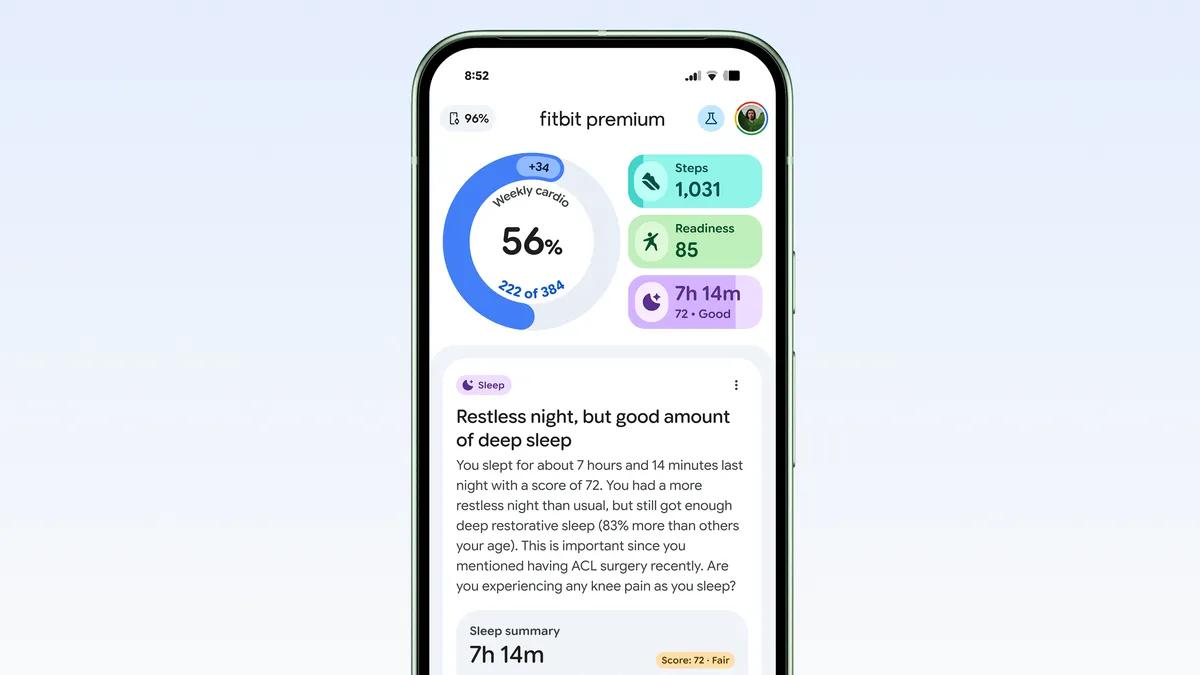
In October 2025, Google debuted its version called Coach, powered by Gemini AI, for US Fitbit Premium subscribers on Android. However, the October launch was just a preview, with the company requesting feedback from early adopters. This February, Google expanded the public Coach preview to include iOS users and Fitbit Premium members in Canada, the UK, Australia, New Zealand and Singapore. Google announced Tuesday at its annual The Check Up health event that it’s adding additional features to its all-in-one fitness trainer, sleep coach and health advisor.
Improved sleep insights and scoring
For sleep tracking, the company’s most significant update yet delivers a 15% increase in sleep stage accuracy, based on comparisons between its latest and previous algorithms across compatible Pixel and Fitbit devices.
Advertisement
The current model will now also be better able to differentiate between when you’re trying to sleep and when you’re actually asleep. It can detect when you’re napping, when your sleep has been interrupted or when you’re transitioning between sleep stages.
In a few weeks, these enhancements will all contribute to a revamped Sleep Score that won’t just focus on how much sleep you got, but on how much time it took you to get that sleep. Because it has more sleep data to work with, Coach will be able to provide more informed insights and recommendations for better sleep.
Fitbit’s upcoming personal health coach updates center around sleep, medical records and continuous glucose monitor data.
Advertisement
Google
Medical record availability
In April, US subscribers will be able to link their medical records, such as medications, lab results and doctor visit history, in the Fitbit app.
This feature was created in collaboration with B. Well Connected Health, an AI-powered digital health platform that aggregates health data from different providers, and Clear, the identity verification platform known from airport security.
In the Fitbit app, you can search for your doctor and then link to their member portal. Or if you use Clear to verify your identity with a selfie and a valid ID, it will search for medical records on your behalf. Availability will depend on your provider.
Advertisement
Once you verify your identity, Fitbit’s personal health coach can access your medical records.
Google
Fitbit’s Coach can then use your medical history to create more personalized guidance that combines your lab results, data collected by your Fitbit and any other relevant information it collects from your records. In several months, users will be able to share these records and summaries with their provider or family members using a QR code or Smart Health Link URL.
What it will look like once you’re able to share your Fitbit health summary with a doctor or relative.
Fitbit says it securely stores your medical records and that you control how your data is used, whether it’s shared and whether it’s deleted. The company also says your medical records won’t be used for ads.
AI health coaches are not a replacement for a doctor, as they can’t diagnose or treat medical conditions. You shouldn’t make any changes to your lifestyle or health routine without consulting your own doctor.
In April, Fitbit members in the public preview will also be able to connect a continuous glucose monitor to the Fitbit app via Health Connect. This feature lets you see all your health data from compatible apps in one place. According to a Google representative, any CGM that supports a Health Connect integration will be included, including Dexcom and Abbott Lingo. With this connection, Fitbit members can ask their Coach for more information about how their workouts or meal choices affect their glucose levels.
Canada’s hi-fi market is about to get a new distribution player and it’s entering a landscape that is both passionate and brutally complicated. Fidelity Imports and Playback Distribution have announced the creation of True North Distribution, a Canadian joint venture focused on importing and distributing high-end audio brands across the country.
On paper, the mission is simple: bring more premium hi-fi gear to Canadian retailers and listeners. In reality, the Canadian market is anything but simple.
I say that as someone who started his audiophile journey wandering record shops and stereo stores in Toronto before eventually working and living on both sides of the border. Canada loves music and has produced some remarkable audio companies over the decades; brands like Bryston, NAD, Totem, PSB Speakers, Paradigm, and Anthem didn’t become global players by accident. There is a deep culture of engineering and music appreciation baked into the Canadian audio scene.
But the economics of the market can be unforgiving.
Advertisement
Canada has a population of just over 40 million people, compared with roughly 335 million in the United States. The distances between major population centers are vast; Toronto, Vancouver, Montreal, Calgary, Edmonton, Ottawa, and Winnipeg are spread across nearly 5,500 kilometers of geography. Add in high taxes, shipping costs, currency swings from a weaker Canadian dollar, and the tariff tension with the United States, and suddenly the logistics of distributing hi-fi gear north of the border look a lot more like a survival sport.
And yet the demand is real. Canada has a highly concentrated audiophile community clustered in those major cities, supported by knowledgeable specialty dealers and a long tradition of music culture. What it lacks, at least compared with the United States, is scale.
That’s the gap True North Distribution is hoping to address.
The new venture from Fidelity Imports and Playback Distribution aims to create a dedicated national pipeline for premium audio brands entering the Canadian market. By partnering with specialized retailers across the country, the company plans to build a curated portfolio of high-end components while providing dealers with more consistent logistics, service, and brand support.
Advertisement
If successful, the move could make it easier for Canadian audiophiles to access some of the world’s most interesting hi-fi gear without navigating cross-border pricing, shipping delays, or exchange-rate headaches.
It also means something else: Canada’s homegrown audio companies are about to face more competition inside their own backyard.
And in a market this small, every new player matters.
Advertisement. Scroll to continue reading.
Advertisement
“For me, this all started with moments—sitting with friends, putting on a record, and feeling completely transported,” said Steve Jain, Fidelity Imports. “Those experiences stay with you, and they’re shaped by the care and craftsmanship behind the equipment as much as the music itself. True North Distribution is about sharing those moments—bringing products and stories to Canada that help people fall in love with music all over again.”
“Building something sustainable and reliable for our partners has been just as important as the passion behind it,” said Matt Hegt, Fidelity Imports. “With True North Distribution, we’ve created a structure that retailers can depend on—thoughtful brand selection, strong logistics, and the infrastructure needed to support long-term growth in the Canadian market.”
“What stood out to me from the beginning was the alignment in values,” said Rob Standley, Playback Distribution. “There’s a clear through-line between engineering integrity, manufacturing discipline, and the listening experience itself. True North Distribution allows us to bring together brands that demonstrate that connection in a meaningful and measurable way.”
Who Are Fidelity Imports and Playback Distribution?
Behind True North Distribution are two companies that most consumers rarely see but that play an essential role in the high end audio industry: the importers and distributors who determine which brands actually reach dealers, showrooms, and ultimately listeners.
Fidelity Imports is a U.S. based high end audio importer founded in 2018 that focuses on carefully curated premium hi fi brands sold through specialist retailers rather than mass market channels. The company has built a reputation for representing manufacturers that combine strong engineering with distinctive design and craftsmanship. Its portfolio includes brands such as Acoustic Energy, Cambridge Audio, Alare, Audia Flight, Primare, Matrix Audio, Perlisten Audio, AVM Audio, Unison Research, Michell Audio, Kora, Diptyque Audio, Wilson Benesch, Ruark Audio, Primare, and Opera Loudspeakers. Rather than flooding the market with dozens of overlapping product lines, Fidelity Imports has focused on building strong dealer relationships and supporting a smaller group of brands with consistent logistics, marketing support, and service infrastructure across North America.
Playback Distribution, founded by longtime audio industry executive Rob Standley, approaches the market from a similarly curated perspective but with additional focus on system building and the custom installation channel. The company distributes a range of high performance hi fi and architectural audio brands including PMC Speakers, Amphion Loudspeakers, Vienna Acoustics, Advance Paris, Esoteric, AVID HiFi, TEAC, Velodyne Acoustics, Quadraspire, and Vicoustic. Playback’s portfolio is built around complementary products that allow dealers and integrators to assemble complete playback systems rather than simply selling isolated components.
The Bottom Line
The launch of True North Distribution could be a real win for Canadian audiophiles. A dedicated national distributor backed by Fidelity Imports and Playback Distribution should mean better access to international hi-fi brands, more consistent dealer inventory, and stronger service support for retailers across the country. In a market where cross border pricing, shipping delays, and currency swings often complicate purchases, that kind of infrastructure matters.
Advertisement
The flip side is that Canada’s respected homegrown manufacturers and existing distributors are about to face more competition in a relatively small market of just over 40 million people. More brands chasing the same dealers and customers can create pressure on margins and shelf space.
Still, competition tends to make the hi fi ecosystem healthier over time. Dealers get more options, consumers get more choice, and manufacturers have to work harder to earn attention.
One thing is certain: visiting hi-fi shops across the Great White North is about to get a lot more interesting.



 By default, the stock ticker is set to show prices for major tech stocks, but you can set it up to display any major symbol available in the Finnhub data stream. You can configure up to eight custom stocks and input your holdings, and the software will calculate and display your net worth in real time.



















































You must be logged in to post a comment Login