Women who undergo natural menopause before age 40 face approximately a 40% greater lifetime risk of coronary heart disease, including fatal and nonfatal heart attacks, compared with those who experience menopause later, according to a large new study published March 18, 2026, in JAMA Cardiology.
Women Who Experience Menopause Before 40 Face 40% Higher Lifetime Risk of Heart Attacks, New Study Finds
The research, led by Northwestern Medicine and involving pooled data from U.S. cohorts, is the first to specifically quantify lifetime coronary heart disease (CHD) risk tied to premature menopause. It found that premature menopause—defined as natural cessation of menstruation before age 40—was linked to a 40% higher risk overall, with the association holding even after adjusting for traditional cardiovascular risk factors such as smoking, obesity, hypertension and diabetes.
Black women showed a slightly elevated risk at 41%, compared with 39% for white women, and are three times more likely than white women to experience premature menopause, amplifying the public health implications.
“Premature menopause should be recognized as a key marker for long-term cardiovascular vulnerability,” said lead author Priya Freaney, MD, assistant professor of medicine in the Division of Cardiology at Northwestern University Feinberg School of Medicine. “This isn’t just about when periods stop; it’s a signal that estrogen exposure ends much earlier, potentially accelerating atherosclerosis and other heart disease processes.”
The study builds on decades of evidence linking earlier menopause to heightened cardiovascular risks but advances the field by focusing on lifetime CHD incidence rather than shorter-term events. Previous meta-analyses had shown relative risks around 1.5 for premature menopause and coronary events, but this cohort analysis provides a clearer picture of cumulative burden over a woman’s lifespan.
Advertisement
Premature menopause, also called premature ovarian insufficiency (POI) when occurring naturally, affects about 1-2% of women and can stem from genetic factors, autoimmune conditions, environmental exposures or idiopathic causes. Surgical menopause from bilateral oophorectomy before 40 carries similar or sometimes higher risks due to abrupt hormone loss.
Estrogen plays a protective role in cardiovascular health by helping maintain favorable cholesterol profiles, supporting vascular flexibility and reducing inflammation. Its early decline in premature menopause is thought to contribute to faster plaque buildup in arteries, elevated blood pressure and metabolic changes that compound over time.
The JAMA Cardiology paper analyzed data from multiple U.S. cohorts tracking postmenopausal women, calculating lifetime risk using competing-risk models that account for death from other causes. Results showed consistent associations across racial groups, underscoring that premature menopause acts as an independent risk enhancer beyond conventional factors.
Experts emphasize that the finding does not imply causation in every case—premature menopause may sometimes reflect underlying conditions that also drive heart disease—but the link persists after statistical adjustments.
Advertisement
“Even if we don’t fully understand the mechanisms yet, the signal is strong enough to warrant earlier and more aggressive cardiovascular screening for these women,” Freaney said.
Guidelines from organizations like the American Heart Association and the North American Menopause Society already classify early menopause (before 45) as a risk-enhancing factor for atherosclerotic cardiovascular disease. The new data strengthens calls to incorporate age at menopause into routine risk assessments, such as the ASCVD risk estimator or Framingham scores.
Hormone therapy (HT) remains a debated intervention. For women with POI, major guidelines recommend systemic estrogen therapy—typically combined with progestin if the uterus is intact—until at least the average age of natural menopause (around 51-52) to mitigate symptoms and potentially reduce long-term risks, including cardiovascular ones. Observational data suggest HT initiated soon after menopause onset may offer cardioprotective benefits in younger women, though randomized trials in older populations showed mixed results.
The study did not directly evaluate HT use, but authors noted that many women with premature menopause do not receive adequate hormone replacement due to concerns over breast cancer or other risks, potentially exacerbating their vulnerability.
Advertisement
Lifestyle modifications offer another layer of protection. A 2025 analysis in Heart journal found that high adherence to healthy behaviors—such as not smoking, maintaining physical activity, healthy diet, moderate alcohol intake and normal body weight—reduced CVD odds by 23% overall and by 52% in women with premature menopause.
“Women with premature menopause have a window to act,” said one co-author. “Aggressive management of modifiable risks can substantially offset the added burden from early estrogen loss.”
Broader context highlights disparities. Black women not only face higher rates of premature menopause but also bear a disproportionate CVD burden due to systemic factors like access to care, chronic stress and higher prevalence of hypertension and diabetes.
The research arrives amid growing attention to women’s cardiovascular health. Heart disease remains the leading cause of death for women in the U.S., and recent projections warn that nearly 60% of women could have some form of CVD by 2050, up from current levels, partly due to aging populations and rising risk factors starting earlier in life.
Advertisement
For clinicians, the takeaway is straightforward: Ask about age at menopause during patient histories, especially for women in their 40s and 50s presenting with risk factors or symptoms. Early identification allows tailored prevention—statin therapy if indicated, blood pressure control, smoking cessation and lifestyle counseling.
Patient advocacy groups stress education. Many women with premature menopause report feeling dismissed when raising concerns about long-term health, including heart risks.
As research evolves, future studies may clarify mechanisms—such as genetic links, inflammatory pathways or vascular biomarkers—and test targeted interventions. For now, the March 2026 JAMA Cardiology findings reinforce premature menopause as a critical, underrecognized signal for lifelong heart protection strategies.
Women experiencing irregular periods or sudden cessation before 40 should consult a healthcare provider promptly for evaluation, which may include hormone testing and counseling on risks and options.
Advertisement
With proactive care, the elevated heart attack risk tied to premature menopause need not translate to inevitable outcomes.
Infographic summarizing the stock market situation in February 2026
At the end of February, the SET Index closed at 1,528.26 points, up 21.3% since the beginning of the year and 15.3% from the previous month. Industry groups that have outperformed the SET Index compared to the end of 2025 include technology and resources.
Altman Brothers Real Estate owner Josh Altman joins ‘Varney & Co.’ to discuss how ChatGPT is influencing real estate negotiations, buyers and sellers receiving conflicting answers from AI.
A University of Pennsylvania Wharton professor published a paper that claims Zillow users don’t know who they’re being connected with when they select an agent, alleging that Zillow-affiliated agents drive users to Zillow’s home mortgages.
Professor Jerry Wind’s study showed only 0.3% of users understood they would not be connected with the listing agent when selecting the tabs “Contact an agent” or “Request a tour.”
Advertisement
“This study provides empirical evidence that Zillow’s interface design systematically deceives consumers about a fundamental aspect of the homebuying process,” the conclusion of Wind’s paper states.
“[Consumers] are not contacting the listing agent. They are being routed to agents who pay Zillow for access to their information, agents who are therefore financially incentivized to steer them toward Zillow’s mortgage products.”
FOX Business sat down with Wind to discuss his findings and what he believes are the biggest takeaways.
Advertisement
Research by professor Jerry Wind found that almost no Zillow users realize they are not contacting the listing agent, raising concerns about transparency and incentives. (iStock/Getty Images Plus / Getty Images)
“My understanding is that the incentive is, one major incentive is that they get the name, and once they get their name and they succeed in selling the house, they have to pay Zillow up to 40% of their commission,” the professor told Fox News Digital.
“So, that’s what Zillow gets out of this. The agent, obviously, gets a lead.
“And if the agent does not … recommend Zillow’s mortgage to the customers, Zillow, I understand, may basically stop giving them leads,” Wind continued. “So, there is a real carrot and stick here in terms of encouraging the agents to [encourage] their customers to use Zillow’s mortgage.”
Zillow maintains that buyers are not steered to its mortgage products and are always free to choose any lender that fits their needs. (Gabby Jones/Bloomberg via Getty Images)
Wind joined the Wharton faculty in 1967 and is the Lauder Professor Emeritus and a professor of marketing.
“According to recent class action lawsuits filed in federal court, these agents may be required to meet quotas for referring buyers to Zillow Home Loans in order to maintain access to leads,” Wind’s study says. “Agents who fail to meet these quotas risk losing their primary source of business.”
Zillow was quick to deny the professor’s claims that such quotas exist in a statement to FOX Business, discrediting the study and the allegations that it forces Zillow-affiliated buyers to recommend Zillow Home Loans (ZHL).
Wind’s study claims Zillow’s interface confuses users about which agent they’re contacting, potentially steering them toward agents tied to Zillow’s mortgage business. (Saul Loed/AFP via Getty Images)
“This significantly flawed paper does a lot of gymnastics trying to turn Zillow’s pro-consumer feature into a buy,” a Zillow spokesperson told FOX Business. “When a buyer requests a tour or clicks ‘contact agent,’ Zillow connects them with a local buyer’s agent, someone whose job it is to represent the buyer’s interests and drive the best outcomes for them. A listing agent represents the seller.”
Reports and U.S. national data estimate that total home sales in 2025 were approximately 4.74 million units when combining existing and new home sales.
Zillow’s 2025 Consumer Housing Trends Report showed that roughly 68% of homebuyers use Zillow during their search to purchase a home.
Wind alleged that Zillow’s popularity has created an antitrust issue, with the platform attempting to create a closed loop between searching, purchasing and selecting a mortgage provider for payment.
Advertisement
Wind told FOX Business “the situation really requires some type of legal intervention here” or “some regulatory involvement.”
Zillow said the claims of a closed loop are false and that it does not steer customers to ZHL.
The company disputes claims of deception, arguing its “Contact Agent” feature is a pro-consumer tool designed to match buyers with qualified agents. (Stefani Reynolds/AFP / Getty Images)
“Claims that buyers are steered to Zillow Home Loans or any specific mortgage provider are false,” the Zillow spokesperson explained. “We offer choice, not requirements, and buyers are free to work with any lender. Agents are encouraged to help clients evaluate all available financing options.
“We remain confident that our platform delivers transparency, competition and meaningful choice to millions of buyers and sellers.”
As for what Wind hopes to see come out of his study, he told FOX Business he believes consumer awareness and education is important for those looking to make their next home purchase.
“I think the important aspect here is for consumers to try to be more aware and make sure to look for alternative mortgages, not just buy the first one,” Wind explained.
“So, consumer education is really key here. Second, I would hope that Zillow will change their incentive systems and business model, basically, and realize they have an amazing platform.”
Fortnite players worldwide are currently unable to access the popular battle royale game as Epic Games conducts scheduled maintenance to roll out version 40.00, marking the transition to Chapter 7 Season 2. The downtime, which began at 6:00 UTC on March 19, 2026, has rendered matchmaking and core game services unavailable, with Epic confirming the outage will last until approximately 11:00 UTC.
AFP
The Epic Games Public Status page lists Fortnite under maintenance, with game services, parties, friends, and messaging features marked as impacted. Matchmaking was disabled about 30 minutes before the scheduled start to prepare for the update rollout. As of mid-morning UTC—aligning with early afternoon in Seoul and other Asian time zones—maintenance remains in progress, and Epic has promised updates as necessary without specifying an exact resolution time beyond the planned five-hour window.
This extended downtime differs from typical patch maintenances, which often last 90 minutes to two hours. The longer period reflects the scale of the v40.00 update, which introduces a new season following the extension of Chapter 7 Season 1: Pacific Break. Originally set to conclude earlier in March, the season was prolonged by two weeks to March 19, allowing Epic additional time to finalize content for the sequel season. Leakers and community trackers had anticipated the change, with data mines showing preparations for fresh maps, weapons, and crossover events.
Downdetector and independent outage trackers show mixed user reports. While some platforms indicate elevated complaints related to game launch and server connections in the past 24 hours, many align with the known scheduled maintenance rather than an unexpected outage. No widespread unplanned disruptions have been reported beyond the planned window, contrasting with earlier issues in March, such as the March 5 login problems tied to the v39.51 patch that affected thousands and prompted Epic to issue statements on X.
Fortnite’s server architecture relies on a global network of data centers, primarily through Amazon Web Services, to handle millions of concurrent players. Maintenance periods like this one allow developers to deploy new assets, balance changes, bug fixes, and security updates while minimizing risks to live gameplay. The v40.00 patch is expected to bring significant additions, including refreshed Battle Pass rewards, new POIs (points of interest), weapon vaults, and potential collaborations—details Epic typically reveals shortly after servers return.
Advertisement
Players attempting to log in during the window encounter standard error messages indicating servers are offline or under maintenance. Companion apps, the Fortnite Item Shop, and creator tools may remain partially accessible, but core multiplayer modes—including Battle Royale, Zero Build, Reload, and Lego Fortnite—are inaccessible. Epic advises checking the official status page or @FortniteStatus on X for real-time updates.
The timing coincides with a key moment in Fortnite’s lifecycle. Chapter 7 Season 1, themed around Pacific Break, featured tropical environments, vehicle combat enhancements, and events like the South Park Born in Chaos pass and Winterfest holiday celebrations. Its extension provided breathing room amid development delays for Season 2, rumored to emphasize futuristic or high-tech themes with new mobility options and map alterations. Community speculation points to a major visual overhaul and competitive mode tweaks to refresh the meta ahead of major esports tournaments later in 2026.
Epic has faced criticism in the past for communication during outages, but recent seasons show improved transparency via proactive announcements. The March 19 window was flagged in advance on the status page, giving players notice to complete matches or challenges before shutdown. For regions like Asia-Pacific, the 06:00 UTC start translated to afternoon or evening hours, potentially disrupting peak playtimes.
Beyond technical aspects, the update underscores Fortnite’s evolution from a battle royale phenomenon to a metaverse-like platform. With over 500 million registered accounts and integrations across consoles, PC, mobile, and cloud services, even brief downtimes affect a massive global audience. Revenue from V-Bucks purchases, battle passes, and creator economy continues to fuel Epic’s operations, making reliable uptime critical.
Advertisement
Historical context shows Fortnite maintenances are routine but occasionally extend due to unforeseen issues. The March 5 v39.51 downtime lasted roughly 90 minutes, introducing OG classics and minor balance changes. Earlier in the year, isolated login outages tied to broader Epic services impacted multiple titles, including Rocket League and Fall Guys. No such cascade effects appear tied to the current v40.00 rollout.
As servers remain down, players are turning to alternative activities within the Fortnite ecosystem, such as browsing the locker in offline mode where possible or engaging in community discussions on Reddit, Discord, and X. Content creators are streaming patch breakdowns or reaction videos, building hype for the new season’s reveal.
Epic typically posts a “back online” update once services stabilize, often accompanied by patch notes detailing new features, bug fixes, and known issues. Players should expect a client update prompt upon relaunch to download the new version.
The current maintenance highlights the logistical challenges of managing a live-service game at Fortnite’s scale. With millions dropping into matches daily, coordinated global updates require precise timing to avoid peak-hour disruptions in major regions. The five-hour estimate provides buffer for testing and rollback contingencies if needed.
Advertisement
For now, Fortnite enthusiasts in Seoul and beyond face a temporary hiatus. The downtime serves as the gateway to Chapter 7 Season 2, promising renewed excitement after a prolonged first season. Once resolved, players can expect a refreshed island, new strategies, and the continued cultural dominance of Epic’s flagship title.
Check status.epicgames.com or follow @FortniteStatus for the latest. As maintenance concludes, the battle bus will once again be ready for boarding.
Full-time Equity Analyst and part-time retail investor with a bias for high quality stocks trading at discounted prices. over the past 5 years I’ve been retail investing and learning more about how the stock market works, following the work of Ben Graham and Joel Greenblatt. Equity Markets are fascinating as they give us an analytical overview of how global markets are performing. Seeking Alpha is an incredible platform for me to share my research and analysis with fellow investors and analysts.
Analyst’s Disclosure: I/we have no stock, option or similar derivative position in any of the companies mentioned, and no plans to initiate any such positions within the next 72 hours. I wrote this article myself, and it expresses my own opinions. I am not receiving compensation for it (other than from Seeking Alpha). I have no business relationship with any company whose stock is mentioned in this article.
Seeking Alpha’s Disclosure: Past performance is no guarantee of future results. No recommendation or advice is being given as to whether any investment is suitable for a particular investor. Any views or opinions expressed above may not reflect those of Seeking Alpha as a whole. Seeking Alpha is not a licensed securities dealer, broker or US investment adviser or investment bank. Our analysts are third party authors that include both professional investors and individual investors who may not be licensed or certified by any institute or regulatory body.
Minister want at least half of all steel produced in the UK to be made in this country
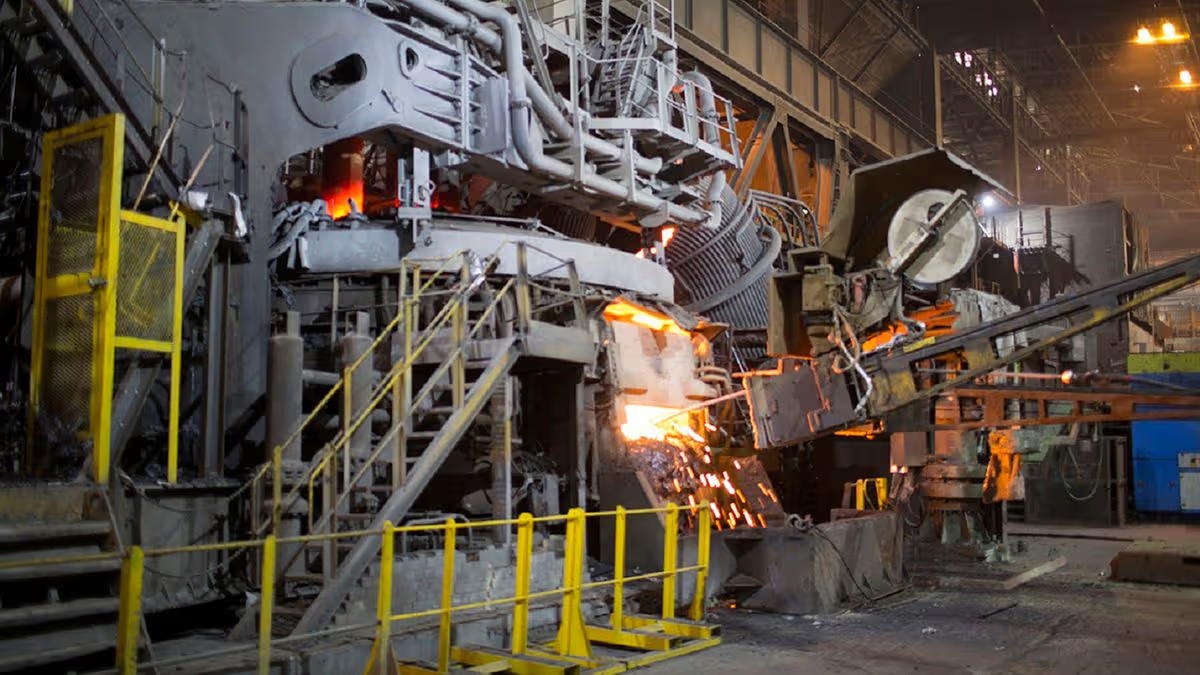
Liberty Steel’s site at Rotherham(Image: PA)
The Government has announced measures to protect the UK steel industry that follows its moves to take control of production facilities in Scunthorpe and Rotherham.
Under its long-awaited steel strategy, Ministers have announced an ambition for up to 50% of steel used in the UK to be made in this country. The move, which increases the current target of 30%, will be coupled with reductions in steel import quotas as part of new trade measures to preserve steel production for critical national infrastructure and defence.
Ministers said this would ensure the UK steel sector’s future in the face of global overcapacity. The National Wealth Fund will be the main mechanism for providing up to £2.5bn of financing for investment in the steel sector this Parliament.
The Government last year took control of the British Steel plant at Scunthorpe and the Liberty facility in Rotherham as global challenges pushed both plants close to closure. A National Audit Office report earlier this week praised the speed of Government action in Scunthorpe but warned that there was a potential £1.5bn cost to the rescue.
Advertisement
Announcing the new strategy, Business and Trade Secretary Peter Kyle said: “Making steel in the UK is vital for national security, critical infrastructure and the wider economy. Steel-making is a cornerstone of our modern industrial policy that deliberately focuses support for key industries, technologies, and strategically important sectors.
“With this strategy we are closing the decades-long chapter of destructive de-industrialisation and committing instead to strengthening and sustaining Britain as a steel-making nation.”
The strategy confirms electric arc furnaces (EAF) as the future of British steelmaking, continuing the shift from blast furnaces to cleaner, EAF-based production using recycled scrap to support net zero. The shift has led to job losses in steel plants including Port Talbot.
The steel strategy has been welcomed by Community union general secretary Roy Rickhuss and Gareth Stace, director general of UK Steel. GMB national secretary Charlotte Brumpton-Childs also welcomed the plan but said “the devil will be in the detail and key questions around ownership of Scunthorpe and the future technology mix will be key to our members and their livelihoods.”
Advertisement
Rotherham MP Sarah Champion said: “The Labour Government has done more for steel in just two years than has been achieved in decades. Their commitment to our steel industry, including stepping in to protect steel assets facing closure in Rotherham, has come as a breath of fresh air.
“Our domestic steel industry is not a relic. It is world leading. It has been held back not by the quality of its products, but by a lack of vision in previous governments and a failure to provide the level playing field it needs in order to thrive. By taking long overdue trade measures to protect against cheap, subsidised foreign steel, I hope that much needed parity will finally become a reality.”
Welsh Secretary Jo Stevens said: “The UK Government is standing up for Welsh steelmaking and showing that we will do whatever it takes to boost domestic steel production and protect the thousands of steelmaking jobs in our communities. “Welsh steel is expected to account for half of future UK steelmaking. It is not only a vital part of the South Wales economy, but also a crucial part of the UK’s industrial strategy, infrastructure capabilities and national security.
“We said we would back our steelworkers and steel communities and we are delivering on that promise – Welsh steelmaking now has a secure and bright future.”
Advertisement
The strategy will be outlined on Parliament this afternoon.
Nearly 90,000 bottles of children’s ibuprofen have been recalled over the potential presence of a foreign substance, according to the Food and Drug Administration.
Strides Pharma, Inc., headquartered in India, recalled about 89,592 bottles of its 100-milligram Children’s Ibuprofen Oral Suspension, the FDA said.
The affected product was manufactured for Taro Pharmaceuticals USA and distributed across the U.S. (iStock / iStock)
But the FDA updated the classification this week to a Class II recall, which means “use of or exposure to a violative product may cause temporary or medically reversible adverse health consequences or where the probability of serious adverse health consequences is remote.”
The Class II classification is the FDA’s second-highest urgency level.
Advertisement
The Class II classification is the FDA’s second-highest urgency level. (Stefani Reynolds/Bloomberg via Getty Images / Getty Images)
Neurodiverse workers could hold a distinct advantage as artificial intelligence reshapes the modern workplace, according to a UK technology entrepreneur who says businesses are overlooking a critical talent pool at a pivotal moment of change.
Josh Hough, founder of home care software firm CareLineLive, has argued that traits commonly associated with neurodiversity, including heightened focus, pattern recognition and unconventional problem-solving, are becoming increasingly valuable as organisations accelerate their adoption of AI-driven systems and workflows.
Speaking during Neurodiversity Celebration Week, Hough said many employers remain too focused on traditional hiring frameworks, despite the growing need for adaptability and innovative thinking.
“A lot of businesses still want people who tick every box,” he said. “The reality is, people who think differently often solve problems differently.
“In a world where everything is changing quickly, that’s a real advantage. You need people who don’t just follow a process, but can see a better way of doing things.”
Advertisement
His comments come as businesses across the UK and globally invest heavily in artificial intelligence to drive productivity, automate processes and unlock new growth opportunities. However, this shift is also redefining the types of skills and mindsets organisations require, placing a premium on cognitive diversity rather than uniformity.
Hough’s own approach to leadership and hiring has been shaped by personal experience. Born with a rare muscle-weakening condition that left him reliant on a wheelchair for much of his early life, he developed a mindset centred on adaptability and alternative problem-solving from a young age.
“When you grow up having to do things differently you don’t assume the standard way is the best way,” he said. “That carries through into business.”
Founded in 2014, CareLineLive has grown into a significant player in the digital care technology space, supporting more than 700 home care providers across multiple countries and used by over 25,000 carers. Its platform is designed to streamline operations across the care sector, from staff management and patient records to real-time communication between care providers, families and healthcare professionals.
Advertisement
At a time when the care sector is under sustained pressure from staffing shortages, rising demand and regulatory complexity, Hough believes technology, combined with diverse thinking, is essential to improving efficiency and outcomes.
“One of the biggest challenges in care is how information flows between people and services,” he said. “Too often, information doesn’t move between people in the way it should. That creates risk and wastes time.
“Our focus has always been on making sure the right people have the right information at the right time.”
Beyond operational efficiency, Hough’s comments highlight a broader shift in how businesses should think about talent in the AI era. As automation takes over routine and process-driven tasks, the ability to think laterally, identify patterns and approach problems from new angles is becoming more strategically important.
Advertisement
This has significant implications for recruitment, workplace culture and long-term competitiveness. Companies that continue to prioritise rigid skill checklists and conventional career paths risk missing out on individuals who may be better suited to navigating complexity and change.
Hough said the conversation around neurodiversity must evolve beyond compliance or risk management and instead focus on value creation.
“Not everyone is going to fit a traditional mould,” he said. “But that doesn’t mean they can’t be excellent at what they do.
“If anything, in the current environment, thinking differently is exactly what businesses need.”
Advertisement
As AI adoption accelerates and the nature of work continues to shift, his message is clear: the future workforce will not just be defined by technical capability, but by diversity of thought, and those who recognise this early may gain a decisive edge.
Amy Ingham
Amy is a newly qualified journalist specialising in business journalism at Business Matters with responsibility for news content for what is now the UK’s largest print and online source of current business news.
A Malaysian e-commerce technology platform has claimed the top spot in Asia-Pacific’s most closely watched corporate growth ranking, as the region’s startup ecosystem continues to defy a challenging global economic backdrop.
Key takeaways
Borong of Malaysia leads 500 Asia-Pacific high-growth companies with a staggering 295 per cent compound annual growth rate between 2021 and 2024.
Singapore and India top the ranking by volume with 101 companies each, while Chinese firms make their first-ever appearance in the index.
IT and software dominate for the fourth straight year at 21.4 per cent of the list, confirming technology as the region’s primary engine of corporate growth.
Borong, a business-to-business e-commerce platform headquartered in Kuala Lumpur, clinched first place in the Financial Times/Statista High-Growth Companies Asia-Pacific 2026 ranking, rising from second position the previous year.
The company recorded revenues of $99.7 million, translating into a compound annual growth rate of 295 per cent over the three years to 2024, a figure that underscores the explosive appetite for digital commerce infrastructure across Southeast Asia.
The eighth edition of the annual ranking lists the 500 fastest-growing companies across the Asia-Pacific region, measured by organic revenue growth between 2021 and 2024. This year’s edition carries a notable milestone: Chinese companies appear in the ranking for the first time, expanding both the competitive field and the geographic scope of one of the region’s most prestigious business benchmarks.
South Korea Claims Two Podium Places
Borong’s ascent to the summit comes as South Korea cements its reputation as a breeding ground for high-growth technology ventures. Two Korean companies claimed the second and third positions respectively: Bznav, a tax software firm, and InPock, an e-commerce technology platform, reflecting Seoul’s growing influence in the digital services economy.
Advertisement
India and Singapore Dominate by Volume
When measured by the number of entrants, Singapore and India each contributed 101 companies to the ranking, more than any other market, highlighting the twin engines of the region’s innovation ecosystem. Japan followed with 82 companies, and South Korea placed fourth with 79.
The breadth of representation signals a maturing startup culture across diverse economies, from the technology hubs of Bangalore and Singapore’s financial district to the manufacturing corridors of Japan.
Technology Retains Its Iron Grip
For the fourth consecutive year, IT and software companies dominated the sectoral composition of the list, accounting for 21.4 per cent of all ranked firms. Fintech, financial services and insurance followed at 9.6 per cent, while healthcare and life sciences took 5.6 per cent, a share that reflects sustained post-pandemic investment in medical technology and digital health.
The persistence of IT and software at the top of the table points to a structural shift in how Asia-Pacific economies are generating value: less through manufacturing and commodities, and increasingly through scalable, asset-light technology platforms.
Advertisement
The Bar Is Rising
Entry into the ranking has become incrementally harder. The minimum compound annual growth rate required to qualify rose to 8.4 per cent this year, edging up from 8.1 per cent in the prior edition, a modest but telling signal that the pool of high-performing applicants is deepening.
The ranking is drawn from companies that voluntarily submitted and certified their revenue figures, signed off by a chief financial officer, chief executive or member of the executive committee, during an application window that ran from July to December 2025.
Methodology and Limitations
The ranking was compiled in partnership with Statista, which canvassed tens of thousands of companies across 14 Asia-Pacific territories, including Australia, China, Hong Kong, India, Indonesia, Japan, Malaysia, New Zealand, the Philippines, Singapore, South Korea, Taiwan, Thailand and Vietnam. Companies were required to have generated at least $100,000 in revenue in 2021 and at least $1 million by 2024, with growth driven primarily by organic means.
As with any voluntary ranking, the list does not claim to be exhaustive. Many of the region’s fastest-growing businesses remain privately held and decline to disclose financial data, meaning the true universe of high-growth companies is almost certainly larger than the 500 featured.
Advertisement
A special report accompanying the ranking is scheduled for publication on April 10, spotlighting some of the fastest-growing sectors shaping the region’s economic future.
The New York Times’ popular word-association game Connections delivered another brain-teasing challenge on Friday, March 20, 2026, with Puzzle No. 1013 featuring a mix of everyday terms, cultural references and clever misdirections that tested players’ pattern recognition and lateral thinking.
The New York Times Connections
Released at midnight Eastern time as part of the daily rotation on nytimes.com and the NYT Games app, today’s puzzle drew praise and frustration in equal measure from the online community for its balanced difficulty and thematic variety. Solvers had to group 16 seemingly unrelated words into four themed categories of four words each, with yellow as the easiest and purple as the trickiest.
The 16 words in today’s grid were: ALARM, CONCERN, RATTLE, SHAKE, BOARDWALK, CHANCE, LUXURY, PARKING, FATE, FURY, MUSE, SIREN, CARTON, NOODLE, ROLL, TIMER.
As with every Connections puzzle, the goal is to identify the common threads without using more than four mistakes. Players receive color-coded feedback: yellow for the simplest category, green next, then blue, and purple for the most obscure.
### Hints for Today’s Puzzle
Advertisement
Before diving into the full answers — which contain spoilers — here are progressive hints to guide solvers who want to crack it on their own:
– **Yellow (easiest):** These words all relate to causing unease or disturbance, often in a physical or emotional sense. – **Green:** Think classic board game real estate and random events — items you’d find listed on a familiar property-trading board. – **Blue:** These evoke figures from ancient Greek stories, often tied to destiny, emotion, inspiration or allure. – **Purple (hardest):** These complete the phrase “egg _____” — a common compound word or expression involving the word “egg.”
Many players reported starting with the yellow group, as words like “shake” and “rattle” immediately suggested agitation or fear. The purple category proved elusive for some, relying on idiomatic English phrases rather than literal meanings.
### Full Answers and Category Breakdown
Advertisement
Here are the complete groupings for Connections #1013 on March 20, 2026:
**Yellow: Disturb** ALARM, CONCERN, RATTLE, SHAKE
This category captured synonyms for causing worry, fear or physical vibration. “Shake” and “rattle” evoke both literal trembling and figurative unease, while “alarm” and “concern” lean emotional. Solvers noted this as the most straightforward, often solved first.
**Green: Words on a Monopoly Board** BOARDWALK, CHANCE, LUXURY, PARKING
Advertisement
A nod to the iconic Parker Brothers (now Hasbro) game, these are direct spaces or cards: Boardwalk (the priciest property), Chance (the card deck), Luxury Tax (a space), and Parking (Free Parking, the beloved rest spot). The category rewarded pop-culture knowledge of the classic American board game, with many players calling it a satisfying “aha” moment.
**Blue: Figure in Greek Myth** FATE, FURY, MUSE, SIREN
Drawing from classical mythology, these represent archetypal beings: the Fates (who spin destiny), a Fury (vengeful deity), a Muse (inspirational goddess), and a Siren (seductive sea creature). The category highlighted how Connections often weaves in literary or historical references, challenging players beyond everyday vocabulary.
**Purple: Egg _____** CARTON, NOODLE, ROLL, TIMER
Advertisement
The trickiest group completed familiar phrases: egg carton (packaging), egg noodle (pasta type), egg roll (appetizer), and egg timer (kitchen tool). This required thinking in compound words or set expressions, a hallmark of purple categories that often stump even seasoned players.
### Player Reactions and Difficulty Assessment
On forums like Reddit’s r/NYTConnections, users shared mixed experiences. Many achieved perfect solves in under a minute once yellow and green clicked, while others lost attempts to misfires like grouping “shake” with “roll” or “siren” with “alarm.”
“This one felt fair but sneaky — the Monopoly group was a giveaway, but egg phrases took forever,” one commenter wrote. Another praised the Greek myth tie-in: “Loved the blue category; reminded me of high school classics.”
Advertisement
Data from community trackers suggests average solve times hovered around 4-6 minutes, with a moderate mistake rate. The puzzle earned a difficulty rating of about 3.2 out of 5 from aggregate player votes, placing it in the middle range for recent entries.
### How Connections Works and Tips for Success
Created by the New York Times Games team and launched in 2023, Connections has grown into one of the most popular daily brain games alongside Wordle and the Mini Crossword. Players see a 4×4 grid of words and must submit groups of four that share a hidden connection. Correct groups vanish in their assigned color; four mistakes end the game.
Strategies include: – Scan for obvious synonyms or themes first (yellow often falls quickly). – Look for proper nouns, brands or cultural references. – Consider multiple meanings — words can fit literal, slang or idiomatic senses. – Avoid forcing groups; sometimes stepping away reveals connections.
Advertisement
Today’s puzzle exemplified the game’s appeal: accessible yet layered, rewarding both quick pattern spotting and deeper cultural knowledge.
For those who missed it or want to compare, the official archive on nytimes.com allows replaying past puzzles (subscription required for full access). The next Connections drops at midnight ET on March 21.
As the game approaches its third anniversary, its daily ritual continues to unite word lovers worldwide in a shared moment of mental gymnastics.

































































You must be logged in to post a comment Login