We may receive a commission on purchases made from links.
If you’ve never experienced back pain, consider yourself lucky — and keep lifting with those legs! According to the Georgetown University Health Policy Institute, back pain ranks among the costliest medical conditions in the U.S., and about 16 million adults experience chronic pain in their backs that limits everyday activities. It’s also a leading cause of disability and absence from work. Anyone can experience back pain at any age, but it’s most common in women and those between 50 and 55 years of age.
We’re not here to offer medical advice, though we can give you tips on shoveling snow more efficiently. You should always talk to your doctor if you need clinical guidance. However, we can help you find household products that may assist you if you suffer from back pain or that may help protect your back from injury in the first place. Home Depot sells thousands of products both in-store and online, from building materials and appliances to garden supplies and, of course, tools. The following products are useful for many consumers, not just those who suffer from back pain, and they can help you get the job done without the aches and grimaces that may well remind you that you were born in a year that started with 19!
Advertisement
Ergonomic secondary handle
Anastasiya_Rav/Shutterstock
You may already own an ergonomic or a battle-ready electric snow shovel, but this 18-inch handle is an attachment you can add to any shovel, spade, or even a broom to help reduce back strain and fatigue. The handle, which Home Depot advertises as attaching in less than one second without any tools, gives users a second handhold. It will allow you to maintain an upright stance, reducing strain on your lower back and helping to distribute the weight.
This tool will do more than make shoveling snow easier. Priced at $29.99 for a pack of two at the time of writing, it can be used on virtually anything that has a long handle, even rakes and mops, provided the shaft is approximately one-and-a-half inches in diameter. It was designed for comfortable gripping and can be used in temperatures from -31 degrees Fahrenheit to 95 degrees Fahrenheit. It’s easy to disconnect and can be stored anywhere, including hanging storage. Home Depot has a standard 90-day return policy for most merchandise.
Advertisement
Rolling garden cart with seat
PeopleImages/Shutterstock
Gardeners know the best dirt, or so the saying goes, and while there are plenty of high-tech tools for this classic pastime, you may want to consider a more low-tech solution if your back aches after hours spent bent over your petunias. This inexpensive garden cart is wheeled and lightweight for easy portability. It offers a tool tray underneath the seat so that you don’t have to carry your gardening gloves and small tools. It’s made from heavy-duty plastic with a stainless steel frame and can support up to 200 pounds.
Not only does this cart allow you to tote your tools around, but it also acts like a seat or stool while you’re planting and weeding. It can also be used for other household jobs, such as painting or even automobile repair. Buyers should note that according to the product’s Q&A section, its height is not adjustable, and the wheels do not lock in place. Some reviewers reported issues with durability. If you’re willing to spend a bit more, this steel garden cart is more durable and has a seat with 360-degree swivel motion.
Advertisement
Stair climbing hand truck
Stock-Asso/Shutterstock
A hand truck or dolly is a useful tool if you frequently move large boxes, appliances, or furniture. These tools are intended to literally lighten the load and reduce the manual effort needed for big jobs, easing the strain on the user’s body, including their back. If you have a big moving job and you’re worried about potential injuries, although back-saving tools for older DIYers can help, you may want more than just a simple hand truck. Try taking it one step further and pick up this stair climber hand truck, currently priced at $101.99.
Users typically have to pull a standard hand truck up or down stairs, but this product has a tri-wheel design that is intended to reduce back strain when pulling it over curbs, up stairs, and even on uneven surfaces. Its steel frame can carry up to 154 pounds, and it works on both hard surfaces and carpet. It’s also collapsible for easy storage. This hand truck can be used for more than big moves — one reviewer uses it to move water jugs and when repositioning their portable air conditioner. You could use it to move your trash cans, haul your groceries, or even carry your laundry from one floor to another.
Advertisement
DeWalt backpack sprayer
Lawn care can be a time-consuming process that can also wreak havoc on your back. Repetitive movement, kneeling or hunching over for prolonged periods, and carrying heavy loads can cause muscle fatigue. This DeWalt four-gallon backpack sprayer can help relieve some of those issues. It features what Home Depot describes as a “deluxe harness” with padded shoulder straps that follow the contours of your body. It also has an adjustable hip harness that helps to distribute the weight of a full sprayer.
Advertisement
This sprayer comes with multiple nozzle tips, and the extras can be stored in the belt so you can switch out mid-job. The pump can reach up to 150 psi, allowing users to spray from a distance, and the controls are made to be handled while you’re wearing work gloves. The product has a three-year limited warranty and gets mixed reviews from Home Depot customers. Some found the sprayer tended to leak and was difficult to put together, while others were pleased with both assembly and product performance. It currently retails for $109. Owners have a lot to say about DeWalt’s 20V backpack sprayer, so if you need a heavier-duty option, you might want to check it out. It’s also available at Home Depot.
Advertisement
Magnetic grabber reacher tool
Andrey_Popov/Shutterstock
You may have a toolbox full of interesting gadgets, but a reacher tool probably isn’t on your radar unless you’ve borrowed your kid’s toy version — the one with the ridiculous shark head that can barely hold a piece of paper. This grabber tool at Home Depot has a 360-degree rotating “jaw” with anti-slip grabbers and a built-in magnet that allows users to grab what they need from almost any angle. It’s able to support up to two pounds horizontally and five pounds vertically and is designed for those with limited mobility. It weighs only 8.15 ounces and is almost 17 inches long with a soft handle that is easy to grip.
This multi-use tool is perfect for grabbing something off a high shelf, avoiding stepladders, or retrieving items from low, dark spaces — haven’t we all dropped our phones into the depths of the couch at least once? It can even be used in daily household chores, like taking laundry out of the washer or dryer without straining your back. The magnetic feature can be handy for grabbing your keys or anything metal, and you can even use this tool to simply turn handles or open cabinets. This grabber has a compact design and folds for easy storage, and is priced at about $48 at the time of writing.
This weekend’s movie recommendations on Peacock are a bit of a wild mix, and that’s exactly the point. Bugonia will make you laugh at things you shouldn’t, Promising Young Woman will make you seethe at things you recognize, and The Gangster, the Cop, the Devil will make you root for someone you probably shouldn’t.
Three very different films, but they all share one thing: nobody in them is playing by the rules, and that’s what makes each one of these underrated movies worth your time.
If you’ve ever gone down a conspiracy rabbit hole at 2am and thought, “What if I’m actually onto something?” Bugonia is the movie for you. This delightfully unhinged dark comedy follows Teddy, a paranoid beekeeper who is utterly convinced that Michelle Fuller, a powerful biotech CEO, is actually an alien from the Andromeda galaxy sent to destroy humanity. So naturally, he kidnaps her.
What follows is a claustrophobic, darkly funny battle of wills between Jesse Plemons at his most unsettlingly committed and Emma Stone with her cool, menacing presence. The film is a sharp satire of conspiracy culture, corporate greed, and the seductive comfort of believing someone else is responsible for the world’s mess. I really like how the movie uses camera angles to keep you constantly questioning who the real monster in the room is.
Sometimes the best thrillers are built on the most ridiculous premises, and this Korean crime film pulls it off with total swagger. After a serial killer makes the catastrophically bad decision of attacking mob boss Jang Dong-su and leaving him for dead on a rainy road, Jang teams up with a scrappy detective to hunt the killer down, each for very different reasons.
Ma Dong-seok, who you might know from Train to Busan, is an absolute force of nature here, carrying scenes through sheer physical presence and a surprising streak of dry humor. The film is fast, slick, and genuinely fun, with some brawls that are choreographed just well enough to feel brutal without being ridiculous. I really like how the movie never tries to make its heroes noble. They’re both morally questionable, and the film is completely fine with that.
Advertisement
You can watch The Gangster, the Cop, the Devil on Peacock.
Promising Young Woman (2020)
Genre: dark comedy, thriller
IMDB ratings – 7.5/10
Rotten Tomatoes (critics) – 90%
This one still lingers long after the credits roll. Carey Mulligan plays Cassie, a 30-year-old medical school dropout who spends her nights at bars pretending to be blackout drunk, waiting to see which “nice guys” show their true colors.
It sounds like a thriller setup, but writer-director Emerald Fennell turns it into something far more layered, mixing dark comedy, romance, and a simmering rage that builds quietly until it boils over.
The film won the Academy Award for Best Original Screenplay, and it earns every bit of that. I really like how Fennell uses pastel colors and upbeat pop music to make the discomfort hit even harder.
It’s not just gas prices skyrocketing. Frontier-model pricing keeps climbing too
It’s getting more expensive to use the latest models. OpenAI last month bumped the version number of its GPT model family to 5.5, and per-token prices rose too, in some cases doubling compared to its predecessor.
For 1 million tokens, GPT-5.5 is priced at $5 (input), $0.50 (cached input), and $30 (output). Its predecessor GPT-5.4 charges $2.50 (input), $0.25 (cached input), and $15 (output) per 1 million tokens.
Advertisement
The AI biz claims that the cost increase is offset to some extent by token processing efficiency – delivering better results using fewer tokens.
“While GPT‑5.5 is priced higher than GPT‑5.4, it is both more intelligent and much more token efficient,” the company said during the rollout.
But the cost is still going up, more than efficiency improvements are reducing costs. According to an analysis conducted by OpenRouter, GPT-5.5 is anywhere from 50 percent more expensive to nearly twice as expensive, depending on prompt length.
“Our analysis shows that GPT-5.5 actual costs increased 49 percent to 92 percent,” OpenRouter said. “Longer prompts, over 10k tokens, saw costs offset by shorter completions. Shorter prompts, under 10k, experience a higher cost increase where completions did not get shorter.”
Advertisement
That range – 49 percent to 92 percent – factors in the model’s token efficiency improvements, which are more relevant for longer prompts. According to OpenRouter’s measurements, GPT-5.5 generates between 19 percent and 34 percent fewer completion tokens for longer prompts (10,000 tokens and up).
If reports of OpenAI’s projected $14 billion loss in 2026 prove accurate, costs will have to rise much more to balance its insistent spending. But this is a problem also faced by rival Anthropic, set to lose a reported $11 billion in 2026.
Anthropic’s Claude Opus 4.7 arrived without a visible list price change amid claims about an improved tokenizer. The result, according to OpenRouter, is potential savings for shorter prompts but larger bills for longer ones.
“Our study of real Opus 4.7 usage shows that actual costs increased 12–27 percent for prompts above 2K tokens when cache absorption is taken into account,” the biz said. “Short prompts under 2K were the exception, where significantly shorter completions offset the tokenizer overhead entirely.”
Advertisement
Expect further price increases for premium models. ®
Cloudflare previously announced plans to hire more than 1,000 interns to ‘ramp up’ AI use.
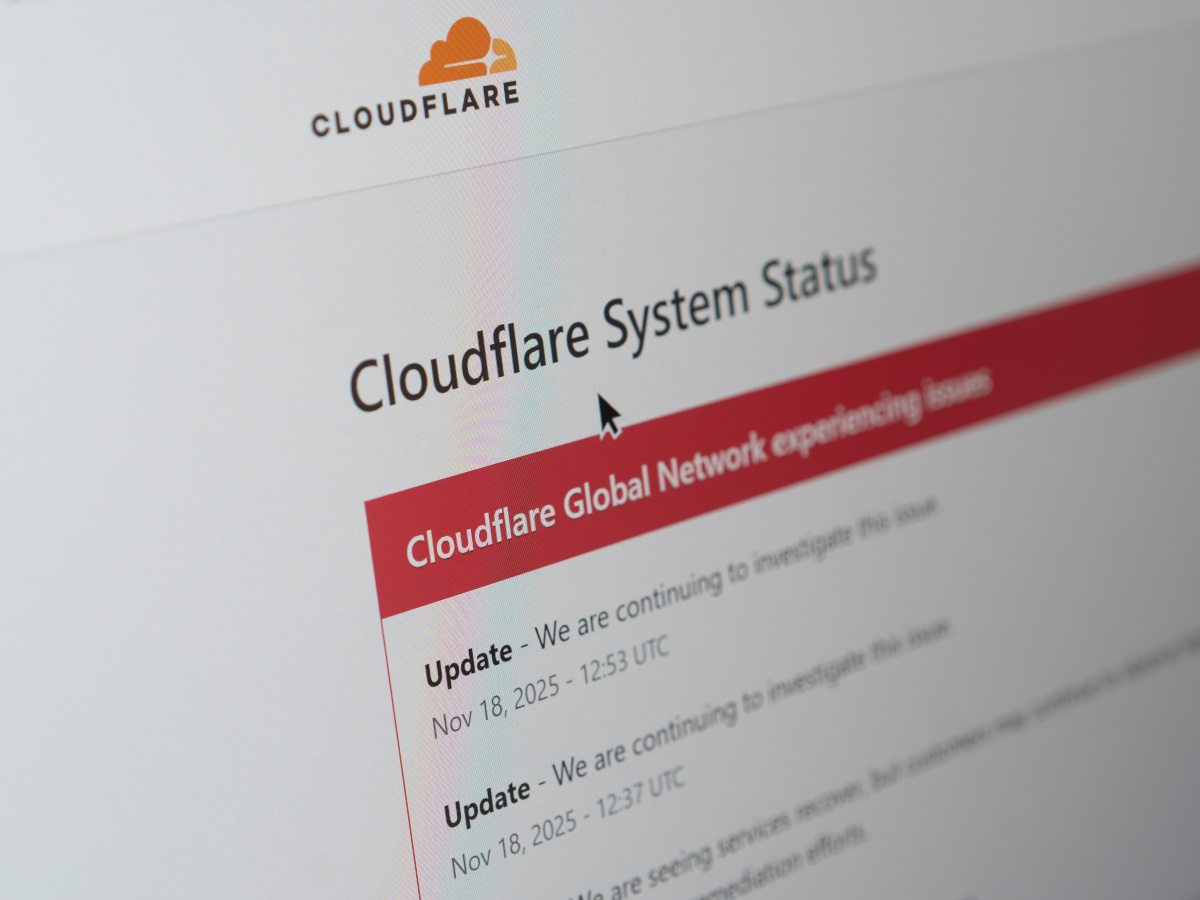
Cloudflare is cutting 20pc of its workforce after AI usage at the company grew 600pc in the last three months. The company said that it is cutting more than 1,100 employees, and expects restructuring costs to range up to $150m.
Shares at Cloudflare fell by more than 16pc in after-hours trading despite the company announcing a stronger than expected quarter, with first-quarter revenue growing 34pc year-on-year to nearly $640m. It expects second-quarter revenue to hit between $664m and $665m.
“We have to be intentional in how we architect our company for the agentic AI era”, an email sent to employees read.
Advertisement
“Today’s actions are not a cost-cutting exercise or an assessment of individuals’ performance – they are about Cloudflare defining how a world-class, high-growth company operates and creates value in the agentic AI era.”
In its earnings release yesterday (7 May), Cloudflare co-founder and CEO Matthew Prince said: “AI is driving a fundamental re-platforming of the internet and a paradigm shift in how software is created and consumed – it’s shaping up to be the biggest tailwind we’ve ever seen in Cloudflare’s history.”
Cloudflare has offices in a number of European countries, including the UK. When queried on country-specific layoffs, the company redirected SiliconRepublic.com to the official announcement on its website.
Company leaders, who were previously apprehensive of linking layoffs to AI, have recently begun embracing the shift in work culture, with Coinbase’s Brian Armstrong noting AI is “changing how we work” and Meta’s Mark Zuckerberg commenting that projects that previously required larger teams now only need “a single, very talented person”.
Block’s co-founder, head and chair Jack Dorsey, meanwhile, said earlier this year that a “majority of companies” will reach similar conclusions around smaller teams and make similar structural changes “within the next year”.
Cloudflare, however, is also tapping a younger, more AI-literate workforce, with plans to take on 1,111 interns by the end of 2026. The interns are expected to “ramp up the creative and widespread application of AI with a fresh approach”, the company wrote in a blog last September.
The company – which claims to interface with around 20pc of the web – had a turbulent final quarter last year with two major outages affecting websites across the globe. Sites and platforms such as Zoom, LinkedIn, Shopify, Canva, Substack and Coinbase, as well as X and OpenAI, were reportedly affected in the disruptions.
Advertisement
Don’t miss out on the knowledge you need to succeed. Sign up for the Daily Brief, Silicon Republic’s digest of need-to-know sci-tech news.
Updated, 8 May, 10.41am: The article has been updated with a response from Cloudflare.
Is it me, or did PC gaming used to move faster? In the late 1990s and early 2000s, a graphics card could feel outdated within a year, and major platform jumps arrived so often that upgrading became part of the hobby. Today, things are different. Read Entire Article Source link
Barespace Capital’s new system gives salon owners direct access to growth funding through the platform they already use.
Start-up Barespace, an Irish AI-powered OS provider for the hair and beauty sector, has launched Barespace Capital, an embedded finance platform enabling salons to access funding within already utilised platforms.
Barespace and Barespace Capital aim to follow a shift towards embedded finance across vertical SaaS platforms. According to Barespace, the hair and beauty sectors often deal with traditional lenders who struggle with risk assessment and variable cash flow, as standard finance systems often rely on documentation and processes designed for other types of business.
Established in Dublin in 2022 by co-founders Conor Moules and Glenn McGoldrick, Barespace works with more than 300 salons across Ireland, the UK, France and Spain, and recently secured significant seed funding of €2.9m to support further expansion.
Advertisement
The platform stated that Barespace Capital “represents the latest step in the company’s evolution from a booking platform into an AI-powered operating system for the beauty industry”. So far, the company has raised €4.68m in funding.
Commenting on the announcement, CEO Moules said: “Salons run on tight margins and unpredictable cash flow. Traditional banks don’t understand the business and most salon owners either go without or jump through hoops for a loan that can take months to approve.
“Barespace Capital changes that. Because we already live inside the salon, managing bookings, product inventory, staff and payments, we have a real-time picture of the business that no bank ever sees. When you can see the talent and the traction in real time, backing them is not a risk. It’s obvious.”
In March of this year, Sifted released its annual list of the 100 fastest-growing Irish and UK start-ups; Barespace made an appearance, coming in at 56th position as the highest ranking seed start-up on the list. Other high-profile Irish entries included Dublin’s Kota, which placed in the top 10, and Protex AI, which ranked 21st.
Advertisement
Don’t miss out on the knowledge you need to succeed. Sign up for the Daily Brief, Silicon Republic’s digest of need-to-know sci-tech news.
A new NYT Strands puzzle appears at midnight each day for your time zone – which means that some people are always playing ‘today’s game’ while others are playing ‘yesterday’s’. If you’re looking for Friday’s puzzle instead then click here: NYT Strands hints and answers for Friday, May 8 (game #796).
Strands is the NYT’s latest word game after the likes of Wordle, Spelling Bee and Connections – and it’s great fun. It can be difficult, though, so read on for my Strands hints.
Want more word-based fun? Then check out my NYT Connections today and Quordle today pages for hints and answers for those games, and Marc’s Wordle today page for the original viral word game.
Advertisement
SPOILER WARNING: Information about NYT Strands today is below, so don’t read on if you don’t want to know the answers.
Latest Videos From
NYT Strands today (game #797) – hint #1 – today’s theme
What is the theme of today’s NYT Strands?
• Today’s NYT Strands theme is… Garden variety
Advertisement
NYT Strands today (game #797) – hint #2 – clue words
Play any of these words to unlock the in-game hints system.
PAIRS
DIGGER
GASP
CHIN
GUIDE
TIDES
NYT Strands today (game #797) – hint #3 – spangram letters
How many letters are in today’s spangram?
• Spangram has 13 letters
Advertisement
NYT Strands today (game #797) – hint #4 – spangram position
What are two sides of the board that today’s spangram touches?
First side: left, 8th row
Last side: right, 8th row
Right, the answers are below, so DO NOT SCROLL ANY FURTHER IF YOU DON’T WANT TO SEE THEM.
Advertisement
NYT Strands today (game #797) – the answers
(Image credit: New York Times)
The answers to today’s Strands, game #797, are…
ARTICHOKE
LETTUCE
RADISH
ONION
ASPARAGUS
SPANGRAM: SPRINGVEGGIES
My rating: Easy
My score: Perfect
I initially thought I was playing yesterday’s game again but the themes are subtly different — yesterday it was “garden variety” as in commonplace and today it’s “garden varieties” as in the many vegetables one may grow in an actual garden, specifically in springtime.
Sign up for breaking news, reviews, opinion, top tech deals, and more.
Advertisement
That sorted out, I spotted ARTICHOKE almost immediately. Well, that’s a lie, I spotted “choke” immediately and then wondered if it could actually be ARTICHOKE.
After getting LETTUCE it was all pretty rudimentary, as each word was layered over each over in a growing heap — a bit like compost I suppose.
Advertisement
Yesterday’s NYT Strands answers (Friday, May 8, game #796)
BASIC
PROSAIC
COMMON
ORDINARY
PEDESTRIAN
SPANGRAM: RUNOFTHEMILL
What is NYT Strands?
Strands is the NYT’s not-so-new-any-more word game, following Wordle and Connections. It’s now a fully fledged member of the NYT’s games stable that has been running for a year and which can be played on the NYT Games site on desktop or mobile.
I’ve got a full guide to how to play NYT Strands, complete with tips for solving it, so check that out if you’re struggling to beat it each day.
This week was the best of times for Akamai and the worst of times for Cloudflare.
On the same evening, content delivery network mainstay Cloudflare announced it was cutting about a fifth of its staff in a realignment around AI, its competitor Akamai announced a seven-year, $1.8 billion deal with a leading LLM provider that Bloomberg identified as Anthropic.
Akamai CEO Tom Leighton said this was the largest deal in the company’s history and that it came after another large, unidentified frontier-model developer signed a $200 million deal last quarter.
“These leaders in AI have chosen Akamai because their AI workloads need the scale, performance and reliability that our cloud platform provides,” he said during the company’s first quarter earnings call on Thursday.
Advertisement
Akamai, which has 4,300 locations in 700 cities across 130 countries, won the deal against stiff competition from hyperscalers and neoclouds. He said Akamai’s ability to manage and scale complex distributed systems, as well as its low latency, tipped the scales in its favor.
Given the supply chain constraints in datacenter space, especially as it relates to memory costs and the infrastructure needed inside of large datacenter buildouts, one analyst asked if Akamai planned any increase to its capital expenditures this year to pay for it. Akamai executive vice president and CFO Ed McGowan said that was not likely.
“We’ve been able to get the supply chain ready. We anticipate receiving all the goods that we need to deliver this services over the next seven years within the next 12 months,” he said. “Now there’s always potential for slippage and delays, but we have mechanisms in our contracts to deal with, if, in say six months from now, prices were to go up. So we’ve taken that into consideration.”
McGowan said it is a consumption-based contract over seven years, so as soon as Akamai ramps the necessary capacity, it will start taking revenue, which he expects to begin happening later this year.
Advertisement
Winning this deal and ones like it has been Akamai’s goal in the AI era, Leighton said.
“This has been the strategy all along. So we’re very pleased to be executing against it,” he said. “The goal has been to be deploying a distributed inference platform, distributed compute platform that would be desired by enterprises across the spectrum … The platform is to a point where we can do that, and I think you’ll see more of this going forward.”
On the same day, across the country, Cloudflare was spelling out the bad news to its employees that it planned to cut the workforce by 1,100, roughly 20 percent. Cloudflare co-founders Matthew Prince and Michelle Zatlyn said it was not about cutting costs, but about building a company that meets the AI moment.
“We have to be intentional in how we architect our company for the agentic AI era in order to supercharge the value we deliver to our customers and to honor our mission to help build a better Internet for everyone, everywhere,” they wrote in a blog post.
Advertisement
Cloudflare’s revenues grew 34 percent year over year to reach $639.8 million in the first quarter. It posted a net loss of $22.9 million. It expects to pay up to $150 million in severance and benefit payments related to the layoffs.
While Akamai’s stock price surged 26 percent on Friday, Cloudflare dropped 23 percent. With a market cap of over $69 billion, Cloudflare still has more than three times Akamai’s market cap. ®
We spend hours testing every product or service we review, so you can be sure you’re buying the best. Find out more about how we test.
TCL QM8L: Two-minute review
The TCL QM8L SQD-Mini LED TV may be technically the company’s third-tier TV this year, but it’s good enough to give you a flagship-type experience for a very reasonable price.
In my time with the TCL QM8L, I was very impressed across the board — almost as much as my dad, who’s probably stole even more time using it than me during testing. Its bright screen makes daytime watching easy even in bright rooms, and TCL’s backlight tech does a great job of offering a clean image with no blooming, highlighting detail no matter how bright or dark the picture is.
Advertisement
In fact, I think that everything this TV has to offer not only makes it really strong contender among the best TVs of 2026, as well as one of the best gaming TVs thanks to its four HDMI 2.1 ports and broad current-gen gaming features.
Latest Videos From
There’s plenty more to like about the 75QM8L (I received the 75-inch size for this review). The hands-free control is always a nice feature and having Google Gemini’s conversational interaction is mostly lovely, though I did find issue with some of the information it would offer up during use.
And I also found it to not quite measure up to the best of the best when it comes to color accuracy, or for color coverage compared to what TCL claimed it would be capable of.
That said, if you were to watch this TV and not look at any benchmarks, you would — like me — not think about any of that and just be enthralled with the sharp, smooth, and bright image (and brightness is a key area where the benchmarks look pretty good).
Advertisement
If you’re looking for an excellent mini-LED TV that comes in big sizes, and can hold up to even the brightest rooms while still delivering nuanced picture quality, I can recommend the TCL QM8L strongly.
Sign up for breaking news, reviews, opinion, top tech deals, and more.
TCL QM8L review: Price and release date
(Image credit: Future / James Holland)
Release date: April 2026
65-inch: $1,799
75-inch: $1,999
85-inch: $2,999
98-inch: $4,999
TCL has taken a go-big-or-go-home approach this year, releasing impressive updates for its top couple of lines of TVs, including the QM8L series reviewed here. While the TV was on show at CES, it wasn’t available for purchase until April 2026.
It sits below the TCL X11L (which is this year’s flagship) and the TCL RM9L TVs in this year’s line-up, but it uses the same SQD-Mini LED panel technology as the X11L. (The RM9L uses a new RGB LED panel, just to confuse things.)
Advertisement
As far as actual pricing goes, the pricing is not for the faint of heart, despite being third in the list. I’ll discuss how it stacks up to the competition later (and TCL does offer good value), but that doesn’t change the fact that a price of $1,999.99 for the 65 inch, the smallest size available for the QM8L, is a lot of money to throw at a TV.
It’s less than the likes of LG G6 OLED TV, but is still undeniably premium — though it’s already dropped massively in the few weeks since its launch, and will drop further — as is always the case with TCL TVs.
I think adding a couple hundred bucks to upgrade to the next size up, the 75-inch reviewed here, is reasonable if you’re already considering dropping that kind of cash on a TV.
Advertisement
TCL QM8L review: Specs
Swipe to scroll horizontally
Screen type:
SQD-Mini LED
Refresh rate:
144Hz
Advertisement
HDR support:
HDR10, HDR10+, HLG, Dolby Vision IQ
Smart TV:
Google TV
Advertisement
HDMI ports:
4x HDMI 2.1
Built-in tuner:
ATSC 3.0
Advertisement
TCL QM8L review: Benchmark results
TCL QM8L review: Features
(Image credit: Future / James Holland)
Supports the full range of HDR and spatial audio formats
Uses a few different TCL technologies to improve picture quality
Hands-free control via Google Gemini
The TCL 75QM8L has a good amount of features, as it should for TCL’s almost flagship TV. It has all the various HDR, Dolby Vision, Dolby Atmos, and DTS support one could need, which no rivals from LG, Sony or Samsung offer in their entirety.
The TV also utilizes some proprietary features to improve picture quality. For instance, the TCL Deep Color System is meant for a wider color range, to get up to a claimed 100% BT.2020 color coverage.
I’ll go into our test results in the next section, but I’ll briefly mention that the TV does decently but doesn’t actually get to that 100% color coverage for either BT.2020 or DCI-P3 in our measurements. Still, this technology does boost the colors beyond what’s been normal for mini-LED in the past (and TCL says there are multiple ways to test for BT.2020 coverage).
Advertisement
Available in 65-, 75-, 85-, and 98-inches (my test unit is the 75-inch model), these TVs come with up to 4,000 local dimming zones featuring precise array full local dimming thanks to the SQD-Mini LED panel, and up to 6,000 nits of peak brightness to really make the most of HDR content.
For reference, the flagship X11L claims up to 20,000 local dimming zones and 10,000 nits of brightness. Considering the 75QM8L is much more affordable (in comparison), its specs are pretty impressive.
The ‘Enhanced Halo Control System’ in the LED backlight promises to minimize blooming, partly by using 26-bit backlight controllers. Having spent a good amount of time looking at this screen with HDR content on (as well as some test videos with colorful objects against black backgrounds), I haven’t noticed much if any in the way of blooming for real-world use.
Colorful or bright objects kept their shape against darker backgrounds without spilling over, so to speak, to those darker sections.
Advertisement
The WHVA panel 2.0 that TCL hopes will make you forget about OLED TVs also sport a 144Hz refresh rate, and a 178º viewing angle.
A TSR AI Pro processor powers the TV, with its processing focused partly on Google’s AI-powered voice assistant Gemini. And Wi-Fi 6 is on hand for a more responsive TV – realistically, your Wi-Fi is going to be the biggest bottleneck on a newer TV so this is a welcome upgrade.
If you’re like me, the hands-free voice control, using the Google Gemini AI voice assistant, will be the most impressive and most noticeable. Every time I say “Hey Google,” I find the TV to be responsive, even when it’s off and I’m asking it to turn back on.
I can open apps and a good deal of content just by speaking to it. I can also ask out more general knowledge-type queries that one would with a voice assistant (weather, sports scores, news, etc.).
Advertisement
Of course, there are some limitations in that it doesn’t always lead me to the right streaming location for certain content (more on that in the smart TV section).
Beyond the voice assistant, the AI capabilities, powered by the TSR AI Pro Processor, include an AI art gallery as a screen saver, AI news briefs, and AI picture-related settings.
For gaming, you’ve got 144Hz at 4K and variable refresh rate support across all four HDMI ports, plus the option for a 288Hz refresh rate at 1080p (still with VRR).
Advertisement
TCL QM8L review: Picture quality
Difficult and nuanced near-dark detail is handled remarkably well (Image credit: Future / James Holland)
Impressively limited blooming and bold colors
Filmmaker mode and Dolby Vision help to deliver rich pictures
Color accuracy is not totally ideal out of the box
I spent a few weeks with the TCL 75QM8L, sharing time in control of the screen with my dad, which means a combination of Phillies games, British murder mysteries, blockbusters, 90 Day Fiancé and Leave It To Beaver — as well as some next-gen gaming. I’ll go into detail on that last bit in the gaming section, but it’s instructive for how the screen looks too.
During use, the TCL QM8L is a stunner. What I think puts this TV above other so many other options are the color and halo control systems I mentioned above, combined with the total HDR support, meaning images look gloriously rich.
We measured 3,719 nits of peak HDR brightness in a 10% window in Filmmaker Mode, which is absolutely stunning – but the over 2,000 local dimming zones in the model I tested helped to keep clear separation between light and dark areas despite the brightness.
There’s no bleed from one color to the next, and I’m able to see details in shadows clearly thanks to high dimming capability of each section.
Fullscreen HDR brightness in a 100% window is also colossal, reaching 760 nits in Filmmaker Mode and 790 nits in Standard (which is what you’re more likely to use for sports).
Advertisement
Even in SDR in Standard mode, it hit 518 nits. That blows away any TV I’ve tested so far, and means the screen will only have reflection issues in dark scenes — watching sports in the day won’t be any kind of problem.
Also useful for sports, or family room viewing, is that it has a pretty wide viewing angle, so I can watch something at a very sharp angle and still see the picture impressively clearly.
Speaking of sports, the motion handling is smooth. Whether it’s watching NBA basketball, or even a sweeping drone shot, the screen doesn’t show much in the way of judder. And of course, movies come across as buttery smooth.
Regardless of what’s happening on the screen, the TCL QM8L still manages to reproduce all the detail of the image. Whether it’s the fine lines of a petal in one of those hi-res screen tests or the crowd in the background of a game, it all looks clear and natural.
Advertisement
Even lower resolution content looks plenty sharp with a decent amount of detail. I never knew Leave It To Beaver could look so good, thanks to the “super resolution” AI upscaling (which is optional, but is enabled out-of-the-box).
When it comes to color, TCL’s purported 100% BT.2020 rating is a little overblown, because the best we measured was 90%. (TCL told us there are multiple ways to measure BT.2020, and that it makes a difference.)
DCI-P3 color coverage is incredibly strong for a mini-LED TV at 98% — this is what we get from the most elite OLED TVs normally, with mini-LED falling further behind.
A little more concerning is the color accuracy. We measure how close the color reproduction is to ‘perfect’, measured in a ‘Delta E’ score, which means how far the picture is from the signal it’s trying to recreate. We look for a score below 3, because at that point the human eye can’t distinguish any difference from the reference pattern.
Advertisement
In Filmmaker Mode, the TCL QM8L score 3.7, which is a little disappointing for a premium TV, but not a dealbreaker. But in Standard, we measured a score of 9.9, which is shockingly high for something in this price range.
This is out of the box, of course, but most people don’t calibrate their TV. As I said above, I found the colors to be really impactful and involving, but Filmmaker Mode is definitely the way to enjoy things if you want an accurate, more natural look — Standard isn’t where we’d expect it to be.
Picture quality score: 4.5 / 5
TCL QM8L review: Sound quality
(Image credit: Future / James Holland)
Sounds good enough to skip the soundbar in general
Bass is the major area lacking
Spatial audio sounds pretty good
The sound quality on the TCL 75QM8L is pretty impressive, as it should be, considering the price and the fact that the sound system is branded as being by Bang & Olufsen.
I’ve tested everything from blockbuster movies to reality TV to various games and music, and I believe the audio here is good enough for you to skip adding a soundbar as long as you’re not looking for a home theater-type listening experience.
The high-end has plenty of presence while not being ice-pick brittle, letting sounds like flutes, strings, cymbals, and anything one might consider ‘sparkly’ (think chimes) come through with full clarity.
Advertisement
The mid-range is full in a way that many TVs aren’t able to produce, and is, in my opinion, the main reason to typically add a soundbar to a setup. When listening to music, vocals and guitar have the appropriate amount of aggressiveness, while dialog has a weight to it in movies the helps it to stand out clearly.
There’s a decent amount of mid-bass, so you’ll still get a little thump when listening to music or watching an action movie, but the two built-in woofers aren’t able to reproduce the frequencies typically the responsibility of a subwoofer. If you really want to feel the audio, you’ll need to add one.
Happily, TCL does have a wireless subwoofer that can be added for that purpose, but it does require an additional purchase. Likewise, though the TV supports Dolby Atmos and DTS, you’ll have to get TCL’s Dolby Atmos FlexConnect speakers to actually hear any surround sound if you don’t want to purchase or build a whole home theater system.
The TV does, however, manage to reproduce some spatial audio without any add-ons. Turning it on does add a sense of height to whatever I’m watching, so you should definitely give it a try.
Advertisement
I also appreciate the fact that there are some other audio options to fine tune, such as a bass boost, a dialog enhancer (admittedly subtle), an auto volume control that works somewhat like night mode in that it compresses audio volume, and an AI sonic adaptation feature that works to offset the reflections of your room for a more pure sound.
That last feature works, though not quite as well as something like Dirac, so don’t expect audiophile-level audio.
Sound quality score: 4.5 / 5
TCL QM8L review: Design
(Image credit: Future / James Holland)
Zero edge bezels feel very premium
Excellent dual-height stand with cable management
Remote is larger than average
The ‘zero edge’ bezels on the 75QM8L make me almost feel like I’m watching on a floating screen — there’s almost no frame.
The centered stand, which can be height-adjusted during installation to accommodate a soundbar, makes the TV feel more balanced and stable than many TVs that I test (and we typically get 65-inch models for testing).
The stand also has cable management built into it — it has a back panel that pops out to hide the cables — which we always appreciate.
Advertisement
I also like the fact that all four HDMI ports are HDMI 2.1, meaning you don’t need to think about which one you’re going to use and fiddle around. Well, mostly: there’s still only one HDMI eARC port, so if you connect that one of the best soundbars or an AV receiver, you need to know which it is.
Lastly, the remote is actually a bit bigger than I’m usually used to, which some might like. It’s heftier and so easier to keep track of and the bottom is angled to fit snugly in the hand. It’s also backlit and has a talk button, though you can also communicate with the TV via Google Gemini.
TCL QM8L review: Smart TV and menus
(Image credit: Future / James Holland)
Google Gemini is conversational and responsive though not always correct
Good amount of free content available on Google TV, and all major apps
There’s a quick menu for common settings changes
The Google TV interface is one I’ve gotten accustomed to after reviewing a number of TVs and streaming devices that use it. The way it’s implemented on the TCL 75QM8L is essentially the same, with the only noticeable difference to most TVs being the inclusion of Google Gemini.
Google Gemini is a very robust voice assistant. Since it’s AI-powered, it’s conversational and quick, but also prone to mistakes the way generative AI generally is.
Advertisement
For example, I had Gemini look up the movie Swept Away, and while it offered correct information on the fact that there are two versions, it was wrong on where it was available to stream. Strangely, when I just used the interface’s search function, I was sent to a landing page that suggested it was available to stream on Tubi, which still only hosted the newer, more maligned, 2002 version.
Gemini is nice to use, though, with a selection of different timbres of voices that sound natural when speaking. I’m able to ask about much more than movies of TV, because it is a full-blown voice assistant. It even brings up a neat little graph when talking about the weather.
For some reason, it did default to pulling up relevant YouTube videos when I asked more general questions. For instance, I asked ‘Recommend a movie to me based on my viewing habits’ and it just pulled up a bunch of YouTube videos (I was not in the YouTube app, mind you) related to must-see movies.
The rest of the Google TV interface is more standard fare. A rotating banner covers the top of the home page, followed by rows of recommendations including ‘Must Watch’, ‘Continue Watching’ and more, not to mention a row of apps if you want to open one and browse.
Advertisement
Still, many will appreciate being able to browse much of the available content from the home page. Just be aware, it’s not comprehensive, as the interface may not pull information from certain apps.
As every manufacturer does these days, there’s a good amount of free content available. Google FreePlay, in particular, has a good deal of content and works much like a cable guide interface. Who knew that Google would be able to quench my dad’s thirst for Leave It To Beaver — there was a whole channel streaming episodes.
When you first go to the settings option via the remote or navigating the screen, a breakout box of quick settings appear at the top right corner of the screen. You have to still click once more to get the full list of settings — sometimes this is useful, sometimes it feels like it’s just adding a step.
There’s a lot of fine tuning available, especially for the display, so I can imagine the menus to be a little overwhelming for anyone digging in for the first time. But it’s good to have more options than not, especially with as good of a TV as this.
Advertisement
Smart TV & menus score: 4.5 / 5
TCL QM8L review: Gaming
(Image credit: Future / James Holland)
All HDMI inputs support 4K at up to 144Hz, with variable refresh rate
Game Bar menu for game-specific finetuning of settings
Can automatically switch inputs and to game mode when console is on
Great news for gamers this year is that all four of QM8L’s HDMI inputs are of the full-fat HDMI 2.1 variety, meaning that they all support 4K at 120Hz or 144Hz. Just make sure to enable faster refresh rates in the TV’s menu.
Speaking of menus, if you press on the hamburger symbol (the three stacked lines) on the remote while gaming, the TCL 75QM8L will pull up a specialized menu that the brand calls the Game Bar, enabling you to turn on things like an FPS counter, Aim Assist, Game Accelerator 288 (which doubles the perceived refresh rate to 288Hz, but drop the resolution to 1080p), and Overdrive, which is a kind of motion blur that can’t be used as the same time as high refresh rates.
To test the TV for gaming, I used a Playstation 5 and had no problem running compatible games at 120 fps. All of them looked crisp thanks to the 4K resolution with good HDR contrast despite the more limited processing you get in the gaming mode.
The 9.5ms latency is excellent for a TV, and is basically as good as you get from any of the best gaming TVs — and helps everything feel fast and snappy when playing.
Lastly, not only can the TV switch inputs automatically when a console is turned on, but the TCL QM8L will automatically switch the picture mode to game mode.
Advertisement
TCL QM8L review: Value
(Image credit: Future / James Holland)
It’s pricey, but not quite flagship price, thankfully
The bigger the size, the better-value TCL sets tend to be
Certain unique features like hands-free control are available on cheaper TVs
The 75-inch TCL QM8L is about two grand (which is a drop from the $3k is cost right at launch) — that’s not cheap and it’s out of reach for many consumer.
However, compare it to LG’s mid-range OLED offering, the LG C6, and the TCL is not looking so bad. That comes with a price tag of $3,699 for the 77-inch. The TCL has a big price advantage, but the two TVs are comparable overall for features.
The big threat to it is really last year’s TCL QM8K. That’s now available for around $1,500 for a 75-inch size, and is a really excellent TV without question at that price — the QM8L’s better color range, improved backlight and four HDMI 2.1 ports mean that it’s worth the upgrade in my opinion.
It may not be the bargain of the year at this price, it represents a great value overall, and is above average when it comes to bang for your buck.
Advertisement
(Image credit: Future / James Holland)
Swipe to scroll horizontally
TCL QM8L Series
Attributes
Notes
Rating
Features
Advertisement
Excellent picture and audio format support, plus hands-free AI-based controls that can be really useful.
4.5 / 5
Picture quality
Stunning brightness and extremely impressive contrast control for a mini-LED. We wish the colors in Standard Mode were more accurate.
Advertisement
4.5 / 5
Sound quality
The audio sounds good enough to skip a soundbar, though there’s not much in the way of low-end.
4.5 / 5
Advertisement
Design
The adjustable center stand with cable management is great, as are the zero edge bezels.
4.5 / 5
Smart TV and menus
Advertisement
Google Gemini is conversational and easy to use though not quite reliable, while the Google TV interface is fairly intuitive to use.
4.5 / 5
Gaming
Four HDMI 2.1 ports and super-rich HDR images make this a pleasure to game on.
Advertisement
5 / 5
Value
The TCL QM8L is a strong value compared to similar-tier TVs from other brands, but is still pricey.
4 / 5
Advertisement
Should I buy the TCL QM8L Series?
Buy it if…
Don’t buy it if…
Advertisement
Also consider…
Swipe to scroll horizontally
Header Cell – Column 0
TCL QM8L
Amazon Fire TV Omni QLED (2025)
Hisense U65QF
LG C6
Advertisement
Price (65-inch)
$1,799
$849
$999
Advertisement
$2,699
Screen type
SQD-Mini LED
QLED
Advertisement
QLED w/ mini-LED
OLED
Refresh rate
144Hz
Advertisement
60Hz
upt to 144Hz
165Hz
HDR support
Advertisement
HDR10, HDR10+, HLG, Dolby Vision IQ
Dolby Vision/HDR10+ Adaptive/HDR10
Dolby Vision IQ, HDR10+, HDR10, HLG
Dolby Vision, HDR10, HLG
Advertisement
Smart TV
Google TV
Fire TV
Fire TV
Advertisement
WebOS 26
HDMI ports
4 HDMI 2.1
4 HDMI 2.0
Advertisement
4 (2x HDMI 2.1)
4x HDMI 2.1
How I tested the TCL QM8L Series
I used the TCL 75QM8L for a couple weeks
Tested with both TV, movies, music, and games
Benchmark measurements conducted by Future US testing lab
I used the TCL 75QM8L regularly for a couple weeks. I tested it using streaming shows, movies, music, and games (via PS5). I went through the various features, particularly the hands-free AI voice assistant, to see if they work as advertised. I also spent time listening to the audio as well as paying attention to the picture quality.
The objective data measurements were taken by Future Publishing’s TV testing lab, which uses the Klein K-10A colorimeter and Jeti 15VA spectroradiometer, Murideo Six G 8K Metal test pattern generator, and Portrait Displays’ Calman color calibration software to record the results.
Advertisement
I’ve tested a lot of tech gear over the years, from laptops to keyboards and speakers, and so have been able to use my expertise towards giving an honest and fair opinion, not to mention a critical eye, to any product I test.
Some Netflix subscribers are encountering a server error that prevents them from cancelling their memberships, at a time when the streaming platform has just raised prices across all of its US plans.
The error, identified by the code NSES-500, appears on Netflix’s standard “Something went wrong” page and has persisted for affected users across multiple devices and browser changes over at least a week, suggesting the problem lies within Netflix’s backend infrastructure rather than individual account settings.
One suggested workaround circulating in the same threads involves switching the account’s payment method to an expired card before attempting to cancel, a step that some users report bypasses the error screen where the conventional cancellation route continues to fail.
Reports of the issue have gathered significant traction on Reddit, where a thread on r/Anticonsumption documenting the cancellation block has drawn over 1,500 upvotes, with further threads on r/netflix showing a consistent pattern of subscribers hitting the same wall regardless of the workarounds attempted.
Advertisement
The price rise that preceded this error affected every tier of Netflix’s US subscription offering, a broad adjustment that pushed the Premium plan to $26.99 per month for 4K streaming and represented one of the more aggressive rounds of pricing changes the platform had pushed through in a relatively short window, giving subscribers fresh motivation to assess whether to stay.
Advertisement
That context makes the cancellation fault considerably more aggravating for those it affects, since any subscriber unable to complete the process before their billing date rolls over faces the prospect of being charged for another full cycle before they can exit the service.
Some users in the Reddit threads have reported that calling Netflix’s customer service line directly produced a successful cancellation where the online process had failed entirely, though this route requires navigating a support queue rather than using the standard account management tools.
Advertisement
Netflix has not acknowledged the error publicly, and no timeline has emerged for when the self-service cancellation flow is expected to return to normal working order.
Nothing less than a win looks likely to do for title-chasing Man City on Saturday as it hosts a Brentford side looking to build on its London derby win last weekend.
Second-placed City has a game in hand over title rival Arsenal. However, the team comes into this weekend’s action five points behind the Gunners, having played out a tremendously entertaining 3-3 draw at Everton on Monday.
Brentford enters this game in seventh place and with renewed hope of qualifying for Europe for the first time in its history following last weekend’s 3-0 win over London rival West Ham.
Manchester City takes on Brentford on Saturday, May 9, at the Etihad Stadium, with kickoff set for 5:30 p.m. BST. That makes it a 12:30 p.m. ET or 9:30 a.m. PT start in the US and Canada, and a 2:30 a.m. AEST kickoff in Australia in the early hours of Sunday morning.
Advertisement
Jeremy Doku scored a last-second equalizer against Everton to rescue a point on Monday night.
Shaun Brooks/CameraSport/Getty Images
How to watch Man City vs. Brentford in the US without cable
Saturday’s clash at the Etihad Stadium will be broadcast on NBC and streaming service Peacock. To catch the game live on Peacock, you’ll need a Peacock Premium or Premium Plus subscription. NBC Sports Network is available on platforms like YouTube TV.
Advertisement
Peacock offers two Premium plans, and after recent price increases, the ad-supported Premium plan costs $11 a month and the ad-free Premium Plus plan costs $17 a month.
How to watch the Premier League 2025-26 with a VPN
If you’re traveling abroad and want to keep up with Premier League action while away from home, a VPN can help enhance your privacy and security when streaming.
Advertisement
It encrypts your traffic and prevents your internet service provider from throttling your speeds, and can also be helpful when connecting to public Wi-Fi networks while traveling, adding an extra layer of protection for your devices and logins. VPNs are legal in many countries, including the US and Canada, and can be used for legitimate purposes such as improving online privacy and security.
However, some streaming services may have policies that restrict VPN use to access region-specific content. If you’re considering a VPN for streaming, check the platform’s terms of service to ensure compliance.
If you choose to use a VPN, follow the provider’s installation instructions to ensure you’re connected securely and in compliance with applicable laws and service agreements. Some streaming platforms may block access when a VPN is detected, so verify whether your streaming subscription allows VPN use.
Price $78 for two yearsLatest Tests No DNS leaks detected, 18% speed loss in 2025 testsJurisdiction British Virgin IslandsNetwork 3,000 plus servers in 105 countries
ExpressVPN is our current best VPN pick for people who want a reliable and safe VPN, and it works on a variety of devices. It’s normally $120 a year for its most popular plan (Advanced), but if you sign up for an annual subscription for $90, you’ll get three months free. That’s the equivalent of $6 a month.
Advertisement
Note that ExpressVPN offers a 30-day money-back guarantee.
73% off with 2yr plan (+4 free months). Now only $3.49/month
Livestream Man City vs. Brentford in the UK
This Saturday afternoon clash is exclusive to Sky Sports and will be shown on its Sky Sports Main Event channel. If you already have Sky Sports as part of your TV package, you can stream the game via its Sky Go app. Cord-cutters will want to set up a Now account and a Now Sports membership to stream the game.
Advertisement
Now TV
Sky’s standalone streaming service Now offers access to Sky Sports channels with a Now Sports membership. You can get a day of access for £15 or sign up to a monthly plan from £35 a month right now.
Livestream Man City vs. Brentford in Canada
If you want to livestream EPL games in Canada this season, you’ll need to subscribe to Fubo. The service has secured exclusive rights to the Premier League and is broadcasting all 380 matches live.
Advertisement
Fubo
Fubo is the go-to destination for Canadians looking to watch the EPL, with exclusive streaming rights to every match. It currently costs CA$27 for the first month, then CA$31.50 per month thereafter.
Livestream Man City vs. Brentford in Australia
Livestreaming rights for the EPL are now with Stan Sport, which is showing all 380 matches live, including this game.
Advertisement
Stan
Stan Sport will set you back AU$20 a month (on top of a Stan subscription, which starts at AU$12). It’s also worth noting that the streaming service is currently offering a seven-day free trial.
A subscription will also give you access to Premier League, Champions League and Europa League action, as well as international rugby and Formula E.





















































You must be logged in to post a comment Login