
Business
Will Duke Basketball Win It All? Duke Basketball Enters Second Round as Third Favorite to Claim NCAA Title


The Duke Blue Devils remain firmly in the national championship conversation for the 2026 NCAA men’s basketball tournament, but a narrow escape in their opening-round matchup has tempered some of the preseason hype surrounding Jon Scheyer’s squad.

As of March 22, 2026, Duke sits as the third choice to cut down the nets in Indianapolis, with odds hovering around +500 across leading sportsbooks — translating to an implied probability of approximately 16.7%. That marks a notable drop from their pre-tournament status as the outright favorite at +300 to +330, when they earned the No. 1 overall seed following a dominant ACC regular-season and tournament run.
Arizona now leads the pack at +360, followed closely by Michigan at +380, according to aggregated lines from sites including SI.com betting reports and FanDuel. Defending champion Florida trails at +700, rounding out a quartet of No. 1 seeds that dominate the futures board.
The shift stemmed directly from Duke’s first-round performance against No. 16 seed Siena. Installed as a massive 27.5-point favorite, the Blue Devils trailed by 11 at halftime before rallying for a 71-65 victory — a six-point win that felt far from convincing. Oddsmakers responded swiftly, dinging Duke’s title odds and elevating Arizona and Michigan, both of whom posted more decisive opening-round wins.
Despite the stumble, Duke’s path remains favorable. As the East Region’s top seed, they hold -120 odds to reach the Final Four, per FOX Sports, and face No. 9 seed TCU in the second round as an 11.5-point favorite. Projections from ESPN’s BPI give the Blue Devils a 91% chance to advance past the Horned Frogs, underscoring their superior talent and depth even on an off night.
Central to Duke’s campaign is forward **Cameron Boozer**, a key piece of the program’s reloaded roster following the departure of last year’s stars. With Cooper Flagg — the 2024-25 National Player of the Year and No. 1 NBA draft pick — now in the pros after a standout freshman season, Scheyer turned to another elite recruiting class headlined by the Boozer twins (Cameron and Cayden), Nikolas Khamenia, Dame Sarr and others.
The Blue Devils posted a 32-2 record entering the tournament, including a 17-1 mark in ACC play, and captured the conference tournament title to secure the top overall seed. Their blend of size, athleticism and defensive prowess has made them a perennial threat, though injuries and inconsistent efforts have surfaced at times.
Scheyer, in his third full season as head coach, has emphasized building around freshmen once again, a strategy that paid dividends in reaching the Final Four the previous year behind Flagg. This season’s group has shown flashes of similar potential, but the close call against Siena highlighted vulnerabilities — particularly in half-court execution and closing out lesser opponents.
Analysts point to Duke’s talent edge as the primary reason they remain in the mix. The Blue Devils boast one of the deepest rotations in the field, with versatile wings and interior presence that can matchup against any contender. Their Final Four odds reflect confidence in navigating the region, where fellow No. 1 seeds like UConn lurk but at much longer prices (+650 to reach Indianapolis).
Michigan and Arizona, the current co-favorites in some markets, have benefited from stronger opening-round showings and consistent dominance throughout the season. Michigan, at 32-3, and Arizona, at 33-2, have fewer question marks heading into the weekend, per Vegas Insider updates.
Still, history favors top seeds, and Duke’s resume — including a near-undefeated conference slate and ACC title — positions them well for a deep run. A return to form against TCU could quickly restore their status atop the board.
For bettors and fans alike, the Blue Devils’ title odds represent value if they handle business in the coming days. At +500, a $100 wager would return $500 profit on a championship win, down from the more favorable pre-tournament prices but still reflecting significant belief in Scheyer’s program.
As the tournament intensifies, Duke’s championship aspirations hinge on recapturing the dominance that made them the preseason pick. With the Sweet 16 on the horizon and a potential showdown with high-powered offenses ahead, the Blue Devils have every tool needed to chase banner No. 6 — but execution, starting Saturday, will determine if that chance climbs back toward the top.

Currently, the public float in IDBI Bank is only 5.29 per cent, limiting the scope of fair valuation.
The remaining shares are with insurance behemoth Life Insurance Corporation of India (LIC), with a controlling stake at 49.24 per cent, while the Government of India (GoI) holding stood at 45.48 per cent.
Earlier this month, the proposed sale of a 60.72 per cent majority stake, held jointly by the government and the LIC, was scrapped after financial bids from two potential buyers reportedly fell short of the reserve price.
Low free float restricts the scope for fair markvaluation, and expanding this by 10 per cent or 15 per cent would make price discovery more reliable, sources said.

It can provide a reliable benchmark for valuation and further make the price discovery process transparent, they said, adding, strategic sale can be pursued even after one or two tranches of OFS.
As per the failed plan, both the government and LIC were to offload 30.48 per cent and 30.24 per cent stake, respectively.This is the second time that the government has wanted to privatise IDBI Bank since the first announcement made in 2016. The idea was first officially flagged in the Union Budget speech by then-Finance Minister Arun Jaitley in February 2016.
The first attempt to privatise the then state-owned IDBI Bank failed due to valuation concerns.
However, the government later sold the controlling stake to LIC, which had been eyeing acquiring a stake in a bank to expand its bancassurance business model.
Subsequently, in January 2019, LIC acquired a 51 per cent controlling stake in IDBI Bank for approximately Rs 21,624 crore to rescue the lender from heavy bad loans as part of the disinvestment process.
As a result, the bank was categorised as a private-sector bank by the Reserve Bank of India.
In December 2020, the lender was reclassified as an associate company following the reduction of LIC’s stake in the bank to 49.24 per cent.
The process for privatisation gained formal momentum when the Cabinet Committee on Economic Affairs gave its in-principle approval in May 2021 for strategic disinvestment along with transfer of management control in IDBI Bank.
In October 2022, KPMG India was appointed as Transaction Advisor and the intent to sell 60.72 per cent stake in the bank was announced.
The Department of Investment and Public Asset Management (DIPAM) invited Expressions of Interest (EoI) in October 2022, and market regulator Sebi approved the reclassification of GOI as a public shareholder upon completion of the sale in January 2023.
Later in August 2025, the regulator gave its nod for reclassification of LIC as a public shareholder upon completion of the sale and after a long due diligence period, financial bids from two Emirates NBD Bank and Prem Vatsa-promoted Fairfax India were finally received in February 2026.


Focus on multinational transportation companies. Mercosur economies.
Analyst’s Disclosure: I/we have no stock, option or similar derivative position in any of the companies mentioned, and no plans to initiate any such positions within the next 72 hours. I wrote this article myself, and it expresses my own opinions. I am not receiving compensation for it (other than from Seeking Alpha). I have no business relationship with any company whose stock is mentioned in this article.
Seeking Alpha’s Disclosure: Past performance is no guarantee of future results. No recommendation or advice is being given as to whether any investment is suitable for a particular investor. Any views or opinions expressed above may not reflect those of Seeking Alpha as a whole. Seeking Alpha is not a licensed securities dealer, broker or US investment adviser or investment bank. Our analysts are third party authors that include both professional investors and individual investors who may not be licensed or certified by any institute or regulatory body.
Business
Hartsfield-Jackson Atlanta Airport Security Wait Times Fluctuate Amid Ongoing DHS Funding Crisis

Security wait times at Hartsfield-Jackson Atlanta International Airport (ATL), the world’s busiest by passenger volume, continue to vary dramatically on March 22, 2026, as the partial U.S. government shutdown drags into its second month, leaving Transportation Security Administration (TSA) officers unpaid and contributing to staffing shortages, absenteeism and unpredictable lines.

Real-time data from the airport’s official tracker at atl.com/times and third-party aggregators like Takeoff Timer and OnAir Parking showed average standard security wait times around 14 minutes as of midday local time, with peaks earlier in the overnight hours reaching 45 minutes from midnight to 1 a.m. and lows of zero during the quietest overnight slots. TSA PreCheck lanes remained significantly faster, often under 5 minutes when open.
However, passenger reports on social media and Reddit megathreads painted a more volatile picture. Early Sunday morning updates from r/Atlanta users described waits climbing to 75 minutes or more at the main domestic checkpoint during peak arrival periods, with some travelers advising 3+ hours of buffer time before flights. Lines have fluctuated wildly throughout the weekend: long queues spilling into baggage claim areas on Saturday and Friday, then easing briefly midday before building again.
The inconsistency stems directly from the ongoing partial shutdown affecting the Department of Homeland Security (DHS), which funds TSA. With no appropriations bill passed, many TSA employees have missed paychecks — some their second full cycle — prompting high call-out rates (reported as high as 36% on certain days in mid-March) and resignations. Nationwide, absenteeism has hovered around 10-30% above normal, hitting busiest hubs like ATL hardest during spring travel season.
Airport officials and airlines, including Delta Air Lines (ATL’s dominant carrier), have repeatedly urged passengers to arrive at least three hours early for domestic flights and four hours for international ones. Standard guidance recommends two hours pre-departure, but current conditions demand extra cushion for parking, check-in, bag drop and the trek to gates via the Plane Train, which adds 10-20 minutes post-security.
The main domestic checkpoint — serving the bulk of passengers — has seen the most strain, with queues occasionally extending beyond the atrium into baggage claim. North and South checkpoints (including PreCheck-only lanes) and the international terminal have generally moved faster, sometimes clearing in under 10-15 minutes during off-peak. International departures, including Concourse F, reported shorter waits overall.
The crisis has compounded other factors: spring break crowds, potential weather disruptions earlier in the month and general post-pandemic travel recovery. Flight delays and cancellations have risen, though not always directly tied to security — with hundreds affected on peak days per FlightAware data. Passengers missing connections due to long lines have added frustration, with some reporting hours-long backups that force rebooking.
TSA and airport leaders stress that security remains the priority, with available staff prioritizing threat detection over speed. PreCheck, CLEAR and TSA PreCheck enrollment continue to offer the best relief, with dedicated lanes seeing minimal delays. Officials remind travelers that wait times fluctuate hourly — peaking typically 5-9 a.m. and late afternoons/evenings — and urge checking real-time tools before heading out.
The official ATL wait time page provides minute-by-minute updates across checkpoints, though some users note it lags or underreports during surges. Community-sourced trackers on Reddit and apps like MyTSA supplement with crowd photos and firsthand accounts. As the shutdown persists without resolution — despite recent political threats and offers like Elon Musk’s proposal to cover salaries — experts warn conditions could worsen if staffing erodes further.
Travelers are advised to:
– Enroll in TSA PreCheck or CLEAR if eligible for expedited screening.
– Monitor atl.com/times, the MyTSA app or airline alerts.
– Arrive early, especially for early-morning or peak flights.
– Consider ground transportation alternatives if driving to the airport amid potential parking backups.
As Congress remains deadlocked over DHS funding amid immigration policy disputes, Atlanta’s airport — handling over 100 million passengers annually — exemplifies the broader national impact on air travel. With no immediate end in sight, the message from officials is clear: plan for delays, pack patience and prioritize buffer time to avoid missing flights.

Markets Starting To Worry About Stagflation, But The End Is Not Nigh

A Needed Consolidation Has Gotten A Bit Uglier (Technical Analysis)


Fin-tech startup leveraging machine learning technology to discover investing opportunities and to generate growth-optimal portfolios. Publisher of the WideAlpha AI-Selected Index, which has markedly outperformed its benchmark.
Analyst’s Disclosure: I/we have a beneficial long position in the shares of TKMTY either through stock ownership, options, or other derivatives. I wrote this article myself, and it expresses my own opinions. I am not receiving compensation for it (other than from Seeking Alpha). I have no business relationship with any company whose stock is mentioned in this article.
The information contained herein is for informational purposes only. Nothing in this article should be taken as a solicitation to purchase or sell securities. Before buying or selling shares, you should do your own research and reach your own conclusion or consult a financial advisor. Investing includes risks, including loss of principal.
Seeking Alpha’s Disclosure: Past performance is no guarantee of future results. No recommendation or advice is being given as to whether any investment is suitable for a particular investor. Any views or opinions expressed above may not reflect those of Seeking Alpha as a whole. Seeking Alpha is not a licensed securities dealer, broker or US investment adviser or investment bank. Our analysts are third party authors that include both professional investors and individual investors who may not be licensed or certified by any institute or regulatory body.
Business
Trump Threatens ICE Deployment to Airports Monday as Partial DHS Shutdown Fuels Travel Chaos
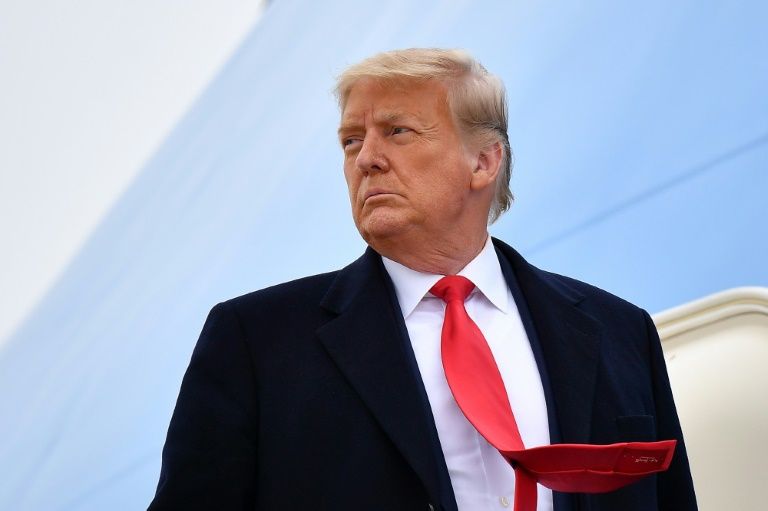
President Donald Trump threatened Saturday to deploy Immigration and Customs Enforcement (ICE) agents to U.S. airports as early as Monday if Democrats fail to agree on funding for the Department of Homeland Security (DHS), escalating a partial government shutdown now in its fifth week that has left Transportation Security Administration (TSA) workers unpaid and caused widespread travel disruptions.
In a series of posts on Truth Social, Trump blamed “radical left Democrats” for the impasse and vowed aggressive action. “If the Radical Left Democrats don’t immediately sign an agreement to let our Country, in particular, our Airports, be FREE and SAFE again, I will move our brilliant and patriotic ICE Agents to the Airports where they will do Security like no one has ever seen before, including the immediate arrest of all Illegal Immigrants who have come into our Country, with heavy emphasis on those from Somalia,” he wrote in one post. In a follow-up, he declared, “I look forward to moving ICE in on Monday, and have already told them to, ‘GET READY.’ NO MORE WAITING, NO MORE GAMES!”
The threat comes amid mounting strain on the nation’s aviation system. The partial shutdown, triggered by a February congressional failure to pass DHS appropriations, has left nearly 50,000 TSA employees working without pay for weeks. Many have called in sick, resigned or quit outright — with the agency reporting 366 departures as of mid-March — leading to long security lines, unpredictable wait times and flight delays at major hubs including Atlanta, Chicago O’Hare, Los Angeles and New York airports.
TSA officers, who perform passenger and baggage screening, are classified as essential and required to report for duty despite the funding lapse. They missed their first full paycheck recently and face a second without resolution, prompting absenteeism spikes and warnings from unions that security could be compromised. Travelers have reported waits exceeding two hours at some checkpoints, with spring break travel amplifying the chaos.
Trump’s proposal would redirect ICE personnel — trained primarily in immigration enforcement, investigations and detention — to support or potentially supplement TSA functions. Details remain unclear: ICE agents lack the specialized months-long training TSA screeners receive for threat detection, X-ray interpretation and pat-down procedures. Officials suggested they might handle crowd management, line direction or ancillary roles to free TSA staff for core screening, though Trump’s rhetoric emphasized broader enforcement, including arrests of undocumented immigrants encountered at airports.
Critics, including Democrats and civil liberties groups, called the plan reckless and politically motivated. Senate Minority Leader Chuck Schumer accused Republicans of holding TSA pay hostage to extract concessions on immigration policy without reforms. House Democrats previously proposed separating TSA funding from contentious ICE and Customs and Border Protection allocations, but Republicans blocked the measure. Senate Majority Leader John Thune blamed Democrats for stalling negotiations.
The standoff reflects deeper partisan divides over immigration enforcement. Republicans demand increased border security funding and fewer restrictions on ICE operations, while Democrats seek oversight reforms and protections for certain programs. No breakthrough emerged from weekend talks, with another Senate vote attempt failing Friday.
Adding to the drama, billionaire Elon Musk offered Saturday to personally cover TSA salaries during the impasse. In an X post, Musk wrote: “I would like to offer to pay the salaries of TSA personnel during this funding impasse that is negatively affecting the lives of so many Americans at airports throughout the country.” The gesture drew praise from some as pragmatic relief but raised legal and ethical questions about private funding of federal employees, given potential conflicts with anti-deficiency laws and Musk’s business interests in government-regulated sectors.
No formal response from the White House, DHS or TSA on Musk’s proposal or Trump’s deployment plan had been issued by Sunday evening. DHS officials have stressed ongoing efforts to mitigate impacts, including partnerships with airlines for crowd control, but acknowledged escalating risks if the shutdown persists.
Travelers face continued uncertainty. The TSA has urged checking airport wait times via its app or website and arriving early. Some small airports have warned of potential temporary closures if staffing drops further. Aviation groups and business leaders have called on Congress to prioritize resolution, citing economic costs from delays and cancellations.
As the shutdown approaches 40 days, the crisis highlights vulnerabilities in federal funding processes and the human toll on essential workers. With no immediate deal in sight, airports brace for potential ICE presence starting Monday — a move that could reshape security protocols while intensifying political battles over immigration and government operations.

S&P 500 Earnings Update: Forward EPS Estimates Still Seeing Higher Revisions

The discussion of ways to mitigate any energy price rises came after the government’s cost-of-living tzar, Lord Walker, who is also chief executive of supermarket chain Iceland, suggested in the Sunday Times that energy companies and petrol stations should have their profits temporarily capped as oil prices jump.
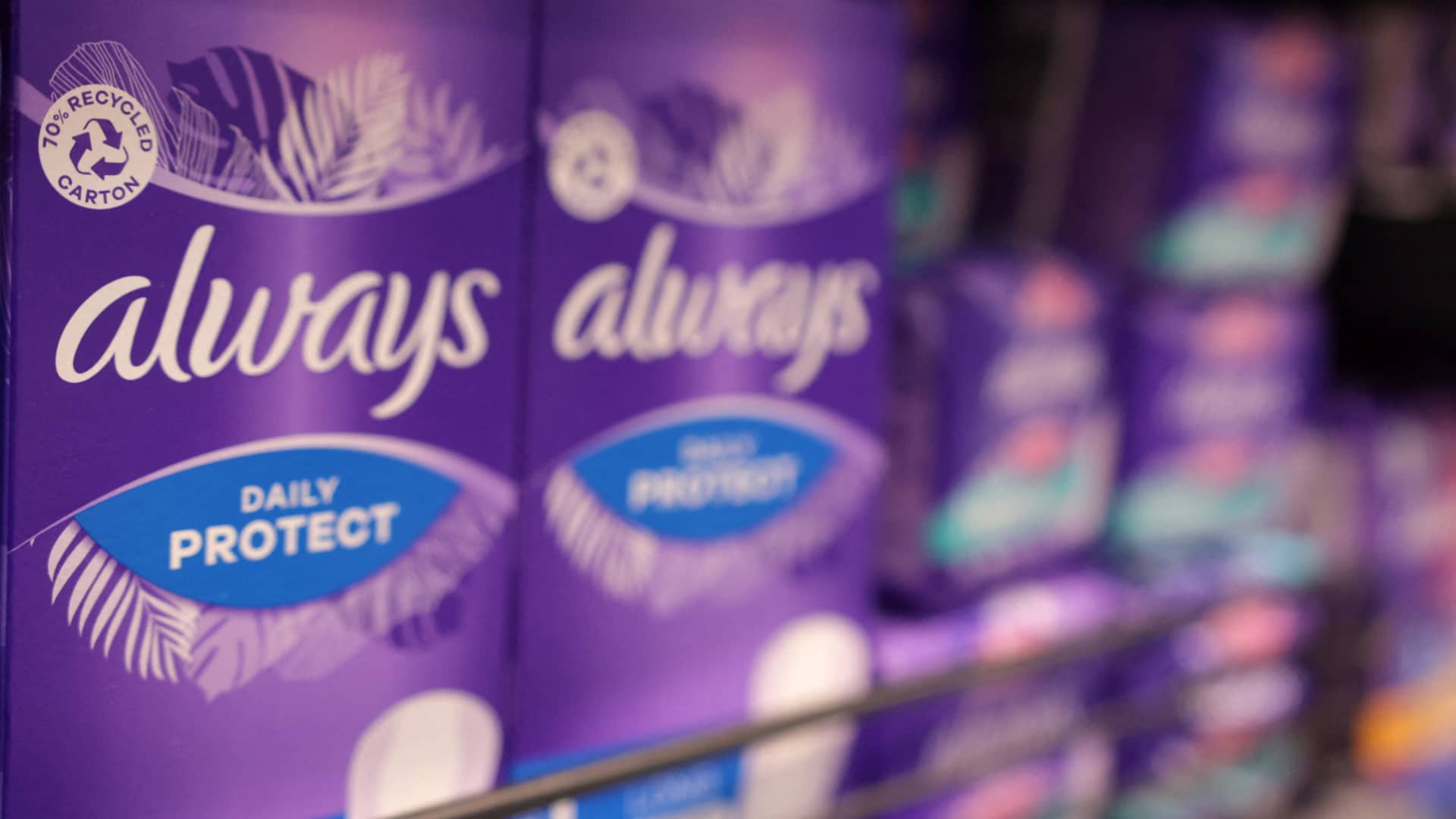
Always products are displayed on a shelf in a supermarket in Sarajevo, Bosnia and Herzegovina October 29, 2024.
Dado Ruvic | Reuters
Rising inflation and ever-changing tariff policies have led to higher prices across store shelves over the past few years, squeezing consumers’ budgets.
An often overlooked example: menstrual products.
The average price of menstrual products, including sanitary pads and tampons, has risen nearly 40% since 2020, from roughly $5.37 per unit to $7.43 per unit, according to February data from Chicago-based market research firm Circana.
Dollar sales from menstrual products have grown by nearly 30% over that same period, according to Circana.
But at the same time, sales of menstrual products — which broadly includes pads, tampons, liners and more — have seen a roughly 6% decrease since 2022, falling incrementally each year, according to data from NielsenIQ.
The data analytics company noted that items across the store have seen average unit price increases, with the dollar volume of consumer packaged goods at large rising 2.7% year-to-date. Those price increases are in line with climbing inflation, with the latest consumer price index in February showing a 2.4% annual rise.
The latest CPI data found that inflation in personal care products in the U.S. has jumped dramatically, up 22.1% in February from January 2020.
But because menstrual products are a necessity for a large portion of the population, those costs may be hurting consumers.
“I do think that we’re at a point where consumers in general are having to choose whether they can buy food for their family, or buy prescriptions for their family. Some things that we do typically define as a necessity, people are finding alternatives for or going without,” said Sarah Broyd, a partner with consultancy firm Clarkston Consulting.
Broyd said the gap between higher prices and declining sales shows consumers may be searching for alternatives out of necessity.
Menstrual products haven’t just been hit by inflation, either. According to government data, the U.S. collected $115 million through tariffs on menstrual products containing cotton in 2025, compared with just $42 million in 2020.
The U.S. imported the majority of its menstrual products from Canada, China and Mexico in 2024, according to the World Bank. President Donald Trump has imposed tariffs on all three of those countries at varying levels over the past year.
Those added costs come on top of the so-called “pink tax,” where some states place a sales tax on menstrual products. According to 2025 data from Statista, Tennessee, Mississippi and Indiana have the highest sales tax on menstrual products at 7%. Products that are deemed “medical devices” are often excluded from sales taxes.
‘A subscription service to be a woman’
For 30-year-old Dafna Diamant, the rising price of menstrual products has become noticeable at the cash register and a drag on her monthly expenses.
The New York resident said she’s noticed her usual pack of roughly 18 tampons rise to somewhere around $25, especially over the past year.
“It’s crazy, and it just feels like as a woman, you have to pay sometimes $50 every couple months,” Diamant told CNBC. “And for some people, it takes a toll on the income.”
Diamant said she feels particularly frustrated because it’s not a monthly expense she can go without. She often buys store-brand period products at retailers like CVS and Walgreens, yet she said she’s still shocked by the sticker price.
“It still feels like a subscription service to be a woman,” Diamant told CNBC. “You have to pay every month to be fertile.”
Even larger companies have felt the effects. Procter & Gamble, the parent company of menstrual product brand Always, said in July that it was raising prices on 25% of its personal care and household products due to a $1 billion total annual tariff impact. It manufactures its Always products across facilities in Maine, Utah and Canada, according to the company.
P&G declined to comment for this story.
Kimberly-Clark, the maker of menstrual product brand Kotex, said on an earnings call in April that the company incurred a total of $300 million in gross costs from tariffs, with more than half of that related to tariffs on China. The company did not respond to CNBC’s requests for comment.
Broyd, the partner at Clarkston Consulting, said menstrual products have been hit with a “triple whammy” of rising raw material costs, inflation across energy and supply chains, and cross-border friction from tariffs.
“When you think about plastic and pulp and some of the main components of feminine care products, they’re largely probably coming from overseas and then getting hit with that much more of tariffs,” Broyd said.
She added that these tariffs are on top of already alleged higher levies on other women’s products, the subject of Congress’ Pink Tariffs Study Act introduced last year by Democrats to determine whether the U.S. tariff system is “regressive” or has a “gender bias.”
As prices continue to shoot up, Broyd said she believes companies will continue to reevaluate their portfolios and potentially sell off their feminine care segments to focus on businesses with higher margins. In November, Edgewell Personal Care sold its feminine care business to a company in Sweden for $340 million.
“You’re seeing these more niche, more startup type brands that are popping up in stores. … That’s the biggest growth,” Broyd said. “People that have the ability to flex up and buy more organic or products that they trust, they’ll spend that price premium. But for other consumers that don’t have the discretionary income to do that, they’re going to trade down and go private label, or go without.”
The rise of reusables
Diamant said she and her friends are now trying period underwear instead of single-use products to streamline their expenses.
A growing number of people have been trying reusable period products, primarily because they’re environmentally friendly and cheaper.
Major manufacturers have often relied on brand loyalty for their products, which could take a hit if consumers turn to alternatives.
“If you’re in fem care, you’re going to be using Kotex for 40 years. If you’re in Depend, you’re going to be using Depend for 40 years, right?” Kimberly-Clark CEO Michael Hsu said on a November earnings call. “There is long-duration frequency. There’s a lot of expenditure for consumers, and so because of that, they want to have an ongoing relation with us.”
Saalt, a reusable period products company offering cups, discs and underwear, said it estimates that 16% to 20% of U.S. consumers have tried or used reusable menstrual products, consisting of mostly younger consumers.
“Affordability is huge,” CEO Cherie Hoeger told CNBC. “When you look at our product, a cup or disc can last 10 years, and our product is only in the $30 price range. … They’re able to save up to $1,800 on the lifespan of that cup or disc, and that’s on the low end.”
Saalt, which launched in 2018, hit revenues of eight figures in its third year of business, Hoeger said. The company declined to disclose details of its financials, but she said demand has grown year-over-year since it launched.
Among Generation Z, Hoeger said the top reason for switching to reusables is pricing.
“They usually have some affinity toward sustainability and climate change, but it’s never their number one,” Hoeger said.
The rise of reusables may be contributing to the declining sales of single-use period products over the past few years. It also coincides with recent studies indicating that tampons could contain lead or other harmful ingredients. The Food and Drug Administration investigated the presence of metals and determined there was no risk.
Riding that momentum, other companies like Knix, MeLuna, Flex and more have entered the reusables space and garnered growing market share as consumers search for alternatives.
“Affordability is the crux; it’s the root problem,” Hoeger said. “Without affordability for these period products, you have real economic consequences for women to happen.”

Carabao Cup: Who needs final victory more? Mikel Arteta or Pep Guardiola?
Govt may consider OFS option for raising public float in IDBI Bank
Amy Duggar Changes Statement of Support for Joseph’s Wife


-

 Tech7 days ago
Your Legally Registered ‘Motorcycle’ Might Not Count Under Proposed US Law
-

 Fashion2 days ago
Weekend Open Thread: Adidas – Corporette.com
-

 Politics2 days ago
Jenni Murray, Long-Serving Woman’s Hour Presenter, Dies Aged 75
-
 Tech5 days ago
Are Split Spacebars the Next Big Gaming Keyboard Trend?
-

 Crypto World14 hours ago
Best Crypto to Buy Now: Strategy Just Spent $1.57 Billion on Bitcoin During Fear While Early Investors Quietly Enter Pepeto for 150x Potential
-

 News Videos4 days ago
RBA board divided on rate cut, unusually buoyant share market | Finance Report | ABC NEWS
-

 Crypto World15 hours ago
Bitcoin Price News: Bhutan Sells $72 Million in BTC Under Fiscal Pressure, but the Smart Money Entering Pepeto Sees What the Market Does Not
-

 Business7 days ago
Search for Savannah Guthrie’s Mother Enters Seventh Week with No Arrests
-
 Crypto World2 days ago
NIO (NIO) Stock Plunges 6.5% as Shelf Registration Sparks Dilution Worries
-

 Business6 days ago
Australian shares drop as Iran war enters third week
-

 Crypto World6 days ago
Crypto Lender BlockFills Enters Chapter 11 with Up to $500M in Liabilities
-

 Politics4 days ago
The House | The new register to protect children from their abusers shows Parliament at its best
-

 Fashion6 days ago
25 Celebrities with Curly Hair That Are Naturally Beautiful
-

 Tech2 days ago
inKONBINI Lets You Spend Summer Days Behind the Register
-

 Crypto World4 days ago
Canada’s FINTRAC revokes registrations of 23 crypto MSBs in AML crackdown
-
 Politics5 days ago
Real-time pollution monitoring calls after boy nearly dies
-
 NewsBeat4 days ago
Residents in North Lanarkshire reminded to register to vote in Scottish Parliament Election
-

 Business6 days ago
Meta planning major layoffs as AI spending and automation reshape workforce
-

 News Videos4 days ago
PARLIAMENT OF MALAWI – PAC MEETING WITH REGISTRAR OF FINANCIAL ON AMARYLLIS HOTEL – INQUIRY LIVE
-
 Crypto World7 days ago
U.S. Oil Companies Post Record Profits as Oil Prices Break $100
You must be logged in to post a comment Login