

Connect with us
DAPA Banner

NewsBeat

Tottenham vs Nottingham Forest LIVE: Premier League match stream, latest team news, lineups, TV, prediction

Published

on

Tottenham vs Nottingham Forest: Prediction, kick-off time, TV, live stream, team news, h2h results, odds

Igor Tudor’s Tottenham, though, come into the match on an upward trend. They battled to a deserved 1-1 draw at Anfield last weekend, and the Croatian secured the first win of his interim tenure last time out, pipping Atletico Madrid in the Champions League. Forest were also in European action midweek, but required extra-time and penalties to knock Midtjylland out of the Europa League last 16.

Source link

Continue Reading
Click to comment

You must be logged in to post a comment Login

Leave a Reply

NewsBeat

Cuba starts restoring power after nationwide grid collapse

Published

on

Cuba starts restoring power after nationwide grid collapse

HAVANA (AP) — Cuba began restoring its energy system on Sunday, a day after a nationwide collapse of the entire grid left millions of people in the dark for the third time this month.

Some 72,000 customers in the capital, among them five hospitals, had electricity again early Sunday, according to a report from the state-run Electric Union and the Ministry of Energy and Mines, but it’s only a fraction of Havana’s total population of approximately 2 million.

In Havana and provinces such as western Matanzas and eastern Holguin, local power microsystems were set up to supply the most vital centers. Residents in some areas of the capital told The Associated Press that power returned during the early morning hours.

Cuba is currently facing an unprecedented energy crisis. Its aging grid has drastically eroded in recent years, but the government has also blamed the outages on a U.S. energy blockade, after President Donald Trump in January warned of tariffs on any country that sells or provides oil to Cuba. His administration is demanding that Cuba release political prisoners and move toward political and economic liberalization in return for a lifting of sanctions. Trump also has raised the possibility of a “friendly takeover of Cuba.”

Advertisement

Another reason Cuba has been struggling with dwindling oil is the removal by the U.S. of Venezuela’s former President Nicolás Maduro, which halted critical petroleum shipments from the nation that had been a steadfast ally to Havana.

President Miguel Díaz-Canel has said the island has not received oil from foreign suppliers for three months. Cuba produces barely 40% of the fuel it needs to power its economy.

Daily blackouts have a significant impact on the population, whose lives are disrupted by reduced work hours, lack of electricity for cooking and damage to household appliances, among many other consequences.

“With the blackout and low voltage, my refrigerator broke — that was today. The day before yesterday, the voltage also dropped around 10 at night,” Suleydi Crespo, a 33-year-old woman with two small children, told AP on Saturday. “If there’s no electricity tomorrow, we won’t be able to get water.”

Advertisement

Residents also expressed exhaustion from the constant outages, whether nationwide or partial.

The Cuban Electric Union, which reports to the Ministry of Energy and Mines, reported that the total disconnection of the national energy system was caused by an unexpected shutdown of a generation unit at the Nuevitas thermoelectric plant in Camaguey province, without providing details on the specific cause of the failure.

The last nationwide blackout occurred on Monday. It took several days to restore power.

Saturday’s outage was the second in the past week and the third in March.

Advertisement

“We have to get used to continuing our usual routine. What else can we do? We have to try to survive. Get used to events, with or without electricity,” said Dagnay Alarcón, a 35-year-old vendor.

Authorities and Díaz-Canel himself have acknowledged the seriousness of the current energy situation. The Vice Minister of Energy and Mines Argelio Abad Vigo explained this week that the country has gone three months without receiving supplies of diesel, fuel oil, gasoline, aviation fuel or liquefied petroleum gas — all vital for the economy and power generation.

Fuel sales for vehicles are rationed, airlines have suspended flights or reduced frequencies many workplaces have reduced hours.

Trump has for months suggested Cuba’s government is on the verge of collapse. After a previous time Cuba’s electric grid collapsed, Trump told reporters he believed he’d soon have “the honor of taking Cuba.”

Advertisement

___

Follow AP’s coverage of Latin America and the Caribbean at https://apnews.com/hub/latin-america

Advertisement

Source link

Continue Reading

NewsBeat

Nonprofits, unions and airports feed TSA officers as shutdown drags

Published

on

Nonprofits, unions and airports feed TSA officers as shutdown drags

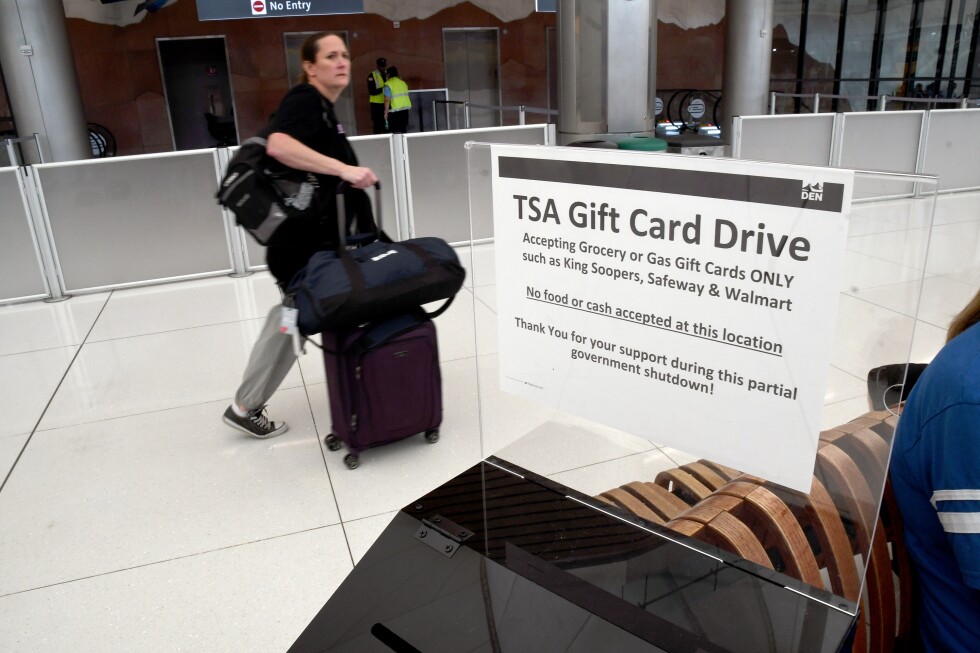
Across the country, collections are popping up to help Transportation Security Administration officers who have been without full pay for more than a month due to the partial government shutdown affecting the Department of Homeland Security.

The charity World Central Kitchen, more accustomed to feeding those in war zones and disaster areas, started providing meals to Washington, D.C.-area airports after many TSA officers missed their first full paycheck. On Thursday, Feeding San Diego began distributing 400 boxes with pasta, beans and peanut butter as well as fresh produce like strawberries and potatoes to affected agents near the airport after a request from TSA and the San Diego County Regional Airport Authority.

Nonprofits are stepping in to help and coordinating closely with airports and local TSA offices because ethics rules around giving gifts to federal employees make it difficult for those affected by the shutdown to receive help directly.

Carissa Casares from Feeding San Diego said communicating with the airport means they can better tailor their resources and response to TSA workers’ needs.

Advertisement

“We need to work directly with the people who have direct access to these employees and get this food to them at a time and location that is most convenient to them,” Casares said.

Saturday marks the 36th day that the Department of Homeland Security has been shut down after Democrats refused to fund Immigration and Customs Enforcement and Customs and Border Protection without changes to their operations after the killings of Alex Pretti and Renee Good in Minneapolis.

More than 120,000 DHS employees are working without pay, including roughly 50,000 Transportation Security Administration officers as negotiations between lawmakers and the White House on limits to immigration enforcement drag on.

The funding lapse comes just months after a 43-day government shutdown, the longest in the nation’s history, which drove long lines at food banks across the U.S. as over 700,000 federal workers worked without pay.

Advertisement

Rules limit what help TSA officers can accept

For those wanting to help, it’s not as simple as going to the airport and giving cash or gift cards directly to TSA officers, who are prohibited from accepting gifts at screening locations, according to a DHS spokesperson.

But Aaron Barker, president of the AFGE Local 554 in Georgia, said TSA officer unions don’t have the same restrictions and can accept donations to distribute to their members. Barker recommends those who want to donate look up their local union district on the AFGE website, or give through their local labor council.

“For some people it can be life or death,” said Barker. “It’s just sad and terrible that this is happening.”

Union members have told Barker they’re unable to cover utility bills or pay for their children’s medical procedures. They’ve received eviction notices or had cars repossessed. They’re having trouble affording routine items, too.

Advertisement

“People don’t think about the things they just naturally have in their home, like toothpaste, bathroom tissue, milk, detergent, dish liquid,” he said. “I’m sure those things are a necessity for every TSA officer.”

Nonetheless, no donation can be as effective as an end to the shutdown. “The first thing they want is their paycheck,” said Barker. “The money is the most immediate need.”

Coordination between nonprofits and TSA

Operation Food Search is working closely with TSA to safely deliver food and set up a temporary pantry at St. Louis Lambert International Airport.

The Missouri hunger relief nonprofit’s CEO said it is the first time they’ve distributed directly to TSA employees where they work.

Advertisement

“It removes their need to make an extra trip and drive here,” Kristen Wild said. “So we’re really excited that the airport allowed us to directly serve right there.”

They gave away just over half their 400 prepared food bags during a 2-hour period earlier this week, according to Wild. Each bag contained just under $20 worth of nonperishables such as apple sauce, pasta, rice and beans. Rules prohibit federal employees from soliciting or accepting gifts or items of monetary value greater than $20 if the gift is related to their government position.

Wild said she thought the $20 limit might be waived since they were distributing food through airport-approved channels.

“We didn’t know for sure,” Wild said. “But to play it safe we just kept it right under the $20 per bag amount so there would be no challenge to it.”

Advertisement

Airport communities band together

Seattle-Tacoma International Airport officials were fielding PETA donations and local food banks’ pallets on Friday afternoon as they stocked their private pantry for off-shift TSA staff.

But they’ve also seen dining vendors, usually tasked with feeding hungry travelers, step up. Airport tenants have offered discounts and donated through TSA to cover entire shifts’ meals, according to airport spokesperson Perry Cooper.

“You know a lot of these people,” Cooper said. “You see faces and that throughout the day as you’re wandering through. And then to realize that some of these folks are here and they’re not getting paid, you know, really tugs at your heart to think what’s a way that we can help.”

The airport community’s support adds to the roughly $6,000 they’ve received in cash and gift cards plus another $10,000 worth of food and household products, Cooper said. That includes donations from the labor union for air traffic controllers, whose jobs are unimpacted by this partial shutdown but who understand the strain of working without pay from full government closures.

Advertisement

More than 460 people picked up fresh produce when local nonprofit Food Lifeline brought a truckload last Friday, according to Cooper. Most of the attendees were TSA staff, Cooper said, though some people might have been homeless. Boxes including pineapples and broccoli lined folding tables along the airport’s main drive.

Regular travelers like Musie Hidad said he thinks about the TSA agents working unpaid every time he enters through security.

“The work they are doing is serious and they aren’t getting paid for it,” said Hidad, an Amarillo, Texas, resident, who was traveling to Columbus, Ohio, for work. “My heart goes out to them.”

___

Advertisement

AP video journalist Patrick Aftoora-Orsagos contributed to this report from Columbus, Ohio.

___

Associated Press coverage of philanthropy and nonprofits receives support through the AP’s collaboration with The Conversation US, with funding from Lilly Endowment Inc. The AP is solely responsible for this content. For all of AP’s philanthropy coverage, visit https://apnews.com/hub/philanthropy.

Advertisement

Source link

Continue Reading

NewsBeat

‘A direct hit’ – BBC visits Israeli town after Iranian strike

Published

on

'A direct hit' - BBC visits Israeli town after Iranian strike

More than 160 people have been injured in Iranian strikes on southern Israel, emergency services have said.

Ballistic missiles hit the towns of Arad and Dimona, which are close to a nuclear facility, on Saturday evening.

Iranian state TV earlier said the strikes were in response to an attack on Iran’s Natanz nuclear facility.

The BBC’s Sebastian Usher reports from Dimona in southern Israel.

Advertisement

Read more on this story.

Source link

Continue Reading

NewsBeat

what we can learn from the long history of student finance

Published

on

what we can learn from the long history of student finance

Student finance in England is up for debate once again, with extensive discussion on the perceived unfairness of the Plan 2 student loan repayment system

But concerns about how to pay for a university degree are far from new. Our new book Student London: A New History of Higher Education in the Capital explores the financial challenges students have faced for years – and the activism that has changed the student experience.

Undergraduate degrees in England have long been expensive to provide. One of the key features of the new London University, founded in 1826 as England’s third university, was that the education on offer was ten times cheaper than at Oxford or Cambridge. From the late 19th century, government grants provided universities with income that allowed them to keep fees relatively affordable.

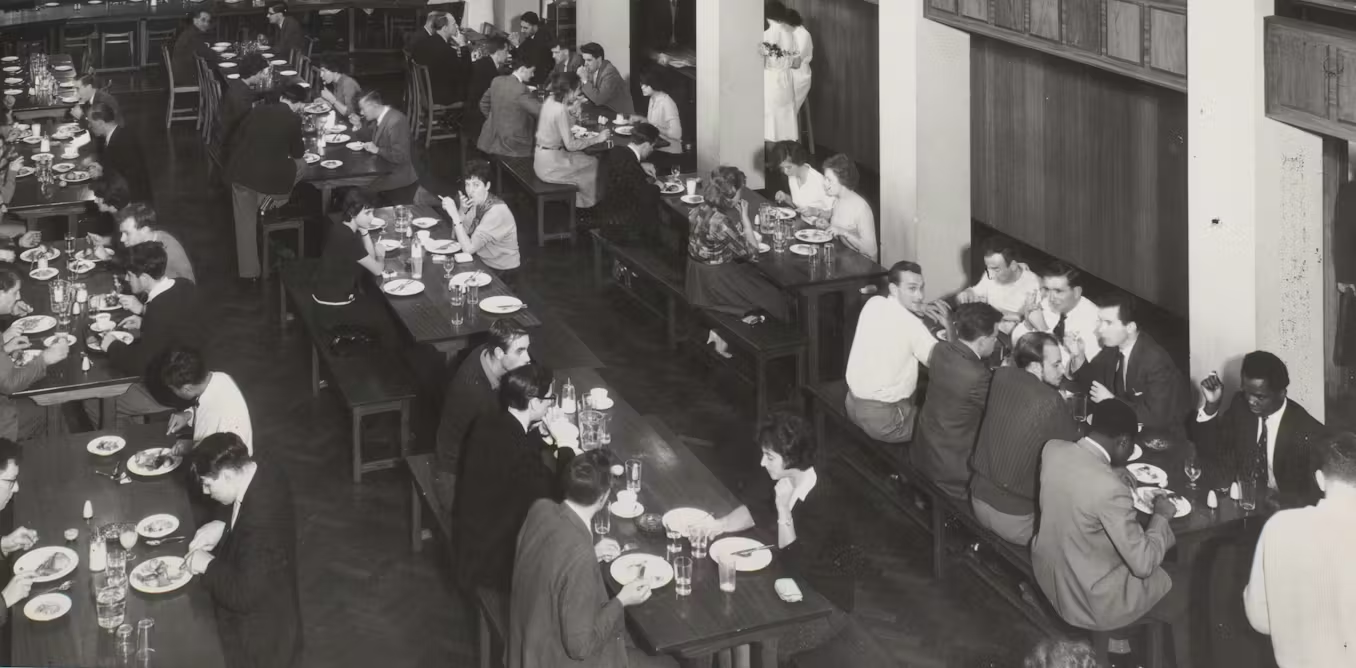
This meant that although only a very small proportion of the population was able to attend university, not all students came from wealthy backgrounds. Students survived on a patchwork of scholarships, loans and family help. Many were able to afford only a year’s study. Memoirs attest to the indignities experienced by poorer students who struggled to pay bus fares, refectory prices or students’ union subscriptions.

Advertisement

Institutions could set their own fees. For example, the rates set by colleges across the University of London varied widely even though students sat the same exams and received the same degree. The 1913 Haldane commission on higher education in London recognised the need for fees to be equalised and called for a national inquiry into the topic. However, national government showed little interest.

Local authorities had begun providing higher education scholarships in the late 19th century, but these were unevenly distributed and the sums awarded varied. Another important source of funding was Board of Education grants for prospective teachers, although students resented having to pledge to teach as the price for the opportunity to study at university. After the first world war, the Scheme for the Higher Education of Ex-Service Students reflected a growing recognition that the wider social value of university justified greater state funding for individual students.

The 1920s was a time of rapid inflation. The hardship caused by rising prices led to the invention of the student discount. The National Union of Students (founded in 1922) secured reduced prices for books, newspapers, insurance and travel. Student unions helped ameliorate the cost of living crisis by opening shops and canteens that bought at wholesale prices and sold to students at a narrow margin.

The second world war disrupted higher education enormously, with institutions facing evacuation and the conscription of both staff and students. One innovative response was the creation of college hardship funds, although lobbying of the University Grants Committee to provide maintenance grants for evacuated students proved unsuccessful.

Advertisement

After the war, a growing proportion of students had their fees paid directly to universities by their local education authority and were in receipt of maintenance grants. However, it was not until 1962 that a new Education Act introduced a national system entitling students to the same level of support, regardless of where they lived or where they chose to study. It was this that enabled students to move away from home and fuelled a boom in the building of halls of residence. But it also gave rise to new stereotypes of students as taxpayer-funded layabouts.

Students at a protest in London in 1972.
Homer Sykes/Alamy

By the 1970s, students were again struggling with the cost of living as grants were eroded in real terms by inflation. Alternative forms of living such as squatting and short-term housing (staying in buildings scheduled for demolition) were part political stance and part pragmatic response. In what many British students saw a moral cause, they also campaigned against “discriminatory tuition fees” for overseas students introduced from 1967.

The introduction of loans

In the face of concerted opposition, the shift from grants to repayable loans took place only gradually. In 1984 students successfully campaigned to halt the introduction of loans but, like differential overseas fees, ultimately this was to be a lost cause. One concession was that rather than have commercial banks run the scheme, the Student Loans Company was set up in 1990 to oversee it.

The 1998 reintroduction of tuition fees at a means-tested flat rate of £1,000 triggered another wave of student protest. Students we interviewed for our research remembered being so angry because the fees had to be paid up front. The campaign generated extensive media interest but this did not stop a fee increase to £3,000 per year in 2006 – although these no longer had to be paid up front. The financial crisis of 2007-8 shaped the context in which the Conservative-Liberal Democrat coalition government again raised tuition fees to £9,000 a year in 2012.

Advertisement

In the 2020s, a key challenge is that maintenance loans now cover just half of students’ costs but still leave them with enormous debt many will never pay off. It is not surprising that over the past decade there has been a 50% increase in students choosing to live at home. This return to older models signals an erosion of the choice that a national system of student financing was supposed to enable. A number of the people we interviewed expressed regret about such changes.

Financial support for students has often been a low priority for governments facing competing budgetary demands. There have been moments of optimism when the value of higher education to society and the economy helped justify investment in individual students – but this is far from the situation today.

Looking back over the history of student finance, it is hard to see successive campaigns against repayable loans or fee increases as anything other than a series of failures. But it is also clear that many of the support systems students today take for granted arose out of such activism, from student discounts to subsidised canteens to union shops and hardship funds.
Advertisement

Source link

Continue Reading

NewsBeat

Mikel Arteta suggests Man City clash about more than just Carabao Cup | Football

Published

on

Mikel Arteta suggests Man City clash about more than just Carabao Cup | Football
Arsenal boss Mikel Arteta reckons one trophy can lead to many more (Picture: Getty Images)

Mikel Arteta feels victory in the Carabao Cup final over Manchester City can help his Arsenal side lift more trophies this season.

The Gunners are still in contention to win a quadruple this campaign, as they sit top of the Premier League table and are into the quarter-finals of the Champions League.

Arteta’s men are hot favourites to beat Sporting in the last eight in Europe, while they are also expected to get past Championship outfit Southampton in the quarter-finals of the FA Cup.

All of that is still to come, but first is the final of the Carabao Cup on Sunday at Wembley against their chief rivals.

Advertisement

Arteta is looking to win just the second major trophy of his managerial career, after the 2020 FA Cup, feeling that it will make his other goals more achievable.

‘It’s a chance to make some history for the club,’ Arteta wrote in his programme notes, via Arsenal.com.

‘We haven’t won the League Cup since 1993, so it’s about time we did it again. That’s what we all want, to work hard and make our supporters proud.

Your football fix

Metro‘s Head of Sport James Goldman delivers punchy analysis, transfer talk and his take on the week’s biggest stories direct to your inbox every week.

Advertisement

Sign up here, it’s an open goal.

Manchester City v Arsenal FC - Premier League
Arteta and Pep Guardiola meet again this weekend (Picture: Getty Images)

‘When you get to these moments, these opportunities, you have to deliver on the day. Let’s play in the manner that we’ve done all year, all the way through the competition, enjoying matches in front of our people.

‘Whenever you have the chance to get over the line and win a trophy, it’s a big day. If we can do that, it will bring something very special to the team. It will add another level of conviction, belief and energy. To be able to share a beautiful moment always brings you closer to having some other ones that are also really, really positive.

Advertisement

‘We know the importance of that, so now it’s down to us, all of us – players, coaches, staff, supporters – to make sure we do it together.’

FBL-ENG-FACUP-ARSENAL-CHELSEA
Arteta’s FA Cup trophy in August 2020 feels a long time ago (Picture: Getty Images)

Manchester City remain Arsenal’s closest challengers in the Premier League, but with a nine-point difference their chances of catching the Gunners are slim.

Pep Guardiola’s team is out of the Champions League, but still in the FA Cup, so there is plenty to play for and the Spaniard thinks they are nearing their best form.

‘I have the feeling in many things we’re just underneath [our peak],’ he said. ‘We will flourish, I have the feeling that it’s close.

‘Other things we need a little more time until the people realise what we need to be strong in many departments but in most things we are close.’

Advertisement

To view this video please enable JavaScript, and consider upgrading to a web
browser that
supports HTML5
video

Guardiola was asked if a win at Wembley could impact the title race, but was unconvinced, saying: ‘I don’t know. Winning helps just for the fact that winning helps [confidence].

Advertisement

‘But we can win on Sunday and then be bad in the league. I learned that in many competitions and many games with a short time of recovery you have to have the ability to forget and move forwards. Learn what you have to do better and this is what you have to do.’

Advertisement
Advertisement

Source link

Continue Reading

NewsBeat

Strike in Sudan’s Darfur kills 64 people, including 13 children

Published

on

Strike in Sudan's Darfur kills 64 people, including 13 children

CAIRO (AP) — At least 64 people were killed, including at least 13 children, in a strike on a hospital in Sudan’s western Darfur region last week, the World Health Organization said Saturday.

The strike on the Al Daein Teaching Hospital in East Darfur on Friday also injured at least 89 people and rendered the hospital non-functional, Tedros Ghebreyesus, the head of the WHO, said on X.

Sudan slid into chaos in April 2023 when a power struggle between the military and the rival paramilitary Rapid Support Forces exploded into war throughout the country.

The RSF has blamed the military for the strike on the hospital.

Advertisement

The army has denied the attack, but two military officials said the strike was targeting a nearby police station. They spoke on the condition of anonymity as they were not allowed to discuss the matter openly.

The devastating war has killed more than 40,000 people, according to U.N. figures, but aid groups say that is an undercount and the true number could be many times higher.

The WHO has said that over 2,000 people have been killed in attacks on medical facilities since the start of the war.

“Enough blood has been spilled. Enough suffering has been inflicted. The time has come to de-escalate the conflict in Sudan,” said Ghebreyesus.

Advertisement

___

Associated Press reporter Yassir Abdalla in Shendi, Sudan, contributed to this report.

Advertisement

Source link

Continue Reading

NewsBeat

Brian Brobbey nets late winner as Sunderland complete derby double at Newcastle

Published

on

Brian Brobbey nets late winner as Sunderland complete derby double at Newcastle

Brian Brobbey’s last-gasp winner fired Sunderland to a famous derby double over Newcastle as they came from behind to win 2-1 at St James’ Park.

Trailing to Anthony Gordon’s early opener, the Black Cats levelled through Chemsdine Talbi, 12 minutes after the restart and then snatched victory at the death courtesy of Brobbey’s 90th-minute strike, his sixth goal of the season and just his side’s 10th in the Premier League away from home this season.

Four days after their Champions League dreams were ended in brutal fashion in Barcelona, the Magpies’ only focus was revenge for December’s 1-0 derby defeat at the Stadium of Light.

In the event, they slipped to an eighth loss in 11 league outings – a result which further damaged their hopes of securing European football for next season – and they have not beaten their arch rivals on Tyneside since October 2010.

Advertisement

By contrast, the promoted Black Cats, who arrived at St James’ with a squad depleted by injuries, boosted their own chances of continental action as their remarkable first season back in the top flight took a further turn for the better.

Their afternoon was soured only when referee Anthony Taylor had to briefly halt play after reports of discriminatory abuse aimed at defender Lutsharel Geertruida from among a crowd of 52,253.

The Magpies went ahead with 10 minutes gone when, after Nick Woltemade had picked off Luke O’Nien’s attempted pass to Granit Xhaka from a short goal-kick, Gordon drove towards goal and fired his 17th of the season past the helpless Melker Ellborg.

It took a superb fingertip save from Aaron Ramsdale to keep Talbi’s dipping shot out of his top corner after he had controlled Xhaka’s raking pass and cut inside.

Advertisement

Newcastle should have been 2-0 ahead within seconds when Woltemade played Anthony Elanga, who scored twice at Barcelona in midweek, through and he drew defender Omar Alderete before slicing a left-footed shot into the side-netting.

Sven Botman headed against the upright from Lewis Hall’s 43rd-minute corner and Ellborg collected Hall’s shot from a free-kick in stoppage-time as play switched rapidly from end to end as the break approached.

Sunderland returned determined not to accept defeat and Ramsdale had to palm away Chris Rigg’s strike at his near post.

However, the Magpies goalkeeper made a mess of dealing with the resulting corner and after Dan Burn had blocked Brobbey’s chested effort from Trai Hume’s stabbed cross on the line, Talbi fired into the net from close range.

Advertisement

Xhaka’s deflected 62nd-minute effort looped on to the roof of Ramsdale’s net as the visitors sensed on opportunity, but Ellborg had to save from substitute Jacob Murphy as the Magpies responded.

Noah Sadiki drilled a 69th-minute drive straight at Ramsdale, who had to react smartly to keep it out, but the wrong-footed Ellborg was relieved to see Joe Willock’s shot drop just wide after it had cannoned off Geertruida.

Substitute Malick Thiaw had the ball in the net from Hall’s corner with 15 minutes remaining, but his effort was chalked off for a foul on Ellborg, allowing Brobbey to win it at the death when he pounced from close range after substitute Enzo Le Fee’s cross had come off Ramsdale.

Source link

Advertisement
Continue Reading

NewsBeat

Man arrested after North East hospitalisations linked to Zopiclone

Published

on

Man arrested after North East hospitalisations linked to Zopiclone

Cleveland Police has said the man was arrested on suspicion of being concerned in the supply of class C drugs and was questioned by officers.

A force spokesperson added: “He has been bailed with conditions whilst our enquiries continue.”

Cleveland Police said yesterday the reports circulated from Middlesbrough, Stockton and Hartlepool on Friday (March 20) evening and involved people being treated for ‘significant adverse effects’ of the drug.

Advertisement

In a statement, Cleveland Police said: “On the evening of Friday, March 20, police received reports of several adults from Middlesbrough, Stockton and Hartlepool having been taken to hospital for treatment from what is believed to be significant adverse effects following the consumption of a drug called Zopiclone.

“This drug should only be taken by those who have been prescribed it by a medical professional, and officers are warning members of the public not to take this if offered it and report any information which could be connected to this incident to the police.”

Anyone with information is urged to contact Cleveland Police on 101, quoting reference number 052547.

Information can be passed to Crimestoppers anonymously online or by calling 0800 555 111.

Advertisement

Source link

Continue Reading

NewsBeat

Update on Wisbech river crash as search for teenage boy enters fifth day

Published

on

Cambridgeshire Live

Cambridgeshire Police remains at the scene today (Sunday, March 22) as they continue to search for Declan Berry

Police have provided an update after five teenagers crashed into a Cambridgeshire river earlier this week. Cambridgeshire Police remain at the scene of North Brink in Wisbech this afternoon (Sunday, March 22), as the search for 18-year-old Declan Berry enters its fifth day.

Advertisement

Declan and four other teenagers, including another 18-year-old boy and three 16-year-old girls, crashed into the River Nene along the road at around 8.20pm on Tuesday (March 17). Sadly, Eden Bunn’s body was recovered from the river on Wednesday (March 18).

DI Craig Wheeler of Cambridgeshire Police is at the scene today, and has provided an update on the search and investigation. DI Wheeler said: “At the moment, we are on the scene with a plan to try and recover the vehicle.” The police officer added that there are specialist dive teams that hope to recover the vehicle this afternoon.

DI Wheeler added that it “isn’t a quick process”, and could take anywhere between one-and-a-half hours to four-and-a-half hours. Tributes were laid at the scene of the crash earlier this week, paying respects to Eden and Declan.

After Eden’s body was found, her family also paid tribute to her. Eden, from Sutton Bridge in Lincolnshire, was described as the “kindest” and “most loving girl”.

Advertisement

Do you want more of the latest Cambridgeshire news as it comes in from across the county? Sign up to our dedicated newsletter to make sure you never miss a big story from Cambridge or anywhere else in the county. You can also sign up to our dedicated Traffic and Crime newsletters for the latest updates on the topics you are most interested in.

Source link

Continue Reading

NewsBeat

Cuba left in darkness after third power cuts in a month | World News

Published

on

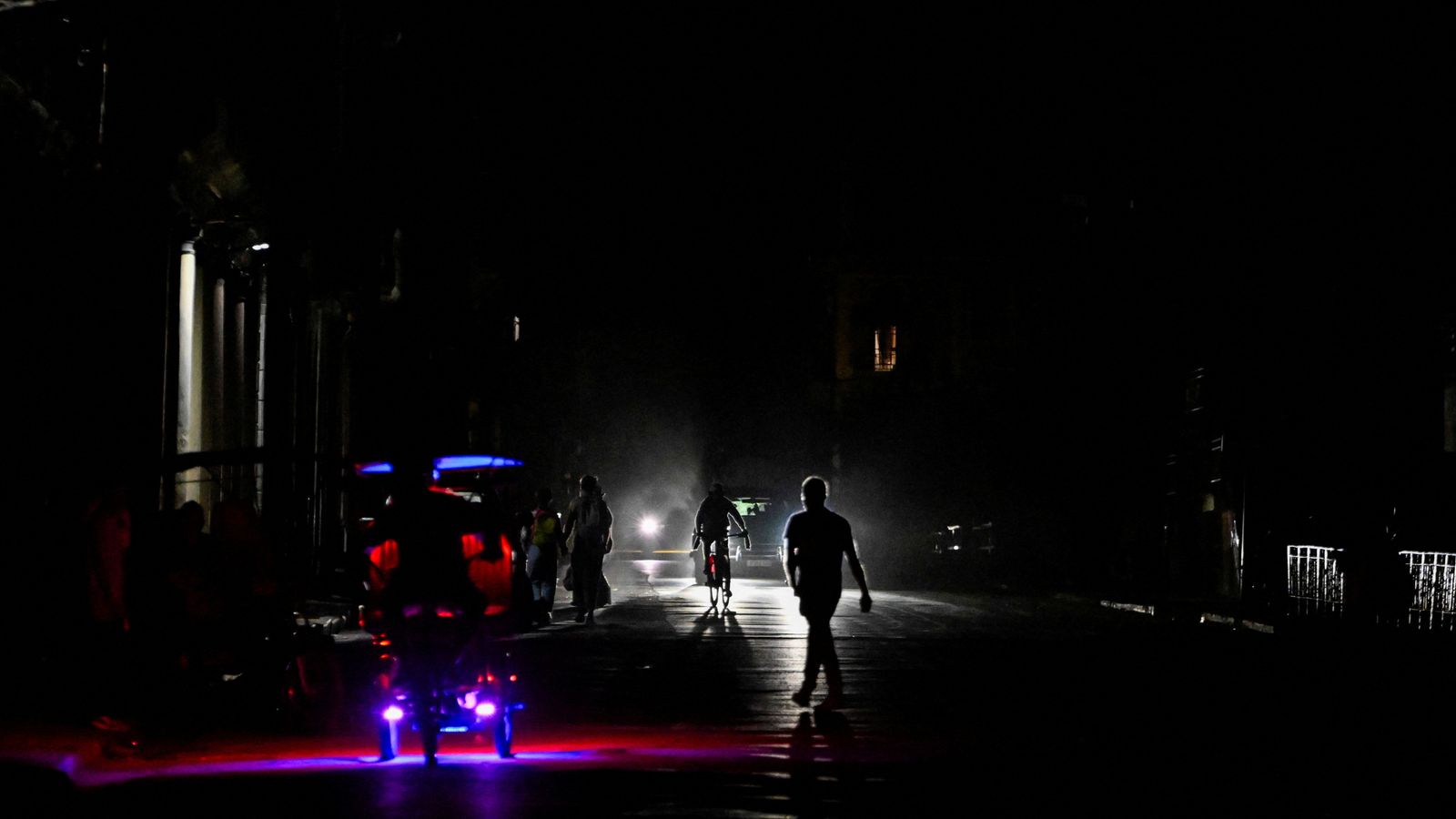
People walk and drive on a street in Havana as Cuba's national electric grid collapsed. Pic: Reuters

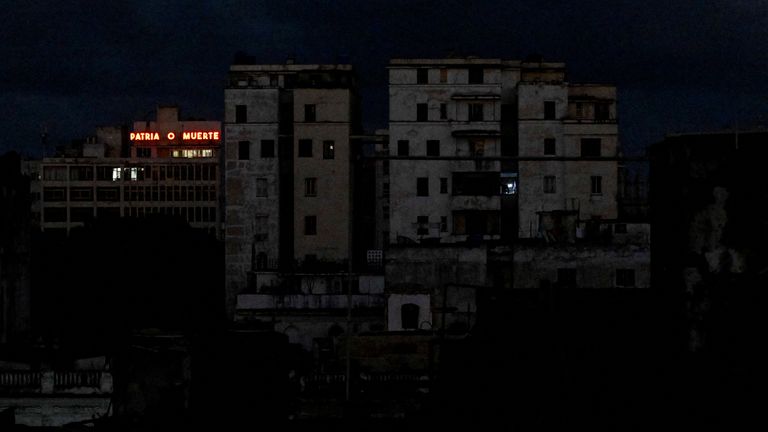
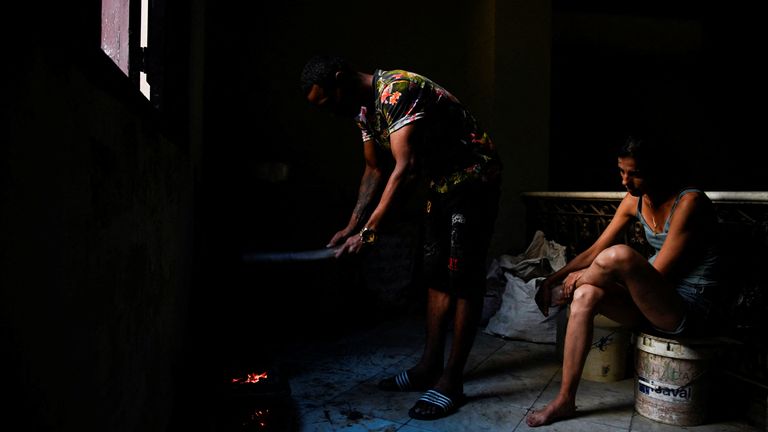
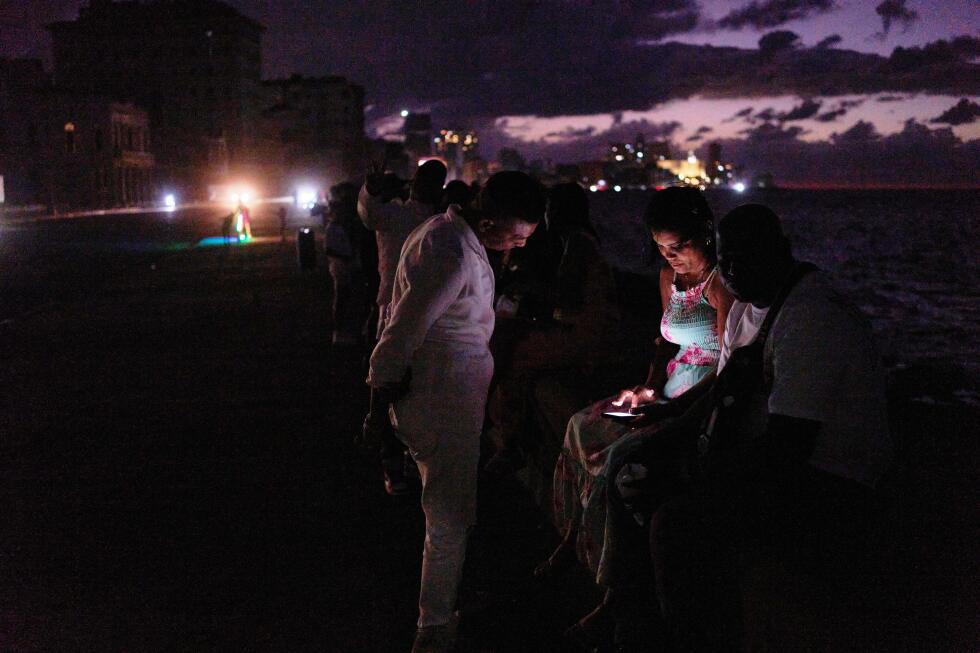
Cuba’s power grid has collapsed for the third time this month, leaving the country in darkness with no electricity.

The cut came as the communist government continued to battle with a US imposed oil blockade and decaying infrastructure.

The Cuban Electric Union, which reports to the Ministry of Energy and Mines, announced on Saturday a total blackout across the island without initially giving a cause for the outage.

It later said that the blackout was caused by an unexpected failure of a generating unit at the Nuevitas thermoelectric plant in Camaguey province.

Advertisement

Grid operator and state utility Union Electrica said that the power failed at 6.32pm (10.32pm in the UK).

At 7am on Sunday (11am UK time), it said on social media that microsystems – smaller, closed circuits for vital services – were operational in all territories.

Work is underway to restore the rest of the grid. It’s the second such blackout in a week on the island, and the third this month.

Image:
Pic: Reuters

Sky’s US partner network NBC News reports that both regional and national power outages have been common in Cuba over the past two years, due to breakdowns in ageing infrastructure.

Advertisement

However, the government has also blamed the strict oil and fuel embargo brought in by the Trump administration in February.

Advertisement

Trump sets his sights on Cuba

Cuba produces barely 40% of the fuel it needs to power its economy. The country’s president, Miguel Diaz-Canel, said last week that the island had not received oil from foreign suppliers for three months.

Venezuelan President Nicolas Maduro and his wife were captured by the US military in early January, which led to the halt of Cuba’s critical petroleum shipments from South America.

Advertisement
Pics: Reuters
Image:
Pics: Reuters

The US has also maintained a strict trade embargo on Cuba since 1962, the year after a failed, CIA-sponsored invasion of the island at the Bay of Pigs.

Donald Trump extended that blockade by signing an executive order imposing trade tariffs on countries exporting oil to Havana last month.

Read more from Sky News:
‘Selfless’ police officer dies in line of duty
Saturday Night Live UK reviews are in


From February: How Cubans cope during US-imposed fuel blockade

The UN Office of the High Commissioner for Human Rights said experts condemned the move, and accused the US of a “serious violation of international law and a grave threat to a democratic and equitable international order”.

Advertisement

On 15 March, Mr Trump claimed the US could “do whatever we have to do” in Cuba after his Iran war. His warning came a day after a rare riot against the Cuban government.

Videos on social media showed people throwing rocks through the windows of a building as they shouted “liberty” in the background.

Advertisement

Source link

Continue Reading

Trending

Copyright © 2025