

Connect with us
DAPA Banner

Business

IDEAYA delays darovasertib trial results to mid-April

Published

on

Continue Reading
Click to comment

You must be logged in to post a comment Login

Leave a Reply

Business

Can Sensex, Nifty extend gains for second session on Monday? 5 factors that will decide market mood next week

Published

on

Can Sensex, Nifty extend gains for second session on Monday? 5 factors that will decide market mood next week
Indian stock markets closed in the green on Friday as Sensex rose more than 300 points, while Nifty closed above 23,100, after oil prices cooled off slightly. The bears took a much-needed breather after the massive selloff seen on Thursday, which wiped out over Rs 11.5 lakh crore in market capitalisation of BSE-listed firms.

Looking ahead, markets are likely to remain highly volatile and event-driven, with near-term direction largely contingent on developments in the Middle East, particularly the evolving situation around the Strait of Hormuz. Any prolonged disruption could keep crude prices elevated above the $100 mark, intensifying inflationary and current account pressures while sustaining a risk-off sentiment. FII flows, rupee movement, and global cues, including US dollar strength and broader market sentiment, will be key variables to monitor. Any signs of de-escalation or easing in crude prices could trigger short-covering or relief rallies, while renewed escalation may lead to further downside pressure.

Here are 5 factors that could decide market action on March 23:

Advertisement

1) US, Israel and Iran war

The conflict between Iran and the US-Israel alliance continued to escalate, with leaders on all sides warning that the situation could worsen further. On Saturday, Israeli military launched strikes on Iran and Beirut on Saturday, even as the U.S. moved to deploy thousands of additional Marines to the Middle East.
Last week, Iran accused Israel of striking facilities at its South Pars gas field and responded by threatening attacks on oil and gas assets across the Gulf. It launched missiles toward Qatar and Saudi Arabia, declaring energy infrastructure in Saudi Arabia, the UAE and Qatar as legitimate targets. Iran also claimed to have struck an LNG plant in Qatar.

2) Crude oil hovers $110

Oil prices surged on Friday, closing at their highest levels in nearly four years, after Iraq declared force majeure on all oilfields operated by foreign firms and the Iran war intensified, with the U.S. preparing to deploy thousands of additional Marines and sailors to the Middle East. Brent crude futures for May rose $3.54, or 3.26%, to settle at $112.19 per barrel, the highest level since July 2022. U.S. West Texas Intermediate crude futures for April, which expired on Friday, gained $2.18, or 2.27%, to settle at $98.32. Meanwhile, the more actively traded second-month U.S. crude contract ended at $98.23, up 2.8%.
Markets have been rattled as the escalating conflict in the Middle East has disrupted shipping and energy exports through the crucial Strait of Hormuz. This narrow chokepoint between Iran and Oman normally carries around one-fifth of the world’s crude oil and liquefied natural gas supplies. In practical terms, oil equivalent to nearly 20% of global demand passes through the strait every day. With the waterway effectively shut for the past seven days, roughly 140 million barrels of oil, about 1.4 days of global demand, has been prevented from reaching international markets.

3) FII exodus continues

As per provisional data from NSE, foreign institutional investors (FIIs/FPIs) remained net sellers, with purchases worth Rs 28,496.17 crore against sales of Rs 34,014.56 crore, leading to a net outflow of Rs 5,518.39 crore. In contrast, domestic institutional investors (DIIs) were net buyers on March 20, 2026, purchasing shares worth Rs 22,938.31 crore and selling Rs 17,232.08 crore, resulting in a net inflow of Rs 5,706.23 crore.

Foreign portfolio investors (FPIs) continued their selling spree in the Indian equities, pulling out Rs 52,703 crore in the fortnight ended March 15, underscoring a sharp risk-off sentiment amid global uncertainties and rising macro headwinds.

Advertisement

“The weakness in global equity markets following the war in West Asia, the steady depreciation of the rupee and concerns surrounding the impact of high crude price on India’s growth and corporate earnings contributed to the concern of FPIs,” Dr. VK Vijayakumar, Chief Investment Strategist, Geojit Investments said.

4) Rupee hits record low

The Indian rupee plunged as much as 110 paise Friday, recording its steepest single-day rout since late 2022, after oil surged amid an unrelenting barrage of attacks by either side on respective energy installations in West Asia. It slumped to a historic low of 93.73 amid a report New Delhi paid a significant price premium for its Thursday oil supplies before the unit closed at 93.71/$.

The pace of decline was rather quick, seemingly compensating for the Thursday trading holiday in Mumbai, with traders saying that market estimates of the central bank’s short dollar positions and sustained sales of Indian equity assets by overseas investors further pressured the rupee, which has lost more than 2.5% since the start of the Iran war.

5) Weak technical set up

From a technical standpoint, Nifty 50 is attempting to stabilize near the 23,000–23,200 support zone following the recent sharp correction. However, the index continues to trade below key resistance levels, indicating that the broader structure remains weak. A decisive break below 23,000 could accelerate selling pressure, potentially dragging the index toward 22,700–22,500, with further downside risk extending toward 22,000–21,800. On the upside, 23,300–23,400 remains the immediate resistance zone, while 24,000 stands as a stronger hurdle, and only a sustained move above this level would signal any meaningful recovery. Momentum indicators remain weak, with RSI hovering near oversold territory and MACD remaining in negative territory, suggesting that any bounce is likely to remain limited.

Advertisement

(Disclaimer: Recommendations, suggestions, views and opinions given by the experts are their own. These do not represent the views of The Economic Times)

Continue Reading

Business

Musk Steps In as Airport Lines Grow

Published

on

iPhone 18 Pro Max

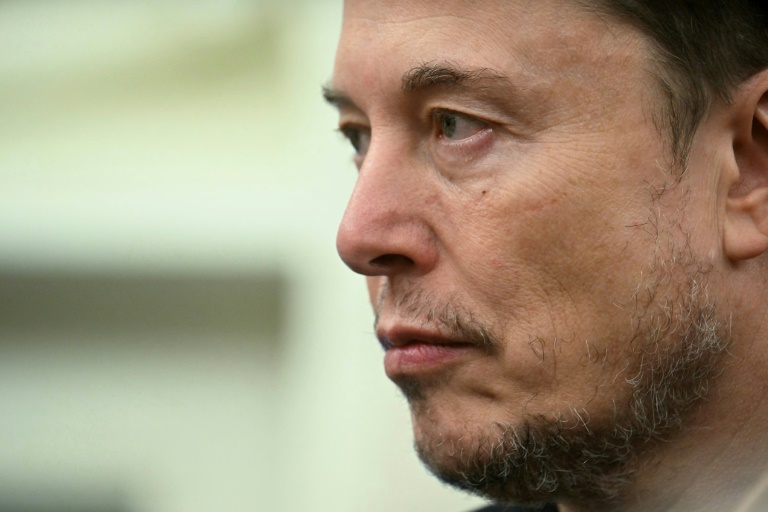
Billionaire Elon Musk, the world’s richest person and CEO of Tesla and SpaceX, offered Saturday to personally cover the salaries of Transportation Security Administration (TSA) personnel caught in the crossfire of a partial U.S. government shutdown over Department of Homeland Security funding.

Tesla chief Elon Musk had planned the robotaxi launch for June 12, 2025, but pushed it back to ensure safety
AFP

In a post on his social media platform X, Musk wrote: “I would like to offer to pay the salaries of TSA personnel during this funding impasse that is negatively affecting the lives of so many Americans at airports throughout the country.” The statement, made early Saturday morning U.S. time, quickly garnered hundreds of thousands of likes, reposts and replies, amplifying attention on the crisis.

The offer comes as the partial shutdown—stemming from congressional deadlock over DHS appropriations—enters its second month for some agencies. TSA officers, deemed essential workers, have continued screening passengers without paychecks since mid-February in certain cases, marking the second unpaid period in six months for many. Reports indicate more than 300 TSA staff have already called out sick or resigned amid financial strain, contributing to longer security lines, flight delays and widespread traveler frustration at major hubs like Atlanta, Chicago O’Hare and Los Angeles International.

Average TSA officer salaries hover around $51,000 annually, starting at about $40,270, with transportation security screeners averaging just over $61,000, according to Bureau of Labor Statistics data. With roughly 60,000 TSA employees nationwide, covering even a portion of payroll would represent a substantial outlay—potentially tens of millions monthly—though Musk’s net worth exceeds $400 billion, making it feasible if structured as a personal or corporate contribution.

The proposal arrives amid heightened political tension. President Donald Trump threatened Saturday to deploy Immigration and Customs Enforcement (ICE) agents to airports if the impasse persists, aiming to bolster security amid staffing shortfalls. Senate Majority Leader John Thune (R-S.D.) accused Senate Minority Leader Chuck Schumer (D-N.Y.) of staging a “fake TSA funding stunt” by pushing procedural motions that he said did nothing to actually resolve the crisis. Schumer has countered that Republicans are holding TSA pay hostage to extract concessions on immigration enforcement funding without reforms.

Advertisement

Musk’s intervention has sparked debate over feasibility and implications. Legal experts note that while private individuals can donate to government programs or provide aid, directly paying federal employee salaries could face hurdles under federal ethics rules, anti-deficiency laws and conflict-of-interest concerns—especially given Musk’s companies hold significant government contracts in defense, space and transportation. No formal mechanism has been outlined, and neither the TSA, DHS nor Musk’s representatives have confirmed acceptance or next steps as of Sunday.

The shutdown stems from broader fiscal battles in Congress, where Republicans seek increased border security allocations while Democrats push for balanced funding without what they call unrelated policy riders. TSA funding falls under DHS, one of the agencies hardest hit by the lapse. Travelers report escalating chaos: security wait times exceeding two hours at some airports, canceled flights and growing calls for resolution.

Musk’s post drew mixed reactions. Supporters praised it as pragmatic generosity from a private citizen stepping up where government failed, with some urging him to “do your thing” and break the deadlock. Critics questioned motives, pointing to Musk’s influence in Washington through his role in advisory capacities and companies’ reliance on federal approvals. Others highlighted irony, recalling past reports of Musk-linked entities facing scrutiny over government funding cuts or restrictions.

The offer has spotlighted the human cost of shutdowns. TSA workers, many living paycheck-to-paycheck, face mortgage payments, childcare and basic expenses without income despite mandatory shifts. Unions representing federal employees have called for immediate back pay and resolution, warning that prolonged strain could compromise aviation security.

Advertisement

As of March 22, no breakthrough in negotiations has emerged, though both parties face pressure from airlines, business groups and the traveling public. Musk’s proposal, while symbolic for some, underscores frustration with partisan gridlock and raises questions about the role of ultra-wealthy individuals in filling public sector gaps.

Whether Musk’s offer translates to action remains uncertain. If pursued, it could set a precedent for private intervention in government operations—or highlight the limits of such gestures in a complex federal system. For now, millions of Americans face disrupted travel, while TSA staff continue working without guaranteed pay, hoping for an end to the impasse.

Continue Reading

Business

‘Trademarked No More’ Puzzle Features Everyday Generic Terms

Published

on

Powerball tickets rest on a 7-Eleven store register January 9, 2016 in Chicago, Illinois.

The New York Times’ popular word-search game Strands delivered a clever challenge on Sunday, March 22, 2026, with puzzle No. 749 themed “Trademarked no more.” Players navigated a grid of letters to uncover words that started as protected brand names but entered everyday language as generic terms for entire product categories — a linguistic phenomenon known as genericide.

Strands
Strands

The puzzle, accessible via nytimes.com/games or the NYT Games app, tasked solvers with finding six theme words plus a spangram that spans the board and encapsulates the theme. Strands, launched in 2023 as a daily brain teaser blending elements of word search and crossword mechanics, has grown into a favorite alongside Wordle and Connections, drawing millions for its mix of logic, vocabulary and occasional tricky twists.

Today’s theme clue, “Trademarked no more,” pointed solvers toward proprietary eponyms — brand names that lost trademark protection through widespread use. The spangram, GENERICTERM, described the process itself: when a trademark becomes so common it refers to the product type rather than a specific maker.

Reliable sources including the NYT’s own Strands Sidekick hints page, CNET, Forbes, TechRadar and dedicated puzzle sites like strands.today confirmed the full solution as of early Sunday morning ET (late Sunday in Australia). The spangram GENERICTERM snakes across the grid, starting typically from a letter in the left column around the third row, winding horizontally and vertically to touch opposite sides.

The five supporting theme words were:

Advertisement

– ASPIRIN — Once a Bayer trademark for acetylsalicylic acid pain reliever, now the generic name for the drug worldwide (though Bayer retains the trademark in some countries).

– DUMPSTER — Originally a Dempster Brothers brand for large trash containers, it became synonymous with any wheeled garbage bin.

– ESCALATOR — Otis Elevator Company’s trademark that entered common parlance for moving staircases.

– THERMOS — A historic brand for vacuum-insulated flasks, now used generically for any such container.

Advertisement

– ZIPPER — B.F. Goodrich’s 1920s trademark for boot fasteners with interlocking teeth, later applied to any slide fastener.

These words appeared scattered in the 6×8 or similar grid, with letters shared among overlapping paths. Solvers often started with shorter, more obvious entries like ZIPPER or ASPIRIN before hunting the longer spangram. Hints from the NYT included partial letter reveals and directional clues for up to three words at a time via the Sidekick feature, helping players avoid frustration on what some rated as a “challenging” difficulty.

The puzzle’s design rewarded pattern recognition: many theme words featured common suffixes or roots tied to their original branding stories. For instance, “escalator” derives from “escalade” (to climb), while “thermos” comes from Greek for heat. The grid included distracting filler words like common short terms to mimic real trademark drift confusion.

Strands continues evolving under NYT Games, with daily refreshes at midnight ET. Sunday’s edition followed Saturday’s lighter fare and preceded Monday’s anticipated release. Community discussions on Reddit’s r/NYTStrands and X highlighted quick solves for veterans familiar with genericide examples, though newcomers appreciated the educational angle on intellectual property law.

Advertisement

The theme resonates in an era of brand ubiquity: think Kleenex for tissues, Band-Aid for adhesive bandages, or Google as a verb for searching — all risking or having lost trademark status in parts of the world. Puzzle creators drew from real legal history, where companies like Bayer fought (and sometimes lost) to protect marks through vigilant advertising and policing.

For those stuck, early hints suggested focusing on household items or medical terms. The spangram’s 11 letters made it the longest path, often requiring zigzagging to connect G-E-N-E-R-I-C-T-E-R-M without skipping letters or reusing cells improperly.

Strands remains free with limited daily plays or via NYT subscription for unlimited access and archives. Its growing popularity stems from quick 5-15 minute sessions that blend fun with subtle learning — today’s puzzle quietly schooled players on how language evolves beyond corporate control.

As March 22 winds down, solvers who nailed GENERICTERM and its companions celebrated streak preservation. With no hints needed for some and full reveals aiding others, the puzzle exemplified Strands’ balance of accessibility and depth. Tomorrow brings fresh letters and a new theme, keeping the daily ritual alive for word enthusiasts worldwide.

Advertisement
Continue Reading

Business

AT&T: Starlink IPO Risk (NYSE:T)

Published

on

AT&T: Starlink IPO Risk (NYSE:T)

This article was written by

This account is managed by Noah’s Arc Capital Management. Our goal is provide Wall Street level insights to main street investors. Our research focus is mainly on 20th century stocks (old economy) undergoing a 21st century transformation, but occasionally we’ll write on companies that help transform 20th century firms as well. We look for innovations in a business model that will cause a stock to change dramatically.

Analyst’s Disclosure: I/we have no stock, option or similar derivative position in any of the companies mentioned, and no plans to initiate any such positions within the next 72 hours. I wrote this article myself, and it expresses my own opinions. I am not receiving compensation for it (other than from Seeking Alpha). I have no business relationship with any company whose stock is mentioned in this article.

Noah Cox (main account author) is the managing partner of Noah’s Arc Capital Management. His views in this article are not necessarily reflective of the firms. Nothing contained in this note is intended as investment advice. It is solely for informational purposes. Invest at your own risk.

Advertisement

Seeking Alpha’s Disclosure: Past performance is no guarantee of future results. No recommendation or advice is being given as to whether any investment is suitable for a particular investor. Any views or opinions expressed above may not reflect those of Seeking Alpha as a whole. Seeking Alpha is not a licensed securities dealer, broker or US investment adviser or investment bank. Our analysts are third party authors that include both professional investors and individual investors who may not be licensed or certified by any institute or regulatory body.

Continue Reading

Business

‘Stigma to superpower’: North West entrepreneurs join forces to help neurodivergent talent win work with the world’s biggest firms

Published

on

Business Live

Kevin Blair, Mike Hulse and Ben Usher have formed tech firm Neurovirse

The founders of software firm Neurovirse, from left, Kevin Blair, Mike Hulse and Ben Usher

The founders of Neurovirse, from left, Kevin Blair, Mike Hulse and Ben Usher(Image: Neurovirse)

Three North West entrepreneurs have joined forces in a startup that aims to make it easier for neurodiverse people to find jobs with the world’s biggest businesses.

Kevin Blair, Mike Hulse and Ben Usher have formed tech firm Neurovirse to develop an AI-powered recruitment platform with the mission statement “from stigma to superpower”.

They say most job platforms and big company recruitment programmes aren’t suited to neurodiverse people, which means companies and recruiters are missing out on a potentially big pool of talent.

They launched the platform to mark Neurodiversity Celebration Week – and say they want the business to grow to serve as many as a million candidates worldwide.

Advertisement

The founders have already enjoyed successful careers in the recruitment and tech sectors. Mike and Kevin have worked in senior roles for companies including Salesforce, IBM, Microsoft, Ricoh and Ericsson.

Ben, originally from Wirral, is a former child and teenage actor who appeared in adverts for Nerf guns during X Factor advert breaks. He moved into recruitment and has worked in senior recruitment roles for organisations including the University of Manchester, Manchester United and The Very Group.

Neurovirse will focus on helping connect candidates with “enterprise” companies – the global giants that each employ hundreds or thousands of people.

Ben said: “Our mission is ‘from stigma to superpower’ – so it’s to give these candidates access to jobs in these kind of enterprise environments.”

Advertisement

He added: “We want to help a million candidates plus, globally, and we want to give them access to enterprise job opportunities with some of the largest companies in the world.”

Neurodiversity is a term that can encompass neurological differences including autism, ADHD, dyslexia and dyspraxia. Neurodiversity Celebration Week aims to ensure “neurological differences are recognised and respected as all other human variations”. The NCW website says: “Many challenges neurodivergent people face are more to do with the environment and systems they are placed in, often designed by a majority population.”

Explaining the challenges in recruitment, Ben said: “The way the recruitment process is set up in a lot of enterprise companies at the moment is, we believe, set up for neurotypical candidates. So when candidates are applying for jobs with some of the largest companies in the world, there’s a number of stages that they have to go through that we believe aren’t set up for neurodivergent people.

“Typically there will be five or six stage processes to these things where they’re expected to go to a 20 or 30-person assessment center in a room, then expected to go to a five or a six person panel interview and they’re given a task to take home.”

Advertisement

Instead, Neurovirse allows candidates to log on to the platform and take an assessment to come up with a “success profile. Neurovirse will then use AI to match those profiles with companies looking to recruit for particular roles, bypassing traditional recruitment steps.

Ben said the reaction from candidates so far to the platform had been “really positive”. The business was founded a year ago and is now fundraising so it can launch globally.

As well as appearing in those Nerf adverts, the young Ben also appeared in some episodes of Hollyoaks, Grange Hill and Waterloo Road.

He smiled: “I’ve been acting from five or six years old. I’ve had an agent from 13 years old, been on both stage and screen. I was the face of Nerf on ITV1 and ITV2 in the advert break of X Factor… you’ll probably see me on all the boxes and all the adverts.”

Advertisement
Continue Reading

Business

24 Safer Buys From 10 Years Of Dogcatcher Digging

Published

on

24 Safer Buys From 10 Years Of Dogcatcher Digging

This article was written by

Fredrik Arnold is a former quality service analyst. He is now reporting investment ideas with a primary focus on dividend yields by utilizing free cash flow and one-year total returns as trading indicators. He is the leader of the investing group The Dividend Dog Catcher, where he shares a minimum of one new dividend stock idea per week with focus on yield or extraordinary financial circumstances. All ideas are archived and available after weekly announcement. Learn more.

Analyst’s Disclosure: I/we have no stock, option or similar derivative position in any of the companies mentioned, and no plans to initiate any such positions within the next 72 hours. I wrote this article myself, and it expresses my own opinions. I am not receiving compensation for it (other than from Seeking Alpha). I have no business relationship with any company whose stock is mentioned in this article.

Seeking Alpha’s Disclosure: Past performance is no guarantee of future results. No recommendation or advice is being given as to whether any investment is suitable for a particular investor. Any views or opinions expressed above may not reflect those of Seeking Alpha as a whole. Seeking Alpha is not a licensed securities dealer, broker or US investment adviser or investment bank. Our analysts are third party authors that include both professional investors and individual investors who may not be licensed or certified by any institute or regulatory body.

Advertisement
Continue Reading

Business

Oil prices to rise further on Monday as Mideast war escalates

Published

on

Oil prices to rise further on Monday as Mideast war escalates


Oil prices to rise further on Monday as Mideast war escalates

Continue Reading

Business

Nikkei 225 and TOPIX: Already bottomed or further downside ahead?

Published

on


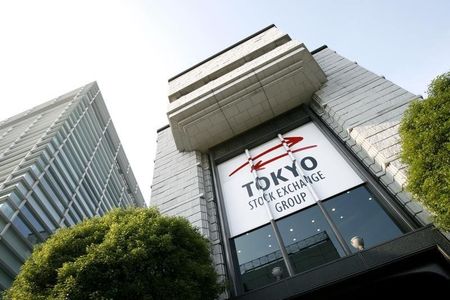
Nikkei 225 and TOPIX: Already bottomed or further downside ahead?

Continue Reading

Business

Israeli airstrikes kill four in Gaza, Palestinian officials say

Published

on


Israeli airstrikes kill four in Gaza, Palestinian officials say

Continue Reading

Business

Israel strikes main bridge in south Lebanon, orders destruction of homes near border

Published

on

Israel strikes main bridge in south Lebanon, orders destruction of homes near border


Israel strikes main bridge in south Lebanon, orders destruction of homes near border

Continue Reading

Trending

Copyright © 2025