

Politics
The Healthiest Cheese, According To A Dietitian

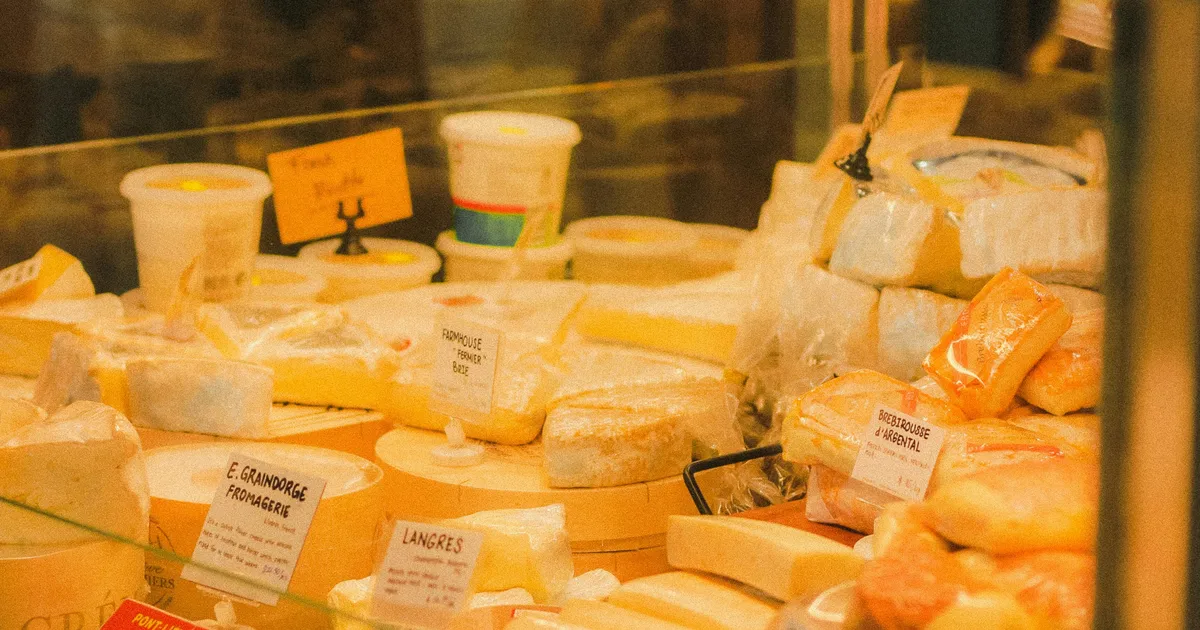
Dietitian comment provided by registered dietitian Melissa Jaeger, head of nutrition at MyFitnessPal.
In recent weeks, we’ve asked dietitians to share the healthiest type of egg, rank the best breads, and tell us once and for all whether wholemeal pasta is always better than plain.
And this week, we’re speaking to registered dietitian Melissa Jaeger about cheese.
Is it ever good for us? If so, what are the best kinds? And how do the pros make cheese healthier?
Is cheese good for us?
“Cheese can absolutely be part of a balanced diet and offers several nutritional benefits. It’s an excellent source of high-quality protein and rich in calcium, which supports bone health,” Jaeger told us.
Calcium aside, its vitamin K content also helps to support your bones.
It contains vitamin B12, riboflavin, zinc, vitamin A, and phosphorus, too – “all nutrients that play vital roles in overall health”.
“There’s even an interesting benefit for dental health: eating cheese can increase pH levels in your mouth, leading to lower acid levels and less enamel breakdown, whilst calcium and phosphorus are boosted in saliva after consumption, helping to remineralise teeth,” the dietitian added.
But yes, there are some downsides.
“Cheese does contain 6 to 10g of fat per ounce, with more than half coming from saturated fat… guidelines recommend keeping saturated fat to around 7% of total calories (roughly 10-20g depending on your calorie needs),” Jaeger said.
“Elevated saturated fat intake can contribute to increased risk of cardiovascular disease and type 2 diabetes, so it’s worth being mindful of portion sizes.”
What are the healthiest types of cheese?
Jaeger said that different cheeses have different nutritional benefits, so it really depends on your goals.
“Swiss cheese stands out for having the lowest sodium content at around 55mg per ounce, making it a smart choice if you’re watching salt intake,” she said.
And if you’re trying to up your protein intake, sheep’s milk cheese contains “75% to 100% more protein than cow’s milk cheese and offers higher levels of phosphorus, vitamin B6, vitamin E, and calcium”.
Goat’s cheese also contains more protein on average than cow’s milk cheese (though less than sheep’s milk cheese), and is also higher in calcium, niacin, potassium, and iron.
Fresh goat’s cheese, or chèvre, “is a lighter option with only 4g of saturated fat per ounce”.
Lastly, if you have issues digesting lactose, you might benefit from trying harder cheeses.
“These are often well-tolerated because lactose is removed with the whey during cheese production, and what remains is broken down further during the ageing process,” said the dietitian.
Goats’ and sheep’s milk is also a little easier to digest, too.
How can I make cheese healthier?
If you do want to reduce your saturated fat intake, some naturally lower-fat versions include fresh goat’s cheese (chèvre), hard Parmesan, or feta, said the expert.
Of course, you can also opt for low-fat or reduced-fat varieties. “However, if you’re watching sodium intake, do check the nutrition label as these versions can be higher in salt compared to full-fat varieties,” she added.
But, Jaeger noted, “that doesn’t mean full-fat cheeses are off the table! You can absolutely work them into your diet whilst being mindful of saturated fat intake”.
She ended: “Try smaller amounts by sprinkling them over vegetables, soups, or salads rather than eating large portions on their own.
“Full-fat cheeses with more pungent, intense flavours are particularly brilliant for this approach, as you need less to achieve satisfying flavour.”

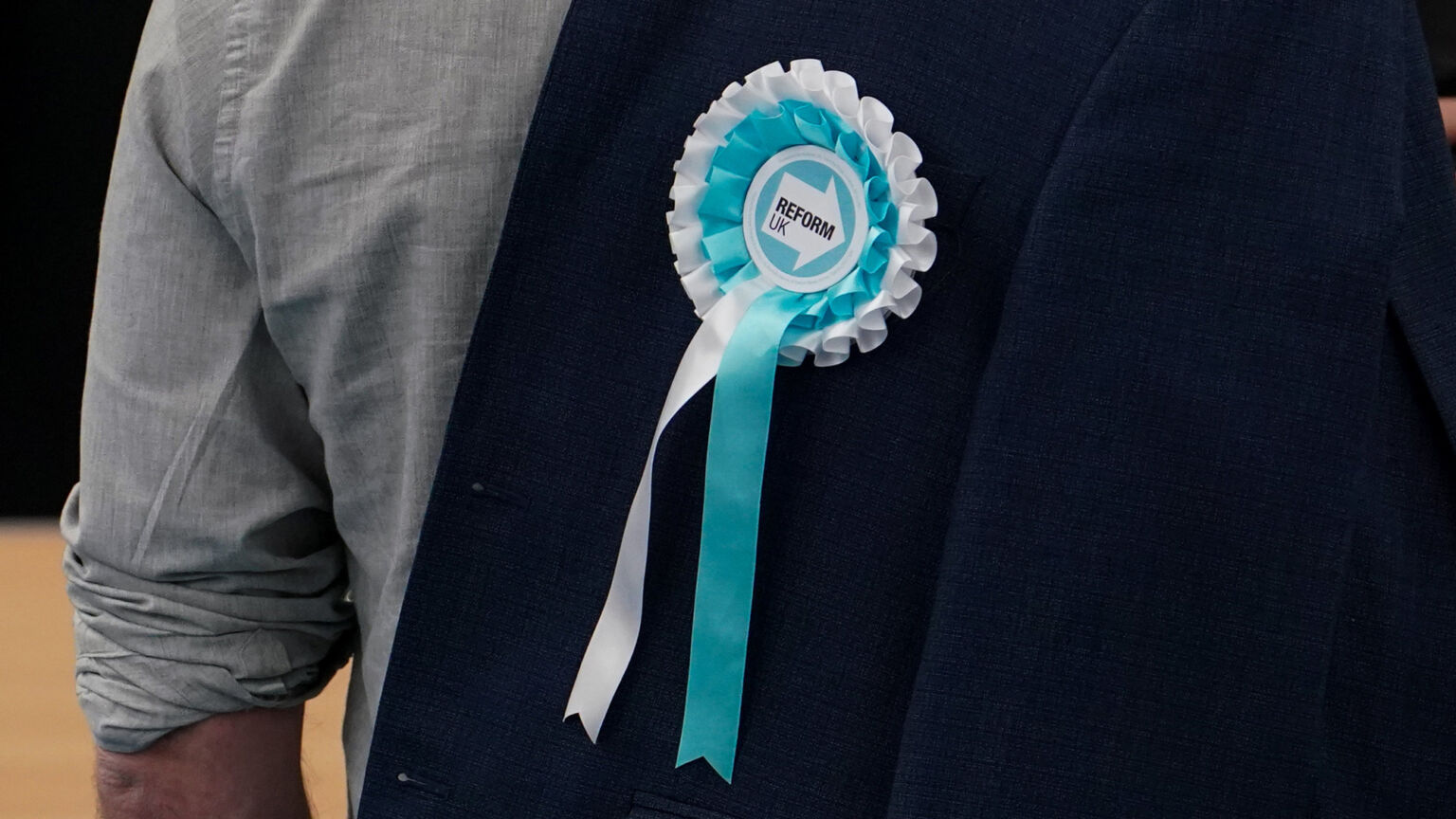
The results of Thursday’s local-council elections not only confirmed the end of the era of the Labour-Tory duopoly; they also showed the consolidation of a significant populist bloc throughout the UK.
This populist bloc first began to emerge during the referendum on European Union membership in 2016. Millions of people were prepared to reject their traditional party affiliations in support of Brexit, and embrace a cultural outlook that was antithetical to that of the ruling elites. It was then that these British patriots started to find their voice. Over the course of the past decade, their voice has become an electoral force that has surpassed the influence of the legacy parties.
At present, it is Reform UK that represents the aspirations of this populist bloc and its largely working-class social base. Unsurprisingly, support for Reform is much higher in wards that voted heavily to Leave than in those that backed Remain.
Furthermore, the relatively impressive polling numbers for Reform in Scotland and Wales indicate that it can no longer be dismissed as a predominantly English party. Indeed, compared with Labour and the Tories, Reform can now claim to be a genuinely national party.
The consolidation of a populist bloc also highlights the emergence of new forms of social polarisation within British society. There are two social spheres that have proved resistant to the spirit of populism – namely, the wealthy and the formally educated sections of society, concentrated as they are in inner, urban areas and university towns. They both regard Reform with a mixture of hatred and fear. This has meant that the traditional political polarisation between left-leaning working-class voters and centrist middle-class ones now takes the form of populism versus technocratic managerial centrism.
In this regard, it’s worth noting that the animosity towards Reform from the mainstream media and representatives of the legacy parties is not merely directed at Nigel Farage and his party’s leadership. It is also directed at Reform’s supporters. They cast the working-class’s patriotism and their identification with national traditions as manifestations of racism and xenophobia. The political and media elites’ hatred for ‘these people’ should be understood as the latest version of the classical anti-democratic contempt for the demos.
In my new book, In Defence of Populism, I focus on what is truly inspiring about populism – namely, its quest for a voice and for social solidarity.
Populism has no doctrinal ambition. Instead, it draws on people’s common sense and experiences. An egalitarian impulse infuses the populist spirit, something its detractors misinterpret as simply anti-elitist and anti-pluralist. As academics Arthur Borriello, Jean-Yves Pranchėre and Pierre-Étienne Vandamme astutely note, this egalitarian impulse is ‘mainly defensive-reactive in nature and rooted in a democratic commonsense, rather than in a fully-fledged ideological worldview aiming at the establishment of a radically new social order’.
Populism affirms democratic common sense. It rests on the conviction that citizens possess the capacity to judge issues and policies that concern them.
Although populism lacks a systematic doctrine, there are certain attitudes and ideals shared by all today’s national-populist movements. Above all, its values are antithetical to those of the political and cultural establishment. As the political theorist Margaret Canovan has pointed out, unlike so-called social movements, populism challenges not just the holders of power, but their ‘elite values’, too – hence, populists tend to be opposed to ‘opinion formers and the media’. Often the populist response to elite values involves a rescuing and defence of the customs and traditions that the technocratic-managerial class have discarded as outdated.
There have been suggestions that the Greens are also populists, and that their so-called eco-populism is the leftist alternative to Reform. But unlike genuine populists who oppose the values of the cultural elites, the Greens affirm them. This is why they are treated so favourably by the legacy media – because the Greens share the worldview of the cultural and political establishment.
The Green Party’s combination of identitarianism and Islamism bears no relation to populism. Indeed, its outlook directly contradicts the outlook of populism. Bringing together supporters of political Islam and the middle-class young, the Greens are fervently anti-patriotic and consciously hostile to the British way of life. And, as the local-election results show, the Greens really are not as popular as their media cheerleaders would have had everyone believe.
Reform’s triumph is the story of this election. With the emergence of the populist bloc, a durable political realignment favourable to the interests of the British people has become a very real possibility.
Frank Furedi’s In Defence Of Populism is published by Polity later this month.

3 min read
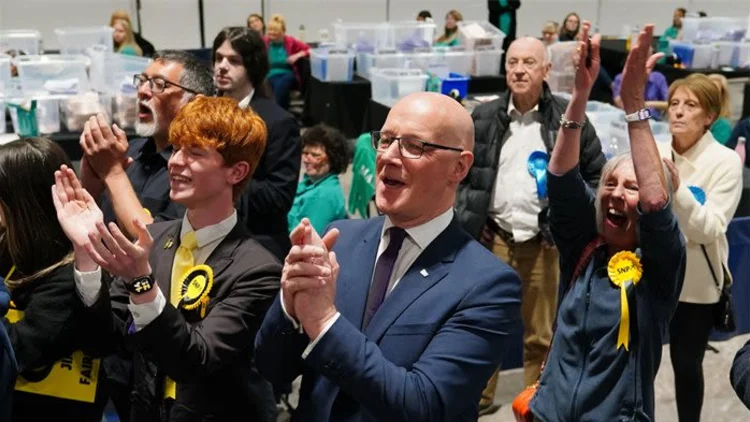
The SNP is on course to become the largest party in Holyrood once again – but without a parliamentary majority.
John Swinney had aimed for 65 seats or more and pinned his independence hopes on that.
But with almost all constituencies now declared and regions still to come, it appears the party can achieve minority government at best.
The SNP has won as many as 55 seats so far, winning Shetland from the Liberal Democrats for the first time.
But it has also suffered losses, with the Western Isles going to Labour, Strathkelvin and Bearsden won by the Lib Dems, and Angus Robertson losing to Lorna Slater of the Scottish Greens in Edinburgh Central.
And while Anas Sarwar conceded that Labour had lost the election early in the day, there was some relief in Dumbarton, where deputy leader Jackie Baillie doubled her majority to around 2,000 votes.
Kaukab Stewart lost her bid for Nicola Sturgeon’s vacant Glasgow Southside seat, which went to local Green councillor Holly Bruce.
It is the first time the Scottish Greens have won constituencies, while Reform UK has so far been unable to achieve the same feat.
With some results still to come, the Lib Dems are currently the second largest party on five seats, followed by the Tories on four, Labour on three and the Greens on two.
The SNP has continued its dominance in “Yes city” Dundee, where it held both city seats, and seen its Westminster leader Stephen Flynn win entry to the Scottish Parliament in Aberdeen Deeside and North Kincardine.
And its performance comes after almost 20 years in power, and following an election in which its record in government came under question.
Polls suggested the party was on track to become the biggest party and Swinney’s confidence was clear early in the day, when he said he was “absolutely certain the SNP is going to be the leading party coming out of this election”.
It is the first Scottish Parliament election Swinney has fought since taking over as leader of his party in 2024. That move came just a few short weeks before the 2024 general election, in which the SNP’s formidable MP group was reduced to just nine.
Succeeding Humza Yousaf as the third SNP first minister of the last parliamentary term, Swinney promised to unify his warring party and return government focus to delivery.
Commenting on the results as they unfolded, he said the were “a reflection of the work that we’ve undertaken to rebuild public confidence and trust in the SNP”.
Reform UK’s Scottish leader Malcolm Offord expressed disappointment that his party had not secured a constituency seat. Offord stood in Inverclyde, which was held by the SNP’s Stuart MacMillan, who is also the Scottish Parliament piper.
This article first appeared on Holyrood.
A wipeout: Plaid Cymru: 31,943 Reform: 23,003 Labour: 6,495 The sitting First Minister came third…
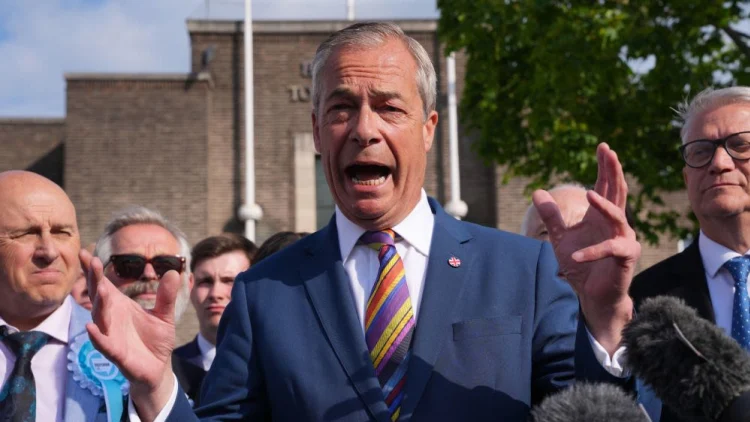
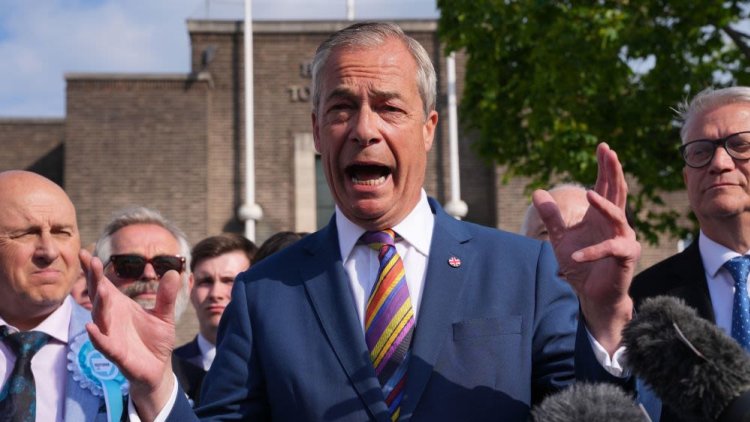
Reform UK has claimed yet another Tory stronghold (Alamy)
3 min read
Reform’s dominant victory in Essex will likely be one of the local election results most worrying Kemi Badenoch.
Not just because the Tories had controlled the council for 25 years. But also because the county is home to the constituencies of ten Conservative MPs, six of whom are shadow cabinet ministers – including Badenoch herself.
Former cabinet ministers James Cleverly and Priti Patel, both senior members of Badenoch’s shadow front bench, are also Essex MPs.
It was confirmed on Friday that Nigel Farage’s insurgent party won 53 of Essex County Council’s 78 seats, with the Conservatives dropping to 13 from the 52 they won in 2021.
Five years ago, the Tories were riding high in the opinion polls, with the then prime minister, Boris Johnson, enjoying what was widely described as a coronavirus vaccine bounce.
Now, however, the Conservatives are struggling to move on from their 2024 general election loss, with Badenoch’s steadily improving ratings seemingly failing to translate into an improved party brand.
The graphic below illustrates the scale of both the Reform rise and the Tory collapse.
In the run-up to 7 May, Conservatives in areas where they are electorally vulnerable, such as Essex, told PoliticsHome they were worried that the party was being complacent about this set of local elections.
The Tories have also lost control of Hampshire for the first time in almost 30 years, with the council now in no overall control.
Here, the party lost votes not just to Reform but to the Liberal Democrats, too, demonstrating that, like Labour, the Conservatives face electoral threats from different directions.
Farage’s party also took control of Suffolk County Council, overturning a 20-year run for the Conservatives. Reform took 41 seats on the council, with the Tories pushed down into single digits, returning just nine seats.
Speaking earlier today, Badenoch insisted that the results declared at the time showed that the Conservatives are “coming back” after their heavy defeat two years ago.
While the Tories are bleeding votes to both Reform and the Lib Dems nationwide, and are expected to suffer more pain in Scotland and Wales on Friday night, they have reasons for optimism in London, where, at the time of writing, they have won Westminster and gained eight seats in Wandsworth to push it into no overall control.
Defending Badenoch earlier this week, a senior Conservative MP acknowledged that 7 May was “going to be very bad” for the Tories, but said “there is nothing that can be done” given the situation the party is in, namely, still in the process of rebuilding public trust after being emphatically removed from office less than two years ago.
“I see this as something we have got to live through to get to the other side,” they told PoliticsHome.

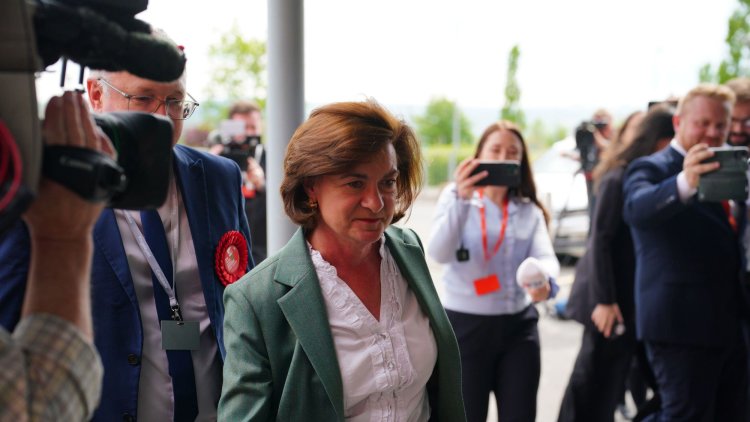
(Alamy)
1 min read
Welsh First Minister Eluned Morgan has lost her seat as Labour faces a historic collapse in Wales.
It was confirmed on Friday afternoon that Labour had won no seats in her Ceredigion Penfro constituency under Wales’ proportional voting system.
Plaid Cymru, which is currently expected to form the next government in Cardiff, won 36 per cent of the vote to pick up three seats, while Reform UK came second with 26 per cent of the vote, giving the party two seats.
The Conservatives came third, winning one seat, while Labour fell sharply to fourth place.
The Labour collapse in Wales will be seen as one of the most bruising results for Prime Minister Keir Starmer as his leadership comes under renewed pressure.
Labour has been in power in Wales since its devolved institutions were set up at the turn of the century, with every first minister in Cardiff being Labour.
Earlier today, a Labour spokesperson told the BBC that the party expects to have a “group of around 10” members in the bigger 96-member Senedd, compared with the 30 elected to a 60-seat Welsh Parliament five years ago.

A bloodbath. A wipeout. A rout. Call it what you want, there is no understating the catastrophe that has befallen the Labour Party in yesterday’s local elections. These results are not just a bruising defeat for an unpopular incumbent – they signal the beginning of the end for the so-called people’s party.
On the seats declared so far, Labour is having the worst results for a governing party since the Tories in 1995, before they were cast out of power for a generation. Labour’s vote share has plummeted by an astonishing 19 points since its General Election win in 2024. As results continue to come in, Keir Starmer’s party is losing half of the seats it’s defending. Not quite the worst-ever rate of loss for a governing party. That dishonour belongs to, er, Keir Starmer’s Labour Party in May 2025.
The bloodbath for Labour is even gorier in its traditional, northern, working-class heartlands. In Hartlepool – once synonymous with Labour – all 12 seats that were up for election flipped from Labour to Reform UK. In Wigan, dominated by Labour for half a century, Labour has lost 24 out of 25 seats to Reform. In Tameside, Greater Manchester, 14 of the 15 seats defended went to Reform. The so-called red wall has been smashed by the teal tide.
So far, only in London has Labour managed to stem some of the losses, performing poorly rather than catastrophically. Even here, it is losing ground in all directions, ceding Westminster and Wandsworth to the Tories, and the Hackney mayoralty to the Green Party.
The conversation has, understandably, turned to questions about the prime minister’s future. As Dan Hodges notes in the Daily Mail, all that unites our fractured nation is a ‘deep, abiding, visceral hatred for Keir Starmer’. Certainly, no self-respecting leader would try to cling on to power after this. Starmer’s response, that while the results are ‘tough’, they won’t ‘weaken my resolve to deliver the change that I promised’, sounds arrogant, tin-eared and deluded.
Yet just as deluded are those in Labour who think a change of captain will be enough to rescue the sinking ship. Can Angela Rayner really turn things around when voters in her own backyard in Tameside have just so roundly rejected the Labour Party? Can Andy Burnham waltz into parliament to take the crown? Leigh, his constituency as an MP from 2001 to 2017, has just turned teal. There is no longer such a thing as a Labour safe seat.
As the Telegraph’s Sherelle Jacobs puts it, Labour is losing in places that stuck with the party through some of its lowest ebbs of recent decades: ‘through Iraq, the financial crisis, the Corbyn years’ – to which I’d also add the Brexit betrayal, when Starmer himself campaigned to re-run the referendum, to shove millions of votes into the shredder. Labour turned its back on these voters, and they are now turning their backs on Labour.
Besides, even if the next Labour leader has more charisma or personality than the hollow, robotic Starmer, it is what they plan to do that matters most. Many Labour MPs are spinning the emphatic swing from Labour to Reform as a demand for Labour to tack leftwards – to further open the borders, to go for broke on woke, to stuff more money into the bloated welfare state. They are already discussing openly how they will use the next few years to sell out the working classes to appease the ‘progressive’ middle classes like themselves. There is no wing of the Labour Party that isn’t contemptuous of the electorate.
The long-overdue death of Labour has finally arrived. Don’t mourn.
Fraser Myers is deputy editor at spiked and host of the spiked podcast. Follow him on X: @FraserMyers

The post Why Labour is so loathed by the English working class appeared first on spiked.

2 min read
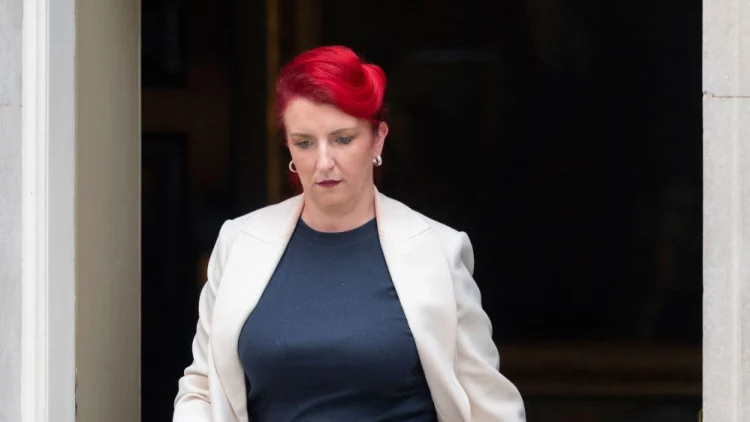
Louise Haigh, the former transport secretary, put further pressure on Keir Starmer effectively putting him on notice to quit unless there is “significant and urgent change”.
Speaking to ITV Calendar, Haigh qualified her expression of support for the Prime Minister with a warning that he may not be the right person to lead Labour into the next election as the governing party was on course to suffer major losses nationwide.
“He is doing an incredible job at the moment on the international stage in the middle of global instability and a war. And it is imperative that he is successful in that role because our constituents’ livelihoods are dependent upon it,” the Sheffield Heeley MP said.
“But I think what is abundantly clear is that unless the government delivers significant and urgent change, then the Prime Minister cannot lead us into another election.”
As a leading figure on the party’s soft left, Haigh is one of the most senior Labour figures to suggest that Starmer should resign before the next general election.
Speaking earlier in the day, the PM admitted that the local election results were “very tough” but insisted that he was “not going to walk away”.
“Tough days like this don’t weaken my resolve to deliver the change that I promised. They strengthen my resolve,” he told reporters.
Labour has lost hundreds of council seats nationwide at the time of writing.
Nigel Farage’s Reform UK has enjoyed major gains in the North and the Midlands in particular, inflicting major damage to Labour in places like Hartlepool, Tameside and Wigan.
Labour’s vote is also being eaten into by the Greens from the left, with Zack Polanski’s party expected to make significant gains in London when results are announced in the coming hours. Earlier today, Zoë Garbett unseated Labour in the borough of Hackney to become the country’s first Green mayor.
MPs on the Labour left, including Ian Lavery, Nadia Whittome and Apsana Begum, have publicly called on Starmer to set out a resignation plan in response to Labour’s losses.
Theo Bertram, who was a Downing Street adviser to former prime ministers Tony Blair and Gordon Brown, wrote in The House that the PM has lacked a clear sense of purpose since being elected in 2024, describing his approach as “tepid managerialism”: “Too often, Starmer has articulated constraint but not purpose, sounding managerial not transformational.”

The post The crimes of Palestine Action appeared first on spiked.

The post The Reform surge: an English revolution appeared first on spiked.

Authority Brands CFO on finance leadership in the franchise industry

Who Is Kerrie Olsen? The CrossFit Coach Is on Life Support

4 ways to make money in crypto as a beginner. #cryptocurrency #crypto

Manchester United reach agreement with Casemiro over contract clause amid transfer speculation

US brings back mandatory military draft registration

Steven Gerrard disagrees with Gary Neville over ‘shock’ Chelsea and Arsenal claim | Football


-

 NewsBeat5 days ago
Channel 5 – All Creatures Great and Small series 7 new post
-
 Crypto World9 hours ago
HarrisX Poll Found 52% of Registered Voters Support the CLARITY Act
-

 Crypto World1 day ago
Upbit adds B3 Korean won pair as Base token gains Korea access
-
 NewsBeat1 day ago
NCP car park operator enters administration putting 340 UK sites at risk of closure
-
 Tech7 days ago
Trump’s 25% EU auto tariff breaches Turnberry Agreement that also covers semiconductors and digital trade
-
 Sports7 days ago
Paul Scholes issues Marcus Rashford reality check as agreement emerges over Man United star
-

 Tech4 days ago
Image AI models now drive app growth, beating chatbot upgrades
-

 Entertainment7 days ago
Met Gala 2026 Rumored Guest List Is Turning Heads
-

 Entertainment7 days ago
Kylie Jenner Hit With Second Lawsuit From Ex-Housekeeper
-

 Sports7 days ago
Cavaliers vs. Raptors Game 6 live score, updates, highlights from 2026 NBA playoffs first-round series
-
 Entertainment6 days ago
Melissa Joan Hart and More Stars Attend 2026 Kentucky Derby
-
 Sports7 days ago
David Benavidez responds to team Canelo saying the fight will never happen
-

 Entertainment7 days ago
Young and the Restless Next Week: Cane Arrested & Matt’s Deadly New Scheme!
-
Entertainment6 days ago
New Netflix Movies in May 2026 — My Top 3 Picks to Stream
-

 Tech7 days ago
Mother’s Day 2026 Gift Guide: Audio to Upgrade Mom’s Lifestyle
-
 Sports7 days ago
IPL 2026: ‘Love you darling’- Hardik Pandya’s reaction to MS Dhoni steals the show |Watch | Cricket News
-
 Crypto World6 days ago
Pi Network Mandates Protocol 23 Upgrade for All Mainnet Nodes Before May 15 Deadline
-

 Business6 days ago
Luka Doncic Injury Update: Doncic’s Hamstring Recovery Slows Lakers’ Hopes Against Thunder: Can He Run Yet?
-

 Business7 days ago
Can Victor Wembanyama Bring the NBA Ring to Spurs in 2026? Historic Playoff Run Fuels Title Dreams
-
Entertainment6 days ago
Anna Nicole Smith’s Daughter Attends 2026 Kentucky Derby
You must be logged in to post a comment Login