Tech
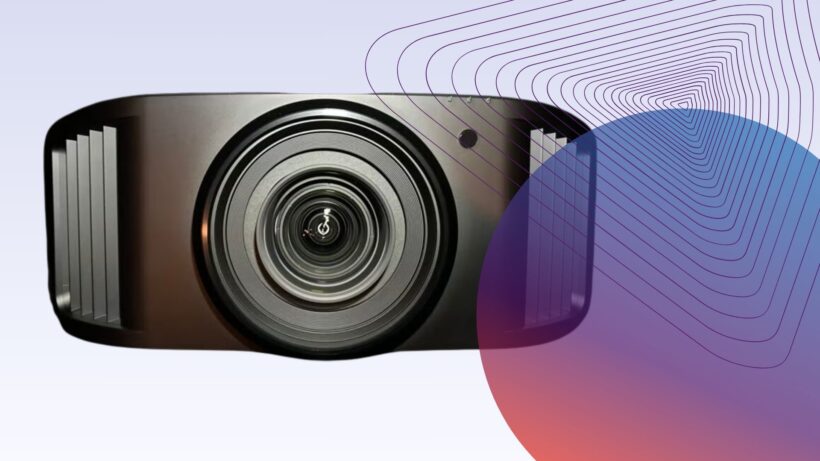
Best Projector 2026: Top picks for enthusiasts and newcomers
While there’s no denying the convenience of a TV, there’s just something about a projector that lends itself so well to recreating the feeling of a cinema at home, or having a more bespoke-feeling entertainment set-up in your bedroom. Thankfully, those who might be interested in taking the plunge will find an abundance of choice, and thanks to the diligent work of our tech experts, we know exactly which options are the best projectors to buy.
Much like with buying a TV however, it helps if you have a clear idea of what you plan on doing with a projector before you buy one. For example, if you are looking to go all in on building a home theatre then you’ll need top-shelf features like 4K resolution and a seriously high contrast ratio that can draw out all of the colours needed to give depth to a particular scene.
Alternatively, if you just want to have a more relaxed projector that’s easy to use and can be carried from room to room when needed, then a streamlined UI and a compact chassis will be the order of the day. There’s quite a lot to be aware of, but you don’t have to worry about being overwhelmed by any of it when you shop with the verified buying advice that our team has put together following hours upon hours of testing.
When a new projector comes to our offices, we set it up in our bespoke testing facility and run through everything from films on Netflix to gaming on a PS5 to get a solid idea as to how it performs during everyday use. We also use industry-standard benchmarking to test the brightness and contrast levels so you never have to rely on marketing jargon that companies love to flog alongside their products.
Our processes mean that we know exactly which are the best projectors for a bedroom and a home cinema, and we’ve made sure to include the very cream of the crop in this very list. If you decide that you’d rather buy a projector that’s better suited for the elements and simple to transport from one location to another then you’ll find exactly what you want in our round-up of the best portable projectors.
Best projectors at a glance
-
Best overall:
Sony Bravia Projector 9 – check price -
Runner up:
Sony Bravia Projector 7 – check price -
Best gaming projector:
BenQ X3100i – check price -
Best mid-range projector:
Optoma UHZ68LV – check price -
Best ultra short-throw projector:
Samsung Premiere 9 – check price -
Best affordable ultra short-throw projector:
Hisense PL1 – check price -
Best portable projector:
Epson EF-22N – check price -
Best affordable portable projector:
Samsung Freestyle 2nd Gen (2023) – check price -
Best compact projector:
BenQ GV50 – check price -
Best-looking projector:
Dangbei Freedo – check price -
Best JVC projector:
JVC DLA-NZ700 – check price -
Best ViewSonic projector:
ViewSonic LX700-4K – check price -
Best high-end projector:
JVC DLA-NZ900 – check price
SQUIRREL_ANCHOR_LIST
We test projectors by, well, watching lots of movies on them. But not just movies: we watch sports and TV programmes to get a sense of how they work in terms of motion, sharpness, detail and overall image fidelity.
Depending on the projector, we’ll test them in a bespoke home cinema room or in our own rooms and gardens to see if they live up to the manufacturer’s claims about their performance.
If it’s an HDR projector, we’ll watch plenty of HDR content to determine if colours are correct and whether the projector can do a decent approximation of HDR. If it’s a gaming projector we’ll test the latency to determine how responsive it is. We’ll also assess the projector in terms of its size and whether it needs a dedicated installation, as well as how much noise it makes during operation and whether that can be a hindrance to watching content. Are they easy to use? And do they require more expert knowledge to operate are considerations we also take into account.
With our reviewers knowledge of previous projectors tested, they’ll be considered to what’s come before to determine whether they offer good value, regardless of how much or how little they cost.
Best overall
Sony has long been one of the go-to names in the world of home theatres, but never has that brand appeal felt more fitting than with the Sony Bravia Projector 9 – this is a true beast of a machine that builds upon the outstanding feature set of its predecessors, but kicks things up a notch in all of the key areas you’d want to see. So long as your budget can match it, there is no better projector right now.
In terms of the raw image, you’re getting a crisp 4K resolution that really goes above and beyond in making the latest films and TV shows look their very best. The image is made even better thanks to the Sony XR for Projector chipset which is able to deliver a billion colour tones and, from our testing, can cover 95% of the DCI-P3 colour spectrum. This means that you’ll be getting an image that pops with colour, exactly what you want in a darkened cinema room. That chipset also does an incredible job when it comes to upscaling content that sits below the 4K threshold, so if you want to catch a bit of classic Hollywood or even chuck on some home movies of holidays past, you can do so and still enjoy them as if they had been shot with more modern cameras. Visual fidelity isn’t the only selling point here as the Projector 9 is a far more capable gaming machine than its predecessor.
There’s now support for 4K gaming at 120Hz which is a big win for anyone playing the on latest high-end consoles who wants an unparalleled experience. With that kind of speed in tow, fast paced titles like Forza Horizon 5 or Hades 2 just feel even more immersive to the point where it’ll have you wondering how you ever made do with 60Hz.
Input lag is also incredibly low so you won’t have to worry about feeling disconnected from the action during a frenetic online match. As a final point worth noting, the Projector 9 is very easy to set up so if this is your first projector of any kind then you won’t have to worry about getting bogged down by a complicated installation that could otherwise hamper your enjoyment.
Runner up
As much as we love the Sony Bravia 9 Projector and would still recommend that to anyone who has a fairly sizeable budget in tow, there’s no denying that the next option down is also a spectacular feat of engineering. Available for slightly less than its full-fat sibling, the Sony Bravia 7 Projector is an impressive piece of kit.
Although it’s not quite as expensive as the Bravia 9, the Bravia 7 Projector still boasts the same 4K resolution which is a big win on value for money, and as ever it means that you’re getting a level of quality that really elevates the experience of kicking back and catching your favourite films. It’s hard to quantify but when you see it for yourself, the idea of ever going back to 1080p seems preposterous. Helping to give the image quality an extra boost is the 2200-lumen laser light engine which is wonderfully bright and paves the way for some outstanding colour contrast, although there’s also one of Sony’s XR Processor Projector chipsets on board which can handle the upscaling process of old content with ease. Even things you’ve shot on an old camcorder can have a new lease of life here.
Just like with the pricier Bravia option, gaming performance here is top-notch. You’re also getting a 120Hz refresh rate which is just begging for a high-end PC or something like the PS5 Pro to make the most of. What’s surprising is that with all of this tech built into the Bravia 7 Projector it still manages to run at a fairly silent level, so you won’t have to crank up the volume in order to drown out the noise of internal fans at work.
Depending on the type of content you want to watch, it’s possible to quickly swap between a standard 16:9 ratio and a 2.35:1 alternative which is better suited for films shot in IMAX. The main allure of opting for the Bravia 9 is the higher 3400 lumens count for a brighter image, but given what you’re getting with the Bravia 7, it’s hard to imagine anyone feeling hard done by except for home theatre purists.
Best gaming projector
Looking for a projector that’s explicity for gaming? BenQ’s X3100i is what you’re looking for with its solid 4K HDR picture and low input lag.
There’s a range of gaming features available with multiple modes with low input, 1080p/120Hz support, an FPS Crosshair feature and BenQ’s SettingXchange, which allows you to import custom gaming modes and colour parameters that have been created by experts and professional gamers. We measured input lag at an impressively low 16ms, and at 1080p/240Hz that figure falls to 4ms. The picture puts in a bright, colourful and punchy performance. At its maximum output, the X3100i offers 3300 ANSI lumens of brightness (cinema mode reduces it to 2000 ANSI lumens). Black levels are more grey than black, but the performance we see with the X300G is consistent with other single chip DLP projectors, so contrast doesn’t deliver on what BenQ claims the projector does out of the box. Motion handling is superb, and overall, its wide colour performance and brightness makes up for its lack of deep blacks.
The sound system is pretty good for more casual viewing, but the 2.1 channel system (device Bon Jovi’s cousin) doesn’t have the scale or power to create a soundstage that complements its big screen images. They can’t go too loud without starting to distort.
Best mid-range projector
You know as well as we do that if you’re serious about building a true home entertainment system for films, games and TV shows that’s built around one truly outstanding projector, then you’re not going to skimp on your investment. Case in point, a price tag of £3999/$5999 is likely to deter some buyers, but for those who value the finer things in life, the Optoma UHZ68LV is worth every penny.
Just look at the UHZ68LV and you can tell that this is a projector that does not mess around, something that’s only confirmed once you switch it on and see the unbelievable brightness that’s achieved by its dual laser light engine. Colours end up being so right from the brightness available that even if you have plenty of natural light seeping in from a nearby window, you’ll still get a good view of what’s on.
What really helps is the PureEngine Ultra processor working tirelessly under the hood to optimise what’s being shown at all times. This ensures that whether you’re watching an old Hollywood classic or a new must-see show, you won’t be missing out on any of the included details that the filmmakers want you to see. While the projector can easily please the home theatre crowd, it also works brilliantly well when it comes to gaming. The combined metrics of 4K resolution running at 120Hz, along with super-low latency to prevent input lag, all go above and beyond to create an immersive experience like no other. It’s exactly the type of projector you’d want for detailed and paced titles like Forza Horizon 5 or Returnal.
There are three HDMI ports (one of which is HDMI 2.1) so you have more than enough room to plug in a games console, streaming stick and a soundbar if needed, although we found the audio clarity to be quite good by default. Plus, with the twin lasers having a lifespan of up to 30,000 hours, you won’t need to upgrade to a different projector until long into the future.
Best ultra short-throw projector
The Samsung Premiere 9 is an ultra short-throw laser with smart features make it more accommodating and accessible to those looking to ditch the TV and get an even bigger screen experience.
As an ultra short throw projector it can be placed close to a wall for the space conscious, and while it’s large for a projector, aesthetically its soft rounded corners and white colour can see it disappear in the right room.
It doesn’t come with a built-in tuner like the LS9PT predecessor did, which is disappointing, but it would appear that Samsung is putting the emphasis on its Tizen interface with the likes Netflix, Prime Video and iPlayer, as well as its free-to-access TV Plus service. HDR support equals HDR10, HLG, and HDR10+. Once again for a Samsung product, Dolby Vision is noticeable by its omission. With 3450 ISO lumens of brightness, the Premiere 9 delivers big, bright images with both SDR and HDR content. Blacks can, however, be more of a dark grey, but the real impressive aspect about the Premiere 9 is the range and variety of colours that it can display. Motion handling is also superb, delivering smooth movement when it is activated.
Best affordable ultra short-throw projector
Not everyone can afford the Samsung Premiere 9, which commands a price of £5999. In which case, if you’re looking for a TV replacement in the form of a projector, the Hisense PL1 is a more affordable option at less than £1999.
We found its design less intrusive than a TV as it can sit in front of a wall, and a screen up to 100-inches possible would be our recommendation. It’s much more convenient than a long-throw projector like the similarly priced BenQ W270i, as we found you could use the Hisense in a relatively small room.
We were impressed by the picture quality of the PL1. Packing 2100 lumens of brightness, it’s not the brightest UST and so for the best performance we would recommend that you draw the curtains for a proper cinema experience.
HDR support includes HDR10, HLG, HDR10+ and Dolby Vision; the latter helps the projector deliver a sharp image, with excellent colour vibrancy and motion handling. While projectors can’t match TVs for HDR output, we found the PL1 gives it a good go. It can’t manage deep blacks, reaching dark grey instead but for most dark content, the PL1 should look fine. The system’s stereo sound system is serviceable enough for news but anything more challenging and you should consider adding additional speakers.
Best portable projector
As the market surrounding the best portable projectors continues to open up, we’ve seen more standout devices in this category over the last few years, but at the time of writing it’s the Epson EF-22N that shows just how far these miniature entertainment hubs have come.
Aside from its smaller stature, what helps the EF-22N’s portability, particularly when needed to be used in the great outdoors, is the 360-degree swivel base that makes it incredibly easy to find the right level of framing without needing to constantly move the projector from place to place. The charging port is also conveniently located in the base of the device, so the power cable won’t get tangled up as the projector moves.
When it is set up, you can enjoy all of the smart features and apps that Google TV has to offer on the Epson EF-22N. This includes access to key streaming services like Netflix and Disney Plus, although irritatingly we were unable to access iPlayer or Channel 4 due to licensing issues. Still, there’s plenty on offer here and it’s handy to know that you don’t need to throw an extra device like the Fire TV Stick 4K Max into the mix.
In spite of its portable ambitions, the Epson EF-22N is still able to reach some impressively high levels of brightness, up to 1000 ISO lumens to be exact. At that level, it’s easy to make out plenty of detail in whatever it is that you’re watching. Even in darker scenes, the visuals never became muddy in our testing, so you’ll never be taken out of the immersion due to lacklustre visual quality. While the Samsung Freestyle is still a better portable option for those tied to a budget, we can’t recommend the Epson EF-22N enough if you have the money to spend.
Best affordable portable projector
We’re onto the second generation of Samsung’s Freestyle projector and it’s arguably even better than the original.
Like the Freestyle 2019 version, this new model looks not unlike Luxor Jr. of Pixar fame, dressed in a white finish with its cylindrical shape and adjustable stand. Like before, the stand can be adjusted from 90 to 180 degrees, allowing for an image to be projected on a wall or even the ceiling.
It’s in the features area where the new Freestyle begins to diverge from the old Freestyle. There’s support 21:9 for screen ratios as well as Samsung’s Gaming Hub for cloud gaming. The Smart Edge Blending combines the images of two Freestyles into, a image we found to be even bigger and brighter than using one by itself. It also increases the minimum screen size from 100-inches to 130-inches that allows users to get the full benefit of the 21:9 ratio.
The micro-HDMI input can accept HDR signals and supports ARC for adding a soundbar. There’s a USB-C port for connecting to the power adapter or connecting the projector to an external battery. Its wireless support includes Wi-Fi 5, Bluetooth 5.3 and Apple AirPlay 2. Wi-Fi offers access to the Tizen-powered smart platform where you can find streaming apps such as Disney+, Netflix, and Apple TV+. There’s built-in Bixby and Alexa voice assistance along with SmartThings support, which like before is an app that we found makes set-up and installation very simple. The Smart Calibration feature allows images to be calibrated with a smartphone, accurately compensating for colours if you’re watching on a non-white coloured wall or surface.
Our reviewer measured the amount of the noise the projector produced from two feet away, and found it matched the original with only 25dB of noise. In general we found picture quality to be very good with images that look clean and detailed, and though the projector is limited to 1080p resolution, we did not see any distracting image artifacts when the projector downscales content from 4K.
It is slightly brighter than the original at 550 lumens, which is not as bright as the Yaber K2S‘ 800 ANSI lumens, but we found its tone mapping to be very good, producing HDR images with plenty of pop. Unfortunately, the Freestyle 2023 does suffer from limitations such as weak blacks, contrast and possible colour fringing (rainbow effect) for some people.
It’s a decent option for gaming with a 40ms gaming lag (better than the original), and the built-in speaker system spreads audio in all directions, and we found it could go loud without distorting or losing its composure. The new Freestyle takes what made the original good and adds a few more useful features and refines the overall performance. This is a fun, hassle-free smart projector that’s easy to use for big screen viewing in your home. The original Freestyle is still available at around £499, though the Samsung has recently reduced the price of the new model to £699.
Best compact projector
As tempting as it can be to have a full-on projector that remains stationary for the purpose of building a home cinema, if you have lifestyle that’s a bit more on the go, or you like to enjoy entertainment in different rooms of your abode, then a portable projector makes a lot more sense. There are plenty of great options out there but one of the absolute best that we’ve tested is the BenQ GV50.
With a built-in handle, the GV50 is meant to be carried around, so if you fancy moving a film from the living room to the bedroom then you absolutely have the freedom to do so here. Similarly, if you want to have a more cinematic experience in your gaming room, when the projector isn’t in use for movie night, you can always hook up the GV50 to your console of choice and enjoy a massive screen for your next playthrough.
You’re getting crisp, 1080p video from this projector, which does a great job at unearthing the finer details in all types of entertainment. You don’t even have to worry about the longevity of the device as it uses a laser light engine, pacing the way for a full 30,000-hour lifespan. In terms of battery life, you can get up to 150-minutes of use on a single charge, which is more than enough for most blockbuster films.
One of the best things about this projector is that it comes with Google TV built-in as its default operating system. If you haven’t yet experienced the joys of Google TV, simply know that it does a great job at centralising all of the content that’s available to you via your various subscriptions, and it gives you a quicker means of diving back into any films or TV shows that you’re currently watching. Far too often with portable projectors, the speaker quality can take a hit in order to keep things compact, but this issue does not exist with the GV50. With a 2.1 speaker configuration, we were surprised not just by how clear the audio was, with plenty of attention paid to dialogue, but also its ability to get quite loud without losing that fidelity.
Best-looking projector
Usually, whenever you shop around the budget-end of the market (and this goes for all products, not just projectors), there’s an implicit understanding that you may be getting a couple of key features that are crucial to the visual experience, but the design and build quality won’t be turning heads compared to pricier options. Well, it seems like the Danbei Freedo didn’t get the memo on that one.
Despite its comparatively affordable price tag of £449, the Freedo boasts a wonderfully sleek aesthetic that makes it resemble a podcast microphone when in use or a smart speaker when packed away. Given that one of the nicer aspects of owning a projector is that you don’t have to look at a blank black box when it’s switched off, it’s nice to also have it fit seamlessly with your decor when you would rather just read or listen to music.
Of course, because the Freedo is such a small projector, and it has a built-in battery, you can easily move it from room to room – great for watching shows in the bedroom – or take it with you to the great outdoors and enjoy a film under the stars during your next camping trip. It doesn’t have to be a short flick either, thanks to a runtime of up to 2.5 hours on a single charge.
Shifting over to the picture quality, there’s plenty to love about this portable projector. With a crisp 1080p resolution, you can pick up on plenty of detail in just about anything you plan on watching, and the peak brightness of up to 500 lumens also goes a long way to ensuring that you’re never squinting at what’s happening. There’s a nice degree of contrast too, so you can really feel the depth of the setting, whether that be a real location or a CGI-constructed world. When it comes to deciding what to watch, the use of Google TV as the projector’s operating system is a big win. Google TV does a great job of offering up quick access to all of your favourite apps, alongside an eye-catching carousel of new content that might take your fancy. There’s a lot to love here, and the projector is certainly a go-to option for anyone who appreciates style and portability in equal measure.
Best JVC projector
JVC has quite a few projectors available so to simplify things a bit, just know that the JVC DLA-NZ700 is designed for the enthusiast crowd who might be shopping with a mid-range budget (comparatively speaking). Even though this isn’t the most high-end projector within JVC’s range, you’d be hard pressed to find fault with it once you switch the thing on. The type of image quality you can get with this projector is just stunning.
What really sets the NZ700 apart from so many of the other projector we’ve tested over the years is its HDR performance. Thanks to its Gen2 Frame Adapt HDR feature, the NZ700 is able to analyse every scene frame by frame to make sure that each one is optimised to the fullest, so you’re always treated to a rich and vibrant image that’ll have you absorbed completely.
Complementing that HDR processing is the fact that this is a native 4K projector, so there’s tons of detail to go with every image you see. This is brilliant for animated films where there are tons of fun details to find in the periphery, and it’ll make any future movie nights with the kids feel like a true trip to the cinema from home.
If you don’t have a cinema room that’s fully blacked out with no external light creeping in then fear not as the powerful BLU-Escent laser diode is able to reach a peak brightness of 2300 lumens, which almost makes it feel as if you’re getting the same experience that you would through a traditional backlit television. In fact, the NZ700 also does a great job in more dimly lit scenes courtesy of an 80,000:1 contrast ratio, which can go a long way towards making horror films feel even more immersive. If things do get a bit too tense however, you can quickly pause a film with the backlit remote that’s bundled in.
Best ViewSonic projector
If you know next to nothing about projectors but you’re looking to buy one that features high-end features and an easy-to-understand set-up process that makes the installation of a home theatre as simple as possible, then the ViewSonic LX700-4K is definitely the option for you.
On the quality front, there’s very little here to leave you wanting. The LX700-4K, as its name implies, is able to output content at a 4K resolution, so there’s no detail lost when enjoying the latest films and TV shows, plus the HDR performance kicks it up to a whole other level.
With support for HDR10 and HLG, this projector is able to emit a jaw-dropping image at all areas of the screen. This is brilliant if you’re enjoying an animated film with the family as younger viewers will marvel over the vibrant colours found in these fictional worlds. Part of this is achieved thanks to a super bright 3500 ANSI lumens, which still lasts for a whopping 30,000-hour lifespan for tons of entertainment.
As mentioned, the LX700-4K is one of the easier projectors to set up, partially due to the intuitive remote that comes with the device. You have instant controls for zooming and focusing the image, so it doesn’t take a great deal of work to find the point that works best for your screening room. If you also like to mix things up with a bit of gaming then you’ll appreciate the smooth motion handling which keeps you locked in with every step of the action. The incredibly low latency also works in tandem with fast-paced titles like first-person shooters, so you’ll never be at a disadvantage when playing online.
Best high-end projector
There’s no way around it, at £24,999/$25,999 the JVC DLA-NZ900 is a sizeable investment and one that’s really meant for the true home theatre aficionados out there who obsess over the tiniest details and really getting that cinema style experience from the comfort of their living room or dedicated cinema room. If your budget does stretch to cover it however then you will not be disappointed.
In terms of resolution, you’re definitely future proofed with the NZ900 as it can support 8K at 60Hz and a faster 120Hz refresh rate when outputting at 4K. With these resolutions available, you’re getting the best of both worlds when it comes to both film and gaming.
The ability to output at 8K means that even older, classic Hollywood films can appear at their best, making it feel as it you’ve gone back in time to watch them when they first appeared onscreen, while the super fast 120Hz refresh rate is just the ticket for high-speed games like Forza Horizon 5 or Marvel Rivals.
If you’ve ever bought at the lower end of the projector market then you’ll know that brightness can sometimes be an issue, but the NZ900 has no such problem. JVC’s BLU-Escent laser diode can crank up the brightness to 3300 lumens which is just mind-blowing, and ends up being a true visual feast for the eyes. Even with such high levels of brightness to hand, the NZ900 can still deliver on the lower end with a contrast ratio of 150,000:1. That type of performance is just on a whole other level, producing truly inky blacks that give so much depth to every single frame. Trust us when we say that this is a level of cinematic luxury like no other.
Learn more about how we test projectors

Sony Bravia Projector 9
Pros
Cons

Sony Bravia Projector 7
Pros
Cons

BenQ X3100i
Pros
Cons

Optoma UHZ68LV
Pros
Cons

Samsung Premiere 9
Pros
Cons

Hisense PL1
Pros
Cons

Epson EF-22N
Pros
Cons

Samsung Freestyle 2nd Gen (2023)
Pros
Cons

BenQ GV50
Pros
Cons

Dangbei Freedo
Pros
Cons

JVC DLA-NZ700
Pros
Cons

ViewSonic LX700-4K
Pros
Cons

JVC DLA-NZ900
Pros
Cons
Sony Bravia Projector 9
Pros
Spectacular picture quality, especially with HDR
Outstanding image processing
Easy set up for such a high-end projector
Cons
It’s eye-wateringly expensive
More consistent black levels available elsewhere
No Dolby Vision or 3D support
Sony Bravia Projector 7
Pros
Superb picture quality
Good enough for serious gaming
Quiet operation
Cons
Focus and image correction are manual only
Requires a fully dark room to shine
Menu text size is too small
BenQ X3100i
Pros
Bright and long-life LED light source
Good 4K HDR picture quality
Very low input lag for gaming
Cons
Android TV poorly implemented
No 4K/120Hz support
Possible rainbow artefacts
Optoma UHZ68LV
Pros
Loads of lumens
Excellent connectivity
Superb colour reproduction
Cons
Slight DLP rainbow fringing could annoy
Black levels can’t quite match D-ILA and SXRD rivals
Size and weight really warrant ceiling mounting
Samsung Premiere 9
Pros
Triple-laser delivers bright and saturated images
Comprehensive smart platform
Sound quality is impressive
Excellent image accuracy
Cons
No built-in tuners
No Dolby Vision
Possible ‘rainbows’
Hisense PL1
Pros
Excellent picture with SDR and HDR
Extensive smart features
Competitively priced
Cons
Limited brightness compared to competition
Only two HDMI inputs
No built-in tuner
Epson EF-22N
Pros
Flexible design
Strong picture quality
Stylish looks
Cons
Sometimes slow performance
No iPlayer/Channel 4
Relatively weak speaker
Samsung Freestyle 2nd Gen (2023)
Pros
Hassle-free big screen images
Surprisingly good sound
Extensive streaming apps
Good for casual gaming
Cons
Limited to Full HD resolution
Possibility of seeing rainbows
BenQ GV50
Pros
Portable battery-powered convenience
Google TV smart platform
Long lasting laser light source
Cons
Not bright enough for daylight use
Battery only lasts around 2.5 hours
Token HDR support
Dangbei Freedo
Pros
Very portable
Generally picture quality
Premium looks
Cons
Not the longest battery life
Doesn’t have the brightest picture
Google TV lacks major UK services, like BBC and Channel 4
JVC DLA-NZ700
Pros
Impressive HDR performance
Sharp and detailed images
Excellent contrast ratios
Cons
No low latency mode
No 4K/120Hz support
No 3D support
ViewSonic LX700-4K
Pros
Bright and punchy HDR
Excellent motion handling
Extremely low input lag
Cons
Poor native black levels
Wide colour gamut limited
Possibility of rainbows
JVC DLA-NZ900
Pros
Fantastically sharp and detailed images
Superb black level and contrast ratio
Exceptional dynamic tone mapping
Cons
Represents a significant investment
It’s very large and heavy
FAQs
In some ways, a projector is better than a TV, but it depends on what you want. If you’re after a big viewing experience, then projectors deliver an image much bigger than any TV can. However, TVs can go brighter, have a wider range of features and can operate in both bright and dark living room conditions. Not all projectors are bright enough to handle ambient light in bright rooms.
Test Data
| Sony Bravia Projector 9 | Sony Bravia Projector 7 | BenQ X3100i | Optoma UHZ68LV | Samsung Premiere 9 | Hisense PL1 | Epson EF-22N | Samsung Freestyle 2nd Gen (2023) | BenQ GV50 | Dangbei Freedo | JVC DLA-NZ700 | ViewSonic LX700-4K | JVC DLA-NZ900 | |
|---|---|---|---|---|---|---|---|---|---|---|---|---|---|
| Input lag (ms) | – | – | 16 ms | – | – | – | – | – | – | – | 51 ms | – | – |
Full Specs
| Sony Bravia Projector 9 Review | Sony Bravia Projector 7 Review | BenQ X3100i Review | Optoma UHZ68LV Review | Samsung Premiere 9 Review | Hisense PL1 Review | Epson EF-22N Review | Samsung Freestyle 2nd Gen (2023) Review | BenQ GV50 Review | Dangbei Freedo Review | JVC DLA-NZ700 Review | ViewSonic LX700-4K Review | JVC DLA-NZ900 Review | |
|---|---|---|---|---|---|---|---|---|---|---|---|---|---|
| UK RRP | £25999 | £6999 | £1949 | £3999 | £5999 | £1349 | £999.99 | £699 | £629 | £429 | £9499 | £1199 | £24999 |
| USA RRP | $31999 | $9999 | $2199 | $5999 | – | $1999 | $999.99 | – | – | $549 | $8999 | $1599 | $25999 |
| EU RRP | €25999 | – | €2599 | – | – | €1499 | €999.99 | – | – | – | €8999 | €1699 | €25999 |
| AUD RRP | – | AU$13999 | AU$3199 | – | – | AU$2995 | – | – | – | – | AU$14999 | AU$1999 | AU$40999 |
| Manufacturer | Sony | Sony | BenQ | Optoma | Samsung | Hisense | Epson | Samsung | BenQ | Dangbei | JVC | ViewSonic | JVC |
| Size (Dimensions) | x x INCHES | 460 x 1472 x 200 MM | 272 x 259 x 213 MM | 498 x 171 x 331 MM | 550 x 384 x 141 MM | 531 x 335 x 120 MM | 236 x 191 x 193 MM | 104 x 95 x 173 MM | 130 x 191 x 211 INCHES | 109 x 131 x 239 MM | 450 x 479 x 180 MM | 286 x 216 x 129 MM | 500 x 528 x 234 MM |
| Weight | 14 KG | 13 KG | 6.8 KG | 9.2 KG | 11.6 KG | 8.5 KG | 3 KG | 0.8 KG | 2.1 KG | 1.4 KG | 15.2 KG | 3.3 KG | 25 KG |
| ASIN | – | B0F8WV3HMH | B0CMHBJ7W3 | – | – | – | B0DHYB315G | – | B0DL9HH3VR | B0DM8X8L1P | – | B0CHF5CTTW | – |
| Release Date | 2024 | 2025 | 2024 | 2025 | 2024 | 2023 | 2024 | 2023 | 2024 | 2024 | 2024 | 2024 | 2024 |
| Model Number | – | – | X3100i | – | SP-LPU9DS | PL1TUKSE | – | – | – | – | DLA-NZ700 | LX700-4K | DLA-NZ900 |
| Model Variants | – | – | – | – | – | – | EF-22N | – | – | – | – | – | – |
| Resolution | 3840 x 2160 | 3840 x 2160 | 3840 x 2160 | 3840 x 2160 | 3840 x 2160 | 3840 x 2160 | 1920 x 1080 | 1920 x 1080 | 1920 x 1080 | 1920 x 1080 | 4096 x 2160 | 3840 x 2160 | x 2160 |
| Projector Type | SXRD | SXRD | DLP projector | DLP projector | DLP projector | Ultra Short-throw | Portable | DLP projector | Portable | DLP projector | – | DLP projector | D-ILA |
| Brightness Lumens | 3400 | 2200 | 3300 | 5000 | 3450 | 2100 | 1000 | 550 | 500 | 450 | 2300 | 3000 | 3300 |
| Lamp Life | 20,000 | 20000 | 30000 hours claimed | 30,000 | 20,000 hours | 25,000 hours | 20,000 | 30,000 hours | 20000 | – | 20,000 | 20,000 | 20000 |
| Contrast Ratio | 350,000:1 (dynamic) | Infinity:1 | 600,000:1 dynamic | 3,200,000:1 | 1,500:1 | 3000:1 | 5,000,000 :1 | – | 1000,000:1 | – | 80,000:1 (Native) | 3,000,000:1 | 150,000:1 (Native) |
| Max Image Size | 300 inches | 300 inches | 150 inches | 300 inches | 130 inches | 120 inches | 150 inches | 100 inches | 120 inches | 180 inches | 200 inches | 300 inches | 300 inches |
| HDR | Yes | Yes | Yes | Yes | Yes | Yes | Yes | Yes | Yes | Yes | Yes | Yes | Yes |
| Types of HDR | HDR10, HLG | HDR10, HLG | HDR10 and HLG | HDR10, HLG, Dolby Vision, HDR10+ | HDR10, HLG, HDR10+ | HDR10, HLG, HDR10+, Dolby Vision | HDR10 | HDR10, HLG, HDR10+ | HDR10, HLG | HDR10, HLG | HDR10, HLG, HDR10+ | HDR10, HLG | HDR10, HLG, HDR10+ |
| Refresh Rate | 120 Hz | 120 Hz | 240 Hz | 240 Hz | 120 Hz | 60 Hz | 240 Hz | 60 Hz | – | 60 Hz | 60 Hz | 240 Hz | 120 Hz |
| Ports | 2 x HDMI 2.1 | 2 x HDMI | 2 x HDMI 2.0b | Three HDMI, Digital optical Audio Output, 3.5mm minijack | 3 x HDMI 2.0 | 1 x HDMI 2.1; 1 x HDMI 2.0 | USB 2.0-A, USB 2.0 Mini-B, Jack plug out, HDMI ARC, HDMI (HDCP 2.3) | Micro-HDMI; USB-C | HDMI v2.0 with ARC, USB-C, USB-A | HDMI, USB | 2 x HDMI 2.0 | 2 x HDMI 2.0 | 2 x HDMI 2.1 |
| Audio (Power output) | – | – | 5 W | – | 40 W | 30 W | – | 5 W | 18 W | 6 W | – | 15 W | – |
| Colours | Black, White | Black, White | White | Black | White | Black/Dark Grey | – | White | – | – | Black | White, Black | Black |
| Display Technology | – | – | DLP | – | DLP | DLP | – | LED | – | DLP | – | – | – |
| Projector Display Technology | – | – | Single-chip DLP | – | Single-chip DLP | Single-chip DLP | Laser Diode | Single-chip DLP | Single-chip DLP | Single-chip DLP | – | Single-chip DLP | – |
| Throw Ratio | 1.35-2.84 | – | 1.15-1.5 | 1.2:1 – 1.92:1 | 0.25:1 | 0.25 | 1.00 – 1.82:1 | – | 1:2 | 1.2 : 1 | 1.34 to 2.14 | 1.06 to 1.45 | 1.35 to 2.75 |
| 3D | Yes | – | – | Yes | – | – | – | – | – | – | – | Yes | – |
The post Best Projector 2026: Top picks for enthusiasts and newcomers appeared first on Trusted Reviews.
Tech
ARCAM Expands Radia Series With New AVAs, Power Amps and Preamp at ISE 2026
ARCAM is pushing the Radia Series beyond two-channel and straight into serious home theater territory. At ISE 2026 in Barcelona, the brand will debut its new Radia AV lineup—AVA15, AVA25, AVA35, and the AVP45 sixteen-channel AV processor, along with PA4 and PA9 power amplifiers.
The three new AVA models are essentially A/V receivers. However, because they do not include traditional AM/FM radio tuners, ARCAM has chosen to label them AVA (Audio/Video Amplifiers) rather than AVR (Audio/Video Receivers). AVP, meanwhile, stands for Audio/Video Preamp or Processor, a term commonly used to describe surround processors that require external power amplification.
The new lineup replaces the AVR11, AVR21, AVR31, and AV41 models introduced in 2022, delivering a full design refresh that brings ARCAM’s home theater components into visual alignment with the existing Radia Series hi-fi models. More importantly, the new AVA and AVP models add support for Dirac Live Active Room Treatment (Dirac ART), a notable step forward over the previous generation, which was limited to Dirac Live and Dirac Bass Control room correction upgrades.
The move positions ARCAM’s new AV components as fully modern cinema hubs, combining Dirac Live room correction with optional Dirac Live Bass Control and Dirac Live Active Room Treatment (ART) upgrades to actively manage low-frequency resonances and reflections. The result is tighter, more controlled bass, improved dialogue clarity, and a wider, more consistent sweet spot—even in asymmetrical or acoustically challenging rooms where traditional correction methods start to show their limits.

What the ARCAM AVA & AVP Models Share
- Dirac: Dirac Live Room Correction is standard, with optional upgrades for Dirac Live Bass Control and Dirac Live Active Room Treatment (ART).
- Dolby Atmos: Industry-standard immersive surround sound support.
- DTS:X: Immersive surround format offering more flexible speaker layout options than Dolby Atmos.
- Remote Control: Included Bluetooth remote operates without line-of-sight requirements.
- App Control: AVA and AVP models work with the ARCAM Radia app for setup, control, Internet Radio, podcasts, and UPnP playback on iOS, Android, and Windows PCs.
- Streaming Support: Apple AirPlay, Google Cast, Spotify Connect, TIDAL Connect, Qobuz Connect, and Roon support are all included, enabling direct streaming from lossless music services on Apple and Android devices.
- Bluetooth Support: Built-in Bluetooth with Snapdragon Sound and Auracast support.
- Front Panel Display: Large, high-resolution front-panel display provides clear system status and metadata visibility from the listening position.
- Form Factor: The AVA15, AVA25, AVA35, and AVP45 all share the same chassis dimensions.
What’s New?
The biggest changes over the previous generation of ARCAM AVRs are the new Radia Series design, added support for Dirac Live Active Room Treatment (ART), and an increase from seven to nine built-in amplified channels. These upgrades, however, come with a notable price increase, and both Dirac Live Bass Control and Dirac Live Active Room Treatment remain paid upgrades rather than standard features.
AVA15

This AVA15 sits in the entry-level position within ARCAM’s lineup, but the feature set is anything but basic. It delivers nine channels of built-in Class D amplification, with the ability to expand to twelve channels through the use of external power amplifiers. This enables 7.1.2 or 5.1.4 speaker configurations using onboard amplification alone, while adding external amplification opens the door to 9.1.2 layouts. Additional system flexibility is available through configurable speaker assignments for extra subwoofers, height, or surround channels. For users seeking flexible Dolby Atmos and DTS:X support without jumping to a full separates setup, the AVA15 covers a lot of ground.

AVA25

The AVA25 steps things up with more robust amplification and enhanced audio decoding and processing, featuring nine channels of built-in Class A/B amplification rated at 100 watts per channel for greater control in larger rooms or with more demanding loudspeakers. In addition to Dolby Atmos and DTS:X support, it adds Auro-3D surround sound, includes a Zone 2 output for multi-room configurations, and employs a toroidal linear power supply to deliver stable, consistent power under load.

AVA35

The top-of-the-line AVA35 also delivers nine channels of built-in amplification but moves to Class G topology, which ARCAM claims offers roughly twice the efficiency of the AVA25’s Class A/B design. According to ARCAM, this results in more controlled, precise performance with greater consistency across the full dynamic range. The AVA35 also benefits from an upgraded DAC architecture borrowed from the Radia Series hi-fi lineup, positioning it as the strongest option of the three for two-channel music listening as well as home cinema duties.

AVP45

For those who prefer a separates-based approach, the ARCAM AVP45 is designed to serve as the central hub of a home cinema system, offering sixteen unamplified channels of decoding with support for Dolby Atmos, DTS:X, Auro-3D, and IMAX Enhanced. Balanced outputs ensure a clean signal path, while Matrix Channel Assignment enables flexible speaker configurations and includes Zone 2 output for multi-room integration.
As a preamp/processor, the AVP45 requires external power amplification to deliver sound, but that flexibility allows users to choose amplification that best matches their speakers and listening priorities.

PA4
Housed in a slimline 1U chassis, the PA4 power amplifier provides four channels of Class D amplification. It can be paired with any multi-channel preamp/processor but is specifically designed to expand ARCAM Radia AV systems. The PA4 can be used to add additional channels to the AVA15, AVA25, and AVA35, or to offload the most demanding power requirements to the front main channels in a home theater setup.
PA9
Designed to partner with the AVP45 processor, the PA9 provides nine channels of Class D amplification, delivering controlled, effortless power across all channels. Built for high-channel-count immersive systems, the PA9 allows Dolby Atmos, DTS:X, and Auro-3D setups to perform at their best when paired with a dedicated processor-based configuration.
Comparison
| AVA15 | AVA25 | AVA35 | AVP45 | |
| Product Type | Audio/Video Amplifier | Audio/Video Amplifier | Audio/Video Amplifier | Audio/Video Processor |
| Price | $4,499.95 | $5,499.95 | $6,999.95 | $5,999.95 |
| Amplified Channels | 9 | 9 | 9 | N/A |
| Channels/Pre-outs | 12/RCA | 16/RCA | 16/RCA | 16/RCA/XLR |
| Reassignable Channels | Yes | Yes | Yes | Yes |
| Amplifier Type | Class D | Class AB | Class G | N/A |
| Power | 75W (20Hz – 20kHz, 9 channels driven, 8 ohms) | 100W (20Hz – 20kHz, 9 channels driven, 8 ohms) | 100W (20Hz – 20kHz, 9 channels driven, 8 ohms) | None |
| HDMI Inputs/Outputs | 7/2 | 7/2 | 7/2 | 7/2 |
| HDR Support | HDR10 HDR10+ HDR10+ Gaming Dolby Vision HLG |
HDR10 HDR10+ HDR10+ Gaming Dolby Vision HLG |
| Surround Sound Support | Dolby Atmos Dolby TrueHD Dolby Atmos Height Virtualization Dolby Surround DTS:X DTS HD Master Audio DTS Neural:X DTS Virtual:X MPEG H |
Dolby Atmos Dolby TrueHD Dolby Atmos Height Virtualization Dolby Surround DTS:X DTS HD Master Audio DTS Neural:X DTS Virtual:X MPEG H IMAX Enhanced Auro 3D |
Dolby Atmos Dolby TrueHD Dolby Atmos Height Virtualization Dolby Surround DTS:X DTS HD Master Audio MPEG H DTS Neural:X DTS Virtual:X Auro 3D |
Dolby Atmos Dolby TrueHD Dolby Atmos Height Virtualization Dolby Surround DTS:X DTS HD Master Audio DTS Neural:X DTS Virtual:X MPEG H Auro 3D |
| App Support | ARCAM Radia Control | ARCAM Radia Control | ARCAM Radia Control | ARCAM Radia Control |
| Bluetooth Version | 5.4 | 5.4 | 5.4 | 5.4 |
The Competition
There’s no avoiding the fact that the new Radia Home Theater lineup is expensive, with pricing ranging from $4,500 to $7,000. That said, it’s largely in line with competing high-end options, including Denon’s $5,200 AVR-A10H and $7,200 AVR-A1H, as well as the $4,700 Marantz Cinema 30. On the AV preamp/processor side, the AVP45 faces direct competition from Marantz’s $8,000 AV10, $6,000 AV20, and $4,000 AV30.
The Bottom Line
ARCAM’s decision to bring Dirac Live Active Room Treatment to the Radia AV lineup is the defining upgrade. This is not a checkbox feature or marketing noise—it’s a real performance tool that elevates the AVA15, AVA25, AVA35, and AVP45 into serious home cinema territory for listeners who understand that the room is part of the system. What’s new is substantial: the Radia design language, higher channel counts, optional Dirac ART, Bluetooth with Snapdragon Sound and Auracast, HDR10+ Gaming support, and streamlined setup and control via the Radia Control app. What’s missing is equally clear: there’s no AM/FM radio tuner, and Dirac’s advanced processing options remain paid upgrades.
This lineup is aimed at buyers moving beyond mass-market AVRs—people building modern, immersive systems who care about bass control, timing, and consistency across multiple seats, not just a single sweet spot. With the simultaneous launch of the new ARCAM Radia Series loudspeakers at ISE 2026, ARCAM is making a coordinated push into high-performance home theater, offering a complete ecosystem designed for listeners who expect precision, not compromises.
Pricing & Availability
The ARCAM Radia AVA and AVP models will be available from authorized ARCAM dealers from Q3 2026. The PA amplifiers are scheduled for Q4 2026.
- ARCAM Radia AVA15: £2,599 / €2,999 / $4,499.95
- ARCAM Radia AVA25: £4,499 / €4,999 / $5,499.95
- ARCAM Radia AVA35: £5,999 / €6,999 / $6,999.95
- ARCAM Radia AVP45: £5,299 / €5,999 / $5,999.95
- ARCAM Radia PA4: £899 / €999 / $1,499.95
- ARCAM Radia PA9: £3,499 / €3,999 / $4,999.95
Related Reading:
Tech
Turns Out They Didn’t Really Want You To Bring Your Whole Self To Work
from the incentives-are-everything dept
For years, we watched Silicon Valley executives perform elaborate corporate theater about “values” and “belonging” and “bringing your whole self to work.” If you were skeptical that any of that was real, well, congrats.
Aaron Zamost, a longtime tech communications exec, has a piece in the NY Times that should be required reading for anyone trying to understand the tech industry’s sudden, conspicuous rightward lurch. His argument is refreshingly blunt: this isn’t about ideology. It never was. It’s about leverage.
There are many theories about Silicon Valley’s swift, and very conspicuous, rightward turn. Tech leaders course-corrected from an overly permissive era. The Trump administration demands fealty in exchange for critical regulatory favors. Mr. Trump’s re-election reshaped the national climate and reoriented the values of tech leadership.
Each of these explanations is convenient, but none are correct. I’ve worked in tech for 20 years, across both Big Tech and venture-backed start-ups, and I can tell you the truth is much more mundane. Silicon Valley’s chief executives have always been driven by economics, not ideology. As Michael Corleone put it: It’s not personal — it’s strictly business.
This tracks with everything we’ve observed about how these companies actually operate. The notion that tech CEOs underwent some kind of ideological awakening—either leftward in 2020 or rightward in 2024—always gave them way too much credit for having coherent beliefs about anything other than what would help them with Wall Street in the long run.
What actually happened? This is where my undergrad degree in labor relations actually comes in handy: because, as Aaron notes: labor economics happened. When you’re in a vicious war for talent and engineers have infinite options, you do whatever it takes to keep them happy. And if that means mental health stipends and letting employees “bring their whole selves to work,” then that’s what you do. Not because you believe in it. Because replacing a top engineer costs a fortune.
Big tech companies and growing start-ups are in constant, vicious competition with one another to hire and retain the best employees, especially in product and engineering roles. When these companies are in hypergrowth mode, and particularly when the job market is tight, hiring top talent can be nothing short of a matter of survival. And they are fishing in a largely progressive pond: Political donation data shows tech employees are predominantly Democratic-leaning.
The late 2010s and early 2020s were a particularly intense period in the industry’s war for talent. Hiring exploded. Meta nearly doubled to 86,000 employees in 2022 from approximately 45,000 three years earlier. Amazon added over 400,000 employees in 2020 alone. As Silicon Valley recruiting teams relentlessly poached one another’s people, tech labor had infinite choices and all the leverage.
So what did companies do when a generous compensation package was no longer enough to win over candidates? They instead sold a sense of belonging. Amid fierce competition, many companies realized that encouraging workers to bring their perspectives and passions to the office could increase their loyalty and their willingness to work hard. That, in turn, served the real financial objective: higher job acceptance rates, lower employee attrition and faster growth.
So when tech companies said all those nice things about diversity and belonging and employee voice, it was merely a calculated business decision to attract and retain workers in a brutally competitive labor market. The “whole self” culture wasn’t a political movement. It was, as Zamost puts it, “a labor-market artifact where talent war conditions made employee empowerment economically rational.”
And then the market shifted.
Growth slowed. Interest rates rose. Suddenly companies didn’t need to compete for labor at any cost. And the moment that leverage flipped back to management, all those “values” evaporated faster than you can say “return to office mandate.”
It’s worth asking whether many tech companies’ professed values were ever real. We’ve seen leaders who built their reputations on defying authority become foot soldiers for the administration. The same elasticity informs their rollback of the culture they once championed.
Four years ago, Marc Benioff, the Salesforce boss, said, “Office mandates are never going to work.” He now works from home in Hawaii much of the time while most of his employees are required to be in-office three to five days a week. In 2020, Mark Zuckerberg announced that Facebook would donate $10 million to groups working on racial justice. Last year he rolled back Meta’s D.E.I. programs. Did his values change? Or did the power dynamics?
The answer, obviously, is the power dynamics. And this isn’t a particularly controversial thing to say. The thing that gets lost in all the discourse about tech’s “MAGA turn” is how utterly banal the explanation actually is. It’s got nothing to do with ideology. These are business actors responding to incentives. When employees had leverage, executives catered to them. When executives got leverage back, they stopped.
Zamost makes an important point that may get buried by the rest of the article though: the response to all this from tech workers hasn’t been outrage. It’s been detachment. And that’s going to boomerang back on these tech leaders.
This about-face will prove counterproductive over the long term. In my conversations with tech employees, the result hasn’t been anger at hypocrisy so much as detachment — a loss of tribal loyalty (fewer T-shirts emblazoned with tech company logos), and a clearer understanding of the limits of corporate idealism.
This is the part that should worry these executives. They’ve revealed the game. They’ve shown that all the talk about values and culture and belonging was contingent on market conditions. And employees noticed. They’re not mad—they’re just not going to forget.
And, yes, the cynical among you will say “come on, no one ever believed these companies were serious” and perhaps that’s true. But there was a time when Silicon Valley employees really liked where they were working and really felt like, as a team, they were achieving stuff.
That’s gone.
Labor markets are cyclical. At some point, these companies will need to compete for talent again. And when they do, they’re going to discover that the employees they’re trying to recruit remember what happened. They remember that the “values” disappeared the moment they became inconvenient. They remember which executives lined up behind Trump. They remember the layoffs and the return-to-office mandates and the sudden silence when it actually mattered.
The recent reassertion of managerial prerogative was only possible in an economic environment where top executives could flex their muscles like a boss. It won’t last forever. When labor is scarce again, many of these companies will rediscover the values they abandoned. The question is whether employees will forget just as quickly.
The optimistic read is that employees won’t forget. That this period will serve as a permanent reminder that corporate values are, at best, marketing. That the next generation of tech workers will enter these companies with clear eyes about what the relationship actually is: transactional.
The pessimistic read is that Zamost is right to pose it as a question. Because companies have been pulling this bait-and-switch for decades, and workers keep falling for it. Maybe the cycle just repeats.
Either way, the lesson isn’t really about politics. It’s about understanding what these companies actually are. They’re not movements. They’re not communities. They’re not families. They’re businesses that will say whatever they need to say to achieve their business objectives. And right now, the (somewhat short-sighted) business objective is staying in the good graces of an administration that has made clear it rewards loyalty and punishes dissent.
So no, they didn’t really want you to bring your whole self to work. They wanted you to bring the parts that were useful to them, for exactly as long as it was useful to them. The “whole self” thing was just the price of admission in a seller’s market. Now that it’s a buyer’s market, they’d prefer you just shut up and (use AI to write) code.
The irony is that employees who actually believe in what they’re building tend to build better things. These executives may have just taught an entire generation of workers that the relationship is purely transactional. When the labor market tightens again—and it will—they might find that lesson stuck.
Filed Under: hiring, labor economics, politics, retention, silicon valley, values
Tech
Onkyo TX-RZ30 9.2-Channel A/V Receiver Review: Sound Matters
Growing up in the 80s, everybody wanted a stereo system. The older guys called it a “HiFi” but we kids just wanted something that could play our records (and eventually tapes and CDs) loud and clear. That system usually included a receiver or integrated amp, a pair of speakers (the bigger, the better) and a turntable.
Over time, listening to music migrated to headphones and earbuds. Those who wanted to listen to music out loud maybe bought wireless speakers and those who were serious about it might have invested in a whole home music system like a Sonos.
TVs got bigger and cheaper while picture quality began to rival – or even exceed – that of local movie theaters. But TV sound really never improved that much. So the soundbar market was born for those who wanted better sound from movies and TV shows. Soundbars can play music too, of course, but mostly they just serve the singular purpose of making terrible-sounding TVs sound less terrible.
Receivers never really went away. They just faded into the background.

Then a global pandemic happened. People stopped going out to dinner or to the movies, to concerts or sporting events. They stopped traveling, too, or at least cut way back. Suddenly people were spending a lot more time at home and found they had a little extra disposable income. Now instead of going out to the movies or concerts, they were watching movies – and concerts – and listening to more music at home. And that’s when many noticed that their little wireless speakers and puny soundbars didn’t actually sound that great.
Since then, receivers have made a comeback. In 2020-2021, many retailers couldn’t keep popular models in stock as demand exceeded supply. Companies who hadn’t released new models in years started doing exactly that. Brands like Denon, Marantz and Sony all began gearing up production and releasing new models. But this surge in popularity didn’t save Onkyo. On May 13, 2022, Onkyo, one of the top Japanese HiFi brands since 1946, declared bankruptcy. It was a sad day for audiophiles and home theater aficionados.
But dry those eyes, dear readers, because Premium Audio Company, a joint venture between VOXX International and Sharp, stepped in to rescue Onkyo, Integra and Pioneer from oblivion and obscurity. Last year, VOXX was itself acquired by Gentex, and, sadly, Pioneer exited the A/V receiver market as a result. However, Onkyo is still going strong with several new models introduced in the past three years. The Onkyo TX-RZ30 is the latest model from this revitalized brand.

What Is It?
The Onkyo TX-RZ30 is a home theater receiver or audio/video receiver (AVR). As such, it includes a built-in AM/FM tuner, audio and video decoding, processing and switching, and built-in power amplifiers to drive a multi-channel fully immersive surround sound speaker system. The RZ30 specifically can drive up to nine channels (nine speakers) plus two powered subwoofers with a power rating of 100 Watts/Channel. This means it can power a 5.2.4-channel or 7.2.2-channel Dolby Atmos or DTS:X immersive surround system. Of course, you may not need this many speakers in your specific room, but it’s nice to have the option to expand and upgrade over time. If your system needs are smaller, then you can use the built-in amps to power speakers in a second or even third zone or room.
In addition to the essentials like Dolby Atmos, multi-channel PCM and DTS:X decoding, the TX-RZ30 is also IMAX-Enhanced Certified which means it can reproduced the full visual and audio bandwidth of IMAX Enhanced content on Blu-ray Disc, UHD Blu-ray and on streaming services such as Disney+ and Sony Pictures Core. The RZ30 also features full-bandwidth Dirac Live optimization and room correction, built-in at no additional charge. This advanced speaker calibration software adjusts speakers in both the level (magnitude) and time (phase) domains so they’ll provide the optimum performance in your specific room. It used to be that Dirac Live was only available in very high end gear or incurred a separate fee, but we’re starting to see this in more budget-friendly products, including the RZ30.
The RZ30 lacks decoding for Sony 360 Reality Audio, MPEG-H immersive audio and Auro-3D. While none of these codecs are currently that widely used, it’s worth mentioning their lack in case you’re looking for any of these formats in a receiver.
Originally priced at $1,199 (MSRP), but recently lowered to $999, the RZ30 is currently the “entry-level” receiver in Onkyo’s high-end RZ line-up. The “RZ” doesn’t seem to stand for anything official, so I’m going to call it the “Reference Zeries” because it sounds fancy, and maybe slightly French. It joins the RZ70 introduced in 2023 and the RZ50, introduced in 2021. You can find out more about the differences among these models (including a comparison chart) in our earlier news post about the RZ30.
For music, the RZ30 supports high resolution audio playback up to 24-bit/192kHz. Digital audio file format compatibility includes MP3, WMA, WAV, MPEG-4/AAC, FLAC, and ALAC. The RZ30 also includes several streaming music services built-in, including Apple Music, Amazon Music HD, Spotify Connect, Tidal, Deezer, Pandora and Tune-In. Additional third party audio networking integration includes DTS Play-Fi support, “Works with Sonos” certification and “Roon ready” certification. Wireless connectivity for the RZ30 includes Bluetooth (aptX HD), AirPlay 2, Chromecast Built-in, and Wi-Fi networking. An ethernet port is also included for those who prefer a hard-wired network connection.
Weighing in at 11.5 kilograms (about 25.4 pounds), the RZ30 feels substantial, and a peek inside its cover shows some pretty solid components including beefy transformers and thick aluminum heat sinks. The unit features Class A/B amplification which means it runs a bit warmer than Class D amps would, but it never got excessively warm during our testing. We sure to leave it some room to breathe in your A/V cabinet and it should be fine.
The Ins and Outs
The TX-RZ30 includes six HDMI inputs and two HDMI outputs. It supports HDMI ARC (Audio Return Channel) and eARC and provides HDMI 2.1a and HDCP 2.3 compatibility. It can handle gaming and other video source devices at 4K/120Hz or 8K/60Hz with up to 40 Gbps transfer rate, VRR (Variable Refresh Rate), ALLM (Auto Low Latency Mode), QFT (Quick Frame Transport), SBTM (Source-based Tone Mapping) and Dynamic HDR. Pass-through support is provided for virtually all the HDR formats, including Dolby Vision, HDR10+, HDR10 and HLG (Hybrid Log Gamma).

The RZ30 supports legacy gear, too with one component video, two composite video, six analog audio, one coax digital audio, one fiberoptic digital audio and one USB input. Analog video sources are converted to digital for output over the HDMI port. Your old laserdisc player and VHS deck are welcome here. There’s also a phono input for moving magnet cartridges, in case you’re still rocking that vintage (or not so vintage) turntable.
Outputs include the afore-mentioned two HDMI outputs, speaker level outputs for up to nine speakers, two independently adjustable subwoofer outputs, nine channels of preamp out (in case you want to use separate power amps) and a quarter-inch analog headphone output.
To operate the myriad features that the RZ30 has to offer, Onkyo has provided several control options, including a standard remote control, a smartphone app, voice control via Google Assistant and Siri, and third-party CI control via an RS232 connection. Home automation and control standards like Control4, Crestron, Savant, URC, Elan and RTI are all supported.
All things considered, the RZ30 certainly lives up to its “smart receiver” name and provides enough features, inputs, outputs, decoders, processing and third party integration options to satisfy the needs of even the most demanding consumers.
The Set-Up
A receiver does take a bit more effort to install than most soundbars, but the Onkyo set-up wizard does a decent job walking you through it. There are so many speaker configuration options that you will want to pay attention to plug each speaker into the appropriate output. Also, be sure to keep phase (black and red) consistent for all speakers. Every speaker wire comes with a marked side and an unmarked side in the pair. I usually use the marked side for red (+) and the unmarked side for black (-) on both the receiver and speaker ends of each wire.
If you make any mistakes connecting the speakers, you may find out about phase errors or incorrectly attached speakers during the calibration. If you make phase mistakes, you will still get sound from all speakers but it will affect imaging and tonal balance across the system as some speakers will be canceling each other out at some frequencies.

With the speakers and subwoofers connected, it’s time to connect your TV to the receiver using a high speed HDMI cable. Use the HDMI ports labeled “eARC” or “ARC” on both the TV and receiver for this connection, if possible. Also, connect any analog source components like a turntable or cassette deck to the receiver. With HDMI eARC, you can connect any video components to the TV and the TV will pass the audio (even lossless multi-channel PCM, Dolby Atmos or DTS:X audio) to the receiver for processing. An exception would be if you’re using a projector or a TV with the older ARC type of HDMI connection. In this case, it’s probably best to connect all components (digital, analog, video and audio) directly to the receiver and just send the video signal to your TV or projector over the HDMI output.
Corrections Corner
Once all the connections are made, it’s time for some corrections. And no, I’m not talking about factual errors or typos (please!). I mean room correction of course. Most receivers come with some sort of speaker calibration routine (with Audyssey being the most popular in AV Receivers). Onkyo offers its own home-grown calibration software called “AccuEQ Room Calibration.” This can take care of the basics like adjusting EQ, crossover points and distance settings for the speakers. But the RZ30 includes Dirac Live, a much more advanced software package which compensates for anomalies in the room itself which can impact the overall sound.
Dirac Live full bandwidth control handles adjustments to all speakers. If you opt for a second subwoofer for deeper, more extended bass response and better bass uniformity throughout your listening room, then you may want to purchase the optional DIRAC Live Bass Control upgrade, which is an additional $299, directly from DIRAC. The RZ-30 is one of most affordable receivers on the market that can even handle Dirac Bass Control and which includes dual independently adjustable subwoofer outputs.

To perform Dirac room correction, you’ll need to install the Onkyo Controller app, available in Apple’s App Store and in the Google Play Store. Plug in the included calibration mic to the receiver’s front panel, then click through the instructions in the app. You can perform a basic correction using three measurement points or a full correction using nine measurement points. I opted for the basic 3-point correction, which took less than 30 minutes to complete. I found that Dirac was a bit more sensitive to ambient noise and subwoofer level settings than its competitor, Audyssey, so we had to restart the calibration a couple of times. But once it successfully completed, the results were obvious: better imaging specificity, clearer, more natural sounding dialog, more natural tonal balance overall and smoother transitions from main speakers to the powered subwoofer.
If you prefer, you can also perform Dirac Live room correction on a laptop by downloading the Dirac software and plugging in a compatible microphone like a miniDSP UMIK-1. Doing DIRAC calibration this way can be more accurate and effective as each miniDSP mic has its own unique measurement signature which you identify to Dirac so it can compensate. After performing the calibration, you can then download these Dirac profiles from your laptop to the RZ30 to apply the profile or profiles to the receiver.
Listening Notes
I evaluated the Onkyo TX-RZ30 with a 5.1.4-channel Klipsch reference speaker system I had previously been using with a Denon AVR-X3800H receiver. I hit the system with dozens of my favorite movie clips as well as several music tracks mixed in Dolby Atmos immersive surround as well as some stereo music tracks. I did some listening pre-calibration, but with the big improvement added with DIRAC Live, I left that applied for the remainder of testing.

The RZ30 has a wealth of different listening options, accessible by hitting the “Music” and “Movie/TV” buttons on the remote. Want to listen to your music in Dolby Surround in an orchestral concert hall? No problem! For stereo material, you can choose between Dolby Surround or DTS: Virtual:X to expand the soundstage to fill the room, or select “Direct” or “Stereo” modes for a more purist 2-channel approach. There’s also an “All Channel Stereo” mode if you want to fill a room with background music like for a party or gathering. I found Dolby Surround to work pretty well to expand the soundstage on most stereo music.
Dolby Atmos and DTS:X content in particular sounded wonderfully immersive through the RZ30. Sound objects that traveled around in space moved seamlessly from front to back, side to side and top to bottom. The Dolby Atmos mix of KX5/Deadmau5 “Alive” presented a huge soundstage and the rhythmic synth snare drum roll around 4 minutes into the song presented a nicely defined circle as it moved all around the room. And when the chorus of the Dolby Atmos mix of Elton John’s “Rocket Man” came along, the room came alive with instruments and vocals placed in a virtual dome that expanded beyond the borders of the room. This is an extremely effective mix for those who like to be brought inside the music mix and it was very well represented on the RZ30.
Moving onto IMAX content, the RZ30, with its IMAX Enhanced certification, is able to identify IMAX Enhanced DTS:X content from UHD Blu-ray Disc and from streaming services such as Disney+ and Sony Pictures Core, decode the DTS:X soundtrack and apply the IMAX EQ and processing. This gives IMAX movies a more theatrical sound as it uses the far-field IMAX cinematic mix, which results in more impactful bass, extended dynamic range and, in some cases, more pronounced height effects.

The RZ30 delivers these IMAX Enhanced DTS:X soundtracks as expected showing IMAX DTS:X on the front panel display. And the sound on the few titles I was able to test was quite bombastic with deep rumbling bass and enveloping height effects. “Zombieland: Double Tap” is one of the few UHD Blu-ray Discs with IMAX Enhanced certification and a lossless DTS:X soundtrack. Both the RV zombie attack scene and the final battle scene provided great examples of DTS:X IMAX Enhanced audio with gunshots, shuffling zombie growls and other sonic mayhem exploding into the room. And over on Disney+, the “Queen Rock Montreal” IMAX film had a raw power and immediacy in IMAX Enhanced DTS:X making the viewer feel like he (or she) was there in the audience. Marvel IMAX Enhanced titles like “The Fantastic 4” and “Guardians of the Galaxy Volume 3” also sounded dynamic and engaging with their IMAX/DTS:X soundtracks activated.
Sadly, actually finding this IMAX Enhanced content with a DTS:X soundtrack is tricky. There are only a handful of IMAX Enhanced titles on UHD Blu-ray Disc, and only two streaming services — Disney+ and Sony Picture Core — can deliver the necessary DTS:X soundtracks. And DTS:X support on Disney+ is currently limited to select TVs from Hisense, TCL and Sony. Though we were happy to see that the Disney+ app on the Valerion Max projector’s Google TV OS, also supports DTS:X/IMAX Enhanced audio output. This is the first projector we’ve tested that supports the feature.
Comparisons
The Denon AVR-X3800H ($1,699) offers similar features and functionality to the Onkyo TX-RZ30 ($999). They both include nine channels of amplification, but the Denon can be expanded to 11 channels by connecting an external 2-channel amplifier and using the preamp outputs. The Denon also offers Dirac Room Correction, but at an additional cost (ranging from $259 for the basic limited bandwidth DIRAC Live version to $799 for a full license with Bass Control and ART included). To get the same level of Dirac room correction on the Denon vs. the Onkyo would require spending an additional $349 on the full bandwidth Dirac version on the Denon, bringing its price (with Dirac) up to $2048 (MSRP), roughly twice the price of the Onkyo TX-RZ30. However, the 3800H includes four independently adjustable subwoofer outputs compared to the Onkyo TX-RZ30’s two so it can work better in larger or problematic rooms where more subwoofers are preferred.
Sound quality-wise, the Denon 3800H and Onkyo RZ30 are not far off. Both offer excellent dynamics and cohesiveness of sound. The Denon may have a slight warmth compared to the RZ30’s more neutral sonic signature but both can create an outstanding immersive soundstage, particularly on Dolby Atmos and DTS:X content, particularly after DIRAC calibration and room correction. The Denon receiver does add decoding for Sony 360 Reality Audio, MPEG-H immersive sound and Auro 3D, none of which are particularly popular but which may appeal to those who want universal format support.
Compared to the similarly priced Denon AVR-X2800H ($1,199), the Onkyo TX-RZ30 represents a clear upgrade with more channels, more features, a full set of preamp outputs, dual independent subwoofer outputs and Dirac Live room correction.
Onkyo’s own TX-NR7100 may be a more likely competitor to the TX-RZ30 as it also includes nine channels of amplification and has Dirac Live full bandwidth room correction built-in. However, the 7100 does not offer preamp outputs so you can’t upgrade the on-board amplification. Also, the two subwoofer outputs on the NR7100 are identical and not independently adjustable and the 7100 has no option to add Dirac Bass Control. Still, at a street price now of around $750, the TX-NR7100 offers a very compelling value proposition for a 9.2-channel receiver and offers a fine choice if you’re on a more limited budget.

The Bottom Line
Onkyo’s TX-RZ30 is built to satisfy even the pickiest audiophiles and home theater aficionados with a strong feature set, excellent sonics and best-in-class Dirac Live room correction. It may not offer the upgradability of the Denon AVR-X3800H but it sells for a significantly lower price, particularly when you consider that the Onkyo includes Dirac Live full bandwidth room correction, while that option adds $349 to the cost of the Denon. Its only real competition is from Onkyo itself, in the TX-NR7100, but that unit is less flexible, older and less upgradeable.
If you’re looking for a solid 9-channel A/V receiver with excellent sound quality, best-in-class Dirac Live room correction built-in and a path toward upgrade, the Onkyo TX-RZ30 should definitely be on your short list.
Pros:
- Full bandwidth Dirac Live room correction included, with upgrade to Direct Live Bass Control available
- 9 channels of power with full set of preamp outputs for use with external amps
- Intuitive operation
- Transparent, neutral sound
- Dual independently adjustable subwoofer outputs
- A plethora of analog audio and video inputs including phono input, component and composite video
Cons:
- Cannot be expanded beyond nine channels (maxes out at 5.2.4 or 7.2.2)
- Lacks Sony 360RA, MPEG-H and Auro 3D audio decoding and processing
- No option to upgrade to DIRAC ART
- Basic remote lacks backlighting
Where to Buy
Onkyo TX-RZ30 9-channel AV Receiver with Dirac Live on Amazon.com or Crutchfield.
Related Reading:
Tech
6 Must-Have WordPress Backup Plugins for Website Safety

Have you ever woken up in a cold sweat, panicking that your website is gone overnight? Whether a technical error, a deliberate attack, or your server gave up on itself, it happens more than you think. Just imagine all your time and hard work poured into your site, only for it to disappear within seconds. Quite terrifying, no? That’s why having a solid backup plan is not just an option but a must-have.
The good news is that WordPress offers several backup and recovery plugins to protect your site. These plugins act as digital guardians for your content making sure you can recover from any unexpected disasters. In this post, we’ll explore the top WordPress backup plugins that simplify site recovery. Let’s begin strengthening your online presence!
Top 6 WordPress Backup Plugins to Secure Your Site
1. UpdraftPlus
UpdraftPlus is a popular WordPress backup plugin used by millions. It keeps your website safe from accidental deletions, server problems, and hacking. Its easy-to-use interface makes backing up and restoring your site a breeze.
You can manually or schedule backup on your entire WordPress site with several storage options, including but not limited to, Google Drive, Dropbox, and others. The Premium version gives you a little more, with features like incremental backups, widely varying storage choices, automatic backups before updates, and elaborate reports. It’s an excellent choice for keeping your WordPress site secure.
Key Features:
- Choose to back up your site hourly, daily, weekly, or set your own custom schedule.
- Quickly restore your site directly from the WordPress control panel.
- Save only the changes made since the last backup, reducing server load.
- Save your backups to Google Drive, Dropbox, and Amazon cloud, and more.
Pros:
- Very easy to use, in fact, even beginners can handle it.
- There are various ways in which you can do remote storage backups, for example, Google Drive, Dropbox, and Amazon S3.
Cons:
- Certain advanced features are exclusively accessible in the Premium version.
Pricing: You can get this plugin for free. Its premium version starts from $70 annually.
2. Duplicator
Duplicator is among the more popular ones with over 1 million and a half users and a very good usability experience. In addition to database file, themes, and plugins, it provides complete backup capabilities for a WordPress site. Once backup is done, it can be uploaded and stored in any other locations like other cloud services with services like Dropbox, Google Drive, and Amazon S3.
Duplicator also makes site migration between servers or domains effortless, saving you time and reducing complexity. Key features include a 1-click restore function and a Migration Wizard that makes transferring your website a breeze.
In addition, it allows for larger WordPress migrations, making it a suitable option for anyone determined to keep their site safe and easily transferable. If you need customised solutions, custom WordPress plugin development makes sure they tailor features suited towards their needs.
Top Features:
- Make full backups of the entire WordPress site, including databases, files, themes, and plugins.
- Store the backups on remote cloud platforms such as Google Drive, Dropbox, and Amazon S3.
- It enables easy one-click restoration of your site to a previous state.
- Simplifies website transfers, with an intuitive process to make quick migrations.
Pros:
- It makes sure the process of backup and restoration is really easy and straightforward-just for a beginner.
- Multiple storage options are provided, so that you don’t run any risk of data loss due to server outages.
Cons:
- Larger sites may face issues with file size limits during backups and migrations
Pricing: The free version is available. Its premium version starts from $69 annually.
3. BlogVault
BlogVault is a great backup plugin for WordPress that provides extremely fast and secure backups for types of websites. It eliminates all usual backup problems such as friction in backup operations and straining your server by performing the backups on its own servers, offsite. Therefore, your website remains fast and smooth.
With BlogVault, you will back up all your WordPress site-assets-your files, themes, plugins, databases, and media- without putting pressure on your web hosting. It can handle very large websites, up to 500 GB, and operates on incremental backup, in such a way that it only saves changes made. This makes it efficient and stable as a berry, giving you great assurance.
Main Features:
- Ensuring secure and reliable backups for large sites.
- Backing up only site-made changes, saving resources, and speeding up the process.
- Advanced data protection for backups.
- Single-click site restoration for minimal downtime.
- Changes are tested in the staging environment before being applied to the live site.
- Real-time backup support for WooCommerce sites.
- Supports backup and migration for WordPress Multisite networks.
- Continuous website monitoring for health and security.
Pros:
- Offloads backup process to external servers for website stability.
- Capable of backing up sites up to 500 GB.
- Minimizes resource usage by only backing up site changes.
- Offers quick recovery from errors or hacks.
- Compatible with over 5000+ web hosting providers.
Cons:
- Offers a free trial, though no free version is available.
- Higher cost compared to simpler backup plugins.
Pricing: The plugin costs $89 annually for a single site.
4. Solid Backups
Solid Backups is a highly reliable and super-secure backup solution for WordPress installations. It does not use regular plugins, but rather the SolidWP cloud itself, ensuring that the performance of the site is not adversely affected during backups. With a cloud-first approach towards backups, the operations are faster and more efficient and require less space on the hosting server.
Incremental backups imply that only changes are saved since the last full backup. It also includes a one-click restore feature for easy recovery from any errors or security incidents. Your management dashboard allows centralized management of backups, monitoring of the activity logs, and performing restores. It makes Solid Backups a perfect tool for anyone who needs speed with their safety.
Key Features:
- Uses SolidWP’s cloud infrastructure to ensure your site’s performance isn’t affected during backups.
- Optimizes storage and processing time by only backing up changed files after the initial full backup.
- Allows for fast and simple site restoration with a single click.
- Provides detailed information about each backup, including posts, pages, and uploads.
Pros:
- Ensures quick backups without server overload.
- Saves time and resources by only backing up changed files after the initial backup.
Cons:
- There is no free plan available for Solid Backups.
Pricing: This plugin costs $8.25 per year for 1 site.
If you know exactly what you want from a backup solution plugin, WooCommerce development company creates it in reality, implementing the unique features that meet your exact needs.
5. BackWPup
BackWPup is an extremely popular WordPress backup solution with more than 12 million downloads. It’s also simple to set backups on automatic scheduling and supports a variety of cloud storage services. What really sets BackWPup apart is the combination of its ease of use along with more powerful management tools.
It backs up your website, which means everything from files, themes, to databases, on its own or through popular services like Dropbox, Google Drive, and more. But the Pro version offers unique features for those who would like to have even more control. Whether you’re running a single personal blog or multiple sites, BackWPup is a versatile and powerful solution for WordPress backup, tickling your fancy for a small or large site.
Best Features:
- Backup your site with one of the following cloud applications: Amazon S3, Dropbox, Google Drive, Microsoft Azure.
- Protect with the security of an encrypted backup.
- Allow backup to automatically run at the time you choose so you can start your worries.
- Great for WordPress multisite networks, letting you backup more than one site in no time.
Pros:
- The interface is easy, even for beginners.
- Provides various cloud storage solutions for backups to offer flexibility and security.
Cons:
- Backing up large sites can strain server resources.
Pricing: The free version is available. The pro version starts from $69 annually.
6. WP Time Capsule
WP Time Capsule is an intelligent WordPress backup plugin which uses an incremental backup system that means only qualifying changes made to the site are backed up and not the whole site so that the server runs smoothly. It works with cloud storage such as Google Drive, Dropbox, and Amazon S3, so your backups stay safely stored offsite.
WP Time Capsule offers real-time backups, enabling you to re-establish your site quickly should anything go wrong. There’s a one-click staging feature to test changes without having to disturb your live site. It is a lightweight yet very powerful plugin to take care of your website restoration and staging requirements.
Key Features:
- This means that it will only backup the changed files and database entries thus saving server resources and speeding up the backup process.
- Also, it already has reinforcement for offsite storage via Google Drive, Wasabi, and Backblaze.
- The staging environment allows you to test changes or updates without affecting the actual site.
- Ensure that your website data is compliant with GDPR and thus secure.
Pros:
- Incremental backups minimize server load and storage use.
- Ensures users can revert to the most recent version of their website quickly.
Cons:
- Relying on third-party cloud storage might result in extra expenses.
Pricing: You can get this plugin for free. Its premium version starts from $49 annually.
Final Words
To wrap up, protecting your WordPress site with a trustworthy backup plugin is essential for anyone who owns a website. The appropriate plugin makes sure your data stays safe and allows for quick recovery if unexpected problems occur. We’ve looked at seven excellent WordPress backup plugins, each offering special features to suit different requirements. Whether you value simplicity advanced capabilities, or affordability, you’ll find a plugin that’s just right for you. Don’t wait for something bad to happen—take action now to protect your site and rest easy knowing your hard work has protection.
Tech
5 Of The Most Frustrating Engine Layouts Ever Designed
Cars used to be really simple. They would have an engine up-front, perfectly visible and surrounded by heaps of open space under the hood, a few seats in the middle, and a trunk at the back. As the years have progressed, though, the car has gotten immensely complicated, and while that brings many benefits, it also brings a smattering of negatives.
Bigger engines, more ancillaries, larger crumple zones, and heaps of plastic panels covering anything mechanical has meant that engine bays have become increasingly harder to work on. No longer can you just reach in with a socket and begin working away, which has meant working on your own car has become noticeably harder over the years.
I’ve always taken pride in tinkering away on my own cars — whether I’m doing them any good or not is another matter — but I learn along the way, and it’s quite enjoyable too, usually. That being said, when it comes to newer cars, I simply don’t bother any more. Having worked on some pretty complex cars and bitten off way more than I can chew a few too many times, I’ve learnt to leave it up to the experts on modern machines.
Not all cars are bad though, some are renowned for being horrendous to work on, and the mere mention of one such model will likely have your mechanic groaning before the job has even started. So, if you’re looking for something easy to work on, avoid these five cars, as their engine layouts make some of the most basic tasks an absolute nightmare to carry out.
First-generation Audi R8
Audi’s baby supercar bridged the gap between sports and supercars, and finally gave deep-pocketed car enthusiasts a real daily driver alternative to the Porsche 911. Sure, they could also shop at Chevy dealerships for a Corvette, but the fit and finish of contemporary ‘Vettes just wasn’t in the same league as either of these German bruisers.
When it came time to crack on with maintenance, though, R8 owners might have wished they’d walked into a Porsche or Chevy dealer though, as the four-ringed model is notoriously tricky to work on. Being mid-engine, the Audi’s 4.2-liter V8 sits directly behind the cabin, and access is far from ideal back there.
In order for everything to be both neatly packaged and still be presentable under the glass engine cover, certain ancillaries had to be buried beneath the naturally aspirated mill. For example, the air conditioning compressor. Unfortunately, the engine temperatures down there are a little much for the compressor to handle, and so it’s a frequent failure point for the R8. Replacement of the faulty part requires the engine to be removed, which itself means the back end of Audi’s flagship supercar to be pulled apart. Enthusiasts also point out that simple jobs, such as bleeding the brakes, are far more complex than you’d first imagine, which means — while the R8 is certainly more approachable than other more exotic supercars — maintenance is still a considerable barrier to enjoyment.
There is some good news, though — V10-powered models don’t require the engine to be removed for this job, so perhaps for once the sensible choice is to splash out and buy the Lamborghini-engine supercar instead?
The B8-generation Audi S4 is a nightmare for access
This one is a particular sore talking point for me, as our family car is a facelifted S4, and while it’s an absolute joy to drive, getting anything done is a real pain. For starters, the supercharged V6 can actually be quite durable — there are many out there with north of 200,000 miles, and many of these are tuned cars with north of 450 horsepower too, but the maintenance required to keep them on the road in fine fettle can be a little intense.
See, Audi decided to locate many of the S4’s weaknesses underneath the supercharger, nestled within the ‘vee’ of the engine. Here, you’ll find the PCV, waterpump, thermostat, and supercharger intercooler cores — all of which fail frequently and leak coolant. Not that you’ll see it, as the coolant just evaporates in the heat of the vee.
To replace them then, it’s supercharger off, which in itself can be a pretty daunting and tricky job, as beneath the supercharger are a smattering of brittle plastic hoses, which love to crack as you remove them for access. That’s not the worst of it, though; the S4’s V6 is driven by a timing chain, or more specifically, four timing chains. They’re all located at the bulkhead end, too, which means it’s engine out time should you need to get the job done (which you will at some point). Expect to pay north of $5,000 at a reputable independent garage.
Equally tricky to access are the catalytic converters. There are two, and they sit right behind the engine – nigh-on impossible to access without removal of the engine. These are another common weakness too, meaning S4 ownership requires an awful lot of engine-out time. Certainly, it does in my case.
You’ll have to remove the Ferrari 355’s engine entirely if you want to renew the cambelt
You might expect that something as exotic as an older Ferrari will be a bit tricky to work on, and you’d be absolutely correct in thinking so. The Ferrari 355 isn’t the only model that requires the engine to be removed for a cambelt change, but it is the last, so it’s worth singling out.
Naturally, sporting a Prancing Horse on the front means such a job won’t be cheap. Some enthusiasts claim the job can be carried out for around $2,000 — provided the mechanics don’t come across anything else wrong while they’re in there — whereas other sources suggest the bill could easily run north of $7,000. Enthusiasts on owner’s forums find disbelief in the idea that the cambelt change can be done for the lower figure, suggesting the parts alone cost in the region of $1,500, and that it’s a 40-hour job to do correctly. Cracked exhaust manifolds can be another source of headache too, themselves carrying eye-watering average costs in the region of $4,000 to replace.
Cambelts only last three years or 30,000 miles, too, so it’s not like this is a fit-and-forget type of job. As soon as it’s done, it’s time to get saving up again for the next go round, which can really put a dampener on the whole ownership experience.
W8-powered Volkswagen Passats are a nightmare for mechanics
The Volkswagen Passat is a fairly dull and easy to forget car, which is exactly what it was designed to be. It’s just a cookie-cutter sedan for those who wanted a well-screwed-together European sedan that would fly under the radar. Most are easy enough to work on, thanks to sharing their mechanical components with tons of other Volkswagen-Audi-Group models, but there is one particular rarity from the Passat universe that is an absolute nightmare to turn the wrenches on: the W8.
Essentially half a Veyron engine, the W8 was a 4.0-liter, eight-cylinder, naturally aspirated lump that, for some reason, the bean-counters and boffins at Volkswagen in the early 2000s decided was a great idea for production. It was only available for a few short years, and while it’s a treasured chapter of Volkswagen history for many, it’s notoriously difficult to work on.
It’s not rocket science to understand why, either. The Passat has been predominately four-cylinder-powered since it arrived on the scene over 50 years ago. So, cramming an eight-cylinder lump under that same hood is going to be a tight squeeze.
Enthusiasts may love them, but technicians not so much — they see them as a real pain instead. It’s been noted on owner’s forums that even some basic maintenance jobs, such as the changing of an O2 sensor, require the engine to be dropped out. Other jobs that require the same ordeal include head gasket change, camshaft replacement, and work on timing chain. Oh, and much of the front end needs removing to get the engine out, which also comes with the transmission — joy. This Volkswagen is definitely not for the faint of heart, or light of wallet, for that matter.
AMC’s Pacer squeezed huge engines into its tiny engine compartment
The ugly duckling of America’s automotive industry, the AMC Pacer has found fans thanks to its obscurity and bizarre looks, but those awkward lines have been distracting us from other more inherent issues over the years. See, initially the AMC Pacer was designed to be powered by a compact rotary engine, and by design, such engines are small in size.
The idea makes sense; a little rotary could be neatly packaged within the AMC’s compact proportions, but that’s not exactly how things panned out. Instead, a choice of six- and eight-cylinder engines were offered, and as you might imagine, cramming these larger lumps into a space designed to house a compact rotary lump meant there was little space left over for turning wrenches.
Numerous sources detail that the Pacer was always tricky to work on, and that might be a contributing factor as to why so few remain on our roads today, although we’ll wager the divisive styling was always the true problem. The Pacer might not be as troublesome to work on as some of the other cars featured within this article, but remember, the AMC hails from an era when access was plentiful, sensors were seldom seen, and plastic covers were for lunchboxes, not V8s. So, to find an American-made commuter which went against the grain was quite unusual for the time, and likely made it less than favorable with the local techies.
Tech
HHS Is Making an AI Tool to Create Hypotheses About Vaccine Injury Claims
The US Department of Health and Human Services is developing a generative artificial intelligence tool to find patterns across data reported to a national vaccine monitoring database and to generate hypotheses on the negative effects of vaccines, according to an inventory released last week of all use cases the agency had for AI in 2025.
The tool has not yet been deployed, according to the HHS document, and an AI inventory report from the previous year shows that it has been in development since late 2023. But experts worry that the predictions it generates could be used by Health and Human Services secretary Robert F. Kennedy Jr. to further his anti-vaccine agenda.
A long-standing vaccine critic, Kenedy has upended the childhood vaccination schedule in his year in office, removing several shots from a list of recommended immunizations for all children, including those for Covid-19, influenza, hepatitis A and B, meningococcal disease, rotavirus, and respiratory syncytial virus, or RSV.
Kennedy has also called for overhauling the current safety monitoring system for vaccine injury data collection, known as Vaccine Adverse Event Reporting System, or VAERS, claiming that it suppresses information about the true rate of vaccine side effects. He has also proposed changes to the federal Vaccine Injury Compensation Program that could make it easier for people to sue for adverse events that haven’t been proven to be associated with vaccines.
Jointly managed by the Centers for Disease Control and Prevention and the Food and Drug Administration, VAERS was established in 1990 as a way to detect potential safety issues with vaccines after their approval. Anyone, including health care providers and members of the public, can submit an adverse reaction report to the database. Because these claims are not verified, VAERS data alone can’t be used to determine if a vaccine caused an adverse event.
“VAERS, at best, was always a hypothesis-generating mechanism,” says Paul Offit, a pediatrician and director of the Vaccine Education Center at Children’s Hospital of Philadelphia who was previously a member of the CDC’s Advisory Council on Immunization Practices. “It’s a noisy system. Anybody can report, and there’s no control group.”
Offit says the system only shows adverse events that happened at some point following immunization; it doesn’t prove that a vaccine caused those reactions. CDC’s own website says that a report to VAERS does not mean that a vaccine caused an adverse event. Despite this, anti-vaccine activists have misused VAERS data over the years to argue that vaccines are not safe.
Leslie Lenert, previously the founding director of the CDC’s National Center for Public Health Informatics, says government scientists have been using traditional natural language processing AI models to look for patterns in VAERS data for several years, so it’s not surprising that HHS would move toward the adoption of more advanced large language models.
One major limitation of VAERS is that it doesn’t include data on how many people received a vaccine, which can make events logged in the database seem more common than they actually are. For that reason, Lenert says it’s important to pair information from VAERS with other data sources to determine the true risk of an event.
LLMs are also famously good at producing convincing hallucinations, underscoring the need for humans to follow up on any hypotheses generated by an LLM.
“VAERS is supposed to be very exploratory. Some people in the FDA are now treating it as more than exploratory,” says Lenert, who is currently the director of the Center for Biomedical Informatics and Health Artificial Intelligence at Rutgers University.
Tech
5 New Electronics You Can Buy At Costco In 2026
What’s the last thing you bought at Costco? A case of tomato sauce? Enough toilet paper to last the year? A $1.50 hot dog? Perhaps it was a computer or electronic device — after all, the wholesale big-box chain offers plenty of gadgets alongside its more well-known wares. It can be easy to overlook such items when surrounded by towering shelves of bulk food and discount clothing, but many customers have already saved time by doing their tech shopping at the same time they’re buying everything else, rather than visiting a specialty electronics store.
Taking into account the fact that you can also buy many electronics online from Costco’s website, it’s not at all surprising that many people get their gadgets from the retailer. Costco’s offerings include gaming accessories, health and fitness gear, smart home appliances, and more. Plus, it’s always adding more products to its catalog — several new tech items are available in-store, online, or from both.
According to reviews, there are several Costco tech items you should avoid, so you’ll want to do a little research and brand comparisons before buying anything expensive from the store. Newer products tend to have fewer customer reviews than those that have had time to accumulate them, which makes it tougher to tell whether they’re worth paying money for or just additional 21st-century lemons for the next garage sale. The one thing we can say objectively about the following devices is that they’re some of the newest electronics you can buy at Costco in 2026.
1. PowerA Meta Head Strap and Charging Station
One of the new electronics you can buy from Costco this year comes bundled with a non-electronic, though both are accessories for one of the most popular gaming devices on the market. The retailer is selling a head strap for the Meta Quest as part of a twofer with a convenient charging station for the headset and batteries. Those who use their virtual reality headset often may wear out their head strap and need a replacement — the one that comes with the PowerA Meta Head Strap and Charging Station bundle is officially licensed by Meta, as is the charger.
The PowerA Meta Charging Station is a base that Costco says can also be used to display the Quest for those who like to show off their hi-tech toys as part of their home decor. It’s equipped with rubber feet and a weighted base to keep it securely on the surface and prevent your Quest from falling to the floor. The Quest can charge at the station once placed, without requiring any cables. The station includes two rechargeable controller batteries, each providing 30 hours of charge. A 6-foot USB-C charging cable is also included.
The station has a built-in LED charge indicator for the headset, while each controller also displays charging status. Plus, an additional USB-C port is included that allows the station to also charge additional devices. Both the PowerA Meta Head Strap and Charging Station are compatible with the Meta Quest 3 and the Meta Quest 3S, which we called “a worthier heir to the mobile VR throne.” Both are also backed by a 2-year limited warranty.
2. Craftsman myQ Smart Belt-Drive Garage Door Opener
Craftsman is a nearly century-old brand best known for tools, but it also makes other hardware-related products — some of which you won’t find from other tool brands. There are several Craftsman tools not made by DeWalt. For example, Craftsman makes a smart garage door opener that you won’t find on DeWalt. Costco recently added the Craftsman myQ Smart Belt-Drive Garage Door Opener to its shelves, though it is currently available online only and limited to certain regions.
The Craftsman myQ Smart Garage Door Opener has a lift capacity equivalent to around 1 horsepower, and its belt is made of noise-dampening materials. It has built-in Wi-Fi and can be controlled via the myQ smartphone app, allowing you to open and close the garage door at any time, even when you’re not at home. The app can also provide real-time alerts. One useful feature is its battery backup, which allows you to operate the garage door even when your home loses power.
In addition to the smartphone app, the opener can be controlled with a 3-button remote that can be paired with up to three separate garage doors. The remote has a range of up to 1,500 feet, so while it’s not as extensive as smartphone control, it can still be used from a fair distance. The Craftsman myQ Smart Belt-Drive Garage Door Opener also features a dual light lens, separate light and opener controls, a locking vacation mode, safety-reversing sensors, enhanced security measures, and a lifetime warranty on the motor and drive.
3. Taylor Smart Body Composition Scale
Like just about everything else, modern body scales are a lot more advanced than those from a few decades ago. Digital scales have been around for a long time, but smart scales are newer to the market and allow users to track their weight over time via a paired app. Some of the best smart scales now provide metrics beyond body weight, giving people a more comprehensive view of their physiology, which can be useful whether you’re dieting, bulking, or for other health and fitness goals.
Costco recently began selling the Taylor Smart Body Composition Scale (model 5793F), one of several scale products available from the brand. In addition to weight, the device can estimate body fat, muscle mass, body water percentages, and BMI. Users can create a personalized profile that will save to the scale’s memory and take weight, age, height, gender, and activity levels into account. An athlete mode accommodates those with elite-level workout routines, as well. Up to 10 different people can create profiles, so the scale can be used even for very large families. It will automatically identify which user is currently using it.
The Taylor Smart Body Composition Scale works with the brand’s Precision Hub App. Every time you step on it, you’ll see your gains or losses since you last used it. The scale is built from tempered black and transparent glass and includes stainless steel measuring electrodes. A large, bright LCD display is also integrated, so you don’t always need to open the app. The scale has a capacity of up to 400 pounds and delivers weight in 0.2-lb increments. It includes the three AAA batteries required to power the device.
4. Philips ⅚-inch 5CCT Retrofit Downlights
While Philips Hue also makes security cameras and other electronics, lighting remains the brand’s core product. In addition to its Hue smart lights, the company offers other illumination devices that are more advanced than conventional light bulbs. One of Costco’s newest products is the Philips ⅚-inch 5CCT Retrofit Downlight, a flat, round fixture that mounts flush to the ceiling, offering a more elegant look than a naked bulb.
The key selling point of the Philips ⅚-inch 5CCT Retrofit Downlight is its adjustable color temperature, allowing users to customize their lighting setup. Cooler lights may make more sense in the kitchen, while warmer lights can provide a more relaxing vibe in the bedroom, for example. The downlight offers five color-temperature settings from 2,700K to 5,000K and 90% color accuracy. Maxing out at 850 lumens, it also features dimming from 100% down to 5% and is compatible with most standard dimmers. Built to replace 75W bulbs, it can be installed tool-free. Costco is selling the Downlight in an 8-pack, so you can upgrade the lighting throughout your home.
5. Yale Assure Lock 2
Smart security cameras have become popular household items recently, but another way to use IoT to keep your home secure is a smart lock. Smart locks come in various types, each with different features. The Yale Assure Lock 2, which Costco is now selling, is a fairly straightforward option. Unlike tech companies, Yale has been making locks since 1840. With nearly two centuries of experience, it’s no surprise that the company tops our list of the best smart lock brands.
The Yale Assure Lock 2 features a keypad but can also be controlled via voice commands via Apple HomeKit and unlocked with an iPhone or Apple Watch. Just as many commuters now tap their wrist to open a public transit turnstile, you could do the same with your front door using Yale’s device. The Assure Lock 2 also has an auto-lock feature, so you don’t need to remember whether you locked it before heading out.
Unique keypad codes can be created in Yale’s companion app, which can also be used to manage other settings and controls. It’s designed to be glare- and fingerprint-resistant, even under continuous use, and comes in three styles: Black, Satin Nickel, and Oil-Rubbed Bronze. The manufacturer says you won’t need a locksmith to install the device, as you can replace a standard deadbolt with it using only a screwdriver.
Tech
Super Mario 64 Conquers the Dreamcast After All These Years

SEGA’s Dreamcast may have met an early demise, but the console’s legacy lives on among fans. Now, a small crew has ported Super Mario 64 to the console. That’s right, programmer jnmartin84 finished what mrneo240 started in 2020, resulting in a game based on the original and burned onto a CD-R for crisper visuals as well as richer sound.
This was accomplished using a process known as decompilation, in which a team of volunteers spent years going over the original Nintendo 64 code line by line. This clean source code enables the existence of ports like this one. jnmartin84 improved the Dreamcast version by fixing the weird audio glitch, graphics issues, and adding the option to save to the VMU.
Sale
My Arcade Sonic Joystick Player: Sonic The Hedgehog Retro Game Console, 2 Games in 1, Sega Classic…
- 🕹️ Officially Licensed: This is an officially licensed SEGA Game Console, ensuring an authentic gaming experience. High resolution 3.5” full…
- 🎯 Games Included: Includes Sonic the Hedgehog and Sonic the Hedgehog 2. Capable of traveling at the speed of sound, Sonic is known for his speed,…
- 🕹️ Iconic Characters: A true hero, he calls upon his skills to save the world from Dr. Eggman. Sonic has a big heart and is always ready to help…
To begin, get the source from GitHub and extract the textures and models from their own US version of Super Mario 64, as no resources are included in the source code to ensure that everything is totally legal. Next, a Dreamcast toolchain compiles everything into a binary that can be burned to a disk and loaded into the Dreamcast console, and voilà! Mario appears in his full 480p magnificence. Of course, emulators are supported as well, but let’s be honest: playing on real hardware is a whole different experience.
The transition from the N64’s muddy 240p to a gorgeous and sharp 480p is an improvement in itself. Not only that, but the textures, while identical to the original, appear slightly crisper due to the increased output. Not only does Mario’s world feel larger than ever before, but the framerate remains at a steady 30fps, just as it did in 1996.

One of the hardest tasks was sound, as the N64 has a dedicated chip for mixing sound, while the Dreamcast lacks one and has to use the SH4 CPU for everything. Early tests were putting a lot of stress on the CPU, so John Brooks, a veteran coder, came in and helped out with some vector math and floating-point code to get everything running smoothly.

The controls on this version snap neatly into place, as the Dreamcast’s stick steers Mario around with precision, while the button for jumps, the B button for braking, and the D-pad for switching cameras all function as expected. Because the VMU can save your game in the middle of a run, you can continue where you left off without having to restart from the beginning, no uncomfortable remapping required.
Tech
Rackspace customers grapple with “devastating” email hosting price hike
Rackspace’s new pricing for its email hosting services is “devastating,” according to a partner that has been using Rackspace as its email provider since 1999.
In recent weeks, Rackspace updated its email hosting pricing. Its standard plan is now $10 per mailbox per month. Businesses can also pay for the Rackspace Email Plus add-on for an extra $2/mailbox/month (for “file storage, mobile sync, Office-compatible apps, and messaging”), and the Archiving add-on for an extra $6/mailbox/month (for unlimited storage).
As recently as November 2025, Rackspace charged $3/mailbox/month for its Standard plan, and an extra $1/mailbox/month for the Email Plus add-on, and an additional $3/mailbox/month for the Archival add-on, according to the Internet Archive’s Wayback Machine.
Rackspace’s reseller partners have been especially vocal about the impacts of the new pricing.
In a blog post on Thursday, web hosting service provider and Rackspace reseller Laughing Squid said Rackspace is “increasing our email pricing by an astronomical 706 percent, with only a month-and-a half’s notice.”
Laughing Squid founder Scott Beale told Ars Technica that he received the “devastating” news via email on Wednesday. The last time Rackspace increased Laughing Squid’s email prices was by 55 percent in 2019, he said.
“The price increase has a major impact on the ability to make money due to the fact that email is now our largest expense, and we were only given a month-and-a-half notice,” Beale told Ars.
Online, there are reports of Rackspace partners being quoted email pricing increases of 110 percent to nearly 500 percent. The reports say that the new, higher-per-mailbox quotes don’t include volume pricing discounts. Beale noted that Laughing Squid’s quote doesn’t include discounts that the company previously received.
Tech
10 things I learned from burning myself out with AI coding agents
If you’ve ever used a 3D printer, you may recall the wondrous feeling when you first printed something you could have never sculpted or built yourself. Download a model file, load some plastic filament, push a button, and almost like magic, a three-dimensional object appears. But the result isn’t polished and ready for mass production, and creating a novel shape requires more skills than just pushing a button. Interestingly, today’s AI coding agents feel much the same way.
Since November, I have used Claude Code and Claude Opus 4.5 through a personal Claude Max account to extensively experiment with AI-assisted software development (I have also used OpenAI’s Codex in a similar way, though not as frequently). Fifty projects later, I’ll be frank: I have not had this much fun with a computer since I learned BASIC on my Apple II Plus when I was 9 years old. This opinion comes not as an endorsement but as personal experience: I voluntarily undertook this project, and I paid out of pocket for both OpenAI and Anthropic’s premium AI plans.
Throughout my life, I have dabbled in programming as a utilitarian coder, writing small tools or scripts when needed. In my web development career, I wrote some small tools from scratch, but I primarily modified other people’s code for my needs. Since 1990, I’ve programmed in BASIC, C, Visual Basic, PHP, ASP, Perl, Python, Ruby, MUSHcode, and some others. I am not an expert in any of these languages—I learned just enough to get the job done. I have developed my own hobby games over the years using BASIC, Torque Game Engine, and Godot, so I have some idea of what makes a good architecture for a modular program that can be expanded over time.
Credit:
Claude Code, Codex, and Google’s Gemini CLI, can seemingly perform software miracles on a small scale. They can spit out flashy prototypes of simple applications, user interfaces, and even games, but only as long as they borrow patterns from their training data. Much like a 3D printer, doing production-level work takes far more effort. Creating durable production code, managing a complex project, or crafting something truly novel still requires experience, patience, and skill beyond what today’s AI agents can provide on their own.
-
Crypto World5 days agoSmart energy pays enters the US market, targeting scalable financial infrastructure
-
Crypto World6 days ago
Software stocks enter bear market on AI disruption fear with ServiceNow plunging 10%
-
Politics5 days agoWhy is the NHS registering babies as ‘theybies’?
-
Crypto World5 days agoAdam Back says Liquid BTC is collateralized after dashboard problem
-
Video1 day agoWhen Money Enters #motivation #mindset #selfimprovement
-
Tech3 hours agoWikipedia volunteers spent years cataloging AI tells. Now there’s a plugin to avoid them.
-
NewsBeat5 days agoDonald Trump Criticises Keir Starmer Over China Discussions
-
Politics2 days agoSky News Presenter Criticises Lord Mandelson As Greedy And Duplicitous
-
Crypto World4 days agoU.S. government enters partial shutdown, here’s how it impacts bitcoin and ether
-
Sports4 days agoSinner battles Australian Open heat to enter last 16, injured Osaka pulls out
-
Fashion5 days agoWeekend Open Thread – Corporette.com
-
Crypto World4 days agoBitcoin Drops Below $80K, But New Buyers are Entering the Market
-
Crypto World2 days agoMarket Analysis: GBP/USD Retreats From Highs As EUR/GBP Enters Holding Pattern
-
Crypto World5 days agoKuCoin CEO on MiCA, Europe entering new era of compliance
-
Business5 days ago
Entergy declares quarterly dividend of $0.64 per share
-
Sports2 days agoShannon Birchard enters Canadian curling history with sixth Scotties title
-
NewsBeat1 day agoUS-brokered Russia-Ukraine talks are resuming this week
-
NewsBeat2 days agoGAME to close all standalone stores in the UK after it enters administration
-
Crypto World12 hours agoRussia’s Largest Bitcoin Miner BitRiver Enters Bankruptcy Proceedings: Report
-
Crypto World5 days agoWhy AI Agents Will Replace DeFi Dashboards