





Connect with us
DAPA Banner

Tech

Week in Review: Most popular stories on GeekWire for the week of March 15, 2026

Published

on

Get caught up on the latest technology and startup news from the past week. Here are the most popular stories on GeekWire for the week of March 15, 2026.

Sign up to receive these updates every Sunday in your inbox by subscribing to our GeekWire Weekly email newsletter.

Most popular stories on GeekWire

Source link

Continue Reading
Click to comment

You must be logged in to post a comment Login

Leave a Reply

Tech

Elon Musk Announces $20B ‘Terafab’ Chip Plant in Texas To Supply His Companies

Published

on

“Billionaire Elon Musk has announced plans to build a $20 billion chip plant in Austin, Texas” reports a local news station:

Musk announced on Saturday night during a livestream on his social media platform X that the plant, called “Terafab,” will be built near Tesla’s campus and gigafactory in eastern Travis County. The long-anticipated project is a joint venture between Musk-owned properties Tesla, SpaceX and xAI… The Terafab plant is expected to begin production in 2027.

Musk “has said the semiconductor industry is moving too slow to keep up with the supply of chips he expects to need,” writes Bloomberg — quoting Musk as saying “We either build the Terafab or we don’t have the chips, and we need the chips, so we build the Terafab.”

Musk detailed some specific plans, including producing chips that can support 100 to 200 gigawatts a year of computing power on Earth, and chips that can support a terawatt in space, but gave no timelines for the facility or its output… The facility is expected to make two types of chips, one of which will be optimized for edge and inference, primarily for his vehicle, robotaxi and Optimus humanoid robots. The other will be a high-power chip, designed for space that could be used by SpaceX and xAI… Musk said he expects xAI to use the vast majority of the chips.

Advertisement

During the presentation, Musk also unveiled a speculative rendering of a future “mini” AI data center satellite, one piece of a much larger satellite system that he wants SpaceX to build to do complex computing in space. In January, SpaceX requested a license from the Federal Communications Commission to launch one million data center satellites into orbit around Earth. Musk said that the mini satellite he revealed would have the capacity for 100 kilowatts of power. “We expect future satellites to probably go to the megawatt range,” Musk said.

Raising money to build and launch AI data centers in space is one of the driving forces behind SpaceX’s planned IPO later this year. SpaceX is expected to raise as much as $50 billion in a record-setting IPO this summer which could value it at more than $1.75 trillion, Bloomberg News reported earlier.

Source link

Advertisement
Continue Reading

Tech

Today’s NYT Connections Hints, Answers for March 23 #1016

Published

on

Looking for the most recent Connections answers? Click here for today’s Connections hints, as well as our daily answers and hints for The New York Times Mini Crossword, Wordle, Connections: Sports Edition and Strands puzzles.


Today’s NYT Connections puzzle is tricky. The purple category is especially difficult, but try reading the clues out loud for help. Read on for clues and today’s Connections answers.

The Times has a Connections Bot, like the one for Wordle. Go there after you play to receive a numeric score and to have the program analyze your answers. Players who are registered with the Times Games section can now nerd out by following their progress, including the number of puzzles completed, win rate, number of times they nabbed a perfect score and their win streak.

Advertisement

Read more: Hints, Tips and Strategies to Help You Win at NYT Connections Every Time

Hints for today’s Connections groups

Here are four hints for the groupings in today’s Connections puzzle, ranked from the easiest yellow group to the tough (and sometimes bizarre) purple group.

Yellow group hint: A good person.

Advertisement

Green group hint: The internet is another one.

Blue group hint: Richard Branson’s company name.

Purple group hint: Sounds like…

Answers for today’s Connections groups

Yellow group: Principled.

Advertisement

Green group: Game-changing inventions.

Blue group: “Virgin” things.

Purple group: Ending in nickname homophones.

Read more: Wordle Cheat Sheet: Here Are the Most Popular Letters Used in English Words

Advertisement

What are today’s Connections answers?

completed NYT Connections puzzle for March 23, 2026

The completed NYT Connections puzzle for March 23, 2026.

NYT/Screenshot by CNET

The yellow words in today’s Connections

The theme is principled. The four answers are decent, honest, moral and stand-up.

The green words in today’s Connections

The theme is game-changing inventions. The four answers are light bulb, printing press, sliced bread and wheel.

Advertisement

The blue words in today’s Connections

The theme is “virgin” things. The four answers are Mary, mocktail, olive oil and Virgo.

The purple words in today’s Connections

The theme is ending in nickname homophones. The four answers are brain stew (Stu), broccoli rabe (Rob), jungle gym (Jim) and open mic (Mike).

Source link

Advertisement
Continue Reading

Tech

Solar Panels Freeze a Bucket of Water by Day to Run Free Air Conditioning at Night

Published

on

Solar Power Ice Air Conditioning
Summers in Florida are terrible, forcing people to get creative in order to stay cool without breaking the bank or overloading the electricity grid. Hyperspace Pirate took on the problem and came up with a clever mechanism that absorbs solar energy throughout the day and stores it as ice for use when cooling is required, bingo.


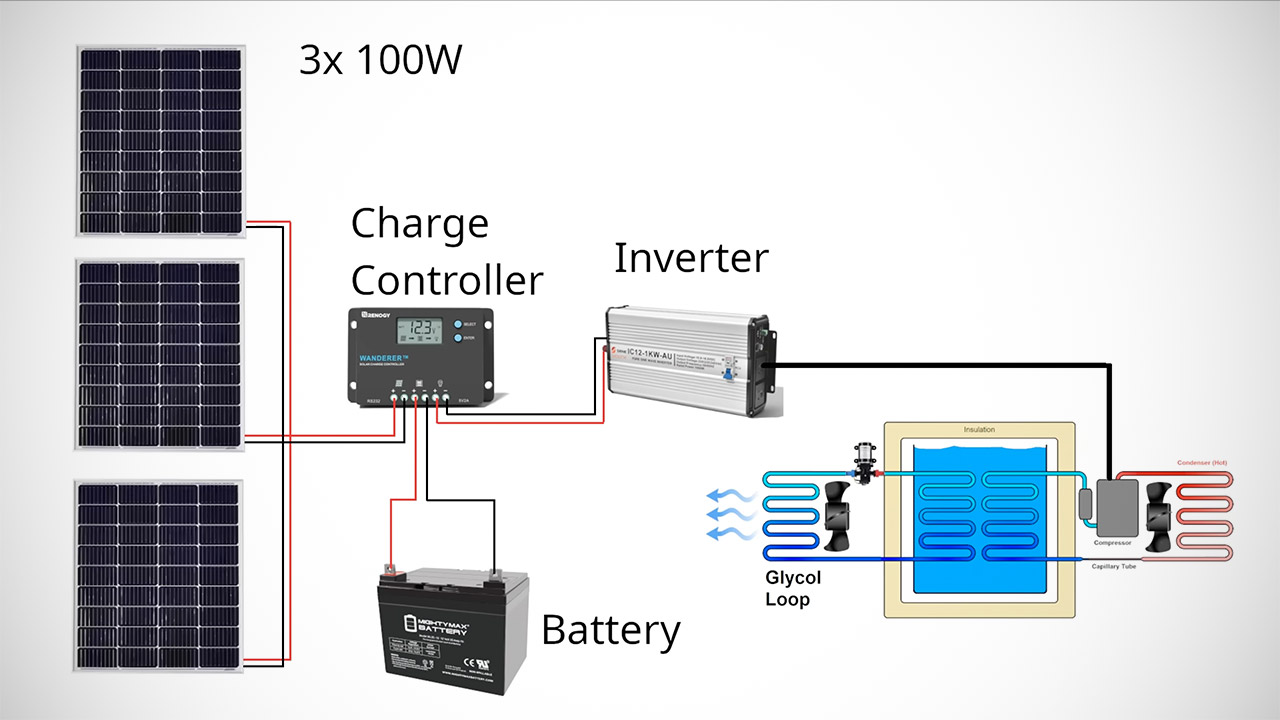
Three regular 100-watt solar panels are put on the back of a vehicle and simply plug into a normal charge controller connected to a 35-amp-hour lead-acid battery. Once the battery is fully charged, the microcontroller activates an inverter, which powers a miniature refrigerator compressor. That compressor sucks up around 80 to 100 watts and begins to draw heat from a 2-gallon water bucket coated in substantial insulation, as we’re talking one-inch foam panels and a lot of fiberglass wool here.

Sale


Portable Solar Generator, 300W Portable Power Station with Foldable 60W Solar Panel,110V Pure Sine Wave…
  • Portable Generator with 60W Solar Panel Included: with a big battery pack, ZeroKor 300W power stations Generator are powerful enough to charge…
  • Multiple Charging outlets for camping gear with SOS Flashlight: with 2* 300W Max AC outlets, 1* DC port (9V-12.6V/10A max ), 3* 5V/3A Max USB ports…
  • Multiple Charging Optional, Solar Panel 60W Included: ZeroKor portable power bank generator can be recharged by wall AC outlet, DC5521 Solar Panel…

Solar Power Ice Air Conditioning
Hours under the hot afternoon sun transform the entire bucket into a solid block of ice. The phase transition from liquid water to ice manages to store approximately 2.5 million joules of energy in that rather normal container. When the procedure is reversed, these numbers add up to adequate cooling capacity to provide around 700 watts of chilled air for an hour. On the cooling side, a pump circulates a 50-50 mix of water and ethylene glycol via twenty feet of copper tubing coiled deep inside the frozen block. That liquid sucks cold from the ice and drains to a standard automobile radiator with a little fan attached. Only a few watts are required to run the pump and fan, so the battery may continue to provide power even after sunset.

Solar Power Ice Air Conditioning
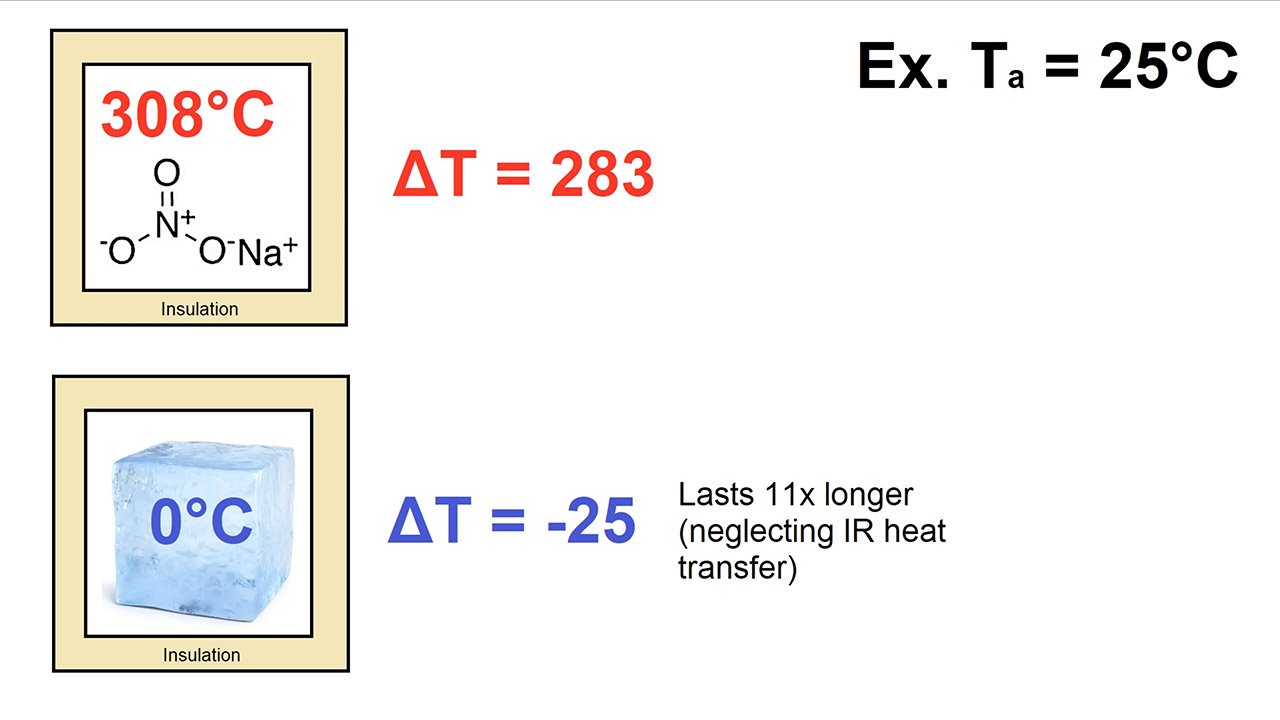
The insulation around the bucket is so strong that heat only leaks in at about 7 or 8 watts. Testing revealed that the ice remained frozen solid for several days, with almost no evidence of melting. The microcontroller’s voltage logging revealed that the compressor was kicking in at 12.9 volts and shutting out at 11.1 volts to keep the battery happy, while solar was still charging. The real-world trial put it through its paces inside the truck cab. Even on a warm day, circulating that refrigerated glycol significantly reduced the inside temperature over a few hours. The entire setup is slightly heavier than a basic battery pack, but it is still suitable for mobile use or small structures where grid ties do not seem like an option.

Solar Power Ice Air Conditioning
Scaling up becomes easy from here on out, since adding more solar panels and a larger water tank increases the output to several kW. Cabins and recreational vehicles were already an appropriate fit, both in terms of size and energy requirements. As an added plus, a whole house may use the system as an extra cooling source when it’s really hot outside without having to transfer any excess electricity back to the power company.

Solar Power Ice Air Conditioning
Water carries the load rather than all those chemical batteries. So the storage remains compact while the pricing remains affordable. One cubic metre of ice has roughly 93 kilowatt-hours of cooling power and weighs less than a stack of cells. The compressor runs on standard n-butane refrigerant that has been charged into a closed loop. It never interacts with the glycol side. Every last piece was built with off-the-shelf parts, some copper fabrication, and some custom code for monitoring.
[Source]

Advertisement

Source link

Continue Reading

Tech

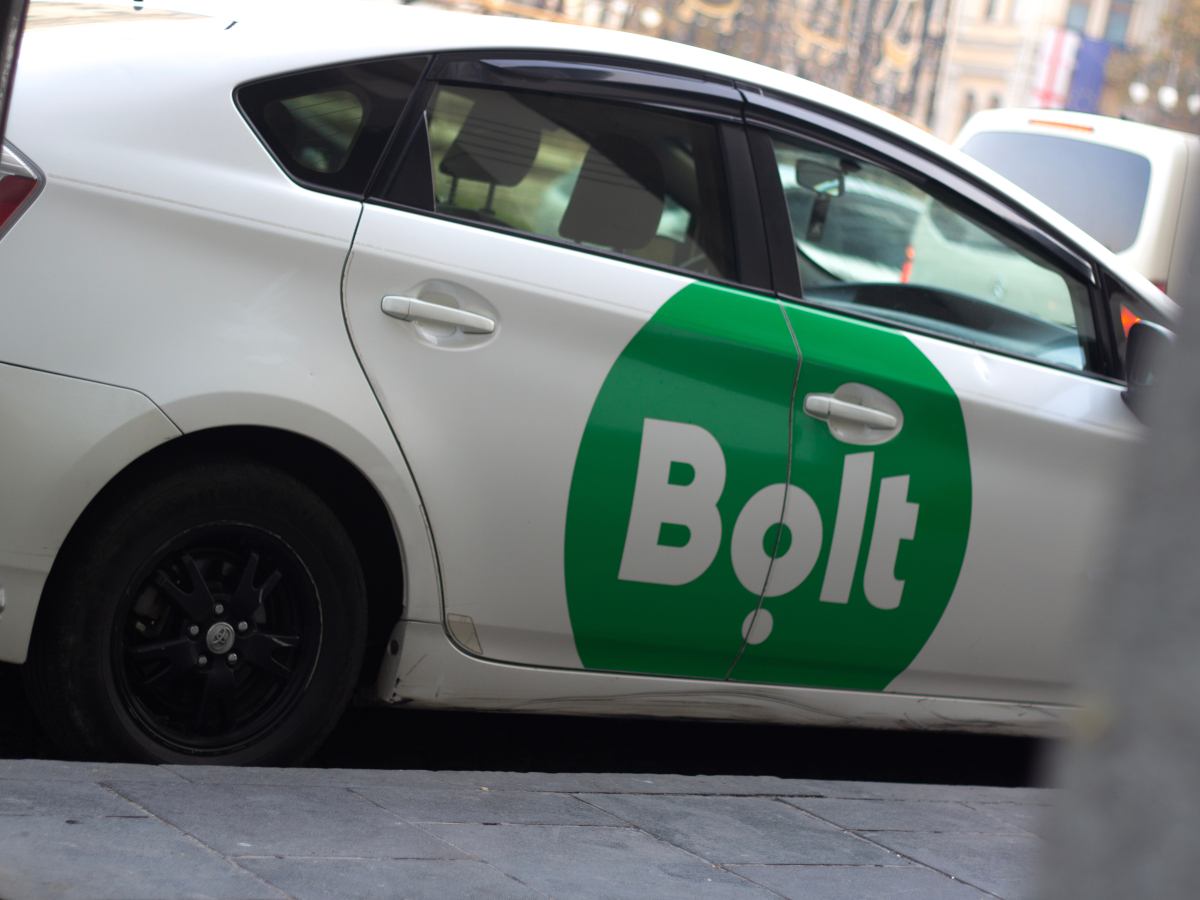
Bolt teams up with Nvidia to scale European robotaxis

Published

on

Tallinn-based European ride-hailing player Bolt is teaming up with Nvidia ‘to build the AI foundation for scaling autonomous vehicles in Europe’. 

Bolt says the new collaboration will combine its own extensive ride-hailing and car-sharing fleet data with Nvidia Omniverse libraries, Nvidia Cosmos world foundation models, Nvidia Alpamayo AV foundation models, and Nvidia AI infrastructure “to accelerate safe AV development for European roads”. The new AV platform will be deployed on the Nvidia Drive Hyperion computer and sensor architecture.

The news could mark a major boost to Europe’s autonomous vehicle and robotaxi ambitions. Today Bolt operates in more than 50 countries and 850 cities, and claims 200m customers.

“Real-world data is the most valuable asset in the race for safe autonomy,” said Jevgeni Kabanov, president and head of autonomous driving at Bolt. “By marrying Bolt’s operational scale with the Nvidia Hyperion Platform, Alpamayo foundation models, AI infrastructure, and open models and libraries, we are creating a European-led AV offering that ensures our continent remains at the forefront of mobility innovation while maintaining full control over our data and technology.”

Advertisement

“Autonomous vehicles require a full-stack approach that unifies AI models, high-performance compute and a robust sensor architecture,” said Philippe van den Berge, EMEA vice-president of automotive at Nvidia, who said the new initiative would enable a scalable foundation for safe, high-performance autonomous mobility services designed for the “complexity and diversity” of European roads.

According to Bolt, the new collaboration will establish a life cycle for AI development – from data provision to common base models – enabling new mobility applications that will be safe, auditable and “uniquely European”, and said any processing of Bolt’s fleet data will ensure “strict compliance” with GDPR and EU cybersecurity standards.

“Globally, US firm Uber receives a lot of attention for its moves to engage with players across the autonomous mobility ecosystem,” said Forrester’s VP principal analyst Paul Miller. “But Bolt is also a strong player in the European market and, like Uber, the company has been working to build partnerships in anticipation of a future where at least some of its ride hailing vehicles have no driver.”

Miller cites Bolt’s existing partnership with Pony.ai, signed in 2025, which could see the Chinese provider’s autonomous robotaxis tested on European roads in late 2026.

Advertisement

“It makes sense for Bolt to explore where and how [Nvidia’s] stack might support Bolt and Bolt’s partners,” said Miller. “It also makes sense for Nvidia to spread its bets, helping slot its hardware and software into as many autonomous mobility projects as possible.”

Don’t miss out on the knowledge you need to succeed. Sign up for the Daily Brief, Silicon Republic’s digest of need-to-know sci-tech news.

Source link

Advertisement
Continue Reading

Tech

AI enters the chat: New Seattle dating app relies on tech to facilitate meaningful human connections

Published

on

Screen grabs from the Lamu app show various interactions with AI, including, from left, answering profile questions, receiving a “love score” and completed profile, and discussing date location options. (Lamu Images)

Ada Jin was suffering from dating app fatigue. She was tired of the constant swiping and the hook-up mentality that’s prevalent on many legacy platforms. She wanted a product that helped facilitate intentional dating and respected people’s time and effort.

So she turned to AI to help humans better connect.

Jin is the founder of Lamu, a Seattle-based digital matchmaking service that relies on artificial intelligence to learn about users and help facilitate conversations and meaningful dates between matches.

“What we’re trying to solve is helping people find the right person more efficiently,” Jin said, adding that unlike traditional human matchmaker services which can cost thousands of dollars, Lamu is “way, way, way more affordable.”

Lamu founder Ada Jin. (Photo courtesy of Ada Jin)

Lamu charges a $9.99 registration fee to get people into the matching pool, and to scare off fake or deceptive profiles.

Users start with an onboarding in which they answer questions presented by Lamu’s AI. Jin said they’ve tried to make it fun and interactive, allowing people to communicate with the AI, even by voice. The AI generates a “love score” and then searches for matches, revealing one or two per week to avoid the paralysis of too many choices. Initial revealed information between matches includes first name, age, city, occupation and some hobbies or interests.

Advertisement

If the matches are mutually interested, the AI puts them in a group chat where the matchmaker serves as “wingman” to help things progress. Photos are only shared at this point so that users have the “full picture” before they choose to meet in person.

Jin thinks Seattle is the perfect place to build such a startup rather than the Bay Area where she previously worked as an engineer at Meta and TikTok. She says Lamu and AI could help penetrate the infamous “Seattle freeze” and loneliness in general.

While San Francisco has more founders and a more active investor base around consumer startups, Jin is invested in the Seattle region’s natural beauty and outdoor pursuits.

Since moving to the city last June, she’s been involved in Seattle’s startup community, which helped her meet her co-founder, Georgiy Lapin, a computer science student at the University of Washington.

Advertisement

Lamu isn’t the only player turning to AI to fix a broken dating culture. The industry’s giants are also utilizing AI in a variety of ways to address some of the issues Jin described.

At its first-ever product keynote earlier this month, Tinder unveiled a number of features including “Chemistry,” an AI-powered personalization layer that uses a scan of a user’s camera roll and interactive Q&As to curate daily recommendations. “Are You Sure?” is another tool using context-aware AI to detect and blur inappropriate messages before they’re even seen. Meanwhile, Bumble recently launched its “Deception Detector,” which the company says has successfully blocked 95% of accounts identified as spam or scams.

As Lamu grows, Jin is betting that users are ready to trade endless swiping for a slower, more deliberate pace. Her goal isn’t to keep people on the platform, but to provide the one thing legacy apps often lack: a sense of direction.

“I really need more clarity,” Jin said, reflecting on the burnout that led her to build the app. “I’d rather just do it once and find the right person.”

Advertisement

Source link

Continue Reading

Tech

Today’s NYT Wordle Hints, Answer and Help for March 23 #1738

Published

on

Looking for the most recent Wordle answer? Click here for today’s Wordle hints, as well as our daily answers and hints for The New York Times Mini Crossword, Connections, Connections: Sports Edition and Strands puzzles.


Today’s Wordle puzzle took me all the guesses to figure out. If you need a new starter word, check out our list of which letters show up the most in English words. If you need hints and the answer, read on.

Read more: New Study Reveals Wordle’s Top 10 Toughest Words of 2025

Advertisement

Today’s Wordle hints

Before we show you today’s Wordle answer, we’ll give you some hints. If you don’t want a spoiler, look away now.

Wordle hint No. 1: Repeats

Today’s Wordle answer has no repeated letters.

Wordle hint No. 2: Vowels

Today’s Wordle answer has two vowels.

Wordle hint No. 3: First letter

Today’s Wordle answer begins with S.

Advertisement

Wordle hint No. 4: Last letter

Today’s Wordle answer ends with F.

Wordle hint No. 5: Meaning

Today’s Wordle answer can refer to small lines attached to larger lines that make up letters in some typefaces or fonts.

TODAY’S WORDLE ANSWER

Today’s Wordle answer is SERIF.

Yesterday’s Wordle answer

Advertisement

Yesterday’s Wordle answer, March 22, No. 1737, was BASIL.

Recent Wordle answers

March 18, No. 1733: AMPLY

March 19, No. 1734: REHAB

March 20, No. 1735: OASIS

Advertisement

March 21, No. 1736: SLICK

Source link

Advertisement
Continue Reading

Tech

Patreon rejects "fair use" claims for AI training, calls for creator compensation

Published

on


Jack Conte created Patreon to try and earn extra from his YouTube videos. The musician-turned-businessman is now managing a platform with 3 million monthly active users, and has plenty to say to big corporations operating chatbots and other AI platforms. First and foremost, these AI companies should stop crying foul…
Read Entire Article
Source link

Continue Reading

Tech

Tech Leaders Support California Bill to Stop ‘Dominant Platforms’ From Blocking Competition

Published

on

A new bill proposed in California “goes after big tech companies” writes Semafor. Supported by Y Combinator, Cory Doctorow , and the nonprofit advocacy group Fight for the Future, it’s called the “BASED” act — an acronym which stands for “Blocking Anticompetitive Self-preferencing by Entrenched Dominant platforms.”

As announced by San Francisco state representative Scott Wiener, the bill “will restore competition to the digital marketplace by prohibiting any digital platform with a market capitalization greater than $1 trillion and serving 100 million or more monthly users in the U.S., from favoring their own products and services on the platforms they operate.”

More from Scott Wiener;s announcement:

For years, giant digital platforms like Apple, Amazon, Google, and Meta have used their immense power to promote their own products and services while stifling competitors — a practice also known as self-preferencing. The result has been higher prices, diminished service, and fewer options for consumers, and less innovation across the technology ecosystem.

Advertisement

Self-preferencing also locks startups and mid-sized companies out of the online marketplace unless they play by rules set by their competitors. As a new generation of AI-powered startups seeks to enter the marketplace, their success — and public access to the innovations they produce — depends on their ability to compete on an even playing field.

“Anticompetitive behavior is everywhere on the internet,” said Senator Wiener, “from rigged search results, to manipulative nudges boosting the ‘house’ product, to anti-discount policies that raise prices, to the dreaded green bubble that ‘breaks’ the group chat. When the world’s largest digital platforms rig the game to favor their own products and services, we all lose. By prohibiting these anticompetitive practices, the BASED Act will protect competition online, empower consumers and startups, and promote innovations to improve all our lives.”
The announcement includes a quote from Teri Olle, VP of the nonprofit Economic Security California Action, saying the act would “safeguard merit-based market competition. This legislation stands for a simple principle: owning the stadium doesn’t mean that you get to rig the game.”
Some conduct prohibited by the proposed bill includes

  • Manipulating the order of search results to favor a provider’s products or services, irrespective of a merit-based process,
  • Using non-public data generated by third-party sellers — including sales volumes, pricing, and customer behavior — to develop competing products that are subsequently boosted above the third-party sellers’ product…

And the announcement also notes that “under the terms of the bill, providers could not prevent consumers from obtaining a portable copy of their own data or restrict voluntary data sharing (by consumers) with third parties.”

Read on for reactions from DuckDuckGo, Proton, Yelp, Y Combinator, and Cory Doctorow.

Advertisement


The proposed bill has sparked “broad support from tech leaders and open markets,” according to an announcement from Senator Wiener’s officer:

“This is exactly the kind of common-sense antitrust reform we need if we want the next generation of startups to have a fair shot rather than watching Big Tech pull up the ladder behind them.”

— Jeremy Stoppelman CEO and Co-Founder, Yelp

“California has led the way on privacy, and now it has a chance to lead on digital competition. SB 1074 would prohibit the self-preferencing tactics that dominant platforms use to box out competitors — the same tactics that make it harder for people to discover and switch to privacy-respecting alternatives like DuckDuckGo.”

Advertisement

— Kamyl Bazbaz, Chief Communications and Policy Officer, DuckDuckGo

“When users can freely choose privacy-focused alternatives without artificial barriers, everyone benefits — from independent developers to everyday people who deserve control over their digital lives.”

— Raphael Auphan, Chief Operating Officer, Proton

“[The BASED act] is about stopping market corruption — the moment when a platform uses its control over the pipes to bury rivals, tax every transaction, and quietly swallow the open web. This bill restores something simple and very American: if you build something great, you should win or lose on the merits, not on whether a gatekeeper decides to rig the rules.”

Advertisement

— Garry Tan, CEO of Y Combinator

“If there’s one thing we’ve learned from the enshittification of digital platforms, it’s this: *someone* is going to regulate the way you use the internet. If governments don’t step in, that regulator will be a powerful *company*, a platform that structures markets to maximize its interests, at the expense of technology makers, technology users, buyers *and* sellers.”

— Cory Doctorow

Advertisement

Source link

Continue Reading

Tech

MSI targets Apple's MacBook Neo with new budget Modern laptops

Published

on


The distinction between the models lies in their platforms. The AI+ versions use Intel’s latest Panther Lake platform and are powered by Core Ultra Series 3 chips. These configurations support higher performance, featuring two DDR5 memory slots.
Read Entire Article
Source link

Continue Reading

Tech

IDing Counterfeit Drugs Might Be Easier Than You Think

Published

on

Odds are, you’ve taken pills before; it’s a statistical certainty that some of you reading this took several this morning. Whenever you do, you’re at the mercy of the manufacturer: you’re trusting that they’ve put in the specific active ingredients in the dosage listed on the package. Alas, given the world we live in, that doesn’t always happen. Double-checking actual concentrations requires expensive lab equipment like gas chromatography. It turns out checking for counterfeit pills is easier than you’d think, thanks to a technique called Disintegration Fingerprinting.

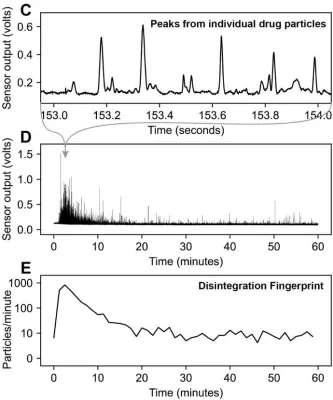
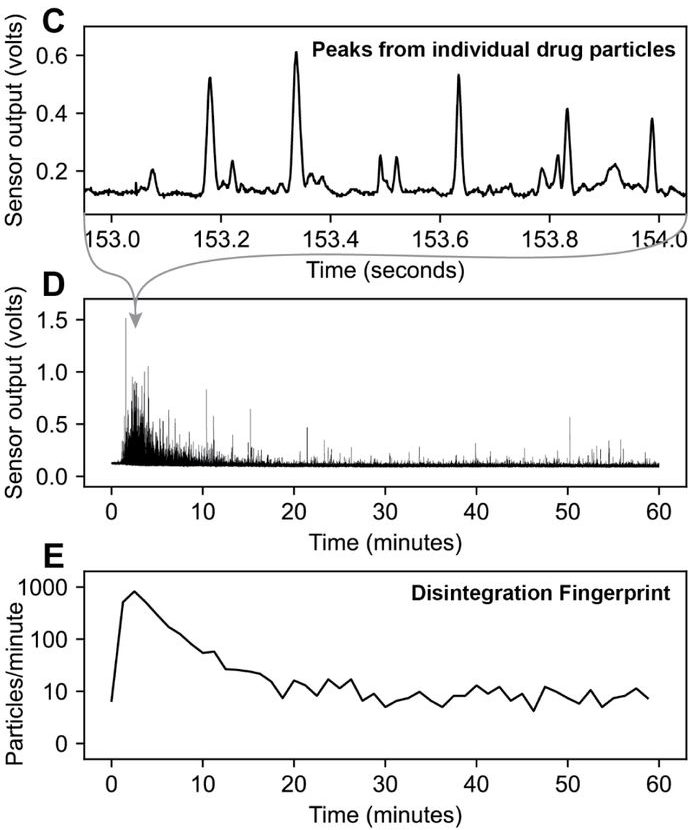
The raw voltage signal from the sensor is stored as a “disintegration fingerprint” of particles detected per minute.

It’s delightfully simple: all you need is a clear plastic cup, a stir plate, and a handful of electronic components — namely, a microcontroller, a servo, and an IR line-following sensor. You’ve probably played with just such a sensor: the cheap ones that are a matched pair of LED and photodetector. It works like this: the plastic cup, filled with water, sits upon the stir plate. To start the device, you turn on the stir plate and actuate the servo to drop the pill in the water. The microcontroller then begins recording the signal from the photo-diode. As the pill breaks up and/or dissolves in the water, the swirling bits are going to reflect light from the IR LED. That reflectance signal over time is the Disintegration Fingerprint (DF), and it’s surprisingly effective at catching fakes according to the authors of the paper linked above. Out of 32 different drug products, the technique worked on 90% of them, and was even able to distinguish between generic and brand-name versions of the same drug.

Of course, you do need a known-good sample to generate a trustworthy fingerprint, and there’s that pesky 10% of products the technique doesn’t work on, but this seems like a great way to add some last-mile QA/QC to the drug distribution chain, particularly in low and middle-income countries where counterfeit drugs are a big problem.

We’ve featured pill-identifiers before, but machine vision is going to be much more easily fooled by counterfeits than this method. If your problem isn’t worrying that your pills are fake, but forgetting to take them, we’ve had projects to help with that, too.

Thanks to [Zorch] for the tip!

Advertisement

Source link

Continue Reading

Trending

Copyright © 2025