
Crypto World
Iran Warns of Regional Energy Strikes After Trump Threats Over Hormuz Strait


TLDR:
- Trump issues 48-hour ultimatum demanding Iran reopen the Strait or face power plant strikes.
- Iran warns of full closure of the Strait and retaliation against regional energy infrastructure.
- Tanker traffic dropped 90%, increasing concerns over global oil supply and market stability.
- Iranian officials list potential targets, including Israel and US-linked energy assets.
Iran war live Trump Strait of Hormuz tensions intensified after a 48-hour ultimatum triggered threats of energy infrastructure attacks, raising risks of wider regional escalation and disruption to global oil transit routes.
Trump Issues 48-Hour Ultimatum
The United States has issued a direct warning to Tehran. In his statement, President Donald Trump demanded that Iran fully reopen the Strait within 48 hours.
He threatened attacks on major Iranian power plants if the demand is ignored. The ultimatum highlighted the strategic significance of the Strait of Hormuz, through which a significant portion of global oil shipments pass.
Tanker traffic has already fallen by nearly 90% in recent weeks, raising concerns about energy supply disruptions worldwide.
Trump’s statement did not clarify whether nuclear-linked power plants, such as Bushehr, would be included in the strike. This uncertainty added to regional tension, as the potential for collateral damage remains high.
“If Iran doesn’t FULLY OPEN the Strait, the US will hit major power plants first,” Trump’s statement read, reflecting the firm deadline.
Iran Warns of Retaliation and Regional Impact
Iranian officials outlined a detailed response as spokesperson Ebrahim Zolfaghari confirmed that the Strait remains partially open under controlled access. He however, warned that any strike on power plants would trigger immediate retaliation.
Iran indicated that a full closure of the Strait would follow any attack, with reopening dependent on reconstruction of damaged infrastructure.
Officials also listed potential regional targets, including power plants in Israel, companies with American shareholders, and energy infrastructure in countries hosting US bases.
Iran’s parliament speaker, Mohammad Bagher Ghalibaf, further emphasized the scale of potential consequences. He warned that attacks on Iranian infrastructure could lead to the irreversible destruction of energy networks across the Gulf, maintaining elevated oil prices for an extended period.
Previous demonstrations of Iran’s reach, such as the strike on Qatar’s Ras Laffan LNG terminal, showed the country’s capability to disrupt regional energy systems.
Regional and international actors are monitoring the situation closely, highlighting the strategic and economic stakes.
Iran war live Trump Strait of Hormuz tensions remain critical as the 48-hour deadline approaches, with both sides maintaining firm positions and regional stability at stake.



The US Commodity Futures Trading Commission received more than 1,500 responses to a proposed rule tied to prediction markets, with some backing the regulator while others called for a tougher crackdown on the platforms.
The CFTC’s request for public comments on a rule it proposed in March that would allow it to amend or issue new regulations for event contracts on prediction markets ended on Thursday, drawing responses from prediction markets, crypto firms and consumer advocacy groups.
Kalshi co-founder and chief operating officer Luana Lopes Lara backed the CFTC in a letter on Thursday, saying its existing regulations were “well-designed and effective,” urging it to give guidance to ensure “that the universe of event contracts can continue to be listed, traded, and overseen by the Commission.”
The CFTC’s proposed rule comes as it looks to cement its authority over prediction markets, which have faced legal challenges from multiple US states that accuse the platforms of offering unlicensed sports gambling.
Kalshi, Polymarket and Coinbase are among the companies that have been sued over their sports prediction market offerings and have argued they are under the CFTC’s sole authority, a position the regulator has backed by suing at least five state governments that took legal action against prediction markets.
Polymarket US CEO Justin Hertzberg applauded CFTC Chair Mike Selig in his letter for “asserting the CFTC’s longstanding exclusive jurisdiction over prediction markets,” adding the company believes the regulator “should continue to exercise its exclusive jurisdiction over prediction markets.”

Mike Selig, pictured on a podcast in March, has threatened to sue any state that takes action against prediction markets. Source: YouTube
Venture capital firm Andreessen Horowitz also supported the CFTC, arguing in its letter that “state actions to regulate or ban prediction markets impose a serious barrier to impartial access,” a key rule for CFTC-regulated firms.
Meanwhile, gambling regulators in Tennessee, Missouri and Pennsylvania, among others, blasted the CFTC over its defense of sports event contracts, urging the regulator to drop its support.
Pennsylvania Gaming Control Board Executive Director Kevin O’Toole said the CFTC was allowing prediction markets “to masquerade as unregulated sportsbooks,” while Tennessee Sports Wagering Council Executive Director Mary Beth Thomas said the council disputes “that sports event contracts offered on prediction markets fall within the jurisdiction of the CFTC at all.”
Related: Polymarket pushes for broader US relaunch with CFTC talks: Report
Missouri Gaming Commission executive director Michael Leara said that Congress “did not intend futures markets to encompass gambling activities,” and urged the CFTC to “properly reserve jurisdiction over sports event contracts for the states.”
Prediction markets have also come under scrutiny from some federal lawmakers, who are concerned about the platforms’ offering markets tied to geopolitical events and their possible use by those with insider knowledge after well-timed bets on the Iran war.
Dennis Kelleher, the CEO and co-founder of the consumer advocacy group Better Markets, and 12 other consumer groups, told the CFTC in a joint letter that it should “prohibit event contracts that involve elections or geopolitical events,” arguing such contracts could influence government actions.
Kalshi and Polymarket said last week, after the US Senate passed a ban on its members and staff using prediction markets, that they have cracked down on insider trading and ban or prohibit some users, such as politicians, from using their platforms.
Magazine: Should users be allowed to bet on war and death in prediction markets?
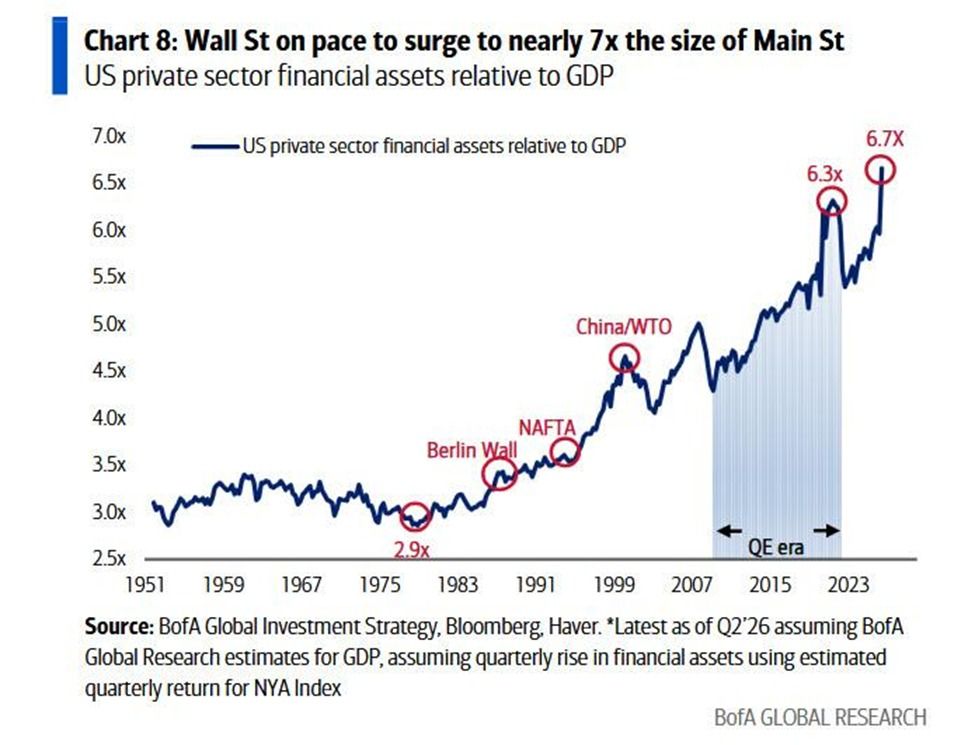
The total value of US private-sector financial assets has reached 6.7 times the US gross domestic product, marking a new record.
The ratio, which compares the combined value of stocks, bonds, deposits, and other financial instruments held outside the government to annual GDP, surpasses the previous peak of 6.3 times set in 2021.
The Gap Between Wall Street and Main Street Hits a Record
According to the Kobeissi Letter, the ratio has more than doubled since the 1970s. When asset values climb faster than wages, the gains flow to investors who own capital.
The 6.7x ratio shows that the private sector holds nearly 7 dollars in financial instruments for every dollar of US output.
“When financial assets outpace the real economy, the wealthy get richer, and workers get left behind,” the analysts wrote. “The wealth gap has never been wider.”

Follow us on X to get the latest news as it happens
Wealthy Investors Are Doubling Down on Stocks
At the same time, portfolio positioning among high-net-worth individuals signals a continued tilt toward risk assets. The Kobeissi Letter noted that equity allocations have risen to 65% of total portfolios, the highest level since December 2021.
This marks a 7-point increase since 2023 and places current positioning just below the 66% peak seen during the 2021 meme stock surge.
“By comparison, the 2020 pandemic low was 54% while the long-term average is ~57%,” the post added.
The analysts added that cash holdings have declined to 10%, the lowest level since September 2018, while bond exposure has dropped to 18%.
The shift suggests that affluent investors are increasingly concentrated in equities, reflecting elevated risk appetite and continued confidence in financial markets.
Subscribe to our YouTube channel to watch leaders and journalists provide expert insights
The post US Private Financial Assets Hit Record 6.7x GDP as Wealth Gap Widens appeared first on BeInCrypto.
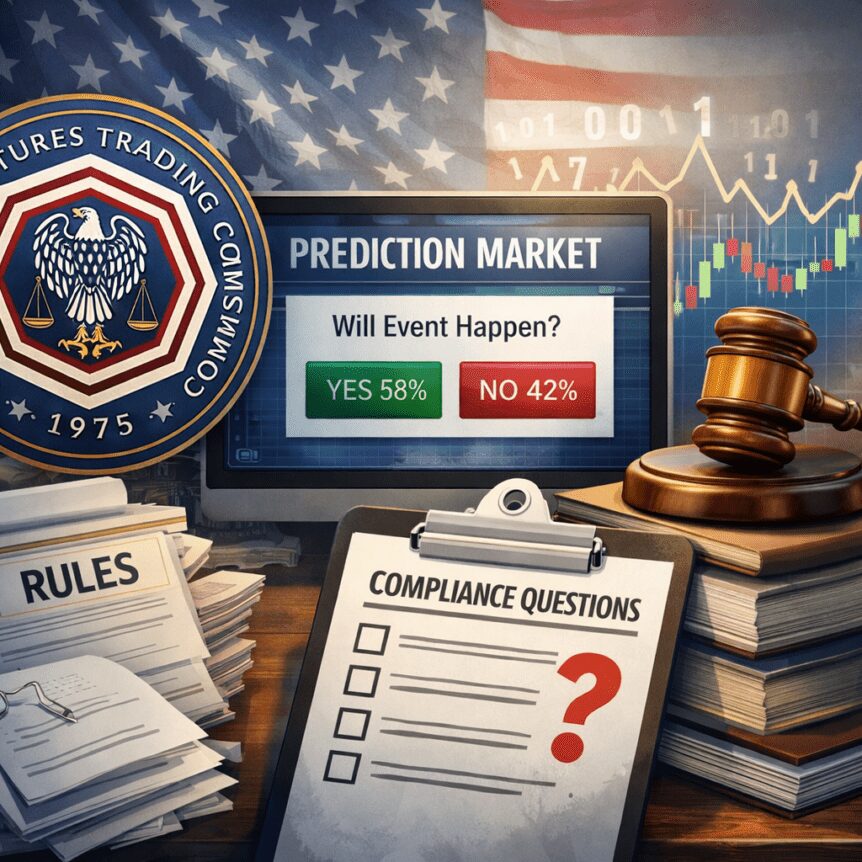
The U.S. Commodity Futures Trading Commission (CFTC) is navigating a high-stakes regulatory discussion as it closes a public-comment window on a proposed rule designed to strengthen its authority over prediction markets. The rule, introduced in March, would allow the agency to amend or issue new regulations for event contracts traded on prediction platforms, with the comment period ending this week. The outreach drew more than 1,500 responses from a range of stakeholders, including prediction-market operators, crypto firms, and consumer-advocacy groups. According to Cointelegraph, the feedback underscored a broad debate about how the CFTC should supervise these markets and the proper balance between federal oversight and state authority.
Kalshi, a prominent player in the prediction-market space, publicly endorsed the CFTC’s approach. In a letter to the agency, Kalshi’s co-founder and chief operating officer, Luana Lopes Lara, argued that the CFTC’s current framework is “well-designed and effective” and urged the commission to provide guidance that would keep a broad universe of event contracts listed, traded, and overseen under federal supervision. The stance reflects a general expectation within the industry that clear, predictable federal rules help ensure safe operation and robust market integrity.
The regulatory moment comes amid persistent legal contestation surrounding prediction markets. Several platforms—including Kalshi, Polymarket, and Coinbase—face lawsuits brought by various U.S. states alleging unlicensed gambling activities tied to sports markets. The CFTC has signaled that it views prediction markets as falling under its exclusive federal authority, a position it has reinforced in litigation with at least five state governments. In this environment, the proposed rule seeks to codify the commission’s jurisdiction while inviting input on how to tailor oversight for event contracts, market listing rules, disclosure standards, and enforcement tools.
Polymarket’s U.S. chief executive, Justin Hertzberg, praised CFTC Chair Mike Selig for affirming the agency’s exclusive jurisdiction. In a separate comment letter, Hertzberg stated that the regulator should continue to exercise that jurisdiction over prediction markets, underscoring industry preference for federal clarity rather than state-by-state variability. The perspective is echoed by venture-capital firm Andreessen Horowitz, which argued in its submission that state actions to regulate or ban prediction markets create barriers to impartial access—an outcome at odds with the objectives of CFTC-regulated platforms.
Key takeaways
- More than 1,500 public comments circulated to the CFTC, reflecting broad engagement from industry players, platform operators, and advocates for consumers and market integrity.
- Industry participants generally welcomed the prospect of clearer federal guidance and continued CFTC oversight of event contracts used in prediction markets.
- State gambling regulators scrutinized the federal push, arguing that prediction-market contracts may fall outside the CFTC’s remit or should be constrained by state licensing regimes.
- The dispute illuminates ongoing tensions between federal and state regulators, with implications for licensing, enforcement, and cross-border operations in the U.S. market.
- Policy considerations extend to related areas such as AML/KYC compliance, licensing pathways for platforms, and how prediction markets intersect with sports betting and geopolitical-event markets.
According to Cointelegraph, the comments also reflect a wider concern among lawmakers and consumer groups about the appropriate scope of prediction markets. Some critics, including Dennis Kelleher, CEO of Better Markets, joined a coalition urging the CFTC to bar event contracts tied to elections or geopolitical events, citing potential influence on governance actions. The debate touches on fundamental questions about what kinds of markets are permissible, how consumer protection should be safeguarded, and whether federal rules can prevent corrosive or unlawful activity without stifling legitimate market-making and risk transfer functions.
Regulatory framework and jurisdiction under the lens
The CFTC’s rulemaking initiative arrives at a moment when the agency emphasizes its authorities over event contracts traded on prediction platforms. Proponents frame the move as a necessary step to reduce regulatory ambiguity, standardize listing and trading practices, and support robust compliance programs—particularly AML/KYC requirements and enforcement capabilities. Opponents, including several state gambling regulators, contend that certain prediction-market activities may be more appropriately addressed through state gaming and gambling statutes, or that the CFTC’s reach could inadvertently broaden into non-exempt gambling activities.
Beyond the dispute over jurisdiction, the conversation implicates broader policy themes important to institutional participants. A federal rulemaking pathway could shape licensing requirements, registration thresholds, and ongoing supervision for platforms offering predictive event contracts. For banks and payment rails seeking to serve such platforms, greater federal clarity could influence risk controls, customer due diligence, and cross-border considerations under a unified regulatory framework. The discussion also intersects with ongoing debates about stablecoins, custody solutions, and the potential for traditional financial institutions to participate in or support prediction-market ecosystems under compliant, licensed models.
Industry perspectives, compliance implications, and policy context
From the industry side, the push for federal guidance is seen as a path to safer, more interoperable markets. Kalshi’s support for the CFTC’s approach emphasizes continuity and orderly oversight, suggesting that operators should be able to list, trade, and supervise a broad array of event contracts under a stable regulatory regime. The stance aligns with a view that predictable regulation supports market integrity and reduces the risk of regulatory fragmentation that could complicate compliance programs for multinational platforms.
Industry voices also note that the regulatory framework should address insider trading concerns and ensure that platforms implement robust restrictions on participation for politically exposed figures or individuals with timely, non-public information. After the U.S. Senate banned its members and staff from using prediction markets, operators indicated they have tightened internal controls and restricted access for certain user groups. The broader policy implication is that federal guidance could standardize these guardrails across the market, contributing to a consistent baseline of governance for participants and counterparties.
Against this backdrop, the CFTC faces a converging set of expectations from industry, consumer advocates, and financial regulators. The agency’s rulemaking could prove pivotal in defining the permissible contours of event contracts, the treatment of geopolitical, political, and sports-related markets, and the boundaries of federal enforcement versus state licensing regimes. As Cointelegraph notes, the outcome will likely influence how prediction markets are designed, marketed, and integrated with institutional infrastructures, including banking partnerships and cross-border operations within a broader regulatory-compliance regime.
State regulators’ concerns and legal implications
Not all feedback lined up with federal oversight. Several state regulators responded by urging the CFTC to retract or limit its position. Districts such as Pennsylvania and Tennessee argued that certain sports-event contracts should remain within state regulatory purview or, at minimum, require careful examination of what constitutes a federally regulated financial instrument. Pennsylvania Gaming Control Board Executive Director Kevin O’Toole emphasized the concern that prediction markets could “masquerade as unregulated sportsbooks,” signaling a desire for clearer boundaries and more explicit licensing requirements. In Tennessee, the Sports Wagering Council criticized the notion that sports-event contracts offered on prediction markets fall under the CFTC’s jurisdiction, highlighting fundamental jurisdictional disagreements between federal and state authorities. Missouri’s Gaming Commission also urged Congress to preserve state control over sports-event contracts, arguing that Congress did not intend futures markets to encompass gambling activities.
These state-level objections underscore a broader policy tension: whether a federal rulemaking process can harmonize disparate regulatory approaches or if it risks blurring long-standing regulatory lines in favor of a more centralized framework. The comments reflect a sector-wide concern about the appropriate locus of oversight, licensing standards, and consumer protections—issues that will continue to shape enforcement priorities, collaboration between federal and state authorities, and the development of compliant business models for prediction-market operators and their financial partners.
Broader policy and market-structure implications
The unfolding debate sits at the intersection of market integrity, digital asset regulation, and the evolving architecture of gambling and financial services in the United States. If the CFTC’s proposed rule gains traction, it could set a precedent for how federal agencies delineate authority over digital-era forecasting markets that blend elements of finance, betting, and information markets. For market participants, the outcome may translate into clearer registration expectations, defined listing criteria, and standardized compliance practices—factors that contribute to institutional risk management and regulatory reporting. At the same time, the opposition’s concerns about overreach highlight the risk of regulatory fragmentation if federal guidance is narrow or ambiguous, potentially prompting divergent state actions that complicate cross-border or cross-state operations.
Looking ahead, the public comment period’s conclusions will inform whether the CFTC advances formal rulemaking, how it addresses stated concerns about elections and geopolitical markets, and how it reconciles jurisdictional alignments with state regulators. For researchers and compliance professionals, the dialogue offers a rich case study in how federal agencies adapt to rapidly evolving marketplaces while balancing investor protection, market integrity, and legal clarity. According to Cointelegraph, observers will be watching closely for any refinements that shape listing standards, the scope of permissible event contracts, and the mechanisms by which the agency enforces compliance across a growing ecosystem of prediction-market platforms.
Closing perspective: As the regulatory process proceeds, the most consequential developments will be the extent to which federal guidance reduces ambiguity for operators and mitigates governance risks, without curtailing legitimate market activity or stifling innovation. Monitoring the final rule’s language, along with any parallel state actions, will be essential for institutions seeking to align with evolving compliance expectations and to anticipate operational adjustments in a landscape where jurisdiction and enforcement are actively negotiated.
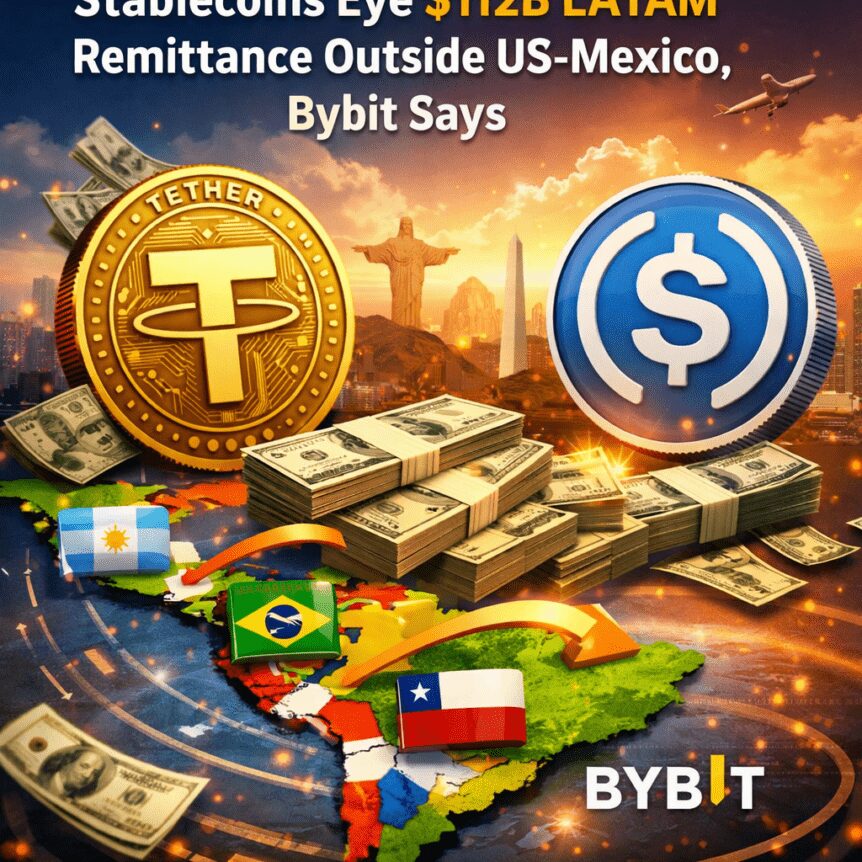
Bybit’s chief marketing officer, Claudia Wang, argues that the Latin American remittance opportunity extends far beyond the well-trodden US-to-Mexico corridor. In a recent post, she highlighted growing corridors within the region and emphasized that the “hot” routes are often not the ones fintechs have optimized for, urging a country-specific approach to capture the full LATAM remittance potential.
Key takeaways
- The non-US-to-Mexico remittance market in LATAM is about $112 billion, with corridors such as Venezuela-to-Colombia, Argentina-to-Bolivia, and Spain-to-Ecuador presenting notable growth.
- Overall remittances in the US-to-Mexico corridor fell to $61.8 billion in 2025, a 4.5% decline, while US-to-Central America flows showed stronger growth-year signals.
- US immigration policy is shaping behavior: Central American migrants are sending more money home—faster and in larger amounts—to hedge deportation risk, whereas the Mexican diaspora appears more established, dampening panic-send patterns.
- Fintechs must build country-specific stacks—different licenses, rails, stablecoins, and go-to-market models—rather than treating LATAM as a single market.
- In LATAM, the “killer app” may be holding stablecoins rather than simply moving value; users want to know the money lands and can be held as a store of value, not just spent immediately.
Expanding corridors reshape the Latin American remittance landscape
Wang’s assessment centers on a broader LATAM reality: large remittance corridors lie outside the US-to-Mexico frame, yet they remain under-served by traditional rails and even some crypto-enabled platforms. The non-US remittance market in LATAM is reported to be around $112 billion, a figure that underscores a wide field for cross-border financial flows beyond the familiar corridor.
Meanwhile, the region’s interior routes are also drawing attention. In 2025, remittance activity through the US-to-Central America corridor showed strong momentum, with Honduras, El Salvador, and Guatemala recording year-over-year increases of 19%, 18%, and 15%, respectively. By contrast, the US-to-Mexico corridor—historically the largest—contracted by about 4.5%, landing at roughly $61.8 billion for the year.
Wang attributes the divergence in behavior to shifts in US immigration policy. Central American migrants have been sending more money home—more frequently and in larger sums—partly as a hedge against deportation risk. Meanwhile, Mexico’s diaspora is comparatively more established and documented, reducing the urgency to “panic-send” funds home.
These dynamics imply that the next wave of remittance adoption in LATAM could hinge on corridors that previously received less attention from fintechs and crypto platforms. The region’s geographies—Venezuela to Colombia, Argentina to Bolivia, and Spain to Ecuador among them—are cited as examples where demand could grow rapidly if services align with local realities and regulatory requirements.
In terms of scale, the corridor between the United States and the rest of Latin America remains sizeable, but the opportunity set is widening as corridors within the region—often overlooked—develop their own momentum and infrastructure needs.
The race to serve LATAM: country-specific rails and stablecoins
Wang argues that LATAM’s remittance winners will be those who tailor solutions to the distinct regulatory and retail realities of each country. “Brazil, Mexico, Argentina, Colombia — each needs different licenses, different rails, different stablecoins, different marketing. The companies winning here run country-specific stacks, not regional ones,” she wrote in a post that has circulated across social channels.
“Stop treating LATAM as one market.”
The insight reflects a broader market truth: a one-size-fits-all approach is unlikely to gain traction where regulatory regimes differ, payment rails are fragmented, and user behavior diverges across populations and ages. The emphasis on local customization is consistent with the region’s reported demand for stablecoins that can be held as a store of value, rather than just used for on-chain transfers.
Indeed, Wang notes a critical user insight: many LATAM users want to hold stablecoins rather than merely move them. “Users don’t want to ‘use’ stablecoins for a transaction and convert back to local currency. They want to hold dollars. The transaction is the side effect,” she said. This points to a potential shift in product design—from cross-border remittance as a pure transfer service to a broader, closed-loop financial experience: remit → hold → spend → earn.
That stance aligns with a broader recognition in the region that real demand may center on stablecoin liquidity and multi-rail interoperability. Fintechs that can integrate local settlement rails, liquidity for stablecoins, and trusted, country-specific customer experiences stand a better chance of capturing a durable share of LATAM’s remittance market.
Wang also highlighted a gap: many fintech offerings have historically been designed with younger crypto traders in mind, not necessarily the older remittance sender. The typical remittance customer in LATAM tends to be older, often in the 40s to 60s range, and may require simpler, more transparent pathways to ensure that funds land reliably and can be accessed easily.
Competition, rails, and the evolving user landscape
The LATAM remittance arena is already crowded with a mix of traditional players and crypto-native firms. Western Union and MoneyGram, long-standing pillars of cross-border payments, are actively pursuing stablecoin-enabled rails following regulatory developments such as the GENIUS Act. Western Union has announced work toward its own USD-backed stablecoin, USDPT, which signals a significant shift in how the incumbent might participate in crypto-enabled settlements.
At the same time, crypto-native platforms—Binance, Bitso, Strike, and Felix Pago—are visible contenders in the LATAM remittance space, along with banks, retailers, and telecom players like Walmart and Tigo. The competitive landscape suggests a mixed ecosystem where on-ramps, local licensing, and reliable settlement are as important as technology itself.
For readers watching the policy and regulatory front, the evolving stance of authorities toward stablecoins and cross-border crypto payments will be critical. The market’s next phase depends on clear, workable frameworks that enable local players to operate with adequate consumer protections while preserving the efficiency gains that crypto rails can offer. The interplay between traditional rails and crypto-native approaches will shape which corridors gain momentum and which players set the pace.
The broader implication for investors and builders is clear: the LATAM remittance story is not a single, monolithic opportunity. It is a mosaic of country-specific needs, regulatory environments, and user behaviors. The corridors that appear attractive today may require fundamentally different product designs tomorrow, as regulatory clarity evolves and consumer preferences mature.
As the region’s regulatory and adoption landscape unfolds, observers should monitor how fintechs balance the dual goals of stability and accessibility. Stablecoins may become less about speculative trading and more about a practical store of value for everyday remittance users. In tandem, the race to build scalable, compliant, and user-friendly rails across Brazil, Mexico, Argentina, Colombia—and the broader LATAM network—will determine which players gain durable trust and position themselves as a backbone of regional financial inclusion.
Readers should keep an eye on updates from major remittance rails, central banks’ evolving stances on digital currencies, and the continued growth or repositioning of large incumbents like Western Union as they experiment with stablecoins and crypto-enabled settlement. The LATAM remittance arc is unlikely to settle soon, but its next chapter will be shaped by the region’s distinct markets and the ability of firms to tailor solutions that fit local realities.
The U.S. Commodity Futures Trading Commission has received more than 1,500 public responses on its proposed rule for prediction market event contracts.
Summary
- CFTC has received more than 1,500 public comments on its prediction markets rule, with firms backing its authority while state regulators push back.
- Kalshi, Polymarket, and Andreessen Horowitz supported the CFTC, urging it to retain exclusive control over event contracts.
- State gaming regulators from Pennsylvania, Tennessee, and Missouri said sports contracts resemble unregulated betting and should fall under state oversight.
According to the CFTC, the comment period for its March proposal closed Thursday after drawing submissions from prediction market operators, crypto firms, venture investors, and state-level gambling authorities, each weighing in on how event contracts should be regulated.
In a letter submitted Thursday, Kalshi co-founder and chief operating officer Luana Lopes Lara said the Commission’s current framework is “well-designed and effective,” urging regulators to provide clarity so that “the universe of event contracts can continue to be listed, traded, and overseen by the Commission.” Her comments framed the rulemaking as a chance to reinforce existing oversight rather than impose new restrictions.
Polymarket’s U.S. CEO Justin Hertzberg echoed that position in a separate letter addressed to CFTC Chair Mike Selig, writing that the agency should continue “asserting the CFTC’s longstanding exclusive jurisdiction over prediction markets.” Hertzberg added that the company believes the regulator must retain sole authority over the sector, a stance that aligns with ongoing legal disputes.
Andreessen Horowitz also backed the Commission, stating in its submission that state-level efforts to regulate or block prediction markets create “a serious barrier to impartial access,” which it argued conflicts with obligations placed on CFTC-regulated entities.
In the meantime, legal pressure from states has continued to build alongside the rulemaking. Kalshi, Polymarket, and Coinbase have each faced lawsuits tied to sports-based event contracts, while the CFTC has taken its own legal action against at least five state governments that challenged prediction platforms, defending its jurisdiction in court.
Pennsylvania Gaming Control Board Executive Director Kevin O’Toole wrote that prediction markets are being allowed “to masquerade as unregulated sportsbooks,” while Tennessee Sports Wagering Council Executive Director Mary Beth Thomas said her agency disputes “that sports event contracts offered on prediction markets fall within the jurisdiction of the CFTC at all.”
Rule builds on earlier compliance push
As previously reported by crypto.news, in its March 12 staff advisory, the CFTC instructed designated contract markets to apply full Part 38 oversight to event contracts, with particular scrutiny on sports-related products. In that notice, the agency said exchanges must remain bound by the Commodity Exchange Act and ensure compliance through product review, surveillance, and ongoing monitoring.
CFTC guidance tied that expectation to Section 5(d) of the Act and Core Principle 3 under Part 38, placing responsibility on exchanges to act as frontline regulators of listed contracts as trading activity grows.
Federal lawmakers and consumer groups have also raised concerns about how certain contracts could be used.
Dennis Kelleher, CEO and co-founder of Better Markets, joined 12 advocacy groups in a joint letter urging the CFTC to “prohibit event contracts that involve elections or geopolitical events,” arguing such markets could influence government decision-making.
Recent scrutiny has extended to geopolitical betting activity. Lawmakers have pointed to trading tied to the Iran war, where well-timed positions raised questions about potential use of non-public information.
Kalshi and Polymarket responded last week after the U.S. Senate passed a ban on its members and staff using prediction markets, stating that both platforms have strengthened controls around insider trading and restricted access for certain users, including politicians.


Strategy is taking a breather from buying bitcoin.
Michael Saylor said Sunday the company would not add to its bitcoin holdings this week, pausing its regular purchase program ahead of Tuesday’s first-quarter earnings release.
“No buys this week. Back to work next week,” Saylor wrote on X.
The pause is only the second this year for Strategy, formerly MicroStrategy, which has turned itself into the largest publicly traded bitcoin treasury company and one of the most closely watched proxies for institutional BTC exposure. The company last skipped a weekly purchase during the week of March 23 to March 29.
Strategy currently holds 818,334 BTC, equal to nearly 3.9% of bitcoin’s fixed 21 million supply. Its most recent purchase added 3,273 BTC at an average price of $77,906 per bitcoin. BTC was trading near $80,100 in Asian morning hours Monday, up about 20% over the past month.
The pause may seem a non-event but comes ahead of Strategy’s first-quarter results Tuesday, with some Wall Street analysts expecting a loss of $18.98 per share.
Strategy is expected to report first-quarter revenue of about $125 million, according to Yahoo Finance data from six analysts, up roughly 12.6% from $111.1 million a year earlier. That would mark an improvement from the same quarter last year, when sales fell 3.6%, and suggests the underlying software business is still grinding higher even as the company’s identity is now almost entirely tied to bitcoin.
Earnings are expected to be lower, however. Yahoo Finance’s shows an average estimate for a loss of $27.33 per share for the March quarter, while Zacks Research data points to an expected loss of $3.41 per share for the upcoming release.
Strategy is no longer valued as a software company with a bitcoin position, but as a bitcoin financing vehicle that happens to provide business intelligence software. That means Tuesday’s report may be judged more on the durability of Saylor’s capital-raising machine and less for true operating performance.
One product drawing attention is STRC, a perpetual preferred share designed to trade near $100 while paying a variable monthly dividend, currently around 11.5% annualized.
The pitch is yield backed by Strategy’s balance sheet and bitcoin-heavy capital strategy, but a going concern is that the product can start to look less like stable income and more like credit risk if market sentiment turns.
Higher bitcoin prices support Strategy’s valuation which improves its ability to raise capital, which funds more bitcoin purchases. However, when sentiment weakens, the same structure gets more fragile.
Saylor says the buying resumes next week, but Tuesday’s earnings will show how much confidence investors still have in the machinery that makes that possible.
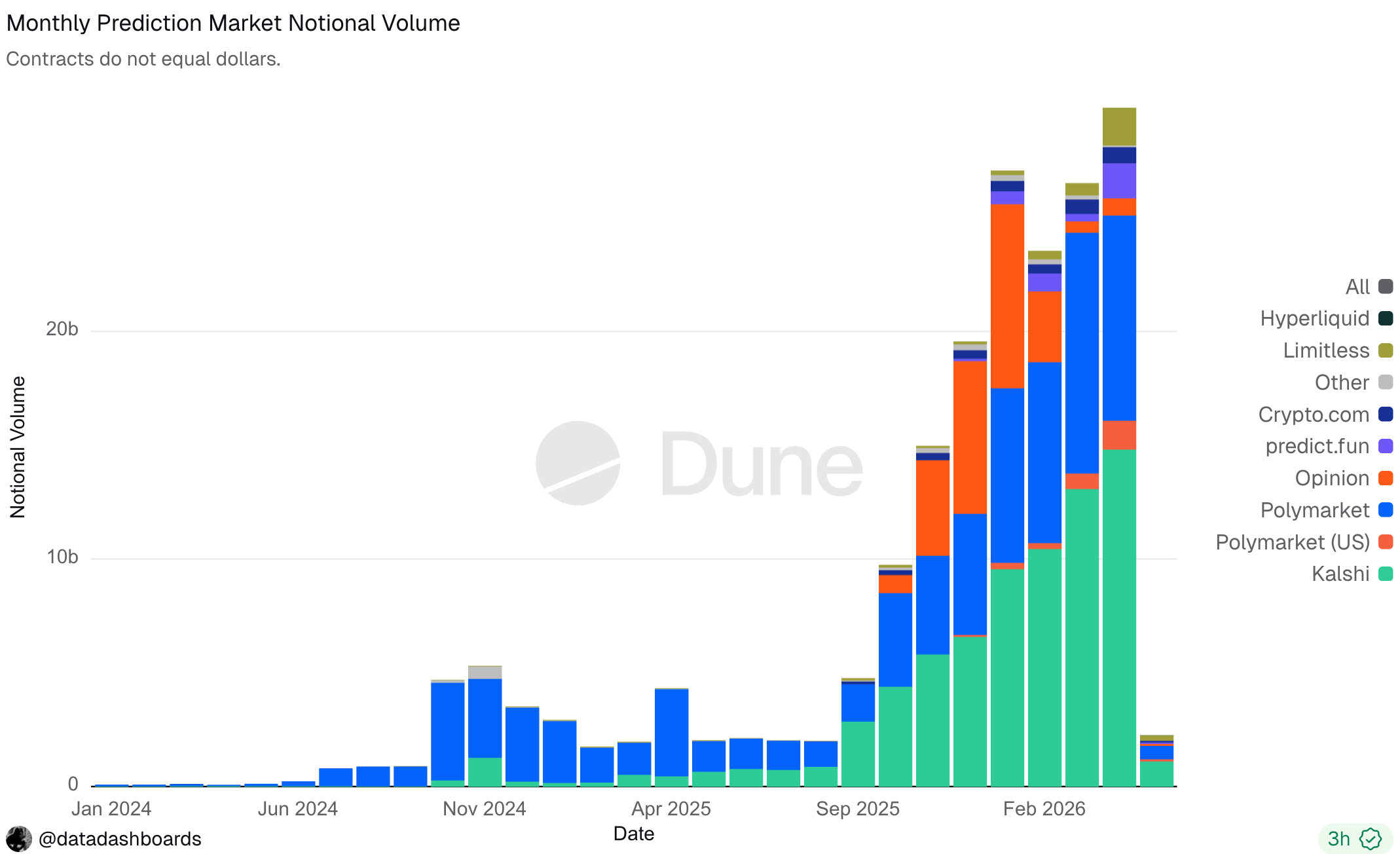
Prediction markets like Kalshi and Polymarket have grown sharply over the past year, drawing in a wave of users. The combined monthly notional volume hit an all-time high of $29.8 billion last month, up roughly 588% from a year earlier.

However, a new Wall Street Journal analysis of platform data takes a closer look at how those users are actually faring, and the picture is far less rosy. The Journal found that more than 70% of Polymarket users are losing money.
Prediction Market Profits Remain Concentrated
According to the report, Polymarket has at least 2.3 million total accounts. WSJ reviewed 1.6 million accounts that have been active since November 2022.
It revealed that just 0.1% of accounts captured 67% of all profits. This indicated that fewer than 2,000 of the accounts collectively netted nearly $500 million in profits.
Follow us on X to get the latest news as it happens
The typical user is down between $1 and $100. In addition, the bottom 10% have lost an average of $4,000 each.
“Casual traders are bleeding cash while a small number of sophisticated pros—including trading firms with access to vast streams of data—eat their lunch,” the report read.
A separate academic study analyzing data from November 11, 2022, through March 29, 2026, reached similar conclusions. It found that 68.8% of Polymarket users have lost money. Moreover, 1% of traders have accounted for 76.5% of total profits.
Meanwhile, Bloomberg separately reported that more than 100,000 Polymarket accounts have lost at least $1,000 since January 2025. That figure is nearly double the number of wallets with comparable gains.
Losers Outnumber Winners on Kalshi
On Kalshi, losing users outnumber winners by 2.9 to 1, according to spokeswoman Elisabeth Diana. She cited data from the past month. The platform does not disclose total user numbers.
The Journal also examined over 35,000 completed mention markets on Kalshi. “Yes” trades priced at a 50% winning probability paid out only around 40% of the time. Therefore, bettors systematically overpay for those contracts.
“On average, mention-market traders putting money on “yes” on the first price they see—a common pattern for retail traders—will lose 11% of the money they bet. Those returns are worse than most Vegas slot machines, according to research from the University of Nevada, Las Vegas,” WSJ wrote.
BeInCrypto has reached out to Polymarket and Kalshi for comment and will update this article with any response.
Subscribe to our YouTube channel to watch leaders and journalists provide expert insights
The post Prediction Markets Hit New Milestones, but Most Traders Are Losing, WSJ Finds appeared first on BeInCrypto.
Fintech and stablecoin firms should consider looking outside of the US-to-Mexico corridor to win the $174 billion Latin America remittance market, according to a Bybit executive.
Most firms have focused too narrowly on the $61.8 billion US-Mexico remittance market and are missing faster-growing corridors between the US and Central America, as well as remittances within Latin America, Bybit Chief Marketing Officer Claudia Wang said in a post on X on Sunday.
“The corridors that look ‘hot’ right now are not the corridors most fintechs are optimized for,” she said, citing Venezuela-to-Colombia, Argentina-to-Bolivia and Spain-to-Ecuador as examples. The non-US-to-Mexico remittance market stands at about $112 billion.
“Stop treating LATAM as one market,” Wang said, adding that she spent six months studying the region:
“Brazil, Mexico, Argentina, Colombia — each needs different licenses, different rails, different stablecoins, different marketing. The companies winning here run country-specific stacks, not regional ones.”
Remittances throughout the Americas have largely been facilitated through banking rails by firms such as Western Union and MoneyGram. However, both unveiled plans to roll out stablecoin infrastructure following the passage of the GENIUS Act in July.
Western Union is building its own US dollar-backed stablecoin, USDPT, which is in the final stages of readiness and expected to launch this month.
Crypto-native companies such as Binance, Bitso, Strike and Felix Pago are also competing in the LATAM remittance market, as are banks and retail and telecommunications companies such as Walmart and Tigo, Wang noted.
US immigration policy is influencing LATAM remittance market
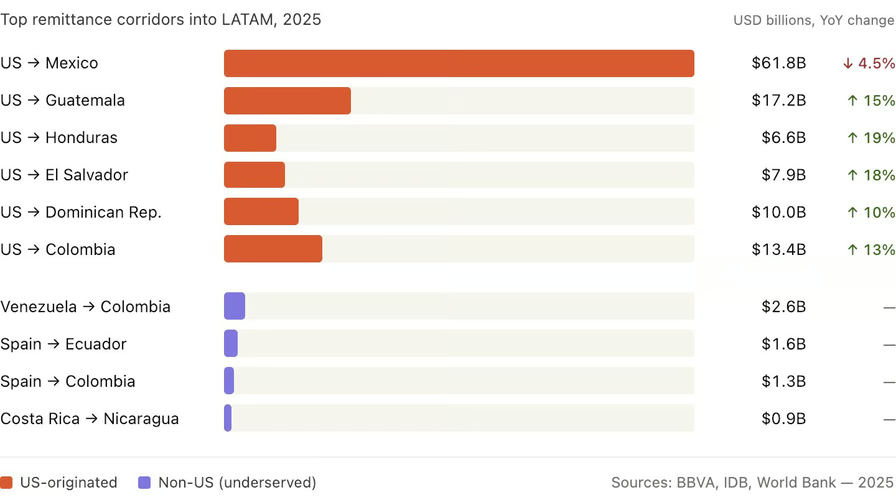
Wang noted that the US-to-Central America corridor “is exploding,” with remittances in Honduras, El Salvador and Guatemala rising 19%, 18% and 15%, respectively, in 2025.
By contrast, remittances in the oversaturated US-Mexico corridor fell 4.5% to $61.8 billion.
Wang said the divergence between rising Central American flows and Mexico’s decline is the result of US immigration policy: “Migrants from Central America are sending more home — faster, larger amounts — to hedge against deportation risk.”
By contrast, Mexico has a “more established and documented diaspora” and thus “doesn’t show the same panic-send behavior,” Wang said.

Top remittance corridors in 2025. Source: Claudia Wang
As for the non-US corridors, Wang noted that while some of these remittance markets are small in absolute terms, they are “barely served” by US money transmitter operators and “almost untouched by crypto rails.”
Latin Americans want to hold stablecoins, not just move them
Wang also said many Western fintechs haven’t realized that in LATAM, the “killer app” is holding stablecoins, not moving them.
“Users don’t want to ‘use’ stablecoins for a transaction and convert back to local currency. They want to hold dollars. The transaction is the side effect.”
Wang said there is no clear winner in the LATAM remittance market, adding that “the fintechs that win the next decade in this region will combine local rails, stablecoin liquidity, trust and closed-loop economics — remit → hold → spend → earn.”
Related: Australia draft payments vision eyes stablecoin interoperability
She added that many fintech companies in the space have built their products for the typical 25-year-old crypto trader, not the average remittance sender, who is 40 to 60 years old and presumably is not tech-savvy.

Profile of the imagined LATAM remittance user (left) vs actual user (right). Source: Claudia Wang
“If your product makes a 50-year-old factory worker in New Jersey think for more than 30 seconds before sending $300 to his mom in Honduras, you’ve already lost,” Wang said:
“The crypto industry has spent five years optimizing for the wrong user. The retail remittance customer in LATAM doesn’t want to ‘self-custody.’ They want to know the money landed.”
Magazine: Singapore isn’t a ‘crypto hub’ — it’s something better: StraitsX CEO
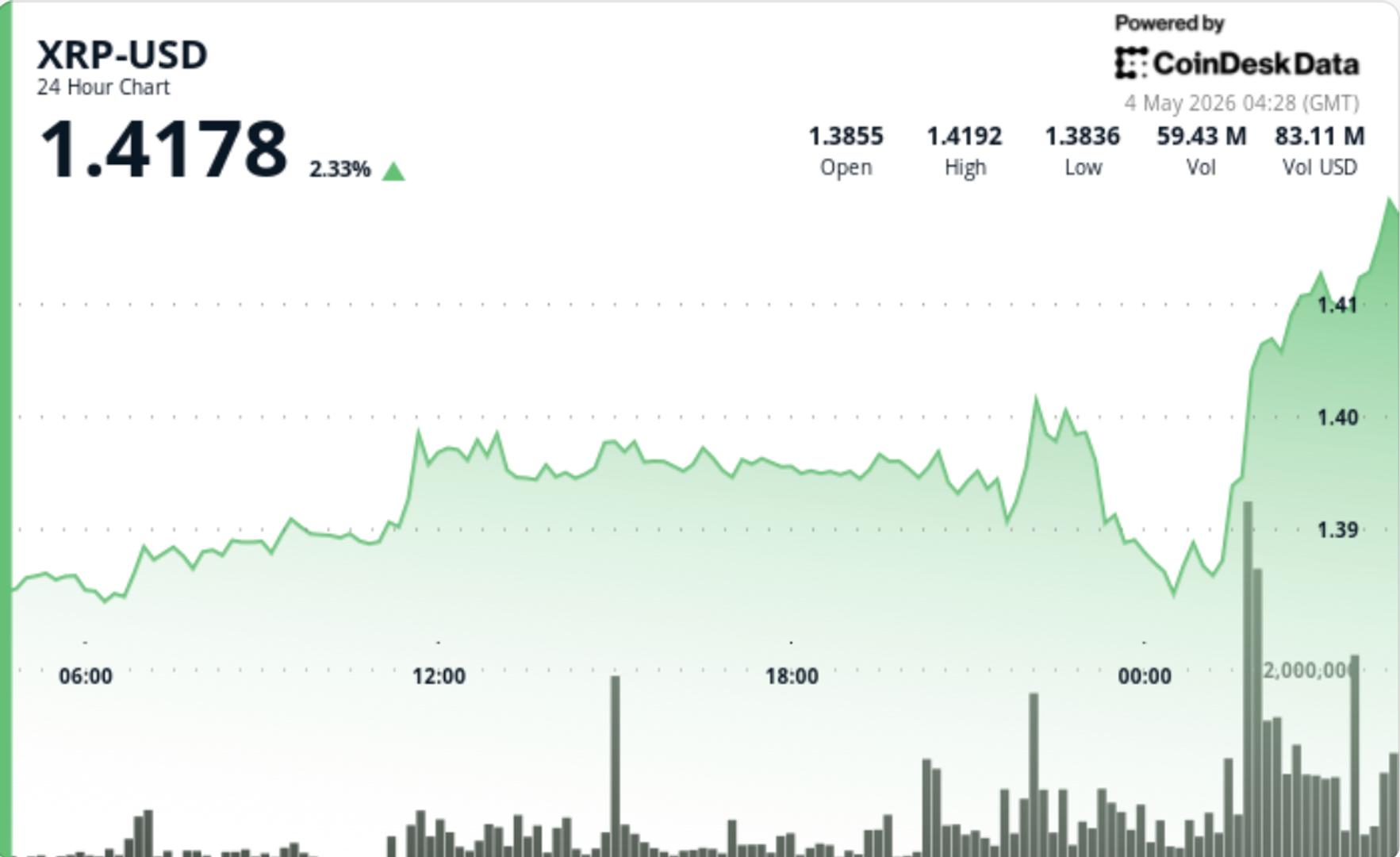
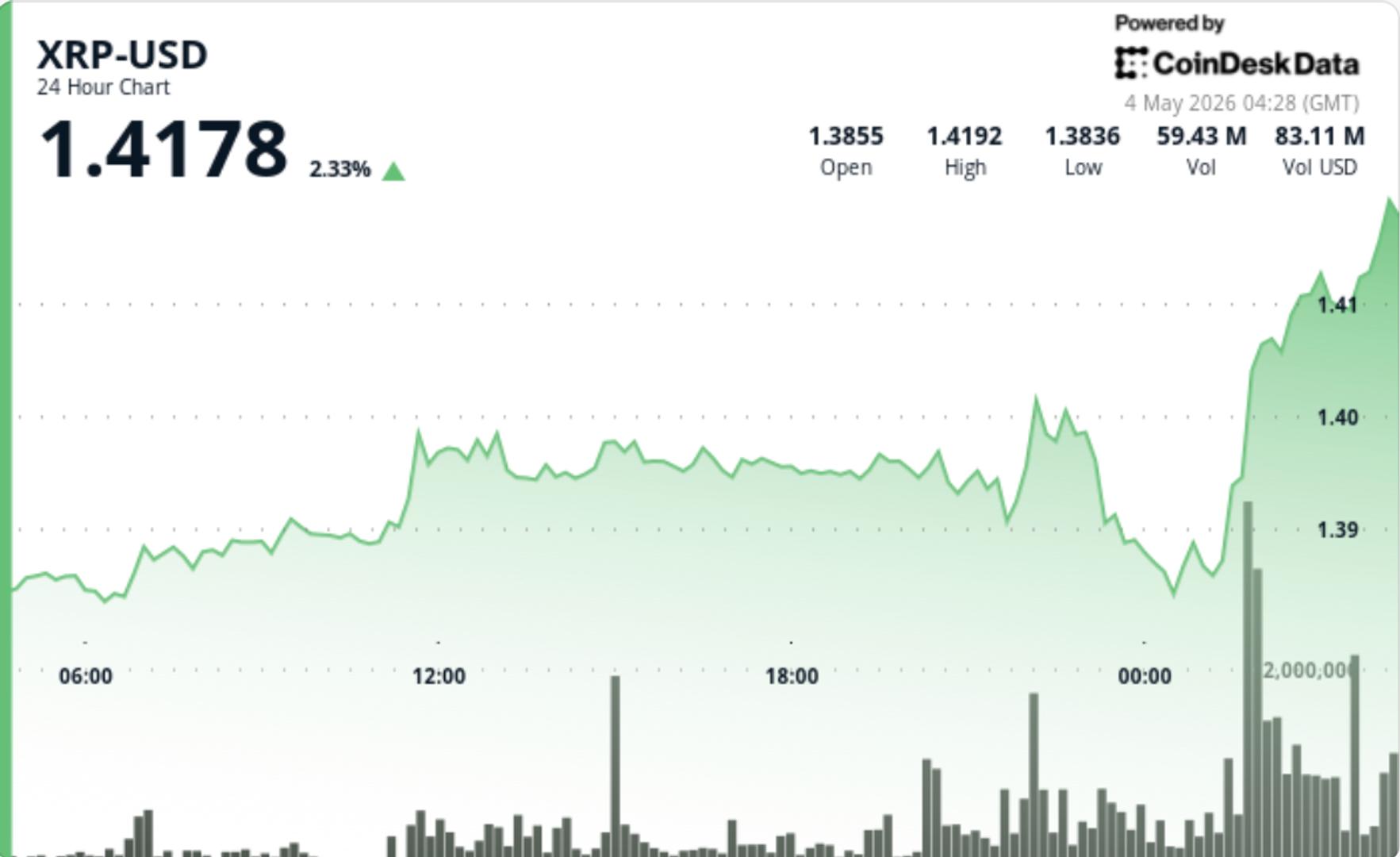
XRP moved back above $1.40 in early Asia hours on broader move in crypto markets, with the push through resistance coming on a sharp pickup in volume that tends to signal real positioning and shifts the focus to whether that level now holds on any pullback.
News Background
• Bitcoin pushed higher during the same window, helping lift broader risk sentiment across crypto markets.
• XRP has been trading in a tight $1.35–$1.45 range, with the latest move marking another attempt to break out of that compression.
Price Action Summary
• XRP climbed from $1.3840 to $1.4065, breaking above resistance near $1.3990.
• The move accelerated during the final hour, with price pushing cleanly through $1.40.
• Price is now holding just above the breakout zone, consolidating near $1.4040–$1.4060.
Technical Analysis
• The key shift is the reclaim of $1.40, which had capped recent upside attempts.
• Volume expanding into the move confirms participation rather than a low-liquidity push.
• Structure shows higher lows into the breakout, suggesting underlying bid strength.
• The broader range remains intact, but pressure is building toward a directional move.
What traders should watch
• $1.40 is now the pivot. Holding above it keeps the breakout intact.
• $1.41–$1.42 is the next resistance zone that needs to clear for continuation.
• A move back below $1.40 would signal the breakout failed and return price to the range.
Crypto World
Veteran trader Peter Brandt sees bitcoin hitting $250,000, but only after a bottom later this year
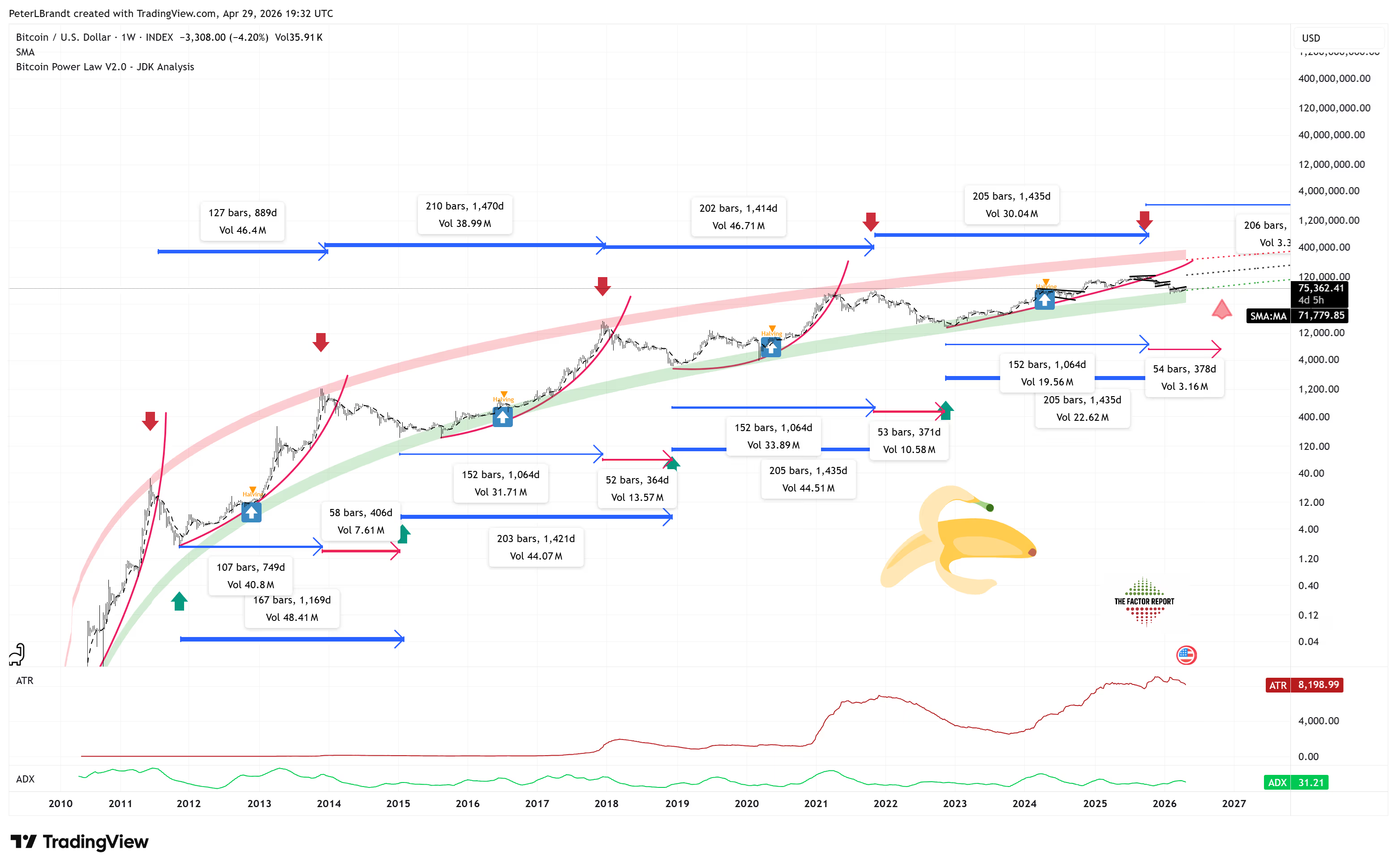
Veteran trader Peter Brandt sees bitcoin rallying to $250,000 in 2029, but only after the market finishes a long drawn-out bottoming process that could last into September 2026.
That forecast makes sense in the context of bitcoin’s four-year mining reward halving cycle, which has been consistent enough to shape traders’ projections.
Historically, bitcoin bull runs have peaked roughly 16 to 18 months after the quadrennial mining reward halving, before sliding into year-long bear markets. New uptrends then tend to begin 12 to 18 months ahead of the next halving.
That pattern held in the most recent cycle, with bitcoin peaking in October 2025, roughly 18 months after the April 2024 halving, which cut the per-block BTC issued as reward to miners to 3.125 from 6.25.
If the cycle holds, the bear market that began then should bottom about a year later, around October 2026 and then a new uptrend should begin that could take top out at $250,000 in late 2029, again roughly 18 months after the April 2028 halving.
“I am not calling for a low until Sep/Oct 2026. It is not necessary for the recent low to be penetrated. We could get a rally and then chop sideways to down. Worst case would be a move back into the lower green banana peel which would be into the 50s, maybe high 40s. Then blast off for $250k and a high in late 2029,” Brandt told CoinDesk in an email.
Peter Brandt is a veteran commodities trader whose career spans nearly five decades, beginning in the 1970s in the futures markets. He started out trading traditional assets such as agricultural commodities, metals, and currencies, long before the rise of modern electronic trading or digital assets.

Brandt’s view contrasts with the consensus among crypto analysts, who argue that the downtrend that began with the October peak near $126,000 ended in early February around $60,000, and that the rally since then marks the start of a new uptrend.
Bitcoin has rallied over 25% to $80,300 since early February, CoinDesk data show.
Note that Brandt’s forecast of no bottom until later this year does not necessarily imply a deeper downtrend that pushes prices below the February low. As he has noted, prices could instead move in a choppy pattern of rallies and pullbacks before eventually forming a bottom.
Brandt, however, stressed that his projection depends entirely on the market continuing to follow its historical rhythm. If price action deviates, he’s prepared to reassess rather than defend a broken thesis.
“As long as the market follows the script I will stay with my projections. If at some point the price discovery moves off script I will be forced to revise all my thinking. I will NOT be dogmatic about it as some are,” he said.

Celtic player ratings vs Hibs: Johnston soars but winger fails to deliver at Easter Road

Kotak’s asset quality gains drive robust Q4 show: Dnyanada Vaidya
CFTC Gets Mixed Responses to Prediction Market Rulemaking

Manchester United reach agreement with Casemiro over contract clause amid transfer speculation

US brings back mandatory military draft registration

Steven Gerrard disagrees with Gary Neville over ‘shock’ Chelsea and Arsenal claim | Football


-

 Tech7 days ago
Register Renaming | Hackaday
-

 Politics6 days ago
Drax board avoid their own AGM, accused of greenwashing & environmental racism
-

 Fashion5 days ago
Kylie Jenner’s KHY Enters a New Era with ‘Born in LA’
-

 Tech7 days ago
Why Blue Badges Disappeared From Toyota Hybrids
-

 Tech6 days ago
Images of Samsung’s rumored smart glasses have leaked
-
 Tech2 days ago
Trump’s 25% EU auto tariff breaches Turnberry Agreement that also covers semiconductors and digital trade
-

 NewsBeat12 hours ago
Channel 5 – All Creatures Great and Small series 7 new post
-

 Business5 days ago
Most Commercial Energy Audits Miss the Real Losses
-

 Business7 days ago
(VIDEO) Charlize Theron Climbs Times Square Billboard to Promote New Netflix Thriller ‘Apex’
-

 Crypto World6 days ago
CFTC’s AI will review U.S. crypto registration applications, chairman tells CoinDesk
-
 Sports2 days ago
Paul Scholes issues Marcus Rashford reality check as agreement emerges over Man United star
-

 Business5 days ago
Barclay Brothers Avoid Bankruptcy: HSBC Drops High Court Petitions After IVA Deal
-
 Entertainment7 days ago
Alicia Keys Calls Out Music Industry ‘Boys Club’
-
 Business4 days ago
Tesla Officially Registers Elon Musk’s Stock: What Investors Need to Know
-

 Tech6 days ago
Get Ready for More Brain-Scanning Consumer Gadgets
-
Crypto World6 days ago
Robinhood Phishing Scam Exploits Gmail Dot Feature to Bypass Security
-

 Crypto World6 days ago
Gmail Dot Trick Underpins Robinhood Phishing, Sending Real-Looking Emails
-

 Entertainment6 days ago
Sister Wives: Janelle Posts New Scary Warning
-

 Business3 days ago
Two Powerball Tickets Split $143 Million Jackpot in Indiana and Kansas
-

 Business6 days ago
Superdry co-founder accused of raping woman
You must be logged in to post a comment Login