Dongle DACs are everywhere. Scroll through Amazon or any audio retailer and you will find dozens of tiny USB DAC/amps promising better sound from your phone. Most solve one problem while creating another: a cable dangling from your handset and one more gadget rattling around in your pocket.
The Fosi Audio MD3 tries to clean up that mess in a manner that will work for some.
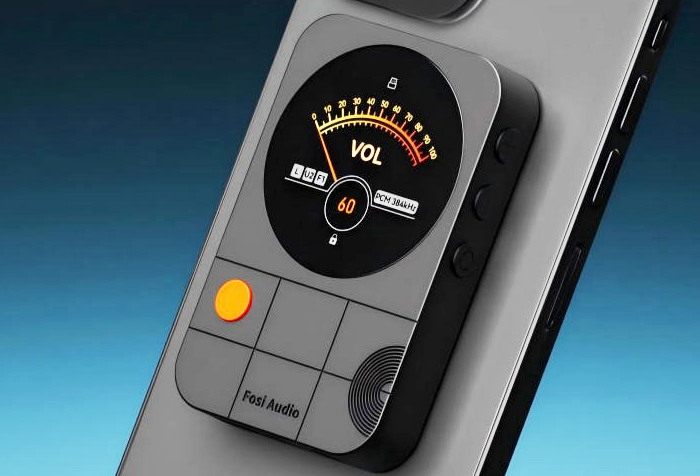
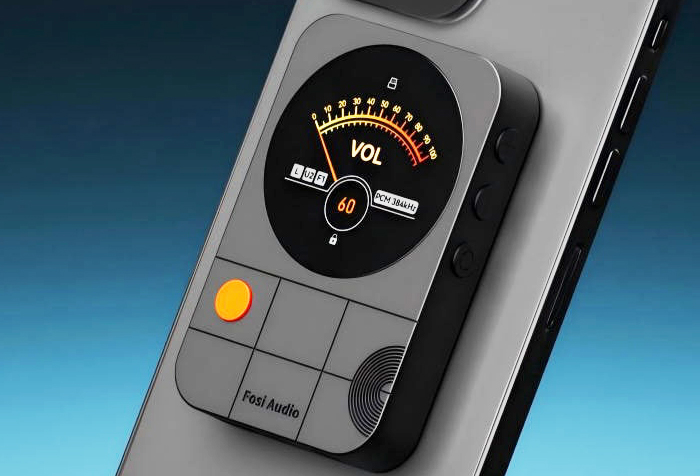
Priced at $149.99, this compact DAC/amp attaches directly to the back of your phone using 16 high strength N52 magnets, making it MagSafe compatible with modern iPhones. Instead of a dongle hanging off the bottom of your device, the MD3 sticks flush to the rear panel, turning the DAC into something closer to an integrated mobile audio upgrade than yet another accessory.
While affordable, it is entering one of the most crowded categories in portable audio. The difference is that very few of those competitors try to physically integrate with your phone the way the MD3 does. The question is whether the concept works in practice and more importantly, whether the sound quality justifies sticking it to the back of your phone.
Advertisement
Fosi Audio MD3 Specifications and Technology Explained
At the heart of the Fosi Audio MD3 is the ESS ES9039Q2M DAC, the chip responsible for converting digital data into analog sound. It’s a highly regarded converter with impressive specifications, including a 116dB signal to noise ratio and total harmonic distortion plus noise of roughly 0.00075%. The chip also supports PCM up to 384kHz/32-bit and native DSD256, so those with a library of hi-res FLAC or DSD files will have plenty of headroom.
Another advantage of the ES9039Q2M is its low power consumption, which is important in a portable device. In theory, that should allow the MD3 to deliver better sound without draining your phone’s battery as quickly as some other portable DAC/amp designs.
Amplification duties are handled by four ESS ES9063Q op amps, which together deliver up to 180mW of output at 32 ohms. That is a respectable amount of power for a compact mobile device and should be more than adequate for most in-ear monitors and an acceptable range of high-sensitivity headphones.
One of the MD3’s more unusual design choices is its MagSafe compatible magnetic backplate, which uses 16 high-strength N52 neodymium magnets. The idea is simple: instead of dangling from your phone like a traditional dongle DAC, the MD3 can snap directly onto the back of compatible iPhones, keeping the setup compact and eliminating cable clutter.
I wasn’t able to test that feature personally because I use an Android phone, but Editor in-Chief Ian White tried the MD3 with his iPhone 14 at CanJam NYC 2026 last weekend and confirmed that the magnetic attachment works as intended. It’s a clever approach that separates the MD3 from the dozens of conventional dongle DACs currently competing for attention in the portable audio space.
Advertisement
Design & Build Quality
Despite the budget friendly nature of the Fosi Audio MD3, the chassis is made from aluminium alloy, something you do not always see on dongle DACs priced under $200.
Even with its all metal construction, the MD3 remains extremely portable. It weighs just 50 grams (1.76 ounces) and measures 70 x 45 x 12 mm (2.76 x 1.77 x 0.47 inches), making it about as unobtrusive as a portable DAC/amp can be.
Advertisement. Scroll to continue reading.
That 12 mm (0.47 inch) thickness is not accidental. According to Fosi Audio, the dimension was carefully chosen so that most headphone plugs will not lift the unit away from the back of the phone when connected. That detail is important because the MagSafe magnetic attachment relies on the MD3 sitting flush against the device.
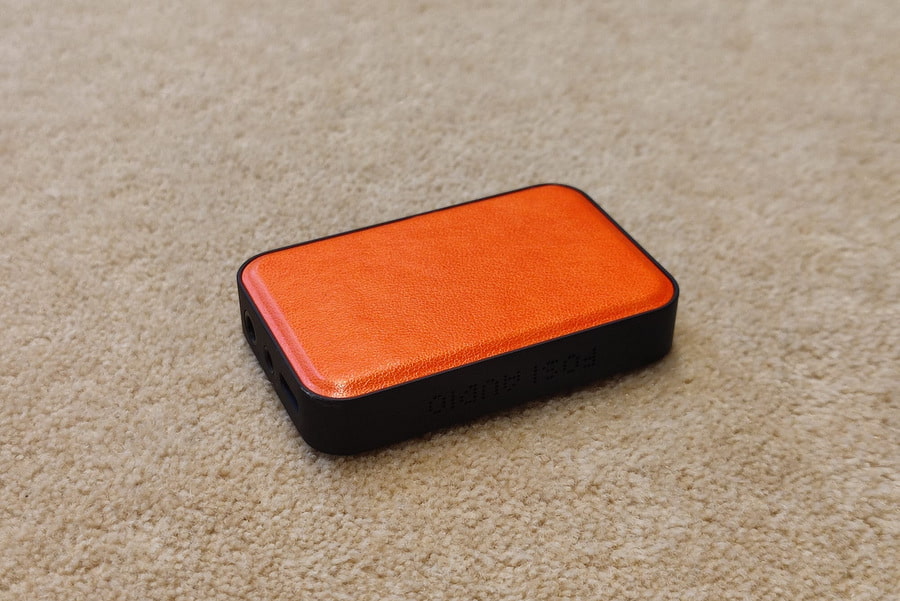
I was also surprised to find hand stitched leather covering the rear panel. It is a small touch, but one that adds a bit of tactile refinement to an otherwise utilitarian product and likely costs Fosi Audio more than you would expect at this price point.
Advertisement
Moving to the front of the Fosi Audio MD3, you’re greeted by a 1.28 inch circular LCD display. It doesn’t get especially bright, but visibility is perfectly adequate in most lighting conditions and the colors are surprisingly vibrant for such a small screen.
The default volume display is particularly clever. It mimics the look of a classic VU meter, giving the interface a bit of retro flair while still presenting useful information such as gain level, sample rate, and the selected digital filter.
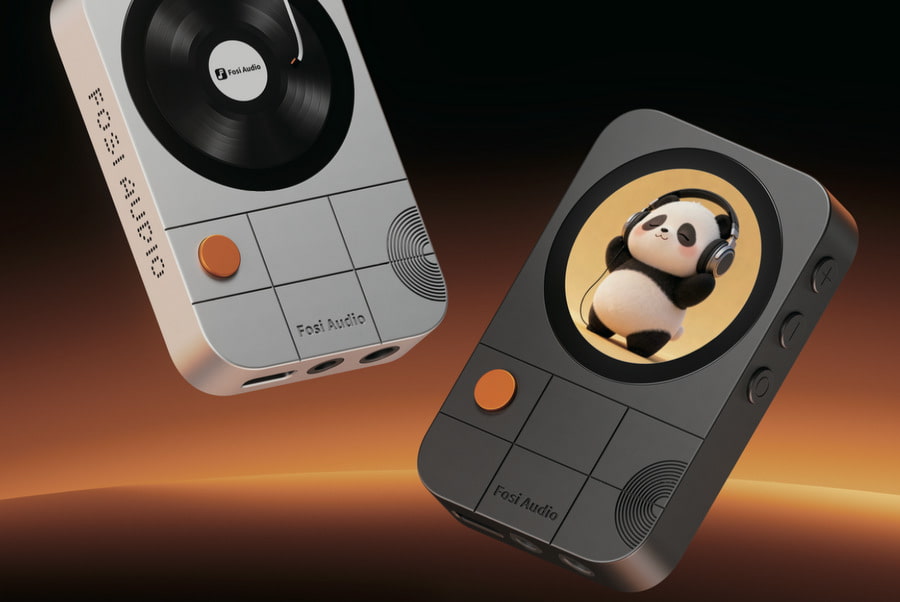
The screen can also do more than simply display playback data. Fosi has included a selection of images and preloaded animations, including a spinning vinyl record, a cartoon dog, and even an anime character. None of it is essential to the MD3’s function as a DAC/amp, but it adds a bit of personality to a category that is usually very utilitarian.
There are even a few built-in mini games, including dice rolling, spin the bottle, and rock paper scissors, which make use of the display. I didn’t spend much time with them, but someone out there will inevitably appreciate the novelty.
Just below the screen sits what Fosi calls the Vista button, which cycles through the available images and animations.
Advertisement
On the right side of the MD3 are three physical buttons. From top to bottom they handle volume up, volume down, and menu or confirm, with the volume buttons also doubling as navigation controls when scrolling through the menu.
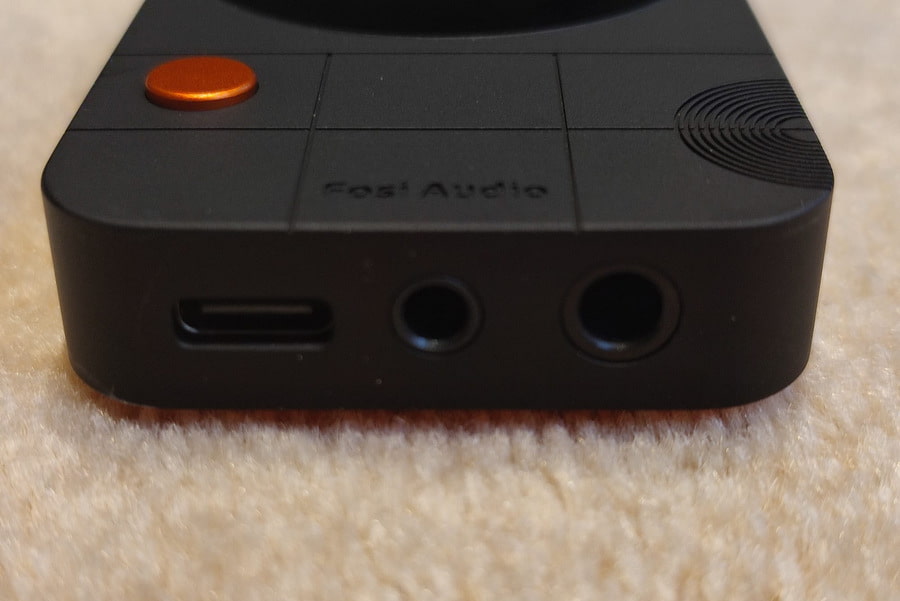
Connectivity is straightforward. The top panel features a USB Type-C port for connection to your phone or source device. The bottom panel includes a second USB-C port, along with both 4.4 mm Pentaconn balanced and 3.5 mm single ended headphone outputs.
That’s really all there is to it. The MD3 is a refreshingly simple device to operate.
But features and design only get you so far. The real question is how it performs where it matters most: sound quality.
Advertisement
Listening & Headphone Synergy
To evaluate the sonic performance of the Fosi Audio MD3, I connected it to both my mobile phone and laptop, feeding it a mix of Spotify streams and hi res FLAC files.
Advertisement. Scroll to continue reading.
On the output side, I rotated through a range of over-ear headphones to see how well the MD3 would pair with different designs and whether it could handle more demanding loads. Headphones including the HiFiMAN HE1000 Unveiled, Thieaudio Cypher, Sendy Audio Egret, and Beyerdynamic DT880 Edition 600 Ohm were plugged in to see how far the little DAC/amp could be pushed.
After a few months of listening, my overall impression of the MD3’s sound quality is fairly straightforward. It presents music with a neutral, largely coloration free tonal balance that walks a careful line between analytical clarity and musical engagement. Fosi Audio has managed to maintain good balance across the audible spectrum without tipping into the sterile or overly clinical presentation that sometimes plagues affordable DAC/amps.
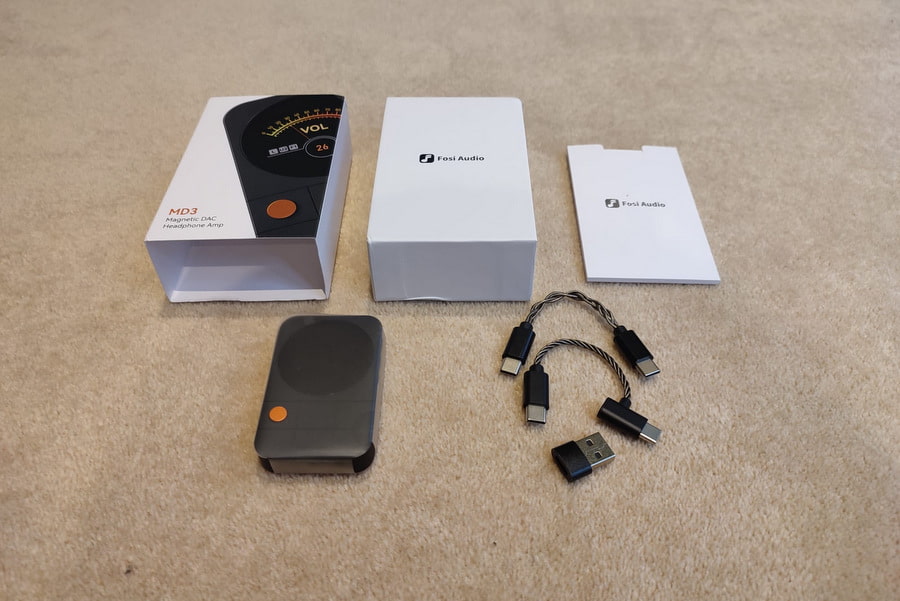
Included: Two braided USB-C to C cables, USB-C to A adapter, instruction manual
Starting with the bass, the MD3 reaches deep into the sub bass without obvious roll off and delivers satisfying texture and dynamic impact. Electronic music and drum heavy tracks carry the right sense of weight and physicality, so you never feel like the low end is being shortchanged. A good example is the infamous sub bass swell around the three and a half minute mark in Hans Zimmer and James Newton Howard’s “Why So Serious?”. Through the HiFiMAN HE1000 Unveiled, the MD3 reproduced that moment with convincing rumble and control.
The midrange maintains the same level of clarity and composure as the lower frequencies. Vocals and instruments come across with a natural timbre and a sense of intimacy when the recording calls for it. Listening to Sade’s “Smooth Operator,” the presentation placed her voice front and center with the kind of effortless smoothness that suits the track perfectly.
Advertisement
Up top, the treble extends cleanly with a healthy amount of sparkle, but without drifting into sharpness or glare that could lead to listening fatigue. “La Lune” by L’Impératrice sounded particularly engaging through the Thieaudio Cypher, with the delicate triangle strikes rendered clearly and with impressive nuance despite their relatively low level in the mix.
Overall, the MD3 paired well with most of the headphones in my collection, largely thanks to its neutral and balanced sound signature. In practice, that means any reasonably well tuned pair of headphones will likely perform well with the little Fosi.
There are limits, however. Extremely power hungry headphones such as the Modhouse Tungsten or HiFiMAN HE6se V2 are simply asking too much of a compact device like this. While the MD3 could push the HE6se V2 to my preferred listening level of around 65 dB, the bass became noticeably thin and some of the finer details were lost. Headphones with very high impedance or low sensitivity typically need several watts of power to perform at their best, which is well beyond the intended use case of a portable DAC/amp like the MD3.
The Bottom Line
The Fosi Audio MD3 takes a different approach in a category crowded with tiny USB dongle DACs. Instead of dangling from your phone with a short cable, the $149.99 MD3 magnetically attaches to the back of compatible iPhones, turning it into a compact all in one mobile audio upgrade. Combined with a capable ESS ES9039Q2M DAC, clean amplification, and a neutral, well balanced sound signature, the MD3 delivers a natural listening experience that pairs well with the vast majority of headphones.
It also stands out with thoughtful design touches such as an aluminium chassis, hand stitched leather backing, and a customizable circular display that adds some personality to what is usually a very utilitarian product category.
Advertisement
Where the MD3 faces pressure is on value and raw power. Competitors like the HiBy W4 offer more output power and Bluetooth connectivity for roughly $50 less, which may matter more to some listeners than magnetic convenience. And while the MD3 has more than enough power for most headphones and IEMs, it will struggle with extremely demanding models that require several watts to perform at their best.
For iPhone users who want a cleaner, cable free portable setup, the MD3 solves a problem that few dongle DACs even attempt to address. If MagSafe integration and tidy pocket ergonomics matter to you, the MD3 is a clever and enjoyable mobile audio companion. If raw power and features are the priority, there are stronger values elsewhere.
Pros:
MagSafe compatible design attaches directly to the back of newer iPhones
Aluminium chassis with hand stitched leather gives it a premium feel
Interactive circular LCD display with customizable visuals and animations
Neutral yet musical sound signature that works well with most headphones
Enough power for the vast majority of IEMs and portable headphones
Cons:
$149.99 price feels slightly high compared to competing dongle DACs
Less output power and fewer features than some cheaper rivals like the HiBy W4
Not suitable for extremely power hungry headphones like HE6 class designs
The AI company is facing strong competition from rivals such as Anthropic.
OpenAI is aiming to nearly double its headcount by the end of 2026, according to a Financial Times report.
The publication estimated that current staff numbers of 4,500 would reach around 8,000 by the end of the year, citing two people with direct knowledge of the matter, and added that the new roles would largely be across product development, engineering, research and sales.
Last month, Irish media reports suggested OpenAI was looking for a new, larger Dublin premises for its European headquarters, having established its Irish presence in 2023. Then, CEO Sam Altman said that the company chose Ireland because it “blends a talented workforce with support for innovation and responsible business growth”.
Advertisement
The company is currently hiring in cities in the US, Europe, Australia and Asia.
OpenAI is facing stiff competition in its field from rivals such as Anthropic, which recently announced the planned expansion of its Dublin operation and the creation of 200 new jobs by 2027 in engineering, sales, finance, legal and compliance, and operations.
As of November 2025, Anthropic had around 300,000 enterprise customers, while OpenAI had more than 1m, but recent data shows that Anthropic is now capturing more than 73pc of all spending among companies buying AI tools for the first time, while OpenAI is down to around 27pc.
In late February, a $110bn funding round brought OpenAI’s valuation to $730bn. The round featured major contributions from Amazon, Nvidia and SoftBank – the latter of which had its outlook lowered by S&P earlier this month due to a perceived over-reliance on heavy investment in OpenAI.
Most of us now get our information using AI chatbots and search engines. Even Google shows us an AI summary first before guiding us towards the sources it compiled the answers from.
A new study from Yale suggests that while AI-generated answers are fast, convenient, and easy to read, they can also influence our opinions. Daniel Karell, an assistant professor of sociology at Yale, and his team wanted to find out whether reading AI-written summaries of historical events helped people learn better than reading human-written ones.
To test this, participants were shown short summaries of historical events, some written by humans and others by AI tools like ChatGPT, and then quizzed on what they remembered.
The result? People who read AI-written summaries consistently answered more questions correctly.
Advertisement
Is AI just better at disseminating information than humans?
Karell attributes this to how AI presents information. “It’s like the model took Wikipedia and made it more readable,” he said. The AI summaries were smoother, clearer, and easier to retain, regardless of whether participants knew they were reading AI-generated content.
Growtika / Unsplash
That means, even when people were told the summary was written by AI, they still learned more from it than from the human-written version.
Should this worry you?
Here is where it gets interesting. In a follow-up paper published in PNAS Nexus, the same researchers found that AI summaries not only teach better, but also influence political opinions.
If the AI summary had a liberal slant, readers came away with more liberal opinions. A conservative slant had the opposite effect. The researchers believe this happens because AI doesn’t just present facts, but it frames them in a way that feels more logical and convincing.
Daniel Karell / PNAS Nexus
AI tools are becoming the default way people learn about history and current events. That is not necessarily bad. But knowing that the tool shaping what you learn can also quietly shape what you think is something worth keeping in mind.
At the same time, AI hallucinations remain a significant issue, and AI-generated summaries can be even more misleading for humans. A study conducted by researchers at USC’s Information Sciences Institute found that AI systems can execute propaganda campaigns with minimal human input.
Advertisement
If we add to this the idea that AI can be more convincing than humans, it’s scary to think how these tools can be used to manipulate human thinking and reasoning, guiding us toward a more fractured world.
Meze Audio, founded in 2011 in Romania, has built a strong reputation in high-end personal audio with standout over ear models like the award winning Empyrean II, 109 Pro, and the recently updated 99 Classics 2nd Gen. But while the brand has become one of the more recognizable names in premium headphones, its track record with in-ear monitors has been far less consistent.
We had an early preview of the new Astru at CanJam NYC 2026, where one thing was impossible to ignore: wired IEMs are having a moment and were at the center of the conversation. If you think the category is fading in a world dominated by wireless earbuds, think again. Enthusiasts are doubling down on sound quality, and brands are responding.
The Astru is Meze’s latest attempt to finally lock in a true flagship IEM. Featuring a titanium shell and a single dynamic driver design, it builds on earlier efforts like Advar and Rai Penta, both of which showed promise but struggled to fully land with critics and buyers. The question now is simple. Can Meze translate its headphone success into the IEM space, or is this another near miss?
Key Specifications and What They Actually Mean
The Astru uses a single 10mm dynamic driver with a titanium and PEEK diaphragm, a combo designed to balance rigidity and flexibility for a more natural, controlled sound. With a 32 ohm impedance and 111dB sensitivity, it is easy to drive from a phone or dongle, but still benefits from better sources.
Advertisement
Meze includes a 0.78mm 2-pin cable with a 4.4mm balanced termination, which signals this is meant for serious portable gear, not just casual listening. At 13.4 grams with a titanium shell, it should feel solid without being fatiguing, and at $899, it lands in a very competitive tier where sound quality matters more than design alone.
Who Astru Is For and Who It Is Not
The Astru is aimed squarely at dynamic driver enthusiasts and anyone chasing a flagship IEM experience built around Meze’s house sound. It will appeal to listeners who prioritize cohesion over complexity, delivering a unified presentation that does not sacrifice treble performance, along with a warm, balanced tuning that favors musicality over analysis.
It is not for bassheads, listeners who demand true reference sound, or those chasing maximum top of the line vocal resolution. If your priorities lean toward impact, absolute neutrality, or extracting every last micro detail from a vocal track, this may not be your endgame.
Build
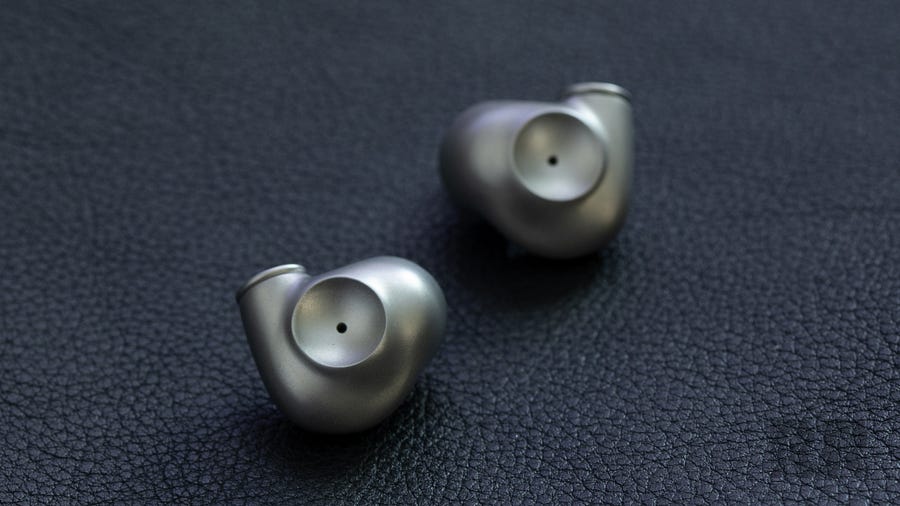
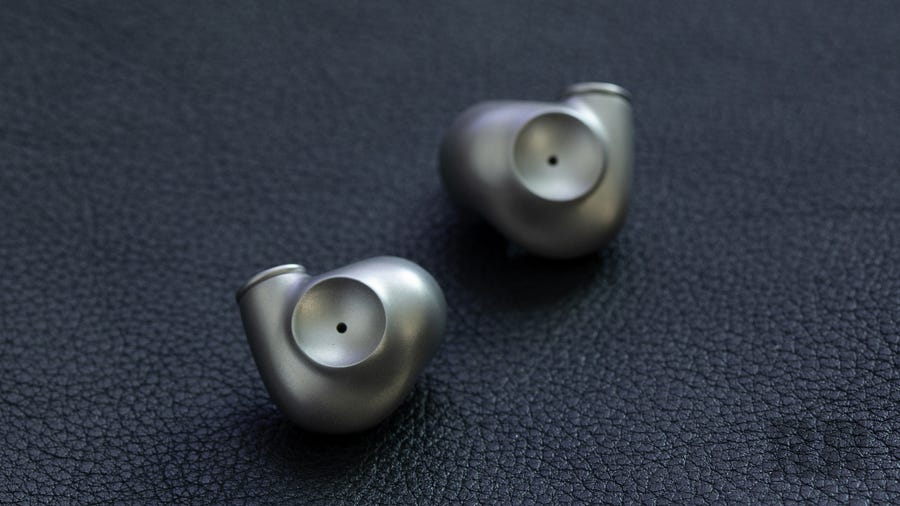
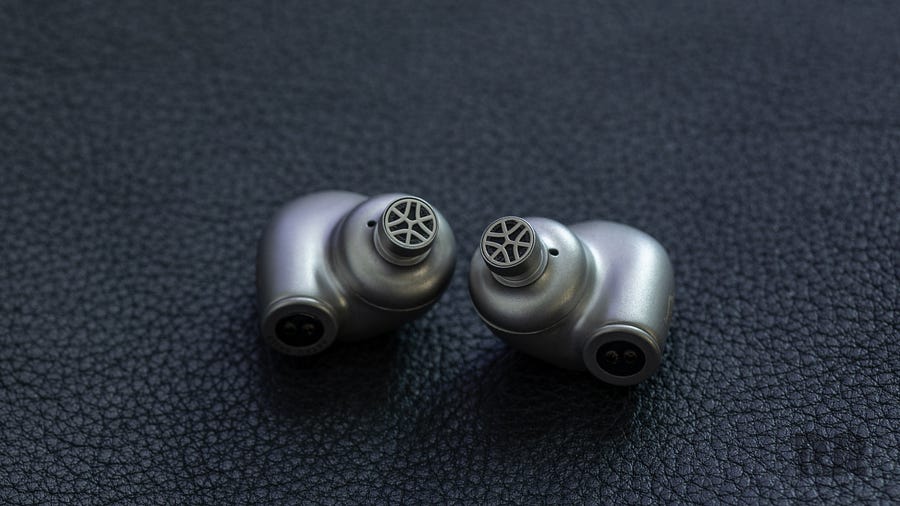
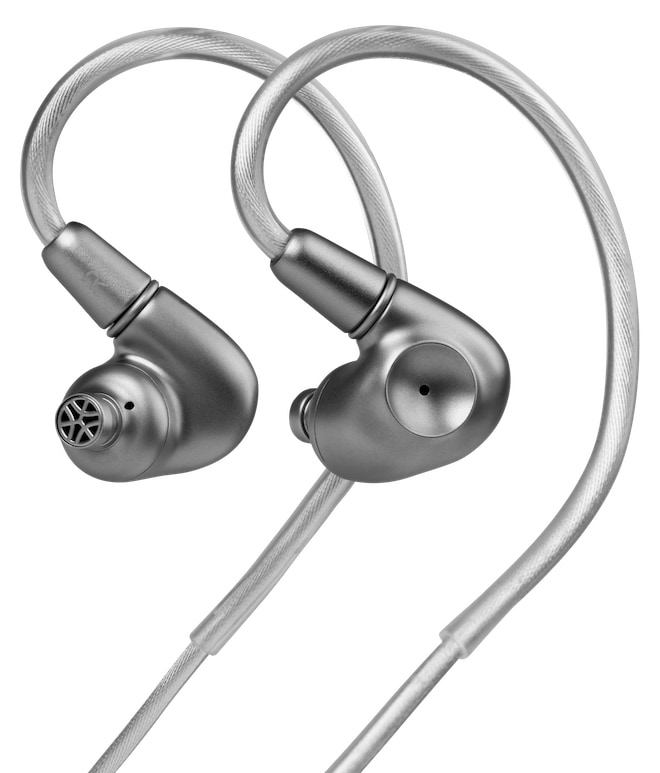
Meze went with titanium for the Astru’s shells. It is an expensive, finicky material, so it makes sense that they also reduced the visual and structural complexity to match. That said, the two-tone character of models like Advar and Alba is missed. This more minimalist approach makes the Astru feel less like a statement piece and more like an unfinished Blender render than a flagship Meze IEM.
Advertisement
Style aside, Meze clearly put real effort into the Astru’s geometric shell design. The titanium nozzles feature precisely cut, integrated debris filters with a clean chamfer leading into a tight lip, giving the whole assembly a more refined, engineered feel.
Like the Alba and unlike the Advar, the Astru uses 0.78mm 2-pin detachable cables, with the sockets housed in smoky black plastic blocks. It works, but it is a step back visually. The Alba at least added a red accent on the right side for quick channel identification, a small but thoughtful detail that is missing here on the more expensive Astru.
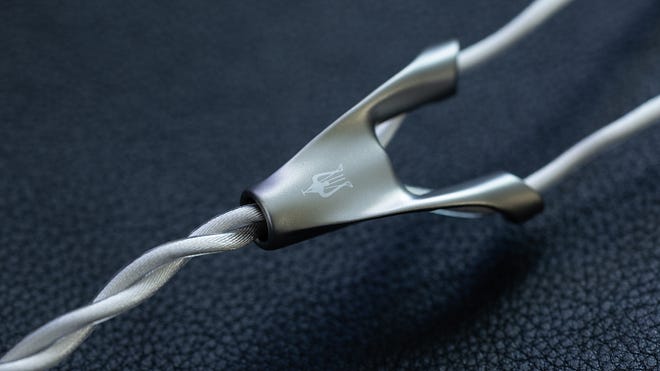
The effort Meze put into the Astru’s cable is obvious, from the soft, premium feeling twisted braid to the custom cut hardware on the Y splitter, giving it a true flagship feel in hand rather than something thrown in to check a box. It uses a fixed 4.4mm termination, with a 4.4mm to 3.5mm adapter included in the box for broader compatibility.
Advertisement. Scroll to continue reading.
Comfort
Comfort is always subjective and heavily dependent on your ear anatomy, so mileage will vary. The Astru is one of the most-comfortable IEMs I’ve used. I was able to listen to it without any discomfort. Its lightweight titanium shells work wonders for long transit rides and intense work sessions, though I did not get the best passive isolation with the stock eartips.
Accessories
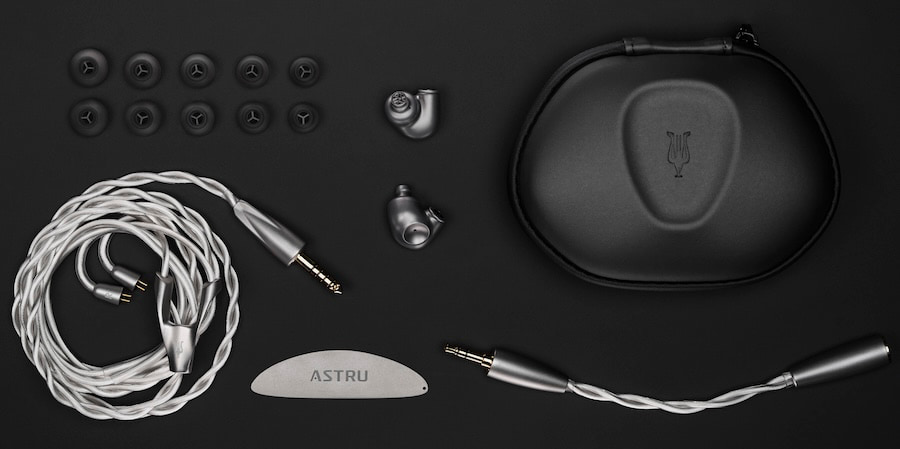
Inside the box you’ll find:
1x Semi-hard carrying case
1x 4.4mm-to-3.5mm adapter
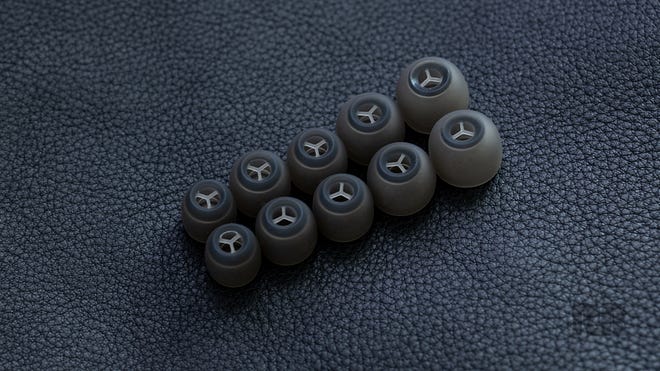
5x Pairs silicone eartips
1x Synthetic leather baggie
1x Metal Astru plate
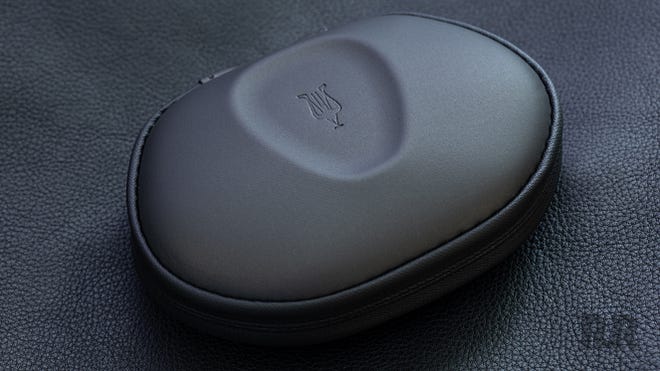
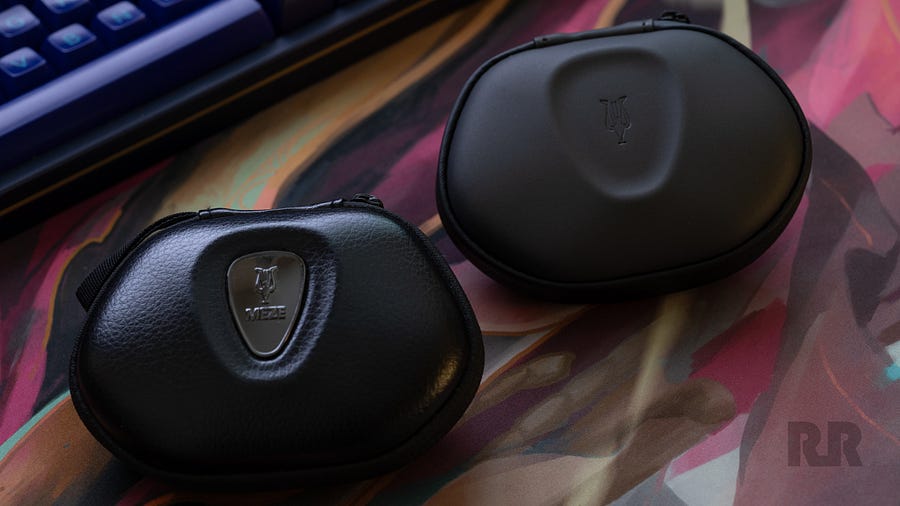
Meze did well with the Astru’s cable. It feels great in hand and is comfortable to use, but the rest of the accessory package does not keep up. The carrying case uses the same overall design as previous Meze flagships, but swaps the glossy black finish for a cheaper feeling satin coating that is more prone to scratches and long term wear like drying or flaking. By comparison, my well used Advar case still looks close to new. At $100 more, this feels like a step backward in overall quality.
Thankfully, Meze has improved on their ear tip offerings since 2022. The Astru’s stock eartips are comfortable and sized-well, but don’t offer the variety and passive isolation found on the sets offered by other brands. Campfire Audio, for example, includes a wider variety on even their entry-level IEMs, including liquid-silicone and foam sets. For $900, it’s fair to expect a more-comprehensive out-of-the-box experience.
Advertisement
Listening
About My Preferences: This review is a subjective assessment and is therefore tinged by my personal preferences. While I try to mitigate this as much as possible during my review process, I’d be lying if I said my biases are completely erased. So for you, my readers, keep this in mind:
My ideal sound signature leans toward competent sub bass, textured mid bass, a slightly warm midrange, and extended treble, though I do have mild treble sensitivity.
Testing equipment and standards can be found here.
The Astru features a gently V-shaped sound signature. It has a warm, healthy lower register, clean upper-midrange lift, and far-extending treble. The Astru exhibits a distinct “balance-first” approach to tuning, deviating from a tonal neutral purely in pursuit of a more-organic presentation. The Astru’s warm and inviting timbre and top-notch performance, blend together to deliver a distinctly “Meze” take on a harmonically-complete version of a modern meta IEM.
The Sweet Meze Sparkle
The Astru, with its single dynamic driver configuration, faces an uphill battle against the maelstrom of audiophile preconception. Single dynamic driver IEMs have long since been maligned as somehow inferior to alternative configurations, even if the objective measurements demonstrated otherwise. The bulk of the general enthusiast population’s disillusionment with dynamic drivers is concentrated around their treble characteristics, often described as grainy, or lacking in upper-end resolution.
Advertisement
For many poorly-implemented IEMs, that’s actually true — but that’s not the case on the entry-level Meze Alba, let alone the new Astru. The Astru exhibits the best treble performance of any single dynamic driver IEM I’ve heard, bar none. Even some multi-driver, planar-based, tribrids don’t resolve subtle textures as cleanly as the Astru does.
I was particularly taken by the Astru’s ability to resolve the tactile decay of the hi hats in “Careless” by Royal Blood (around 1:20 and 1:23). It also does an excellent job with background textures in “WANTED U” by Joji (around 3:00), integrating treble based effects naturally against the track’s dark, empty soundstage.
Meze’s focus on the Astru’s treble pays off, delivering a more elevated take on the brand’s upper register tuning. The result is a sweet, resolving timbre that avoids sharpness and sibilance, making it an easy listen even on rougher masters, including for those with mild treble sensitivity like myself.
Advertisement. Scroll to continue reading.
Advertisement
Vivid and Lush Mids
The core trait shared between Meze’s IEMs is a lush, warm, and inviting midrange. That Meze house sound is certainly present on the Astru, as its lower-mids have a healthy dose of emphasis. They blend organically from the lower mids into the mid bass, allowing the Astru to create a strong sense of atmosphere on tracks like “Lisztomania” by Phoenix. The layering of gentle guitar strumming against punchy drums and fluttering vocals feels dynamic and engaging, exactly what you want from a flagship IEM.
The Astru’s vocal timbre benefits from its rich midrange, with male vocals sounding deep and harmonically complete. Singers with complex tones, like Chris Cornell in “You Never Really Knew My Mind,” come through with a haunting sense of weight and texture. That said, vocal intelligibility in busy tracks does not rise above what similarly priced competitors deliver.
Challenging tracks like “Letter from a Thief” by Chevelle push the Astru close to its limit in terms of vocal presence, and as a result, some of the finer edges of the performance get smoothed over. In the pursuit of maintaining a sense of vocal cohesion, Meze limited the forwardness of the Astru’s upper-mids, and this aspect of its performance is what happens as a result.
Polite, But Firm
As divisive as bass can be, it is hard to imagine anyone putting on the Astru and not thinking this is well tuned low end. It does not lean into basshead levels of emphasis, but there is enough presence to satisfy across a wide range of genres, backed by strong control and texture rather than just quantity.
Advertisement
The Astru held its own in EDM, delivering deep, impactful bass hits in “Fat Cat Adventures” by Tut Tut Child (around 1:20). “Turbulence” by Neddie also comes through with tight, full bodied bass lines, supported by the Astru’s solid and well extended sub bass.
The Astru is just as capable with rock and alternative. It picks up even the faint mid bass drum hits in “Lydia” by Highly Suspect with ease, showing impressive control across the lower register. That control translates into strong contrast and rhythmic drive, and the Astru clearly understands that musical engagement starts with the low end.
That said, some tracks could use a bit more weight. “I Hope You Hate Me” by Dead Poet Society sounds warm enough, but the electric guitar chugs do not hit as hard as they could. The drums in “Bulletproof Heart” by My Chemical Romance are clear and distinct, but they lack the kind of physical impact you get from bassier IEMs.
Comparisons
Comparisons are chosen based on what I find most interesting. If there is something you would like to see added, feel free to drop a request in the comments.
Advertisement
Meze Alba
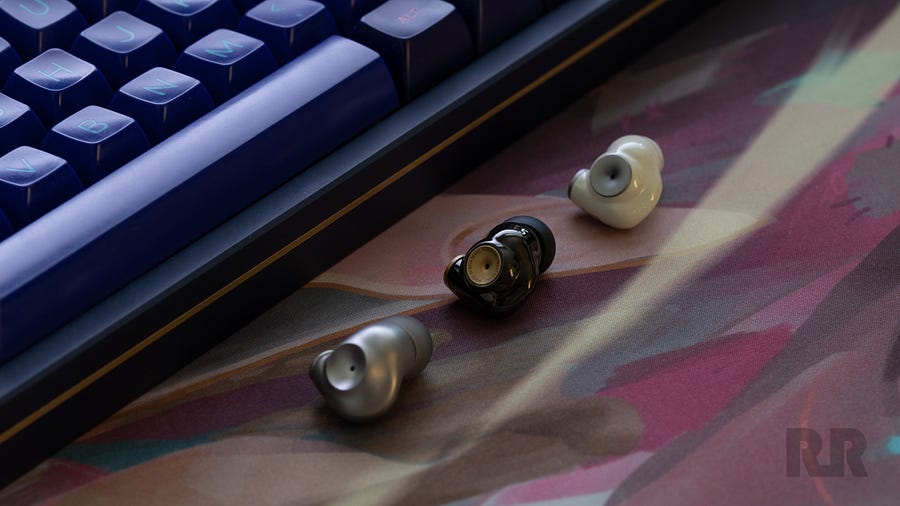
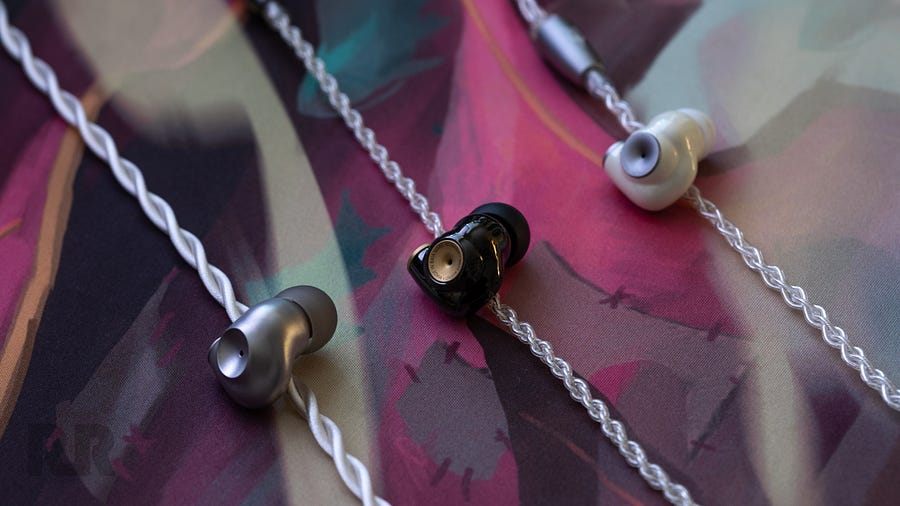
Left to right: Meze Astru, Advar, Alba
The Alba is Meze’s entry-level IEM. It features slender metal shells and a single dynamic driver per-side. It sells for a fairly-affordable $159, making it significantly cheaper than the Astru’s $899 price-tag.The goal of this comparison is not to decide which one is “better,” especially given the price gap, but to highlight the differences in sound and physical design between Meze’s two newest IEMs.
For $899, Meze includes a five size set of basic silicone eartips with the Astru, while the Alba ships with a lower quality four size set. Both use detachable 2-pin cables, but the Astru’s is clearly the better execution, with a thicker build and a proper 4.4mm termination.
That said, the Alba includes a well designed USB-C DAC, which is notably absent from the Astru. Most flagship buyers will already have a capable 4.4mm source, but it still represents a meaningful loss in out of the box flexibility. The Alba also leans more into design, with a more distinctive two tone look and clearer left and right channel indicators.
Sound wise, the Alba presents hi hats and cymbals more forward, but without pushing the lower treble as prominently as the Astru. The Astru comes across warmer overall, with a fuller lower midrange and a more grounded presentation.
Advertisement. Scroll to continue reading.
Advertisement
Bass is where the gap becomes more obvious. The Alba is lighter and less controlled, while the Astru delivers greater impact and definition. Resolution is also improved on the Astru from top to bottom, especially in how it handles hi hat decay in busy passages. That makes it the better pick for bass heavy music, though the Alba still holds its own, with a tuning that stays close enough to make switching between them feel natural rather than jarring.
All things being equal, I’d say that the Astru, on tonal merits alone, is my choice. The Alba is an excellent “baby Astru,” but doesn’t deliver the depth and lower-register technicality that I’m looking for in electronic music. Even if both IEMs shared identical physical design and price tags, I’d lean the same way.
Meze Advar
Left to right: Meze Astru, Advar, Alba
The Advar is the direct ancestor of the Astru, acting as the Meze IEM flagship back from 2022 until the end of 2024. Meze came back with the Astru, swapping to monochrome titanium shells and dropping much of the Advar’s visual flare. The Advar is a little weightier than the Astru, and looks quite a bit more stately thanks to its high-contrast design. The Astru uses the more-widespread 2-pin standard for its cables, rather than MMCX, which should allow users to more-easily swap to aftermarket cables.
The Astru’s cable is thicker, softer, and less tangle-prone that the Advar’s cable, which is a major quality-of-life improvement. Beyond the improved ergonomic utility, the Astru’s cable is outright nicer to look at and better-feeling in the hand. While some users may find that the decision to move to a fixed 4.4mm termination is kind of annoying, you can always swap the cable or make use of the included 4.4mm-to-3.5mm adapter to compensate.
The Astru includes a better selection of eartips and a nicer cable, but it loses ground with the case. Instead of the more premium finish used on the Advar, you get a matte slate colored version with the same shape but a less refined look and feel.
Advertisement
Sonically, the Advar is fairly similar to the Astru, offering a broadly V-shaped sound signature with a warm lower midrange and enhanced upper-treble. The Advar, however, has less bass emphasis. The Astru, while bassier on the whole, also exhibits a tangibly-improved level of control over its mid and sub-bass, leading to an obviously-better experience with bass-centric tracks.
The intro of “Reminder” by Uppermost sounds noticeably more dynamic on the Astru, with tighter sub bass hits and improved texture throughout.
The Astru also features a retuned treble with reduced peakiness and greater overall resolution. There are plenty of treble-heavy elements on the Advar that can come across as too aggressive. The Astru is not exactly laid back up top, but it avoids that sharp edge and sounds more controlled by comparison. The Astru also demonstrates a greater degree of control over percussion decay. Hi hats and cymbals decay for longer and with a greater sense of identity on the Astru versus the Advar.
For me, the choice between the Advar and Astru is straightforward: the Astru simply sounds better. It costs more and comes with a less appealing case, but where it matters most, its musical performance is clearly superior.
Advertisement
Campfire Audio Alien Brain
The Alien Brain is a $1,000 IEM from Campfire Audio. It features a selection of balanced-armature and dynamic drivers per side and uses a combination of aluminum and plastic for its shells. Coming in at $100 more than the Astru, the Alien Brain features a simple carrying case with a magnetic flap and a pair of flat-braid MMCX cables. The Alien Brain includes a USB-C DAC, which is a utility absent from the Astru’s accessory package. The Astru has a less-robust selection of eartips in the box, notably missing the liquid-silicone and foam varieties found in the Alien Brain’s eartip suite. Campfire Audio also includes a number of tertiary goodies that Meze does not, including a microfiber cleaning cloth, cleaning tool, protective IEM baggie, and lapel pin. And while these are not essential to the core task of listening to music, the level of detail and finish from Campfire Audio feels more in line with a $900 to $1000 experience than what Meze delivers with the Astru.
Sound wise, the Alien Brain leans more into upper treble, with a more forward vocal presentation and punchier mid-bass. The Astru shifts focus slightly lower, with more forward sub bass that lets it dig deeper on drier tracks. The Astru has a warmer, more relaxed lower-midrange, giving it a comforting disposition that contrasts the Alien Brain’s more-analytical timbre. The Alien Brain, though a bit thinner-sounding, has a smoother upper-treble timbre. The Alien Brain’s cooler, more-technical presentation is a lot closer to the tonality you’d get from a classically V-shaped IEM. Its punchier mid-bass, but less-rumble-prone sub-bass, is more immediately-engaging in rock and alternative, though by a slim margin.
Fundamentally, I believe these two IEMs target different audiences. The Meze house sound, imbued into the Astru’s drivers, delivers a warm, moderately V-shaped sound signature with an emphasis on being welcoming and sweet. While I do enjoy the Alien Brain’s stronger vocal intelligibility on select tracks, that’s not enough of a benefit to entirely pull me away from the Astru’s excellent overall timbre. Given the Astru’s lower price tag, I’m gonna have to call a subjective draw between these two well-made IEMs.
Advertisement. Scroll to continue reading.
The Bottom Line
The Meze Astru gets the important things right. It delivers a cohesive, natural sound with excellent treble control, strong bass texture, and a presentation that feels more refined than past Meze IEM efforts. It is easily the brand’s most convincing in ear to date and a clear step up from models like Advar, especially in resolution and overall balance.
It is not perfect. The accessory package feels uneven for the price, with a noticeable drop in case quality and a lack of extras like a bundled DAC that some competitors include. And while the tuning is engaging and musical, it is not built for bassheads or listeners chasing strict reference neutrality or maximum vocal detail.
Advertisement
Against competitors in the $900 to $1000 range, the Astru holds its ground on sound quality but gives up some points on perceived value and finishing touches. This is for listeners who want a flagship-leaning dynamic driver IEM with a warm, cohesive tuning and fatigue free treble, not those looking for the most analytical or feature packed option in the category.
Elon Musk stated that every chip he can buy today only covers about 2% of what his companies actually need. Rather than wait for the rest of the world to catch up, he announced TeraFab on Saturday night, a chip factory in Austin and a joint venture between Tesla and SpaceX.
The announcement came via a livestream broadcast from the old Seaholm Power Plant in downtown Austin. “We either build the TeraFab, or we don’t have the chips, and we need the chips, so we’re going to build the TeraFab,” Musk said. The facility will be built on the Tesla campus in eastern Travis County.
Why is this announcement such a big deal?
What makes TeraFab different from existing chip manufacturers is its layout. The entire process, from creating lithography masks and making logic and memory chips to packaging and testing, will all take place under a single roof. Musk claims this doesn’t exist anywhere else in the world right now.
The advantage is a rapid design loop. “I can’t emphasize enough the importance of being able to make a chip, test it, and then change the design, do another one, and have that in a single building,” he said, adding that this approach could make their chip improvement cycle “an order of magnitude better than anything else in the world.”
Advertisement
What chips will the company actually make?
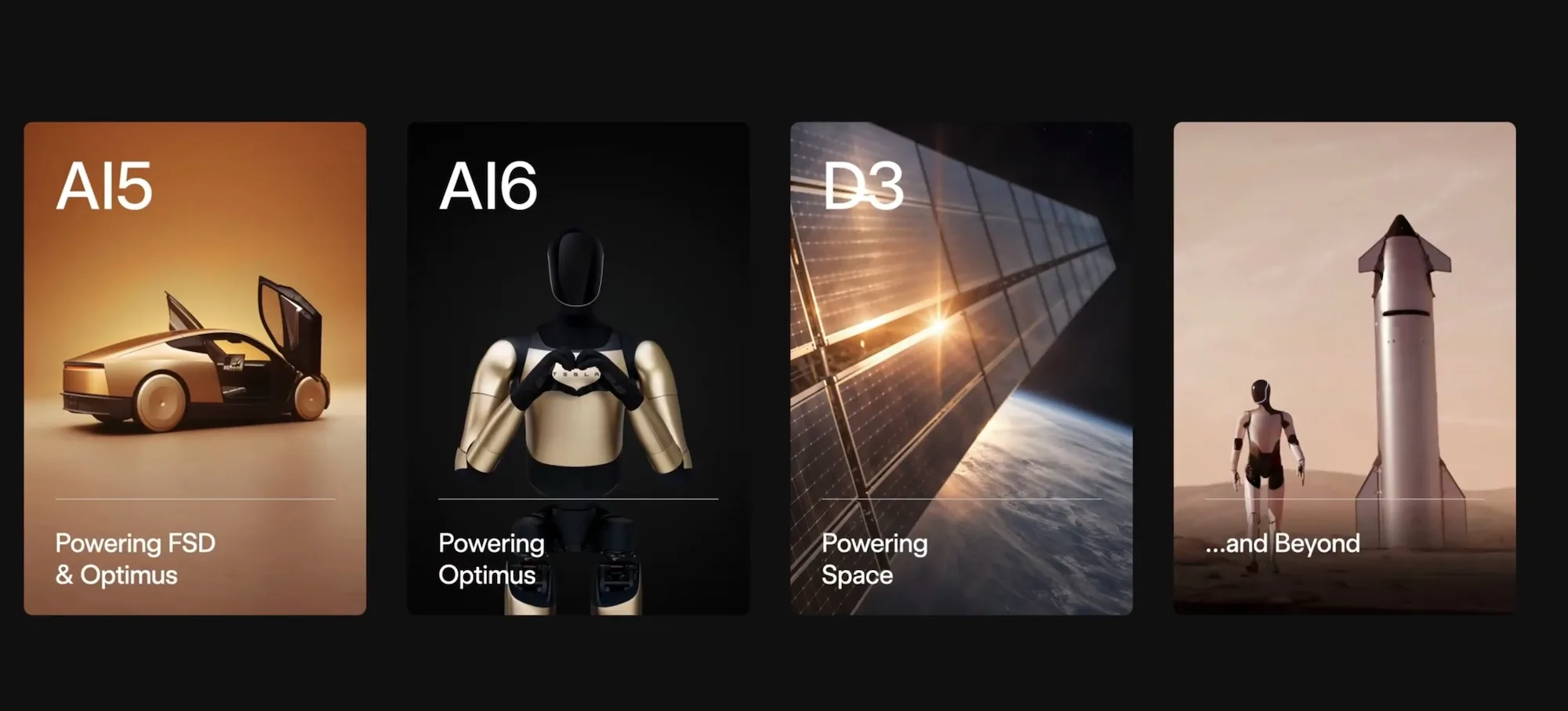
TeraFab will produce two types of chips. The first is optimized for edge inference, designed for Tesla cars and Optimus humanoid robots. On the scale of demand for the first chip alone, Musk was blunt and said, “I expect humanoid robot production to be somewhere between a billion and 10 billion units a year. So that’s a lot.”
SpaceX
The second is hardened for the space environment, built to handle the radiation and high-energy ions that would destroy conventional chips. Musk also confirmed that Tesla, SpaceX, and xAI will continue buying chips from TSMC, Samsung, and Micron, and said he’d like them to expand as fast as they possibly can.
Cool idea, but what’s the timeline??
Honestly, what Musk showed in the livestream is genuinely exciting. The idea of pushing the limits of chip physics, trying unconventional designs, and iterating on them faster than anyone else in the world is the kind of ambition that could change things.
That said, no timeline was given for when TeraFab will begin producing chips. And given that Tesla announced the Roadster over a decade ago and it still hasn’t shipped, I’ll reserve my excitement until the first chip rolls off the line.
Anthony Norman is your typical Gen Z worker: 25, a little wayward, and struggling to find a full time job.
You can’t exactly fault him for the position he’s in. Unemployment rates are high. AI is creating a crisis for young people trying to enter the workforce. Hiring has slowed. And several companies—including Amazon, Block, and Meta—have embraced tech’s latest era of layoffmaxxing, with some cutting their staff by 20 percent.
So when Anthony lands a temp position at Rockin’ Grandma’s Hot Sauce, a small business in Southern California, he’s just happy for what he assumes is a regular gig: assisting with odd jobs and helping plan the annual retreat.
What Anthony doesn’t know is that he is actually the mark of Jury Duty Presents: Company Retreat, the second season of Prime Video’s experimental docu-comedy where one person unwittingly participates in a staged sitcom (the first season, which blew up on TikTok and snagged three Emmy nominations, was about a fake jury trial). Everyone is an actor except for him.
Advertisement
Anthony joins the team during a moment of transition. The founder, Doug Womack, is preparing to step down. His son, Dougie Jr, is next in line, and because not everyone thinks he’s fit to run the family business, he wants to prove that he’s more than an unqualified nepo baby—“the Bronny of hot sauce,” he says. Having just returned from a four-year stint in Jamaica “jamming” with a hotel lobby ska band called the Jive Prophets, the retreat is meant to be a test for Dougie Jr.
The season trades in the monotony of cubicles and watercooler talk for Oak Canyon Ranch, a cozy resort and recreation center nestled in the grassy suburb of Agoura Hills—about an hour drive northwest of Los Angeles—where the staff convenes for various activities: team building, a client cookout, motivational speakers, and a talent contest. Desperate for “one week without Cocomelon” and her three kids, Jackie Angela Griffin, the distribution and logistics rep, is ready to get away.
Like all offices, Rockin’ Grandma’s is a circus of eccentricity and ego. Accountant and bourbon enthusiast Helen Schaffer has been “cooking the books for 26 years.” Receptionist PJ Green has dreams of being a snack influencer. Sourcing manager Anthony Gwinn, who at one point confuses a flesh light for a water thermos, is jokingly nicknamed “Other Anthony” despite working at the company longer. Kevin Gomez, head of HR, has flashes of Michael Scott: He’s an overeager, comically delusional, hopeless romantic who loves his job and Amy Patterson, the customer relations coordinator. “Hot Sauce is having a moment,” he tells Anthony during the onboarding process. “You don’t see this kind of thing happening with ketchup.”
On day two, eager to demonstrate his instincts as CEO, Dougie Jr. calls an audible and brings in an “emotions and vulnerability expert”—she’s the Walmart version of academic Brené Brown—who confusingly leads the group through a conversation on how to navigate uncomfortable scenarios.
Advertisement
It’s good practice for Kevin’s failed proposal to Amy—they’ve actually never been on a real date minus her birthday, which included eight of her other girlfriends. After a humiliated Kevin makes a quick exit from the retreat center, to the sound of tin cans rattling as he speeds off in his car, Anthony is forced to step up.
“I got a promotion,” he says, improvising on the fly to lift morale and take on the role of “Captain Fun.”
Even as people have struggled to find meaning in their work—or simply find work—TV’s fixation with the American workplace has always been popular with viewers. Mad Men examined the existential toils of advertising executives. Severance has contemplated autonomy, in addition to a lot of other very weird shit. And no series has explored the delightful chaos of workplace hijinks better than NBC’s The Office, which followed the oddball staff of Dunder Mifflin, a Pennsylvania paper company.
A New Yorker is arrested in California for iPhone thefts, Russian hackers targeted iPhones, and AirTag inspires a car-crash viral video, all in this week’s Apple Crime Blotter.
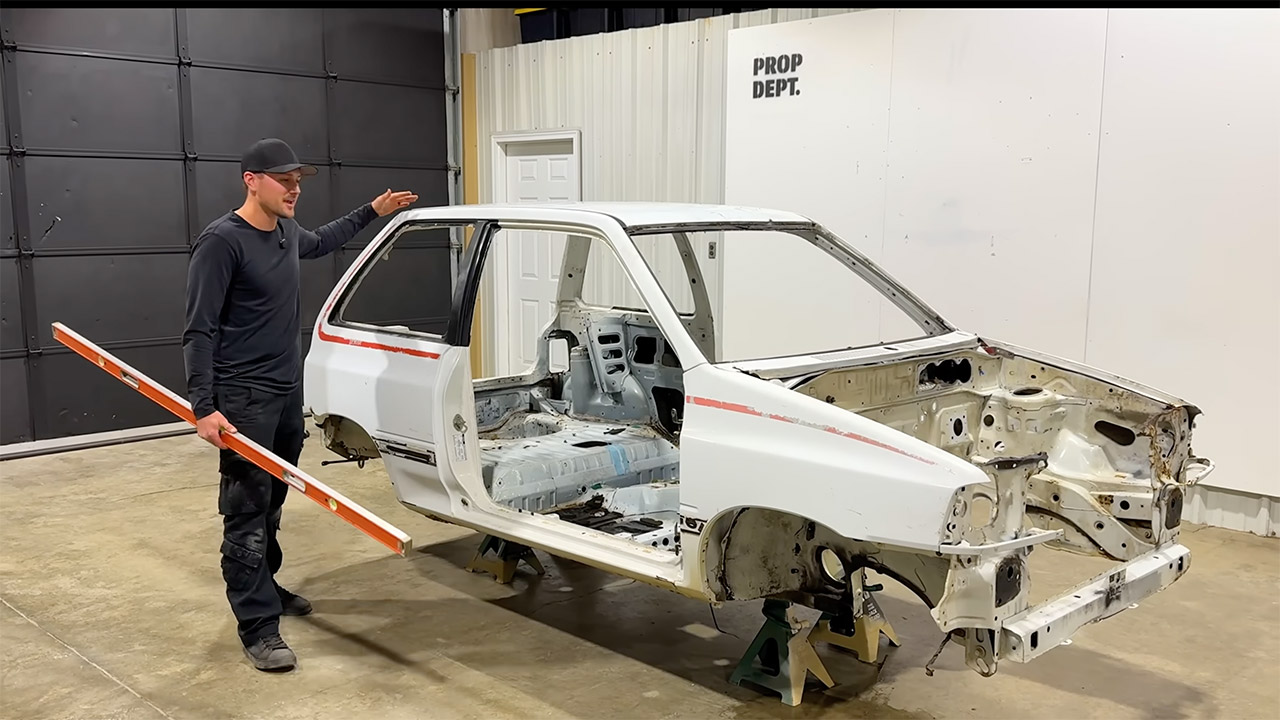
Prop Department begins with a 1988 Ford Festiva, a small vehicle with a single wheelbase that screams to be laughed at. He took a bold step in and decided to take that already tiny base and shrink it even more, all while maintaining the idea that this thing had to be road-worthy, and manage to squeeze through tight spaces that a normal car would never even come close to making it through.
The Festiva donor car had a solid base from the start. Everyone knows that this was one of the most compact cars back then, with hardly enough room to turn around inside. Its super-tight footprint makes it an ideal candidate for this experiment. Instead than putting on more parts or attaching a bunch of extra garbage, the crew decided to reduce things down to the bone. They marked up the body, took out the straightedge, and prepared to cut it down the middle, using a laser level to ensure that everything stayed true and the two halves would line up without a single gap or twist later on.
A Lamborghini model car building set for kids – Give super sports car fans ages 9 and up a challenge to remember as they assemble the LEGO Technic…
Admire the details – Kids can build and explore the moving V10 engine, steering and opening doors of this Lamborghini Huracán Tecnica model
Inspired by the real car – This Lamborghini car toy set features an orange color scheme, creating an eye-catching play and display model for kids…
There was a lot of work to be done before they could make the first cut. The team had to clear room, strap the car down, and double-check all of their measurements to avoid making a single error that would ruin the entire operation. They started cutting once they were ready. All documents reveal that they had to do the project twice, meticulously reducing pieces to get the sides just the proper thickness without compromising the entire structure. That precision was critical since the final design needed to be able to sustain the engine, suspension, and wheels in their new, unusual places.
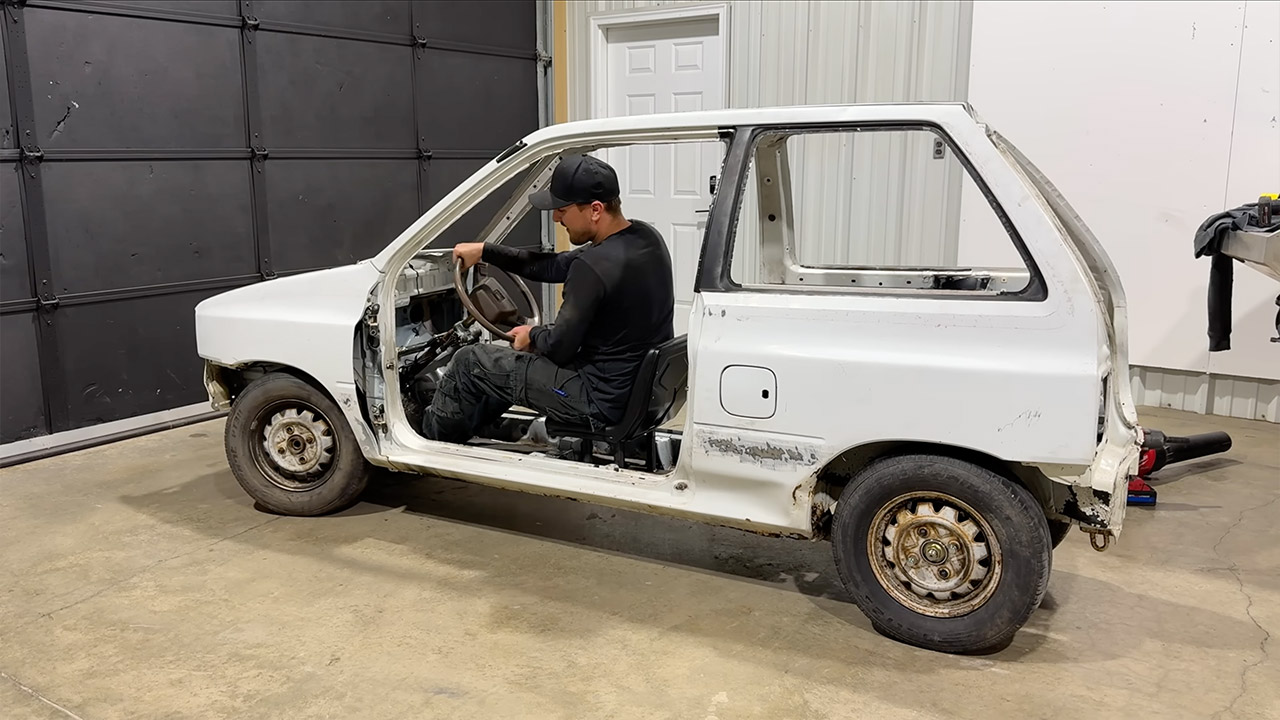
An xTool laser welder and CNC cutter handled the heavy cutting and shaping work, delivering clean edges and strong joints with a precision that would have been nearly impossible to achieve by hand. Every extra inch of width was removed without compromising the structural integrity of the body, and once the narrower shell was welded back together it was as solid as the day it left the factory. The seats, controls, and wiring were either kept in place or adjusted just enough to suit the new proportions, and the original drivetrain was left completely untouched, meaning the car drove away from the build under its own power.
Then came the road test, and to everyone’s amazement, the car handles perfectly. It drives well enough for regular streets, navigating twists and stops without tipping over or feeling unstable. Drivers can maneuver it into small spaces that would bring a typical vehicle to a complete stop. Alleyways just big enough for a bike lane suddenly become accessible. Furthermore, the entire package remains registered and roadworthy, complete with lights and signals that meet all regulations.
Of course, there are some practical limitations to all of this. As you might guess, with all of the removed sections, storage room has vanished, and passengers other than the driver are out of the question. Fuel economy and comfort? They’re exactly the same as the original tiny automobile, nothing extra. If cargo room or quick access for friends is important, this invention has you covered. For solo travels through busy neighborhoods or quick errands in the most congested urban areas, this gadget opens doors you never thought were possible.
We all know air travel is the fastest way to get somewhere. For speed, you aren’t going to beat a 500+ mile per hour pace on a big ol’ jet airliner, to quote the Steve Miller Band. Taking a road trip can also be the most flexible. You control the speed, stops, and vehicle. But what about hitting the rails?
Prior to the advent of the highway and air travel, trains were the way to go. Unfortunately, passenger rail has dropped off precipitously in popularity in the United States. But Amtrak still keeps the romance alive while offering some pretty scenic routes across the country, including some that are quite popular.
One such route is the California Zephyr that goes from Chicago to San Francisco in the span of about 53 hours. You travel through the great deserts, mountains, valleys, and rivers of the American West the old-fashioned way.
Advertisement
Here’s the kicker, a first-class ticket is about $2,000 depending on when you book (although if you book far in advance, that price might be closer to $1,200). So, here’s what you get for a couple grand on an Amtrak train.
Advertisement
Traveling in comfort
To be fair, if you wanted the cheapest way to take the California Zephyr, a coach ticket is about $200, but all that comes with is a seat. The “deluxe” ticket on the train comes with its own private room, bathroom, a sofa and chair. In terms of amenities, you have lounge access, included meals, and an attendant who will help you out. You also get priority boarding. It’s like being in a little hotel room that happens to be cruising along the Colorado River.
It’s expensive, to be sure, but given the scenery, and the fact you’ll be dropped off in San Francisco or Chicago; two world-class cities, the journey might be worth it to the right spectators and railfans.
These rooms are available on Amtrak’s double-decker Superliner and single-deck Viewliner routes that go up, down, and across the country. If you have the cash, and don’t mind spending a couple of days on a train seeing all of the sights America has to offer, Amtrak’s California Zephyr is hard to beat.
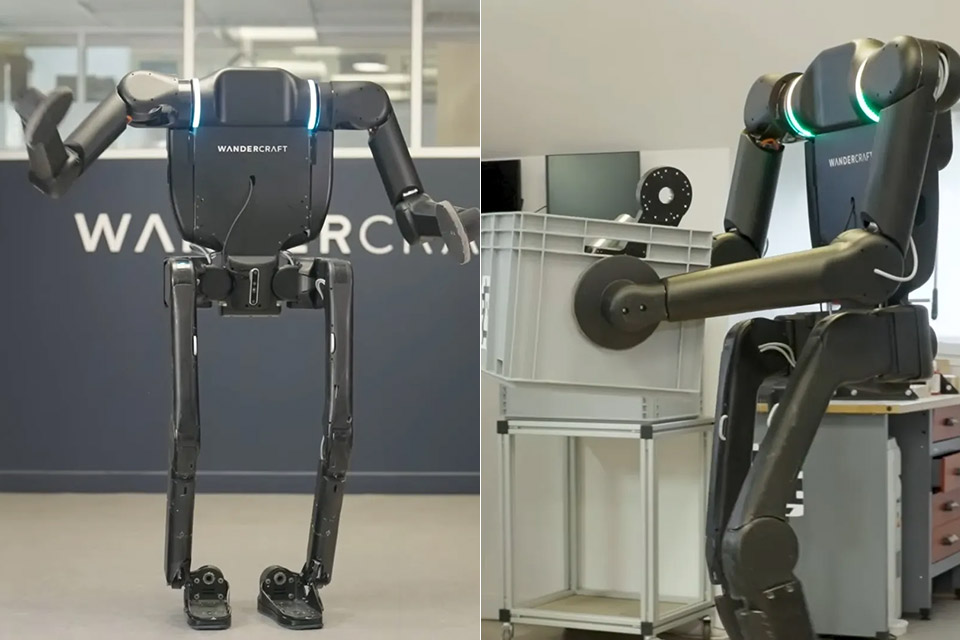
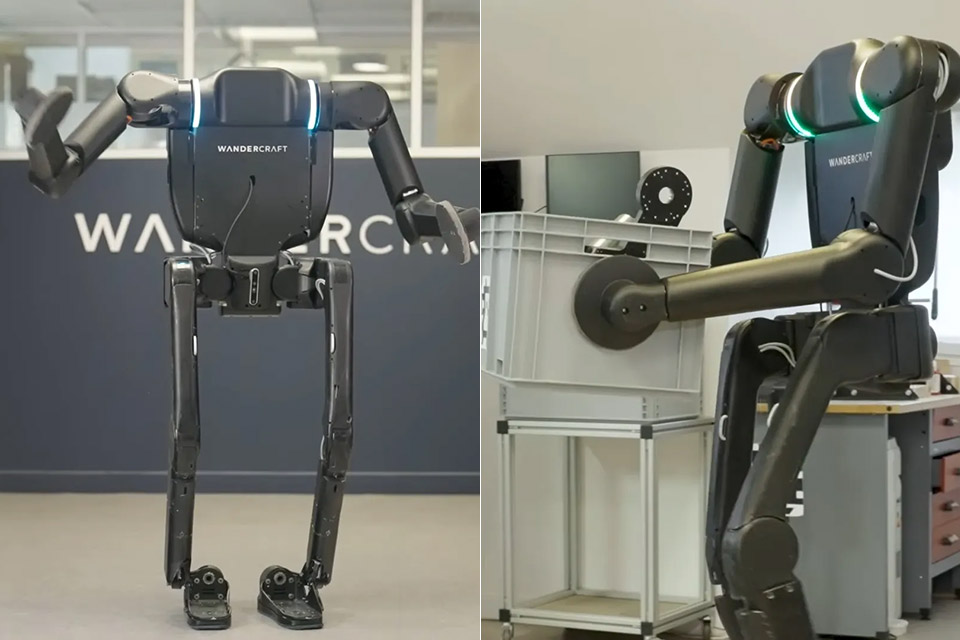
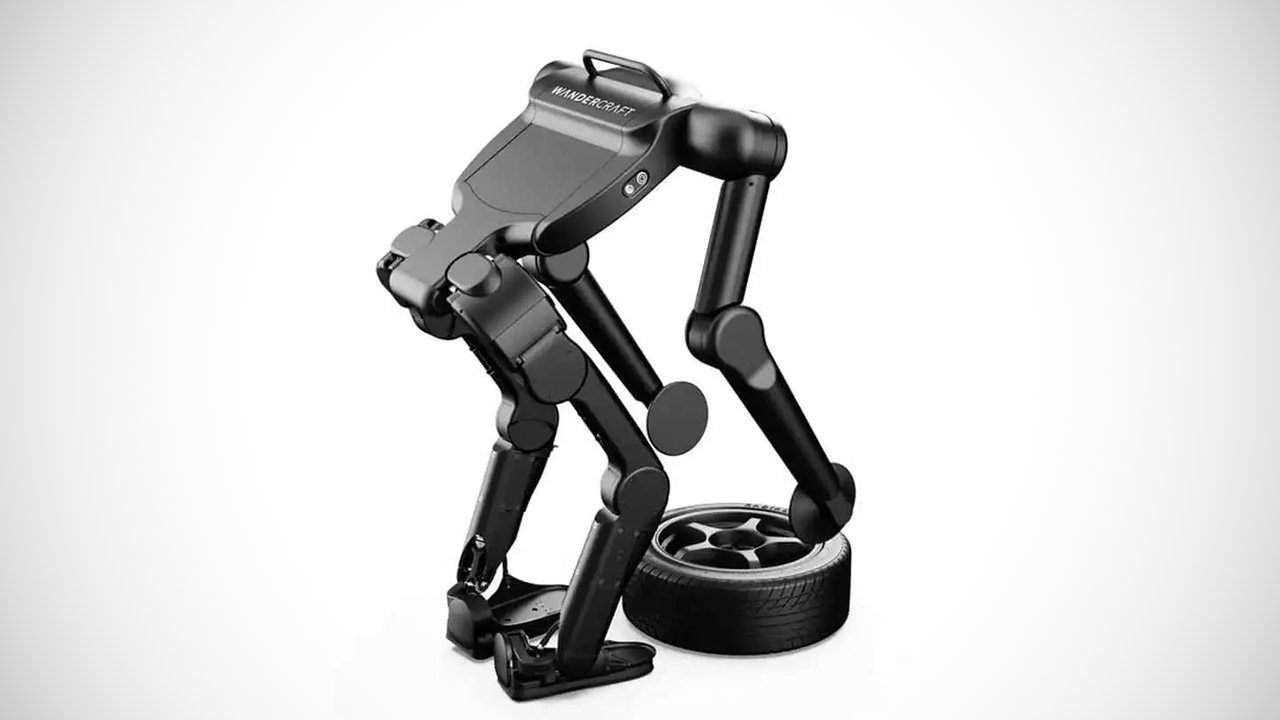
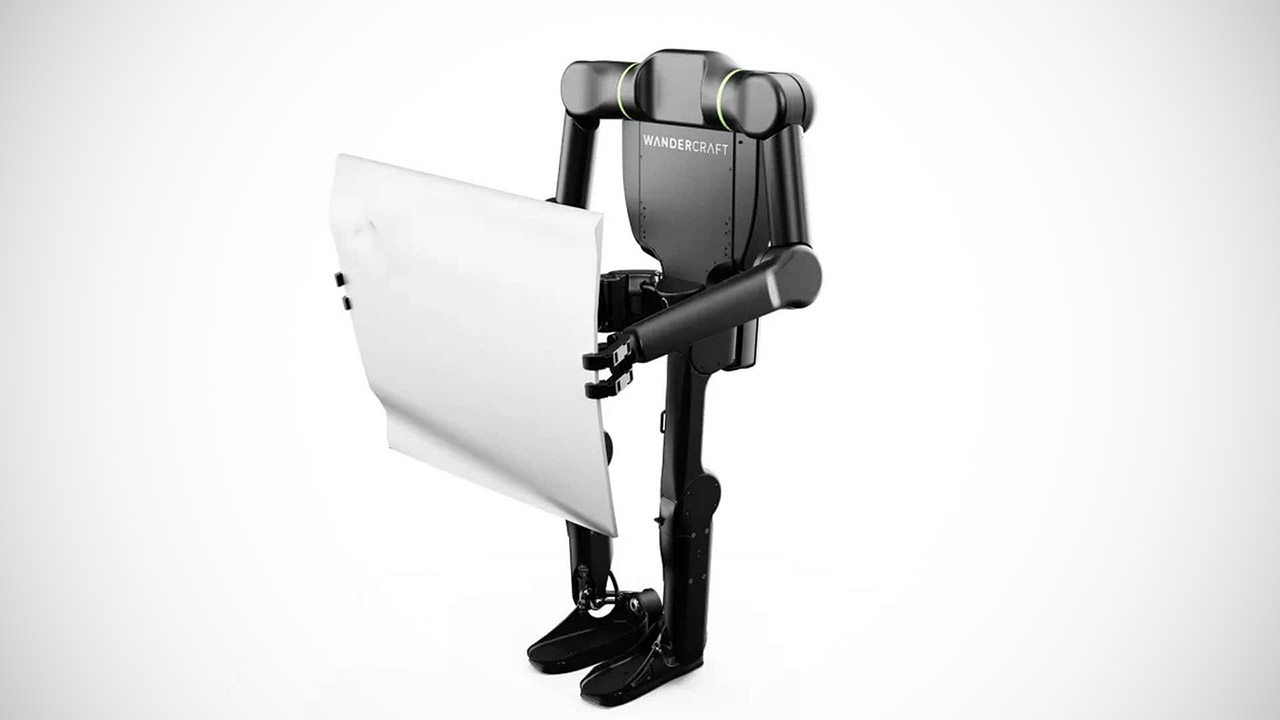
Two Calvin-40 robots have recently appeared on the Renault assembly line in Douai, France. They keep placing tires into the conveyor belt that feeds the Renault 5 electric assembly line because it’s a repetitive motion they can perform hundreds of times per shift without tiring.
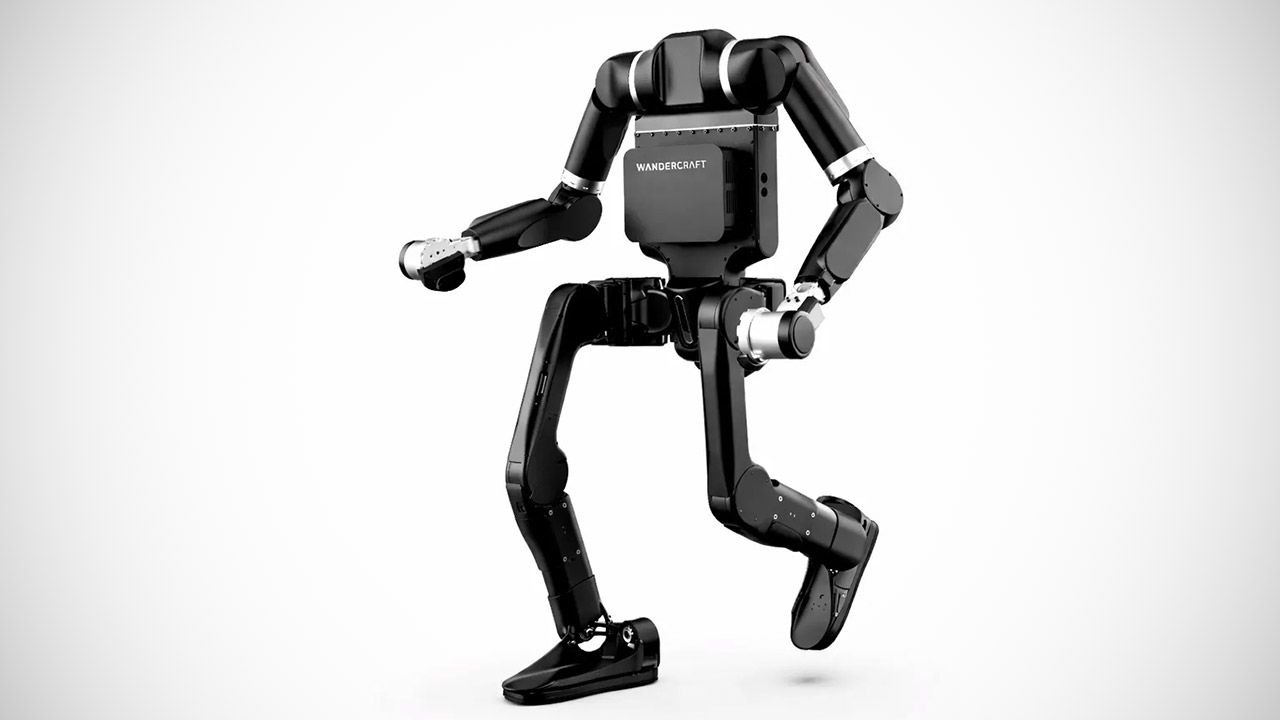
Over the next 18 months, the business plans to add more of these machines, totaling 350, to the ElectriCity complex. As it stands, they are already producing Renault 5 vehicles in less than 10 hours each car. With the new robots, they should be able to reduce that time even more while also lowering production costs across the board. Each of these devices stands on two legs and can reach the manufacturing bins and racks on the shelves, which a human would have to leap up and down to access. There’s a camera attached just below waist level to help it keep track of what it’s doing, and it flashes green, yellow, or red to let you know how it’s doing, and then there’s those circular arms that can lift up to 40kg with ease, allowing it to do things like hoist tires and body panels without the need for a hand.
Sleek & Durable Design: Standing at 132cm tall and weighing only approx. 35kg, the G1 is constructed with aerospace-grade aluminum alloy and carbon…
High Flexibility & Safe Movement: Boasting 23 joint degrees of freedom (6 per leg, 5 per arm), it offers an extensive range of motion. For safety, it…
Smart Interaction & Connectivity: Powered by an 8-core high-performance CPU and equipped with a depth camera and 3D LiDAR. It supports Wi-Fi 6 and…
Wandercraft, the company that created the design, completed the current iteration of the robot in just 40 days. However, making it fast enough to be useful took a little longer, as it required six months of artificial intelligence training to operate at full speed. Renault purchased a minority investment in the company for $75 million in June, allowing them to modify these robots to be ideal for vehicle manufacturing.
Workers used to have to do the same tedious tasks day after day. Now, sophisticated robots do it for them, lifting panels and tyres into place without making a sound. The final assembly sites remain off-limits because the machines are not fast enough to match the required speed. Their guy in charge of manufacturing and quality, Thierry Charvet, just wants to get the job done as quickly and efficiently as possible.
During the deployment, Renault’s CEO, François Provost, also spoke up. While other automakers display their fancy prototype robots in tech showrooms, Renault takes a very different approach. They simply want to have the thing up and running on the line right now, and they will be doing the same thing in factories around the country. The overall goal is to reduce the time it takes to construct a car by a third and lower expenses by 20% over the next five years. The new robots are just one aspect of it, making some of the most difficult and commonplace tasks much easier for those working on the line. [Source]
An MRI scan is never a pleasant occasion – even if you aren’t worried about the outcome, lying still in a confined, noisy space for long periods of time is at best an irksome experience. For hearing protection and to ameliorate boredom or claustrophobia, the patient wears headphones. Since magnets and wires can’t be used inside an MRI machine, the headphones have to literally pipe the sound in through tubes, which gives them poor sound quality and reduces the amount of noise they can block. [SomethingAboutScience], however, thinks that photoacoustic speakers could improve on these, and built some to demonstrate.
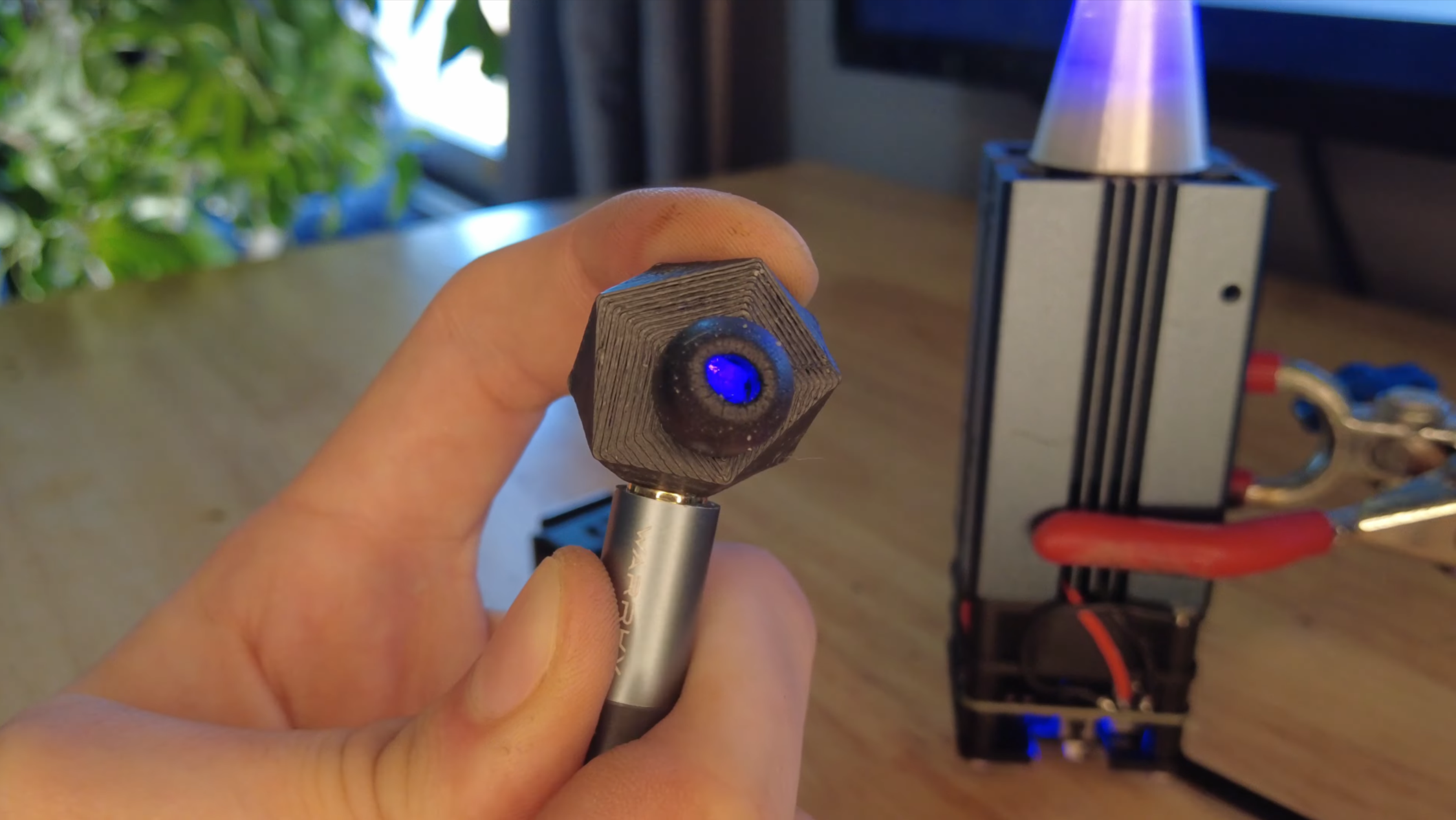
These speakers use the photoacoustic effect, which is mostly caused by surface heating when exposed to an intense light, then transferring the heat to the surrounding air, which expands. If the surface can transfer heat to the air quickly enough, and if the light source is modulated quickly, the rapid expansions and contractions in the surrounding air create sound waves. As a test, [SomethingAboutScience] shone a modulated 5-Watt laser on a piece of gold leaf, which produced recognizable music.
Gold leaf works because it absorbs blue light well and is thin enough to transfer heat to the air quickly. To cut out the absorbing surface, [SomethingAboutScience] also shone the laser directly into orange nitrogen dioxide gas, which produced a somewhat cleaner sound (in a purely auditory sense; nitrogen dioxide is quite dangerous, and calling it “a little toxic” is an understatement). Soot-coated glass also worked rather well, though a soot-coated glass smoking pipe didn’t provide the desired acoustics. He also 3D-printed an earphone shape with a gold leaf-lined cavity inside it, then used a fibre-optic cable to direct the laser light into it. We would be personally reluctant to couple a 5-Watt laser into a reflective cavity centimeters from our eardrums, but it didn’t appear to damage its surroundings.































































You must be logged in to post a comment Login