The modern world of business is demanding more of entrepreneurs and leaders than ever before; it’s no longer possible for a professional to lead purely on a technical basis, nor on an operational one. Few business leaders are able to become the hybrid executives that are so necessary to modern growth and transformation initiatives. The ones that rise to the challenge can’t help but stand out.
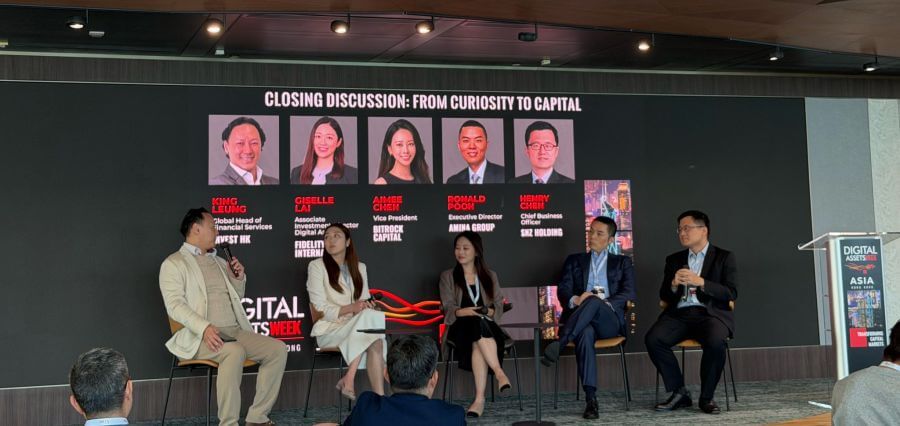
Henry Chen is one such example. As a seasoned finance professional and entrepreneur in the fintech and blockchain industry, his expertise with the technology that’s driving the modern world has been well-proven. When that is combined with another 15 years of experience across investment banking, private capital management, and digital asset markets, Henry Chen represents a unique bridge between traditional finance and modern digital ecosystems. His professional journey ranges from UBS and Goldman Sachs to KU Holdings (Parent of KuCoin) and Summer Capital, culminating in his current role as Chief Business Officer at SNZ Holding.
Henry Chen’s transition from global banking institutions into senior strategic roles at finance and fintech companies like KU Holdings and Summer Capital is not a common one for a reason. Being able to strike the balance between institutional discipline and digital innovation is a rare skill, but it’s one that’s becoming more important for business leaders every year. Well-rounded and holistic leadership is crucial in a world with increasingly globalized and technology-driven markets.
“The ability to ‘speak both languages’ is crucial,” Henry says. “You need to understand how bankers, regulators and institutional investors think, and at the same time appreciate how developers, founders and crypto‑native communities operate.”
Traditional Finance Vs. Digital Ecosystems
Having served in high-performing leadership roles in both traditional investment banking environments and high-growth digital asset ecosystems, Henry Chen has developed a well-rounded understanding of both fields—and how they intersect. Both environments left him with foundational understanding that could be leveraged elsewhere, and by synthesizing the two he was able to develop a leadership philosophy capable of bridging the gap between them.
“It has given me a 360‑degree view of how capital, technology, and financial markets correspond to each other,” Henry explains. “My philosophy today is about combining these worlds: being entrepreneurial, open to experimentation and caring about individual mentality, while still insisting on governance, operational efficiency, and commercialization models that can stand up to institutional scrutiny. I try to be a bridge between builders and institutions, translating highly technical concepts into clear business and regulatory language, and vice versa.”
So what are the big differences between these two environments? Put simply, the traditional financial institutions are highly structured and value predictability, while the fintech and digital ecosystems are defined by speed, scalability, and open-source collaboration. It’s an old dichotomy: structured, predictable, execution-focused institutions on one side; flexible, fast, disruptive, and innovative startups on the other. Banks and other traditional institutions are built around structured processes, well-defined product lines, and regulated workflows, with innovation following regulator guidance and client demand. In digital fintech and blockchain systems, the constant creation of new primitives, the prediction market, and real-world asset tokenization represent an iterative, experimental, and consensus driven environment.
“At global investment banks, I learned the importance of sustainable business model, market positioning and fundamental valuation methodology, institutional‑grade operational processes, cross-team collaboration, and long‑term client relationships, which has deeply influenced how I make decisions and mobilizes team resource even in fast‑moving crypto markets,” Chen recalls. “On the digital asset side, particularly at SNZ and Summer Capital, I was exposed to founder‑driven innovation, rapid product cycles, and community‑centric ecosystems and focus on humanity, that move at a very different pace from traditional finance.”
The hierarchical institutional stability, precision, and quality of traditional institutions focus on measurable success and maximal profitability. The open-source, freely experimental, and deeply creative blockchain environment focuses on speed and innovation. The two fields seem to have few things in common, but however dichotomous they may seem, the two environments’ strengths and values can in fact be brought together. It just takes someone who understands both sides, and Henry Chen has established himself as precisely that.
“Having operated in both worlds, I see my role as importing institutional discipline into crypto, while preserving the creativity and openness that make this industry so compelling,” he says. “At the end of day, any technology, business model, or project shall be built to serve some real purposes and use cases—which is essentially the human being, and organizations from the real world. It’s just a matter of differentiated or upgraded process, methodology or approach.”
A Strategic Blend Of Expertise
Henry Chen’s unique blend of leadership experience and expertise have made him uniquely valuable in a strategic role as the both traditional and blockchain financial ecosystems evolve. At KU Holdings (parent of KuCoin), Summer Capital, and in his current role with SNZ, his strategic priorities have been focused on branding and networking, with an eye for building long-term business sustainability and the creation of real economic value. Chen’s goal is to position SNZ as a long-term, credible, capable, and resourceful partner to both builders and institutions—whether they’re traditional finance or crypto natives—around the world, but particularly in Asia.
Henry’s rigorous foundation in financial infrastructure across both consumer and institutional markets—courtesy of his career at investment banks like Goldman Sachs and UBS—allows him to identify use cases for blockchain and crypto technologies, while his experience in those digital environments lets him draw clear connections between modern technology projects and cases he’s experienced in the past. The result is that he can identify viable business models, high-potential products, and feasible corporate strategies instead of getting drawn into interminable hype cycles or falling victim to crypto market price volatility and noise.
“Economic value is about making sure we are not only capturing short‑term trading or speculative upside, but also enabling new infrastructure, use cases, and revenue streams that benefit users, communities, and shareholders in a measurable way,” Chen says. “In such fast‑evolving markets, discipline on these three dimensions helps us avoid chasing noise and instead build something compounding and durable.”
It’s a skillset that Henry Chen expects to only grow more valuable in the coming years. He expects to see digital finance move from the periphery to the core of global capital markets over the next five years, driven by tokenization, programmable assets, and more mature regulatory regimes. Additionally, he predicts a convergence between traditional financial infrastructure and blockchain rails, where assets like securities, funds, and collateral are issued and managed on-chain (even if users don’t see the underlying technology).
“Experienced institutional leaders will play a key role in this transition by translating between regulatory expectations, risk frameworks, and the capabilities of decentralized technologies,” Chen explains. “Their job is not to slow innovation, but to shape it in a way that is sustainable, compliant, and accessible to a much broader set of participants.”






















































You must be logged in to post a comment Login