

Business
At Close of Business podcast March 23 2026


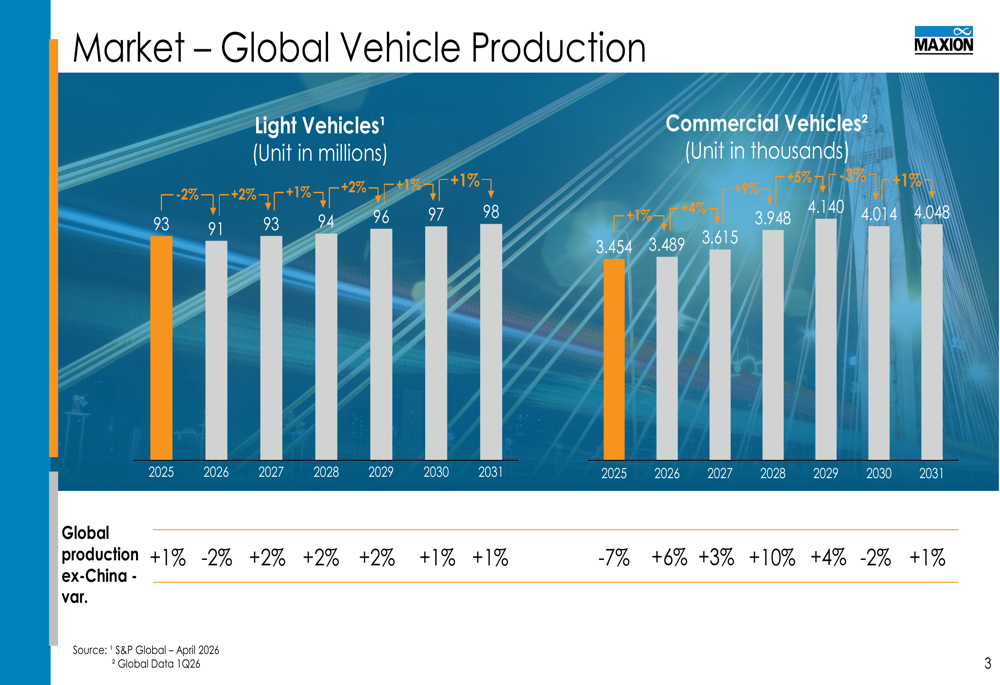
Iochpe-Maxion Q1 2026 slides: margins expand despite revenue miss

On Friday, FIIs sold domestic shares to the tune of Rs 4,110.60 crore while domestic institutional investors (DIIs) were net buyers at Rs 6,748.13 crore.
Despite DIIs throwing around their weight, benchmark indices ended with sharp cuts on Friday, recording their second successive decline amid significant selling in the financial stocks. While Nifty plunged 150.50 points or 0.62% to close at 24,176.15, the BSE Sensex settled at 77,328.19, down 516.33 points or 0.66%.
Commenting on the current trends, N. ArunaGiri, CEO at TrustLine Holdings said domestic markets continue to see FII selling despite a nearly $50 billion sell-off since September 2024 at a time when South Korea received nearly $4 billion and Taiwan around $5.5 billion in flows.
“India is still not getting its due share of emerging market allocations. This clearly indicates that FIIs currently do not find India as attractive from an allocation perspective. As a result, large caps have relatively underperformed, while strong domestic flows have continued to support the SMID segment. As long as FIIs do not meaningfully increase India allocations, the market is likely to remain highly stock-specific, driven by earnings visibility and bottom-up opportunities rather than momentum rally led by large caps,” ArunaGiri said.

Outlook
Bajaj Broking said institutional activity is expected to be largely driven by global developments, going forward. The progress or deterioration of the U.S.–Iran negotiations will remain a key factor to monitor, he said, outlining significant implications for geopolitical stability and the potential impact on crude oil price volatility.
FIIs in 2026
War-induced sell-off in March made it the worst month this year, witnessing an exodus worth Rs 1,17,775 crore. April was not kind too, with outflows of Rs 60,847 crore. Foreign investors turned net buyers in February, buying shares worth Rs 22,615 crore in the domestic markets so far. In January, they sold Rs 35,962 crore worth of shares.
In 2025, the FIIs buying trends remained patchy, but the overall trend was bearish. They took Rs 1,66,286 crore from Indian markets as trade deal delay and premium valuations weighed on the sentiments.
Also read: FII ownership hits 14-year low to 14.7%; DII cushions Indian markets with 18.9% rise: Report
(Disclaimer: Recommendations, suggestions, views and opinions given by the experts are their own. These do not represent the views of Economic Times)

CoreWeave: Lagging Margins Create An Uncertain Picture
Business
F&O Talk: Nifty bulls indecisive but opportunities in broader markets. Sudeep Shah’s strategy on Voltas, Tejas and 4 more stocks

Meanwhile, the volatility gauge India VIX ended at 16.84, down by 1.32% from the last closing.
Analyst Sudeep Shah, Vice President and Head of Technical & Derivatives Research at SBI Securities, interacted with ETMarkets regarding the outlook for the Nifty and Bank Nifty, as well as an index strategy for the upcoming week. The following are the edited excerpts from his chat:
Q: What does the Nifty chart suggest for next week’s trade following an otherwise calm week with the index settling with WoW gains of 0.7% in the absence of any big surprise?
For the second consecutive week, the benchmark index Nifty continued to trade within a narrow range, forming another indecisive candle on the weekly chart. Over the last 11 trading sessions, the index has largely oscillated within the 24516–23797 zone, reflecting a lack of clear directional bias. The underperformance of heavyweight sectors such as IT and Banking, coupled with uncertainty surrounding the US-Iran conflict and persistent volatility in crude oil prices, has kept market participants cautious and indecisive. However, beneath this quiet index movement, a completely different trend is unfolding in the broader market.
The broader market continues to remain vibrant. Both midcap and smallcap indices are significantly outperforming the benchmark index. Most notably, the Nifty Midcap 100 touched a fresh all-time high on Friday, while the benchmark Nifty still trades nearly 8% below its record peak. Meanwhile, the Nifty Smallcap 100 index has climbed to a 10-month high. However, after the sharp outperformance witnessed in the broader market, we believe these segments could enter a phase of consolidation before resuming the next leg of the upward move. At the same time, the technical structure of Nifty itself is hinting that a major move may not be too far away.
The Nifty index continues to display signs of indecision on the technical charts. One of the key observations on the daily timeframe is the visible Bollinger Band squeeze, indicating a sharp contraction in volatility. The Bollinger Band squeeze typically occurs when volatility declines and the bands narrow, often preceding a strong directional move on either side. Adding to this, most of the crucial moving averages are currently flattening out, while momentum indicators are also signaling a sideways trend. The only question now is — which side will break first, and where should traders keep a close watch?
On the upside, the 24,450–24,500 zone is expected to act as an immediate hurdle for the index. On the downside, the 23850–23800 zone remains a crucial support area. The next breakout from this tightening range could potentially decide the market’s near-term direction.
Q: While India VIX fell over 7% during the week, it is still hovering around the 17 mark. What levels will make you comfortable to plan your trades?
India VIX has corrected sharply after touching the 28.90 mark and is now trading below its 20-day and 50-day EMAs, indicating a cooling-off in volatility. The current chart structure suggests that the market is not anticipating any major surge in volatility over the next few trading sessions, especially in the absence of fresh geopolitical triggers.
In the near term, the bias is likely to remain subdued; however, the 18.80–19 zone will act as a crucial threshold. A sustained move above this level would signal a potential spike in volatility, which could make the market more uncertain. From a trading perspective, lower VIX levels provide a relatively comfortable environment for planning trades, whereas a breakout above 19 would warrant caution due to the likelihood of increased market swings.
Q: Nifty Bank has been a cause of concern as far as the market sentiments are concerned and is down nearly 8% in three months. What is the outlook considering even earnings have failed to boost investor confidence?
The banking benchmark index has continued to underperform relative to the broader market. Although it witnessed a rebound on Wednesday, the index failed to sustain at higher levels, indicating selling pressure on rallies. On the weekly chart, it has formed a small-bodied candle with shadows on both sides, reflecting indecisiveness and a lack of clear direction.
Currently, the index is trading below all its key moving averages, which are themselves moving in a flat trajectory, suggesting a consolidation phase. The daily RSI has also been oscillating in a sideways range over the past 22 trading sessions, further highlighting the absence of strong momentum.
Going ahead, the 54,300–54,200 zone is expected to act as an important support. A decisive and sustained move below 54,200 could trigger further downside towards 53,500, followed by 53,000.
On the upside, the 50-day EMA zone of 56,000–56,100 will act as an immediate resistance. A sustained breakout above 56,100 may lead to a sharp upward move towards 56,600, and subsequently 57,200 in the short term.
Q: What is happening with two biggest stakeholders – HDFC Bank and ICICI Bank and do you see any pullback in them?
Both HDFC Bank and ICICI Bank continue to exhibit signs of technical weakness and remain under pressure. HDFC Bank has struggled to decisively move past its 20-day EMA, which continues to act as a dynamic resistance zone. Meanwhile, ICICI Bank has corrected nearly 9% after closing strongly above its 200-day EMA on April 21, indicating sustained profit booking at higher levels.
In addition, the private banking pack remains in the lagging quadrant on the Relative Rotation Graph (RRG), reflecting weak relative strength and deteriorating momentum compared to the broader market. The MACD line for both stocks is also placed well below the zero line, reinforcing the prevailing bearish bias.
From a technical standpoint, the 800–810 zone is likely to act as a strong resistance for HDFC Bank, while 1300–1310 remains a key hurdle for ICICI Bank. Unless these resistance zones are decisively breached with a visible improvement in relative strength and momentum, the probability of a meaningful pullback remains low.
Q: Auto was the outright performer this week as earnings have been supportive. What is your view of the sector and do have your favourites?
Nifty Auto had been consolidating within the 26,746–25,296 range since April 8 on the daily chart. The index witnessed a breakout on May 6, which was supported by a healthy follow-through move. The RSI is in a rising mode, indicating that momentum remains on the bullish side. Additionally, the rising MACD histogram bars, along with the MACD line sustaining above the zero line, further reinforce the positive bias.
On the Relative Rotation Graph (RRG), Nifty Auto has moved from the weakening quadrant to the leading quadrant, signalling that both relative strength and momentum have returned in favour of the index.
Among the stocks, Motherson, Bajaj Auto, Bharat Forge, and Mahindra & Mahindra are displaying positive price action setups and are likely to perform well in the short term.
Q: Realty stocks have also show a strong rebound for the past one month and it was among the top performing sector this week. What does the chart suggest about the outlook?
The Nifty Realty Index has witnessed a strong pullback of nearly 30% since its low of 639 recorded on April 2. Despite the momentum not being exceptionally strong, the index has managed to steadily inch higher, reflecting sustained buying interest at lower levels. The index is currently trading around 1% below its 200-day EMA.
On the Relative Rotation Graph (RRG), the index is placed in the leading quadrant. However, momentum appears to be concentrated in select stocks rather than across the broader realty pack.
From a technical standpoint, the 800–795 zone, which coincides with the 100-day EMA, is likely to act as a key support area. As long as the index sustains above this zone, the ongoing up move is likely to extend further.
Q: Firstsource, Godrej Industries and Tejas Networks were among top gainers this week, while Sapphire Foods, Oil India and Voltas have been big losers. What should investors do with them?
FSL had largely been consolidating within the 255–202 range on the daily chart since March 2. The stock witnessed a breakout on Friday, supported by a strong rise in volumes. The RSI has inched above the 60 mark, indicating healthy bullish momentum. As long as the stock sustains above the 255–250 zone, the pullback is likely to extend further.
GODREJIND has given a breakout from a downward-sloping trendline on the daily chart. The rising ADX indicates strengthening bullish trend momentum. Additionally, the DI lines have widened, with DI+ placed comfortably above DI- on the ADX indicator, signalling firm bullish control. As long as the stock trades above the 1075–1070 zone, the up move is likely to extend further.
TEJASNET has witnessed a strong pullback of nearly 28.5% since the low of 396 recorded on April 24. The rebound has been supported by a sharp rise in volumes. The stock has also closed above its 200-day EMA placed around 508, and sustaining above this level will be crucial for continuation of the pullback.
SAPPHIRE failed to sustain above its 100-day EMA and has witnessed selling pressure over the last five trading sessions. The RSI has slipped below the 60 mark, indicating weakening momentum. The stock has been in a prolonged downtrend and is likely to remain sideways to bearish as long as it trades below 215.
OIL has closed below the previous swing low of 456 on the daily chart and is now trading close to its 200-day EMA. The RSI is hovering near the 40 mark, indicating bearish momentum. Additionally, the MACD line remains below the zero line, further reinforcing the negative bias. As long as the stock trades below 470, the trend is likely to remain bearish.
Voltas has witnessed a correction of nearly 14% since the high of 1538 recorded on April 29. The RSI is in a falling mode, indicating weakening momentum, while DI- remains above DI+ on the ADX indicator, signalling sellers’ dominance. As long as the stock trades below the 1410–1415 zone, the trend is likely to remain bearish.
(Disclaimer: The recommendations, suggestions, views, and opinions given by the experts are their own. These do not represent the views of The Economic Times.)

Commerzbank CBK -3.93%decrease; red down pointing triangle said it would cut as many as 3,000 roles and lifted financial targets, as the bank resists a takeover from Italian rival UniCredit UCG -1.26%decrease; red down pointing triangle.
The lender on Friday raised its expectations for 2028 and set new goals in a plan for 2030 that targets higher revenue and profit. It aims to further integrate artificial intelligence into its planning, countering a strategy from aspiring acquirer UniCredit to revamp the bank.
Copyright ©2026 Dow Jones & Company, Inc. All Rights Reserved. 87990cbe856818d5eddac44c7b1cdeb8
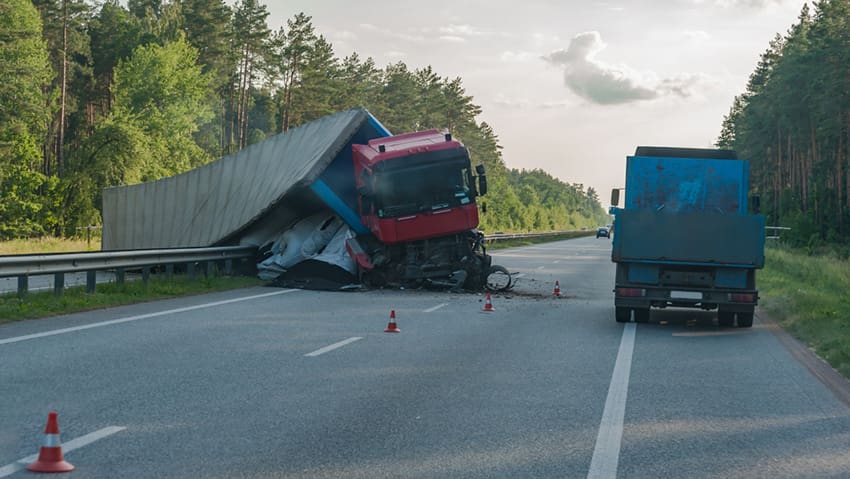
According to the Federal Motor Carrier Safety Administration’s 2023 data, large trucks were involved in 523,796 crashes that year, with injury rates 40% higher than passenger vehicle accidents due to the massive force differential.
What makes these statistics particularly sobering is that many of the most devastating injuries could be prevented through proactive measures that go beyond simply avoiding crashes altogether. As trucking companies face mounting pressure to improve safety records while managing driver shortages and tighter delivery schedules, the focus has shifted from reactive crash response to comprehensive injury prevention strategies.
The distinction matters more than most people realize. While crash avoidance remains crucial, the reality is that even minor collisions involving 80,000-pound vehicles can result in severe injuries to both truck drivers and other road users. Understanding how to minimize injury severity when accidents do occur has become essential for fleet managers, drivers, and safety professionals navigating an increasingly complex transportation landscape. The strategies that work best combine driver behavior modification, advanced technology, and organizational commitment to create multiple layers of protection.
What Risk Factors Increase Truck Accident Injuries?
The physics of truck accidents create unique injury patterns that don’t exist in typical passenger vehicle crashes. When a loaded semi-trailer travels at highway speeds, it carries roughly 40 times the kinetic energy of a standard car, transforming even seemingly minor incidents into potentially catastrophic events. Speed becomes exponentially more dangerous — a truck traveling 65 mph requires nearly 525 feet to stop completely, compared to 316 feet for a passenger car under ideal conditions.
Vehicle size differentials create what safety researchers call “incompatible crashes,” where the protective structures designed for one type of vehicle become ineffective against another. Consider a scenario where a pickup truck slides under the trailer of a turning semi — the truck’s safety cage and airbags are designed for impacts with vehicles of similar height, not for the underride forces that can shear off an entire roof. This size mismatch explains why fatality rates spike dramatically in truck-involved accidents compared to car-on-car collisions.
Road conditions amplify these risk factors in ways that catch many drivers unprepared. Wet pavement reduces stopping capability by up to 30% for loaded trucks, while crosswinds that barely affect passenger cars can destabilize high-profile trailers. Construction zones create particular hazards because the narrow lanes and sudden lane changes give truck drivers minimal room to maneuver when emergency situations develop.
Human factors layer additional complexity onto these physical realities. Driver fatigue doesn’t just slow reaction times — it degrades the decision-making processes that help experienced truckers anticipate and avoid dangerous situations before they escalate. When fatigue combines with challenging road conditions and heavy traffic, the margin for error shrinks to almost nothing, setting up conditions where even small mistakes can result in serious injuries.
How Do Truck Driver Behaviors Reduce Injury Risks?
Professional truck drivers develop specific habits that go beyond basic defensive driving to actively minimize injury potential when accidents become unavoidable. The most effective drivers think several moves ahead, constantly assessing escape routes and positioning their vehicles to create the best possible outcomes if emergency braking or evasive action becomes necessary.
Space management forms the foundation of injury prevention driving. Maintaining larger following distances than required by law gives drivers more time to recognize developing hazards and more options for controlled responses. When following too closely, a truck driver facing a sudden obstacle must choose between hard braking (risking jackknifing) or swerving (risking rollover) — both choices that increase injury risk. With adequate space, that same driver can execute a gradual lane change or controlled stop that keeps everyone safer.
Speed control requires more nuance than simply following posted limits. Experienced drivers adjust their speed based on traffic density, weather conditions, and cargo characteristics in ways that optimize their ability to respond to emergencies. A driver hauling liquid cargo, for instance, might reduce speed on curves to prevent load surge that could destabilize the vehicle during emergency maneuvers.
How Does Driver Fatigue and Distraction Impact Injuries?
Fatigue fundamentally changes how truck accidents unfold by degrading the micro-decisions that separate minor fender-benders from serious injury crashes. A well-rested driver who realizes they’re about to rear-end a stopped vehicle might steer onto the shoulder or into a median — messy but survivable. That same scenario with a drowsy driver often results in a full-speed impact because the recognition and response happen too late for meaningful evasive action.
The Hours of Service regulations attempt to address fatigue systematically, but individual drivers must recognize their personal warning signs before regulatory compliance becomes meaningless. Microsleep episodes — those brief 2-3 second lapses where drivers’ eyes close involuntarily — occur most frequently during the circadian rhythm lows between 2-6 AM and 2-4 PM. Professional drivers who understand their own patterns can time rest breaks to avoid operating during their highest-risk periods.
Distraction operates differently in commercial vehicles because the elevated seating position and larger mirrors create blind spots where dangerous situations can develop unnoticed. A passenger car driver glancing at their phone might miss seeing brake lights ahead; a truck driver doing the same might miss seeing an entire vehicle merging into their lane. The consequences scale with vehicle mass and stopping distance, turning brief attention lapses into potential catastrophes.
Why Is Proper Cargo Securement Critical for Injury Prevention?
Load securement directly affects vehicle stability during the emergency maneuvers that often determine injury severity. Improperly secured cargo doesn’t just risk spillage — it changes the truck’s center of gravity in ways that can trigger rollovers during emergency lane changes or sudden stops. A load that shifts during hard braking can push the tractor’s front axle beyond its weight limits, reducing steering control precisely when maximum maneuverability is needed.
The securement requirements in federal regulations represent minimum standards, but injury prevention often requires going beyond compliance. Drivers hauling coiled steel, for instance, might use additional tie-downs beyond regulatory requirements because steel coils can generate enormous forces during impacts that standard securement cannot contain. When those coils break free during an accident, they become projectiles that can penetrate cab walls and cause fatal injuries to the driver.
Dynamic loads like liquids or livestock require specialized handling techniques that static regulations cannot fully address. A tanker truck only two-thirds full creates sloshing conditions that can amplify braking forces or destabilize the vehicle during turns. Experienced drivers adjust their driving style based on load characteristics, using gentler acceleration and braking patterns that keep cargo stable and maintain vehicle control during emergency situations.
What Technologies and Vehicle Practices Help Prevent Injuries?
Advanced safety technologies are reshaping injury prevention by providing early warnings and automated responses that human drivers cannot match. Electronic Stability Control (ESC) systems monitor wheel speed, steering input, and lateral acceleration to detect impending rollovers or jackknifes, automatically applying individual brakes to specific wheels to maintain vehicle stability. During emergency maneuvers, ESC can mean the difference between a controlled stop and a multi-vehicle pileup.
Collision mitigation systems use radar and cameras to identify potential impacts and initiate emergency braking when human reaction time proves insufficient. These systems excel in rear-end collision scenarios — the most common type of truck accident — by beginning the braking process up to 2.5 seconds before the average driver would react. Even when they cannot prevent contact entirely, the speed reduction often transforms potentially fatal crashes into survivable ones.
Telematics monitoring provides real-time feedback on driving behaviors that correlate with injury risk. Fleet managers can identify drivers who consistently brake hard, accelerate aggressively, or speed excessively — all behaviors that reduce available response time during emergencies. More sophisticated systems provide coaching alerts directly to drivers, helping them modify risky behaviors before accidents occur.
Vehicle maintenance practices directly impact injury prevention capabilities. Brake systems operating at 85% effectiveness might pass DOT inspections but fail to provide the stopping power needed during emergency situations. Tire pressure monitoring becomes critical because underinflated tires increase rolling resistance and reduce the precise steering control needed for emergency lane changes. Regular alignment checks ensure that emergency steering inputs produce predictable vehicle responses rather than unexpected handling characteristics that can worsen accident outcomes.
How Do Policies and Safety Training Improve Injury Prevention?
Comprehensive safety training programs address the decision-making processes that determine injury outcomes when accidents become unavoidable. Traditional defensive driving courses focus primarily on crash avoidance, but injury prevention training teaches drivers how to position their vehicles and manage their responses to minimize harm when collisions cannot be prevented. This might include techniques like controlled lane departure (steering onto shoulders rather than into oncoming traffic) or strategic vehicle positioning that protects the cab area during multi-vehicle incidents.
Company safety cultures that prioritize injury prevention over schedule compliance create environments where drivers feel supported in making safety-first decisions. When navigating the complexities of working with legal help for truck collisions becomes necessary after serious incidents, companies with strong safety records often find that their proactive measures provide crucial documentation of their commitment to preventing injuries.
Safety incentive programs work best when they reward behaviors that prevent injuries rather than simply avoiding accidents. Programs that recognize drivers for maintaining safe following distances, completing voluntary safety training, or reporting near-miss incidents create positive reinforcement for the proactive behaviors that prevent serious injuries. These programs acknowledge that even excellent drivers may experience accidents due to factors beyond their control, but injuries often result from preventable choices.
Fleet-wide policies around fatigue management, route planning, and equipment maintenance create systematic approaches to injury prevention that don’t rely solely on individual driver decision-making. Companies that restrict driving during high-risk hours, require pre-trip inspections that go beyond regulatory minimums, and provide clear escalation procedures for safety concerns create multiple layers of protection that reduce injury risk across their entire operation.
What Does Research Say About Future Injury Prevention Trends?
Emerging research from the Insurance Institute for Highway Safety suggests that the most significant injury reduction gains will come from integrated safety systems rather than individual technologies. Future trucks will likely combine collision avoidance, stability control, and driver monitoring systems into comprehensive platforms that can predict and prevent dangerous situations before they develop into injury-producing crashes.
Autonomous vehicle technologies promise to address the human factors that contribute to most serious truck accidents, but the transition period presents unique challenges. Mixed traffic environments where autonomous and human-driven vehicles interact may create new types of accidents as drivers adjust to different response patterns and decision-making algorithms. Understanding how to maintain safety during this technological transition will require updated training programs and regulatory frameworks.
Advanced driver monitoring systems using eye-tracking and biometric sensors will provide unprecedented insights into the physiological states that precede dangerous driving behaviors. Rather than relying on post-incident analysis, these systems will identify fatigue, distraction, or medical emergencies in real-time, enabling immediate interventions that prevent injuries before accidents occur.
The challenge ahead lies not just in developing these technologies, but in ensuring they integrate seamlessly with existing safety practices and driver expertise. The most effective injury prevention strategies will likely combine human judgment with technological assistance, creating systems where experienced drivers and advanced safety technologies work together to protect everyone sharing the road.

Howard Hughes Holdings: Bill Ackman's Plan For $200 By 2030
NNN REIT: Still No Reason To Jump In


Why millions of Americans pay for unfinished electricity projects

Operator
Good morning, everyone, and welcome to Element Fleet Management’s First Quarter 2026 Financial and Operating Results Conference Call.
You are reminded that this call is being recorded. [Operator Instructions]
Element wishes to caution listeners that today’s information contains forward-looking statements. The assumptions on which they are based and the material risks and uncertainties that could cause them to differ are outlined in the company’s year-end and most recent MD&A and AIF.
Although management believes that the expectations expressed in the statements are reasonable, actual results could differ materially. The company also reminds listeners that today’s call references certain non-GAAP and supplemental financial measures. Management measures performance on a reported and adjusted basis and considers both to be useful in providing readers with a better understanding of how it assesses results. A reconciliation of these non-GAAP financial measures to IFRS measures can be found in the company’s most recent MD&A.
I would now like to turn the call over to Laura Dottori-Attanasio, Chief Executive Officer. Welcome. The floor is yours.
Laura Dottori-Attanasio
CEO, President & Director
Good morning, and thank you for joining us. I’m pleased to report Element delivered a strong start to 2026, building on the record performance we achieved in 2025. In the first quarter, we generated record net revenue of $324 million, up 17% year-over-year, and we delivered record adjusted

The Placenames saga reveals more bureaucratic incompetence at Stormont

Iochpe-Maxion Q1 2026 slides: margins expand despite revenue miss

Australian police seize $4.1 million in Bitcoin in major dark web crackdown

Manchester United reach agreement with Casemiro over contract clause amid transfer speculation

US brings back mandatory military draft registration

Steven Gerrard disagrees with Gary Neville over ‘shock’ Chelsea and Arsenal claim | Football


-
 Crypto World1 day ago
HarrisX Poll Found 52% of Registered Voters Support the CLARITY Act
-

 NewsBeat6 days ago
Channel 5 – All Creatures Great and Small series 7 new post
-

 Crypto World2 days ago
Upbit adds B3 Korean won pair as Base token gains Korea access
-

 Tech5 days ago
Image AI models now drive app growth, beating chatbot upgrades
-

 News Videos6 days ago
AP Dhillon – Old Money (Official Audio)
-
 NewsBeat2 days ago
NCP car park operator enters administration putting 340 UK sites at risk of closure
-

 Fashion17 hours ago
Weekend Open Thread: Marianne Dress
-

 Sports6 days ago
Five killed in Texas plane crash identified as Amarillo pickleball players
-
Entertainment7 days ago
New Netflix Movies in May 2026 — My Top 3 Picks to Stream
-
 Crypto World7 days ago
Pi Network Mandates Protocol 23 Upgrade for All Mainnet Nodes Before May 15 Deadline
-

 Crypto World6 days ago
Bitcoin mining equities rise in 2026 as BTC lags behind
-

 Entertainment6 days ago
Melissa Joan Hart and More Stars Attend 2026 Kentucky Derby
-
Entertainment6 days ago
Anna Nicole Smith’s Daughter Attends 2026 Kentucky Derby
-
Entertainment6 days ago
Venus Williams’ Best Met Gala Looks Over the Years
-

 Business6 days ago
Luka Doncic Injury Update: Doncic’s Hamstring Recovery Slows Lakers’ Hopes Against Thunder: Can He Run Yet?
-

 Sports6 days ago
Is Man United v Liverpool on TV? Channel, streaming and how to watch Premier League fixture
-

 Business7 days ago
Kuwait International Airport Resumes Operations After Closure as Regional Tensions Ease in 2026
-
 Entertainment6 days ago
Netflix’s 10-Part Miniseries Based on a True Story Is a Perfect Weekend Binge
-
Entertainment6 days ago
“Storage Wars” star Darrell Sheets' ex-wife breaks silence on his death
-
Crypto World7 days ago
Q1 2026 Tech Layoffs AI Wave Hits 81,747 as Firms Shift to AI Infrastructure
You must be logged in to post a comment Login