TL;DR
Cloudflare beat Q1 earnings estimates, cut 1,100 employees because AI agents now do their work, and saw its stock fall 24 per cent. It is the most explicit case of a company attributing layoffs directly to AI replacing human roles.




Cloudflare beat Q1 earnings estimates, cut 1,100 employees because AI agents now do their work, and saw its stock fall 24 per cent. It is the most explicit case of a company attributing layoffs directly to AI replacing human roles.
TL;DR
Cloudflare beat Wall Street’s revenue and earnings estimates on Wednesday, announced it would cut 1,100 employees because artificial intelligence agents now do their work, and watched its stock fall 24 per cent on Thursday. The sequence is becoming the template for the technology industry in 2026: record revenue, record layoffs, record doubt about what comes next.
First-quarter revenue was 639.8 million dollars, up 34 per cent year over year, beating the consensus estimate of 622 million. Adjusted earnings per share were 25 cents against expectations of 23 cents. Free cash flow was 84.1 million dollars. The company added a record number of customers paying more than five million dollars per year and saw a 73 per cent year-over-year increase in deals worth more than a million. By every traditional metric, the quarter was strong.

The 💜 of EU tech
The latest rumblings from the EU tech scene, a story from our wise ol’ founder Boris, and some questionable AI art. It’s free, every week, in your inbox. Sign up now!
Then the company said it was eliminating one in five jobs.
CEO Matthew Prince and co-founder Michelle Zatlyn announced in a blog post that Cloudflare is transitioning to what they called an “agentic AI-first operating model.” The company said its internal use of AI had increased more than 600 per cent in three months. Staff across engineering, human resources, finance, and marketing are running thousands of AI agent sessions per day. The framing was not that AI would assist employees. It was that AI has made certain categories of employee unnecessary.
Prince was specific about which roles are disappearing. “A lot of the support roles” behind customer-facing and engineering staff “are not going to be the roles that drive companies going forward,” he said. The language distinguished between people who build the product, people who sell the product, and people who support the people who build and sell the product. The third group is being replaced.
GitHub froze new Copilot sign-ups last month because agentic AI workflows were generating costs that exceeded what users paid, a signal that the economics of AI tools are not yet stable. Cloudflare’s bet is that the instability is temporary and that the productivity gains from running thousands of AI agent sessions per day will more than offset the cost of eliminating 1,100 human roles and paying 140 to 150 million dollars in restructuring charges.
The financial results that accompanied the layoff announcement were not the results of a company in distress. Cloudflare now has 4,416 customers paying more than 100,000 dollars per year. It estimates that approximately 80 per cent of leading AI companies use its products. Its Workers developer platform, which runs code at the edge of Cloudflare’s network across data centres in 330 cities, is positioned as infrastructure for the AI agent economy the company says is replacing the roles it just eliminated.
Full-year revenue guidance was 2.805 to 2.813 billion dollars, narrowly beating the consensus estimate of 2.8 billion. Full-year adjusted earnings guidance was 1.19 to 1.20 dollars per share, ahead of the 1.14 expected. Prince called AI “the biggest tailwind we’ve ever seen in Cloudflare’s history” and said the re-platforming of the internet around AI agents represents the company’s largest growth opportunity.
The stock market disagreed, or at least disagreed with the timing. Shares fell 24 per cent on Thursday, erasing billions in market capitalisation. The sell-off reflected not the earnings, which were strong, but the uncertainty about whether a company that just fired 20 per cent of its workforce can execute a business model transition while maintaining the growth trajectory investors had priced in.
The 1,100 affected employees will receive base pay through the end of 2026, continued healthcare coverage through year end in the United States, and equity vesting extended to 15 August 2026. The restructuring is expected to be substantially complete by the end of the third quarter. Prince said, “Today is a hard day.”
The company’s headcount will fall from approximately 5,156 to around 4,000. The restructuring charges of 140 to 150 million dollars break down to 105 to 110 million in cash severance and benefits and 35 to 40 million in non-cash equity-related expenses. The savings are projected at a pace that Cloudflare expects to reinvest into the AI infrastructure and hiring it says will drive the next phase of growth.
Cloudflare framed the cuts as structural rather than cyclical. This is not a company reducing headcount because revenue is declining. Revenue grew 34 per cent. This is a company reducing headcount because it believes the work those employees performed is now performed by software. The distinction matters because it implies the jobs are not coming back.
Meta and Microsoft between them cut 23,000 jobs while simultaneously increasing AI spending by tens of billions of dollars. Oracle eliminated up to 30,000 positions to fund AI data centres. Atlassian cut 1,600 in the name of AI adaptation. The tech sector has recorded more than 73,000 job cuts across 95 companies in the first four months of 2026, with projections that the full-year total will exceed the 124,000 eliminated in all of 2025.
Cloudflare’s announcement is notable because it was the most explicit in attributing the layoffs to AI replacing human work rather than AI requiring capital reallocation. Meta’s Zuckerberg said the layoffs were about freeing capital for AI infrastructure. Cloudflare’s Prince said the layoffs were about AI doing the work. The difference is between “we need your salary to buy GPUs” and “we no longer need you because the GPUs are doing your job.”
The human cost of the AI layoff wave is accumulating at a pace that the industry’s growth metrics do not capture. Google is turning Chrome into an agentic AI workplace tool, embedding AI capabilities directly into the browser that millions of knowledge workers use daily. ServiceNow projects 30 billion dollars in revenue by 2030, with a third of that coming from AI. The companies building the AI tools and the companies deploying them are both growing. The people whose work the tools replicate are not.
Cloudflare’s position is coherent but uncomfortable. The company reported its strongest quarter, told investors the AI opportunity is transformational, cut a fifth of its workforce to pursue it, and then saw a quarter of its market value disappear because investors were not sure the transformation would work. The 600 per cent increase in AI usage over three months is either evidence that the transition is already delivering results or evidence that the company is moving faster than it can manage.
Prince’s statement that certain support roles “are not going to be the roles that drive companies going forward” is a prediction about the entire industry, not just Cloudflare. If he is right, the 1,100 people losing their jobs at Cloudflare are early casualties of a restructuring that will reach every technology company and eventually every company that employs people to do work that AI agents can approximate. If he is wrong, Cloudflare just fired 20 per cent of its workforce during its best quarter, and the 24 per cent stock drop is the market’s way of saying so.
The earnings beat. The layoffs are real. The stock is down. The AI agents are running. The question Cloudflare cannot yet answer, and that no company in its position has answered, is whether a 600 per cent increase in AI usage produces a proportional increase in the value of the work, or whether it produces a proportional increase in the confidence that the work is being done without anyone checking whether it is being done well.


Frequent flyers and road warriors often rely on over-ear headphones to carve out personal space amid engine noise, terminal chatter, and crowded gates. Apple’s second-generation AirPods Max 2, priced at $499 (was $549), deliver a focused set of refinements that address several everyday frustrations from the first model, particularly for people who spend serious time in motion. The updates center on stronger noise blocking, modern connectivity, and software features that respond to real travel moments without demanding extra effort.
Anyone who has been stuck on a long journey knows how a low-frequency motor hum can wear down even the best intentions to sleep or focus. The new H2 chip considerably increases active noise cancellation, cutting through the seemingly never-ending drone more efficiently. User’s real-world tests show that it can handle airline engines, street noise, and general chat-din slightly better, allowing you to relax and listen to a podcast or your favorite music without being bothered by the background noise. That’s where Adaptive Audio comes in, as it works with the new chip to provide a little more awareness where it counts, eliminating the need to constantly switch between modes as the environment changes.
Sale

Even with noise cancellation set on, the battery life lasts up to 20 hours, which is adequate for most cross-country flights or days spent bouncing between gates. On the other hand, if you are without power outlets for an extended period of time, a simple 5 minute charge will provide you with an additional 1 and a half hours of battery life, as well as the extra convenience of the Smart Case. When you put the headphones in a bag for storage, this device automatically changes them to an ultra-low-power mode, ensuring that they are ready to use even after days in a travel bag.
Using USB-C has a huge impact on the road. There’s no need to look for the right adapters; simply plug in a power bank, a laptop, or an airplane port and you’re set. When you plug it in, it unlocks lossless music at 24-bit / 48 kHz and ultra-low latency, making it ideal for wired listening to a laptop or a compatible entertainment system without the audio being affected by Bluetooth compression.

The new microphones and H2-powered tools also serve to improve the less glamorous parts of travel. Calls are clearer even in extremely busy airports or during boarding, and the new Conversation Awareness feature automatically reduces the level when it detects someone speaking close by. That function supplements the Live Translation feature, which provides instant language assistance when you’re abroad. The Digital Crown remains the best way to control the volume, skip songs, and access Siri without depending on those awful touch gestures that go haywire in transit.

The sound tuning has been slightly enhanced. The sound profile remains warm and has good bass response, but it does not fatigue after long periods of listening. The new Personalised Spatial Audio feature, which features dynamic head tracking, creates an immersive bubble that can help you pass the time on a long ride. Consistent frequencies and a reliable presentation allow you to easily zone out and listen without worrying about things breaking down after a few hours.
We may receive a commission on purchases made from links.
It’s inevitable that as you go about your lawn-trimming duties, your mower will get dirty. The deck arguably gets the worst of it, with dirt, grass clippings, and all kinds of yard debris caking on it and possibly gumming up the blade’s movement. Fortunately, lawn mower deck cleaning — one of the key steps in maintaining any lawn mower — is not only possible, but incredibly easy to handle at home. With that said, there are tools and equipment that can make it even easier while ensuring your mower’s deck is properly cleaned.
Before diving in, it should be explained why exactly it’s so important to keep a mower’s deck clean. Aside from aesthetics, a clean mower deck is less susceptible to rust and corrosion. Grass clippings and lawn debris stick to the deck largely thanks to accumulated moisture, which will eat away at the mower deck, the blade, and other metal components if left alone. This can also lead to mold growth and restrict airflow while the mower is in use, putting stress on the engine. Additionally, stuck-on deck debris could carry bacteria and fungus that, when exposed to cut grass, could infect and harm your lawn.
To avoid all of these drawbacks, routine lawn mower deck cleaning is essential. To get it done right, these are some of the most useful tools to have in your arsenal.
Before starting mower deck cleaning, you need to prepare the mower for the job. That means disconnecting the spark plug wire to prevent accidental starts and then emptying the gas tank if you haven’t already run it dry. This is essential because tipping a tank full of gas can cause fuel leakage and damage the mower’s internal components. The easiest way to clear out the tank without wasting gas is to use a designated fuel siphon pump, which isn’t hard to find. Better yet, it’s not a terribly expensive tool to get ahold of either, with websites like Amazon offering pumps for less than $10.
With your pump and gas can at the ready, you’re prepared to empty your mower’s fuel tank. For two-hose models, one hose connects to the tank while the other connects to the gas can. As seen above, some utilize a more syringe-like setup with only one hose. With the hose in the gas tank, simply squeeze or lift the handle to draw fuel out. Once the tank is completely drained of gas, you’re safe to remove the hose and close the tank. For syringe models, you can now release the gas into a gas can and subsequently begin lawn mower cleaning.
There are a few ways to remove thick layers of stuck-on debris from a lawn mower deck. For some, one of the most underrated home improvement tools, the simple scraper, is enough to get the bulk off. Meanwhile, others prefer to use the built-in mower deck wash port and let their garden hose do the work. If you really want to get as much caked-on grass off as you can and do so with a bit more ease, you could invest in a designated lawn mower deck scraper. As their name suggests, these scrapers are designed specifically for cleaning mower decks.
The key distinctions that make mower deck scrapers worthy investments are their size and shape. Some offer extended handles to make scraping the deck easier without too much bending or kneeling. There’s often a curvature of some kind to the heads of these scrapers, too, matching the contours of the mower deck to get bits of grass that a regular flat scraper might not reach. These tools range in price: a steel lawn mower deck scraper costs $9.69 on the Walmart website, while the Grass-Hawk dual-bladed mower scraper is on the high end at $19.38 at Home Depot.
With the aid of a scraper, most of the stuck-on lawn clippings will come off the mower deck. Still, this isn’t the end of the cleaning journey. From here, it’s a good idea to use another hand tool to refine your cleaning approach. A handheld wire brush is great for removing layers of dirt and grime that are too thin and stuck-on for a scraper to completely remove. Fortunately, this is another tool that doesn’t cost too much to add to your collection. An example like the Warner brass fine wire brush only costs $4.98 at Lowe’s.
As far as use, a wire brush isn’t difficult to figure out. Being mindful of the mower’s blades, just scrub the brush on the mower deck in a clockwise or counterclockwise direction until it looks nice and clean. To take it a step further, you could invest in an attachable long handle, provided your brush has screw holes or a peg to accept it. This way, you have some added reach and don’t have to get down on your hands and knees to vigorously scrub after every lawn mow. At any rate, don’t forget to clean out the bristles once you’re done to keep debris and bacteria from returning to the deck next time.
Even with the majority of the debris cleared by the scraper and brush, it’s still worth taking one last pass at your mower deck before putting it away. As mentioned, the mower deck wash port can help with cleaning, but there’s another way to use water to your advantage. A pressure washer is a great final method to clear off your mower deck, removing any remaining dirt and grass that somehow made it past the previous two tools. A sufficiently powerful unit for such a task can cost well under $200, include everything you need to get started, and come from reputable brands like Greenworks and Westinghouse. This is a comparatively costly buy, but it gets the job done.
Just as there are pressure-washing mistakes that can ruin a car, there are some missteps to avoid when pressure-washing a mower deck. The biggest is spraying areas that shouldn’t be sprayed, like the engine. Introducing water into these areas can inhibit a mower’s function, creating a bigger issue than a dirty deck. There’s also the concern of too high a PSI, as you just want to clean, not remove paint or otherwise damage parts of the mower. To stay on the safe side, this more light-duty task calls for around 1,300 to 1,800 PSI, with anything over 2,000 moving into risky territory.
For the most part, a scraper, brush, and pressure washer should get just about everything off of your mower deck. With that said, there may be some hard-to-reach places they miss. On top of that, this job makes a mess, leaving you with an unsightly pile of lawn clippings on your driveway. On both fronts, an outdoor blower can make all the difference. Yes, even a cheaper, smaller, battery-powered unit that only costs around $50, like the one from Pulituo on the Walmart website, or the $98.24 Black and Decker unit from Home Depot.
First and foremost, a unit from any of the major blower brands is great for blowing grass and debris from areas on the mower that the other tools couldn’t reach. In fact, the aforementioned Black and Decker model even has a tapered cone for pushing air into small, narrow areas. As far as ground cleanup goes, blowers are generally intended to move grass and leaves off driveways and sidewalks. Of course, if you’re dealing with a pile of thick, wet grass, blowers below 100 mph may struggle. A higher-powered blower over 100 mph could be necessary, or at least some of the grass moved by hand first, with the blower used for a final clean.

California lawmakers are again considering A.B. 412, a bill that would require AI developers to identify and disclose copyrighted works used to train generative AI systems.
The problem this year is the same as last year: it’s practically impossible to comply with this law. The bill demands information that often does not exist, and cannot realistically be obtained.
EFF submitted an opposition letter to the California Senate Privacy Committee explaining why we continue to believe A.B. 412 is simply unworkable. To the extent developers do follow this law, it will have the effect of locking in the power of the largest companies in AI.
A.B. 412 sounds simple: just have AI developers create and keep a list of all the registered copyrighted works they use in AI training.
That may seem straightforward. In practice, it’s anything but.
There is no machine-readable “list” of copyrighted works at the U.S. Copyright Office. And many copyright holders can get a copyright without even depositing a publicly viewable sample of the work—for example, software companies may register copyright on proprietary code without revealing it to the public.
And on the open internet, copyright information is often incomplete, unavailable, or impossible to verify. One image may be registered with the copyright office, while the next is licensed under a free Creative Commons license (like the images that EFF creates), and the next is public domain. A message forum user might post an original story, photograph, or poem without any indication of ownership or registration status.
The bill effectively asks developers to continuously cross-reference massive batches of online data against a copyright system that simply wasn’t designed to do so. If California passes A.B. 412, its impact will go far beyond the large AI companies we read about in the headlines.
Supporters often frame this bill as a way to help creative workers have some leverage against Big Tech, but the bill reaches much further than the big AI companies.
Its definition of “developer” extends to anyone who makes a generative AI model available to Californians. That includes indie developers tinkering with an existing model, open-source initiatives, nonprofits, and other non-commercial efforts. Recent amendments added exemptions for universities and government entities, which is important, but that still leaves out a vast swathe of non-commercial tech work that’s done by people without full-time jobs in government or academia.
Large companies will hire compliance teams and lawyers to navigate these requirements. Smaller organizations and independent developers usually can’t. The result will be fewer opportunities for startups and new entrants. Faced with this massive compliance burden, some won’t even try.
The bill is premised on the idea that copyright owners currently don’t have good remedies if they’re mistreated by AI companies. That simply isn’t true. And the growing wave of federal court filings in this space proves it. Content companies that want to sue tech companies, large or small, have no problem doing so. Those courts are still working through important questions about fair use and transformative use. Some courts have already concluded that many AI training activities qualify as fair use. Others continue to evaluate the issue.
California lawmakers should not rush to impose new state regulation while those questions remain unresolved. This is why copyright is governed at the federal level: both creators and fair users benefit from a single set of nationwide rules.
At this point, the bill remains a solution in search of a problem. Rights holders already have powerful tools to protect their interests under existing federal law. What this bill adds isn’t clarity or transparency, but a costly and essentially impossible compliance burden that will discourage small developers and researchers.
California has been able to support both artistic creativity and tech innovation for decades now. But A.B. 412 does not strike the right balance.
If you are a California resident and interested in speaking out about this bill, you can find and contact your representatives through this website.
Republished from the EFF’s Deeplinks blog.
Filed Under: ab 412, ai, ai training, california, copyright

Don’t get me wrong — I’m pretty darn excited for a Legend of Zelda: Ocarina of Time remake. But boy, I would have been so much more excited for a sequel instead.
If you’ve somehow missed it, at the most recent Nintendo Direct, we saw a brief teaser for a Switch 2 version of Ocarina of Time. Admittedly, the brief trailer is light on details — merely showcasing a cinematic intro for the iconic adventure with some voice acting and vastly improved graphics over the Nintendo 64 original — but the promise to return to Hyrule later this year has left many (myself included) ecstatic with the hope this is Zelda’s Resident Evil 2 Remake equivalent.
Anyone who has touched Ocarina of Time knows why it’s regarded as one of the best games ever made. It perfectly translated the previously 2D-only series’ sense of adventure into a 3D world, and even close to three decades later, Ocarina’s Hyrule is a delight to explore — with its dungeons to solve, monsters to slay, and songs to learn.
A return to this world with a graphical and gameplay overhaul — taking learnings from titles like Breath of the Wild — would be the perfect way to revisit the classic, and introduce it to a new generation.

Though it doesn’t quite hold a candle to its direct sequel, Majora’s Mask.
The darker tone and the repeating three-day cycle create a claustrophobic aspect that pairs perfectly with the game’s expansive world and its various branching stories. You don’t have time to solve every problem at once, so you have to slowly piece together each puzzle through what you learn in previous cycles, and the items and abilities you unlock.
Majora’s Mask could easily have been a mess, but instead it pioneered the Groundhog Day-like genre, setting the bar for what time loop games should deliver.
Everything is perfect… but ultimately unfinished too.

Majora’s Mask picks up where Ocarina of Time ends, with Link on a quest to find his fairy companion Navi after she leaves him at the end of the first game.
While he does save yet another realm, his inciting quest doesn’t have a conclusion, as Majora’s Mask ends with Link venturing on once more to find his fairy friend.
While the Zelda series has had plenty more entries since these two games, it has long felt like there should be a third story in the Ocarina of Time duology — one that ties up this loose end adventure in some way.
So while I’m excited for a new Ocarina of Time, I am left desperately wishing we were getting a fresh follow-up instead, one that finally concludes this long-time Zelda series mystery rather than simply being the fourth Ocarina of Time re-release.

My mixed feelings aside, this remake doesn’t rule out the possibility of a sequel. In fact, it could make one more likely as players are refamiliarized with the game’s story and finale.
Adding to my hope (read: cope) is that we’re coming up fast on The Legend of Zelda: Ocarina of Time’s 30th anniversary — which lands at the tail end of 2028. Concluding this mystery would be quite the birthday treat for longtime fans of this game.
Now that would be quite a swift turnaround time, but the Zelda series does comfortably hit one entry every couple of years — since 2023, the franchise has actually had a release every year if you count the Switch 2 Editions of Breath of the Wild and Tears of the Kingdom.
We’ll have to wait and see what Nintendo has up its sleeve, but as I play through Ocarina of Time on my Switch 2 later this year, I’ll be desperately hoping a brand-new sequel to it is just around the corner.

Follow TechRadar on Google News and add us as a preferred source to get our expert news, reviews, and opinion in your feeds.


If there’s one appliance that you should have above all in your collection, it’s one of the best air fryers as vetted by our team of experts.
Air fryers are so popular now that it feels as if everyone has got one. These compact cookers are an ingenious bit of engineering, as they can easily fit atop most kitchen counters whilst also cooking food faster than traditional ovens.
While there are plenty of options to suit the amount you have set aside to buy an air fryer, it’s also worth getting a sense of what you want an air fryer for ahead of time, as this can whittle down the selection process. For instance, if you’re only cooking for yourself, then you’ll get on just fine with a single-drawer air fryer, but if you’re trying to feed a family, then you’ll feel right at home with a dual-drawer unit.
Because they sit on your countertop, we recommend taking a quick measurement of how much space you actually have to work with ahead of time. The last thing you want is to spend money on an air fryer, wait for it to arrive and then, when it finally appears, you realise that it doesn’t fit within your kitchen.
As you can imagine, air fryers are far from the only kitchen appliance that our team of experts put to the test.
To help you build up a well-rounded set of devices that can cater to every type of food or drink request, be sure to read through our guides to the best coffee machines, best ovens and the best microwaves.
SQUIRREL_ANCHOR_LIST
We cook real food in each air fryer, appropriate to each model, such as making chips, frying sausages and cooking frozen hash browns. This lets us compare quality between each air fryer that we test.
Most air fryers work at a standard temperature of 200°C, which is required to crisp the outside of your food. If you find air fryers with higher temperature settings, they can cook food faster, which can be handy when dealing with frozen foods.
Not quite. While you will see similar results for most food, air fryers aren’t very good when it comes to wet batters, such as for fish and chips. Here, you’ll find that the batter drips off and you won’t get even results. Accessories vary by device. Some air fryers have optional basket separators, which let you cook different foods at the same time. Grill pans can help you cook other types of food. Some models even have muffin or cake trays, although you’ll probably find it easier to just use a regular oven. Make sure that you buy an air fryer large enough for your needs. If you’ve got a large family, then you’ll want a model that can cook enough chips for you all. The post Best Air Fryer 2026: Rated and reviewed by our experts appeared first on Trusted Reviews.
How We Test

Ninja Double Stack XL 9.5L Air Fryer SL400UK
Pros
Cons

Ninja Foodi FlexDrawer Air Fryer 10.4L AF500UK
Pros
Cons

Ninja Speedi 10-in-1 Rapid Cooker and Air Fryer ON400UK
Pros
Cons

Sage the Smart Oven Air Fry
Pros
Cons

Tower T17076 10-in-1 Digital Air Fryer
Pros
Cons

Dualit Air Fryer
Pros
Cons

Ninja Crispi Pro
Pros
Cons

Instant Pot Vortex Compact 5L Air Fryer
Pros
Cons

Ninja 5-in-1 Grill & Air Fryer EG351UK
Pros
Cons

Cuisinart AirTwin XXL Dual-Zone Air Fryer AFD100
Pros
Cons

Instant Pot Vortex Dual Drawer 8L Air Fryer
Pros
Cons

Typhur Dome 2
Pros
Cons
How important are temperature settings?
Can an air fryer do everything a deep fat fryer can do?
Most air fryers require you to remove the food and regularly shake it, too, in order to evenly coat food in oil. Some models have clever features and layouts to reduce this, but it’s something to keep in mind.
What accessories do I need?
Is size important?
Most budget models suffer from small baskets that are good for one or two people, so you may need to up your budget to get a larger model. A larger basket also upgrades what you can cook, with some models even managing an entire chicken.
Nvidia remains the largest stock in the market with a $5 trillion market cap, but recent movements in the market, linked to another stock market darling, Broadcom, may have shaken the belief of some of its key proponents in a market increasingly wary about AI’s lofty valuations in 2026.
Broadcom’s recent earnings report underscored strong performance with in-line forecasts that reaffirmed its positioning as one of the most important chipmakers in a market that continues to pivot resources towards AI.
Despite this, Broadcom’s softer-than-expected forecast for future chip sales might have raised eyebrows in a market expecting back-to-back earnings beats, even as investors continue to look sideways for the next AI-centric winner, with SpaceX, OpenAI, and Anthropic shaping up to be key IPOs to watch.
NVIDIA fell 6% in a single trading session on Friday, wiping out nearly $330 billion in market cap, even as its peers (AMD, Micron, and Qualcomm) saw drawdowns of more than 9% amid investor rotation out of chip stocks.
While this is a far cry from the 19% Broadcom lost over 2 sessions, it does reflect increased concerns that AI growth rates will eventually taper off, even for the king of the hill.
The punishment for Nvidia ironically comes from Broadcom offering guidance of $16 billion in AI chip sales for Q3, versus a Wall Street consensus of $17.2 billion, and while some might reason that weaker sales could indicate a stronger product for Team Green, which has been selling its chips hand over fist the past few years, often being backordered months, if not years for its highest-end offerings.
There are external factors also in play here: while Nvidia initially shrugged off Broadcom’s price action, the situation was compounded by a hotter-than-expected May 2026 jobs report, gutting hopes of near-term Federal Reserve rate cuts — with some traders beginning to price in the possibility of a hike — and the combination of macro pressure, an impending Senate hearing on chip sales to China even as the US-Iran war continues to occupy global attention.
Nvidia did recover somewhat in the following trading session, trading up 1.7% on Monday before moving down slightly on Tuesday, and continues to be down in pre-market trading at the time of writing on Wednesday as investors continue to look for a direction even as SpaceX’s IPO launches soon.
Nvidia reports its annual earnings on August 26 2026, and while investors have high hopes from what many unequivocally consider the bulwark of the AI industry, much like Broadcom’s earnings affecting the entire sector, Nvidia’s own reporting earnings could shape investor sentiment for the entire segment.
This could affect billions, if not trillions, of dollars in current and future investments in a sector that increasingly demands ever more accelerants to sustain its growth narrative, even as Chinese AI competitors continue to eye a larger slice of the pie.
Follow TechRadar on Google News and add us as a preferred source to get our expert news, reviews, and opinion in your feeds.

Jon Prosser’s failure to respond to Apple’s initial lawsuit led to a default ruling against him, but Apple lawyers are willing to give him another shot if the judge approves.
Apple filed a lawsuit against Jon Prosser and Michael Ramacciotti alleging that they conspired to steal information about a pre-release version of iOS. An Apple employee, Ethan Lipnik, was fired after the event where the alleged conspirators accessed his test device.
For whatever reason, Prosser didn’t respond to Apple’s July 2025 lawsuit, leading to a default judgment being placed against him in October 2025. In the time since, Prosser has slowly begun to respond to court orders and has agreed to participate in discovery and deposition.
Since Prosser retained counsel in April and agreed to finally join in on the lawsuit against him, Apple has agreed that the default judgment should be set aside. According to the filing shared by 9to5Mac, Judge Donato has to approve setting the default aside.
If approved, the court will convene on June 16 for Prosser’s deposition. There is no telling what the results of this case will be, but Apple may seek barring Prosser from covering Apple leaks in the future.
Even as this lawsuit has gone on, Prosser has continued to share “leaks” pertaining to Apple, though they seem to be based on existing rumors or speculation. If he had sources before, they don’t appear to be active now.


Attackers are actively exploiting CVE-2026-5027, a high-severity path traversal vulnerability in the AI development platform Langflow, to write arbitrary files on exposed servers.
Langflow is an open-source visual platform for building AI applications, AI agents, Retrieval-Augmented Generation (RAG) systems, and MCP-based workflows using a drag-and-drop interface instead of traditional coding.
AI development teams widely use the project, and it has accumulated more than 149,000 stars and 9,200 forks on GitHub.

CVE-2026-5027 is a high-severity path traversal flaw in Langflow’s file upload functionality that fails to properly sanitize user-supplied filenames.
“The ‘POST /api/v2/files’ endpoint does not sanitize the ‘filename’ parameter from the multipart form data, allowing an attacker to write files to arbitrary locations on the filesystem using path traversal sequences (‘../’),” explains Tenable, which discovered the flaw at the start of the year.
Tenable publicly disclosed the issue on March 27, 2026, more than two months after initially reporting it to the Langflow team without receiving a response.
Although Tenable did not mention a fix in its advisory, Snyk Security reported on March 30, 2026, that the issue was fixed in the langflow-base package version 0.8.3, while the Langflow application itself received a patch in version 1.9.0.
According to VulnCheck security researcher Caitlin Condon, their honeypots have now detected attackers exploiting the vulnerability to drop test files on vulnerable instances.
“Because Langflow enables unauthenticated auto-login by default, no credentials are required to reach the vulnerable endpoint, and a single unauthenticated request is sufficient to obtain a valid session token before proceeding with exploitation,” reads the researcher’s post on LinkedIn.
Condon added that Censys scans identified roughly 7,000 publicly exposed Langflow instances. However, Censys data includes historical scan results from the previous 12 months and may not accurately reflect the number of systems currently exposed.
Exploitation of CVE-2026-5027 comes shortly after similar activity targeting other Langflow vulnerabilities earlier this year, including CVE-2026-0770, CVE-2026-21445, and CVE-2026-33017.
Last year, the U.S. Cybersecurity & Infrastructure Security Agency (CISA) also warned about active exploitation of CVE-2025-3248, for which Condon says VulnCheck continues to observe activity, including activity linked to the Iranian threat group MuddyWater.
Langflow users are recommended to upgrade to the latest release, version 1.10.0, published earlier today.

Security teams log 54% of successful attacks and alert on just 14%. The rest move through your environment unseen.
The Picus whitepaper shows how breach and attack simulation tests your SIEM and EDR rules so threats stop slipping by detection.
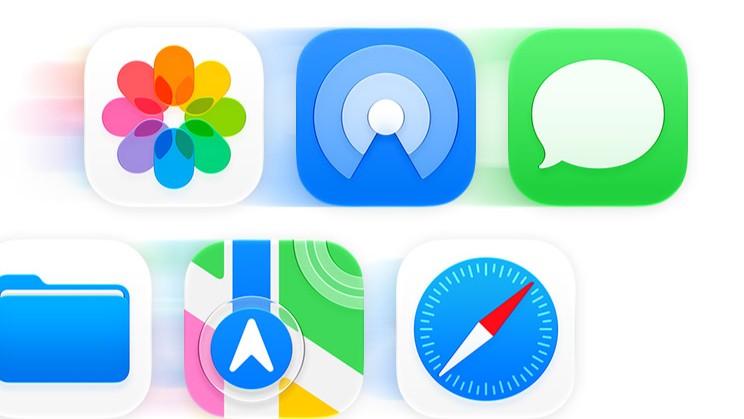
At WWDC 2026, Apple revealed macOS 27 Golden Gate alongside its newest software lineup. The update builds on previous versions by improving Apple Intelligence, refining the user interface, and delivering a smoother overall experience. Apple has paid particular attention to performance and search improvements, areas that many users felt needed attention. Let’s take a look at the five major macOS 27 upgrades.

The Liquid Glass design change in macOS 27 Golden Gate represents one of the biggest improvements to the interface. Apple’s design philosophy has been very mindful of ensuring that the system design is both functional and beautiful. Users now have control over the transparency and tint options in the system.
The company has redesigned the look of many application icons that offer clearer images. The company has also managed to maintain consistency in window shapes, menu bars, and toolbars of different applications. This helps ensure users have a good experience with the interface.

Siri becomes much more intelligent and useful in macOS 27 Golden Gate. Apple turns Siri into a much more customized solution that is accessible via Spotlight. It will allow users to ask questions, engage in discussions via a chat box, and get assistance without disrupting their workflow.
This new Siri can understand context from its apps as well as from the activities its users perform. The program can search emails, texts, images, and other files for information that its users might be looking for. It is also equipped with visual intelligence, allowing the assistant to recognize and discuss things displayed on the computer screen.

One of the important elements of macOS 27 Golden Gate is the further expansion of Apple Intelligence to other integrated applications. Apple will include more artificial intelligence capabilities to help save time and perform tasks faster. Among the new Safari functionalities are smart tabs and notifications regarding the availability of certain products or tickets.
Now, Safari can track websites for updates, such as product stock-ups or ticket availability. On the other hand, the Passwords application can help secure online accounts by updating compromised passwords. The company has also updated Image Playground to support realistic image generation and made Shortcuts more user-friendly with text-based commands.

Apple is using macOS 27 Golden Gate to enhance efficiency and speed in the Mac user experience. The improvements Apple has made are mainly in the OS’s performance. Some of the expected changes include faster AirDrop connections, faster Safari loading, and faster file navigation.
Search capabilities will now receive some much-needed improvement. The Spotlight Search will receive an upgrade to make it more relevant and useful. It would now become easier to find documents and emails. This feature may not seem very exciting, but it can certainly improve productivity.

Apple is adding features to parental control in macOS 27 Golden Gate to ensure a secure online world for kids. This new version of Screen Time provides parents with better options to regulate apps, sites, and purchases. Parents can also use time limits based on school activities and studying time.
The update makes the approval process easier using iMessage. The children can send requests for downloading a certain application or visit a site that is not allowed for children, while the parents can then either approve or decline such requests. In particular, the company added measures to increase the level of protection for its products, including FaceTime and iMessage, against inappropriate information.

How do we know when the world has changed?
On June 1, a team of scientists published a preprint scientific paper claiming they had edited human embryonic DNA with more precision than any previous attempt. As a technical achievement, the work is undoubtedly impressive, largely avoiding the errors that had accompanied earlier efforts to gene edit embryos. With further development, such embryonic editing could free future children from fatal or debilitating genetic diseases, but as the veteran science writer Carl Zimmer reported in the New York Times later that week, the real headline news was that the work “could open the way to babies engineered with particular characteristics” — designer children, in other words.
The same day the Times piece published, the AI company Anthropic published a post asserting that AI was already accelerating AI development, which the authors argue may represent an early step toward recursive self-improvement (RSI) — AI systems that design and build their own successors, faster and faster. Already most of the code that runs Anthropic’s Claude was written by Claude itself, which has helped the company’s engineers ship eight times as much code as they did two years ago. While more is not automatically better, and Claude is still far from being able to guide itself, the possibility of self-improving AI is on the horizon — and “it could come sooner than most institutions are prepared for,” as Anthropic co-founder Jack Clark and Anthropic Institute head Marina Favaro wrote.
These two writings were published by academic biologists and the employees of an AI company, in two wildly disparate disciplines, but they nonetheless point to a possible near future that is fundamentally different from the world we live in now.
Both events are potential key steps toward unprecedented powers — not all of which we would have firm control over: newly designed intelligences and newly designed humans. What the two share is not just consequence, but bivalence — the possibility of both the miraculous and the catastrophic. The biological precision that could eradicate an inherited disease like Huntington’s could also pave the way to a genetic caste system. The AI capability that could accelerate decades of scientific progress could also utterly disempower its makers — us.
The world may have walked through a historic door with both of these advances last week. But we can’t yet know which kind.
Take the biology step first. Strip away the headlines — which come from the media, not from the scientists themselves — and the experiment is fairly narrow.
Using so-called base editors, which make a small nick in a gene strand rather than chopping out an entire segment, as CRISPR does, Columbia University geneticist Dieter Egli and his team edited two genes: PCSK9 and HBG. You might have heard of the first one; PCSK9 produces a protein that affects the body’s ability to clear cholesterol from the blood, and certain mutations in the gene can drive LDL cholesterol levels dangerously high. HBG encodes a form of hemoglobin that the body relies on before birth and normally switches off afterward. Being able to control these genes could prevent the mutations that increase heart disease risk (PCSK9) and reactivate that fetal hemoglobin in adulthood, easing — though not curing — sickle cell disease and beta-thalassemia (HBG).
The researchers delivered their base editors into fertilized eggs and into two-cell human embryos, and in some cases they managed to make the edits without the chromosomal damage that had been associated with earlier attempts to edit using CRISPR.
The paper — which has yet to be peer-reviewed — is an impressive step forward in the effort to use gene editing technology on human embryo genes with greater precision. But impressive is still far from perfect, or even safe — some edits landed at the wrong spot in the genome, and relatively few of the embryos went on to develop normally. (The embryos, which had been donated by IVF patients, were developed no further than very early stages, and none were implanted.) Egli and his colleagues were clear in the paper that any notion of using the base editing technique as it is now for treatment is “premature.” But the paper does show such editing can now apparently be done without shredding chromosomes.
When the Chinese scientist He Jiankui used conventional CRISPR to edit human embryos in 2018, producing three children, his work was widely rejected not just for moral reasons, but technical ones, as his clumsy gene editing did real genetic damage. Should the new paper’s results bear out, the technical obstacles to embryo engineering begin to vanish.
No one knows what comes next. Certain genetic disorders like sickle-cell anemia can be fixed with a single gene edit, but preventing more complex health problems — or engineering the traits some people might dream about, like height or intelligence — would require editing hundreds or even thousands of genes in combinations we don’t fully understand yet. But if the technical barriers keep falling, that will only leave the moral ones — and the moral ones have rarely held back a technology for long.
As revolutionary as the ability to truly engineer human beings would be, biology still moves slowly. The same can’t be said for the subject of the other document released last week.
Anthropic’s post uses over 5,000 words and plenty of (I’m guessing) Claude-produced graphics to make a single point: The proportion of human work that goes into building AI is shrinking at every stage. Engineers who once wrote the code now mostly review what Claude itself writes. Experiments once designed manually are now increasingly proposed and run by the model. While humans still make the judgment call about what is worth building, Anthropic argues that even that has started to change, as employees increasingly defer to what the model proposes to do next.
A research loop that is increasingly dominated by AI itself is one that could move ever faster. Technology has always changed at the rate of human beings — how fast they can think, plan, and act. An AI capable of improving itself eliminates that speed limit, allowing for the very real possibility of it moving faster than any human or any human-run institution charged with governing it can follow. Intelligence itself goes critical — each smarter model building a smarter one, the reaction sustaining itself.
That might seem like a lot to put on a few months of internal coding data from an AI company that has a vested interest in making its models look as strong and as smart as possible. (Especially if that AI company happens to have a potentially record-breaking IPO on the horizon.) In the post, Anthropic itself concedes that simply counting lines of code only goes so far, and that speed is only at best a partial metric of success. But independent research has shown that AI models are able to spend longer and longer on a single task, which allows them to work not just quicker but deeper. We can quibble over the speed, but not on the idea that AI is moving forward, and fast.
Powerful and blindingly quick AI could lead to rapid economic, scientific, and medical progress — all the dreams Anthropic CEO Dario Amodei has laid out in his own writing.
But it also threatens to be existentially dangerous as well as profoundly disempowering for most of us, not unlike genetic human enhancement could be for those left out. And the potential speed of such change is so great that Anthropic makes the unusual proposal of calling for AI companies to consider collectively slowing down or even temporarily pausing frontier AI development, to enable societal structures and AI alignment research to keep up. The authors of the Anthropic post specifically cite the international regimes built to control past dangerous technology like nuclear weapons, which, for all their problems, have so far kept the world from annihilating itself. But those institutions, like the International Atomic Energy Agency, took decades of white-knuckling to build, and as the Anthropic leaders note, when it comes to self-improving AI: “We don’t have that long.”
How do we know when the world has changed?
Sometimes it’s immediate. When Otto Hahn and Fritz Strassmann achieved nuclear fission in December 1938, experts understood the implications almost immediately: A nuclear bomb would be possible. Sometimes the scientists see it, and the rest of the world doesn’t. When Jennifer Doudna and Emmanuelle Charpentier published the seminal paper detailing CRISPR in 2012, initial press attention was all but nonexistent, and the institutions that would eventually need to govern it had no idea what had just happened.
The hardest cases of all are the ones where even the experts can only see half of it. Fission pointed one way, toward a weapon, and the people who understood it could do little to stop it. Each of the two advances of last week points in two ways at once. The same editing technology that could spare a child from a fatal disease is one that could eventually sort children into genetic castes. The same intelligence that could give us “a country of geniuses in a data center,” as Amodei once put it, could also leave us as little more than spectators in the world.
So we are left where we began, at a threshold we cannot see past. The danger is not just that we may have walked through the wrong door. It is that we’ve walked through without noticing there was one.
A version of this story originally appeared in the Future Perfect newsletter. Sign up here!





Weekend Open Thread: Evereve – Corporette.com

Jensen Huang Approves Samsung, SK Hynix, and Micron for NVIDIA (NVDA) HBM4 Memory Supply


Anatomy of the June crypto crash: Fed, Iran, Saylor

The Best Mystery Series of All Time Is Surging on Streaming 30 Years After It Ended


Alexander Zverev wins the French Open to finally earn a 1st Grand Slam title


Suspicious Polyfill login prompts pop up on Toshiba, Muji websites

Senator Cynthia Lummis Calls CLARITY Act the Most Consequential Financial Legislation of This Generation


Microsoft launches MXC, an OS-level sandbox for AI agents, with OpenAI and Nvidia already on board


Microsoft unveils seven homegrown AI models in new bid for ‘long term self-sufficiency’


(VIDEO) Justin Bieber Delivers Surprise Happy Birthday Serenade to Diners at Los Angeles Mexican Restaurant

The Pain Points Taking a Fragile Tech Rally Down a Notch

Eli Lilly (LLY) Stock Surges 4% Following Breakthrough Sleep Apnea Trial Results
LBank Surpasses 25 Million Users Worldwide as AFA Partnership Continues to Drive Global Growth

Von der Leyen’s AI envoy pick draws conflict-of-interest fire


Meta steals a tactic from Tesla and builds data centers in tents


Trump’s AI Ownership Plan Could Benefit Anthropic at OpenAI’s Expense

Bangladesh beat Australia after 20 years in ODIs, register only their second win over six-time world champions | Cricket News


High Stakes for Wembanyama as New York Pushes for 3-0 Lead


Hackers now exploit SolarWinds Serv-U flaw to crash servers


Notion restores access to Anthropic after service disruption





You must be logged in to post a comment Login