

Business
Iran Tensions Trigger Major Selloff in Thai Bonds


Thailand is experiencing its most significant foreign capital flight in years, with bond outflows exceeding $1 billion in March 2026, marking the largest selloff since 2022. This mass exit is driven by escalating geopolitical tensions in the Middle East, which have prompted global investors to retreat from emerging markets in favor of safer assets.
The resulting surge in oil prices has intensified concerns regarding inflation and widening current-account deficits, leading to substantial losses for international investors in both Thai bonds and equities.
Key Points
- Global funds offloaded more than $1 billion in Thai bonds in March, putting the market on track for its largest foreign selloff in four years.
- On a single Friday, overseas investors withdrew $1.2 billion from the bond market and an additional $1.2 billion from Thai equities.
- The retreat is primarily attributed to regional instability in the Middle East, which has caused money managers to de-risk their portfolios.
- Rising oil prices are a major concern for the Thai economy, as they threaten to drive up inflation and negatively impact the national current-account balance.
- Thai bonds have delivered an 8.5% loss to dollar-based investors on a hedged basis this month, while the domestic stock market has declined by over 8%.
Overseas investors withdrew a total of $1.2 billion from Thai bonds on Friday, March 20, 2026. This sell-off was the largest single-day withdrawal from the market since March 2022.
According to data from the Thai Bond Market Association, this significant exit is part of a broader trend where global funds dumped over $1 billion in Thai debt throughout March. The withdrawal coincides with escalating Middle East tensions, which have fanned inflation worries and pushed investors toward safe-haven assets. Beyond the bond market, overseas investors also offloaded $1.2 billion in Thai equities on the same day, marking the largest stock sell-off in two years.
The Bank of Thailand and market strategists note that these capital outflows are pressuring the Thai baht, which tested a nine-month low recently. Analysts suggest that the combination of high oil prices and widening current-account deficits has made emerging markets like Thailand less attractive to global money managers. While some officials remain confident in domestic stability, the Social Security Fund recently breached its risk limits for the first time in two years due to this market volatility.
What is the percentage loss for dollar-based Thai bond investors?
Thai bonds have delivered an 8.5% loss to dollar-based investors on a hedged basis in March 2026. This performance ranks among the worst in the region as global funds exit emerging markets due to escalating Middle East tensions.
The baht has faced significant downward pressure, testing a nine-month low of 33 per US dollar as investors shift toward safe-haven assets. Analysts at K-Research suggest the currency could weaken further to 33.50 per dollar this week due to rising US bond yields and geopolitical instability. Meanwhile, the Social Security Fund reported breaching its 8% value-at-risk threshold for the first time in two years following the market turmoil.
Middle East tensions have triggered a significant “risk-off” sentiment across global emerging markets, leading to substantial capital outflows as investors favor the US dollar and other safe-haven assets. This shift has particularly impacted Asian equities, which have seen a reversal of the “Sell America, Buy Asia” strategy due to the region’s heavy reliance on energy imports through the Strait of Hormuz.
Economists warn that a prolonged conflict could result in stagflation, a condition of high inflation and stagnant growth driven by surging oil and gas prices. Emerging economies like Thailand and India are especially vulnerable to cost-push inflation and trade deficits as the cost of importing crude oil, which has topped $100 a barrel, significantly increases production and logistics expenses.
Other People are Reading


Henry Sykes
Good afternoon, and welcome to the 2026 Annual Meeting of Shareholders of Pembina Pipeline Corporation. My name is Henry Sykes. I’m Chair of Pembina’s Board of Directors. And in accordance with our bylaws, I’ll preside over this meeting as Chair.
Before we proceed with the balance of the meeting, I’d like to start with the land acknowledgment, recognizing that we have people joining us today from numerous locations. As Pembina continues to build strong relationships and partnerships with indigenous communities, land acknowledgments are one way for us to communicate our respect for the land that we all share.
Pembina acknowledges our traditional hosts and thanks them for their graciousness in welcoming us to carry out work on their traditional territories. Pembina plays a role in the economic reconciliation with indigenous peoples’ and their respective communities where our operations take place. We acknowledge the future generations and the collective responsibility we all have to these lands. Indigenous peoples are the traditional stewards of the lands and waters where each of us work and choose to live.
We further acknowledge that the indigenous peoples have inhabited these lands and waters since time immemorial. The indigenous peoples territory, culture, truth, traditions, teachings and languages are sacred, and we’re thankful to be here today as guests.
Now this meeting is being held as a virtual-only meeting this year. Pembina has been and remains committed to maintaining and upholding shareholders’ rights, including in respect of our virtual shareholder meetings. Accordingly, we’ve ensured that this virtual meeting offers shareholders the opportunity to participate, submit questions and vote at the meeting.
Following the formal portion of this meeting, we’ll have

Cantaloupe completes merger with 365 Retail Markets, delists from Nasdaq
Operator
Good day, ladies and gentlemen, and welcome to the Cavvy Energy Annual General Meeting and Q1 2026 Financial Results Conference Call. Please be advised that today’s proceedings are being recorded.
[Operator Instructions]
I would now like to turn the meeting over to Mr. Dallas McConnell, Vice President, Corporate Finance. Please go ahead, Mr. McConnell.
Dallas McConnell
Vice President of Corporate Finance
Thank you, Didi. Hello, and welcome to the Annual General Meeting of Shareholders of Cavvy Energy Limited. My name is Dallas McConnell. I am Cavvy’s VP of Corporate Finance, and I will be the moderator for today’s meeting. I would now like to take this opportunity to review the logistics for today’s meeting.
In addition to the in-person portion of this meeting at Norton Rose Fulbright, this meeting is being streamed by live audio webcast and telephone. Participants attending via the webcast or telephone may listen to the meeting and ask questions but will not be able to vote on items of business. Only registered shareholders of record as of March 24, 2026, and duly appointed proxy holders present in person at this meeting are entitled to vote on items of business. The procedure for voting and asking questions will be addressed at the outset of the meeting.
Please note that today’s meeting is being recorded. If you participate in the meeting and disclose personal information, you will be deemed to consent to the recording, transfer and use of your personal information. If you disclose personal information of

Novo Nordisk CEO Mike Doustdar details the company’s Amazon partnership, benefits of Ozempic beyond weight loss and more on ‘The Claman Countdown.’
Novo Nordisk’s oral versions of its blockbuster weight-loss drugs, Ozempic and Wegovy, are now available for same-day delivery on Amazon.
Novo Nordisk CEO Mike Doustdar said on “The Claman Countdown” Friday the once-daily pill versions of the company’s highly popular treatments have been a major success.
“It’s an exciting time, I would say, for the patients that can get access to these products when they want it and as fast as possible,” he told FOX Business.
“I think it’s really nice that, right now, people can have both Ozempic injection, as well as Ozempic pill.”
FIRST GLP-1 PILL FOR WEIGHT LOSS, DIABETES SHOWS SUCCESS IN LATE-PHASE TRIAL

Amazon is now offering same-day delivery of Novo Nordisk’s Ozempic pill. (Left (Justin Sullivan/Getty Images), Right (Michael Siluk/UCG/Universal Images Group via Getty Images) / Getty Images)
The Ozempic pill launched last week, following the January debut of an oral version of Wegovy, which has delivered strong results, generating more than $350 million in first-quarter sales.
“This has been the best product launch in the last decade that we have seen. And I’m incredibly excited,” Doustdar said. “We have seen in 16 weeks time, since we have launched it, more than one million patients [who] have tried it.”
Ozempic is prescribed for patients with Type 2 Diabetes, while Wegovy is used to treat obesity. Both treatments were originally made as weekly injectables, but the newer oral versions are a once-daily pill.
HHS SEC ROBERT F KENNEDY JR: AMERICAN PATIENTS PAY MORE SO OTHERS CAN PAY LESS — THAT STOPS NOW
“I would say Wegovy’s pill will be the one that will be the flagship, but the Ozempic pill on the back of an iconic brand name, of course, will also find its good space,” Doustdar said.
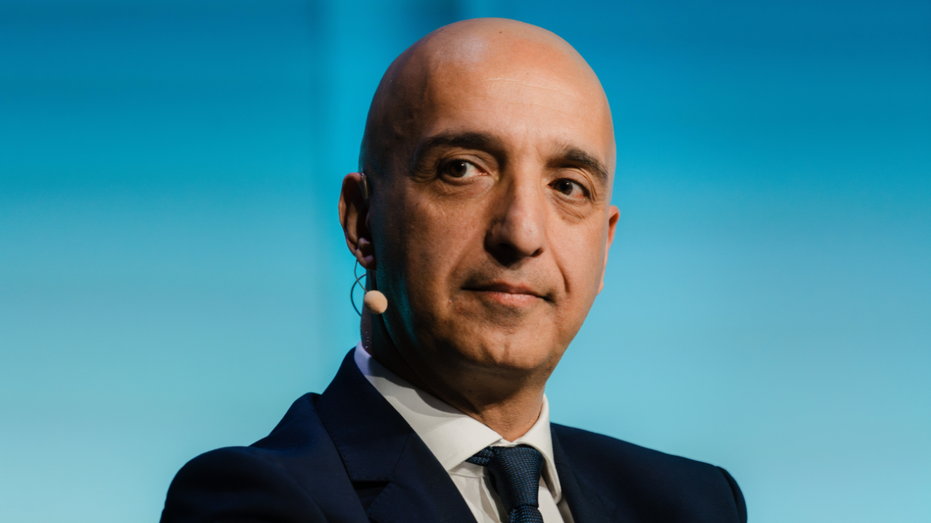
Mike Doustdar, chief executive officer of Novo Nordisk A/S, at the Novo Nordisk A/S annual general meeting in Copenhagen, Denmark, on Thursday, March 26, 2026. (Nichlas Pollier/Bloomberg via Getty Images / Getty Images)
Novo Nordisk was one of the first to work with the Trump administration to lower the costs of prescription drugs and Doustdar said lowering prices was important to ensure fair access.
“We were very happy that we were able to make a deal with the Trump administration, and mainly because our job is to really make sure that these innovative medications get access, and they don’t become a product just for the rich. They become the product for everyone,” the CEO said.
“I would say lower prices have provided us with more patients and more volume. While short term, this is hurting our business. Longer term, it’s the right thing to do.”
While Ozempic and Wegovy are known for inducing weight loss, Doustdar highlighted the drugs’ broader benefits for cardiovascular, kidney and liver health – most notably, their ability to cure scarring in patients with fatty liver disease.

Photo illustration of injectable prescription weight loss medicine Ozempic on a weight scale. (Photo by: Michael Siluk/UCG/Universal Images Group via Getty Images) (Michael Siluk/UCG/Universal Images Group via Getty Images) / Getty Images)
CLICK HERE TO DOWNLOAD THE FOX NEWS APP
He also teased the potential launch of a new drug treatment that proves so effective for liver disease that it could reduce the need for liver transplants.
“We have to finish the clinical development of it, we have to get it approved. But if the early data holds, then I’m very optimistic,” Doustdar said.
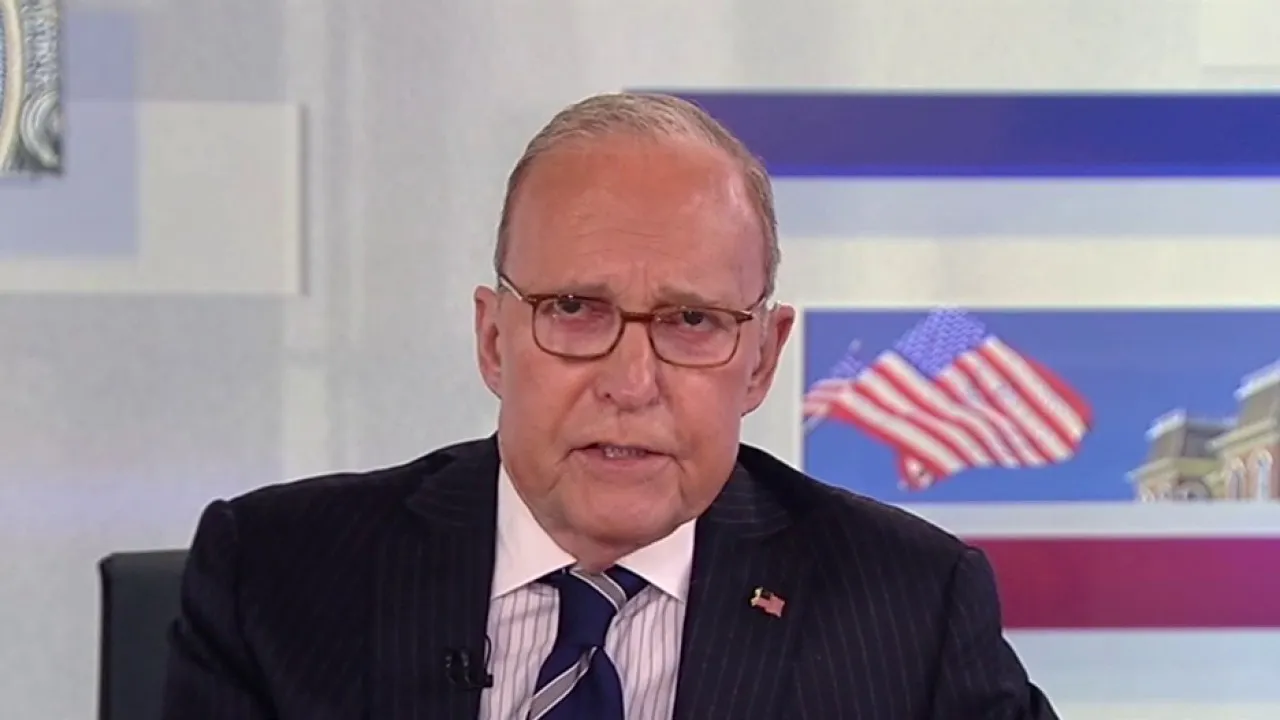
FOX Business host Larry Kudlow discusses how the economy is performing under President Donald Trump on ‘Kudlow.’
For all of that left-wing press rabble babble about the Trumpian economy, also known as the great American economy, nearly all of the numbers coming in this spring are showing strength and resilience. Yes there is a war going on, yes gasoline and other energy prices have jumped up because of that war, but it’s very hard to find negative consequences from the Iran energy war shock.
Of course that’s all the lefty press ever writes about, but the lefties are gonna be very disappointed that there is no recession in sight. Indeed, the Atlanta Fed GDPNow is predicting 3.7 percent annual growth in the second quarter. And today’s jobs number is yet another example of a strong economy. It beat expectations by twice as much.
Private sector pay rolls jumped 123,000, following last month’s gain of 190,000. Those are big numbers. The unemployment rate is still at 4.3 percent. That’s virtually a full employment number.
We don’t need hundreds of thousands of jobs each month anymore because the borders are closed. And the so-called break even rate of job growth could be something near zero. Indeed, a good 3 million illegal immigrants have left the United States either through self-deportation or criminal deportation. Anyway, while President Trump has reduced the federal workforce by 345K, the private workforce has moved ahead by nearly that much in just the last 2 months.
Weekly unemployment claims continue at rock bottom. And interestingly it’s the nonsupervisory production workers who have done the best over the past year. Their hourly earnings have increased 3.7 percent while their hours worked have jumped 1 percent. Now what economists call the wage-income proxy, which adds earnings to hours worked, is now showing a 4.7 percent increase. The blue-collar folks are doing better than the white-collar folks.
National Economic Council director Kevin Hassett lauds President Donald Trump’s State of the Union address on ‘Kudlow.’
And the 4.7 percent total wage income gain is still way better than the roughly 3 percent inflation rate favored by the Federal Reserve. And even much more ahead of the 2.7 percent median consumer price index from the Cleveland Fed. Or the 2.4 percent trimmed mean from the Dallas Fed.
Nobody’s thrilled about the energy shock, including myself, but I still believe it will be temporary. And I still believe it’s a small price to pay to the gruesome and barbaric Iranian regime, probably the worst government we’ve seen since the Nazis of a hundred years ago to get rid of all of them.
Anyway, the Institute for Supply Management’s services and manufacturing indexes are strong. Non-farm productivity over the past year is up a fantastic 2.9 percent. And unit labor costs are up only 1.2 percent, which may be the best underlying inflation measure of all. And that feeds into the best profits performance for American business in at least 20 years. Remember profits are the mothers’ milk of stocks. And that leads to the record breaking stock markets.
In Trumpian America, both workforce labor and investment capital are both doing very well. That’s what you get from tax cuts, deregulation and “drill, baby, drill,” and reciprocal fair trade. All of it.

SALT LAKE CITY — Elizabeth Smart, the survivor of a notorious 2002 abduction who became a leading advocate for missing persons cases, expressed cautious optimism Thursday that Nancy Guthrie, the 84-year-old mother of “Today” show co-anchor Savannah Guthrie, could still be alive more than three months after her disappearance from her Arizona home.

In an emotional interview, Smart said she has been closely following the case and believes there is still reason for hope. “I absolutely believe Nancy could still be alive,” Smart told reporters. “We have seen miracles in these cases before, and until we have definitive proof otherwise, we have to hold onto that possibility for the family.”
Nancy Guthrie vanished from her Catalina Foothills home near Tucson on February 1, 2026. Security footage captured a masked individual near her door around the time of her disappearance. Blood evidence, a disabled Ring camera and signs of a struggle led authorities to classify the case as an abduction rather than a missing person or wandering incident. No ransom demand has been made, and no arrests have been announced.
Pima County Sheriff’s Office and the FBI continue to investigate. A rootless hair sample and potential glove DNA recovered from the scene have been sent for advanced forensic testing, including genetic genealogy analysis. Multiple ransom-style notes received by media outlets have complicated the probe, with experts questioning their authenticity.
Elizabeth Smart’s Perspective
Smart, who was abducted at age 14 and held for nine months before her dramatic rescue, drew parallels to her own experience. “There were many times people assumed I was dead,” she said. “But I was alive. Families should never stop hoping until they have concrete answers.” She praised Savannah Guthrie’s public strength while balancing her high-profile career and family life.
Smart has offered to assist the family privately and continues advocating for better coordination between law enforcement agencies in missing persons cases involving elderly victims. She emphasized the importance of keeping Nancy’s case in the public eye without sensationalizing it.
Family’s Ongoing Ordeal
Savannah Guthrie has returned to the “Today” show while advocating for information about her mother. She briefly stepped away from the broadcast earlier this week amid emotional strain but returned the next day. The family has offered a $1 million reward for information leading to Nancy’s safe return.
The unrelated discovery of ancient human bones near the home earlier this week briefly raised hopes before forensic analysis ruled them out. The incident highlighted the challenges of searching desert terrain where old remains are occasionally found.
Investigation Challenges
The case has exposed occasional friction between local authorities and federal agencies. FBI Director Kash Patel publicly criticized initial coordination, though both sides say they are now working closely. Behavioral profilers have suggested the perpetrator may have sought fame or had some prior connection to the victim.
No proof of life has emerged in more than 95 days. Authorities continue operating under the assumption Nancy could be found alive while preparing for all possibilities. Door-to-door canvassing, expanded surveillance reviews and public appeals have generated thousands of tips.
Community Response
The upscale Catalina Foothills neighborhood remains on edge, with yellow ribbons symbolizing hope displayed prominently. Neighbors and the broader Tucson community have participated in searches and vigils. National attention, driven by Savannah Guthrie’s platform, has kept the case visible while the family urges focus on verified information.
Smart’s public expression of hope has resonated widely, with many praising her empathy and willingness to support another family facing a similar nightmare. Her foundation continues working on legislation to improve missing persons protocols, particularly for vulnerable populations like the elderly.
Broader Context
The Guthrie case stands out due to its brazen nature in a secure community and the victim’s connection to a beloved national television personality. Elizabeth Smart’s involvement brings renewed attention and reminds the public that long-term missing persons cases can sometimes end in reunions against the odds.
As the investigation enters its fourth month, law enforcement appeals for any information, no matter how small. The family continues balancing public advocacy with private grief, holding onto hope while preparing for any outcome. Smart’s message of resilience offers comfort to those following the case.
Whether Nancy Guthrie is found alive or the case brings closure through other means, her disappearance has highlighted vulnerabilities even in protected communities and the enduring power of hope in the face of uncertainty. For now, the search continues, supported by a survivor who knows firsthand that miracles in these cases are possible.
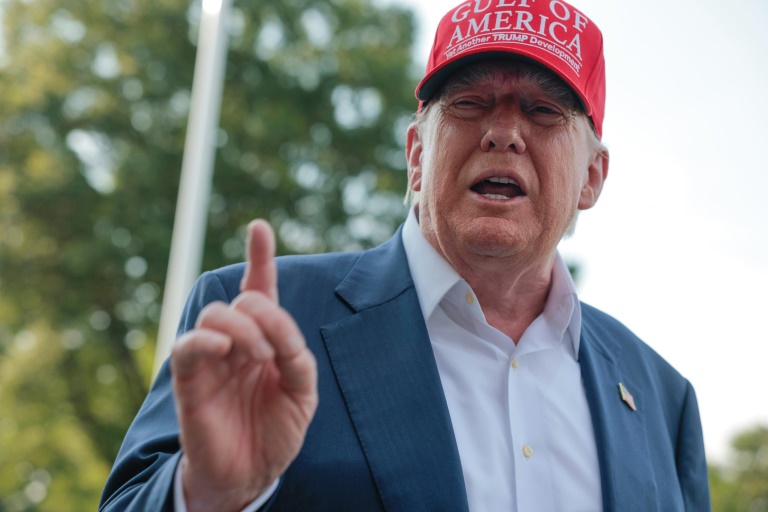
WASHINGTON — A federal trade court ruled Thursday that President Donald Trump’s sweeping 10% global tariff policy is illegal, delivering a major blow to one of the administration’s signature economic initiatives and potentially reshaping international trade negotiations. The three-judge panel of the U.S. Court of International Trade found that the tariffs exceeded presidential authority under existing trade laws and violated procedural requirements.
The decision immediately sent shockwaves through financial markets, with stocks of major importers and manufacturers rallying while broader indices showed mixed reactions. White House officials vowed a swift appeal, calling the ruling “judicial overreach” that undermines national security and economic sovereignty. Trade partners from Europe to Asia welcomed the decision but cautioned that uncertainty remains high.
The tariffs, imposed in early 2026 under Section 232 of the Trade Expansion Act and emergency powers, applied a baseline 10% duty on nearly all imported goods. The administration argued the measure was necessary to address trade imbalances, protect domestic industries and counter perceived unfair practices by countries like China. Critics, including business groups and several U.S. trading partners, challenged the tariffs in court, claiming they were overly broad and lacked proper justification.
In a 68-page opinion, the court sided with the challengers. Judges wrote that while the president has significant discretion in trade matters, the 10% across-the-board tariff went beyond statutory authority and failed to demonstrate a direct link to national security threats as required under the law. The ruling permanently blocks enforcement of the tariff and orders refunds for duties already collected.
Immediate Market and Economic Reaction
Stocks of retailers, automakers and consumer electronics companies rose sharply on the news, with the Dow Jones Industrial Average gaining more than 300 points in afternoon trading. Companies that had absorbed higher costs or passed them to consumers stood to benefit most. Conversely, some domestic steel and manufacturing stocks dipped on fears of renewed foreign competition.
Economists estimated the tariffs had already added billions in costs to U.S. businesses and consumers. The ruling could ease inflationary pressures in certain sectors, though the administration warned that any revenue shortfall would need to be addressed through other means.
White House Response
White House Press Secretary Karoline Leavitt called the decision “disappointing but expected from an activist court.” She said the administration would appeal to the U.S. Court of Appeals for the Federal Circuit and, if necessary, the Supreme Court. President Trump, speaking at a rally in Pennsylvania, reiterated his commitment to protecting American workers. “We’re going to keep fighting for fair trade. This is not over,” he said.
Legal experts predict a lengthy appeals process that could extend well into 2027. In the meantime, the tariffs remain on hold pending further court action.
Reactions from Trade Partners
Several U.S. allies expressed relief. The European Union, which had threatened retaliatory measures, welcomed the ruling and called for renewed negotiations on a more balanced trade framework. China described the decision as “a victory for multilateral trade rules,” though tensions over technology and subsidies persist. Mexico and Canada, key partners under the USMCA agreement, said the ruling reinforces regional economic stability.
Business organizations including the U.S. Chamber of Commerce and the National Retail Federation praised the court’s decision, arguing that broad tariffs harm American consumers and exporters. Labor unions were more divided, with some praising Trump’s original intent while others supported the legal challenge.
Background of the Tariff Policy
Trump first proposed the 10% global tariff during his 2024 campaign as a simple mechanism to protect U.S. industries and generate revenue. The policy was implemented in phases starting in January 2026, with exemptions for certain allies and critical goods. It quickly became one of the most controversial economic moves of his second term, drawing lawsuits from more than a dozen plaintiffs including importers, trade associations and state governments.
The Court of International Trade, which specializes in trade disputes, has historically shown deference to presidential authority in national security matters but drew a line at what it called an overly expansive interpretation of executive power.
Broader Implications for Trade Policy
The ruling could force the administration to pursue more targeted tariff actions or seek new congressional authority. It also raises questions about the limits of executive power in trade, a recurring theme in recent decades. Legal scholars expect the case to eventually reach the Supreme Court, where it could set important precedents for future presidents.
For American businesses, the decision provides short-term relief but continued uncertainty. Many companies had already adjusted supply chains or absorbed costs in anticipation of prolonged tariffs. The appeals process means planning remains difficult.
Political Ramifications
The ruling hands Democrats and free-trade Republicans a significant political victory heading into midterm election season. However, Trump’s base has strongly supported protectionist policies, and the administration is likely to frame the court decision as part of a larger battle against “globalist” institutions.
Congress could step in with legislation to clarify or expand presidential trade authorities, though partisan divisions make swift action unlikely. Bipartisan efforts to reform trade law have gained some momentum in recent months but face steep hurdles.
What Happens Next
The administration has 60 days to appeal. In the interim, importers can seek refunds for tariffs paid since implementation. The court stayed parts of its ruling pending appeal to avoid market chaos. Trade negotiations with major partners are expected to accelerate as all sides reassess their positions.
For consumers, the decision could eventually translate into lower prices on imported goods ranging from electronics and clothing to automobiles and machinery. For U.S. manufacturers competing with imports, the relief may be temporary if new, more targeted tariffs are introduced.
The landmark ruling underscores the complex interplay between executive power, judicial oversight and global commerce in an era of heightened economic nationalism. As the legal battle continues, the future of U.S. trade policy remains uncertain, with profound implications for businesses, workers and consumers alike.

The Thai government has approved a US$12.2 billion emergency borrowing package to mitigate the economic repercussions of the ongoing Middle East conflict.
As the war between the US, Israel, and Iran drives up global energy and shipping costs, Thailand faces slowing growth and rising inflation, prompting officials to implement this significant financial intervention to support low-income citizens and bolster the domestic economy.
Key Points
- The 400 billion baht loan package is intended for deployment between June and September to stimulate spending and provide relief to over 20 million low-income individuals under the “Thais Helps Thais” program.
- The funds will also be directed toward supporting alternative energy initiatives to combat the impact of volatile oil and gas prices.
- Economic forecasts have been revised downward, with the finance ministry cutting GDP growth expectations from 2.4% to 1.6% and projecting core inflation to rise to 3.0%.
- Officials confirmed that the new borrowing will keep public debt within the country’s 70% of GDP ceiling, as debt stood at 66.38% as of March.
While the borrowing package is one of the largest in recent history, the government emphasized that it remains below the levels of debt incurred during the 1997 Asian financial crisis and the COVID-19 pandemic.
The key economic factors prompting Thailand’s US$12.2 billion emergency borrowing package are as follows:
- Impact of the Middle East Conflict: The war between the US/Israel and Iran, which began in late February, has negatively affected the global economy. This conflict has roiled global energy prices, leading to increased costs for oil, gas, shipping, and consumer goods.
- Rising Inflation: The country is experiencing significant inflationary pressure. Core inflation is now forecast to reach 3.0 percent this year, a sharp increase from the previous estimate of 0.3 percent.
- Slowing Economic Growth: Thailand’s economic growth is decelerating. The finance ministry recently lowered the country’s GDP growth forecast to 1.6 percent, down from 2.4 percent the previous year.
- Need for Economic Stabilization: The government identified the borrowing package as a necessary tool to “cushion the economic impacts,” boost domestic spending, and prevent further economic weakening.
The funds are intended to address these challenges by easing living costs for over 20 million low-income individuals through the “Thais Helps Thais” scheme and supporting alternative energy initiatives. The program also aims to bolster local economies by promoting sustainable practices and encouraging community-driven projects. By integrating these efforts, the initiative seeks to create long-term solutions that not only alleviate immediate financial burdens but also foster resilience and self-sufficiency among vulnerable populations.
Other People are Reading
Capital One shareholders elect board and approve key proposals at annual meeting
Business
Greenland Crisis Escalates as Trump Renews Push for US Control Amid Danish Military Buildup
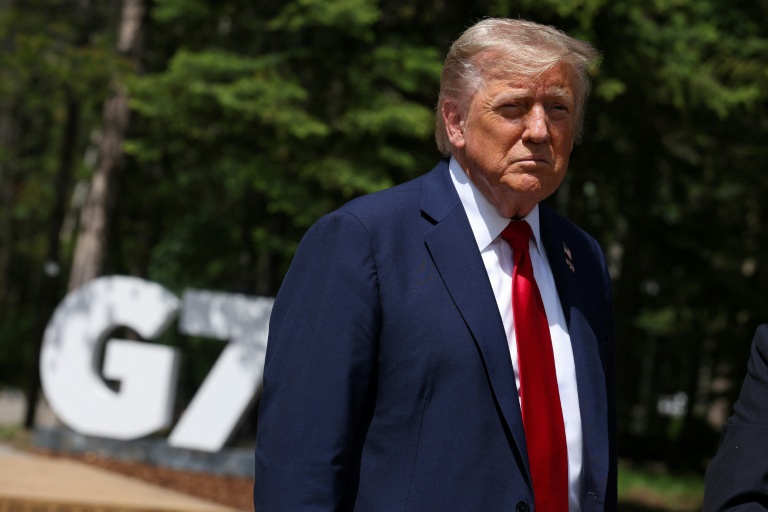
NUUK, Greenland — Tensions over Greenland’s future intensified this week as President Donald Trump renewed calls for US acquisition or expanded control of the vast Arctic island, prompting Denmark to deploy additional elite forces and Greenland’s leaders to firmly reject any change in sovereignty. The diplomatic standoff, now in its fourth month, continues to strain transatlantic relations and raise concerns about Arctic security.
AFP
Trump, speaking at a White House event on May 6, reiterated that the United States “needs” Greenland for national security reasons, citing potential threats from Russia and China in the resource-rich region. He stopped short of repeating earlier tariff threats but maintained that a deal must be reached. Danish and Greenlandic officials responded swiftly, emphasizing that Greenland is not for sale and remains part of the Kingdom of Denmark.
Greenland’s Prime Minister Jens-Frederik Nielsen stated categorically that the island “is not a piece of ice” and reaffirmed its commitment to Denmark. “When faced with the choice between the US and Denmark, Greenland chooses Denmark,” he said, echoing earlier parliamentary statements.
Military Posturing and Defense Measures
Denmark has responded to the pressure by significantly bolstering its military presence. Hundreds of elite Danish combat soldiers trained in Arctic warfare have been deployed to Greenland, including senior officers. Reports indicate Denmark prepared contingency plans, including potential runway destruction at key airfields, in case of any US military action — though both sides have publicly ruled out force.
NATO discussions are underway for a possible permanent “Arctic Sentry” mission in Greenland, modeled after initiatives in the Baltic region. European leaders, including those from France and Canada, have opened or expanded consulates in Greenland as a show of solidarity.
Economic and Diplomatic Fallout
Trump’s earlier threats of 10-25% tariffs on several European nations opposing the move were paused after talks in Davos in January, but the underlying dispute lingers. Negotiations have explored increased US military basing rights, resource access, and blocking adversarial mining activities without full sovereignty transfer.
Greenland, with its population of around 56,000, holds vast untapped reserves of rare earth minerals, uranium and other critical resources essential for green technology and defense. Its strategic location makes it vital for Arctic monitoring and potential missile defense systems.
The crisis has triggered psychological strain among residents, with Greenland’s government monitoring mental health impacts. Many locals express anxiety over the uncertainty, though daily life continues amid heightened international attention.
Background of the Dispute
Trump first floated acquiring Greenland in 2019 during his first term. The idea resurfaced strongly in late 2025 and escalated in early 2026, with the administration arguing that Denmark cannot adequately defend the island against growing Russian and Chinese interest in the Arctic. Greenlandic and Danish leaders counter that existing NATO frameworks and bilateral agreements suffice.
A high-stakes January meeting in Washington between US, Danish and Greenlandic officials produced little progress, with both sides claiming different interpretations of the outcome. Subsequent talks have focused on security enhancements rather than outright purchase.
International Reactions
European allies have expressed concern that the dispute weakens NATO unity. Some view Trump’s approach as a distraction from other global priorities, including the situation in the Middle East. China and Russia have watched developments closely, with analysts warning that prolonged instability could create openings for their influence in the Arctic.
Bipartisan US congressional delegations have visited Denmark and Greenland to ease tensions and explore cooperative security arrangements. However, a small number of Republican lawmakers have introduced symbolic measures supporting Greenland as a potential US territory.
Economic Implications
Greenland’s economy, heavily reliant on fishing, tourism and Danish subsidies, faces uncertainty. Potential US investment in infrastructure or mining could bring opportunities, but most residents prioritize maintaining autonomy and their relationship with Denmark.
Global markets have shown sensitivity to the rhetoric, with occasional spikes in rare earth and shipping costs tied to Arctic tensions. Energy security analysts note that while Greenland itself produces little oil, its location affects broader shipping routes and strategic calculations.
Looking Ahead
As summer approaches in the Arctic, military exercises and diplomatic talks are expected to continue. Denmark has called a snap election partly centered on the Greenland issue, while US officials maintain that talks are “on a good trajectory” despite public differences.
For Greenlanders, the crisis has thrust their homeland into the global spotlight like never before. Whether it leads to enhanced security cooperation, greater autonomy, or continued uncertainty remains to be seen. What is clear is that the island’s strategic importance in a warming Arctic with melting ice and new shipping routes has elevated it from a remote territory to a central player in great power competition.
The situation serves as a reminder of how quickly geopolitical flashpoints can emerge in the 21st century. As stakeholders navigate security needs, resource interests and self-determination, the future of Greenland will likely shape broader Arctic dynamics for years to come.

Public Health Agency ‘continuing to monitor’ Hantavirus outbreak on cruise ship

Pembina Pipeline Corporation (PPL:CA) Shareholder/Analyst Call Prepared Remarks Transcript

US adds 115,000 April jobs, beating forecasts

Manchester United reach agreement with Casemiro over contract clause amid transfer speculation

US brings back mandatory military draft registration

Steven Gerrard disagrees with Gary Neville over ‘shock’ Chelsea and Arsenal claim | Football

XRP PRICE PUSHING HIGHER! – BRAD DROPS BOMBS AT CONSENSUS! – XRP BOTTOM IN OR SUB $1 POSSIBLE?

FINALLY IT’S OVER !! Latest Crypto Market News Today & BTC – ETH Analysis

How to rewrite your money story from debt to financial freedom #femaleentreprenuers #moneymindset
-

 NewsBeat5 days ago
Channel 5 – All Creatures Great and Small series 7 new post
-
 Crypto World13 hours ago
HarrisX Poll Found 52% of Registered Voters Support the CLARITY Act
-

 Crypto World2 days ago
Upbit adds B3 Korean won pair as Base token gains Korea access
-

 Tech4 days ago
Image AI models now drive app growth, beating chatbot upgrades
-
 NewsBeat2 days ago
NCP car park operator enters administration putting 340 UK sites at risk of closure
-

 Entertainment7 days ago
Kylie Jenner Hit With Second Lawsuit From Ex-Housekeeper
-

 Sports7 days ago
Cavaliers vs. Raptors Game 6 live score, updates, highlights from 2026 NBA playoffs first-round series
-

 Entertainment7 days ago
Young and the Restless Next Week: Cane Arrested & Matt’s Deadly New Scheme!
-
Entertainment6 days ago
New Netflix Movies in May 2026 — My Top 3 Picks to Stream
-

 Entertainment6 days ago
Melissa Joan Hart and More Stars Attend 2026 Kentucky Derby
-
 Sports7 days ago
David Benavidez responds to team Canelo saying the fight will never happen
-
 Sports7 days ago
IPL 2026: ‘Love you darling’- Hardik Pandya’s reaction to MS Dhoni steals the show |Watch | Cricket News
-

 Sports6 days ago
Five killed in Texas plane crash identified as Amarillo pickleball players
-
Entertainment6 days ago
Anna Nicole Smith’s Daughter Attends 2026 Kentucky Derby
-

 Crypto World6 days ago
Bitcoin mining equities rise in 2026 as BTC lags behind
-
 Crypto World6 days ago
Pi Network Mandates Protocol 23 Upgrade for All Mainnet Nodes Before May 15 Deadline
-

 Business6 days ago
Luka Doncic Injury Update: Doncic’s Hamstring Recovery Slows Lakers’ Hopes Against Thunder: Can He Run Yet?
-

 Business7 days ago
Can Victor Wembanyama Bring the NBA Ring to Spurs in 2026? Historic Playoff Run Fuels Title Dreams
-

 Sports7 days ago
Plane crash in Wimberley, Texas kills 5 pickleball players at tournament
-
Entertainment6 days ago
Venus Williams’ Best Met Gala Looks Over the Years
You must be logged in to post a comment Login