






Connect with us
DAPA Banner
DAPA Coin
DAPA
COIN PAYMENT ASSET
PRIVACY · BLOCKDAG · HOMOMORPHIC ENCRYPTION · RUST
ElGamal Encrypted MINE DAPA
🚫 GENESIS SOLD OUT
DAPAPAY COMING

Business

United Airlines ditches more economy seats for bigger premium cabins

Published

on

United Airlines ditches more economy seats for bigger premium cabins

United Airlines aircraft at Denver International Airport, Aug. 4, 2023.

Antonio Perez | Chicago Tribune | Tribune News Service | Getty Images

LOS ANGELES — United Airlines‘ formula for higher profits: fewer but better seats.

Advertisement

The country’s second-most profitable carrier after Delta Air Lines on Tuesday unveiled new cabin designs, including on some of its smallest planes, that feature more premium seating options and fewer in standard coach.

The differences in airfare for those seats can be vast. For example, a flight between United’s hub at Newark Liberty International Airport in New Jersey and San Francisco in the first week of May is going for $423 in standard coach and $5,556 in the carrier’s top-tier Polaris class on a Boeing 757.

Even with the spike in fuel prices, United’s executives have said in recent weeks that demand remains strong, noting that premium-travel demand has outshined the main cabin.

“The main cabin is also improving, and we’ve seen very strong demand across the board for United in Q1, but premium did lead the way yet again in the quarter, and continues to do so,” Andrew Nocella, United’s chief commercial officer, told reporters last week.

Advertisement

United plans to introduce a subfleet of narrow-body Airbus A321neo jets dubbed the “Coastliner” for transcontinental flights that will have 20 Polaris seats, which can recline into beds. Each Polaris seat will have aisle access.

Those jets will also have 12 premium economy seats and 36 extra-legroom seats on board, with the rest regular economy. United said it removed three seats from the plane’s standard configuration to install a snack bar at the back of the plane.

Current layouts of the plane don’t have premium economy, but they do have 57 extra-legroom seats and 123 seats in standard economy, along with 20 that are first-class recliners, not the lie-flat Polaris seats.

United said the first Coastliners will begin flying this summer and it will have 40 of them by the start of 2028.

Advertisement

The airline also announced its configuration for its longer-range Airbus A321XLR aircraft, which will replace some older Boeing 757s. That layout also includes the 20 Polaris suites, 12 premium economy seats and 34 in extra-legroom. The plane will debut this summer, and United said it could operate on some of its existing routes to Spain, France, Portugal and Brazil.

Read more about airlines’ race to win over big spenders

United will also add a seven-seat first-class cabin to its Bombardier CRJ-200 jets for a total of 41 seats on board, compared with the current 51-seat layout, which has only one cabin.

The changes are part of an ongoing trend for airlines, which are dedicating more of the scarce real estate on planes to premium seats, as the growth from those higher-end options outpaces sales from regular economy.

Last year, United unveiled an upgraded Polaris suite for long-haul flights on its Boeing 787 Dreamliners that includes the “Polaris Studio,” which is larger than previous models and has 27-inch 4K screens as well as an ottoman for guests.

Advertisement

United’s chief rival, Delta, has said it expects premium revenue to overtake main cabin sales this year. That carrier said last month that starting in May, the first of seven of its new Airbus A321neo jets will have 44 seats in first class, more than double the 20 it usually has.

The demand has been so high for plush new suites and other premium seats that the supply chain can’t keep up. The bottlenecks have even delayed delivery of aircraft, CNBC has reported.

Why airlines demand for first-class seats delayed Boeing and Airbus production

Delta said the big first-class cabin on the A321neo is a medium-term measure, “intended to be in service for a limited time as Delta awaits delivery of flatbed suites that will ultimately be installed on these aircraft.” 

Meanwhile, United has been eyeing lie-flat seats for some of its newer narrow-body jets for years.

CEO Scott Kirby told reporters in August 2018 that the carrier was planning to offer lie-flat seats on new Boeing 737 Max 10 aircraft, though that plane still hasn’t been certified and is years behind schedule.

Advertisement

Other airlines are also adding higher-end seats.

JetBlue Airways, which was a pioneer in offering lie-flat seats and suites on its narrow-body Airbus fleet, plans to offer a less elaborate domestic first-class cabin later this year. Southwest Airlines recently debuted extra-legroom seats on its fleet of Boeing 737s, ending its decades of standard seating throughout its cabin.

Budget carriers Spirit Airlines and Frontier Airlines are also planning to add roomier seats.

Choose CNBC as your preferred source on Google and never miss a moment from the most trusted name in business news.
Advertisement
Continue Reading
Click to comment

You must be logged in to post a comment Login

Leave a Reply

Business

Lumentum Stock Soars as AI Optical Networking Rally Resumes

Published

on

Lumentum Stock Soars as AI Optical Networking Rally Resumes

Lumentum Stock Soars as AI Optical Networking Rally Resumes

Continue Reading

Business

Leading Change in Higher Education

Published

on

Leading Change in Higher Education

How a First-Generation Student Became a Higher Ed Leader

David Shein did not start his college journey with a clear plan.

“I was a first-generation college student before we knew what that meant,” he says. “I didn’t have a roadmap.”

That early experience shaped his career. It gave him a clear focus. He wanted to make college easier to navigate for others.

Over the next 30 years, Shein became a leader in higher education. He built systems that helped students succeed. He also helped colleges rethink how they support them.

Advertisement

Early Life and Education: Building Work Ethic Early

Shein started working young. He split a newspaper route with his brother. Later, he worked in stores, libraries, and even a cemetery.

These jobs taught him discipline and independence.

In school, he joined debate and theater. He then attended SUNY Oswego. He studied Philosophy and Political Science and graduated magna cum laude.

He continued his studies at Bowling Green State University before moving to the CUNY Graduate Center. There, he earned his PhD in Philosophy..

Advertisement

His academic focus shaped how he thinks about systems and ideas.

Early Career: Learning How Colleges Really Work

While in graduate school, Shein began working at Lehman College.

He served as Coordinator of the Core Curriculum and led the tutoring center. This gave him direct insight into student needs.

“I worked closely with faculty and administrators to build connective tissue across academic and student affairs,” he says.

Advertisement

That idea of “connective tissue” became central to his work.

He saw that many students struggled not because of ability, but because systems were disconnected.

Bard College Career: Building Systems That Scale

In 1999, Shein joined Bard College. He was hired to create a writing and tutoring center. He also became the college’s first disability support provider.

From the start, he focused on building structures, not just programs.

Advertisement

Over time, he took on leadership roles, including Vice President for Student Success and Network Integration.

He also taught in the Philosophy department and First-Year Seminar.

But his biggest impact came from what he built.

He founded the Learning Commons. He launched Disability Support Services. He helped create the Center for Student Life and Advising.

Advertisement

Each of these programs addressed a real gap.

“At the core of this work is a commitment to making the full college experience accessible,” he says.

Program Development and Innovation in Higher Education

Shein’s work went beyond campus services.

He helped secure accreditation for new programs and partnerships.

Advertisement

He played a role in extending the Clemente Course in the Humanities to new communities, bringing college-level learning to underserved populations.

These projects reflect a clear pattern.

He identifies problems. Then he builds systems that last.

“It’s about helping students connect with their college experiences in ways that impact their lives beyond their time in university,” he says.

Advertisement

Global Education and Fulbright Recognition

Shein’s work extended into international education.

He supported dual-degree partnerships and global programs across Bard’s network.

He also worked on Bard’s online Global Degree program. This expanded access to students around the world.

His efforts helped connect students across countries and cultures.

Advertisement

In 2019, he received a Fulbright scholarship for his work in international education.

This recognition highlighted his long-term impact in the field.

Mentorship and Student Success Outcomes

Throughout his career, Shein advised hundreds of students.

Many of them went on to earn major awards, including Fulbright scholarships.

Advertisement

But for Shein, outcomes are not just about recognition.

“It’s about helping students participate in meaningful ways in what can feel like an alien environment,” he says.

His focus has always been on engagement and belonging.

Life Beyond Work: Staying Grounded

Outside of his professional life, Shein stayed active in his community.

Advertisement

He coached youth soccer and supported Model UN programs when his children were younger.

Today, he spends time fishing, traveling, and writing. He also volunteers at his local public library.

He participates in the Watershed Community Amphibian Migration Project, helping protect local wildlife.

These activities reflect his broader approach. Stay involved. Stay connected.

Advertisement

What David Shein Is Doing Now

Upon retiring from Bard College, Shein retired from Bard College, he began working as an independent educational consultant.

His work now focuses on helping institutions improve advising systems, program design, and student support.

“I’ve spent my career helping students navigate environments that can feel unfamiliar,” he says.

That mission continues in his current work.

Advertisement

Why David Shein’s Work Matters in Higher Education

Higher education is still evolving. Many students continue to face barriers.

Shein’s career offers a practical model.

He focused on building systems, not just ideas. He connected academic and student services. He expanded access through new programs.

Most importantly, he kept the student experience at the center.

Advertisement

For someone who started without a roadmap, he has helped create one for others.

Advertisement
Continue Reading

Business

Trump says Iran ceasefire on ’life support’ after rejecting Tehran’s response

Published

on

Trump says Iran ceasefire on ’life support’ after rejecting Tehran’s response


Trump says Iran ceasefire on ’life support’ after rejecting Tehran’s response

Continue Reading

Business

Q&A: Former USDA chief economist shares insights on current events impacting global trade

Published

on

Q&A: Former USDA chief economist shares insights on current events impacting global trade

Geopolitics has played a major role in driving markets in recent years.

Continue Reading

Business

Protein Works hails record revenues in ‘pivotal and transitional year’ as German sales grow

Published

on

Business Live

Company moved to new Liverpool campus

Laura Keir, CEO at Protein Works, at the company's Liverpool base

Laura Keir, CEO at Protein Works, at the company’s Liverpool campus(Image: Lorne Campbell / Guzelian)

Protein Works has reported record revenues in a “pivotal and transitional year” for the growing nutrition specialist.

The Liverpool business reported revenue of £55.1m for the year to August 31, 2025, up from £50.7m in 2024.

That year saw the company move into its new “state-of-the-art, vertically integrated” PW Campus in south Liverpool. In her report attached to the accounts filed on Companies House, CEO Laura Keir said: “The project was entirely self-funded, without external financing or additional debt. The directors consider this a meaningful demonstration of operational discipline and balance sheet strength.”

Pre-tax profit fell from £8.9m in 2024 to £7.2m in 2025, which directors say was in line with expectations in “a year of transition and sustained growth”.

Advertisement

The directors’ report for parent company Class Delta added: “Continued UK growth was supported by good performance in our strategic international markets, which continue to build scale as we focus investment behind the markets that offer the clearest path to meaningful size outside the UK.

“The underlying international trajectory reinforces the directors’ view that the brand has genuine cross-border portability and they’re pleased an EU based 3PL (third-party logistics) re-platforming is also complete.

“Growth continues to be underpinned by a differentiated brand proposition built around taste leadership, science-backed ingredients and healthy habit-forming product formats that fit naturally into customers’ daily routines. Our core range of complete meal and protein shakes, plus growing savoury meals category, supports sustained engagement and high repeat purchase rates across our customer base

“This record performance was delivered through a period of significant internal change and against a challenging macroeconomic backdrop, which the directors consider a credible reflection of the resilience of the operating model and the capability of the team.”

Advertisement

In a further update on its results, Protein Works added that over the year the business had seen its EBITDA margin improve by two percentage points.

It said international revenue had grown 15% in FY25, with Germany the fastest-growing market. And it hailed a “broadening” customer base, with women now accounting for 55% of UK customers and with more than half of its customers aged under 40.

Laura Keir said: “After 13 years of uninterrupted growth, the standards we set ourselves continue to rise, and I’m incredibly proud of how the team has delivered again in 2025. This year has been the most significant operational year in the company’s history, setting out to do three hard things at once: grow the business, move into a new facility, and kick off a brand re-launch, and I’m very proud to say, we did it! That we delivered record revenue and our best-ever margin performance through all of it reflects the depth of the team we’ve built and the underlying strength of what we’ve created over 13 years.”

Nicola McQuaid, partner at YFM, the private equity backers of Protein Works, added: “This is a business that has consistently delivered on its ambitions, and it’s a privilege for YFM to support the team. Record revenue and improved margins, achieved through a year of major operational change, speak to the quality of leadership Laura and the team have delivered.”

Advertisement
Continue Reading

Business

Earnings call transcript: TrueBlue Inc. Q1 2026 shows mixed results with EPS miss

Published

on


Earnings call transcript: TrueBlue Inc. Q1 2026 shows mixed results with EPS miss

Continue Reading

Business

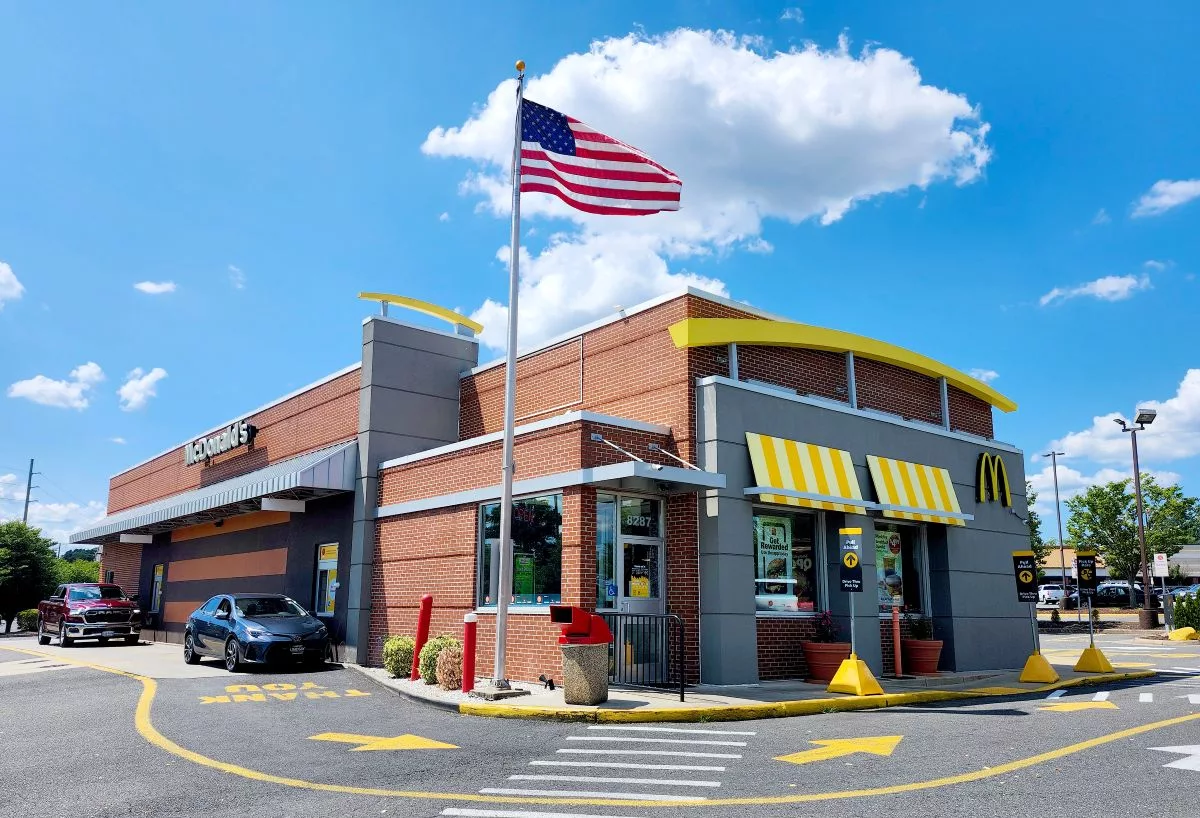
Gas prices pressuring McDonald’s low-income consumers

Published

on

Gas prices pressuring McDonald’s low-income consumers

Company is partnering with Red Bull in revamped beverage program.

Continue Reading

Business

JPMorgan Chase-led group reins in credit

Published

on

JPMorgan Chase-led group reins in credit

The JPMorgan Chase & Co. building before the ribbon cutting ceremony, at the firm’s new headquarters at 270 Park Avenue, in New York City, U.S., Oct. 21, 2025.

Eduardo Munoz | Reuters

A JPMorgan Chase-led group of banks cut their exposure to a private credit fund co-managed by KKR days before the asset manager announced it was spending $300 million to prop up the troubled vehicle.

Advertisement

The fund, FS KKR Capital Corp., said Monday in a release that KKR will inject $150 million into the fund as equity and spend another $150 million to buy shares from investors who want to exit.

Those moves, labeled “Strategic Value Enhancement Actions” by the fund, came after the JPMorgan-led group on May 8 slashed its credit line by $648 million, or about 14%, to $4.05 billion. Some lenders may have exited entirely rather than extend their commitments, according to the filing.

The fund, co-run by KKR and the alternative asset manager Future Standard and often referred to by its ticker, FSK, has become one of the most visible fault lines in the private credit story. Its shares have plunged by nearly half over the past year and trade at a deep discount to the fund’s net asset value.

In March, Moody’s downgraded FSK’s ratings to junk amid mounting stress in the portfolio. Since then, loans to software maker Medallia and dental services firm Affordable Care have stopped paying interest, executives said Monday.

Advertisement

FSK said that it had losses of $2 per share in the first quarter, or about $560 million in total losses given the roughly 280 million share count, as the fund’s net asset value fell about 10%.

“Our first quarter decline in net asset value was driven by investments which have impacted prior quarters, certain new non-accrual assets, and the impact of market-driven spread widening,” CEO Michael Forman and President Daniel Pietrzak said in a release.

“We believe FSK’s current stock price underappreciates the long-term value associated with FSK’s investment portfolio and the KKR Credit platform,” they added.

FSK loans that are no longer generating income jumped to 8.1% by the end of the first quarter from 5.5% at yearend, the fund said.

Advertisement

Further to fall?

Besides cutting its credit line, the JPMorgan-led group also raised interest rates on the remaining facility and gave the fund more room to absorb losses without triggering a default.

The latter move, lowering the minimum shareholders’ equity floor from $5.05 billion to $3.75 billion, gives FSK more breathing room. But it also indicates that lenders believe the firm’s assets have further to fall.

The FSK credit facility was funded by a syndicate of banks led by JPMorgan as administrative agent, a role that typically includes coordinating lender communications and amendment negotiations. ING Capital served as collateral agent, while the other participating lenders were not named in the filing.

JPMorgan, the largest U.S. bank by assets, has made broader moves to insulate itself from private credit turmoil, in part by marking down the value of private credit loans held as collateral on its own books, CNBC reported in March. Many of those marked-down loans are to software companies facing possible disruption from artificial intelligence.

Advertisement

Besides the $300 million that KKR is spending to support FSK, the fund’s board also authorized a separate $300 million share repurchase program, and KKR agreed to waive half its incentive fees for four quarters.

FSK, which lends to private, middle-market U.S. companies, became the second-largest publicly traded business development company, or BDC, when it was formed through a merger of two predecessor funds in 2018.

The fund’s largest single category of loans is for software and related services, which made up 16.4% of exposure at yearend.

Choose CNBC as your preferred source on Google and never miss a moment from the most trusted name in business news.
Advertisement
Continue Reading

Business

Form 13F Guardian Capital For: 11 May

Published

on


Form 13F Guardian Capital For: 11 May

Continue Reading

Business

Commodity Radar: Gold choppy ahead of US inflation data. Sell on rise for these targets?

Published

on

Commodity Radar: Gold choppy ahead of US inflation data. Sell on rise for these targets?
Gold is expected to remain volatile with a mild downside bias this week as traders closely track major global triggers including US inflation data, President Donald Trump’s China visit and ongoing US-Iran negotiations.

The yellow metal traded with cuts on Monday tracking global cues despite the rupee hitting fresh lows. Prime Minister Narendra Modi’s message to citizens to avoid buying gold for a year dented the confidence of domestic investors.

The June gold futures dropped 0.7% or by Rs 1,030 per 10 gram today to hit the intraday low of Rs 1,51,500 even as INR, which tested a bottom of 95.31, witnessed its sharpest fall in a month.

Rupee’s fall against the greenback is considered supportive for bullion.

Advertisement

“MCX Gold is expected to remain volatile with a slightly negative bias during the week as traders focus on crucial macro developments including US CPI inflation data, Trump’s visit to China, and ongoing US-Iran negotiations,” Jateen Trivedi, Vice President, Research Analyst at LKP Securities said, adding that the market is currently trading near the Rs 1,52,000 – Rs 1,53,000 zone where repeated resistance is being witnessed, indicating profit booking at higher levels after recent recovery attempts.


While geopolitical uncertainty and currency volatility continue to support prices intermittently, the overall technical structure suggests that upside may remain capped unless Gold decisively sustains above Rs 1,55,500, he added.
What fundamentals suggest?According to Trivedi, CPI inflation data will remain the biggest trigger for bullion markets this week as softer inflation can revive expectations of future Federal Reserve rate cuts, while hotter inflation may strengthen the dollar and pressure precious metals.

Moreover, Trump’s China visit is likely to be keenly watched for any trade or tariff-related developments which may influence risk sentiment globally, the LKP analyst said.

Among the positive triggers, uncertainty surrounding US-Iran talks will likely keep the safe haven appeal of bullion intact.

“Rupee volatility is also expected to keep MCX Gold comparatively more volatile than COMRX Gold in the near term,” Trivedi said.

Advertisement

Technical triggers

Decoding the charts, Trivedi said RSI is hovering near the 52 zone, indicating neutral momentum with slight recovery signs but still lacking strong bullish confirmation. Additionally, bollinger bands remain relatively narrow, suggesting volatility compression and possibility of a sharp move once major US data releases trigger fresh positioning.

“EMA 8 continues to trade marginally below EMA 21, reflecting that short-term trend remains weak and every upside bounce may attract selling pressure unless stronger buying momentum emerges. MACD has shown minor improvement in histogram formation, but the indicator still remains in negative territory, suggesting broader momentum continues to favor cautious or sell-on-rise trading strategies,” this analyst said.

Gold trading strategy

Advertisement

The commodity expert suggested a ‘Sell on rise’ strategy near Rs 1,53,000 – Rs 1,53,500 with a stop loss above Rs 1,55,500 on a closing basis for downside targets of Rs 1,50,000 and Rs 1,48,500.

(Disclaimer: The recommendations, suggestions, views, and opinions given by the experts are their own. These do not represent the views of The Economic Times.)

Continue Reading

Trending

Copyright © 2025