

Crypto World
CFTC Chair Launches Innovation Task Force Focused on Crypto Framework

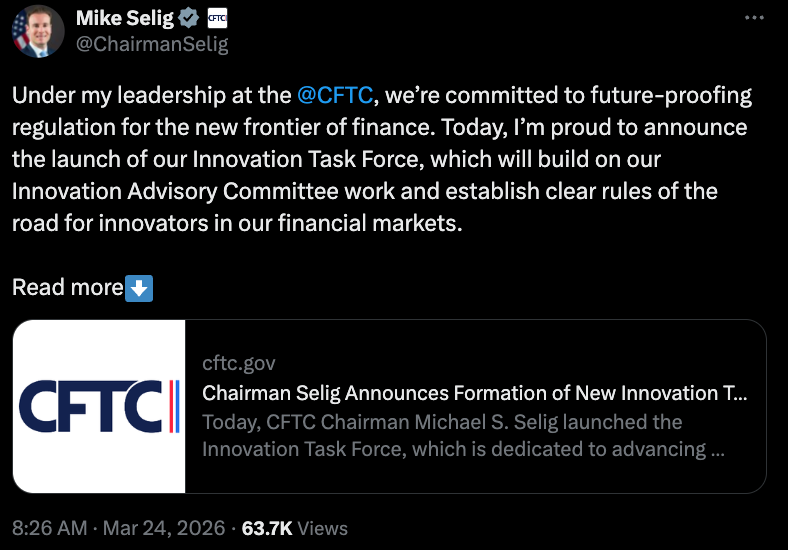
Chair Michael Selig said that the task force was an example of “future-proofing“ regulation at the Commodity Futures Trading Commission.
The US Commodity Futures Trading Commission (CFTC) is looking to embrace innovation in its regulatory approach to crypto and blockchain with the launch of a new Innovation Task Force, according to a Tuesday notice.
Chair Michael Selig said that the task force will work with the regulator’s Innovation Advisory Committee to create a framework focused on crypto, blockchain, AI, and prediction markets. The effort will be led by Michael Passalacqua, who joined the CFTC as a senior adviser in January after working on crypto and blockchain issues at international law firm Simpson Thacher & Bartlett.
“The idea behind our innovation advisory task force is really to create a space where innovators and builders can come in and talk to the staff,” Selig told attendees at the Digital Asset Summit in New York City on Tuesday. “It’s not just crypto — it’s going to be prediction markets, crypto, and AI. We think these three verticals are really important.”

The move comes more than a year after the US Securities and Exchange Commission (SEC) launched its own task force focused on crypto regulation, just one day after US President Donald Trump took office, and SEC Commissioner Mark Uyeda took the reins as acting chair from former Commissioner Gary Gensler. The SEC task force, headed by Commissioner Hester Peirce, included Selig as chief counsel at the time before he was nominated by Trump to chair the CFTC.
Related: SEC task force met with Trump-supporting firms to discuss crypto regulation
Regulators work on crypto rules as market structure legislation remains stuck
The CFTC’s announcement comes on the heels of an SEC interpretative notice last week that proposed that the agency would not consider most crypto asset securities under federal law. SEC Chair Paul Atkins called the measure a “bridge” to clarify crypto regulation in the absence of Congressional action on a comprehensive digital asset framework.
The market structure bill, called the CLARITY Act when it passed the House of Representatives in July 2025, has effectively been stalled in the Senate amid debates over stablecoin yield, ethics, tokenized equities, and other issues. While some proponents of the legislation have said policymakers were closer to reaching an agreement, it was unclear as of Tuesday if or when it would reach the Senate for a full floor vote.
Magazine: Banks want to run Vietnam’s crypto exchanges, Boyaa’s $70M BTC plan: Asia Express


American Bitcoin (ABTC), the Trump family-backed BTC company, released its Q1 2026 financial results earlier in the week, and they showed a nearly $82 million net loss for the period.
This was despite the firm mining a record 817 BTC.
Mining Output Goes Up, But BTC Price Drop Hits Earnings
Per documents it filed with the SEC, apart from the 817 BTC it mined, American Bitcoin also bought another 803 BTC, which took its strategic reserve to 7,021 BTC by March 31.
However, at the time of writing, the stash had grown to about 7,300 BTC after the firm purchased an additional 300 units, which saw it climb the ranks of publicly traded companies holding Bitcoin to number 16.
Mining revenues declined to $62.1 million from $78.3 million, due to lower prices per Bitcoin mined of $76,000 compared to the previous quarter’s about $100,000. Still, the company posted a gross margin over 50% and cut its cost to mine by 23% to $36,200 per Bitcoin, down from $46,900 or so in Q4 2025.
Satoshis per share, the firm’s preferred measure of value creation, rose by about 20% quarter-over-quarter to about 663.
“Strip out the non-cash mark-to-market adjustment on our Bitcoin required by FASB, and the underlying business was profitable, and we did not sell a single coin,” CEO Mike Ho said in the earnings release.
President Matthew Prusak framed the cost improvement as the key operational story, saying:
“We produced Bitcoin at 52% gross margin despite a 22% decline in Bitcoin price, reflecting meaningful cost improvements that partially offset the price headwind. Every share of American Bitcoin owns more Bitcoin today than it did three months ago.”
ABTC shares fell 8.4% to around $1.15 following the earnings release, keeping the stock far below its 52-week high of $14.65.
Expansion Strategy Mirrors Wider Bitcoin Treasury Trend
The production gains were partly the result of a hardware acquisition completed in early March 2026, when American Bitcoin took delivery of 11,298 next-generation miners from Bitmain.
As was reported at the time, that deal added about 3.05 EH/s of capacity at an efficiency of 13.5 joules per terahash, deployed at Hut 8’s Drumheller site in Alberta, Canada.
The company’s total owned fleet now stands at approximately 89,242 miners with 28.1 EH/s of capacity, though its operational fleet delivering active output is 58,999 miners at around 25.0 EH/s, still roughly half the scale of the largest publicly listed Bitcoin miners.
American Bitcoin is not alone in reporting large headline losses driven by Bitcoin’s poor run at the beginning of the year, as Strategy, the largest corporate owner of the flagship cryptocurrency, earlier in the week reported that it had incurred a net loss of $12.54 billion in Q1 2026.
The post Trump-Backed American Bitcoin Posts $82M Loss Despite Record BTC Mining Output appeared first on CryptoPotato.


Deepfakes have shifted from a niche concern to a mass-market threat. May’s incidents show how consumer-grade tools now outpace any institutional response.
The damage extends into crypto. Scammers leverage artificial intelligence (AI) to create impersonation scams.
The Deepfake Economy Is Here, and Detection Is Losing
In early May 2026, AI-generated content showed up across politics, entertainment, and crime, as documented by Resemble AI.
FBI Director Kash Patel posted a video that appeared to use AI to generate shots nearly identical to those in the Beastie Boys’ “Sabotage” music video. Furthermore, an AI video of mayoral candidate Spencer Pratt drew 4.1 million views on X.
Follow us on X to get the latest news as it happens
These tools aren’t just being used for viral content. They are also fueling real financial harm. A Chicago man lost $69,000 to a scammer who flashed an AI-generated US Marshals badge on a video call.
Meanwhile, the Atlantic’s Lila Shroff found that OpenAI’s ChatGPT Images 2.0 can generate fake IDs, prescriptions, receipts, bank alerts, and news screenshots.
“All of this makes it even harder for banks, hospitals, government agencies, and the like to prevent fraud,” Shroff wrote.
404 Media exposed Haotian AI, a Chinese real-time deepfake software. Reporter Joseph Cox swapped faces on a live Teams call using this, proving the technology is functional, for sale, and already being used against real victims.
“Three of this week’s stories, Haotian AI, the Meloni deepfake, and the Patel FBI video, come from completely different categories and geographies, but they share a structural condition: the tools used to produce the harm are consumer-grade, widely available, and improving faster than any institutional response. Haotian AI costs a few hundred dollars and works on Teams. ChatGPT Images 2.0 is a subscription product,” Resemble AI said.
Crypto Also Bears the Cost
Crypto has become a prime target for AI-driven deception. According to Chainalysis, fraudsters are now pairing deepfakes, face-swap apps, and large language models with classic romance and investment cons, and the math favors them.
The average AI-assisted crypto scam nets roughly $3.2 million, about 4.5 times the haul of a conventional scheme. Several cases underline the threat. In August 2025, attackers stole $2 million by impersonating the founder of Plasma.
BeInCrypto has also reported on North Korean operatives running deepfake video calls on Zoom. Together, these incidents mark AI-powered impersonation as one of the sector’s most pressing security risks.
Subscribe to our YouTube channel to watch leaders and journalists provide expert insights
The post ChatGPT Images 2.0 Is Becoming a Market Fraud Tool with Deepfakes appeared first on BeInCrypto.
Passing the Digital Asset Market Clarity Act of 2025, also known as CLARITY, will help to reshore the crypto industry in the United States, according to Bill Hughes, the senior counsel and director of global regulatory matters at Consensys, a crypto infrastructure company.
“The US dollar is the world’s largest fiat on-ramp for cryptocurrency, accounting for over $2.4 trillion in volume between July 2024 and June 2025,” Hughes said.
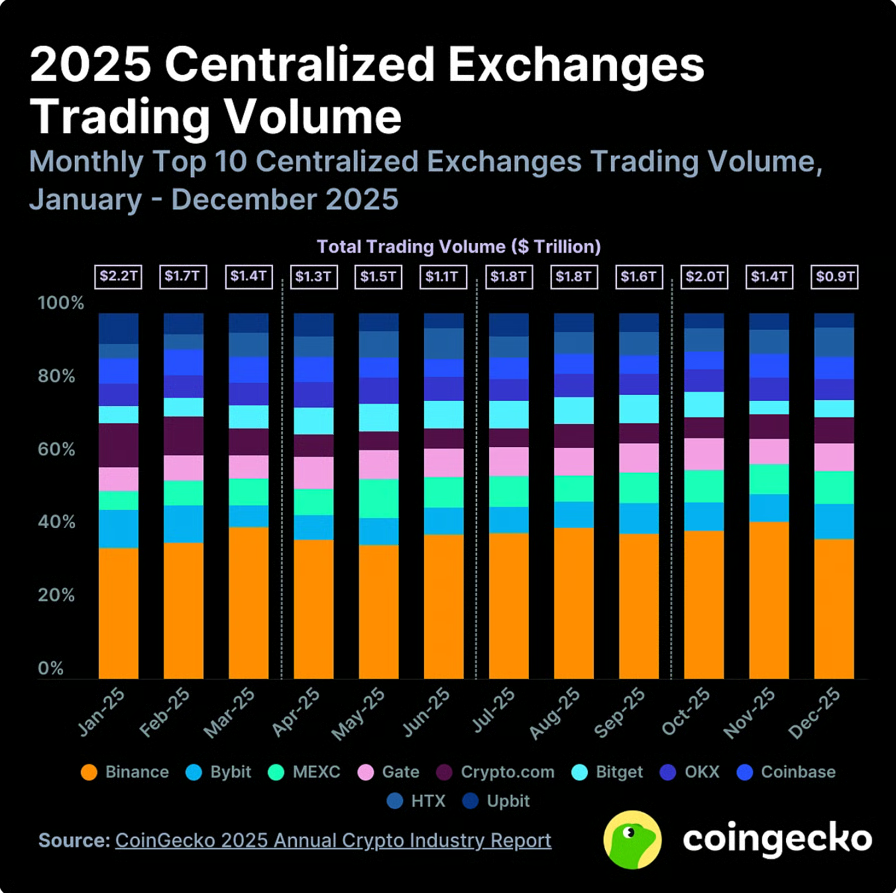
However, the vast majority of crypto trading volume takes place on exchanges based outside of the United States, Hughes said, adding that Binance alone accounted for over 38% of all centralized exchange trading volume in December 2025.
Coinbase was the only US-based exchange out of the 10 listed on Coingecko’s top 10 centralized exchanges report for 2025, and it only had a 6.1% market share.

Top 10 centralized crypto exchanges by trading volume in 2025. Source: Coingecko
Passing the CLARITY Act would cement clear rules for the crypto industry in the US, formally ending years of regulatory uncertainty for the sector and encouraging projects to build in the US; however, time is running out for passing the bill, according to Hughes and other crypto industry executives.
Related: US senator says crypto market structure vote may happen by August
The window to pass the bill is closing due to midterms
The window to pass crypto market legislation is “unforgiving” due to the upcoming US midterm elections in November and the midterm campaign season preceding the elections, Hughes said.
“The Senate has only weeks to move the bill before the August recess, after which the midterm election calendar takes over,” he said.
If no progress is made on the bill, the next opportunity to pass a comprehensive crypto market regulatory framework may not occur until 2030, he warned.
The Senate Banking Committee has scheduled a markup for the bill on Thursday of the week following this publication.
Speaking at the Consensus 2026 crypto industry conference in Miami, Florida, Brad Garlinghouse, the CEO of crypto software company Ripple Labs, warned that despite recent progress on the bill, its passage into law still isn’t guaranteed.

A HarrisX poll found that a majority of those surveyed supported the CLARITY Act. Source: HarrisX
A poll published by HarrisX in May found that 52% of the 2,028 registered US voters surveyed supported passing the CLARITY Act.
“Support for the CLARITY Act crosses party lines,” according to HarrisX, which found that the bill had strong support in both the Democratic and Republican political parties.
Crypto World
Shiba Inu Price Prediction: Can SHIB Break $0.000027 Now That Tom Lee Declares the Crypto Winter Over?
The Shiba Inu price prediction just gained a strong tailwind. Fundstrat’s Tom Lee told the Consensus 2026 stage in Miami that the crypto winter ends if Bitcoin closes May above $76,000 per CoinDesk. BTC already holds $81,000, and the meme sector posted its best weekly returns of the year with SHIB gaining ground after months of red.
That shift in sentiment changes the outlook for meme tokens, and the projects that protect capital during recovery matter as much as timing the entry. Pepeto is the Pepe cofounder’s presale exchange with verified safety, built for the cycle Tom Lee just confirmed.
Shiba Inu Price Prediction Improves as Tom Lee Confirms New Bull Market at Consensus 2026
The meme coin market recovered from its $34 billion bottom after falling 75% from the November 2024 high. Whale activity across SHIB, DOGE, and PEPE now shows confirmed on-chain accumulation per CoinMarketCap.
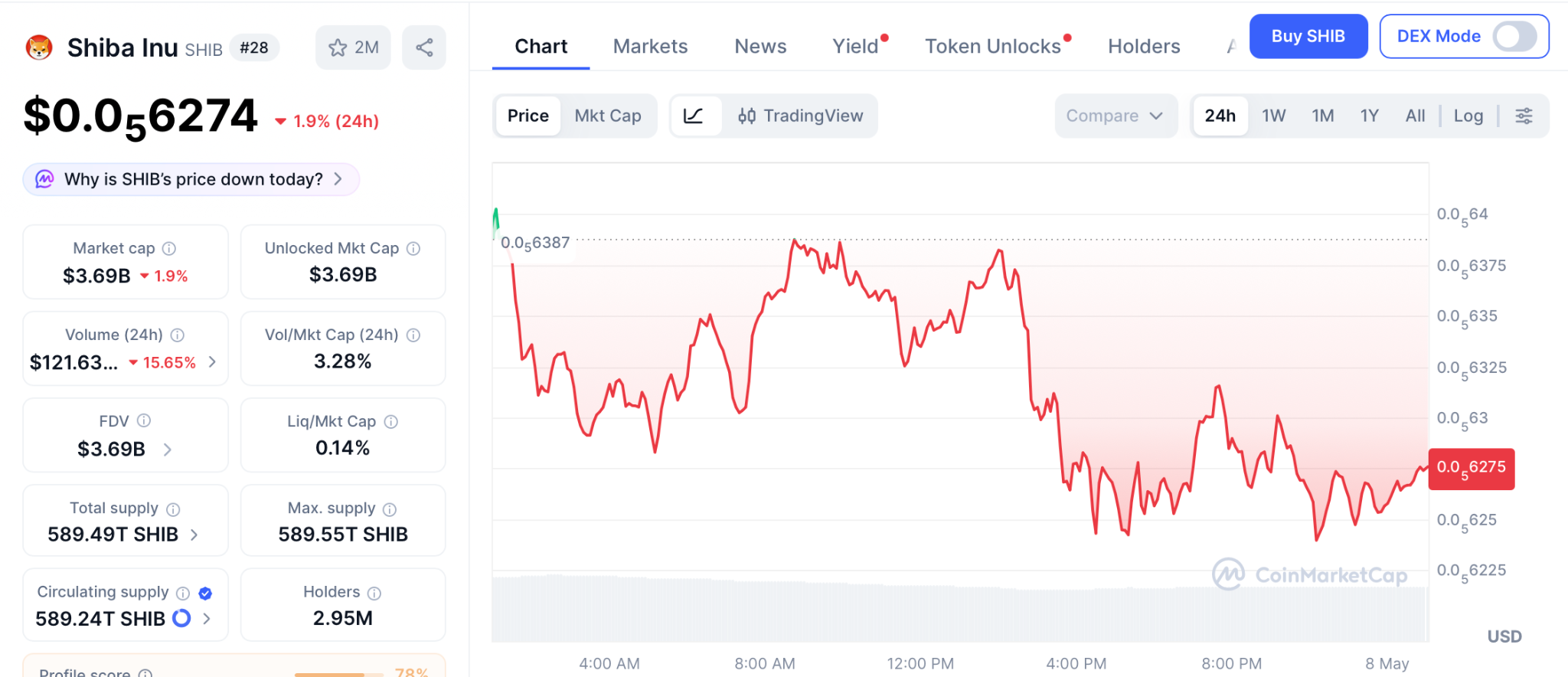
Shiba Inu (SHIB) trades at $0.000006274 per CoinMarketCap, up 1% on the week after testing resistance near the 100-day EMA. The burn rate spiked 812% in 48 hours according to U.Today. SHIB listed in T. Rowe Price’s crypto ETF in March per Coinbase.
The Shiba Inu price prediction sits inside a market where Tom Lee just told institutional investors the bear phase is ending, and presale entries pull the most aggressive capital during these exact transitions.
SHIB Recovery, Pepeto, and Why Presale Entries Beat Waiting for the Chart
The Presale That SHIB Holders See as Their Strongest Move Right Now
The meme coin market lost three quarters of its value because most meme tokens carry zero real products behind them, no exchange, no bridge, no scanner, just noise and speculation. That is exactly why the Pepe cofounder’s exchange stands apart during this recovery.
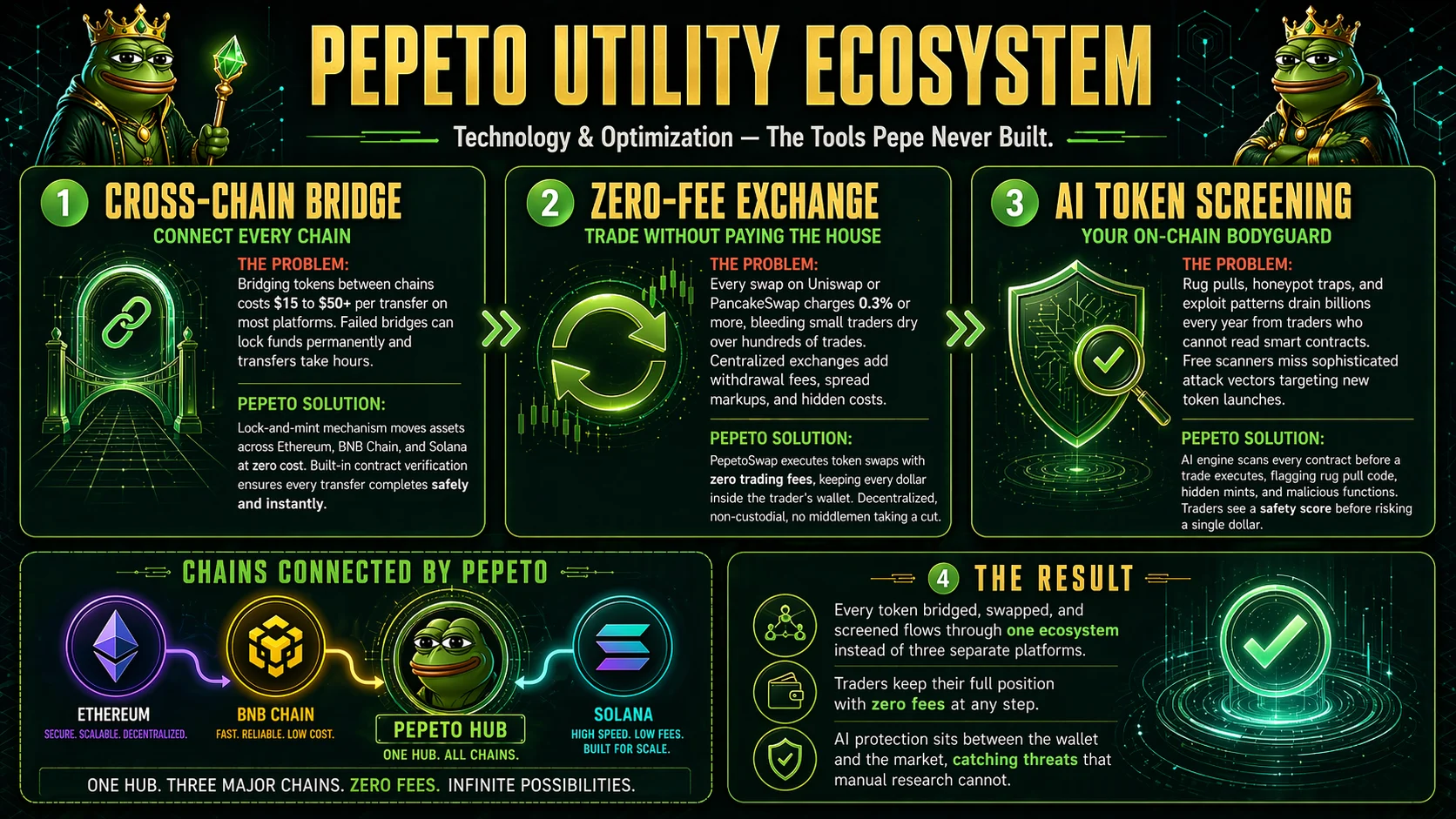
Pepeto guards wallets from the token scams, hidden traps, and concentrated holder setups running through the sector right now, because PepetoSwap handles every trade at zero cost and keeps the full balance intact while the risk scorer flags dangerous contracts before any money enters and the bridge moves value across Ethereum, BNB Chain, and Solana without gas eating the transfer.
At $0.0000001869 with $9.86 million committed, the presale is on track for the Binance listing while Fear and Greed still reads 26. SolidProof cleared every contract check before the first wallet entered, and a developer who ran Binance token launches from the inside built the listing path. Staking at 175% APY grows positions daily while the exchange scales toward full deployment.
SHIB buyers who entered early turned tiny positions into life-changing wealth, and not one of them thought the entry was big enough in hindsight. That same setup is forming around Pepeto right now, and the wallets that move before the Binance listing are building the success story that everyone watching from the outside will replay in their head for months after the listing opens.
Shiba Inu (SHIB) Price at $0.000006274 as Burn Rate Spikes 812% and ETF Listing Adds Credibility
Shiba Inu (SHIB) trades at $0.000006274 per CoinMarketCap after the burn rate jumped 812% in 48 hours. SHIB listed in T. Rowe Price’s crypto ETF in March, and Tom Lee’s bull market call at Consensus 2026 supports the meme sector.
Analysts at Changelly project a Shiba Inu price prediction range of $0.00000591 to $0.00000837 through December 2026, with $0.00000700 as first resistance. CoinPedia’s bull case reaches $0.000027, roughly 4.3x from here over months. Pepeto at presale pricing targets 150x from a single listing event, a return SHIB at $3.7 billion market cap cannot match.
Conclusion
The Shiba Inu price prediction confirms meme coin whales are accumulating hard while the market still reads fear, with SHIB at $0.000006274 and the burn rate accelerating, but the path to $0.000027 gives 4.3x over months of patience and waiting.
Early SHIB holders who entered before anyone recognized the name became the success stories that changed how people think about meme coins forever, and Pepeto is that same moment forming again with a working exchange, the Pepe cofounder behind it, and a Binance listing closing in fast.
The presale supply gets smaller every day as buyers keep filling each round ahead of schedule, and the Binance listing runs on its own clock. The wallets that commit before the final round closes are writing the returns this cycle talks about, while everyone who hesitated spends the months ahead wishing they had moved when the entry was still open.
Click To Visit Pepeto Website To Enter The Presale

FAQs
What is the Shiba Inu price prediction now that Tom Lee confirmed the bull market at Consensus 2026?
Changelly projects SHIB between $0.00000591 and $0.00000837 for 2026, with CoinPedia’s bull case reaching $0.000027. Tom Lee’s confirmation that the crypto winter is ending supports the full meme sector recovery.
What is Pepeto and why are SHIB holders watching the presale closely?
Pepeto is the exchange built by the creator of the original Pepe token, with a Binance specialist designing the listing and SolidProof verifying every contract. SHIB holders see the same early-entry pattern at $0.0000001869 that turned tiny SHIB positions into life-changing wealth before exchanges opened.
Disclaimer: This is a Press Release provided by a third party who is responsible for the content. Please conduct your own research before taking any action based on the content.


The Digital Asset Market Clarity Act of 2025 (CLARITY) has emerged as a focal point in the United States’ ongoing effort to establish a formal, enforceable regulatory framework for digital assets. Proponents argue that a comprehensive, federally coordinated regime would end years of regulatory ambiguity, reduce compliance risk for firms, and spur domestic innovation. Bill Hughes, senior counsel and director of global regulatory matters at Consensys, frames CLARITY as a potential inflection point for the US crypto industry.
Hughes notes that the U.S. dollar remains the world’s largest fiat on-ramp for crypto, with on-ramp volume exceeding $2.4 trillion in the 12 months from July 2024 to June 2025. While off-ramp and trading activity span a broad global mix, the current regulatory landscape has not adequately aligned incentives or supervision for firms seeking to operate within the United States. That divergence helps explain why substantial portions of trading activity occur outside US borders, underscoring the regulatory gap CLARITY intends to address.
Key takeaways
- CLARITY seeks to establish a formal federal framework for digital assets, licensing, and enforcement, aiming to end regulatory uncertainty and attract domestic project development.
- The U.S. dollar’s dominant role in crypto on-ramping contrasts with trading activity concentrated on non-US exchanges, highlighting regulatory and supervisory gaps.
- According to industry data, Binance accounted for more than 38% of centralized exchange trading volume in December 2025; Coinbase was the sole US-based exchange among the top 10 by market share in 2025, at 6.1% (per Coingecko).
- Legislative momentum faces a tight window due to the upcoming midterm elections, with a Senate markup for the CLARITY Act anticipated in the weeks following this report.
- Public and industry sentiment shows notable support for CLARITY, though political and legal uncertainties persist, as reflected in a cross-partisan poll and cautious statements from industry executives.
Regulatory clarity and domestic competitiveness
Advocates argue that codifying a clear federal regime would provide predictable rules for token classification, registration, custody, and governance, reducing legal risk for issuers, exchanges, banks, and other market participants seeking to operate in the United States. By setting consistent standards, CLARITY could lower barriers to entry for compliant projects and encourage investment in U.S. crypto ecosystems, while enabling robust oversight to align anti-money laundering (AML) and investor protection objectives with evolving market realities.
As Consensys’s Hughes emphasizes, the absence of a stable framework has forced many players to navigate a patchwork of state and federal positions, creating a chilling effect on innovation and capital deployment. CLARITY’s proponents argue that a formalized regime would harmonize regulatory expectations across agencies, reduce duplicative compliance costs, and provide a clear path for licensing and regulatory oversight that current enforcement ambiguity has inhibited.
Beyond the immediate impact on firms’ risk profiles, supporters contend that clarified rules would support financial institutions seeking banking relationships and custody solutions for crypto activities, potentially broadening access to traditional banking rails for compliant crypto businesses. The broader question remains how the framework would delineate activities that are permissible versus those requiring registration, exclusion, or ongoing supervisory oversight—a topic that will significantly shape sectoral strategies in the years ahead.
Market structure and cross-border dynamics
The competitive landscape for centralized crypto trading remains highly global. Hughes highlights that the United States, despite its size and sophistication, has yet to translate trading volume into equivalent domestic exchange dominance. Binance, a non-US venue, accounted for over 38% of centralized exchange trading volume in December 2025, underscoring the scale of non-US platforms in the current market structure. The implication for the domestic ecosystem is twofold: while on-ramp activity has a substantial dollar value, on-exchange trading activity remains disproportionately concentrated abroad, complicating enforcement, licensing, and tax and compliance oversight.
Data from CoinGecko’s 2025 market-share publication shows Coinbase as the sole US-based exchange among the top 10 centralized venues by trading volume, with a market share of 6.1%. The disparity between on-ramp volume and exchange share illustrates the frictional gap between capital inflows and domestic trading activity under the prevailing regulatory environment. Supporters of CLARITY argue that a coherent U.S. regime could improve domestic exchange competitiveness by clarifying registration and supervision for US-based venues and their participants, while simultaneously strengthening enforcement against non-compliant actors operating in the broader market.
From a policy and risk-management standpoint, the concentration of activity outside the United States has implications for AML/KYC compliance, supervisory coordination, and cross-border enforcement. A formal framework would likely require clear delineation of which activities fall under securities versus commodities or other classifications, and would set licensing expectations for digital-asset firms, custodians, and gateway providers that interact with traditional financial institutions. In practice, this could influence how banks assess crypto integrations, how exchanges manage customer onboarding, and how investors’ protections are operationalized across platforms with varying regulatory alignments.
Legislative trajectory and near-term milestones
Time is a critical factor for CLARITY as the political calendar tightens ahead of the November midterm elections. Industry observers describe the legislative window as unforgiving: if momentum stalls during the August recess and the midterm cycle intensifies, the opportunity to enact a comprehensive crypto market framework could extend well into 2030. Stakeholders are watching closely for a potential markup in the Senate Banking Committee that would advance the bill toward floor consideration and conference negotiations with the House.
At Consensus 2026 in Miami, Ripple CEO Brad Garlinghouse cautioned that, despite signs of progress, passage into law remains not guaranteed. His remarks reflect a broader sense of cautious optimism tempered by structural and political hurdles that have characterized crypto regulation debates for years. The near-term legislative path hinges on bipartisan alignment, executive-branch coordination, and the ability of lawmakers to reconcile differences over the scope, definitions, and oversight mechanisms that CLARITY would implement.
Public sentiment also figures into the regulatory calculus. A HarrisX poll conducted in May surveyed 2,028 registered U.S. voters and found that 52% supported passing the CLARITY Act. The poll indicated cross-party backing, with respondents from multiple political affiliations expressing favorable views toward establishing a formal federal framework for digital-assets activity. While polls reflect opinion, they do not guarantee legislative outcomes, and the regulatory process will still require detailed drafting, committee consideration, and potential amendments to satisfy both chambers of Congress and the administration.
In parallel, key procedural developments continue to shape the bill’s fate. The text and legislative text alignment would be tested against agency rulemakings, public comment periods, and potential stakeholder negotiations on definitions, registration timelines, and supervisory authorities. As the regulatory debate evolves, observers will assess how the framework interacts with other policy initiatives, including broader market-structure reform and cross-border cooperation on illicit finance controls and consumer protections.
In sum, CLARITY represents a pivotal attempt to align the United States’ regulatory stance with the rapidly evolving digital-asset landscape. Its passage would mark a meaningful shift toward regulatory predictability, domestic capital formation, and integrated enforcement, with implications for exchanges, banks, investors, and the crypto ecosystem at large. The coming weeks will be determinative as committees advance the bill, stakeholders present their positions, and policymakers weigh the trade-offs between innovation, risk, and robust consumer protections.

Estimates of Nobitex’s scale vary, but multiple firms place its activity in the billions of dollars. TRM Labs, for instance, reported approximately $5 billion in observed volume on Nobitex between 2025 and March 2026. Chainalysis has previously noted that inflows to Nobitex addresses exceeded the combined inflows of Iran’s next ten largest exchanges, underscoring the platform’s outsized role in the domestic crypto economy. Nobitex’s own disclosures say it serves around 11 million Iranians, about 12% of the population, with a broad suite of services that extends beyond spot trading to margins, yield products, liquidity pools, gift cards, and crypto-collateralized lending. The platform also provides differentiated terms for professional and institutional participants.
Key takeaways
- Nobitex processes billions in value and claims a retail footprint of roughly 11 million users, making it a linchpin of Iran’s crypto activity despite a broader online isolation.
- Regulators have not sanctioned Nobitex on the U.S. Treasury’s Specially Designated Nationals (SDN) List, but authorities have long treated Iranian crypto exchanges as blocked financial institutions, complicating enforcement and international participation.
- Investigations and disclosures link Nobitex to state-driven usage, including central-bank activity in stablecoins and ties to elite networks, prompting questions about where sanctions pressure is most effective.
- Analysts warn that the Nobitex case highlights a larger tension: sanctions aim at deterring regime finance, but may also entangle millions of ordinary users who rely on crypto for access to foreign liquidity and inflation resilience.
Nobis footprint: retail gateway and strategic asset channel
Beyond its consumer-facing services, Nobitex has developed an architecture that some observers describe as purpose-built to operate under sanctions. Its platform accommodates a broad retail audience, while its API and service tiers cater to high-volume traders and institutions seeking faster settlement and higher limits. This combination makes Nobitex more than a passive conduit; it acts as a central node where ordinary users and sanctioned-related flows intersect.
In parallel, broader market research situates Nobitex as a critical domestic hub. The exchange’s scale aligns with a larger pattern identified by researchers: Iran’s crypto environment has matured from experimental use into a structured ecosystem that blends retail adoption with state-driven financial choreography. As Chainalysis has emphasized, Iran’s crypto model—mass retail, external-facing gateways, and offshore intermediaries—has evolved into infrastructure that regulators must increasingly reckon with.
Sanctions architecture and the state’s use of Nobitex
Several investigations have sketched out how Nobitex intersects with sanctions policy and external finance. In January 2026, Elliptic published a report detailing systematic purchases of the U.S. dollar-pegged stablecoin USDT by Iran’s central bank. The firm documented at least $507 million in such purchases conducted through a UAE broker, with assets reportedly routed to Nobitex and converted into Iranian rial liquidity. The arrangement suggests an end-run around conventional foreign-exchange channels, leveraging stablecoins to inject dollars into the domestic economy through a sanctioned intermediary.
Separately, Reuters traced Nobitex back to influential Iranian families, including the Kharrazi clan, and noted that one of the early Nobitex investors was Mohammad Baqer Nahvi, a former official tied to Safiran Airport Services and placed on the OFAC SDN List in 2022 for facilitating drone-related shipments. These connections fuel scrutiny of Nobitex as more than a market operator; for some observers, the platform sits at the intersection of political power and financial access.
The platform has also attracted attention for its technical and compliance footprint. Leaked materials in 2025 suggested Nobitex’s internal code contained modules intended to bolster stealth transactions, endpoint switching, and compliance evasion. A document titled “Nobitex Privacy” outlined strategies aimed at evading U.S. FinCEN and Western blockchain-analytics tools. Such material reinforces perceptions that Nobitex was engineered—at least in some respects—to function under sanctions-era constraints.
And the public record of sanctions enforcement adds nuance to Nobitex’s status. The U.S. Treasury has sanctioned Iran-linked exchanges in the past, including instances where platforms operated from overseas. Yet Nobitex is incorporated in Iran, and its core user base resides there, complicating the enforcement calculus. OFAC has clarified that Iranian digital asset exchanges are treated as blocked financial institutions irrespective of individual SDN designation, a stance that carries significant implications for any foreign counterparties seeking to transact or list Iranian-driven assets.
The broader enforcement framework is not limited to named entities. OFAC’s published FAQs note that sanctions goals can be achieved through targeting specific addresses, designating exchange houses, or naming individuals and OTC brokers. The result is a multidimensional approach where a domestic exchange can be affected not only by direct restrictions but also by the risk posture of foreign banks, stablecoin issuers, and other transactional intermediaries. In Nobitex’s case, some observers argue that a formal SDN listing may offer limited incremental leverage beyond existing restrictions, given that U.S. persons are already prohibited from transacting with Iranian exchanges.
Analysts also consider the human element in sanctions design. Crystal Intelligence’s Nick Smart argues that Nobitex’s user base is heavily concentrated among ordinary Iranians, complicating the decision to isolate the regime from its citizens. This “human shield” concern mirrors broader debates about the social impact of asset freezes, and it contrasts with cases like Garantex—another exchange with a different operational profile that allowed authorities to seize servers with less collateral impact on retail users.
What this means for policy, markets, and the road ahead
The Nobitex narrative sits at a nexus of three ongoing dynamics in crypto regulation and geopolitics. First, sanctions policy is moving from targeting isolated entities to shaping entire market structures. The industry’s experience in Iran, Russia, North Korea, and other jurisdictions shows that what began as experimental financial maneuvers have matured into state-aligned economic strategies. Chainalysis has described this shift as a pattern of institutionalization, not just episodic enforcement.
Second, the question of how best to apply pressure remains unsettled. Isolating a local platform through a targeted SDN listing the most effective means to choke off “exits” like stablecoins and cross-border flows, or would broader action against offshore intermediaries be more impactful? The answer may depend on the ability of regulators to coordinate with foreign entities and on whether a platform like Nobitex is treated as a domestic utility or as a strategic choke point for external finance.
Finally, the Nobitex case underscores a practical tension for investors and builders in crypto markets: sanctions-driven adoption, resilience, and risk. For users inside Iran, crypto provides a degree of inflation protection and external liquidity, but the same infrastructure can be repurposed for currency interventions and regional proxy transfers. For international participants, the case highlights the importance of robust due diligence, counterparty risk assessment, and compliance frameworks when engaging with platforms tied to politically sensitive jurisdictions.
Looking ahead, observers will watch how U.S. policymakers recalibrate their approach to Iranian crypto markets. Will the authorities move to extend SDN designations to newly prominent platforms, or will they sharpen enforcement around exits and stablecoin flows to minimize collateral damage to ordinary users? The answer could shape not only Nobitex’s trajectory but the broader balance between sanctions efficacy and the unintended consequences for millions of ordinary Iranians who rely on crypto for access to global liquidity.
As regulators and market participants digest these developments, the central question remains: where does the line lie between pressuring regime finance and preserving the financial agency of everyday users? The answer will unfold in the next rounds of sanctions policy, enforcement actions, and the evolving architecture of Iran’s crypto economy.
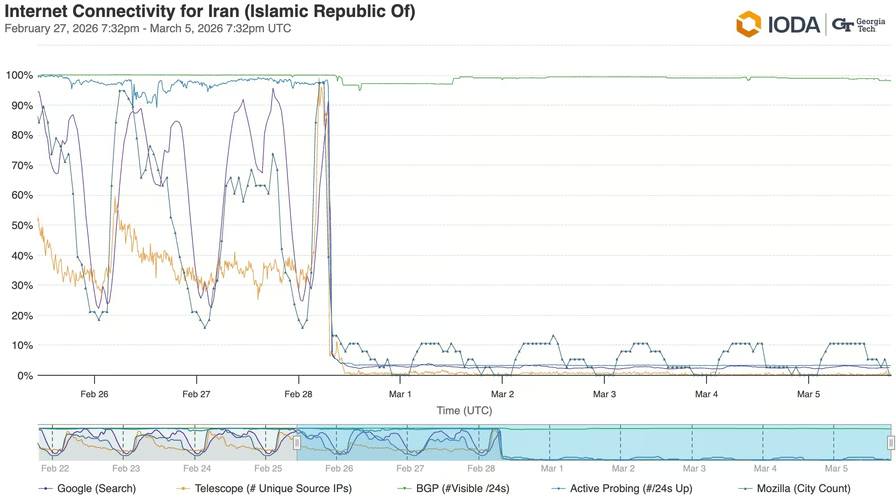

Iran’s internet formally remained part of global routing, but user activity fell almost to zero. That points to a managed restriction on citizens’ access to the external network. Source: IODA.
But in that digital darkness, one vital financial service continued to operate without interruption: Nobitex, a cryptocurrency exchange linked to Iran’s ruling elite.
We compiled the available information about the platform and tried to understand how Iranian authorities use it, what investigations by analytics firms have revealed, and why, despite all these findings, the exchange is still not on OFAC’s SDN List.
The scale and scope of Iran’s crypto giant
Nobitex is far from a niche platform. While estimates vary, analysts agree that the asset flows moving through the exchange are measured in the billions of dollars. For instance, TRM Labs recorded an observed volume of approximately $5 billion between 2025 and March 2026.

Earlier, Chainalysis noted that asset inflows to Nobitex addresses exceeded the combined figure for Iran’s 10 other largest exchanges. Source: Chainalysis.
Nobitex has an extensive retail user base. According to the platform’s own figures, it serves about 11 million Iranians — almost 12% of the country’s population.
The exchange offers a suite of services typical for the industry: spot and margin trading, yield-bearing products, liquidity pools, digital gift cards, and even crypto-collateralized lending.
Nobitex also caters to professional market participants and institutional players. These entities are provided with specialized terms, such as increased limits and high-speed APIs.
What drew attention to the platform, however, wasn’t its retail operations. It was information suggesting Nobitex functions as a national currency gateway for a country cut off from SWIFT.
Shadow banking network
A series of investigations available online focus on how Nobitex helps the Iranian leadership evade economic sanctions.
In January 2026, Elliptic published a report detailing systematic purchases of the USDT stablecoin by Iran’s central bank. According to the company, transactions totaling at least $507 million were carried out through a broker in the UAE, with the assets sent “primarily” to Nobitex.
Since the stablecoins could be sold for rials, the regulator was effectively carrying out a foreign exchange intervention outside the international banking system.
This is far from the only use case for the exchange by the state. A recent Reuters investigation linked the platform’s founders — brothers Ali and Mohammad Kharrazi — to one of the country’s most influential political and clerical families.
The agency also established that one of the largest early investors in the exchange was Mohammad Baqer Nahvi, vice president of Safiran Airport Services — a company placed on the OFAC SDN List in September 2022 for organizing flights to supply Iranian drones to Russia.
Separately, Elliptic and Chainalysis have documented Nobitex’s links to wallets associated with Hamas, the Houthi Ansar Allah movement, the propaganda outlet Gaza Now and the sanctioned Russian exchange Garantex.
The exchange itself appears to have built its infrastructure from the outset for operating under sanctions.
In June 2025, the platform’s source code and portions of its internal documentation were leaked online. According to this data, the code contained modules for generating stealth addresses, transaction batching and splitting, endpoint switching, and specific logic designed to bypass compliance checks. A document titled “Nobitex Privacy” was also made public, explicitly describing a strategy to evade FinCEN tools and Western blockchain analytics.
Half measures or strategic restraint?
In April 2026, reports surfaced that Iranian entities were charging vessel operators fees in cryptocurrency for unobstructed passage through the Strait of Hormuz. Cryptocurrency has reportedly become one of the primary payment options for these transactions.
The practice appears to have been quite successful, suggesting that digital assets will continue to be used for similar purposes.
Against this backdrop, adding Nobitex to the SDN List by analogy with Garantex may seem like a logical step, even though such flows usually don’t pass through retail platforms. Yet that hasn’t happened.
The U.S. Treasury Department has previously sanctioned Iran-linked cryptocurrency exchanges, but those platforms were registered in the United Kingdom. Nobitex, by contrast, is incorporated in Iran as a purely local company.
Crucially, on the same day Reuters published its investigation into Nobitex, OFAC clarified that Iranian digital asset exchanges are already considered blocked financial institutions, regardless of whether they are individually named on the SDN List.
For a platform physically based in Iran, however, this has little practical effect: its core operations revolve around Iranian users and neutral foreign intermediaries.
An SDN listing functions differently. It triggers secondary sanctions against any non-U.S. counterparties worldwide, provides direct justification for bulk asset freezes by stablecoin issuers, and compels foreign exchanges and OTC desks to sever ties or risk being designated themselves.
Why an individual SDN listing may be redundant
The U.S. Treasury has not explained why an individual SDN listing for Nobitex has not followed. However, it is worth noting that the department has never added platforms incorporated within Iran to the list — and there are several of them.
OFAC’s strategy toward Iran’s local crypto market is built around targeted measures. Three main approaches stand out:
- Sanctions against specific addresses.
- Designation of exchange houses — a recent example being the addition of exchanges allegedly servicing the state’s shadow oil revenues.
- Designation of individuals and OTC brokers.
When it comes to Nobitex itself, any explanation can only be speculative. The first has already been outlined: OFAC employs a different strategy toward local Iranian platforms, and Nobitex simply falls within that logic rather than outside it.
The U.S. Treasury may also consider such measures redundant. As previously noted, U.S. persons are already prohibited from transacting with Iranian exchanges; from the standpoint of formal access, an individual listing adds little to existing restrictions.
There is also the “human shield” hypothesis. Speaking to Reuters, Nick Smart, Chief Intelligence Officer at Crystal Intelligence, noted that the platform hosts a high concentration of activity from ordinary Iranians. He suggested that separating the regime from the citizens using the exchange is nearly impossible, as their assets are commingled.
In this context, the Garantex case looks like the opposite scenario: the platform operated as a B2B hub for shadow capital. That made it possible to physically seize its servers without causing social damage to retail users.
There is no direct public confirmation that this is the logic holding OFAC back.
Finally, a strike against Nobitex may be viewed as less effective without a simultaneous move against external “exits.” The value of sanctions arises not at the “entry point,” but where funds leave the country: foreign exchanges, stablecoin issuers, OTC brokers, banks, and other intermediaries.
The double-edged sword
The Nobitex case is another reminder that the mass adoption the industry dreams of is a double-edged sword.
On one hand, the exchange gives Iranians cut off from the world a measure of financial freedom: a way to shield savings from rial inflation and retain at least some access to dollar liquidity. On the other, the state uses the same infrastructure for its own purposes, ranging from central bank currency interventions to transfers to regional proxies.
The key point is that this is no longer an isolated practice. Chainalysis places Iran alongside Russia and North Korea, noting that for all three states, “what were once experimental and opportunistic tactics have matured into institutionalized strategies embedded within national economic and security policy.”
The Iranian model — a mass retail platform based in an unreachable territory coupled with offshore proxy structures — looks like a working template. Future sanctioned regimes will likely look to this experience.
That raises a reverse question — this time for regulators themselves.
What is the acceptable cost of sanctions pressure when the regime’s funds and the savings of millions of ordinary users are physically commingled on a single platform? Can the assets of 11 million people be frozen to cut off the state’s financial channel — or is that precisely the line the SDN mechanism, in its current form, does not cross?
OFAC has yet to provide a public answer, and the Nobitex case only sharpens the debate.

TrustedVolumes, a liquidity provider on the Ethereum blockchain, lost about $5.9 million in funds to a hacker on Thursday.
The attacker was able to exploit a vulnerability within the custom trading system used by the platform and managed to withdraw the funds, which included ETH, WBTC, as well as USDT and USDC stablecoins.
What Happened
According to blockchain security firm Blockaid, which caught the exploit as it was happening, the stolen funds included 1,291 WETH, around 16.9 WBTC, roughly 206,000 USDT, and just under 1.27 million USDC.
The attack worked by abusing a design flaw in TrustedVolumes’ custom order-settlement system, known as a Request for Quote (RFQ) proxy.
GoPlus Security posted a breakdown showing that the attacker registered themselves as an authorized “order signer” using a function called “registerAllowedOrderSigner()” that was publicly accessible.
The function allows anyone to designate their own address as a valid signer for trades they controlled, and while normally that would be harmless enough, the settlement function had a separate problem: it checked authorization against one address while actually pulling funds from a different one.
As detailed in a technical report posted by security researcher Defi Nerd, the attacker used that gap to execute four drain transactions against the TrustedVolumes resolver contract, which had previously given the proxy permission to move its tokens.
According to them, each time, the proxy pulled assets from the resolver and sent only a single raw USDC unit back. Then the attacker converted the stolen WETH back into ETH and forwarded everything to their own wallet.
TrustedVolumes confirmed the exploit and publicly posted three wallet addresses holding the stolen funds, asking the hacker to get in touch about a “bug bounty and a mutually acceptable resolution.”
1inch Distances Itself as DeFi Hacks Continue
Because TrustedVolumes functions as a liquidity provider and market maker on 1inch, some early reports framed the incident as a 1inch exploit.
However, that is not accurate, and both 1inch and Blockaid put out statements clarifying that the protocol itself was not compromised and no user funds on 1inch were affected. TrustedVolumes operates independently across multiple platforms, not exclusively on 1inch.
The attack occurred during an especially difficult period for the DeFi ecosystem since it followed a catastrophic month of April, where more than $650 million worth of crypto was stolen from different projects.
KelpDAO and Drift Protocol were the most affected, having $292 million and $285.2 million taken away from them.
So at $5.9 million, this latest exploit is smaller in scale. But the technical sophistication of the approach, deploying a helper contract, abusing self-service signer registration, and exploiting a maker/funding-source mismatch in a single transaction, puts it in a different category from a simple bug or misconfiguration.
The post Hacker Drains $5.9M From Ethereum Liquidity Provider TrustedVolumes appeared first on CryptoPotato.
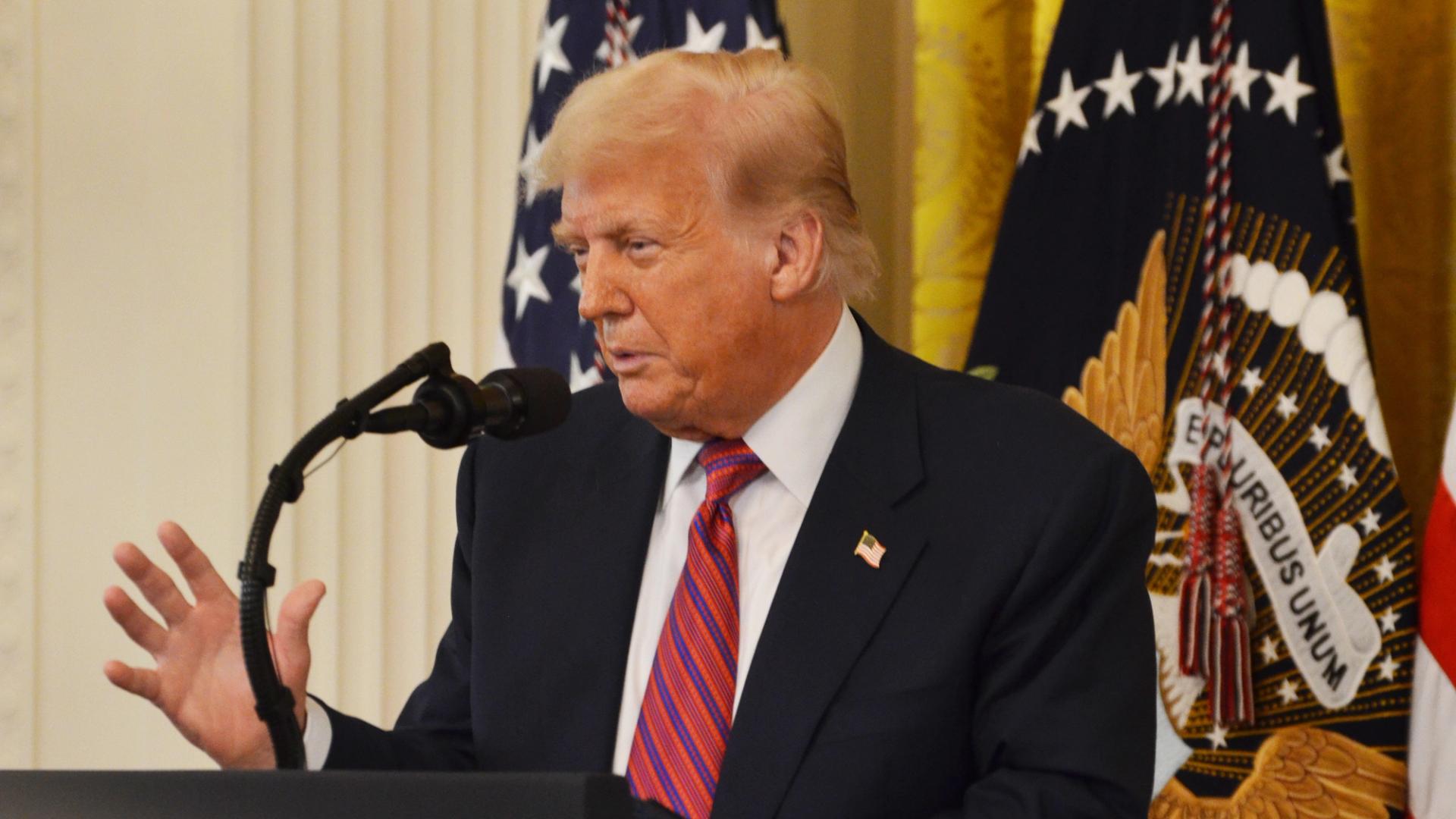
Trump Media & Technology Group (DJT) reported a $405.9 million first-quarter net loss on $871,200 in revenue, widening from $31.7 million a year earlier as unrealized losses on its crypto holdings weighed on results.
The parent company of Truth Social booked $244 million in unrealized losses on its cryptocurrency holdings. It also recorded a $108.2 million investment loss tied mostly to equity securities.
Trump Media held 9,542.16 bitcoin at the end of March, with a cost basis of $1.13 billion and a fair value of $647.1 million, the firm wrote in a filing with the SEC. That position is now worth around $770 million.
The company also held 756.1 million with a cost basis of $113.9 million and a fair value of $53 million. Trump Media closed the purchase of $105 million in CRO last year as part of a Crypto.com deal that tied the token to Truth Social and Truth+ rewards.
Trump Media reported $17.9 million in operating cash flow for the quarter, helped by the sale of previously purchased put options on pledged bitcoin and bitcoin-related securities.
A portion of the firm’s bitcoin is locked up. Trump Media said 4,260.73 BTC, worth $289 million at quarter-end, served as collateral for convertible notes.
DJT also held covered call options on 4,000 BTC with a counterparty to hedge its exposure to the cryptocurrency’s volatility. Those options require 2,000 BTC to be held as collateral with the counterparty.
The company raised $2.5 billion for a bitcoin treasury strategy last year, then disclosed a $2 billion bitcoin stack in July.
Revenue rose 6% from $821,200 a year earlier. Media revenue was $810,100, while Truth.Fi generated $61,100 in management fees tied to ETF offerings.
Crypto World
Sports betting should be regulated as a financial product, not gambling, aspiring prediction market provider says


MIAMI BEACH, Fla. — Sports betting should be regulated as a federal financial product rather than a state-licensed casino product, two panelists said Thursday.
Appearing at Consensus Miami 2026, Jacob Fortinsky, co-founder and CEO of sports betting platform Novig, said the legacy sportsbook model is structurally broken because it treats winning bettors as cheaters.
“Sports betting is really the only industry in the country that regularly limits and bans their power users,” Fortinsky said. He framed sports event contracts as binary financial instruments that “for so long have been treated as a gambling product and instead should really be treated as a financial product.” Globally, he said, sports betting is “a $2 trillion asset class still dominated by these legacy casinos.”
Adam Mastrelli, founder of 57 Maiden, a firm that builds AI-driven trading strategies for prediction markets, validated the critique with personal experience.
“My partner and I got kicked off of two big sportsbooks within two months of trading because we were sharp,” he said, It’s like “LeBron James getting kicked out of the NBA for being too good,” he added.
Mastrelli said the team turned to Novig, which he said charges no fees and allows traders to create synthetic positions.
Mastrelli said his firm’s edge decayed quickly, and of 154 proposed trading strategies, only three currently run profitably.
“This edge will go away,” he said, “so if you can build systems that can keep up with that edge and that alpha… then it becomes really, really intriguing.” His most profitable season, he said, was the WNBA.
Fortinsky said Novig is on track to transition this summer from a sweepstakes model live in 35 states to a federal DCM framework that will let it operate in all 50 states. An earlier attempt to be regulated at the state level in Colorado, he said, was a wake-up call. “Regulators told us essentially you’re naive if you think we care about consumer protection or innovation or market efficiency. We really just care about our tax revenue,” he said.
The federal-state fight, Fortinsky added, is “going to get to the Supreme Court in the next two or three years,” with 15 pending lawsuits between the Commodity Futures Trading Commission, Kalshi, Robinhood and various states. Within prediction markets, he argued sports is “counterintuitively actually the safest vertical,” given the bigger insider-trading and manipulation concerns around political and event-driven contracts.
Mastrelli, who said he avoids offshore platforms entirely, compared prediction markets to equities exchanges: “When I see a robust equities market now, this is AQR against SIG. It doesn’t go away.”
Trump-Backed American Bitcoin Posts $82M Loss Despite Record BTC Mining Output

Shedeur Sanders Responds To Song Mention

REVIEW: Thai Season, Bishopthorpe Road, York – our verdict

Manchester United reach agreement with Casemiro over contract clause amid transfer speculation

US brings back mandatory military draft registration

Steven Gerrard disagrees with Gary Neville over ‘shock’ Chelsea and Arsenal claim | Football


-
 Crypto World1 day ago
HarrisX Poll Found 52% of Registered Voters Support the CLARITY Act
-

 NewsBeat6 days ago
Channel 5 – All Creatures Great and Small series 7 new post
-

 Crypto World2 days ago
Upbit adds B3 Korean won pair as Base token gains Korea access
-

 Tech5 days ago
Image AI models now drive app growth, beating chatbot upgrades
-

 News Videos7 days ago
AP Dhillon – Old Money (Official Audio)
-

 Fashion1 day ago
Weekend Open Thread: Marianne Dress
-
 NewsBeat3 days ago
NCP car park operator enters administration putting 340 UK sites at risk of closure
-

 Sports7 days ago
Five killed in Texas plane crash identified as Amarillo pickleball players
-
Entertainment7 days ago
Anna Nicole Smith’s Daughter Attends 2026 Kentucky Derby
-
Entertainment7 days ago
New Netflix Movies in May 2026 — My Top 3 Picks to Stream
-

 Entertainment7 days ago
Venus Williams’ Best Met Gala Looks Over the Years
-

 Crypto World7 days ago
Bitcoin mining equities rise in 2026 as BTC lags behind
-
Entertainment7 days ago
Melissa Joan Hart and More Stars Attend 2026 Kentucky Derby
-
 Business8 hours ago
Ignore market noise, India’s long-term story intact, say D-Street bulls Ramesh Damani and Sunil Singhania
-

 Business7 days ago
Luka Doncic Injury Update: Doncic’s Hamstring Recovery Slows Lakers’ Hopes Against Thunder: Can He Run Yet?
-

 Business6 days ago
Winning Numbers Drawn as Jackpot Resets to $20 Million
-

 Sports7 days ago
Is Man United v Liverpool on TV? Channel, streaming and how to watch Premier League fixture
-
 Entertainment7 days ago
Netflix’s 10-Part Miniseries Based on a True Story Is a Perfect Weekend Binge
-
Entertainment7 days ago
“Storage Wars” star Darrell Sheets' ex-wife breaks silence on his death
-
 Crypto World7 days ago
Q1 2026 Tech Layoffs AI Wave Hits 81,747 as Firms Shift to AI Infrastructure
You must be logged in to post a comment Login