

Crypto World
Why Mastercard Is Buying Stablecoin Infrastructure Instead of a Token

Why Mastercard’s BVNK acquisition is a strategic shift
Mastercard’s deal to acquire BVNK for up to $1.8 billion goes beyond simply entering the crypto space. It reflects a well-thought-out strategic redirection.
Rather than introducing its own stablecoin, Mastercard has opted to gain control of the underlying infrastructure that links conventional finance to blockchain-enabled payments.
This approach prompts an important question: Why would a major player in payments decide against creating its own digital currency and instead invest in the systems that facilitate its movement?
The explanation centers on regulatory considerations, the ability to scale and sustained influence over the core infrastructure of digital finance.
What BVNK brings to the table
BVNK does not issue stablecoins and operates as a payments infrastructure provider. Robust infrastructure plays an important role in the functioning of the stablecoin ecosystem.
It allows businesses to:
-
Send and receive payments with stablecoins
-
Perform smooth conversions between fiat currencies and crypto
-
Operate in more than 130 countries
As a result, BVNK serves as a connector between two distinct financial ecosystems:
-
Conventional payment networks, including banks, card networks and fiat channels
-
Blockchain networks, including stablecoins, crypto wallets and on-chain transactions
Instead of developing a new form of currency, BVNK helps businesses utilize the ones already available with greater efficiency.
Did you know? Stablecoins process trillions of dollars in annual transaction volume and often rival major card networks. Yet many users do not realize they are interacting with blockchain-based systems behind the scenes when using certain fintech payment services.
Objective of Mastercard: Connecting financial networks
Mastercard serves as a connector of financial networks, functioning as a network of networks. Rather than trying to compete with different forms of digital money, Mastercard aims to play the role of an integrator that links them all seamlessly.
This approach involves bringing together:
-
Traditional card-based payment systems
-
Core banking infrastructure
-
Blockchain-based transaction rails
According to company leadership, the future payments landscape is expected to feature an array of digital money forms, such as:

Why Mastercard has chosen not to issue its own stablecoin
On the surface, creating a stablecoin issued by Mastercard might appear to be a natural step. However, there are compelling reasons the company has decided against it:
Stringent regulatory compliance
Stablecoin issuers are encountering growing regulatory pressure. Emerging frameworks, such as the GENIUS Act (Guiding and Establishing National Innovation for US Stablecoins), are designed to enforce:
-
Strict reserve requirements
-
Enhanced transparency obligations
-
Oversight similar to that applied to traditional banks
By issuing a stablecoin, Mastercard would effectively become a regulated financial issuer, which would introduce substantial operational and compliance complexity.
Risks tied to the balance sheet
Enterprises that issue stablecoins are required to hold reserves, typically in cash or government securities, to fully back the tokens in circulation. This creates several challenges, including:
-
Complex liquidity management
-
Potential redemption pressures
-
Vulnerability to shifts in market conditions
By steering clear of issuance, Mastercard avoids taking on these financial risks and obligations.
Preserving harmony with partners
Mastercard maintains close partnerships with:
Introducing its own stablecoin would risk placing Mastercard in direct competition with these key collaborators within its ecosystem. By focusing on infrastructure instead, Mastercard can remain in a neutral position that serves rather than challenges its partners.
Did you know? The concept of “tokenized deposits” is gaining traction among banks, where traditional money is digitized on a blockchain. However, it remains within regulated banking systems, offering a potential alternative to privately issued stablecoins.
Infrastructure offers Mastercard more leverage
Controlling infrastructure generally delivers greater power than controlling a single asset. A stablecoin issuer earns profits exclusively from its own token. An infrastructure provider, however, captures value from transactions involving multiple tokens.
This model enables Mastercard to:
-
Support Tether USDt (USDT), USDC (USDC) and emerging bank-issued tokens
-
Generate fees from a broad spectrum of use cases
-
Grow in tandem with the entire ecosystem rather than being limited to one product
With this step, Mastercard is positioning itself to capture value across digital payment flows.
Why timing is critical at this juncture
The acquisition aligns with a surge in institutional interest in stablecoins, which have the potential to fundamentally transform global payments over the coming decade.
Several converging trends reinforce this momentum:
-
Significantly faster and more cost-effective cross-border transactions
-
Growing regulatory clarity
-
Expanding adoption among fintech companies and large enterprises
Stablecoins have moved beyond the experimental phase and are increasingly viewed as foundational elements of financial infrastructure.
Did you know? Cross-border payments through traditional banking can involve up to five intermediaries. Stablecoin-based transfers can reduce this to just two endpoints, dramatically cutting both time and cost.
Where Visa, Coinbase and others fit in
Mastercard faces competition in this space. Visa has made investments in BVNK, while Coinbase previously considered acquiring the company before withdrawing.
This reflects a wider industry convergence:
-
Traditional financial institutions are advancing into blockchain territory
-
Crypto-native companies are seeking deeper integration with established payment networks
Nevertheless, approaches vary and many crypto firms prioritize issuing their own tokens. Major payment networks emphasize infrastructure and broad distribution.
Why infrastructure wins in cross-border payments
Conventional cross-border payments are hampered by delays, often spanning days, high fees and the involvement of numerous intermediaries.
On the other hand, stablecoin-based systems deliver:
By incorporating infrastructure such as BVNK, Mastercard can introduce these benefits into its established network without needing to replace it entirely.
Mastercard’s strategy reduces the barriers to adoption. Banks and fintechs gain the ability to:
-
Provide stablecoin services without developing their own blockchain systems
-
Use global payment rails more efficiently
-
Seamlessly incorporate digital currency features into their current offerings
This approach cements Mastercard’s position as a backend enabler for the future of finance.
Associated risks and open questions
Despite the promise of this infrastructure-focused strategy for Mastercard, meaningful challenges and uncertainties remain that could influence its long-term outcome.
These include:
-
Persistent regulatory differences and fragmentation across jurisdictions, creating compliance hurdles and inconsistent operating environments for cross-border activities
-
Heavy reliance on external stablecoins issued and managed by third parties, which introduces dependency risks related to their stability, governance and continued availability
-
Intensifying competition from CBDCs as well as powerful technology giants entering the payments space with their own solutions and vast user bases
-
Potential margin compression in infrastructure-based services, as increased competition and scale drive fees downward over time
Evolving geopolitical tensions, shifts in monetary policy and unforeseen technological disruptions could further complicate the path forward.
Ultimately, the success and durability of Mastercard’s approach will depend on how the broader stablecoin ecosystem continues to develop and mature.

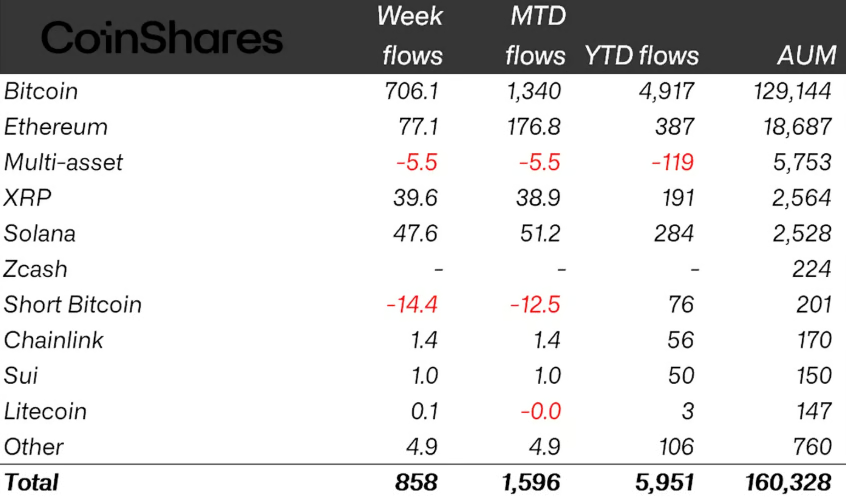
Cryptocurrency investment products recorded a sixth straight week of inflows in their longest streak since April to July 2025, totaling $4.9 billion, as improving sentiment around US crypto legislation helped push Bitcoin above $80,000 and lift assets under management to their highest level since February.
Crypto exchange-traded products (ETPs) posted around $858 million in inflows last week, sharply up from $118 million in inflows the previous week, CoinShares reported Monday.
The gains were likely supported by developments around the US CLARITY Act, said CoinShares head of research James Butterfill, referring to a final compromise proposal regarding stablecoin yields released on May 1.
Amid the positive trend, Bitcoin broke above $80,000 last week, lifting total assets under management in crypto ETPs past $160 billion, the highest since February.
Bitcoin leads inflows, while short-BTC funds see the largest outflows year-to-date
Bitcoin (BTC) investment products led the show last week, attracting $706 million in inflows and bringing year-to-date flows to $4.9 billion.
In line with the improving sentiment, short-Bitcoin ETPs saw their largest weekly outflow of the year at $14 million, suggesting investors are pulling back from bets against BTC as confidence in the rally grows.

Crypto ETP flows by asset (in millions of US dollars). Source: CoinShares
Ether (ETH) ETFs saw $77 million in inflows, reversing the $81 million in outflows recorded the previous week. Solana (SOL) and XRP (XRP) also posted notable gains, with inflows of about $48 million and $40 million, respectively.
Late-week profit-taking holds back the rally
Last week’s inflows came despite significant selling later in the week as Bitcoin briefly dipped below $80,000 on Thursday.
On Thursday and Friday, US-listed spot Bitcoin exchange-traded funds saw $423 million in outflows, reducing net weekly inflows to about $623 million, according to SoSoValue.

Bitcoin (BTC) seven-day price chart. Source: CoinGecko
Onchain analytics platform CryptoQuant pointed to realized profits totaling 14,600 BTC, or $1.1 billion, on Monday, the largest single-day profit-taking since Dec. 10, when Bitcoin was trading above $90,000. CryptoQuant’s Julio Moreno said rising realized profits could accelerate Bitcoin profit-taking as BTC climbs to three-month highs.
Related: Bitcoin rallies 2.3% after Trump calls Iran peace proposal ‘totally unacceptable’
“The rally started to stall from the middle of the week as investors quickly took profit on their positions,” Laser Digital’s derivatives trading desk said in a statement shared with Cointelegraph.
“Comments from DAT companies, whether it be selling or slowing purchases, didn’t help either. Given a lot of investors had pre-positioned for a move higher anticipating strong bid from MSTR this week, this has likely triggered some take-profit flows,” Laser Digital’s derivatives division added.
Magazine: XRP ‘probably going to $12,’ Bitcoin ETFs add $1B: Market Moves
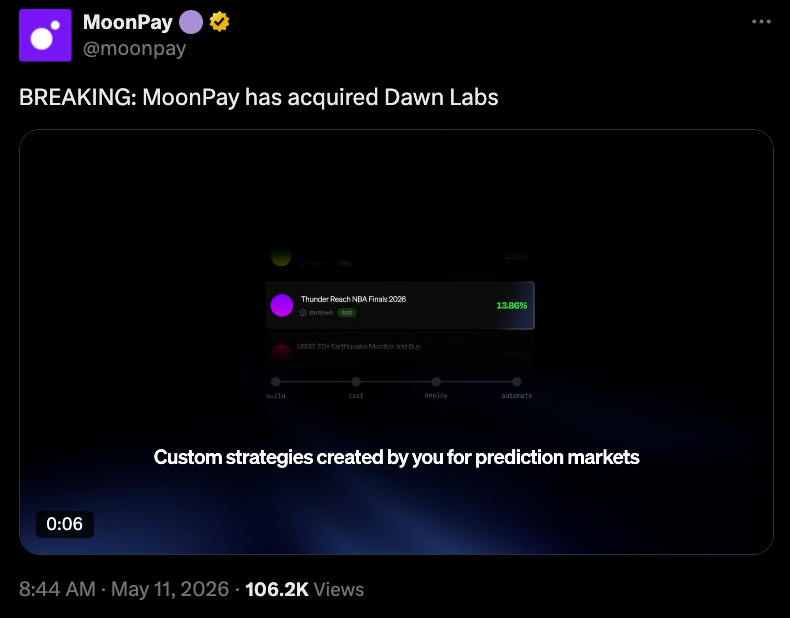
Financial technology company MoonPay announced the launch of an AI technology tool for trading strategies on prediction markets following its acquisition of Dawn Labs for an undisclosed amount.
MoonPay said Monday that it had launched Dawn CLI in an effort to facilitate trading strategies “in plain English,” citing activity on prediction market platforms like Polymarket and Kalshi. Dawn Labs founder Neeraj Prasad said the tool will democratize trading “by general intelligence.”
“Prediction markets are one of the fastest-growing categories, attracting a new generation of active traders across platforms like Polymarket and Kalshi,” MoonPay said in its announcement. “These traders use signals from social media, automated strategies and cross-platform positioning, but the infrastructure required for high performance remains fragmented, manual and technically demanding.”

Source: MoonPay
The move closer to prediction markets comes as Kalshi and Polymarket face several state-level lawsuits over allegations that the companies are illegally facilitating sports betting and other activities not permitted by state law. Until December 2025, Caroline Pham, MoonPay’s chief legal officer, was a commissioner and acting chair at the US Commodity Futures Trading Commission (CFTC), which has since claimed exclusive jurisdiction over prediction markets.
Related: MoonPay releases open-source wallet standard for AI agents
Trading on prediction markets continues to be under scrutiny by many US lawmakers and industry leaders given the platform’s models often allowing insider trading. In April, a soldier was charged with using classified information about the US military operation to capture former Venezuelan President Nicolás Maduro to make more than $400,000 through event contracts on Polymarket.
Kalshi increases valuation to $22 billion
MoonPay’s acquisition followed prediction markets platform Kalshi closing a $1 billion funding round last week, resulting in the company reaching a valuation of about $22 billion. The move effectively doubled Kalshi’s valuation in five months.
Magazine: Strategy reveals why they would sell BTC, Trump Media posts loss: Hodler’s Digest, May 3 – 9

Augustus, a payments group backed by Peter Thiel’s Valar Ventures, has received conditional approval from the U.S. Office of the Comptroller of the Currency (OCC) to charter a U.S. national bank focused on artificial intelligence and stablecoin-based payments. The decision marks a notable step in the ongoing push to modernize cross-border settlement infrastructure through tokenized dollars and blockchain-enabled rails, expanding Augustus’ European operations into the United States.
The approval, announced recently, would allow Augustus National Bank to proceed toward a fully chartered U.S. national bank, but only after meeting the OCC’s pre-opening requirements. The company describes the institution as “the first clearing bank for the AI era,” built on an AI- and stablecoin-native core intended to interface with machine agents at “the speed of compute,” reducing reliance on traditional batch processes and manual clerical work. This characterization comes from Augustus’ own materials accompanying the regulatory filing.
Founded in 2022, Augustus operates under European banking licenses and has reported serving institutional clients with significant flows, including cryptocurrency exchange Kraken. While the proposed U.S. national bank charter represents a major milestone, the OCC approval remains conditional until the pre-opening criteria are satisfied. In line with the OCC’s evolving approach to digital assets, the path to a federally chartered bank remains selective and tightly regulated.
Augustus secures OCC conditional approval. Source: PR Newswire
Related: Stablecoin issuer Circle faces lawsuit over Drift Protocol hack
Notably, Augustus joins a small cohort of digital-asset firms that have advanced to the more stringent federal chartering process. Other players, such as Ripple and Circle, have pursued national charter options under OCC oversight, but only a subset have reached advanced stages in the formal chartering process. The OCC’s conditional approval underscores a broader, ongoing debate about how digital-asset firms should be integrated into the U.S. banking system and supervised under traditional bank regulatory frameworks.
Key takeaways
- The OCC issued conditional approval for Augustus National Bank to pursue a U.S. national bank charter, contingent on meeting pre-opening requirements.
- Augustus aims to extend its European banking operations into the United States, framed around AI-enabled clearing and stablecoin-based settlement.
- The bank’s framework is described as “the first clearing bank for the AI era,” leveraging AI- and stablecoin-native core technology to interface with machine agents.
- Augustus operates with European licenses and reports institutional client activity, including services for Kraken; this U.S. charter would place it among a select group of firms progressing toward federally chartered status.
- Regulatory and policy context emphasizes a shift toward tokenized-dollar rails within regulated banking, intersecting with GENIUS Act provisions and ongoing cross-border settlement innovations (Circle–Finastra, Citi/HSBC tokenized deposits).
Regulatory milestone and charter dynamics
The OCC’s conditional green light reflects a deliberate approach to digital-asset and tokenized-payment initiatives within the U.S. banking system. While the OCC has signaled openness to “fintech-friendly” approaches and national-charter pathways for select firms, chartering remains contingent on robust compliance, capital, liquidity, and governance standards, as well as careful scrutiny of risk management, cyber resilience, and customer protection frameworks.
Industry observers note that, despite the broader trend toward modernization, only a handful of firms have progressed to advanced stages of federal chartering in recent years. The OCC has previously authorized banking charters or similar umbrellas for digital-asset firms and crypto-related ventures, but the process remains deliberately cautious and capability-driven. Augustus’ conditional status aligns with the OCC’s pattern of staged approvals that allow firms to demonstrate risk controls, integrations with existing operations, and compliance readiness before a full charter is granted.
From a regulatory policy perspective, the Augusts development sits at the intersection of traditional supervisory oversight and a rapidly evolving tokenized-payments ecosystem. In the U.S., the GENIUS Act framework for stablecoins and payments contributes to a regulatory backdrop that envisions fully reserved-dollar token issuance within insured banking rails. This regulatory context informs how Augustus’ proposed charter might be evaluated in relation to liquidity provisioning, reserve management, and consumer protections. For cross-border market participants and financial institutions, the act creates a pathway for stablecoin settlement to be integrated with conventional bank infrastructure, subject to rigorous supervision and compliance requirements. More on GENIUS Act guidance
AI-era clearing bank and tokenized payments infrastructure
The strategic concept behind Augustus National Bank centers on an AI-native payments core that operates in concert with stablecoins to fulfill real-time settlement objectives. The proposed model emphasizes direct interaction with machine agents at high speed, reducing latency and operational friction that characterize legacy payment rails. This architectural shift aligns with a broader industry push to industrialize cross-border settlements, minimize settlement risk, and improve transparency in tokenized-dollar flows.
Within the broader policy and market landscape, there has been steady progress in enabling tokenized-dollar settlements inside regulated banking rails. Circle’s collaboration with core banking provider Finastra aims to streamline stablecoin settlement through the Global PAYplus hub, enabling cross-border settlements in USDC. Separately, major banks such as Citi and HSBC have started to roll out live tokenized-deposit capabilities to support near real-time, 24/7 cross-border and interbank payments. These developments, highlighted in industry coverage, illustrate a tangible trend toward integrating tokenized-dollar mechanisms into traditional banking operations. Circle–Finastra collaboration, Citi and HSBC tokenized deposits
From a compliance and supervisory standpoint, the prospect of AI-assisted clearing raises questions about governance, data integrity, and model risk management. Regulators would likely evaluate how AI systems influence settlement decisions, the controls around algorithmic decision-making, and the safeguards ensuring that tokenized assets remain fully backed and auditable. The ASC (anti-money-laundering) and KYC (know-your-customer) frameworks will remain central to supervisory judgments as custody, settlement, and liquidity management move closer to automated, real-time processes.
Industry context and regulatory landscape
Augustus’ filing arrives amid a broader strategic push to modernize U.S. settlement layers and to situate stablecoins within formal banking rails. The GENIUS Act regime is cited as a key enabling framework for issuing fully reserved-dollar tokens by banks and trust companies, with market participants actively exploring cross-border settlement opportunities under compliant standards. In parallel, the U.S. regulatory environment remains vigilant about the separation between traditional banking and digital-asset activities, reinforcing the need for robust licensing, oversight, and risk management to mitigate potential financial crime and consumer protection issues.
Comparative regulatory dynamics abroad add depth to the discussion. In Europe, MiCA (Markets in Crypto-Assets Regulation) represents a broad attempt to harmonize crypto licensing and oversight, while the U.S. approach tends to emphasize bank-charter status and prudent supervision under the OCC and related agencies. The intersection of U.S. banking supervision and crypto innovation continues to shape how firms structure settlements, custody, and asset issuance across borders, with Augustus’ case illustrating a potential template for enterprise-scale, AI-driven, tokenized-payments operations within a federally chartered framework.
Augustus’ backers—Valar Ventures, Creandum, and founders of Ramp and Deel—have positioned the group at the intersection of fintech, institutional custody, and regulated payments. With the company reporting several billion dollars in processed flows for institutional clients, the U.S. charter path could influence fiduciary, liquidity, and risk-management standards for similarly situated firms seeking to operate at scale within U.S. banking rails. The broader regulatory narrative remains uncertain, but the convergence of artificial intelligence, stablecoins, and bank charters is increasingly plausible within a structured, compliant framework.
Closing perspective
As Augustus advances through the pre-opening phase toward a fully authorized U.S. national bank, observers will be watching closely how the institution navigates the intersection of AI-enabled settlement, stablecoin governance, and the evolving U.S. regulatory regime. The outcome could have meaningful implications for banks, exchanges, and institutional users seeking compliant, real-time cross-border settlement capabilities in a digitized dollar economy.

Augustus, a payments startup backed by Peter Thiel’s Valar Ventures, announced Monday that the US Office of the Comptroller of the Currency had granted conditional approval to charter a U.S. national bank built around artificial intelligence and stablecoin-based payments. The plan would extend Augustus’ European banking footprint into the United States and explore faster, tokenized settlement rails that could reshape cross-border finance.
The company describes Augustus National Bank as “the first clearing bank for the AI era,” founded on an AI- and stablecoin-native core that could interact with machine agents at “the speed of compute” rather than relying on traditional batch processes and human clerks. The OCC approval is conditional, meaning the charter would become effective only after the agency’s pre-opening requirements are satisfied.
Key takeaways
- The OCC issues conditional approval for Augustus to charter a U.S. national bank focused on AI-driven, stablecoin-based payments, with full authorization contingent on pre-opening steps.
- Augustus envisions a native core that interacts with machine agents in real time, aiming to modernize clearing and settlement beyond conventional rails.
- The European-licensed firm already serves institutional clients and processes billions in transactions, including work for Kraken, signaling practical scale behind the project.
- Regulatory and industry context for tokenized-dollar settlement is evolving under regimes like GENIUS, with wide-ranging collaborations among Circle, banks, and core-payments providers increasingly testing cross-border, real-time tokenized settlements.
OCC nod and the AI-era clearing bank
The OCC’s conditional green light signals a notable shift in the federal filing landscape for digital-asset-adjacent firms seeking a national charter. Augustus positions itself as a pioneer by promising a banking core built to accommodate AI-enabled workflows and stablecoin-based settlement, potentially enabling faster, more programmable transfers across borders. The Augusts plan would let the bank operate with a technology stack designed to interface directly with autonomous agents and other AI systems, a departure from the legacy rails that rely on batch processing and manual intervention.
Nonetheless, the approval is not final. The OCC outlined that the charter will only take effect once the remaining pre-opening requirements are met, a process that can involve rigorous governance, risk, and compliance checks given the regulatory sensitivity around digital assets and fintech infrastructures. If successful, Augustus would join a select group of firms advancing toward a federal banking charter in the digital-asset era, a trajectory that remains carefully navigated amid evolving supervision and standards.
Navigating a broader payments-technology race
The Augustus development sits within a broader push to modernize cross-border payments and stablecoin settlement infrastructure in the United States. Under frameworks associated with the GENIUS Act, banks and trust companies may issue fully reserved dollar tokens, expanding the set of regulated rails on which tokenized currencies can circulate. The policy environment is encouraging experimentation with tokenized-dollar flows integrated into traditional banking rails, a trend reinforced by recent industry partnerships and pilot programs.
In this evolving landscape, Circle has moved to deepen its role in on-ramps for stablecoins within conventional banking infrastructure. A collaboration announced in 2025 with core banking provider Finastra aims to enable banks to settle cross-border payments in USDC via Finastra’s Global PAYplus hub. Separately, Citi and HSBC have begun offering tokenized deposits for 24/7 cross-border and interbank payments, signaling that mainstream banks are actively testing tokenized-dollar settlements at scale. These developments underscore the growing plausibility of AI-native, token-based settlement becoming a standard option for regulated banks in the near term.
Augustus: European footprint, ambitious leadership, and funding
Founded in 2022, Augustus operates under European banking licenses and says it already processes billions of dollars in transactions for institutional clients, including major crypto exchange Kraken. The company has attracted investors such as Peter Thiel’s Valar Ventures, alongside Creandum and founders of Ramp and Deel, and has reportedly raised around $40 million to date. If the U.S. charter progresses to full approval, Augustus would advance one of the most ambitious attempts to integrate artificial intelligence and tokenized money into a federally regulated banking framework.
According to Augustus, its U.S. venture would be steered by a notably young leadership profile. The company’s chief executive officer, described as 25 years old, would be among the youngest to lead a federally chartered bank in more than a century—an fact that has drawn attention to the speed of its regulatory timeline and the potential cultural shift within traditional financial institutions.
Crypto industry watchers note that the path from conditional approval to a fully functioning national bank charter hinges on meeting stringent pre-opening criteria, from liquidity and governance standards to risk controls and consumer protections. While the current status marks a meaningful milestone, observers will be watching closely how Augustus aligns its AI-native architecture with U.S. banking expectations and compliance obligations.
For readers tracking the regulatory frontier of AI-driven finance, this move underscores a broader appetite among fintechs and digital-asset firms to utilize federal charters as a path to scale, credibility, and access to regulated payment rails. As such, Augustus’ progress will likely influence subsequent applications and pilots across the sector, particularly as major players continue to test tokenized settlement interfaces, cross-border liquidity, and machine-enabled settlement workflows.
As the next steps unfold, market participants will be watching for the specifics of the pre-opening requirements, the timeline for meeting them, and how Augustus articulates its risk management, governance, and consumer protections in a U.S. context. The episode also invites a closer look at how the GENIUS Act and related regulatory developments might shape the competitive landscape for banks seeking to leverage stablecoins and AI-enabled settlement in a federally regulated framework.
Asia Express: North Korea denies crypto hacks, Upbit’s bank tests Ripple Asia Express.
Sources: Augustus’ conditional-approval announcement via PR Newswire; GENIUS Act framework via Richmond Fed materials; Circle–Finastra cross-border settlement initiative; Citi and HSBC tokenized deposit programs.
Tron’s (TRX) performance so far in 2026 has been solid. In the past five months alone, the crypto asset has climbed more than 23%. Despite this, new data suggests that it faces correction risks.
According to CryptoQuant, TRX is showing a “glaring divergence” between its price and on-chain activity despite recently climbing back toward the $0.35 level.
Lack of Fundamental Support
The analytics platform found that while TRX has posted strong price gains over the past month, rising 10%, the network’s “Tokens Transferred (Total)” metric has moved sharply in the opposite direction.
Data revealed that the total volume of transferred tokens declined from nearly 17.3 billion to around 12.2 billion during the same period, even as the asset continued to rally. CryptoQuant said this disconnect has sparked concerns about the sustainability of TRX’s current upward momentum, as healthy price increases are typically accompanied by stronger network usage and utility.
The firm described the divergence as a sign that the latest rally may be driven more by speculation or token hoarding than by genuine user activity on the Tron network. It further warned that the absence of stronger transactional support could leave the $0.35 price level vulnerable if buying pressure weakens. This, in turn, could potentially increase the risk of a correction in the near term.
Justin Sun’s Troubles
TRX’s price has been largely immune to the growing dispute surrounding Tron founder Justin Sun and the Trump-linked crypto project World Liberty Financial, even as the conflict escalated into multiple lawsuits and public accusations. The tensions began in mid-April after WLFI proposed converting more than 62 billion locked tokens into a fixed vesting structure, while holders who rejected the terms risked having their assets remain locked indefinitely.
Sun described the proposal as coercive and argued that dissenting token holders were effectively being punished. He also alleged that his own WLFI tokens, which represented around 4% of the voting power, had been frozen, preventing him from participating in governance decisions. WLFI was also accused of operating through centralized controls hidden behind a decentralized governance structure, and the Tron founder claimed that anonymous parties could freeze assets and override decisions.
Days later, Sun filed a lawsuit in California seeking restoration of his voting rights and token access. WLFI, on the other hand, rejected the allegations and accused Sun of misconduct and spreading false claims. WLFI filed a defamation lawsuit against Sun in Florida this month for allegedly orchestrating a smear campaign against the project and its backers.
The post Tron in Trouble? ‘Glaring Divergence’ Flagged Behind TRX’s Latest Surge appeared first on CryptoPotato.
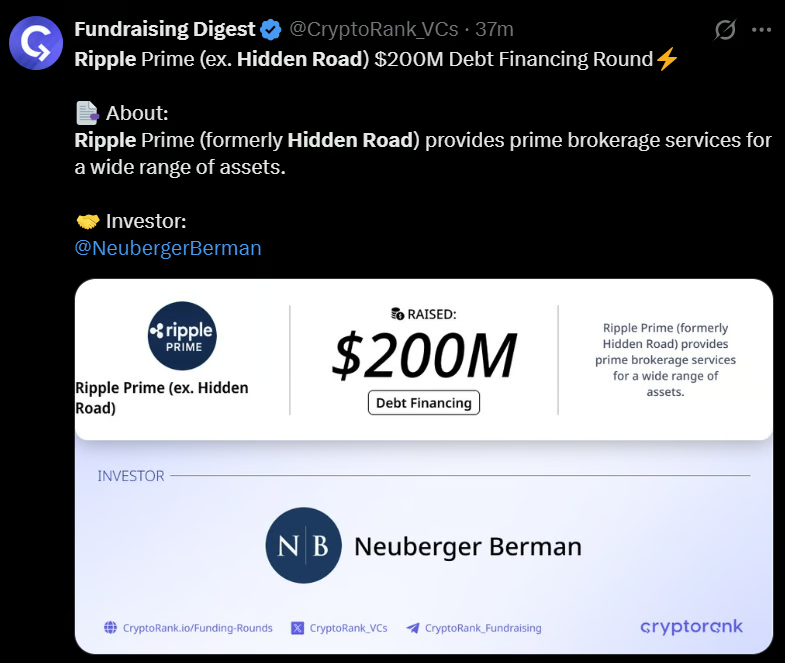
Ripple has secured a $200 million credit facility from funds managed by Neuberger Berman to expand the lending capacity of its institutional prime brokerage business, highlighting continued demand for financing services in the digital asset market.
The company said Monday that the debt facility will allow its Ripple Prime unit to offer more margin loans and other financing products to hedge funds, trading companies and other institutional clients active in both crypto and traditional markets.
Ripple Prime president Noel Kimmel said the additional capital will help the unit serve a broader range of institutional clients as demand for crypto financing and brokerage services continues to grow.
Neuberger Berman is a global investment manager with more than $560 billion in assets under management.
Ripple acquired prime brokerage platform Hidden Road in 2025 and has since tripled the unit’s revenue, according to the company. Ripple did not disclose whether the business is profitable or how much of the $200 million facility has been drawn.

Source: Fundraising Digest
Related: Ripple CEO says market structure bill not ‘done deal,’ despite compromise
Hidden Road acquisition gave Ripple a foothold in institutional brokerage
Ripple announced its acquisition of Hidden Road in April 2025 and completed the roughly $1.25 billion deal about six months later. The acquisition allowed the company to launch its institutional prime brokerage business, which was later rebranded as Ripple Prime.
Hidden Road was a global prime broker that provides clearing, financing and execution services to hedge funds, market makers and other institutional investors across digital assets and traditional markets. At the time of the acquisition, the company cleared roughly $3 trillion in annual trading volume and served more than 300 institutional clients.
The transaction marked the first known acquisition of a global prime broker by a crypto-native company, giving Ripple a direct foothold in institutional market infrastructure.
Ripple Prime has also seen growing adoption. Last month, crypto exchange operator Bullish expanded its integration with the platform to provide institutional clients with more direct access to Bitcoin options trading.
The integration gives Ripple Prime users access to Bullish’s regulated Bitcoin options market, with stablecoins including Ripple USD (RLUSD) accepted as collateral.

The Ripple USD (RLUSD) stablecoin has a market value of more than $1.5 billion. Source: CoinMarketCap
Related: Crypto Biz: Wall Street wants more than just Bitcoin
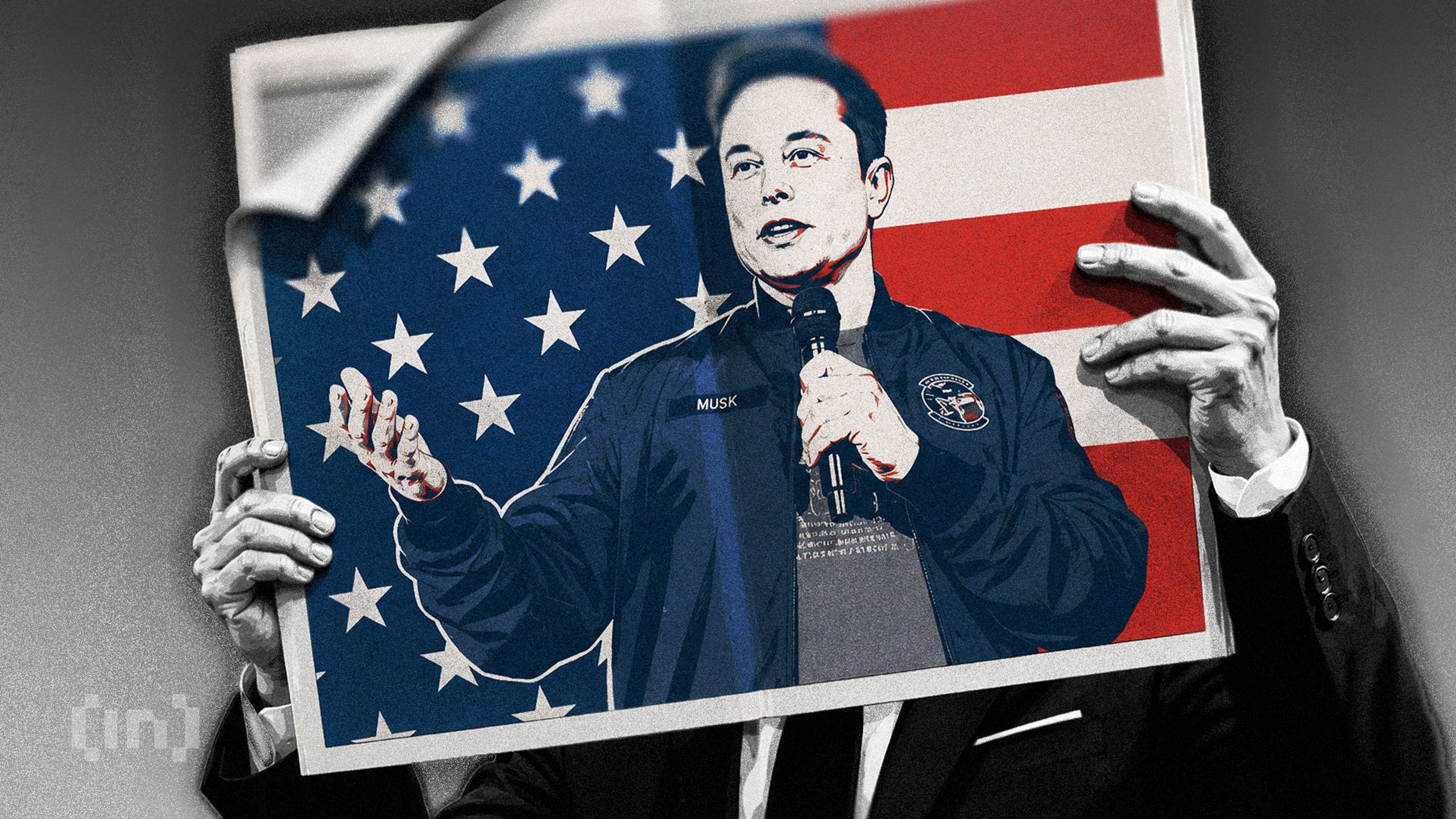

President Donald Trump will travel to Beijing this week with roughly 17 US chief executives for meetings with Chinese President Xi Jinping, a White House official confirmed Monday.
The state visit runs from May 13 to 15, according to Chinese state media. The delegation spans technology, finance, aerospace, and agriculture sectors central to US-China trade talks.
Wall Street and Tech Leaders Anchor the Roster
Elon Musk, Tim Cook, and Larry Fink are among the confirmed travelers, with the roster also featuring Boeing’s Kelly Ortberg, Blackstone’s Stephen Schwarzman, and Citigroup’s Jane Fraser.
Goldman Sachs CEO David Solomon and Meta executive Dina Powell McCormick will also join the trip. Chip and aerospace suppliers round out the delegation.
GE Aerospace’s H. Lawrence Culp, Qualcomm’s Cristiano Amon, Micron’s Sanjay Mehrotra, and Cisco’s Chuck Robbins are listed attendees. Cargill CEO Brian Sikes represents US agricultural exporters, who depend heavily on Chinese soybean buyers.
Visa’s Ryan McInerney and Mastercard’s Michael Miebach lead the payments contingent, alongside Coherent’s Jim Anderson and Illumina’s Jacob Thaysen.
Nvidia CEO Jensen Huang is markedly missing from the list, a move that has since lifted the chipmaker’s stock prices.
Trade, Tech, and a Quiet Crypto Footprint
Trump aims to convert the trip into purchase commitments on aircraft, soybeans, and semiconductor export rules. Boeing and GE Aerospace bring jetliner orders that have long served as tangible wins in past summits.
Cargill carries agricultural leverage that could narrow the bilateral trade gap with Beijing. Apple, Micron, and Qualcomm anchor talks on chip exports and supply chains exposed to US-China tariffs.
“The Financial Powerhouses: Managing “De-Risking” Jane Fraser (Citi), David Solomon (Goldman Sachs), Stephen Schwarzman (Blackstone), Larry Fink (Blackrock) These firms are in Beijing to protect their existing licenses and push for “reciprocal market access.” In exchange for Trump potentially easing secondary sanctions on Chinese banks (linked to Iran), these firms are signaling that Wall Street is still open for Chinese investment,” Paul Barron highlighted.
Roughly 40% of the delegation has notable digital-asset exposure. BlackRock runs the largest spot Bitcoin ETF, Tesla holds 11,509 BTC, and Visa and Mastercard are scaling stablecoin settlement rails.
If BlackRock’s Bitcoin ETF empire and Goldman’s crypto trading desks gain from eased U.S.-China financial flows, spillover could turbocharge sentiment, with markets likely to price in Wall Street’s full crypto embrace.
Outcomes on tariffs, AI export controls, and rare earths will signal whether private-sector influence can reset US-China economic ties.
The talks coincide with heightened market sensitivity to tariff headlines that have repeatedly moved crypto prices.
The post Nearly 40% of Trump’s China CEO Delegation Have Crypto Ties appeared first on BeInCrypto.


The court order allows the on-chain Constitutional AIP vote and transfer to proceed without violating the restraining notice, but the freeze itself extends to Aave LLC.
The Memo Everyone Missed the Point of
Brian Armstrong sent a 6:55 a.m. email on May 7, 2026. Coinbase would cut roughly 700 employees—14% of its 4,951-person workforce.
The headline: “Coinbase Cuts Jobs Because Of AI Efficiency.”
The actual story buried in the data: Coinbase doesn’t have enough work to justify its current staff size.
Let me explain why this matters, and why it signals something much bigger than a single company’s restructuring.
What the Memo Actually Says
Armstrong’s language is revealing. Read between the lines:
“Engineers using AI tools are now able to complete projects in days that previously took teams weeks to finish.”
Translation: We can do the same work with fewer people.
“We want to experiment with ‘one person teams’ where engineers, designers, and product managers could eventually be consolidated into a single role.”
Translation: We’re going to find out exactly how understaffed we can run without completely breaking.
“Coinbase must become lean, fast, and AI-native.”
Translation: We overhired during the bull market. Now we need to right-size.
Here’s the thing: none of this is wrong. AI does increase productivity. Smaller teams can move faster. That’s all real.
But here’s what Armstrong doesn’t say—and what the market is starting to understand: Coinbase doesn’t have enough business to justify even a “lean” version of what it was.
The Pattern Nobody’s Talking About
Coinbase isn’t alone. But look at who’s cutting and why:
- Meta: 8,000 jobs cut (10% of workforce). Said they’re redirecting from metaverse to AI.
- Amazon: Multiple rounds of cuts through 2025-2026. Said they’re reducing “bureaucracy.”
- Oracle: Thousands slashed. Said they’re focusing on AI cloud computing.
- Block: Significant layoffs. Said they’re prioritizing AI.
Everyone’s saying the same thing: AI productivity gains require fewer people.
And technically, that’s true.
But there’s a pattern underneath this that nobody wants to name: These companies massively overhired during boom cycles and are now right-sizing during slowdowns.
For Coinbase specifically, this is critical. Because Coinbase’s business model is built on a single thing: trading volume volatility.
Why Coinbase Exists
Let’s be clear about what Coinbase actually is.
Coinbase is not a bank. It’s not a technology company. It’s not a financial services firm.
Coinbase is a trading exchange that profits from volatility.
When Bitcoin crashes from $100,000 to $70,000 overnight, retail traders panic-sell. Coinbase captures trading fees on every transaction. The more volatile the market, the more fees Coinbase makes.
This is why Coinbase thrived during crypto’s boom cycles:
- 2017: Bitcoin volatility = insane trading volume = Coinbase makes fortune
- 2021: Crypto mania = constant panic trading = Coinbase makes another fortune
- 2024-2025: Bitcoin ATHs = traders FOMO buying = Coinbase profits
But here’s the problem.
What Actually Changed
In my last piece, I wrote about how crypto went mainstream in 2025. JPMorgan launched Bitcoin products. BlackRock manages $175 billion in crypto ETFs. Stablecoins settled $46 trillion annually.
The market integrated. The volatility dampened. The panic trading disappeared.
When JPMorgan offers Bitcoin to their wealth clients, those clients aren’t panic-selling when Bitcoin drops 10%. They’re holding. They’re diversifying. They’re boring.
When BlackRock offers Bitcoin ETFs, retail traders stop FOMO buying at ATHs. Institutional capital means stability. Stability means fewer trading spikes. Fewer spikes means fewer fees.
Coinbase’s business model depends on retail panic. Mainstream adoption eliminates retail panic.
So what happens? Coinbase doesn’t need 700 traders managing order flows. It doesn’t need massive operations teams processing volatility spikes. It doesn’t need the infrastructure it built for a market that no longer exists.
Hence the 14% cut.
It’s not because AI made people more productive. It’s because there’s 14% less work to do.
The Math Armstrong Won’t Say Out Loud
Coinbase employed 4,951 people at the end of 2025.
In a bull market with crazy volatility, you need:
- Massive trading infrastructure (engineers, ops)
- Customer support for panicked retail traders
- Risk management teams hedging volatility
- Product teams building features to capture trading activity
But when the market stabilizes—when institutional adoption means predictable, boring returns—you need:
- Basic trading infrastructure (fewer engineers)
- Light customer support (most queries auto-resolved)
- Simple risk management (less to hedge)
- Minimal product work (it already exists)
A leaner Coinbase isn’t an AI innovation. It’s a company restructuring to match the work that actually exists.
And if Coinbase needs to cut 14% of its workforce to match current market conditions, that’s a massive signal about what’s actually happening in crypto.
What This Signals About Crypto’s Future
Here’s what the Coinbase layoffs actually mean:
1. Retail trading volume has collapsed.
If Coinbase could still make money on retail panic trading, they wouldn’t cut operations staff. The fact that they’re cutting means the volatility-driven fee model is broken.
2. Institutional adoption killed volatility.
When JPMorgan and BlackRock control the market, stability is the feature, not a bug. Retail traders are a rounding error. And retail traders are what Coinbase built its business around.
3. Crypto as a speculative asset is over.
The era where you could make 10x by trading crypto volatility is finished. Institutional adoption priced out the explosive upside. Now crypto is just… an asset class. With stable returns. Boring returns.
4. The companies that profited from crypto chaos are now in trouble.
Coinbase made its fortune during volatility. Now that the market has stabilized, Coinbase is bleeding value. The same will be true for every company built on the premise of crypto chaos.
Who Actually Won
JPMorgan won. BlackRock won. The institutions that integrated crypto into their platforms won.
They get the upside of blockchain technology without the operational chaos. They get stable assets without the volatility. They get to offer crypto to their clients as a diversification tool, not a speculation vehicle.
Coinbase lost. Not because their technology is bad. But because they built their business for a market that no longer exists.
The crypto market didn’t die. It just stopped being volatile enough to support a company built on volatility.
The Uncomfortable Implication
If Coinbase, the largest crypto exchange in America, the most professional crypto company ever built, needs to cut 14% of its staff because the market has stabilized…
What does that say about crypto’s future?
It says that the explosive growth phase is over. The speculation phase is finished. The era of life-changing returns from pure volatility is done.
What’s left is an asset class that’s integrated into institutional portfolios. Stable. Predictable. Boring.
Coinbase built an empire on exciting crypto. Now that crypto is boring, Coinbase is worth less.
That’s not an AI story. That’s a market maturation story.
And it’s actually the most important story in crypto right now.
What Comes Next
Coinbase will survive. They’ll become a boring financial services company. They’ll process crypto trades the way Fidelity processes stock trades. They’ll make steady, predictable money. They’ll never be worth $100 billion again.
Other exchanges will do the same. Kraken. Gemini. Everybody built for volatility is now right-sizing for stability.
The real question is: what happens to all the capital that used to flow into crypto speculation?
It doesn’t disappear. It flows somewhere else. It flows to the next volatile frontier. The next place where you can make 100x because nobody knows what they’re doing yet.
For a while, that was crypto. Now it’s something else.
And every major tech company’s layoffs are signaling the same thing: we built infrastructure for a world that existed. Now we’re restructuring for the world that actually exists.
The companies that survive are the ones that adapted fastest. The ones that recognized the world changed.
Coinbase didn’t adapt fast enough. Hence the 700 job cuts.
But the real story isn’t about Coinbase. It’s about what the cuts signal about the market as a whole.
Crypto went mainstream. Mainstream means stability. Stability means the era of 700-person trading operations is over.
And that’s the actual story Armstrong’s memo is trying to hide.
Does this change how you think about where crypto goes next? Drop your thoughts—but make them grounded in what you actually see in the market, not hype.
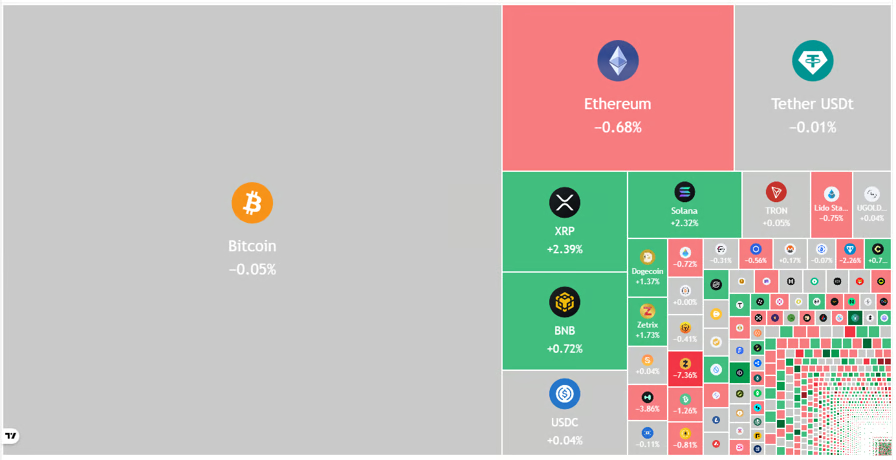
Key points:
- Bitcoin is struggling to rise above $84,000, but the bulls remain in control as long as the price remains above the 20-day EMA.
- Several major altcoins have pulled back, indicating that the bears remain sellers on rallies.
Bitcoin (BTC) has pulled back at the start of the week, but the bulls are trying to maintain the price above $81,500. Crypto sentiment platform Santiment said in a recent report that the current ratio of bullish to bearish comments on social media is 1.5:1. That suggests the current up move may not have much legs, as rallies supported by a confident crowd tend to fizzle out faster than those amid growing skepticism.
A negative sign for BTC is that it is facing rejection at the 200-day exponential moving average ($82,039). Since November 2025, every rejection at the 200-day EMA has been followed by sharp drawdowns of between 25% and 36%. If history repeats itself, BTC may see a 30% drawdown toward $56,000.

Crypto market data daily view. Source: TradingView
However, it is not all gloom and doom for the bulls. US spot BTC exchange-traded funds have recorded six consecutive weeks of net inflows, the longest such streak since August 2025. That suggests investors anticipate the recovery to continue.
Could BTC and the major altcoins stage a turnaround? Let’s analyze the charts of the top 10 cryptocurrencies to find out.
S&P 500 Index price prediction
The S&P 500 Index (SPX) continued its uptrend, rising to a new all-time high of 7,423 at the time of writing the article on Monday. That shows the bulls are firmly in command.

SPX daily chart. Source: Cointelegraph/TradingView
A minor risk to the continuation of the uptrend is the overbought level on the relative strength index (RSI). That suggests the markets have run up sharply in the near term and may enter a consolidation or correction.
The support to watch out for on the downside is the 20-day EMA (7,169). If the price rebounds off the 20-day EMA with force, it signals that the uptrend remains intact.
The first sign of weakness will be a close below the 20-day EMA. That clears the path for a drop to the 7,002 level.
US Dollar Index price prediction
The US Dollar Index (DXY) failing to rise above the 20-day EMA (98.40) suggests that bears continue to exert pressure.

DXY daily chart. Source: Cointelegraph/TradingView
Sellers will attempt to strengthen their position by pulling the price below the 97.74 level. If they succeed, the index may slump toward the 96.21 support. That suggests the index may extend its stay inside the 95.55 to 100.54 range for some more time.
Buyers will have to drive the price above the 50-day simple moving average (99) to signal a comeback. The index may then attempt a rally to the stiff overhead resistance at 100.54. Buyers will have to overcome the barrier at 100.54 to signal the start of a new uptrend.
Bitcoin price prediction
Buyers once again failed to propel BTC above $84,000, indicating that bears have not given up and remain active at higher levels.

BTC/USDT daily chart. Source: Cointelegraph/TradingView
The pullback is expected to find support at the 20-day EMA ($78,852). If that happens, the bulls will again attempt to overcome the $84,000 barrier. If they can pull it off, the BTC/USDT pair may ascend to $92,000 and subsequently to $97,924. Such a move suggests that the BTC price may have bottomed out at $60,000.
On the contrary, if the price continues lower and breaks below the 20-day EMA, it signals profit-booking by short-term buyers. The pair may tumble toward the 50-day SMA ($74,191) and then toward the support line.
Ether price prediction
Ether (ETH) is struggling to rise to the $2,465 overhead resistance, indicating a lack of demand at higher levels.

ETH/USDT daily chart. Source: Cointelegraph/TradingView
Sellers will attempt to take advantage of the situation and pull the ETH price below the moving averages. If they do that, the ETH/USDT pair may slump to the support line of the ascending channel pattern.
Conversely, if the price moves sharply above the moving averages, it signals demand at lower levels. That increases the likelihood of a break above the $2,465 level. The pair may then reach the resistance line. Buyers will be back in the driver’s seat on a close above the resistance line.
XRP price prediction
XRP (XRP) turned down from the downtrend line on Monday, indicating that bears are attempting to keep the price within the descending channel.

XRP/USDT daily chart. Source: Cointelegraph/TradingView
However, the long tail on the candlestick shows buying on dips. If the XRP price turns up from the current level or the moving averages, the prospects of a break above the downtrend line increase. The XRP/USDT pair may then rally to the $1.61 resistance. Sellers are expected to defend the $1.61 level with all their might, as a close above it signals a potential trend change. The pair may then march to $2.
Conversely, a break below the moving averages may pull the pair to the $1.27 support. This is a vital level to watch, as a drop below $1.27 could sink the pair to $1.11.
BNB price prediction
BNB (BNB) has turned down from $666, indicating that the bears are vigorously defending the $687 resistance.

BNB/USDT daily chart. Source: Cointelegraph/TradingView
The 20-day EMA ($635) is the crucial support to watch out for on the downside. If the price turns up from the 20-day EMA, the bulls will again attempt to thrust the BNB/USDT pair above the $687 level. If they succeed, the BNB price may surge to $730 and then to $790.
Sellers are likely to have other plans. They will strive to pull the price below the moving averages, keeping the pair inside the $570 to $687 range for a few more days.
Solana price prediction
Solana (SOL) reached near the $98 overhead resistance on Sunday, where the bears are mounting a solid defense.

SOL/USDT daily chart. Source: Cointelegraph/TradingView
If the SOL price moves above the 20-day EMA ($88), it signals positive sentiment. The bulls will then attempt to clear the $98 hurdle again. If they can pull it off, the SOL/USDT pair may soar to $117. There is resistance at $106, but it is likely to be crossed.
This positive view will be invalidated in the near term if the price turns down and breaks below the moving averages. That suggests the pair may continue to oscillate between $76 and $98 for some more time.
Related: XRP metrics line up bull signals for ‘full-scale rally’ to $2
Dogecoin price prediction
Dogecoin (DOGE) bounced off the 20-day EMA ($0.10) on Sunday, but the bulls are struggling to sustain the higher levels.

DOGE/USDT daily chart. Source: Cointelegraph/TradingView
The bears will attempt to pull the price below the 20-day EMA. If they manage to do that, the DOGE/USDT pair may remain within the $0.09-$0.12 range for a while longer.
The next trending move is expected to begin on a close above $0.12 or below $0.09. If bulls drive DOGE above the $0.12 resistance, the pair may rally to $0.14, then to $0.16. Alternatively, a close below the $0.09 support opens the door to a drop to $0.08, then $0.06.
Hyperliquid price prediction
Hyperliquid (HYPE) once again turned down from the $43.76 to $45.77 zone, indicating that the bears are aggressively defending the zone.

HYPE/USDT daily chart. Source: Cointelegraph/TradingView
The 50-day SMA ($40.50) is the critical support to watch out for on the downside. If the HYPE price breaks below the 50-day SMA, the correction may deepen to $38.70 and then to $35.75. Such a move suggests that the HYPE/USDT pair may have topped out in the short term.
Buyers will have to push the price above the overhead zone to signal the resumption of the uptrend. The pair may then skyrocket to $50 and later to $51.43.
Cardano price prediction
Cardano (ADA) has been consolidating between $0.31 and $0.22, indicating a balance between supply and demand.

ADA/USDT daily chart. Source: Cointelegraph/TradingView
The 20-day EMA ($0.26) is likely to act as support on the way down. If the ADA price rebounds off the 20-day EMA, the possibility of a rally to $0.31 increases. A new uptrend may begin if bulls conquer the $0.31 level.
Instead, if the ADA/USDT pair turns down from the current level or the overhead resistance and breaks below the moving averages, it suggests that the range-bound action may extend for a few more days.

monday.com Ltd. (MNDY) Q1 2026 Earnings Call Transcript
Crypto Inflows Hit $858M as CLARITY Lifts Sentiment

Trump nominates Kari Lake and Doug Mastriano to diplomatic posts

Manchester United reach agreement with Casemiro over contract clause amid transfer speculation

US brings back mandatory military draft registration

Steven Gerrard disagrees with Gary Neville over ‘shock’ Chelsea and Arsenal claim | Football


-
 Crypto World4 days ago
HarrisX Poll Found 52% of Registered Voters Support the CLARITY Act
-

 Fashion3 days ago
Weekend Open Thread: Marianne Dress
-

 Crypto World5 days ago
Upbit adds B3 Korean won pair as Base token gains Korea access
-
 NewsBeat5 days ago
NCP car park operator enters administration putting 340 UK sites at risk of closure
-

 Tech2 days ago
Auto Enthusiast Carves Functional Two-Stroke Engine from Solid Metal
-

 Politics3 days ago
Politics Home Article | Starmer Enters The Danger Zone
-
 Business2 days ago
Ignore market noise, India’s long-term story intact, say D-Street bulls Ramesh Damani and Sunil Singhania
-

 Crypto World6 days ago
UAE Free Zone Deploys Blockchain IDs to Verify Registered Firms
-

 Tech15 hours ago
GM Agrees To Pay $12.75 Million To Settle California Lawsuit Over Misuse Of Customers’ Driving Data
-

 Crypto World5 days ago
BlackRock CEO Larry Fink Discusses a New Asset Class
-

 Crypto World5 days ago
Robinhood says Wall Street is building onchain
-

 Entertainment5 days ago
Sarah Paulson Called Out For Met Gala ‘Hypocrisy’
-
Entertainment7 days ago
Serena Williams hits Met Gala in metallic dress after GLP-1 reveal
-

 Tech6 days ago
Apple and Samsung are dominating smartphone sales so thoroughly that only one other company makes the top 10
-

 Tech6 days ago
I tested the Xiaomi 17 Ultra’s camera and I don’t think I’ll ever go back to an iPhone
-

 Fashion5 days ago
The Best Work Pants for Women in 2026
-
 Tech5 days ago
AI agents are missing all the discussions your team is having. SageOX has an answer: agentic context infrastructure
-
 Sports7 days ago
Everton v Man City LIVE: Haaland’s two-word response as visitors collapse to hand Arsenal advantage in Premier League title race
-
 Sports5 days ago
NBA playoff winners and losers: Austin Reaves is not loving Lakers vs. Thunder matchup, but Chet Holmgren is
-

 Entertainment4 days ago
General Hospital: Ric & Ava Bombshell – Ric’s Massive Secret Exposed!
You must be logged in to post a comment Login