Business
Why Regular Pest Inspections Are Essential for Homeowners: Insights from Mira Home
Most homeowners only think about pest control when they see something crawling across the kitchen floor or hear scratching behind a wall. By that point, the problem has often been developing for weeks or even months. Regular pest inspections flip that equation, catching issues before they become infestations and protecting both the structure and value of a home.
The logic is straightforward: pests are secretive by nature. Termites consume wood from the inside out. Rodents nest within wall cavities where they are invisible to residents. Cockroach populations can multiply exponentially in dark, undisturbed spaces long before a single insect appears in plain sight. A professional inspection is designed to find what homeowners cannot see on their own, and that early detection is where the real financial and health benefits begin.
A growing number of residential pest control providers have built their service models around this principle. Mira Home, which operates across Ohio, Georgia, and Florida, is among the companies that have adopted a prevention-first framework. This wellness-first approach to home care reflects a broader industry shift toward treating pest management as ongoing household maintenance rather than emergency response. Routine inspections form the foundation of that preventive model.
What a Professional Pest Inspection Actually Involves
A common misconception is that pest inspections are quick walk-throughs where a technician glances at baseboards and moves on. In reality, a thorough residential inspection is a systematic evaluation of the entire property, inside and out.
Inspectors typically begin with the exterior. Foundation walls are examined for cracks, gaps around utility penetrations, and signs of soil contact with wood, all of which create entry points for termites, ants, and rodents. Eaves, soffits, and rooflines are checked for wasp activity, bat entry, and bird nesting. Landscaping receives attention as well, since overgrown vegetation, standing water, and mulch piled against foundations are among the most common conditions that attract pests to a structure.
Inside, the inspection moves room by room. Kitchens and bathrooms receive the closest scrutiny due to moisture and food availability. Inspectors look for droppings, grease marks along walls, a telltale sign of rodent traffic, shed insect skins, and damage to food packaging. Basements, crawl spaces, and attics are examined for moisture intrusion, wood damage, and nesting activity.
This room-by-room methodology has become increasingly standard among higher-end providers. Mira Home, for instance, has structured its entire inspection protocol around systematic room-level assessment, paired with transparent reporting so homeowners receive clear explanations of what was found and what, if anything, needs to be addressed.
The tools used during professional inspections have also evolved significantly. Moisture metres identify damp conditions that attract termites and carpenter ants. Thermal imaging cameras can detect pest activity inside walls without any need for invasive probing. Borescopes allow visual inspection of wall cavities, plumbing chases, and other concealed spaces. These technologies enable inspectors to identify problems that would be completely invisible during a casual walkthrough.
What separates a quality inspection from a superficial one is documentation. Reputable providers produce detailed reports that note findings, risk areas, and recommendations. This documentation creates a baseline for future inspections and helps homeowners track whether conditions are improving or deteriorating over time.
The Financial and Health Case for Routine Inspections
The cost of a professional pest inspection typically ranges from minimal fees for basic evaluations to moderate charges for comprehensive assessments. It is worth noting that many providers now offer initial inspections at no cost, a practice that Mira Home and several other national operators have adopted as part of their service introduction. Compare that to the potential costs of an undetected problem.
Termite damage alone costs homeowners billions of dollars annually across the United States, and standard homeowners’ insurance policies do not cover termite-related repairs. A colony that goes undetected for even a year can compromise structural framing, subfloors, and support beams. The repair costs frequently run into thousands of dollars, sometimes tens of thousands for advanced infestations in load-bearing areas. Understanding how expert treatment protects your home from this kind of damage underscores why proactive inspections are so valuable.
Rodent infestations carry their own financial risks. Mice and rats gnaw on electrical wiring, which the National Fire Protection Association has identified as a contributing factor in residential fires. They contaminate insulation with urine and droppings, sometimes requiring complete replacement. And the diseases they carry, hantavirus, salmonella, leptospirosis, pose genuine health risks to household members, particularly children, elderly residents, and those with compromised immune systems.
Even pest categories that seem more nuisance than threat can create meaningful costs when left unchecked. Carpenter ants excavate wood for nesting, causing structural damage that mirrors termite activity. Cockroach infestations produce allergens that the Asthma and Allergy Foundation of America has linked to increased asthma symptoms, especially in children. Stored-product pests like Indian meal moths can contaminate entire pantries, resulting in hundreds of dollars of wasted food.
Regular inspections interrupt these scenarios at the earliest possible stage. The industry standard recommendation is a minimum of one comprehensive inspection per year, with quarterly inspections preferred for homes in high-risk areas, regions with warm, humid climates, older construction, or previous pest history. Homeowners in states like Ohio, Georgia, and Florida, where providers such as Mira Home report high demand for recurring services, fall squarely into categories where routine monitoring delivers the most value.
Timing also matters. Many homeowners schedule inspections reactively, after spotting a problem or during a real estate transaction. But seasonal timing can significantly enhance the value of an inspection. Spring inspections catch termite swarmers and overwintering pests that emerge with warmer temperatures. Late summer inspections identify rodent entry points before mice and rats begin seeking indoor shelter for autumn and winter. A strategically timed inspection does not just assess current conditions; it anticipates what is coming next based on regional pest calendars and seasonal patterns.
Beyond the direct financial savings, there is a quality-of-life dimension that is harder to quantify but no less real. Knowing that a home has been professionally evaluated and cleared provides a sense of security that affects daily comfort. It is the difference between hoping there are no problems and knowing there are none. Industry observers have noted that this emphasis on peace of mind is reshaping how pest control companies market themselves, with Mira Home among those positioning the home as a sanctuary rather than simply a structure to be treated.
For homeowners considering whether routine inspections are worth the investment, the calculus is simple: the cost of prevention is consistently and dramatically lower than the cost of remediation. Early detection protects both the financial investment a home represents and the health of the people living inside it.

Business
Octopus Investments cuts one fifth of workforce amid AI-driven overhaul
Octopus Investments is set to cut around a fifth of its workforce as it accelerates the adoption of artificial intelligence, in a move that reflects the rapid transformation underway across the asset management industry.
The City-based firm, which manages close to £15 billion in assets, is understood to be placing around 130 roles at risk of redundancy, primarily in back-office functions. With just over 600 employees, the restructuring represents a significant shift in how the business operates, as it seeks to streamline processes and modernise its infrastructure.
The cuts form part of a broader strategy to invest more heavily in technology, particularly AI, which is increasingly being used to automate routine tasks, improve efficiency and reduce operational costs across financial services.
The move underscores how quickly AI is reshaping the financial sector, particularly in areas such as administration, compliance and reporting, where repetitive processes are well suited to automation.
Asset managers have been among the fastest adopters of the technology, using AI tools to handle data processing, client onboarding and portfolio analytics. As a result, roles that were once labour-intensive are being reduced or redefined.
Octopus Investments said the decision was necessary to ensure the business remains competitive in a rapidly changing environment.
“We’ve made the difficult but necessary decision to ensure we are a simpler business that can respond to the pace of change,” a spokesperson said, adding that affected employees would be supported in finding new roles both within the wider group and externally.
The restructuring is not an isolated case. Across the City and globally, financial institutions are reassessing their workforce structures as AI capabilities expand.
HSBC, for example, is reportedly considering up to 20,000 job cuts over the coming years, partly driven by the efficiency gains offered by AI.
The shift reflects a broader recalibration of the industry, where firms are balancing cost pressures with the need to invest in new technologies that can enhance performance and client service.
Despite the job cuts, Octopus Investments remains financially robust. The firm reported a 10.3 per cent increase in net profit to £76.7 million in 2024, with revenues rising to £225.7 million.
It is one of the most profitable divisions within the wider Octopus Group, which also includes businesses such as Octopus Energy and Octopus Money.
The decision to reduce headcount is therefore not driven by financial distress, but by a strategic effort to adapt to technological change and maintain long-term competitiveness.
The firm has faced some criticism in recent years over the fees charged on certain investment products.
Its flagship venture capital trust, Octopus Titan VCT, agreed to reduce management fees by 17 per cent last year, while the company has also earned substantial fees from managing private investment vehicles, even in periods where those funds reported losses.
These issues have added to the pressure on the business to demonstrate efficiency and value for investors, a factor that may also be influencing its push towards automation.
For employees, the restructuring highlights the growing impact of AI on white-collar roles, particularly in financial services.
While front-office and client-facing positions are less immediately affected, back-office functions are increasingly being automated, reducing the need for large operational teams.
At the same time, new roles are emerging in areas such as data science, AI development and digital strategy, suggesting a shift in the types of skills required across the industry.
As AI continues to evolve, asset managers are likely to face further pressure to adapt their business models, balancing efficiency gains with the need to retain expertise and maintain client trust.
For Octopus Investments, the current restructuring represents a significant step in that transition, one that reflects both the opportunities and challenges posed by technological change.
Across the City, similar moves are expected to follow, as firms seek to position themselves for a future where automation plays an increasingly central role in financial decision-making and operations.
Business
China plus One: The Race for Indispensability in a Fragmented World
By Aseem Goyal
“Resilience is the new ROI.”
For more than two decades, China was the undisputed “Factory of the World.” Following its accession to the WTO in the early 2000s, it combined scale, cost efficiency, and ecosystem depth in ways few economies could replicate. Between 2000 and 2010, GDP growth averaged above 10 percent annually.
I saw this transformation firsthand when I arrived in Shanghai in 2005. Construction cranes dominated the skyline. Consumer demand seemed insatiable. Growth regularly exceeded 11% and peaked at 14.2% in 2007. The momentum felt historic – and it was. This was an era where “efficiency” was the only metric that mattered, and China delivered it at a scale the world had never seen.
But by the early 2010s, structural pressures were emerging. Labor costs were rising. Demographics were shifting. China was deliberately moving up the value chain toward higher-tech manufacturing. Geopolitical tensions intensified, intellectual property concerns grew, and trade frictions expanded into full-scale tariffs. Then, the pandemic exposed a hard truth: highly concentrated supply networks, however efficient, were fragile. Meanwhile, the new normal for China’s GDP is now 4-5%.
What followed was an architectural redesign of global production. “China plus One” became embedded in corporate strategy – not as a replacement for China, but as a mandatory insurance policy. Today, China still commands close to 30% of global manufacturing capacity and will continue to dominate for the foreseeable future. The race is not to substitute China; it is to become an indispensable node in an integrated global system.
The Geopolitical Layer: Friend-shoring as Strategy
Beyond logistics, the “Plus One” architecture is increasingly defined by security and alignment. In 2026, supply chain resilience is inseparable from geopolitical “friend-shoring.” Success for these emerging hubs is often tied to their Free Trade Agreements (FTAs) and membership in blocs like the CPTPP or IPEF. For the global CEO, a “Plus One” node is only viable if it sits within a regulatory “green zone” that mitigates the risk of sudden sanctions or trade barriers. The race for indispensability is as much about diplomatic alignment as it is about factory floors.
Redefining Success: From Arbitrage to Architecture
In the early days of China plus One, success was defined narrowly: labor arbitrage. That definition is now obsolete. Success is now also defined by structural resilience – the ability of a country to anchor long-term, higher-value investment within an integrated ecosystem.
Today’s competitive advantage rests on five interlocking drivers:
- Ecosystem Depth and Speed: Competitive locations offer dense networks of tier-two and tier-three suppliers within efficient logistics corridors.
- Digital and Green Readiness: Renewable energy compliance (ESG) and digital-first infrastructure are now procurement prerequisites.
- Regulatory Harmonization and De-risking: Long-term capital flows towards countries that align with G7 or “friend-shoring” standards (e.g., GDPR-like data privacy or carbon border taxes).
- Labor, Skills, and Demographics: Countries that combine technical capability with favorable demographic trends gain structural leverage.
- Market Scale and Trade Connectivity: The most powerful model is “manufacture where you sell.” provide natural de-risking for global firms.
The Strategic Landscape: A Multi-Node Model
| Country | Strategic Role | Primary Advantage | The “Catch” (Risk) |
| Vietnam | The Speed Champion | Proximity to China; Agility | Labor/Land saturation; Wage inflation |
| India | The Scale Bet | 1.4 billion market; Young Talent | Execution & Regulatory complexity |
| Malaysia | The Specialist | Semiconductor/ATP leadership | Smaller labor pool; High-tech niche |
| Indonesia | The Resource Power | Nickel dominance; EV potential | Policy friction; Infrastructure gaps; Resource Nationalism |
| Thailand | The Reliable Hub | Automotive & Electronics base | Aging population; Middle Income trap |
Regional Deep Dives:
Vietnam: The Speed Champion
Vietnam has rapidly integrated into global electronics and consumer goods supply chains, attracting giants like Samsung and Apple.
Its structural advantages are competitive labor costs, extensive trade agreements, and geographic proximity to Southern China, enabling seamless component flows. However, agility alone is no longer a sustainable moat. As manufacturing wages have risen by 7-9% annually over the last few years, the country is aggressively adopting AI-driven logistics to bridge infrastructure gaps. The government’s National Digital Transformation Program targets wide-scale automation by 2030, racing to automate before rising costs erode its competitive edge.
India: The Scale Bet
India is the only contender capable of offering a China-sized alternative. India combines internal scale with external integration through FTAs, bolstered by a median age of 29 (compared to China’s 39), adding 12 million people to its workforce annually
India’s Production Linked Incentive (PLI) programs have catalyzed growth in semiconductors and automotive manufacturing. Crucially, India is positioning itself as a leader in Sovereign AI. Initiatives like the “India AI Mission” and the 2026 AI Impact Summit show a nation leapfrogging traditional manufacturing hurdles by integrating “Physical AI” into industrial environments. Its constraint remains execution and regulatory hurdles.
Malaysia: The Semiconductor Specialist
Malaysia competes on technical depth rather than scale. With decades of experience in semiconductors, it commands a significant share of global assembly, testing, and packaging (ATP). This ecosystem is mature and difficult to replicate.
Malaysia is also moving upstream into IC design and R&D by integrating automated precision manufacturing, thus ensuring its smaller labor pool doesn’t hinder its output. It is the indispensable node for the high-tech heart of the global supply chain.
Indonesia: The Resource Power
Indonesia controls over half of the world’s supply. Its “downstream” policies require raw materials to be processed locally, effectively forcing the creation of a domestic EV battery ecosystem.
Its opportunity lies in sectoral dominance. The country is aiming to be a regional AI innovation hub, using data-driven insights to manage complex resource extraction and processing. Its success depends on maintaining policy consistency and avoid spooking investors with resource nationalism.
Thailand: The Middle-Income Test Case
The “Detroit of the East” remains a reliable production hub. However, it is too advanced for low-cost labor, yet squeezed by high-tech specialists. Thailand is responding by driving Industry 5.0 adoption, using smart manufacturing systems and robotics to maintain its edge in the automotive and electronics sectors. It serves as a reminder: standing still is equivalent to moving backward.
The Hard Truth: There is No Single Winner
So who is winning the China plus One sweepstakes? The answer is not a single country. It is a multi-node model.
- Vietnam is winning on speed.
- India is winning on long-term scale.
- Malaysia is winning on technical specialization.
- Indonesia is winning the resource-driven energy transition.
- Thailand is the reliability benchmark for middle-income hubs.
The Role of AI: The Energy-AI Paradox
In 2026, “Plus One” is also about technology parity. Companies are moving factories to build “Smart Factories using predictive maintenance, digital twins, and autonomous quality control. However, this introduces a new bottleneck: Energy Infrastructure. The question for CEOs has shifted from “Where is the labor?” to “Where is the digital infrastructure and stable power grid to support my automated fleet?” A hub’s ability to provide 24/7 green energy to power AI-integrated assembly lines is now a powerful competitive differentiator.
Designing the Future
Diversification is no longer a hedge; it is architecture. The companies that thrive over the next decade will design multi-country production systems that treat supply chains as strategic networks rather than linear pipelines.
No single country can replace China for the foreseeable future. But some will become indispensable complements. In the next phase of globalization, indispensability – not cost – will determine who wins.
Resilience is the new ROI.
The China plus One Checklist: Is Your Architecture Ready?
- Technical Parity: Can this location support the same level of AI-integrated automation used in our primary hubs?
- The Energy Moat: Does the local grid offer the 24/7 reliability and renewable energy mix required to meet our 2030 ESG mandates?
- Ecosystem Density: Are there tier-two and tier-three suppliers within a 100km radius?
- Geopolitical “Green Zone”: Is this nation a signatory to trade blocs (CPTPP, IPEF, etc.) that align with our primary consumer markets?
- Talent Pipeline: Does the local vocational system support “Industry 5.0” skills, or will we face a critical shortage?
Aseem Goyal is a global financial services executive and advisor with 35 years of experience across eight international markets, including a formative tenure in Shanghai (2005–2007). He currently advises organizations on Southeast Asia expansion and is the author of an upcoming global leadership memoir.
Business
Tech Stocks Rise as Traders Keep Focus on Iran Talks
A jump in technology shares powered markets higher, outweighing losses in energy stocks.
The S&P 500 added 0.5%, while the Nasdaq composite gained 0.8%. The Dow Jones Industrial Average advanced 0.7%.
Copyright ©2026 Dow Jones & Company, Inc. All Rights Reserved. 87990cbe856818d5eddac44c7b1cdeb8
Business
UK petrol to exceed 150p per litre as fuel prices spike after Iran conflict
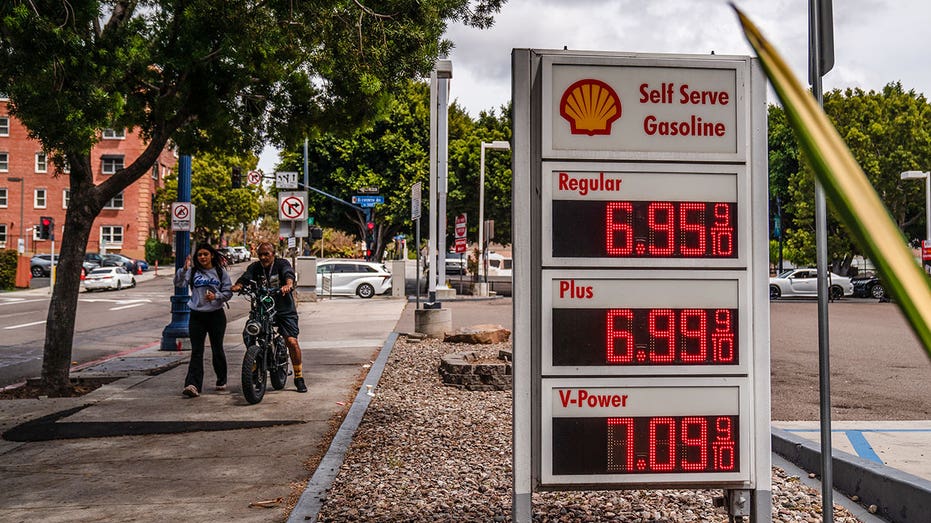
UK drivers are bracing for a sharp rise in fuel costs, with petrol prices expected to exceed £1.50 per litre for the first time in nearly two years as the fallout from the Middle East conflict continues to ripple through energy markets.
According to RAC, the average price of petrol has already climbed to 149.82p per litre and is likely to break through the 150p threshold imminently. Diesel prices have risen even more steeply, reaching an average of 176.66p per litre, an increase of more than 34p since strikes on Iran began.
The surge marks the highest diesel prices since the energy crisis triggered by Russia’s invasion of Ukraine in late 2022, underscoring the sensitivity of fuel markets to geopolitical shocks.
The primary driver of the increase is the sharp rise in global oil prices. Brent crude is currently trading at around $107 per barrel, having surged from roughly $70 a month ago and briefly approaching $120 earlier in June.
Simon Williams of the RAC said wholesale fuel data suggests further increases are likely in the short term, with petrol potentially reaching 152p per litre and diesel climbing towards 185p.
“While soaring costs at the pumps are putting a strain on drivers, as long as oil remains around $100, prices should begin to stabilise,” he said, though he cautioned that further volatility remains possible depending on developments in the conflict.
Fuel prices continue to vary significantly across the UK, with drivers in rural areas and at motorway service stations often paying the highest rates.
Petrol prices at motorway forecourts have already exceeded 171p per litre, while some locations are charging more than 190p for diesel, with a handful exceeding 200p. By contrast, drivers in certain parts of Lancashire are paying closer to 143p for petrol, highlighting a growing regional disparity.
The rise in fuel costs is expected to feed through into broader inflation, affecting transport costs, supply chains and the price of goods and services.
For households, higher petrol and diesel prices are an immediate hit to disposable income, particularly for those reliant on cars for commuting or living in areas with limited public transport.
Businesses, especially those in logistics and transport, are also facing increased operating costs, which may ultimately be passed on to consumers.
While drivers face rising costs, the government is set to benefit from increased tax receipts. Fuel prices in the UK are subject to 20% VAT, which is applied on top of fuel duty, effectively creating a “tax on a tax”.
The RAC Foundation estimates that UK motorists consumed nearly 47 billion litres of fuel last year. Based on pre-conflict prices, this would have generated around £13 billion in VAT revenue.
With petrol and diesel prices rising sharply, that figure is now expected to increase to approximately £15.5 billion, delivering an estimated £2.5 billion windfall to the Treasury.
The government has accused fuel retailers of profiteering from the price surge, although forecourt operators have rejected the claims, arguing that higher wholesale costs are being passed through to consumers.
The debate highlights ongoing tensions over fuel pricing transparency and the distribution of costs across the supply chain.
Much will depend on the trajectory of oil prices in the coming weeks. If geopolitical tensions ease and supply stabilises, prices could plateau or begin to fall. However, a prolonged disruption to global energy markets could push costs higher still.
For now, drivers face a renewed period of volatility at the pumps, a reminder of how quickly global events can translate into everyday economic pressures.
Business
Bridgetown-Greenbushes shire calls on Talison for town planning
The shire presiding over the Greenbushes mine will ask Talison Lithium to formally contribute to the town planning of both Bridgetown and Greenbushes amid the miner’s expansion plans.
Business
At Close of Business podcast March 27 2026
Ella Loneragan speaks with Claire Tyrrell about how a Joondalup cafe is serving more than coffee to the local community.
Business
CapEx Supercycle: The Megaproject Wave Rewiring U.S. Infrastructure
Business
John Hancock Corporate Bond ETF Q4 2025 Commentary (JHCB)
A company of Manulife Investment Management, John Hancock Investment Management serves investors through a unique multimanager approach, complementing our extensive in-house capabilities with an unrivaled network of specialized asset managers, backed by some of the most rigorous investment oversight in the industry. The result is a diverse lineup of time-tested investments from a premier asset manager with a heritage of financial stewardship. Note: This account is not managed or monitored by John Hancock Investment Management, and any messages sent via Seeking Alpha will not receive a response. For inquiries or communication, please use John Hancock Investment Management’s official channels.
Business
SpaceX IPO Could Make Elon Musk First Trillionaire, Cementing Richest Status
A potential SpaceX initial public offering at a valuation exceeding $1.75 trillion could push Elon Musk’s net worth past the $1 trillion mark in 2026, solidifying his position as the world’s richest person and making him humanity’s first trillionaire, analysts and market observers say.

Musk, already the wealthiest individual with an estimated net worth of around $839 billion as of early 2026, owns roughly 42-44% of SpaceX following its merger with xAI. At a $1.75 trillion IPO valuation, his stake alone could be worth more than $770 billion, according to Bloomberg and other estimates. Adding his holdings in Tesla and other assets would likely catapult him well above $1 trillion, far outpacing rivals like Google co-founders Larry Page and Sergey Brin or Amazon founder Jeff Bezos.
SpaceX is preparing to file paperwork for what could become the largest IPO in history as soon as this week, with a potential June debut, sources familiar with the matter told The Information and Bloomberg. The company could seek to raise more than $75 billion, shattering the previous record set by Saudi Aramco’s $29.4 billion listing in 2019. Earlier projections had targeted a $1.5 trillion valuation and $50 billion raise, but recent reports indicate even loftier ambitions driven by Starlink’s rapid growth.
Starlink, SpaceX’s satellite internet service, has emerged as the primary engine of the company’s soaring valuation. With thousands of low-Earth orbit satellites deployed and millions of subscribers worldwide, the business generated substantial revenue in 2025 and offers recurring high-margin income. Combined with SpaceX’s dominance in commercial launches via reusable Falcon 9 rockets and the ambitious Starship program for deep-space missions, the company has attracted sky-high investor interest.
The recent all-stock acquisition of Musk’s xAI further boosted the merged entity’s private valuation to around $1.25 trillion earlier in 2026. This integration positions SpaceX as more than a space company — a broader platform blending satellite infrastructure, AI capabilities and potential orbital data centers. Musk has signaled plans to use IPO proceeds for an “insane flight rate” of Starship, massive constellation expansion and other visionary projects.
Musk already became the first person to surpass $600 billion and later $800 billion in net worth, largely on the back of SpaceX’s private valuation surges and Tesla stock performance. Forbes and Bloomberg Billionaires Index figures show him hundreds of billions ahead of the next richest individuals. His lead widened after SpaceX secondary share sales valued the company at $800 billion late last year, up dramatically from earlier rounds.
If the IPO prices at the high end of expectations, Musk’s wealth could more than double from current levels in paper terms, though actual liquidity would depend on selling restrictions, lock-up periods and market reception. Public market scrutiny could introduce volatility, as investors assess risks including regulatory hurdles for massive satellite deployments, competition from Amazon’s Project Kuiper, technical challenges with Starship and Musk’s divided attention across multiple ventures.
Prediction markets and analysts give high odds that Musk will become a trillionaire soon after a successful listing. Some forecasts suggest it could happen as early as 2026 or 2027, assuming continued execution on Starlink subscriber growth and Starship milestones. Tesla shareholders have occasionally voiced concern about Musk’s focus on SpaceX and other projects, but a SpaceX IPO could provide partial liquidity and diversification for his overall fortune.
The move would mark a significant shift for SpaceX, which Musk long preferred to keep private to pursue high-risk, long-term goals like Mars colonization without quarterly earnings pressure. Growing demands for liquidity from employees and early investors, coupled with the company’s enormous valuation, appear to have tipped the balance toward going public.
Wall Street banks including Goldman Sachs, Morgan Stanley, JPMorgan and Bank of America have been involved in preparations. A confidential filing could allow gauging investor appetite quietly before a full registration. SpaceX did not immediately respond to requests for comment, and Musk has not publicly detailed the latest timeline beyond confirming IPO plans for 2026.
Success is far from guaranteed. Public investors may balk at multiples exceeding 90 times trailing revenue, even for a company with proven launch dominance and a scalable satellite network. Governance questions around Musk’s control, national security reviews tied to government contracts with NASA and the Pentagon, and environmental or astronomical concerns over satellite constellations could complicate the process.
Still, excitement is building. Reports of the impending filing sent shares of other space-related companies higher, with firms like Rocket Lab and AST SpaceMobile gaining in trading. The broader space economy could benefit from validation of high valuations and increased capital flow into the sector.
Musk’s path to trillionaire status highlights the extraordinary wealth creation possible in technology and space industries. From founding SpaceX in 2002 with a vision to reduce space travel costs, he has overseen reusable rocket technology that slashed launch prices and enabled Starlink’s global reach. The company now launches more payloads than any other entity and plays a critical role in U.S. space ambitions.
For Musk, the IPO represents both validation of two decades of bold bets and fresh capital to accelerate interplanetary goals. Whether public markets embrace the ambitious valuation will test investor appetite for visionary, capital-intensive businesses in an era of rapid technological change.
As of late March 2026, Musk remains comfortably the world’s richest person, with his fortune already dwarfing those of the next several billionaires combined. A successful SpaceX debut at anywhere near targeted levels would extend that gap dramatically and likely make him the richest individual in recorded history by a substantial margin.
The development comes amid Musk’s multifaceted empire, including Tesla’s electric vehicle and autonomous driving efforts, ownership of X (formerly Twitter), and xAI’s work on advanced artificial intelligence. Synergies across these ventures, particularly AI and space infrastructure, could further enhance long-term value.
Critics caution that net worth figures based on private valuations or post-IPO market caps are paper wealth subject to sharp swings. Musk has seen his fortune rise and fall with Tesla stock volatility in the past. Public listing would introduce greater transparency and quarterly reporting, potentially altering dynamics.
For now, anticipation around the SpaceX IPO dominates discussions of Musk’s wealth trajectory. If realized, the listing would not only reshape his personal fortune but also mark a milestone for the commercial space industry, potentially unlocking new investment and innovation.
Observers will watch closely for the formal filing, roadshow details and eventual pricing. In the meantime, Musk’s status as the wealthiest person on the planet appears secure, with a SpaceX IPO offering a plausible route to becoming humanity’s first trillionaire.
Business
Berkshire Hathaway: Why I Set A $450 Limit Buy Order
-
Crypto World6 days ago
NIO (NIO) Stock Plunges 6.5% as Shelf Registration Sparks Dilution Worries
-
NewsBeat2 days agoManchester United reach agreement with Casemiro over contract clause amid transfer speculation
-
Fashion7 days agoWeekend Open Thread: Adidas – Corporette.com
-
Politics7 days agoJenni Murray, Long-Serving Woman’s Hour Presenter, Dies Aged 75
-
Crypto World5 days agoBest Crypto to Buy Now: Strategy Just Spent $1.57 Billion on Bitcoin During Fear While Early Investors Quietly Enter Pepeto for 150x Potential
-
Crypto World5 days agoBitcoin Price News: Bhutan Sells $72 Million in BTC Under Fiscal Pressure, but the Smart Money Entering Pepeto Sees What the Market Does Not
-
News Videos1 day agoParliament publishes latest register of MPs’ financial interests
-
Sports4 days agoRemo Stars and Kano Pillars Strengthen Survival Hopes in NPFL
-
Sports4 days agoGary Kirsten Accuses Pakistan Cricket Board Of ‘Interference’, Mohsin Naqvi Responds
-
Tech5 days agoGive Your Phone a Huge (and Free) Upgrade by Switching to Another Keyboard
-
Business5 days agoNo Winner in March 21 Drawing as Prize Rolls to $133 Million for Next
-
Sports7 days ago2026 Kentucky Derby horses, odds, futures, preview, date: Expert who nailed 12 Derby-Oaks Doubles enters picks
-
Tech4 days agoAI enters the chat: New Seattle dating app relies on tech to facilitate meaningful human connections
-
Business6 days ago
Columbia Sportswear enters $500 million credit agreement with JPMorgan Chase
-
News Videos4 days agoCh 9 Financial Management Part 1 | Detailed One Shot | Class 12 Business Studies Boards 2026
-
Tech5 days agoToday’s NYT Connections Hints, Answers for March 22 #1015
-
Business12 hours agoInstagram, YouTube Found Responsible for Teen’s Mental Health Struggle in Historic Ruling
-
Crypto World7 days ago
Small-cap Russell 2000 enters correction territory
-
Business5 days agoWill Duke Basketball Win It All? Duke Basketball Enters Second Round as Third Favorite to Claim NCAA Title
-
Sports4 days ago2026 Kentucky Derby horses, odds, futures, preview, date: Expert who hit 12 Derby-Oaks Doubles enters picks

You must be logged in to post a comment Login