

Politics
The House | Social media has been harming children for some time. We must act now to stop it



4 min read
Raising the age limit to 16 for harmful social media is not about censorship. It is about safeguarding. We are already seeing what the consequences could be if we don’t act.
The House of Lords will again today (Wednesday) vote on a cross-party amendment, tabled by Lord Nash, on raising the age limit to 16 for harmful social media. The vote comes amid Louis Theroux’s recent documentary on the “manosphere”, which has brought into view what many of us working on the frontline have been witnessing for years. For doctors, teachers, and youth workers, this is not a sudden crisis. It is a predictable outcome.
We have watched, in real time, as young people’s understanding of relationships, identity, and self-worth has been shaped not by families or schools, but by algorithm-driven ecosystems that reward extremity, outrage, and division. At a recent education leadership conference, a teacher reflected that there had been a noticeable change in boys’ behaviour in just a single term. And in clinical and community settings, the impact is just as stark. A mother of a 14-year-old girl recently described sitting down with her daughter to talk about relationships, only to find that the way boys in her year were speaking about girls was, in her words, “heartbreaking.” These are not isolated observations; they are warning signs.
It is easy, in moments like this, to default to outrage or to dismiss the figures highlighted in Theroux’s documentary as caricatures: exaggerated, fringe, almost absurd. But that would be a serious mistake. What matters is not just the individuals at the centre, but the ecosystem around them. Their ideas do not stay contained at the extremes; they diffuse, soften, and normalise as they travel. What begins as overt misogyny at the top is repackaged into irony, “banter,” or pseudo-self-improvement further down the chain. By the time it reaches younger audiences, it is often unrecognisable as ideology and therefore far more difficult to challenge. This trickle-down effect must not be underestimated.
It is also uncomfortable, but necessary, to acknowledge that this culture does not emerge in isolation. When those in positions of political or social power express misogynistic attitudes, it confers legitimacy. The “manosphere” is not an aberration; it is, in part, an amplification of signals already present in the wider culture.
It is into this space, between glacially slow research, reactive policy, a rapidly evolving digital landscape, and, let’s face it, a generational identity crisis, that a highly organised, highly profitable industry has stepped, fronted by so-called “alpha male” influencers. But strip away the branding, and what remains is something far less aspirational. These figures do not model secure, grounded masculinity. What they often project, thinly veiled beneath performance, is insecurity, fragility, and unresolved attachment needs. The relentless emphasis on control, dominance, emotional detachment, and transactional relationships is not a sign of strength; it is a defence against vulnerability. And crucially, it is being monetised.
This is not simply ideology; it is exploitation. A pyramid-like system in which a small number of influencers profit from amplifying dissatisfaction and grievance. They sell certainty to the uncertain, status to the insecure, and belonging to the isolated. Courses, memberships, exclusive communities, all built on the promise that if you adopt this worldview, your discomfort will disappear. It will not. Instead, young men and boys, many already navigating loneliness and confusion, are drawn deeper into a system that depends on keeping them dissatisfied. Because resolution does not sell. Insecurity does.
Those engaging with this content are not the problem. They are the market. What they are offered is not genuine support or growth, but a script: that their struggles are caused by women, and that the solution lies in power, withdrawal, or contempt. It is a compelling narrative precisely because it simplifies complexity and because it externalises pain.
So yes, regulation matters. But we must be clear: this is not a space where light-touch measures will suffice. We do not allow children unrestricted access to gambling platforms, predatory financial schemes, or harmful substances. We recognise that certain environments are developmentally inappropriate and potentially dangerous. The same principle must apply here.
Raising the age limit to 16 for harmful social media is not about censorship. It is about safeguarding. Delaying exposure to highly polarised, adult ideological content gives young people the time to develop the cognitive and emotional capacity required to critically evaluate what they encounter. Without that foundation, they are not engaging freely; they are being shaped by individuals whose business model depends on influence, not truth.
I urge the Lords to once again vote for Lord Nash’s amendment. If they don’t, we are already seeing in some areas what the national consequences might be.
Dr Lauren Bull is safeguarding lead at Chelsea and Westminster NHS Foundation Trust and is a TedxNHS speaker

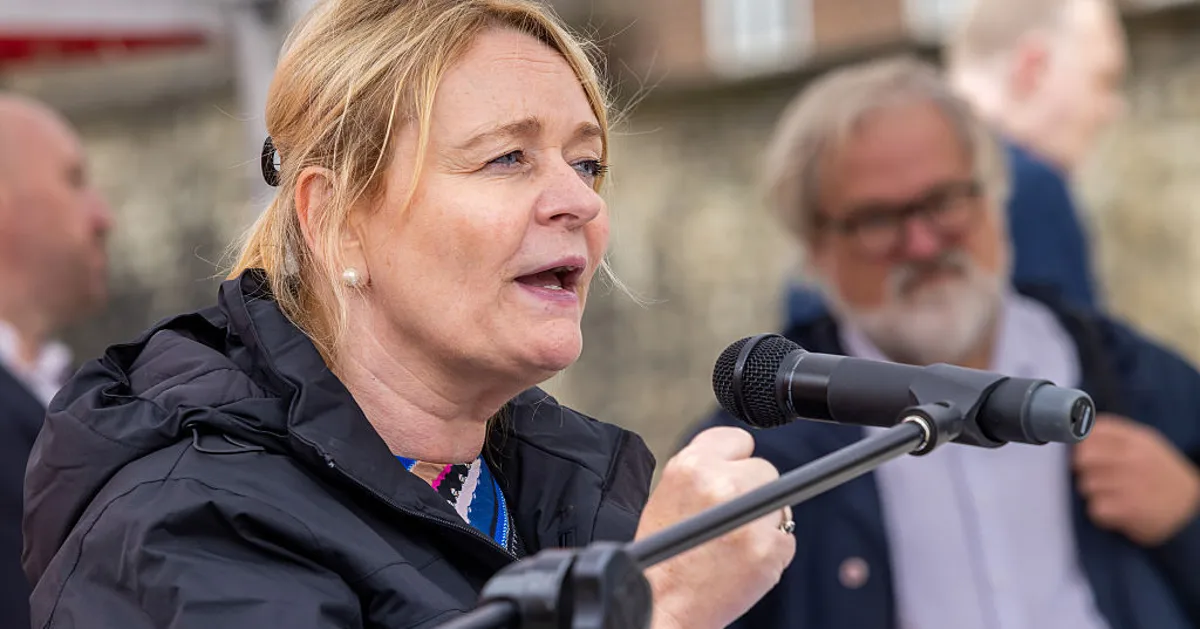
The boss of a Labour-backing union has said Keir Starmer’s make-or-break speech did not “cut the mustard” and called for him to be replaced as prime minister.
Sharon Graham, general secretary of Unite, told HuffPost UK that it would be the “death knell” for Labour if he led them into the next election.
Starmer has been criticised for the “utterly inadequate” speech, which was supposed to set out how he plans to turn around his party’s fortunes after last week’s disastrous election results.
The PM confirmed the government is nationalising British Steel and vowed to put the UK “at the heart of Europe”, but failed to announce any major new policies.
Graham, a frequent critic of the prime minister, said: “I don’t think it cut the mustard. The difficulty here is that the size of the problem is not being grasped.
“Obviously they inherited something that is quite difficult, there’s no doubt about that. The 2008 financial crash is still the most significant thing that has happened.
“Workers have paid the price over and over again. What Labour needs to do now to shift the dial is they’ve got to change direction and they have got to put in economic policy that is going to make the lives of working people better.”
She said the government should bring in a wealth tax on the super-rich and loosen the Treasury’s fiscal rules so the government can “borrow to invest”.
“Those were the sorts of things I wanted to hear in the speech today,” she said. “Unless they do that, then of course people are going to go to other places because they want some hope, they want to know that people are listening to them. They’re not getting that with Labour at the moment.”
Graham also rejected the claim that a Labour leadership contest would be bad for the country.
She said: “This is the point Keir Starmer was making – I’m going to stay put because I don’t want to put the country into chaos. The country is in chaos.
“We’ve got the worst growth, the amount of money that we owe has gone up because we are seen as a risk and so therefore you have to look at how we are going to deal with those things.
“So for me, I don’t think it’s going to happen tomorrow, but there isn’t a cat in hell’s chance that Keir Starmer’s going to lead us into the next election. It would be the death knell if that happened.”
However, she refused to say who she would back in any leadership race.
She said: “I don’t know at the moment because I don’t know what they stand for.
“What we have to understand is what people stand for. Are any of them for the renationalisation of energy, for example, which is going to have to be a long-term goal.
“We have to look at reindustrialisation. They’re talking about not drilling in the North Sea without any plan whatsoever about how any of those jobs are going to have to be replaced and how we move towards jobs within the renewable industry.
“Until we see some of those polices, I don’t think it’s easy to say who would replace him. But replace is the answer, with somebody with good policies.”
Subscribe to Commons People, the podcast that makes politics easy. Every week, Kevin Schofield and Kate Nicholson unpack the week’s biggest stories to keep you informed. Join us for straightforward analysis of what’s going on at Westminster.
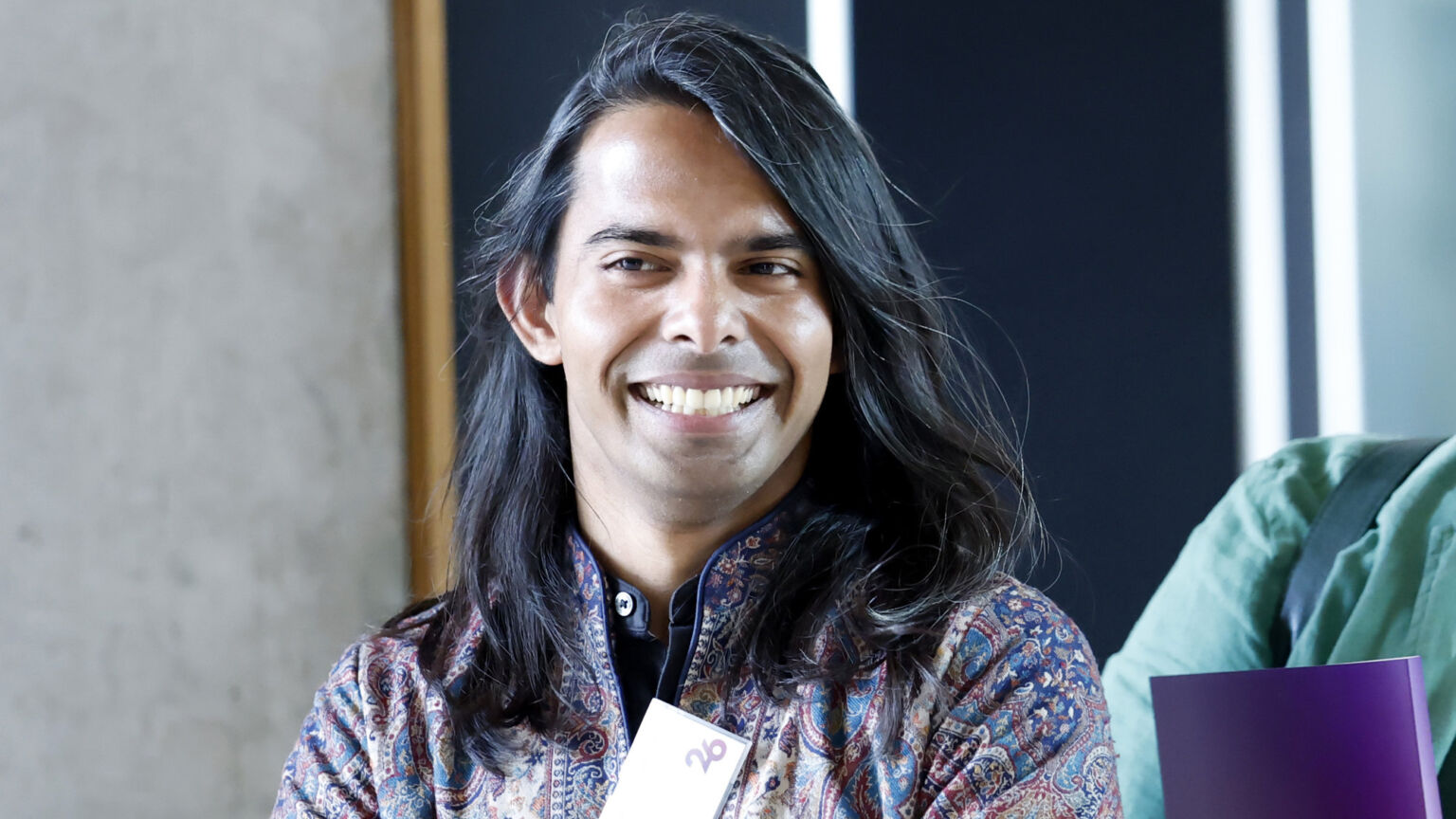
Newly elected MSP Q Manivannan is a Piers Morgan fever dream made flesh. The student poet who thinks that ‘they / them’ pronouns, long hair and brown skin make him radical was elected to the Scottish parliament for the Scottish Greens on Friday. On Monday, he joined 16 of his reality-challenged comrades and walked into Holyrood.
In his acceptance speech, Manivannan crowed that he is ‘everything that the hateful despise’, telling the crowd that ‘every barrier put before me with the Greens was the reason we pushed further’. He ended by saying ‘this is what diversity looks like in power’, as though Scotland in 2026 is still stunned by the sight of a brown politician. Notably absent from his speech was any solid mention of policy, or indeed much beyond his own identity.
Of course, being despised is quite the ego boost. It always gives me a lift when some seat-sniffing weirdo calls me ‘hateful’ for referring to him as a man. But the truth is, few people actively dislike Manivannan as an individual. What people object to is the Scottish Greens’ divisive brand of luxury beliefs. Listening to him does not inspire hatred, more recognition that he ought to be spouting off in a student-union bar somewhere and nowhere near the levers of power.
Manivannan would’ve been unlikely to make the cut were it not for the quirks of the Scottish political system. It was only after ministers loosened the rules over who could stand as a Holyrood candidate that the self-described ‘queer, Tamil immigrant’ was able to run at all. His name was third on the list, meaning he was effectively picked by a small group of party insiders and ushered into Holyrood.
It turns out that Manivannan might not be there for the full term because the terms of his student visa only permit 20 hours of work a week during term time. Being an MSP is very much a full-time role.
This is something the Green Party or Manivannan ought to have considered. Perhaps it was assumed that he is so exceptional that the usual rules do not apply. Indeed, in a speech on ‘trans rights’, which totally failed to articulate which rights men with special pronouns actually lack, Manivannan explained that there was something sacred about being trans:
‘Here’s the thing about being trans. It means beyond. It means across. It means transgender but also transnational. And that transness doesn’t stop at checkpoints, borders or walls.’
Whether this line of reasoning will sway the UK Border Force and the Home Office remains to be seen.
Despite the 30-year-old’s obvious political naivety and apparent lack of work experience, Manivannan has some talent. He certainly knows how to milk the soya-producing teats of his lefty circle. He appealed to colleagues for £2,089 of funding for a temporary graduate visa. Since his election, Scottish Greens co-leader Gillian Mackay has vowed that the party will do ‘anything we can do to support Q’ with the visa-renewal process.
Manivannan’s views are exactly what you would expect. On his website, he boasts of being ‘passionate about more caring politics rooted in the working class, the queer, and the solidary; politics that includes, that listens to people’. To this end, he believes in the full decriminalisation of pimping and brothel-keeping and was a fierce opponent of former MSP Ash Regan’s attempts to protect women and girls through the Unbuyable Bill. He also supports the administration of experimental drugs to children who believe they’re ‘trans’ and predictably thinks that Palestine should be ‘free’.
While claiming to be an outsider because of his skin colour and his decision to pretend not to be a man, Manivannan is the epitome of privilege. Becoming a poet and anthropologist before choosing to study international relations at St Andrews is every bit as much a class marker as the dreadlocks sported by Debrett’s-listed trustafarians in the 1990s. In short, Manivannan displays his politics like a designer handbag; his opinions are simply an extension of his ego, a way to show the world that he is a good person. He is the perfect symbol of Green narcissism.
Jo Bartosch is co-author of Pornocracy. Order it here.
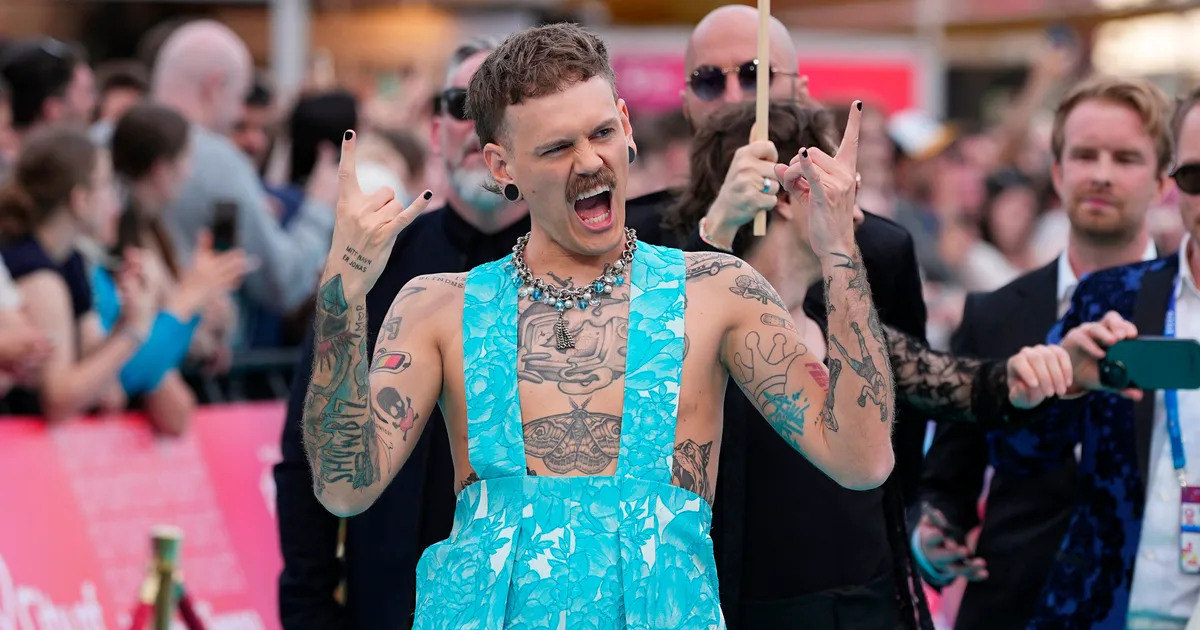
Eurovision hopeful Jonas Lovv has claimed he’s been told to tone down his act ahead of his first live performance in the festival later this week.
Jonas is representing Norway at the 2026 Eurovision Song Contest, where he’ll perform his song Ya Ya Ya during Thursday night’s live semi-final.
However, speaking to the Norwegian broadcaster NRK over the weekend, the singer admitted he still has some work to do on his number before then.
While he claimed he’s “not allowed to say exactly what” he’d been told by the higher ups at the European Broadcast Union (EBU), the group of national broadcasters who organise Eurovision every year, he added that his routine being “too sexy” was part of the problem.
The head of the Norwegian delegation added: “We have been told to tone down the ‘sex appeal’ because [the performance] is not family friendly enough, so we will do that.”
“We take it very seriously when we get that kind of message,” Jonas agreed. “I think they just say it to make sure we don’t take it too far.”
“But we’re not the worst!” he added.
A Eurovision spokesperson told HuffPost UK on Monday: “Conversations are held with all delegations on the content of their stage acts at the Eurovision Song Contest. We are satisfied that all the performances of this year’s artists will be suitable for all audiences.”
Eurovision rehearsals are now underway ahead of the live shows beginning on Tuesday.
As has been the case for the last few contests, this year’s Eurovision has faced backlash due to Israel’s continued presence, despite the ongoing conflict in the Middle East, leading to calls for a boycott of the competition from many critics.
For the last few years, Israel’s broadcaster has also come under scrutiny due to concerns about voting irregularities and the general behaviour of its delegations’ members behind the scenes.
Over the weekend, it was announced that the 2026 Israeli delegation had already been given a formal warning due to a campaign video that had been released by Israel’s broadcaster days earlier.
Last year, five countries confirmed they’d be withdrawing from Eurovision in protest over Israel’s involvement, in solidarity with Palestine.

!function(n){if(!window.cnx){window.cnx={},window.cnx.cmd=[];var t=n.createElement(‘iframe’);t.display=’none’,t.onload=function(){var n=t.contentWindow.document,c=n.createElement(‘script’);c.src=”//cd.connatix.com/connatix.player.js”,c.setAttribute(‘async’,’1′),c.setAttribute(‘type’,’text/javascript’),n.body.appendChild(c)},n.head.appendChild(t)}}(document);(new Image()).src=”https://capi.connatix.com/tr/si?token=19654b65-409c-4b38-90db-80cbdea02cf4″;cnx.cmd.push(function(){cnx({“playerId”:”19654b65-409c-4b38-90db-80cbdea02cf4″,”mediaId”:”0ab6844b-c81c-492d-a869-c30970b71934″}).render(“6a021cc3e4b0b1a48de817ea”);});
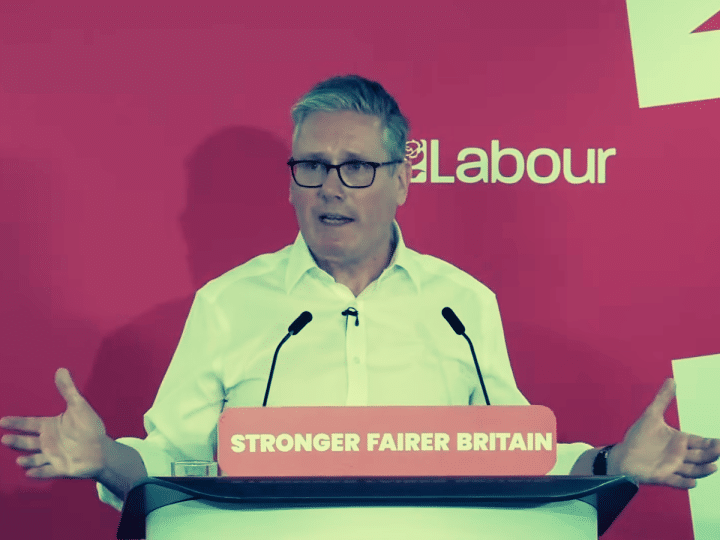

In a critical speech delivered today, Keir Starmer addressed the massive losses Labour sustained in the English local, Scottish Parliament, and Welsh Senedd elections. As the PM is now facing calls to quit not just from opponents but within his own party, his response may prove critical to his political future.
Somehow, he managed more two-faced, half-truths than what we’ve come to expect. The PM kicked off with an acknowledgement that his party lost hard in the elections:
The election results last week were tough. Very tough. We lost some brilliant labour representatives. That hurts. And it should hurt. I get it. I feel it. And I take responsibility. […]
This hurts not just because Labour has done badly, but because if we don’t get this right, our country will go down a very dark path.
So just as I take responsibility for the results, I also take responsibility for delivering the change that we promised for a stronger and fairer Britain that we must build. I take responsibility for navigating through a world that is more dangerous than at any time in my life. And I take responsibility for not walking away, not plunging our country into chaos, as the Tories did, time and again, chaos, but did lasting damage to this country.
Barrelling down a dark path
First of all, warning that the country will go “down a very dark path” is fucking rich coming from a Labour Party that’s cribbing its immigration policy from the Reform handbook. Or did Starmer think we’d forgotten about his policy to nick asylum seekers’ jewellery already?
Second, taking responsibility for delivering change is a very fancy way of saying ‘I won’t listen to leadership challenges from my own party.’
Claiming that it’s not enough merely to address the “frustration the voters feel”, he stated that:
We’re battling Reform and the Greens, but at a deeper level.
We’re battling the despair on which they prey. Despair that they exploit and amplify. And so analysis matters, but argument matters more. Evidence matters, but so, too, does emotion. Stories beat spreadsheets, people need hope.
Ah yes, the ‘Greens are just like Reform, if you don’t think about it at all’ chestnut. We also love “stories beat spreadsheets” from the guy who famously only has one story. Also, did you know Starmer’s dad was a toolmaker?
Gaslight, gatekeep, government strikes again
Anyway, speaking of despair, the PM demonstrated exactly what “taking responsibility” means to him:
Of course, like every government, we’ve made mistakes. But we got the big political choices right. I mean, if we’d listened to the advice of other parties, right now, we’d be stuck in a stand-off with Iran.
Having been dragged into a war that is not in our interest, and I will never do that. We have invested in our public services, in people, in the pride of Britain’s communities. Difficult decisions funded that. But now, NHS waiting lists are coming down.
Child poverty is coming down. Immigration is coming down. And we are rebuilding from the ground up. They were the right course and most of all we stabilised the economy.
‘Actually, we’re doing really well’..sure buddy…it’s the voters who are wrong. Also, while we’re on the subject, the UK is involved in Trump-Netanyahu’s war on Iran. We’re letting the pricks launch their bombers from our airbases.
Starmer then listed the 2008 financial crash, austerity, Brexit, Covid, and the Ukraine war, to say:
And the response is always the same. A desperate attempt to get back to the status quo. A status quo that failed working people time and again. Our response this time must be different.
Magnificent, and completely true. But what could Starmer’s vision of a “complete break” from the status quo look like?
Nationalise steel, but don’t mention the sewage
As an example of his bold new vision (har har), the Labour leader used the example of a steel plant in Scunthorpe that was on the verge of closure. Instead, Labour passed emergency legislation and “took control” in Starmer’s words. The government couldn’t negotiate a commercial sale of the plant, but the PM stated that:
I can announce that legislation will be brought forward this week to give the Government powers subject to that public interest test, to take full national ownership of British Steel.
Public ownership in the public interest. Urgent government on the side of working people, making Britain stronger with the hope of industrial renewal, that is a Labour choice.
That’s great news for the steel workers, and we’ll bear it in mind the next time we want to build a railway. However, maybe we could extend that same logic of nationalisation to the railway network itself?
Or, better yet, we could even talk about nationalising our environmentally ruinous water supply. But of course, that would involve Labour betraying its buddies in the water industry, wouldn’t it?
The other guy’s worse
The other example Starmer held up as a token of his ‘new politics’ is a plan to renew the country’s relationship with Europe. Of course, this quickly devolved into the standard Labour tactic of bashing political enemies:
I want to remind you what Nigel Farage said about Brexit. He said it would make us richer, wrong. It made us poorer. He said it would reduce migration, wrong. Migration went through the roof. He said it would make us more secure, wrong again. It made us weaker.
He took Britain for a ride, and unlike the Tories, who actually at least had to face up to it, he just fled the scene. And now he’ll talk about almost anything other than the consequences of the one policy he actually delivered. Because he’s not just a grifter, he is a chancer.
You know what, he can have that one…all true. No notes from us.
Coming to the end (thank God) of his speech, the PM continued in the same vein, claiming that the other parties:
want more grievance politics, more division, more pointing at Britain’s problems. Looking not for solutions but for someone to blame. Now, that’s fine, if it’s me, if it’s politicians, that’s the job. But increasingly, it’s not. It’s other people in this country. And I don’t think that’s British.
That is not the decency and respect that we are known for. But it’s here. That politics is with us now. And you’ll see it again on Saturday at a march designed to confront and intimidate this diverse city and this diverse country.
That is why this labour government will block far right agitators from travelling to Britain for that event. Because we will not allow people to come to the UK and spread hate on our streets.
This comes from a Labour Party that actively fought to get racist, Islamophobic Maccabees fans into the country. It’s like they think the public suffers from amnesia.
He concluded his speech with the following remarks:
This is nothing less than a battle for the soul of our nation. And I want to be crystal clear about how we will win it. Because we cannot win as a weaker version of Reform or the Greens, we can only win as a stronger version of Labour, a mainstream party of power, not protest.
‘We must become the best damn Centrists we can be’ — what a fucking vision this man has. God help us all.
Featured image via the Canary
In the run-up to the local elections, the silence finally shattered: suddenly it was acceptable to talk about the problem of men without proper vetting crossing international borders. That v-word that working-class communities are so severely reprimanded for using was on the lips of every Westminster hack. Across SW1, manicured hands were wrung over the scandal of an unscreened bloke getting a cushy house and government money in a country that isn’t his own. Of course, none of this chatter was about the men from distant, regressive lands who rock up on England’s shores every day – it was about Peter Mandelson.
Rarely has the moral gulf between the elites and the people been so strikingly on display. In their cloistered palaces of power, they gabbed endlessly about the horror show of Mandelson’s botched vetting for the position of UK ambassador to America. How did this friend of a notorious sex criminal end up as our man in Washington, they wondered, referencing Mandy’s old cosines with Jeffrey Epstein. Meanwhile, ordinary Brits were asking how hundreds of men who’ve had no vetting at all, not even of the shambolic kind, can sail into England every week and instantly receive four-star lodgings and three meals a day. Some of whom aren’t just mates with sexual abusers – they are sexual abusers. There’s been a surge in horrific assaults on women and girls by these men from countries awash with misogyny.
I looked it up: in the week when the Mandelson story broke in mid-April, more than a thousand people, mostly young men, arrived on small boats on England’s shores. Maybe some of them are now in the hotel in your town. Perhaps some will one day show up in those jaw-dropping stats where foreign nationals now account for one in seven convictions for sexual crimes. If any of your non-British friends asks why Labour got such a drubbing in the local elections, tell them this – that this is a government whose luminaries, functionaries and court reporters fret more over backroom bungling in Whitehall than they do over the systematic dismantling of our national frontiers by the cult of globalism they all bow to.
This is the divide now: between a chattering class that obsesses over the reputation of the regime and ordinary people more worried about the safety of the realm. Between the walled-off high priests of consensus opinion whose life’s ambition is to fine-tune the bureaucracy and your average Brit who longs to repair the nation itself. Labour’s diagnosis of its calamitous performance in the elections is laughably oblivious. It’s because we didn’t do enough to fix the cost-of-living crisis, says Angela Rayner. We need to offer ‘more hope and optimism’, says Keir Starmer, as if Brits were a traumatised blob in need of a therapist’s hug. All of them ignore the central grievance of working-class Britain – nationhood itself, and its steady erosion under a ruling class more interested in buffing its own virtue than policing our borders.
It is plain as day why Reform UK – with its promise to detain and deport illegal immigrants and to abolish indefinite leave to remain – swept aside the Labour Party in town halls across working-class England. Of course the go-to explanation of the credentialled classes is that these voters are pig-ignorant, as befits their ‘gammon’ hue, having never darkened the door of a university and had their eyes prised open to the wonders of diversity and genderfluidity and Gazology. In truth, our broken borders are frequently cited as the No1 topic of concern by voters – in a YouGov poll last year, 58 per cent of Brits picked immigration as one of their big worries, compared with 51 per cent for the economy and 22 per cent for crime. And it’s not because they’re racist – it’s because they know that the nation that is blasé about the pouring of hundreds of men over its borders every week is a nation in name only. They know that such reckless indifference to the sanctity and security of the nation endangers not only women but Britishness itself. They know that the thing they cherish above all else – their identity as Britons – will be entirely emptied of meaning if Britain cannot even define and defend its boundaries.
Working-class Britain has had a gutful of the fashionable national shame of the elites. They see this establishment shrug its shoulders over our territorial integrity, and dry-heave at the sight of a St George’s flag, and spout on a loop that soulless tripe about how ‘Britain is all about diversity’, which is another way of saying Britain stands for nothing, and it makes them sick. They know Starmer is far happier in Davos talking platitudinous bollocks with the gold-collared superclass than he is in Darlington, with its pesky Reform voters and its nurses who’d rather not see a cock in their changing rooms. And they know the burning contempt that both Labour grandees and the pink-haired upstarts of the Green Party feel for them, and their communities, and their flags, and their longing to take pride, once more, in Britain. They know these people look down on them as pig meat (‘gammon’) who can be swayed this way and that by the demagogic trickery of populists. Their voting in the local elections was less a plea for better bin collections than a stirring ballot-box revolt against a morally apathetic regime that has overseen the scandalous withering of the nation.
Anyone who is shocked by the working class’s rejection of Labour has not been paying attention. It is a revolt completely without mystery. This is what happens when you demean entire communities as flag-shagging bigots, and call them racist for not wanting a thousand men from fuck knows where in the hotel at the end of their street, and tell them that the rape of girls in their communities by gangs of mostly Muslim men is just a ‘far-right dogwhistle’ that they should shut the hell up about. This is what happens when you strip a people of their flag and their sense of national identity and their means of social solidarity and then mock them as racist trash when they push back. Starmer’s legacy will be as the gravedigger of two-party politics.
The extent to which Starmer doesn’t understand any of this is staggering. Indeed, his very first response to his drubbing at the ballot box was to drag poor old Gordon Brown out as his new special envoy on global finance. Brown! This is the man who, as PM in 2010, damned Gillian Duffy as a ‘bigoted woman’ after she challenged him on the economy and immigration. They really don’t get it. And they never will. The withering of this class of ostentatiously ashamed preeners cannot come soon enough. Not only the security of the nation but also of women and Jews requires the removal of these fools who sold off our sovereignty for a pittance.
Brendan O’Neill is spiked’s chief political writer and host of the spiked podcast, The Brendan O’Neill Show. Subscribe to the podcast here. His latest book – After the Pogrom: 7 October, Israel and the Crisis of Civilisation – is available to order on Amazon UK and Amazon US now. And find Brendan on Instagram: @burntoakboy.
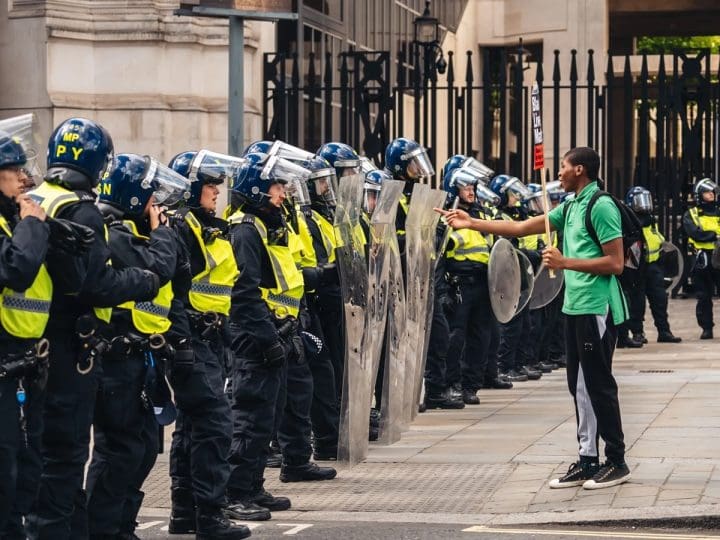

The civil liberties charity Statewatch has said current UK community policing strategy is just a copy-and-paste version of colonial tactics. The so-called ‘clear, hold, build’ (CHB) approach is yet another example of how methods refined in military occupations are being imposed on communities at home. And the main losers are already marginalised communities.
The colonial boomerang
The London-based Statewatch produce and promote:
critical research, policy analysis and investigative journalism to inform debates, movements and campaigns on civil liberties, human rights and democratic standards.
The group’s 11 May analysis piece seeks to explain how centuries of colonial policing have informed current tactics – often under treacly-sounding names like ‘Project Unity’, ‘Respect Rhymney’ and ‘Happy Hopeful Hindpool’!
On the face of it, the three-step approach sounds like fairly standard police work. First, it tells officers to ‘clear’ through:
interventions (arrests and relentless disruption) that target organised crime group members, their networks, business interests, criminality and spheres of influence. The police use all powers and levers to impede their ability to operate. This creates safer spaces to begin restoring community confidence.
Then it moves into the ‘hold’ phase:
interventions, counter-measures and contingency plans to consolidate and stabilise the initial clear phase. This stops remaining or other organised crime group members from capitalising on the vacuum created. It improves community confidence by ensuring spaces remain safe. Visible neighbourhood policing in hotspot areas provides continuing reassurance that police are still present.
Before finally starting to ‘build’:
a single, whole-system approach to delivering community-empowered interventions that tackle drivers of crime, exploitation of vulnerabilities and geographic places where crime occurs. This improves living, working and recreational environment in the community for residents. It empowers them to work with stakeholders to generate resilience and build a safer community.
In reality, Statewatch argues, these processes are direct products of French, British and US empire…
Mowing the lawn
Statewatch said the CHB approach was developed by a former cop-turned-Home Office official named Shane Roberts:
The brutal military origins of CHB are no secret. Official bodies acknowledge that its roots lie in “a three-phase military operating model.” In a February 2024 meeting with a Northampton community group,
Its transfer from the military to the police appears to have been facilitated by a former detective turned Home Office policymaker, Shane Roberts. Roberts describes himself as the “creator” of CHB, responsible for its design, development and implementation as a local policing scheme.
The policy draws on lessons from as far afield as Malaya and Iraq, but also from US figures like Iraq-era General David Petraeus – and there is even major crossover with Israeli tactics deployed against Palestinians:
Anyone familiar with the Israeli occupation of Palestine will likely have heard this terminology of “mowing the lawn” before.
It is therefore unsurprising that CHB has also reportedly been used as the basis of Israeli military operations against Palestinian people in Gaza, with Petraeus himself pitching his exploits in Iraq to Israeli officials.
Roberts even cites French colonial administrator General Herbert Lyautey, who helped ‘pacify’ Morocco:
Roberts describes Lyautey’s career of colonial enforcement for the French empire as “a track record of helping harmonize communities,” noting his ability to work in “challenging social conditions
Roberts adds:
…as Lyautey commented, if these follow-through steps were not taken, efforts would be in vain as simply clipping weeds results in only a temporary illusion of progress: what mattered was addressing the root.
Statewatch argued Lyautey’s words were “a little more brutal”.
and were arguably precursors to the modern-day phraseology of “mowing the lawn.” The marshal argued that “after the plough has passed, the conquered land must be isolated and enclosed so that the good seed that is resistant to the bad can be sown.”
The NGO added:
Despite this language of conquest and domination, Roberts “believed these principles had wider utility and could potentially be replicated in a community-based response to tackle SOC [serious and organised crime].”
Statewatch also noted:
The Home Office concluded that overall CHB can be an “effective approach for reducing crime.”
The ‘new spirit’ of British policing?
Statewatch said the increased mixing of colonial tactics with domestic security measures reflected a “new spirit” in British policing:
This repurposed imperial doctrine represents an introduction of colonial military methods which were originally created to dominate, rather than uplift, local communities.
It provides disturbing insight into the mindset of both government and police institutions which see these tactics as suitable for safeguarding local neighbourhoods.
The group said the policy was part of an “invisible militarisation” of local police:
UK police forces adopting the equipment and appearance of the military have long been a point of focus. However, this strategy transforms community policing into a military process in a way which is both more invasive and harder to spot.
Police have already used CHB to clear out unhoused people in London’s Tower Hamlets:
After clearing an area of tents in which people had been living, the Metropolitan Police published a statement stating that CHB “creates a space that can be used by everyone”.
Police forces across the west were always a martial force. They exist primarily to protect property and the capitalist status quo, victimising the exploited and racialised classes on behalf of the wealthy. And colonising powers like Britain have always used their vassal states as a violent laboratory, sharpening techniques and technologies of oppression for use at home.
The military honed these methods further in recent episodes of violent occupation like Iraq and Palestine. UK police are now deploying them against domestic communities. And the first victims will be the most marginalised.
Featured image via the Canary
By Joe Glenton
Keir Starmer’s premiership is hanging by a thread following Labour’s disastrous performance in the local elections.
A growing body of MPs are calling for the prime minister to resign, less than two years into the role, but Starmer is digging in.
With no clear successor putting their head above the parapet for the mutinous party to rally behind, MPs are in limbo.
So what might happen next? Here’s what you need to know.
How Did We Get To This Point?
Starmer became prime minister in July 2024 after Labour won a landslide victory in the general election.
But within weeks, his government was plunged into crisis by the decision to scrap winter fuel payments for 10 million pensioners and a row over free clothes and hospitality accepted by Starmer and other senior Labour figures.
A series of messy U-turns on things like the two-child benefit cap, digital ID and the farmers’ inheritance tax also led to the prime minister’s approval rating plummeting.
The controversy over his decision to make Peter Mandelson the UK’s ambassador to Washington also helped push the PM’s unpopularity to new depths.
In Labour’s biggest electoral test since the 2024 election last week, voters overwhelmingly rejected the party in England, Scotland and Wales – triggering further anger towards the PM from the party’s MPs.
More than 50 of then have called on Starmer to stand down following the devastating bloodbath.
What Might Happen Next?
It’s incredibly hard to predict exactly what happens next, especially Labour Party makes it difficult to oust the party’s leader.
But here are the options MPs are considering, as of Monday…
A Labour MP Challenges Starmer
Under the party’s rules, a challenger needs the backing of at least 20% of Labour MPs to trigger a leadership contest. That currently works out to 81 MPs.
Even then, the sitting leader would automatically be put on the ballot paper.
Former Foreign Office minister Catherine West stunned Westminster on Saturday by announcing she would challenge the PM if the cabinet did not choose someone to replace Starmer.
But by Monday she had backed down, instead calling for MPs to sign a letter urging Starmer to set out a timetable to allow him to be replaced by September.
Among others thought to be weighing up a leadership bid are former deputy prime minister Angela Rayner and health secretary Wes Streeting.

A Labour MP Stands Aside For Andy Burnham
Starmer’s other major opponent is the mayor of Greater Manchester, Andy Burnham.
However Burnham left Westminster in 2017 and would have to become an MP again in order to stand.
Labour’s ruling National Executive Committee (NEC), blocked him from running as the party’s candidate in the Gorton and Denton by-election in February – at the behest of Starmer.
Burnham is believed to have approached several northern Labour MPs about standing down to trigger a by-election, but so far none have done so.
Even if someone is willing to resign, and the NEC does not block him again, there are no guarantees Burnham would win the subsequent by-election.
His decision to stand would also trigger a mayoral contest in Greater Manchester – which could give rival parties another chance to hammer Labour at the ballot box.
Starmer Agrees To Step Down As MP Backlash Mounts
As the number of MPs calling on him to resign rises, the PM could decide he doesn’t need the hassle and announce he is quitting.
However, he has insisted he “won’t walk away” from the job, and in an interview with The Observer insisted he still planned to be prime minister for 10 years.
Starmer Clings On
With the PM’s opponents apparently racked with indecision about what to do next, there is a world in which he rides out his latest leadership crisis.
In his make-or-break speech on Monday setting out how he plans to turn around Labour’s fortunes, Starmer said: “I know that people are frustrated by the state of Britain, frustrated by politics, and some people – frustrated with me.
“I know I have my doubters and I know I need to prove them wrong, and I will.”
Subscribe to Commons People, the podcast that makes politics easy. Every week, Kevin Schofield and Kate Nicholson unpack the week’s biggest stories to keep you informed. Join us for straightforward analysis of what’s going on at Westminster.
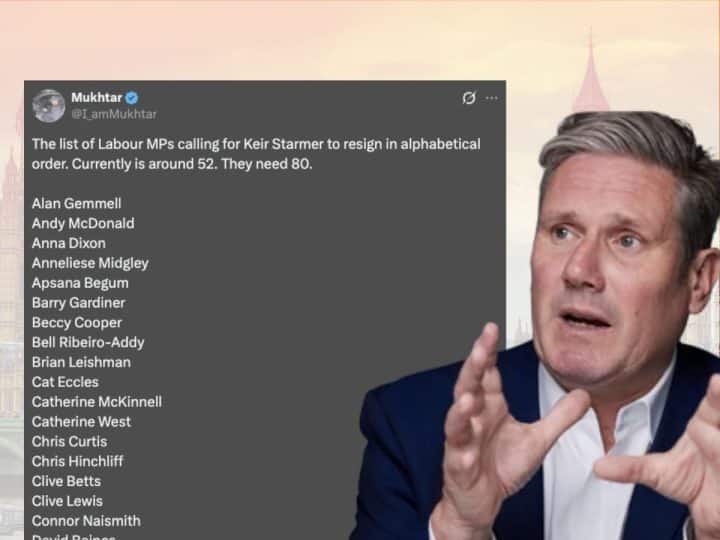

Labour politicians have been calling for Keir Starmer to step down since the party’s disastrous local election results. Starmer hoped to turn the tide with yet another refresh followed by yet another speech, but the revolt is only growing:
Debbie Abrahams (Oldham East and Saddleworth) — Politics UK (@PolitlcsUK) May 11, 2026
 IN FULL: The list of 51 Labour MPs currently calling for Keir Starmer to resign
David Baines (St Helens North)
Paula Barker (Liverpool Wavertree)
Apsana Begum (Poplar and Limehouse)
Clive Betts (Sheffield South East)
Olivia Blake…
And growing:
Catherine McKinnell and Alan Gemmell have both made statements in the last few minutes — Politics UK (@PolitlcsUK) May 11, 2026
UPDATE: The number of Labour MPs calling for Keir Starmer to resign has now risen to 54
Labour is revolting
On 8 May, Canary journalist HG reported on the MPs who’d called for Starmer to go, with the list including Ian Lavery, Ed Miliband, and Jonathan Brash (not to mention several union leaders). On 10 May, things took a surprising turn, with Josh Simons calling for Starmer to go. We say ‘surprise’ because Simons was a member of Labour Together, which is the faction that maneuvered Starmer into power.
The backlash isn’t limited to MPs, either. On 9 May, over one hundred former Labour councillors demanded that Starmer go (the reason they’re ‘former’ councillors is because they lost their seats under Starmer). Their letter read:
It is with sadness and deep regret that we, the undersigned former and present Labour councillors, Members of the Senedd, Members of the Scottish Parliament and 7th May candidates from across the UK, write to encourage you to take full responsibility for our party’s electoral defeats this week, announce a timetable for your departure, and allow an orderly transition to new leadership for the country.
Obviously, Starmer has to take sitting MPs more seriously than former councillors. He also has to take ministers more seriously than MPs, which is something we could shortly see. As Dan Hodges reported:
Multiple sources within the major camps:
* The dam has now collapsed. We will see MPs across the PLP signing up to the “Timetable” strategy.
* Will effectively be a No Confidence motion.
* When the “magic number” of 81 names is reached multiple cabinet ministers will tell Starmer he has to set out a timetable.
* I’m told some of those messages from the cabinet may already be being sent.
It’s usually the case that MPs stagger calls for the leader to go to ensure the maximum impact. As such, it’s possible the threshold of 81 has already been met, and we’re just waiting for the declarations to come out.
Hodges also said:
* Fight will now come down to whether Starmer can be persuaded to set out a short timetable (favoured by Wes Streeting) or the September timetable (favoured by Andy Burnham).
Starmer seems to be more ideologically aligned with Streeting. At the same time, Streeting has been angling to replace the Labour leader despite the PM making him health secretary, so you can possibly assume some resentment on Starmer’s part.
Other reports suggest MPs lack any confidence in there being an orderly transition:
Thoughts from a Labour MP:
“We have to face up to the fact every single one of them is fucking useless. Andy’s strategy has been a disaster. Angela bottled it. Ed clearly a hiding to nothing. Wes AWOL. God knows what Catherine West is doing. Not quite sure how we ended up here.”
— Jessica Elgot (@jessicaelgot) May 11, 2026
West-ern intervention
Catherine West is the MP who threatened to launch a leadership challenge against Starmer if no one else did. This is what she said after the PM’s speech:
The results last Thursday show that the PM has failed to inspire hope. What is best for the party and country now is for an orderly transition.
— Catherine West (@CatherineWest1) May 11, 2026
I want to thank everyone who has been in contact over the weekend to offer good wishes. We need our best top team in place to fight the next election. We owe working people up and down the country nothing less.
— Catherine West (@CatherineWest1) May 11, 2026
Obviously, this timeline is in line with what Andy Burnham’s camp wants. Burnham still has to become an MP before he can challenge Starmer, however, which could be a problem for him:
Exclusive: Green Party sources tell me they would "throw the kitchen sink" at winning a by-election in Manchester in which Andy Burnham is allowed to stand.
Party sources told me they would plan to “hit [Burnham] very hard from his left”. @newstatesman pic.twitter.com/JpKTFcxsFL
— megan kenyon (@meganekenyon) May 11, 2026
Burnham does have an advantage other Labour figures don’t, however, which is that he’s not them:
Andy Burnham is the only senior Labour figure with a net positive poll rating amongst the British public.
He is far more popular than his own party and best placed to win over Reform and Green voters. pic.twitter.com/F2gkxRZE0M — Taj Ali (@Taj_Ali1) May 9, 2026
And reports suggest he’s ready to go:
Apparently Andy Burnham has told backers he has a plan and a seat.
But no MP resignation yet!
All eyes on this..
— Kate Ferguson (@kateferguson4) May 11, 2026
Starmer-geddon
Starmer may have lost the public; he may have lost his MPs and councillors; he may be on the verge of losing his cabinet, but he hasn’t lost Britain dullest client journalist, Beth Rigby:
ANALYSIS: Starmer clearly listening to his party. Tries to step up the emotion and the passion. But so wanting when it comes to matching his rhetoric of urgency to policy offer. Next 24 hours going to be very precarious as MPs weigh up what to do https://t.co/6sTPEiWhOe
— Beth Rigby (@BethRigby) May 11, 2026
If Starmer was “clearly listening to his party”, he would have gone months ago.
Featured image via Mukhtar
By Willem Moore

!function(n){if(!window.cnx){window.cnx={},window.cnx.cmd=[];var t=n.createElement(‘iframe’);t.display=’none’,t.onload=function(){var n=t.contentWindow.document,c=n.createElement(‘script’);c.src=”//cd.connatix.com/connatix.player.js”,c.setAttribute(‘async’,’1′),c.setAttribute(‘type’,’text/javascript’),n.body.appendChild(c)},n.head.appendChild(t)}}(document);(new Image()).src=”https://capi.connatix.com/tr/si?token=19654b65-409c-4b38-90db-80cbdea02cf4″;cnx.cmd.push(function(){cnx({“playerId”:”19654b65-409c-4b38-90db-80cbdea02cf4″,”mediaId”:”bea94644-cb73-4be5-8b8a-0007f15b0b08″}).render(“6a0200ace4b088000125e3e2”);});

RTE to air Father Ted Eurovision episode in boycott of song contest

Saudi Aramco Profit Jumps Despite War Disrupting Shipping Routes

Bitmine Slows Ether Buys After Acquiring 1M ETH in 2026

Manchester United reach agreement with Casemiro over contract clause amid transfer speculation

US brings back mandatory military draft registration

Steven Gerrard disagrees with Gary Neville over ‘shock’ Chelsea and Arsenal claim | Football


-
 Crypto World3 days ago
HarrisX Poll Found 52% of Registered Voters Support the CLARITY Act
-

 Fashion3 days ago
Weekend Open Thread: Marianne Dress
-

 Crypto World4 days ago
Upbit adds B3 Korean won pair as Base token gains Korea access
-

 Tech7 days ago
Image AI models now drive app growth, beating chatbot upgrades
-
 NewsBeat4 days ago
NCP car park operator enters administration putting 340 UK sites at risk of closure
-

 Tech2 days ago
Auto Enthusiast Carves Functional Two-Stroke Engine from Solid Metal
-

 Politics3 days ago
Politics Home Article | Starmer Enters The Danger Zone
-
 Business2 days ago
Ignore market noise, India’s long-term story intact, say D-Street bulls Ramesh Damani and Sunil Singhania
-

 Crypto World6 days ago
UAE Free Zone Deploys Blockchain IDs to Verify Registered Firms
-

 Tech13 hours ago
GM Agrees To Pay $12.75 Million To Settle California Lawsuit Over Misuse Of Customers’ Driving Data
-

 Crypto World5 days ago
BlackRock CEO Larry Fink Discusses a New Asset Class
-

 Crypto World5 days ago
Robinhood says Wall Street is building onchain
-
Entertainment7 days ago
Serena Williams hits Met Gala in metallic dress after GLP-1 reveal
-

 Tech6 days ago
Apple and Samsung are dominating smartphone sales so thoroughly that only one other company makes the top 10
-

 Tech6 days ago
I tested the Xiaomi 17 Ultra’s camera and I don’t think I’ll ever go back to an iPhone
-

 Fashion5 days ago
The Best Work Pants for Women in 2026
-

 Entertainment5 days ago
Sarah Paulson Called Out For Met Gala ‘Hypocrisy’
-
 Tech4 days ago
AI agents are missing all the discussions your team is having. SageOX has an answer: agentic context infrastructure
-
 Sports7 days ago
Everton v Man City LIVE: Haaland’s two-word response as visitors collapse to hand Arsenal advantage in Premier League title race
-

 Politics7 days ago
Met Gala 2026: Madonna’s Dramatic Red Carpet Look Steals The Show
You must be logged in to post a comment Login