
Tech
The rise of Moltbook suggests viral AI prompts may be the next big security threat

Currently, Anthropic and OpenAI hold a kill switch that can stop the spread of potentially harmful AI agents. OpenClaw primarily runs on their APIs, which means the AI models performing the agentic actions reside on their servers. Its GitHub repository recommends “Anthropic Pro/Max (100/200) + Opus 4.5 for long-context strength and better prompt-injection resistance.”
Most users connect their agents to Claude or GPT. These companies can see API usage patterns, system prompts, and tool calls. Hypothetically, they could identify accounts exhibiting bot-like behavior and stop them. They could flag recurring timed requests, system prompts referencing “agent” or “autonomous” or “Moltbot,” high-volume tool use with external communication, or wallet interaction patterns. They could terminate keys.
If they did so tomorrow, the OpenClaw network would partially collapse, but it would also potentially alienate some of their most enthusiastic customers, who pay for the opportunity to run their AI models.
The window for this kind of top-down intervention is closing. Locally run language models are currently not nearly as capable as the high-end commercial models, but the gap narrows daily. Mistral, DeepSeek, Qwen, and others continue to improve. Within the next year or two, running a capable agent on local hardware equivalent to Opus 4.5 today might be feasible for the same hobbyist audience currently running OpenClaw on API keys. At that point, there will be no provider to terminate. No usage monitoring. No terms of service. No kill switch.
API providers of AI services face an uncomfortable choice. They could intervene now, while intervention is still possible. Or they can wait until a prompt worm outbreak might force their hand, by which time the architecture may have evolved beyond their reach.
The Morris worm prompted DARPA to fund the creation of CERT/CC at Carnegie Mellon University, giving experts a central coordination point for network emergencies. That response came after the damage. The Internet of 1988 had 60,000 connected computers. Today’s OpenClaw AI agent network already numbers in the hundreds of thousands and is growing daily.
Today, we might consider OpenClaw a “dry run” for a much larger challenge in the future: If people begin to rely on AI agents that talk to each other and perform tasks, how can we keep them from self-organizing in harmful ways or spreading harmful instructions? Those are as-yet unanswered questions, but we need to figure them out quickly, because the agentic era is upon us, and things are moving very fast.



Statistics from Google show a steady rise in global IPv6 usage, climbing from near zero in early 2012 to 50.1% on March 28, briefly surpassing IPv4. Although the milestone did not hold, usage now hovers between 45% and 50%.
Read Entire Article
Source link
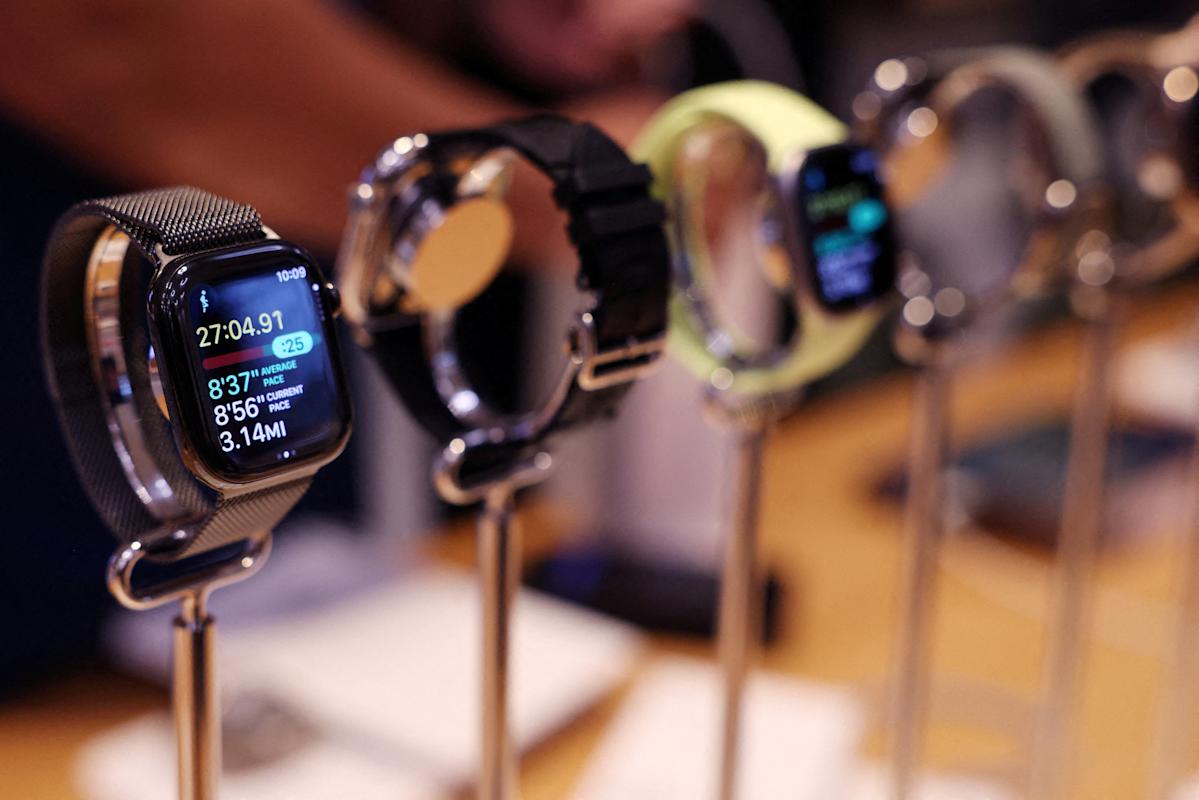
Apple has secured a major victory for its redesigned smartwatches as per the latest decision from the US International Trade Commission. The federal agency ruled against reinstating an import ban on Apple Watches, allowing the tech giant to continue selling its devices with a reworked blood-oxygen monitoring technology.
The ITC decided to terminate the case and refer to a preliminary ruling from one of its judges in March that claimed that Apple’s redesigned smartwatches don’t infringe on patents held by Masimo, the medical tech company that has long been embroiled in lawsuits surrounding the Apple Watch. Apple thanked the ITC in a statement, adding that “Masimo has waged a relentless legal campaign against Apple and nearly all of its claims have been rejected.” We reached out to Masimo for comment and will update the story when we hear back.
The latest decision could offer some closure to the longstanding legal feud between Masimo and Apple. The patent battle dates back to 2021 with Masimo’s first filing against Apple that requested an import ban on Apple Watches. The ITC ended up ruling that Apple violated Masimo’s patents, resulting in the previous import ban and the Apple Watch maker redesigning the blood-oxygen reading feature in certain models. However, Masimo wasn’t satisfied with this conclusion and sought another import ban on the updated Apple Watch models. Now that the ITC has ruled against that, Masimo is left with the option to appeal the decision with the US Court of Appeals for the Federal Circuit.
While Masimo may currently be on the losing side of this legal battle, it’s confronting Apple on multiple fronts. In November, a federal jury sided with Masimo and ruled that Apple has to pay $634 million in a separate patent infringement case.
Tech
Judge sides with creators of banned ICE trackers who allege DHS and DOJ violated their First Amendment rights
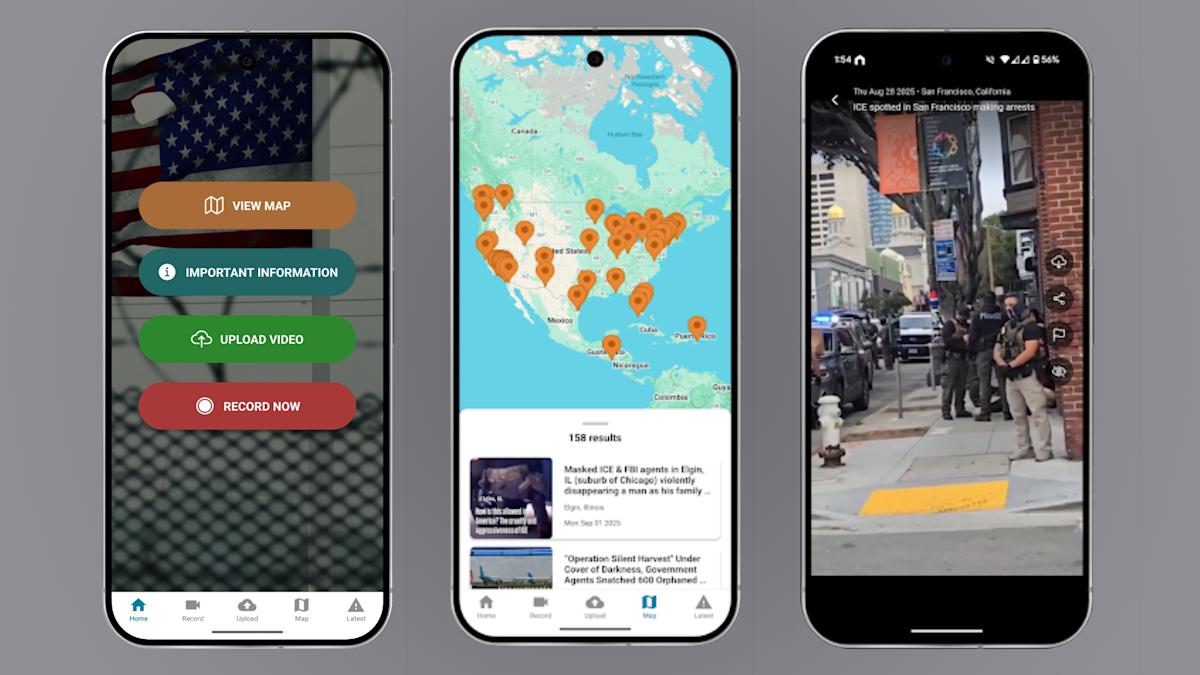
A judge has granted the makers of the “ICE Sightings – Chicagoland” Facebook group and the Eyes Up app a preliminary injunction to stop the Trump administration from coercing platforms to take these projects down. Judge Jorge L. Alonso of the United States District Court for the Northern District of Illinois found that the plaintiffs, Kassandra Rosado and Kreisau Group, are likely to succeed in their case, which alleges that the government suppressed protected speech under the First Amendment by strong-arming Facebook and Apple into removing ICE monitoring efforts.
Both Eyes Up and ICE Sightings – Chicagoland use publicly available information to keep tabs on ICE activity. But after pressure from Trump officials, they were removed from Apple’s App Store and Facebook, respectively. Similar apps including ICEBlock and Red Dot were also taken down from the App Store and Google Play. The lawsuit cites social media posts by former US Attorney General Pam Bondi and former Secretary of Homeland Security Kristi Noem that demanded and took credit for the removal of these apps. In a document filed on Friday, Alonso called these posts “thinly veiled threats.”
The Foundation for Individual Rights and Expression (FIRE), which is defending the plaintiffs, wrote in a post on X that it is “extremely encouraged by this ruling.” It continued, “Even though it’s not the end of the case, it bodes well for the future of our legal fight to ensure that the First Amendment protects the right to discuss, record, and criticize what law enforcement does in public.”

Slashdot reader Bismillah shared this report from ITNews:
Research and development engineer Romain Marchand of Paris headquartered Quarkslab obtained a telematic control unit (TCU) from a salvage yard in Poland… Marchand tore down the TCU, which is based on a Qualcomm system on a chip, and extracted the Linux-based file system from the Micron multi-chip package (MCP) which contained NAND-based non-volatile storage memory. The non-volatile storage contained sensitive information, including system configuration data and more importantly, logs that revealed the vehicle’s GPS positions over time.
None of that information was encrypted, Marchand told iTnews, which made it possible to collect and retrieve sensitive data of interest. What’s more, the global navigation satellite system (GNSS) logs with GPS positions covered the BYD’s full journey from the factory in China to its operational life in the United Kingdom, and to its final wrecking in Poland, Marchand explained in an analysis… The issue is not restricted to BYD, and Marchand added that the hardware architecture of the Chinese car maker’s TCU is broadly similar to what can be found in other brands.
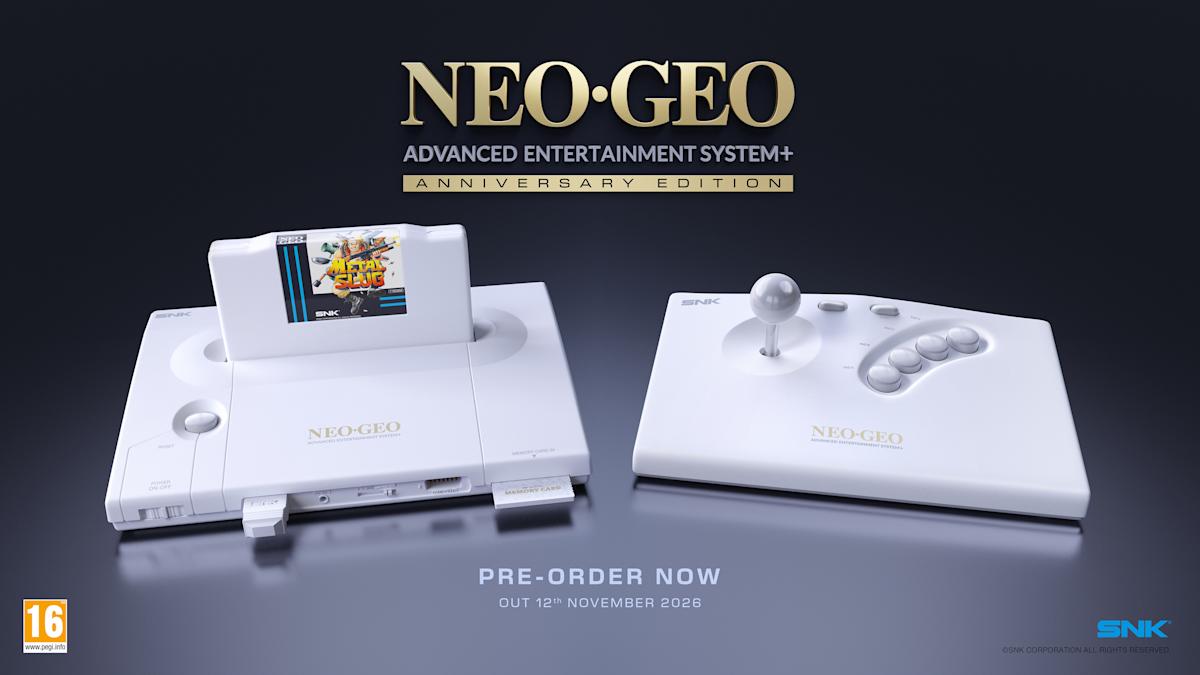
Not everyone had the money for the original Neo Geo Advanced Entertainment System when it released in the ’90s, but there’s still a chance to experience it as an adult with disposable income. SNK and Plaion Replai, who is also behind the all-black remake of the Commodore 64, announced a faithful remake of the high-end retro console, called the Neo Geo AES+.
To bring the original console into the modern day, the collaborating companies added HDMI compatibility for resolutions up to 1080p and DIP switches on the bottom of the console to allow for language selection, overclocking and switching display modes. Rounding out the upgrades, SNK and Plaion Replai included a permanent way to retain high scores on a memory card and a low-power usage mode. For the purists out there, the Neo Geo AES+ still works on those chunky CRT displays since it has the original AV output.
Preorders are currently open for two versions of the Neo Geo AES+, including an all-white 35th anniversary edition bundle that includes an Arcade Stick, a limited-edition Metal Slug game cartridge and a memory card, for $349.99. The standard edition in classic black will only come with an arcade stick, but will be available for $249.99. Coinciding with the console release, Replai Plaion will release 10 modernized game cartridges, including Metal Slug, The King of Fighters 2002 and other classics, for $89.99 each. If you think those prices are high, don’t forget the original Neo Geo AES’ release price was $649.99. The Neo Geo AES+ is set to start shipping on November 12.
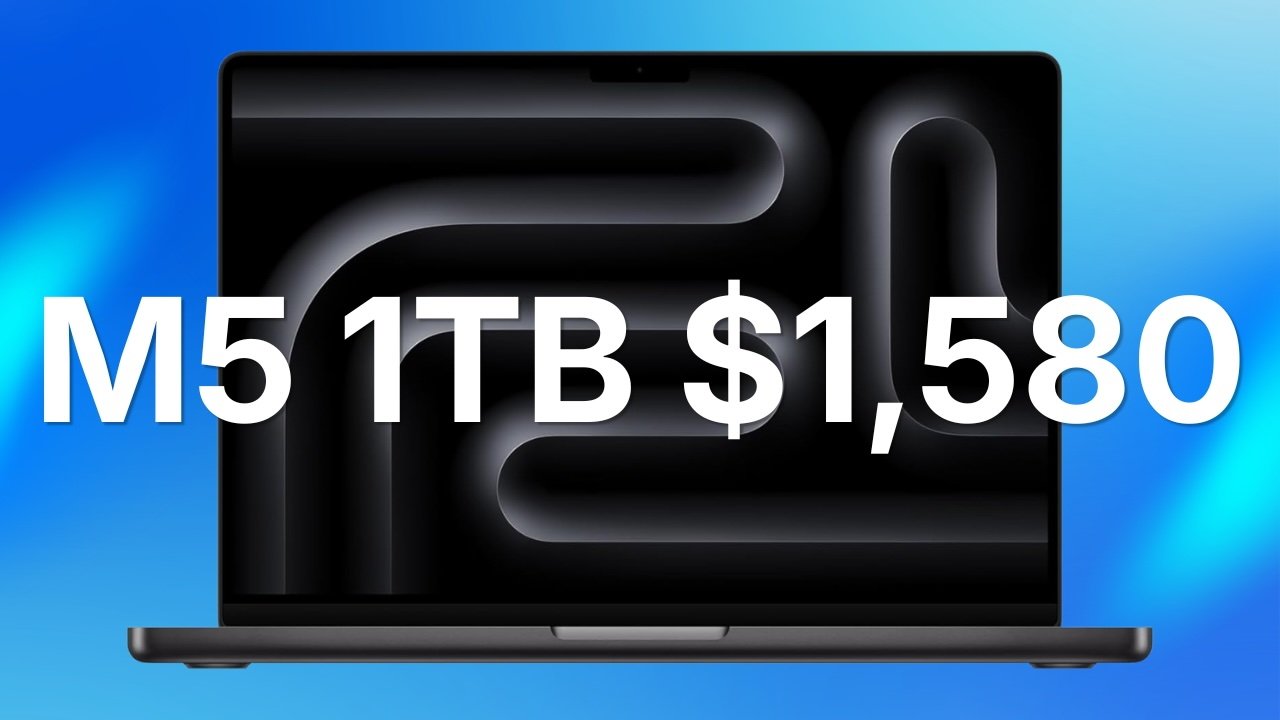
Apple retailers are embroiled in a MacBook Pro price war this Thursday, resulting in the 1TB M5 14-inch model falling to $1,580.
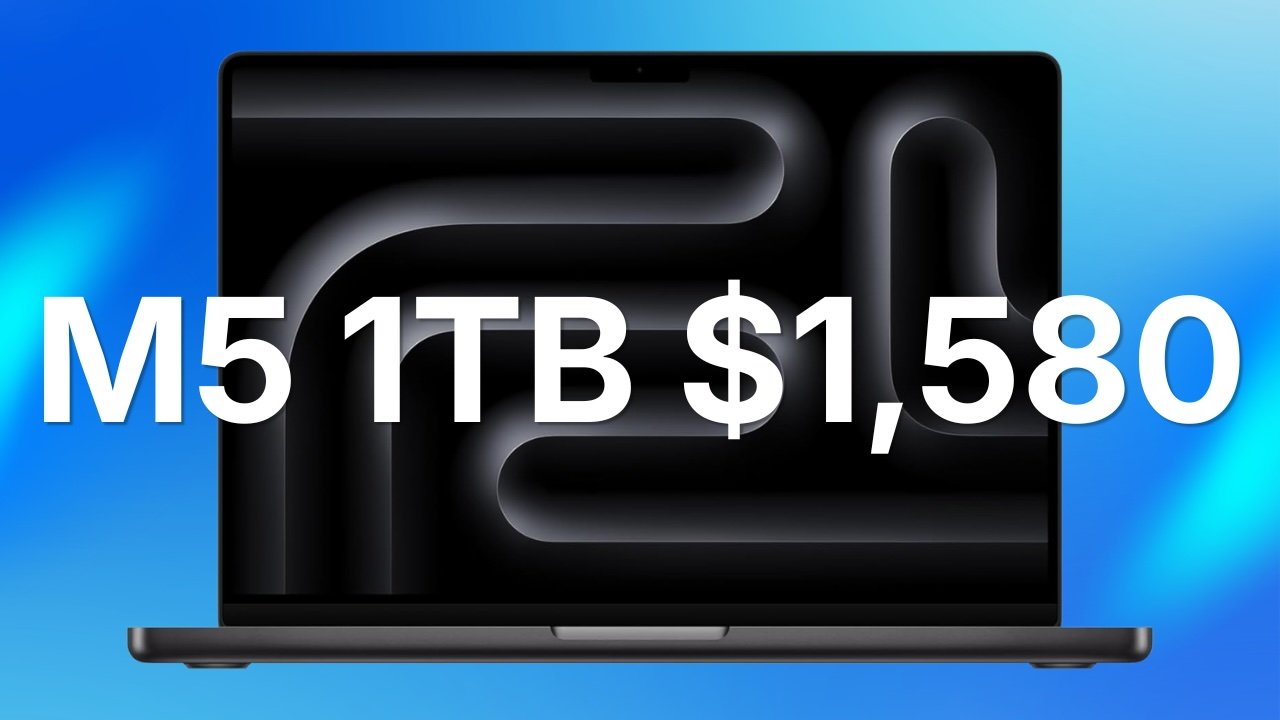
Grab a 1TB MacBook Pro 14-inch for $1,580 at Amazon – Image credit: Apple
You can pick up the 1TB 14-inch MacBook Pro for $1,580 at Amazon in Silver, while the Space Black version is on sale for $1,599 at both B&H and Amazon.
Buy M5 MacBook Pro for $1,580
Continue Reading on AppleInsider | Discuss on our Forums
Looking for the most recent regular Connections answers? Click here for today’s Connections hints, as well as our daily answers and hints for The New York Times Mini Crossword, Wordle and Strands puzzles.
Today’s Connections: Sports Edition gets a bit wild in the blue and purple categories. If you’re struggling with today’s puzzle but still want to solve it, read on for hints and the answers.
Connections: Sports Edition is published by The Athletic, the subscription-based sports journalism site owned by The Times. It doesn’t appear in the NYT Games app, but it does in The Athletic’s own app. Or you can play it for free online.
Read more: NYT Connections: Sports Edition Puzzle Comes Out of Beta
Hints for today’s Connections: Sports Edition groups
Here are four hints for the groupings in today’s Connections: Sports Edition puzzle, ranked from the easiest yellow group to the tough (and sometimes bizarre) purple group.
Yellow group hint: Play ball!
Green group hint: Gridiron roles.
Blue group hint: Like Ted Lasso.
Purple group hint: LA team that came from Brooklyn.
Answers for today’s Connections: Sports Edition groups
Yellow group: AL East teams.
Green group: First words of football positions.
Blue group: Premier League managers.
Purple group: Nicknames for the Dodgers franchise, over time.
Read more: Wordle Cheat Sheet: Here Are the Most Popular Letters Used in English Words
What are today’s Connections: Sports Edition answers?
The completed NYT Connections: Sports Edition puzzle for April 19, 2026.
The yellow words in today’s Connections
The theme is AL East teams. The four answers are Blue Jays, Orioles, Rays and Yankees.
The green words in today’s Connections
The theme is first words of football positions. The four answers are defensive, running, tight and wide.
The blue words in today’s Connections
The theme is Premier League managers. The four answers are Emery, Guardiola, Moyes and Slot.
The purple words in today’s Connections
The theme is nicknames for the Dodgers franchise, over time. The four answers are Bridegrooms, Dodgers, Robins and Superbas.
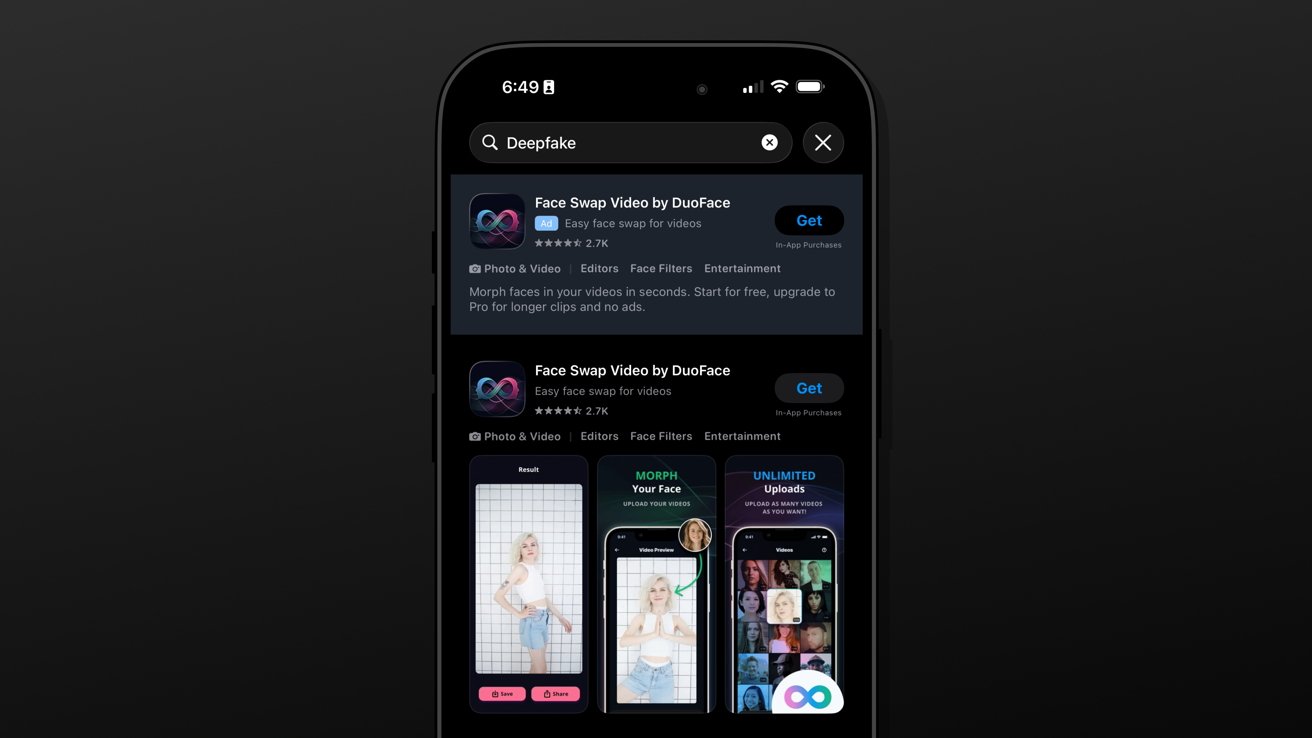
Users looking to create nonconsensual deepfakes of unknowing individuals can simply perform an App Store search. If App Review has a job, it clearly isn’t doing it.
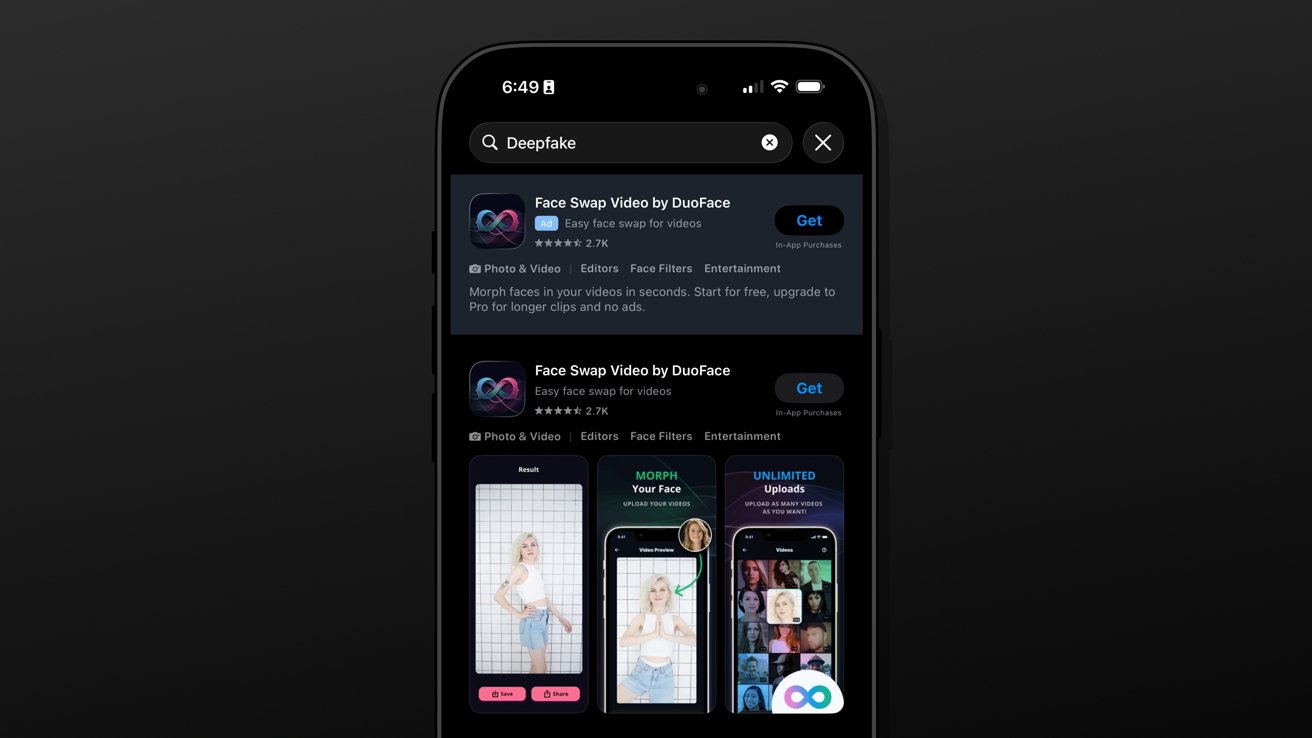
It is trivially easy to search for deepfake tools when they take out ads
It isn’t just the Grok app that lets users create nonconsensual deepfake nudes and pornography. Apple did remove at least 28 such apps in January, and even threatened xAI with a Grok removal, but that clearly hasn’t been enough.
According to a report from The Tech Transparency Project that was first shared by 9to5Mac, “nudify” apps are appearing in search ads and suggestions in the App Store. Pornography isn’t banned from the App Store if it isn’t the app’s sole purpose, but illegal or harmful products are.
Continue Reading on AppleInsider | Discuss on our Forums
If you own a Samsung smartphone and want earbuds to go along with it, the company’s Galaxy Buds are a tempting option. They have several features that only work with Samsung products, and they can often be included for free with the purchase of a new phone. Moreover, they sound good, too, especially the premium Galaxy Buds Pro — possibly thanks to Samsung’s ownership of some of the most respected audio brands on the market, including Harman International, Bowers and Wilkins, and JBL.
Samsung recently launched the Galaxy Buds4 Pro, the fourth generation of its premium true wireless earbuds, for $249. However, the Buds3 Pro, which launched in mid-2024, are still available for purchase, as are the Buds2 Pro and the original Buds Pro. All support active noise cancellation (ANC) and transparency mode, as well as a range of smart features. Sure, the newer products have a few extra tricks, like the live translation feature exclusive to the Buds3 series and up, or the ability to use head gestures, which is exclusive to the Buds4 Pro. With only minor differences, though, you might wonder whether you really need the latest and greatest, or whether you can skate by on a budget by scooping up an older pair of Galaxy Buds Pro.
To put that question to rest, I picked up all four pairs of Samsung’s top-line true wireless earbuds and put them through their paces. After comparing their ANC performance and sound quality, I found some surprising results.
Which pair of Galaxy Buds Pro has the best ANC?
To gauge the relative active noise canceling abilities of each, I used my studio reference monitors to play simulated jet cabin noise at 90 decibels, which is around the upper range of what you’ll experience at cruising altitude. I also used each pair of earbuds at my favorite coffee shop during the mid-afternoon rush.
Across the board, the original Galaxy Buds Pro had the worst ANC performance. It performed reasonably well in the airplane test, at least for lower frequencies and engine rumble, but it wasn’t so good at the higher-pitched whine. In the cafe setting, they did a decent job tamping down on the sound of an espresso machine, but couldn’t consistently mask sudden noises like chairs shifting or people laughing.
The best performer was the Galaxy Buds4 Pro. They muffled a much wider range of airplane engine noise and greatly reduced the most problematic noises at the cafe. However, it’s hard to say they’re that much better than the Galaxy Buds3 Pro. I had to A/B test both for several minutes before the differences became obvious to me. The Buds2 Pro is no slouch, either. Although ANC performance is a step behind the Buds3 Pro, they have longer eartips that protrude deeper into my ear canal, creating a better passive seal in my ears.
It’s worth noting that I used foam eartips from Comply instead of the standard ones. I cannot stand silicone eartips and prefer the superior comfort and sound isolation of foam. This likely affected my testing, but since foam tips were used for all tests, the relative results should be unaffected.
The Galaxy Buds Pro lineup sounds great across the board
When it comes to sound quality, the original Samsung Galaxy Buds Pro sounded the worst in my tests. That’s not to say they sound bad; none of these earbuds do. They are, however, less refined and do not support high-resolution Bluetooth on Samsung devices like the other models. The Galaxy Buds2 Pro are where Samsung’s earbuds graduate from good to great. They sound delightful, tracking closely to the Harman 2025 preference target aside from some elevated low-end and a large peak around 12,000 Hz.
When it comes to the Buds3 Pro and Buds4 Pro, things aren’t as simple. Both of these earbuds sound excellent, so which ones you’ll prefer likely comes down to taste. Samsung started using dual drivers with the Buds3 Pro, meaning there’s both a woofer and a tweeter inside; I found them to have the most V-shaped, or “exciting,” response. If you enjoy heavy, clear bass with a parallel emphasis on the upper range, the Buds3 Pro are your winners. They excel in genres such as dubstep and other EDM, pop, and some hip hop, but can be less impressive for rock n’ roll or country. However, I did notice some distortion at higher volumes.
The Buds4 Pro are a refinement of that approach, and my overall pick for sound quality. Samsung enlarged the dual drivers this year, but the V-shaped response is more toned down compared to the Buds3 Pro. Bass is far less forward, and there’s less excitement in the highs. It’s a much more balanced (but less fun) sound, and the Samsung app’s nine-band adaptive EQ makes it easier to tune them.
Fit and build quality vary across models
Build quality and fit vary across the models. The Buds Pro and Buds2 Pro use an in-ear design with fins to help them stay put. The Buds3 Pro and Buds4 Pro use a stemmed “elephant trunk” design similar to Apple AirPods. It’s a tradeoff. The stemless design of the first two models is harder to knock loose with a finger or bike helmet strap, but the touch controls are finicky, and I often paused music by accident while adjusting them. The stem on the later models reduces unintentional inputs, but makes them easier to dislodge accidentally.
The first two models use charging cases with identical external dimensions, like a ring box that opens clamshell style. This pattern is interrupted by the Buds3 Pro, which has a more AirPods-esque case. It’s by far the most pocketable, but it tends to open a bit in the pocket. It is also plagued by charging issues that afflicted my unit, and I often found one bud close to dead when I pulled them out. The Buds4 Pro returns to the ring box case, but is slightly larger and more squared off. It also has a clear plastic top so you can see the buds inside.
Where the original Buds Pro and Buds3 Pro use glossy finishes, the Buds2 Pro have a matte finish on the case and the buds themselves. It can begin to discolor over time (especially the lovely, lilac-colored version I own), but does not get disgustingly oily during use. Conversely, the Buds3 are especially nasty after a long listening session. The Buds4 Pro split the difference with a recycled plastic that isn’t too shiny, nor too matte. The material doesn’t get dirty easily.
Some features are exclusive to newer Galaxy Buds
Lastly, I investigated the difference in smart features across Galaxy Buds Pro models. All four have ANC and ambient mode, but the Buds3 and Buds4 Pro can automatically switch to ambient mode when they detect voices or emergency sirens. They are also the only models with voice controls — a feature I frankly cannot live without any longer. It’s simply too convenient to say, “Next song” or “Volume up” while I have wet or dirty hands. The Buds4 Pro also support head gestures, letting you nod or shake to answer or reject calls. Since my Samsung devices do not yet have the One UI 8.5 update, I wasn’t able to test this.
Although all four pairs of earbuds can automatically switch between your Samsung devices and Windows PCs with the Galaxy Buds app installed, the feature is inconsistent on all but the Buds4 Pro. I could rarely get the other three to notice when I stopped music on my phone to start a video on my tablet, but the latest model did much better. It only failed when trying to switch from my Windows PC back to a mobile device, an issue I attribute to Windows 11, not to Samsung.
All four Buds Pro models have 360-degree audio, a feature I’ve always found gimmicky. It’s hard to find many songs mixed in Dolby or other spatial formats, and their stereo mixes are usually superior, anyway. As for other media, I don’t watch movies or TV on my phone. All said, the Buds4 Pro win out for their more consistent performance.
The Galaxy Buds4 Pro are peak Samsung, but the Buds2 Pro are a value pick
After two full weeks of side-by-side testing, I’m going to hang onto the Samsung Galaxy Buds4 Pro as my main true wireless earbuds. They outperform their predecessors in terms of ANC, smart features, and battery life (which is excellent and beats Samsung’s estimates in my testing). Sound quality is subjective, but I think Samsung gave the Buds4 Pro a balanced, yet consumer-friendly sound that almost everyone will appreciate. Previous models sound good, but perform best with music that leans into their respective strengths. Fit, while very personal, is passable, and their build quality is the best overall.
While the Buds4 Pro are great, budget-conscious consumers should strongly consider the Buds2 Pro. Samsung no longer sells them directly, but you can pick up a renewed pair on Amazon for just $55 at the time of this writing. With Amazon’s notoriously generous return policy, that’s a deal worth rolling the dice on. Considering how little you’re missing out on compared to the brand-new Buds4 Pro, you should pick the Buds2 Pro up if you can find a new or factory-certified pair for under $100. I suggest checking local retailers for old stock, as well.
If you’ve already got the Buds2 Pro or Buds3 Pro and aren’t experiencing issues, there’s not a ton compelling you to upgrade (unless you buy a new Galaxy S26 and get the Buds4 Pro bundled for free). Those still using the original Galaxy Buds Pro, though, are likely to appreciate the improvements Samsung has made over the years.
Tech
Nvidia’s Jensen Huang warns DeepSeek running on Huawei chips would be ‘horrible outcome’ for America
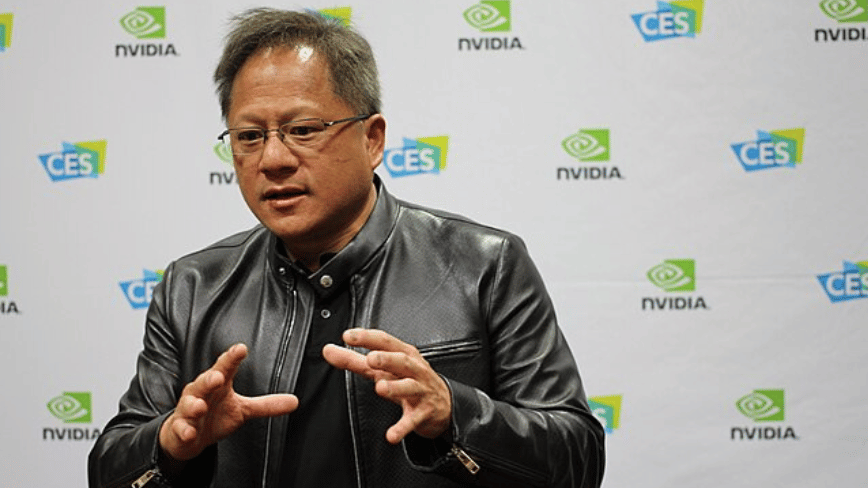
In short: Nvidia CEO Jensen Huang warned on the Dwarkesh Podcast that DeepSeek optimising its AI models for Huawei’s Ascend chips instead of American hardware would be “a horrible outcome” for the United States, as the Chinese AI lab prepares to launch its V4 foundation model on Huawei’s Ascend 950PR processor. The migration from Nvidia’s CUDA to Huawei’s CANN framework threatens to break the software-hardware dependency underpinning American AI dominance, even as US lawmakers push to place DeepSeek on the entity list for export control.
Nvidia CEO Jensen Huang said on the Dwarkesh Podcast on Wednesday that if DeepSeek optimised its new AI models to run on Huawei chips rather than American hardware, it would be “a horrible outcome” for the United States. The warning frames the emerging partnership between China’s most capable AI lab and its most advanced chipmaker as a direct threat to the technological leverage that has underpinned American AI dominance for the past decade.
“If future AI models are optimised in a very different way than the American tech stack,” Huang said, and as “AI diffuses out into the rest of the world” with Chinese standards and technology, China “will become superior to” the US. The statement is notable because it comes from the CEO of the company that has benefited most from the current arrangement, in which virtually every frontier AI model in the world is trained on Nvidia GPUs using Nvidia’s CUDA software framework.
What DeepSeek is building
DeepSeek is preparing to launch V4, a multimodal foundation model expected later this month. The Information reported earlier in April that V4 would run on Huawei’s latest Ascend 950PR processor, while a separate Reuters report suggested the model had been trained on Nvidia’s Blackwell chips, which would constitute a violation of US export controls. The two claims are not necessarily contradictory: a model can be trained on one set of hardware and deployed for inference on another.
What makes the Huawei integration significant is the software migration behind it. DeepSeek has spent months rewriting its core code to work with Huawei’s CANN framework, moving away from the CUDA ecosystem that Nvidia has spent two decades building into the foundation of AI development. CUDA’s dominance has functioned as a second layer of American control over AI, beyond the chips themselves. Export restrictions can limit which Nvidia hardware reaches China, but as long as Chinese labs wrote their software for CUDA, they remained dependent on the Nvidia ecosystem even when using alternative processors. DeepSeek’s move to CANN breaks that dependency.
DeepSeek’s V3 model, launched in late 2024, was trained on 2,048 Nvidia H800 GPUs, a chip tailor-made for the Chinese market that was itself banned from sale to China in 2023. The company has already demonstrated that it can produce frontier-competitive models with fewer resources than its American rivals. Its R1 reasoning model matched or exceeded the performance of models that cost orders of magnitude more to train. V4 would extend that approach by proving the company can do it without American hardware at all.
The hardware gap and why it may not matter
On raw performance, Huawei’s chips are not competitive with Nvidia’s best. The Ascend 910C, the predecessor to the 950PR, delivers roughly 60% of the inference performance of Nvidia’s H100, a chip that is itself two generations behind Nvidia’s current best. American chips are approximately five times more powerful than their Chinese equivalents today, and that gap is projected to widen to 17 times by 2027. Huawei is targeting 750,000 AI chip shipments in 2026, but its total production represents only 3 to 5% of Nvidia’s aggregate computing power.
But Huang’s concern is not about the current performance gap. He said on the podcast that even if China had inferior chips, it could still catch up with the US in AI development given its “abundant energy” and “large pool of AI researchers.” The implication is that raw hardware performance is only one variable, and that software optimisation, researcher talent, and energy availability can compensate for silicon disadvantages. If V4 performs well on Ascend chips, it validates an alternative path for AI development that does not depend on Nvidia at any point in the supply chain.
The export control paradox
The situation exposes a tension at the centre of American chip export policy. Nvidia restarted production of the H200, a more powerful chip, for sale in China, as Huang confirmed in March. But China has been blocking H200 imports to protect Huawei’s domestic chip business, and Nvidia’s CFO has said the company has recorded no revenue from China H200 sales. The controls designed to limit China’s AI capabilities are instead accelerating the development of a Chinese alternative.
DeepSeek’s experience with its R2 model illustrates both the promise and the limits of the Huawei path. R2 was repeatedly delayed because of training failures on Huawei hardware. Chinese authorities had urged DeepSeek to train on domestic chips, but the company encountered stability issues that forced it to revert to Nvidia GPUs for training while using Huawei chips only for inference. The distinction matters: training is the most compute-intensive phase of AI development, and the fact that Huawei chips could not handle it reliably suggests the hardware gap is real. But inference, the phase where models serve users, is where commercial value is generated, and Huawei’s chips appear adequate for that purpose.
Meanwhile, US lawmakers are pushing to tighten restrictions further. On Thursday, lawmakers and experts accused China of buying “what they can” and stealing “what they cannot” in the AI industry, and called for the government to evaluate placing DeepSeek, Moonshot AI, and MiniMax on the entity list for export control.
What Huang is really warning about
Huang’s warning is ultimately about software-hardware co-design. Nvidia’s dominance rests not just on making the fastest chips but on CUDA’s position as the default development environment for AI. When researchers write code, they write it for CUDA. When startups build products, they build them on CUDA. When governments invest in AI infrastructure, they buy Nvidia GPUs because that is what the software requires. DeepSeek’s migration to CANN threatens to create a parallel ecosystem in which none of that applies.
The scale of Nvidia’s business makes the stakes concrete. The company’s market capitalisation exceeds $3 trillion. Its data centre revenue grew 93% year over year in its most recent quarter. Its chips power the training runs for virtually every major AI model outside China. If the most capable Chinese AI lab demonstrates that competitive models can be built without Nvidia, the argument for maintaining export controls weakens, the argument for buying Nvidia weakens, and the geopolitical assumptions that have shaped AI policy for the past three years come under pressure.
None of this means Huawei is about to overtake Nvidia. The performance gap is large and growing. The R2 training failures demonstrate that Chinese hardware is not yet ready for the most demanding AI workloads. But Huang is not warning about today. He is warning about a trajectory in which DeepSeek proves the concept, other labs follow, and the CUDA moat that has made Nvidia the most valuable company in the AI supply chain begins to erode.
The fact that the CEO of Nvidia is the one making this argument publicly suggests he believes the risk is no longer theoretical. DeepSeek’s V4 will be the first major test. If a multimodal foundation model runs competitively on Huawei silicon, the warning Huang issued on Wednesday will look less like corporate lobbying and more like the most consequential forecast in the AI chip war so far.

800 Darlington homes set for major upgrade to cut energy bills

‘Best he’s played’ – Michael Carrick praises Kobbie Mainoo after Cole Palmer battle in Man United win

‘Dangerous’ missing man hunted by cops as public warned not to approach


-
 NewsBeat6 days ago
Pep Guardiola and Gary Neville agree over Arsenal title problem that benefits Man City
-

 Crypto World5 days ago
The SEC Conditionalises DeFi Platforms to Be Avoided for Broker Registration
-

 Politics6 days ago
World Cup exit makes Italy enter crisis mode
-

 Fashion1 day ago
Weekend Open Thread: Theodora Dress
-

 Crypto World5 days ago
SEC Signals Exemption for Crypto Interfaces From Broker Registration
-

 News Videos4 days ago
Secure crypto trading starts with an FIU-registered
-

 Sports2 days ago
NWFL Suspends Two Players Over Post-Match Clash in Ado-Ekiti
-

 Crypto World5 days ago
SEC Proposes Certain Crypto Interfaces Don’t Need to Register as Brokers
-

 NewsBeat5 days ago
Trump and Pope Leo: Behind their disagreement over Iran war
-

 Politics1 day ago
Palestine barred from entering Canada for FIFA Congress
-
 NewsBeat7 days ago
JD Vance announces ‘no agreement’ with Iran over nuclear weapons fear
-

 Crypto World24 hours ago
Russia Pushes Bill to Criminalize Unregistered Crypto Services
-

 Sports6 days ago
NWFL opens Pathway for new Clubs ahead of 2026 Season
-
 Business2 days ago
Creo Medical agree sale of its manufacturing operation
-
Sports7 days ago
Dexter Lawrence, Stefon Diggs, Trading for De’Von Achane
-
Business6 days ago
Kering slides after Morgan Stanley downgrade, Gucci woes loom
-

 Crypto World6 days ago
Trump whales load up ahead of Mar-a-Lago luncheon.
-
 Crypto World6 days ago
Sei Network Enters Quiet Reset Phase as On-Chain Metrics Signal a Slowdown in 2026
-

 Tech6 days ago
Google adds E2E encryption to Gmail for iOS and Android enterprise users
-
 Entertainment5 days ago
Karol G’s ‘Ultra Raunchy’ Coachella Set Gave ‘Satanic Vibes’
You must be logged in to post a comment Login